
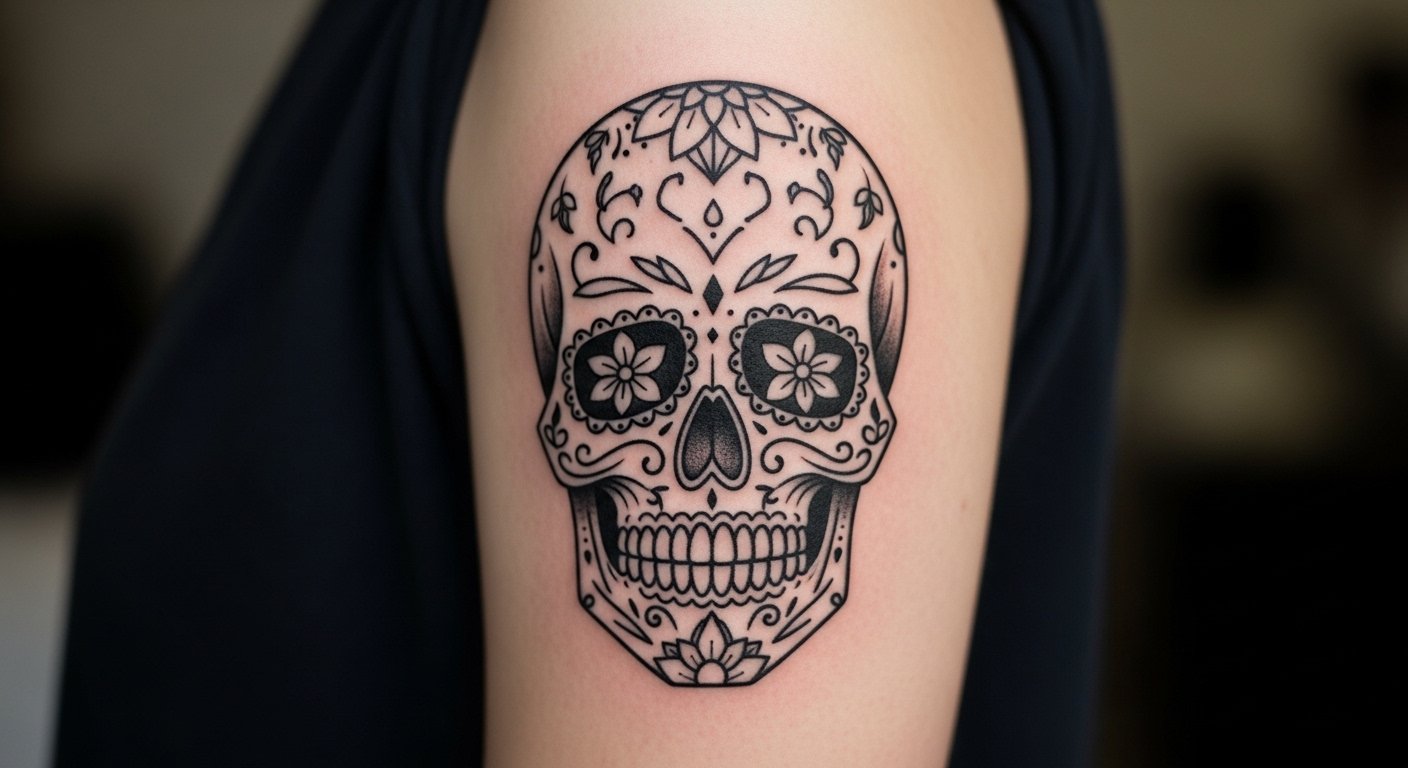
Someone I know waited months to pick a sugar skull style and then realized the real problem was not the photo they loved. It was knowing which technique would still look good two years later, how rib pain might change a session, and how darker skin needs bolder linework. Below are 20 sugar skull tattoo directions I keep seeing in portfolios and convention rooms, with practical notes on aging, consultation talking points, and who should skip each option.
1. Neo-Traditional Sugar Skull with Floral Crown on Forearm
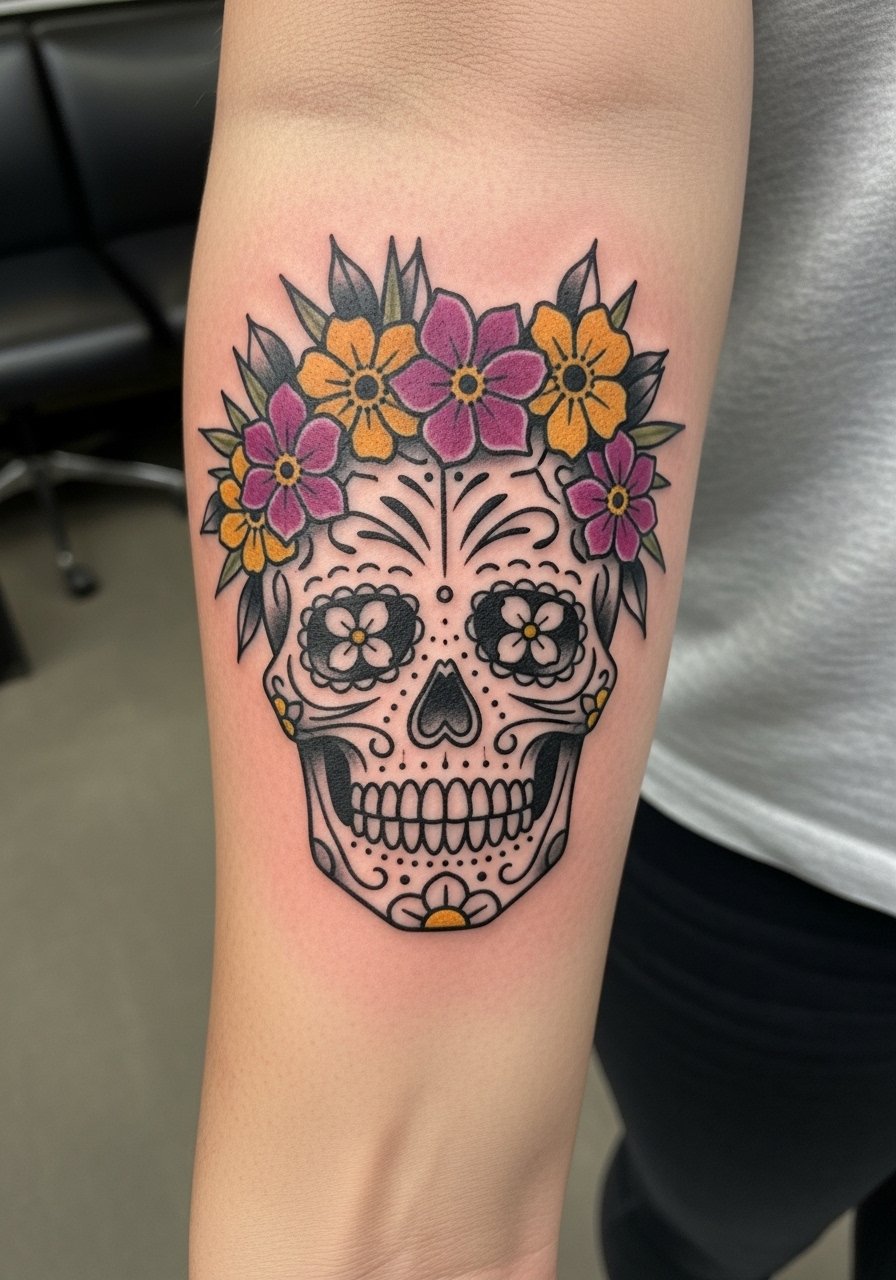
Someone I know first saw this on a friend’s forearm and booked a consult the next week. Neo-traditional reads bold from a distance because of thick outlines paired with saturated fills. Tell your artist you want strong contour and floral shapes that avoid tiny petals close to the edges. The common mistake is requesting tiny ornamental details at 2 inches across, which blur within 18 months. Expect a two-session build if you want dense saturation. Forearm placement hurts moderately and tends to hold color well. Plan a touch-up around year two for saturated fields, and ask about UV protection for the first two weeks.
2. Fine Line Minimal Sugar Skull on Wrist
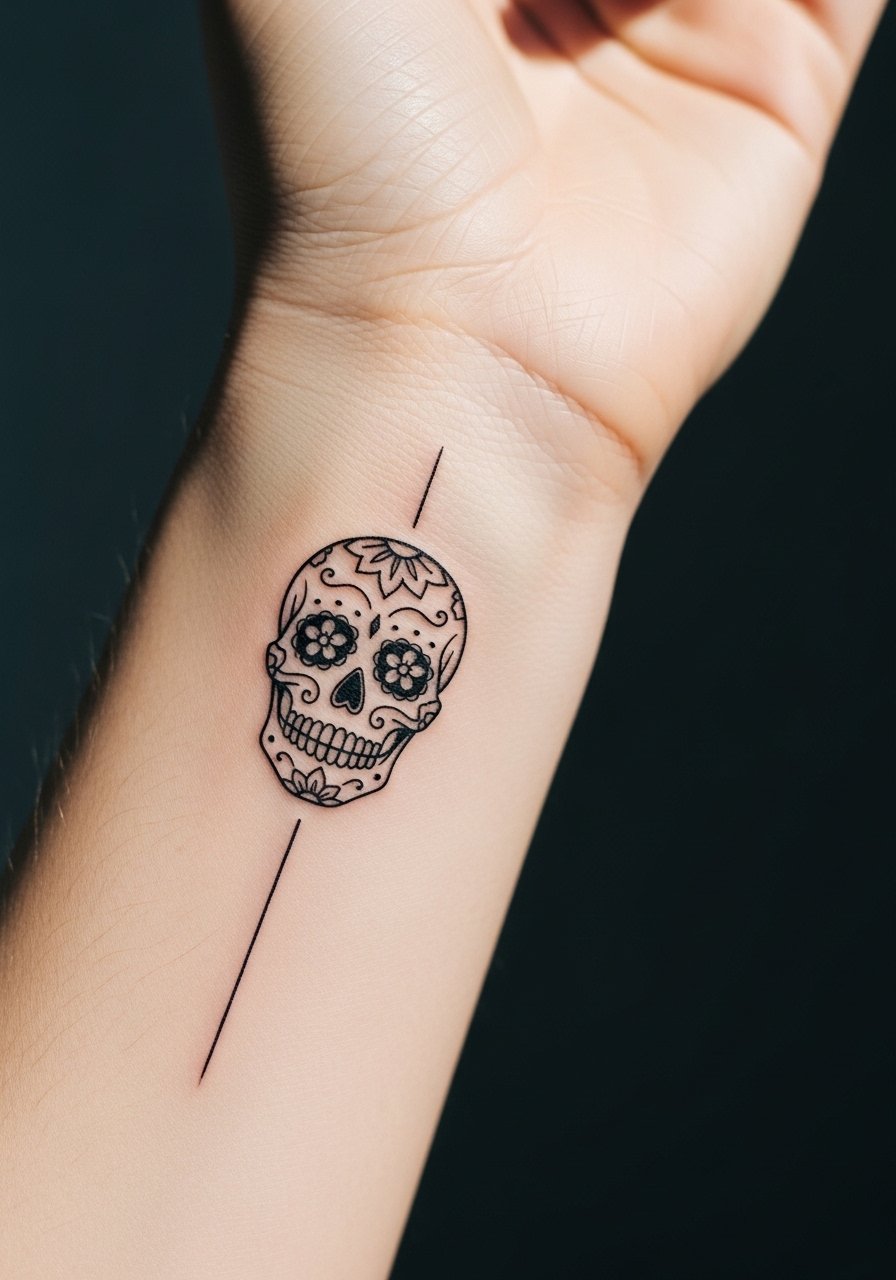
Fair warning: the wrist is a high-movement area and fine line work can lose crispness sooner than expected. Fine line appeals to first-timers who want a subtle nod to Día de los Muertos elements without heavy color. When you consult, show wrist photos and ask the artist to space the linework slightly wider than a purely decorative flash. A frequent aging problem is that artists deliver very thin contour which blurs into a smudge by year three. This style usually fits a single short session and hurts on the scale more than an outer forearm. Expect touch-ups sooner than for bold pieces.
3. Blackwork Geometric Sugar Skull for Upper Arm
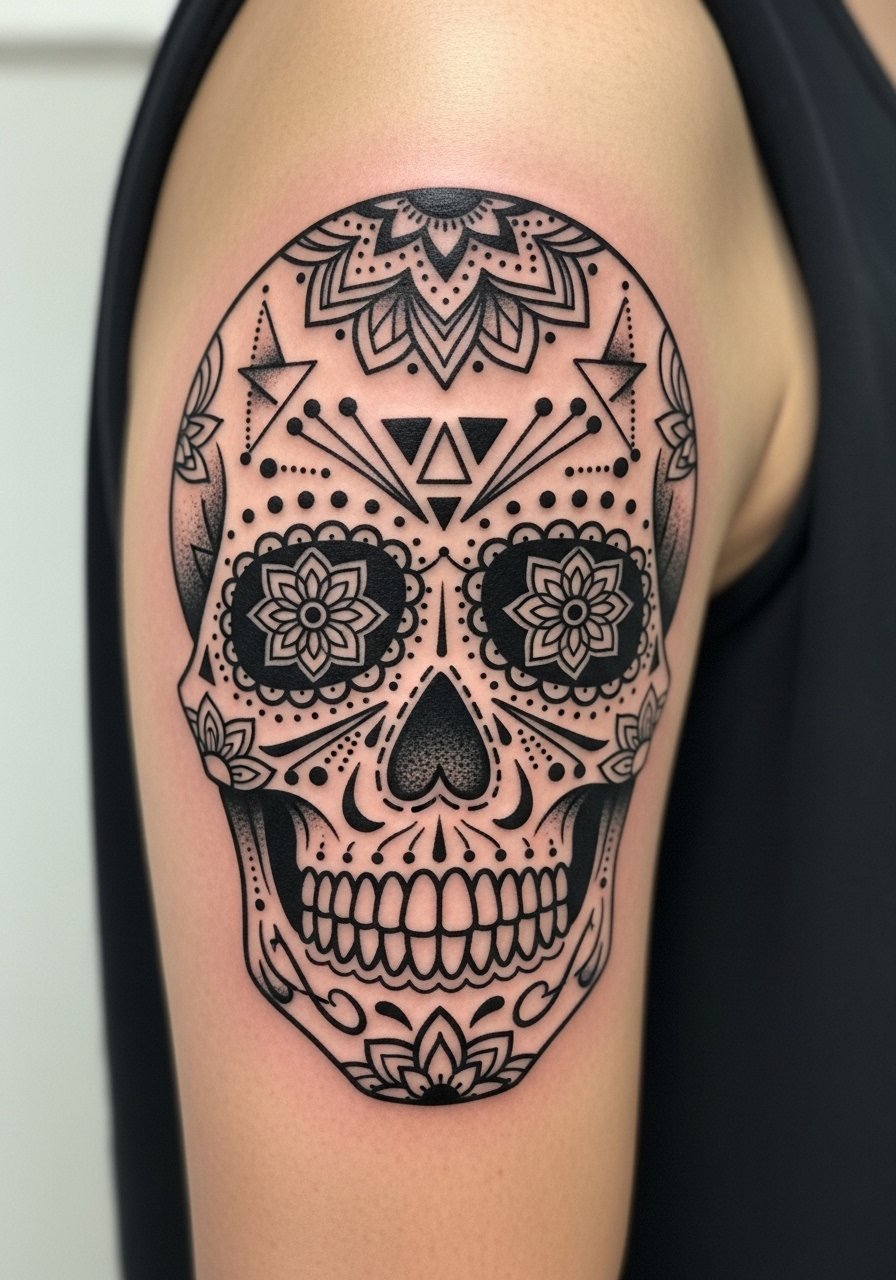
There is something about saturated black that lasts, especially on deeper skin tones. Choose blackwork when longevity matters more than color pop. Tell the artist you want dense saturation and clear negative space so the mandala reads even after some fading. A mistake is packing tiny geometric lines too close together, which creates muddiness after healing. Upper arm sessions are comfortable and allow multiple passes for full saturation. Expect three sessions for large mandala fills and a possible touch-up at year two depending on sun exposure and skin type.
4. Watercolor Splash Sugar Skull on Shoulder Blade
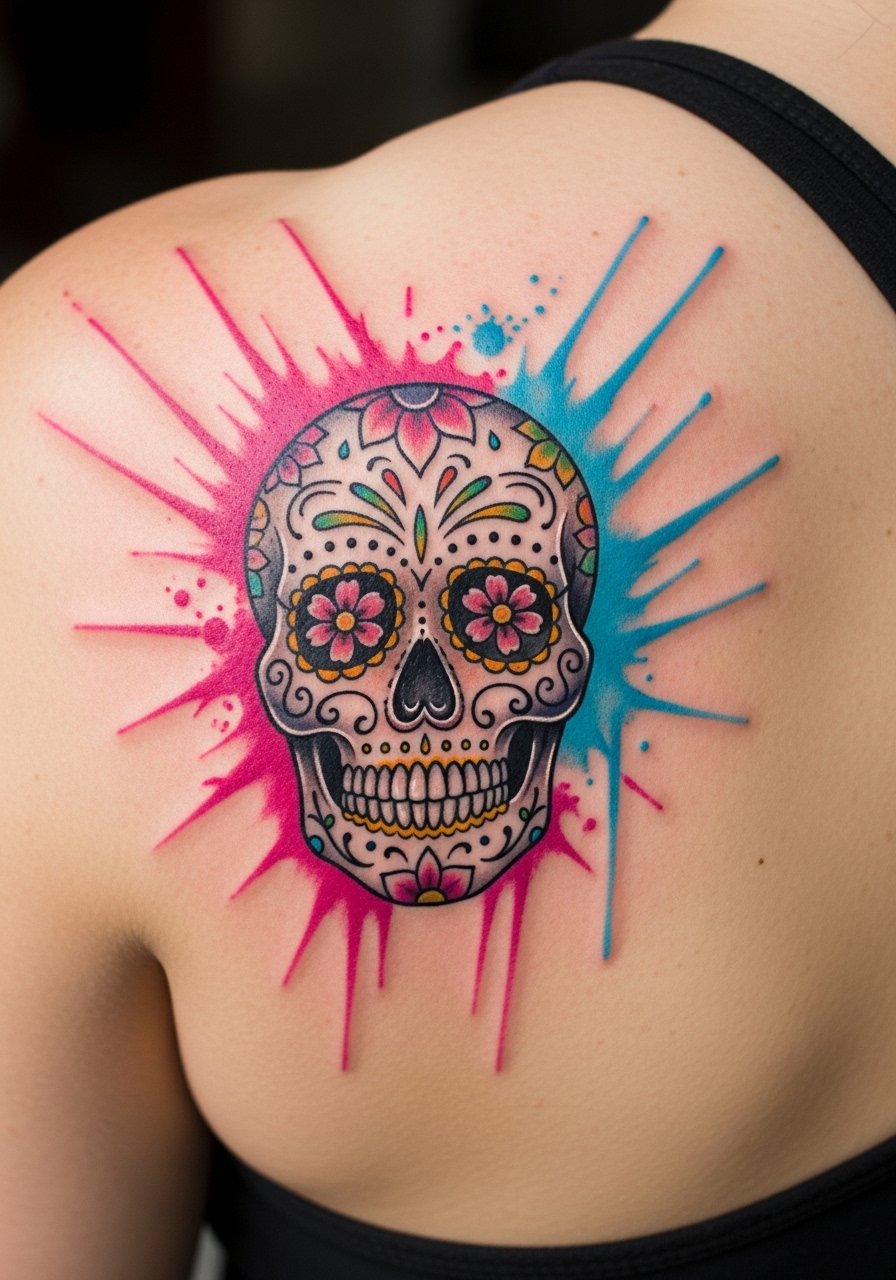
Most watercolor pieces from years ago faded into washed bruises. This version mixes a defined black skull outline with candy-color washes behind it so the silhouette survives fading. When you sit down for consults, bring exact swatches for the wash hues and ask the artist how they layer washes around linework. The shoulder blade is a forgiving placement for color but moves during sleep. Sessions are moderate in length and usually two appointments. Expect color softening by year one and a decision point about a color refresh at year three.
5. Traditional American Sugar Skull with Roses on Bicep
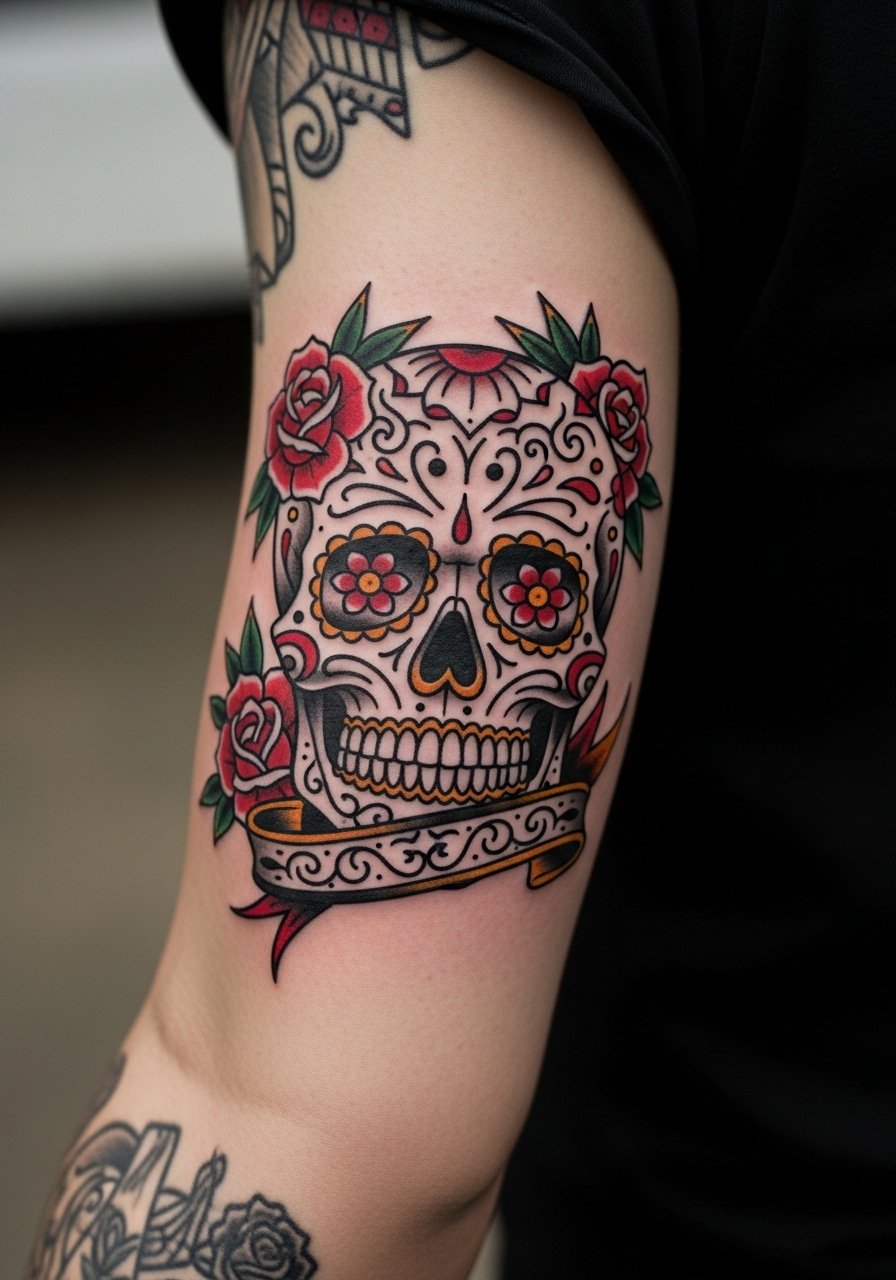
There is a timelessness to bold flash. Classic American linework uses thick contour and limited palette so the design keeps its shape as skin ages. Bring vintage flash references and be explicit about line weight during your consultation. A common error is asking for extremely thin script inside the banner. That script often becomes illegible. Biceps are easy on pain and usually finish in one or two sessions. This style looks largely the same at six months and at two years if you protect it from heavy sun.
6. Micro-Realism Sugar Skull Portrait on Inner Forearm
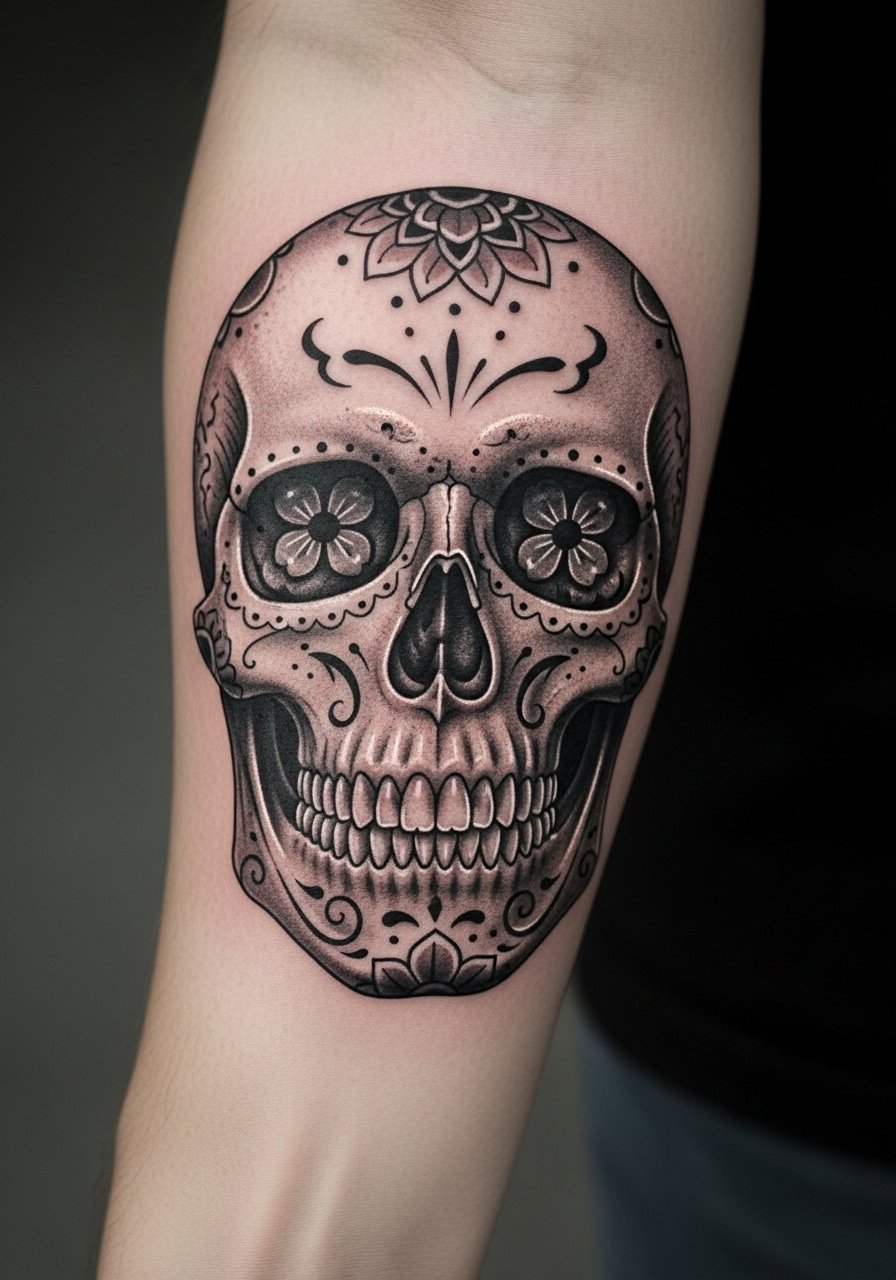
When you want a memorial that reads like a portrait, micro-realism brings depth. Tell your artist you want photographic contrast and specific teeth detail rather than decorative flourishes. The mistake collectors make is shrinking a portrait too small. Micro realism needs room to keep highlight and shadow separation. Inner forearm sessions can run long and feel like repetitive passes. Expect multiple sessions and a realistic touch-up timeline at year three for contrast restoration.
7. Ornamental Aztec-Inspired Sugar Skull on Chest
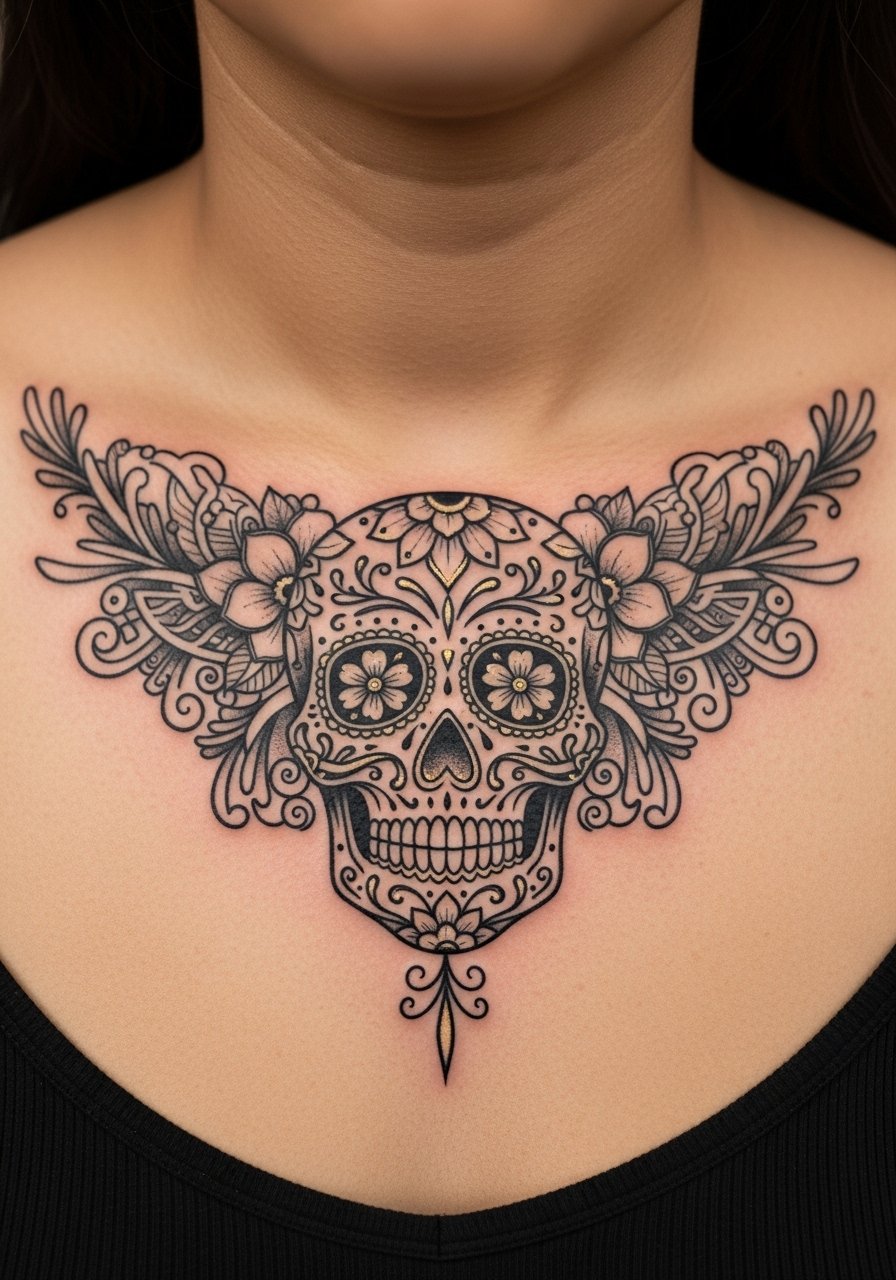
Artists split on cultural cues for ornamental pieces. One group emphasizes direct historical motifs and strict fidelity to Aztec geometry. The other group recommends adapting patterns respectfully and avoiding direct replication of sacred imagery. Mention you want inspired filigree rather than exact ritual symbols when you book. Chest placement allows a dramatic seven-inch piece that breathes with the torso. Sessions are often two to three long visits. Chest skin changes with weight shifts, so expect slight pattern distortion if your body changes considerably.
8. Ignorant Style Hand-Drawn Sugar Skull Behind Ear
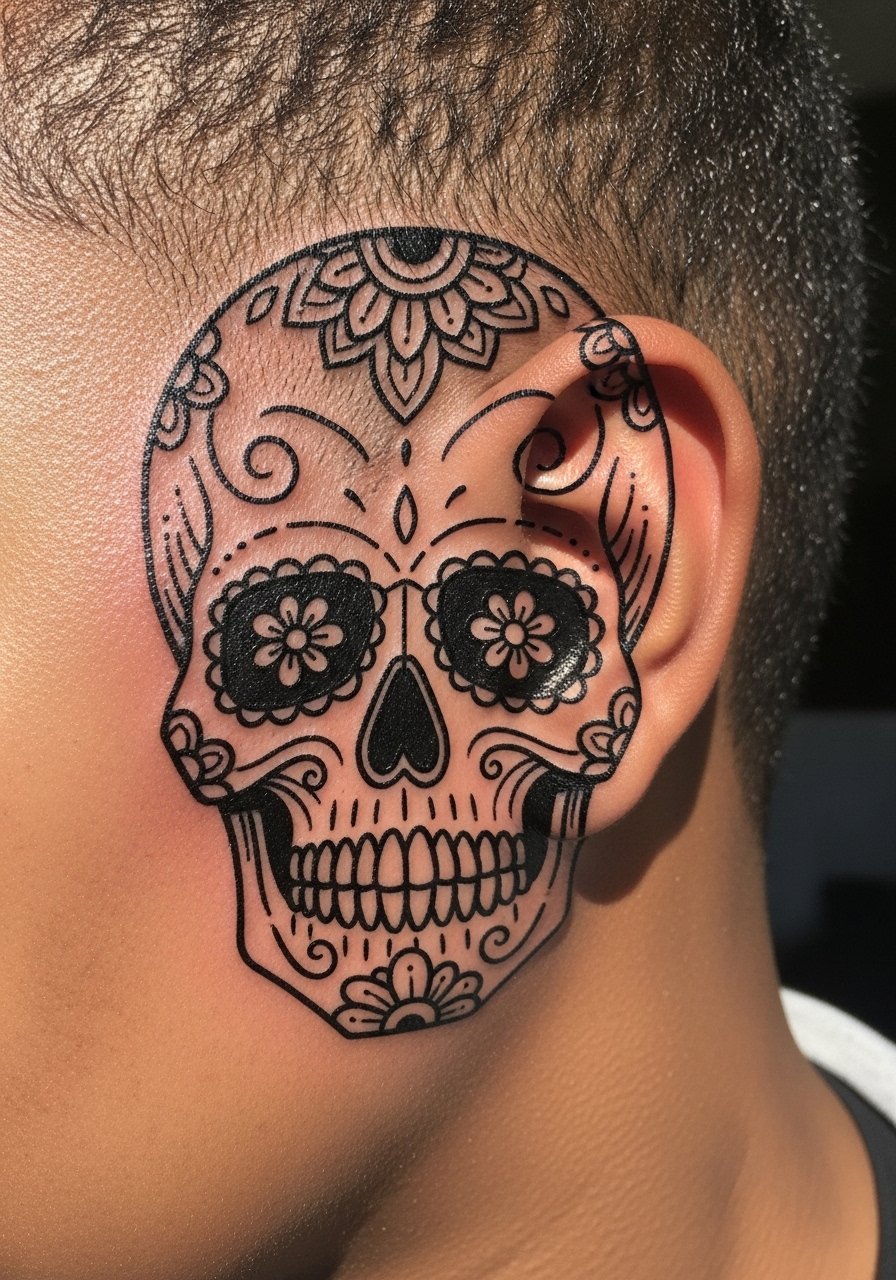
The naive, stick-and-poke aesthetic reads intimate and playful. A common version that ages poorly is when artists try to emulate imperfection mechanically and overwork the line. For a genuine ignorant look, ask for a single confident pass and no heavy shading. Behind-ear placement hurts less than ribs but requires a precise artist who has experience with small curved skin. Note about sensitive placement. Behind-ear healed lines can blur if ink depth is inconsistent, and touch-ups are often needed within 18 months.
9. Patchwork Sleeve Sugar Skull with Clocks and Hearts
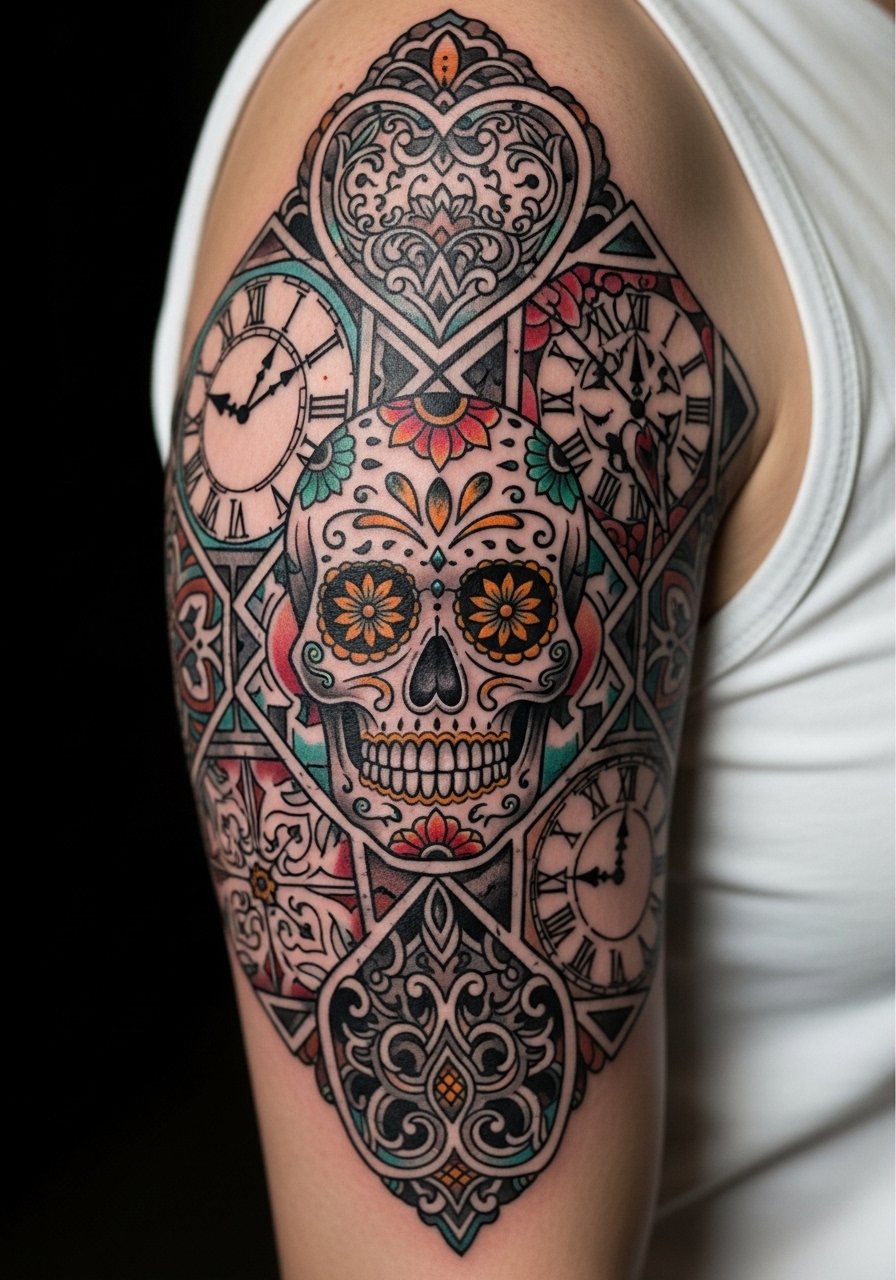
When you want a sleeve that tells a story and can grow over years, modular patchwork is the route. Start with one well-resolved sugar skull panel and plan additional elements later. The big mistake is trying to force a very small skull into a sleeve concept. Build blocks that read from a distance. Sleeve work requires multiple sessions spaced by several weeks and careful planning around linework continuity. Expect ongoing touch-ups as you add modules. If you plan to sit for conventions, use directories and convention calendars to find guest spots for matching style continuity.
10. Micro Sugar Skull on Finger
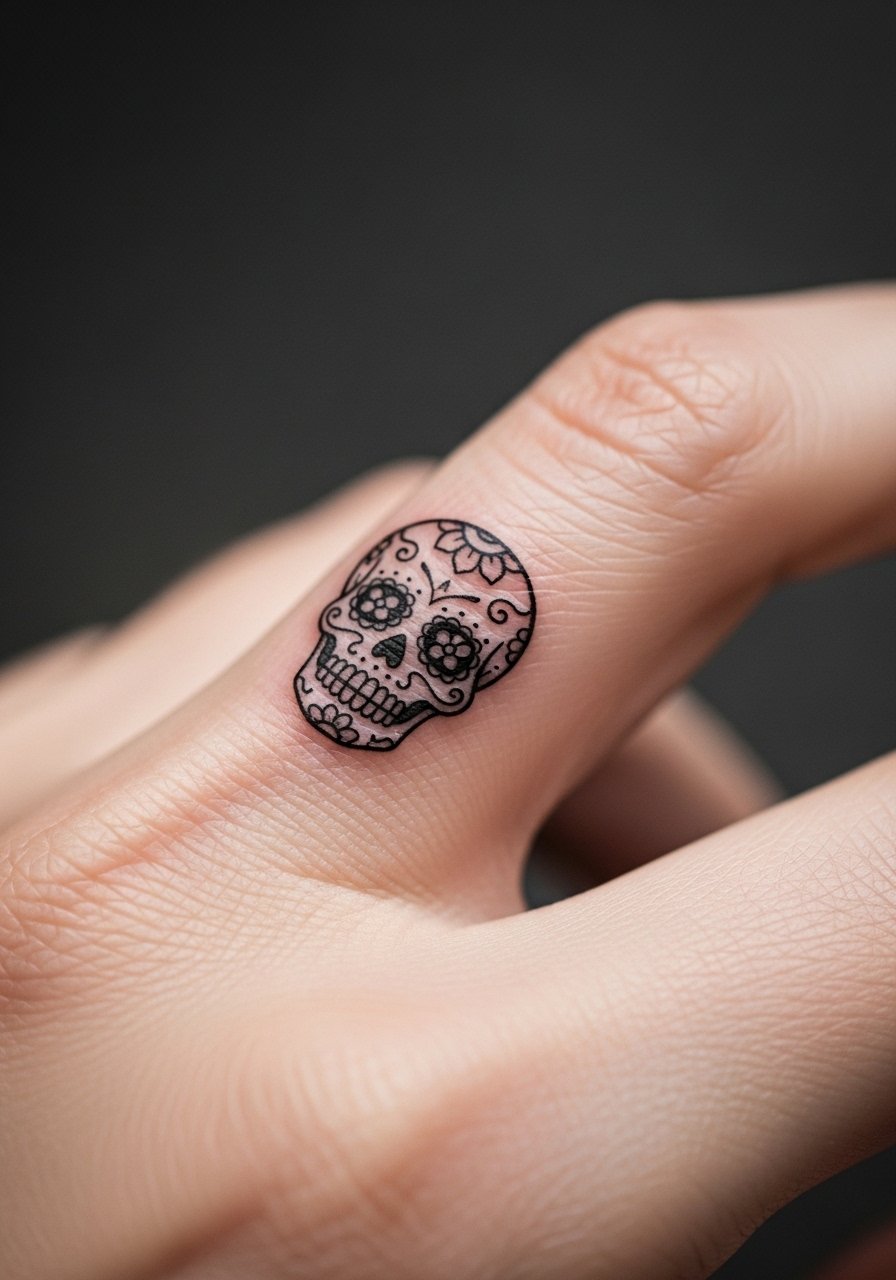
Fair warning: finger tattoos are notorious for rapid fading and need aggressive touch-ups. Micro sugar skulls can be charming but often demand yearly maintenance. Tell your artist you accept a living, changing piece rather than a forever-precise icon. A common error is requesting heavy detail inside a two-centimeter area. That detail will soften and sometimes disappear. Finger sessions are short but surprisingly painful. If you work with water or chemicals, factor in accelerated fade and plan touch-ups accordingly.
11. Mandala Sugar Skull Calavera on Calf
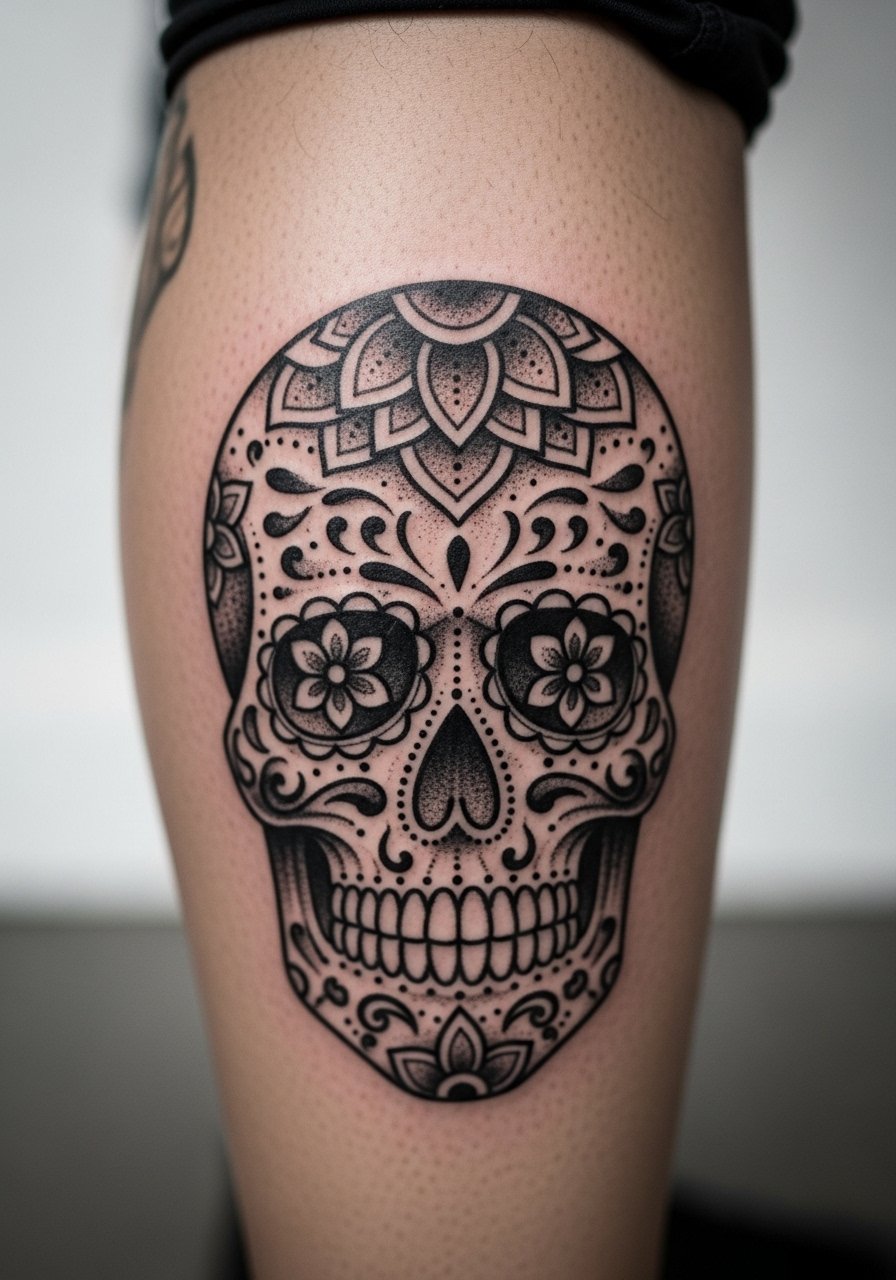
There is a visual calm to mandalas that pairs well with sugar skull silhouettes. Choose mandala fusion for balance and for a masculine or unisex look that holds up with dense black shading. Tell the artist you want negative space to separate ornate elements so the piece does not become a single dark mass. Calf skin tolerates heavier passes, but watch for blowout risk near softer inner calf tissue. Sessions are usually two to three depending on scale. Expect longevity; dense blackwork on calves can keep clear edges for years.
12. Minimal Dotwork Sugar Skull on Collarbone
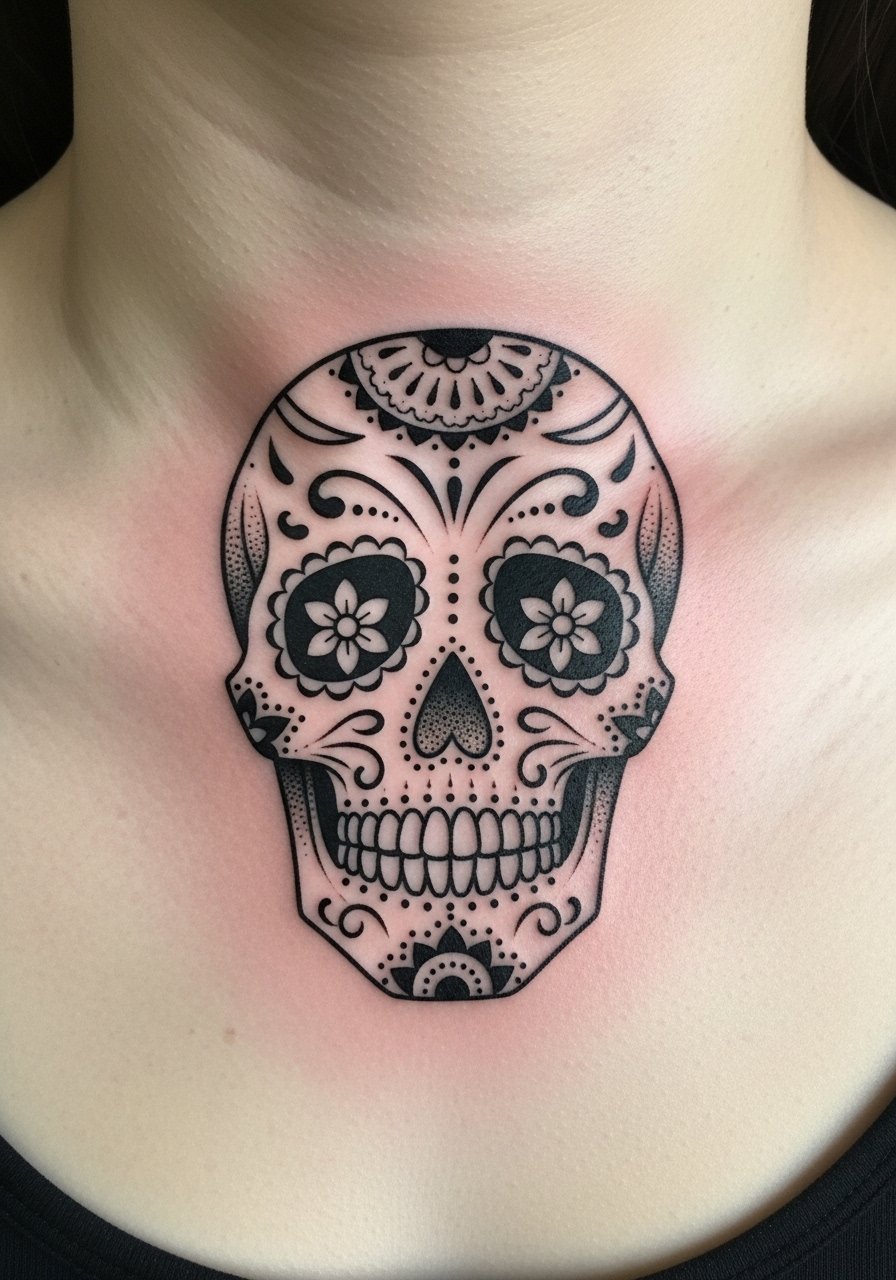
Most dotwork relies on repetition and spacing rather than solid fills. The collarbone highlights the jawline of a sugar skull visually, but it is an area that moves with posture. In consultation, ask the artist for planned spacing and paper mockups so dots do not cluster awkwardly. A common mistake is asking for ultra-fine stippling right on the bone, which can look patchy after healing. Collarbone sessions are moderate in pain and usually finish in one visit. Expect subtle softening by year two and plan a touch-up if dot density matters to you.
13. Candy-Colored Watercolor Mini Sugar Skull on Ankle
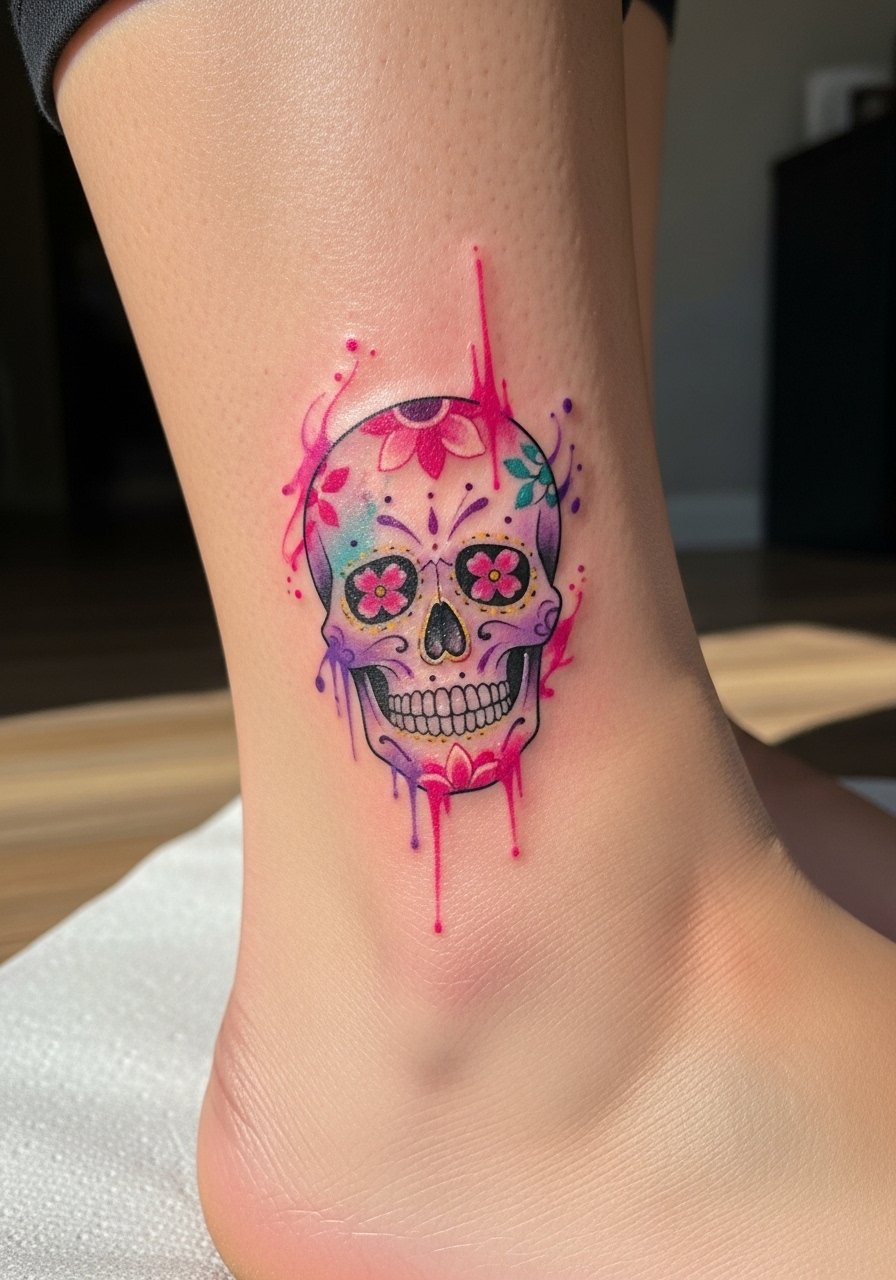
Visual impact lead: bright wash hues can make a tiny design read like a jewel. For an ankle mini, request color gradients that avoid extreme detail in the skull itself. The mistake is asking for full watercolor fill and delicate linework in a 3-inch piece. Ankle skin and shoes rubbing can hasten fade. Sessions tend to be short but healing needs careful sock and shoe choices for two weeks. Plan a color refresh at year two if the wash is central to the piece.
14. Matte Black Sugar Skull on Sternum
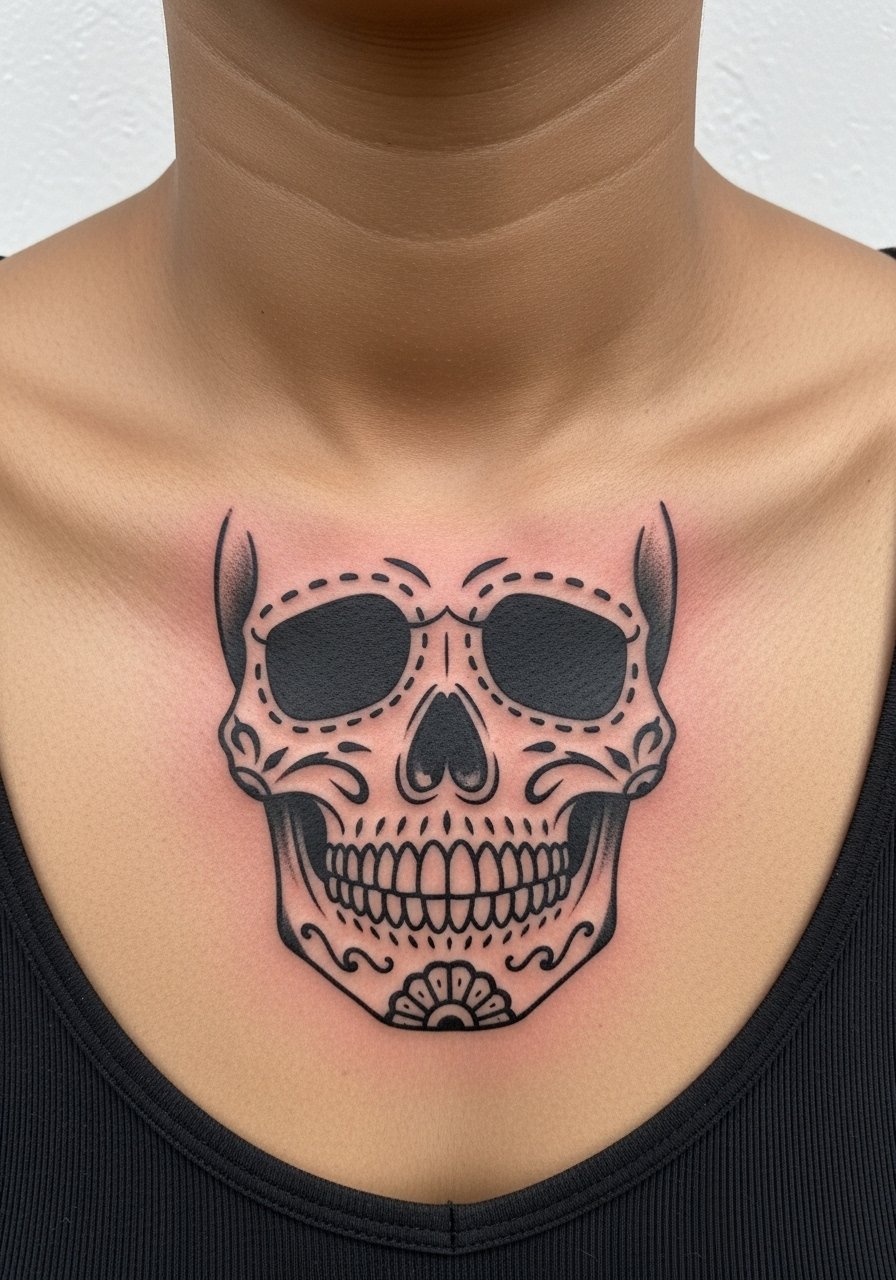
Pain warning lead: the sternum is one of the more painful placements. People choose matte black here because it reads strong and ages predictably. Mention during your consult you want solid blocks and clear negative teeth shapes. A common issue is asking for super-fine teeth detail at sternum scale; that detail can blur due to movement and skin texture. Sessions will be intense and often split. Note about sensitive placement. Expect a touch-up for any area that shows uneven saturation once healed.
15. Geometric Fragmented Sugar Skull on Thigh
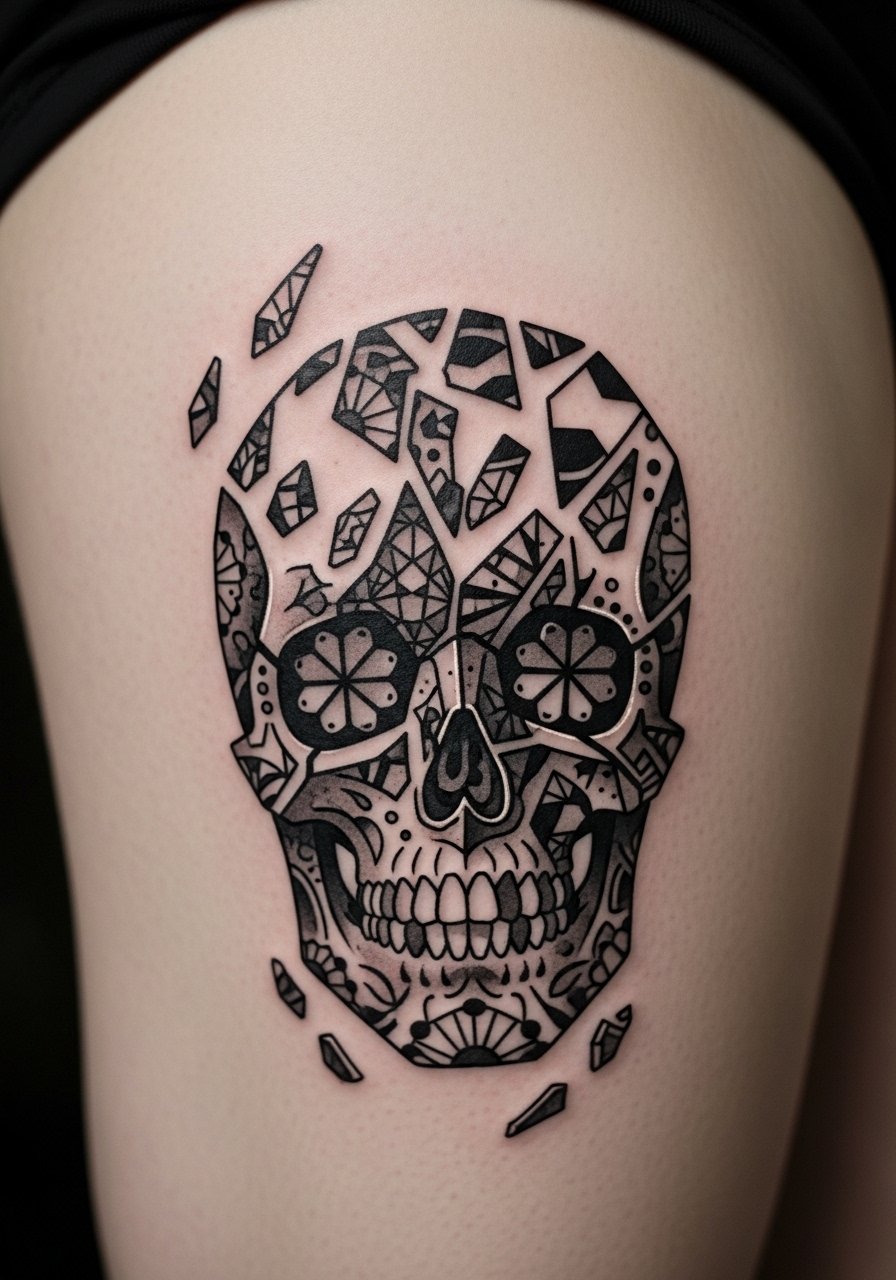
The biggest mistake with geometric fragmentation is making pieces too close to stretch zones. Thighs are attractive because they allow scale, but weight changes can distort geometry. Ask the artist to design for skin elasticity and to place key anchor points where distortion is least likely. Thigh sessions are moderate and may require two visits for crisp shading. Expect the piece to keep shape well if you avoid major body changes. If you plan on adding a leg sleeve later, note how modular anchors will integrate.
16. Memorial Sugar Skull with Year '1994' on Inner Bicep
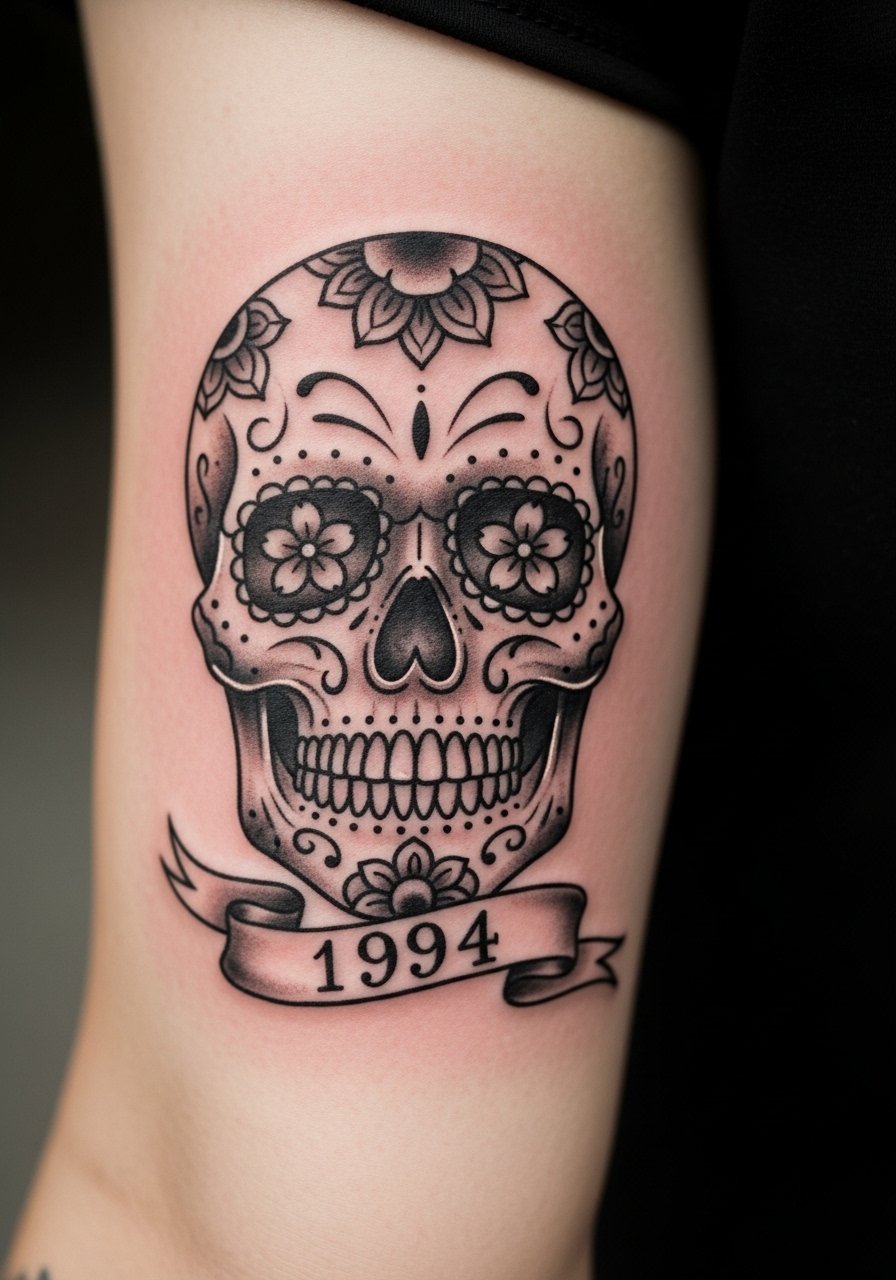
Consultation lead: when memorial text is visible include the exact year or name in your references so the artist can plan spacing. For a banner with the year 1994, ask for larger numerals rather than tiny script so the date stays legible. Inner bicep is forgiving for detail but stretches with arm movement. A common mistake is over-styling script inside a small banner, which becomes unreadable by year two. Sessions are comfortable and allow for layered shading. Plan a touch-up for contrast restoration in a few years if you want the portrait to remain crisp.
17. Sleeve Starter Flash Patch for Walk-Ins
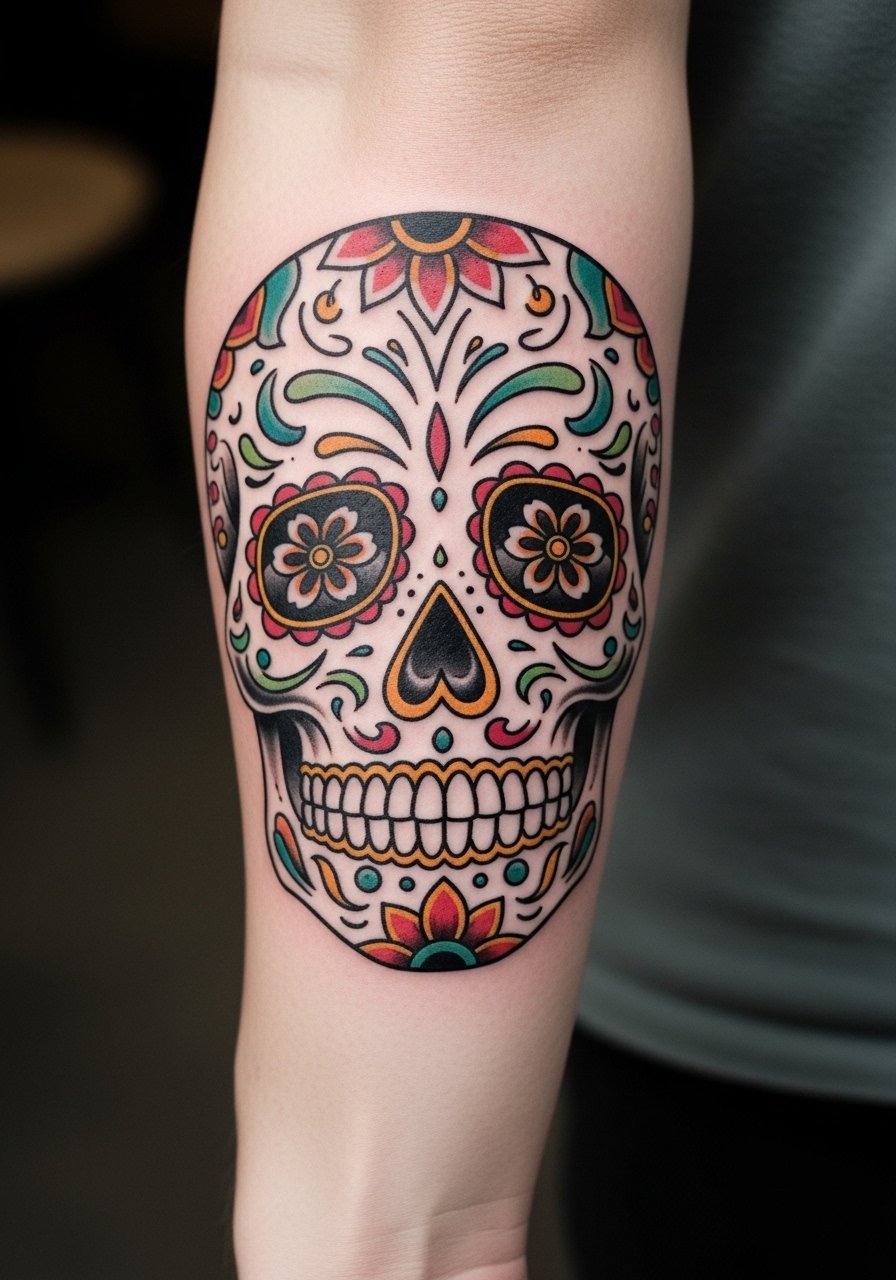
When you want to start a sleeve on a budget, a flash patch lets you lock in a motif that can be expanded later. The mistake is choosing a pre-drawn flash with too-fine ornamentation that does not translate to larger sleeve cohesion. Bring reference panels that show how your chosen skull will sit next to clocks or roses. Sessions for flash patches are predictable and often shorter than custom pieces. Walk-ins can be great for flash but use directories and Tattoodo filters to find shops whose flash language matches your sleeve plan.
18. Floral Sugar Skull Thigh with Weight-Change Considerations
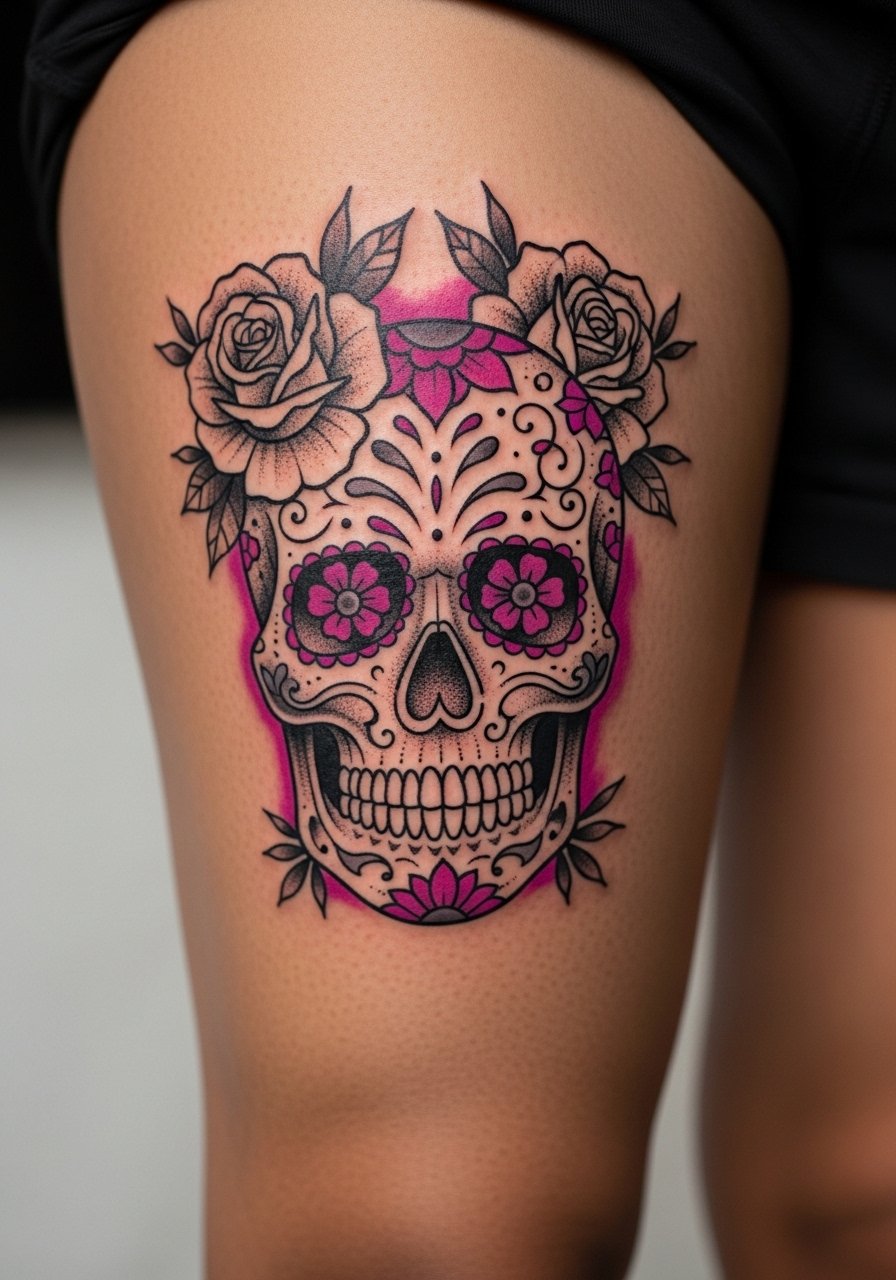
Aging lead: thighs can stretch with weight gain and pregnancy. For larger floral sugar skulls, place the focal skull on a stable plane away from the crease zones where stretch happens most. Tell your artist you want composition that reads even with moderate body changes. The common error is centering delicate filigree across a high-movement seam. Thigh sessions are comfortable and often long. Expect mild distortion with major weight shifts and plan for compositional touch-ups if needed.
19. Black and Gray Stipple Shaded Sugar Skull on Calf for Darker Skin
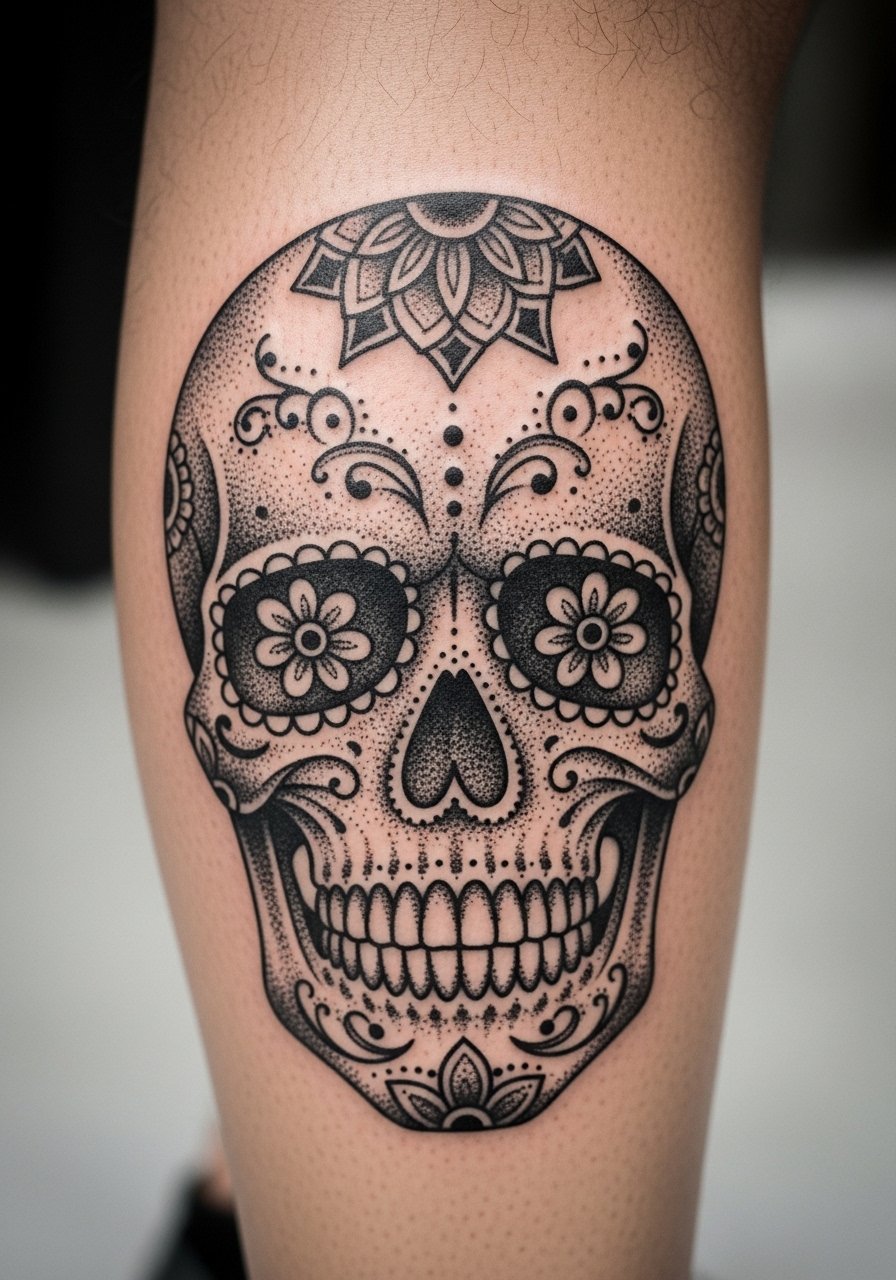
I have noticed that adaptations for darker skin favor thicker linework and matte shading. This option uses stipple shading and strong contour so the skull reads clearly on melanin-rich skin. In your consult, ask for contrast plans and to see healed examples on similar skin tones. The mistake is asking for very pale gray fills that vanish. Calf placement tolerates heavy passes and holds contrast well. Expect a two-session build and a possible touch-up at year three to restore midtone separation.
20. Hidden Nape Micro Sugar Skull under Hairline
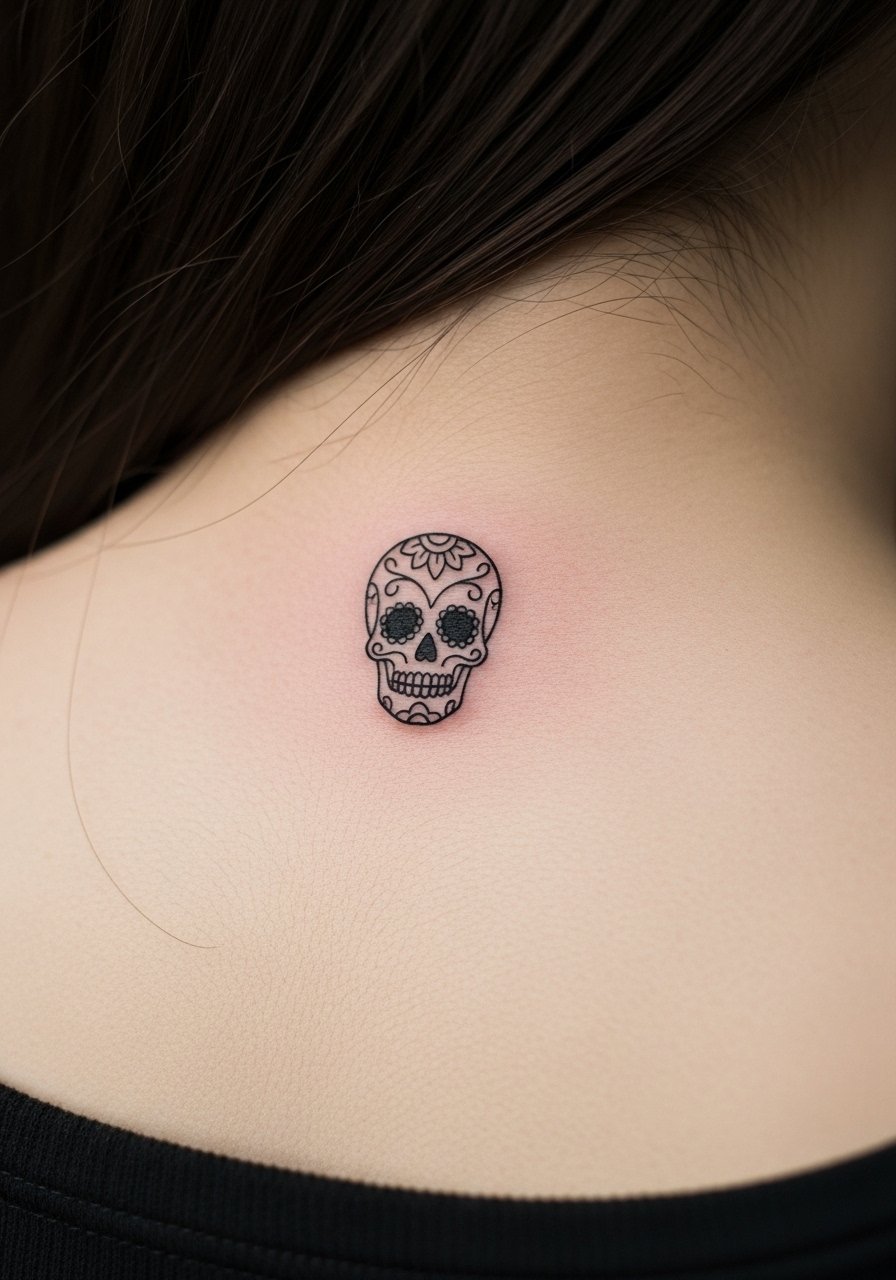
Mistake lead: hiding a detail under hair is great for professional settings, but people sometimes pick a too-complex design that reads poorly when scaled down. For a nape micro skull, ask for simplified teeth and strong outer contour so the silhouette reads when hair parts. Note about sensitive placement. Sessions are short and healing is straightforward if you avoid tight collars. Touch-ups are common within two years if you change hair length or expose the area frequently.
Tattoo Prep and Aftercare Essentials
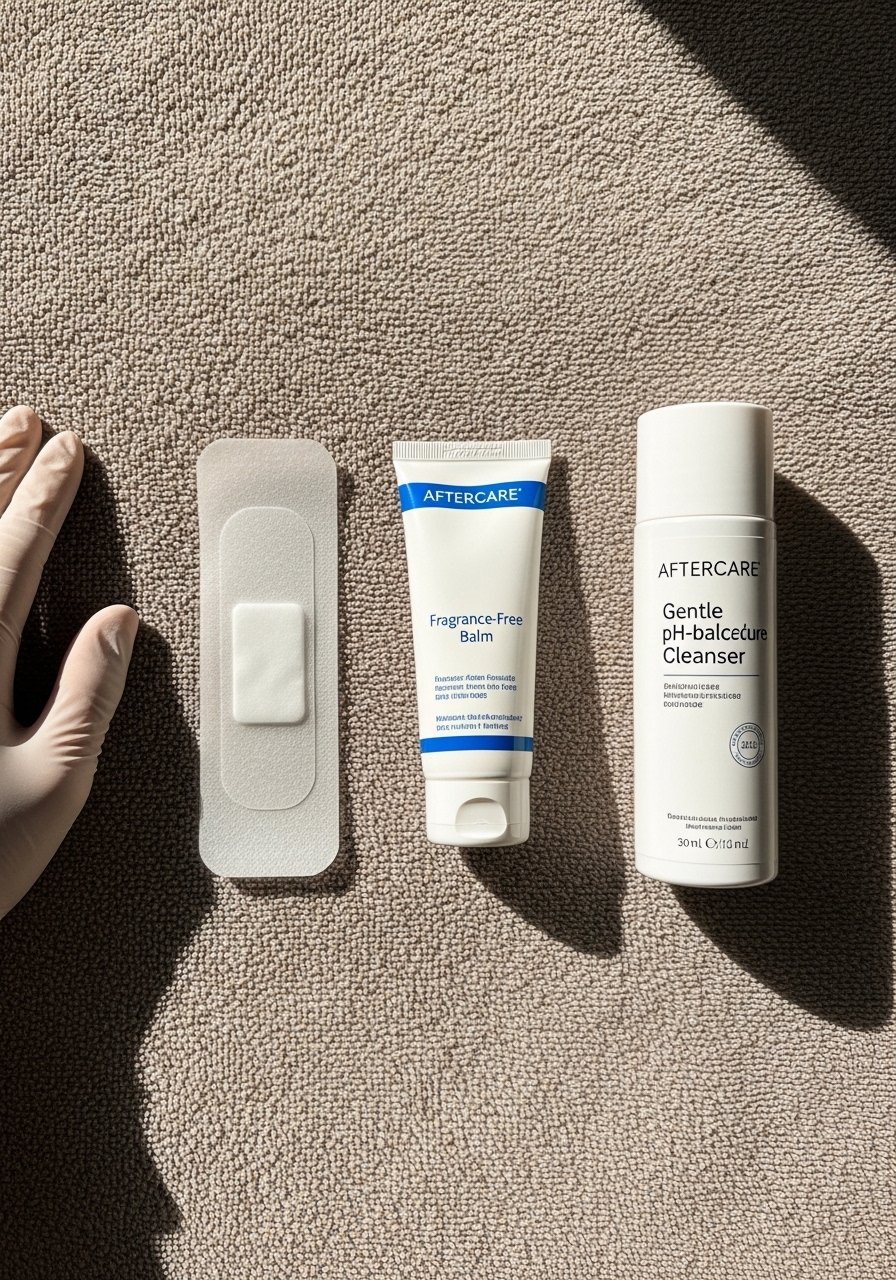
Healing right matters more than gadgets. Below are practical items to have before your appointment and through the first month. I include one mainstream product people mention in debates, and the rest are lesser-known or generic descriptors that match clinic recommendations.
Medical-grade occlusive bandage roll, 6-inch width, breathable. Use immediately for the first 24 hours if your artist uses second-skin methods. It keeps the area clean and reduces scabbing when applied correctly.
Fragrance-free gentle healing balm, small tube, non-comedogenic. Apply sparingly after the scab falls to maintain moisture without clogging pores.
Gentle pH-balanced foaming cleanser, fragrance-free. Use for twice-daily cleansing during the first week.
Silicone-based scar sheet, small patch pack. For raised areas or older scars, silicone sheets can even out texture during long-term maintenance.
Breathable non-stick gauze pads, assorted sizes. Useful for initial transport and any unexpected bleeding.
Lightweight mineral sunscreen SPF 30 or higher, reef-safe formula. After healing, sunscreen protects color and contrast.
Small cooling gel packs, reusable, soft cover. Handy for swelling in sensitive placements like sternum or ribs.
Saniderm style occlusive dressing, single-use packs. Mentioned widely in debates about wet versus dry healing. If you choose to use it, follow the application timeline your artist recommends.
Every tattoo is different. Always follow your artist's specific aftercare instructions. Consult a dermatologist if you have skin concerns or unusual healing issues.
Frequently Asked Questions
Q: Will fine line sugar skulls blur faster if I get a full sleeve that mixes styles?
A: It depends on where you place the fine line elements and how much negative space they have. Fine line needs room to breathe, especially next to bold blackwork. On a sleeve, ask your artist to isolate delicate pieces from heavy fills so the thin contours do not get overwhelmed. Expect touch-ups sooner for fine line sections than for solid black panels.
Q: Do watercolor-style sugar skulls need different aftercare than traditional ones?
A: The basic healing steps are the same, but watercolor relies more on gradual color saturation. Keep washes out of direct sun during the first month and avoid over-moisturizing with thick occlusives that can flatten soft transitions. I recommend the gentle pH-balanced cleanser and a light fragrance-free balm from the shopping list for color pieces.
Q: Why do geometric mandalas on ribcages often lose crisp edges faster than on forearms?
A: Rib skin stretches and moves more with breathing and weight changes, so crisp geometry can soften. Artists split into two camps on this. One camp says ribs are too mobile and cause lines to blur quickly. The other camp says with proper needle depth and spacing the geometry can settle fine. Ask an artist where they stand and look at healed examples on rib placements before booking.
Q: How should I adapt a sugar skull design for darker skin tones so it does not look washed out?
A: From what I've seen, thicker linework and matte saturation help. Request higher contrast in the plan and ask to see healed photos on similar skin tones. Avoid very pale washes alone and prefer strong negative space and solid black anchors to keep the silhouette readable over time.
Q: Saniderm versus dry healing, which is better for a sugar skull back piece?
A: Artists are divided. One group prefers occlusive dressings for a clean, protected first 24 to 72 hours and faster visual healing. The other group values dry healing for natural scab formation and less trapped moisture. For a back piece, consider the area you sleep on and clothes you wear. If you choose an occlusive bandage, follow the exact application and removal timeline your artist recommends.
Q: If I want a memorial sugar skull with a year or name, how should I size the text to stay legible?
A: Make numerals or names larger than you think you need and use a simple, open script or block numerals. Tiny script in a narrow banner often becomes unreadable. Ask the artist to mock up exact scale on your body so the spacing holds up after healing.