
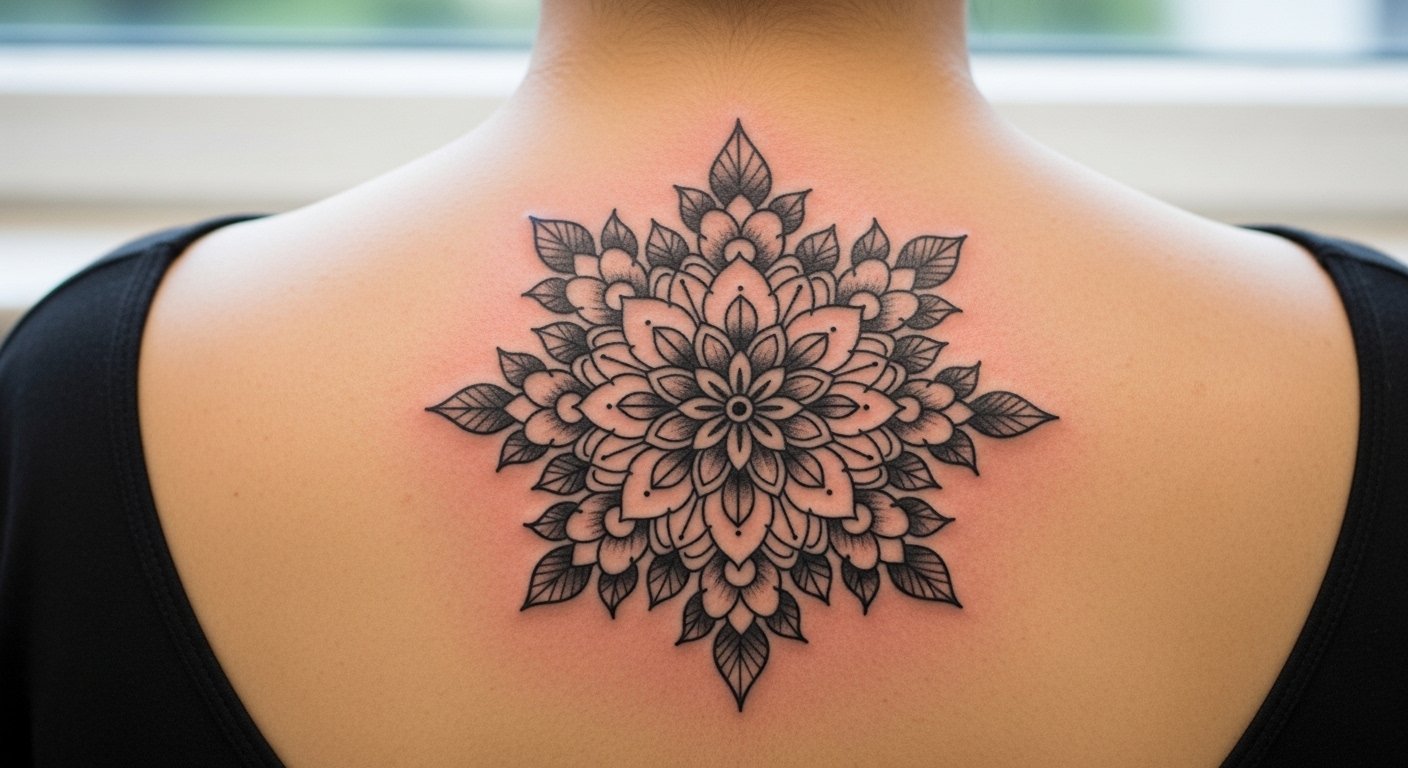
Someone I know spent months saving designs and still booked three consults before settling on a mandala that would age well with their skin. The trick is picking the right linework, placement, and fill so the floral elements keep definition after healing. Below are 25 dark mandala flower ideas with practical notes on aging, pain, and what to ask your artist so the piece still reads in a few years.
1. Fine Line Mandala Flower on Inner Forearm
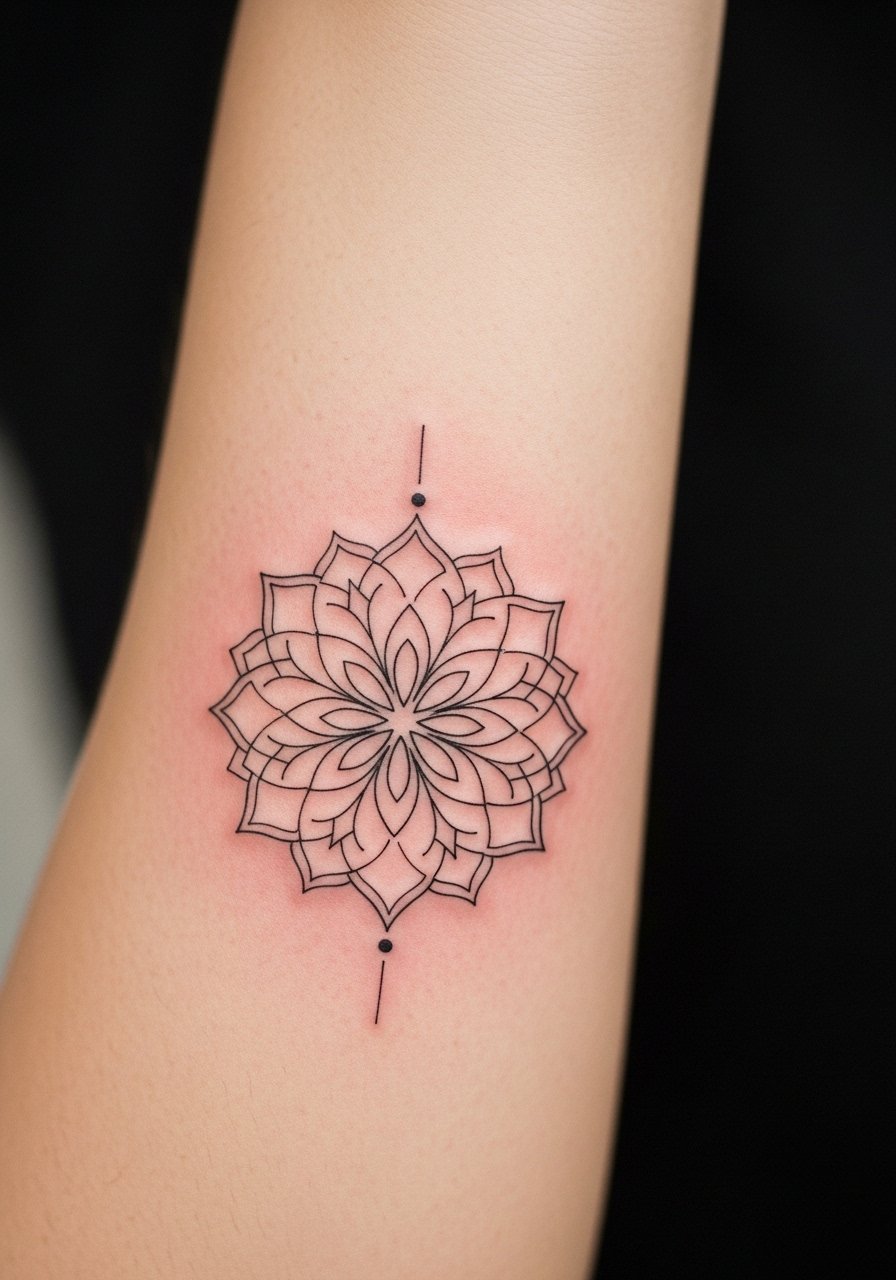
Someone I know first saw this style on a friend's forearm and liked how delicate the petals looked with narrow linework. Expect a low to moderate pain level. Ask for slightly thicker outer lines so the petals do not blur into one another as the tattoo heals and ages. A common mistake is asking for ultra-micro spacing between petals. That looks crisp at first but can soft-focus by year two. Session time is usually under two hours for a medium-sized piece. Plan for a touch-up in year two to refresh linework if your skin trends oily. Tell your artist you want clear negative space between petals so the mandala keeps its floral silhouette.
2. Blackwork Lotus Mandala on Calf
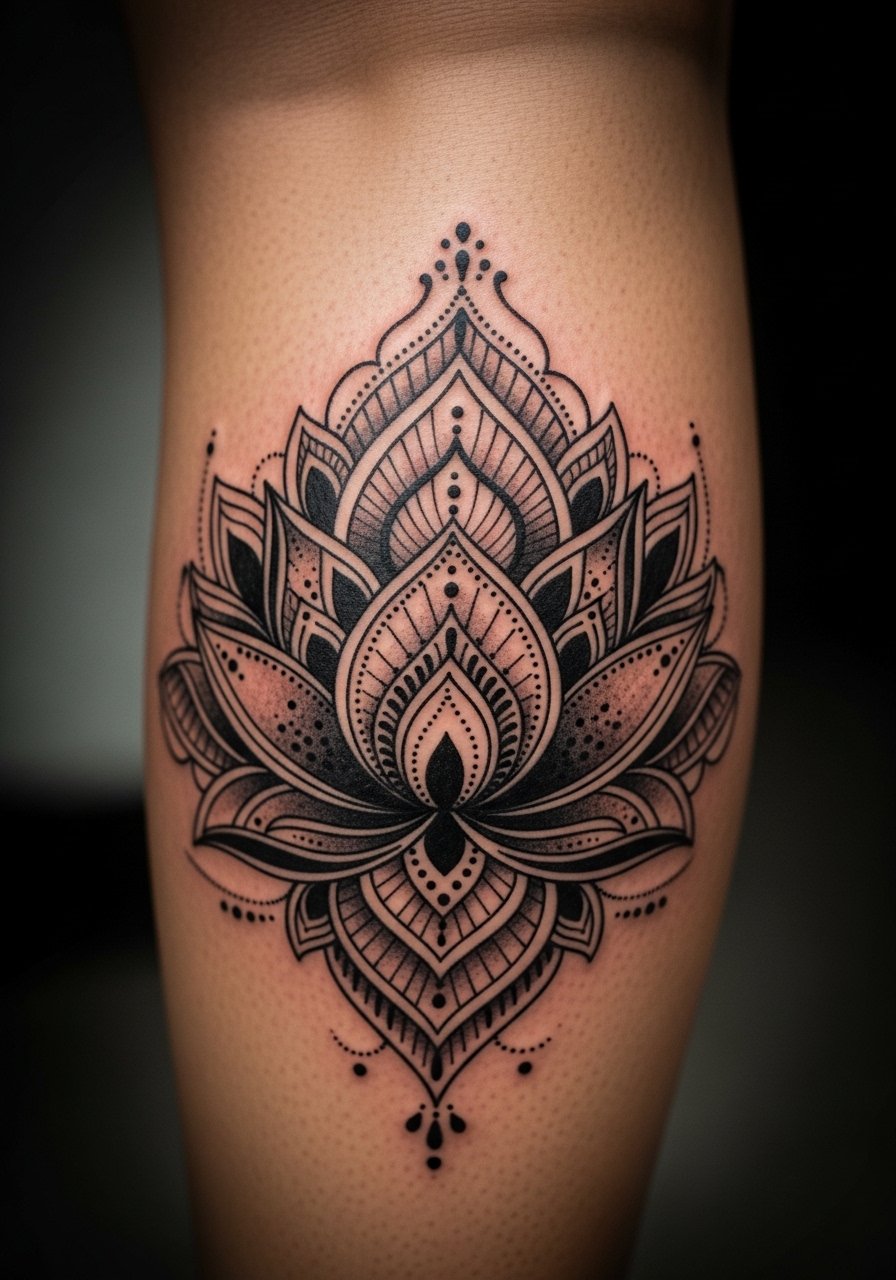
Fair warning: the calf holds ink well but swells during sessions for some people. Solid black saturation emphasizes petal shapes and hides fading longer than thin work. During consultation, ask the artist about their approach to block shading versus stipple shading so the lotus reads at a distance. A mistake I see is filling too much negative space with thin hatching. That ages poorly on textured skin. Expect a two to three hour session for a calf piece at this size. Because saturation wins over fine detail here, touch-ups happen less often than on thin-line mandalas.
3. Stipple-Shaded Mandala Rose on Shoulder Cap
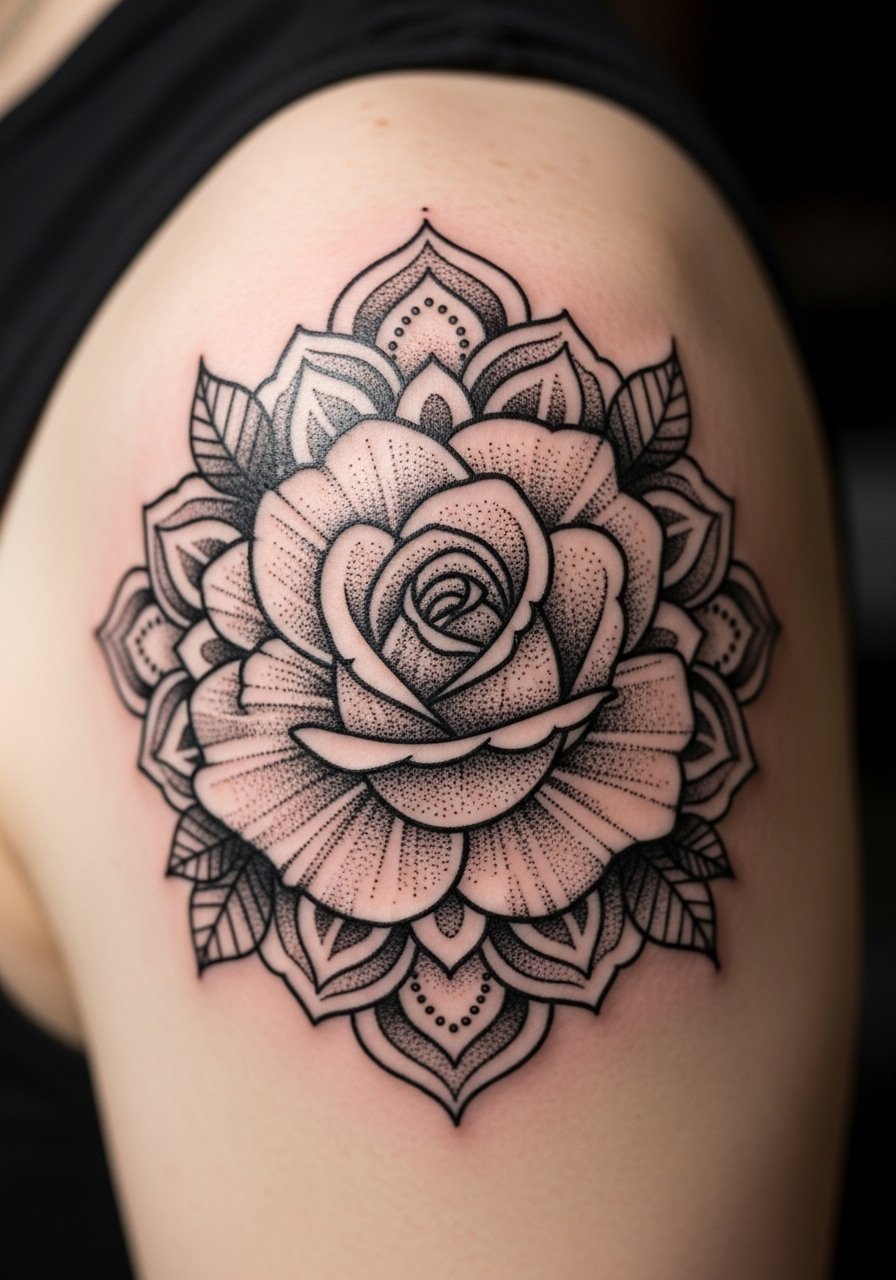
There is something about stipple shading that makes floral mandalas feel like engravings. Shoulder cap is friendly for healing and keeps stippling crisp. Tell your artist you want dot work density to increase toward the center of the rose and to use slightly heavier anchor lines around petals. One common mistake is requesting uniform dot density, which flattens the flower over time. Sessions can be split into two short visits if your skin reacts. Expect the piece to hold detail well for three plus years, with touch-ups mainly for the outer lines.
4. Dark Geometric Mandala with Peony on Inner Bicep
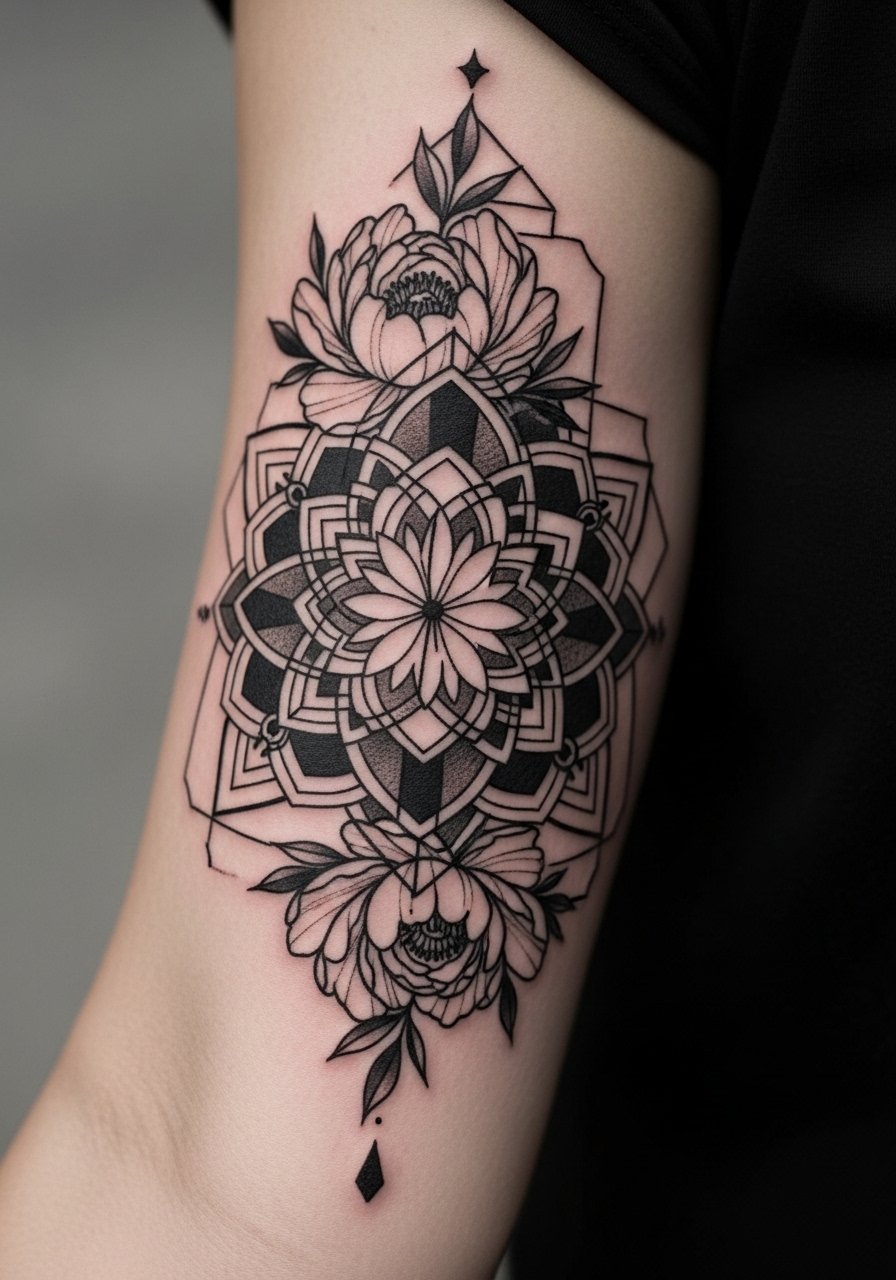
Pain warning: inner bicep can be tender for many people. The combination of bold geometry and floral peony lines gives structure so petals do not blur into one another. Ask your artist to plan negative space corridors inside the petals for breathing room. A frequent mistake is packing too many micro-floral details into a small bicep area. That causes early softening and can require a touch-up sooner than expected. Session length varies with size but budget two hours. Expect a touch-up around year three for midline saturation.
5. Mandala Flower Wrist Band
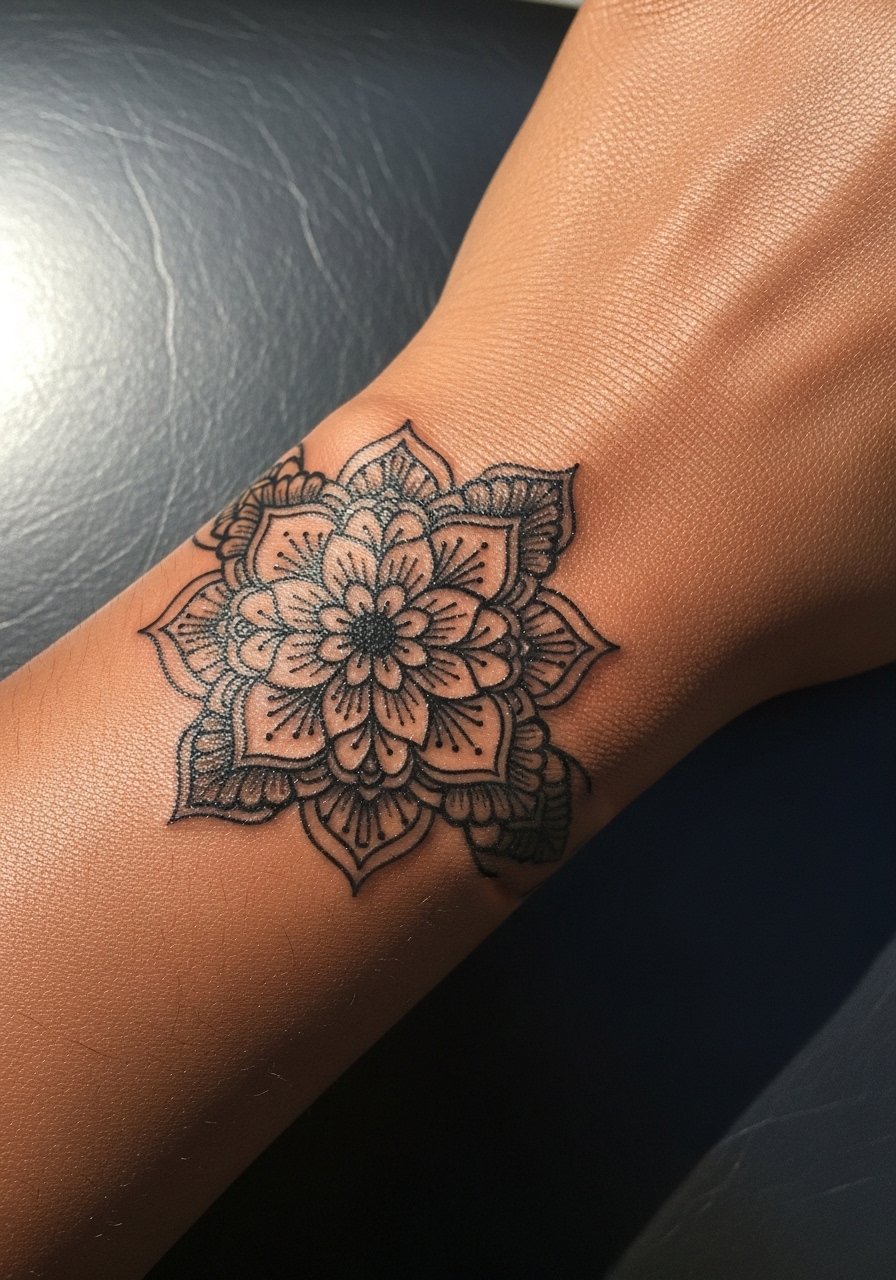
When you sit down with your artist for this one, bring photos showing the exact wrap and spacing you want. Wrist skin moves a lot so the pattern must breathe. The biggest mistake is squeezing too many fine arcs into a tight wrist band. That blurs and reads as a single dark band later. Pain is moderate. Short sessions work, but expect a quick touch-up at the six to twelve month mark for edges. Consider how jewelry and watch bands will interact with the piece while it heals.
6. Micro Mandala Flower Behind the Ear
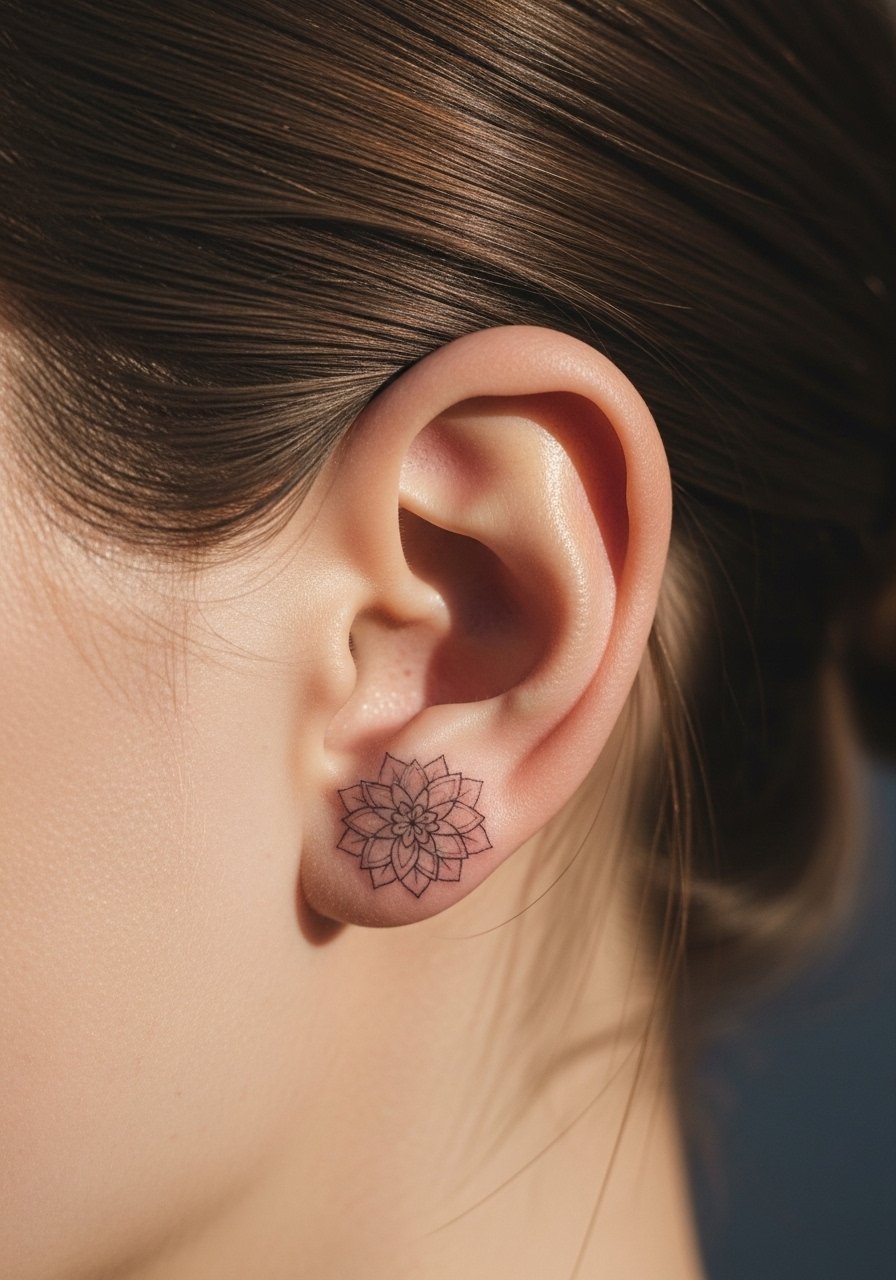
If you want a tiny floral mandala in a discreet spot, behind the ear is subtle. The area is sensitive. Ask for shallow depth work and a slightly bolder outer circle so the micro design remains legible. A mistake people make is insisting on ultra-thin microdots in that thin skin area. Those disappear faster than expected. Sessions are short. Expect fading within one to two years and plan for a refresh if you want it precise long term. Note that hidden placements can still have visibility in certain hairstyles.
7. Dark Mandala Flower Sternum Piece
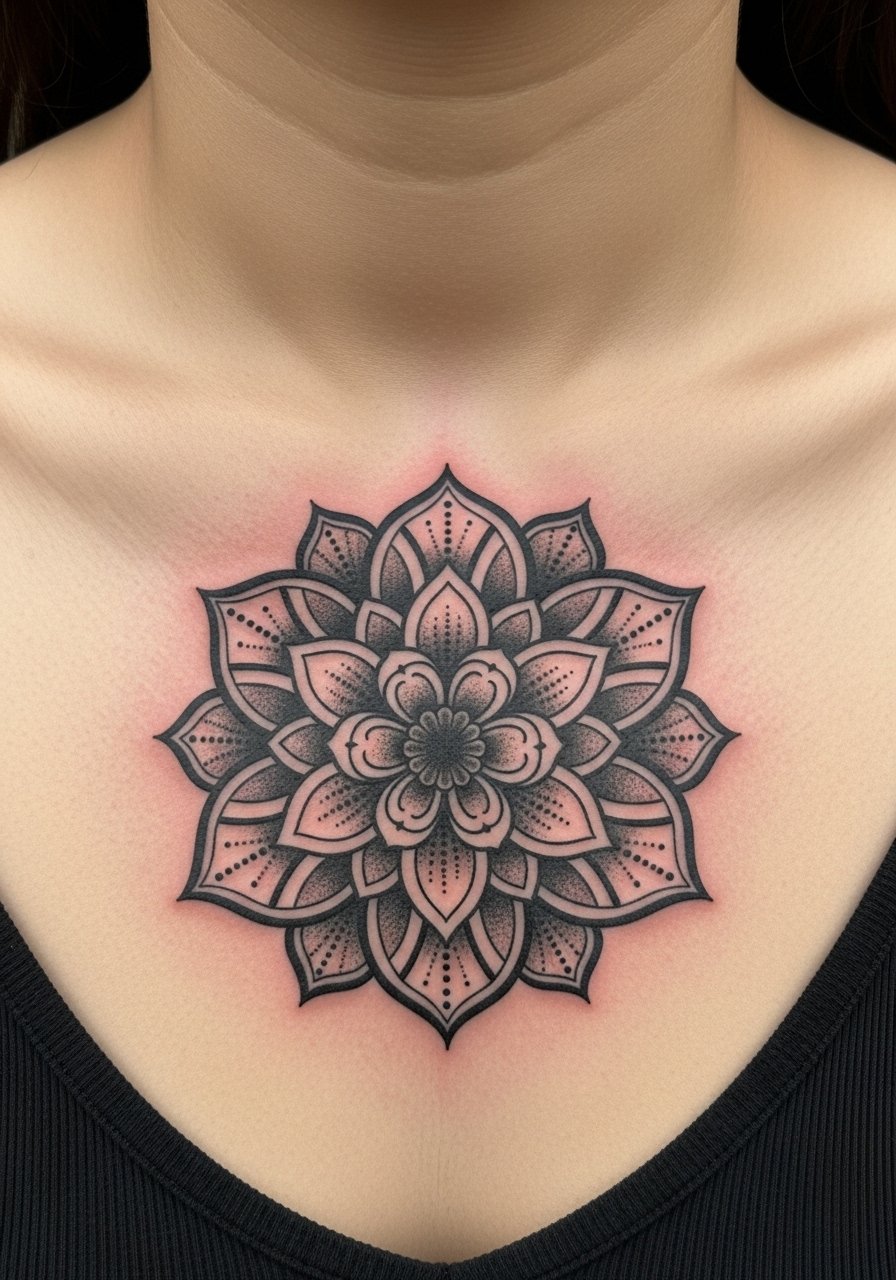
Artists split on chest and sternum work. One camp argues the constant movement and thin skin there makes lines blur faster. The other camp says careful depth and spacing keeps mandalas crisp for years. Name both camps to your artist and ask where they stand before booking. Sternum pieces are sensitive so expect strong pain and longer sessions. A common mistake is requesting extremely tight mandala circles over the sternum. Slightly increasing spacing preserves contrast as it heals. Touch-ups at two to four years are common.
8. Thigh Panel with Layered Mandala Flowers
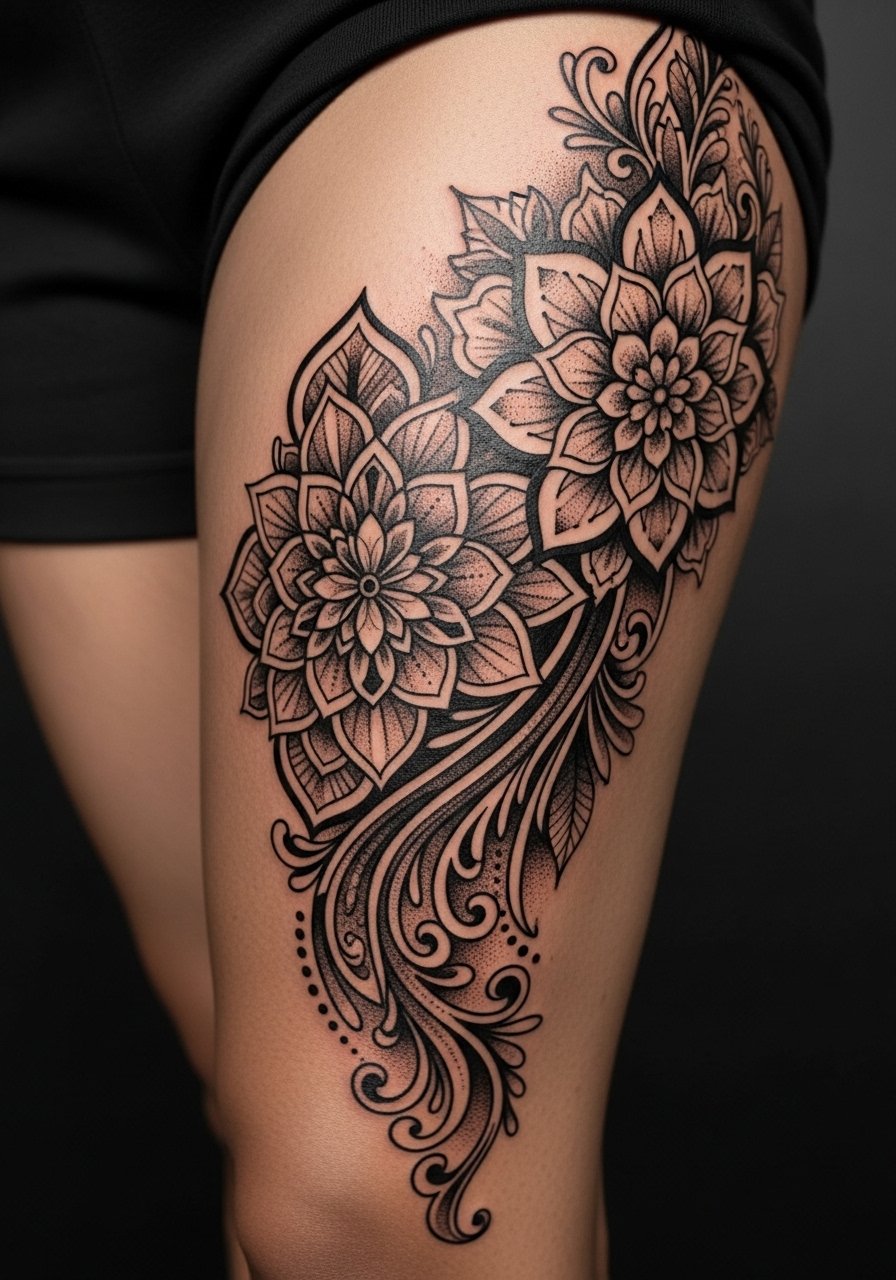
There is visual impact in stacking mandala flowers into a panel that follows your thigh curve. Thigh skin holds saturation well and allows larger scale for detail that ages nicely. During consult, point out how the panel should taper with your body movement. A frequent mistake is crowding different styles of mandala work into one panel without a unifying anchor. Expect two or more sessions depending on size. For many people a touch-up at three to five years keeps the layers distinct.
9. Half-Sleeve Mandala with Dark Floral Fills
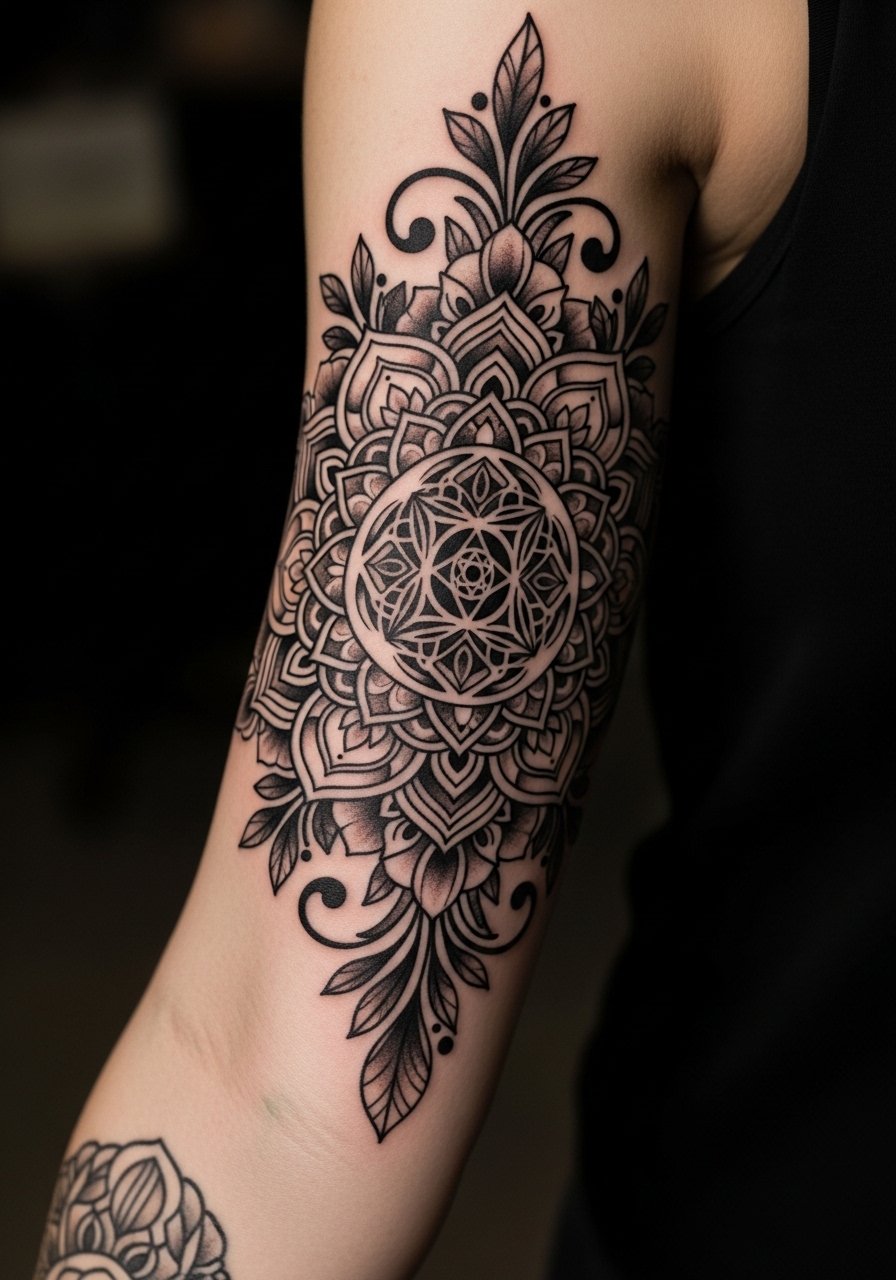
Most watercolor trends from five years ago fade into bruised color palettes. This dark mandala half-sleeve holds up because the emphasis is on saturated black fills and strong linework. Bring sleeve photos that show how you want petal edges to stack with negative space. A real mistake is asking for too many tiny connected elements near the elbow. That area flexes and can cause break in linework. Expect multiple long sessions and a touch-up in year two to three for elbow-adjacent lines.
10. Mandala Flower Over a Scar for a Cover-Up
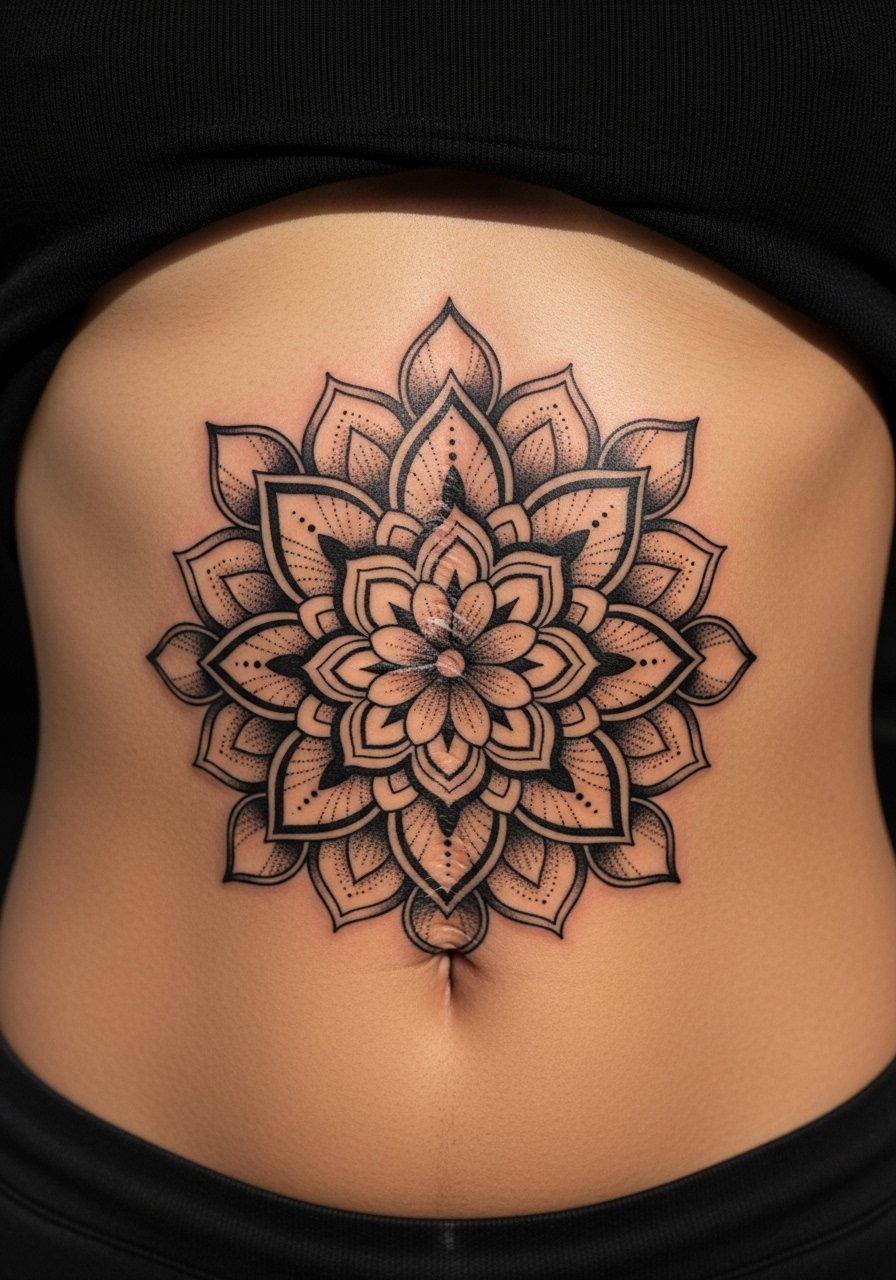
Using a mandala to cover a scar can work well because the radial pattern distracts from linear scar texture. The important thing is to let your artist examine the scar in person. A mistake is trying to hide a raised or wide scar without planning for extra saturation and touch-ups. Sessions vary with scar type and sensitivity. Some people need small follow-up sessions as the skin heals differently over scar tissue. Expect the healed look to depend on how elastic the scar area is.
11. Floral Mandala Collarbone Accent
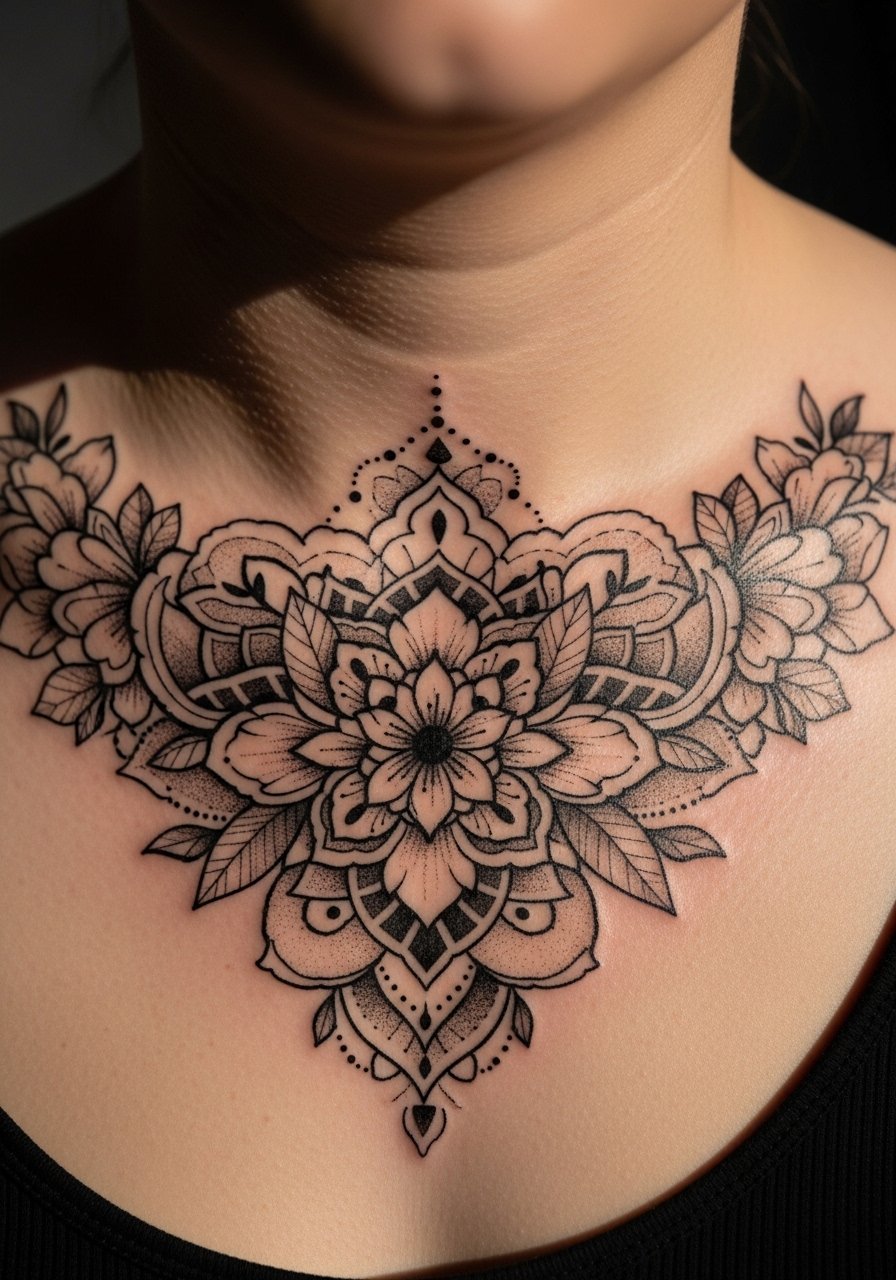
There is a visual lightness when a mandala nestles along the collarbone. Pain is moderate given the thinness of the area. Tell the artist you want the petals to follow the collarbone line rather than sit perfectly symmetrical. That small compromise keeps the piece flattering with body movement. The common mistake is forcing perfect circular symmetry across the collarbone which can read awkwardly. Sessions are moderate and touch-ups may be needed at the outermost tips after a year or two.
12. Blackwork Sunflower Mandala on Upper Arm
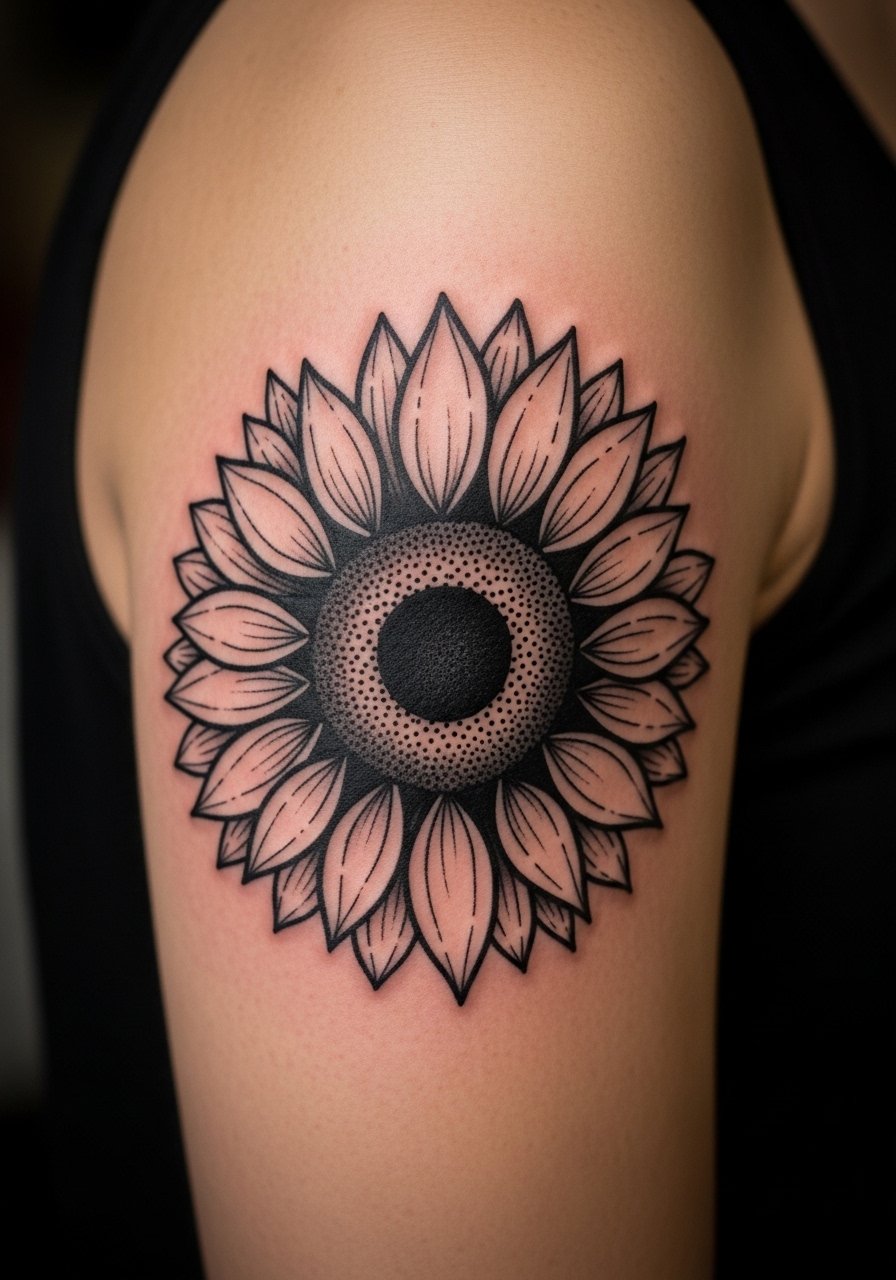
There is something about a black sunflower mandala that reads like a badge. Upper arm placement is forgiving for both healing and detail retention. Ask your artist about petal spacing and how heavy you want center saturation. Overfilling the center can pull focus away from petal detail, which is a common mistake. Session time is usually under three hours. Expect the piece to age steadily with minimal touch-ups if the center saturation stays balanced against linework.
13. Mandala Flower Finger Ring
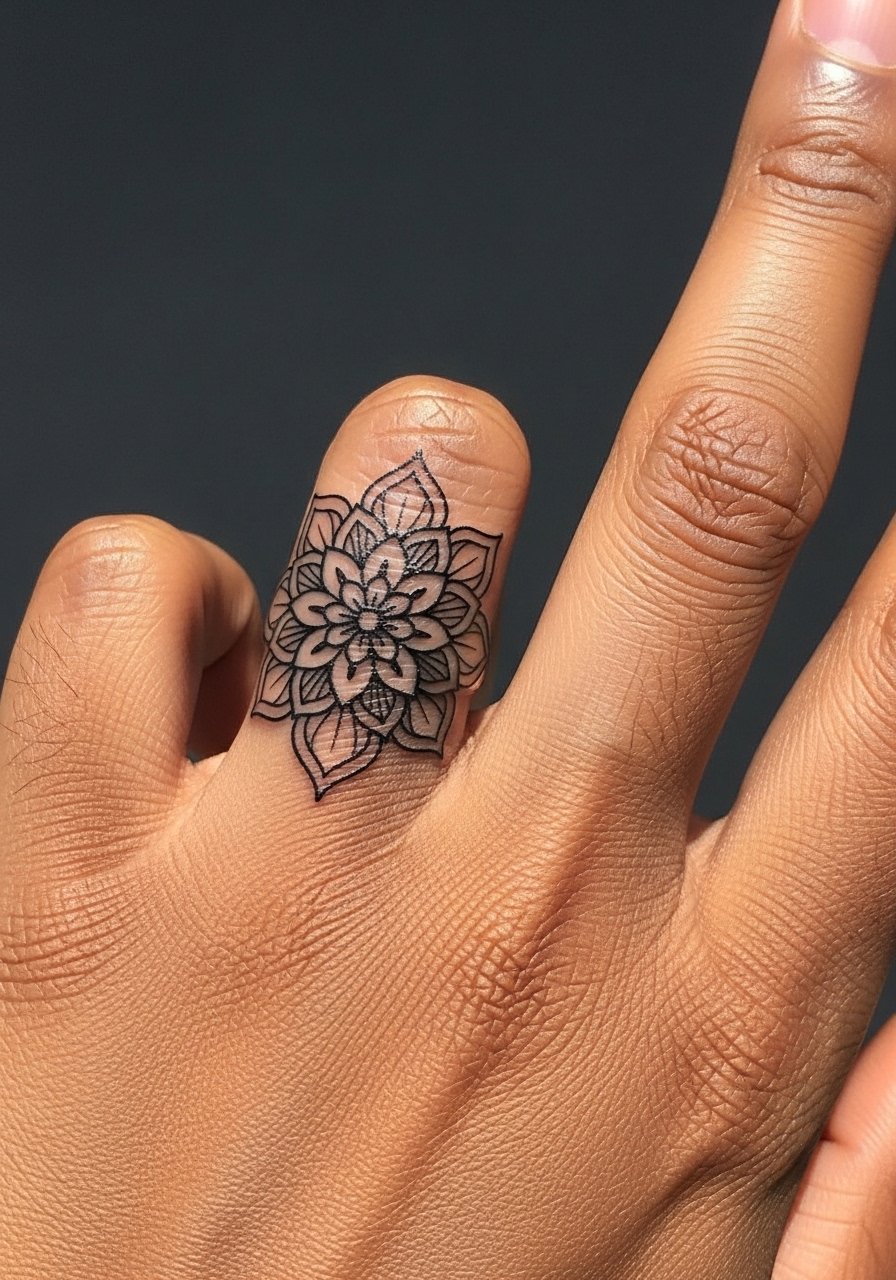
Hand and finger tattoos require a one-sentence professional note. Finger ink loses crispness faster than other locations and may impact workplace perceptions. Finger skin moves constantly and absorbs ink differently. The biggest mistake is expecting micro-detail to last without frequent touch-ups. When you consult, ask about single-session saturation versus multiple passes. Plan for touch-ups as a normal expectation. The session is short but follow-up maintenance is common.
14. Neo-Traditional Dark Mandala with Rose Accents on Thigh
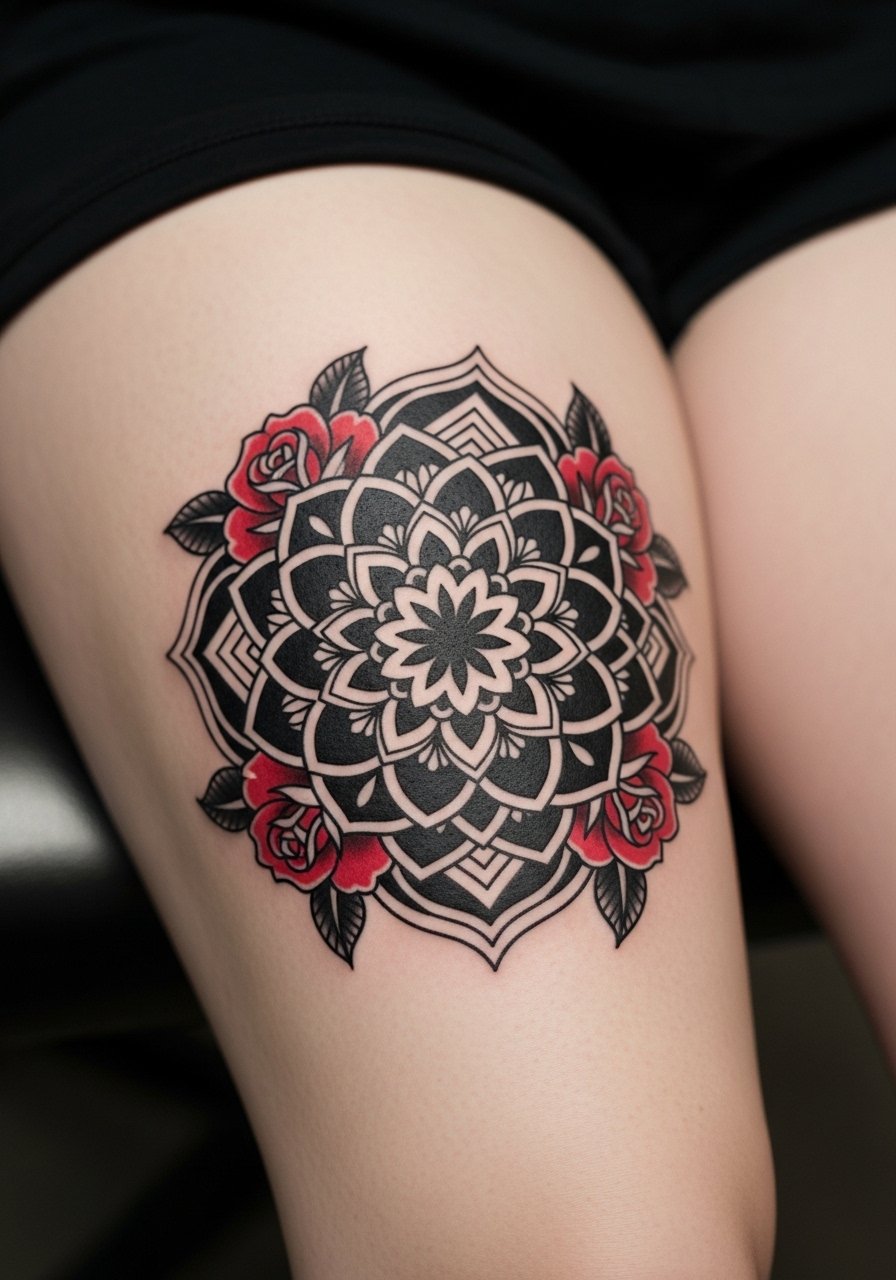
Visual impact lead. Neo-traditional touches like heavier outline contrast keep mandala florals readable at a distance. Thigh placement makes it simple to integrate roses with central mandala geometry. Tell the artist whether you want the roses stylized or more realistic. A common mistake is mixing too many shading styles in the same piece. Session time is multiple hours. Expect solid age resistance due to bold outlines and saturation, with touch-ups mainly for outer edges.
15. Minimalist Dot-Work Mandala with Tiny Flowers on Ankle
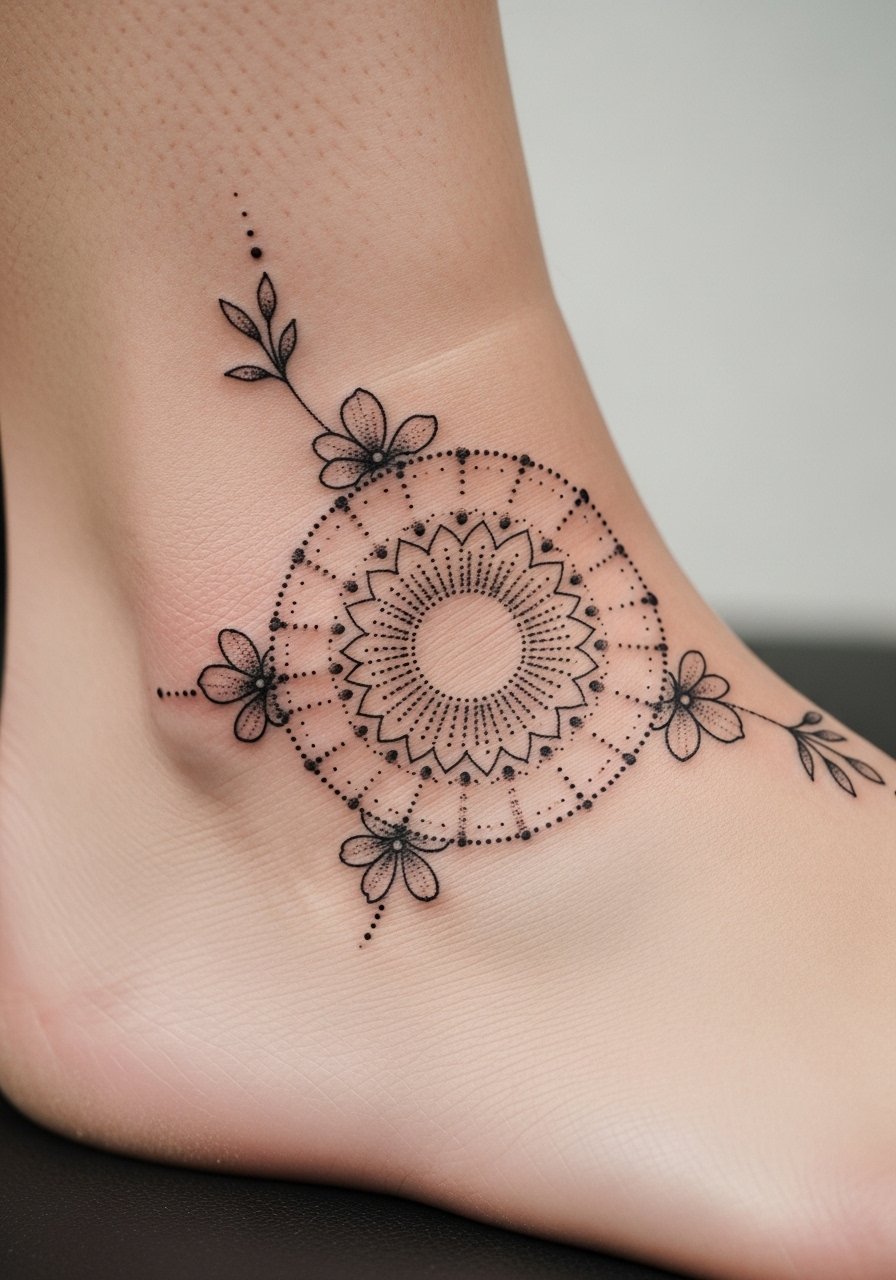
Most ankle pieces need carefully planned negative space because the skin moves and clothing rubs there. The mistake is cramming too much micro dot work into a narrow ankle area. Ask your artist to space the dots so the petals retain silhouette after healing. Pain is moderate. Sessions are short. Be realistic that thin dot-work may soften in two to three years and expect touch-ups to maintain crisp edges.
16. Dark Mandala Chest Panel with Central Dahlia
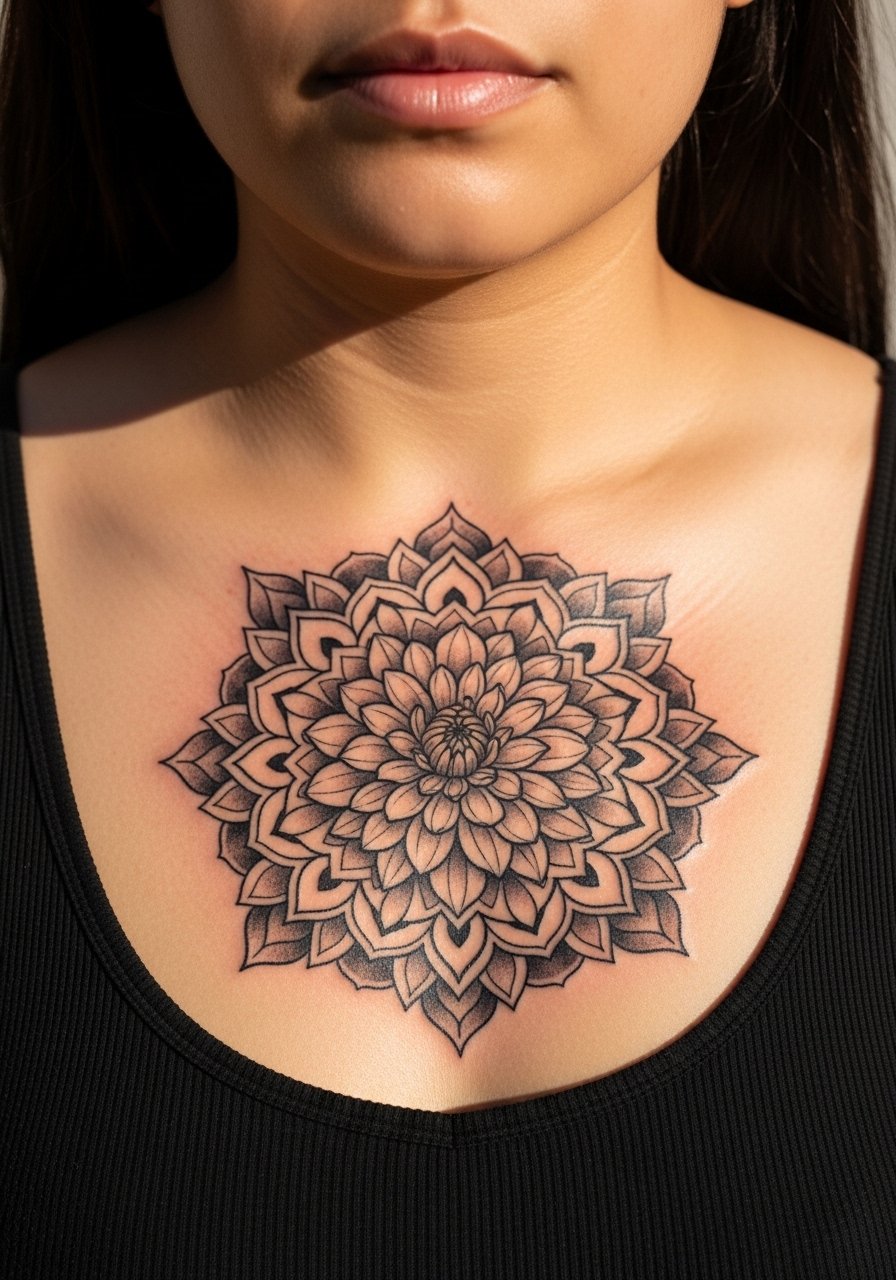
Visual impact lead. A chest panel with a dahlia center anchors symmetry and stands up to years of sun exposure if you keep it covered when outdoors. The common mistake is pushing too many tiny rays into the sternum without spacing. That can blur on the chest. Sessions are long and sensitivity is high. Expect follow-up touch-ups at two to four years depending on sun exposure and clothing friction.
17. Mandala Flower Behind Knee
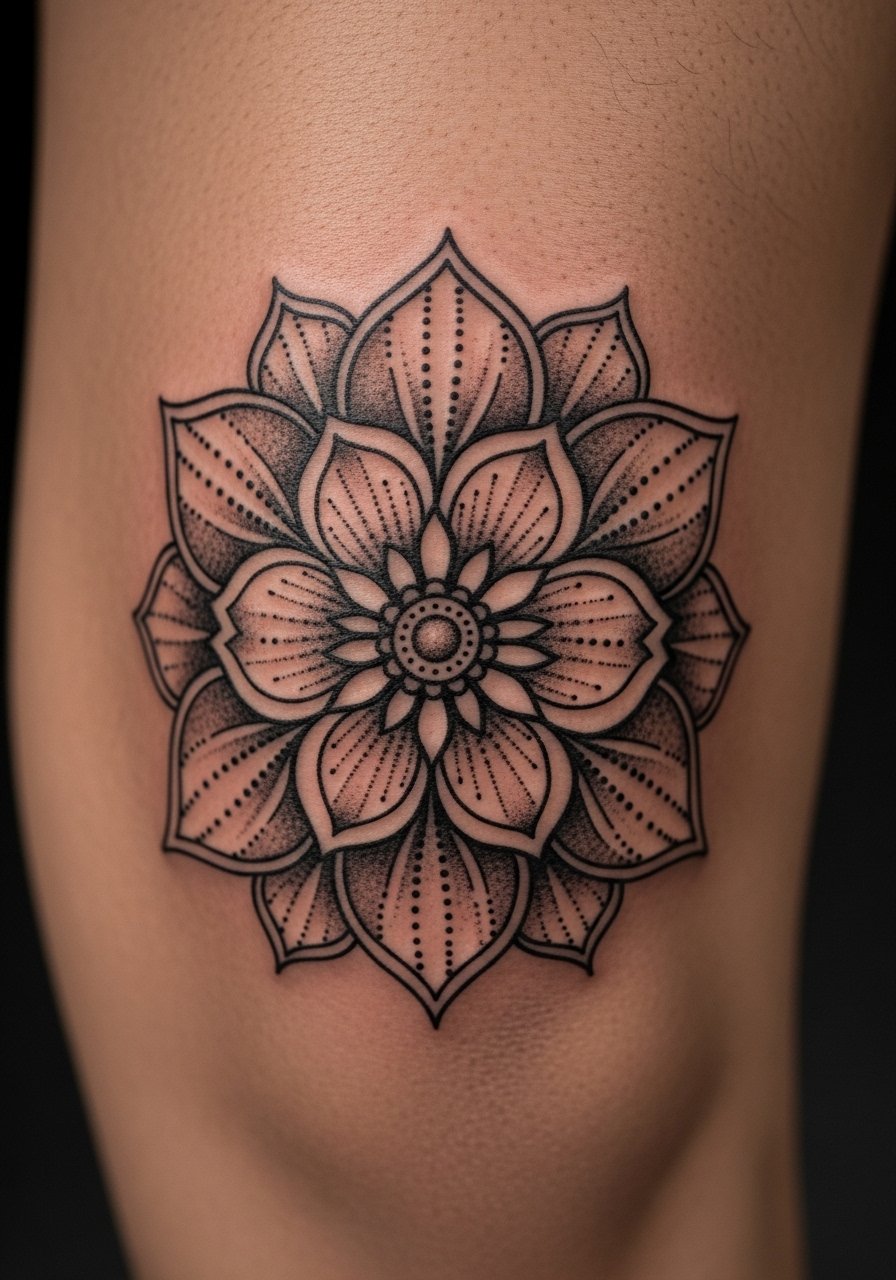
Pain warning: behind the knee is sensitive and flexes a lot. That movement can affect linework over time. The consultation lead here is crucial. Ask for slightly larger petal margins to allow the skin to shift. A mistake is requesting extremely fine detail there. Sessions may need to be split. Expect touch-ups sooner than on less mobile areas. If you sit for sessions a few weeks apart, the healed result tends to stabilize better.
18. Dark Mandala Bouquet on Ribcage
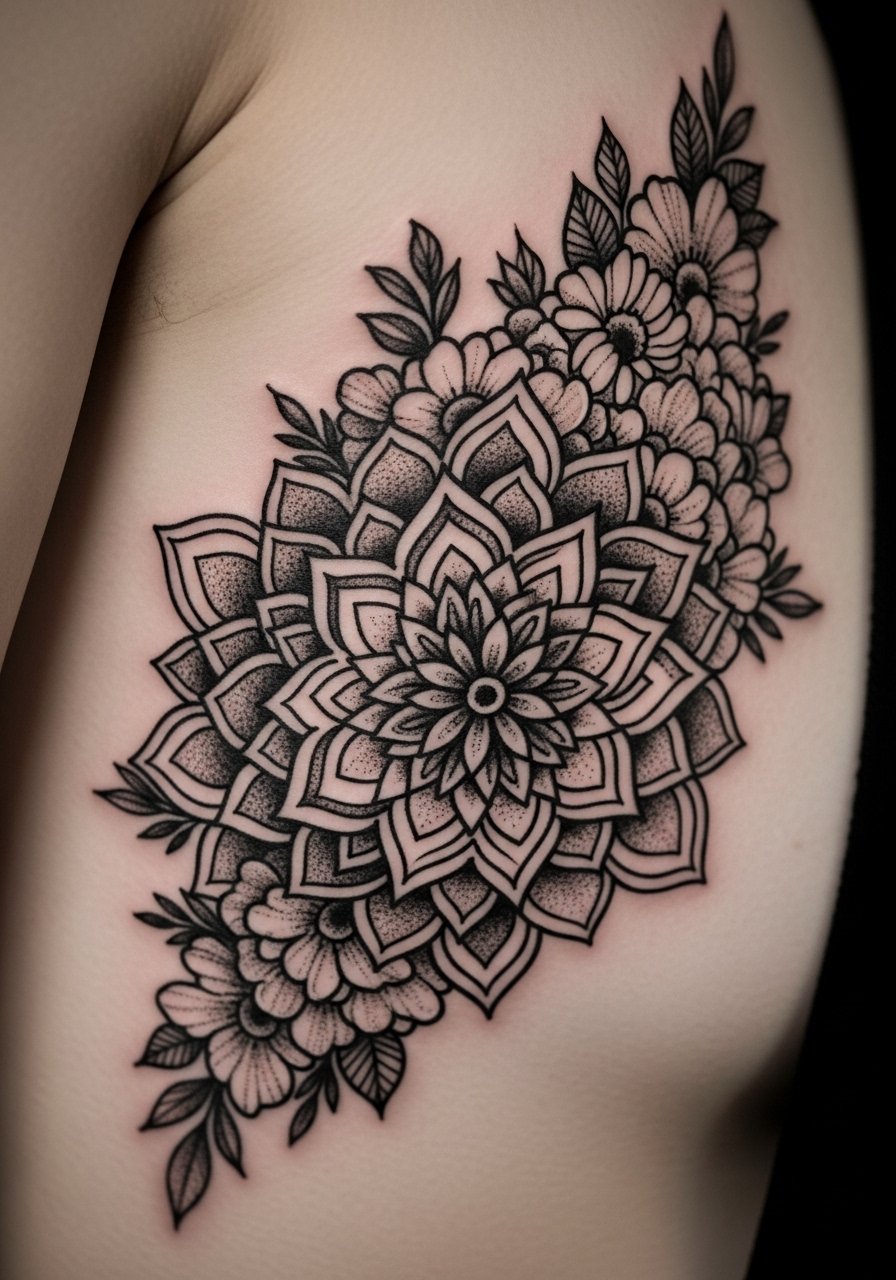
Pain warning: the ribcage is high on many people's pain scale. The design will look dramatic but discuss session length with your artist if you have low pain tolerance. Artists are split about fine line on ribs. One camp says thin lines blur quickly due to skin stretch. The other camp says proper depth and spacing keep fine lines readable. Bring this up explicitly and follow your artist's depth plan. A mistake is wanting ultra-fine petals across a stretched area. Expect two or more sessions and a likely touch-up in year two.
19. Mandala Flower Shoulder Blade Cluster
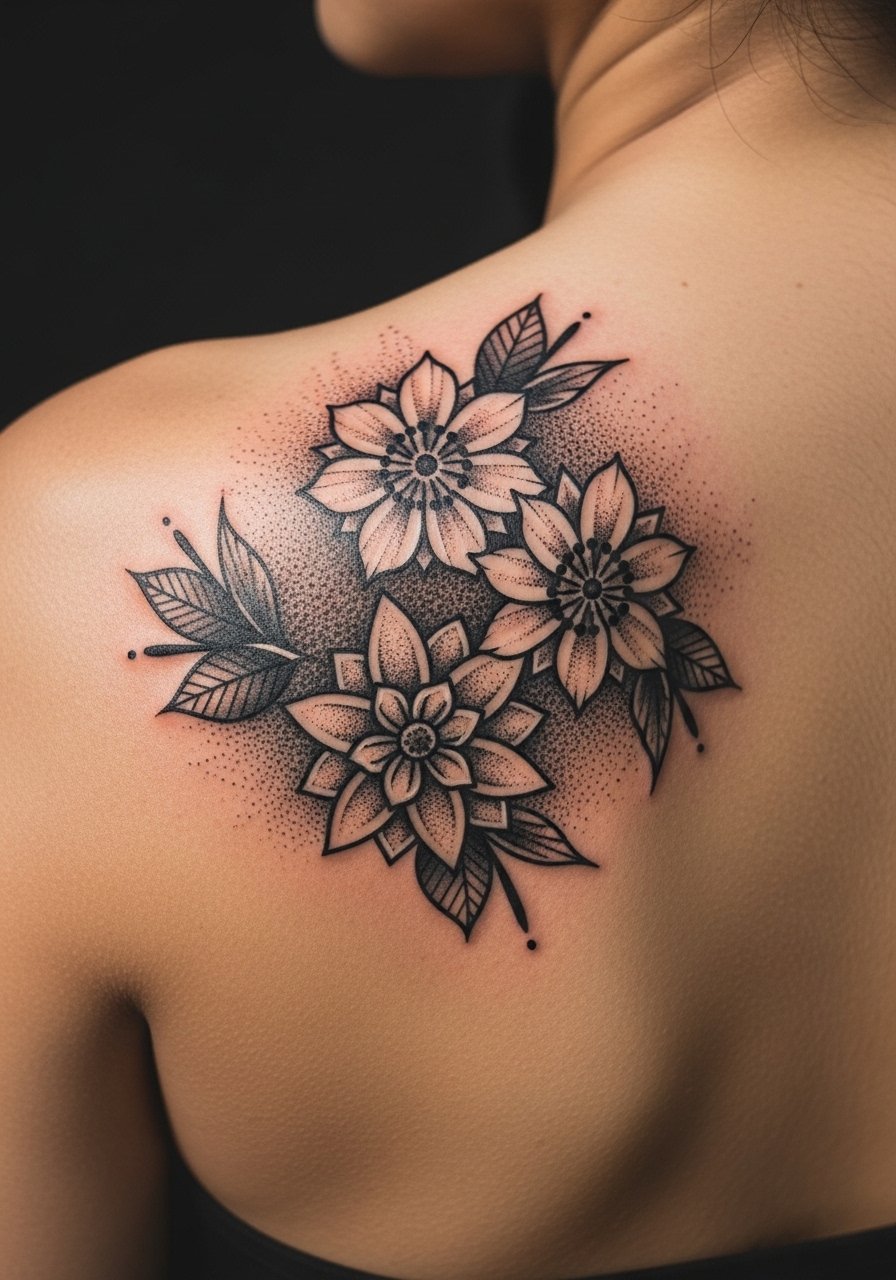
A shoulder blade cluster reads well with movement from the shoulder. Tell the artist you want the largest mandala slightly offset from the blade center so it looks natural when you move. The mistake is centering everything perfectly on the bone which can shift with posture. Sessions are moderate. The area ages well and often needs minimal touch-ups if you avoid heavy sun exposure.
20. Dark Mandala Over Hip with Flowing Petals
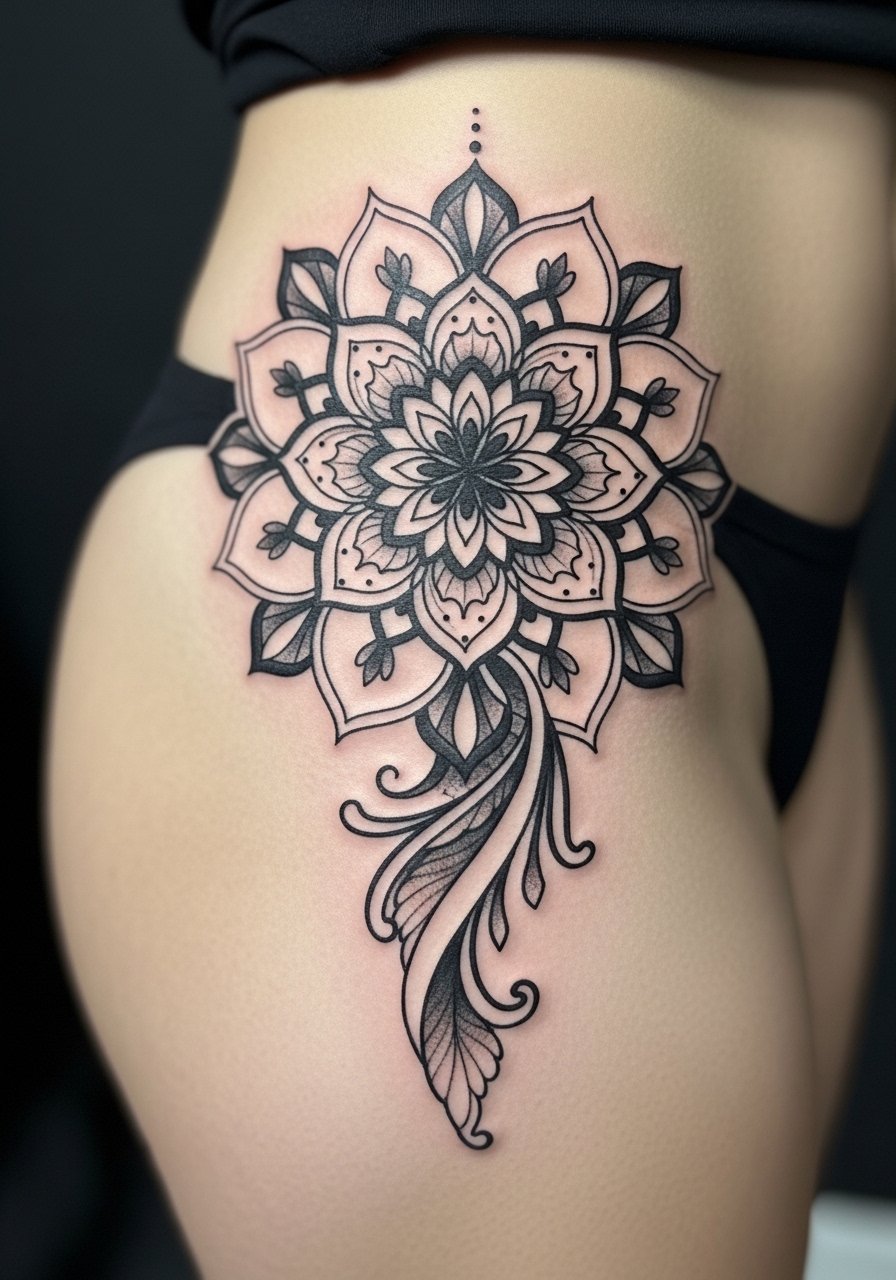
There's a sensual silhouette to hip mandalas that curve with the body. Mention to your artist how the petals should follow your natural waist curve rather than sit rigidly. A common error is forcing strict radial symmetry that fights body contours. Pain is moderate. Expect multiple sessions if the design wraps substantially. Touch-ups at three to five years keep edges strong.
21. Mandala Flower Nape Tattoo
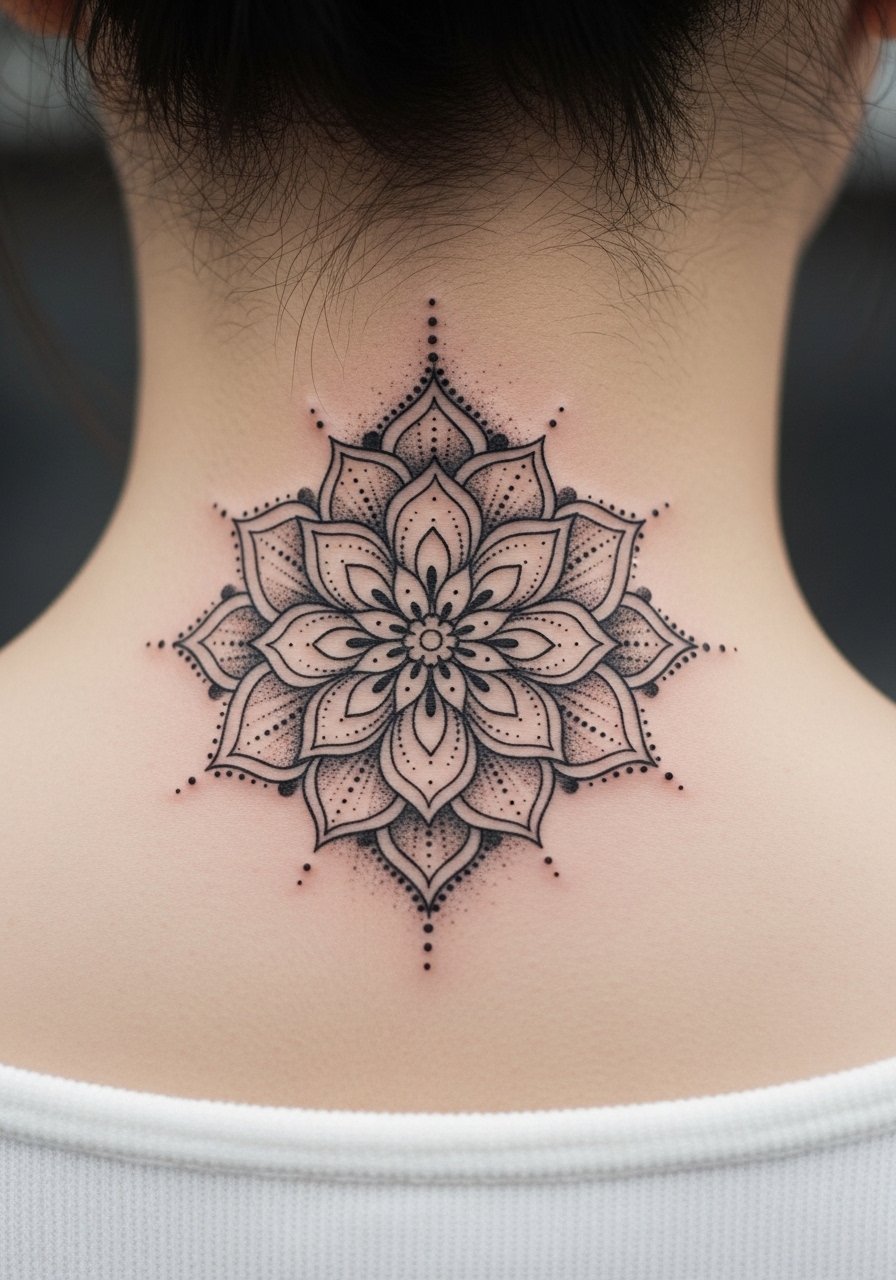
Consultation lead. Nape pieces can be shown or hidden with hair choices. Ask about hairline interaction and whether you want the top of the mandala to tuck under hair. The common mistake is placing too many tiny internal lines that touch hair follicles and blur. Sessions are short and healing is straightforward if you avoid clothing rub. Expect a touch-up in a couple years for outermost detail.
22. Dark Mandala Palm-Side Wrist Accent
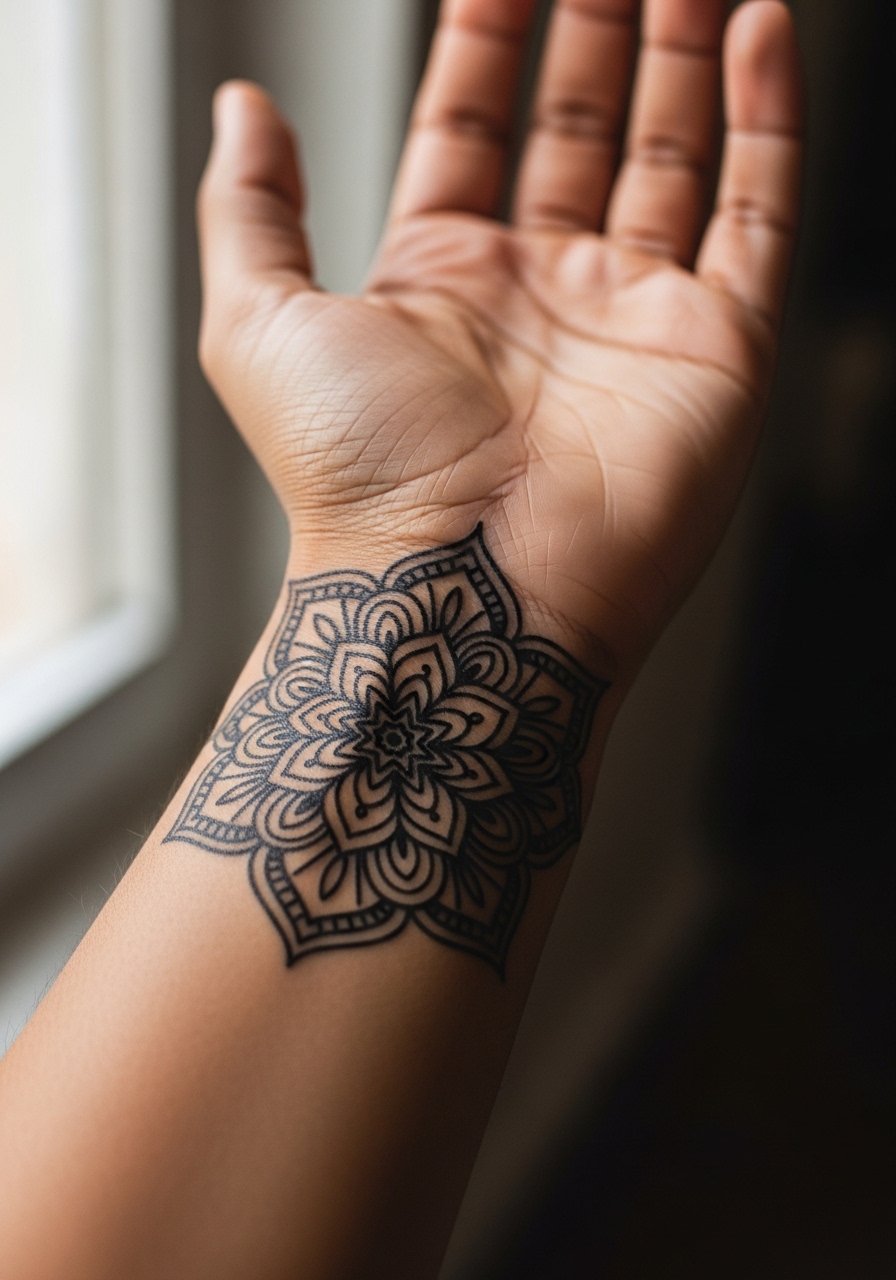
Hand-adjacent placements are sensitive professionally and technically. Palm-side skin is more abrasive and loses ink faster. The mistake is expecting the same longevity as an upper arm piece. Ask about alternative placements or plan for frequent refreshes. Session is short. Touch-ups are a normal part of maintenance there.
23. Floral Mandala Mini-Backpiece at Lower Spine
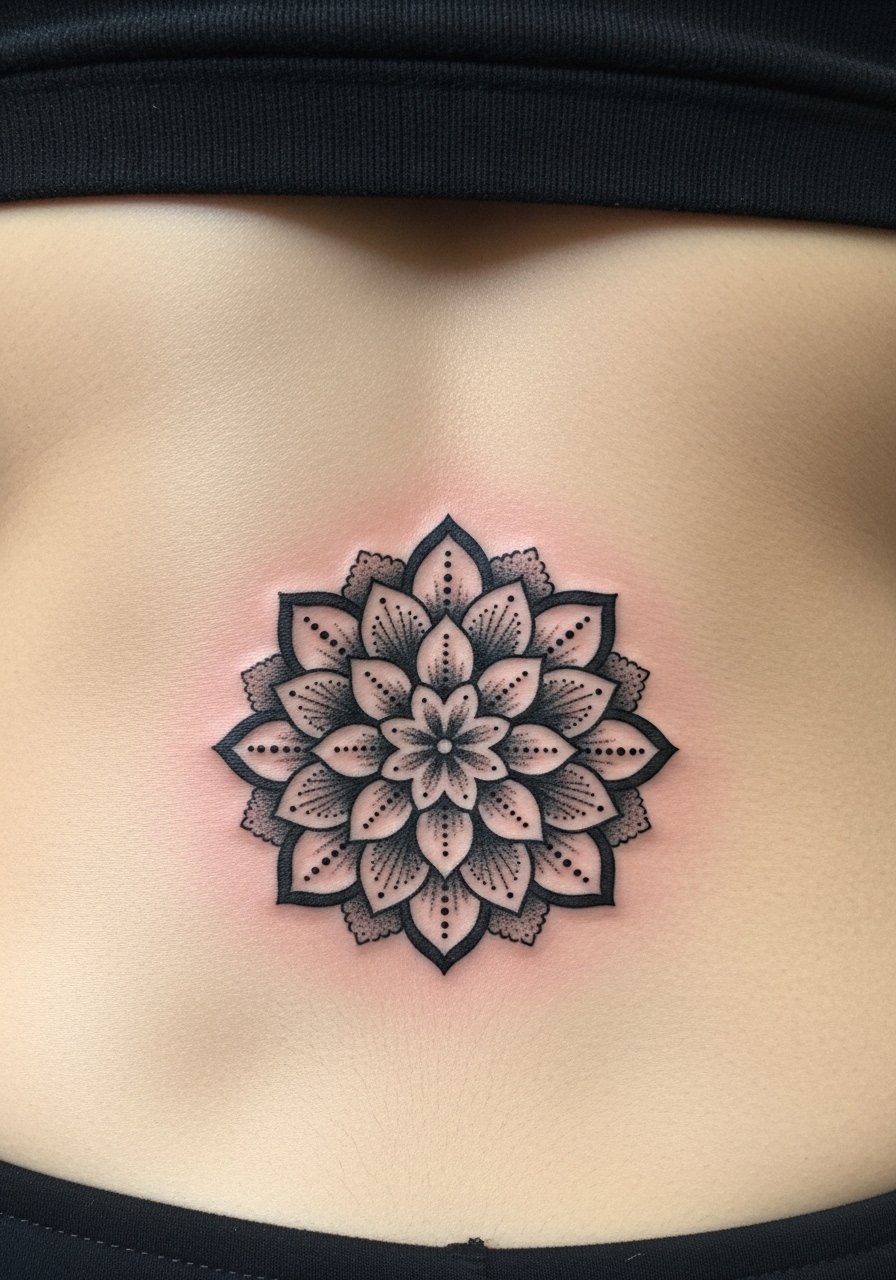
There is a subtle power to a small lower spine mandala sitting at the beltline. Ask your artist about how clothing waistlines will hit the piece while it heals. A mistake is selecting a piece too low where belts irritate the area. Sessions are short. The lower spine holds ink well and typically needs minimal touch-up if you protect it while it settles.
24. Mandala Flower Forearm Sleeve Accent
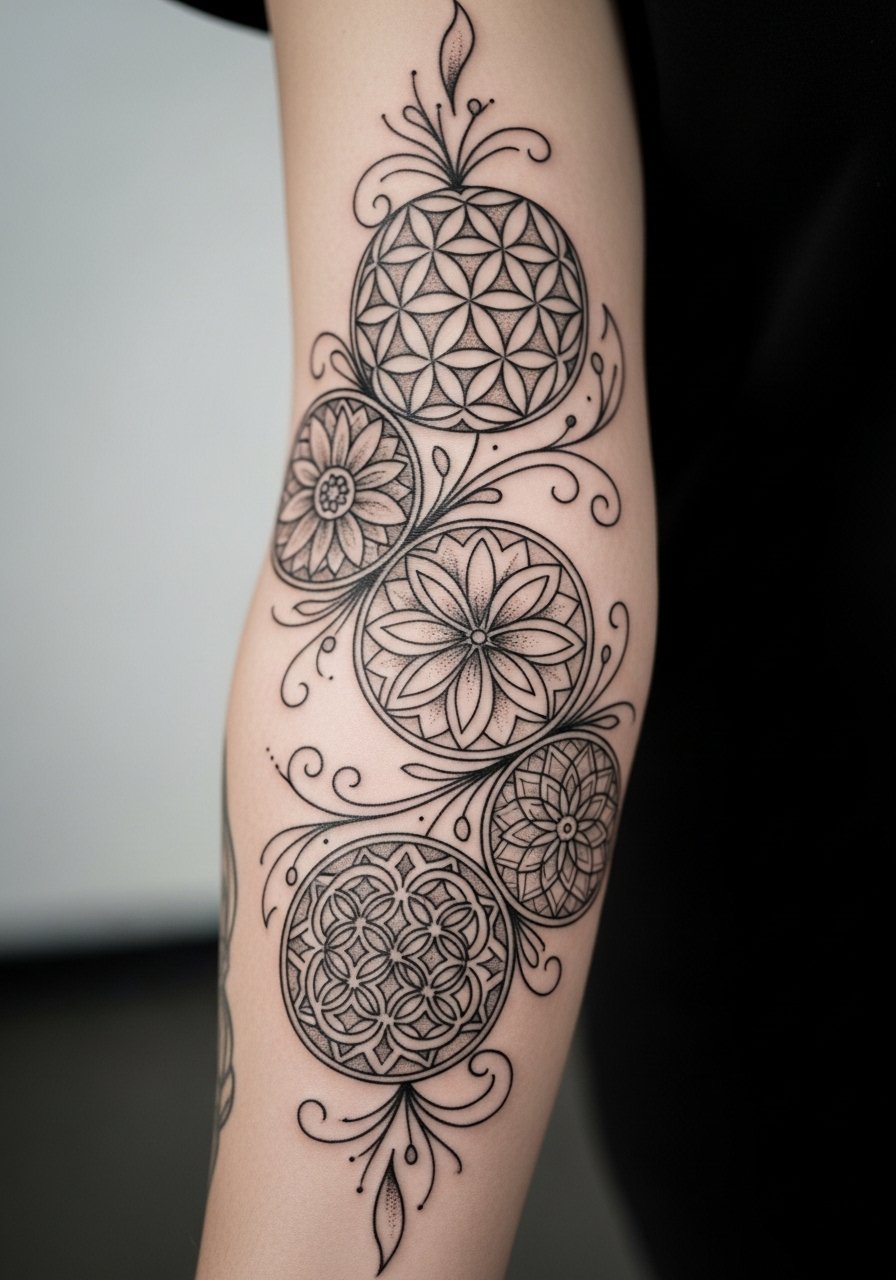
Personal observation lead. When mandala flowers become sleeve elements, cohesion matters more than variety. Ask your artist to use recurring linework weights or similar dot densities to tie the pieces together. A common error is letting each mandala have a completely different treatment. That reads fragmented after a few years. Expect multiple sessions and a likely touch-up at two to three years to keep continuity crisp.
25. Dark Mandala Underboob Flower
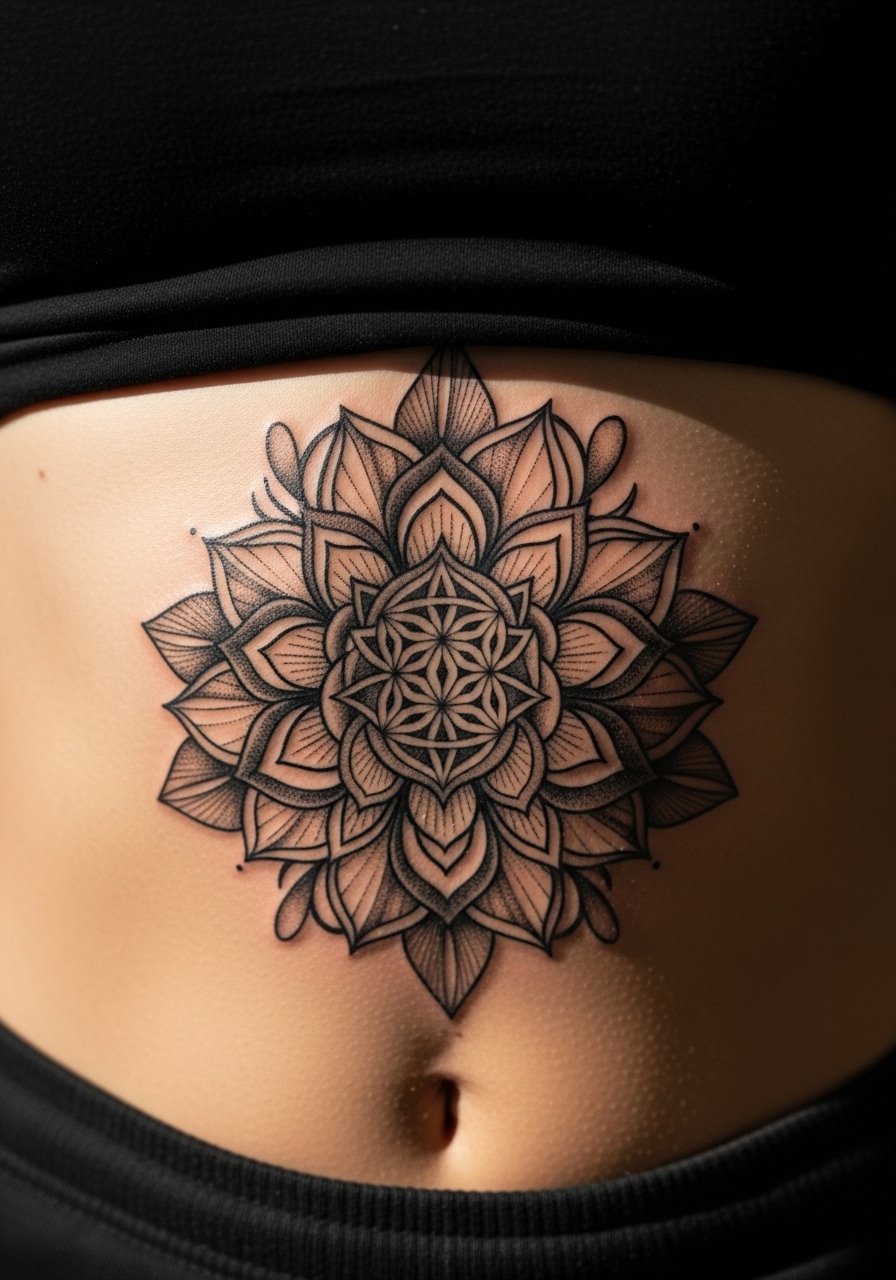
Professional considerations note. Underboob tattoos are intimate and require an artist experienced with curved anatomy. The skin flexes and moisture can affect early healing. A mistake is insisting on ultra-fine detail in the underboob zone. Ask for slightly bolder anchor lines and for placement that follows the breast curve. Sessions often split. Touch-ups at two to three years are common depending on support garment friction.
Tattoo Prep and Aftercare Essentials
Fragrance-free gentle foaming cleanser. Use during the first week to keep the area clean without stripping moisture. A pH-friendly, mild cleanser reduces scab picking and irritation.
Lightweight fragrance-free balm. Apply a thin layer after cleansing for the first five to seven days to prevent excessive dryness and to protect linework.
Medical-grade second skin bandage. Good for the first 24 to 48 hours if your artist recommends occlusive coverage. It reduces friction from clothing and can lower infection risk in active areas.
Aftercare enzymatic healing ointment. Use for short periods when instructed, not as a daily long-term moisturizer. It helps with gentle skin turnover and prevents thick scab formation.
Breathable gauze pads, sterile. Useful if you need to cover a new tattoo temporarily while commuting or during heavy activity.
SPF physical mineral sunscreen, broad spectrum. Long-term maintenance. After full healing, protect any exposed mandala from UV to preserve saturation and linework.
Moisture-wicking clothing or tattoo recovery sleeve. Helpful during the first two weeks to keep fabric friction minimal for arm and thigh placements.
Aquaphor Healing Ointment. A mainstream option mentioned for context only. Use sparingly and briefly if recommended by your artist since some prefer lighter balms that breathe more.
Every tattoo is different. Always follow your artist's specific aftercare instructions. Consult a dermatologist if you have skin concerns or unusual healing issues.
Frequently Asked Questions
Q: Will fine line mandala flowers on the ribs blur faster than on the forearm?
A: It depends on the skin and the depth the artist uses. Ribs stretch and bend more, so ultra-fine lines can soften quicker. If you love fine line there, ask the artist to space lines slightly wider and to plan a touch-up around year two. On the forearm you can often get away with tighter spacing with less early blur.
Q: How should I ask my artist to handle cultural origin concerns for a mandala design?
A: From what I gathered in tattoo conversations, name the cultural origin and ask if they can adapt motifs respectfully rather than copying sacred symbols verbatim. One camp thinks faithful replication is fine with permission. The other camp prefers abstractions that pay homage without direct replication. Bring references and ask your artist how they handle cultural elements in their custom work.
Q: For a mandala cover-up over a scar, what should I expect in terms of sessions and outcomes?
A: Scars vary. Expect a longer first consult so the artist can assess texture and elasticity. Some scars need extra saturation and multiple short sessions. The healed look depends on how the scarred skin accepts ink. Plan realistic expectations and a follow-up touch-up once the skin settles.
Q: Do ankle or finger mandala details need different aftercare than a thigh piece?
A: Yes. High-motion and high-abrasion spots like fingers and ankles encounter more wear and moisture, so they need careful protection early and frequent observation. Keep them dry when possible, avoid tight footwear during the initial healing, and expect touch-ups sooner than you would for a thigh piece.
Q: If I want a dark mandala sleeve, how many sessions should I budget for and when is a typical touch-up?
A: Sleeve timelines vary by size and density but plan for multiple sessions across months. Many people schedule touch-ups in year two or three to even out fading along the elbow and outer arm. Ask your artist for a session plan that balances shading and saturation so no one area becomes overworked.
Q: Are there discovery pathways to find artists who specialize in mandala flower work without naming specific people?
A: Yes. Use tattoo directories, local shop walk-ins, and hashtag searches on image platforms that focus on terms like "mandala blackwork" and "dot work mandala." Attend conventions and ask for portfolios that show healed photos. Seeing healed work is more telling than fresh photos.
Q: How much does sun exposure affect the long-term look of a blackwork mandala flower?
A: From spending time in shop conversations, UV exposure is the biggest ink killer. Even dark blackwork loses contrast faster when exposed. Keeping healed tattoos covered or applying a mineral SPF preserves saturation and reduces the need for frequent touch-ups.