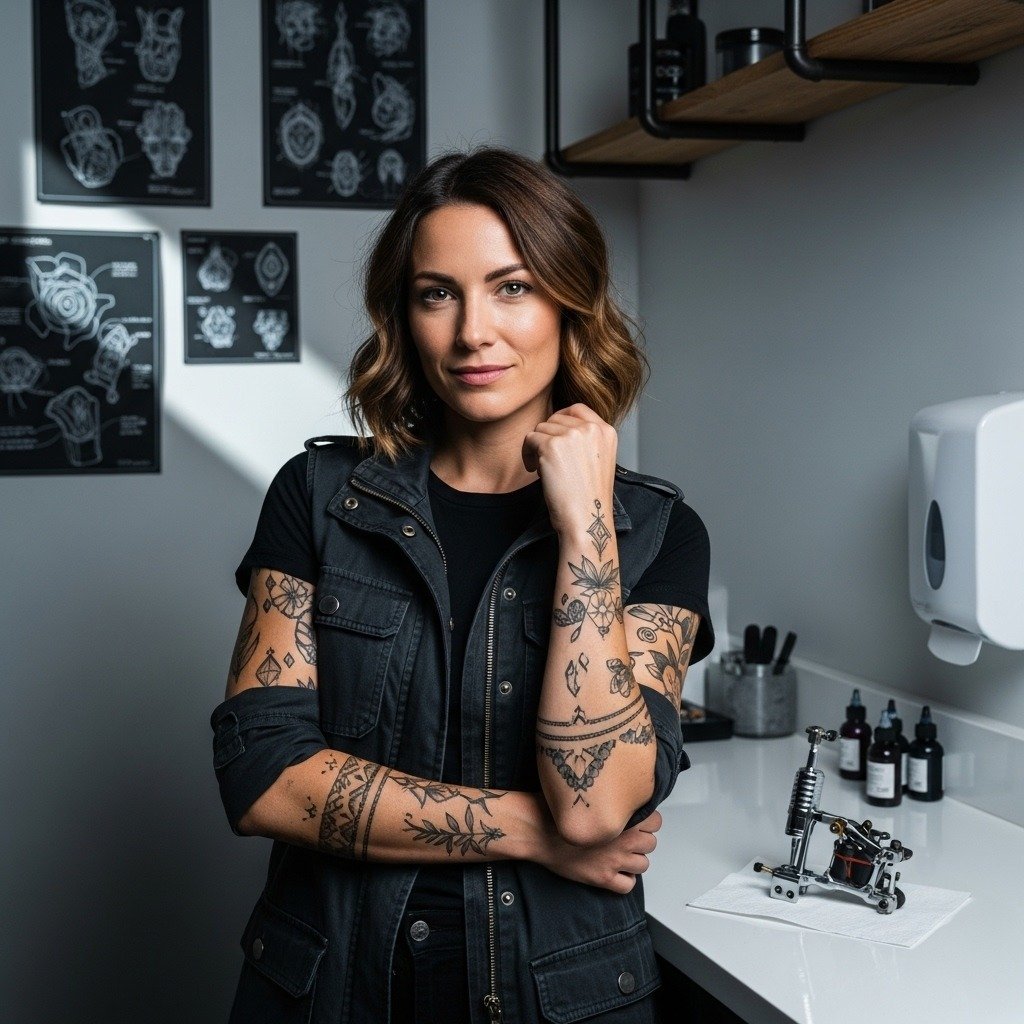

The thigh is a canvas that keeps surprises. Some of the most talked-about designs look fragile in fresh photos but hold up beautifully when the line weight, spacing, and placement are planned around how the skin moves. With the right scale and a clear session plan you can get a piece that peeks when you want it to and stays readable for years. Below the hero image you will find 27 distinct ways to use the thigh as a bold, wearable canvas, plus practical notes on session wear, aging, and how to help the tattoo settle.
1. Peony-and-Rose Thigh Wrap
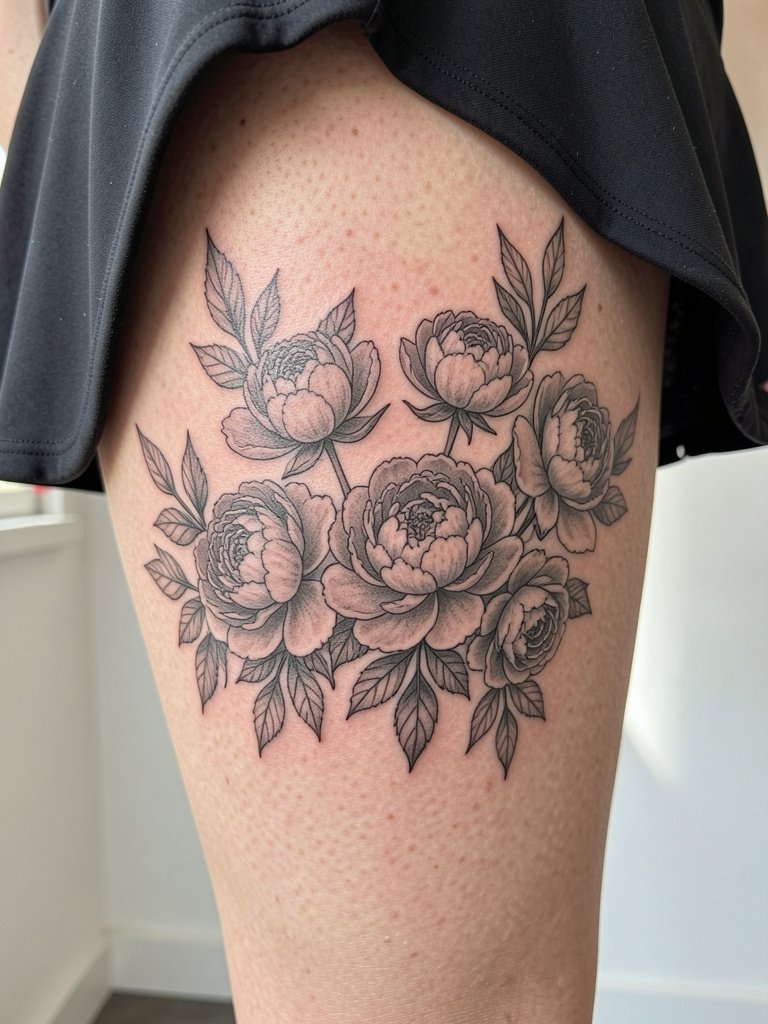
A peony-and-rose wrap reads classic because it follows the thigh’s natural curve and creates movement across the leg. For durability pick medium-weight outlines around the blooms and reserve single-needle detail for interior petal texture, that preserves shape as skin shifts. Common mistake: making the stems too thin and tightly spaced which blurs faster than people expect. Session note: expect a two-hour block for a medium wrap. For the appointment wear pull on shorts so the artist can roll fabric without pressure, and for showing it off try a high slit midi skirt.
2. Curved Snake That Follows the Hip Line
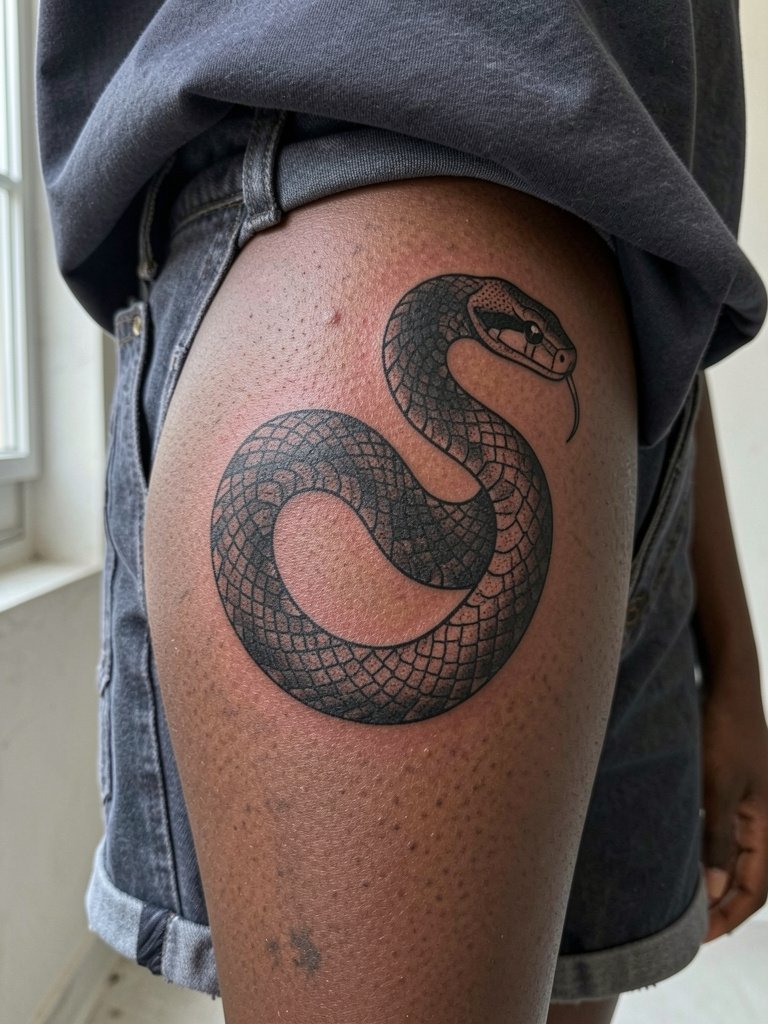
The snake is a natural fit for the outer thigh because its curvature mirrors the leg’s silhouette, letting you get a long composition without crowding. Ask for slightly thicker main outlines and detailed scale texture within the body so contrast remains clear as the piece heals. Common mistake: small-scale scales that merge into a mottled texture over time. Expect moderate soreness that eases after 48 hours. Style pairing: tuck a boxy tee into high waisted shorts to let the snake peek along the hip.
3. Dragon in Neo-Traditional Shading
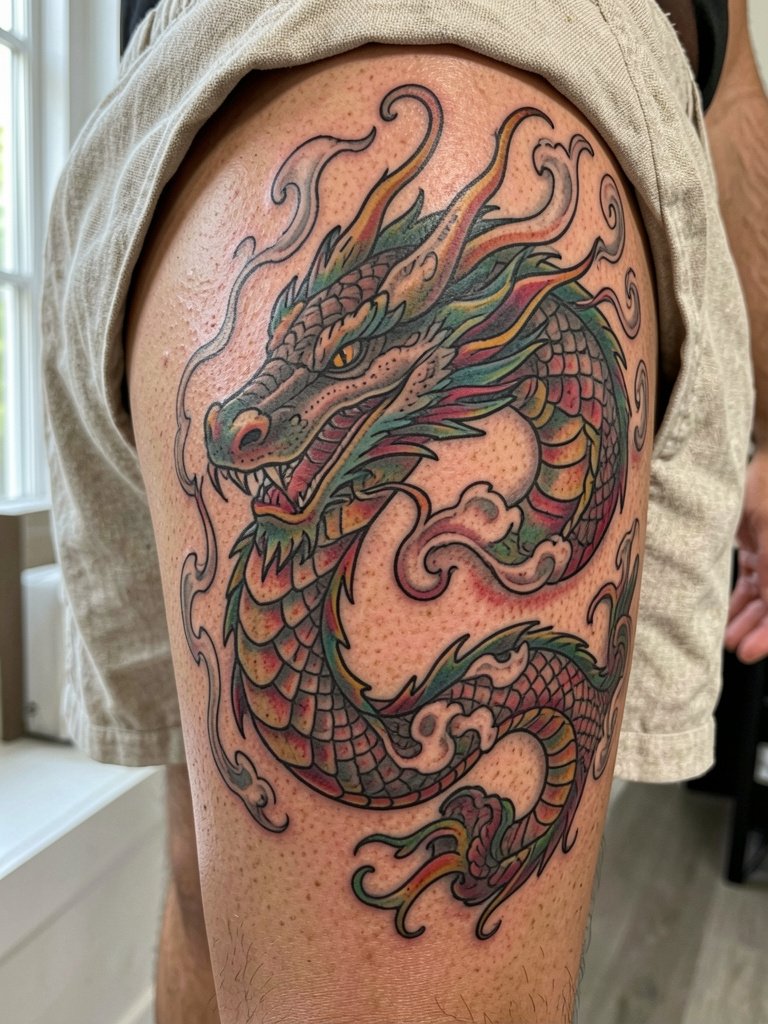
A dragon gives high impact because it fills the thigh’s large surface and invites layered shading. This style usually needs multiple sessions because of saturation and color blending. The common regret is starting too small, which loses the detailed scales after a year. Pain is moderate for front thigh pieces and you will want breaks during long color fills. Wear loose drawstring linen pants on session day so the artist can access the front thigh without tight waistbands. For evenings out choose a side slit skirt so the piece frames the leg.
4. Medusa Portrait with Serpentine Hair
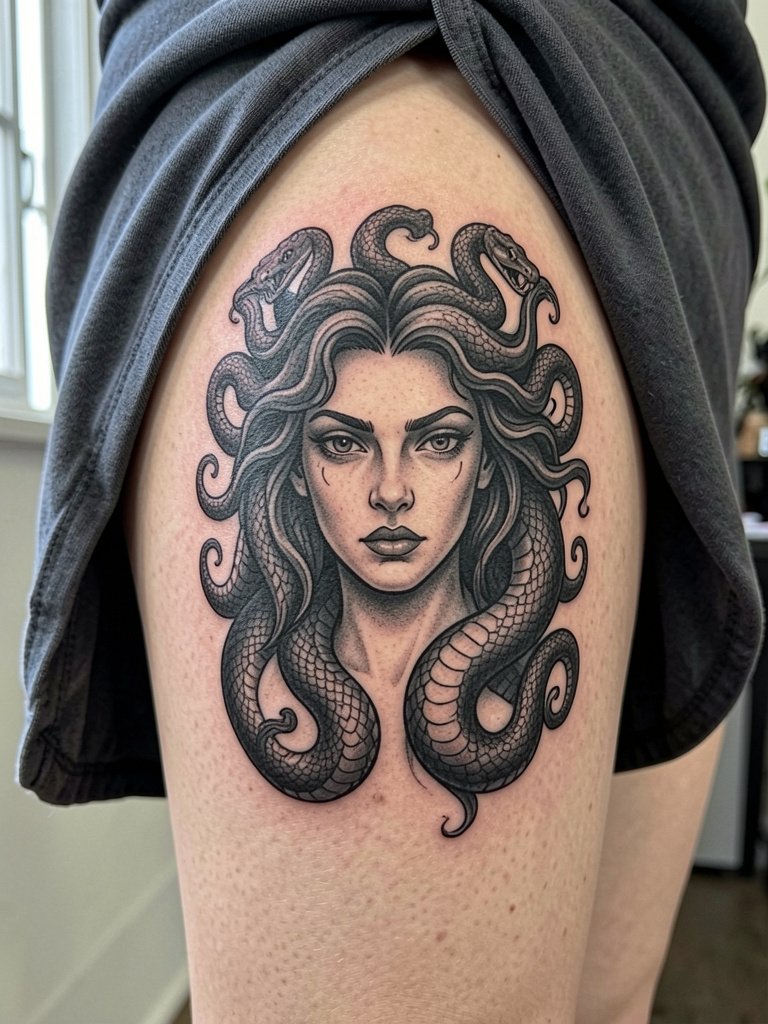
A Medusa portrait demands strong value contrast so facial features stay readable as the piece ages. One camp prefers micro-realism for the face, the other likes illustrative linework with heavier black for longevity. The first camp values fine detail even if it requires touch-ups. The second camp argues thicker shading and bolder outlines preserve the portrait longer. Plan for at least one follow-up touch-up, and bring healed-photo examples of comparable skin tones so your artist can match contrast. For session comfort wear shorts that roll up easily and pick simple outfits like a relaxed linen short afterward to avoid friction.
5. Script Quote Along the Front Thigh
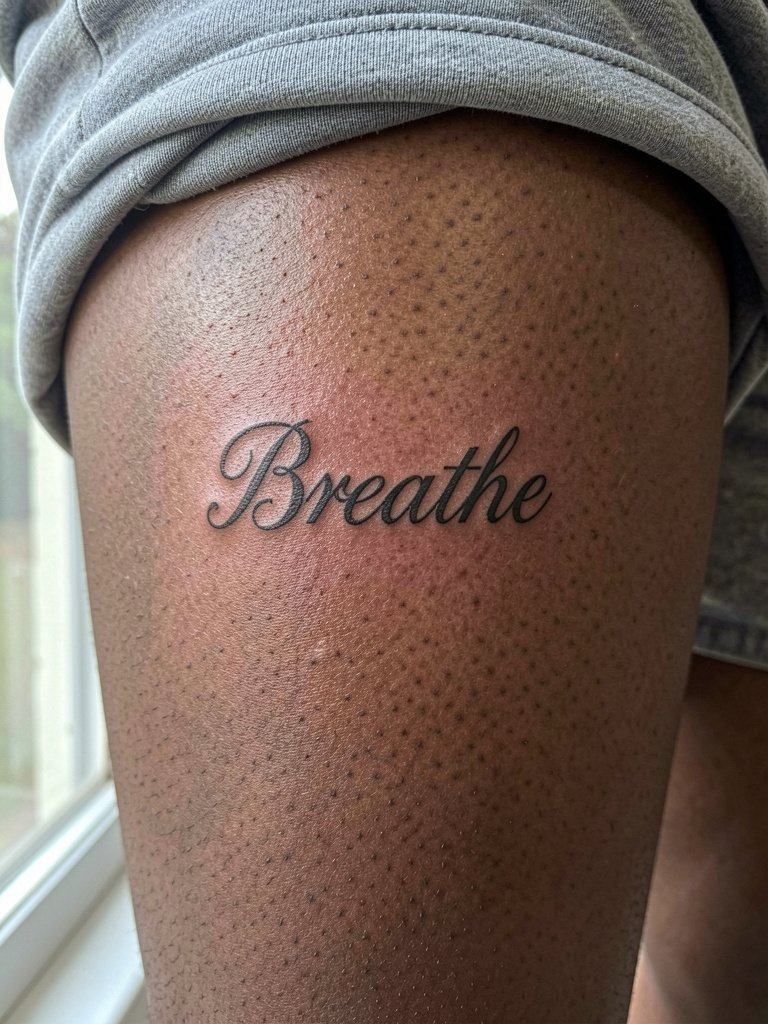
Script on the thigh benefits from slightly heavier single-needle work and generous spacing so letters do not bleed together with time. There is a debate about ultra-fine scripts: one side accepts faster fading for an airy look, the other recommends thicker strokes for longevity. One camp says the weight can be airy because they plan touch-ups. The other camp advises increasing the base stroke slightly so the quote reads at year three without correction. If you prefer subtle text, pick bold lettering for words with thin internal counters. For the session, wear drawstring lounge shorts so the artist can roll the waist without discomfort.
6. Ornamental Mandala Centered on the Front Thigh
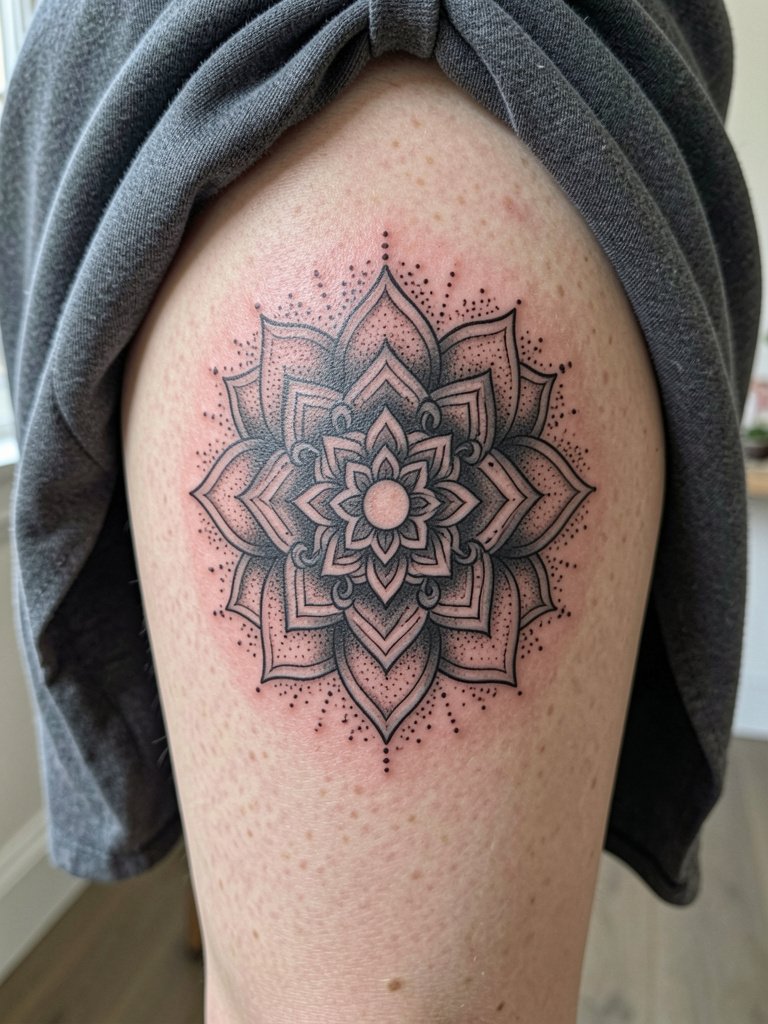
A mandala suits the thigh because its round composition uses the thigh’s surface. Key planning detail: insist on spacing between radial lines and dotwork so small stipples do not merge as the skin moves. A typical mistake is packing too many inner rings in a small diameter. Session time varies but expect two hours or more for detailed dotwork. For showing it off choose a tennis skirt or a cropped tee look that leaves the medallion visible without trying too hard.
Session Day Picks
Those first six designs range from single-session scripts to multi-session illustrative work, and a few simple supplies can make the appointment and initial healing window easier.
-
Tattoo Goo lotion and soap line. A gentler alternative to thick ointments for people who found greasier balms uncomfortable under shorts during early healing.
-
Bepanthen-style healing cream. Lightweight and fragrance-free, good for the first few days when heavy ointments feel suffocating on the thigh.
-
Aveeno fragrance-free lotion. A reliable daily moisturizer after the initial healing phase to keep the skin supple and reduce itch.
-
CeraVe fragrance-free lotion. Good for people with sensitive skin who want a no-fuss maintenance lotion after scabs fall away.
-
Second-skin protective film. This adhesive film can reduce rubbing from clothing during the first 48 to 72 hours, which helps thigh pieces that sit under shorts.
7. Small Minimalist Symbol Near the Outer Thigh
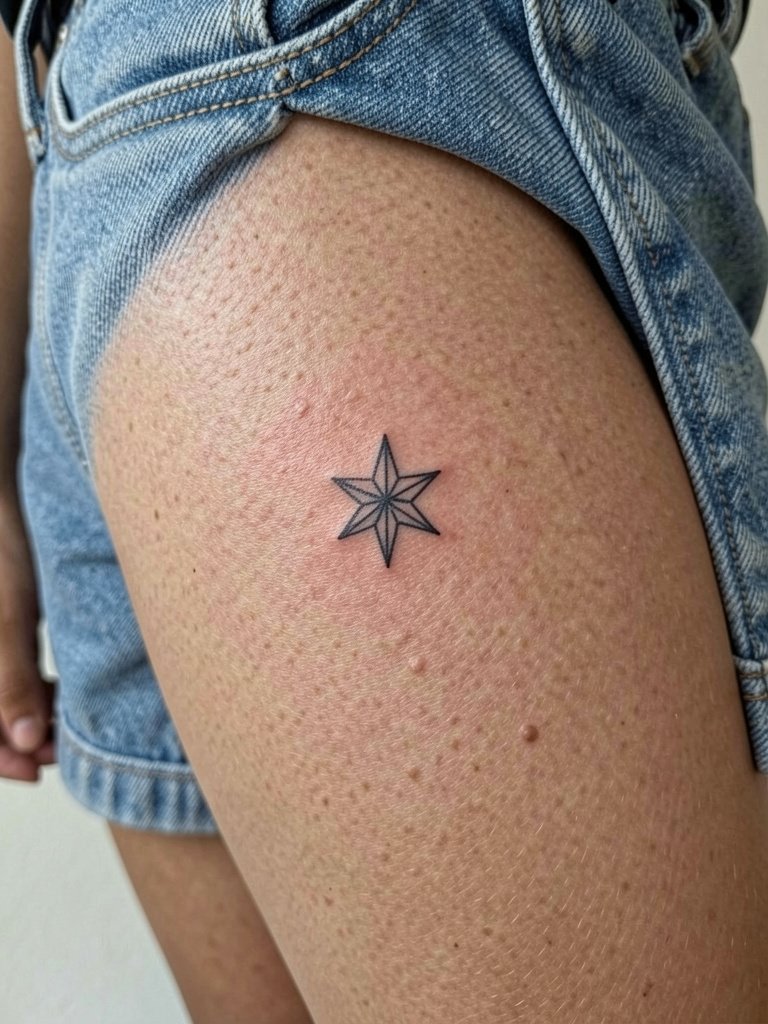
Tiny symbols are great for a first tattoo because they heal fast and are easy to conceal. However, many people underestimate how thin single-needle lines can fade on textured thigh skin. The practical fix is to slightly strengthen the outer contour while keeping interior detail delicate. Pain is mild and a single session is typical. Session wear: choose loose denim shorts that you can roll up to give clear access and avoid waistband rubbing during the first week.
8. Blackwork Floral Panel for High Contrast
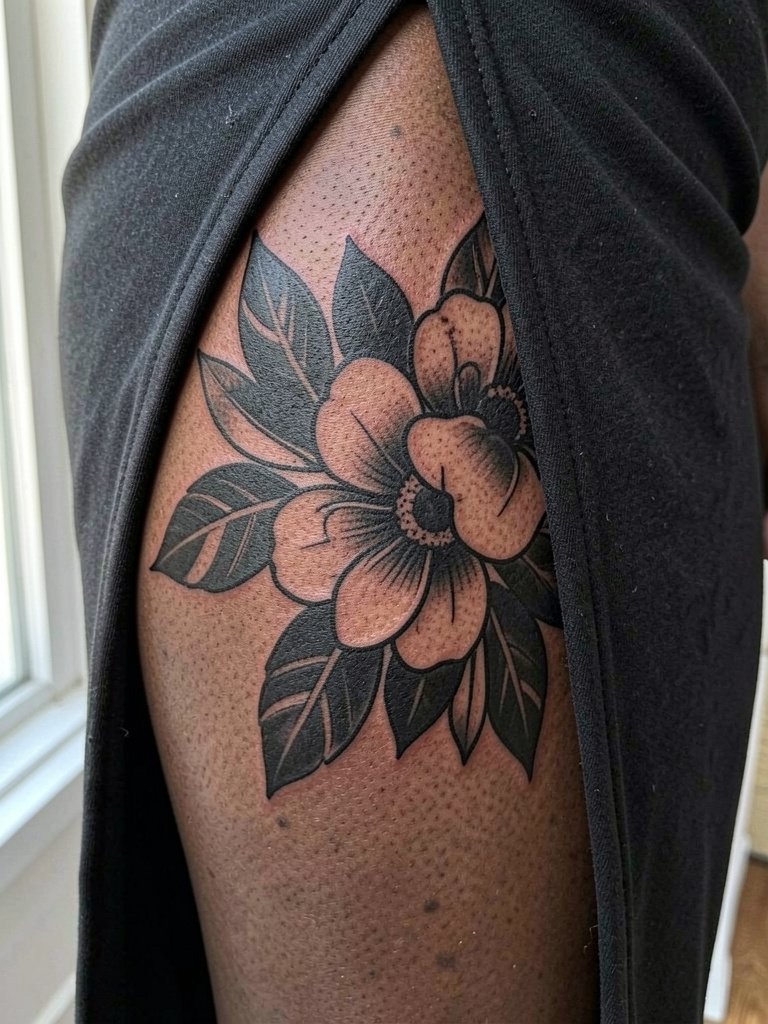
Blackwork is increasingly chosen for the thigh because strong contrast tends to age more predictably than ultra-fine detail. This approach uses large saturated areas and negative space to maintain silhouette over time. A common mistake is over-filling small areas which can look heavy at close range. For session wear pick shorts that do not rub the zone and for styling consider a slouchy button down tucked into high waist bottoms to let the blackwork show.
9. Fine Line Flower Cluster on the Outer Thigh
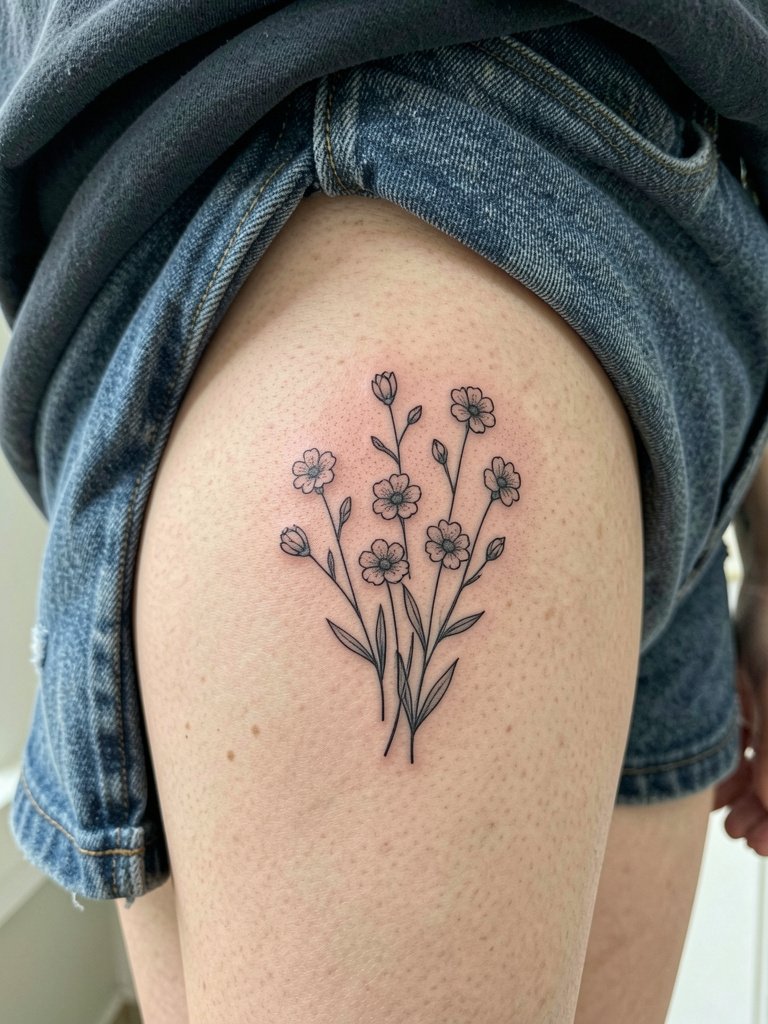
Fine line clusters photograph well but can lose crispness if lines are placed too tightly. One school of thought favors ultra-fine work for the airy look, another favors slightly larger line weights to keep shapes distinct longer. The practical middle path is to ask for thin internal details with slightly bolder outline framing. Typical session time is under two hours for a medium cluster. For showing off pick denim shorts with a rolled cuff so the floral grouping peeks naturally.
10. Geometric Band That Wraps Laterally
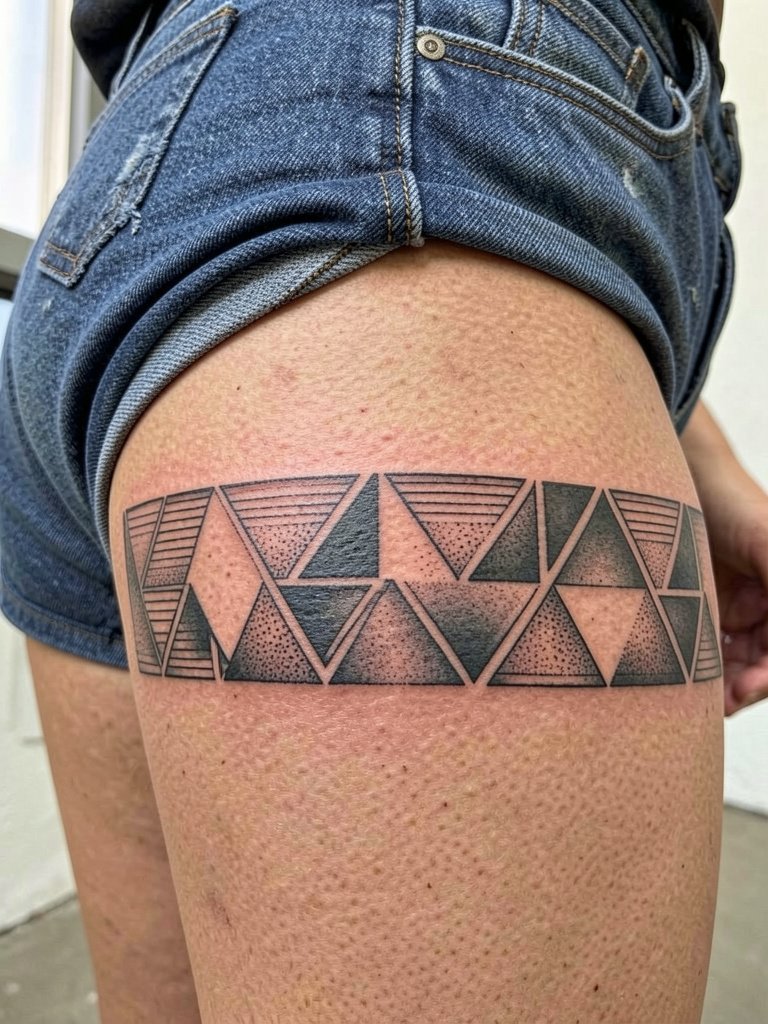
Geometric bands can look modern and custom-fit to the leg’s curvature, but the main mistake is making lines too thin or placing repeating elements too close. Line spacing needs room to breathe. Expect about one to two hours depending on complexity. For session comfort choose shorts that can sit high on the waist with no tight seam crossing the tattoo, and for styling a tucked boxy tee balances the edgy band.
11. Crescent Moon and Stars Cluster
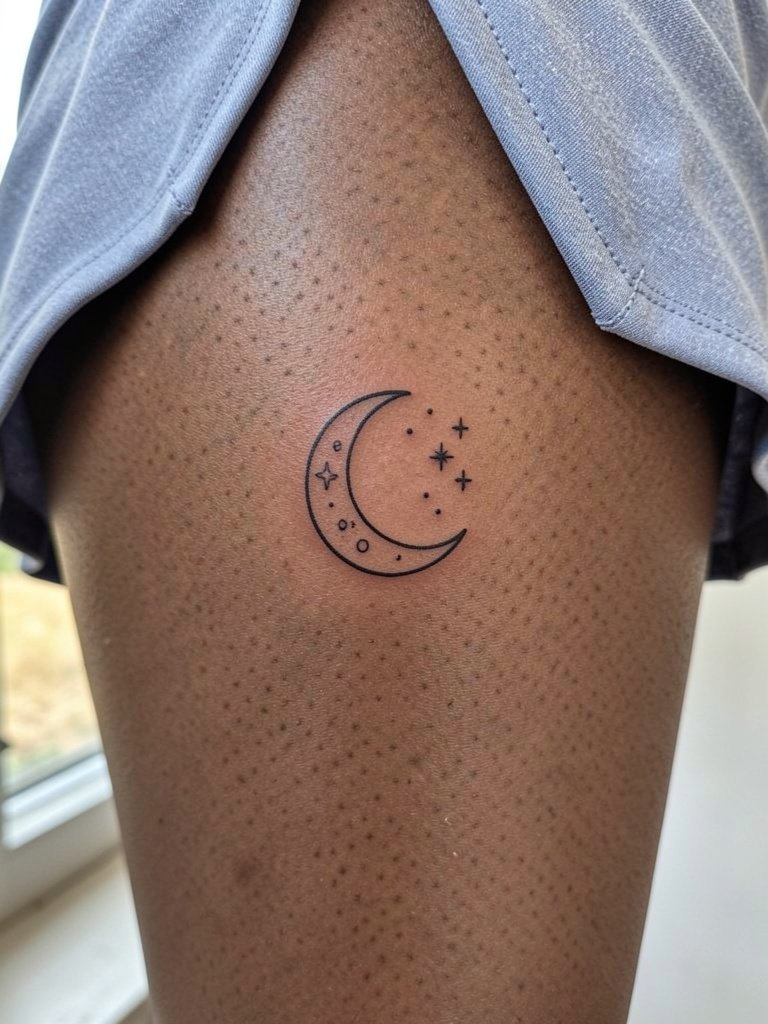
Small celestial clusters are versatile and easy to conceal. Make sure the dotwork spacing is generous and the moon’s contour has a slightly heavier outer line for longevity. People often pick tiny motifs without enough negative space and the dots merge. Session time is short and pain is low on the front thigh. To show this style choose a shorter hem skirt or cuffed jeans to let the cluster peek when you want.
12. Large Patchwork Thigh Composition
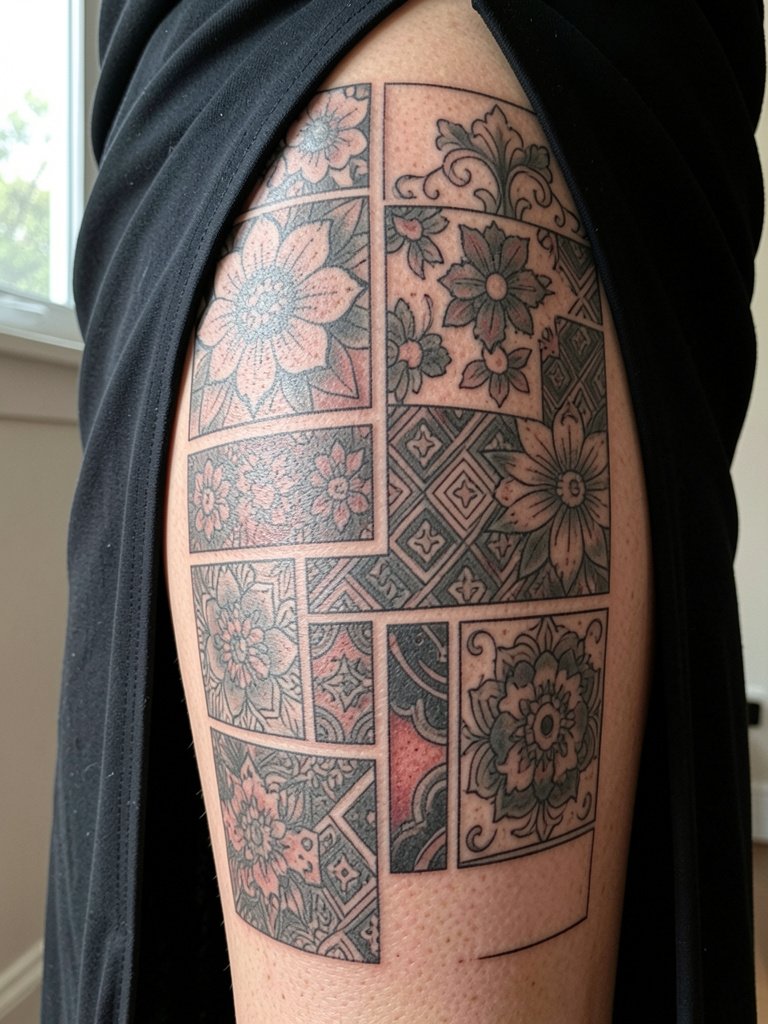
Patchwork pieces are built to evolve, making the thigh a collector’s canvas. The main planning task is mapping negative space so future elements can lock in visually. A mistake is starting with adjacent elements that offer no breathing room for future work. Expect multiple sessions over months. Session wear: choose clothing that allows roll-up access and avoid tight waistbands for two weeks. For showing off, slouchy button-down styling kept half-tucked highlights the layered panels.
13. Darkly Shaded Skull-Floral Mix
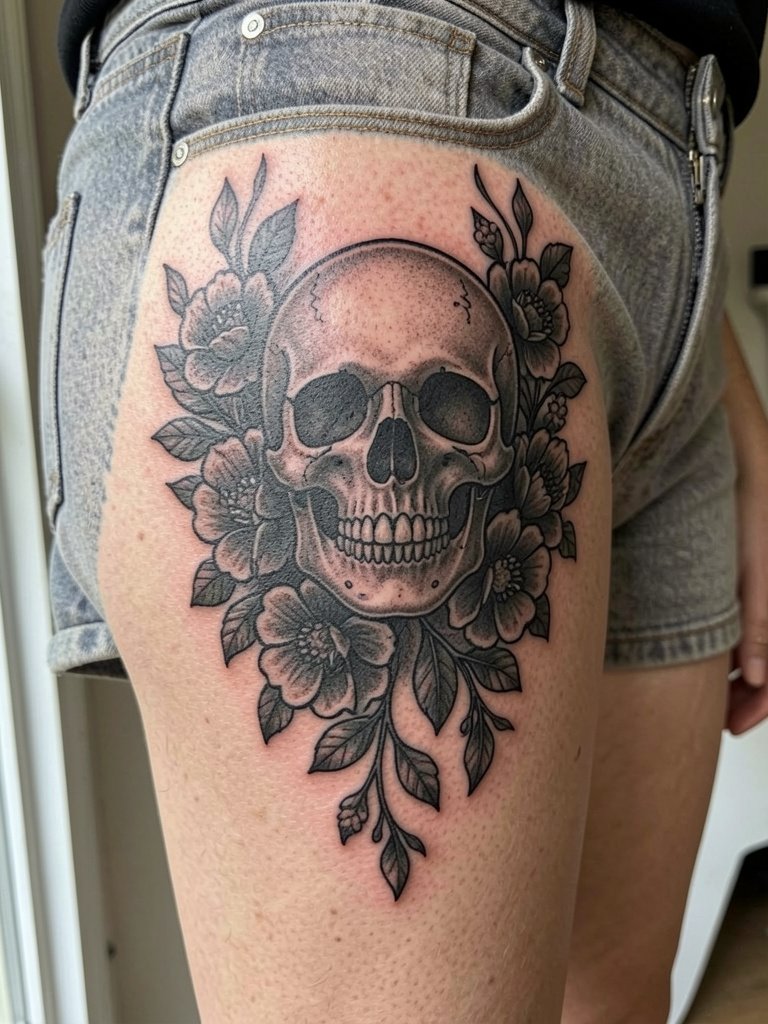
Skull-floral combos blend edgy and botanical elements and read strongly on the thigh because of contrast. Pick heavier black fills in shadow areas and keep delicate highlights for dimension. Avoid packing tiny midtone texture inside tiny petals. Expect some tenderness after long shading passes. Styling tip: pair with a high waisted short and a boxy top to let the composition be visible without overexposure.
14. Koi or Fish That Flows With Muscle
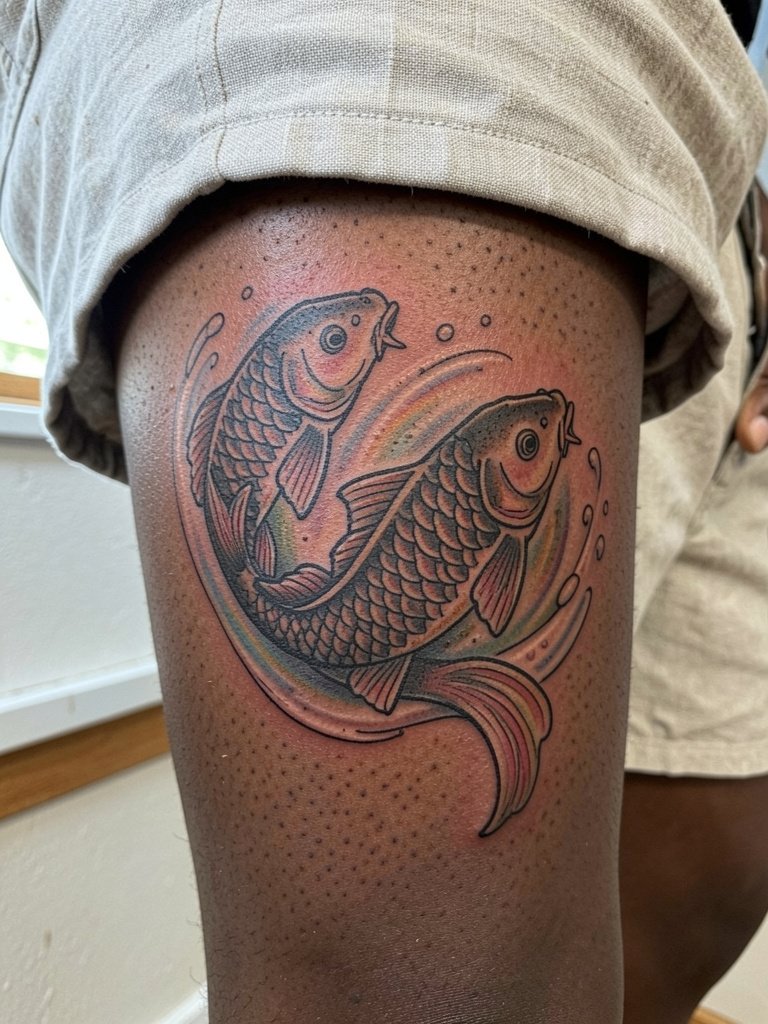
A flowing fish design works with muscle shape and leg motion to feel dynamic. Key planning detail: orient the composition so natural muscle expansion does not distort key features like the eye or head. Small, dense scale work can blur; larger scale patterns read better over time. Expect two to three hours for a medium piece with color. For session comfort wear loose drawstring pants and after healing show it off with a tennis skirt.
15. Portrait or Pet Memorial in Micro-Realism
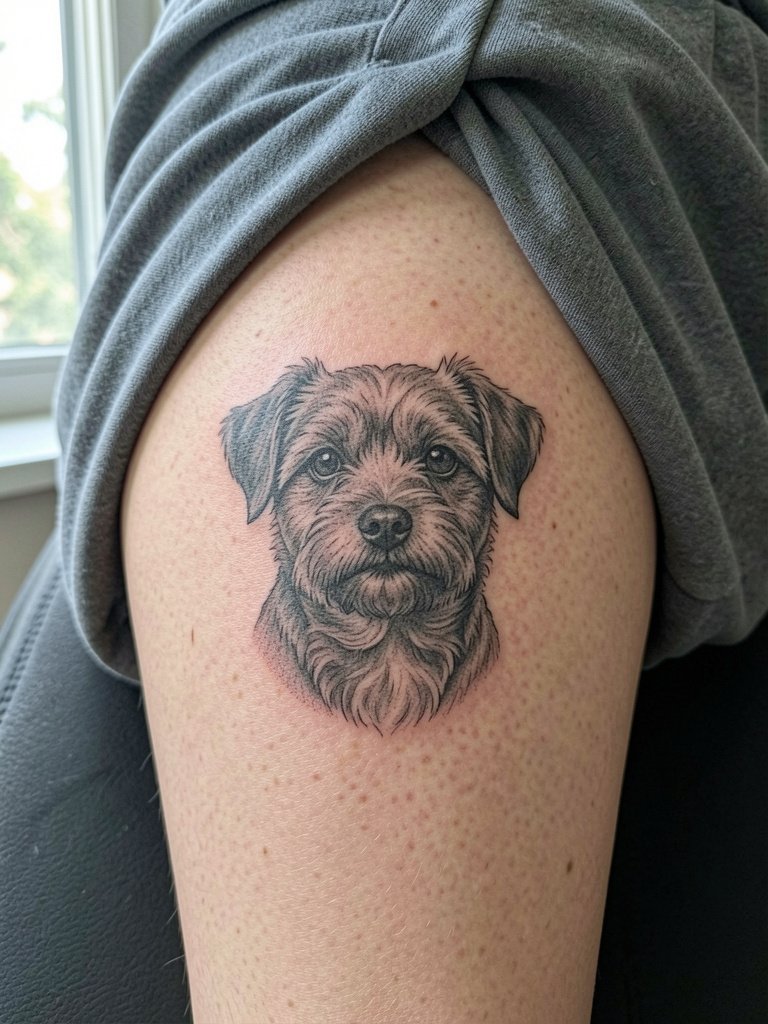
Portraits require careful reference matching and planning for contrast. For deeper skin tones the artist will often use increased saturation and stronger midtone separation so features remain readable. Plan for multiple sessions and realistic expectations about touch-ups. The mistake is asking for a tiny portrait with high detail; scale up so the shading has room. Session wear: pick comfortable bottoms you can remove or roll down without tugging sensitive skin, like relaxed linen shorts.
16. Tiny Object Cluster on the Medial Inner Thigh
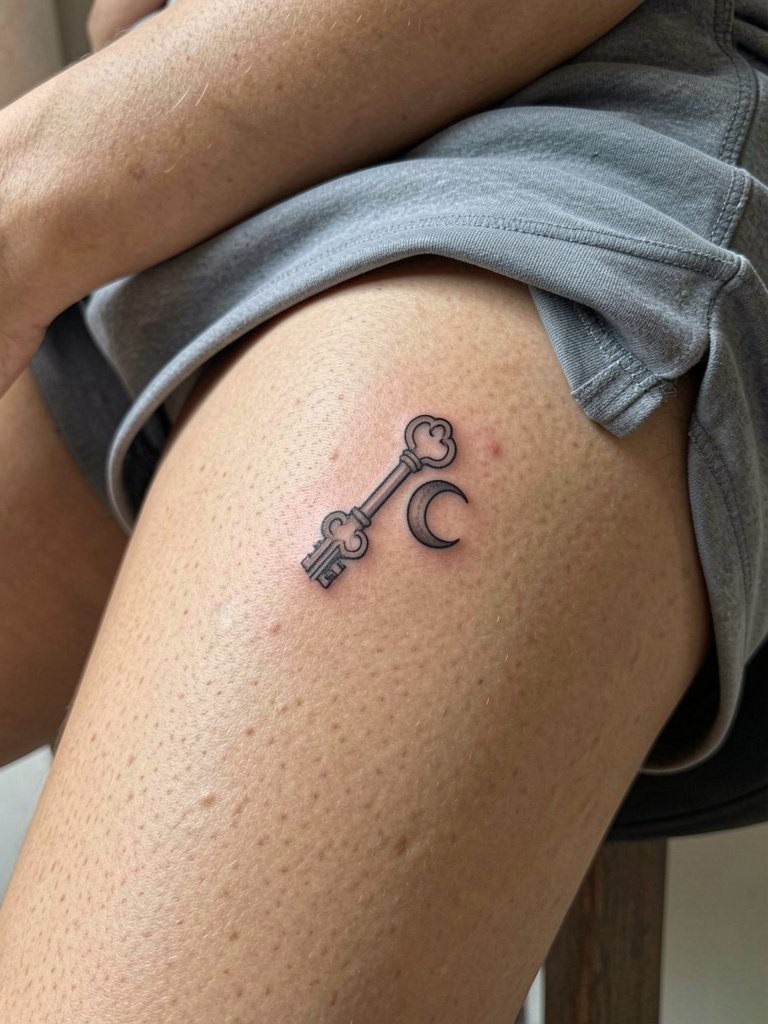
Inner thigh work can feel intimate and pain levels are usually higher than outer thigh work. One camp prefers outer upper thigh for accessibility and lower pain. The other camp accepts inner thigh for privacy despite higher sensitivity. One argument is outer thigh is easier for first-timers and shows well; the opposing view says inner thigh suits private placements and symbolic pieces. If you choose the inner zone, plan for slightly bolder line weight and bring clothing that lets the artist access the area without awkward stripping, like wrap skirts or drawstring lounge shorts during the session.
17. Garter Lace Band Around the Thigh
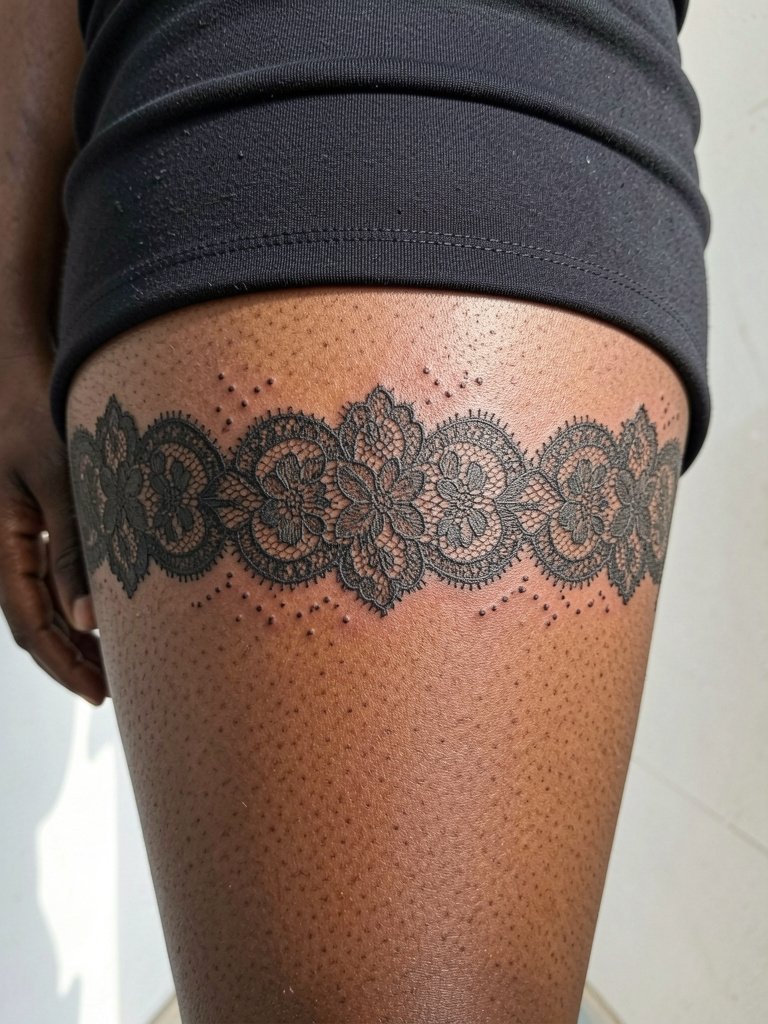
A lace band uses repetition and negative space to create a lingerie-inspired look without fabric. Plan for slightly thicker connecting lines at the edges so the pattern stays crisp over time. A common error is making motifs too dense which leads to a muddy appearance after healing. The band is sensitive to friction from waistbands so wear low-rise, properly fastened bottoms on session day and during early healing. To style the band choose open-back midi dresses or short hemlines that let the lace read without revealing too much.
18. Ornamental Compass or Map Motif
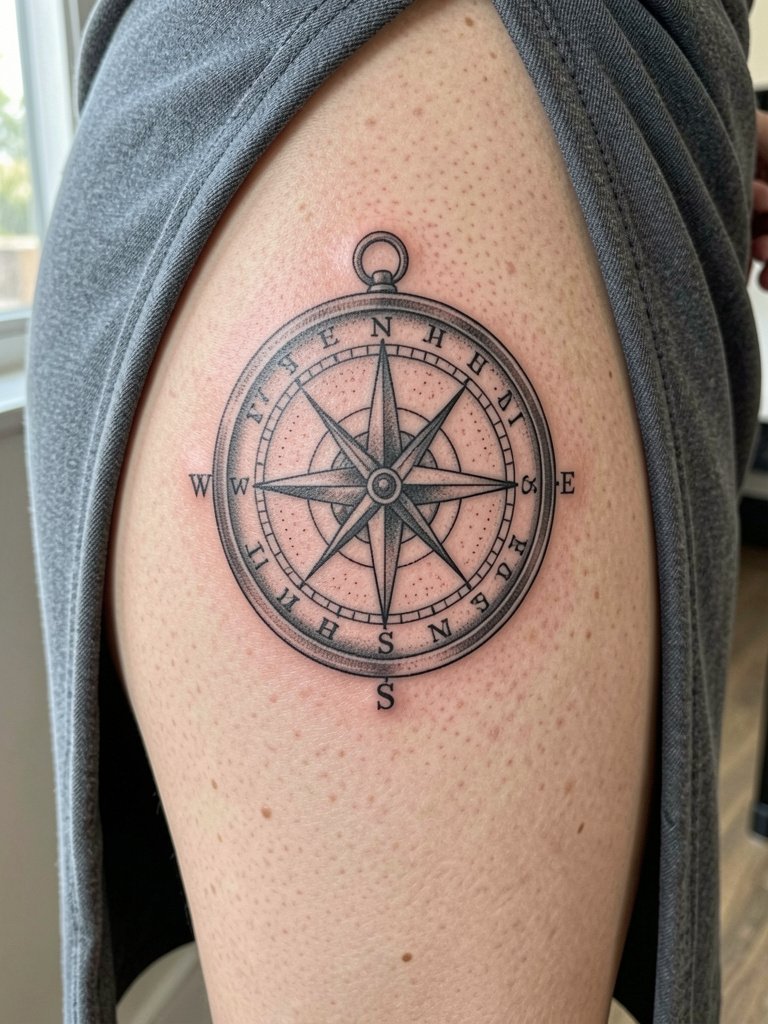
A compass or map element sits well on the outer thigh and can scale to be a focal medallion. Make sure the cardinal points and internal lettering are spaced so ink migration does not blur small type. The mistake is tiny lettering within a small compass. Session time varies but plan for two hours. For showing off pair with denim shorts and a tucked tee for an editorial casual look.
19. Lace-Edged Floral Runner Along the Thigh crease
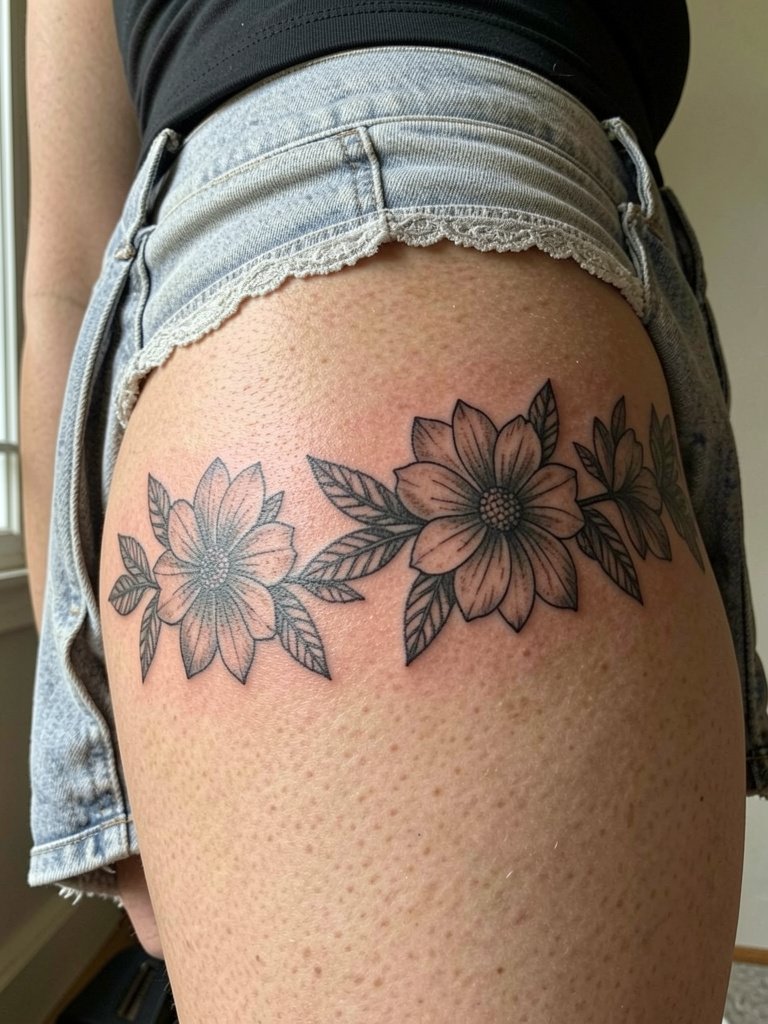
This runner design complements the leg line and photographs well. Avoid crowding the lace details too close to the waistband because friction and seams can aggravate healing. Ask for a mockup showing how the runner sits when you stand and when you sit; placement shifts matter. Session wear should be low-seam bottoms to prevent rubbing. For evening styling, pick a short hem or a high-slit skirt so the runner sits where fabric naturally parts.
20. Ornamental Dotwork Halo Around a Central Motif
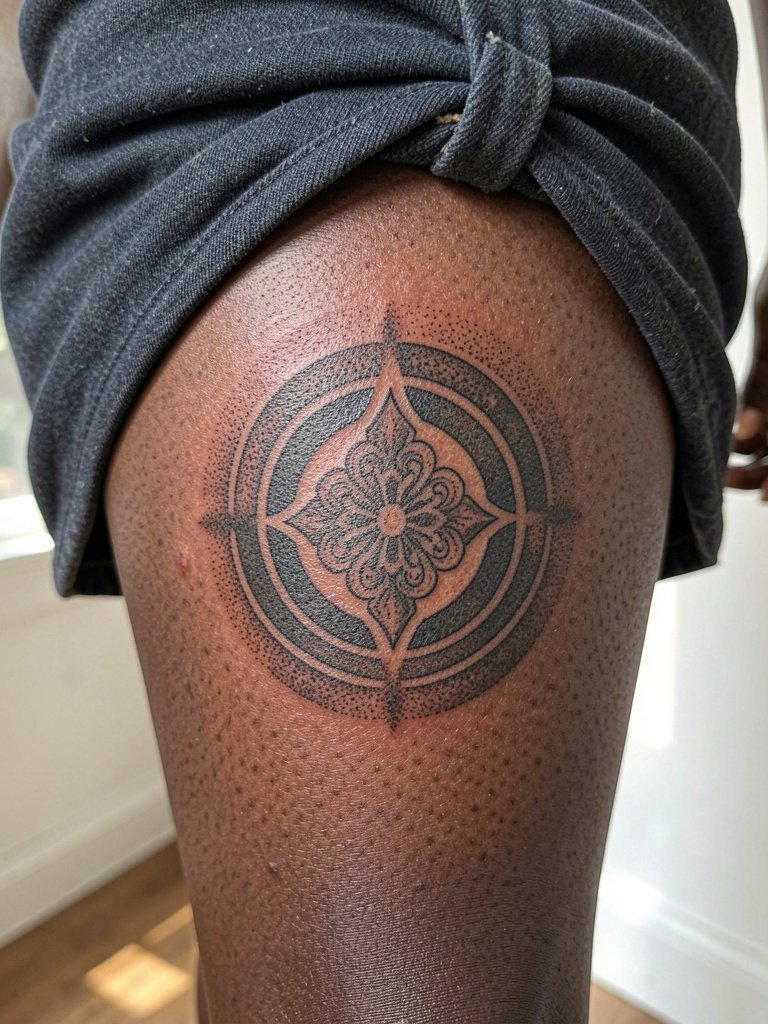
Dotwork halos look delicate but require planning for dot density and spacing so rings remain distinct. Too tight a stipple pattern becomes a gray blur later. Ask for spacing mockups and healed-photo examples from the artist. Session time depends on density but budget two sessions if the halo is large. For wearing, select skirts with a natural hem or sundress cuts that let the halo sit centered and visible.
21. Botanical Vine That Climbs Toward the Hip
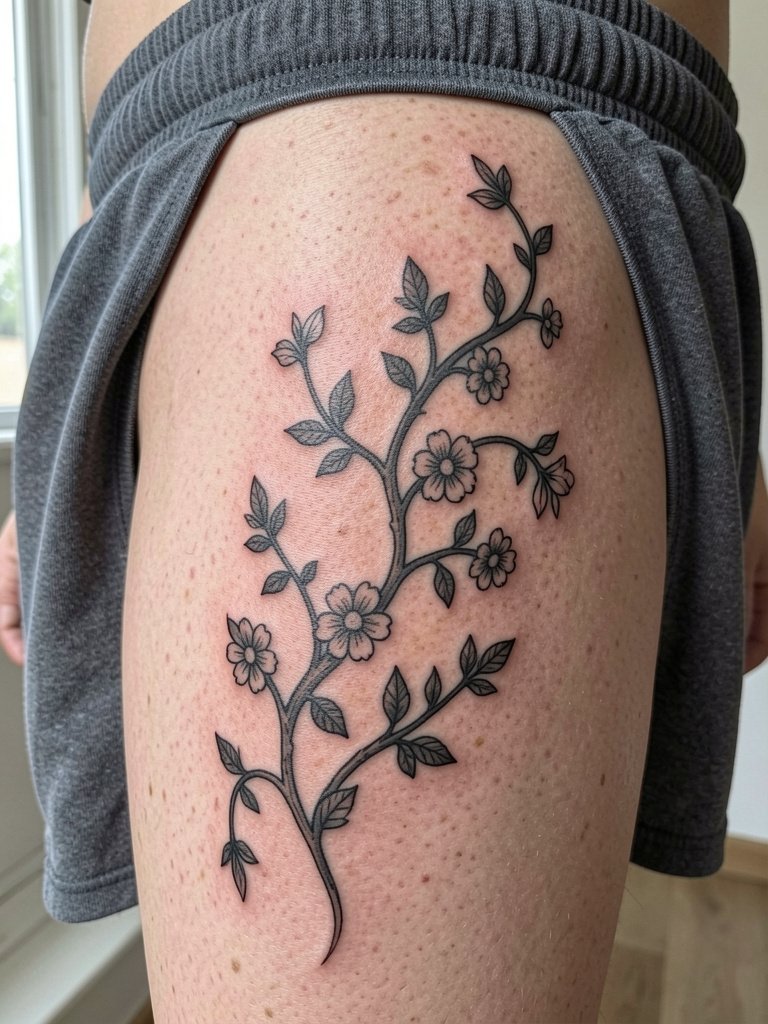
Vinework is flattering because it elongates the leg visually. Keep leaf spacing deliberate to prevent a visual blur when the vine crosses areas that compress during movement. A common error is making the vine too narrow or too busy. Session wear: choose shorts that can sit high without tightness and consider a relaxed boxer short for comfort during the first few days.
22. Abstract Brushstroke or Watercolor Wash (Stability-Adjusted)
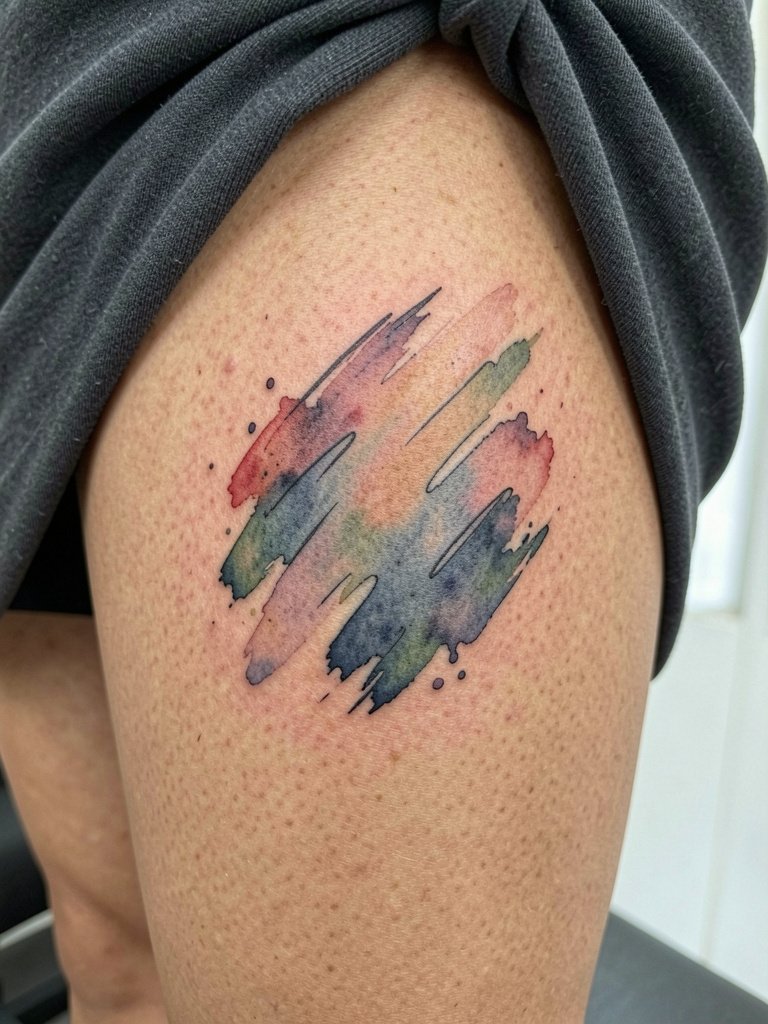
Watercolor aesthetics can look gorgeous on thighs but pure wash techniques often fade into patchy color. The practical approach is to combine wash accents with defined outlines or stipple anchors to keep form. Mistakes happen when clients ask for painterly bleeding without accepting touch-ups later. Expect a short session for medium washes if the artist layers efficiently. For showing off consider a high slit midi skirt so color accents appear like part of your outfit.
23. Bold Traditional Rose Styled for Longevity
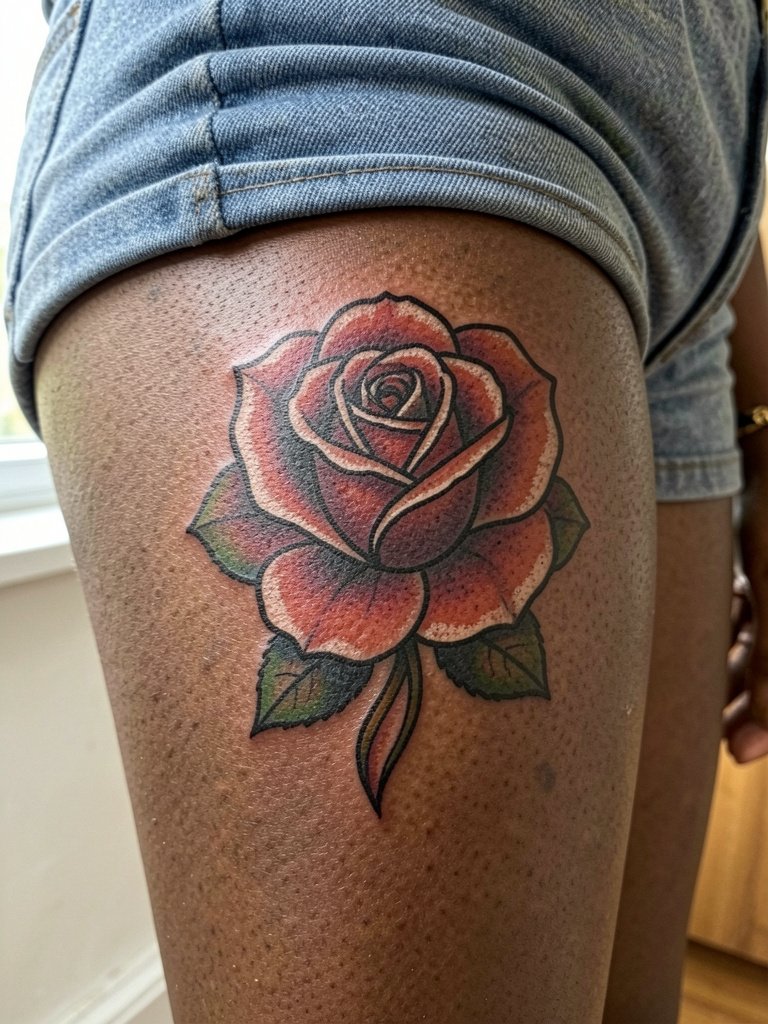
Traditional roses with strong outlines are taught for a reason: they age predictably. If you want a piece that stays graphic, choose bolder strokes with saturated fills and reserved white space. The common misstep is making petals tiny and crowded, which softens into blotches. Session length is moderate. Styling: a side slit skirt or cuffed jeans works well for visibility without overexposure.
24. Script Cluster Inside a Decorative Frame
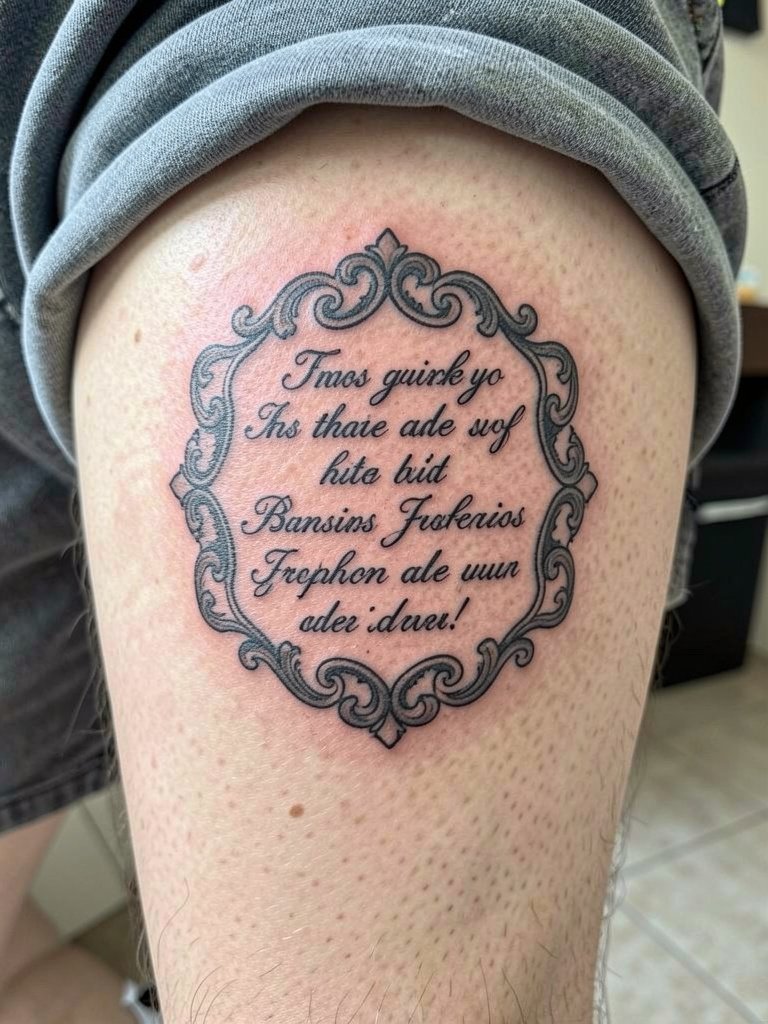
Framed script allows a longer quote to sit cleanly on the thigh. The design works best when the outer frame has a stronger outline than the internal lettering so that the overall shape reads even if letters soften slightly over time. A common error is fitting too many words into too small a frame. Bring two reference sizes so the artist can show how the type reads at three inches versus five. Wear comfortable pull-on bottoms during the session.
25. Single Bold Motif Near the Hip Bone
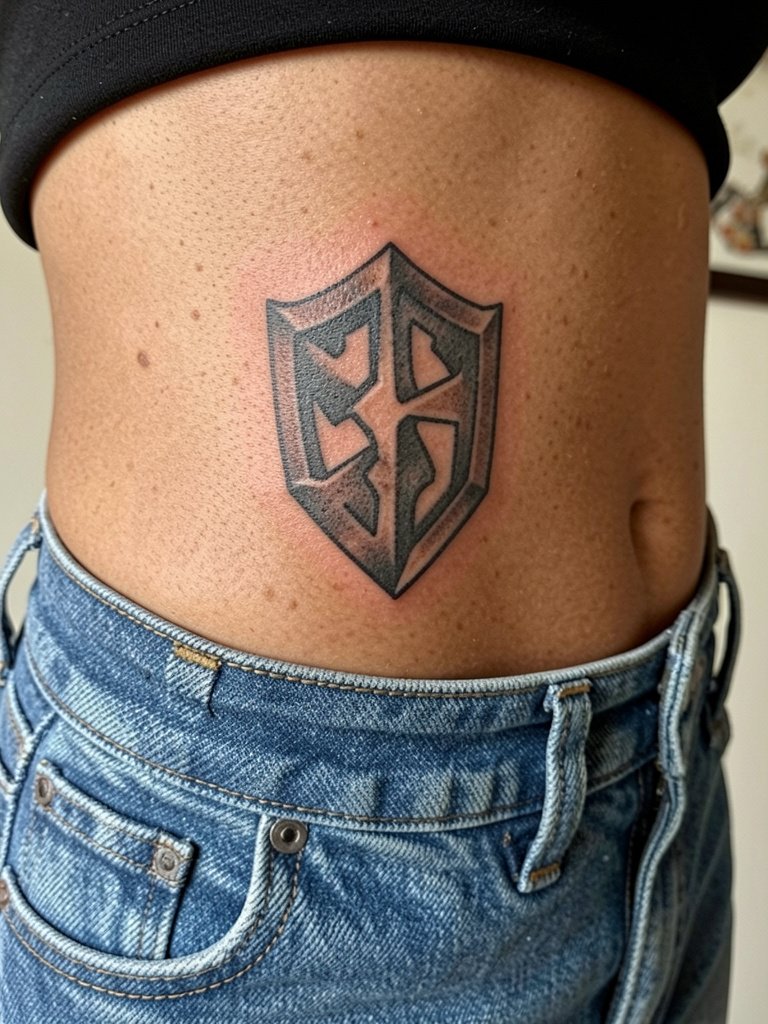
A bold single motif near the hip gives an editorial peek when you wear low-rise bottoms. Pick larger contours with interior texture that read from a short distance. Avoid extremely fine internal lines that will fade into a gray mass. Session time is usually under two hours. For session wear choose low-rise, properly fastened jeans and for showing off select cropped tops that expose the hip subtly.
26. Layered Botanical with Shadow Play
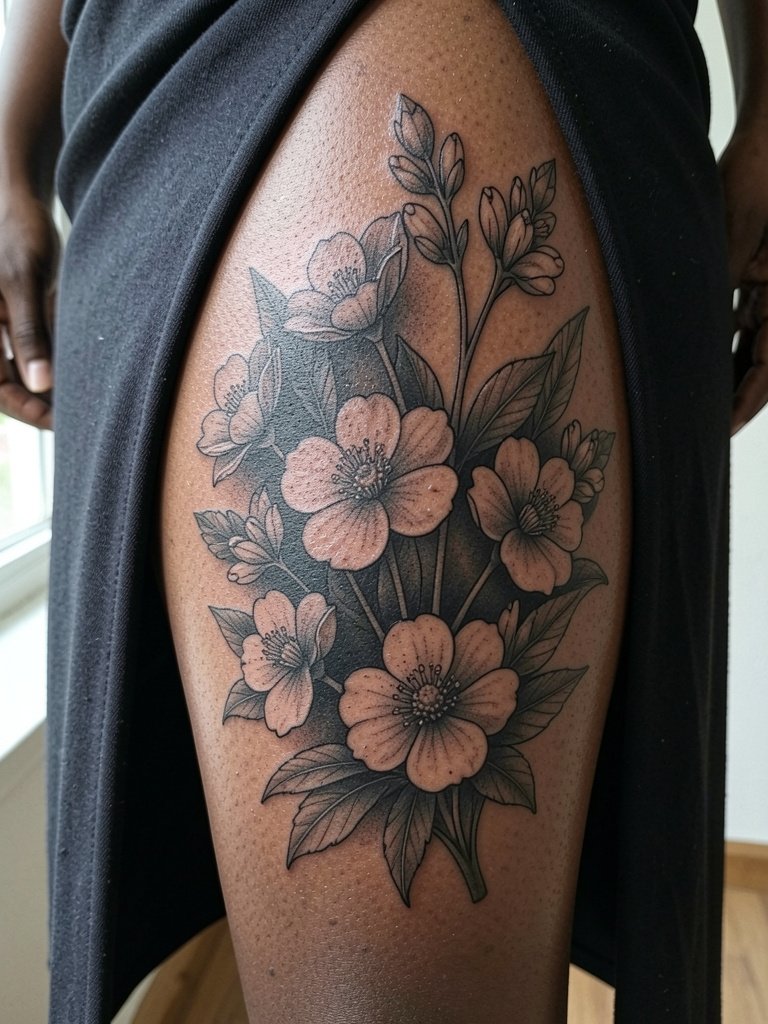
Layered botanical tattoos get depth by using shadow planes and reserved highlights. The trick is to keep midtones broad and avoid tiny crosshatching that disappears. A common error is over-detailing small areas that then age into blotchiness. Budget at least two sessions for a large layered piece. For styling, a loose linen short will avoid rubbing while the tattoo settles.
27. Statement-Thigh Composition with Negative Space
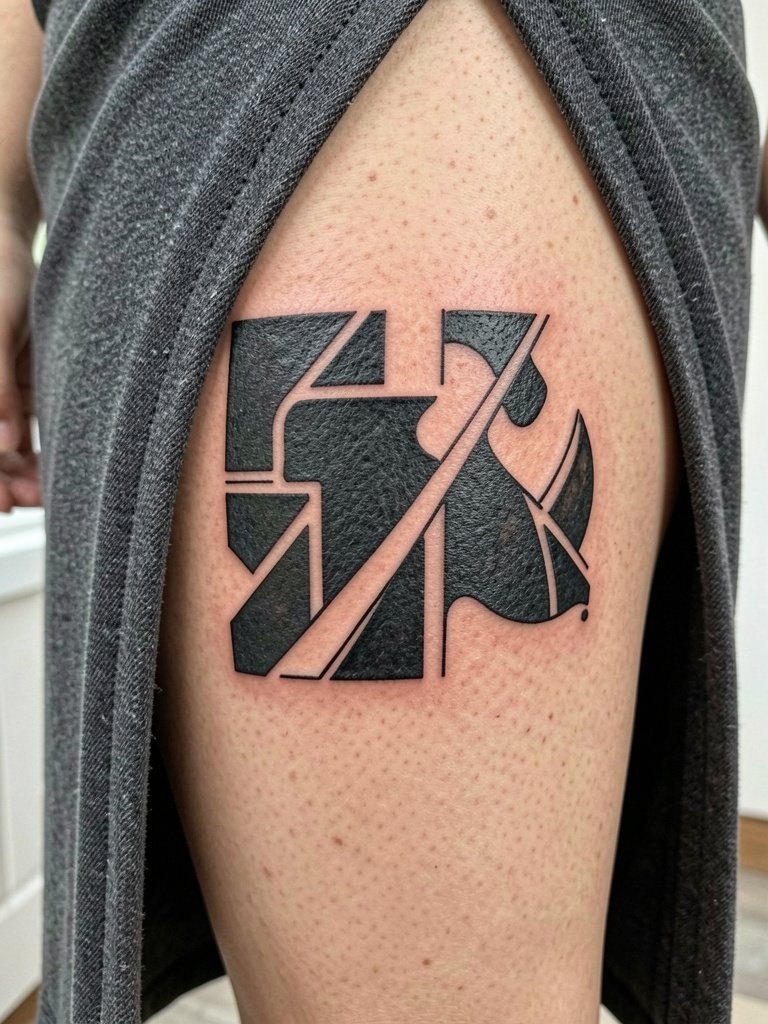
Large statement pieces built with negative space often age well because the silhouette remains readable even as fine internal detail softens. The planning step is mapping where negative gaps fall when you move, sit, or walk so key shapes are not distorted by creases. Mistake to avoid: packing too much detail without preserving clear negative areas. Expect multiple sessions and plan session-day clothing that does not press against the zones, like relaxed linen shorts.
Frequently Asked Questions
Q: How much should I budget for a thigh tattoo and where do price differences come from?
A: Expect wide variation depending on size, line density, and color. Small minimalist pieces often start at shop minimums while multi-session thigh wraps and portrait work move into higher tiers. The big drivers are session count, artist hourly rate, and the time it takes to layer shading or color. Think about budget in terms of sessions rather than a single dollar figure and ask the studio how many sessions they recommend based on your reference size.
Q: Which thigh placement is easiest for a first-timer who still wants to show the tattoo sometimes?
A: Outer upper thigh or front thigh are generally easier for first-timers because they are more accessible, less intimate, and tend to be less painful than the medial inner thigh. The outer/front placement also offers straightforward styling options like denim shorts or side-slit skirts that let the tattoo peek without making it the daily focal point. If you want privacy, medial inner thigh is an option but expect higher sensitivity and a different healing routine.
Q: How do I compare healed photos so I know a style will age well on my skin tone?
A: Look for healed examples in portfolios rather than fresh shots. Search for healed photos at around six months and at two years to see how linework and saturation hold. If the artist shows healed shots across different skin tones that is a good sign. For discovery, use hashtags and location filters on Instagram or TikTok and browse Tattoodo and Reddit threads for user-shared healed images, then compare those images to your skin tone and ask the artist what spacing or lineweight adjustments they would make.
Q: Will fine line floral work fade too quickly on the thigh?
A: Fine line florals split opinions. One camp accepts the airy single-needle aesthetic and plans touch-ups as part of the lifecycle. The other camp recommends slightly thicker lineweights and more spacing so shapes keep their definition longer. If you like the fine look, request a slightly reinforced outer contour and ask to see healed examples of similar spacing so you know what to expect.
Q: What should I wear to the appointment and during the first week of healing?
A: On appointment day pick loose, comfortable clothes that let the artist access the thigh without tugging. Pull-on shorts, drawstring lounge shorts, or a wrap skirt work well for front and outer thigh pieces. During the first week avoid tight waistbands and rough fabrics; relaxed linen shorts or soft boxer-style shorts reduce friction and irritation while the tattoo settles.
Q: How often will I need touch-ups on a thigh tattoo?
A: Touch-up frequency depends on scale, lineweight, and how often the area sees friction or sun. Small fine-line pieces may need touch-ups sooner than bold blackwork. Expect a realistic touch-up window at 12 to 24 months for intricate work. Plan budget and time for at least one follow-up visit after the piece has fully healed so the artist can correct any areas that settled unevenly.
Q: Where can I find local portfolios and healed examples without naming specific artists?
A: Use style-specific hashtags on social platforms with a location filter, for example search tags for thigh-focused styles and add your city. Browse Tattoodo and similar directories for keyword searches like "fine line thigh" or "blackwork thigh" and filter for shops that show healed photos. Reddit threads in tattoo communities are also useful for real-user healed shots and pricing chatter. These pathways help you find portfolios that match the style and healed look you want.