
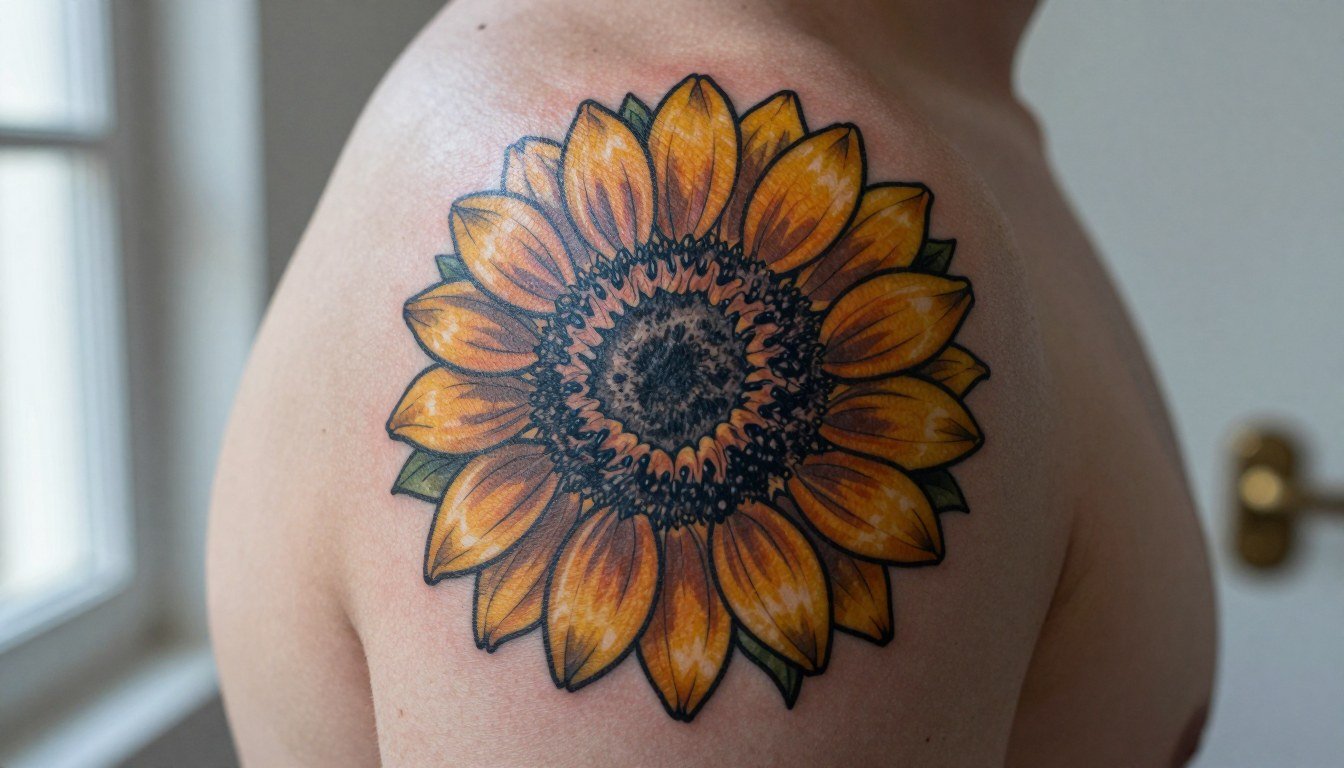
Sunflowers read bright on skin, but they do not always behave the same way as a stencil. Fine single-needle rays can look elegant on day one and soften into a fuzzball by year three if the center is packed with tiny dots. Choosing petal spacing, lineweight, and placement up front prevents that. Below the hero image you will find stencil-forward sunflower options that make clear tradeoffs for longevity and visual impact.
1. Fine-line sunflower with stem and leaves on inner forearm
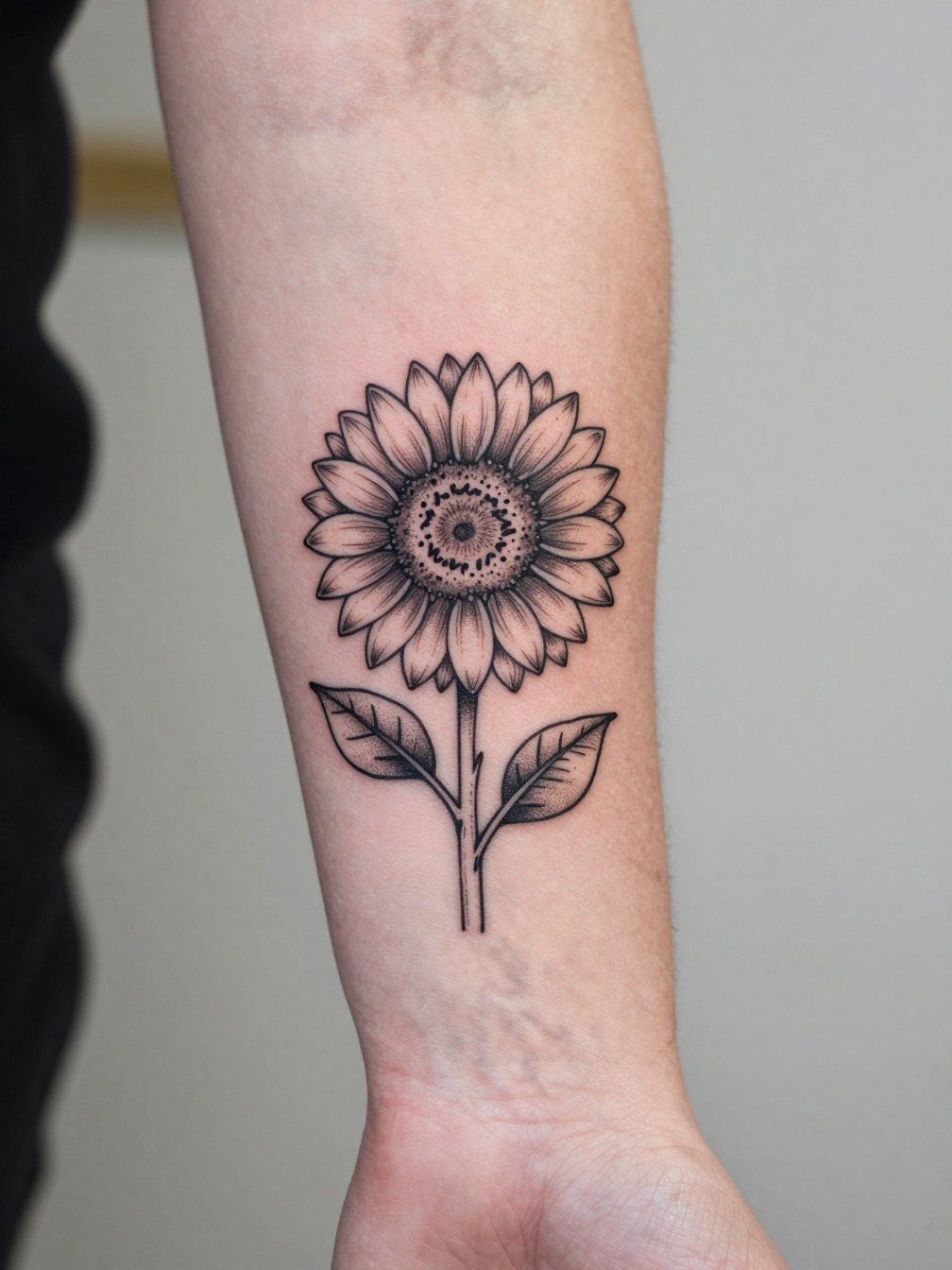
Choose this when you want a botanical look that stays subtle and readable at arm distance. Size matters here. If you want a delicate forearm piece, add a hair more negative space around the disk and keep petal tips slightly bolder so the linework survives motion. Plan for a one-session stencil and expect a touch-up in two to five years for crispness, especially if your skin moves a lot at the wrist crease. For the appointment, wear a rolled-cuff linen shirt so the artist can access the full forearm easily. Try linen button down shirt for session comfort and for showing the piece off later.
2. Single-line sunflower on the wrist
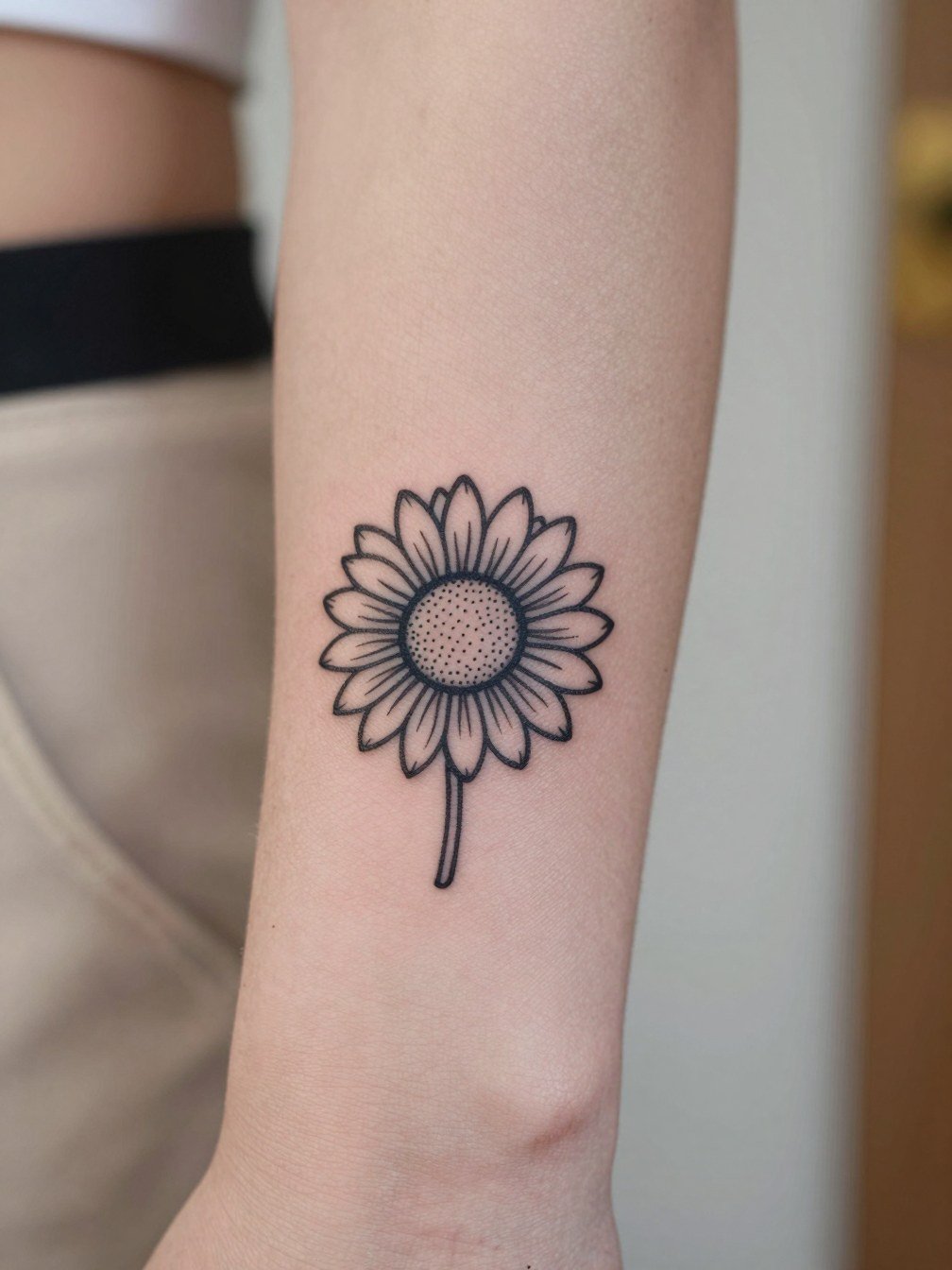
A single-line sunflower is modern and neat for a first tattoo, but tiny single-needle work on the wrist is vulnerable to blurring. Make the loop that forms the petals slightly thicker than your reference. The wrist gets frequent friction from bracelets and shirts, so remove jewelry on session day and wear a sleeveless top while the artist works. For styling, a slim watch on the opposite wrist balances the negative space and keeps the sunflower visible. Consider slim watch women if you want low-profile accessories that complement the piece. Expect a short session and a likely touch-up window in two years if the lines soften.
3. Sunflower with butterfly on outer forearm
Pairing a butterfly adds movement without cluttering the sunflower when the layout keeps the motifs breathing room. Ask the artist to show the butterfly at two scales in your stencil so you can judge interaction with the seed head. A common mistake is letting the butterfly overlap tiny seed dots, which creates visual noise after healing. For session wear, choose a loose short sleeve or tank that gives clear outer-forearm access. When you want to show it off, wear sleeveless tees that frame the piece cleanly. Plan for a one-session appointment and a possible touch-up depending on shading density.
4. Large sunflower with bold outer petals on the shoulder
This approach favors longevity. Bold outer petals read at distance and resist the softening that plagues fine-line florals. Artists and collectors disagree here. One camp says fine line is the better choice because it keeps the flower airy and modern. The other camp says bold line is safer because petals and centers stay readable longer after healing. If you are leaning toward longevity, pick the bold outer petals and discuss lineweight with the artist so the piece keeps structure without becoming heavy. For session comfort and showing the artwork, a tank top works well. Expect a medium-length session and minimal blowout risk on shoulder skin.
5. Sunflower head with simplified disk center on outer upper arm
A simplified disk keeps the design from becoming a muddy mass as it ages. Artists split on this. One group argues that detailed seed centers make the tattoo botanically richer and less generic. The other group argues simplified centers heal cleaner because tiny dots blur together with time. Both positions are valid. If you favor clarity, choose fewer, larger seed shapes and leave negative skin between rows. For the appointment, wear a loose tee that can be rolled to the upper arm. For outfits, boxy tees show the shape without crowding the flower. Touch-ups are typically minor if the disk is simplified.
6. Sunflower with subtle shading and open skin on the calf
Open skin and light shading give the tattoo contrast that survives healing better than dense fills. This style benefits from slightly larger petal gaps and softer stipple work in the center. Calf skin sees less stretch than inner joints, so medium shading holds nicely. For the session, wear loose shorts that can be rolled without putting pressure on fresh ink. When showing off the piece, cropped jeans or midi skirts work well, and a pair of cropped jeans women pairs with the tattoo for warm months. Plan for one session with possible follow-up if saturation needs reinforcement.
Studio Day Picks
These first six stencil options highlight line choices and center treatments that affect how sunflowers age on forearms, arms, shoulders, and calves. A few small items keep the session smooth and the first week predictable.
-
Stencil transfer paper kit. Lets you preview the linework on skin before committing, which matters for inner-forearm and wrist pieces above.
-
Topical numbing cream. Applied the recommended time before the session eases sensitivity on ribs and sternum work if you cross those placements later.
-
Thin protective film roll. Useful for ankle and hand placements that face friction during the first days of healing.
-
Fragrance-free gentle body wash. Mild cleansing helps the first week for exposed placements like collarbone and calf without stripping ink.
-
Aquaphor healing ointment. A thin layer in the initial days helps preserve fine line edges without clogging pores.
7. Micro sunflower on the ankle
Micro sunflowers read well if the center is simplified and petal gaps are preserved. The ankle is a high-motion and high-friction spot, so avoid overloaded seed detail. Wear cropped pants or shorts to the appointment so the artist can place the stencil cleanly. Low-profile sneakers and sandals make the piece easy to show, so consider minimal sandals for warm-weather looks. Expect a brief session and a possible touch-up if the edge softens after months of rubbing.
8. Sunflower and script combo under the collarbone
This placement is flattering if you keep the sunflower balanced against script spacing. A practical tip is to show the artist the exact word in the scale you want so the script and sunflower do not compete. Avoid tiny letters under the disk. For session access wear a strapless or wide-neck top so the artist has clear room to stencil. To highlight the area afterward, try a square neck top that frames the collarbone line. Healed results depend on how crisp the script is, so larger, airy lettering preserves legibility.
9. Sunflower with visible seed head detail on inner forearm
A detailed seed head reads as botanical and specific, but it can be a longevity trap if the dots get too close. The two camps here disagree. One camp says more detail makes the flower botanically richer and less generic. The other camp says simplified centers heal better because tiny dots tend to blur together. If you want seed detail, ask the artist to render larger stipple clusters rather than dense micro-dots. That preserves texture without risking muddiness in a small stencil. Expect a medium-length sit and schedule a touch-up plan if you rely on fine seed contrast.
10. Sunflower with strong negative space on the ribcage
Ribcage skin moves with breathing and weight changes, so negative space designs win for readability. Keep petals larger and avoid crowded inner detail. This placement is higher pain for many, so plan breaks and a numbing strategy if needed. Wear a soft, loose top that lifts easily and does not rub the area during healing. High-waisted bottoms and an open shirt create a neat reveal for showing off the piece. Touch-ups are common on ribs if lines settle unevenly, so budget for a follow-up session.
11. Traditional-style sunflower flash on the upper arm
Classic flash holds up because heavy outlines and restrained detail make the subject durable. This style suits anyone who wants a readable sunflower that survives frequent sun and activity. The session is usually one visit for an upper-arm flash. A common mistake is asking for micropetal detail inside a traditional outline. Keep the inner work bold and let the outline do the reading. Boxy tees and sleeveless tops present the piece cleanly. Minimal touch-up needs make this a low-maintenance option.
12. Patchwork sunflower for sleeves on the forearm
Collectors build with patchwork sunflowers as flexible filler pieces that connect larger motifs. When requesting this, bring sleeve references that show spacing, negative anchors, and where the sunflower should sit relative to surrounding art. One mistake is starting with a sunflower that is too symmetrical for sleeve flow. Tailor petal direction to the arm curve and ask the artist to present a layout sketch. For shop day, wear a short sleeve so the artist can map continuity along the forearm. Expect multiple sessions and periodic touch-ups as the sleeve matures.
13. Sunflower with ornamental framing on the sternum
Sternum work is intimate and demands careful spacing. Decorative frames keep the sunflower feeling finished while preserving the center with open skin. Session pain varies and requires trust in pacing. Wear a front-opening or loose bra-friendly top for access. For display, deep-V or open-back pieces reveal the design intentionally. Because the sternum sees contour changes, plan for a follow-up touch-up to maintain crisp edges after settling.
14. Hybrid sunflower with puzzle-piece petal motifs on outer upper arm
Symbolic motifs like puzzle-piece petals give a sunflower personalization without adding clutter. Ask the artist to test the petal interlocks at multiple scales to ensure the motif does not become indiscernible when the piece is reduced. The outer upper arm offers forgiving skin for bolder shapes. For session comfort, wear a sleeveless top. Boxy tees work well for showing the design. Expect a single session for medium complexity and minimal long-term fiddling.
15. Sunflower in geometric frame on the collarbone
A geometric frame can make a small sunflower feel intentional and modern, but frame lines must be considered for future aging. Straight-edge frames should be slightly thicker than ultra-fine hairlines so they do not disappear. For showing the piece, scoop-neck tops and layered delicate necklaces frame the area. Try a layered necklace set that complements the geometric edge without covering the tattoo. Plan for a compact session and a likely touch-up if the frame needs redefinition later.
16. Sunflower with vine connector for a wrist-to-hand flow
Wrist-to-hand pieces are charming but face heavy washing and friction. Keep vine lines a touch bolder than the rest of the composition and avoid tiny dots on the hand. For the appointment, remove wrist jewelry and wear short sleeves. Low-cut ankle socks are irrelevant here so focus on hand care after the session. Expect a quick session but plan for an earlier touch-up if the hand lines fade faster.
17. Clustered micro-sunflowers for a low-profile thigh piece
Clusters let you carry sunflower imagery without one dominant bloom. On the thigh you have room for spacing that helps micro detail survive. Keep each mini-disk simplified and stagger petal orientation so the cluster reads at a glance. Wear bike shorts or loose shorts for the session to give the artist unobstructed access. Clusters usually take one session and may need a minor touch-up if any micro details soften after months of movement.
Frequently Asked Questions
Q: How do I know whether a fine-line or bold-line sunflower will age better on my skin?
A: It depends on size and placement. Fine-line looks airy at small scale but can blur on high-motion spots like wrists and ribs. Bold-line holds up better at a distance and on areas that see friction. If you favor fine-line, increase negative space and slightly thicken critical petal anchors to help longevity.
Q: Where can I find healed photo examples and local artists without naming specific people?
A: Search Instagram and TikTok for tags like sunflower tattoo, fine line sunflower, and sunflower stencil while applying your city name to the query. Use tattoo galleries and stencil-focused pages to compare healed work. Reddit tattoo communities often surface healed photos in mixed threads and can highlight how a style actually settles over time.
Q: What should I wear to the appointment for a shoulder or collarbone sunflower?
A: For shoulder work wear a tank top so the artist has full access and the fabric does not press on the area afterward. For collarbone pieces wear a scoop-neck or strapless top for clear stencil placement. A practical session outfit is a loose tank top that you can pull on and off easily without smudging fresh ink.
Q: How big should a sunflower be if I want it to last five years without major touch-ups?
A: Favor slightly larger sizes for pieces with seed detail. A small sunflower under two inches with dense seed dots will likely need a touch-up sooner. If you want longevity, increase size, leave negative skin between rays, and avoid micro-dot seed textures.
Q: Will a sunflower tattoo look feminine and limit wardrobe choices?
A: Sunflowers are versatile. Style choices such as bold traditional, illustrative, or geometric framing change the vibe more than the subject. Work with lineweight, framing, and placement to get the aesthetic you want without feeling boxed into gendered language.
Q: Can I combine a sunflower with other symbols without losing the flower's clarity?
A: Yes, if you plan composition that reserves space around the sunflower and avoids overlapping tiny seedwork. Pairing with a butterfly, script, or geometric frame works well when each element has breathing room and distinct lineweight.
Q: How often do sunflowers need touch-ups compared with other floral tattoos?
A: Touch-up frequency depends on detail density and placement. Bold-outline sunflowers often need fewer touch-ups than micro-detailed options. Expect micro or wrist pieces to need a touch-up in two to three years, and larger shoulder or upper-arm pieces to last longer before a refresh is needed.
