
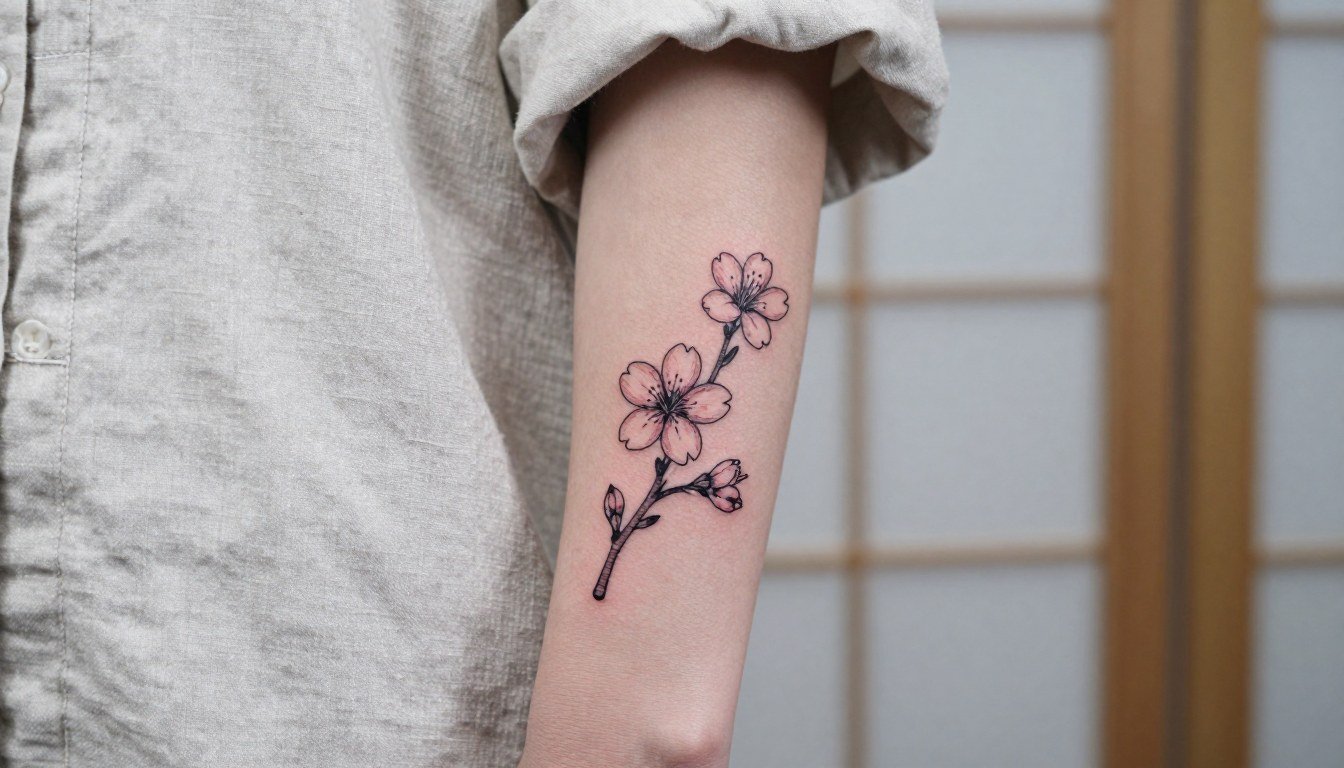
The cherry blossom piece people still point to after five years usually has a backbone of black branchwork, not a scattering of pale petals. If your goal is graceful now and readable later, pick a composition that balances petal softness with deliberate linework and contrast. Below the first idea you will see a healed photograph to set expectations, then 18 more approaches that show how scale, placement, and wardrobe choices change the result.
1. Traditional Cherry Blossom Branch Sleeve with Drifting Petals
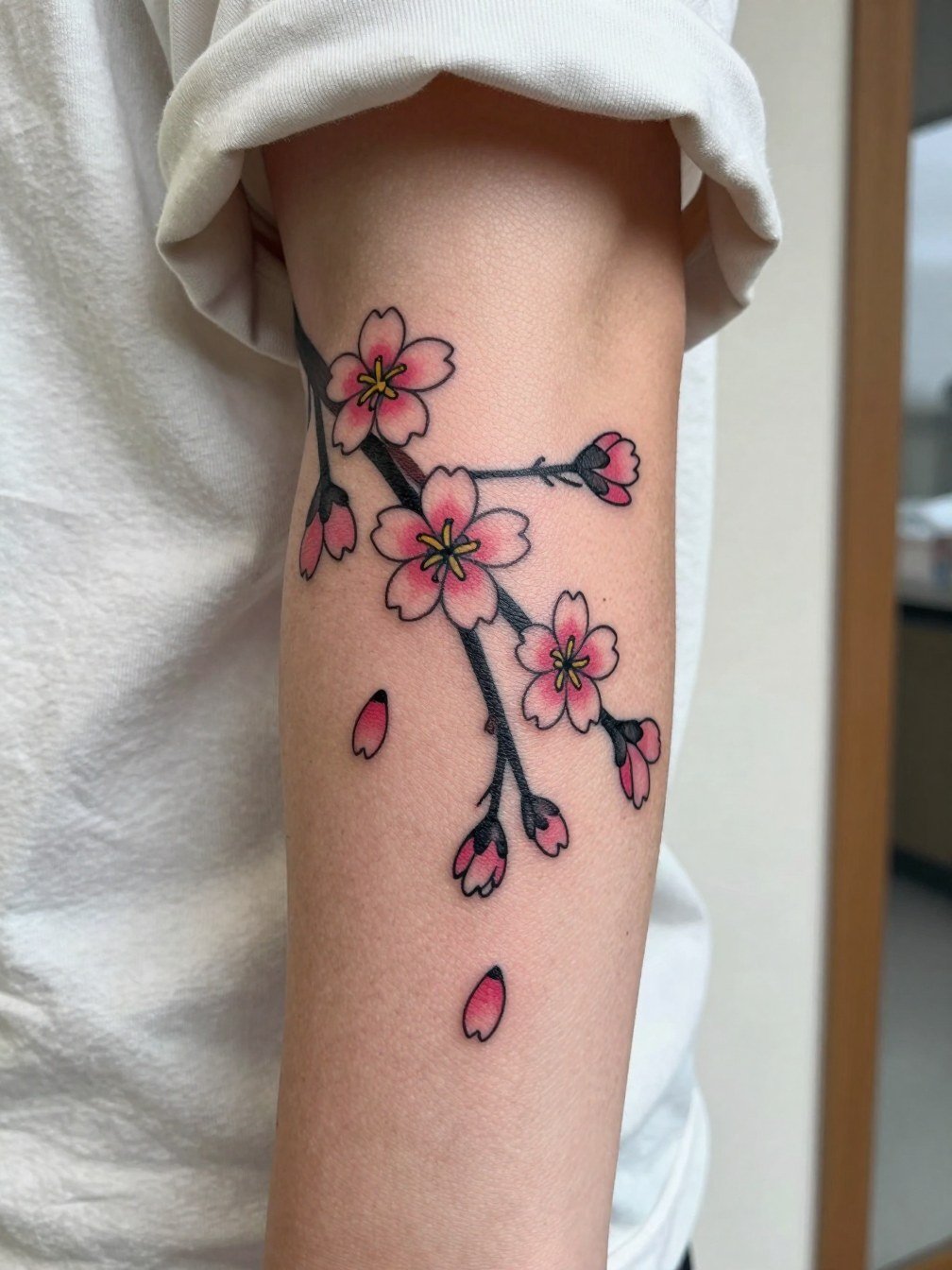
A forearm sleeve built like a branch gives motion and keeps the blossoms from floating aimlessly. Recommended when you want a piece that will expand into a half or full sleeve later. Expect 2 to 3 sessions for the outer forearm panel and moderate pain where the bone tucks near the wrist. What ages well here is clear black structure under the color so the petals keep definition after a few years. Common mistake is ordering pale petals with barely any outline. For the appointment, wear a rolled short-sleeve shirt so the artist has unobstructed access and the cuff does not rub fresh ink.
2. Fine Line Cherry Blossom Sprig on Inner Forearm
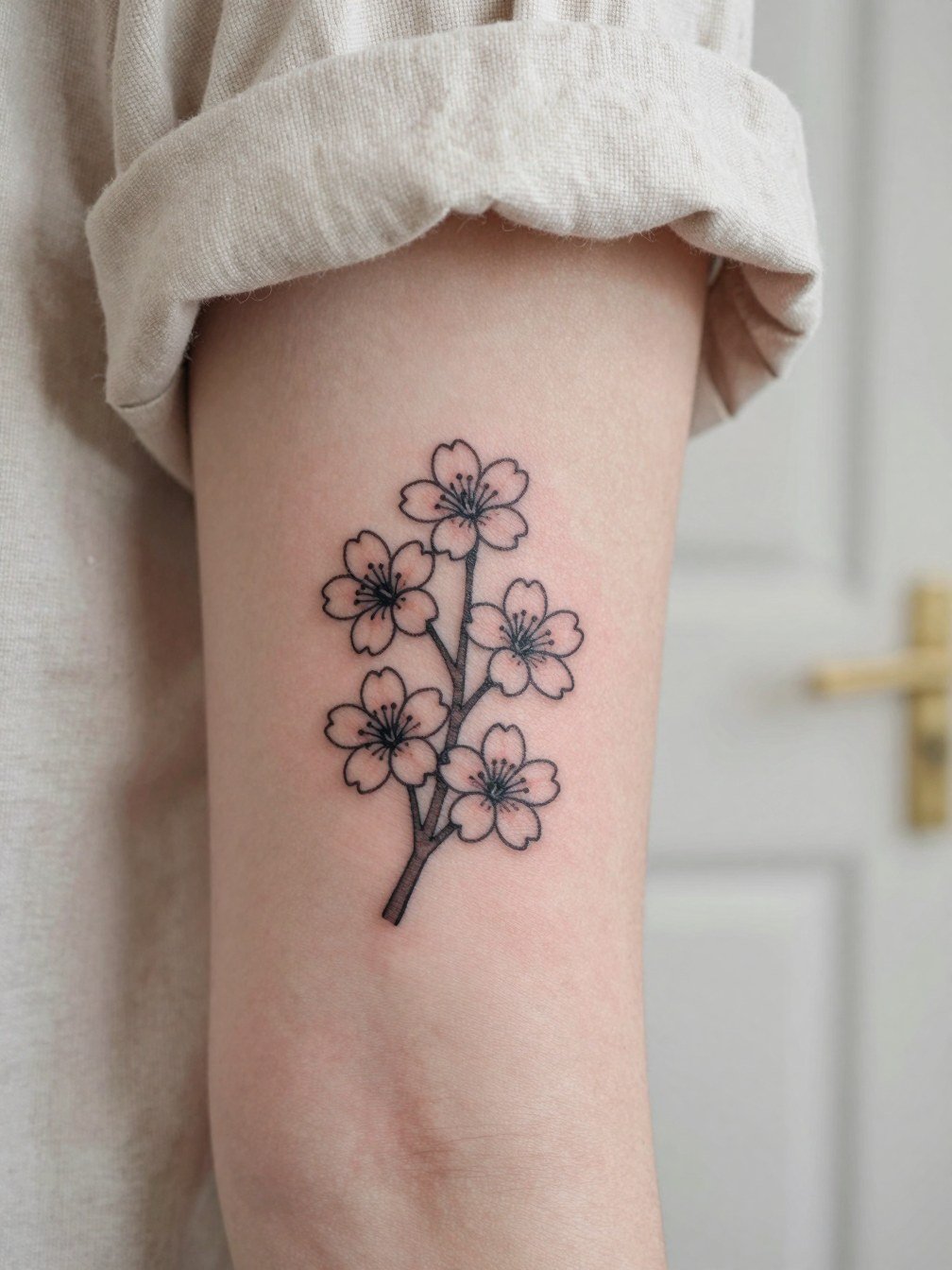
The inner forearm sprig works well for a first tattoo because it reads intimate and crisp when done at a modest scale. Pain is usually low to moderate and a single session of 30 to 90 minutes is common depending on detail. The real trade-off here is between delicate looks and longevity. One camp says single-needle fine line will blur faster on mobile skin. The other camp says spacing and slightly stronger line weight can make fine work last. If you prefer a softer look but want staying power, ask for a hair heavier contour and bring healed examples so you and the artist can judge contrast. Session day wear: a linen button-down that opens easily.
3. Delicate Cherry Blossom Branch with Subtle Shading and Contrast
This illustrative approach keeps the blossoms soft while using shading to define petal edges and centers. It is a good choice when you want a floral feel without relying on heavy outlines. Expect one or two sessions and medium pain on the forearm. A version that ages poorly often lacks branch contrast and the petals fade into skin tone. To avoid that, specify contrast points at petal tips and around the branch so the composition still reads at two years. A real mistake is asking for "very faint pink" as the only color cue. Instead bring a palette sample and say where you want darker contrast to sit.
4. Cherry Blossom Tree Tattoo on Outer Upper Arm
The outer upper arm gives you room to make a tree composition that reads like a scene rather than a scatter of flowers. Pain is usually low and sessions depend on size, often one to three sittings. This placement is forgiving for larger branchwork and holds black structure well. Common request problems include overloading the blossoms and not giving the trunk enough presence. During the consult, show a photo of the arm unposed so the artist can plan branch flow. For showing the piece off, a sleeveless tank or muscle tee frames the upper arm without competing.
5. Cherry Blossom and Branch Composition for a Half Sleeve
Half sleeves let you plan chapters in a composition and add future elements without forcing a full background now. Expect multiple sessions, medium pain near inner elbow, and a longer touch-up window. The aging advantage is scale and branch repetition; small petals on large canvases keep their shape. A common error is keeping petals too small for the sleeve scale. When you meet the artist, ask them to mock the design at sleeve scale so you can see how a blossom reads at three inches versus one. Wear a boxy tee to the session so sleeves roll easily and the artist can adjust stencils without pulling fabric.
6. Out-of-Season Cherry Blossom Tree with Bare Branch Structure
A stylized bare-branch design reads as conceptual and keeps the cherry blossom identity without full color saturation. Calf placement tolerates bolder branch silhouettes and tends to age well because the skin is less mobile. Expect one to three sessions and lower pain than ribs. Mistakes include tiny petal work that disappears on thicker calf skin. For the session, pick shorts or cropped wide-leg pants that you can roll up easily so the artist can work without tugging fabric.
Pre-Session Picks
These items smooth common issues raised in the first six ideas, from access during the appointment to keeping fine line work clean while it heals.
-
Stencil transfer paper kit. Allows you and the artist to preview line placement on your skin, which matters when branch flow must wrap the forearm cleanly.
-
Topical numbing cream. Useful for wrist or rib work when you need a calmer session without compromising line control.
-
Thin protective film roll. Covers finger and wrist areas during the first week of heavy washing and abrasion.
-
Fragrance-free gentle body wash. Cleanses healing skin without stripping pigment or irritating tender lines.
-
Aquaphor Healing Ointment. Thin application in the first 48 hours helps protect fine line sections and supports even healing.
7. Cherry Blossom Cluster with Heavier Linework for Longevity
If longevity is a priority, stronger contour and slightly denser saturation make blossoms readable in later years. This option suits forearm and calf placements where visibility matters. Pain is moderate and sessions are usually under two hours per cluster. A frequent mistake is asking for "no outline" because the initial look is ethereal. That choice often leads to loss of petal shape over time. For session wear, a plain crewneck tee with a loose sleeve cuff prevents rubbing during healing.
8. Cherry Blossom Tattoo with Deep Shading in the Branches and Lighter Blossoms
Using heavy branch shading keeps the flowers readable without needing saturated pinks. This is a practical strategy for shoulder or upper-arm placements that see sun and movement. Expect one to two sessions and mild to moderate pain depending on proximity to the shoulder blade. The aging profile is favourable because the dark branches anchor the lighter petals. A common misstep is pushing all the contrast into the petals instead of the branch. For showing the tattoo off, an open overshirt frames the shoulder curve without hiding the branches.
9. Small Cherry Blossom Twig for a First Tattoo
A wrist twig is a classic first-tattoo choice, quick to do and easy to conceal if needed. Pain on the wrist can be noticeable because of thin tissue and bone nearby. Sessions are short, often under an hour. The biggest durability problem is scale; details smaller than three millimetres usually blur. If you want a delicate look, ask for slightly increased line weight in the contour so the shape survives routine washing and friction. For accessories, pair with a slim watch band on the opposite wrist to balance the visual weight.
10. Cherry Blossom Tattoo with Family-Symbol Meaning
Assigning a bloom to a family member is a way to personalize a common motif without making it literal. Put blossoms at distinct positions along a branch to keep the silhouette readable. Expect low to moderate pain on the forearm and one session for modest counts. A common error is adding too many tiny blooms that overcrowd the branch. Instead pick blossom sizes that relate to the arm length so each symbol has breathing room. For the appointment, a neutral knit top opens flat and gives the artist clear access.
11. Cherry Blossom Branch with Healed-Soft Edges for Aging
Designed around how tattoos look once healed, this style trades hyper-detail for readable edges that survive time. Expect one to two sessions and medium pain where the inner forearm meets the elbow crease. The design purposefully keeps petals slightly larger and uses branch contrast to prevent fading into a blur. A typical mistake is copying ultra-fine reference photos without scaling the details for natural skin texture. For session comfort, wear a loose button-down that opens easily so the artist can position stencils accurately.
12. Cherry Blossom Tree with Stronger Black Structure Than Petals
Ribcage pieces look dramatic but involve higher pain and movement during breathing. One camp of artists warns that fine line here blurs quickly because the skin stretches. Another camp says careful needle depth and slightly wider spacing can make fine work settle. If you prefer high-contrast results, choose black branchwork as the backbone and only add selective petal color. Expect multiple sessions and plan for at least one touch-up if the area flexes a lot. For the session, wear a fitted top you can remove without tugging at the side.
13. Cherry Blossom and Bird Pairing
Adding a bird gives motion and a narrative without overcrowding the floral core. Outer forearm or upper arm placements suit small fauna since the silhouette complements branch direction. Pain is mild to moderate for outer forearm work. A common error is making the bird too detailed for the scale, which leads to loss of feather definition over time. Keep the bird simple or bold the outline so its posture reads at a distance. For evenings out, this placement pairs well with rolled short-sleeve shirts that show the forearm clearly.
14. Minimalist Single Blossom with Negative Space
A single blossom uses empty space as part of the design language and works well on the ankle or behind the ear. Pain at the ankle can be higher than the forearm. The trick is sizing so the negative space reads when healed; too small and the gaps close. A common mistake is choosing ultra-fine gaps that fill in. If you want a minimalist approach that lasts, ask for a slightly wider negative margin and slightly bolder contour. For session wear, cuff your jeans or choose shorts or a midi skirt so the artist can access the ankle without fabric movement.
15. Ribcage Flowing Cherry Blossom Tree
Ribcage pieces make dramatic canvases but come with breath-driven movement and higher pain. If you are set on this placement, plan for spacing that allows branches to stretch with the torso. A mistake is packing petals too tightly along the curve so they compress when you sit or bend. One practical guideline is to keep major branch lines thicker and let small blossoms sit farther apart. Sessions are usually longer and you should plan breaks. Bring a fitted top that you can remove without tugging at the area.
16. Calf Vertical Cherry Blossom Tree with Motion
The calf gives you vertical room for an entire branch or small tree and is less affected by stretching than the torso. Pain is moderate and sessions are usually one to two sittings. Designs that age well on the calf have bold branch anchors and slightly larger petals. Avoid tiny detail that the thicker calf skin will soften. For session wear, bring shorts or pants you can roll with comfort and consider breathable socks to avoid friction as the area heals.
17. Shoulder-Spread Branch with Off-Shoulder Pairing
Shoulder spreads look intentional when paired with off-shoulder or tank styling that lets the cap show. Pain is lower on the shoulder cap and most sessions are easy to tolerate. The common mistake is forcing a flat composition onto a rounded surface, which makes branches warp when you rotate your arm. Ask for mockups that wrap the shoulder to see how branches flow. For showing the piece, an off-shoulder top highlights the curve without hiding the work.
18. Upper Thigh or Inner Thigh Cherry Blossom Sprig
Inner thigh pieces are intimate and can be scaled for privacy or display. Pain varies and many people report moderate to high sensitivity here. Choose slightly bolder linework than you think you need because thigh skin can blur finer detail over time. A mistake is placing detail too close to the groin; keep the design mid-thigh for longevity and comfort. For the session, wear bike shorts or modest athletic shorts that sit normally so the artist has access without fabric tugging.
19. Sleeve Integration: Patchwork Cherry Blossom Expansion
If you already have tattoos and want cherry blossoms to sit alongside other pieces, plan branch flow so it reads as a single ecosystem rather than separate stickers. This approach is best when an artist sketches the sleeve map rather than pasting individual flash. Sessions vary widely and pain depends on the underlying work. A frequent mistake is trying to force new florals into mismatched line weights. Request a palette and linework sample that bridges your existing pieces to the new blossoms. For the session, choose a shirt you can roll without wrinkling the stencils.
Frequently Asked Questions
Q: How do I decide between fine line and bold outline cherry blossom work?
A: The choice hinges on longevity and placement. Fine line can look elegant but has a higher risk of softening on mobile skin like the ribs or wrist. Bold outline preserves silhouette and reads longer, especially on arms and calves. If you like delicate work, ask for slightly heavier contour lines in key areas so blossoms keep their shape after healing.
Q: Will pale pink vanish on darker skin tones and what are realistic color expectations?
A: Pale pink can read differently across skin tones. On darker skin, deeper pinks or contrast provided by black outlines help the petals stay visible. Another option is black and gray petals with selective color accents. Talk to your artist about color samples on healed work rather than fresh photos so you can see real outcomes.
Q: Where can I find healed examples and artist portfolios without naming anyone directly?
A: Search Instagram and TikTok with tags like #cherryblossomtattoo and #japanesetattoo and then filter by location to find nearby portfolios. Reddit communities such as r/tattoos and r/tattooadvice are useful for healed photos and honest feedback on contrast and placement. Use directory sites and query style terms like "Japanese-inspired cherry blossom" to narrow shops that show healed work in their galleries.
Q: How should I dress for a session depending on placement?
A: Match session wear to the tattoo site. For forearm or upper arm work roll short sleeves or bring a sleeveless tank. For shoulder pieces choose an off-shoulder or wide-neck top that you can remove without tugging. For leg work wear shorts or pants you can roll up. One practical item is a loose button-down that opens fully for torso or rib sessions.
Q: Do cherry blossom tattoos look too common and how do I make mine feel unique?
A: People split on this. One group says cherry blossoms are overused and advise heavy personalization to stand out. The other group argues the motif is traditional and well executed work will always feel intentional. To make yours distinct, pick an uncommon composition or a family-based blossom count, or combine branches with other elements like small fauna or unique shading choices.
