
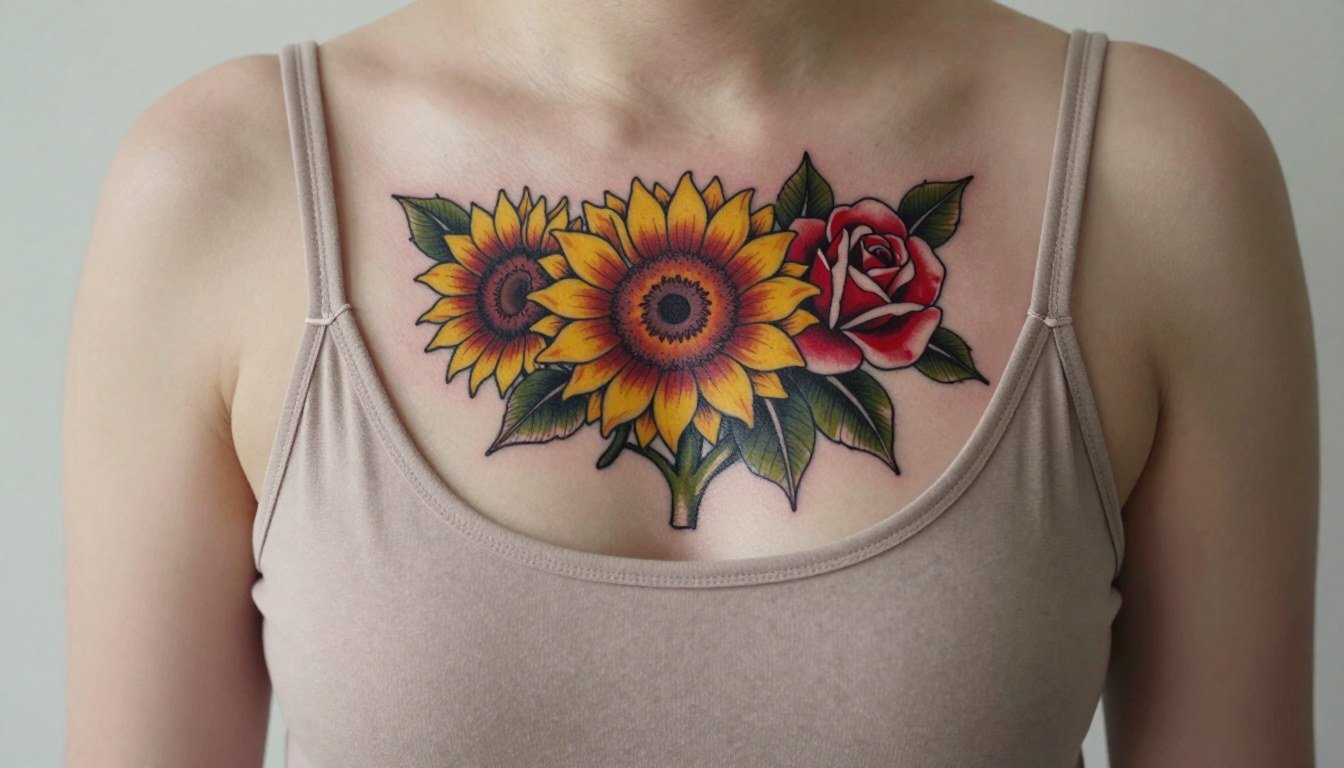
Sunflowers and roses read like opposites that actually improve each other on skin, the big golden petals offsetting the tight, layered rose bloom. The best pieces I see pair a sunflower's graphic center with a rose's layered silhouette so each keeps its identity when healed. Below are detailed design directions and practical notes that help you pick a version that lasts and still looks deliberate after a few years.
1. Fine-Line Sunflower and Rose on Inner Forearm
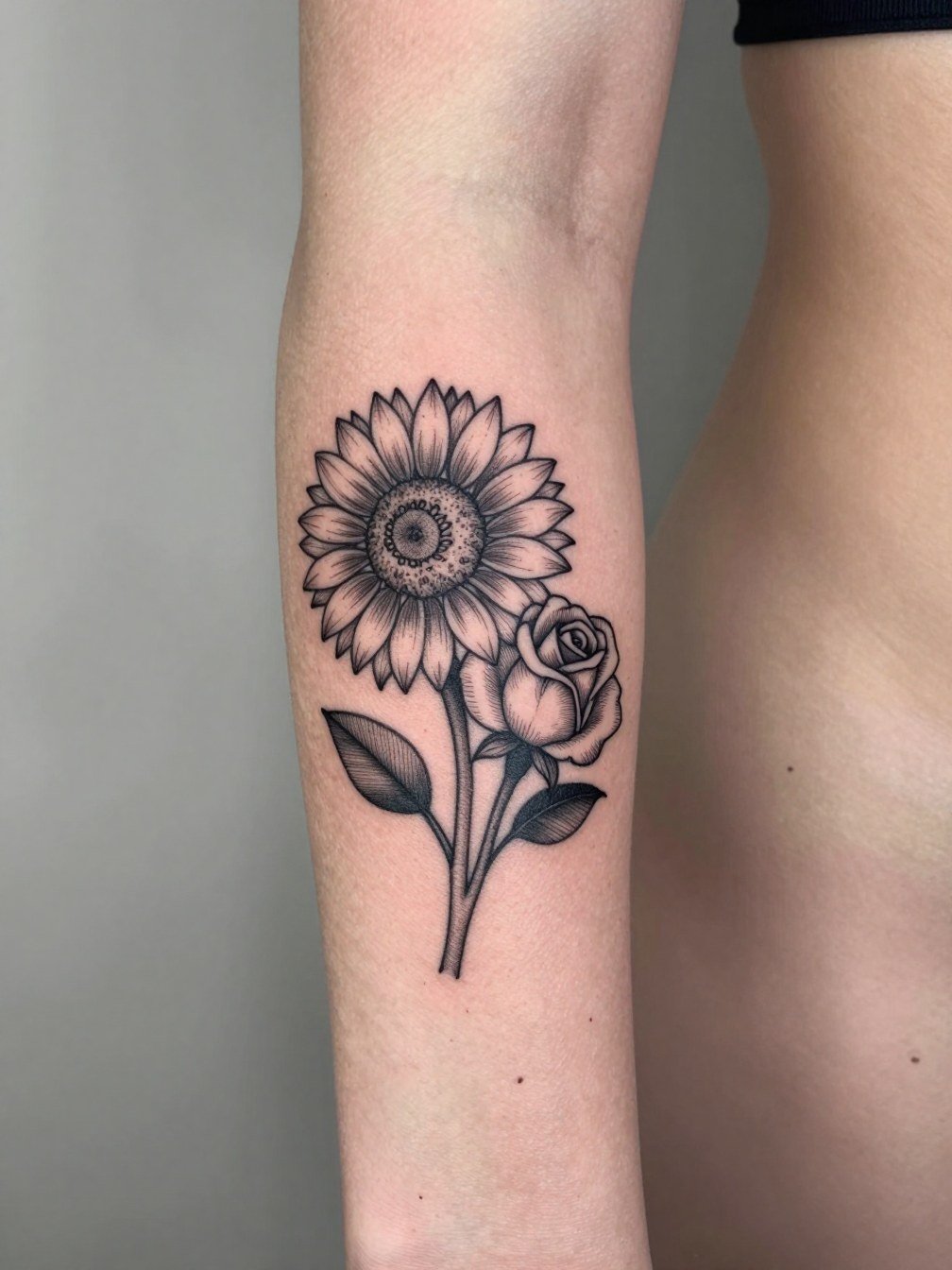
This skinny inner-forearm layout reads like a botanical study. I recommend slightly beefing the linework compared with ultra-thin single-needle references so the sunflower center keeps contrast after a year. Bring two photos at different scales so your artist can show how the pistil detail reads at three inches versus five. The session is usually a single-hour block for a small cluster, and the inner forearm has low blowout risk when lines are a hair thicker. Common mistake is asking for hair-fine petal veins that vanish after healing. For showing it off, pair with a rolled-sleeve linen shirt that keeps the arm silhouette visible.
2. Neo-Traditional Half-Sleeve with Sunflower Anchor

Pick this if you want presence when you wear short sleeves. The sunflower gives a bold focal point while the rose supplies layered texture in the sleeve. For the consultation, show sleeve-flow references and ask for a color map that indicates where the sunflower sits in the read, not just the rose. Expect two to three sessions of two to three hours each depending on color saturation. A typical aging pattern is that flat neo-traditional color keeps its crisp silhouette long term. Avoid having tiny script or micro-detail inside the sunflower center because sleeves get more movement and those details blur first.
3. Delicate Watercolor Pairing on the Wrist
Watercolor effects create a gentle, painterly look but they demand placement choices. The wrist takes friction from watches and daily hand washing so plan on a touch-up at the one-year mark to refresh washes. In the session, request slightly more saturation near the sunflower's center so the bloom retains a core after pigment softens. A common mistake is sizing the piece too small, which makes the watercolor bleed into an indistinct patch. For outfits, a minimal woven watch strap helps frame the wrist without covering the art.
4. Sternum Cluster Mixing Sunflower Glow and Rose Depth
Sternum placements demand a design that breathes across a moving canvas. Artists are split on fine-line work here. One camp says the skin movement and thin tissue create blurred lines within two years, especially across the midline. The other camp says careful needle depth and a slightly wider line spacing produce fine work that settles well, and they will show healed photos as evidence. For comfort, plan breaks and bring a fitted bandeau or sports bra so the area is accessible without pulling at fabric. Pain is higher than the arm but many clients tolerate short sessions with numbing applied before the first pass.
5. Tiny Sunflower Accent with Micro Rose Behind the Ear
Behind-the-ear florals read as small personal accents. The skin is thin so keep details simple and avoid dense fill that can blow out. Session time is short, often under 30 minutes, but the area is sensitive. A common mistake is requesting complex shading in a tiny patch, which becomes muddy after healing. If you plan to show it, wear your hair up or choose hairstyles that tuck behind the ear. For the appointment, bring a small clip to keep hair away so the artist has a clean field.
6. Blackwork Silhouette Sleeve with Sunflower Highlights
Blackwork lets the sunflower read from a distance while a saturated rose keeps a secondary focal point. Recommend a session plan that alternates long black fills with contouring breaks so healing is even. This style ages well because high saturation resists fading visually, but touch-ups at two to five years are normal for heavy fills. Avoid tiny ornamental dots inside the black fields because they disappear against saturated pigment. For evenings out, a sleeveless structured jacket frames the silhouette without hiding the sleeve.
Pre-Session Essentials
These items smooth the logistics for both visible arm work and intimate chest or rib sessions covered above.
- Stencil transfer paper kit. Lets you test placement on skin for the inner forearm and sternum pieces so the composition reads as expected before needles start.
- Topical numbing cream. Applied per package instructions reduces the jumpy sensation during short behind-the-ear or wrist work without affecting ink saturation.
- Thin protective film roll. Keeps wrist and hand tattoos clean and reduces friction from daily movement in the first week.
- Fragrance-free body wash. Gentle cleanser for showering healed areas without stripping color or irritating sensitive placements like the sternum.
- Aquaphor healing ointment. Thin application supports barrier healing during the earliest days and is useful for small fine-line work on the wrist.
7. Thigh Garden with Oversized Sunflower Backdrop
An outer-thigh composition gives room for scale and detail. The thigh tolerates saturated color and larger compositions so you can include delicate stipple in the rose shadows without crowding. Talk with your artist about how the piece flows when you sit so elements do not crease unnaturally across the leg. Session time is comfortable to split over two longer appointments. For showing the piece at the pool or on warm days, pair with high-cut swimwear or an open-side midi skirt that reveals the upper-thigh curve.
8. Tiny Ring Finger Sunflower Accent with Mini Rose on the Band
Finger tattoos sit in a high-friction area and often need touch-ups more frequently. I advise sizing the flower elements so the sunflower center is no smaller than a pea to avoid color migration. Discuss ink saturation plans and realistic touch-up schedules during consultation so you know what to expect at year one. A common mistake is asking for tiny petal gaps that the skin fills in. For complimentary styling, a thin stacking ring in brushed metal enhances the floral band without competing for attention.
9. Color-Forward Calf Piece with Painterly Sunflower and Rose
There is a clear debate about color longevity in pieces like this. One camp argues that vibrant color saturations fade unevenly on calves and the result needs layered touch-ups at three to five years. The other camp points to healed portfolios where careful color packing and proper aftercare produced even saturation after several years. For a calf piece, plan session timing for full saturation across fills rather than relying on a single pass. The calf is lower on the pain scale and responds well to longer sessions, which benefits painterly techniques.
10. Underbust Ribboned Sunflower and Rose with Lace Detail
Underbust placements are visually striking when layered with lace motifs. The ribs move with breath so minimize ultra-fine cross-hatching that will blur. For session comfort, schedule shorter passes and plan for small breaks. If you like to style it for evenings, a strappy crop top exposes the underbust without adjusting fabric. A common mistake is compressing too much detail into a narrow band which ages into visual clutter.
11. Collage Collarbone Sweep with Negative Space Sunflower
The collarbone area benefits from compositions that breathe around the bone. Specify in your consultation where you want negative space to sit so the sunflower center does not land directly on the bone ridge. For outfits that highlight the sweep, try a low-square neckline blouse or a layered thin chain necklace that frames the art. Session time depends on how much stipple versus fill you request, and small touch-ups at two years are common for areas exposed to sun.
12. Ribcage Single Bloom with Leaf Garland
Ribcage pieces are highly personal and the skin stretches when you breathe. If you prefer fine detail, ask your artist to space lines slightly wider than your reference so contours remain distinct after healing. A common error is requesting ultra-tight lettering inside the garland which the body distorts. Prepare for higher pain and shorter passes under two hours during the first session. For after-session comfort, wear loose high-waisted pants so the waistband does not press on the fresh area.
13. Back-Center Sunflower Mandala with Rose Ornaments
A centered back mandala lets you combine sunflower geometry and rose ornamentation without crowding. Request a symmetry mock-up so the mandala sits on the spine where you want it, not skewed to one side. Sessions for this scale typically require multiple visits with careful layering of dot work. A mistake is compressing too many tiny petals into the outer ring which reads as texture loss over time. For summer styling, higher-rise shorts or low-back tops put the piece on display without adjusting clothing.
Frequently Asked Questions
Q: How do I find healed examples of sunflower and rose tattoos in different skin tones without naming artists?
A: Try searching platform tags and keywords that focus on healed shots, such as combinations like #sunflowertattoohealed, #roseandflowerink, and location filters on photo platforms. Tattoodo and similar portfolio aggregators let you search terms like "sunflower rose healed" and filter by skin tone in some views. Reddit tattoo subs often have healed-check threads where users post time-stamped progress photos.
Q: Will a fine-line sunflower and rose hold up on the ribs or sternum?
A: It depends on needle depth, spacing, and how much movement the area sees. Some artists say ribs and sternum blur faster because the skin shifts and is thin. Others say slightly wider line weight and spaced composition will settle fine and point to healed photos. Expect a higher chance of touch-up for very fine detail in these areas.
Q: How often should I realistically expect touch-ups on visible placements like forearm or calf?
A: For well-saturated neo-traditional color on the calf or slightly beefed-up linework on the forearm, touch-ups usually fall in the two to five year range depending on sun exposure and how much friction those zones get. Lighter watercolor washes and finger or hand work commonly need more frequent refreshes.
Q: What should I wear to the appointment for a sternum, thigh, or collarbone piece?
A: For sternum, a fitted sports bra or bandeau that the artist can gently pull slightly away without undoing fastenings works well. For thigh work, fitted bike shorts help keep the area accessible while providing modesty. For collarbone pieces, a wide V-neck or scoop-neck top leaves the area exposed without being moved. Packing a spare shirt in case of ink transfer is useful.
Q: Are there design choices that make sunflower and rose pairings age better?
A: Yes. Contrast matters. A sunflower with a defined dark center and a rose with solid silhouette maintain identity as pigment softens. Avoid cramming micro-detail into tiny centers and ask for slightly bolder linework where the petals meet the center. Stipple shading and selective color packing give depth without risking early washout.
Q: Can I search for inspiration without contacting specific artists directly?
A: Use hashtag searches on image platforms and add "healed" to the query to focus on long-term results. Filter by location if you want local portfolios, and use community threads that collect healed portfolios to compare how similar inks age.
