
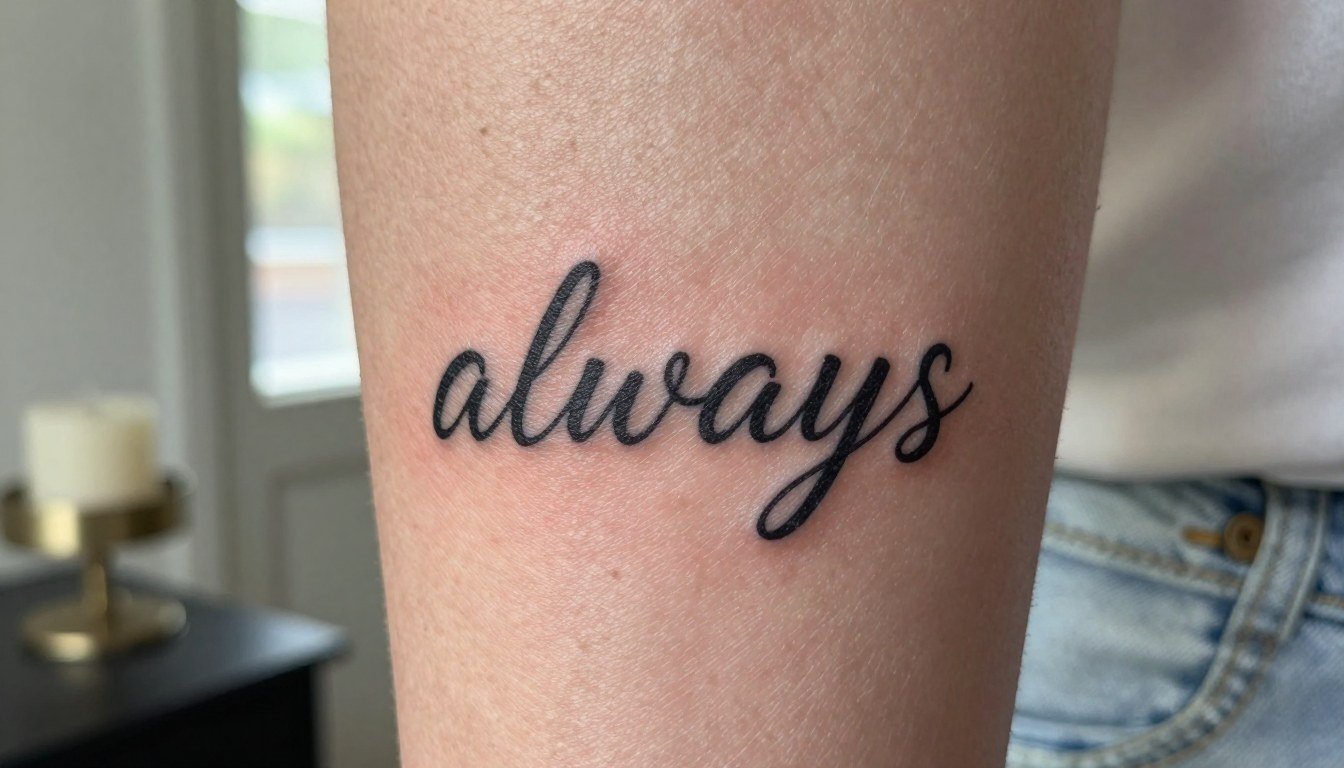
Understated matching tattoos work best when the idea is compact, meaningful, and planned for the long run. Trends push ultra-fine scripts and tiny pictograms right now, but those choices meet the most regret when placement, lineweight, and future touch-up needs are not considered. Read the design options below with an eye for placement longevity and what to bring to the consultation so the result still reads well in five years.
1. Fine Line Sun and Moon on the Ankle
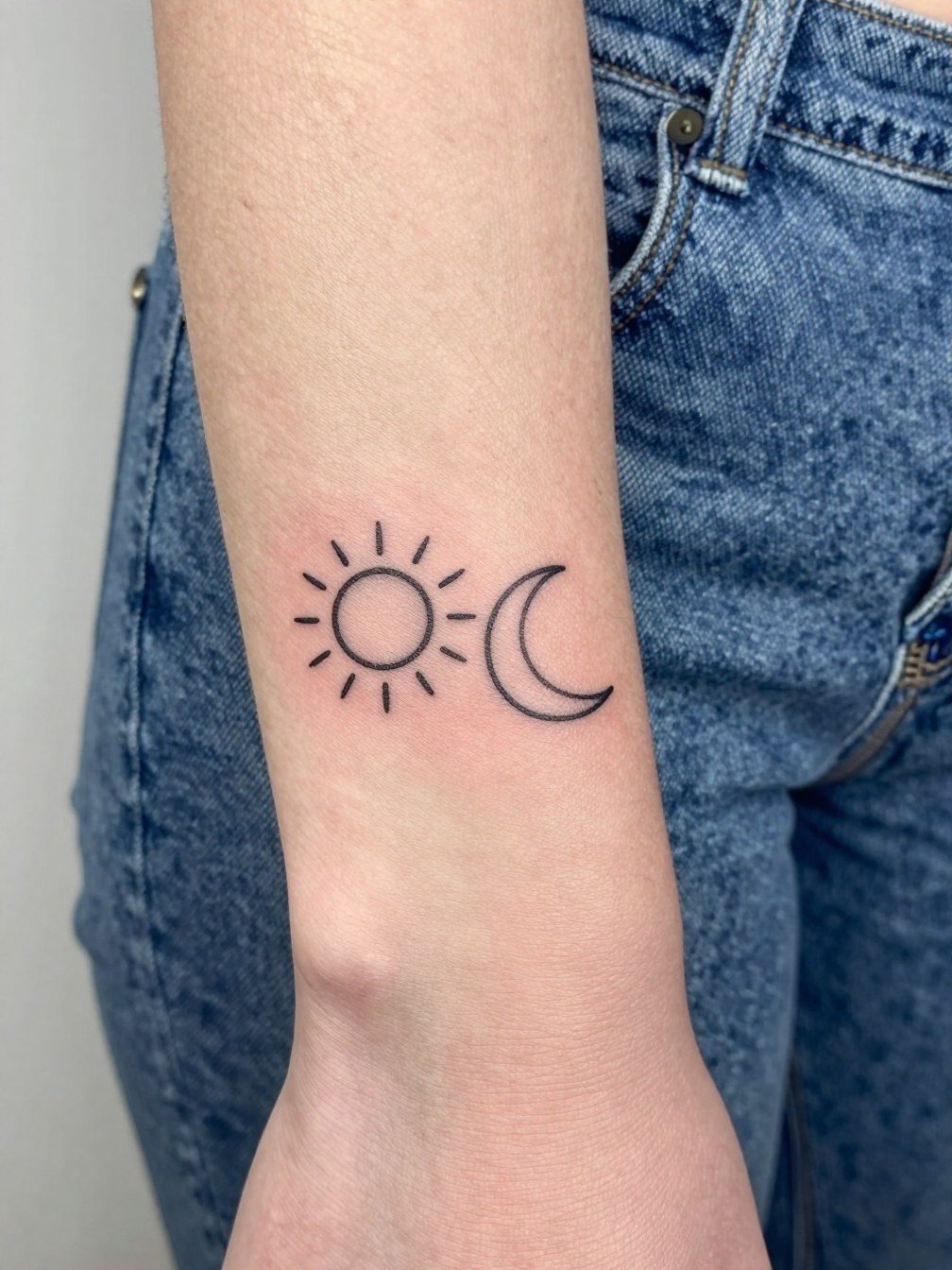
Ankle pieces take constant friction from socks and shoe collars, so I recommend clean silhouettes rather than tiny filigree. Bring a reference showing the exact line thickness you want so the artist can scale the sun rays and crescent to survive shoe rubbing. Most ankle work feels like a light scratching sensation and finishes in a single short session. Expect the first-year color to hold well, then small touch-ups at year two to maintain crisp linework. For outfits, this design shows up nicely with rolled jeans or cropped trousers, so try cuffed denim for a simple way to frame the tattoo.
2. Matching Micro Stars on the Inner Wrist
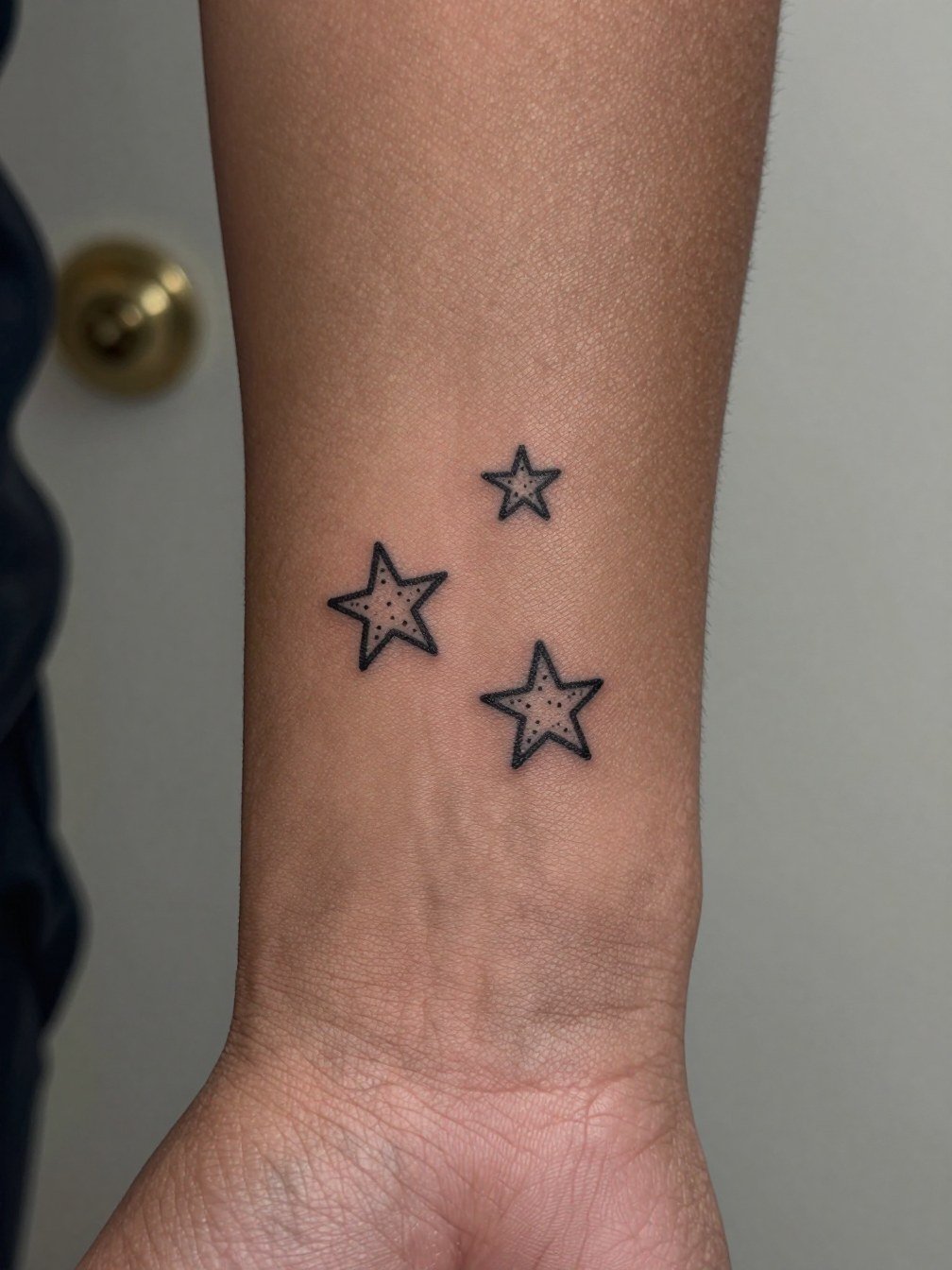
The inner wrist reveals fine line work every day, so plan for slightly bolder lineweight than the reference image if you want the stars to remain distinct. A common mistake is asking for ultra-delicate single dots that disappear after a year from constant washing and sun exposure. Linework here often needs a touch-up between year one and year three. For the appointment, wear short sleeves you can roll without tugging the wrist, and when showing the piece later try minimalist bracelets or a simple watch to let the cluster peek through. Pair with a thin leather wrap bracelet that does not sit directly over the ink.
3. Coordinating Ring Dots on Fingers
Finger tattoos are convenient but demand realistic expectations. One camp argues that finger work fades quickly because of constant washing and thin skin, often needing annual touch-ups. The other camp points out that bold simple marks placed slightly away from the joint can last several years before any touch-up is required. If you choose finger dots, ask for slightly heavier saturation and placement off the joint crease. Expect the session to sting more than wrist work and to require a follow-up session for saturation if it fades in the first six months.
4. Complementary Half-Heart Behind the Ear
Behind-ear placements feel intimate and are easy to hide with hair. The main risk is the small surface area, which makes a too-fine outline blur over time. A good consult topic is asking the artist to increase the lineweight minimally and to space the halves so negative space survives. The session is fairly quick but can feel sharp because of the thin skin. This area pairs well with delicate studs and small hoops, so planning your ear jewelry in advance helps you visualize the finished look. Try pairing with simple gold huggie earrings that sit close without covering the spot.
5. Minimal Crescent on the Ribcage
Fine line on the ribs sparks a clear debate in the community. One group argues that the skin on the ribs stretches and flexes so much that single-needle work will blur within two years. The other group maintains that with slightly deeper needle depth and a hair more spacing between strokes, fine line can settle and still look intentional at three years. For anyone considering ribs, discuss spacing and depth with the artist and plan for a touch-up at the one-year mark if needed. The session will be more painful than forearm or ankle work and usually needs a calm, scheduled appointment rather than a walk-in.
6. Minimal Botanical Sprig on Outer Forearm
Outer forearm pieces show easily and age predictably, which is why many couples choose coordinating botanicals here. A scenario where this style beats a wrist script is when you want visible daily presence without the harsh fading a wrist gets. Specify leaf spacing and stipple shading during consultation so the artist grants the sprig room to breathe. The session is moderate in pain and usually finishes in under an hour. This design pairs with rolled linen sleeves and neutral tones, so wear a loose linen shirt to the session and for styling after.
Session Day Picks
The ankle, wrist, and forearm ideas above heal differently from sternum and rib work, so a few small items smooth the appointment and first week.
-
Stencil transfer paper tattoo kit. Lets you preview scaled placement on skin for the ankle and wrist pieces before the first pass, especially helpful for the sun and star clusters above.
-
Topical numbing cream. Applied per the product instructions about 30 to 45 minutes before takes the edge off sensitive rib or inner arm sessions without altering linework.
-
Thin protective film roll. Keeps small placements like finger dots and ankle symbols cleaner during the first few days of heavy movement.
-
Fragrance-free gentle body wash. A mild cleaner for daily showers that won't irritate new linework on wrists and forearms.
-
Aquaphor healing ointment. A mainstream balm many artists recommend as a thin first-layer during the initial healing window for fine line pieces.
7. Tiny Constellation Anklet
An anklet constellation reads best when the connector lines are slightly bolder than single hairlines, especially where socks and shoes rub. A good thing to bring to the consult is a picture of the exact spacing you want at actual scale so the artist can map it around the ankle bone. Expect a short session and plan a small follow-up touch-up if the outermost dots lose saturation from friction. Styling-wise, ankle designs highlight cropped pants and slip-on sandals, so try espadrille sandals for a simple show-off option.
8. Micro Lock and Key on the Inner Bicep
Inner bicep is private and reveals only if you raise your arm. Plan for slightly heavier lineweight than wrist work because the skin can soften thin single-needle detail over time. A common mistake is asking for intricate filigree inside a lock motif when that area lacks the surface stability for micro-detail. The session is medium pain, and the follow-up timeline is usually a single touch-up at six to twelve months. For the appointment, wear a loose tank so the artist can access the area without fabric tugging, and consider a sleeveless cotton tank top you can remove or roll easily.
9. Mirrored Anchor Lines on the Collarbone
Collarbone pieces are visible and photograph well but can sit over moving tissue. For longevity, ask the artist to increase spacing inside the anchor body so shading does not merge with time. The session usually ranges from quick to moderate in time depending on symmetry adjustments. Expect light tenderness while sleeping on your side during the first week. These designs look great with open-neck shirts, so try a scoop-neck tee to frame the anchors.
10. Single-Needle Script Inside the Elbow
The inner elbow is a tricky surface because of folding, so there is a real split among artists about single-needle scripts here. One school says the crease causes early blurring and advises against ultra-fine script. The other school says with slightly bolder strokes and placement slightly off the deepest crease the script can hold up well. If you choose this spot, request a mock stencil with the elbow in both bent and extended positions to confirm line spacing. Wear a short-sleeve tee that can roll up without pulling at the cuff for the session, and consider a soft crew-neck tee you can change into easily.
11. Moon Phase Wrist Band
A wrist band reads as a continuous piece, so plan for consistent spacing and lineweight across each tiny moon. The primary aging issue is washing and sun exposure, which can mute thin crescents. Ask the artist to show a healed-piece photo with similar spacing on the same wrist area so you can judge how the negative spaces behave. The procedure usually takes one short session and a likely touch-up between six and twelve months. This design pairs well with a minimalist watch or slim cuff so the band reads as part of your layered wrist look.
12. Coordinates Dots on the Back of the Neck
Back-of-neck placements are private and are excellent for text or small numbers because the area sees little abrasion. Specify the exact font size and spacing at consultation so the numerals do not tighten when healed. If you want this to stay hidden under hair, ask for placement just below the hairline; if you want occasional reveal, place it slightly lower. This spot usually requires a small session and rarely needs early touch-ups. For showing it off, pair with a low-back or wide-neck top, like a simple open-back tank.
13. Mirrored Stipple Crescents on the Calves
Calf placements handle micro-detail fairly well and are a low-regret option when you want something that photographs cleanly. The calf tolerates stipple shading and holds saturation, so go a touch more detailed here than you would on a finger or ankle. The session is usually comfortable and can be done in a single sitting. For styling, calf tattoos pair especially well with ankle boots or midi skirts, so consider a midi skirt to frame the mirrored crescents.
Frequently Asked Questions
Q: How do these small matching designs age over time, and which need touch-ups first?
A: In my observations, finger and wrist micro work usually demands the earliest touch-ups because of washing and constant motion. Ankles, calves, and outer forearms tend to hold saturation longer. Plan a realistic touch-up at six to twelve months for most single-needle pieces, and expect ring and finger dots to need more frequent maintenance.
Q: Are there placements I should avoid if I want this to stay private?
A: Pick zones that are naturally covered by everyday clothing for privacy, like the inner bicep, ribcage, or lower back. Collarbone and wrists are visible when you want them to be visible. If discretion is a priority, ask for placement directly under a hemline when you consult so the stencil can be positioned for concealment.
Q: How can I find healed examples and portfolios without naming artists directly?
A: Search platform hashtags and location filters for healed shots, such as Instagram tags for healed fine line and TikTok location filters showing studio portfolios. Reddit threads often collect year-one and year-three photos for specific placements, and portfolio pages on tattoo platforms let you search by keyword and skin tone to compare healed results.
Q: Will the tiny botanical or script ideas suit darker skin tones?
A: Yes, but needle depth and slight increases in lineweight help preserve contrast on richer skin tones. I have seen clean botanical pieces in darker skin tones last exceptionally well when the artist adjusts spacing and saturation. Bring healed photos of similar skin tones to the consult so the artist can match your expectations.
Q: What should I wear to the session for awkward placements like ribs or inner bicep?
A: Wear loose, easy-to-remove or adjustable clothing that exposes only the area the artist needs. For ribs, a fitted cropped sports bra or bandeau in its normal position works well, and for inner bicep, a tank top that can be rolled without stretching is ideal. Consider a spare top to change into after the session if needed.
