
Someone I know spent eight months scrolling feeds before realizing their worry was not the art. It was which style would age on skin without turning into blurred linework. After visiting five shops across Brooklyn and talking with artists who specialize in fine line, I narrowed the reliable roman numeral approaches and the placements that usually need touch-ups. Below are twelve practical, easy roman numeral tattoo ideas for women, with what to ask for and what to expect at healing checkpoints, plus prep essentials.
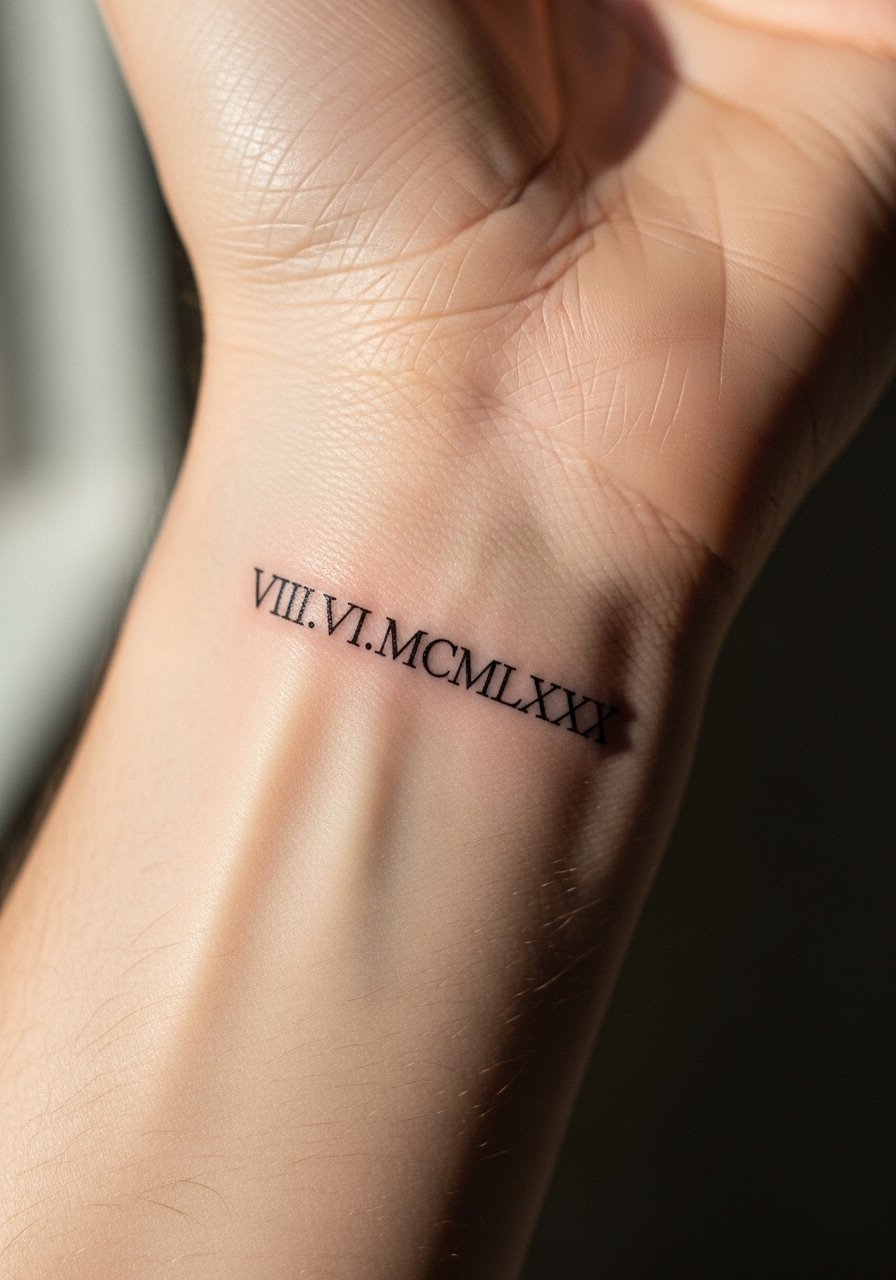
1. Fine line Roman numeral date on inner wrist
Someone I know first saw this style on a friend and booked it the next week. The inner wrist uses fine line Roman numerals like VIII.VI.MCMLXXX for a 1 to 2 inch piece that reads like a thin bracelet. Pain lands around a 3 out of 10 for most people and most artists finish it in a single short session. Tell your artist you want consistent needle depth and slightly spaced numerals to avoid early blurring. Common mistake is asking for letters too small, which leads to loss of legibility by year three. Expect a light touch-up at year two to keep the linework crisp.
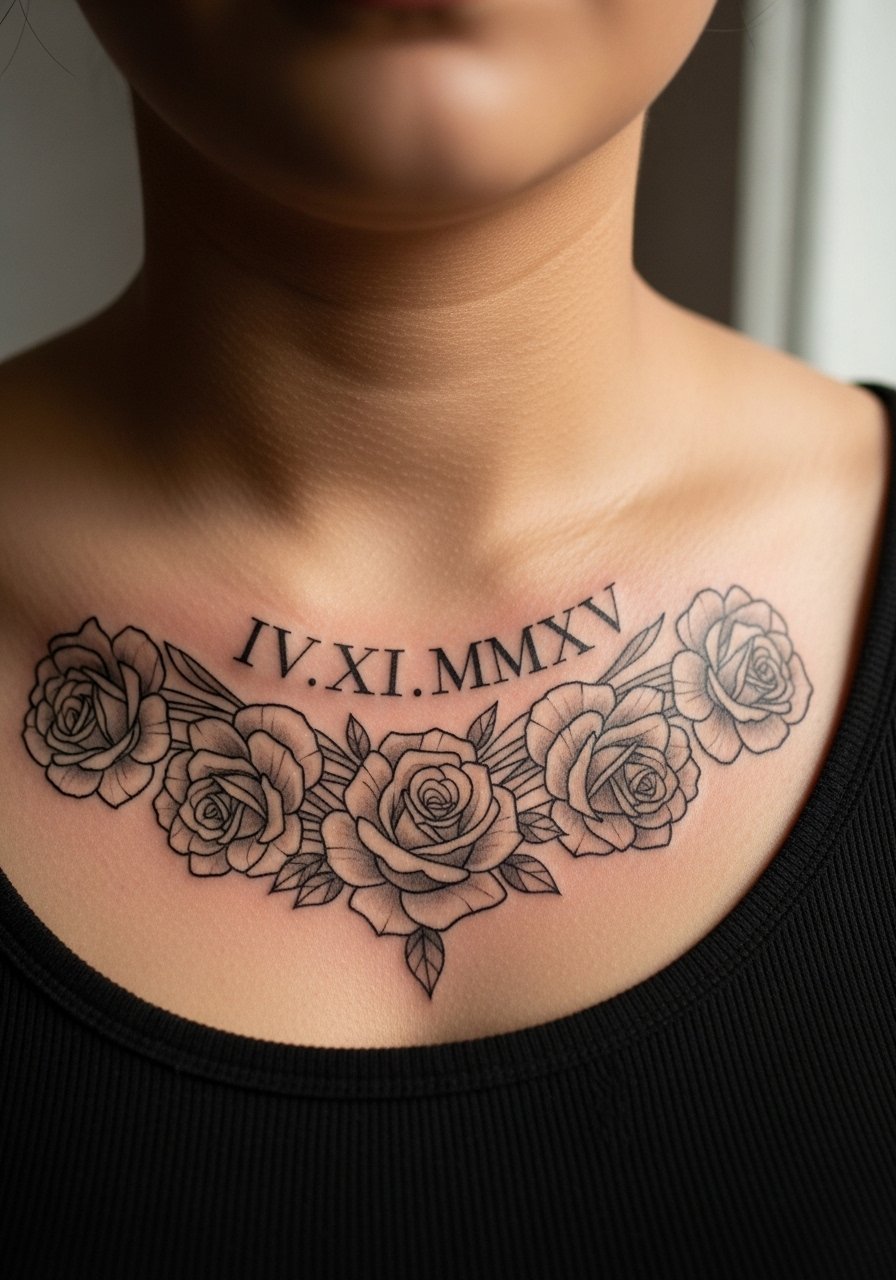
2. Script Roman numerals arched with floral accents on the collarbone
Fair warning, the collarbone has thin skin and the session can feel scratchy while you sit still. An arched script of Roman numerals like IV.XI.MMXV curved over the clavicle paired with small color flowers reads like a necklace. This suits anyone who wants jewel-like placement for low-neck outfits. Ask for soft whip shading in the petals and a serif font for the numerals so the numbers hold up over time. Small petals protect the numerals from looking sparse. Expect one session and a possible touch-up at year two where saturation thins near the collarbone.
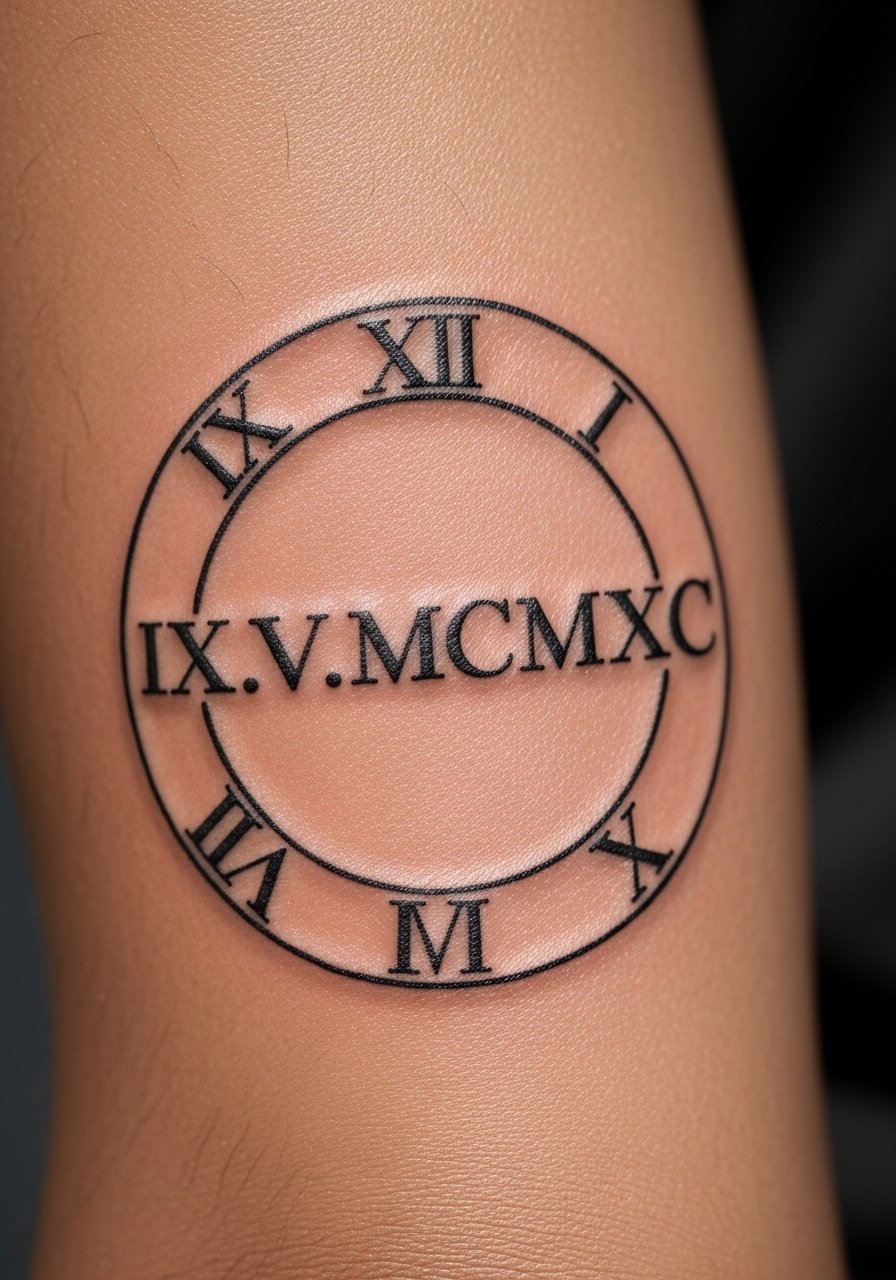
3. Circular Roman numeral arrangement on the outer forearm
There is a geometric charm to a circular layout that turns a date into a visual loop. A 3 inch blackwork circle with numerals like IX.V. MCMXC paired around the ring reads from across a room and keeps the piece simple. Outer forearm pain is mild and artists usually finish this in one session. During consultation, show photos that match the exact spacing you want and request slightly thicker linework than bare fine line to reduce blowout risk. Over years a bit of feathering can happen near the edges so plan a touch-up at three to four years if you want crisp edges.
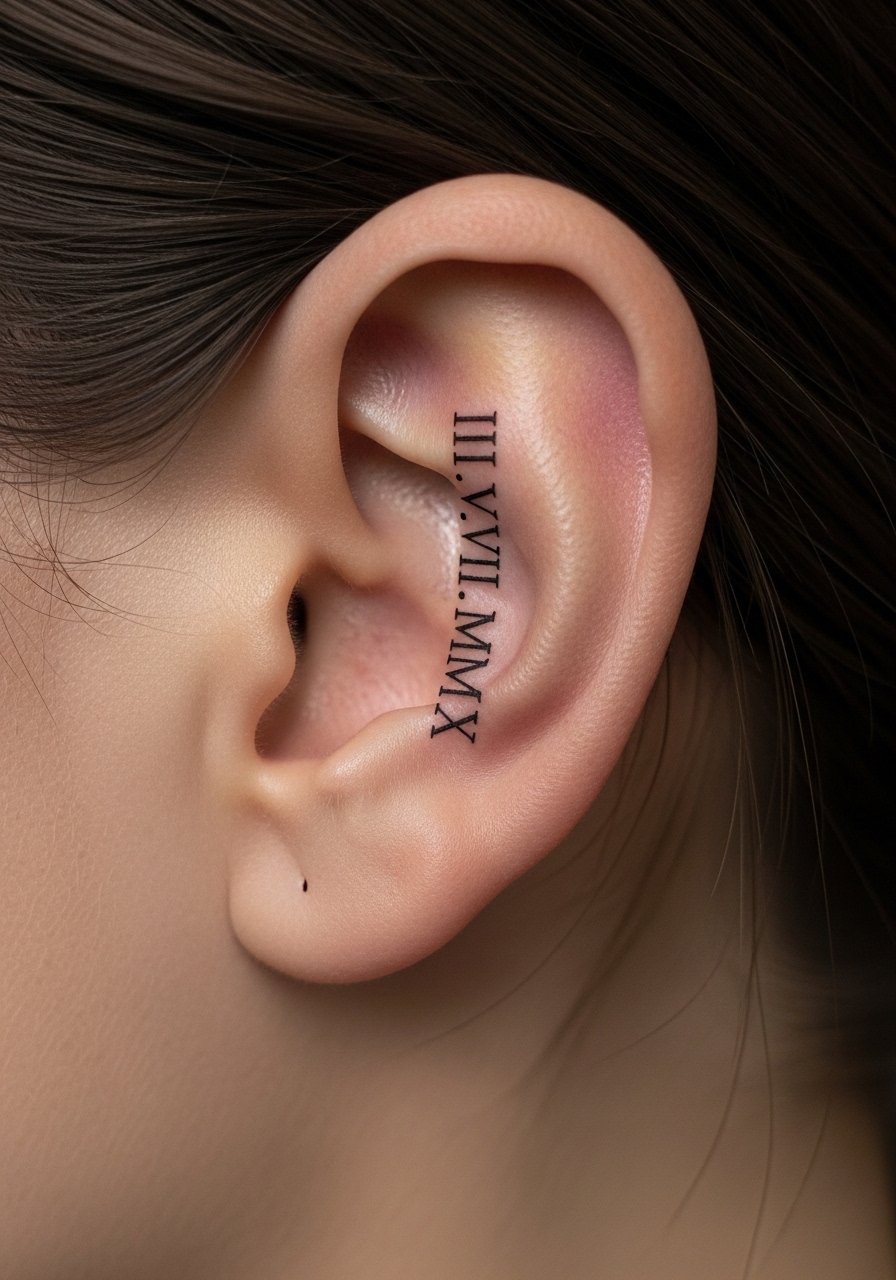
4. Roman numeral necklace illusion behind the ear
When you want something discreet bring a reference that shows exactly how the piece sits behind the ear. The micro-realism approach uses a 1 inch height numeral like III.VII.MMX and mimics a thin chain. This placement is tiny and quick, usually a single short session, but expect a sharper sting because the skin is thin. A common mistake is asking for too many characters in that space. Tell the artist you prefer single-line numerals with clear gaps so the numbers do not blur together. It is an easy walk-in style for people who want a jewelry illusion without visible jewelry.
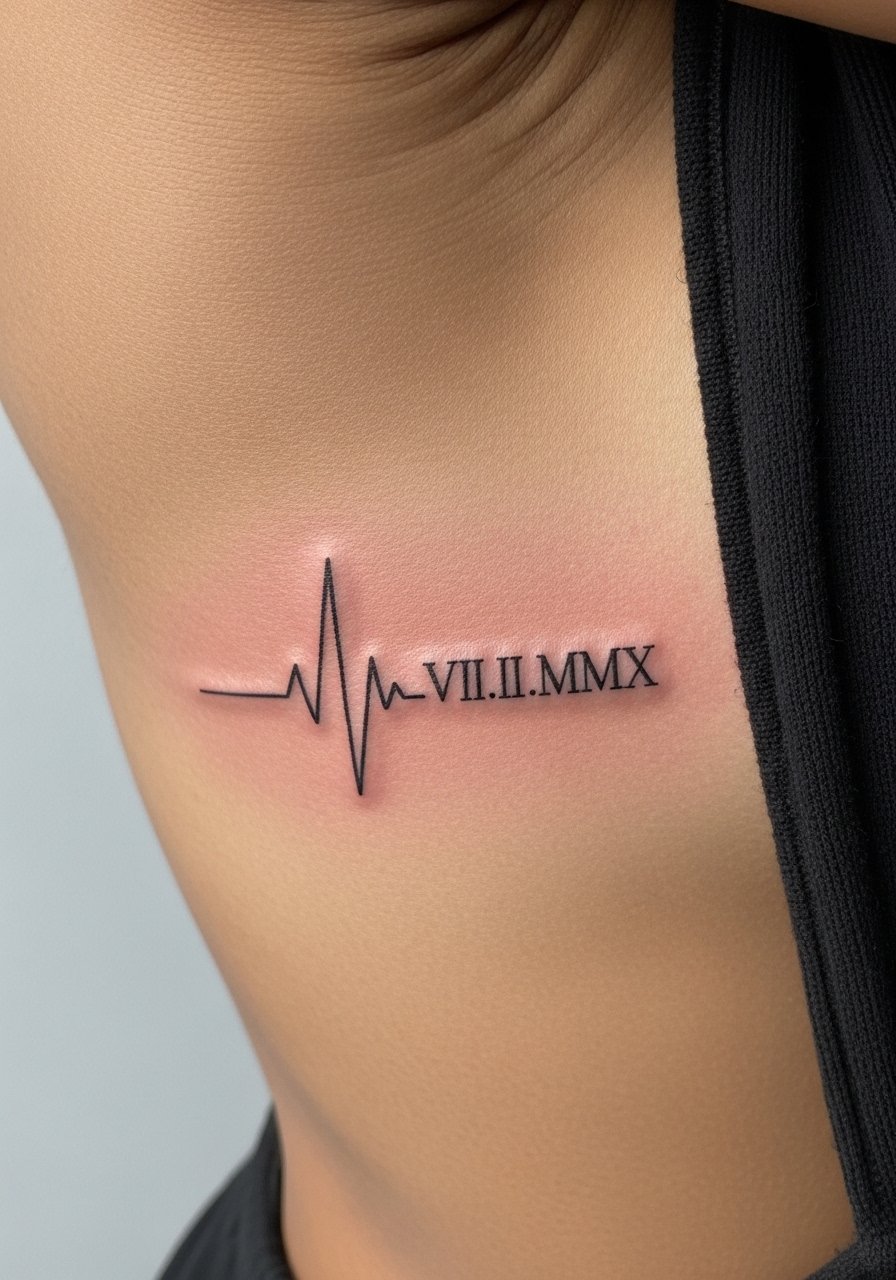
5. Roman numerals integrated into a heartbeat line on the ribcage
Fair warning, the ribcage is a 7 out of 10 on most pain scales. The heartbeat line with Roman numerals like VII.II.MMX combined vertically reads as both a life graph and a date. Artists split into two camps on fine line here. One camp argues the skin stretch causes lines to blur within two years. The other camp says with correct needle depth and spacing the fine line can hold up. Ask your artist which side they are on before booking. Expect one to two sessions and plan for a touch-up at year two to restore thin line saturation.
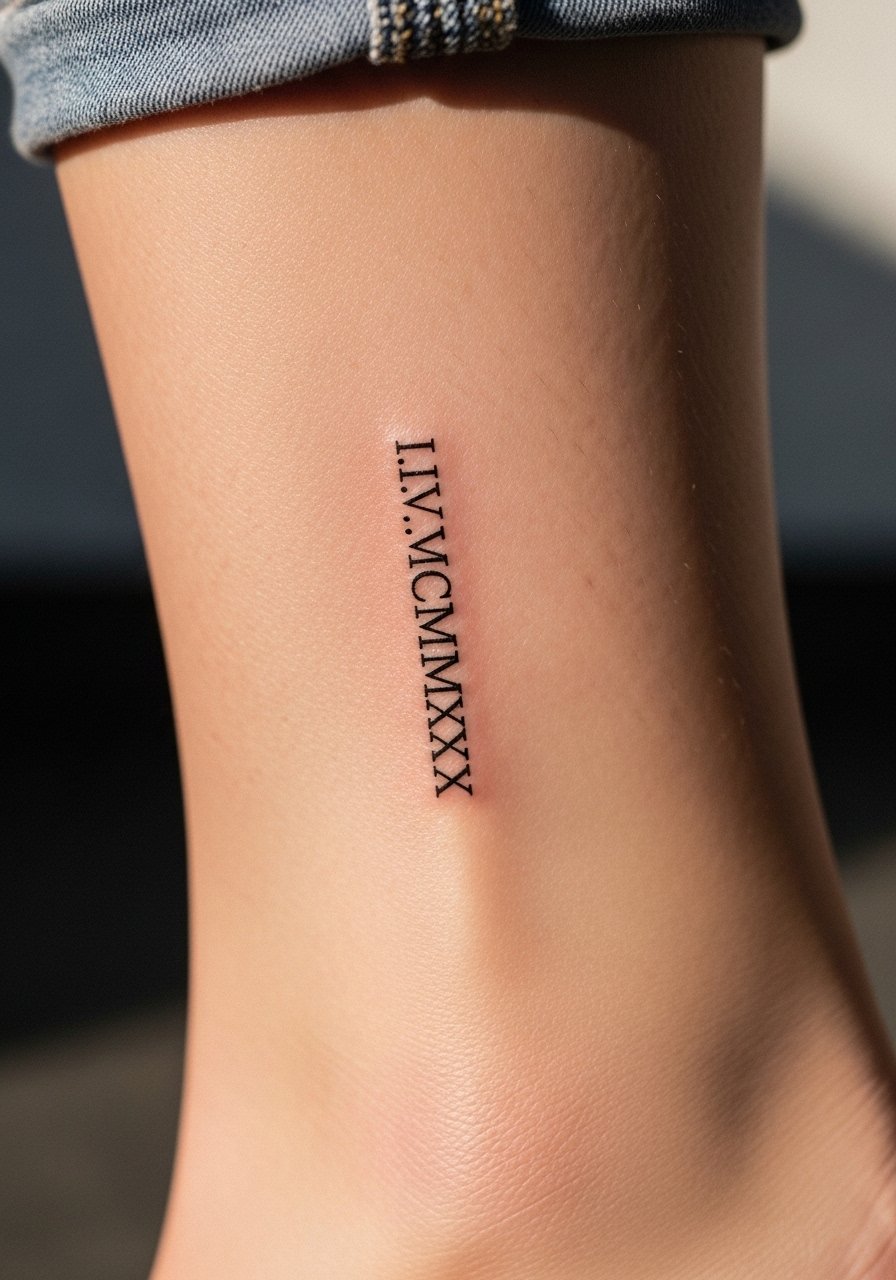
6. Small stacked Roman numerals on the inner ankle
When you want hidden access the inner ankle is ideal for a vertical stack like I.IV.MCMLXXX. The piece is discreet and easy to cover with socks or jewelry. Pain is moderate for most people and the session is short. Tell the artist to keep line spacing intentional and avoid pushing lines too deep to lower blowout risk. A common error is requesting ultra-thin strokes that age into a smudge. At six months the lines should look crisp and at two years expect slight softening. A light touch-up after two to three years keeps the stack readable.
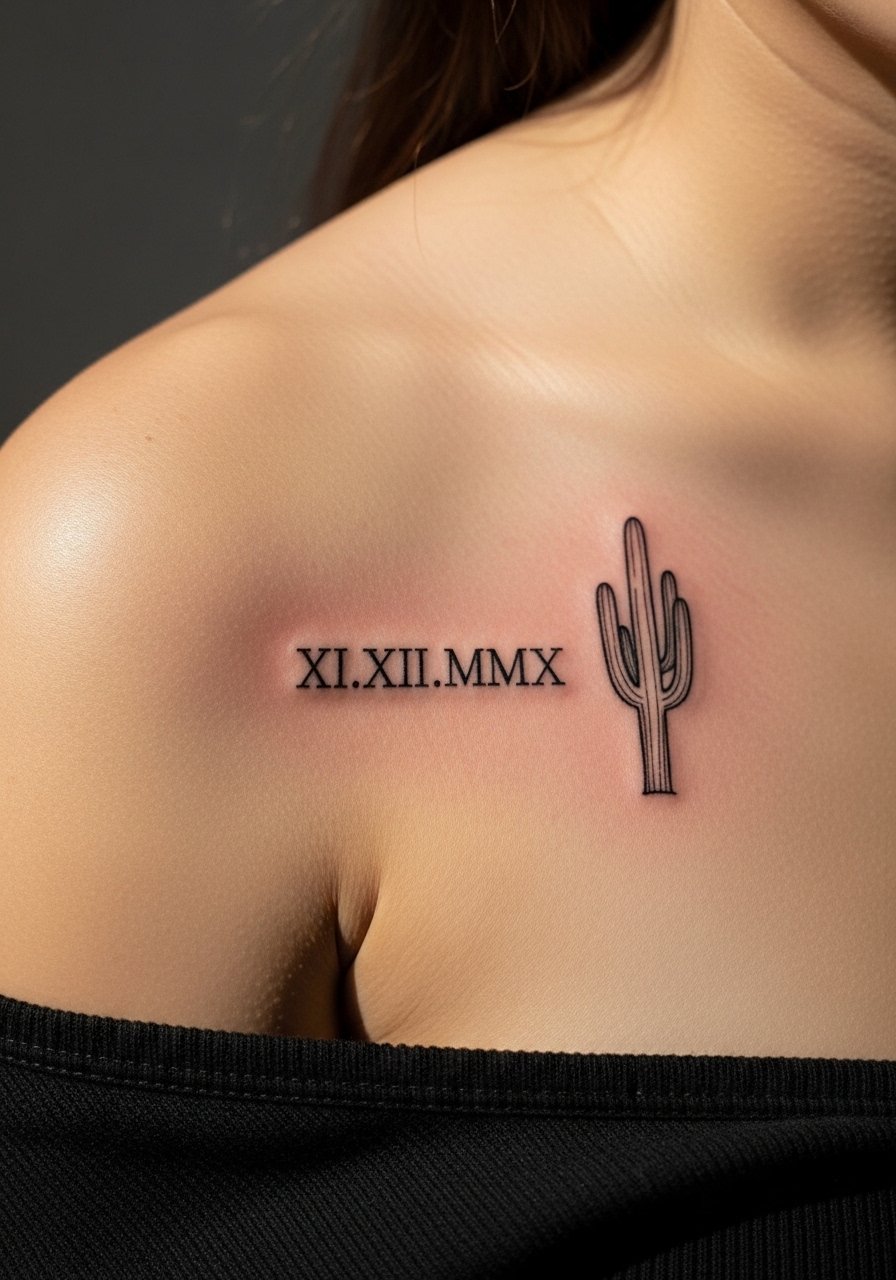
7. Roman numeral paired with a cactus outline on the shoulder
There is something honest about pairing dates with a plant that suggests resilience. A 3 to 5 inch upper shoulder piece with numerals like XI.XII.MMX combined with a minimal cactus outline uses neo-traditional linework and light gray shading. Shoulder placement is medium pain and takes one session. Ask for the cactus outline to have a slightly bolder contour than the numerals so the numbers sit legibly next to foliage. If you plan to wear sleeveless tops, this placement shows well. Over time the shaded grays will soften so consider a touch-up around year three if you want the contrast restored.
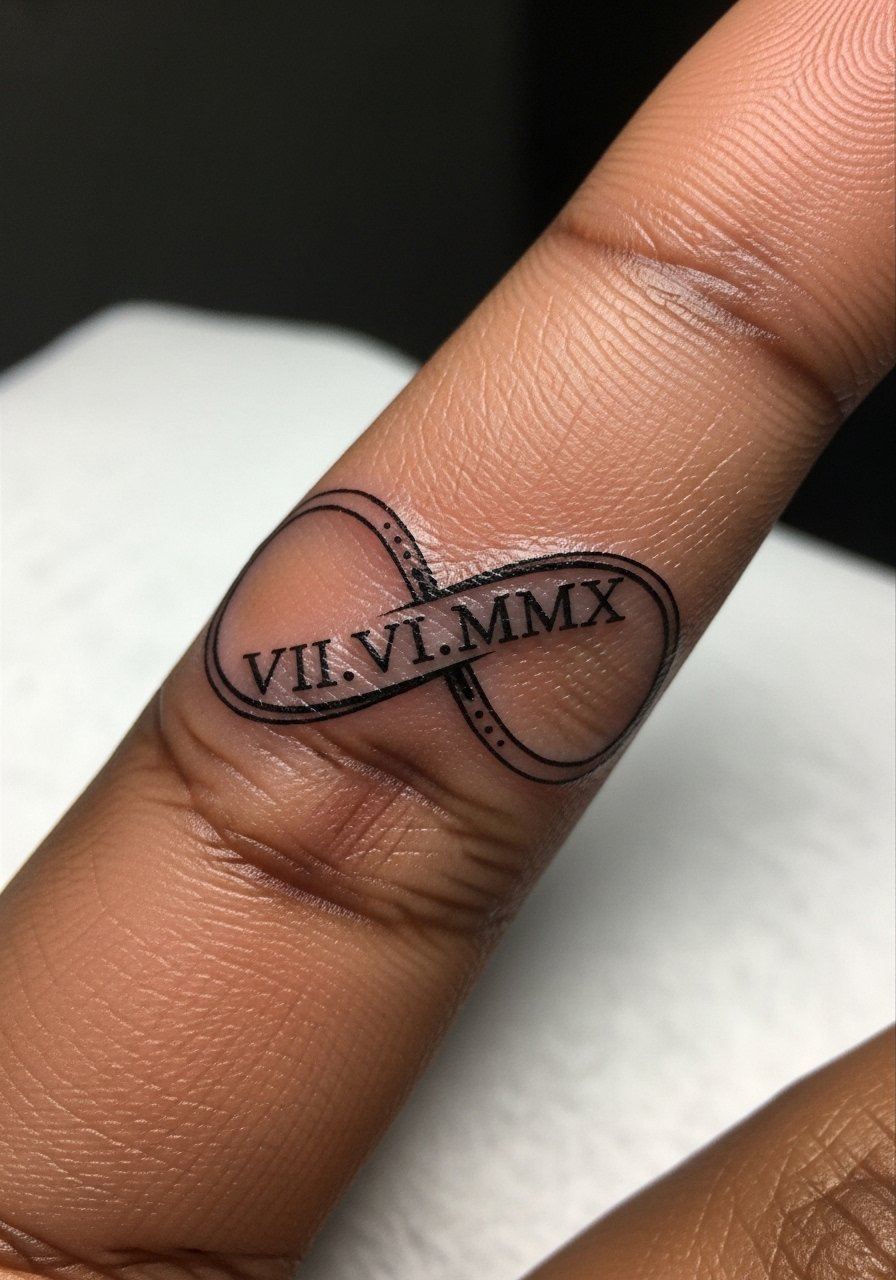
8. Infinity loop Roman numerals on the side of a finger
The side finger is tiny and trends in micro fine line numerals like VII.VI.MMX for paired lucky numbers. Expect a short session and a higher chance of early fading because fingers rub against surfaces constantly. A real mistake is asking for close-set characters that blur inside the first year. Tell your artist you want slightly wider spacing and firm needle depth so the numerals sink in enough to hold. Plan on touch-ups sooner than other spots, often within 12 to 18 months. Consider the career and lifestyle impact of hand-visible ink before you commit.
9. Roman numeral wristband wrap that mimics a bracelet
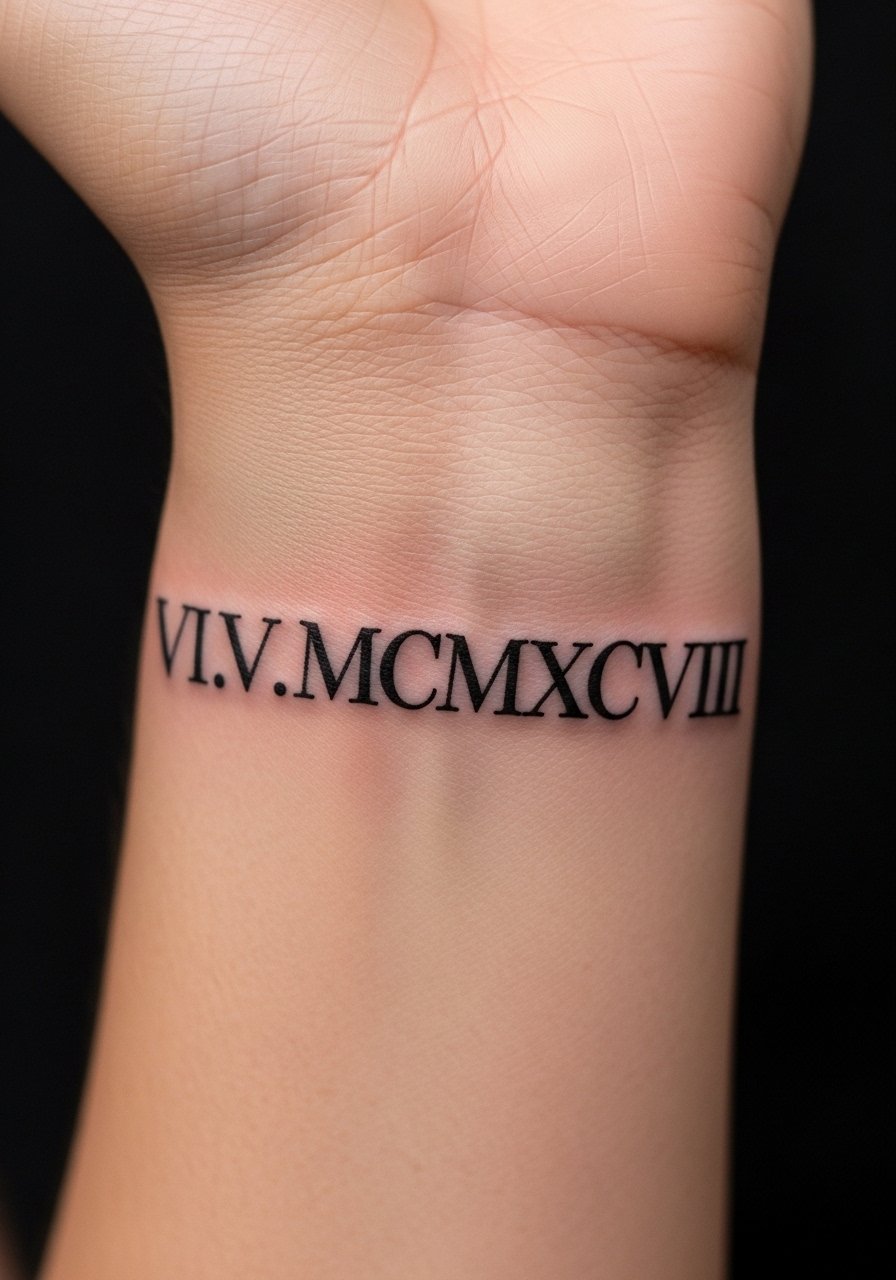
If you want an anniversary or wedding date to read like jewelry go for a wraparound wristband of numerals like VI.V. MCMXCVIII that sits like a bracelet. Inner wrist wraps look intentional and work best in blackwork script with steady spacing. Tell the artist you want the band to break slightly at the underside so it reads like a bracelet from the top. A common version that ages poorly uses letters too thin for constant movement. Expect one session and a touch-up in a couple of years to refresh saturation where the skin bends.
10. Roman numerals arched over a branch on the side torso
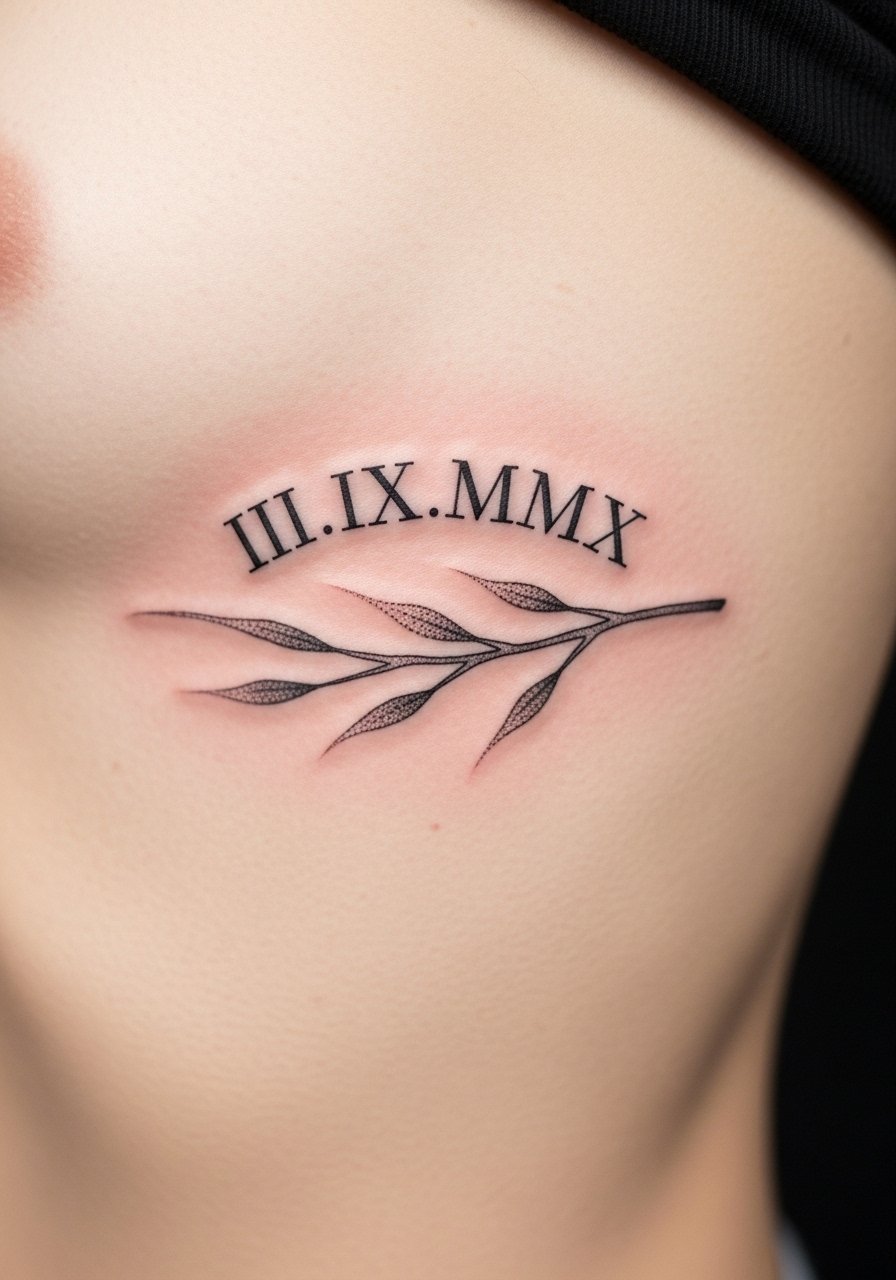
There is a growth metaphor to pairing numerals with a botanical branch that works well on the side torso. A horizontal 5 to 7 inch combination like III.IX.MMX coupled with thin stipple shading along the branch uses fine line botanical techniques. Side torso sessions often take two sessions and the pain can be moderate to high depending on rib proximity. Tell the artist to keep the numerals slightly larger than the twigs so the date remains legible as the branch texture softens. Expect the flora to fade before the numerals do and plan a color or line touch-up at year three if needed.
11. Small Roman numerals with stars on the back of the arm
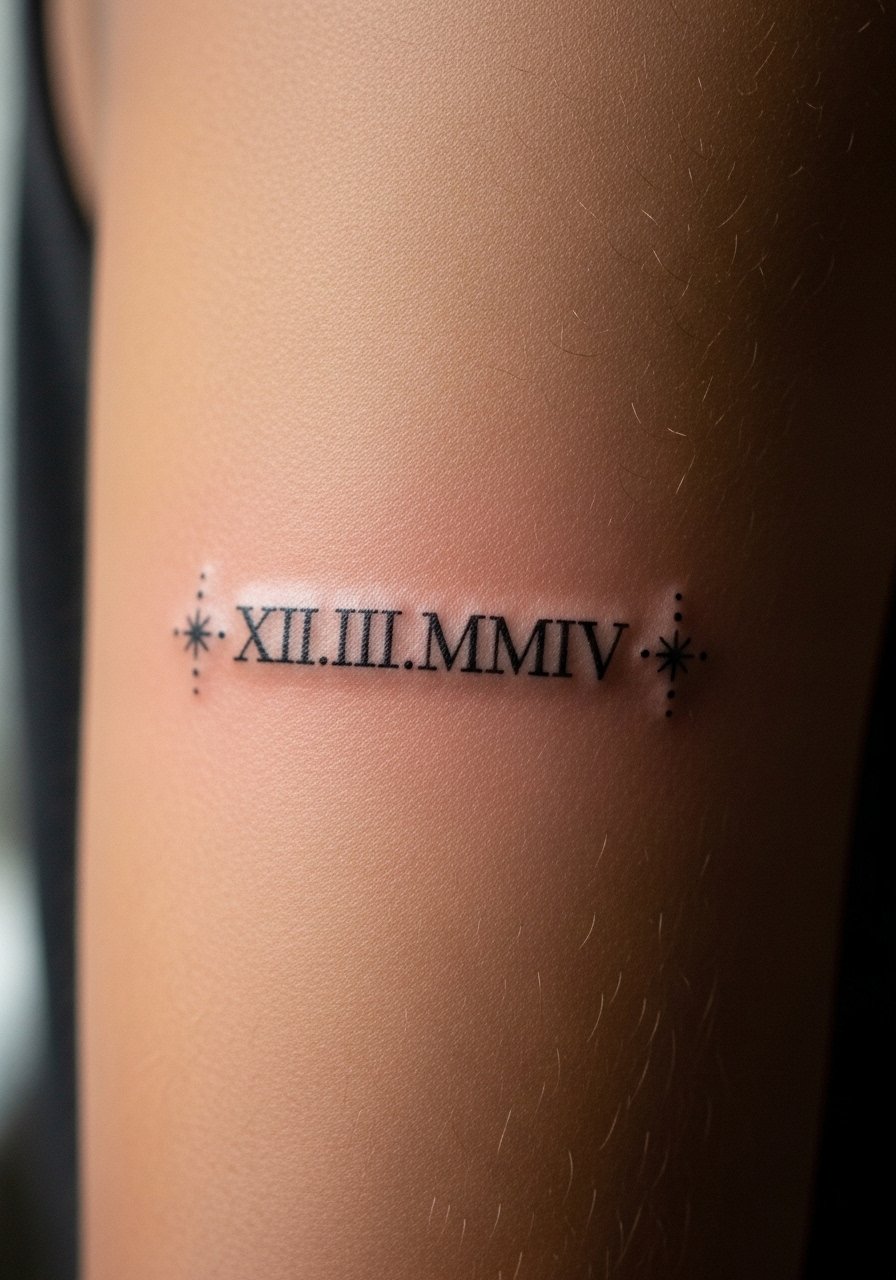
I've seen this placement read like a subtle constellation. A small 1 to 2 inch cluster with numerals like XII.III.MMIV and two tiny star accents looks great on the tricep area. The back of the arm sits in a low to medium pain range and usually finishes in a single session. Ask the artist for dot work stars and a short serif on the numerals so they stay legible as the ink spreads slightly. A mistake is requesting colored accents that are too saturated near thin line numerals. Plan on a light touch-up after a couple of years if the star color softens.
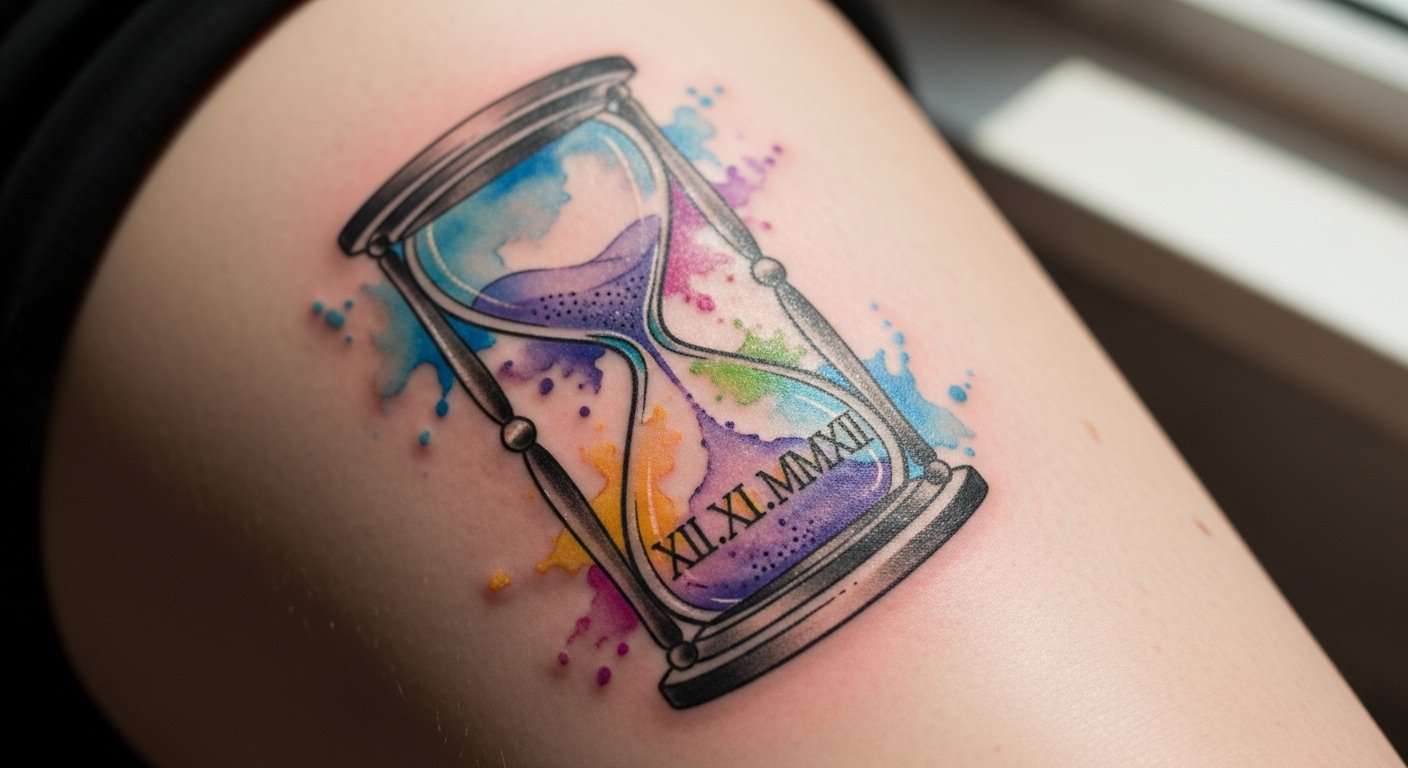
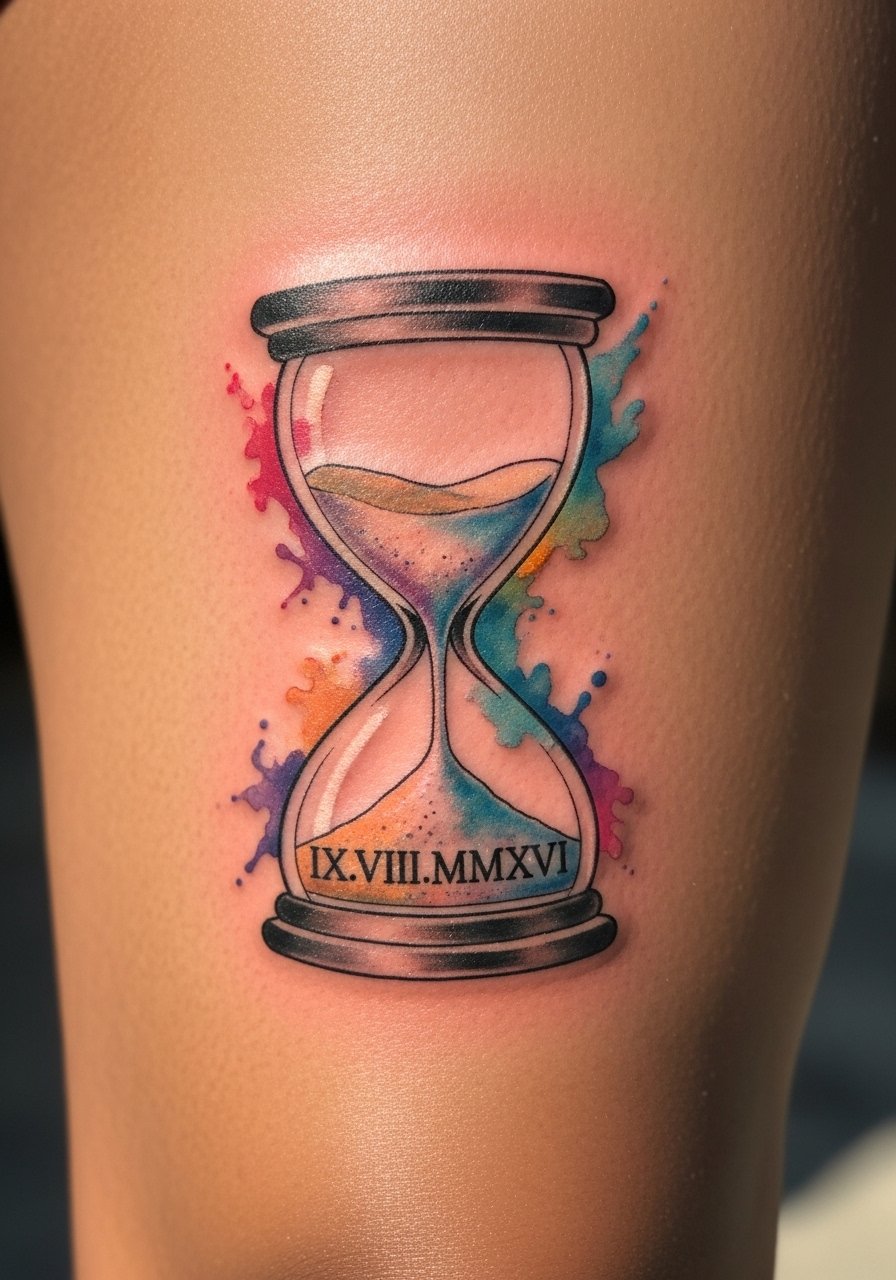
12. Colorful Roman numeral hourglass on the inner thigh
Most colorful inner thigh pieces take one to two sessions and offer a bold statement that reads from close up. A 4 inch hourglass with Roman numerals like IX.VIII.MMXVI in the sand and watercolor fills around the glass uses saturated color and soft whip shading. Tell your artist you want high saturation near the numerals and softer watercolor around the edges so the numbers remain the focal point. The thigh tolerates saturation well but color will fade faster with sun exposure. Expect a touch-up in one to three years to revive bright fills if you prefer a vivid look.
Tattoo Prep and Aftercare Essentials
Healing is where the design either holds up or loses clarity. I recommend these items for pre-appointment prep, initial healing, and longer term maintenance. Links go to search pages so you can compare sizes and scents.
Fragrance-free healing balm, lightweight formula for daytime use. Use after the initial scab stage once your artist signs off. It soothes and prevents cracking without heavy residue.
Medical-grade second skin bandage, 6-inch roll. Useful for the first 24 to 48 hours to keep friction low on spots like the wrist or ankle.
Sterile saline spray for gentle cleaning. Use for the first week to rinse away lymph without scrubbing.
Fragrance-free gentle foaming cleanser. Clean skin with mild foam after the initial bandage is removed.
Aquaphor Healing Ointment search results. This is the one mainstream product I mention. Use sparingly if your artist recommends it, and switch to a lighter balm for daytime.
Broad spectrum mineral sunscreen SPF 30+ stick. Long-term sun protection preserves linework and color.
Soft cotton bandages for friction-prone areas. Ideal for ankle and finger pieces while they scab.
Lightweight fragrance-free body lotion for long-term maintenance. Keep healed skin moisturized to maintain saturation and skin health.
Every tattoo is different. Always follow your artist's specific aftercare instructions. Consult a dermatologist if you have skin concerns or unusual healing issues.
Frequently Asked Questions
Q: How much does a roman numeral tattoo cost for small pieces like wrist or ankle?
A: For small fine line pieces most shops charge in ranges that depend on minimums and complexity. Expect small micro fine line numerals to fall roughly in the 80-400 range for a single short session. Complex color or multi-session placements like thigh or side torso push into higher ranges.
Q: Will fine line Roman numerals blur faster on ribs and why do artists disagree?
A: Fine line on ribs splits artists into two camps. One group says the skin there stretches and moves in a way that causes lines to blur within a couple of years. The other group argues that with correct needle depth and spacing the lines settle fine. Ask your artist which camp they follow and request a touch-up timeline during the consult.
Q: How often do finger and wrist numerals need touch-ups compared with a thigh piece?
A: Fingers and wrists see more wear and need touch-ups sooner. From what I have seen expect finger numerals to need a refresh within 12 to 18 months. Wrist wraps and ankle stacks often last longer before a touch-up, commonly two to three years. Thigh pieces with color can hold saturation well but still benefit from a color refresh at two to three years depending on sun exposure.
Q: Are there special concerns for dark skin tones when getting fine line numerals?
A: Darker skin tones can show linework differently and require slightly bolder initial linework to keep numerals legible as they heal. Ask to see healed work on similar skin tones in the artist portfolio or search hashtags that include skin tone tags. Proper spacing and contrast help reduce the need for early touch-ups.
Q: Do watercolor-style numeral pieces need different aftercare than blackwork?
A: Watercolor fills can fade faster when exposed to sunlight. The same basics apply, but prioritize mineral sunscreen once healed and consider a touch-up earlier to refresh vibrant areas. Use the same gentle cleanser and fragrance-free balm during the initial healing phase.
Q: Where should I look to find an artist who specializes in fine line Roman numerals?
A: Search style-specific hashtags, use tattoo directories like Tattoodo, and check local studio location tags. Reddit's tattoo communities are another discovery path where people share healed photos and recommendations. When you find a portfolio you like, ask about healed photos of similar placements and a realistic touch-up schedule.