
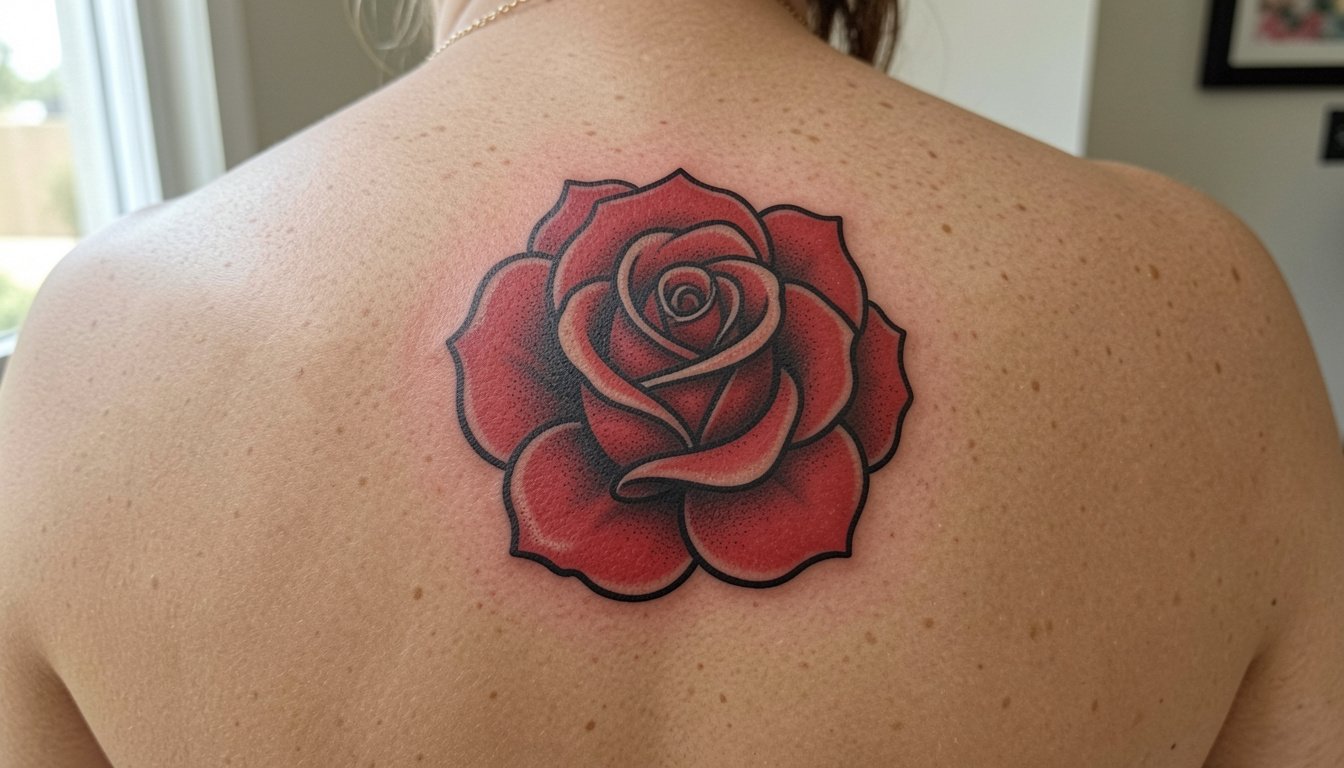
The loudest thing a red rose tattoo can do is read clearly when you walk into a room, and the quietest thing it can do is still read clearly after five years. Many women chase the daintiest single-needle petal and then learn the hard way that spacing and linework carry the color through time. Read on for 27 red rose approaches that balance scale, placement, and line decisions so the design keeps its shape and the red stays honest.
1. Fine-line red rose on the inner forearm
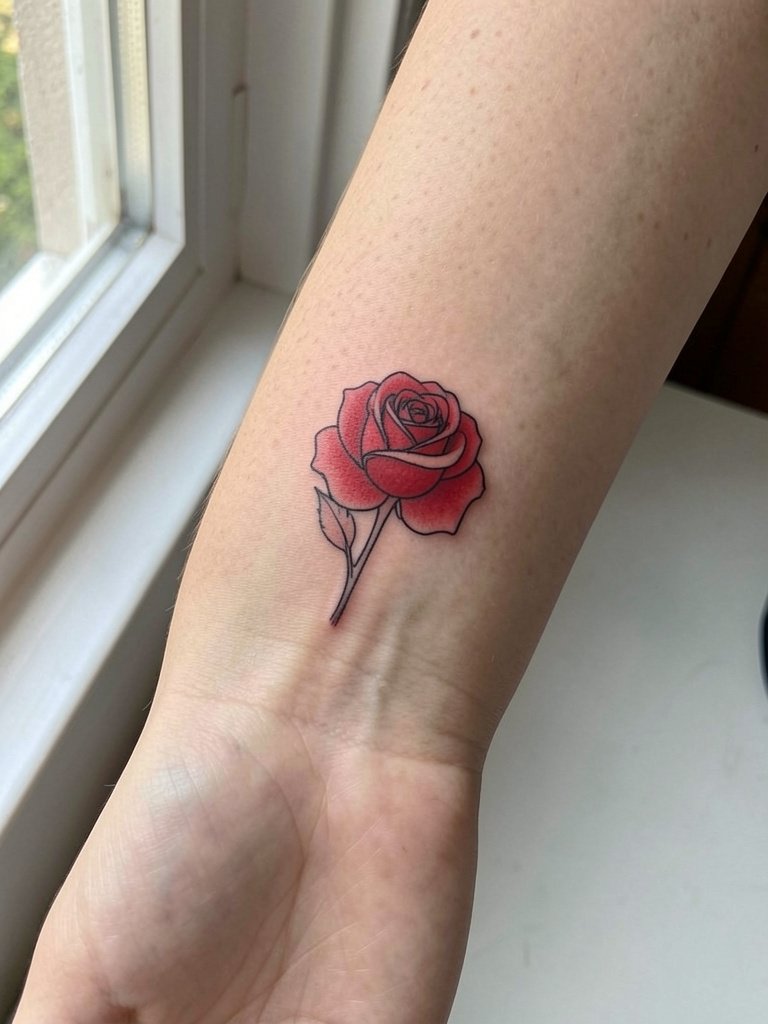
A slim, vertical rose on the inner forearm reads like jewelry and scales well from three to five inches. Expect a one-session appointment under two hours for a focused outline plus color. The inner forearm can be forgiving, but ultra-thin single-needle lines need slightly more space than you think so petal separation holds at year two and beyond. For the session wear a short sleeve button-down so the artist can roll or push fabric without stretching the skin. A common mistake is asking for too many tiny veins inside petals, which blurs; opt for cleaner contour and a bit more saturation to preserve the red.
2. Tiny rose on the wrist
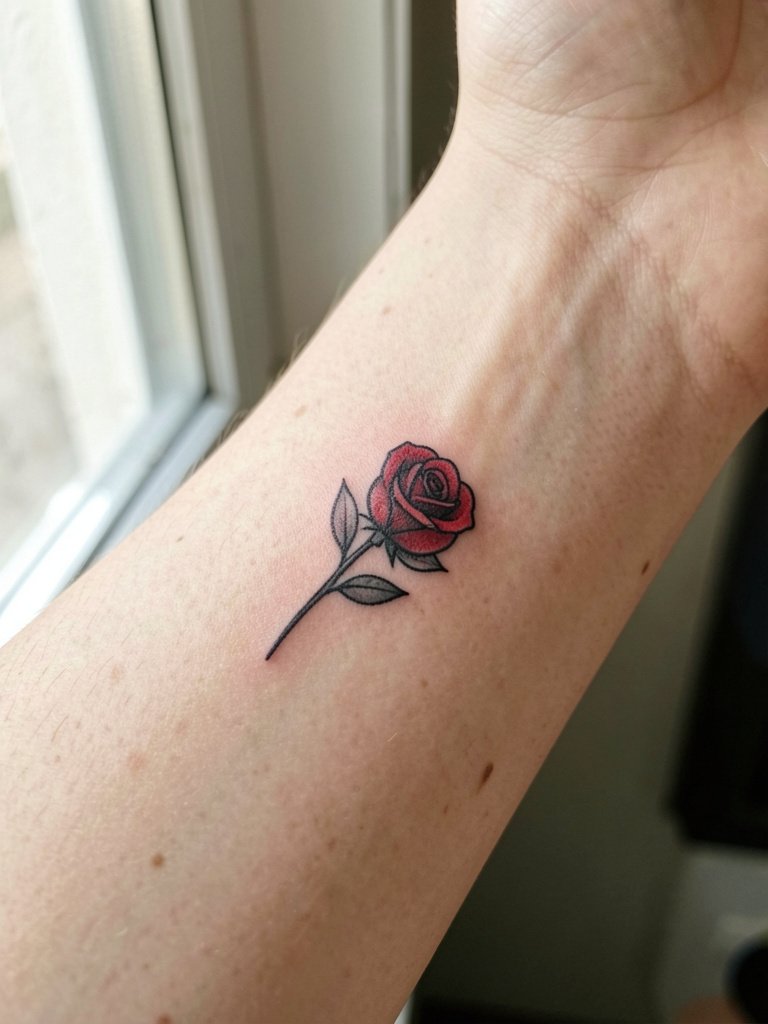
Wrist roses are very visible and ideal for someone who wants a subtle focal point. Pain is moderate because the area sits over tendons and thin skin, but sessions are quick. To keep a small wrist rose legible, plan for a slightly bolder outline than you might pick for an inner forearm rose. For showing it off, try a thin chain bracelet on the opposite wrist and a sleeveless top the day you want to flash it. If you love tiny detail, bring close-up references scaled to actual wrist inches so the artist can suggest line weight adjustments.
3. Classic traditional rose on the outer upper arm
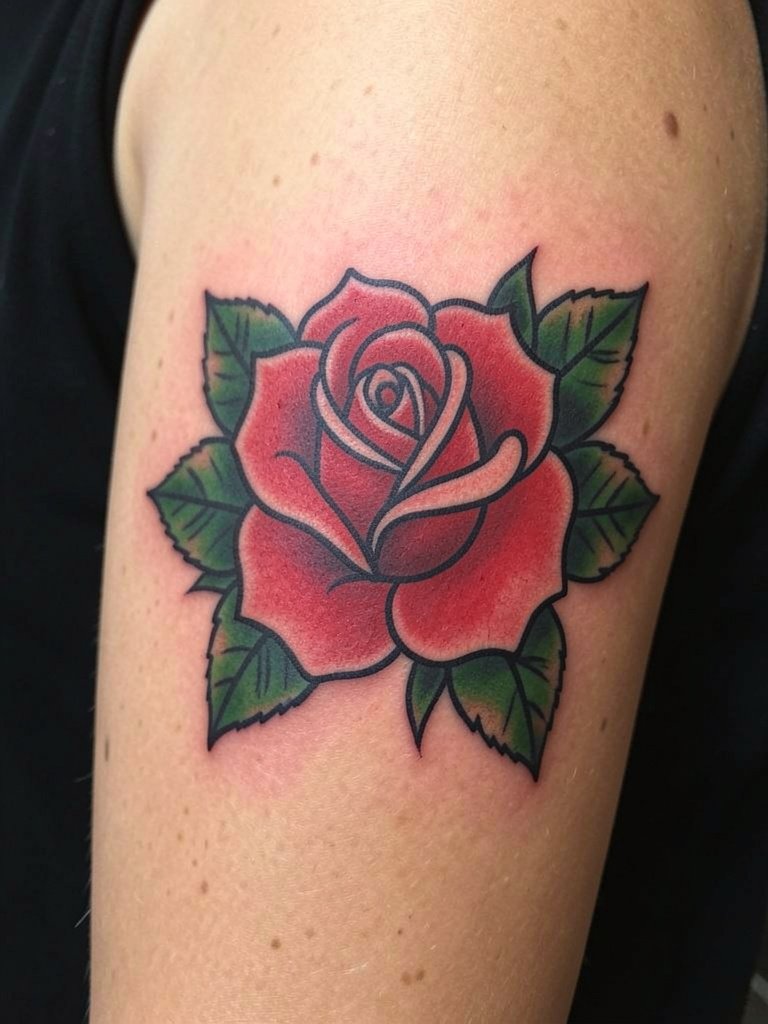
The outer upper arm gives enough real estate to go bold and let petals layer without crowding. Traditional saturation and heavy linework make the red read from distance and age very predictably. Expect a one to two hour session depending on size, and plan clothing that allows easy access like a tank top so the artist can move freely. The most common mistake is overpacking tiny highlights into petals. Strong silhouette and flat color beats micro-detail for longevity on this placement.
4. Red rose ribcage, fine line vertical
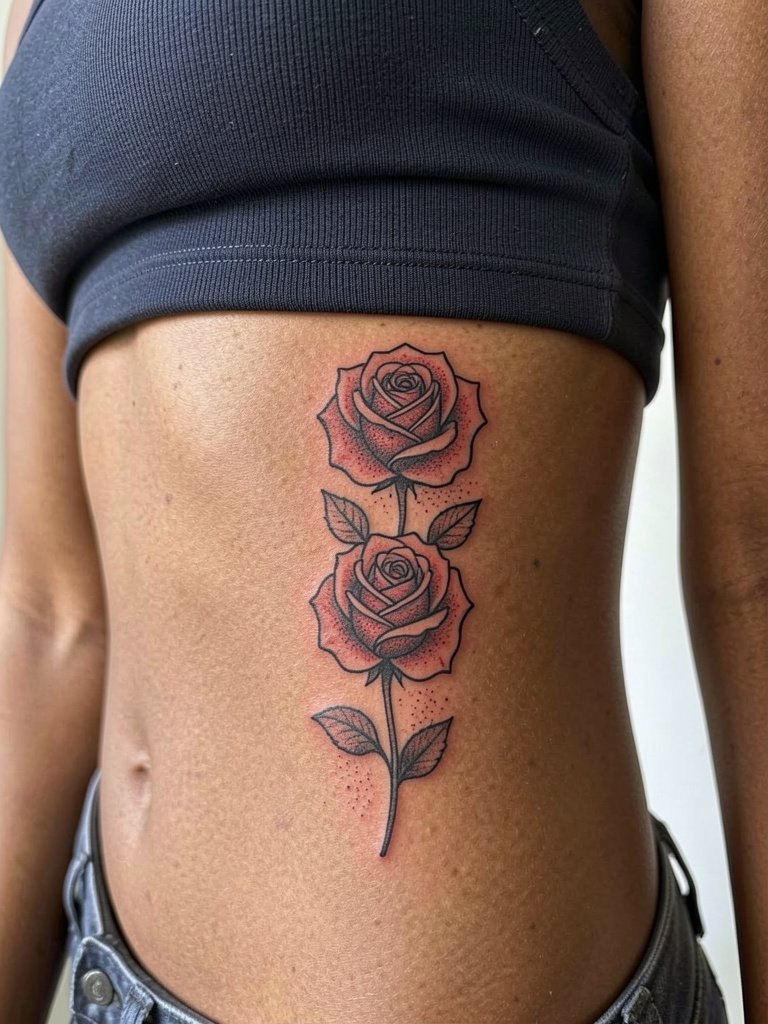
Ribcage roses look elegant because the body curve complements a vertical stem. Pain is on the higher end of the scale due to thin skin over ribs, and sessions may require breaks. Artists are split over fine-line ribs. One camp argues the skin stretch and motion blur single-needle work within two years. The other camp says slightly wider spacing and careful needle depth let fine line settle well, and they will show healed shots to support that. If you prefer subtlety, bring references scaled to five inches and plan for a touch-up at about year two.
5. Tiny rose behind the ear
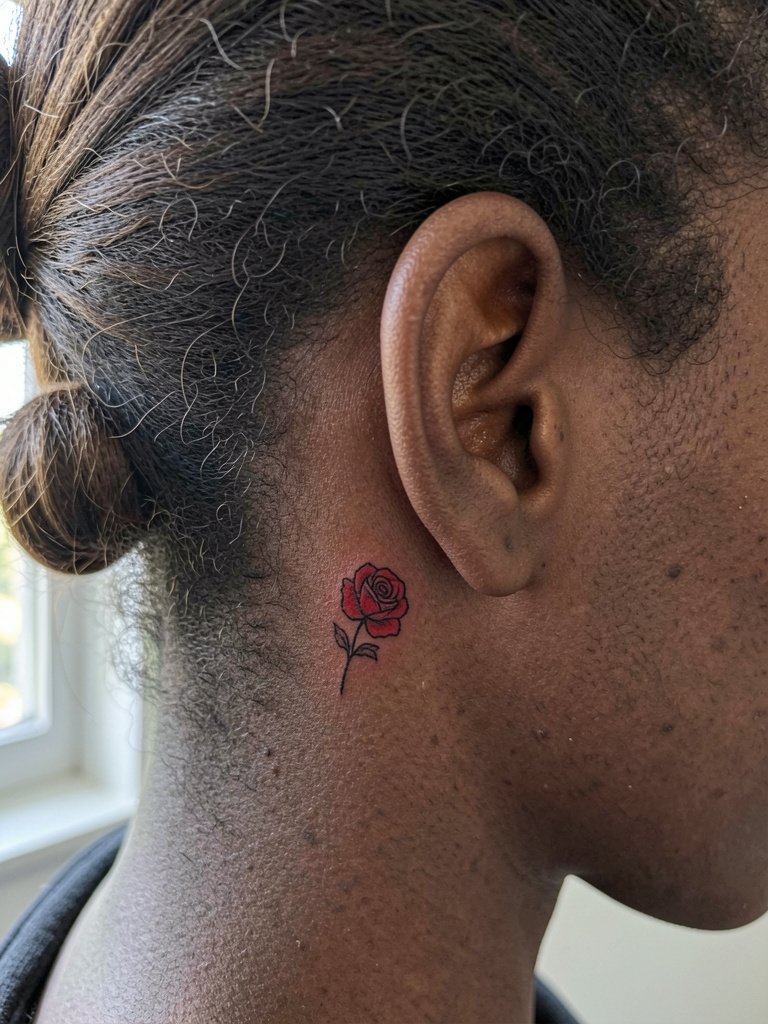
A behind-the-ear rose is discreet and makes a big impact when hair is up. Expect a short, sharp session and local sensitivity around the mastoid bone. For the appointment wear hair ties and a small claw clip so you can keep hair away without tugging. The main technical risk is over-detailing tiny petals. Ask for simplified petal shapes so the red remains distinct and the lines do not fade into one another over time.
6. Ornamental rose under the collarbone
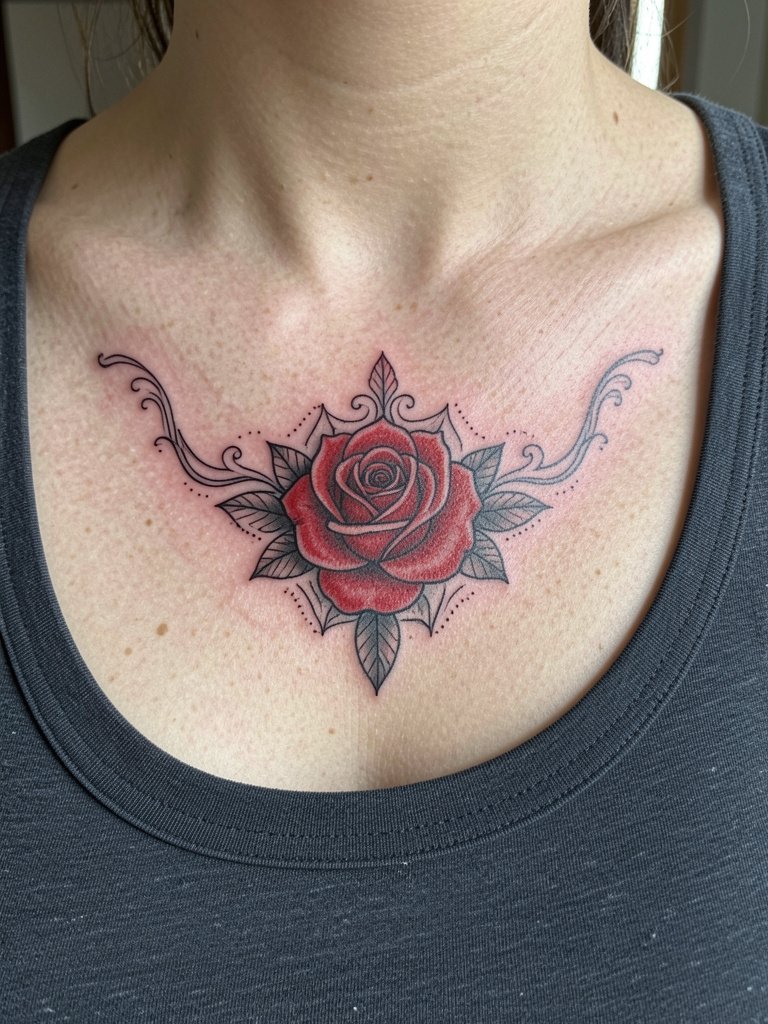
A collarbone rose reads as an accessory and pairs naturally with necklace layering. Placement sits on mobile skin so plan for slightly bolder main contours and lighter interior detail. For the session, wear an off-shoulder top that exposes the area without needing to be pulled. One common error is trying to cram script into the space; if you want lettering, increase the area a bit so the type holds over time.
Pre-Session Essentials
The wrist and collarbone pieces above have different access needs, so these small items smooth the appointment and the first week.
- Stencil transfer paper kit. Lets you see the exact placement on skin before the first line, which is helpful for delicate forearm and ribcage roses.
- Topical numbing cream. Applied per instructions 30 to 45 minutes before lowers rib and sternum sensitivity without changing how the ink settles.
- Thin protective film roll for skin. Useful for small wrist or finger roses that face friction and frequent handwashing.
- Fragrance-free gentle body wash. Keeps the healing area clean without stripping color during the first week.
- Aquaphor Healing Ointment. Trusted, widely used option to keep lines and saturated color from drying out in the first 48 hours.
7. Saturated neo-traditional rose on the outer thigh
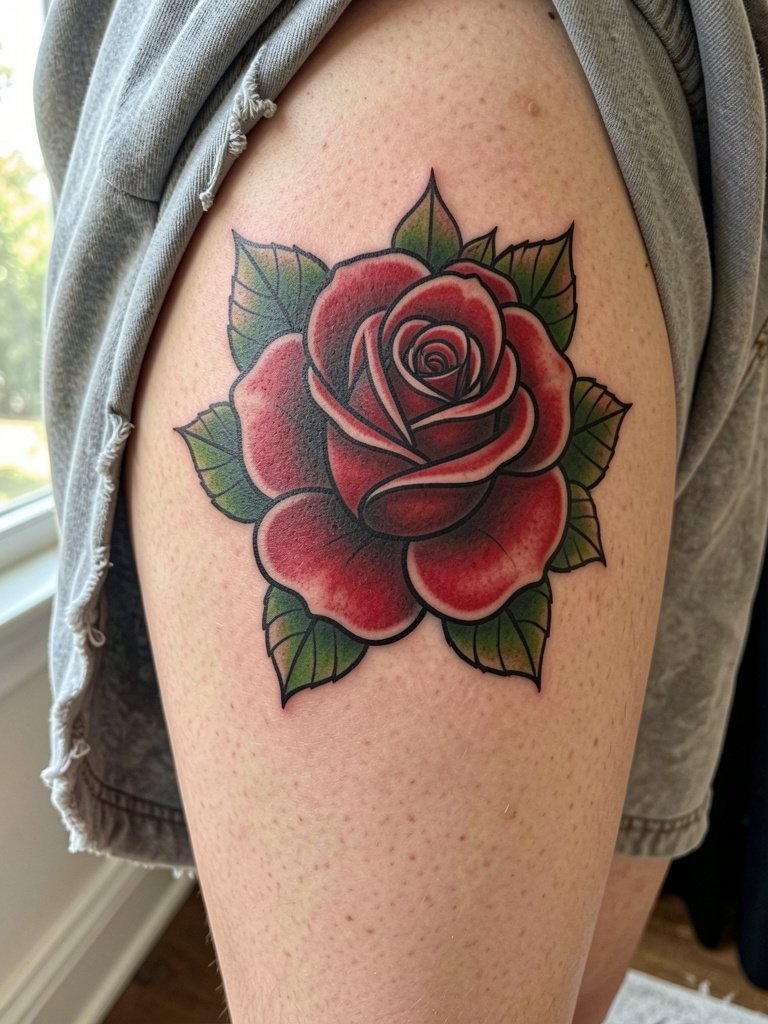
The outer thigh is forgiving of scale and detail and is a great spot for a larger, color-forward rose. Sessions are comfortable compared with ribs and can run one to two hours. For showing the piece, float it with high-slit skirts or shorts. A good option is a high slit skirt for evenings. When planning a cover-up, the thigh gives artists room to add darker petals and shading that truly mask old work.
8. Single-stem red rose on the ankle
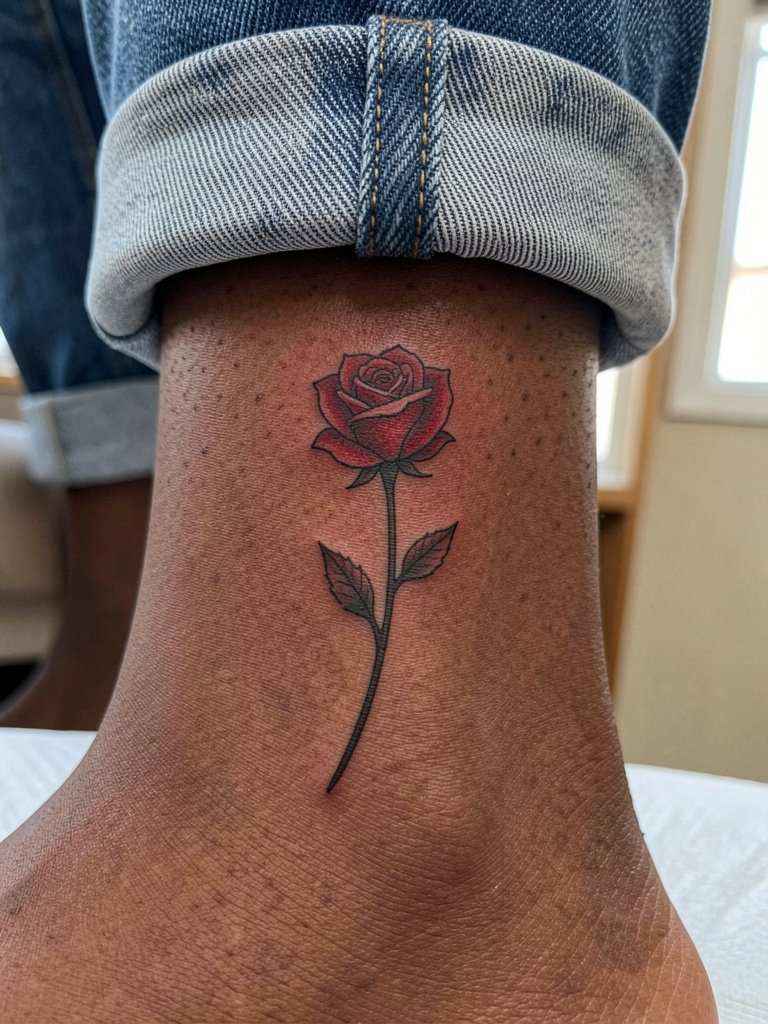
An ankle rose is delicate and visible with cropped pants or sandals. The area faces abrasion from socks and shoes so opt for cleaner shapes rather than tiny dotwork that can migrate. For the appointment wear jeans you can roll up easily and avoid pressure on the ankle afterward. A loose linen short works well for session comfort. If you plan frequent barefoot activity, expect touch-ups sooner than upper-arm work.
9. Black-and-red hybrid rose on the inner forearm
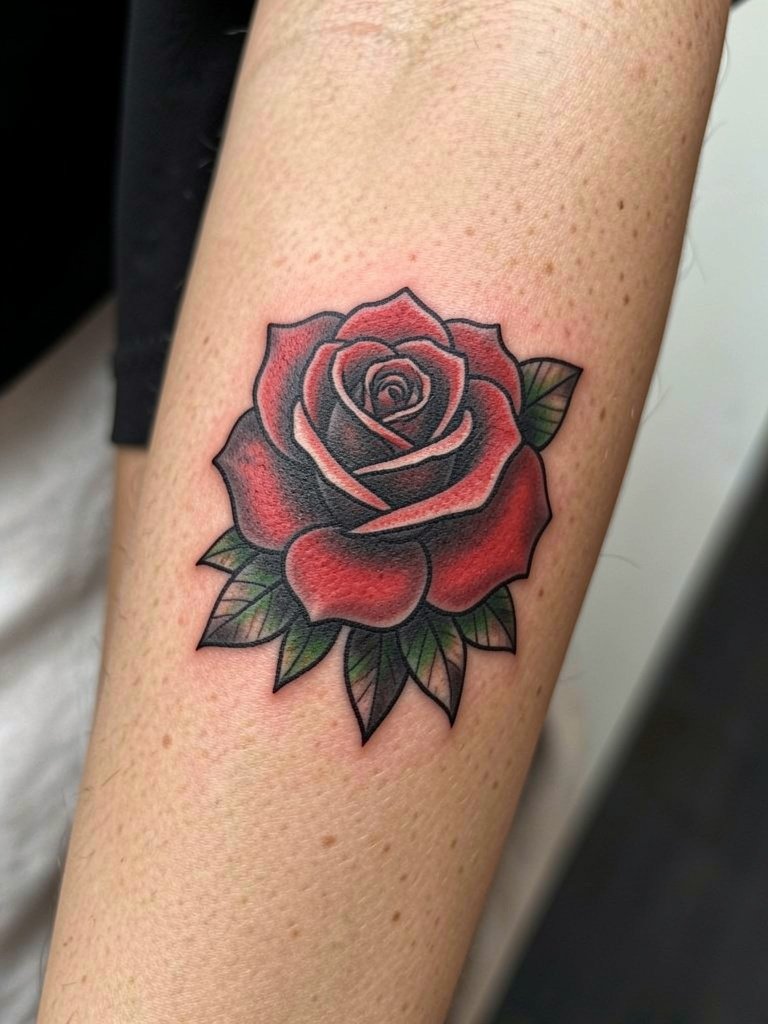
Pairing black structure with red saturation improves legibility as the piece ages. One camp favors red-only roses for softness and pure color. The other camp says black outlines preserve contrast and prevent petals from washing into indistinct red blocks. Both positions have merit, and your choice affects longevity. For the session plan a rolled-sleeve linen shirt that gives clear access and frames the forearm when you want to show it off.
10. Large back rose composition
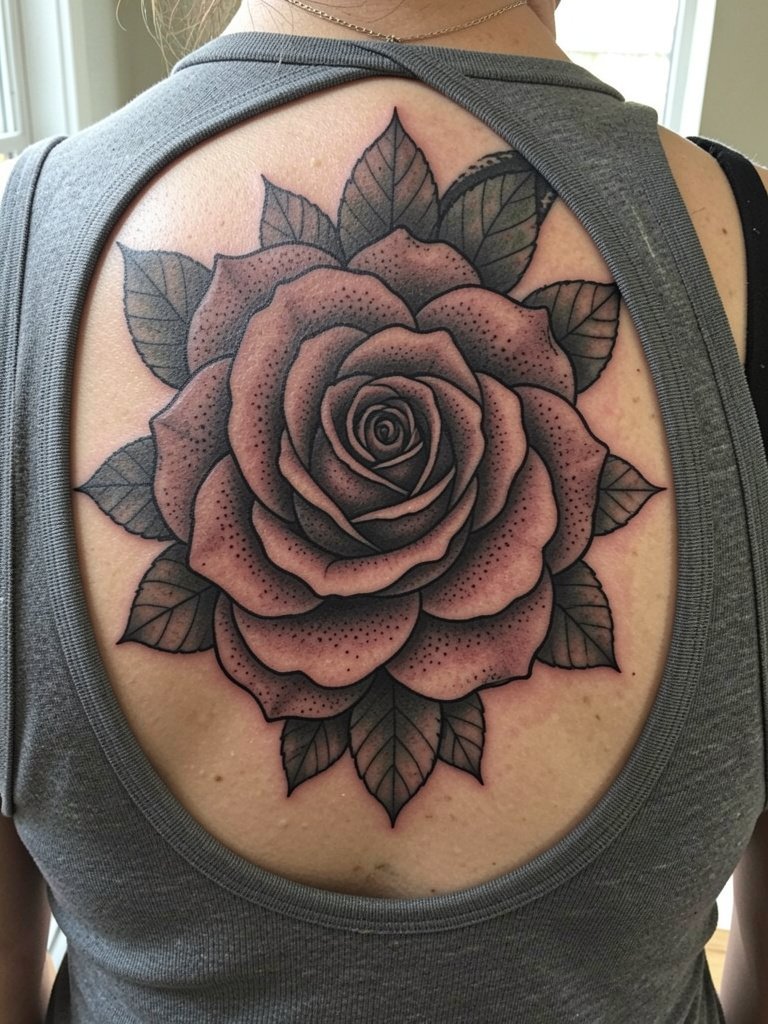
A back rose gives the artist canvas to create depth and petal layering that reads well at a distance. Expect multiple sessions for larger, highly saturated work and plan clothing that allows easy back access like a racerback tank or button-down. Bigger pieces age nicely because the lines have room to breathe. When considering a cover-up in this area, remember the larger the design the more completely the old work can be integrated.
11. Simple flash rose for the ankle or wrist
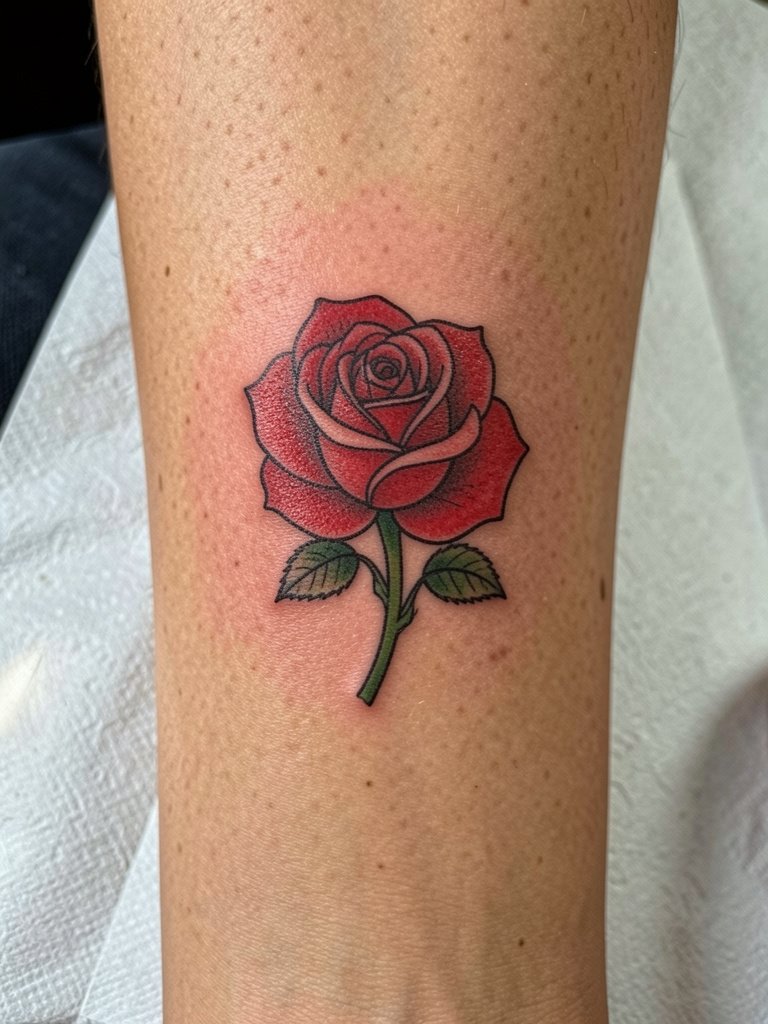
Flash roses are efficient and reliable because the designs are time-tested and scale well. They are walk-in friendly and usually priced as quick work, making them a good first-piece option. For the session, wear clothing that gives easy access like a sleeveless tee. Keep expectations realistic about tiny flash versions; if you want extra detail, book a slightly longer appointment to avoid cramping the design.
12. Red rose with ornamental framing at the collarbone
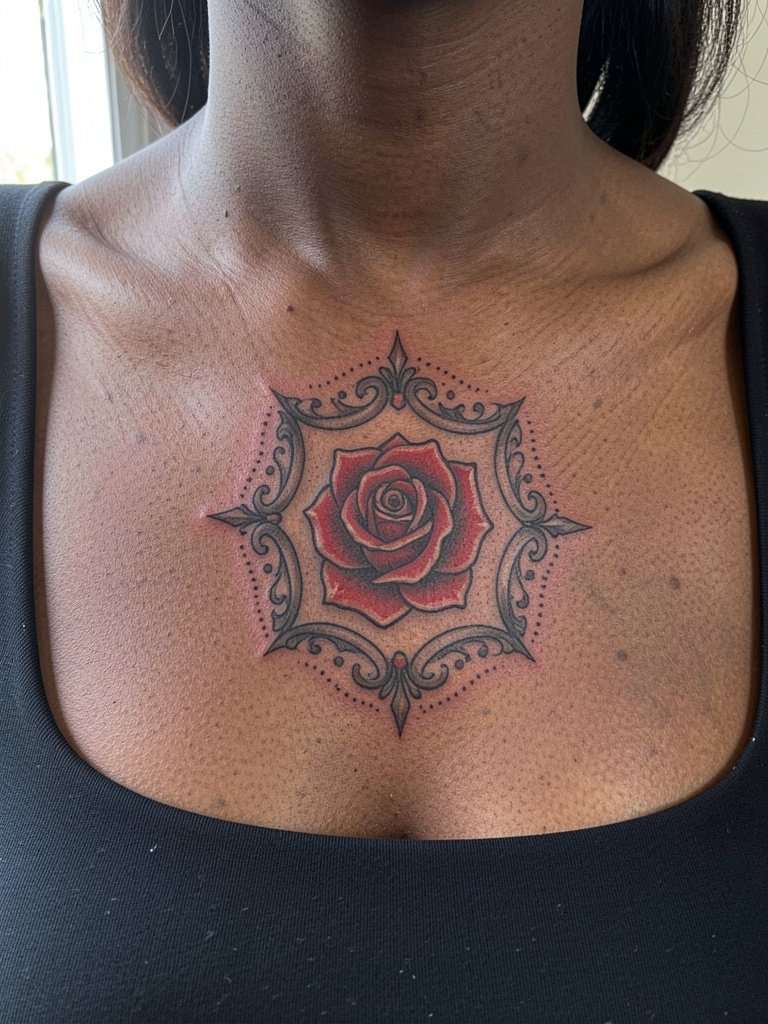
Framed roses add deliberate architecture to a floral motif and make the piece read as a composed jewelry element. Fine interior dotwork can add texture while the frame gives a hard edge that ages predictably. For showing the design pair it with layered delicate necklaces and an square-neck top. One mistake is letting the framing dominate the bloom; keep the rose the visual center to avoid a boxed-in feeling a year later.
13. Cover-up rose for forearm camouflage
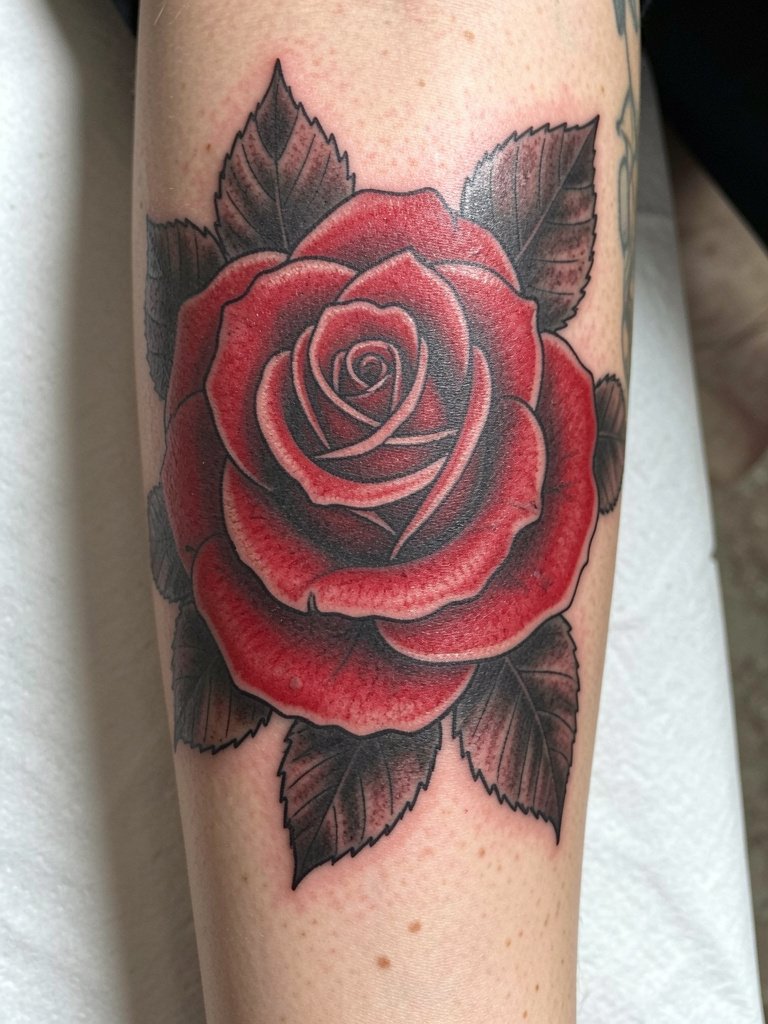
Roses are frequently used for cover-ups because petal shapes and shading give artists many levers to hide old marks. Cover-ups work best when the new design is larger and heavier in tone than the old tattoo. Expect a consultation where the artist assesses the old ink and suggests size and contrast adjustments. For comfort, wear a loose short sleeve shirt that can be rolled if needed. Be realistic that some small, dark lines require extensive shading or multiple sessions to mask completely.
14. Small red rose on the nape
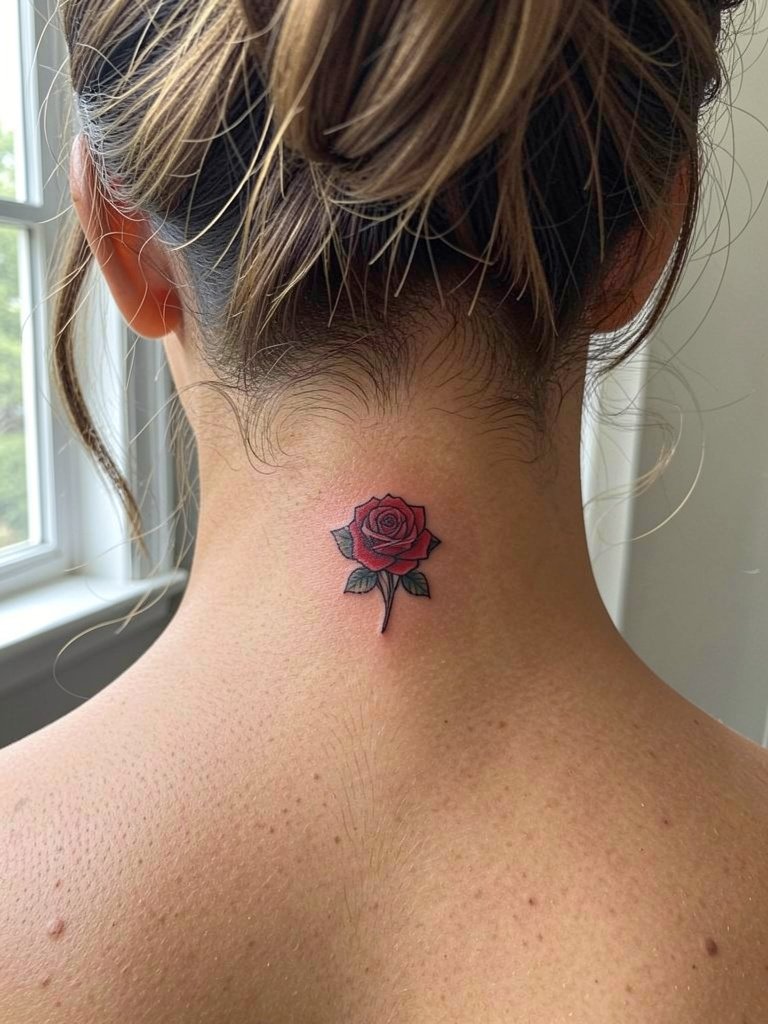
Nape roses are easy to hide and show with hair choices, which makes them versatile. The area heals quickly but can be sensitive if the hairline rubs against fresh ink. For the session, tie your hair up and wear a wide-neck top so the artist has clear access. A hair claw clip is a small item that helps during the appointment. If you want a minimal rose, keep petal lines bold enough to survive contact with shampoo and collars.
15. Single long-stem rose on the side torso
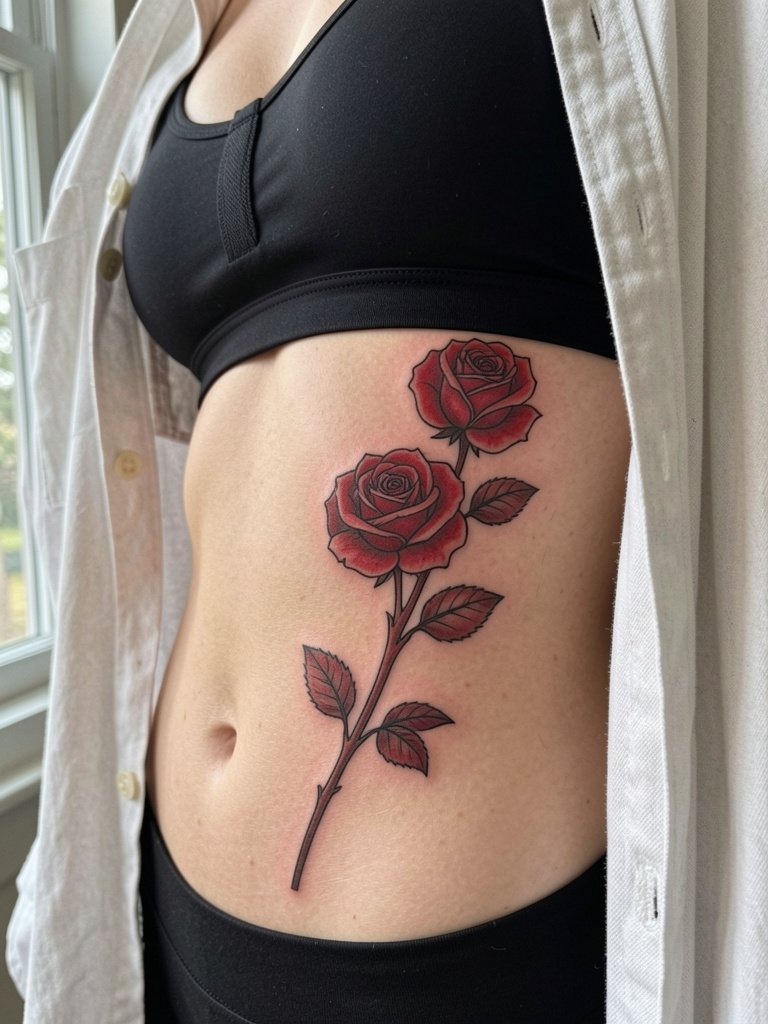
A long-stem rose along the torso accentuates natural curves and can be scaled to flirt with visibility. Expect higher pain near the lower ribs and a session that might need a break depending on length. For the appointment choose a loose bralette or a button-down that opens easily so the artist can access the area. An effective consultation detail is to bring two reference sizes so the artist can show how the stem sits with breathing and movement.
16. Micro realistic red rose on the finger
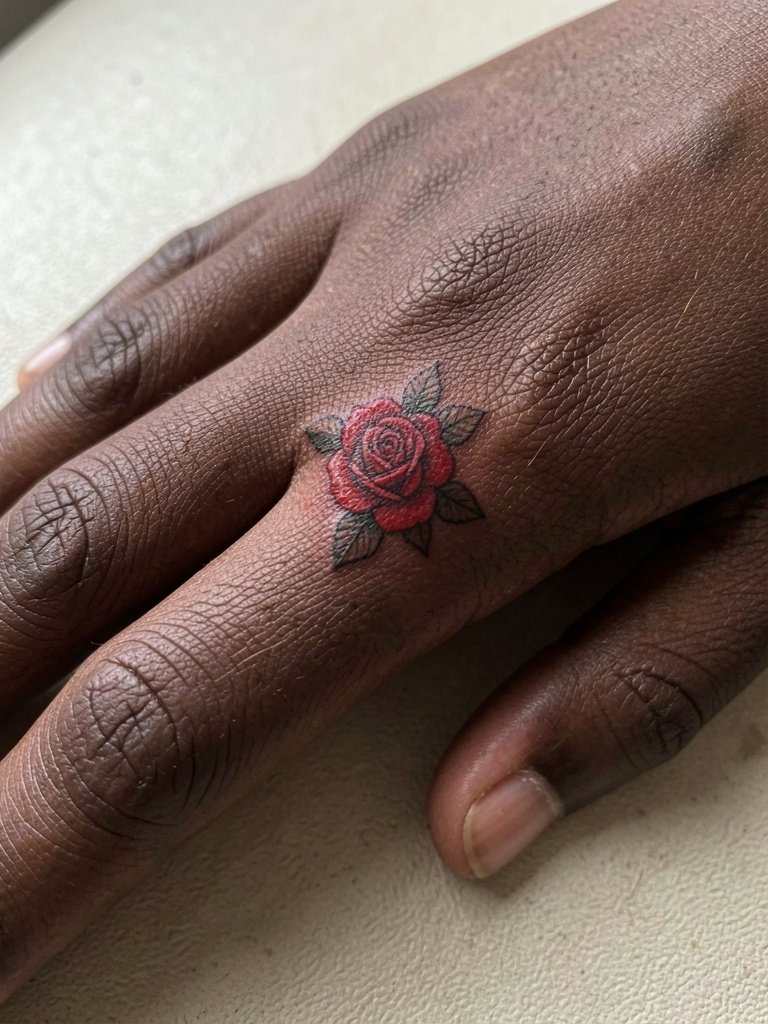
Finger roses have charm but high maintenance. The skin there exfoliates often so expect color and lines to fade faster and a likely touch-up schedule within a year. If you still want a finger rose, choose simplified petal shapes and slightly bolder contour than a wrist or forearm design. During the session wear a glove-friendly top so the artist can position the hand without friction. Plan for regular moisturizing and a touch-up conversation at booking rather than a surprise later.
17. Red rose on the upper chest, off-center
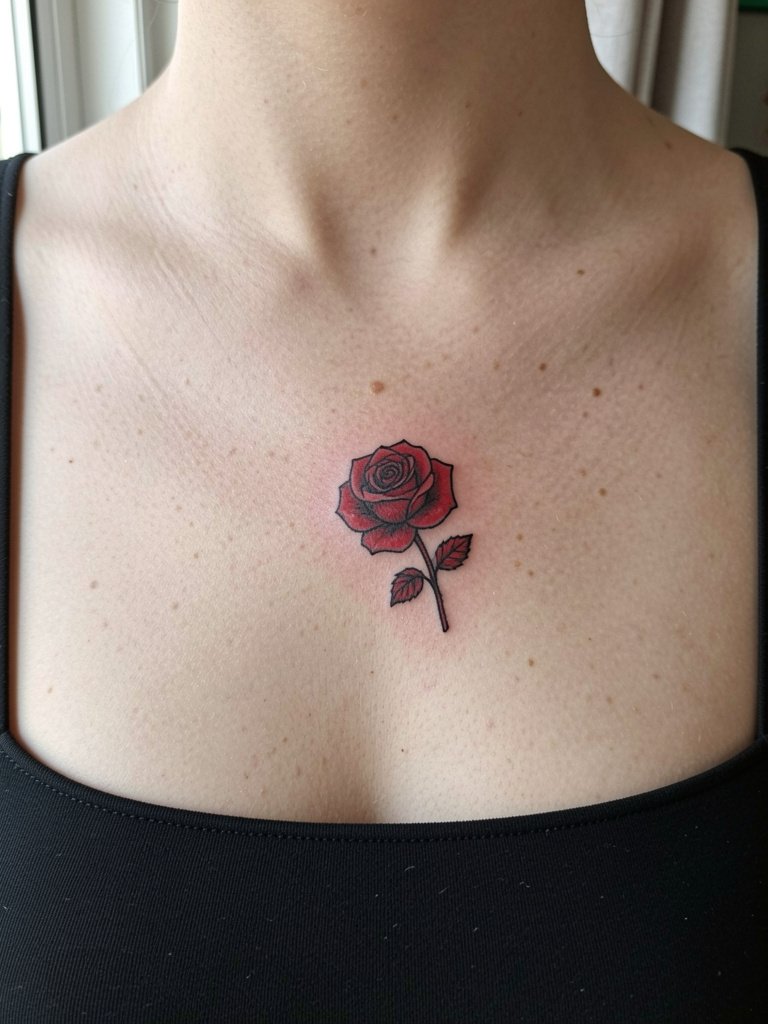
An off-center chest rose offers a slightly asymmetric, editorial feel. The area moves with the shoulders and breath so allow the artist to place the design while you stand naturally. For showing it pair with a layered necklace set that complements the placement. One common misstep is centering the design on a pulled-in posture; the artist should preview placement while you stand in a relaxed pose.
18. Red rose on the calf for bold legwork
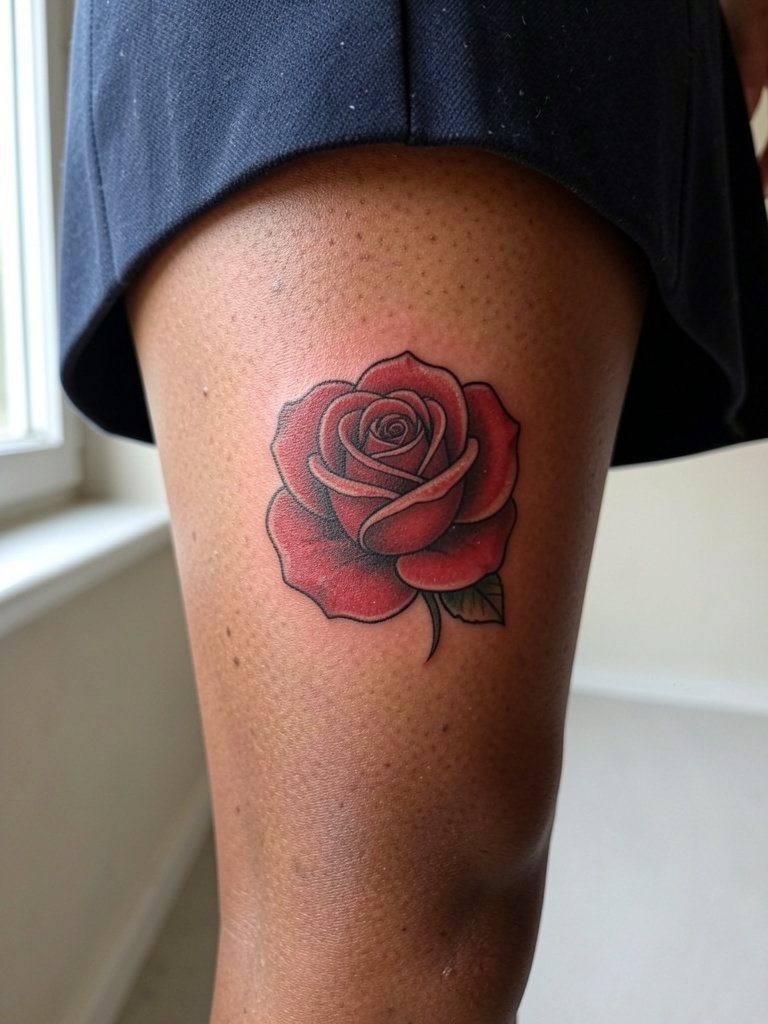
Calf tattoos age well because the skin is relatively stable and the area is easy to protect from sun. A medium to large rose here can have dramatic petal texture and still read clearly for years. Plan to wear shorts or a skirt during the session for access and choose footwear that avoids calf rubbing during the first week. A loose skirt pairs well for show-off moments once healed.
19. Single petal or bud motif on the finger side
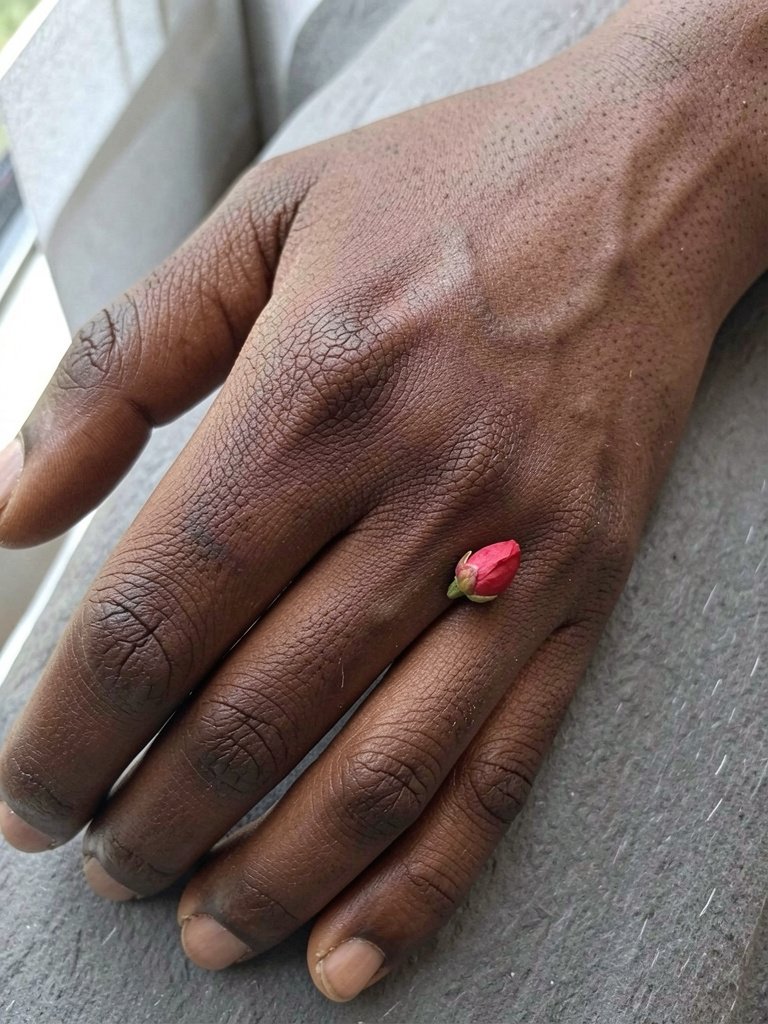
If you want the rose implied rather than whole, a single petal or bud on the finger reads like a secret accent. Keep expectations for longevity modest because fingers require more frequent touch-ups. For day-of comfort wear minimal jewelry and a thin ring on the opposite hand so fingers remain unencumbered during healing. Choose simplified shapes and avoid tiny cross-hatching that will blur first.
20. Two-rose cluster on the shoulder blade
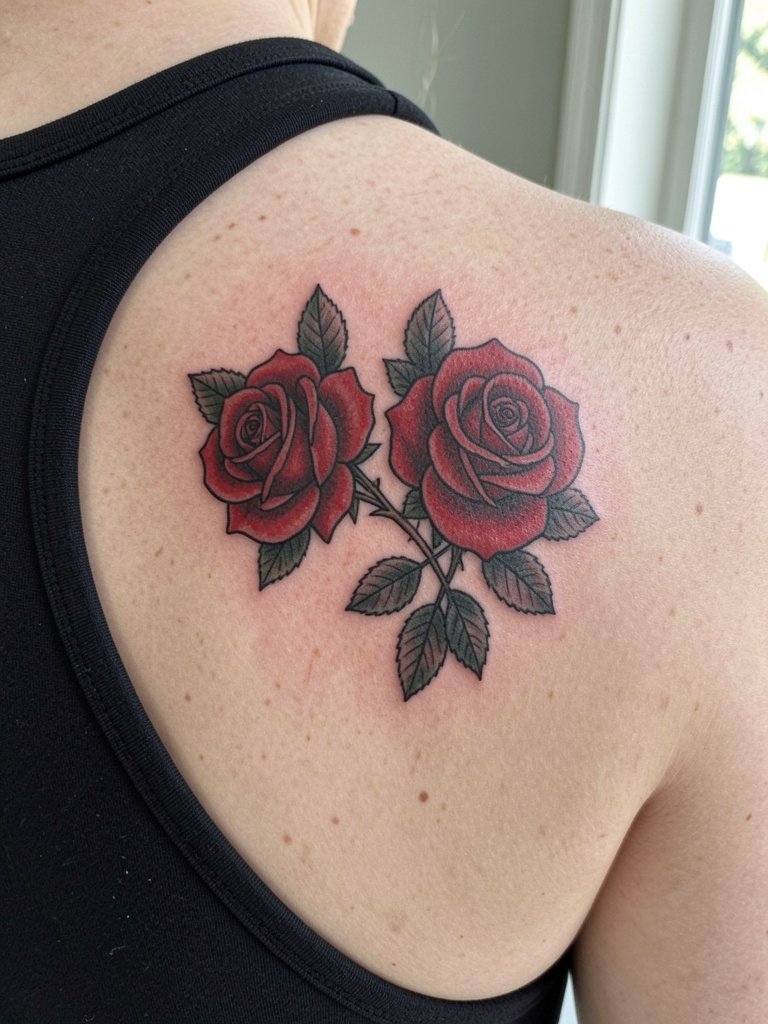
Clusters let an artist play with composition and negative space so each bloom complements the other. The shoulder blade is a low-sensitivity spot that sits well beneath clothing and shows nicely with backless or racerback tops. A backless top will frame the design when you want to showcase it. Ask the artist to create a composition mock-up on paper so the stems curve with the shoulder blade instead of fighting the anatomy.
21. Mini red rose on the clavicle line
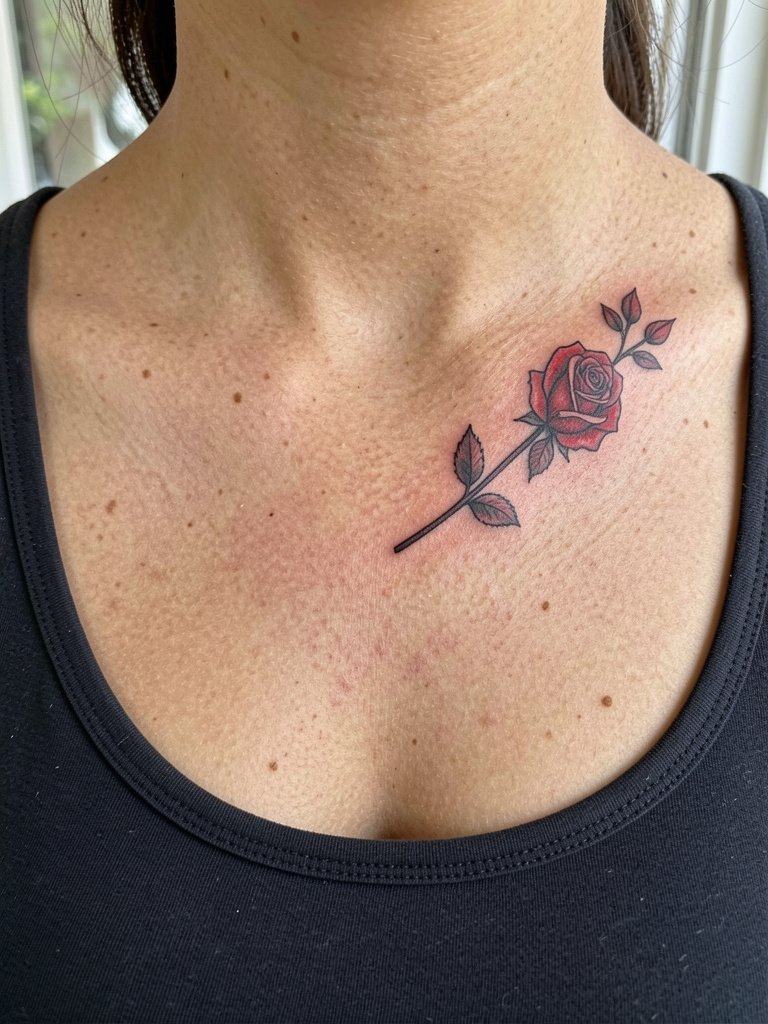
A clavicle-line rose sits right at the boundary of jewelry and body art, which can make it feel integrated with outfits. If you plan frequent necklace wear, ask the artist how the piece will nest with chains so neither competes. For a show-off look pair with a delicate chain necklace. Keep the design slightly larger than a pinhead so the red holds as the skin moves with breathing and shrugging.
22. Bold single-rose on the chest center
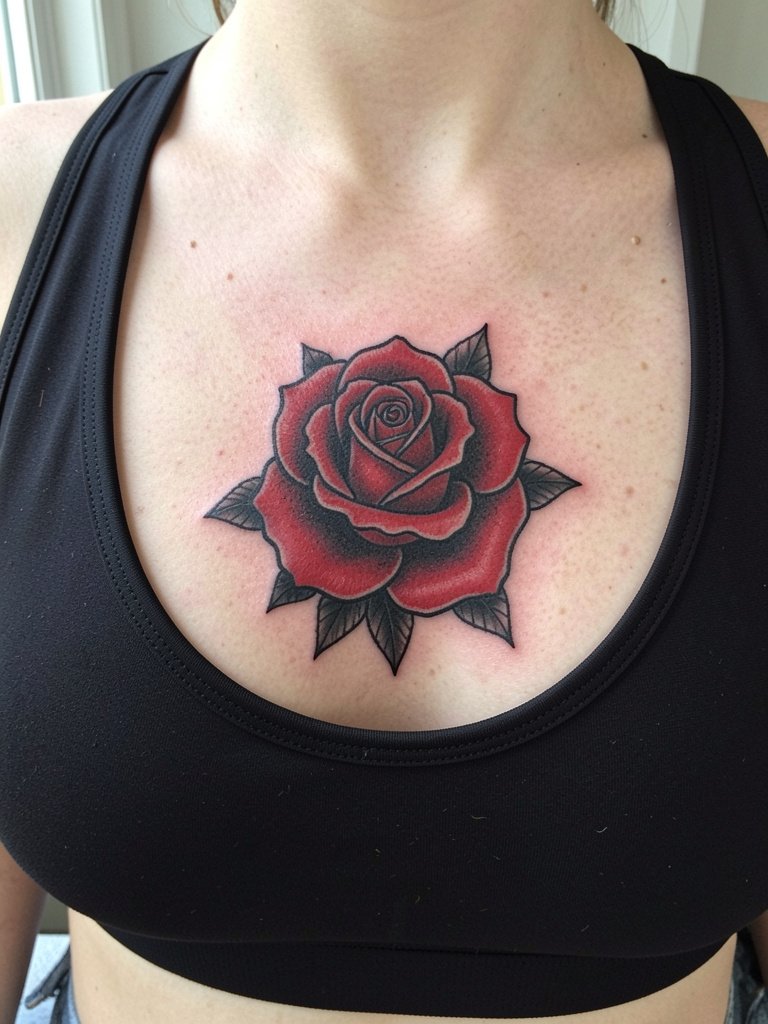
Center-chest roses read as statement pieces and require careful siting because the area flexes with breath. Sternum work can be sensitive so plan for breaks and consider session length. Wear a fitted sports bra or bandeau to the appointment so the artist can see the full central canvas. Larger, bold contours will keep the red vivid as the skin ages compared with overly fine internal detail.
23. Watercolor-accented red rose on the shoulder
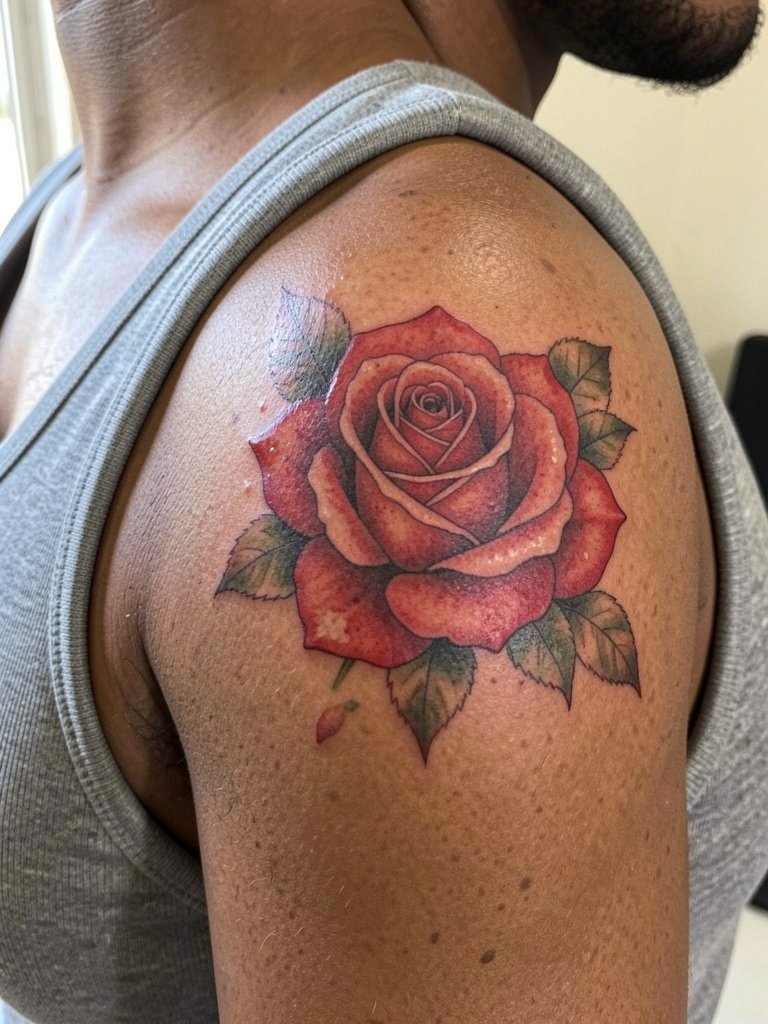
Watercolor elements soften edges and give a painterly look, but they demand structural linework to stay readable over time. If you like the wash effect, pair it with a bold center contour to protect the petals. For the session wear a tank top so the artist can reach the shoulder without friction. Keep in mind that watercolor fades differently on darker skin tones, so discuss saturation and contrast before committing.
24. Stylized geometric rose near the wrist
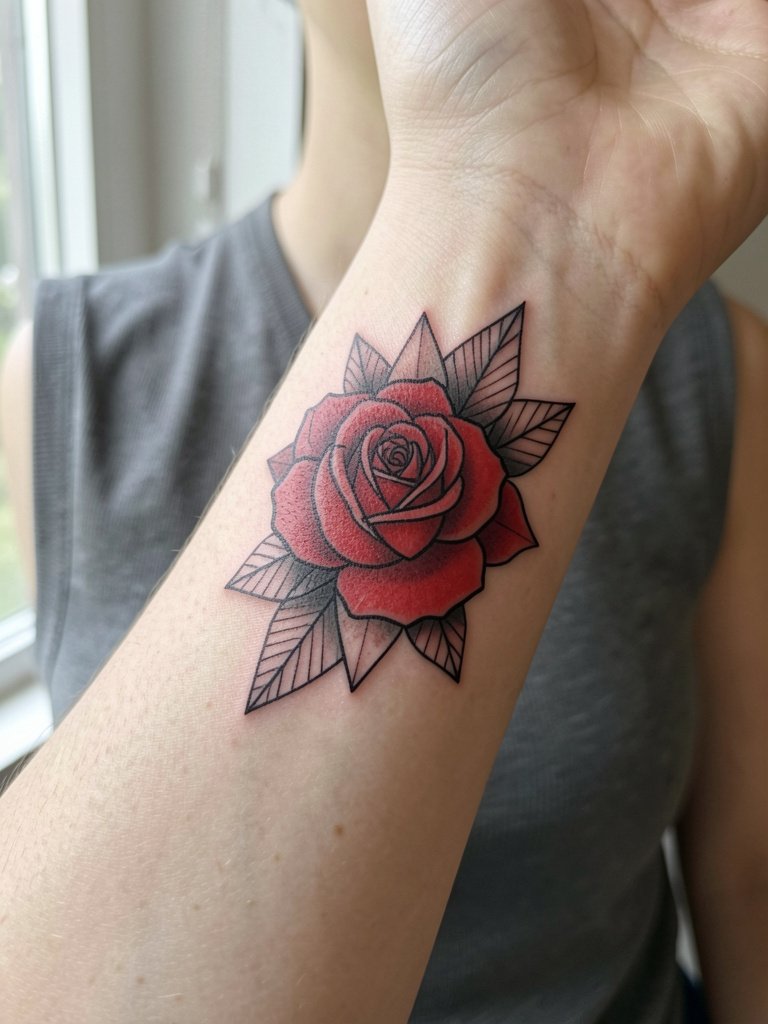
Geometric framing modernizes a classic rose and can help maintain structure as the design ages. Near the wrist, avoid too many intersecting tiny angles because the skin moves and can make sharp detail smudge. For the appointment wear a rib tank that offers easy access and a casual show-off look afterward. A good brief for the artist includes the desired level of geometry versus natural petal curves.
25. Miniature rose on the ankle side
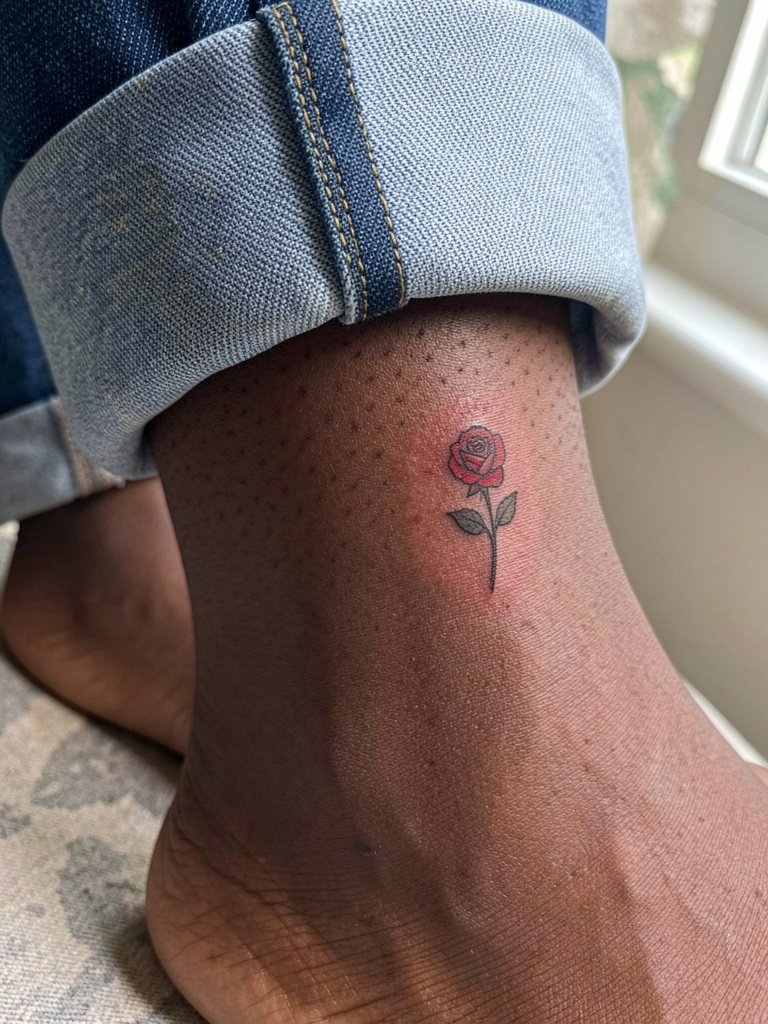
A side-ankle rose is a quiet accent that shows with cropped pants and sandals. Because ankles take abrasion, choose simple shapes and expect touch-ups sooner than thigh or back work. The session is straightforward, and wearing cuffed jeans or shorts makes access easy. A low-profile anklet-style accessory can pair nicely for evenings out while the tattoo is new.
26. Bold scar-cover rose on the chest
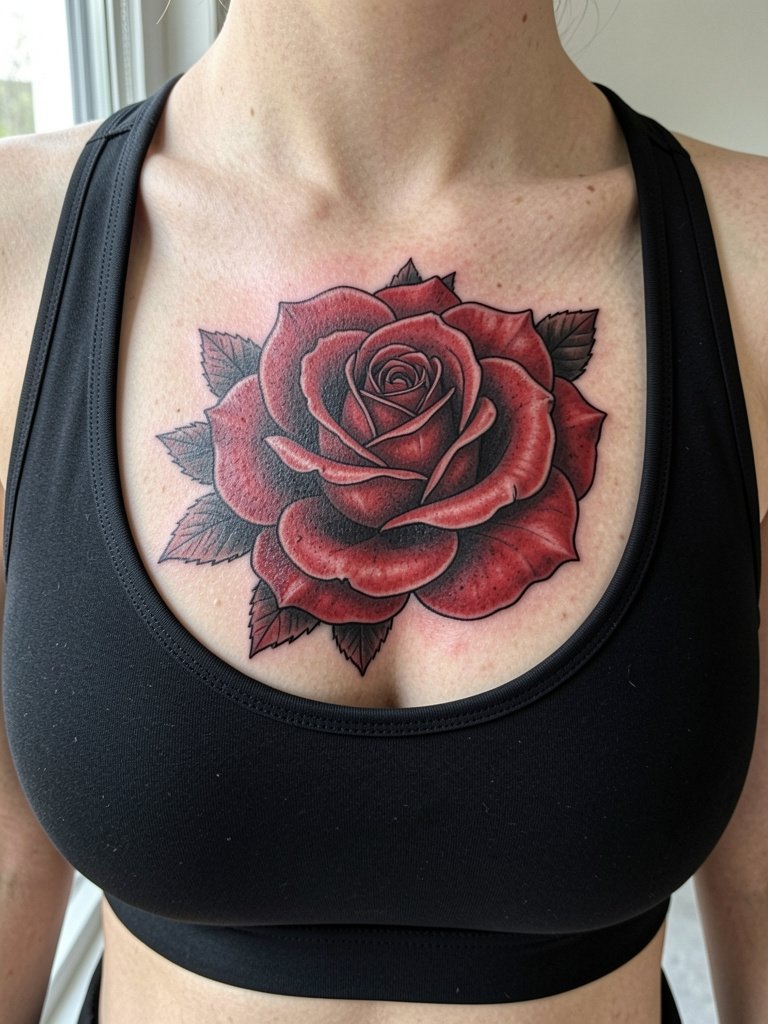
When a red rose is used to mask scarring, the artist usually designs around the texture and may choose darker roses and denser shading. Scar tissue holds ink differently, so plan for a consult that addresses healing expectations and the possibility of multiple touch-ups. For the session wear supportive fitted garments so the artist can work without fabric movement. A realistic expectation is that integration takes more sessions than an untouched canvas.
27. Large floral piece blending roses and leaves on the back of the shoulder
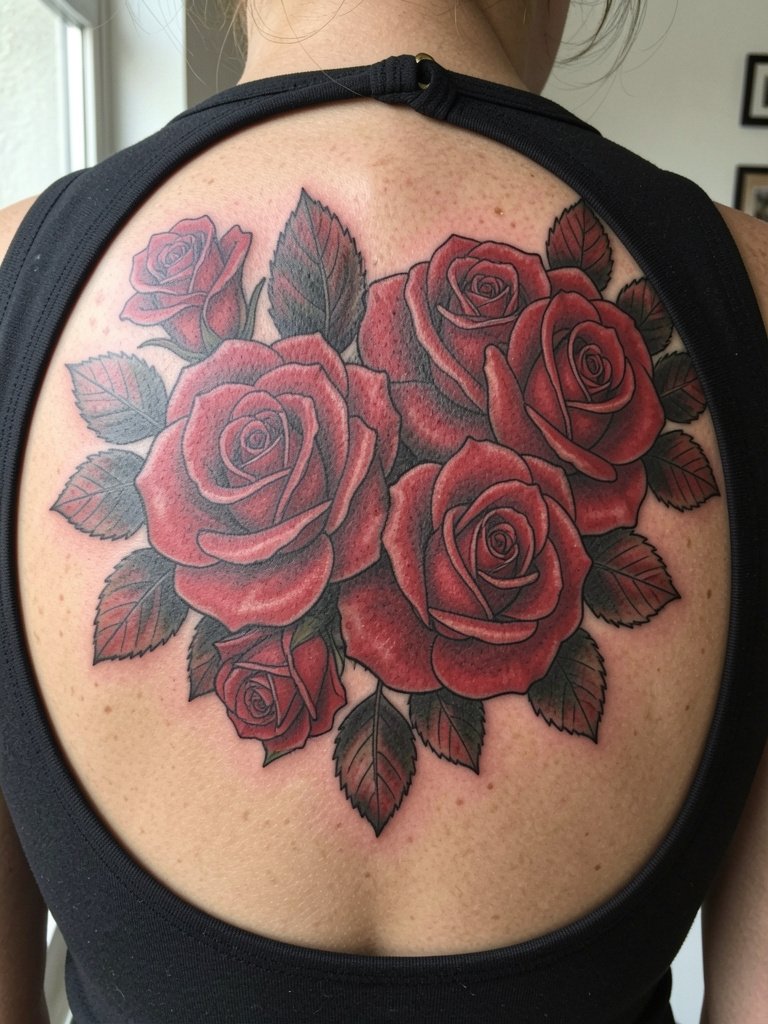
A large shoulder-blade composition lets you mix rose styles, from traditional to fine line, and still keep a coherent visual flow. This placement holds pigment well and tolerates heavier shading, so it works beautifully for a more dramatic red. For showing the piece, racerback tops or backless dresses work best. Bring a portfolio of styles you like and be prepared for at least one follow-up visit to fine-tune saturation and edge clarity.
Frequently Asked Questions
Q: How do red inks age on different skin tones?
A: Red ink reacts differently depending on saturation and contrast. On lighter skin the hue reads bright with less contrast needed. On medium and darker tones the artist may suggest stronger black structure or deeper red mixes so the rose maintains shape. I've seen tattoo portfolios where slightly darker outlines preserved the rose shape on darker skin better than a red-only approach.
Q: Can a tiny rose be expected to hold detail for years?
A: Tiny roses can stay crisp if you increase line weight and simplify petal detail. The mistake is asking for the same micro-detail found in large pieces scaled down. A sensible brief is "one to two bold petals, clean contour," and plan for a touch-up around year one depending on placement and sun exposure.
Q: Where can I find artists who post healed red-rose work without naming them directly?
A: Search Instagram and TikTok hashtags like #redrosetattoo and #finelinerose and add your city name to find local portfolios. Use Pinterest to gather placement ideas, then filter results for "healed" or "years later" in captions. Tattoo-advice forums and Reddit threads often show progression photos if you search for "healed red rose" plus a placement.
Q: What should I wear to a collarbone or ribcage session?
A: Wear a top that exposes the area without needing to be pulled during the session. For collarbone pieces choose an off-shoulder top or button-down you can leave open. For ribcage work a loose bralette or button-down that can be opened provides easy access and keeps you comfortable during breaks.
Q: Are roses a good choice for cover-ups?
A: Roses are often used for cover-ups because petals and shading offer many ways to hide old lines. Successful cover-ups usually require a larger scale and darker values than the original, and sometimes multiple sessions. The artist will assess the old work and show mock-ups to make sure the new composition fully integrates the existing ink.
Q: How soon should I expect a touch-up on finger or ankle roses?
A: Fingers and ankles typically need touch-ups sooner because of frequent washing and friction. Plan for a realistic touch-up window at six to twelve months rather than assuming five years of no maintenance.
Q: Will a fine-line rose on the ribs blur?
A: Fine-line ribs split artists into two camps. One camp argues that the skin stretch and motion cause single-needle lines to blur within two years. The other camp says slightly wider spacing and careful needle depth let fine line settle fine, and they point to healed photos as evidence. Decide based on how subtle you want the initial look versus how resilient you want the long-term result.