
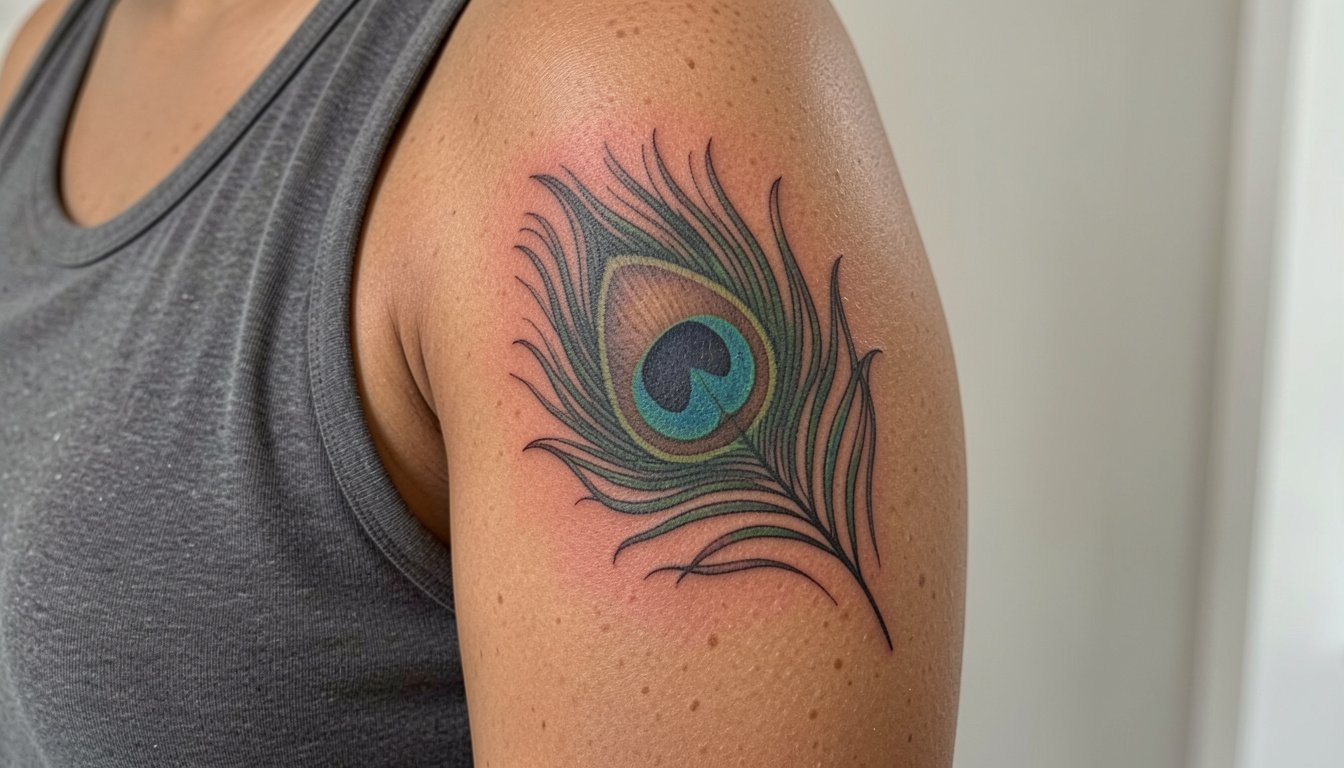
Peacock feathers read like jewelry on skin when the line weight and placement match the body. Tiny single-needle eyes on a wrist can look ethereal for a year then blur unless the artist leaves room in the eye and inks slightly heavier. This list focuses on shapes that follow curves, sizing that preserves the eye spot, and wardrobe tips that actually make the tattoo look intentional rather than accidental.
1. Single Feather, Jewel-Toned Eye on the Wrist
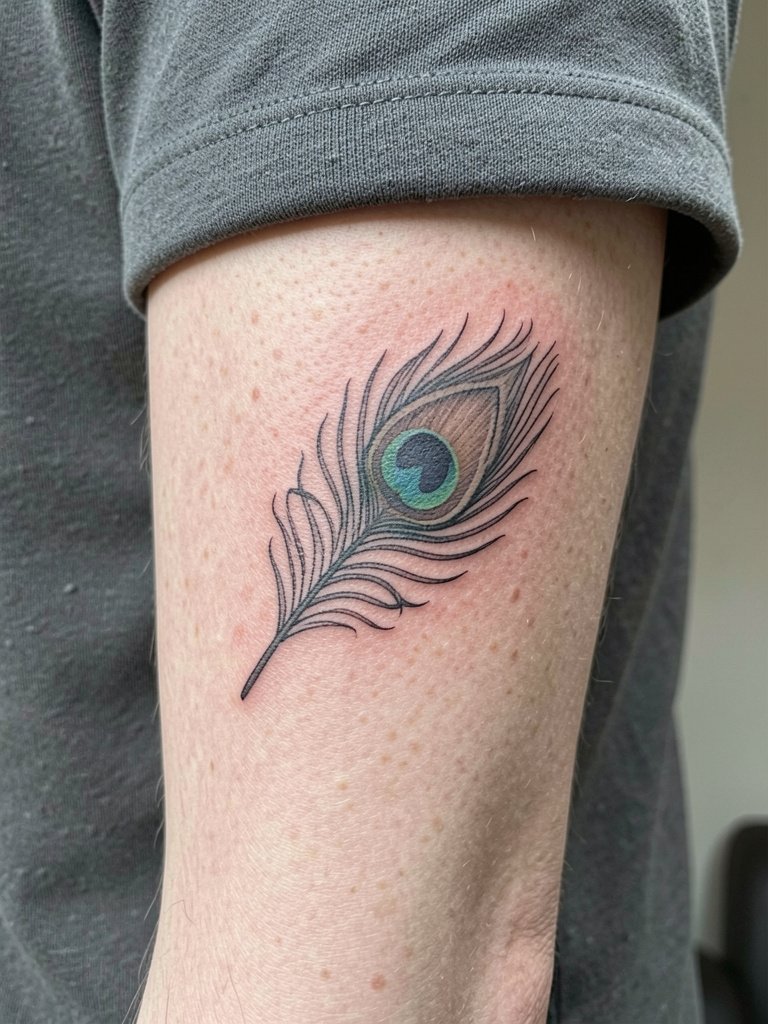
A small wrist feather reads best when the eye spot is left slightly larger than it looks in flash images. Ask for the eye to be a hair bigger and the barbs to have slightly heavier outer lines, so the shape keeps reading as it softens. Healed at six months the jewel tones will sit bright, and by two to five years the outer barbs will soften unless touch-ups are planned. For the session wear a loose short sleeve so the artist can expose the wrist easily. Show-off pairing: stack thin bracelets on the opposite wrist and a slim watch on the other hand to frame the piece with minimalist watch styles.
2. Flowing Inner Forearm Feather That Follows the Arm
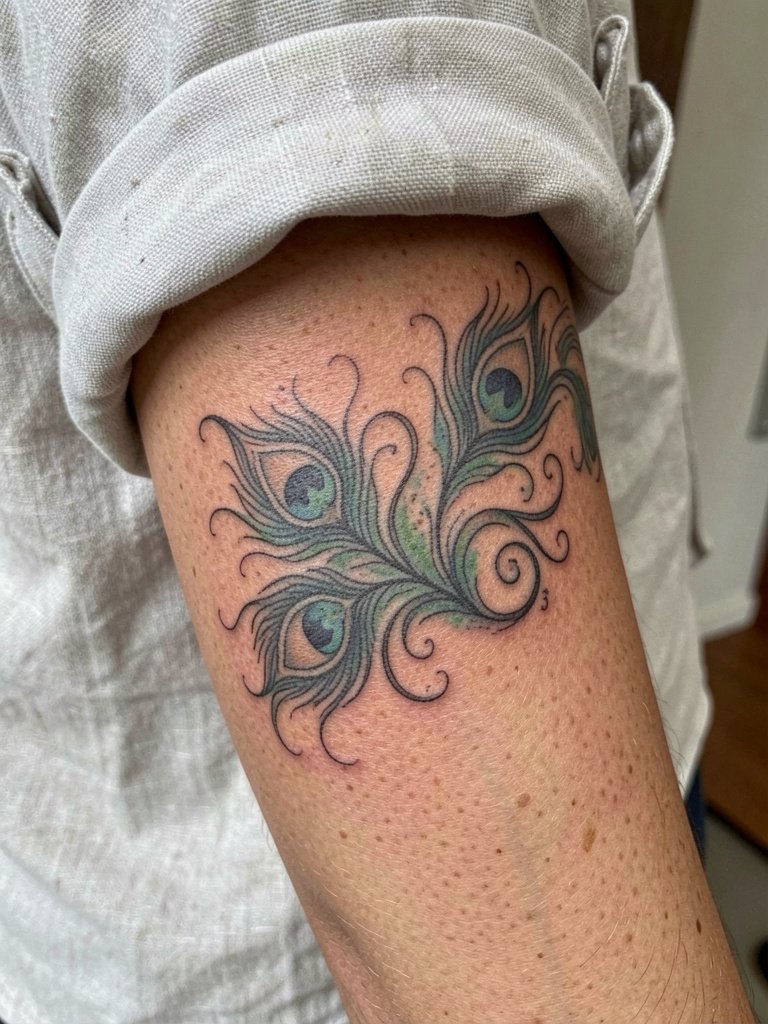
The inner forearm is where an elongated feather looks like it was painted to move with muscle and motion. Specify with your references that the shaft should have a steady taper and that the barbs angle to follow the arm, not stick straight out. A common mistake is asking for ultra-fine micro barbs at a 6 cm length, which tends to blur by year three. Session time is usually a single long sitting for medium detail. For outfit pairing, this placement looks great with rolled shirts and linen button-downs, try a linen button down women for casual reveals.
3. Micro Feather Behind the Ear for a Subtle Nod
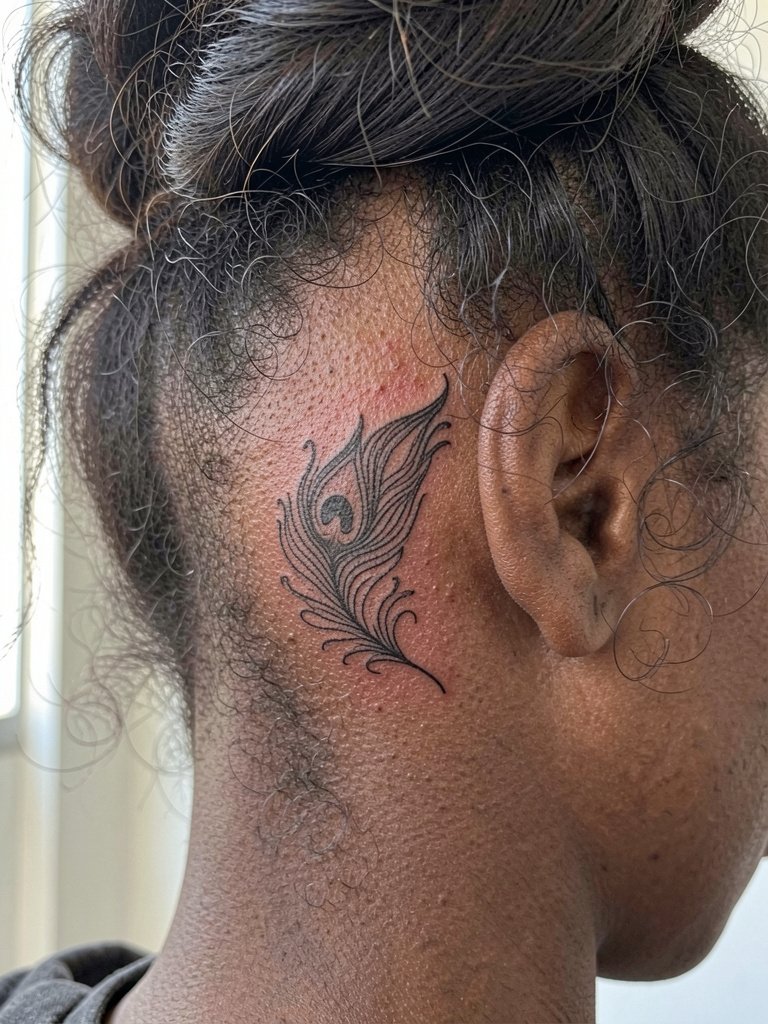
Behind-the-ear micro feathers are stealthy and feminine without being decorative in a loud way. Because the area is small and the skin moves with the neck, request a slightly stronger single-needle outline and avoid tiny crosshatching inside the eye. Pain is lower than the upper chest but higher than the wrist because the skin is thin. Session wear tip: pull hair up with a simple hair claw clip so the artist has clear access. Professional consideration: this placement needs someone experienced with micro work on thin skin.
4. Collarbone Feather with Script Name
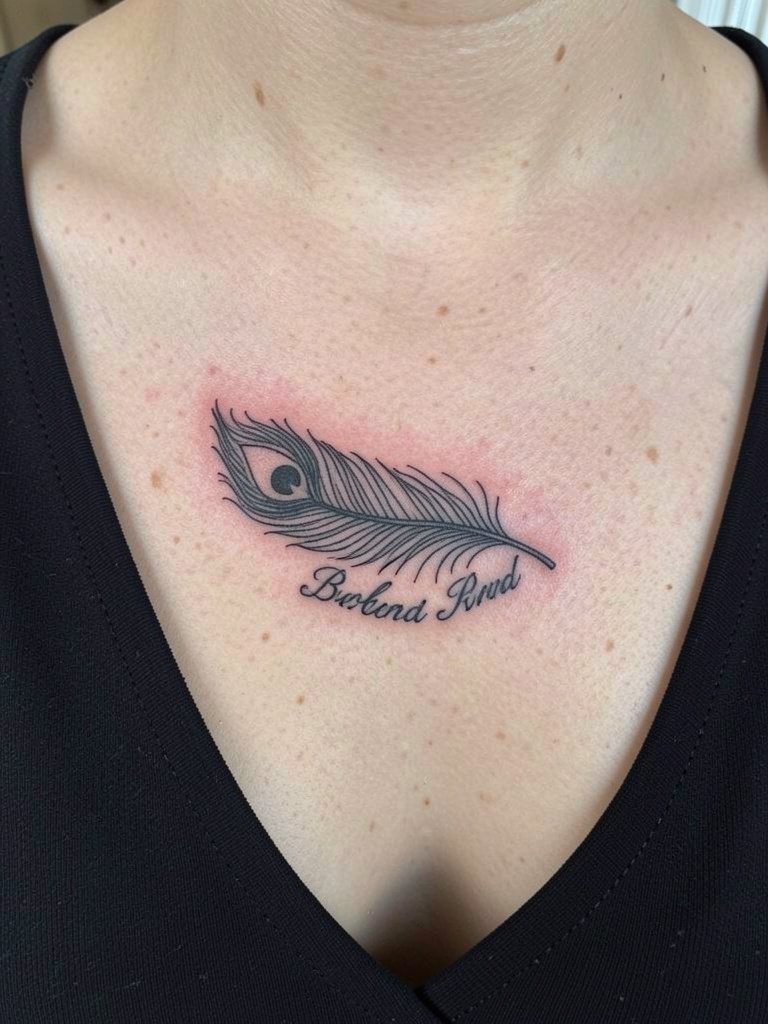
When pairing a feather with a name, keep the script small but readable and spaced away from the feather eye. Ask for a reference that shows the exact cursive so the artist can scale the letters to the feather length. Common aging problem is overly thin script that fades into the feather shadow after a couple of years. Session feel: collarbone sessions can feel scratchy because the bone sits close under the skin. Show-off with layered dainty necklaces and scoop-neck tops, try a layered dainty necklace to hit the same visual plane.
5. Forearm Infinity + Feather Hybrid, Spiritual Symbol Blend
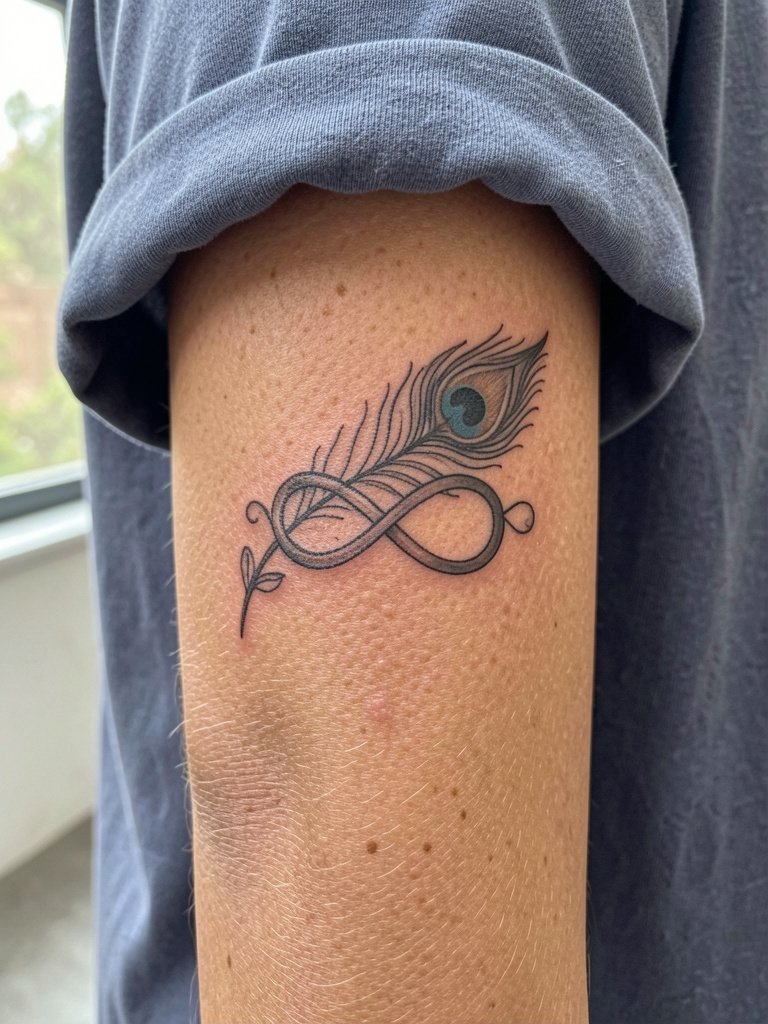
Combining a symbolic loop with the feather can look elegant when the artist balances negative space around the infinity. Specify the exact placement of the loop so the eye spot does not compete with the knot of the infinity. A frequent error is cramming both symbols into a tiny patch, which makes the meaning unreadable after touch-up cycles. Touch-up timeline for small hybrids is often 18 to 36 months depending on sun exposure. For session wear choose a top you can roll easily so the artist gets full forearm access.
6. Realistic Arm Sleeve Segment That Uses Feather Texture
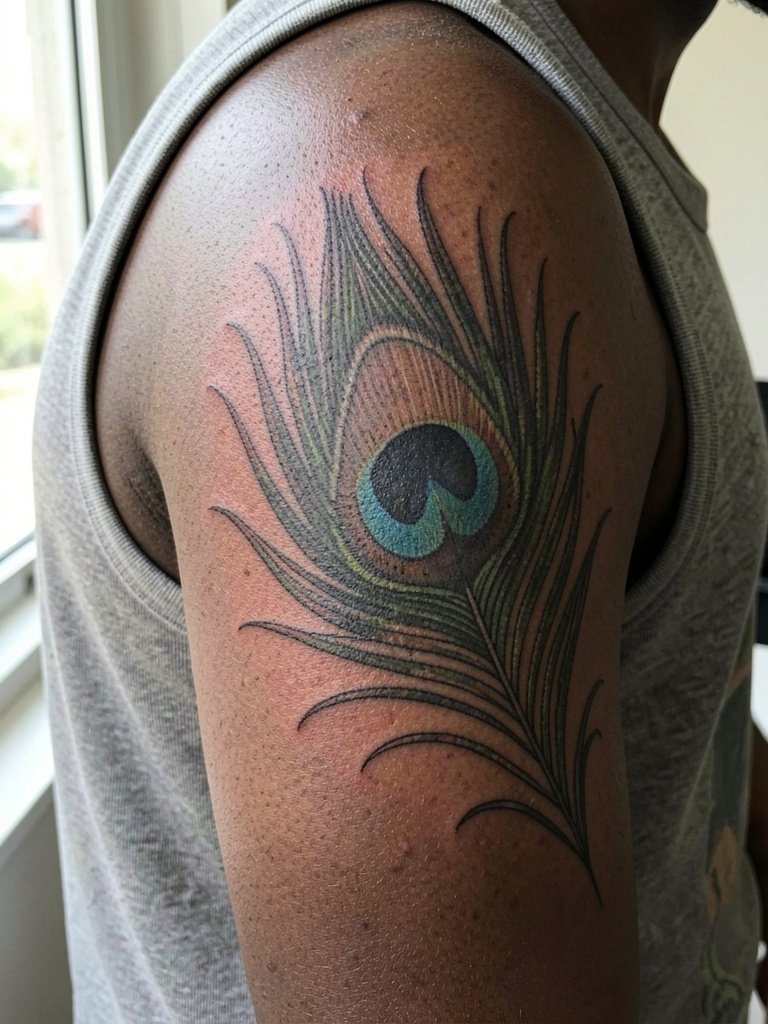
Large realism gives the feather room to breathe and preserves texture for years, but it demands multiple sessions and strong saturation in the eye. When you consult, ask the artist to show three-year healed sleeve examples and the specific shading techniques they used. One controversy splits artists on fine line versus bold line. One camp favors fine line for an airy feel and charts portfolios that show delicate barbs. The other camp favors bolder outlines to protect the eye spot and major shapes as the skin softens. State which priority you want, delicate look or long-term legibility, and workshop scale with healed photos.
7. Minimalist Silhouette on the Ankle
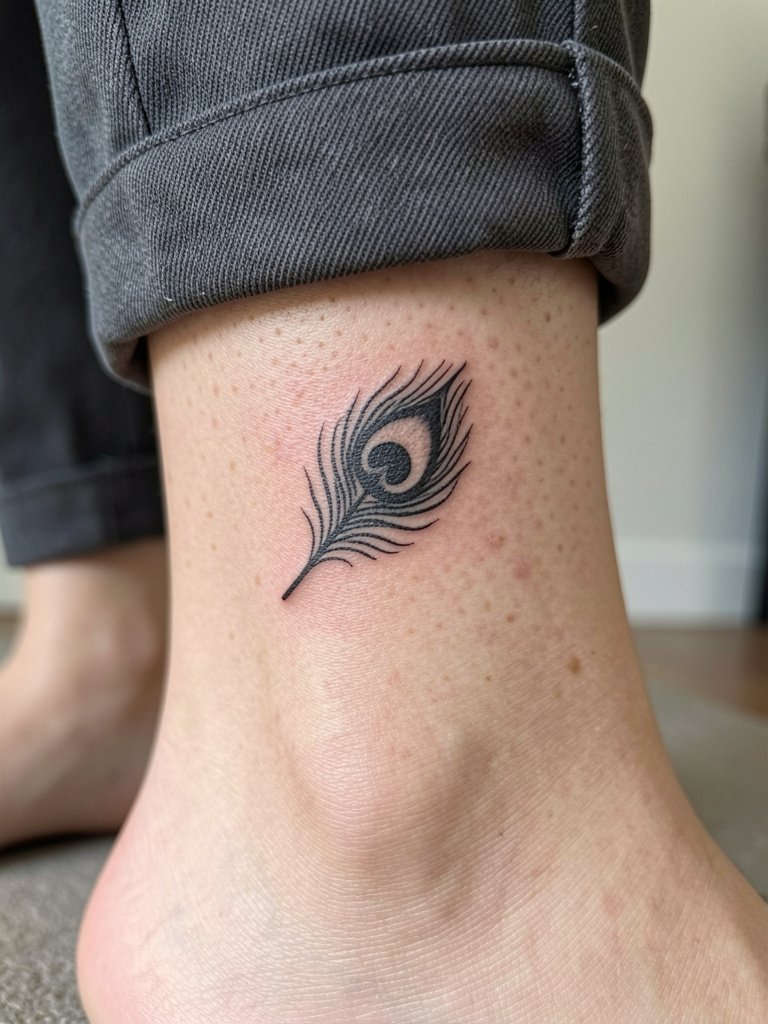
Ankle silhouettes are low-commitment and photograph well, but ankles suffer friction from socks and shoes so the edges can soften. Request a slightly cleaner silhouette with a small negative-space gap inside the eye so the shape keeps definition. The session is quick and the pain is moderate because bone sits close to the skin. For showing off choose strappy sandals or cropped pants. Try cropped ankle pants that hit just above the design.
8. Watercolor Diffusion with Soft Blues and Greens
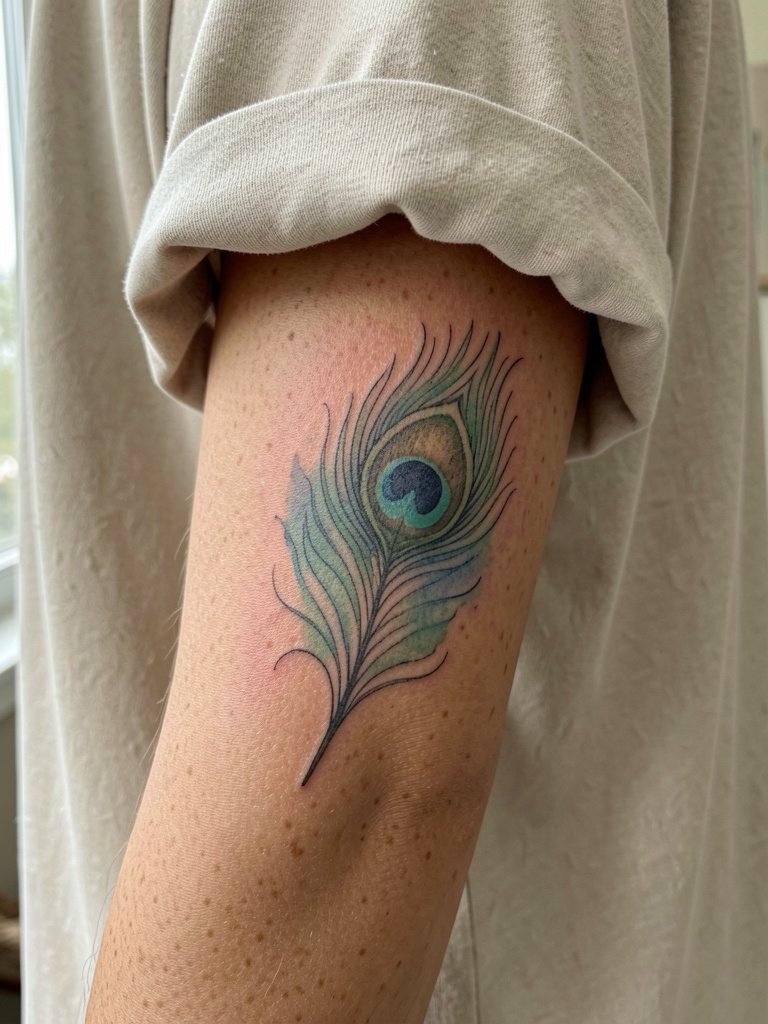
Watercolor creates soft atmosphere around a feather but requires an artist skilled in saturation and layering to avoid patchy fades. Be specific in your consultation and request healed photos of watercolor pieces at two and five years. The common error is pale splashes that turn into faint bruises when sun and washing take their toll. Session time can be longer because color layering requires settlement intervals. For wardrobe, lightweight neutral tops let the blues pop without competing.
9. Mandala-Backed Feather for Ribcage Drama
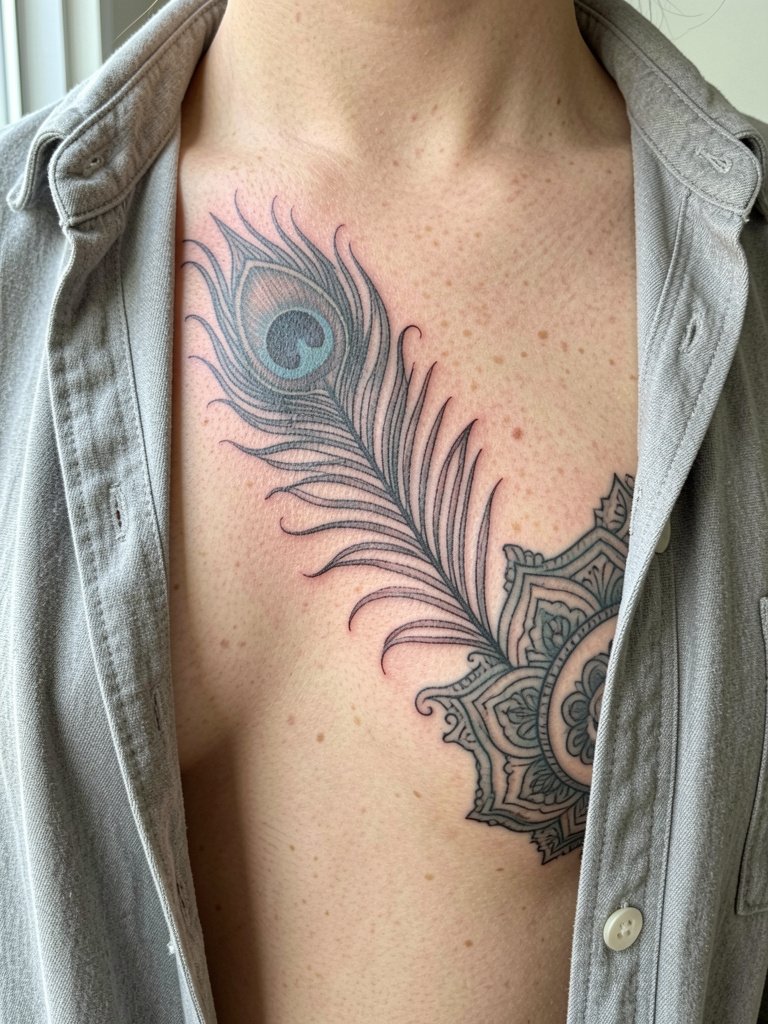
Ribcage pieces hold incredible vertical flow but the skin moves a lot so spacing matters more than extra ornamentation. Ask for the mandala elements to sit at least a finger-width from the feather eye to avoid crowding as the tattoo settles. Pain on the ribs is higher than the forearm and sessions may include pauses. Artists disagree on fine line on the ribs. One camp warns the skin stretch blurs thin lines within two years. The other camp says with slightly wider spacing and controlled needle depth fine line can settle well, and those artists will show healed shots to support that. If you want the dramatic look with longevity, plan for slightly bolder contour lines around the mandala.
10. Side Torso Vertical Feather to Elongate the Silhouette
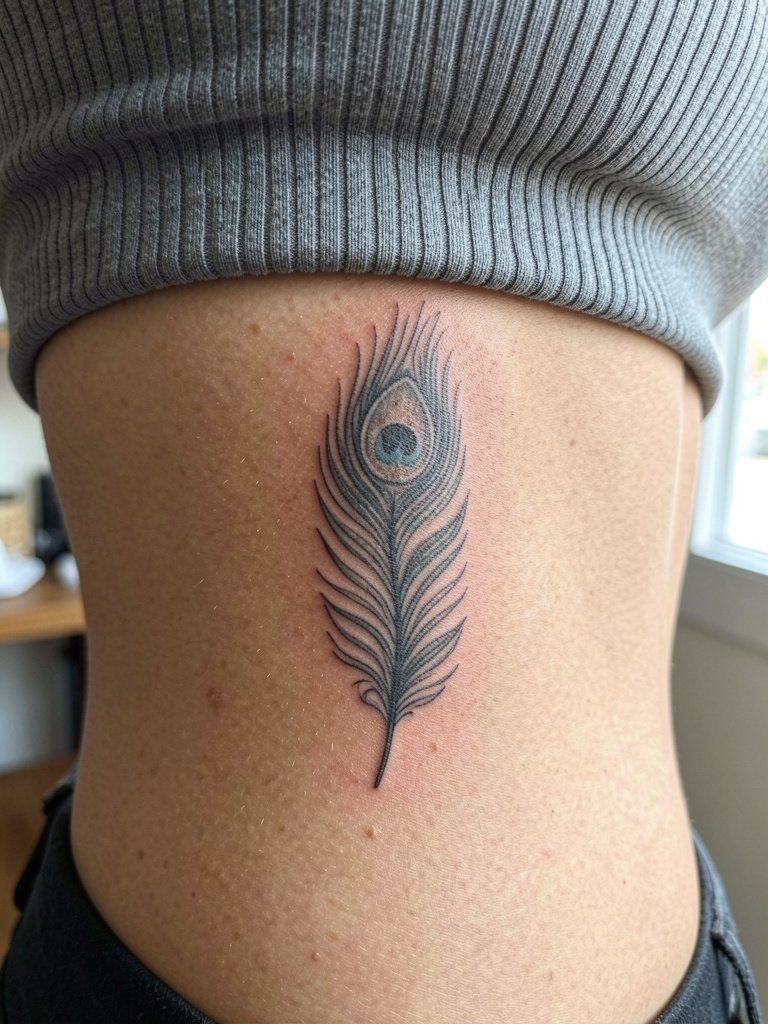
A vertical feather on the side torso visually elongates the body and makes a strong statement when paired with swim or festival wear. Because the skin there flexes, plan for medium size rather than micro work so the eye spot keeps its shape. Common mistake is too small a feather that becomes an indistinct smudge after two years. For session wear bring a sports bra or a top that lifts cleanly without rubbing. Show-off pairing: try a side cutout dress for beach or evening looks.
11. Floral Wraparound with Feather on the Thigh
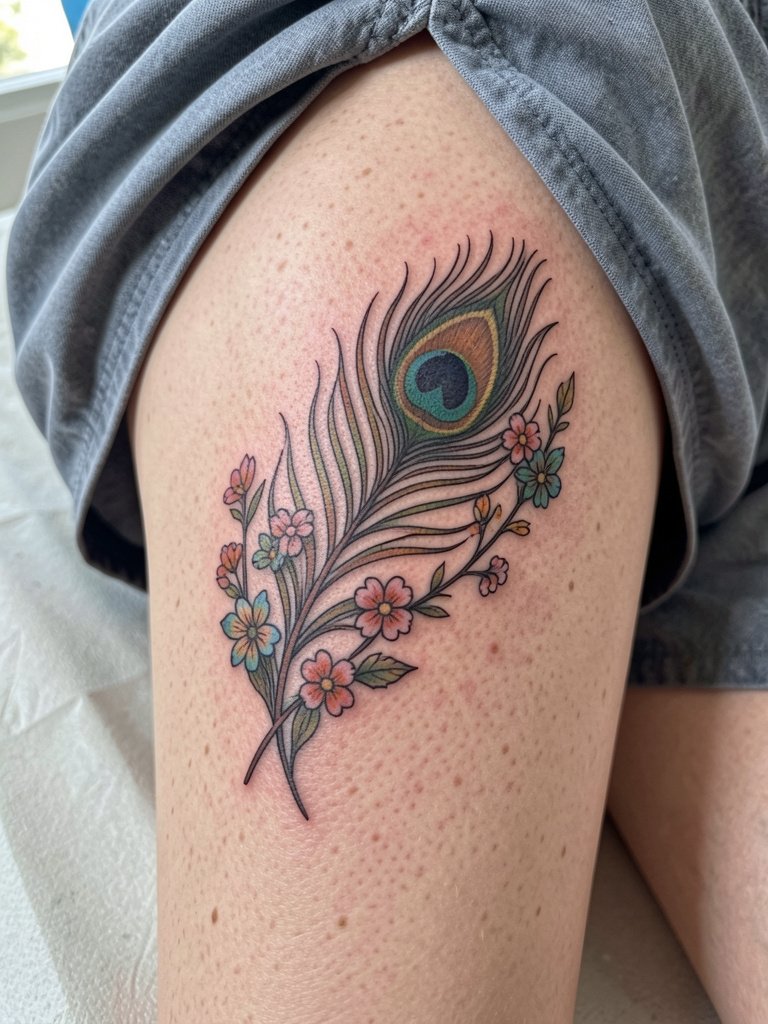
Thigh placements tolerate larger scale and ornamental wraparounds beautifully because muscle and fat provide stable canvas. When you consult, bring full-body reference photos so the artist can balance the feather flow with leg curves. A common error is wrapping too tightly around the thigh which can look awkward when seated. Session wear should be loose shorts or a skirt so the artist can access the outer thigh without compression. Show-off with high-slit skirts or flowy cover-ups, for example flowy beach cover up.
12. Tiny Ankle Pin with Single-Color Blackwork
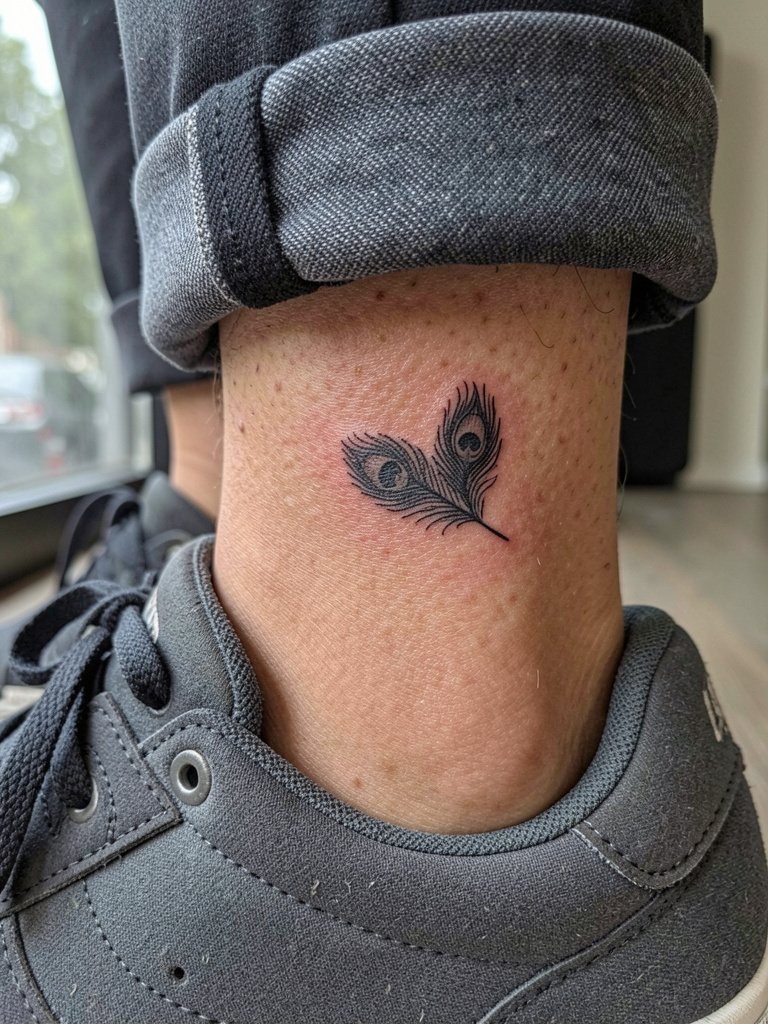
Tiny ankle pieces are low-commitment but require simple shapes so they age cleanly. Request the eye spot to have a small solid dot in the center rather than intricate micro shading. A frequent mistake is over-detailing within a two-centimeter area, which creates muddiness after a couple of healing cycles. Expect a short session and moderate pain around bone. For footwear pairing, strappy sandals or sneakers with a cropped hem highlight the area.
13. Large Black-and-Gray Feather for an Upper-Arm Anchor
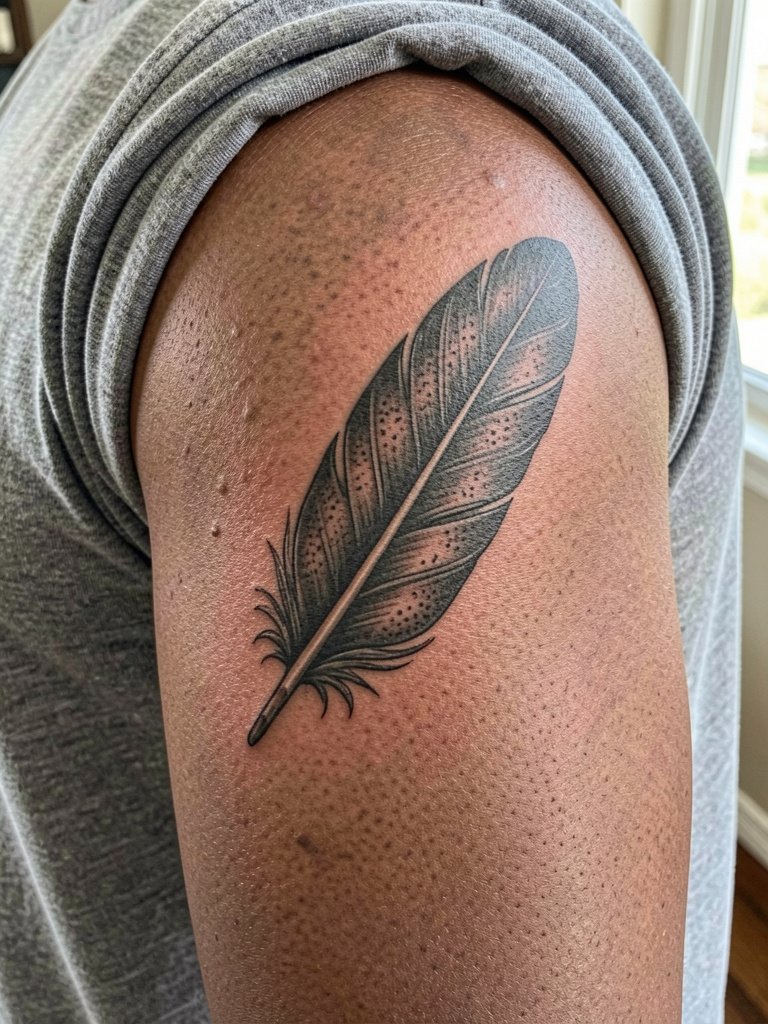
Black-and-gray realism tends to age more predictably for large feathers because contrast preserves the eye spot without relying on color. Ask the artist to plan a shading map that uses stipple in the transition areas to reduce the risk of patchy fades. Session time is multiple hours and may require two sits. One common mistake is trying to squeeze in watercolor fades inside an otherwise black-and-gray sleeve. For showing the arm, sleeveless tanks and rolled sleeves frame large upper-arm pieces nicely. Consider a sleeveless tank women.
14. Script Quote Curving With the Feather on Inner Forearm
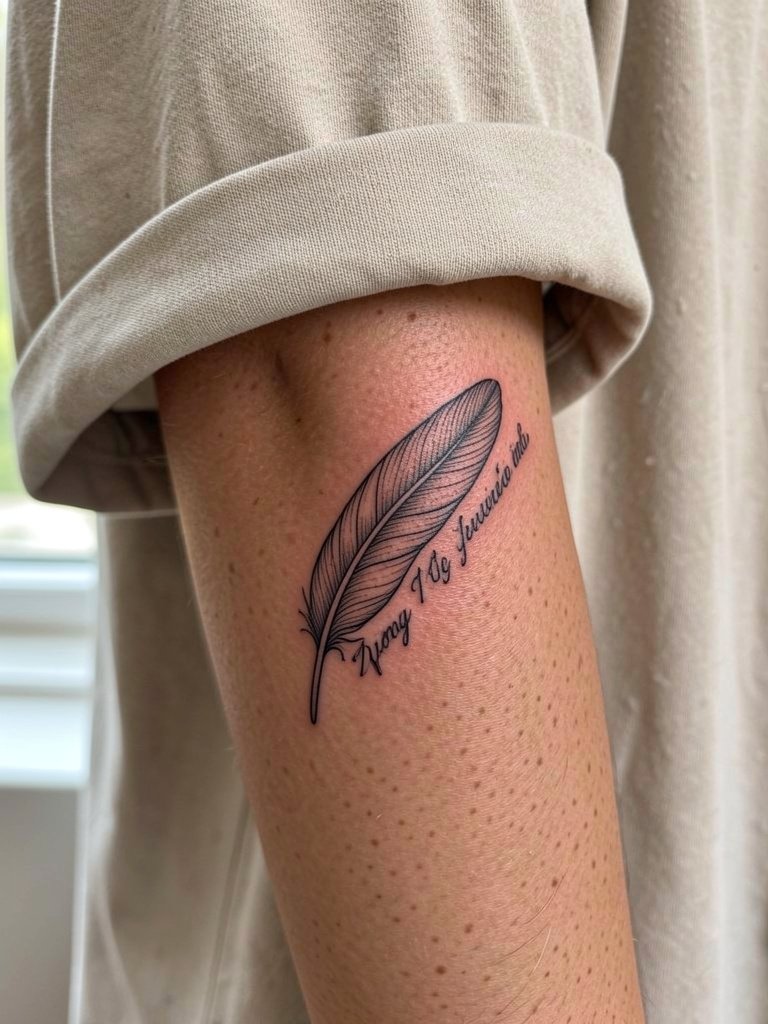
Curving script around a feather creates motion but needs spacing that keeps letters legible at different scales. Bring the exact text and font sample so the artist can lay out letter height versus feather length. The common aging issue is tiny script that becomes unreadable once the feather loses crispness. For session comfort wear a loose shirt or button down that gives full forearm access. If you plan to show the piece often, a fitted ribbed tank can highlight the inner forearm.
15. Tartan-Pattern Feather for Heritage Custom Work
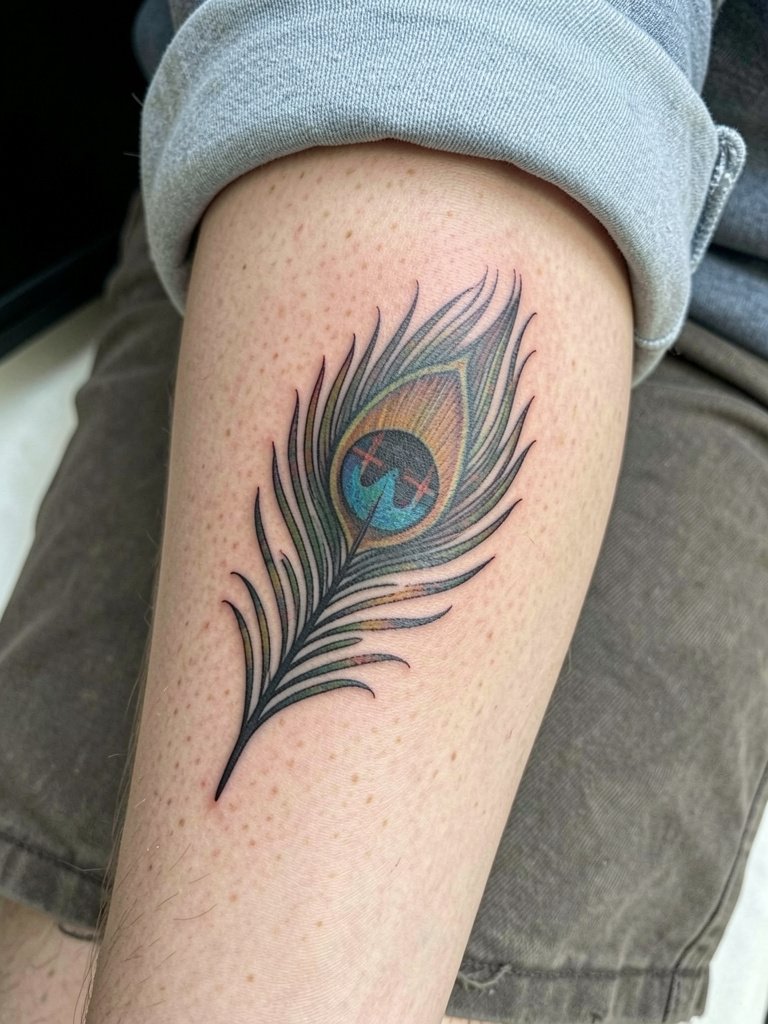
A tartan motif inside a feather requires precise color separations so the pattern reads rather than becoming a muddled patch. Request that the tartan occupies only the eye spot and that the artist provides a color test on synthetic skin first. Custom patterns demand clear composition files and may take extra session time. Common mistake is mixing too many colors in a tiny area, which causes early fading and muddiness. For session wear on the calf or forearm, loose shorts or rolled sleeves work best to avoid fabric rubbing.
16. Small Feather on the Spine Edge for Vertical Flow
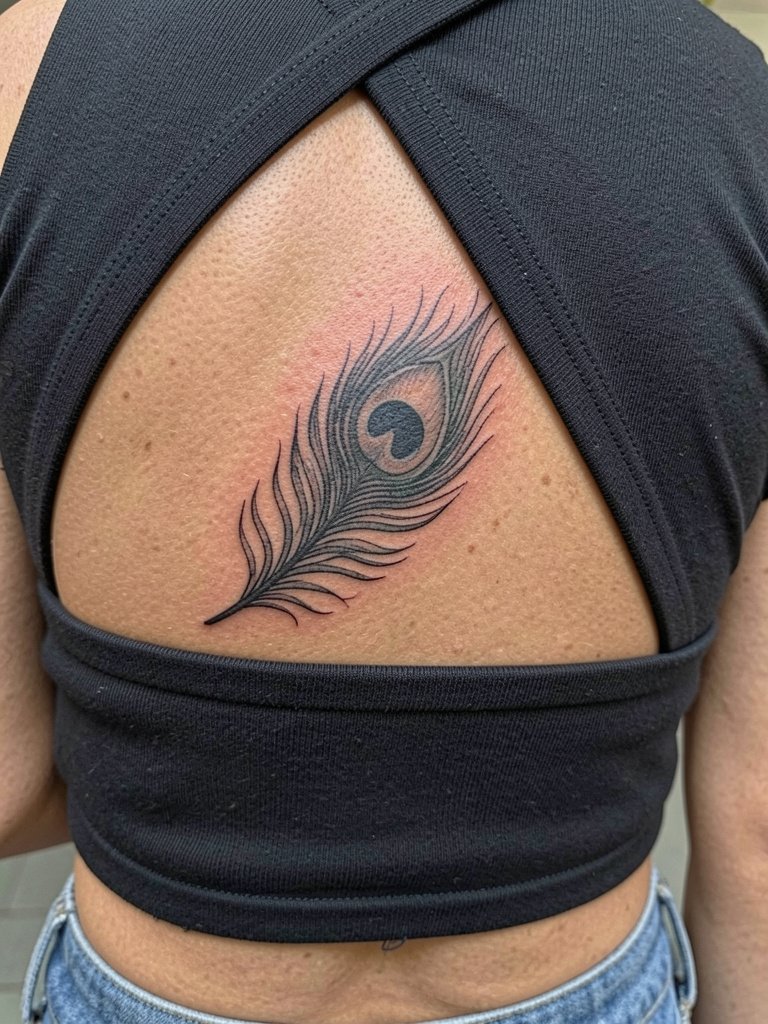
Spine-adjacent feathers read like a column and sit well with vertical clothing lines. Because the skin along the spine stretches mildly, aim for medium size to give the eye spot room. A common error is requesting ultra-fine barbs right on the spine where movement and clothing friction accelerate softening. Pain is moderate to high depending on exact location. Session wear: a sports bra or wide-neck top that the artist can lift without pinching.
17. Peacock Eye as a Small Mandala on the Shoulder Blade
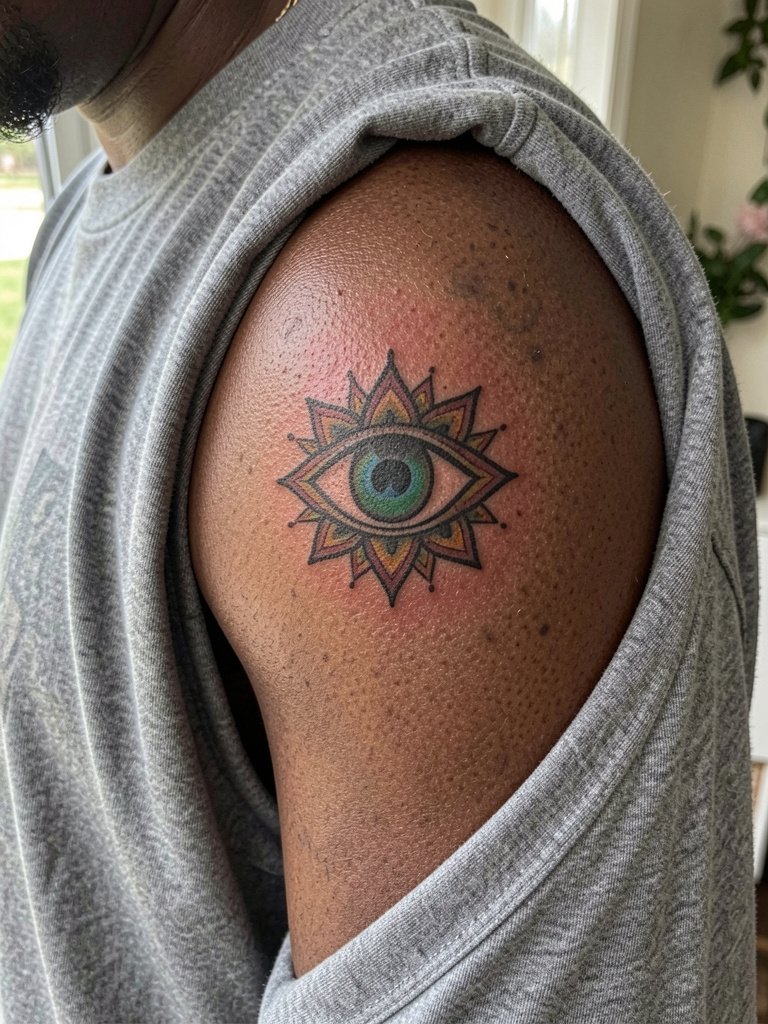
Turning the eye into a mandala makes for a compact, decorative focus that reads well on the shoulder blade and drapes with clothing. Make sure the radial symmetry is planned with the natural curvature of the scapula, and ask for a placement mockup so the mandala does not appear off-center when you move. The mistake is treating the shoulder blade like flat paper. Session feel: the area is less painful than ribs but the artist will need you to shift positions for access. Show-off pairing: open-back dresses and straps that leave the blade visible.
18. Mixed Media Collar of Feathers and Fine Dot Work
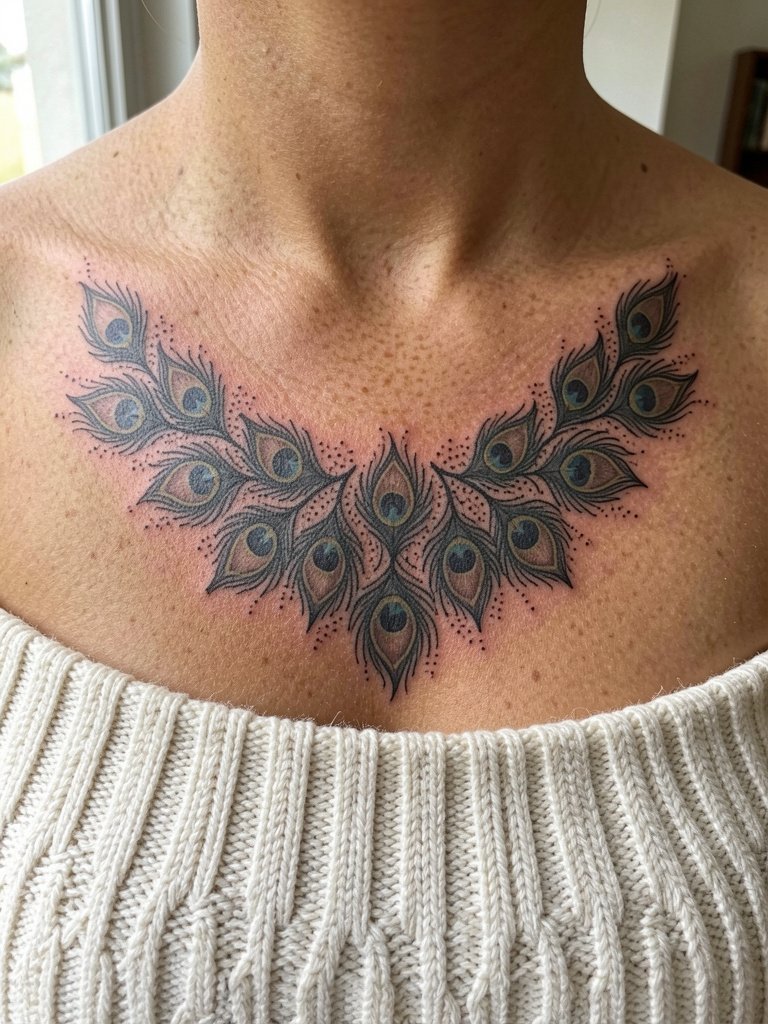
A feather collar with dot work reads like jewelry and benefits from slightly heavier dot density in shaded zones to prevent early fade. Specify the exact dot density and ask for healed examples of stipple shading on upper chest in a similar skin tone. Mistakes include applying too few dots which leaves the piece looking thin after healing. Pain on the upper chest is moderate and sessions may be split. For evening wear, off-shoulder tops frame this placement elegantly. Consider an off shoulder top women when you want to showcase it.
19. Peacock Feather with Small Floral Anchors on the Calf
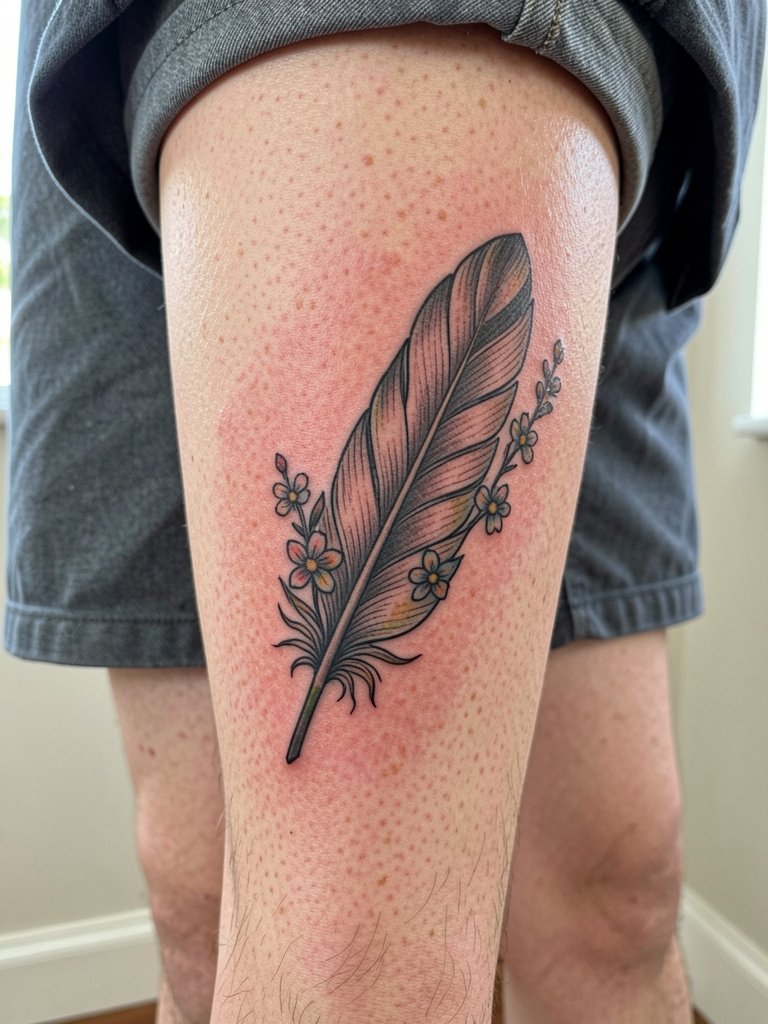
Calf tattoos are forgiving for size and detail and they age well when placed on the thicker skin there. Ask about how the floral elements will read when you sit or walk so the composition does not warp visually. A common mistake is crowding too many small flowers around the shaft which can blend into noise over time. Session time is moderate and the area is lower on the pain scale. For showing off pick shorts or high-slit skirts that reveal the outer calf.
20. Single Feather Silhouette on the Hand Edge
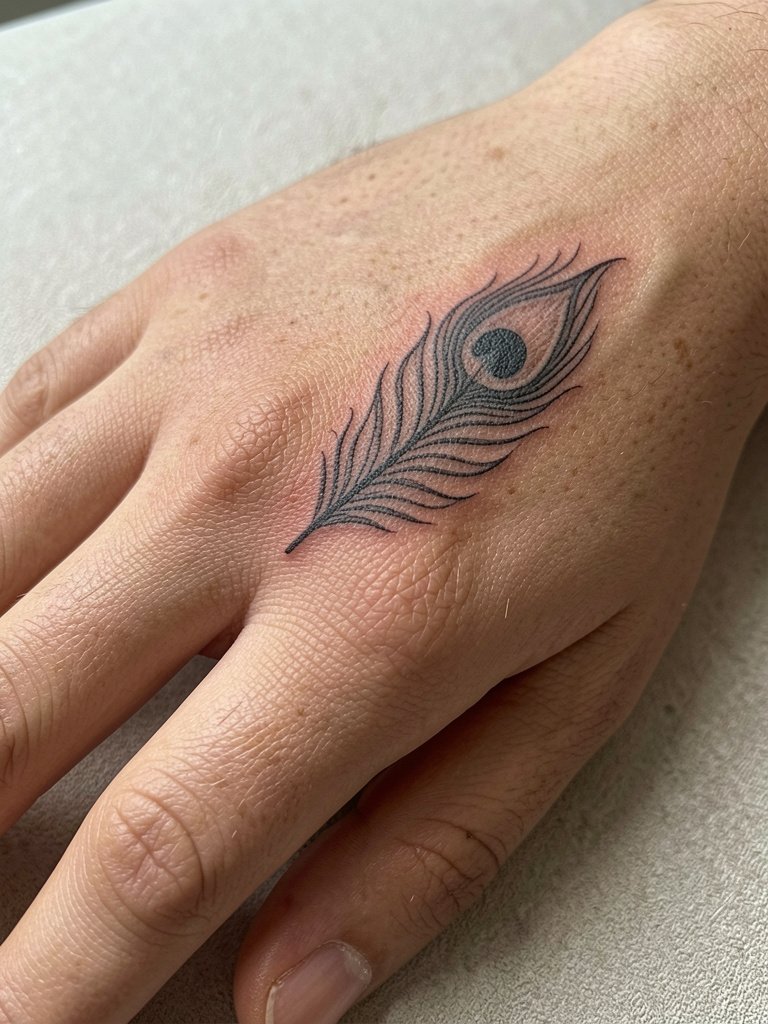
Hand-edge placements read boldly but have higher fade potential because of frequent washing and sun exposure. Request bolder outlines than you would for an inner-forearm piece and plan for touch-ups every one to three years. The mistake is asking for ultra-fine detail on the hand, which rarely holds. Session pain is higher given thin skin and many nerve endings. For accessories keep the tattooed hand ring-free for the first few weeks so the area can heal without pressure.
21. Feather Eye as a Tiny Geometric Accent on the Wrist Crease
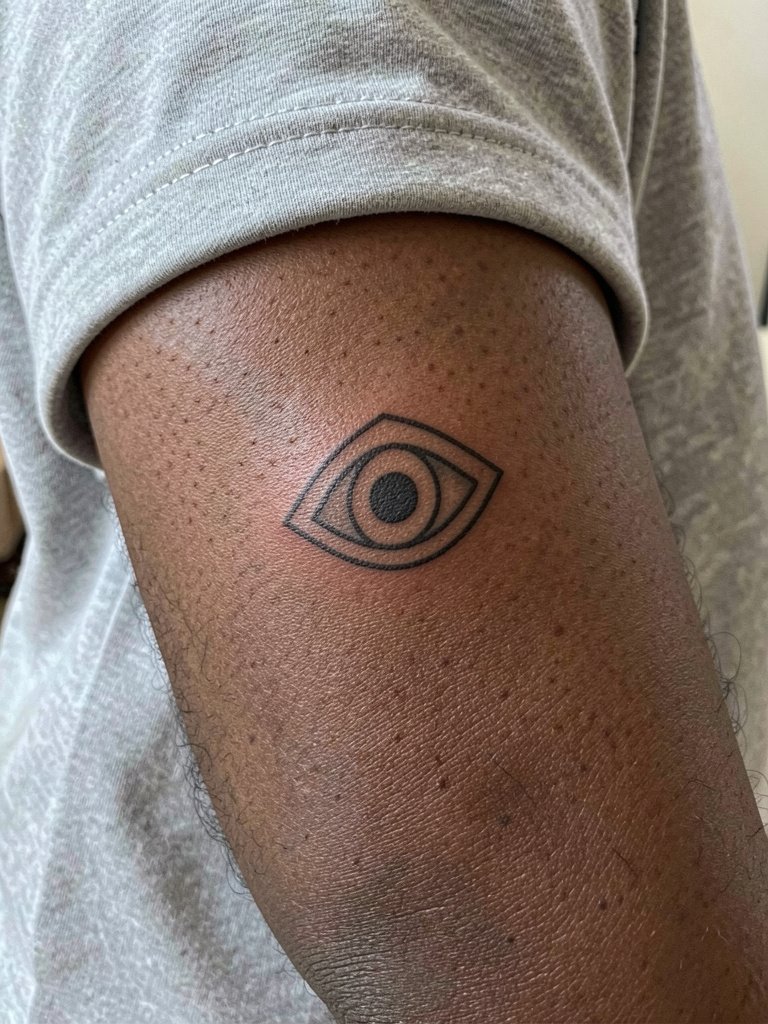
Using geometry simplifies the eye and helps the tiny piece remain legible as it ages. Show the artist the exact concentric proportions you want and ask how that will look at your wrist circumference. A common mistake is centering the design on the wrong side of the crease which causes distortion when the wrist bends. Session is quick and the pain is low to moderate. For showing off go with rolled sleeves or a slim cuff on the opposite wrist.
22. Feather and Floral Ankle Band That Wraps the Joint
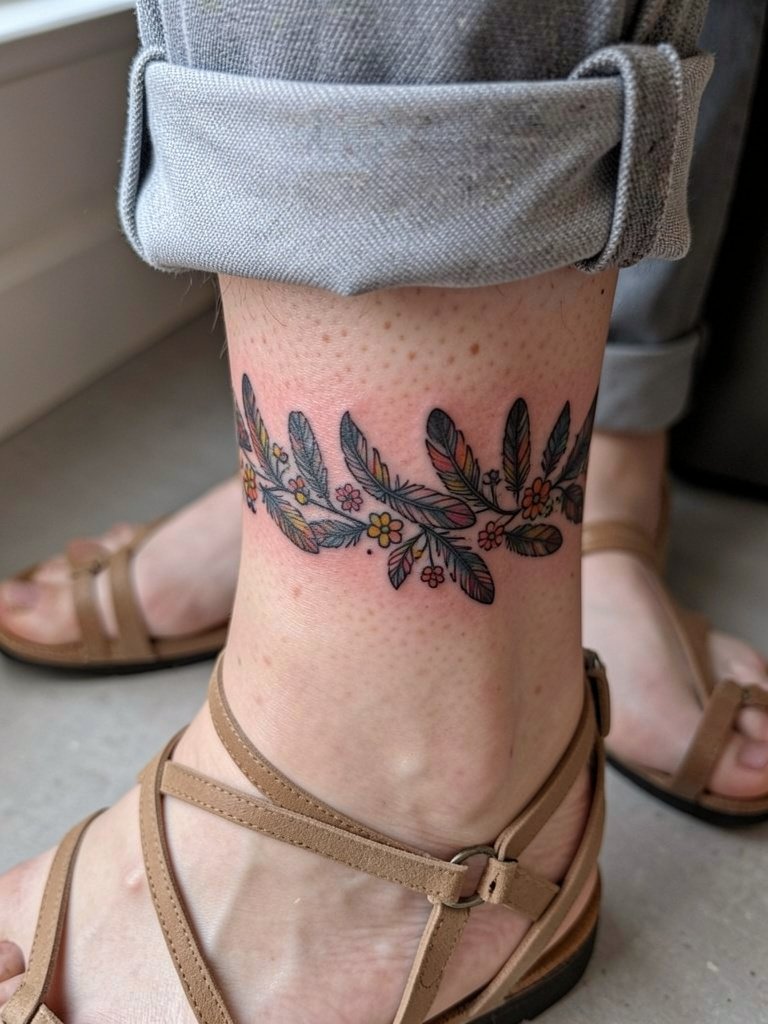
Ankle bands are decorative and pair well with evening footwear but face friction from shoes and socks. Ask for slightly simplified barbs on the wrapped side of the joint so lines do not blur with movement. Mistakes include over-detailing on the portion that rubs the shoe edge. Session time is short and aftercare should guard against tight socks. For show-off pairing opt for strappy sandals and cropped hems.
23. Feather That Beats With the Ribcage as a Full Side Panel
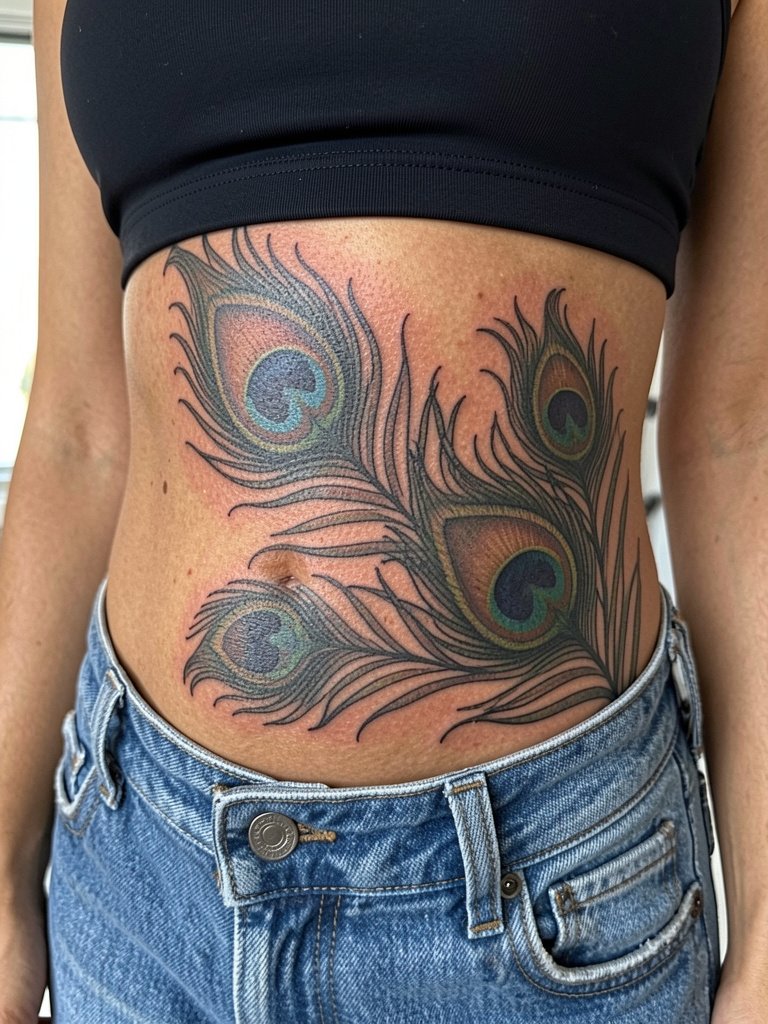
Large ribcage panels read like sculpture because they follow shape and breathing motion. Plan the composition with the artist while standing, sitting, and lying down so the feather eye lands where you want across poses. A frequent mistake is compressing the whole design into one narrow band which looks awkward when you move. Sessions are longer and pain is higher on ribs. For wardrobe pick tops that lift cleanly such as a sports bra or button-down worn open during the session.
Session Day Picks
These five items smooth the first week for the wrist, forearm, ankle, and ribcage pieces above.
-
Stencil transfer paper kit. Use this to preview how the feather and script sit on your actual skin before you sign off on placement for wrist and forearm designs.
-
Topical numbing cream. Applied as directed before longer ribcage or sleeve sessions helps you get through the hours while preserving steady muscle tension.
-
Thin protective film roll. Keeps ankle and hand-edge tattoos clean when friction from socks or shoes is unavoidable during the first few days.
-
Fragrance-free gentle body wash. A mild cleanser avoids irritating new linework on areas like the thigh and calf that get sweaty in summer.
-
Aquaphor healing ointment. A thin layer for the first two or three days locks in moisture for fine line work without clogging needle channels.
Frequently Asked Questions
Q: How do I decide between fine line, watercolor, and realism for a peacock feather tattoo?
A: Match the style to your viewing distance and lifespan goals. Fine line suits small, intimate pieces you will keep close and touch up occasionally. Watercolor looks airy but needs strong saturation and a portfolio that shows healed results. Realism serves larger scale work that you want to age with texture rather than fragile detail.
Q: I want color but worry about fading. Is black-and-gray really safer?
A: Color offers the natural jewel tones of a feather yet needs stronger saturation and follow-up touch-ups. One camp favors color because the motif loses identity without blue and green accents. The other camp prefers black-and-gray for predictable aging and easier maintenance. If you choose color, get healed examples from the artist in your skin tone and plan for a possible touch-up at one to three years.
Q: Where can I find real healed portfolios and artists who do peacock-feather work?
A: Search Instagram and TikTok using style-plus-city tags like #peacockfeathertattoo and #finelinetattoo plus your city name, then filter for healed photos and reels. Pinterest helps narrow the look but prioritize artist pages that include healed shots. Reddit threads are useful for longevity and client experiences, and searching "fine line tattoo studio" or "color realism tattoo studio" with your city will surface portfolios and guest spots.
Q: How large should the eye spot be relative to overall feather size to avoid blurring?
A: Keep the eye spot proportionally larger than you think you need. For small pieces the eye should occupy noticeable positive space so it does not collapse into surrounding barbs. A practical rule is to ask the artist to show the layout at both three and five centimeters to compare legibility.
Q: What should I wear to the session for each placement?
A: Pick clothing that gives full access without rubbing the area afterward. For wrist or forearm bring a loose short sleeve or button-down so cuffs roll easily. For ribs and side torso bring a sports bra or a top that lifts cleanly. For ankles and calves wear shorts or cropped pants you can move freely. Packing a loose drawstring linen pant is useful for calf or thigh work so you can roll the hem without pressure.
Q: How often do peacock feather tattoos need touch-ups?
A: Touch-up timelines depend on style and placement. Hands and ankles often need attention within one to three years. Fine line pieces might need a subtle refresh at two to three years if exposed to sun. Large black-and-gray panels often hold longer and can go three to five years before any color or contrast restoration is desired.