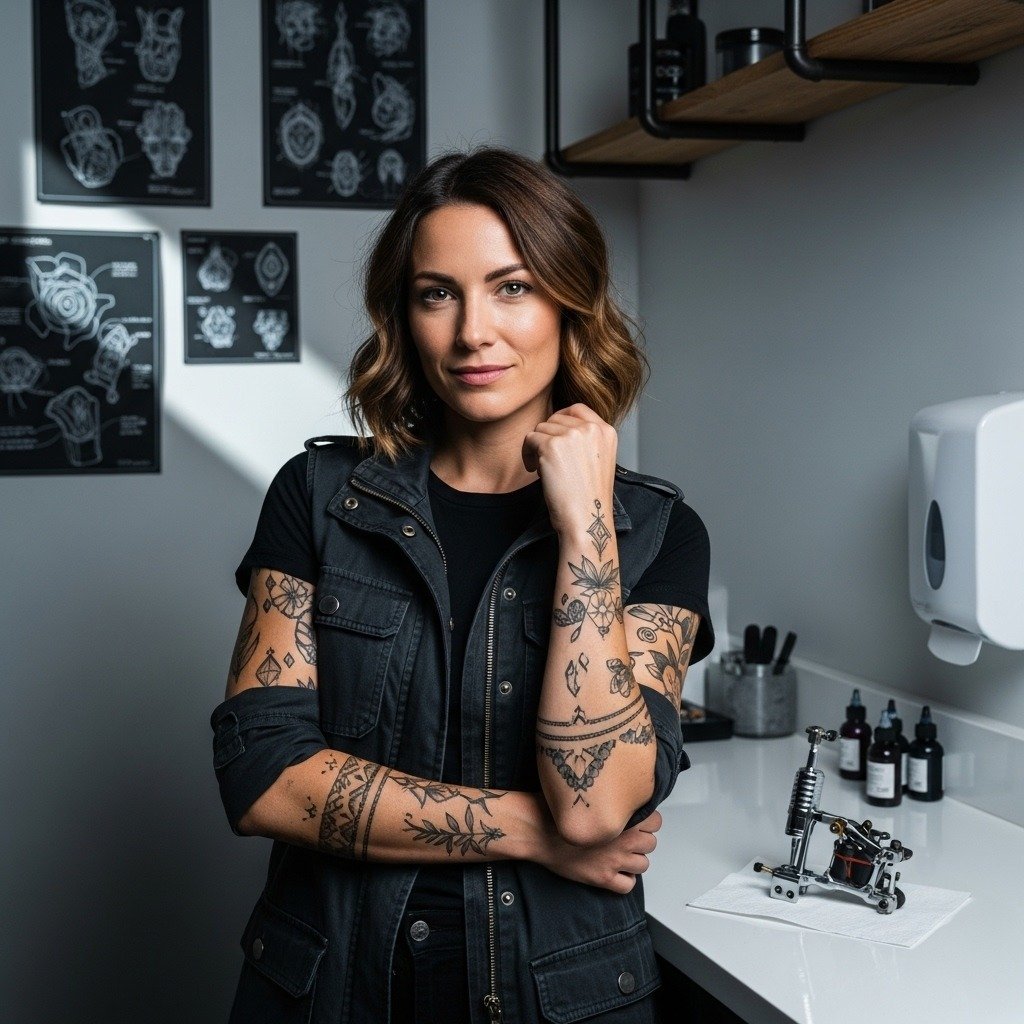
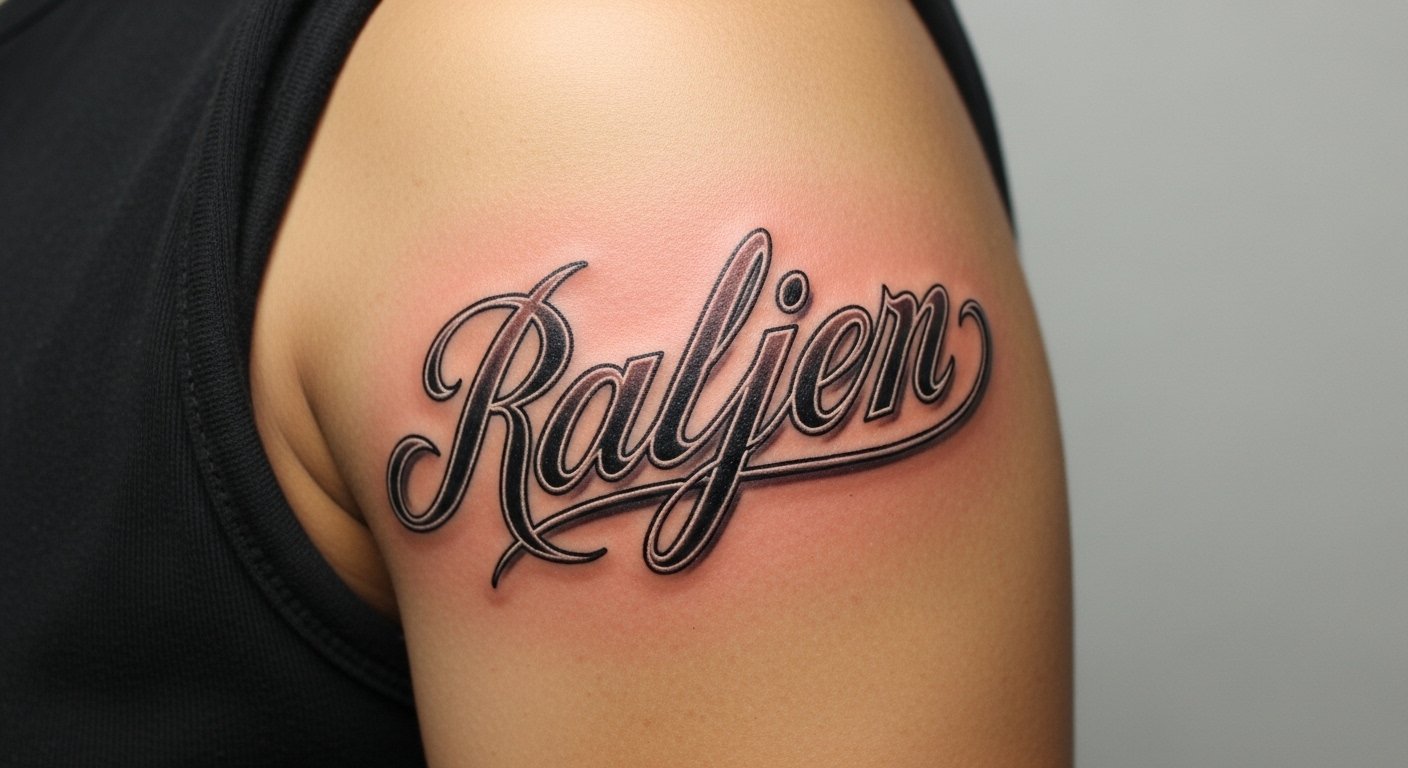
Someone I know spent eight months scrolling Instagram before realizing the problem was not finding a pretty script. It was picking a style that would still read clearly after a year of sun, sleeves and life. I have spent time in five shops across Brooklyn and seen the same question come up in consultation rooms. Read on for ten name tattoo ideas that come with practical notes on aging, what to ask your artist and real mistakes to avoid.
1. Suren Butterfly Name Tattoo on Inner Forearm
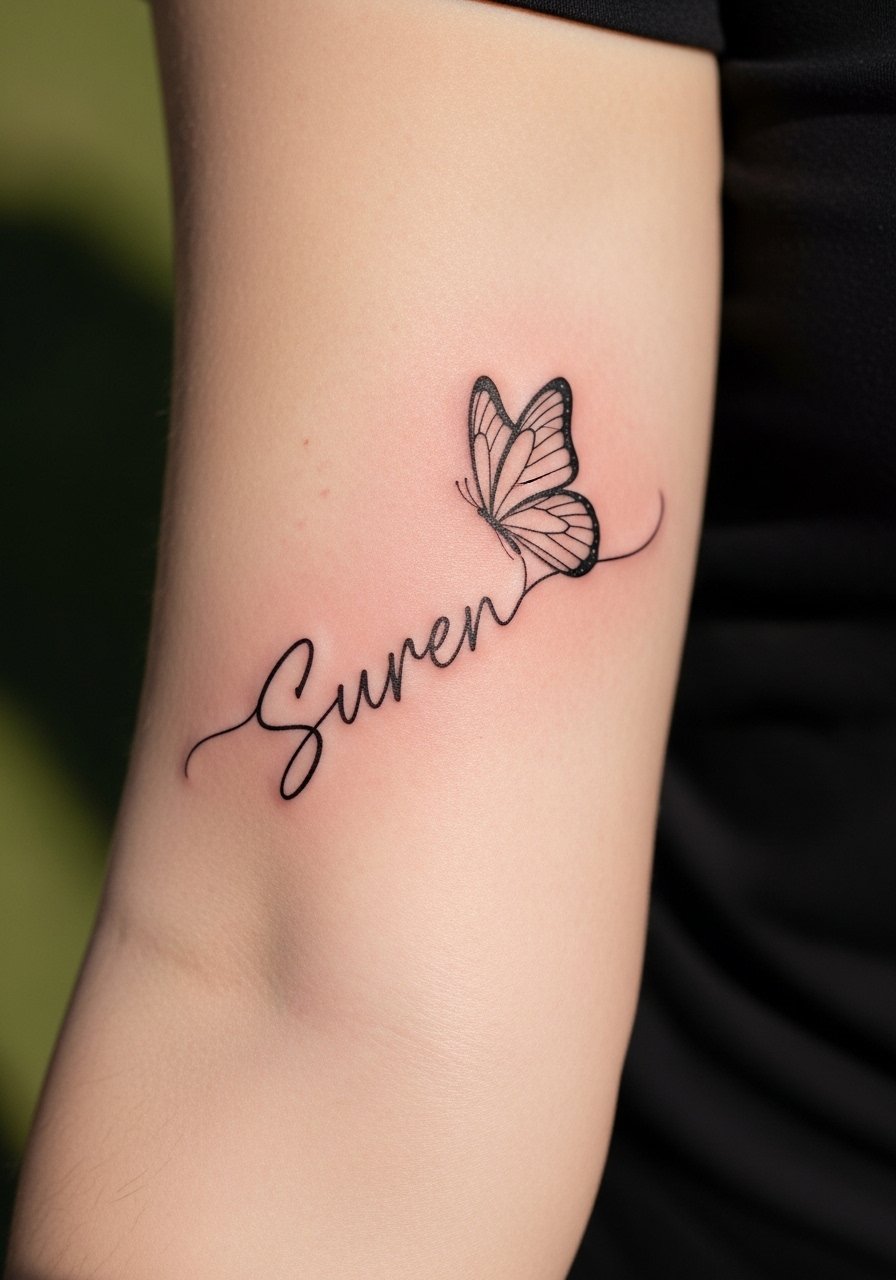
Someone I know first pointed at a fine line butterfly name on a friend and said that's the exact softness she wanted. Fine line illustrative works best on the inner forearm because the skin sits flat and the script can curve with the arm. Tell your artist you want steady linework, light stipple shading on the butterfly wings and a slightly heavier downstroke on the first letter for legibility. A common mistake is asking for tiny flourishes that vanish at two years. Expect light itching during the session and one short appointment. The blowout risk is low on this placement if the needle depth is consistent. Plan a touch-up at year two if you want the wing accents to stay crisp.
2. Nanayah Heart and Butterfly Name Tattoo That Curves With Your Arm
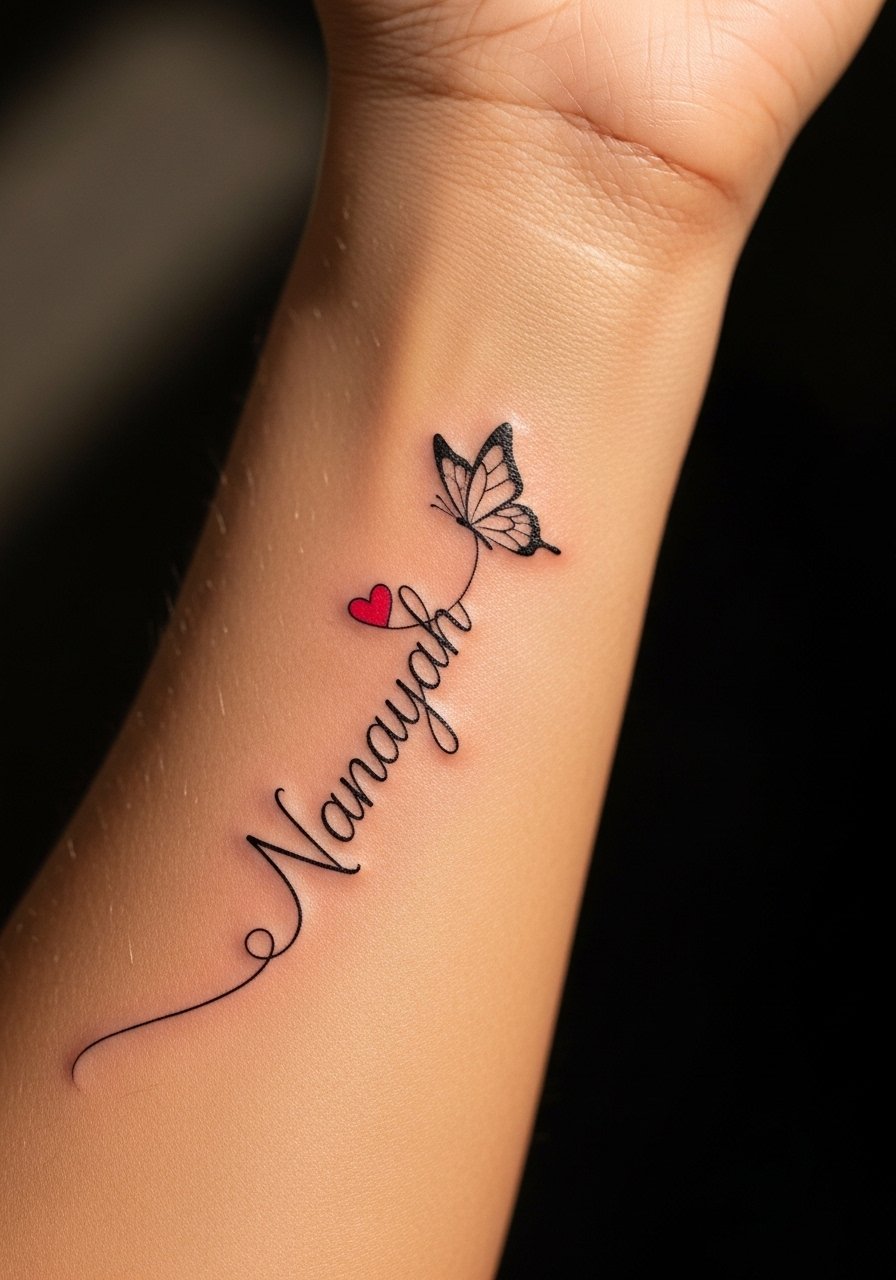
Fair warning: inner forearm pieces show daily motion, so curve the name to follow the muscle rather than fighting it. For this design bring reference photos that show the exact curve and the size of the butterfly accent you want. A frequent misstep is placing the heart too close to letters, which makes the whole piece read cramped after healing. At six months the red accent softens. At two years the fine wing details might need a light touch-up if you swim or spend lots of time in sun. This is best for someone who wants an easy-to-show placement with predictably low blowout risk.
3. Memorial Heart Fingerprint with a Name on the Collarbone
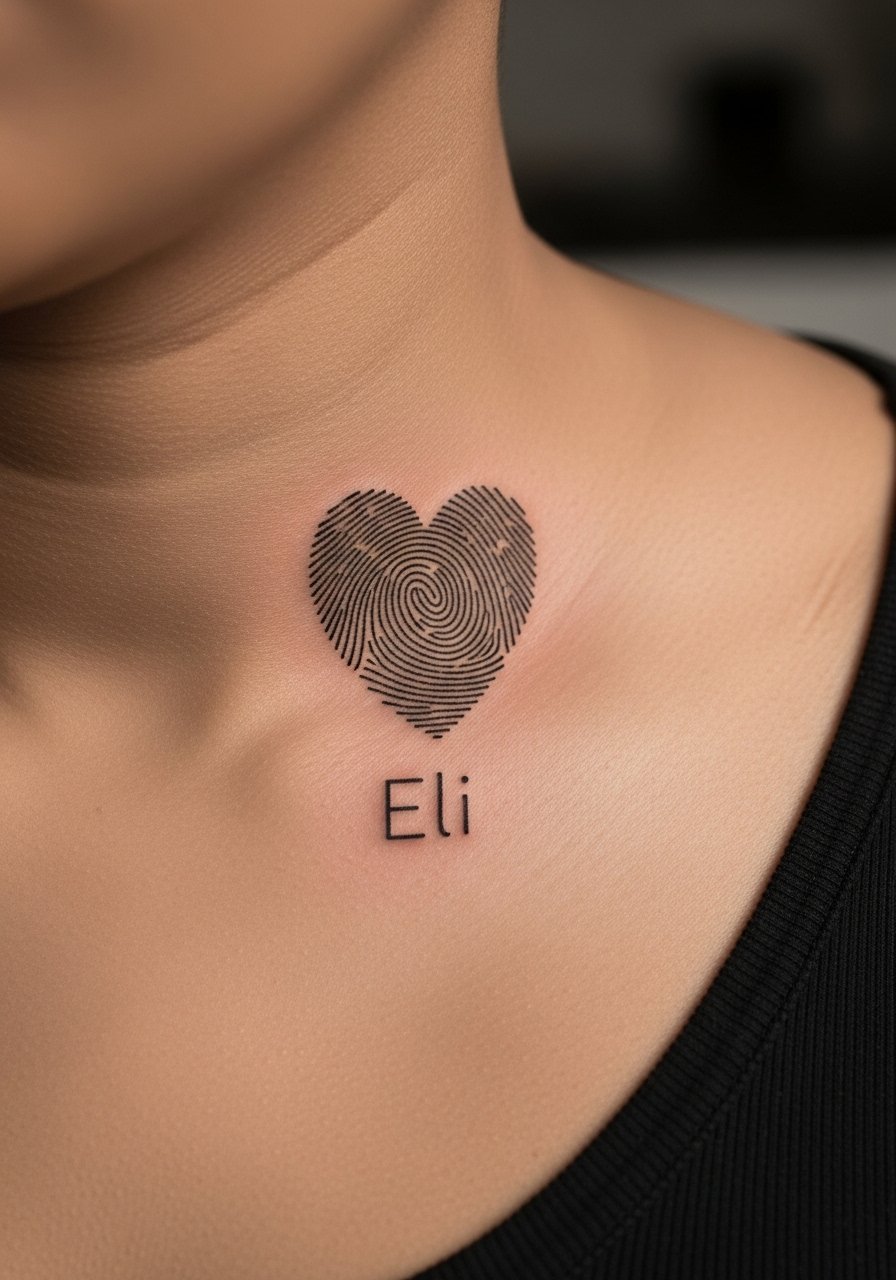
When you book a memorial fingerprint name, bring a clear fingerprint scan and tell the artist which loops or whorls matter to you. The collarbone gives a discreet, intimate canvas, but the skin there moves when you raise your arm, so ask for slightly bolder linework than you would on forearm pieces. I have seen people ask for ultra-thin script and regret it because small letters blur into the fingerprint texture. Expect a single short session and a little soreness over the bone. A realistic touch-up window for black-only minimalist work is often around year two to three depending on sun exposure.
4. Heartbeat Name Tattoo on the Foot That Reads Like a Line
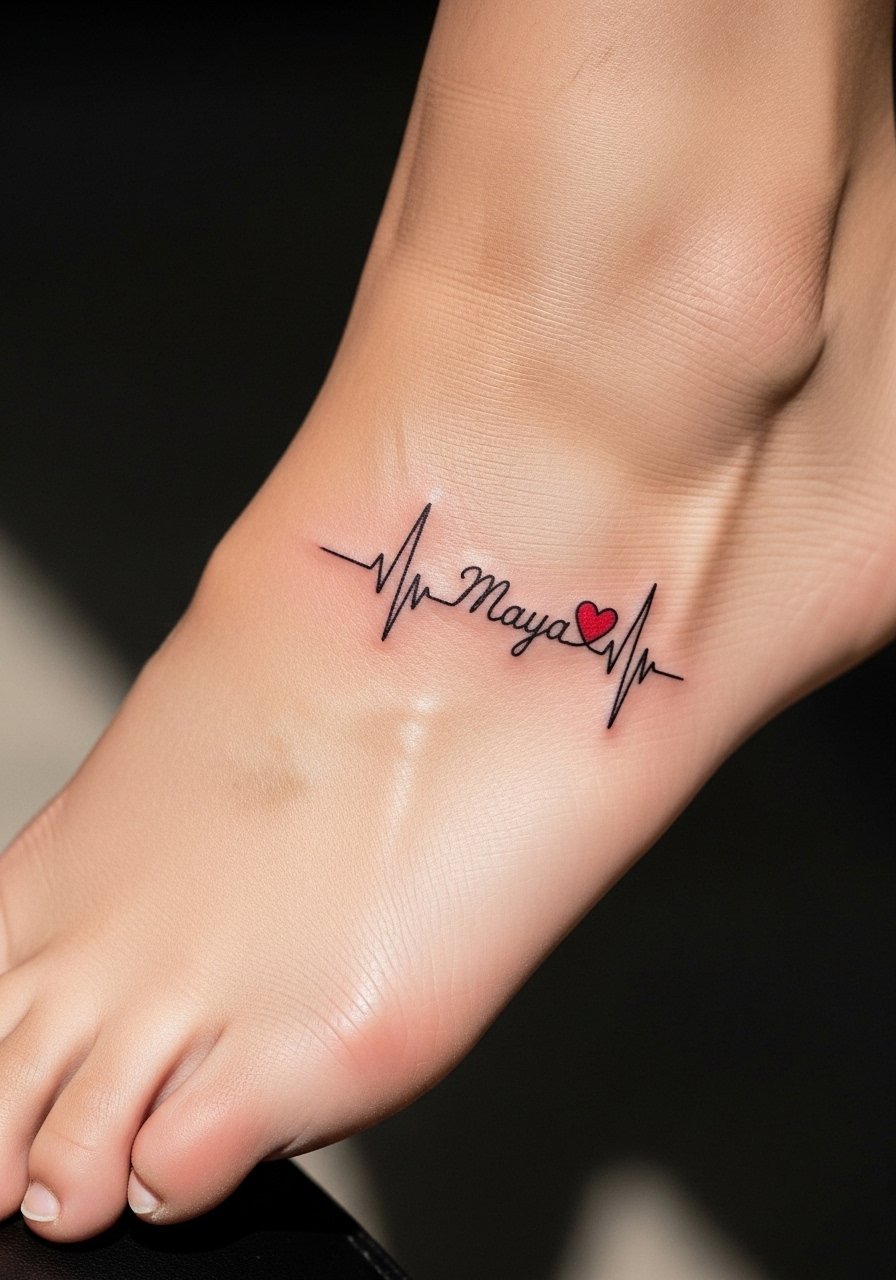
Most watercolor and delicate foot work peels oddly because shoes rub the area while you heal. For a heartbeat name on the foot, plan footwear that keeps pressure off for the first week. If you want the name to read clearly from the side, ask the artist to keep the script slightly wider than you think. The healing timeline shows crisp lines at six months, but on feet thin lines can lose micro-contrast by year two. Expect higher chance of touch-up on foot placements compared to forearm work. The session is short and can sting more than forearm pieces because of thin skin and proximity to bone.
5. Infinity Birds with a Name on Shoulder or Outer Forearm
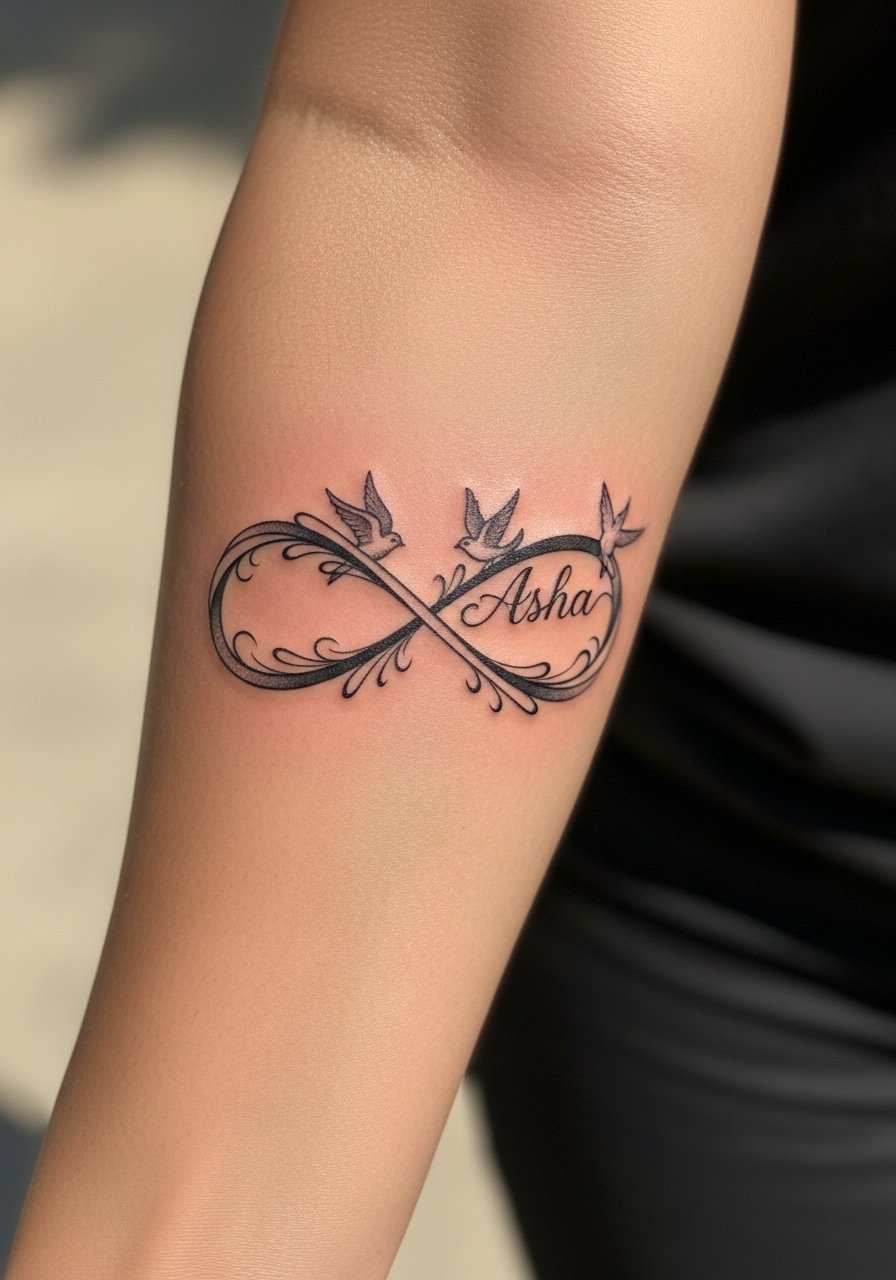
There is visual impact when a name is woven into an infinity motif and the added bird silhouettes give movement. Tell your artist you want the birds spaced so the negative space reads at a glance. A common mistake is packing too many birds into a small loop. At six months the negative space keeps the design legible. At five years, if saturation was low, the birds can blend into the loop. This style works well on shoulder for a larger layout or outer forearm for everyday visibility. Ask about touch-up timelines during consults on platforms like Tattoodo or Instagram tags.
6. Rose Stem Name Tattoo with Roman Numerals Below
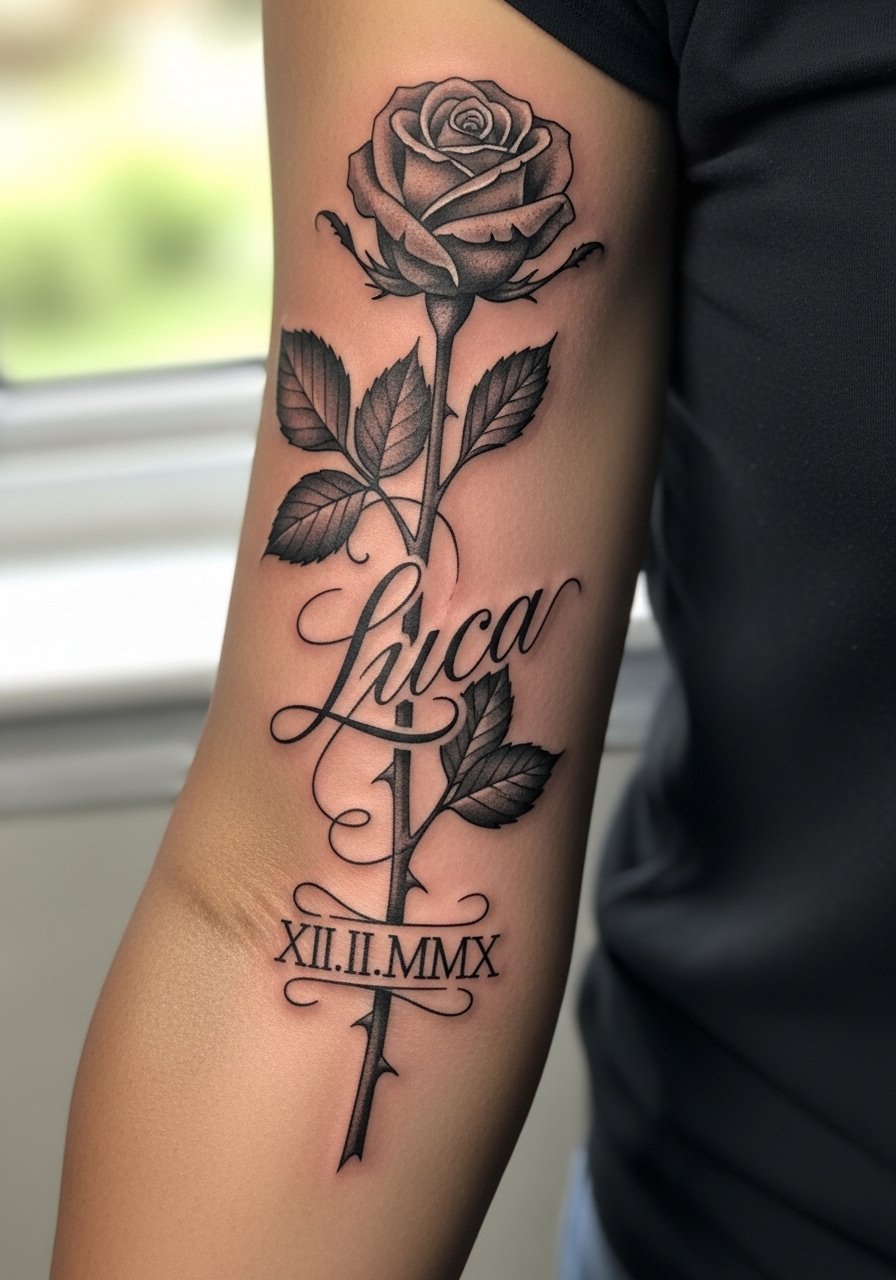
The biggest mistake with floral script is forcing a name into a rose that is too short. Vertical collarbone and rib placements let the stem breathe. When you consult, request the name to weave gently along the stem and ask for Roman numerals below if you want a date integrated without crowding. Some clients choose black-and-gray shading because color can fade faster. At six months the stem holds its shape. At two to three years the shaded petal edges might need a refresh. If you are considering ribs, remember pain is higher there but the result can be worth two shorter sessions.
7. Butterfly Heart Name on the Rib or Wrist, and the Heart Accent Debate
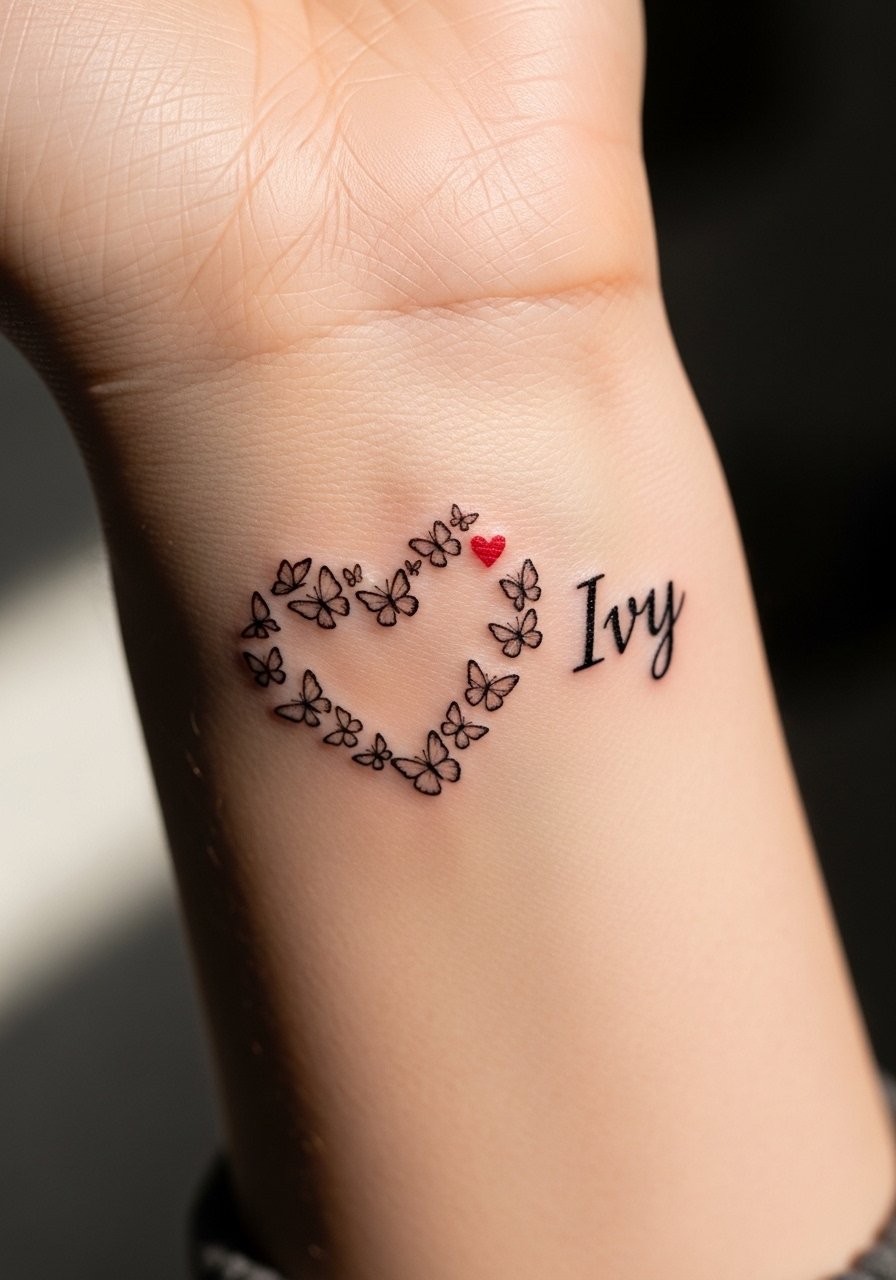
Artists split on heart accents. One camp says hearts read as sentimental and can look dated for certain name pieces. The other camp argues a tiny red heart gives emotional pop and helps the name land visually. If you are on the fence, ask the artist to show healed photos with and without the heart on similar skin tones. For rib placements know the pain is higher and fine line there can blur if the artist works too shallow. For wrist placements ask for slightly thicker script to avoid early loss of contrast. A realistic plan is a light touch-up around year two if you want the tiny red to stay vivid.
8. Red Heart Beat Name on Arm or Thigh That Declares Confidence
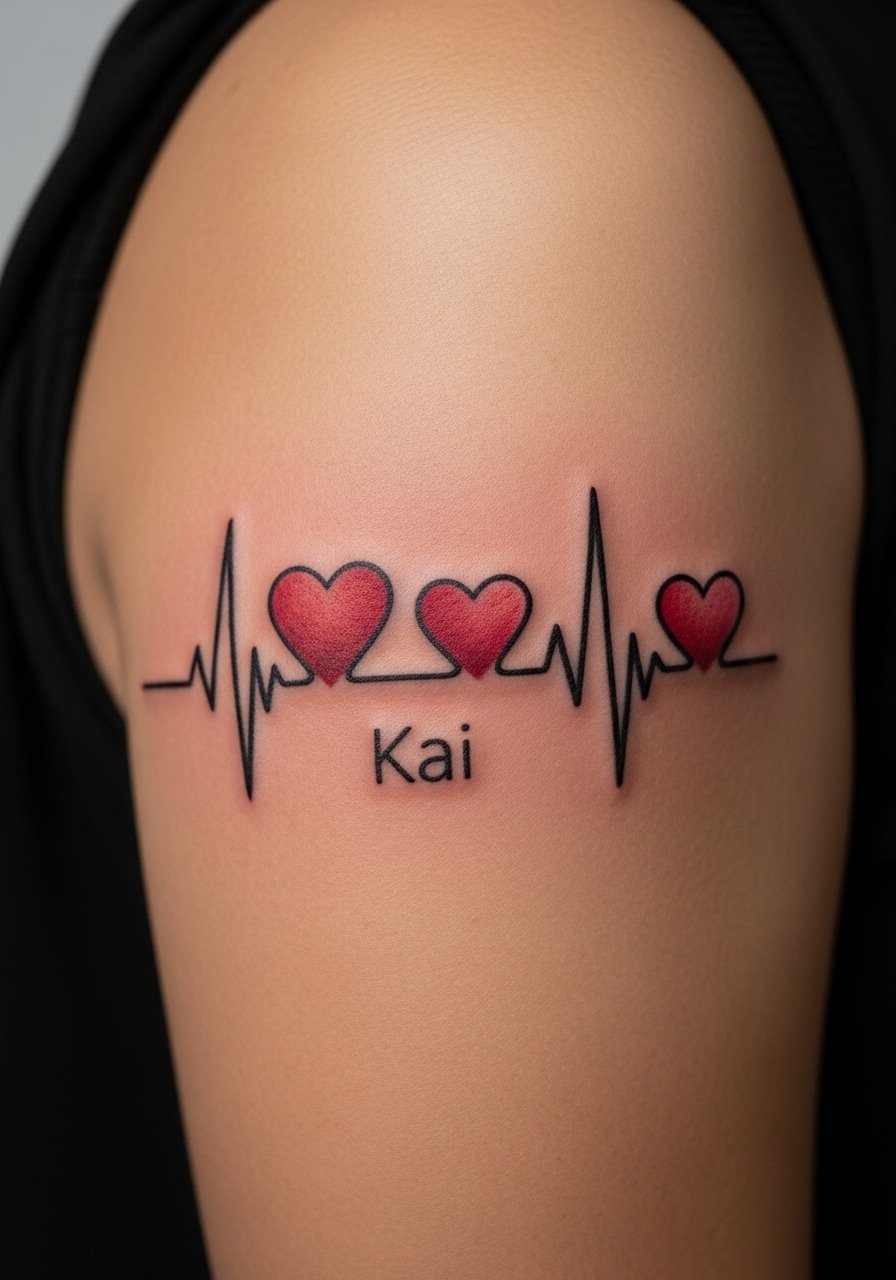
There is something about bold black outlines and saturated accents that reads across the room. For a red heart beat name, bring a reference showing the exact red tone and heart size you want. The controversy about fine line versus bold lines matters here because bold shaded work tends to hold saturation longer. One camp argues fine line fades faster on high-motion areas. The other camp says with the right depth fine line can last. For this bold option expect stronger initial saturation and a two-session window for larger pieces. Plan for a touch-up around year three for color refresh.
9. Wrist Birth Date Name with Moons for Maternal Charm
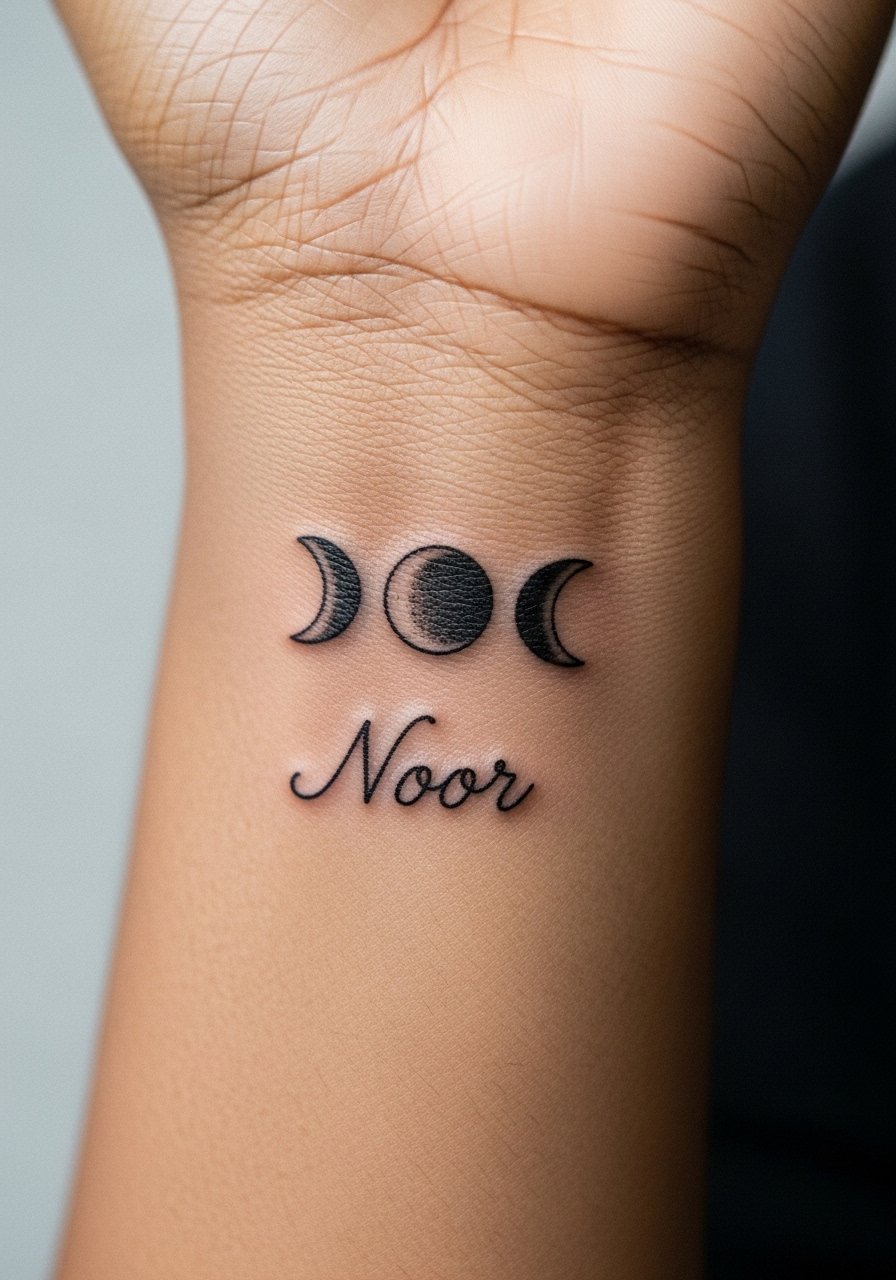
Someone I know chose a tiny wrist name with moons because it feels small enough for daily life but visible when wanted. For wrist work keep letters slightly larger than you think and space the moons so they are not single-dot small. The wrist can blur if the script is too thin, especially on medium to dark skin tones, so ask for slightly bolder linework for contrast. Healing can be quick, but expect occasional scabbing because wrists move a lot. A touch-up at year two is common for minimalist wrist scripts if you want crisp moon edges.
10. Sunflower Name 'Anna' on Upper Arm with Cover-Up Potential
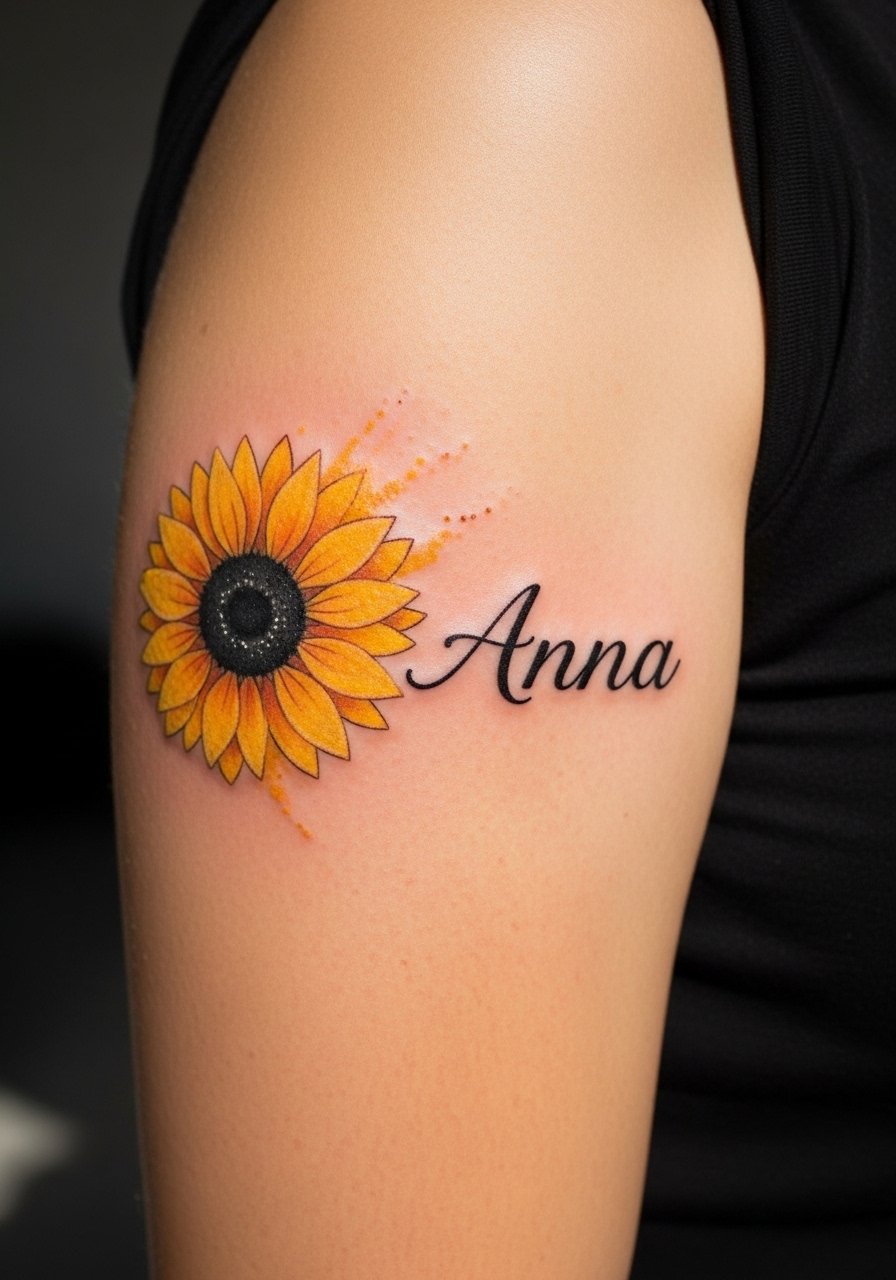
There is seasonal joy in a sunflower name on the upper arm and it hides well under sleeves when you want discretion. If you are thinking long term, ask the artist how they'd translate the watercolor into slightly stronger outlines for future cover-ups or touch-ups. A common error is going too faded with watercolor from the start, which makes future coverage harder. At six months the color blooms. At two years, expect some fade from sun. Upper arm pieces take longer sessions but can be completed in two sittings with ample saturation and better longevity than extreme watercolor on hands or feet.
Tattoo Prep and Aftercare Essentials
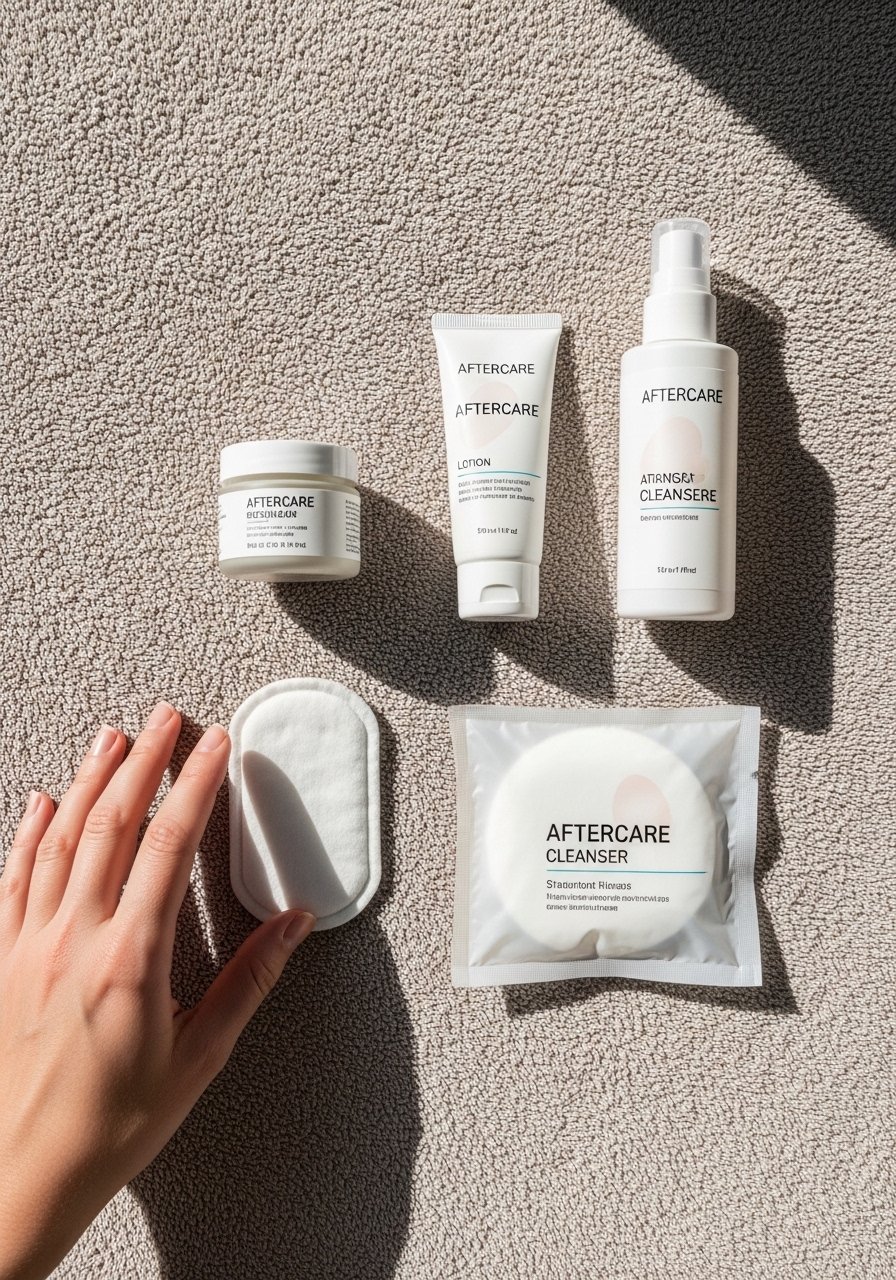
Fragrance-free lightweight healing balm for initial days. Use this for the first few days after the film and gentle wash stage. It soothes without clogging pores and helps prevent excessive scabbing when applied sparingly.
Medical-grade second skin bandage, single-use sheets. Good for flat placements like forearm or collarbone when you want an occlusive barrier during the first 24 hours.
Fragrance-free gentle foaming cleanser. Use morning and night during the first week to remove debris without stripping pigment.
Lightweight SPF 30+ mineral sunscreen for healed tattoos. Apply once the tattoo is fully healed to protect saturation and reduce color fade.
Silicone scar/texture smoothing gel. For raised texture after healing this can reduce contrast and improve overall appearance.
Soft, breathable non-stick gauze pads. Use for initial dressing changes if advised by your artist.
Hydrating gentle body lotion, fragrance-free. For long-term skin health and to keep healed ink looking fuller.
Bandage-friendly loose shoes or sandals. If you plan a foot or ankle tattoo this makes the first week much easier.
Every tattoo is different. Always follow your artist's specific aftercare instructions. Consult a dermatologist if you have skin concerns or unusual healing issues.
Frequently Asked Questions
Q: Will a fine line name on my ribs blur faster than if I put it on my forearm?
A: It depends on skin movement and how the artist spaces the letters. Ribs move with breathing and can stretch differently, so many artists recommend slightly bolder line weight there. If you want ribs, ask for portfolio shots of healed rib fine line work and expect a higher chance of touch-up around year two.
Q: For a fingerprint memorial, what do I bring to the consult?
A: Bring a clean, high-resolution scan or photo of the fingerprint and note which fingerprint whorls or loops matter to you. Also bring placement references because size and spacing affect legibility. Ask the artist how they render the fingerprint at the exact size you want.
Q: Do heart accents and small red details really fade faster than black work?
A: From what I've seen color, especially reds, tends to lose brightness faster than black. One reason is that red pigments sit differently in the dermis. If you want a tiny red heart, plan for a color touch-up window of two to three years for most placements.
Q: How do I find an artist who specializes in the style I want without naming anyone?
A: Search hashtags like #NameTattooWomen and #FineLineNames on Instagram, use Tattoodo filters, and look for shops in your city by searching "city fine line name tattoo studio." Review healed photos on the artist's feed and check for consistent linework and healed examples on skin tones similar to yours.
Q: If I choose a watercolor sunflower name, can it be adjusted later for a cover-up?
A: Yes, but it helps if the artist builds a bit of contrast from the start. Ask during the consult how they would adapt the design if you later decide to cover or expand it. Stronger outlines and darker centers give more options down the road.
Q: Are wrist scripts riskier on darker skin tones for blurring?
A: On medium and dark skin tones very fine scripts can lose micro-contrast faster. Ask for slightly heavier linework and look for healed photos on similar skin tones. A well-spaced script usually holds up better than extremely thin flourishes.