

The monarch butterfly can read like a miniature painting or a bold badge depending on size, placement, and how many blooms you tuck in around the wings. Small, wispy florals can look lovely on fresh skin but often blur into the wing veins after a few years. Pick a composition that gives the orange-and-black pattern breathing room and the flowers a clear role as support rather than decoration.
1. Fine-Line Monarch on the Inner Forearm
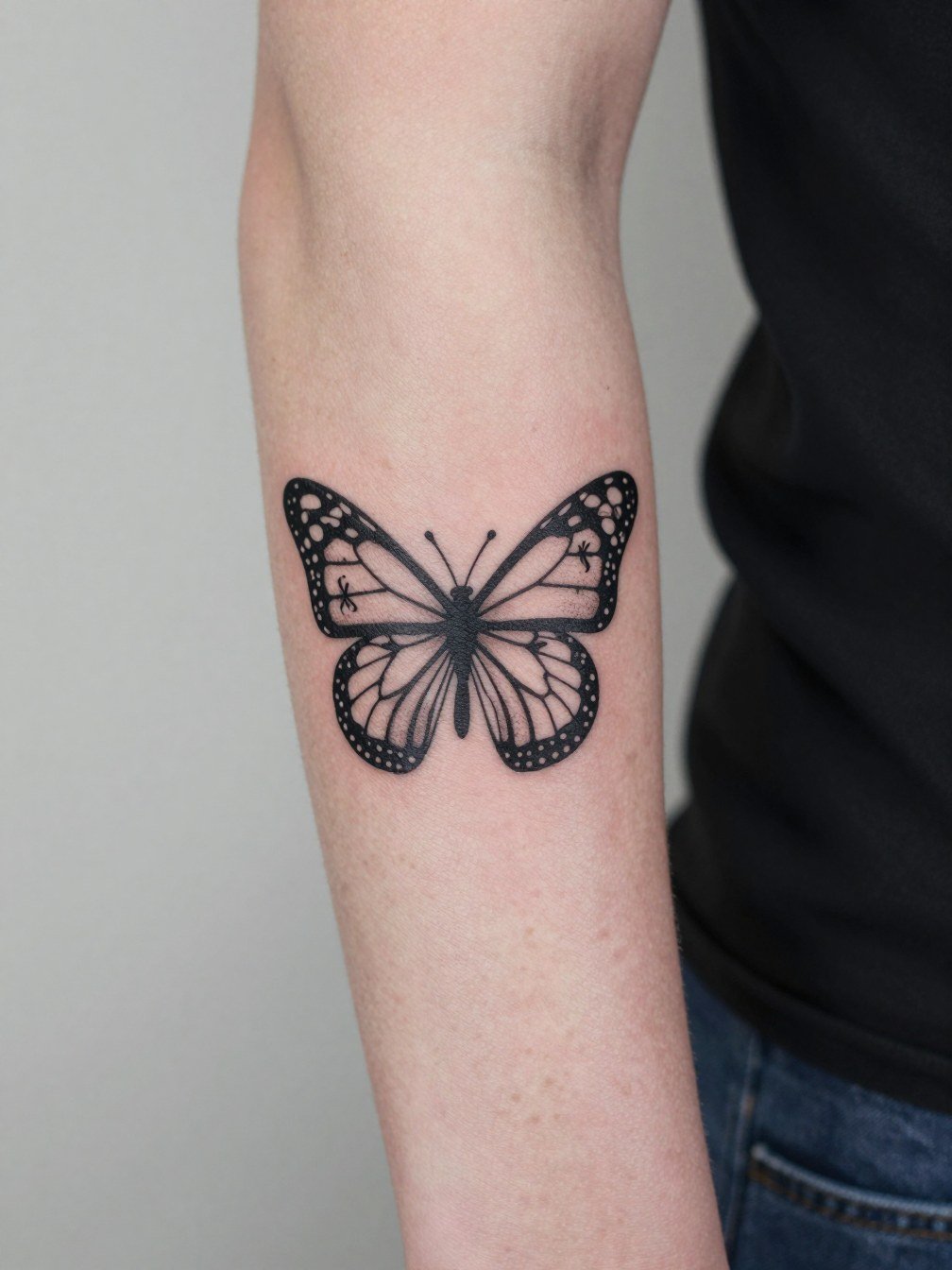
A fine-line monarch on the inner forearm reads elegant when scaled to three to four inches. The inner forearm moves and stretches less than the wrist so linework keeps its edge longer. Plan to ask for slightly heavier single-needle contours than what you save on social feeds because ultra-thin lines on this plane can thin out by year two. Session time for a small single-monarch plus two tiny blooms is typically one hour. Pain is low to moderate. Common mistake is squeezing too many petals into the same small area, which makes the floral details fade into the wing pattern. For showing the piece off, roll a linen sleeve and add a rolled sleeve shirt that stops above the tattoo so it reads cleanly.
2. Neo-Traditional Monarch with Wildflowers on the Thigh
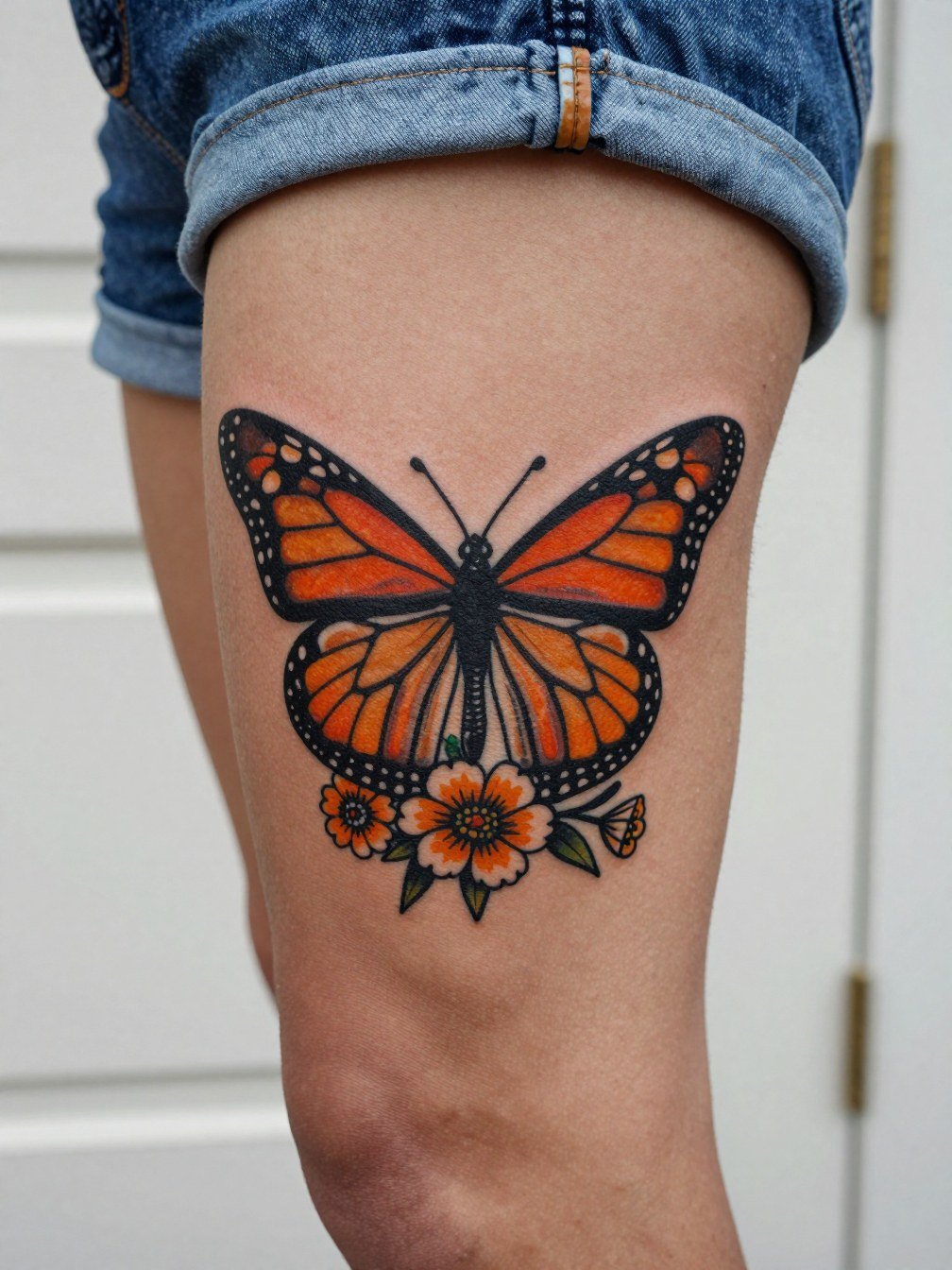
The thigh is the best single canvas for a saturated monarch plus a handful of native blooms because the area lets wings and petals both breathe. This version benefits from bold outlines and strong saturation so the orange-and-black motif keeps reading as the skin ages. On the appointment day, wear loose shorts or a skirt that can be lifted without tugging at seams. A high slit midi skirt is a show-off option for evenings when you want the outer thigh visible. Healed color usually softens slightly at six months then stabilizes; touch-ups at two to five years are common for vibrant fills if you want the original punch maintained.
3. Small Minimal Monarch at the Ankle
A tiny monarch at the ankle is a classic first-tattoo pick because it stays subtle and sessions are short. The trade-off is that ankle skin gets lots of friction and water exposure, so keep the composition to one or two small flowers to avoid visual clutter after healing. Expect a 30 to 45 minute session and a moderate pain level from the thin skin over bone. The most common mistake is trying to cram wing pattern detail into a one-inch scale. Instead simplify the wing veins and pick a single compact bloom. For session comfort, wear pants with cuffs you can roll up or loose bike shorts to avoid rubbing the fresh ink.
4. Color Monarch with Soft Pink Blooms
If you want a spring-like palette this is the route. One camp prefers full color because monarchs are defined visually by orange-and-black wings and flowers gain energy when paired with saturated hues. The other camp favors black-and-gray because it ages more quietly and avoids the early softening that can make pastels look muddy. State specifically how saturated you want the orange and ask for healed examples in similar skin tones so you can judge how the pinks hold over time. For a medium thigh piece expect one to two sessions. Avoid overworking tiny petals near the wing edge since those are the parts that blur first.
5. Clustered Blossoms Anchoring the Wing Base
Anchoring flowers at the wing base stops the butterfly from feeling like it is floating on the skin. For small to medium compositions, limit the cluster to three to five blossoms so negative space around the wings remains. A common mistake is scattering a dozen tiny flowers beneath a small monarch, which reads busy after healing. Talk with the artist about spacing rather than color options so the wings get visual separation from the petals. On the session day wear shorts that can be lifted without tugging at seams. Expect low to moderate pain and a likely touch-up at one year if you want the petals crisp.
6. Engraving-Style Monarch on the Upper Arm
Engraving-style line texture gives a vintage graphic feel that stands apart from standard color approaches. This blackwork option reads strongly from a distance because of dense line contrast. Artists split on whether fine single-needle engraving holds up at all sizes. One group argues very fine stipple and cross-hatch will lose crispness if done too small. The other group points to three- to four-inch pieces where heavier engraving lines and deliberate spacing keep the texture legible for years. For upper arm placements expect moderate session time and low blowout risk compared with softer skin zones. Pair it with a linen button down rolled at the sleeves to show off the piece.
Session Day Picks
The first six ideas include small forearm and large thigh pieces that heal differently, so a couple of practical items make the appointment and first week smoother.
-
Stencil transfer paper kit. Lets you preview exact placement and line weight on your skin, which is especially useful for inner forearm and ankle ideas above.
-
Topical numbing cream. Applied before a sensitive session such as ribs or inner thigh can reduce pain spikes and keep you steady during detailed wing work.
-
Thin protective film roll. Useful for small wrist or ankle tattoos that face friction during the first week.
-
Fragrance free gentle body wash. Cleans the area without irritating fresh ink while you perform daily aftercare routines.
-
Aquaphor healing ointment. A thin layer for the first couple of days helps retain moisture for fine line pieces without clogging needle channels.
7. Black-and-Gray Monarch with Subtle Flowers on the Back
Choosing black-and-gray trades saturated pop for longevity. One camp says color is essential because monarchs read visually as orange-and-black and color makes the composition lively. The other camp prefers black-and-gray because it resists early saturation loss and often stays legible longer on sun-exposed areas. If longevity is a priority choose high-contrast blackwork with clear negative space around the wing details. Upper back placements tolerate larger scale so the wing pattern can be spaced to survive five years without heavy touch-ups. For session wear bring a button-front shirt or an open-back top that lets the artist access the area without disturbing the ink afterward.
8. Forearm Vertical Monarch with Trailing Stems
A vertical forearm layout works when you want a single statement that follows the limb. The vertical axis makes the piece easy to read and keeps the wings from feeling compressed. Tell the artist up front you want trailing stems that taper rather than full bouquets so the negative space remains. One frequent mistake is adding heavy shading behind the stems which can bleed into the wing margin over time. Session time is usually under two hours for a medium vertical composition. For showing it off roll your sleeve or wear a thin bracelet stack on the opposite wrist so the tattoo is the visual focus.
9. Painterly Brushstroke Monarch on the Shoulder
A brushstroke approach gives a fashion-forward, airy look that reads like a wearable painting. Painterly techniques rely on soft edges and lower contrast, so they are more likely to fade into a wash if done too small. Reserve this approach for medium or larger shoulder pieces where the wash can be applied with deliberate saturation and a controlled outline. Ask the artist about how they handle healed examples for watercolor work on darker skin tones. During the session wear a loose tank top to allow the shoulder cap to be worked without fabric interference.
10. Traditional American Monarch Paired with Bold Roses
Classic American traditional lines keep the monarch instantly readable. Bold outlines and flat color blocks age by softening rather than blurring into indistinct shapes. If you want a look that retains its silhouette, pick clean outlines and simplified petals. The most common regret is over-ornamenting a traditional piece with tiny filigree that does not match the bold style. For session-day comfort choose loose shorts or a wrap so the hip area can be exposed without uncomfortable twisting. This composition usually needs a single session for medium sizes and a possible color top-up after a couple of years.
11. Healed Example Focus: Lower Leg Display
Healed photos tell you more than fresh shots because they show how petals and wing veins settle. For lower leg pieces expect moderate sun exposure and some rubbing from clothing, so ask to see healed examples that are at least two years old. A common mistake is assuming bright reds and pinks will hold without touch-ups; those hues often need top-ups sooner than deep oranges and blacks. Session time for a calf piece is typically one to two hours and pain levels are moderate. For appointments wear pants with cuffs you can roll up or a skirt so the artist can access the area without pressure on the fresh ink.
12. Memorial Monarch with a Single Stem
When the butterfly is chosen as a memorial, a single stem and one bloom can give the design focus without overcomplicating the wrist plane. Keep the motif simple so the wing pattern has room to read on a small scale. Discuss exact bloom placement at the consultation by showing two scale references so your artist can mock how the composition reads at three versus five inches. The wrist experiences daily washing and bracelets can abrade ink, so opt for slightly heavier linework than you might on the thigh. For outfits, a thin chain bracelet on the opposite wrist helps frame rather than compete with the tattoo.
13. Large Back Piece with Floral Frame
A back piece gives space for wing detail and a full floral border so both elements age more gracefully. The main risk is compressing too much fine detail into narrow wing veins. For a multi-session full-back display plan for two to four sessions depending on saturation and petal complexity. Pain on the shoulder blades varies but is generally tolerable over multiple sittings. One avoidable error is trying to pack a memorial text line into the floral border without sizing it for long-term legibility. Choose larger lettering or omit text in favor of a single symbolic bloom if you want longevity.
14. Micro-Realism Monarch Behind the Ear
Behind-the-ear placements are intimate and demand precision. The skin there is thin and the area receives hair and product contact, so micro-realism needs a careful plan for aftercare. Expect a short session of 20 to 40 minutes and a slightly higher risk of early feathering if lines are too fine. A common mistake is requesting dense color fills in such a small spot. Instead choose a crisp silhouette with one small floral accent. For showing the piece wear hair up styles or a wrap dress women that keeps your neck and shoulders open for social moments.
15. Thigh-Scale Botanical Sleeve with Monarchs
A thigh sleeve lets you build a narrative across multiple monarchs and seasonal blooms while preserving negative space between wings. For longevity distribute the focal butterflies so none sits on a seam or high friction zone. Session pacing for a sleeve is multi-hour across several sittings and touch-ups will likely be needed at the one- to three-year mark for saturated color. One mistake to avoid is mixing too many competing color palettes for adjacent blooms which can make the whole composition muddy. Plan a cohesive palette and request healed photos of multi-session sleeves from the artist so you can see how color layers settle.
Frequently Asked Questions
Q: Will a monarch with flowers look too busy after healing on a small placement like the wrist?
A: Small placements need restraint. Keep the flower count to one or two small blossoms and ask for simplified petals and slightly heavier linework. Show your artist two scale references so they can illustrate how the negative space around the wings will hold up at three inches or smaller.
Q: Color or black-and-gray, which is better for a thigh monarch with blooms?
A: Both have merits. Color gives the classic orange-and-black contrast and makes the flowers pop, which many people prefer for thigh work. Black-and-gray is quieter over time and can be smarter if you want lower maintenance. Decide by looking at healed examples in the style and scale you want.
Q: How should I find artists and healed photos for monarch butterfly with flowers without naming specific creators?
A: Search hashtags on Instagram and TikTok like #monarchbutterflytattoo, #floraltattoo, and add your city name to locate local portfolios. Use directory keyword searches such as "monarch butterfly floral tattoo" or "neo-traditional butterfly" to surface portfolios. Browse Reddit threads in r/tattoos and r/tattooadvice for real healed examples and candid feedback.
Q: What should I wear to my session for a forearm or shoulder monarch?
A: For forearm work wear short sleeves or a button-up you can roll, so the artist has unobstructed access. For shoulder cap pieces a loose tank works best. If you want outfit ideas to show the tattoo off later try a linen button down for rolled sleeves or an open back top for upper-back compositions.
Q: How often do monarch-and-flower tattoos need touch-ups?
A: It depends on size, saturation, and sun exposure. Small fine-line pieces commonly need touch-ups within two to five years to restore clarity. Larger, saturated traditional work can maintain visual presence longer but may still benefit from color refresh at three to six years if you want the original punch.
