

Someone I know booked a tiny wrist hourglass, waited six months, then learned the fine line blurred quicker than expected. I have spent time in five shops across Brooklyn and talked with an artist at a Brooklyn shop who specializes in fine line work. These picks show which dark hourglass styles hold up and which ones need careful planning before you book.
1. Fine line minimalist hourglass on the wrist
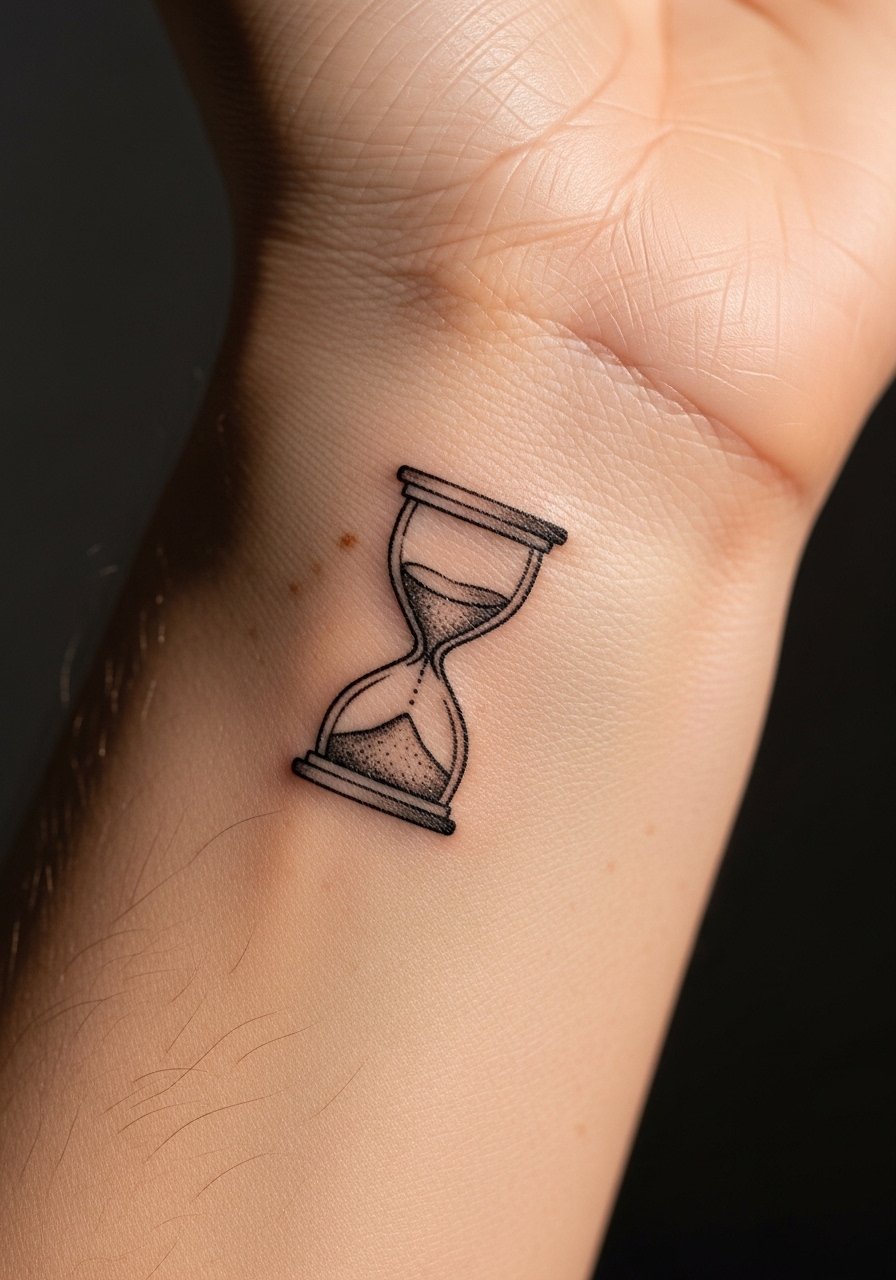
Someone I know chose this for a daily reminder that does not scream. The wrist is low on canvas so expect a 30 to 45 minute session and light discomfort. Tell your artist you want slightly heavier line weight than a single needle and at least 1.5 millimeter spacing between parallel lines to slow early blur. A common mistake is asking for razor-thin lines too close together. At six months the lines look crisp if saturated well. By year three expect softening and plan a small touch-up if you want the original contrast back. If you work with your hands consider placement on the inner forearm instead.
2. Micro-realism cracked hourglass on a finger
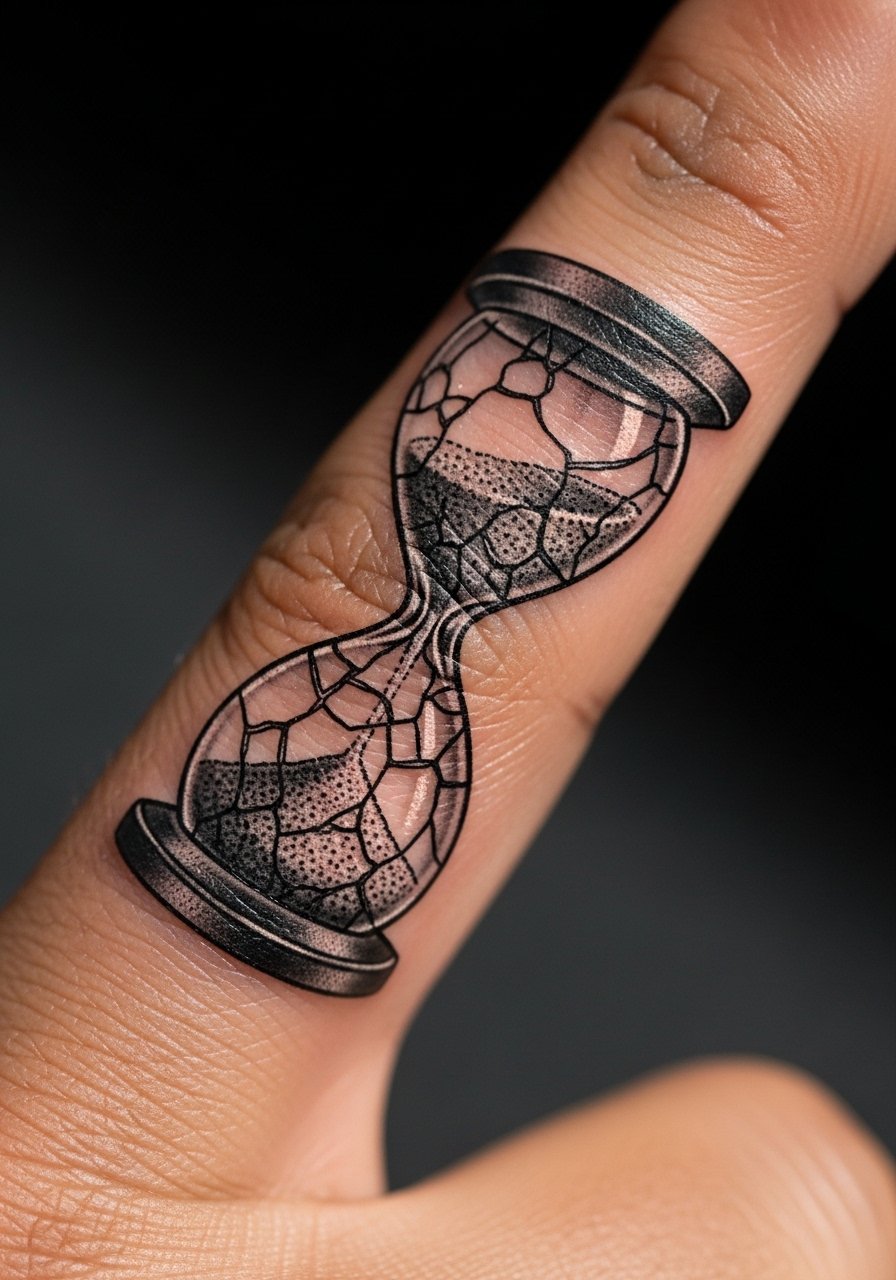
Finger skin moves and sheds faster than other spots, so this is a one-session, high-maintenance choice. Pain is sharp but short. Ask for a slightly larger scale than your initial impulse so the crack detail does not disappear in a year. The usual error is sizing it under one inch. Expect heavier early scabbing and faster fading. Most people need a touch-up within 12 to 18 months. Hands can affect hiring in some industries so weigh that before committing. A good artist will talk through whether micro-realism is the right match for your finger canvas.
3. Watercolor hourglass spilling into flowers on the shoulder blade
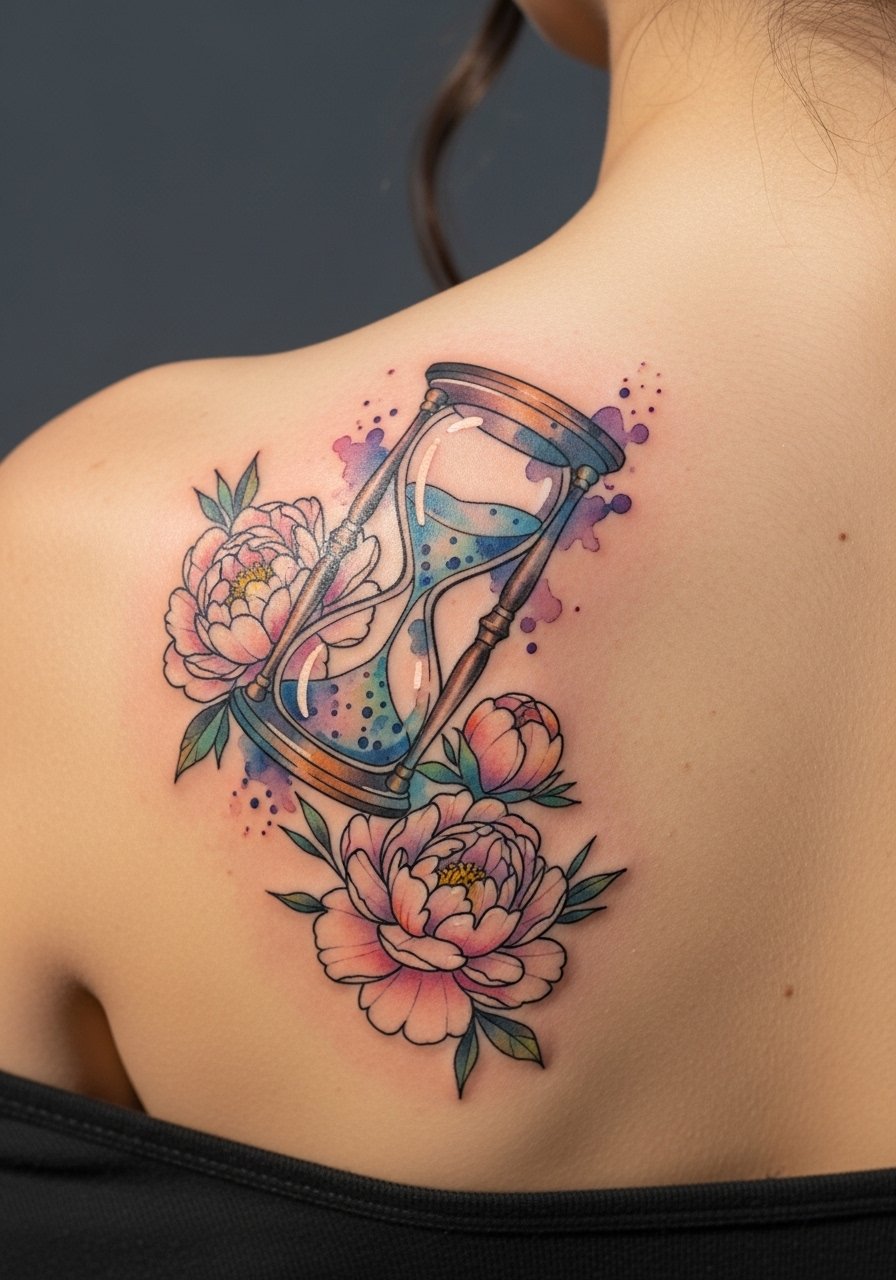
Watercolor washes read vivid at first and then mellow into soft blooms. Shoulder blade placement gives room for color flow and two sessions are common. Tell the artist you want layered washes with black linework anchor points so the composition keeps structure as it fades. A frequent mistake is skipping the black anchors and ending up with a washed-out blur after a couple of years. At six months colors settle and blend more. At two years the palette softens and you may want gentle re-saturation if you want the original punch.
4. Blackwork geometric hourglass with sacred geometry on the ribcage
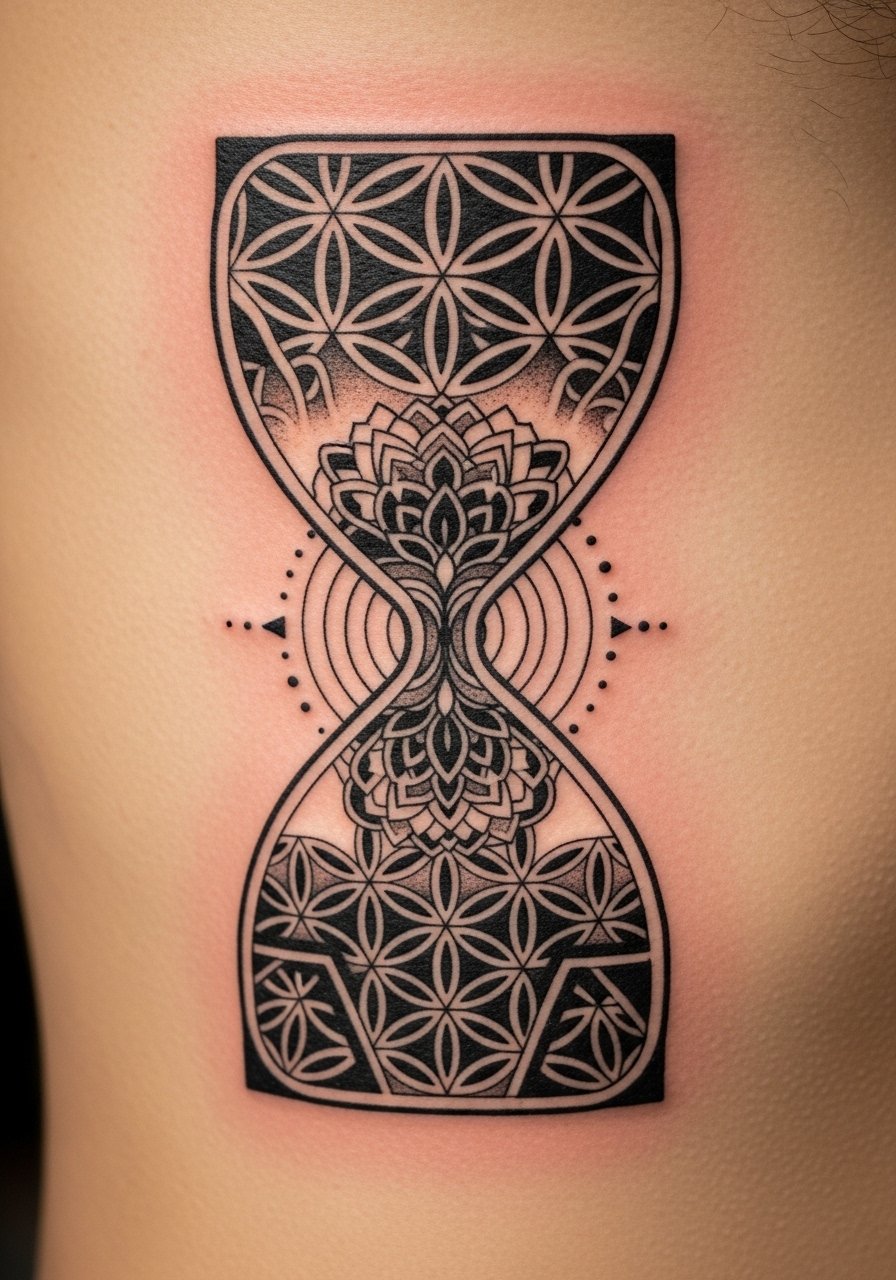
Fair warning the ribcage is often a high pain area. That steep cost in comfort pays off when the elongated geometry follows the torso and looks like it was always there. Artists split on whether fine geometric lines hold up on ribs. One camp says breathing and weight changes will blur very fine lines. The other camp argues that with proper spacing and strong saturation the geometry stays clean. Before booking ask where your artist stands and see healed ribcage pieces in their portfolio. Expect two to three sessions if you want boxy fills and crisp negative space.
5. Traditional bold hourglass with sand and roses on the forearm
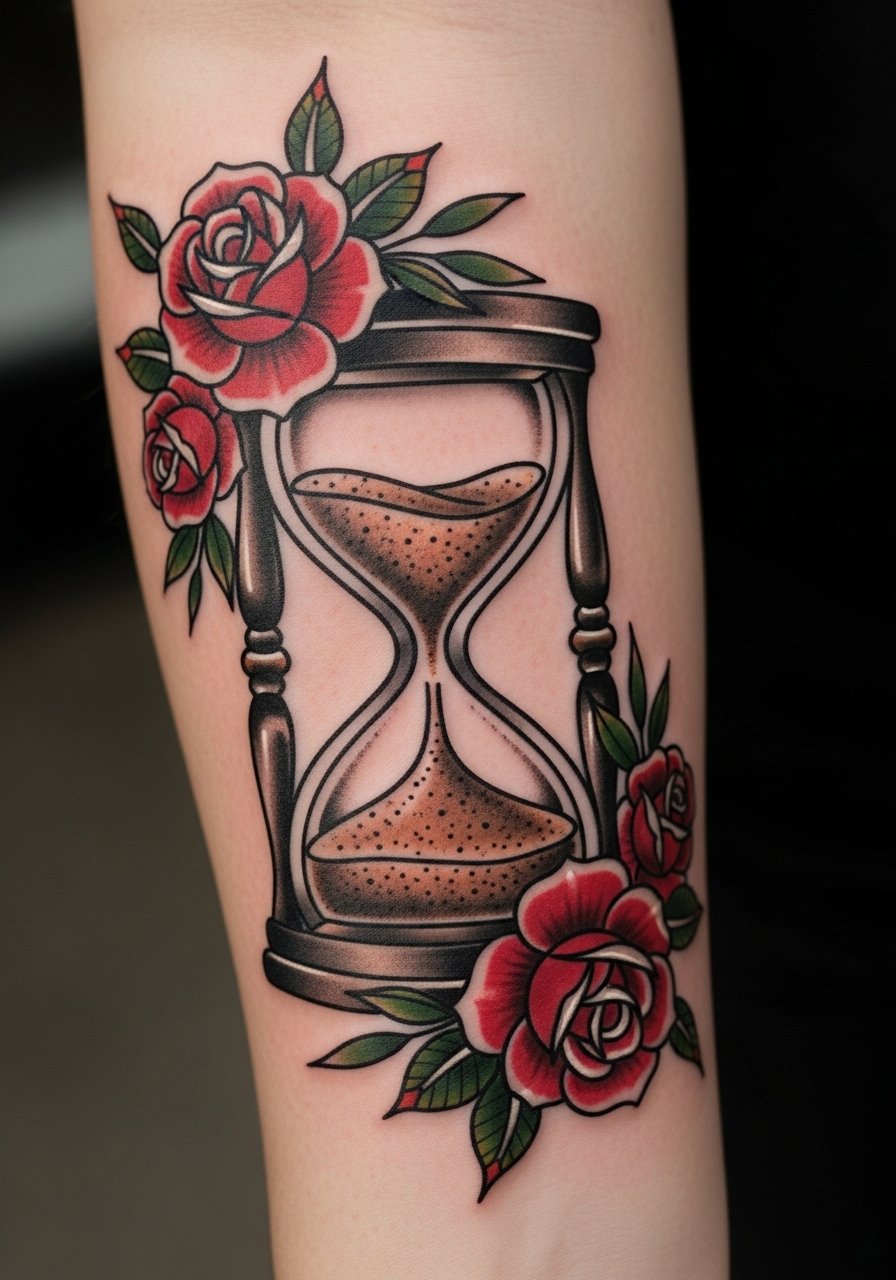
Bold traditional ages predictably because thick outlines protect color from early migration. This style works well if you want something that still reads at a distance. Tell your artist you want classic Americana line weight and saturated reds in the roses rather than pastel blends. People often ask for too many tiny petal details in a small forearm layout. Expect one to two sessions depending on color. At two years the outlines still read strong and the color softens without losing the design.
6. Neo-traditional hourglass with clock gears on the outer thigh
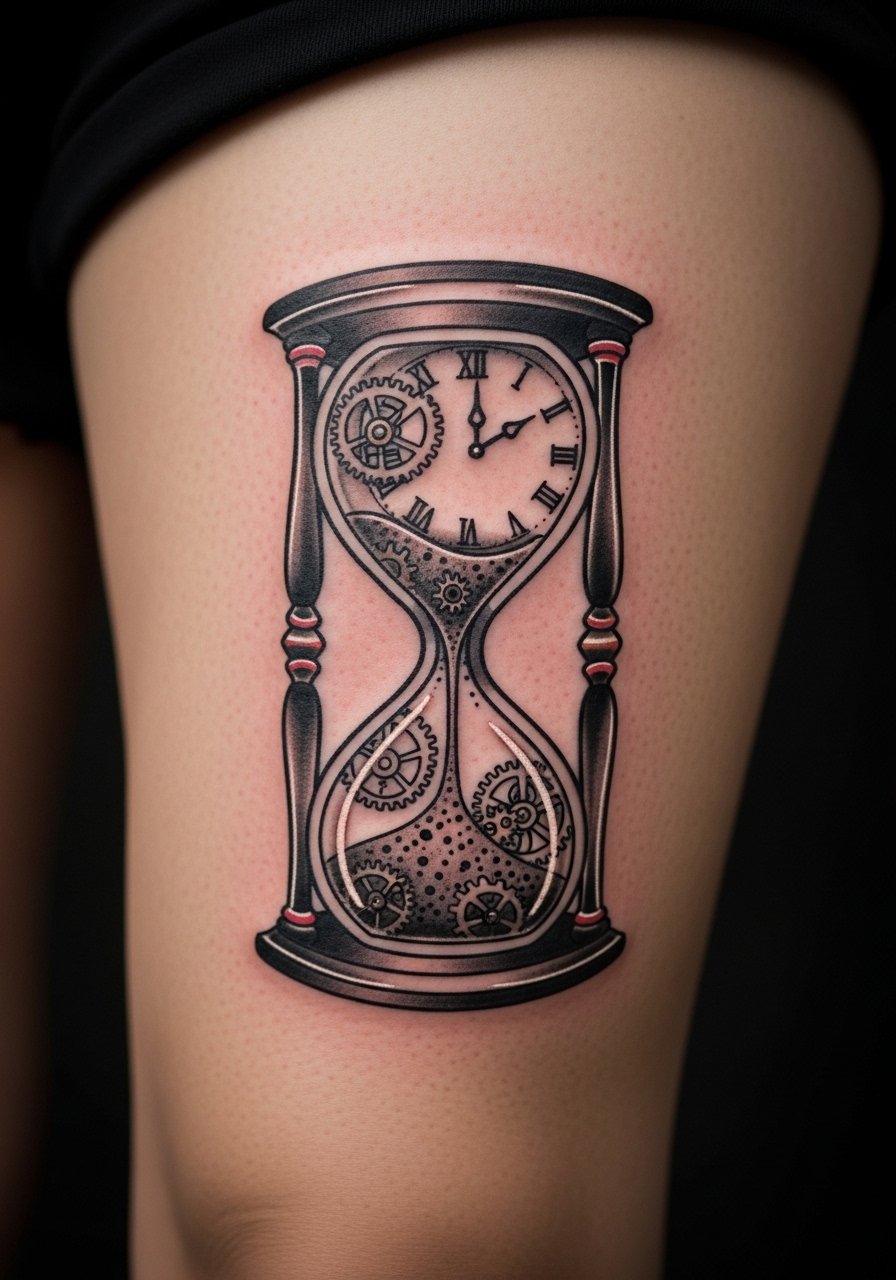
Thigh skin tolerates longer sessions and is forgiving for bigger detail. This design needs space to show gears and mechanical elements, so plan for three sessions for layering and blending. Tell your artist you want gear teeth clear and not crowded, and ask how they plan to build depth with shading. A mistake is cramming too many tiny gears into a small oval. Expect slower fading because thigh skin gets less sun. Touch-ups often happen around year three if you want to refresh color pops.
7. Ornamental mandala hourglass on the ankle
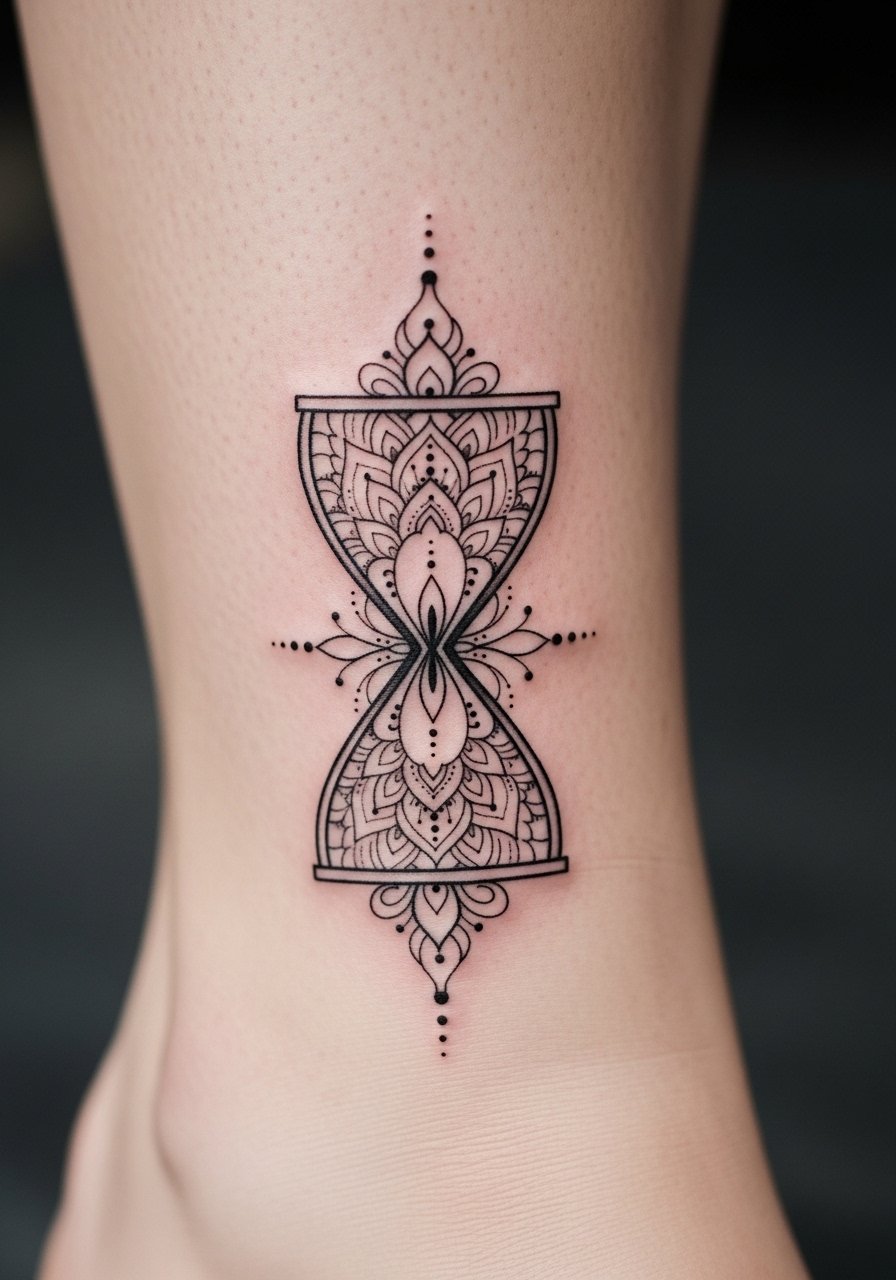
Ankle placements are intimate and shimmer when you move. Because mandala patterns have cultural roots, mention origin sensitivity and opt for subtle variations rather than direct replicas. The ankle can be painful when the needle hits bone. Ask for slightly bolder lineweight in outer rings so the dot work keeps its rhythm as it ages. A common error is asking for ultra-fine dots close together which blur into a gray wash. Expect two sessions to lock in black linework and dot shading.
8. Minimalist outline hourglass with wings behind the ear
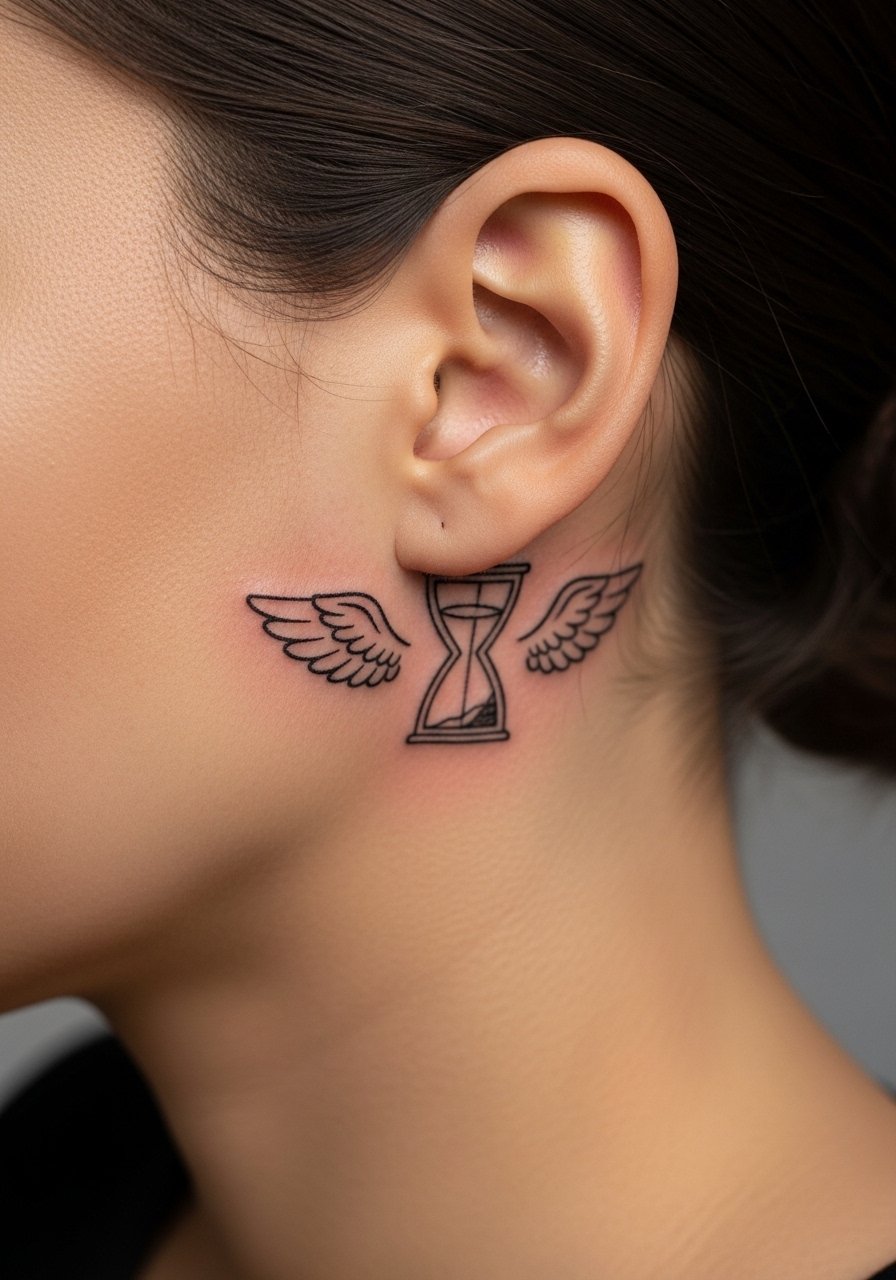
Tiny placements like behind the ear read delicate but require precise needle control. Sessions are short and discomfort varies. Tell the artist you prefer an open outline and do not want filled black wings. The typical mistake is asking for hairline lines that the skin cannot hold long term. At six months the outline will look clean if done correctly. Expect a touch-up by year two if you want the initial crispness back. Behind-ear tattoos need an artist comfortable with curved micro-placements.
9. Gothic hourglass with skulls and ravens across the clavicle
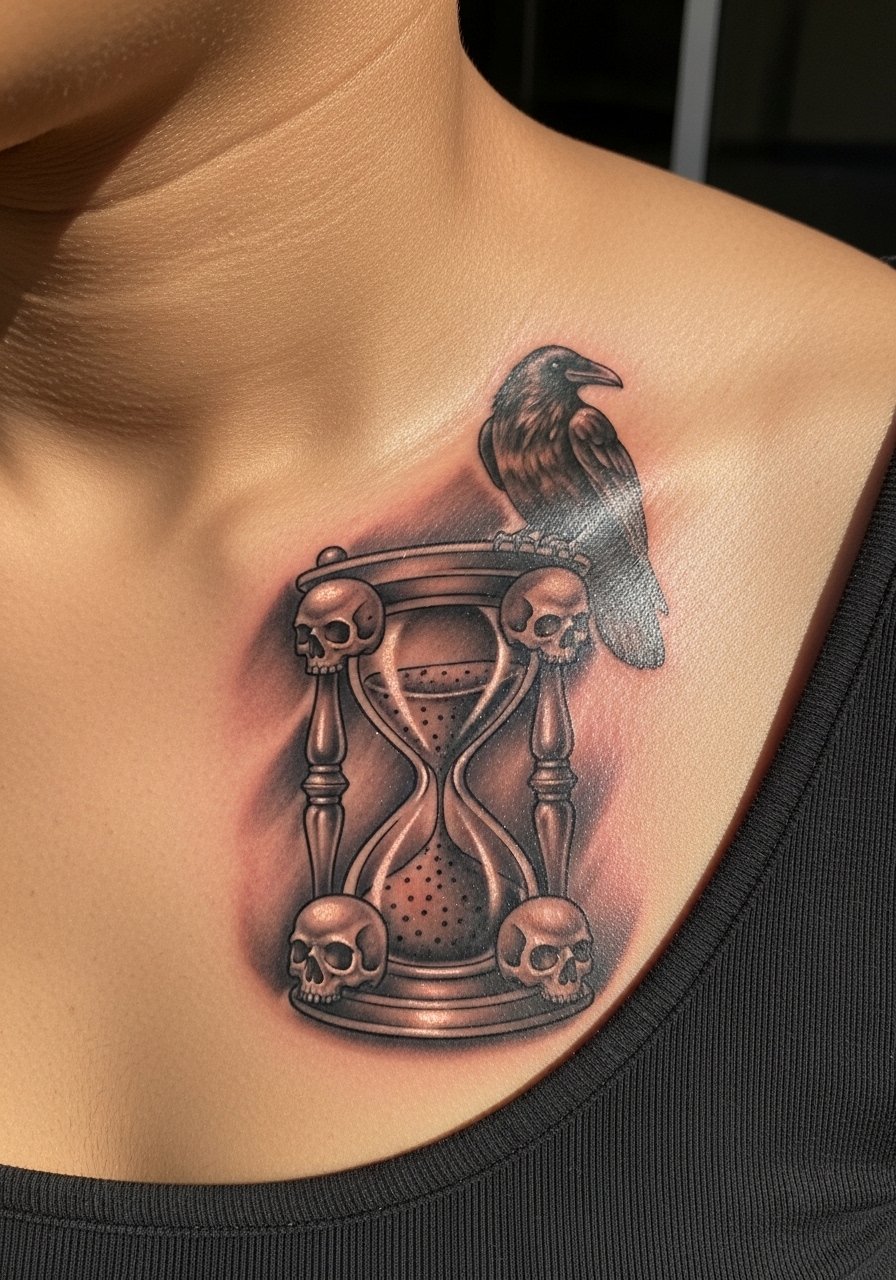
Clavicle work shows off dark romantic themes but the bony area hurts more. For a gothic look request deeper contrast between black washes and pale negative space so skulls read in photographs. A common error is over-detailing small skulls which then lose definition as the skin ages. Expect three sessions for layered black and gray realism. Plan for a touch-up between year two and year four if you want to keep high contrast. Think about crewneck wardrobe and how the placement interacts with clothing.
10. Dotwork hourglass infinity loop on the spine
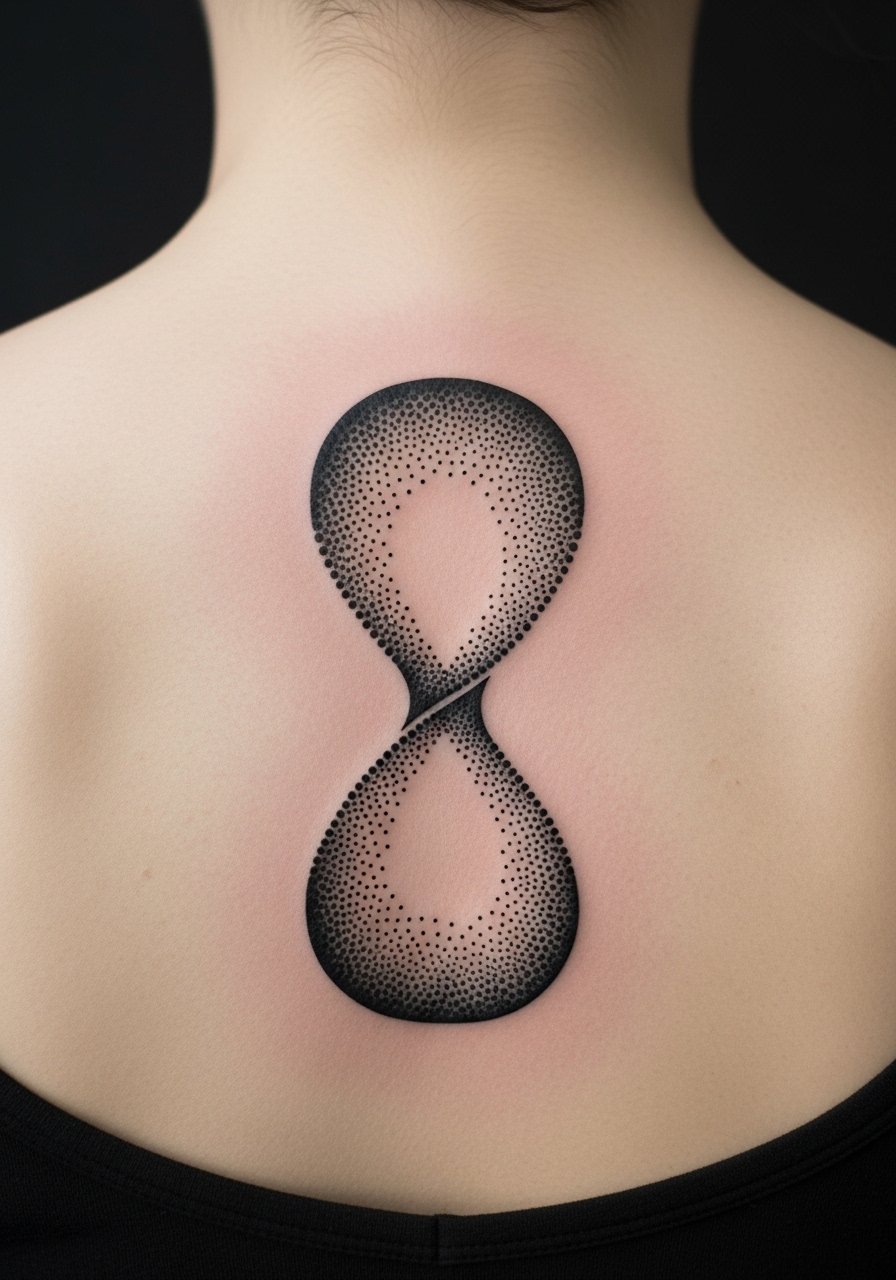
Spine placements benefit from vertical elongation and meditative dotwork. Pain can spike near the vertebrae. Tell your artist you want consistent stipple density and a faint central line to read as an hourglass silhouette. The mistake is packing dots too tightly which creates a muddy area later. At six months the dots soften but maintain texture. Dotwork often needs less frequent touch-up if spacing is generous. Book appointments with a dotwork specialist if you want crisp stippling.
11. Ignorant style shattered hourglass with dripping sand on the biceps
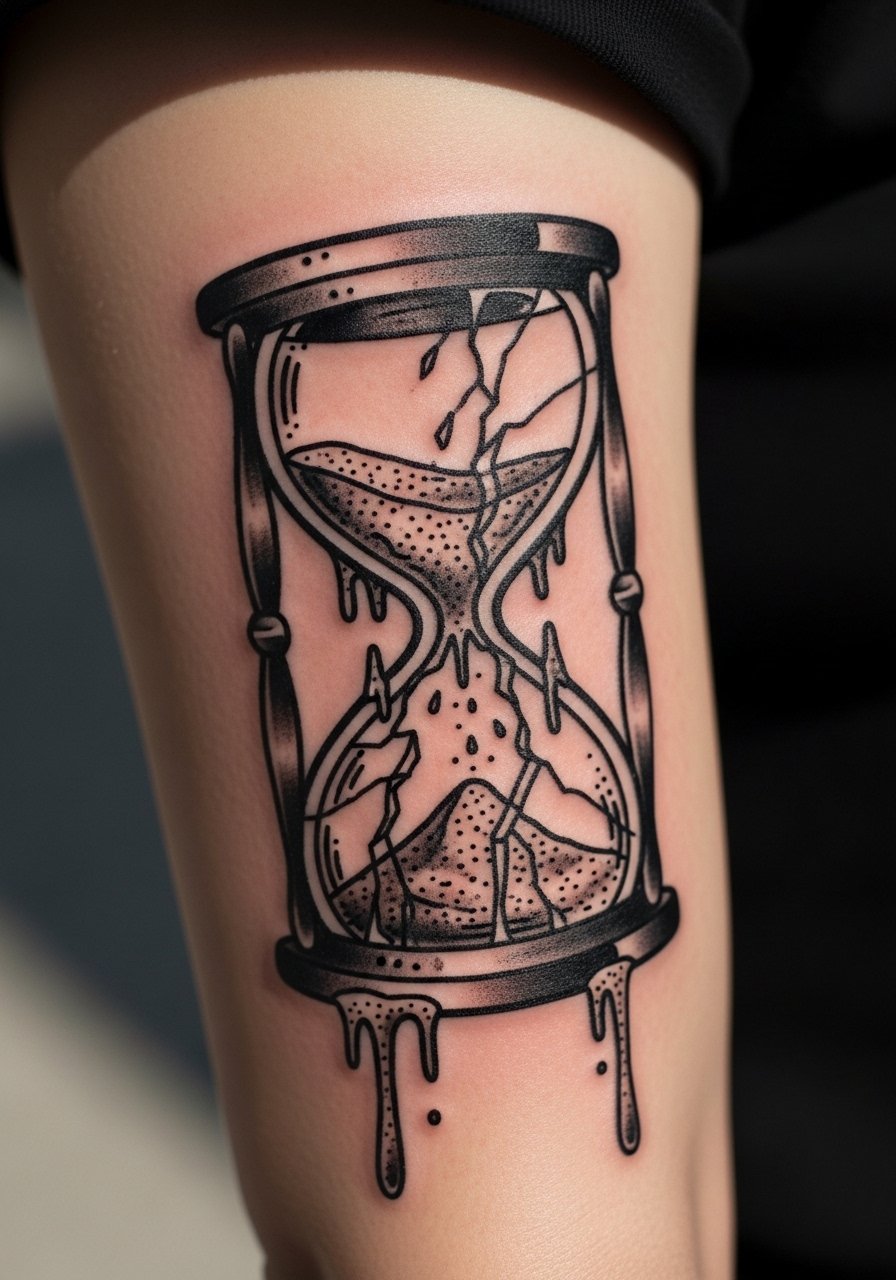
Ignorant style favors bold, chaotic graphics and reads well on the biceps where movement adds drama. Sessions are moderate in length and not overly painful. During consults ask for intentional asymmetry and heavy outline anchors so the shards hold up as the piece settles. A common mistake is asking for sketchy filler lines that become noise as the skin softens. Expect two sessions for layering and to get the jagged edges crisp. Biceps are forgiving so the bold look ages predictably.
12. Floral neo-traditional hourglass on the ribcage
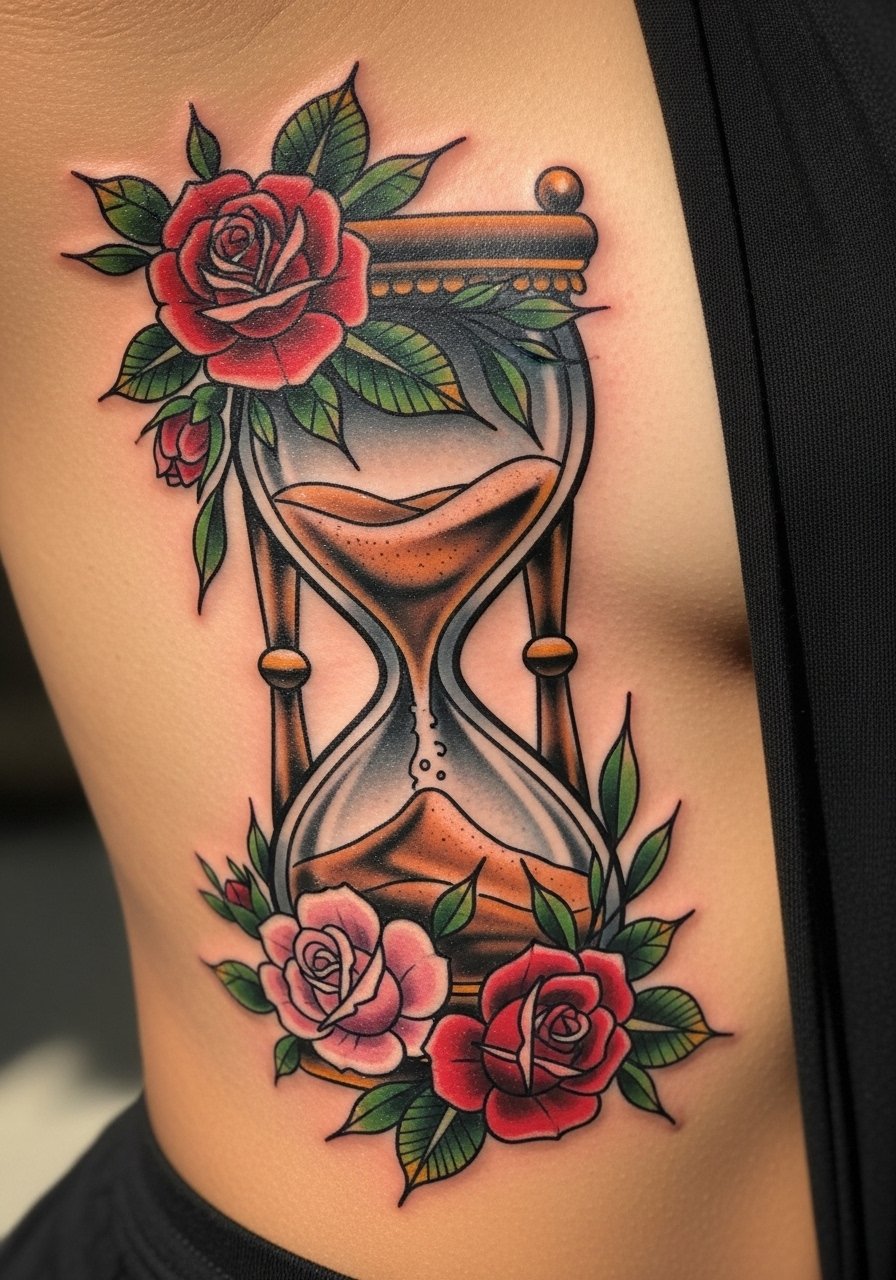
Ribcage pieces can follow the body curve to accentuate shape. Pain is high and breath control matters. Ask your artist to elongate the hourglass to match your ribs so the sand feels like it flows with your silhouette. A typical mistake is centering a square design on a curved area which then warps visually. Expect two to three sessions for color saturation and contouring. Plan for touch-ups by year three for the colored petals if you want saturation maintained.
13. Vertical elongated hourglass that echoes the spine
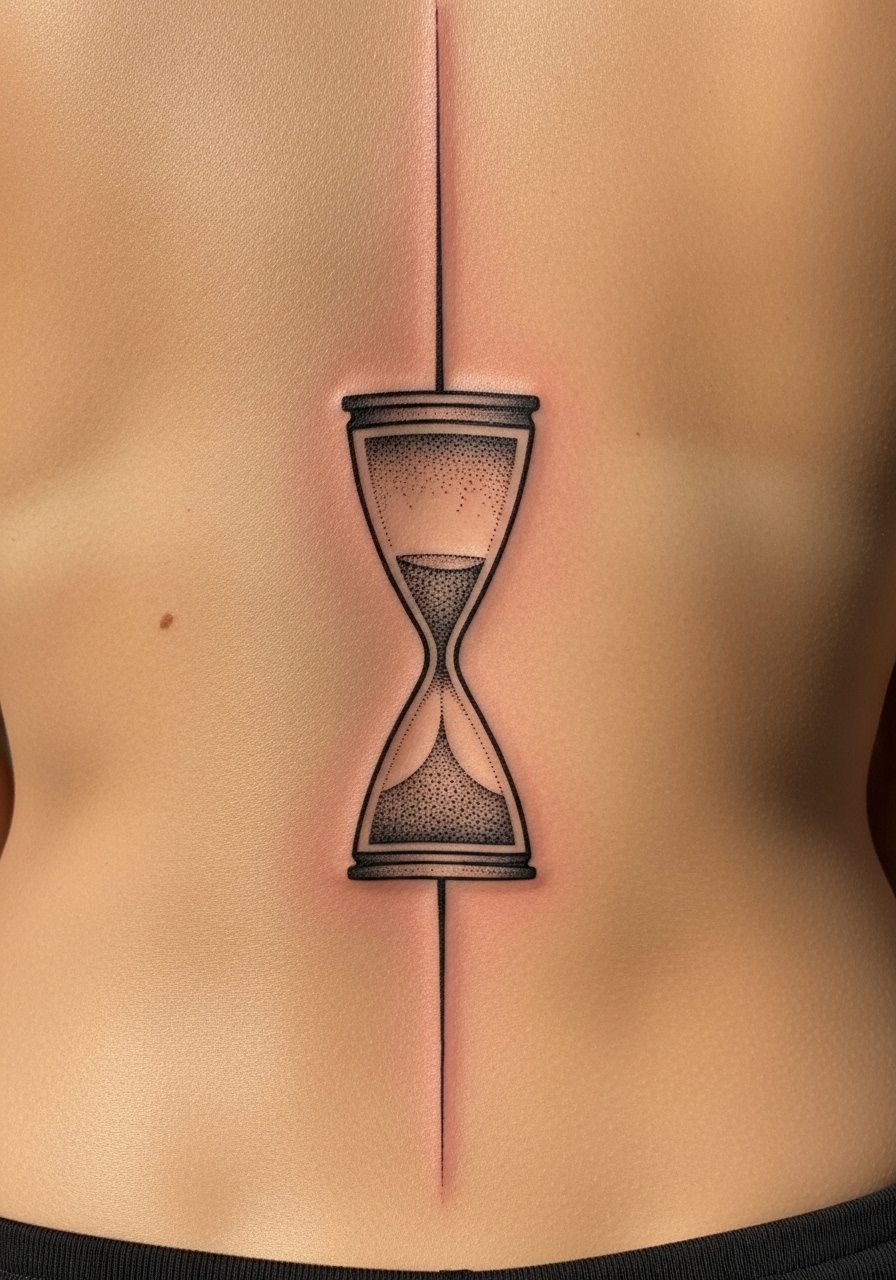
This is one of those rare layouts that uses your body shape as part of the concept. The elongated form requires precise placement so the grain of the hourglass mirrors the spine. Sessions are longer and discomfort is moderate to high depending on how close to bone the ink sits. Tell the artist you want negative space left in key bands so the shape reads even if the line softens. A common mistake is making the piece too narrow which then loses detail. Expect two sessions and a touch-up within two to four years.
14. Hourglass paired with an astrological glyph on the inner forearm
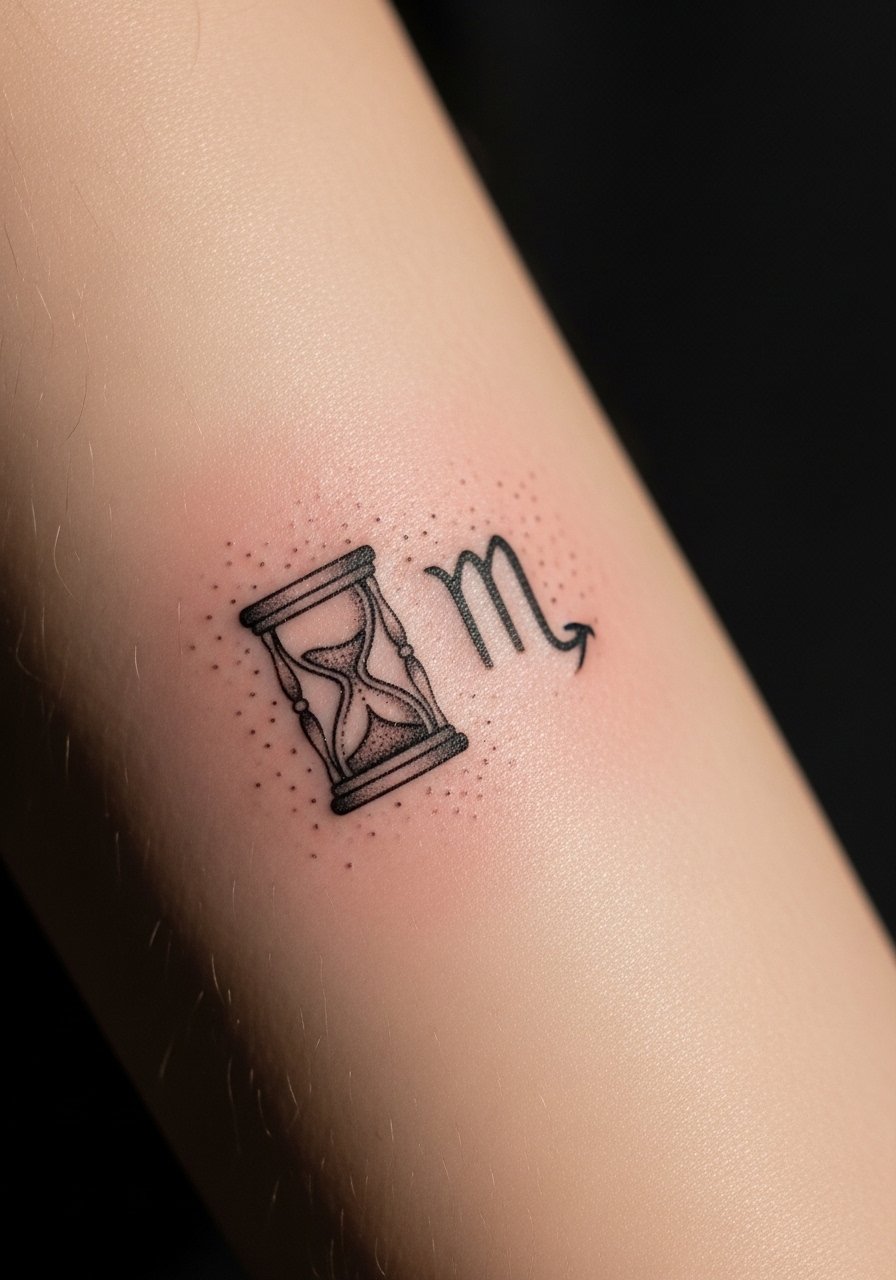
Pairing an hourglass with a zodiac mark personalizes the motif without clutter. Inner forearm placement is low pain and great for visibility. In a consult bring the exact glyph style you want so the artist can mesh it with the hourglass proportionally. A usual error is mismatching the glyph scale which makes one element dominate. Expect a single session for a compact combination. This works well for people who want a personal nod rather than a full narrative piece. Use hashtags and local directories to find artists who have done similar pairings.
15. Negative-space moon phase hourglass on the forearm
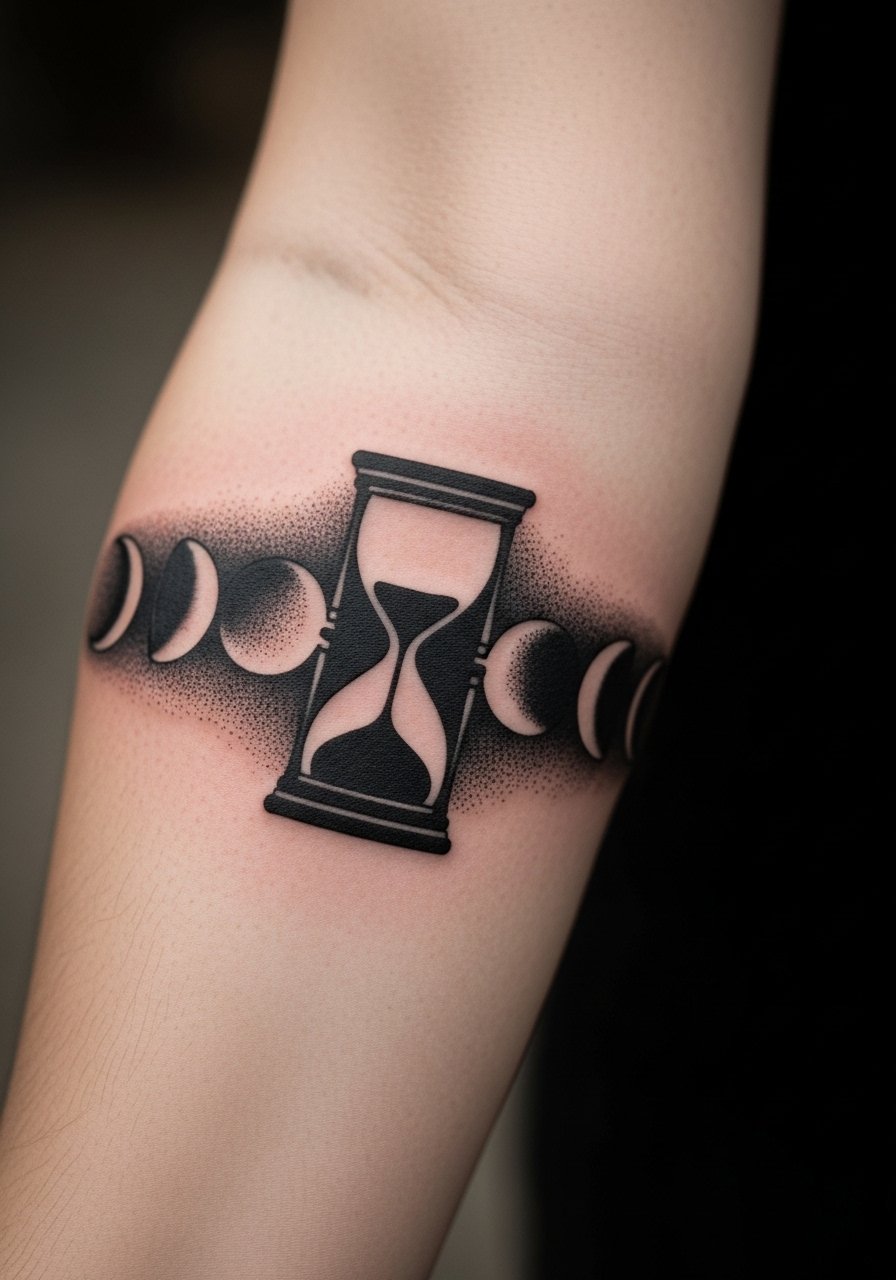
Negative-space techniques depend on strong surrounding saturation to let the silhouette breathe. Forearm placement reads well and sits between low and moderate discomfort. Tell your artist you want the surrounding black solid enough to preserve the silhouette but not so heavy that it overwhelms your arm. People often request too small a negative shape which then loses definition as skin texture changes. Expect one to two sessions depending on the amount of blocked black. For a moon phase sequence plan for even spacing so the hourglass sits at a natural midpoint.
Tattoo Prep and Aftercare Essentials
Fragrance-free gentle foaming cleanser. Use during the first week to gently wash away plasma and avoid fragranced soaps that can irritate fresh ink.
Medical-grade occlusive second skin bandage. Protects larger pieces overnight and reduces scab picking, especially for areas that rub against clothing.
Unscented lightweight healing balm. Apply thin layers after the initial bandage period to keep the tattoo from drying out and to reduce itch.
Saniderm medical-grade second skin bandage. If you and your artist agree on a second skin approach this branded film is a common choice for the first few days.
Lightweight fragrance-free moisturizer lotion. Good for long-term maintenance once the tattoo is fully healed.
SPF 50 mineral sunscreen stick. Reapply on uncovered tattoos to protect saturation when you spend time outdoors.
Medical-grade saline wound wash packets. Useful for gentle cleansing of heavily oozing areas in the first two days.
Breathable cotton clothing or bandage-friendly sleeves. Prevents stubborn rubbing on placements like ribs and ankles while healing.
Every tattoo is different. Always follow your artist's specific aftercare instructions. Consult a dermatologist if you have skin concerns or unusual healing issues.
Frequently Asked Questions
Q: Will fine line hourglass tattoos blur faster on ribs than on forearms?
A: It depends on your body and the artist's technique. Rib skin stretches and sees more movement which can soften ultra-fine lines. I have seen artists split into two camps on this. One group avoids ultra-fine work on ribs. The other says carefully spaced lines with solid saturation can last. Ask to see healed ribcage examples from your artist before you book.
Q: Do watercolor-style hourglass tattoos need different aftercare than traditional ones?
A: The core steps are the same, but watercolor pieces rely on lighter layers of pigment so you should be extra cautious about sun exposure while fading happens. Use a gentle cleanser and a lightweight healing balm in the first weeks. For daily sun protection after healing try an SPF 50 mineral sunscreen stick to preserve color.
Q: How often do micro-realism finger hourglasses require touch-ups?
A: Fingers are high wear areas and micro details often need refreshes within 12 to 24 months. Expect at least one touch-up in that window if you want the original contrast back. Keep in mind hand washing and friction speed up fading.
Q: Are mandala hourglass designs culturally sensitive to get if I do not share the tradition?
A: Yes there is cultural context to ornamental mandalas. Some people opt for subtle variations or modern reinterpretations rather than direct replicas. Mention origin respect during your consultation and your artist can suggest ways to honor the style without copying sacred motifs.
Q: Which placements are best if I want minimal pain and easier healing for a first hourglass tattoo?
A: Inner forearm and outer thigh are generally gentler for first-timers. They offer a forgiving surface and good visibility for care. Expect shorter sessions and more predictable healing compared with ribs, hands, or clavicle work.
Q: Can blocking black around negative-space hourglasses cause skin irritation?
A: Heavy black fills can increase heat during the session and the initial scab phase can feel thicker. Most well-executed blocked areas heal normally. If you have sensitive skin consider a test patch or a phased approach across sessions. If irritation looks unusual check with a dermatologist.