
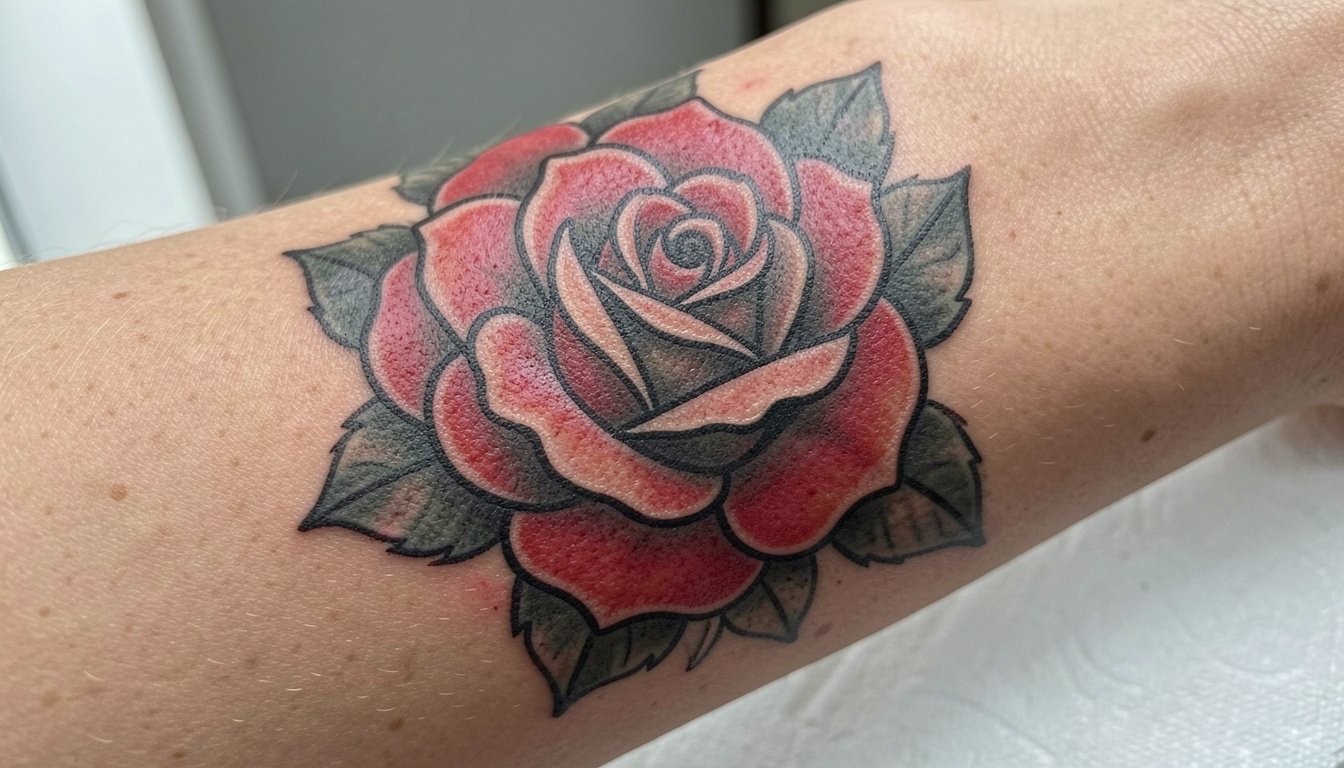
Hands are a small, public canvas that exaggerates every design choice. What trends the feed loves right now often look great in photos but blur on skin that flexes every day. Pick designs that respect spacing, line weight, and movement so the piece reads clean at six months and still reads at five years. Below the hero image the list starts with styles that actually fit a hand.
1. Geometric Hand Mandala
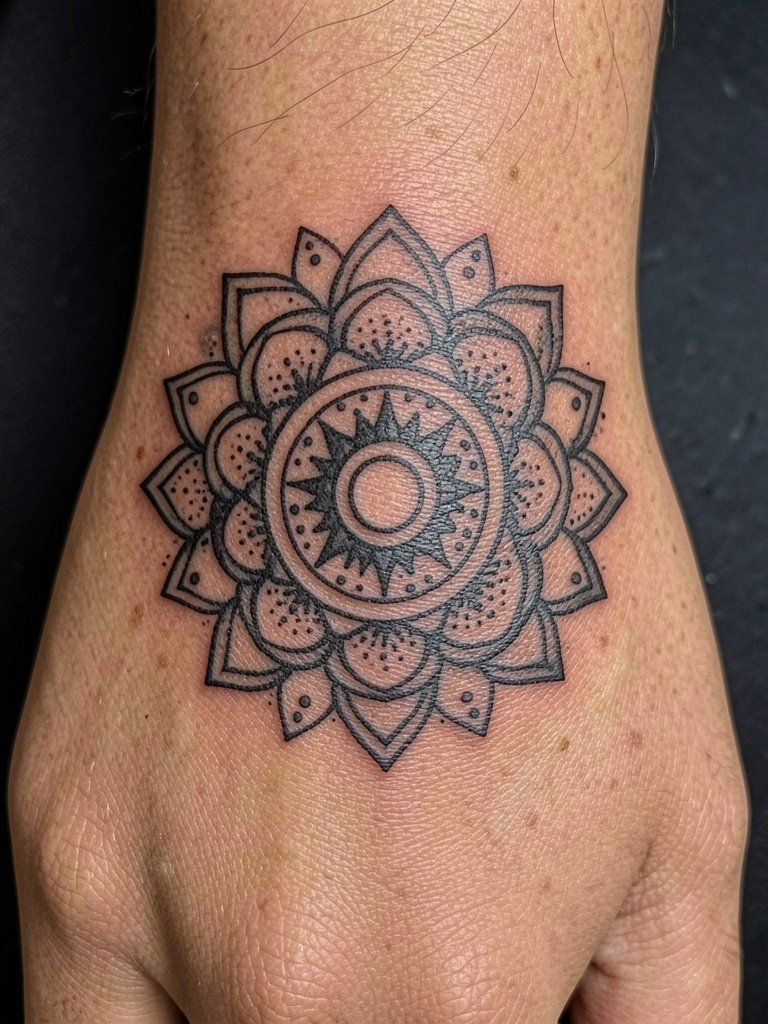
A mandala built for the back of the hand uses repeating geometry to read clearly even when lines settle. Ask for slightly heavier line weight than your Pinterest reference so spokes keep crisp edges through touch-ups. Common mistakes are packing too much filigree into a tiny diameter, which blurs into a gray blob after a year. Expect a 1.5 to 2 hour session for a medium-size mandala and a likely touch-up within 12 to 18 months. Hand tattoos require an artist who has experience with high-motion areas and hand-skin texture, so plan your consultation around healed examples.
2. Flower of Life Panel
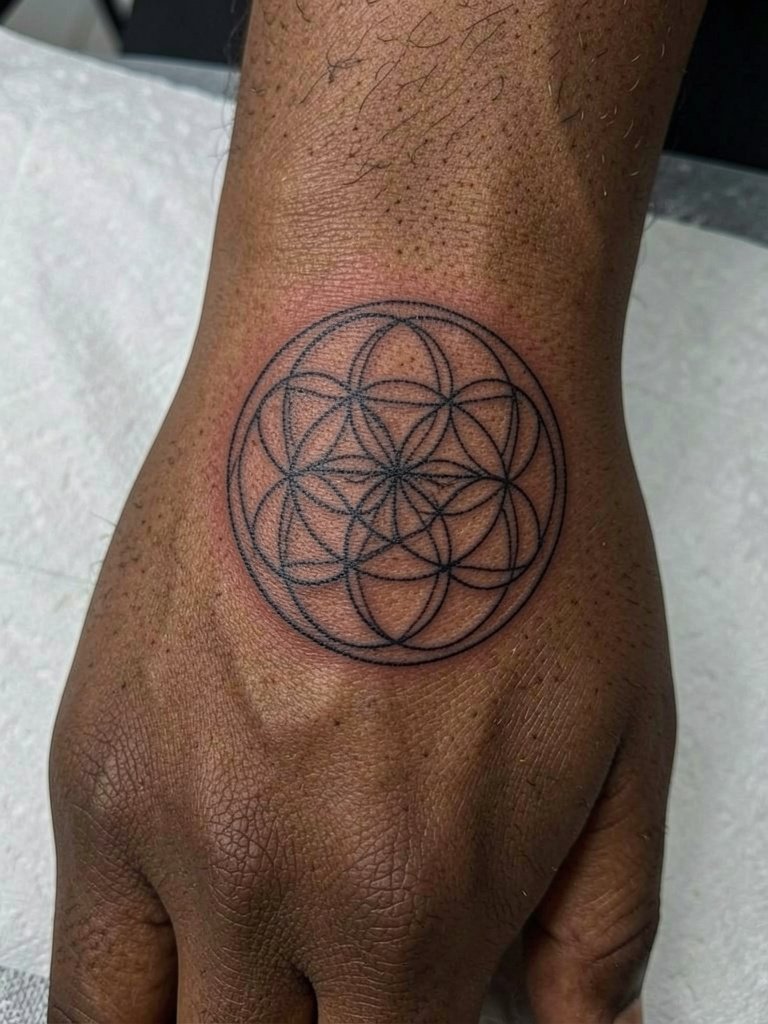
Fine-line Flower of Life pieces look delicate in photos, but artists split on whether that style holds up on hands. One camp says fine single-needle geometry reads clean and modern when spacing is increased and the skin is prepped for crisp transfer. The other camp argues the hand moves too much and recommends bolder outlines to protect the pattern from early blurring. For this design specify exact circle spacing and line weight in millimeters so the artist can map how it will age on your hand. Wear a short-sleeve tee to the session so the artist has full, unobstructed access.
3. Small Mandala Accent
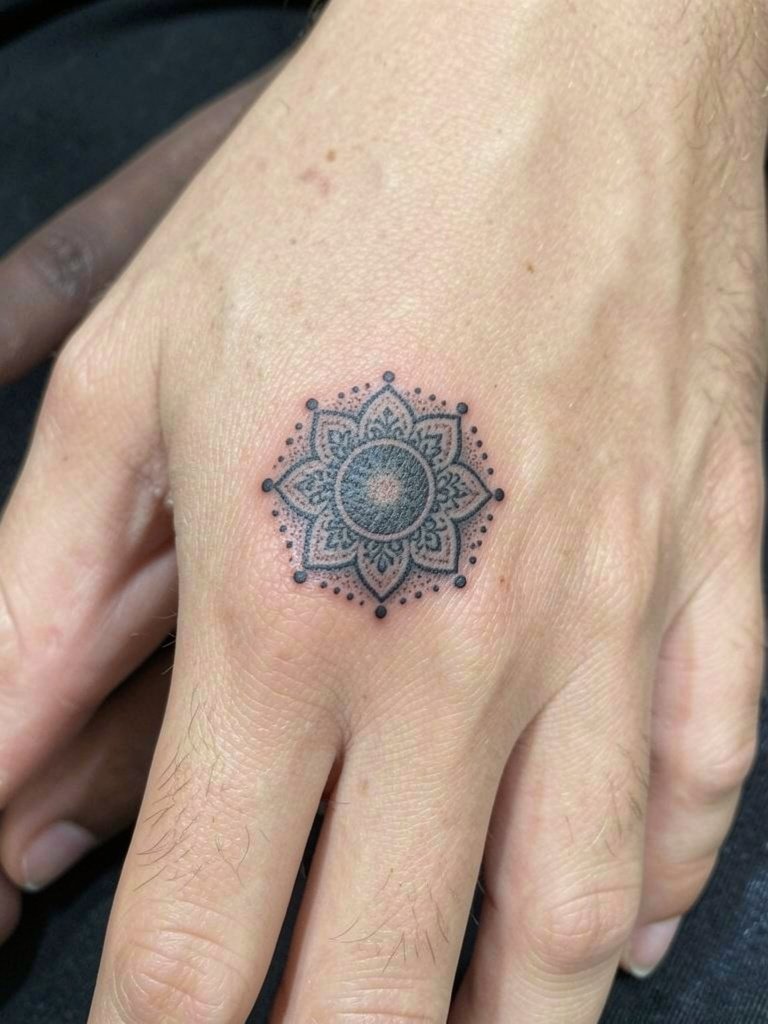
Tiny mandalas are a way to get ornamental detail without filling the whole hand. The trick is leaving breathing room around the design so stipple shading reads as texture, not smudge. A common error is asking for ultra-tight petals and tiny dots, which the hand’s motion will soften fast. Session time is usually 30 to 60 minutes. Expect a higher touch-up rate on thumbnail-adjacent spots because hands see constant abrasion. For appointment day, wear a short-sleeve shirt so the artist can place the stencil without shifting fabric.
4. Tribal Panel with Bold Blackwork
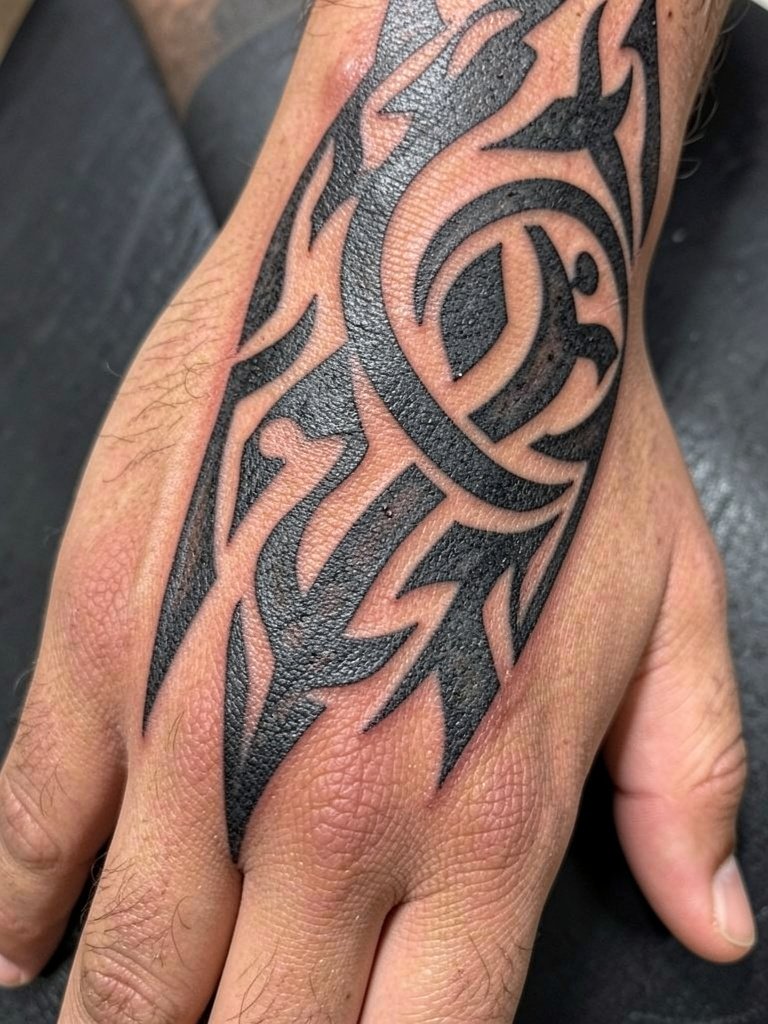
Tribal blackwork uses heavy shapes that age predictably on hands because saturation beats fragile detail. Ask the artist to map negative-space channels so the pattern breathes instead of compacting into a dark patch. The pain is moderate, and a single-session fill usually finishes in under two hours. A frequent mistake is shrinking the pattern to fit knuckles, which makes blowout and soft edges more likely. This style pairs well with workwear-inspired looks and a denim jacket. Try pairing with heavy cotton t shirt search when showing the piece off.
5. Egyptian Motif Icon
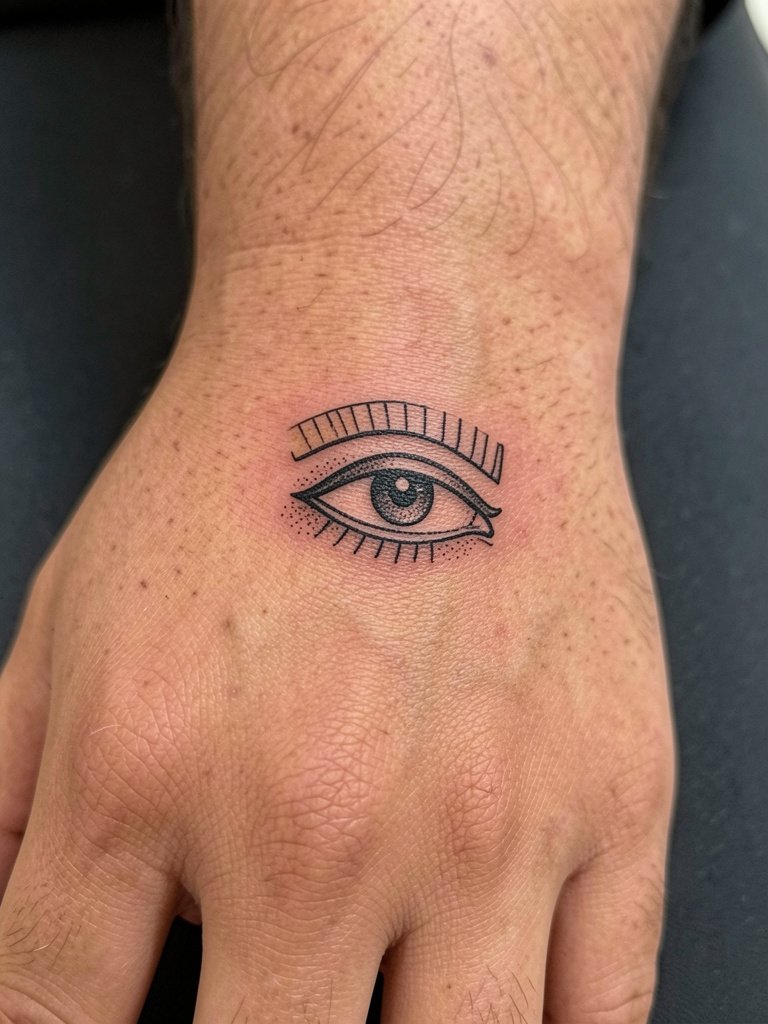
Egyptian motifs translate well to the back of the hand when simplified to icon-sized shields or eyes. Specify a single-panel composition so the design does not fight with tendon lines and knuckle movement. A common version that ages poorly is one with tiny hieroglyph detail. The better choice is solid contours and strategic negative space, which read longer. Session time varies from 45 minutes to 90 minutes depending on shading. Hand tattoos demand an artist who understands how inks sit on thin skin, so request healed photos that show contrast on hands.
6. Geometric Hand Symbols
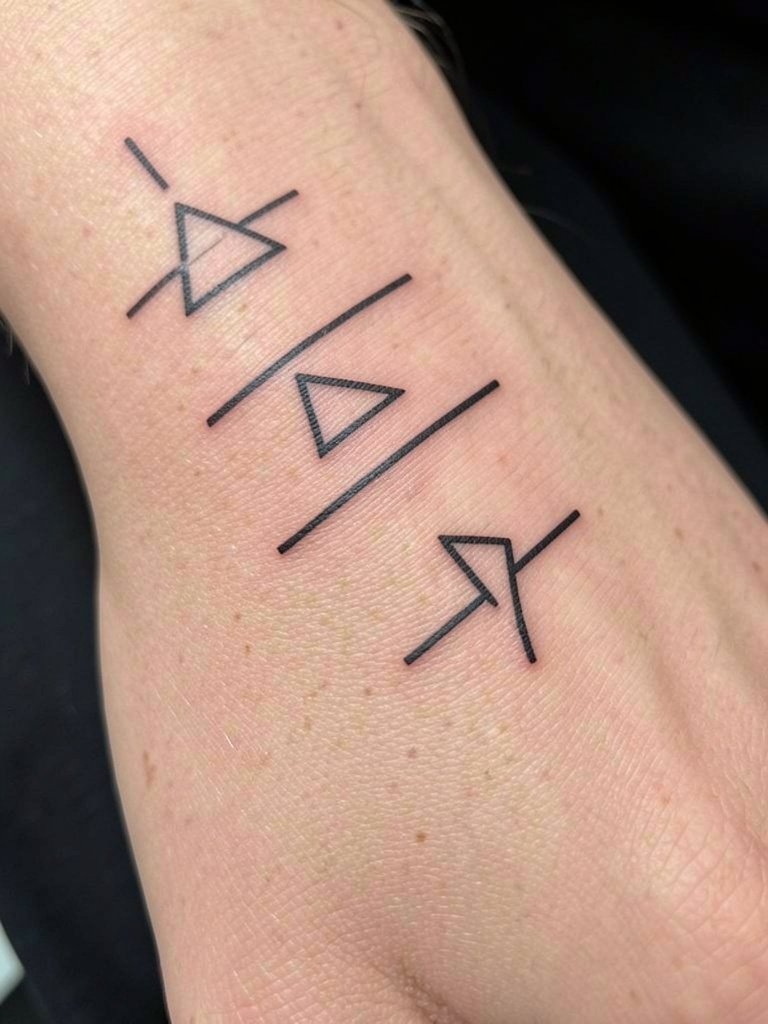
Small geometric symbols feel modern and low-commitment when they have clear spacing and slightly heavier line weight than your thumbnail reference. A common mistake is stippling tiny angles too close together. Instead, space each symbol and plan for one-year touch-ups so the crisp geometry stays crisp. For session day, skip bracelets and rings so the artist can stencil knuckles and finger bases without obstruction. Showing the design with a fitted jacket and rolled cuffs helps you see how the geometry reads in real outfits. Expect mild pain and fast healing on the back-of-hand panel.
Before You Book
The short hand pieces above share the same challenges: thin skin, high movement, and daily abrasion. A few small items smooth the appointment and the first week of healing.
-
Stencil transfer film kit. Lets you test how detailed geometry and mandala stencils sit on the back of the hand before the needle starts.
-
Breathable protective film roll. Helps safeguard finger panels from immediate friction during early wash routines.
-
Disposable single-use grip covers. Keeps adjacent skin clean when the artist works near small symbols and knuckle lettering.
-
Fragrance-free mild body wash. Gentle cleansing for the first week avoids over-drying delicate linework that sits near hands.
-
Aquaphor healing ointment. A thin layer during the initial days helps protect fine lines on high-movement skin without clogging.
7. Fine Line Linework Illustration
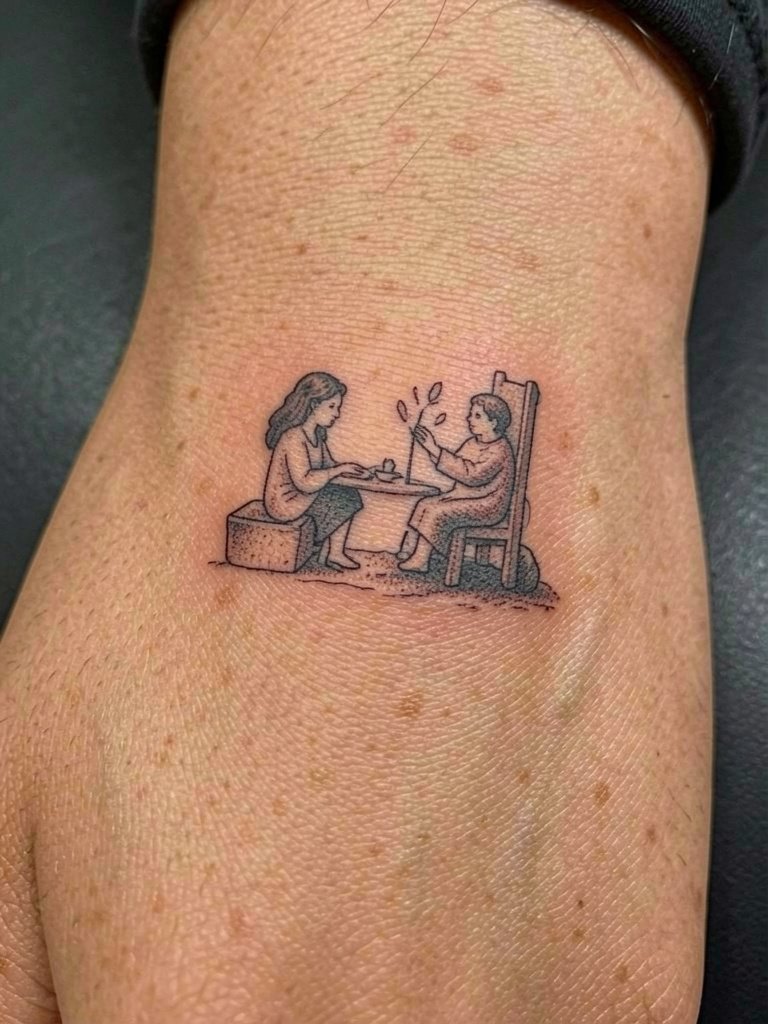
Linework drawings on the hand look delicate but need slightly more spacing than a forearm piece. Specify the exact millimeter line weight so the artist can scale the linework to the hand’s surface. A mistake is asking for dense crosshatching in a palm-side edge, which softens into a gray wash as it heals. Expect a 60 to 120 minute session and a probable touch-up at the one-year mark. For the session, wear a loose short-sleeve shirt that you can push above the wrist without compressing the hand.
8. Script Across Fingers or Back of Hand
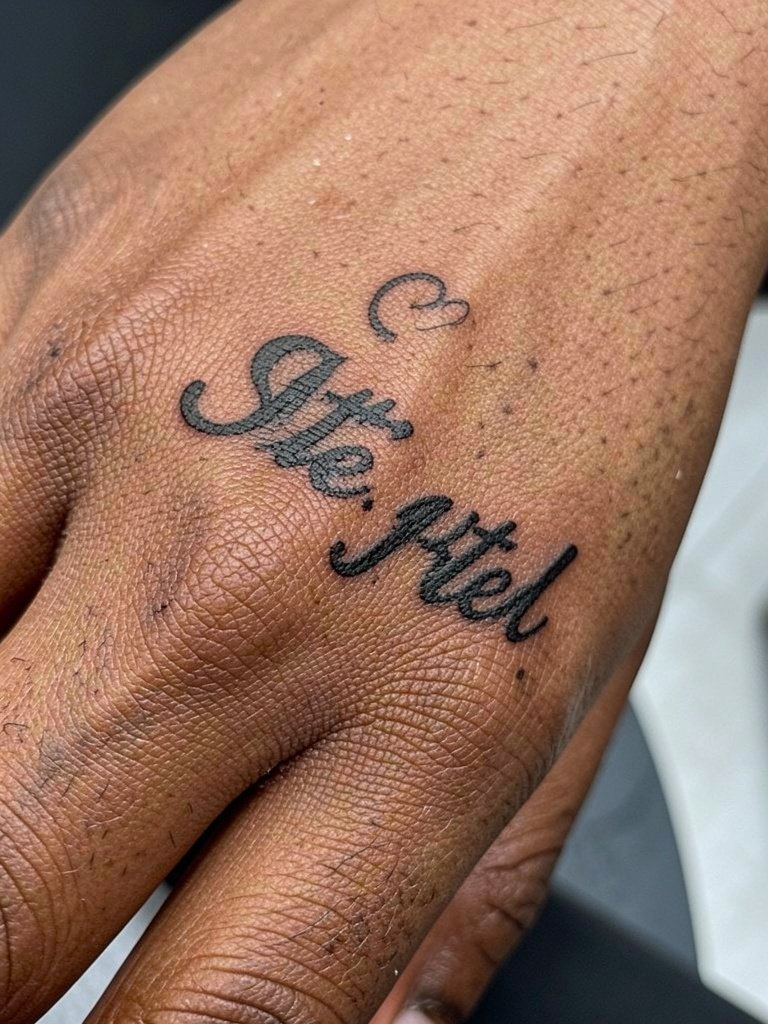
Script on hands divides opinion in the community. One group supports short, blockier script because it reads well and tolerates the hand’s movement over time. Another group warns that narrow cursive scripts on fingers blur quickly from daily washing and flexing. If you want lettering, pick short words, bold letterforms, and leave plenty of space between letters. Ask for a stencil preview at scale so you can see how each character rests on knuckle or finger anatomy. For showing it off, pair finger script with slim band rings and neat grooming and try thin band rings search.
9. Finger and Knuckle Symbols
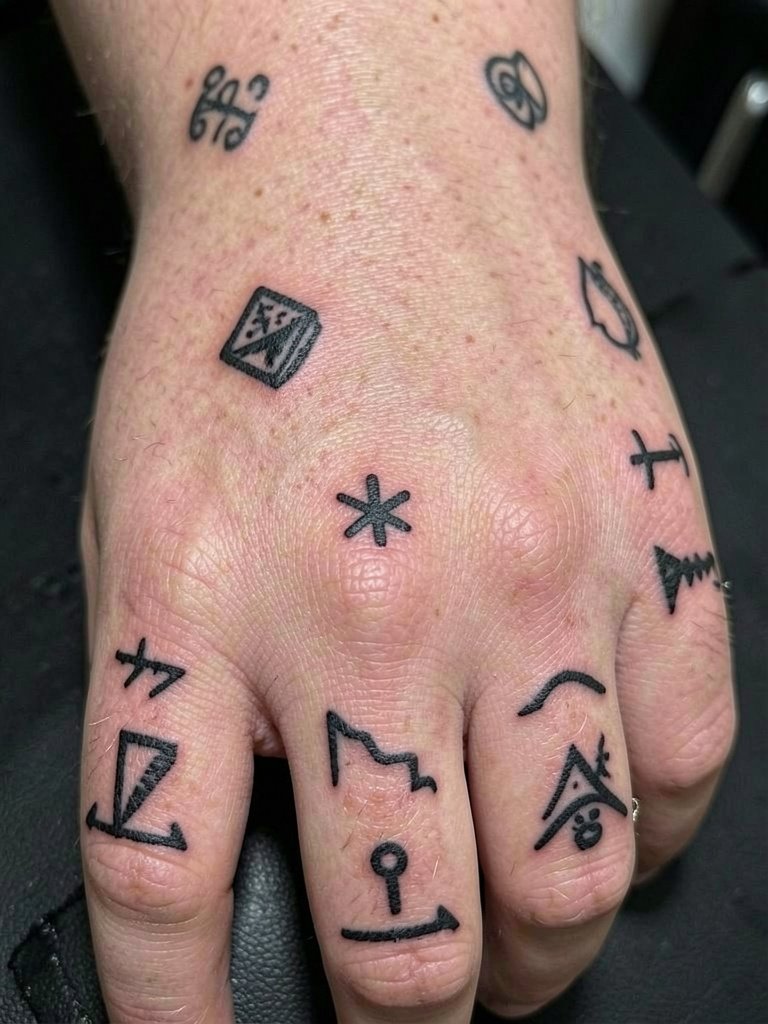
Knuckle and finger work is high-maintenance but high-impact when planned correctly. Choose bold shapes and blocky fills for knuckles and keep micro details to a minimum on finger sides. Discuss exact placement in relation to knuckle movement and daily routines, because typing and tools will accelerate fading. Blowout risk is higher on the inner finger pads, so keep lines thicker there. For sessions, remove rings and keep the hand bare. For styling, minimal metal bands help the symbols read clearly when you show your hands.
10. Palm Micro Symbol
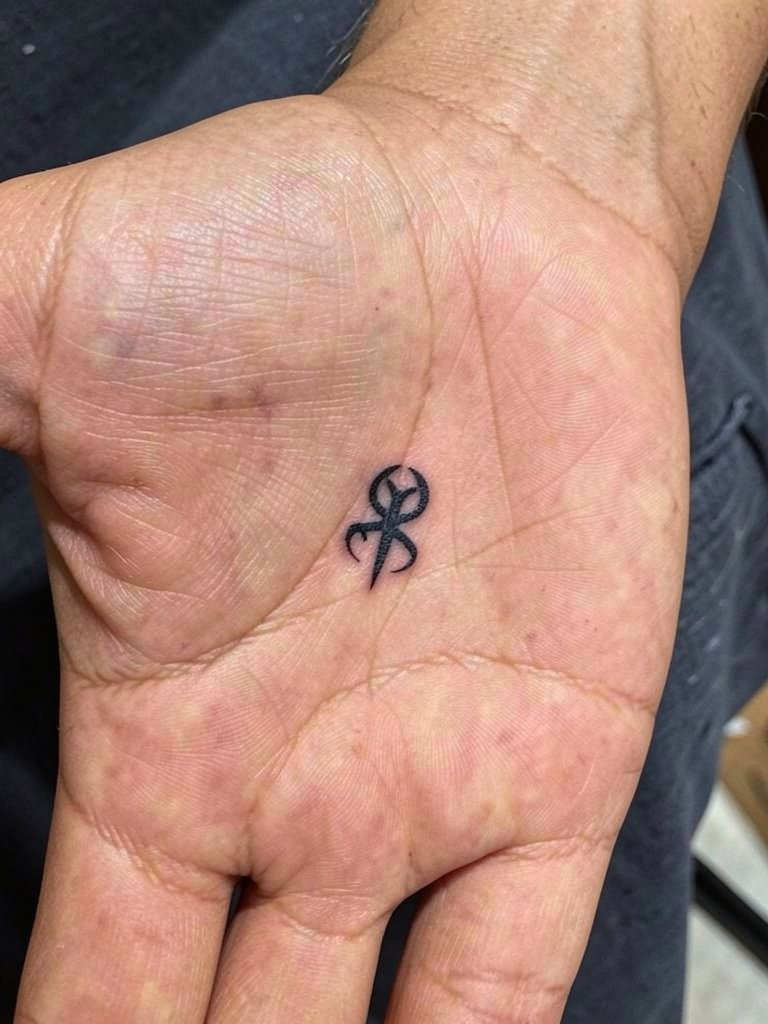
Palm tattoos face constant wear and typically need more frequent touch-ups. If you want a palm micro symbol, limit the design to a single, bold silhouette so it remains legible through washing and handling. A common error is fine detail inside a palm piece, which nearly always fades into an indistinct smudge. The session is short but intense, and you should expect touch-ups within a year. For showing a palm piece, gestures and open-hand poses read better than sleeve styling. During the appointment, avoid lotions on the hand beforehand so the stencil adheres well.
11. Bold Traditional Hand Tattoo
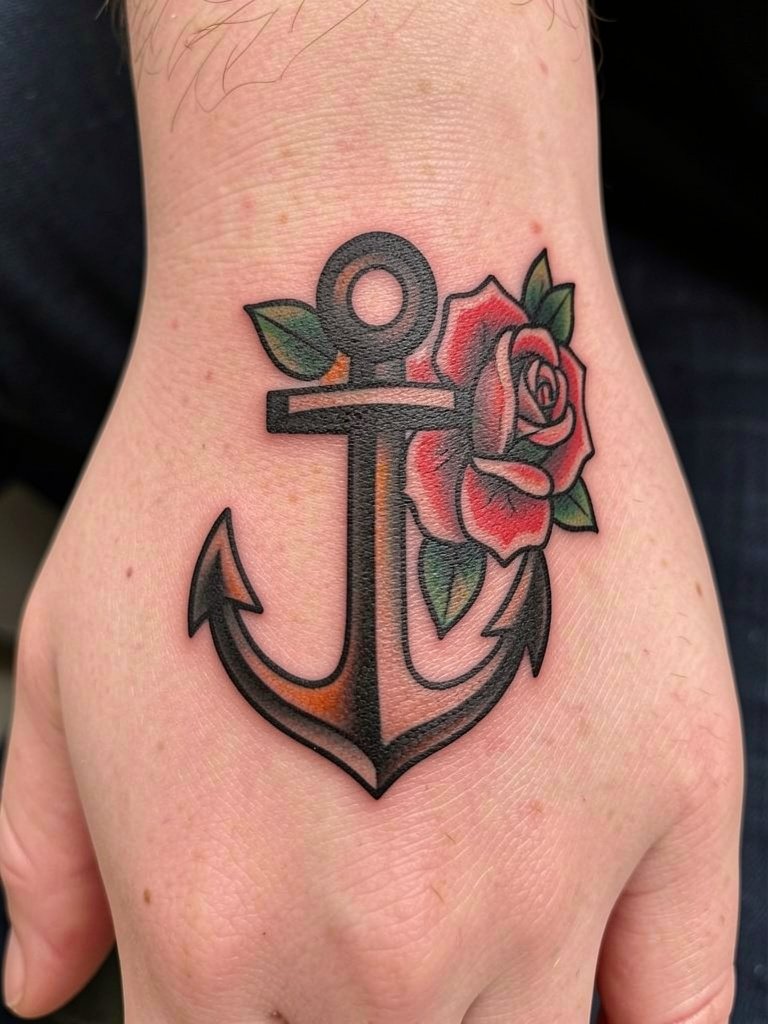
Traditional work benefits hands because heavy outlines and flat color retain readability. Specify that the artist keeps linework purposeful and saturation dense to prevent early feathering. The mistake is asking for thin outlines with heavy color, which can create pressure points that migrate. Expect a two-hour session for small traditional pieces. For show-off style, pair a traditional hand with rolled sleeves, worn denim, and a simple chain or watch on the opposite wrist. Bring reference flashes if you want classic motifs translated to a hand panel.
12. Hand Extension for a Sleeve
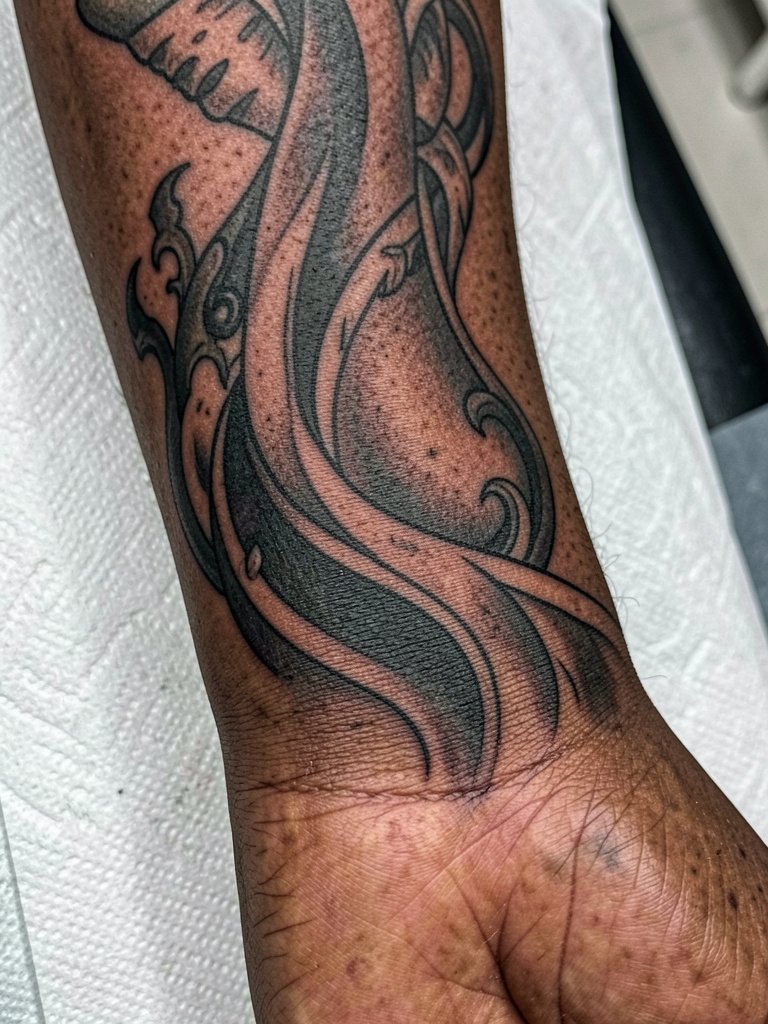
When the hand is part of a sleeve, plan it as an extension rather than an afterthought. One approach is to use transitional negative space and matching shading so the hand reads as a deliberate panel. A common problem is pasting a small flash onto a finished sleeve without matching style and scale, which looks discordant. Expect multiple sessions and specific staging of the wrist-to-hand blend. For the appointment, wear a loose short-sleeve so the artist can work across the wrist without fabric interference. Sleeve continuity reads best with coordinated black-and-gray saturation.
13. Compact Trend-Forward Designs
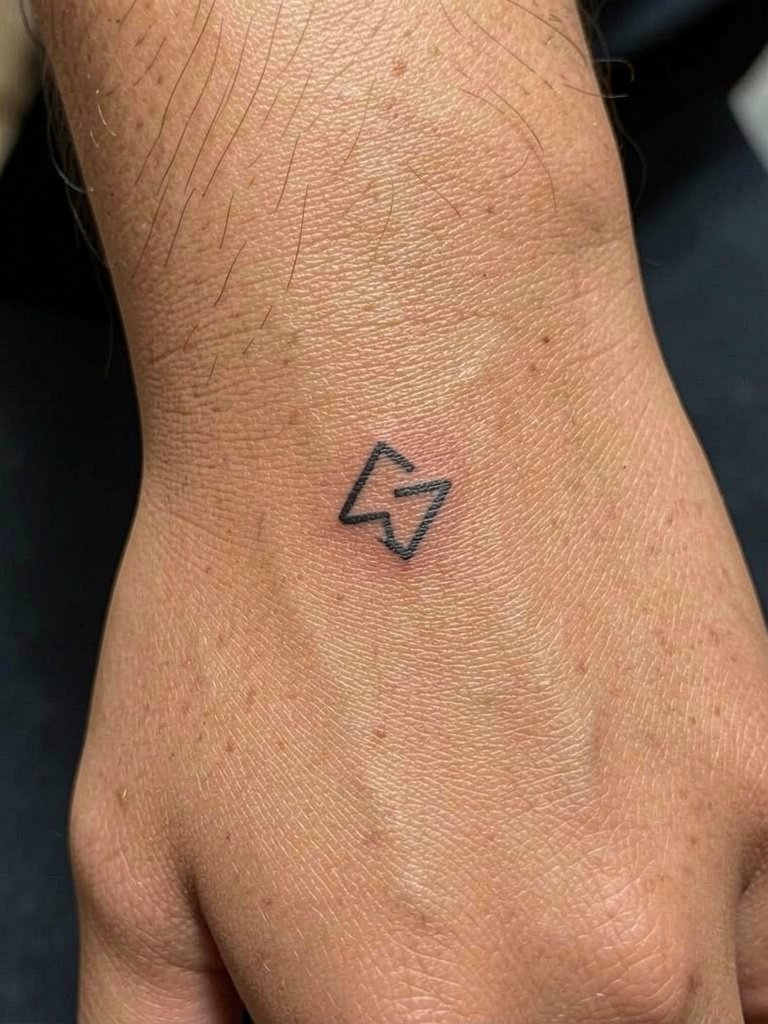
Small, trend-forward designs are often aimed at first-timers who want hand visibility without full coverage. The key is designing with the hand’s negative space in mind so the compact emblem does not feel pasted on. A typical mistake is copying a trendy layout meant for a larger canvas. Discuss scaling options with the artist so the emblem sits at the right distance from tendons. These pieces usually take 30 to 60 minutes and often need touch-ups within a year. For session wear, keep the hand free of jewelry.
14. Stencil-Outline Minimalist Panel
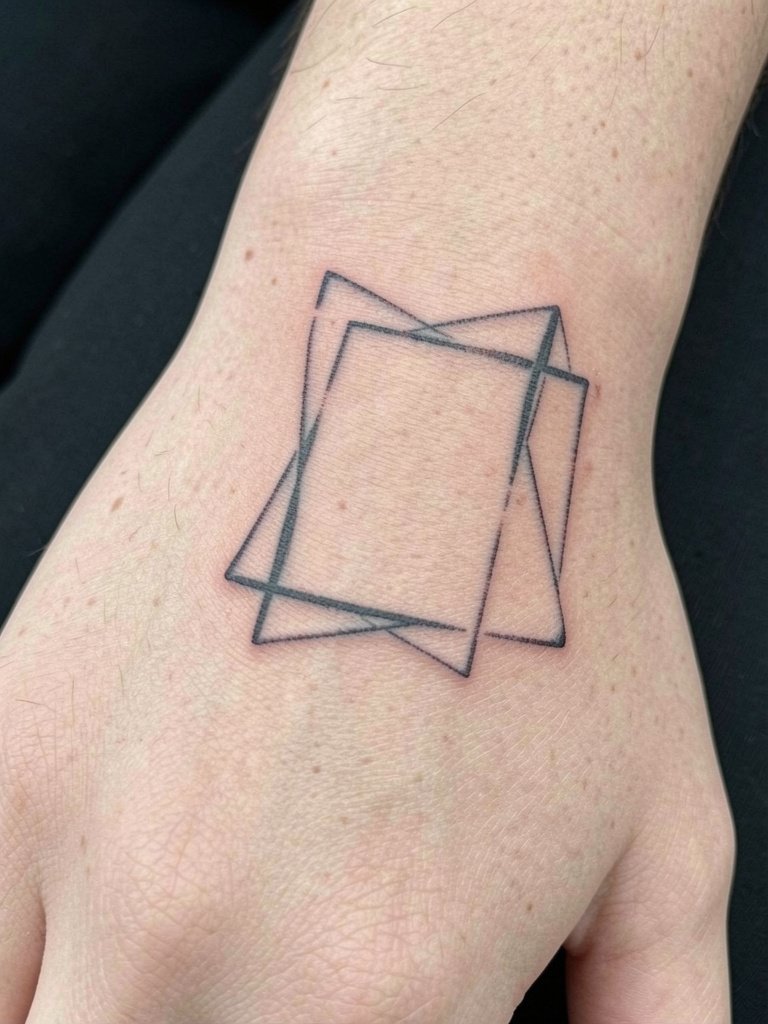
Outline-only hand pieces are trending but require careful spacing and slightly increased line weight for durability. Explain to the artist that the stencil should be applied at scale so you can preview how the negative space interacts with knuckles. The version that ages poorly is one where outlines are drawn so thin they dissolve into blur. A smart compromise is a clean outline with occasional dotted filler for texture. For showing the piece, neutral tees and rolled cuffs work best. Bring two reference images at different scales so the artist can demonstrate the read at arm’s length.
15. Fandom-Adjacent Emblem
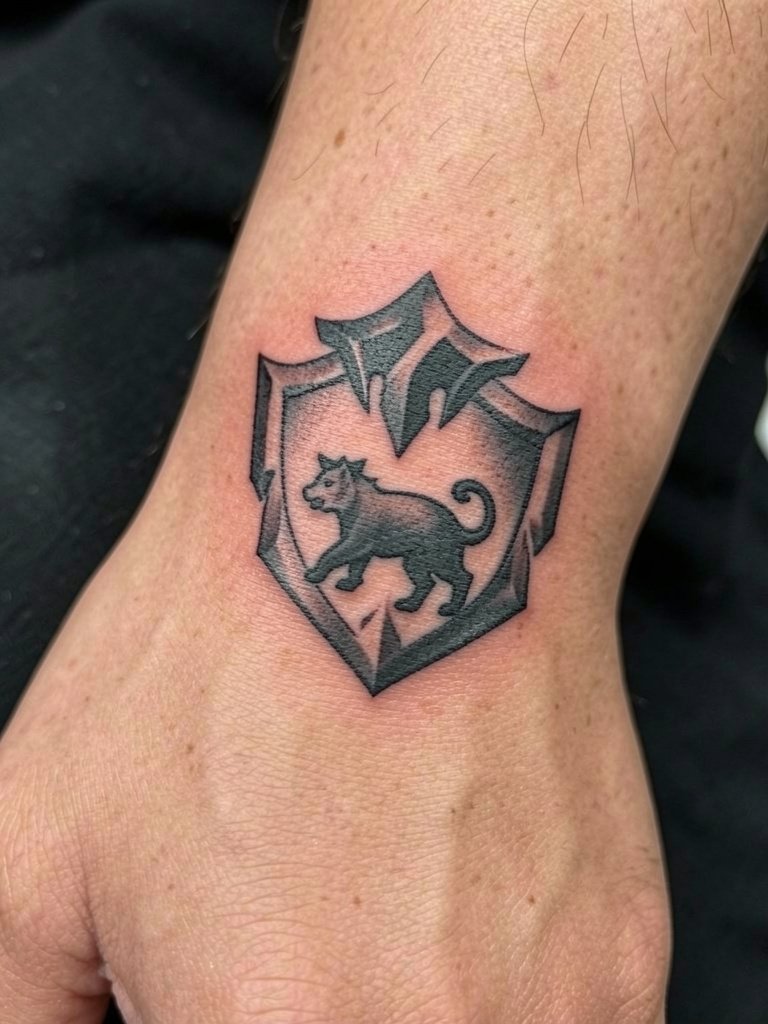
Game- and fantasy-inspired symbols translate well when abstracted into simple shapes that fit the hand. Avoid asking for exact character portraits; instead, describe the emblem elements like shield shape, a single silhouette, and bold contrast. Artists often see clients trying to cram intricate fandom panels onto the hand, which then lose legibility. Plan the composition so the emblem reads at about three to five inches across if shown in photos. For the session, wear a short-sleeve top so the stencil can be positioned and adjusted freely.
16. Micro-Realism Tiny Portrait
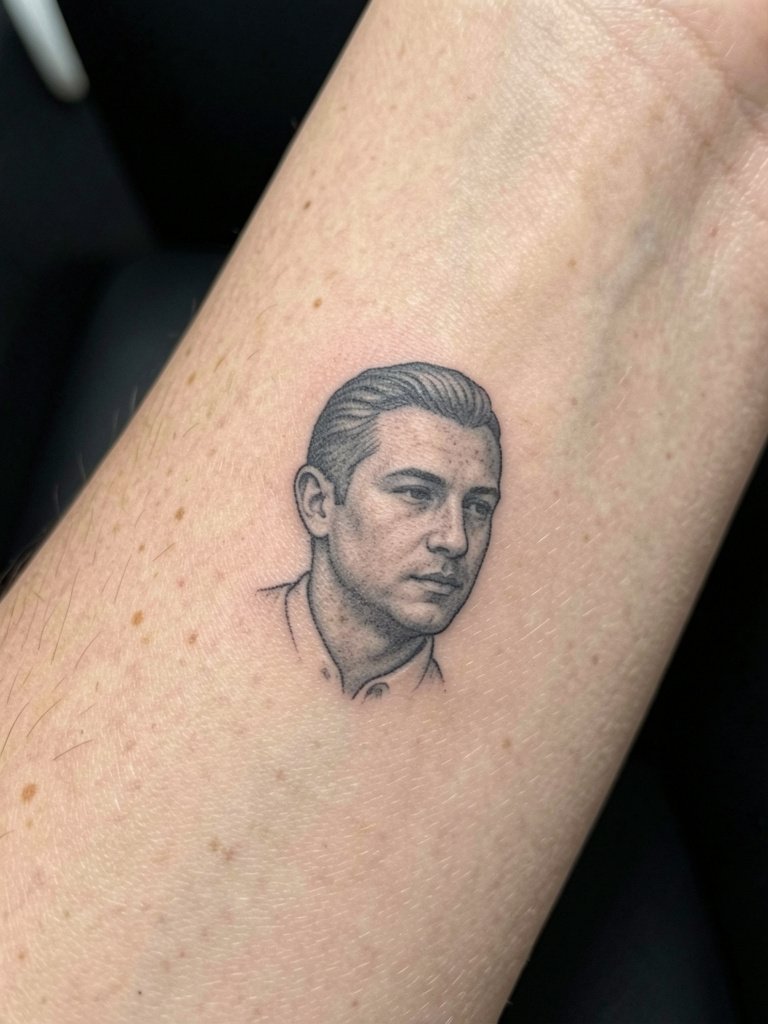
Tiny micro-realism portraits on the hand are a high-risk, high-reward option. Only request this if your artist has healed hand portfolio examples. The main issue is scale. If eyes and facial details are too small, they blur into a murky spot. Ask the artist to show at least one healed three-year photo of a similar piece. Sessions are detail-heavy and can run longer than expected for shading finesse. For showing the piece off, choose fitted neutral shirts so the hand stays visually central. Expect a touch-up within 12 to 24 months.
17. Full Blackwork Panel
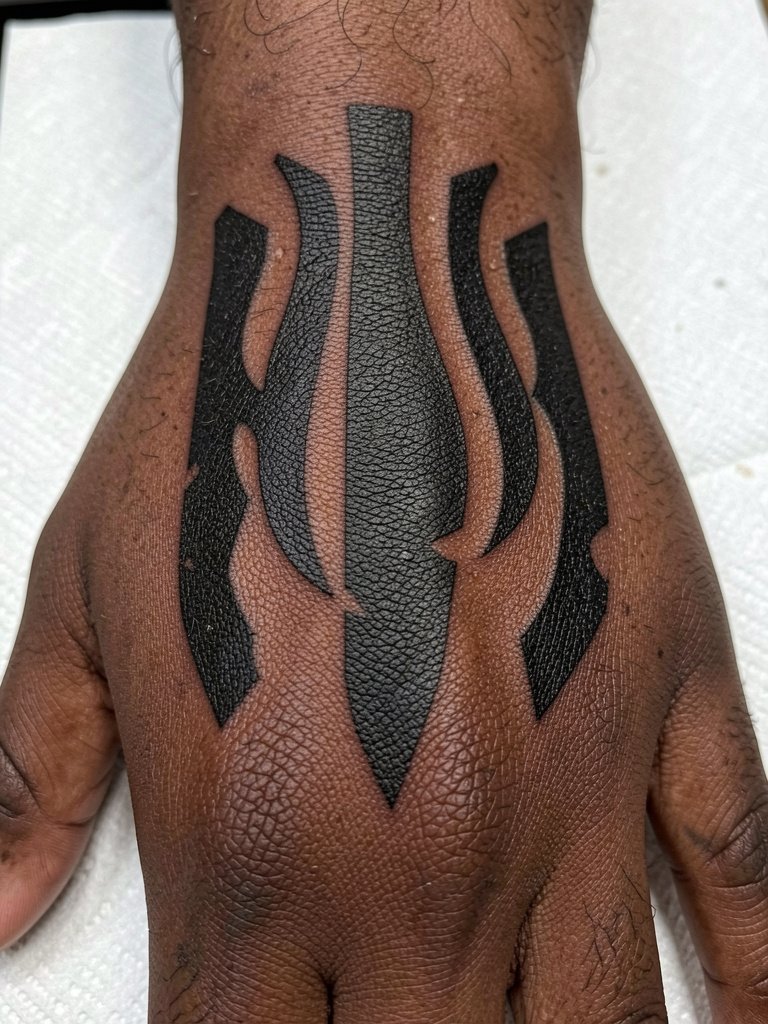
A full blackwork panel reads strongly on the hand because saturation trumps tiny detail on high-motion skin. Confirm with the artist how the skin will take big fills and ask about staged sessions to allow for even saturation. The common mistake is expecting one dense session to finish a saturated panel and ending up with patchy blackness. Plan staged sessions and discuss a realistic touch-up schedule. For wardrobe, a short-sleeve tee makes the panel foregrounded and pairs cleanly with simple accessories.
18. Dotwork Mandala Cluster
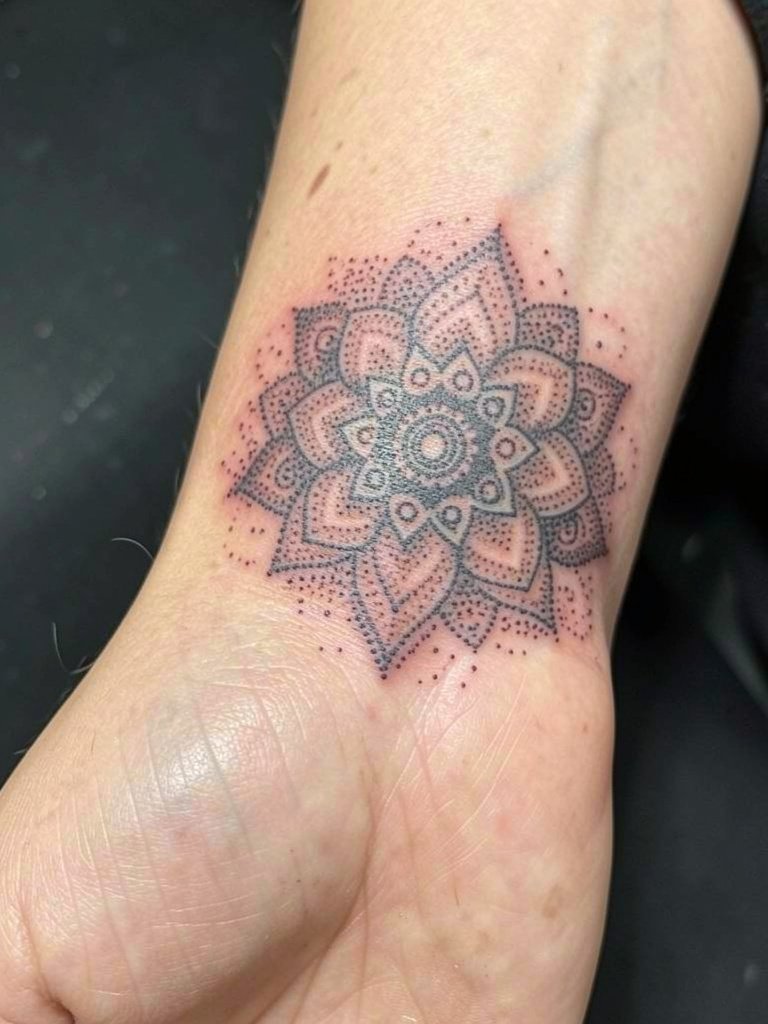
Dotwork looks striking on hands when artists use scale and density to create contrast. Discuss how many dot rings you want and where heavier stipple will sit so the design keeps form when some dots soften. The drawback is dot clusters need careful aftercare and sometimes a follow-up to deepen contrast. Expect a slightly longer session for dense stippling. For showing it off, neutral long-sleeve rolls or fitted jackets frame the hand pattern without competing. On the appointment day, keep the hand free of lotions for stencil adhesion.
19. Wraparound Thumb Geometry
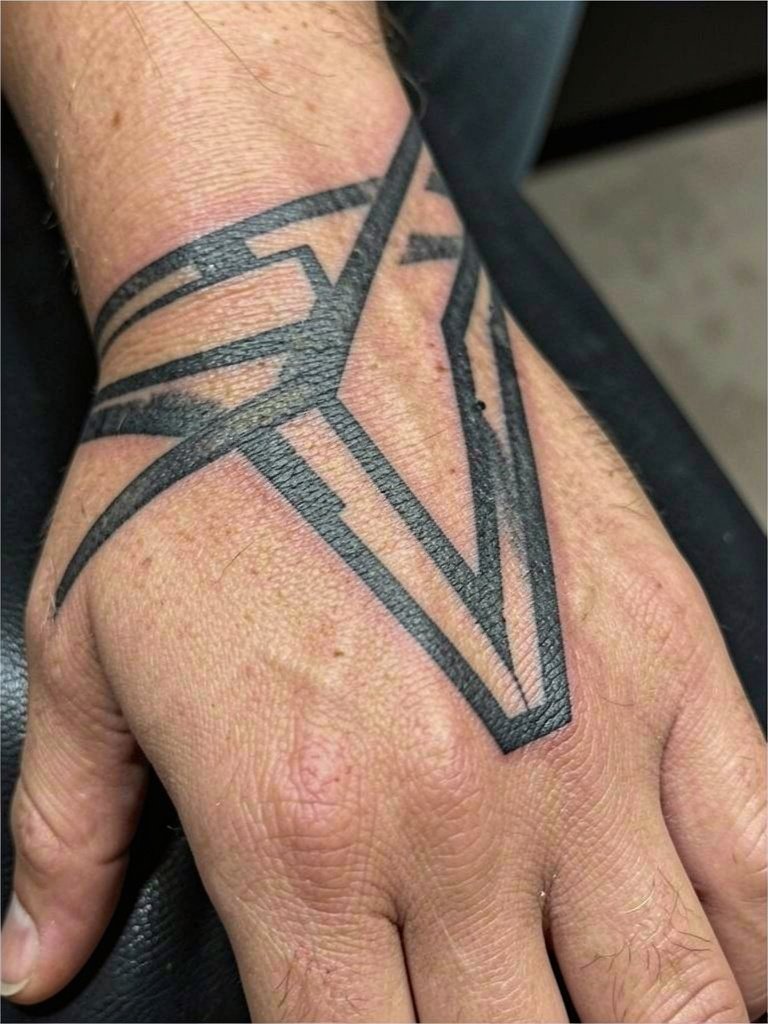
Wraparound designs need precise mapping because they cross joint planes. Ask the artist to mark movement points and bend the stencil as you flex the thumb so the pattern remains coherent. A common mistake is ignoring how the band deforms when the hand grips, which creates visually broken geometry. Sessions are moderately quick but require frequent repositioning for comfort. For the appointment wear no rings and bring a loose sleeve you can roll comfortably. This design pairs well with minimal outerwear that keeps attention on hand detailing.
20. Single-Row Knuckle Lettering
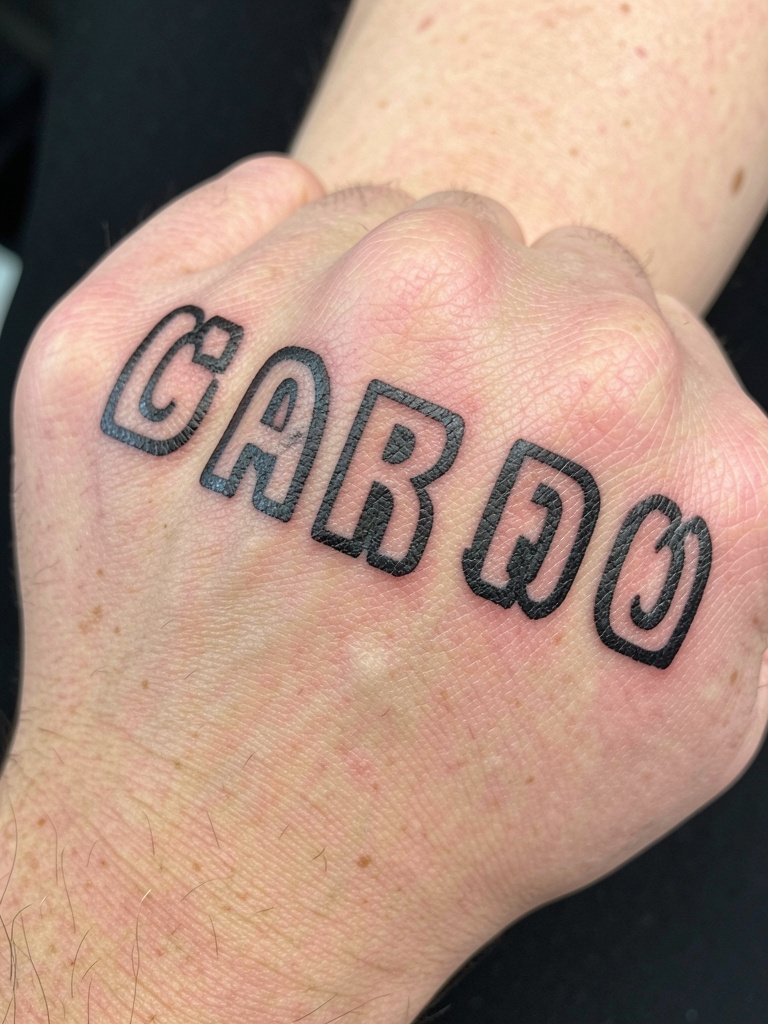
Knuckle lettering reads well when each character is bold and fills the knuckle plane proportionally. Ask the artist to stencil the exact letter height and spacing and to adjust for tendons that will pull the skin. A failure mode is picking narrow script letters, which distort. Expect a short but painful session with likely touch-ups in 12 to 18 months. For style, pair knuckle lettering with workwear shirts and a clean denim jacket so hands feel intentional in the outfit. Remove rings for the stencil and session.
21. Minimalist Arrow or Compass
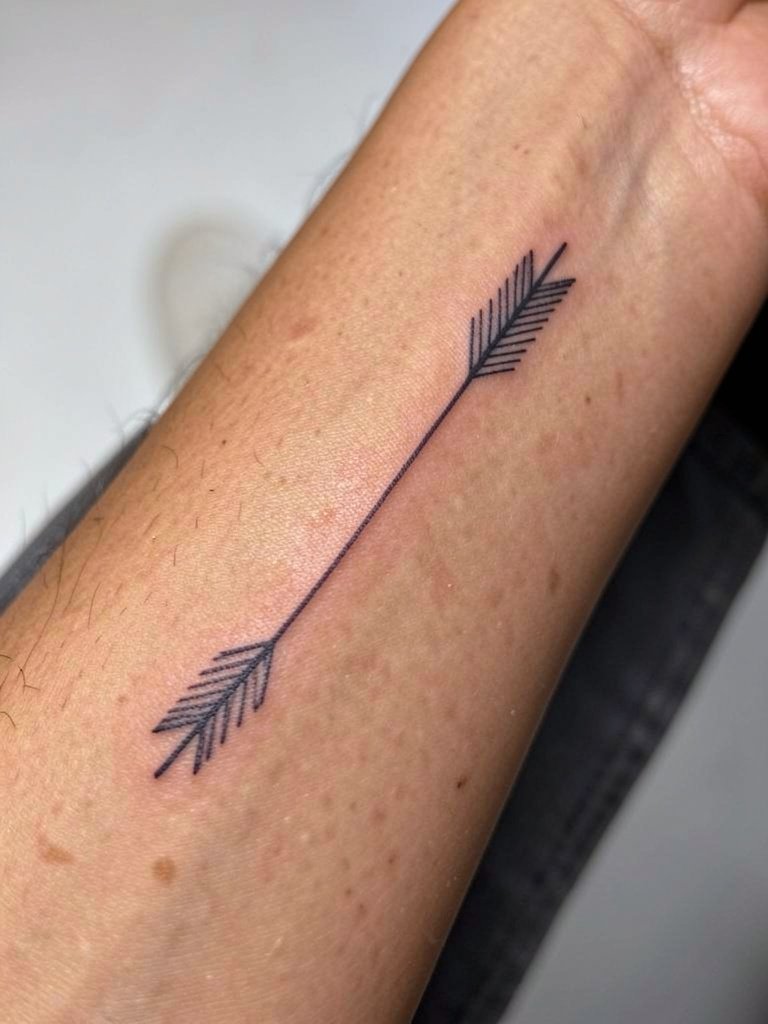
A narrow arrow or small compass fits the hand naturally when scaled to avoid tendons. Discuss exact stem thickness because the hand will eat ultra-thin lines. The design that ages poorly is the needle-fine arrow that loses directionality after a year. Session time is 30 to 60 minutes and touch-ups are common. For the session, wear a short-sleeve or tank so the artist can view alignment relative to the wrist. For showing the piece, streamlined jackets and short sleeves keep the clean line visible.
22. Abstract Line Panel
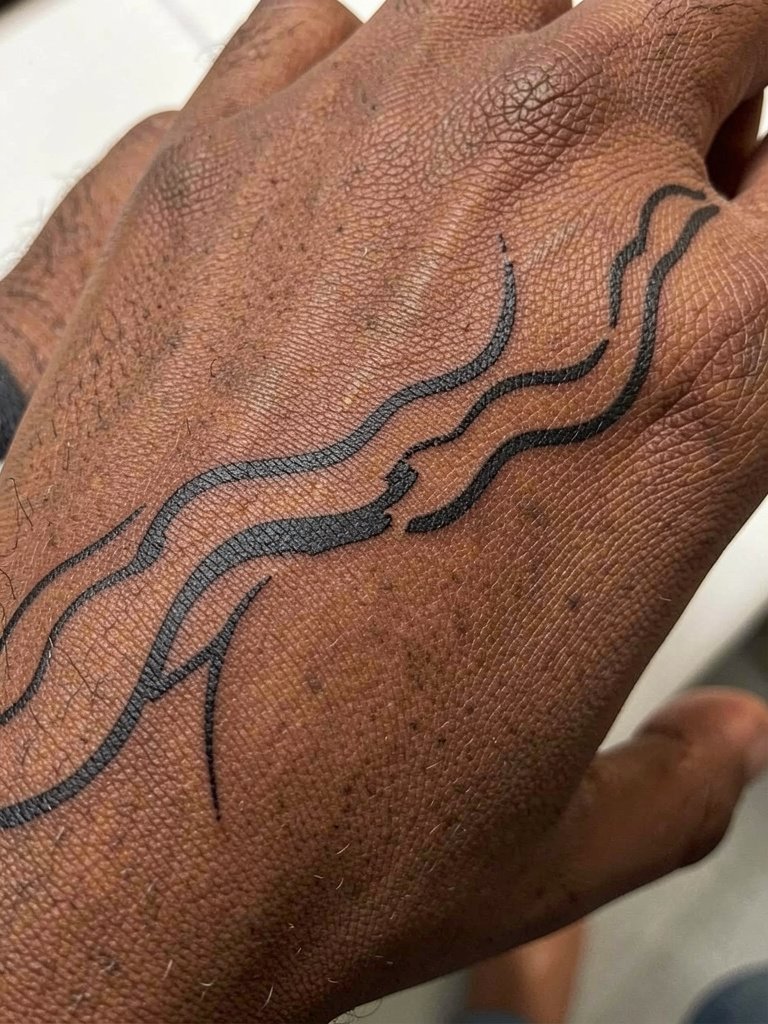
Abstract panels use a single continuous motif to complement hand motion. Make the artist place pauses and gaps to create intentional negative space where the skin flexes. A common error is looping lines too close to knuckles, which creates indistinct curves with time. Expect a one-hour session with possible touch-ups depending on how the gaps heal. For styling, pair abstract panels with minimalist rings and fitted tees so the lines read clearly against neutral fabric. During the appointment keep hands free of jewelry and heavy lotions.
23. Ornamental Palm and Back-of-Hand Combo
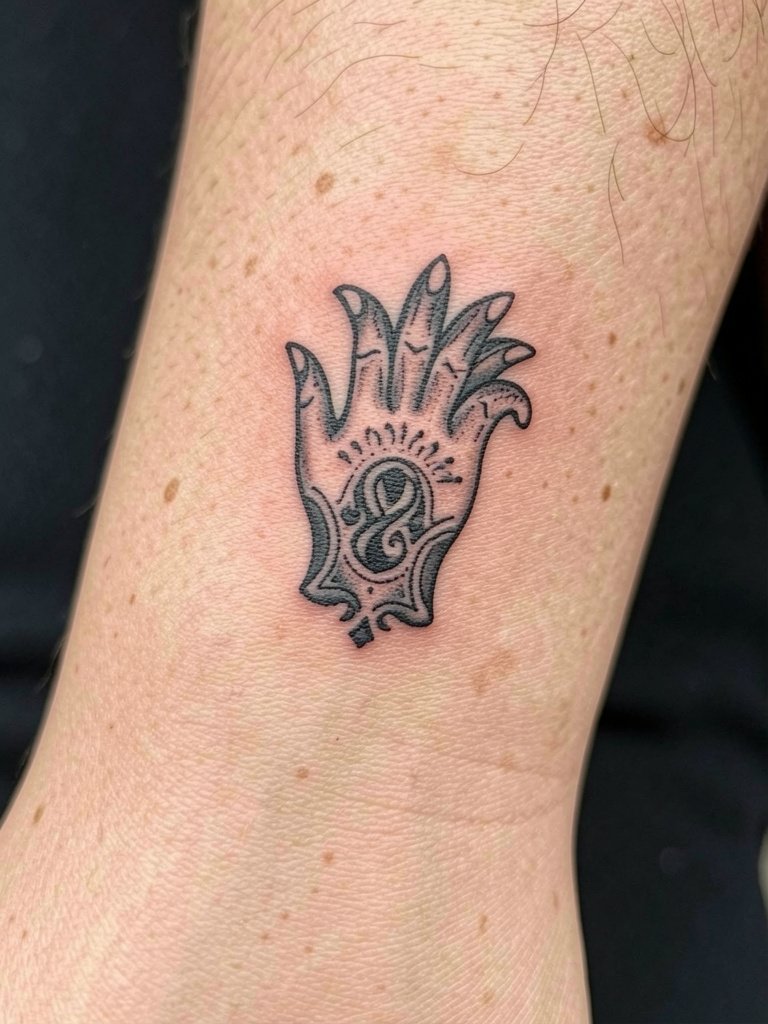
Combining palm and back-of-hand elements requires coordination on scale and durability expectations. Plan the palm piece as a bold silhouette and the back-of-hand motif as a complementary, slightly more detailed panel so both survive different wear patterns. A common mistake is matching identical detail levels for both zones, which ignores the palm’s faster fade. Sessions may be split to allow proper saturation on each surface. For show-off style, open-hand gestures and rolled sleeves let both sides read in real life. Request healed photos from the artist that show both sides over time.
Frequently Asked Questions
Q: How do hand tattoos age compared with forearm pieces?
A: Hand tattoos face more abrasion, frequent washing, and constant movement so thin details often soften sooner than forearm work. Expect touch-ups sooner on fingers and palms, and ask the artist for stronger contrast and wider spacing if longevity is a priority.
Q: What should I bring to a consultation for a hand piece?
A: Bring two reference images at different scales and a list of exact placement priorities, like "centered over the metacarpal ridge" or "align text along the digit." Also show photos of your daily tasks so the artist can predict high-abrasion contact points.
Q: Where can I find portfolios and healed examples for hand tattoo ideas?
A: Search hashtags like #handtattoo and #blackworktattoo on Instagram and TikTok with your city name to filter local artists, and browse Tattoodo for placement-specific galleries. Reddit tattoo threads can also point to healed examples in different skin tones, but prioritize portfolios that show healed work rather than only fresh photos.
Q: How do I dress for a hand tattoo session and for showing it off?
A: For the session wear a short-sleeve tee or tank so the artist can access the wrist and hand easily without fabric tugging. To show a fresh hand piece, rolled sleeves, fitted neutral tees, and minimalist rings make the work read clearly. Try plain crew neck shirt search for session and show-off options.
Q: Are there hand tattoo styles you should avoid if you want low maintenance?
A: Avoid ultra-fine single-needle scripts on fingers and dense micro-detail on palms if you want low maintenance. Bold outlines, solid black shapes, and slightly larger geometric spacing usually deliver the most predictable longevity.