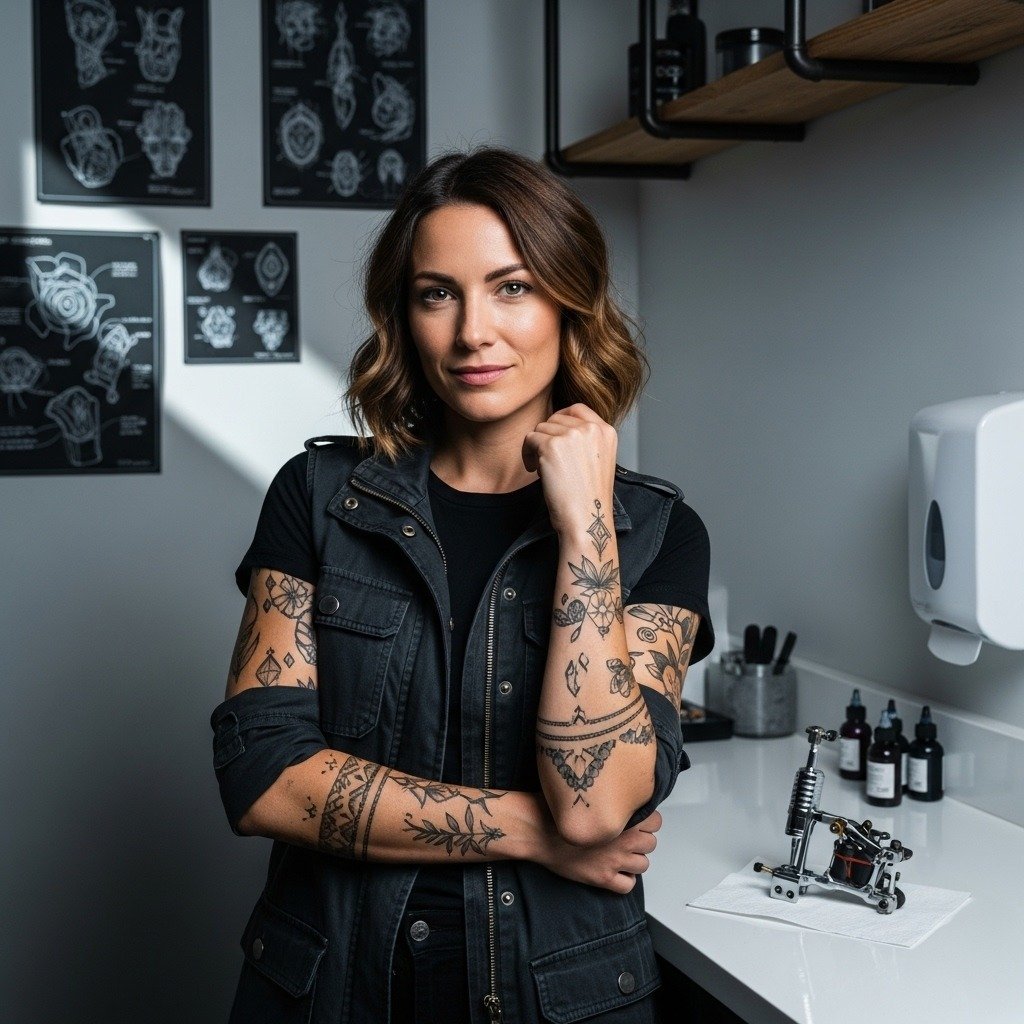

Tiny, delicate forget-me-not tattoos sell well on mood boards, but the single-needle versions that look fragile at first often lose petal definition by year three. Slightly stronger line weight, planned spacing between stamens, and a small touch of saturated blue help the floral shape keep its identity as skin shifts and time passes. Below are design ideas that start with how the ink will actually age and how to set up a session so the flower still reads years later.
1. Fine-Line Inner Forearm Cluster
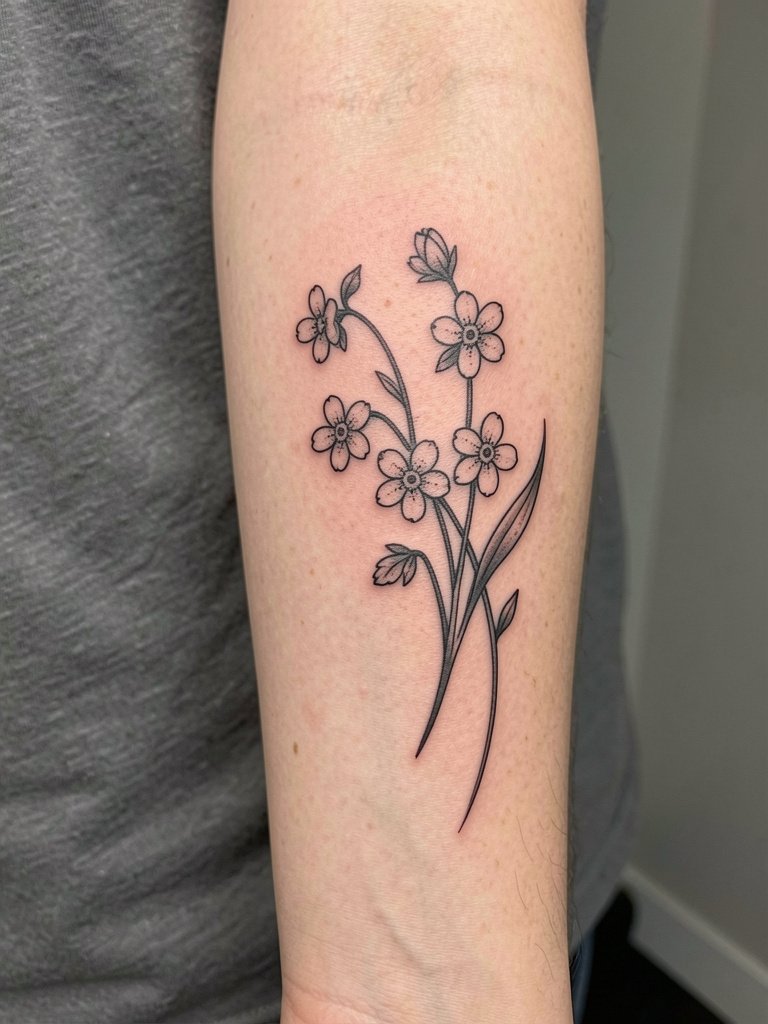
This placement suits first-timers who want visibility without high friction. Recommend slightly heavier single-needle strokes than the reference photo so the petal tips do not blur within two to three years. In the consult bring a scaled reference showing the cluster at three and five inches, so the artist can map how negative space keeps petals separate. Expect mild soreness and a session time of 45 to 75 minutes for a small cluster. Common mistake is asking for the tiniest possible version and ending up with muddled petals after healing. For showing the piece, pair with a linen tank top that keeps the forearm visible during warm months.
2. Single Blossom on the Collarbone
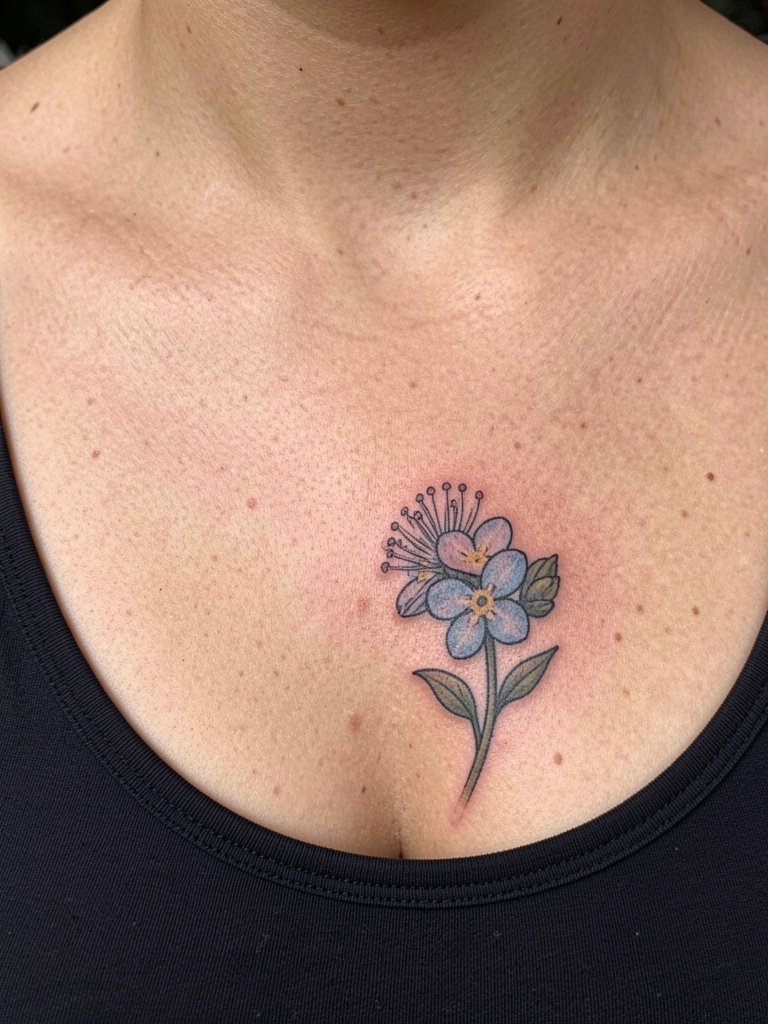
A solitary blossom at the collarbone reads like jewelry when placed off-center. The skin here moves with breathing so discuss spacing around the stamen and keep the central dotwork slightly bolder to resist blowout. Sessions are short, usually 30 to 50 minutes, but the area is sensitive so expect sharp moments during needle passes. A common error is placing the blossom too close to the sternum where friction from jewelry causes fading. For outfits that highlight the piece, try a wide V-neck blouse that frames the collarbone without tugging at the fabric.
3. Tiny Finger Accent
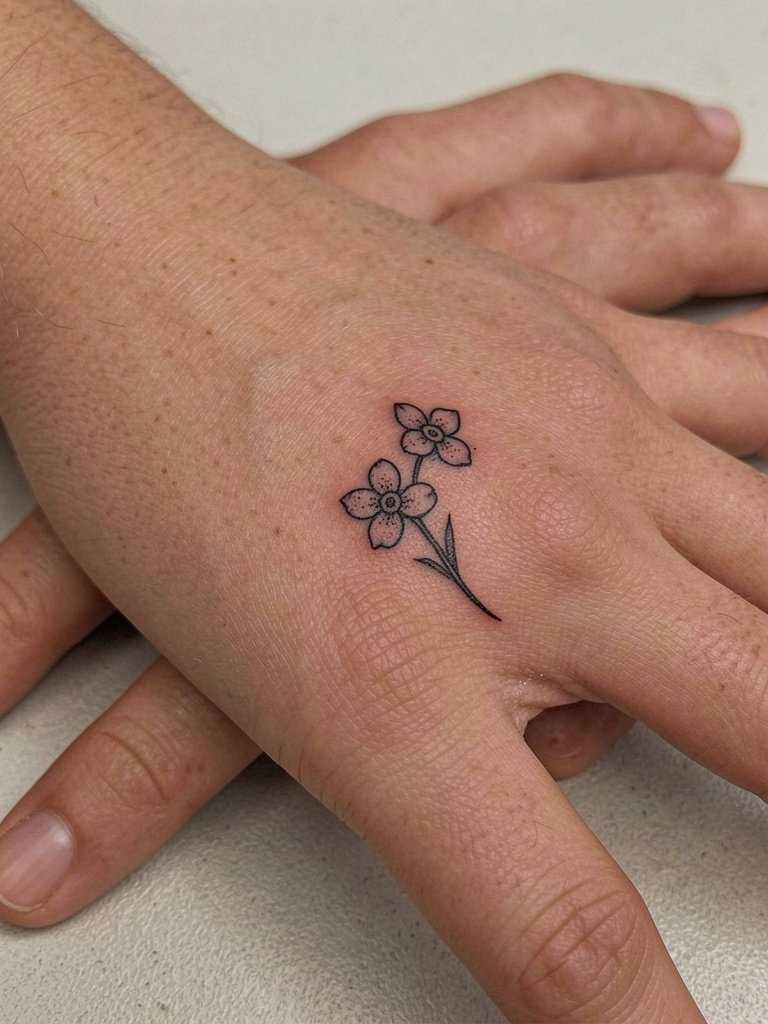
Finger tattoos live in a rough environment so expect faster fading and the need for touch-ups every one to two years. Recommend slightly thicker contour lines and avoid ultra-tiny internal details for the petal centers. The session is quick but painful, especially over knuckles. People often ask for the smallest possible scale, then regret the heavy touch-ups later. If you want to wear the floral while it heals, choose a simple ring stack that draws attention away from scabbing and looks intentional during the first month.
4. Watercolor Heel-of-Leaf Back of Shoulder
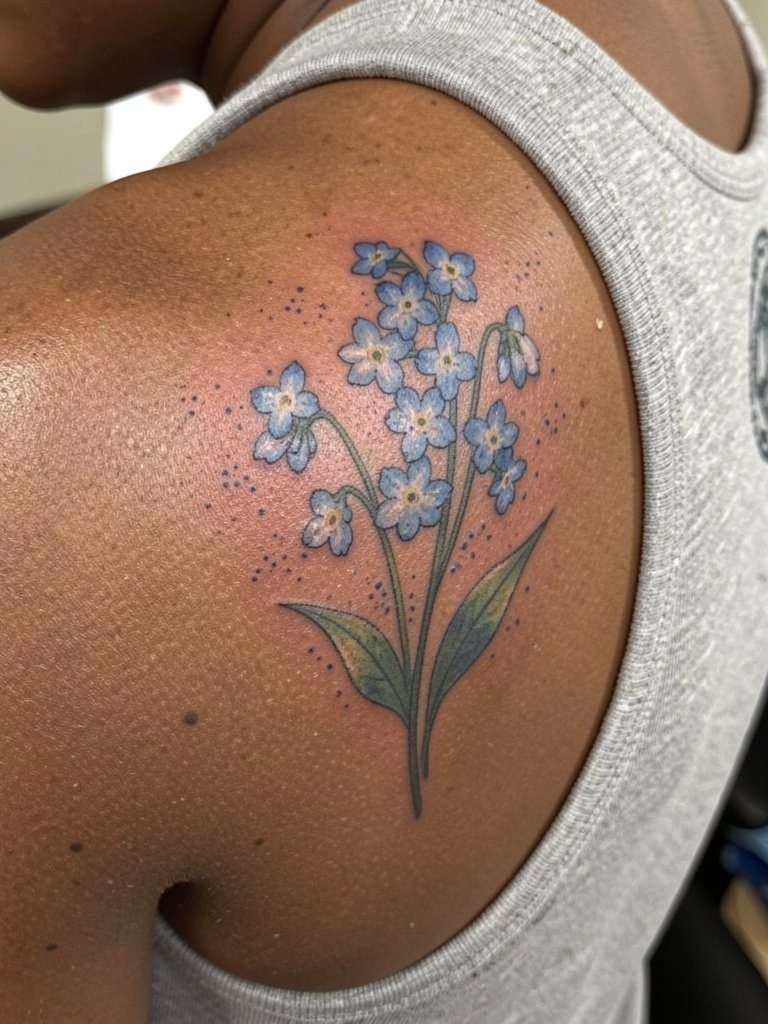
Watercolor takes advantage of the broad, low-friction skin on the upper back. Use softer saturation in the wash areas and stronger black outlines around the main petals. Talk through how the color will be layered so the blue keeps depth without pooling into small gaps. Sessions run about 90 minutes for a medium spread and the area is less painful than ribs. A mistake is asking for full watercolor with no anchor lines, which can look like a blur over time. If you want the flowers to peek from clothing, try pairing with open-back sundresses that leave the shoulder exposed.
5. Ankle Sprig with Tiny Stem
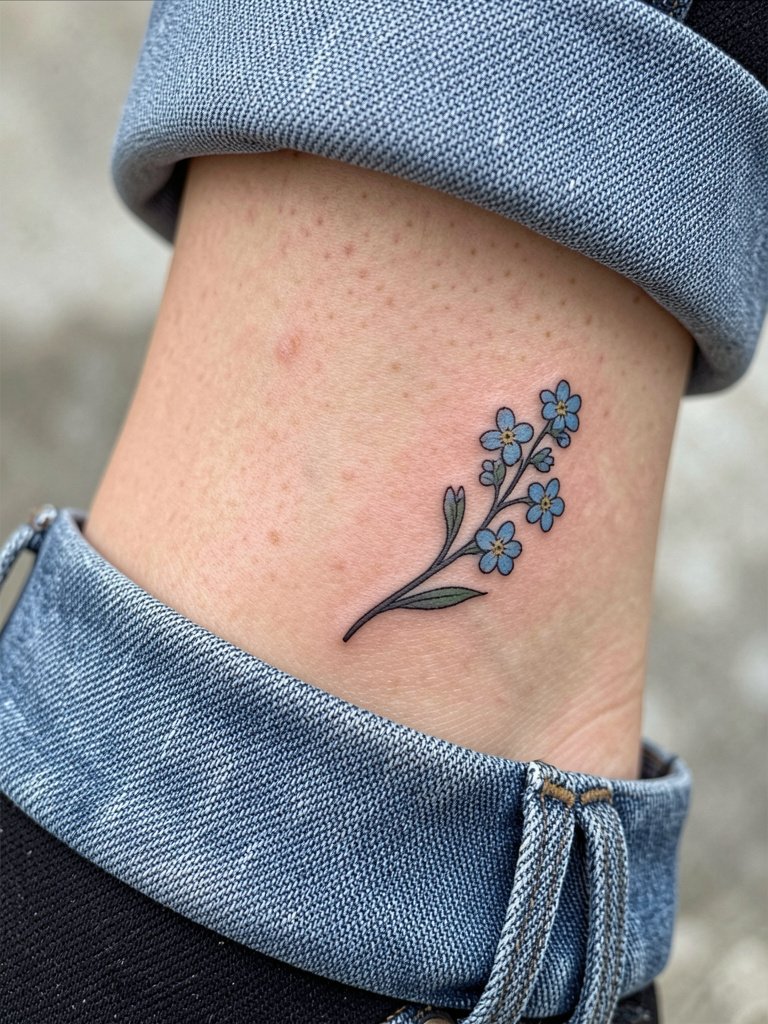
An ankle sprig is a low-visibility option that copes well with motion as long as the stems have room between petals. Ask for slightly wider spacing in the petal tips so the design stays legible after a year of shoes rubbing. The session is usually 30 to 60 minutes and the site tolerates modest saturation without high blowout risk. A common mistake is stacking multiple tiny blooms too close together, which merges as the skin settles. For showing it off in summer try low-rise denim shorts that end above the ankle so the sprig is visible.
6. Tiny Botanical Behind the Ear
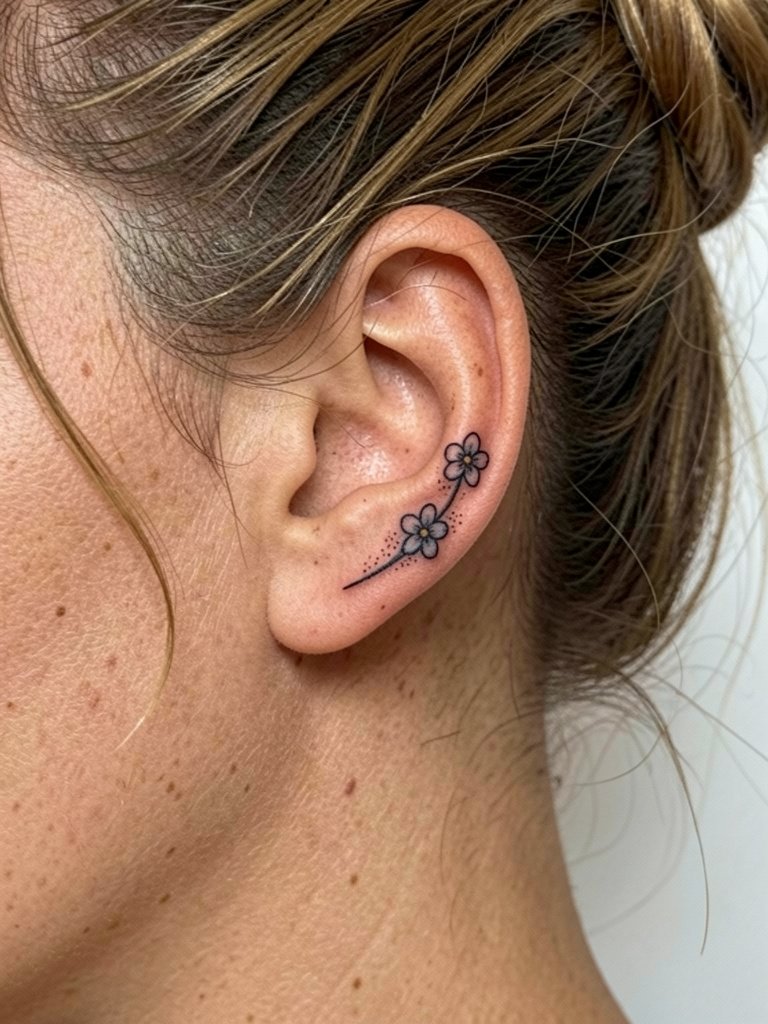
Behind-the-ear options are subtle and tap into the desire for a personal bloom. Keep lines slightly bolder than you envision to survive hair brushing and pillow friction. Sessions are short, often under 30 minutes, but the area is sensitive and touch-ups are common at 12 to 18 months. The main mistake is asking for dense color there, which looks patchy once hair rubs it. For discreet display, wear an updo or a lightweight scrunchie while the area finishes healing.
Pre-Session Essentials
The collarbone, inner forearm, and behind-the-ear ideas above each have specific access and sensitivity needs, so these picks keep the chair time smooth and the first week manageable.
- Stencil transfer paper kit. Lets you preview exactly where the tiny petals sit on curved areas like the ankle and collarbone before final ink.
- Topical numbing cream. Applied about 45 minutes beforehand eases sharp moments on the collarbone and behind-the-ear placements without affecting linework.
- Thin protective film roll. Useful for ankle and finger placements that face friction from socks and daily hand use during the first week.
- Fragrance-free gentle body wash. Cleans the area without stripping delicate ink or irritating fresh skin.
- Aquaphor healing ointment. Thin layers in the early days lock in moisture for small floral work and reduce scabbing that hides fine detail.
7. Micro-Realism Petal on the Wrist
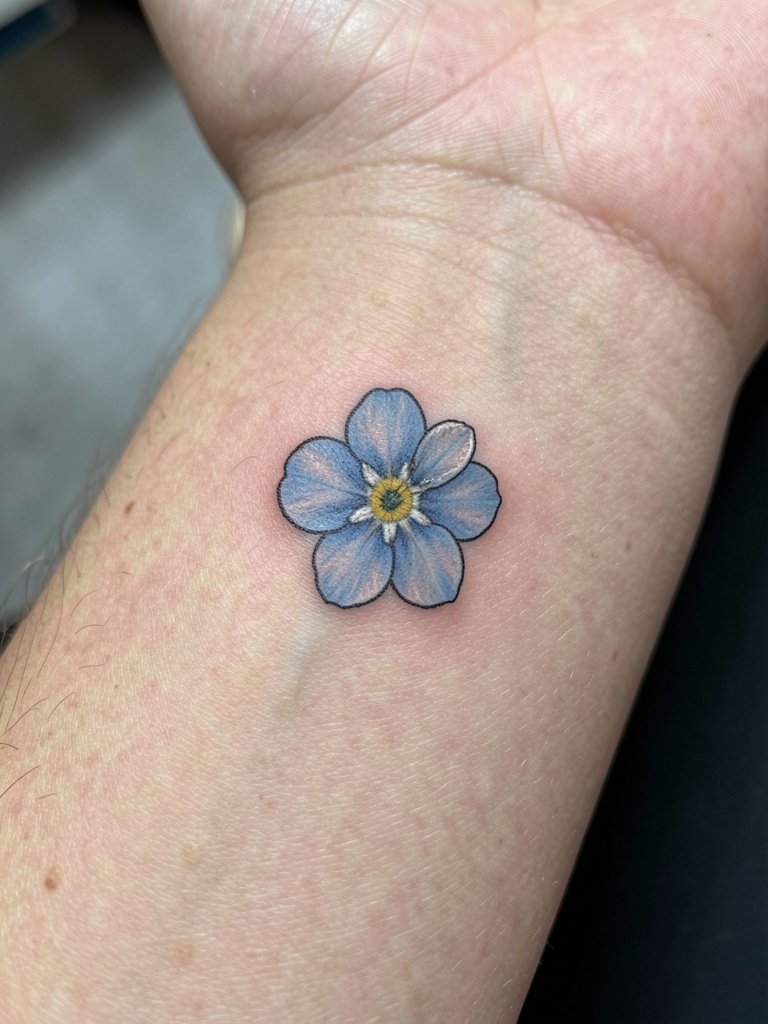
Wrist placements reward micro-realism but demand planning. Ask the artist to map how the petal reads when the wrist flexes and to use slightly heavier central shading so the highlight does not disappear with time. The session often lasts 45 to 90 minutes depending on color. A common misstep is pushing for ultra-white highlights on thin skin, which can fade faster than surrounding ink. Wear a loose drawstring linen pant to the appointment so the artist can access the wrist without fabric bunching under the arm.
8. Ribcage Spray of Forget-Me-Nots
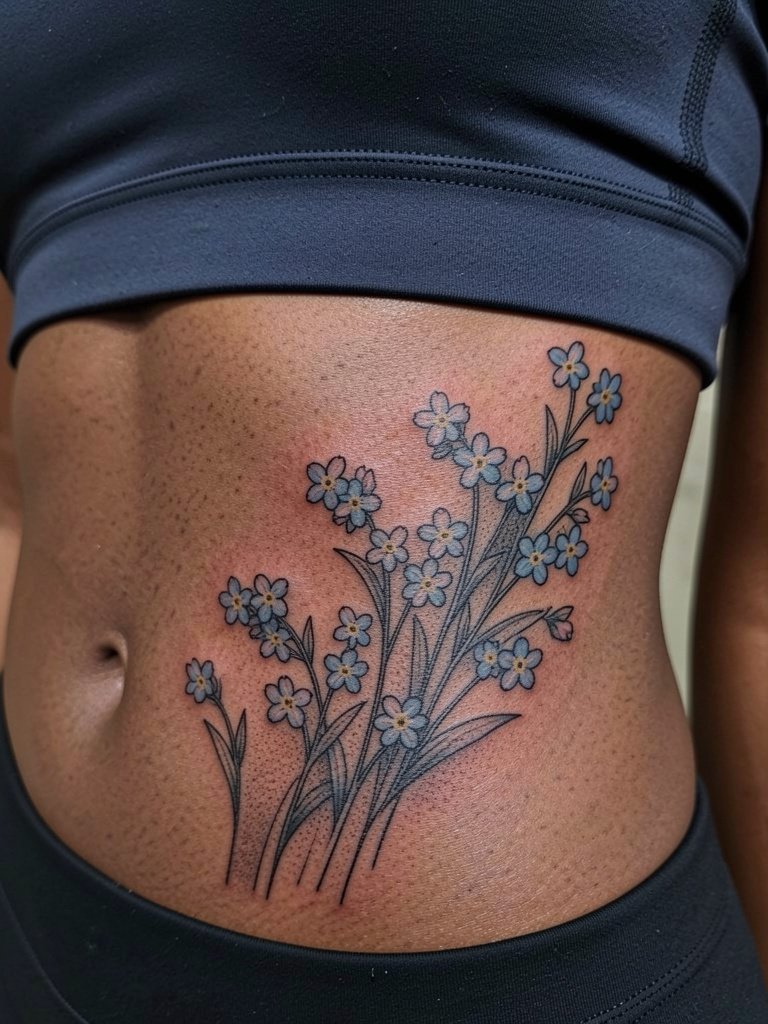
Rib placements are dramatic but polarizing. One camp argues fine-line ribs blur and fade within two years because the skin stretches and the area moves with breathing. The other camp says that with slightly wider spacing and deliberate needle depth, a fine-line floral can settle well and hold detail for many years. Be explicit with measurements and request a test stencil that shows spacing for petals before the first pass. Expect high discomfort and longer sessions, often two hours or more. Plan a loose fitted sports bra to keep the area accessible and comfortable during healing.
9. Mini Wreath on the Calf
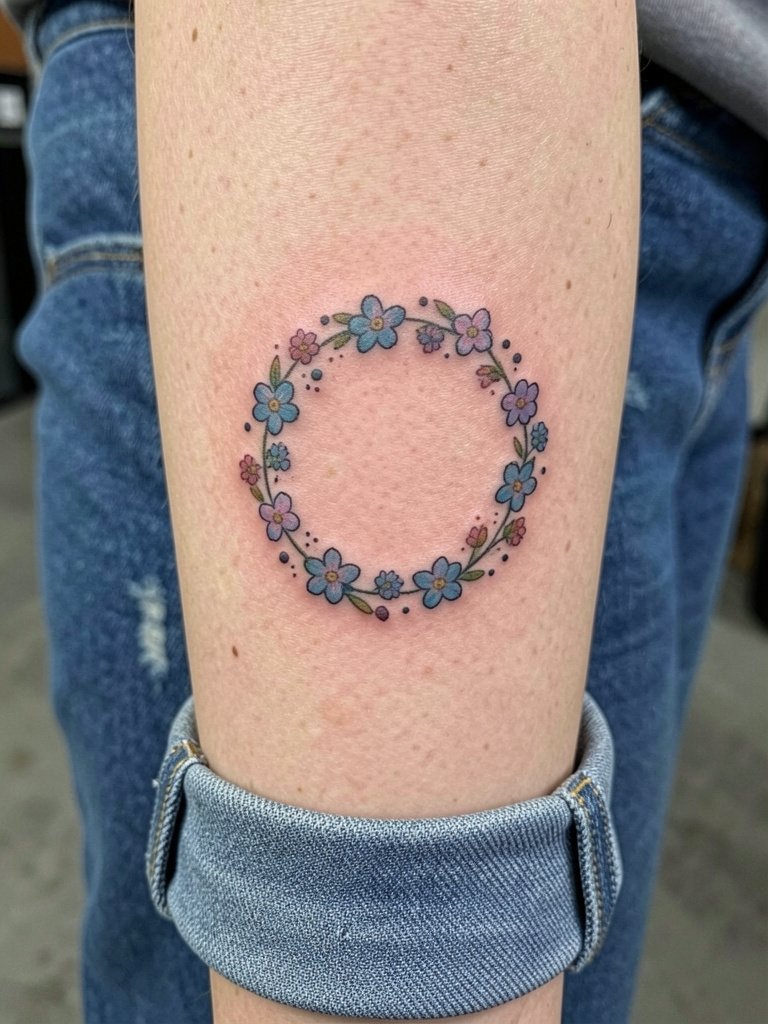
The calf provides low-friction real estate for a circular motif that can be scaled. For a wreath, ask for slightly increased spacing between blooms so each flower reads when viewed from a distance. Sessions are comfortable and typically 60 to 90 minutes. A common error is compressing the wreath to fit a narrow phone case image, which makes the petals overlap as the skin settles. When you want to show the piece, choose midi skirts that hit mid-calf and reveal the wreath naturally.
10. Tiny Single Stem on the Side of the Thumb
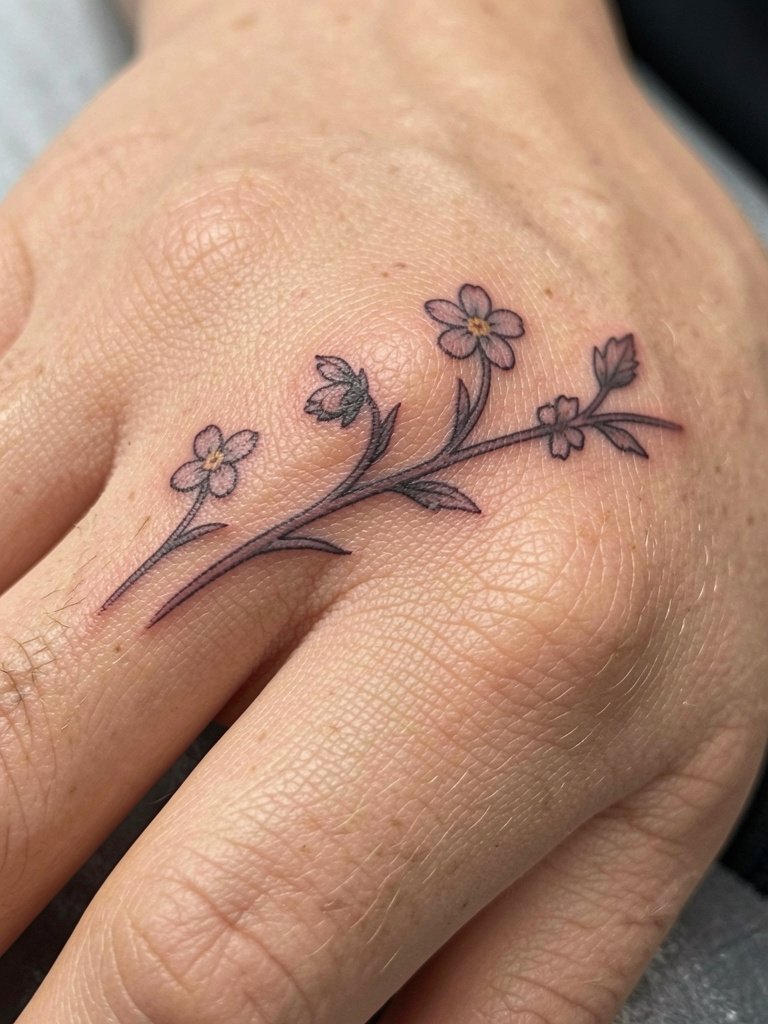
Thumb placements are highly exposed, so scale up the line weight slightly and avoid internal petal hatchwork that will blur. Sessions are short but involve sharp localized pain. Frequent mistake is asking for a delicate stem that disappears after heavy hand use. Expect a touch-up at 12 months. For recovery days, wear a comfortable cotton glove when doing dishes to limit soaking and rubbing.
11. Delicate Half-Sleeve Garland
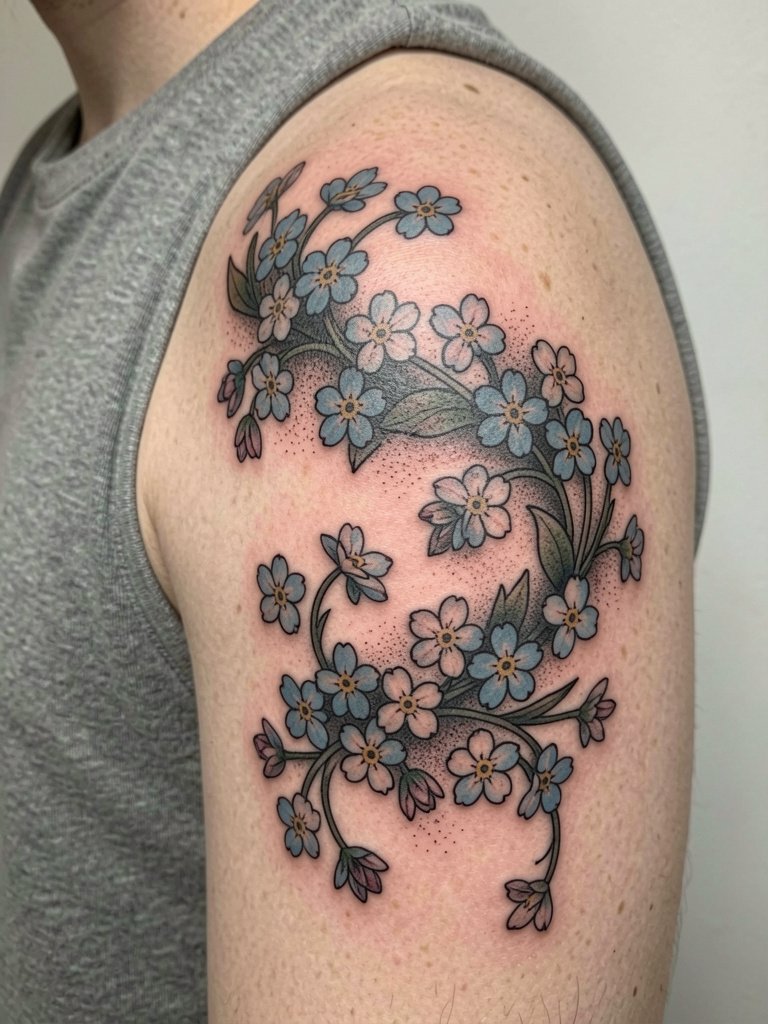
A half-sleeve gives room to play with scale and negative space so each bloom maintains shape through movement. Discuss how the garland will wrap when the arm bends and where the focal flower should sit when the arm is at rest. Sessions are multi-visit, usually three to five hours total across appointments. A misstep is packing too many small blossoms into a narrow band, which looks busy after healing. For a look that complements the floral flow, try sleeveless linen tops that leave the arm free.
12. Geometric Petal Ring on the Thumb Side of the Hand
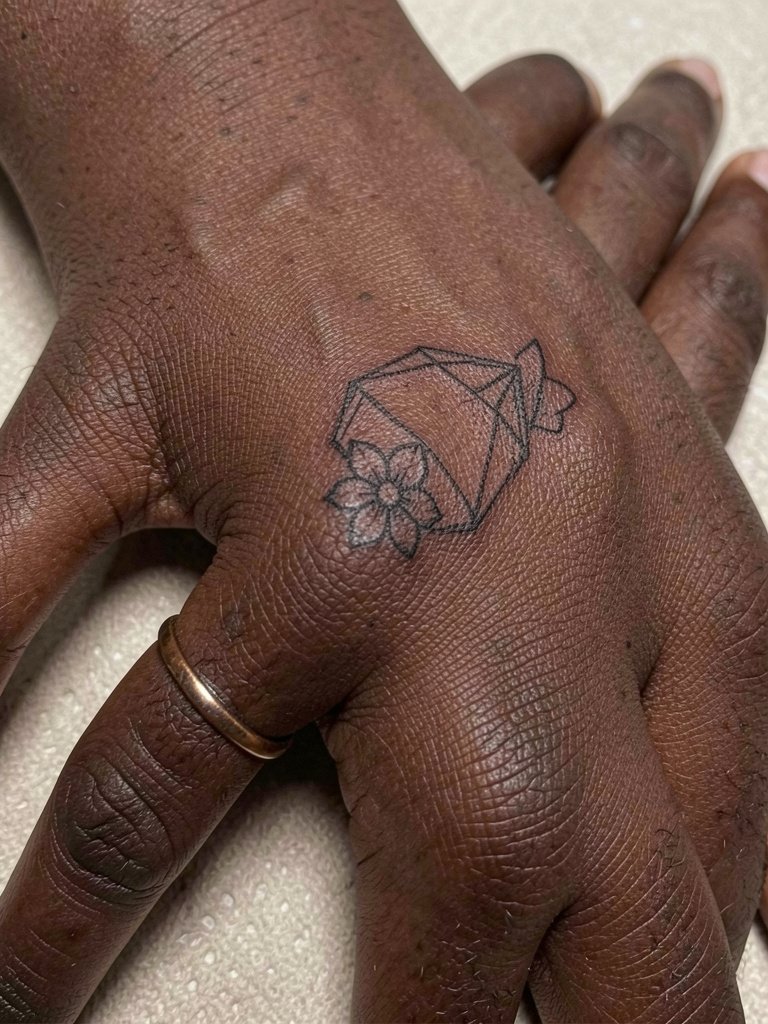
Hand tattoos are controversial in their own right because the area faces constant washing and friction so longevity is limited and touch-ups frequent. For a geometric ring, ask for slightly larger negative spaces inside petals so the piece keeps readability between touch-ups. The session is brief but intensely sensitive. A typical mistake is copying a tiny ring reference that relied on photo editing to look sharp. If you want low-profile accessorizing while the piece heals, pick a thin adjustable bracelet that sits near the wrist rather than rubbing the new ink.
13. Ankle Chain of Tiny Blooms
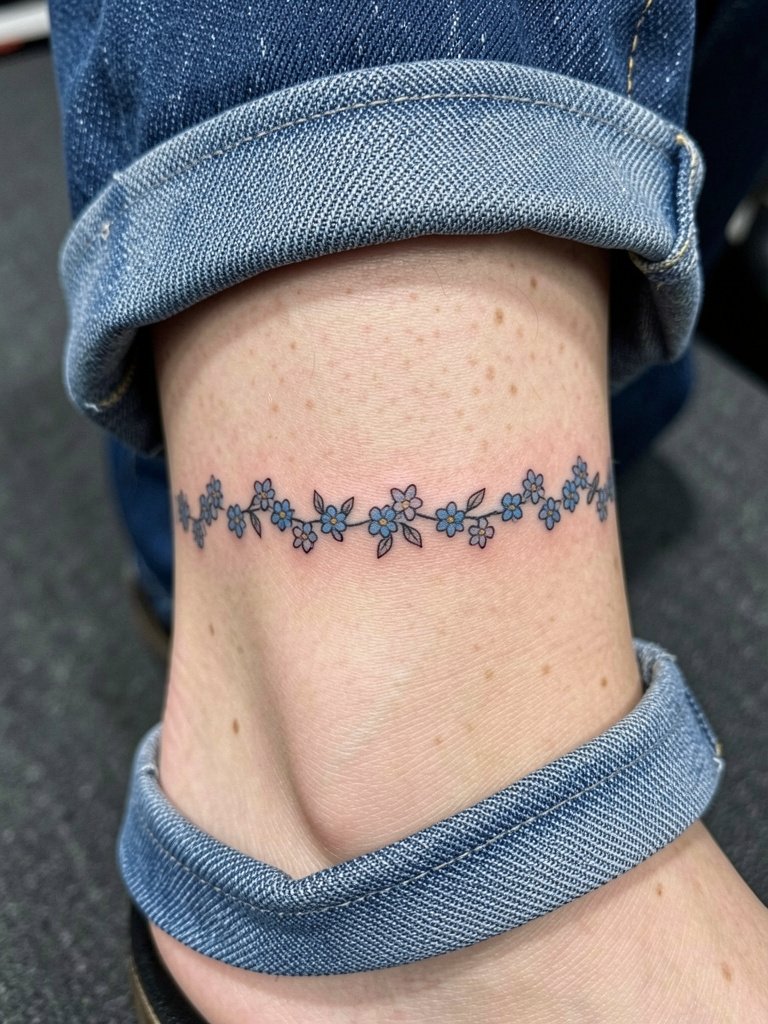
A chain of blooms works well when each flower is spaced enough to avoid merging from sock and shoe friction. Ask for a mock-up wrapped around the ankle so the artist can check the read from different angles. Sessions run 45 to 75 minutes depending on bloom count. The mistake people make is requesting maximum blooms with tight spacing to match a bracelet image. For styling, try pairing with anklet chains that sit below the tattoo so both metal and ink remain visible.
14. Subtle Sternum Cluster
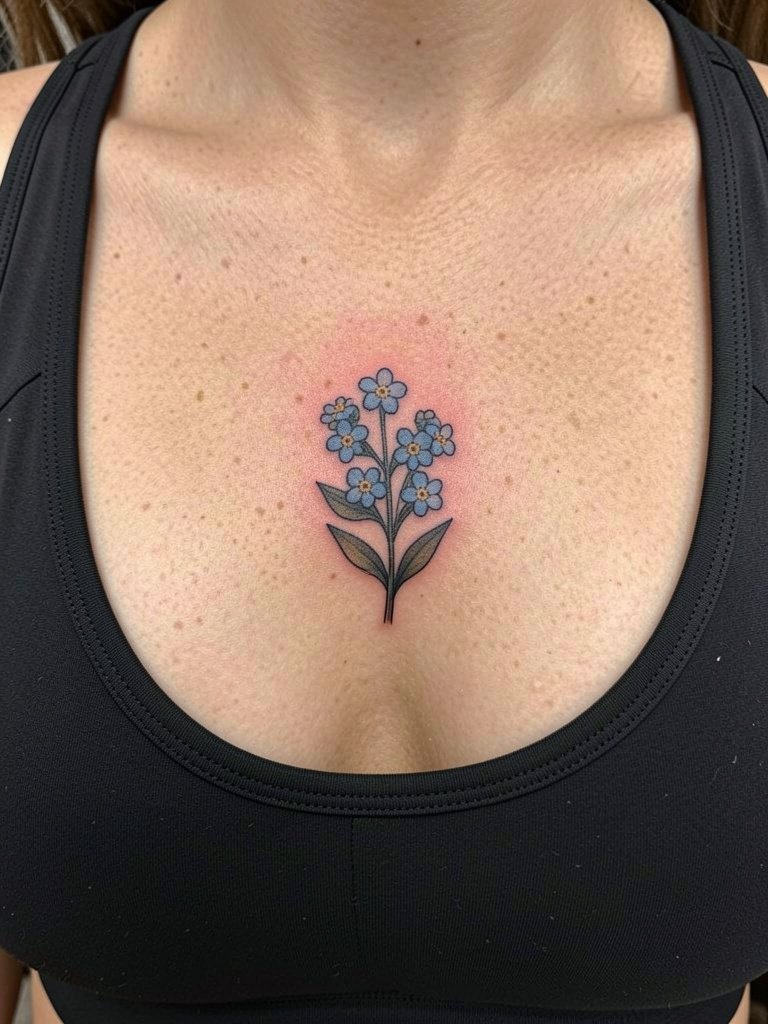
Sternum placements demand careful mapping because chest movement and bras can affect healing. Ask the artist where the lowest petal will sit relative to common bra lines and request a slightly higher placement if you wear underwire. Sessions are more uncomfortable and often require breaks. People who request dense clusters here end up with heavier scabbing that hides petal detail. For post-session comfort and access, bring a front-close bralette so you avoid pulling fabric over the tattoo while dressing.
15. Finger Band of Micro Flowers
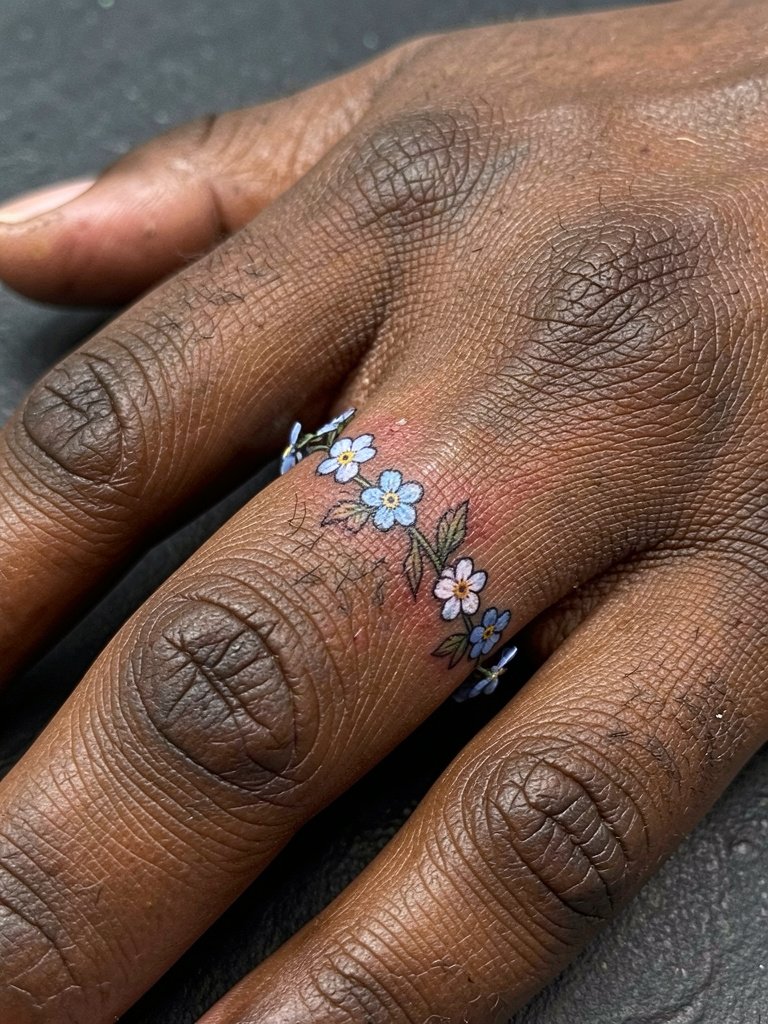
Finger band tattoos split opinion among artists. One group insists that rings and bands on fingers fade quickly and require frequent touch-ups because of constant washing and friction. The opposing group argues that with bolder line weight and simplified spacing, finger bands can remain legible for years with reasonable upkeep. For this style pick slightly stronger outlines and avoid tiny internal petal dots. Sessions are short but painful and expect touch-ups around 12 months. When you want to accessorize, wear a delicate metal ring on the adjacent finger rather than over the fresh ink.
16. Thigh-Side Spray in Soft Blue
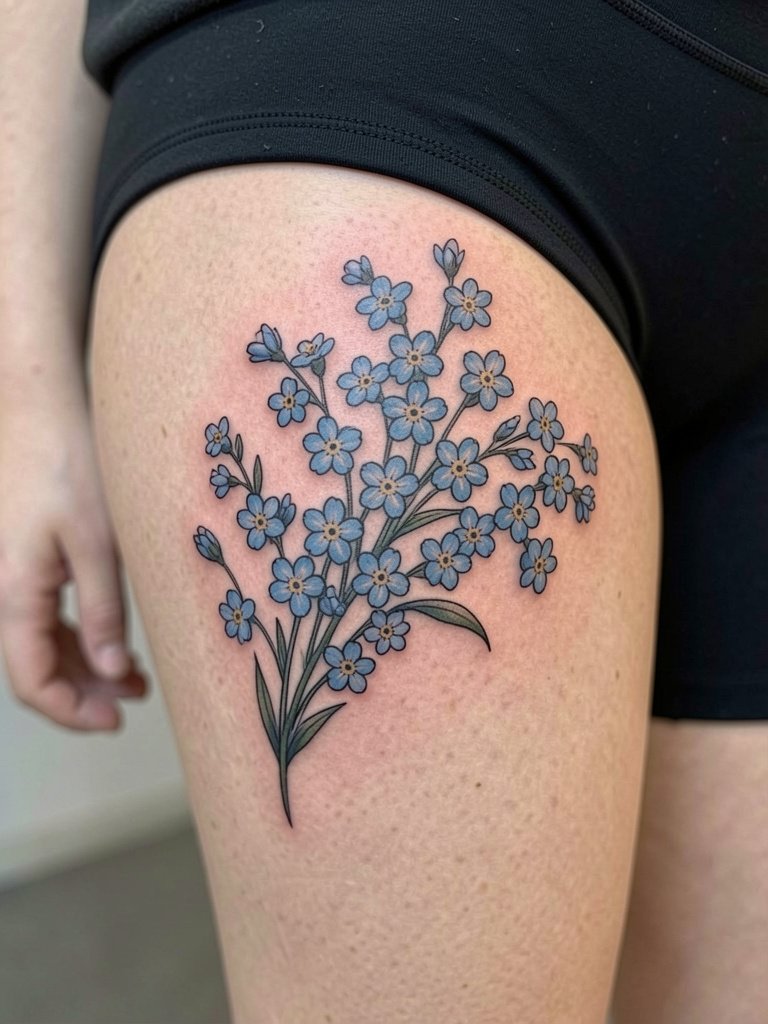
The upper thigh is forgiving for larger sprays because it avoids tight clothing and constant abrasion. Ask how the design will look when seated and when walking, and confirm the bleed line for color so blue washes do not pool in folds. Sessions feel moderate and can run 90 minutes. A common mistake is placing the spray too close to the underwear line, which causes irritation and scabbing. For evening styling, choose a wrap skirt that shows the thigh area without clinging.
17. Minimal Script with Hidden Petal
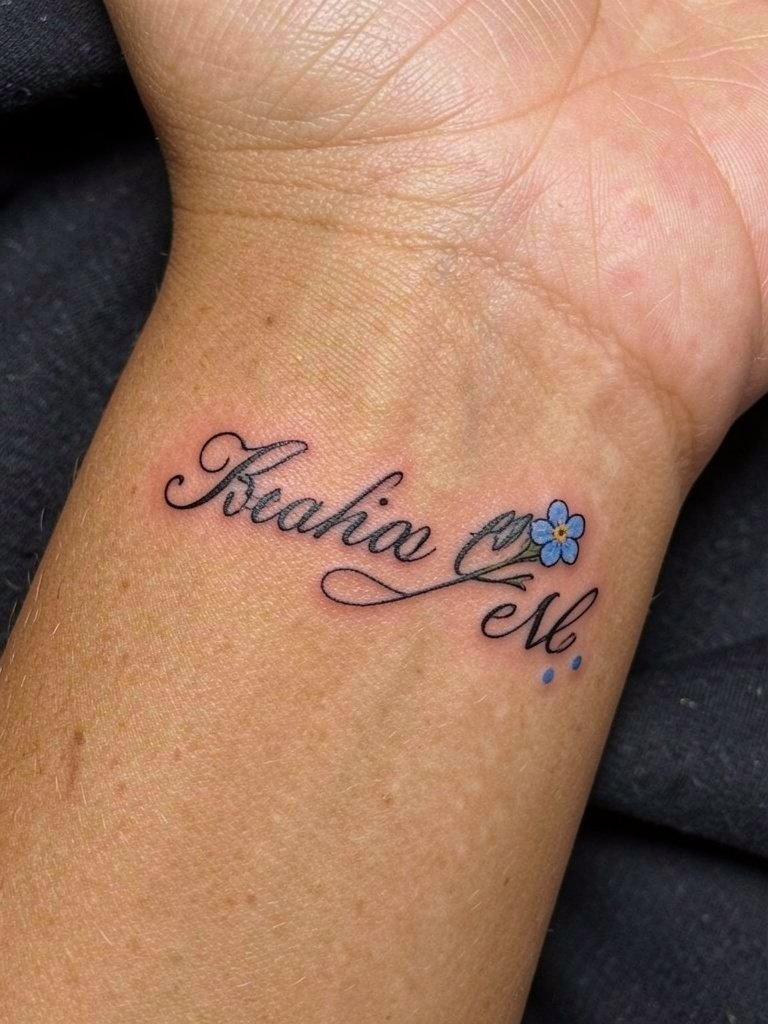
Combining script with a hidden petal gives personal meaning without full floral coverage. Make sure the script size is tested at multiple scales so the hidden blossom does not crowd the letters. The session is compact, about 30 to 60 minutes. People sometimes compress the script too tightly and lose legibility after healing. For a subtle reveal, try wearing delicate layered necklaces that keep attention near the collarbone while the wrist heals.
18. Bold Traditional Petal on the Upper Arm
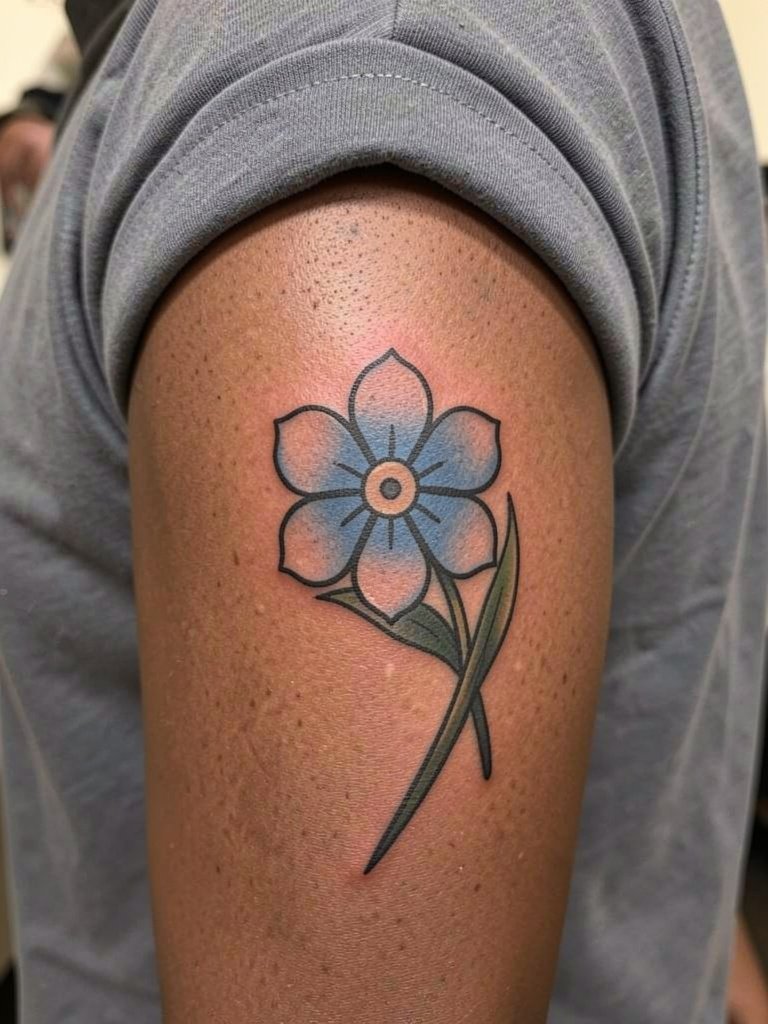
Traditional lines give the forget-me-not strong longevity because the bold contour protects the tiny petals from blurring. Ask for reference photos that show healed traditional ink at three to five years so you have realistic expectations. Sessions can be 60 to 120 minutes depending on saturation. A mistake is trying to force micro detail into the traditional style where it does not belong. For casual display, a rolled-sleeve tee frames the outer arm and keeps the piece visible without excessive sun exposure.
19. Botanical Ankle Wrap with Negative Space
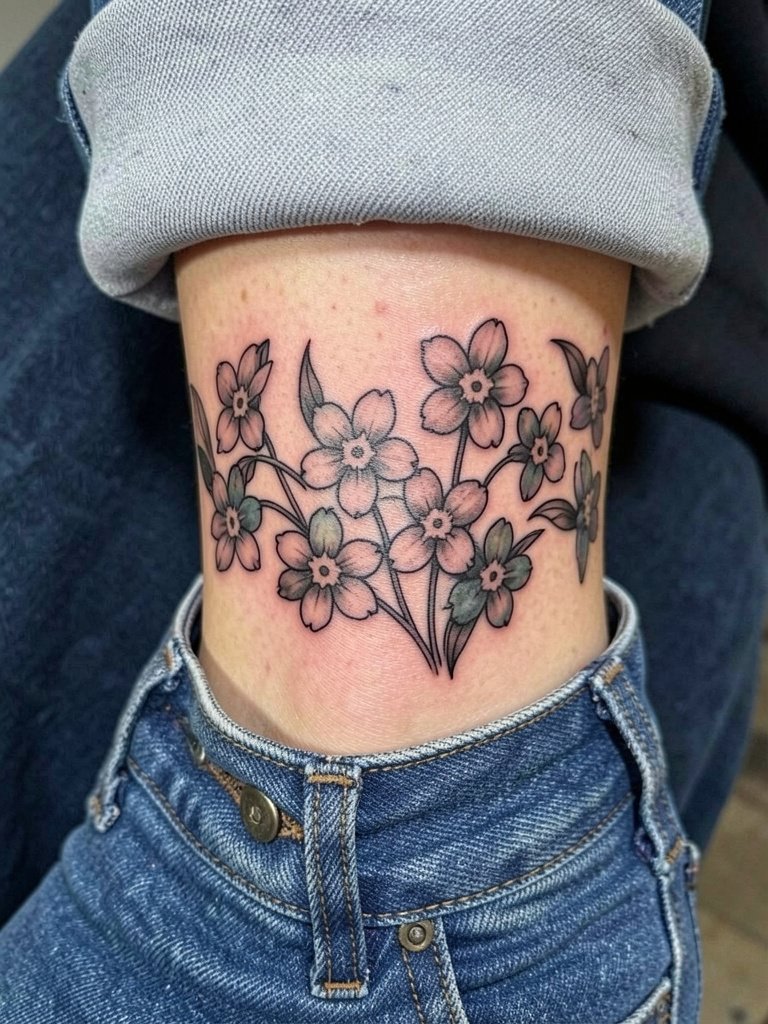
Negative space can make small blooms read clearer at a distance, especially for ankle wraps. Request mock-ups that show how the gaps remain when the ankle moves and how the design looks with socks. Sessions are usually 60 minutes and pain is moderate. A typical error is overcomplicating the wrap so the negative space disappears after a year. For a polished look, try wearing rolled-cuff denim that places the hem just above the wrap.
20. Subtle Inner Thigh Stem
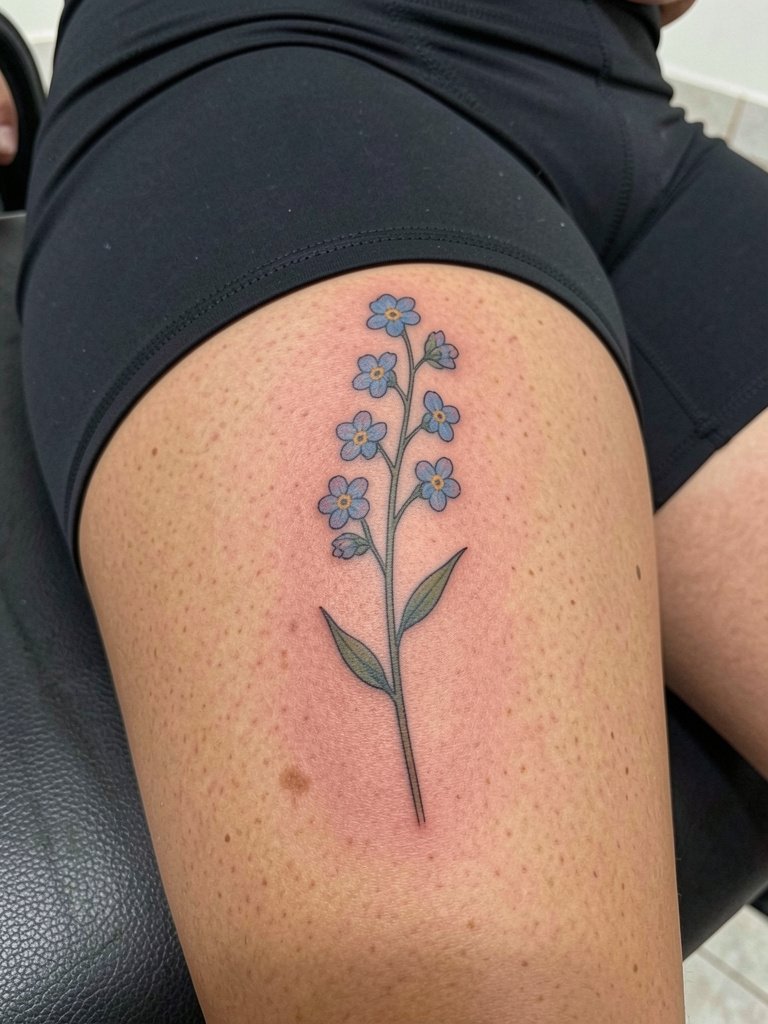
Inner thigh designs age well if placed away from the underwear line and if patients follow aftercare. Ask where the petals will sit relative to your clothing and request slight elevation if you wear low-rise items. Sessions are moderate in pain and usually under 90 minutes for a single stem. Common mistakes include requesting a design that ends too close to the groin, which increases irritation. For recovery, wear modest bike shorts to keep the area protected while allowing airflow.
21. Tiny Petal Over the Clavicle Edge
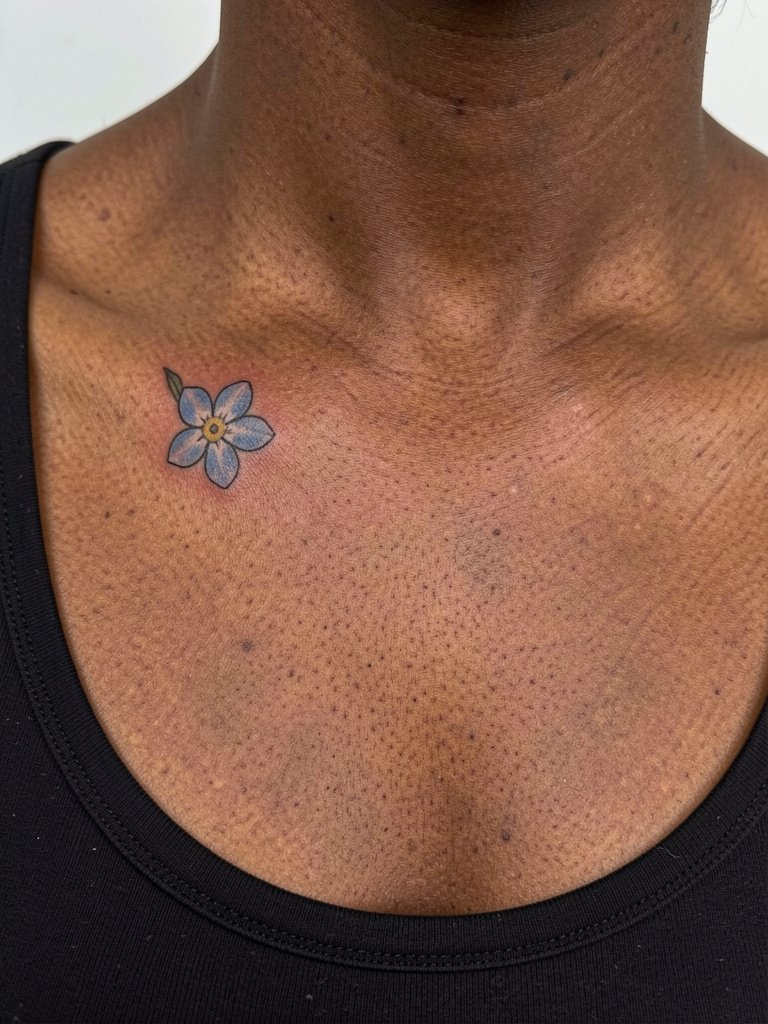
A petal perched on the clavicle makes for a discreet accent piece. Plan the angle so the petal faces upward when you stand tall, and ask the artist to thicken the base line slightly to avoid loss of the petal tip. Sessions are brief and the site is sensitive near the bone. The frequent mistake is trying to surround it with too much filler, which crowds the area. Pair with a delicate pendant necklace that sits just above the clavicle and complements the floral grain.
22. Small Back-of-Neck Sprig
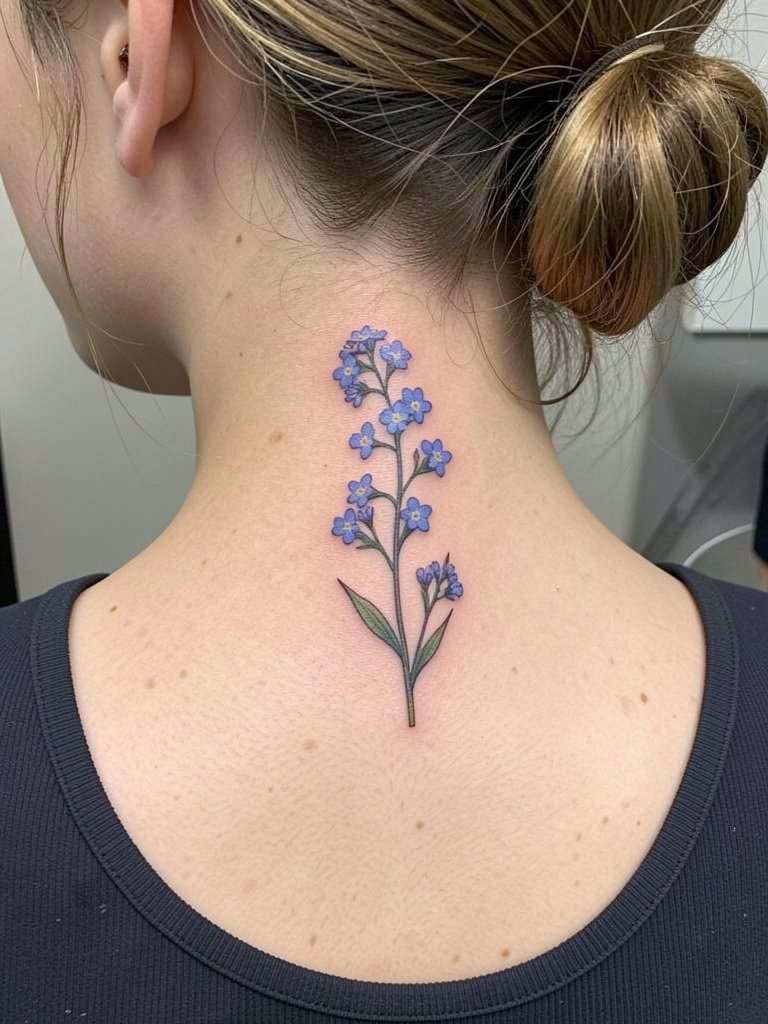
The nape is a smart spot for a personal bloom that is easy to conceal. Ask how the design will show when hair is down and whether small highlights will survive daily brushing. Sessions are quick but sensitive and may require a two-pass touch-up at three months. A common error is over-saturating with white highlights that disappear against hair contact. For healing, use a soft hair tie that does not pinch and avoid tight buns that press on the area.
23. Micro-Petal Near the Elbow Crease
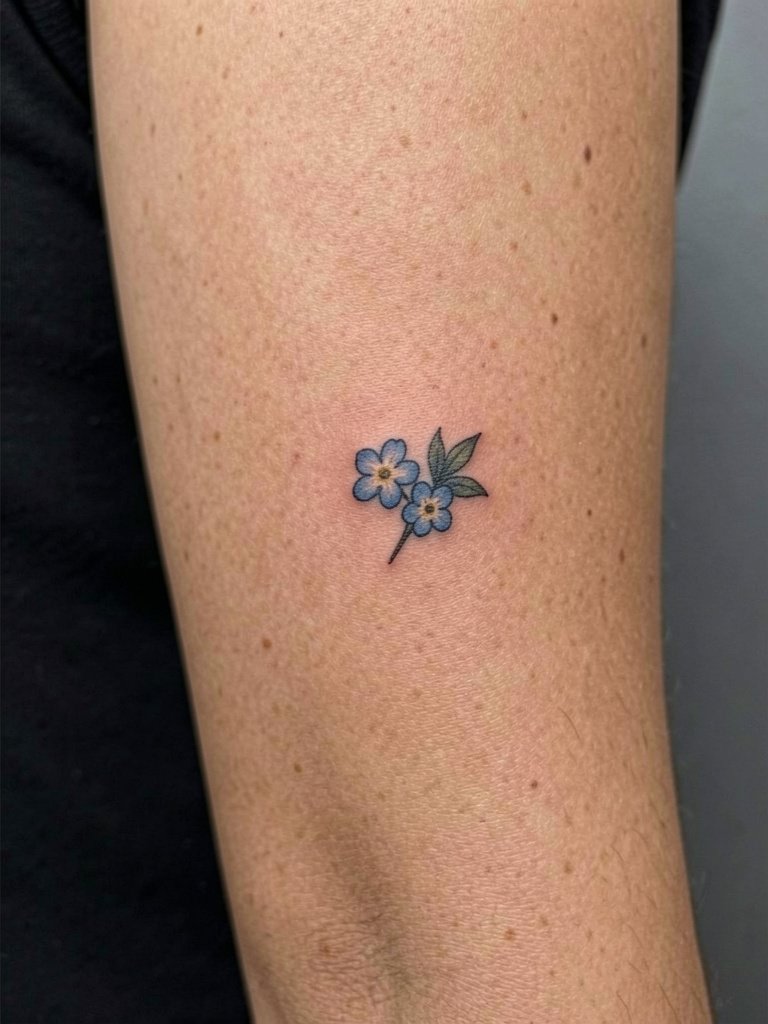
Elbow-adjacent areas face folding and stretching so scale up the line weight and avoid tiny internal dots. Discuss where the bloom will sit when the arm is straight and when it is bent, and request a test stencil that shows how the design shifts. Sessions are brief but the area can be uncomfortable and may need a touch-up at six to twelve months. The biggest mistake is copying an image meant for flat skin and placing it over a joint. Keep the piece slightly larger than you expect so the bloom remains readable.
Frequently Asked Questions
Q: How much will a tiny forget-me-not cost and how long does a small session take?
A: Price depends on studio minimums and local rates, but expect short sessions for micro pieces and longer appointments for sprays or half-sleeves. A single blossom can be a 30 to 60 minute session, while a half-sleeve spreads across multiple visits. Ask the shop about session minimums and realistic time estimates for the exact placement you choose.
Q: How do forget-me-not tattoos look on different skin tones?
A: Blues and yellows can read differently depending on saturation and contrast. On deeper skin tones, artists often boost saturation and add stronger black outlines to keep the small petals legible, while on lighter tones artists might rely more on subtle shading. Bring healed examples in similar skin tones so you and the artist can agree on the exact color plan.
Q: Where can I find healed tattoo portfolios and discovery pathways without naming artists directly?
A: Search thematic hashtags on social platforms and use location filters to narrow to nearby studios. Look for tags that combine the flower name and style keywords, then filter posts that explicitly show healed work at one year or more. Reddit threads and portfolio sections on tattoo directory sites often include timestamped photos that show how similar placements age.
Q: Do forget-me-not designs need touch-ups and how often?
A: Small placements like fingers and hands usually need touch-ups every one to two years, while protected areas such as the inner forearm or thigh can go longer. Expect a realistic touch-up timeline and budget one check-in at the one-year mark for micro work to keep petals crisp.
Q: What should I wear to my appointment for hard-to-reach placements?
A: Choose clothing that gives the artist clear access without forcing you to disrobe. For collarbone and sternum work, a front-close or scoop-neck top works well. For thigh and hip placements, wear fitted shorts that end mid-thigh or low-rise jeans zipped and fastened normally so the artist can expose the area without fabric shifting.