

Someone I know spent eight months scrolling clock tattoos and still could not decide. The real question was never which face or flower to pick. It was which style will age gracefully on their skin and match everyday life. I have spent time in five shops across Brooklyn and watched the same clock motifs cycle through portfolios. Below are twelve fine clock concepts for women that solve common aging and placement problems while keeping the look wearable.
1. Fine line pocket watch on inner forearm
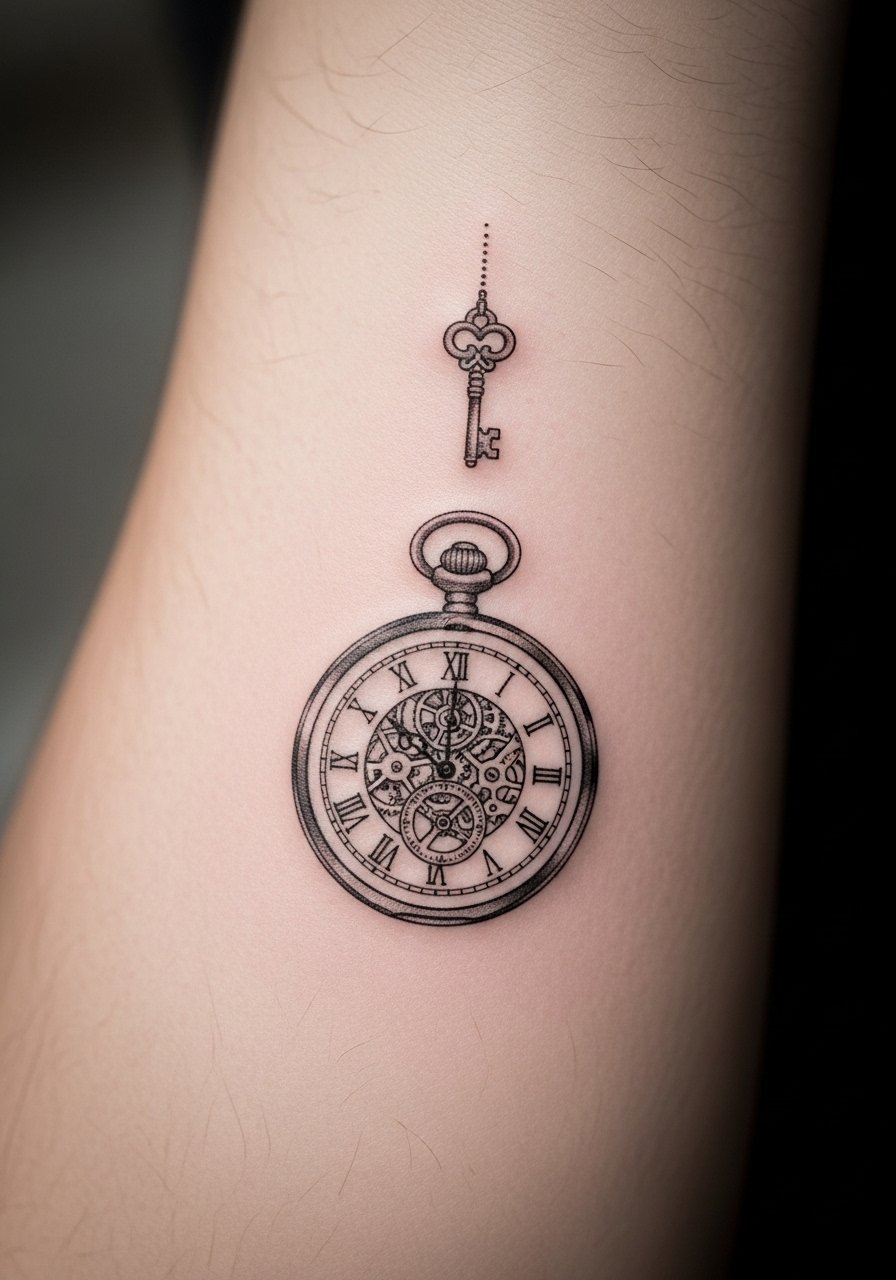
Someone I know first saw this on a friend and booked the same placement. The inner forearm gives room for delicate linework and shows off subtle stipple shading without crowding. Tell your artist you want slightly heavier outer contour and lighter inner detail so the numerals do not blur together over time. Expect a two-hour session for a medium-sized piece and a 3 to 4 out of 10 pain level. At six months the linework looks crisp. At two years the numerals soften, and by year five you may want a touch-up to restore fine numerals. A common mistake is asking for numerals too small. That invites blowout on thinner skin.
2. Minimal wrist clock with Roman numerals
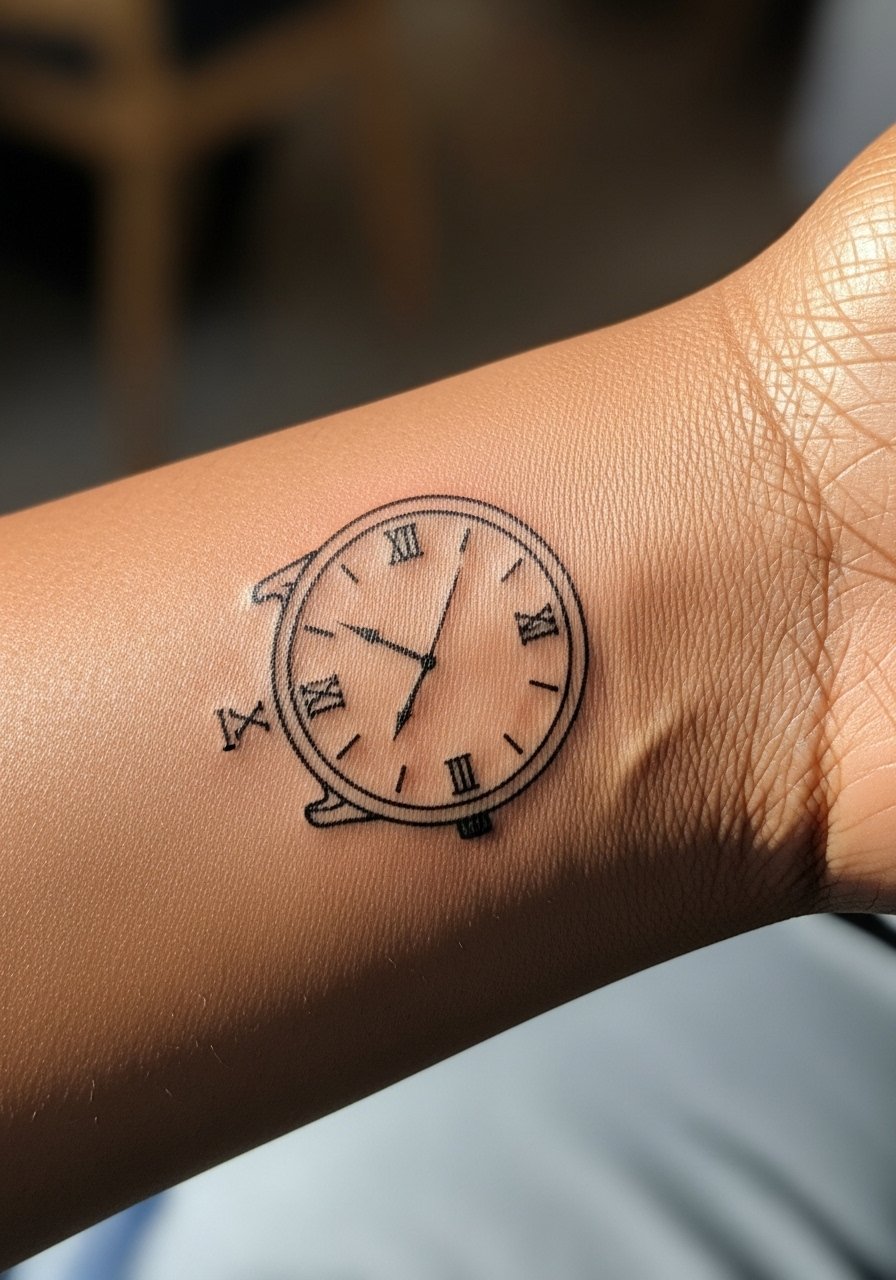
Fair warning: the wrist is one of those spots that shows movement and gets regular sun exposure. That makes saturation and touch-up schedule important. Ask for bolder lineweight on the outer circle but keep the inner numerals moderate size. Sessions are short, often under an hour, but the trade-off is faster fading. At six months the face still reads clearly. Around year two the numerals can blur if they were packed too tight, so plan a touch-up if you want long-term legibility. Wrist clocks are best for people who like visible pieces and are ready to maintain them.
3. Floral clock with birthdate in Roman numerals on the bicep
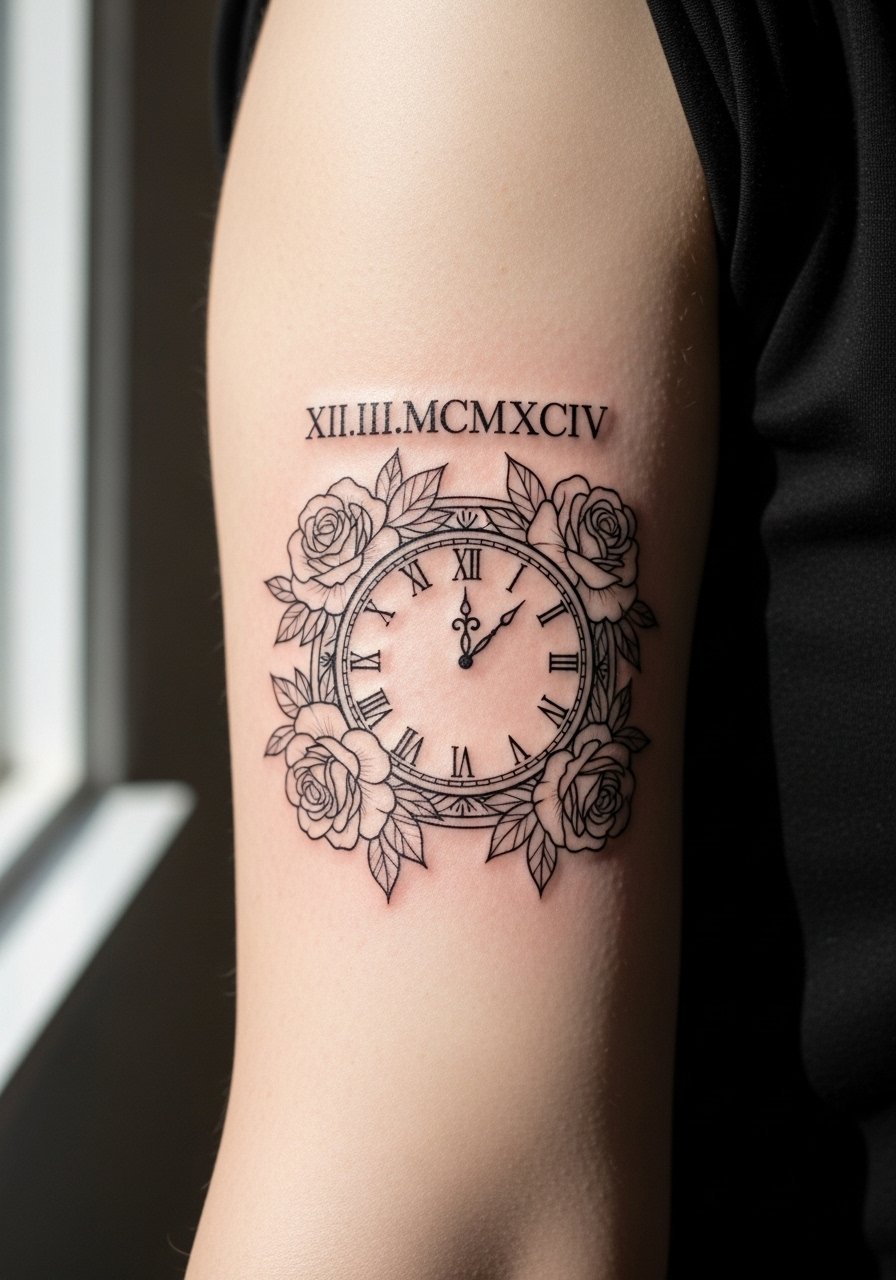
Most floral clock combos are requests for birth or memorial tattoos. For a bicep version ask the artist to scale the numerals so each letterform sits inside the clock face. The bicep's muscle movement gives the piece life but can stretch delicate lines. Expect a two to three hour session and a moderate pain level. At six months the flowers will show crisp stipple shading. At two years small dots might soften unless saturation was applied thoughtfully. A common mistake is over-detailing the flowers too close to the numerals. Give each element breathing room and the composition will age better.
4. Broken clock shards across the ribcage
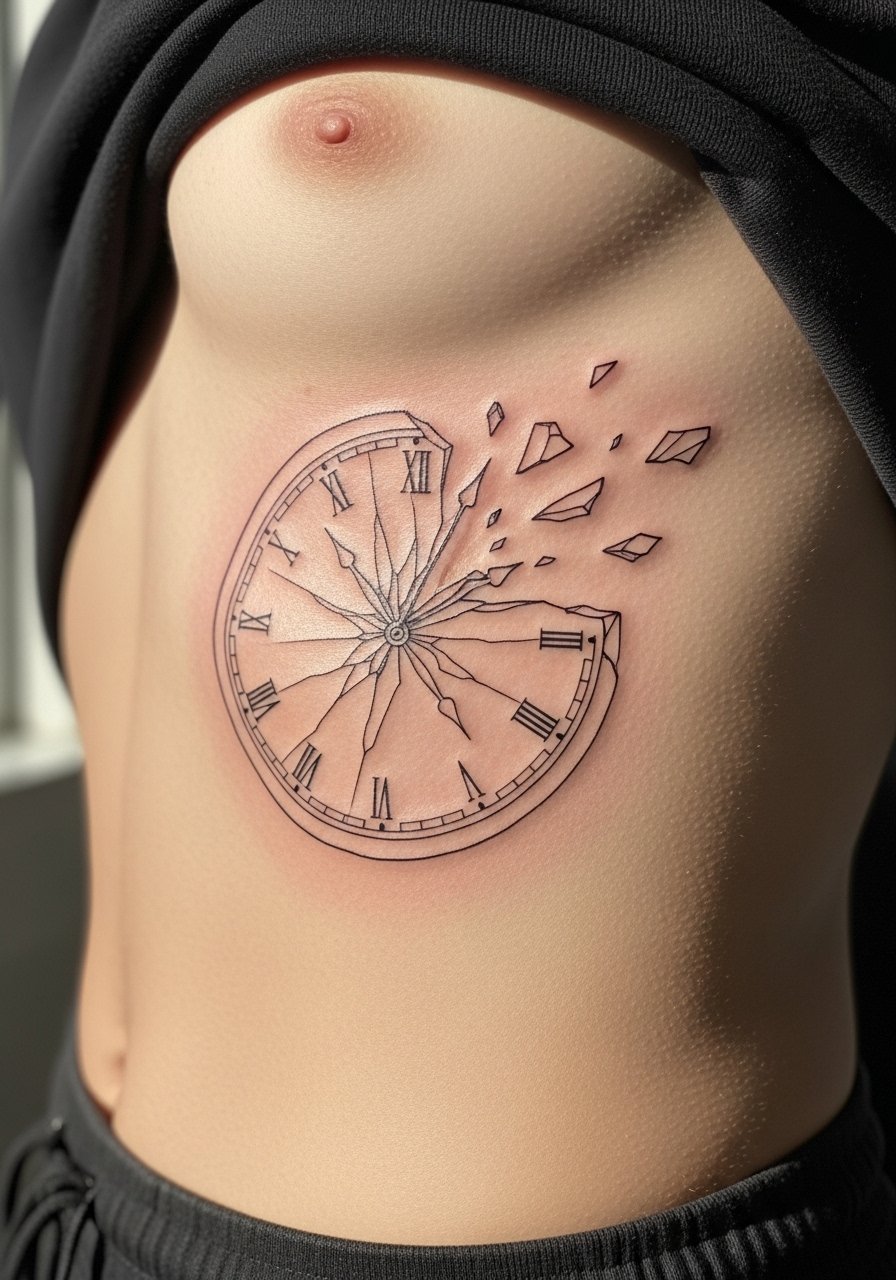
Fine line on ribs splits artists into two camps. One group argues the skin stretch there blurs lines within two years. The other group says with correct needle depth and spacing it settles fine. Ask your artist where they stand and request slightly more spacing between shards if they lean conservative. Ribcage sessions feel intense. Pain level often rates seven out of ten, and expect longer healing with more scabbing in creases. Many people love the dramatic look at first. After two years small lines can lose clarity, so plan a touch-up if the shards are central to the design.
5. Hourglass and clock hybrid on the sternum
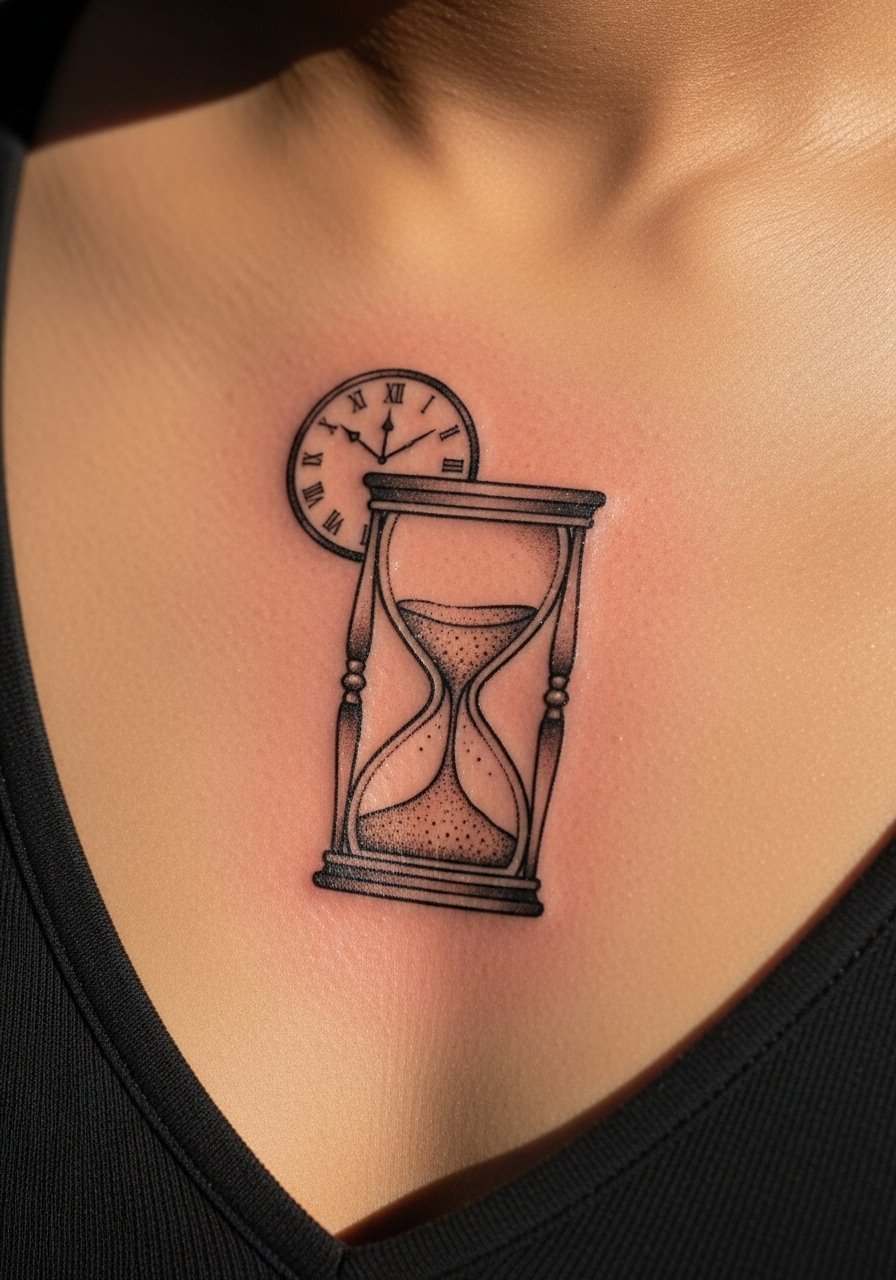
There is a visual reason sternum placements read as intimate and symbolic. The sternum allows symmetry and makes the hourglass detail feel centered. Sessions can be split into short blocks because the sternum is sensitive and sits near bone. Pain hovers around six to eight out of ten depending on depth. Over time, tight fine lines near bone can thin out, so ask for slightly increased saturation on outer lines to keep the silhouette. Because of the placement, pick an artist who documents healed sternum work in their portfolio. Some workplaces still react to chest pieces so consider visibility under clothing.
6. Moon-phase clock ankle with dot work
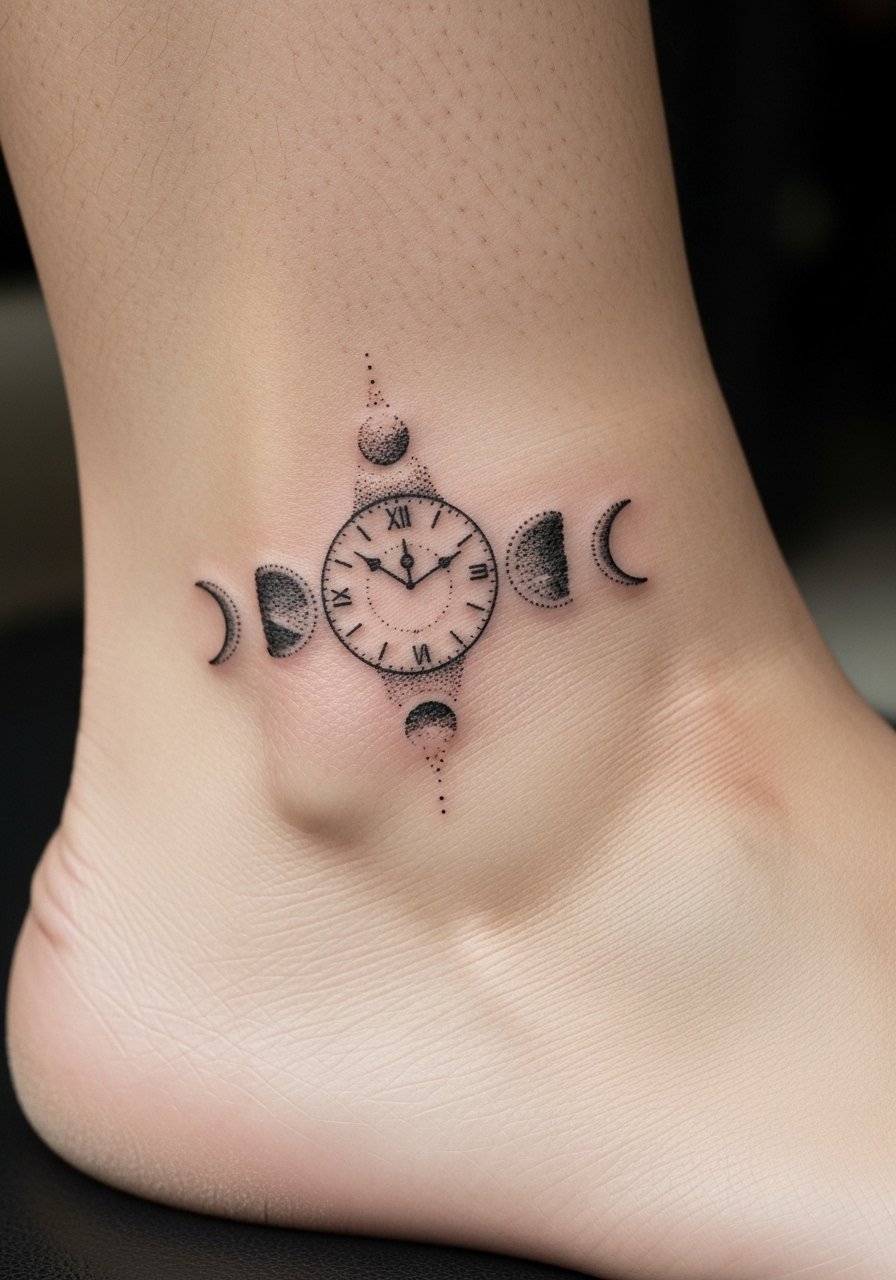
The biggest mistake with ankle clocks is going too tiny. Thin lines plus constant rubbing from socks and shoes equals faster fading. For longevity, ask for stipple shading and slightly bolder outer ring. Sessions are brief and pain is usually a four out of ten. Expect the first six months to show crisp dot work. At two years dots may merge if they were placed too densely. Ankle placements look delicate on sandals and stand out when healed, but plan for annual touch-ups if you want the moon-phase detail to stay distinct.
7. Watercolor clock with soft color splashes on upper arm
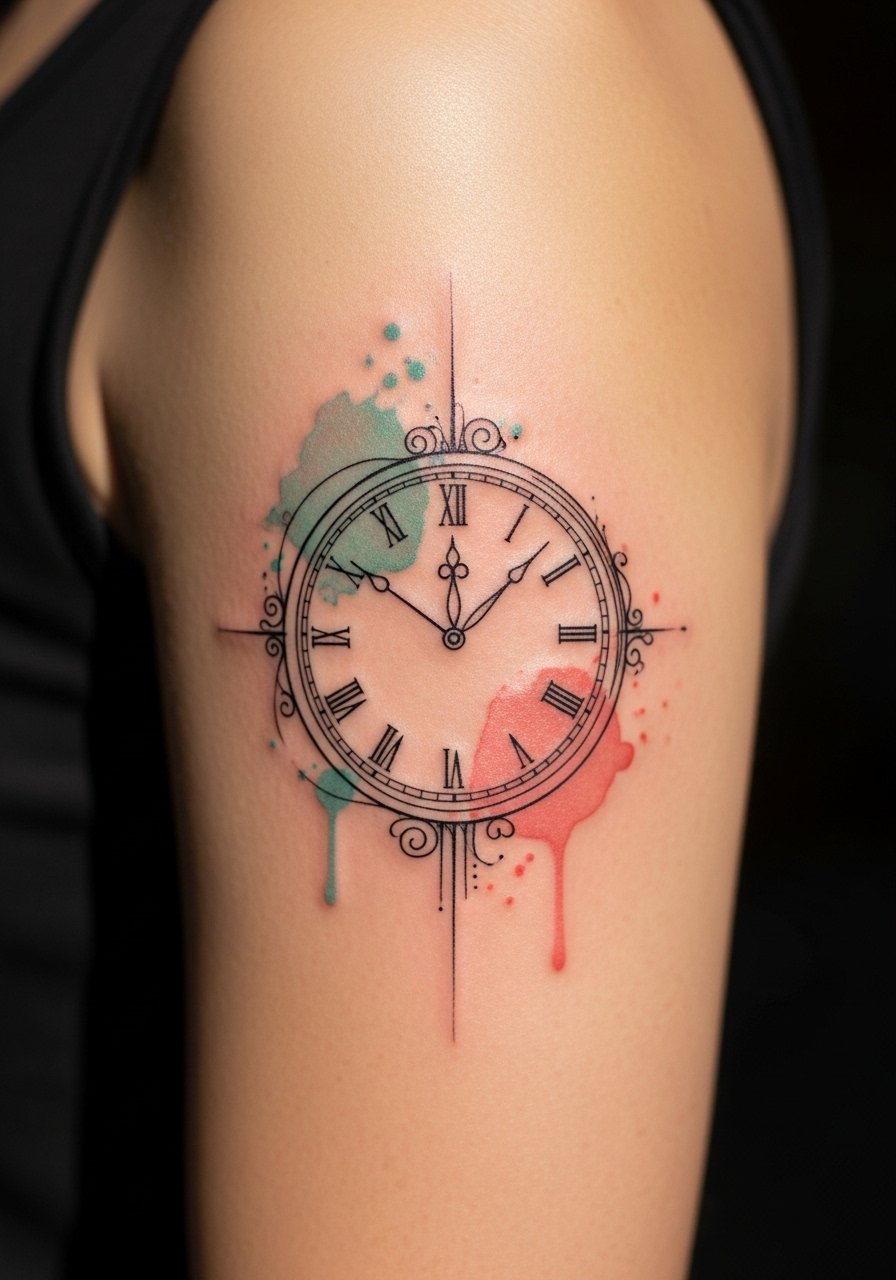
When you sit down with your artist for a watercolor clock request, bring reference images that show exact color intensity and how much negative space you want. Watercolor effects age differently from black linework. Expect a three-hour session when color is involved. At six months the paint still reads vibrant. By two years the softer washes lose saturation faster than black outlines, so strong linework inside the clock helps anchor the design. A common regret is asking for too many blended colors near thin numerals. Keep the clock face defined so the wash fades gracefully.
8. Pocket watch with portrait micro-realism near the collarbone
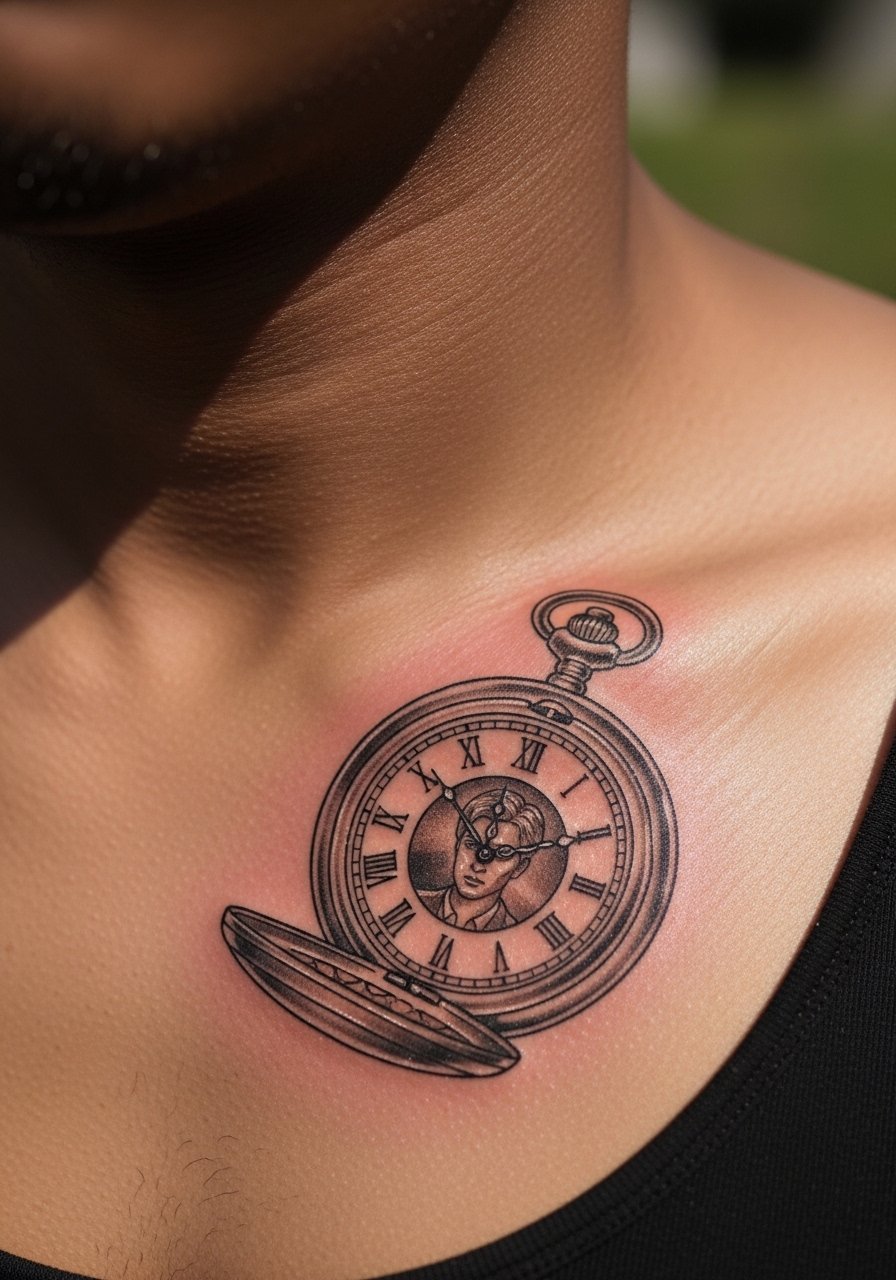
Fair warning about chest portrait pieces. The collarbone area shows movement and can be sensitive during both shading and healing. Tell your artist you want the portrait reduced to a silhouette at smaller sizes, and that you prioritize clear facial planes over tiny ornamental details. Expect multiple short sessions for micro-realism and a pain rating around six out of ten. At six months the portrait should read well. At two years very fine facial detail may soften and require a touch-up. Trust your artist on how small micro-realism can go without losing identity.
9. Geometric clock mandala on the shoulder blade
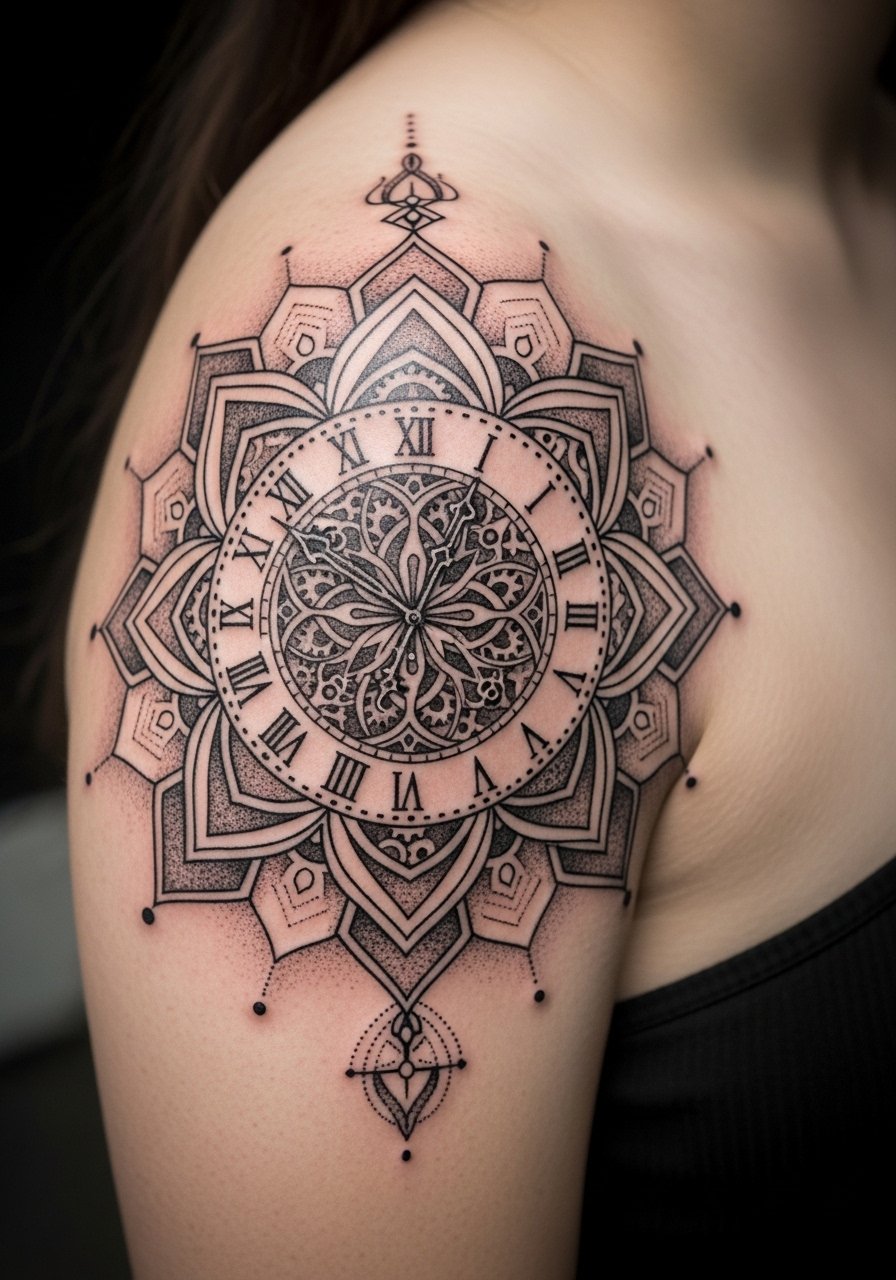
Most geometric mandala clocks look best when the artist respects negative space. Overcrowding lines into a small radius leads to early blurring. Shoulder blade placement lets the piece breathe and handles stipple shading nicely. Sessions often take two to three hours. Pain is usually moderate because the area sits over soft tissue. At six months the radial symmetry holds. At five years some inner lines may soften, but a well-spaced design will maintain its intended balance. Mention blowout risk to your artist and ask for slightly thicker primary lines to protect the geometry.
10. Tiny clock behind the ear with single-word script
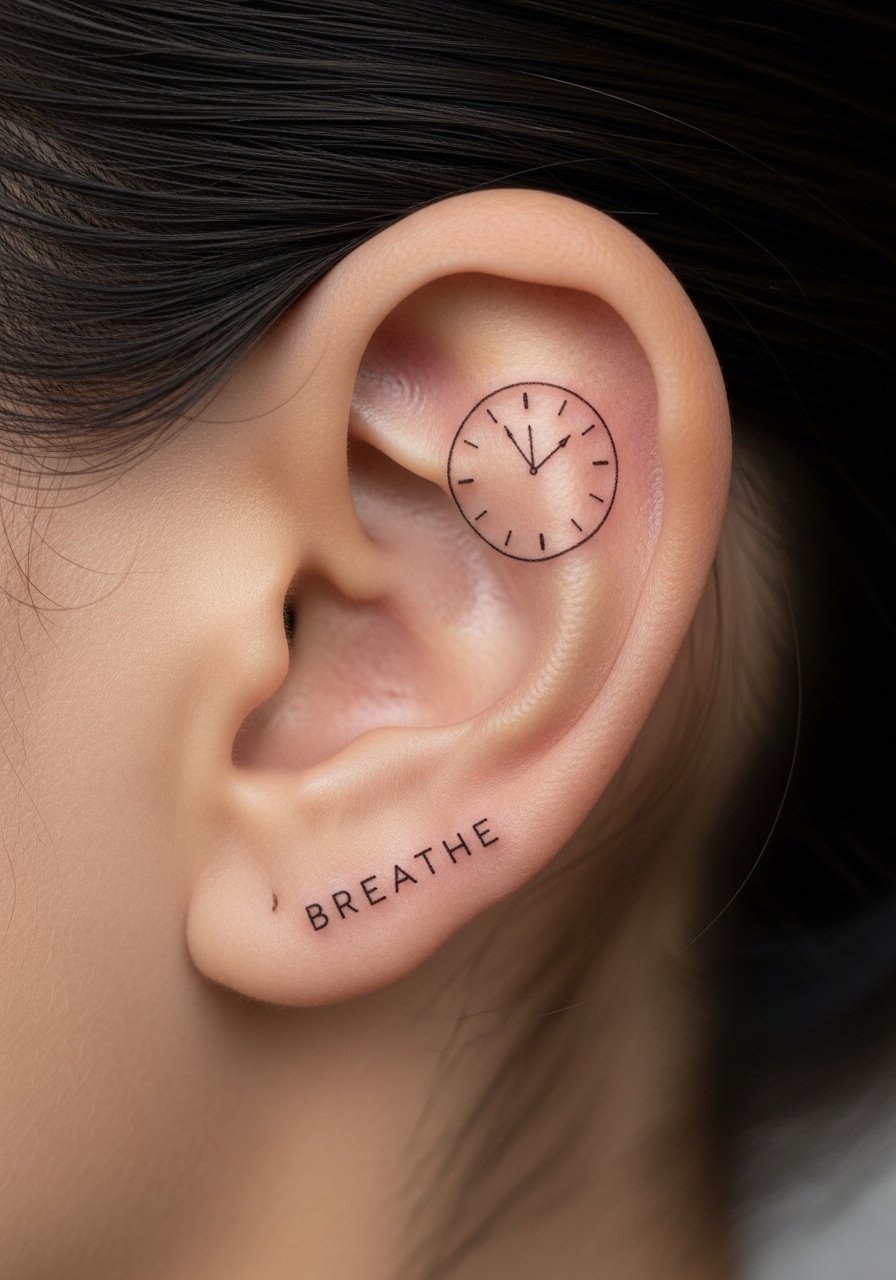
Someone I know picked this because it is almost private and easy to hide with hair. Tiny placements behind the ear are intimate but they come with limitations. The small surface area and curvature mean the face must be very simple. When visible text is included tell the artist the exact word "Breathe" and request a font that reads in small scale. Sessions are very short and pain sits around three to five out of ten. Expect touch-ups sooner than on flat areas because friction from collars and hair can erode the fine numerals.
11. Antique key-clock combo on the outer thigh
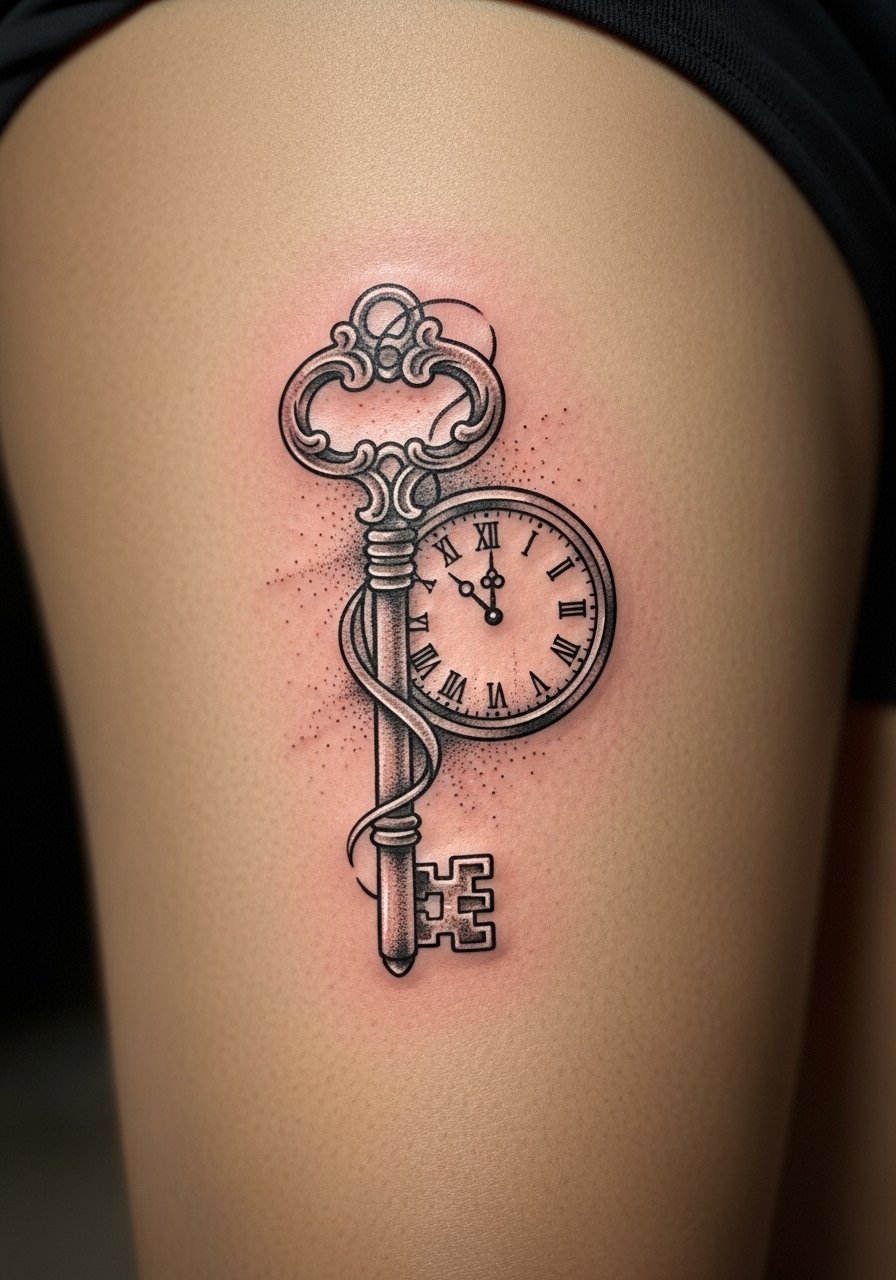
There is something practical about thigh placements. The outer thigh offers dense tissue that helps fine line retain sharpness. For an antique key entwined with a clock, ask your artist to keep the key slightly larger than usual to preserve detail. Sessions can be longer, often three to four hours if shading is included. Pain is often low to moderate and easily managed. At six months the composition looks full. At two to three years the key teeth remain legible if spacing was respected. Thighs also handle heavier saturation so consider adding subtle color for contrast if you want longevity.
12. Single-line stopwatch on the side of a finger
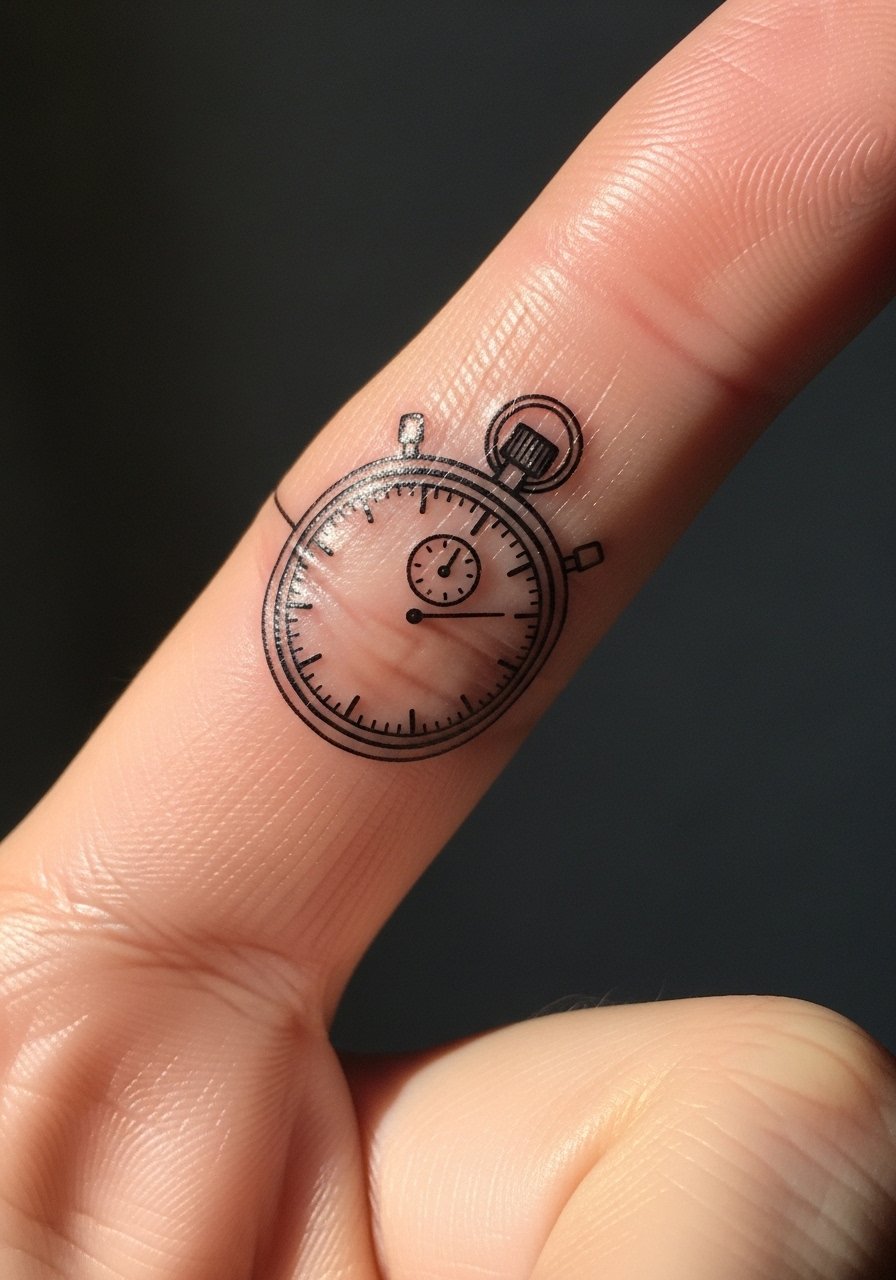
The biggest practical note for finger clocks is wear. Finger skin renews quickly and ink disappears faster. When booking a finger stopwatch ask for a single continuous line that reads simply from one angle. Sessions are short but expect frequent touch-ups. Pain is usually a two to five out of ten depending on proximity to joint. Many people opt for finger clocks because they are small and symbolic. Keep in mind hand and finger tattoos can affect employment in some places, so consider placement accordingly.
Tattoo Prep and Aftercare Essentials
Fragrance-free moisturizing lotion suitable for healed tattoos. Use sparingly after initial healing to maintain saturation and reduce flaking. Good for daily long-term maintenance.
Medical-grade second skin bandage, small sheets. Apply for the first 24 to 48 hours if your artist recommends an occlusive covering. It protects from friction during travel or workouts.
Gentle fragrance-free foaming cleanser. Use during the first week to remove ointment residue without stripping ink. Pat dry with clean towel.
Lightweight fragrance-free balm in a small tin. Apply thin layers to keep the area moisturized while it peels. A balm absorbs faster than heavy ointments for daytime wear.
Breathable non-stick gauze pads. Keep on hand for the first few days if scabbing occurs in spots where clothing rubs.
Alcohol-free tattoo aftercare spray or saline rinse. Use sparingly to soothe itch during the early healing phase.
Aquaphor Healing Ointment. One mainstream option that many people have used. Apply as your artist recommends and avoid over-application.
Lightweight SPF 50 mineral sunscreen for healed tattoos. Use once the tattoo is fully healed to protect saturation and reduce fading from UV exposure.
Every tattoo is different. Always follow your artist's specific aftercare instructions. Consult a dermatologist if you have skin concerns or unusual healing issues.
Frequently Asked Questions
Q: Will fine line clock numerals blur if I get a full sleeve of similar work?
A: Fine line numerals can blur when packed tightly into a sleeve. If you want multiple clocks in a sleeve, ask your artist to space faces and use slightly heavier primary lines around each face. This depends on your skin type and daily sun exposure, but spacing and contrast are what keep individual elements readable over time.
Q: Do watercolor-style clock tattoos need different aftercare than black line pieces?
A: They do not require a different healing routine, but color washes fade faster. Keep the area protected from sun after healing and use a gentle fragrance-free moisturizer during the first months. Consider scheduling a color refresh at year two if you want the original intensity restored.
Q: Why do geometric clock mandalas fade faster on the ribcage than on the shoulder blade?
A: The ribcage experiences more stretch from breathing and movement, and that can cause very thin geometry to lose crispness faster. Shoulder blade skin is flatter and handles stipple and radial designs with less distortion. Ask your artist to adjust spacing when working on ribs.
Q: How often should I expect touch-ups for ankle or wrist clock tattoos?
A: Expect touch-ups every one to three years for high-friction spots like wrists and ankles. The exact timeline depends on your skin, sun exposure, and how dense the original saturation was. A short maintenance session can restore linework without altering the design.
Q: Is a broken clock design on the ribs a risky choice for durable fine line detail?
A: It can be risky for super-fine lines. Artists disagree on the ribs because of stretch and movement. If you want detailed shards, request slightly thicker primary lines and more spacing between fragments. Discuss touch-up plans before booking so you know how the piece will evolve.
Q: What should I ask to find the right artist for micro-realism pocket watch portraits?
A: Ask to see healed portfolios that show small-scale portraits in the collarbone or chest area. Specifically request images of healed work at comparable size so you can judge how facial detail held up. Also ask how many sessions they expect and how they approach saturation to protect fine detail.