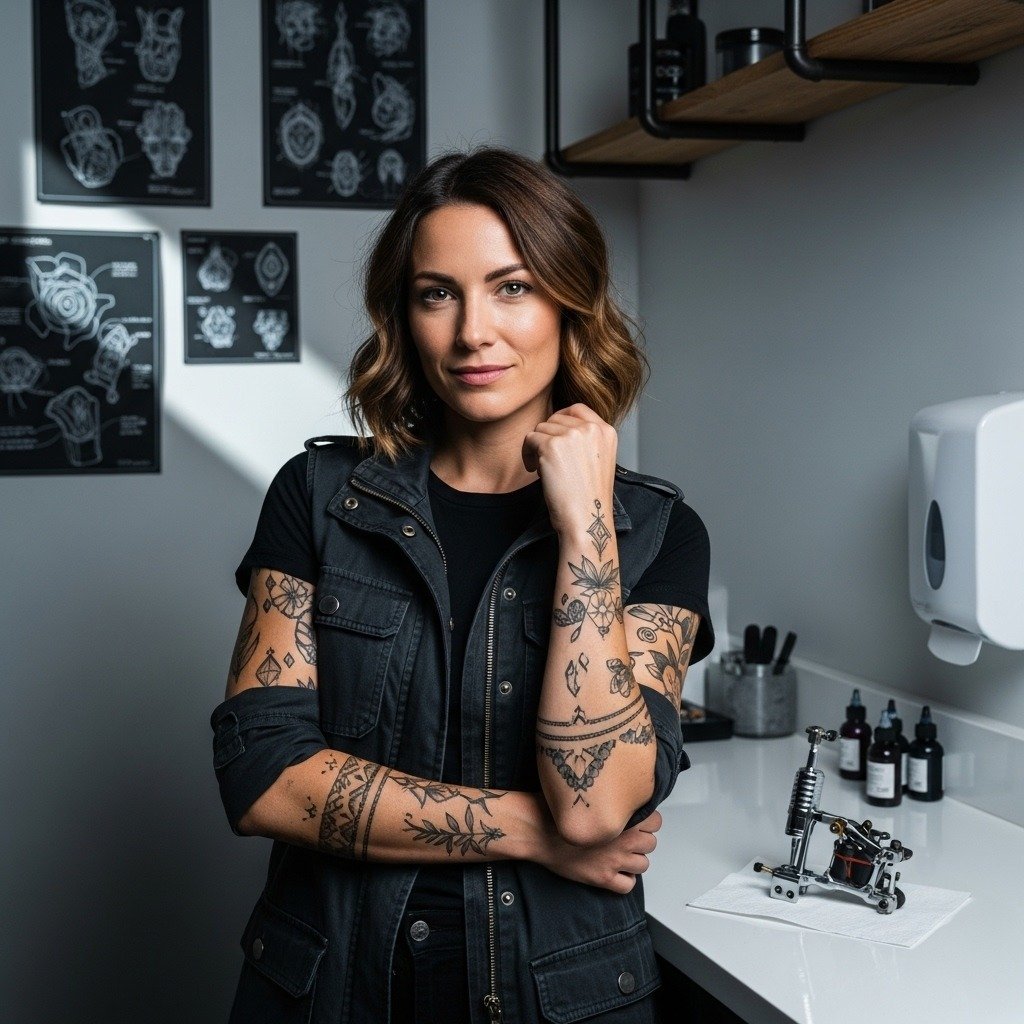

The petals of a carnation read like handwriting when the linework is right, and the wrong line weight can make a neat bloom look like a muddy blot after a couple of years. I hear clients choose single-needle detail for Instagram freshness and then swap to slightly heavier contour for long-term clarity. Expect practical notes below on size, placement, aging, and what to wear the day of the session so the design actually looks like the photo six months from now.
1. Single Carnation Stem on Inner Forearm
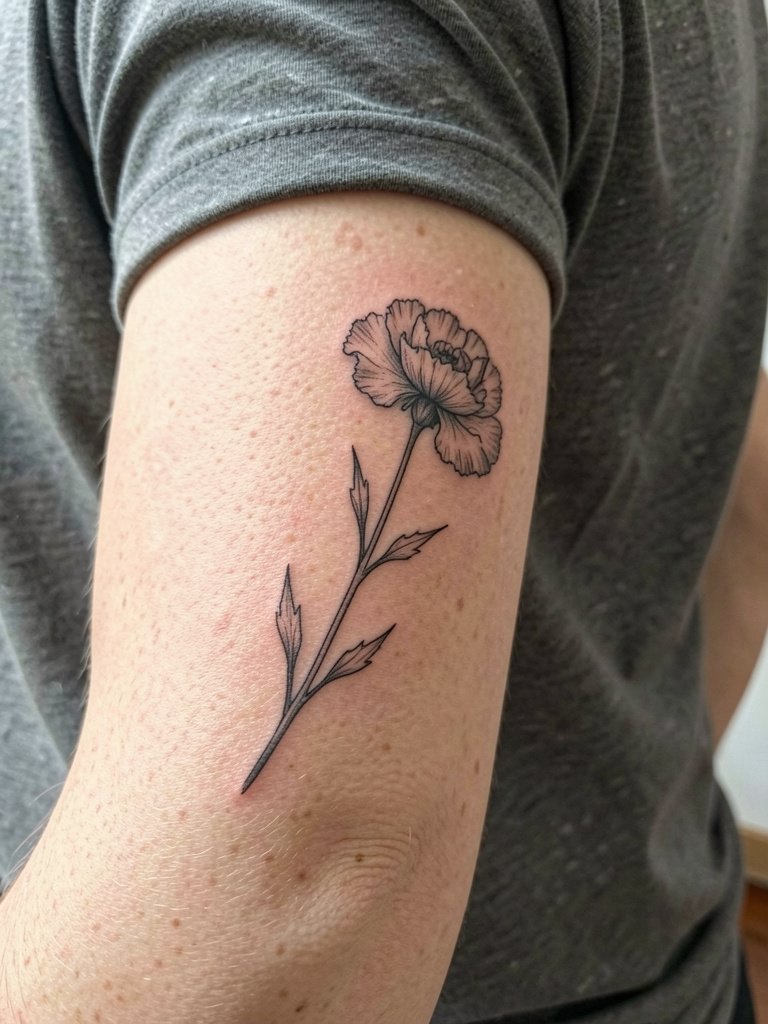
A single stem carnation on the inner forearm reads clean when spaced for longevity. I recommend a slightly heavier contour than single-needle flash, because that tiny hairline loses crispness at the six to twenty-four month mark. Session time is usually forty-five to seventy minutes, with a six out of ten on the pain chart for most people. Common mistake is overpacking petals so the bloom looks dense when healed. For the appointment wear a short-sleeve tee so the artist can roll the sleeve without tugging. This piece suits first-timers and collectors who want a readable birth-flower sign.
2. January Bouquet: Carnation Paired with Snowdrop on Outer Forearm
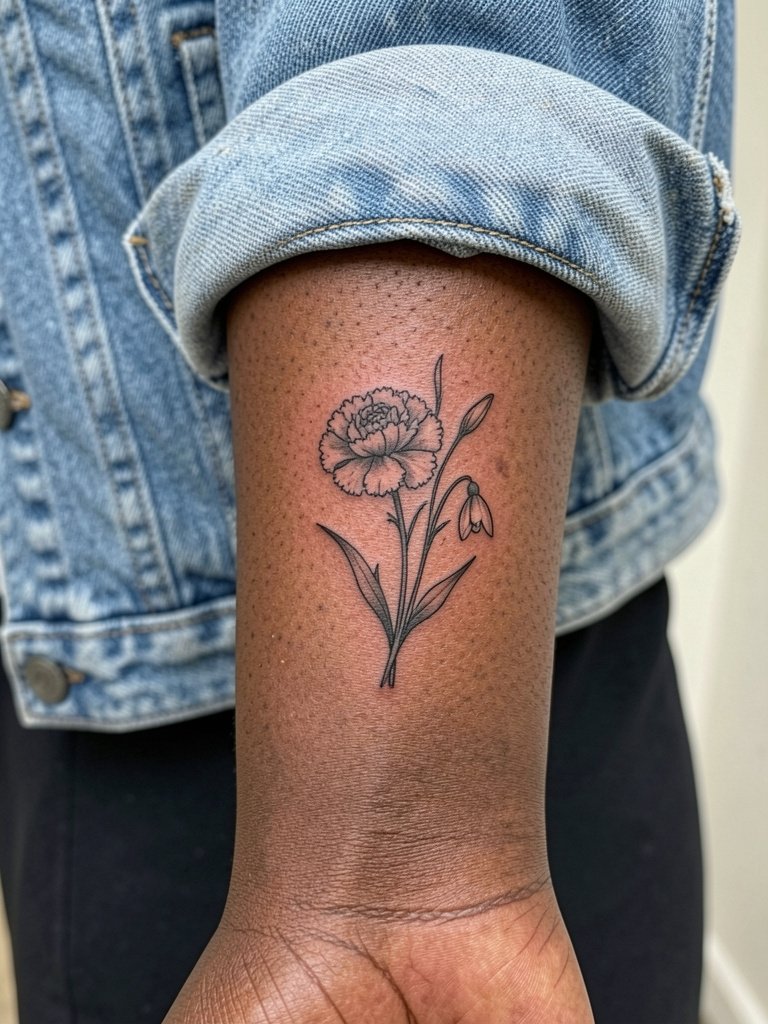
Pairing a carnation with a snowdrop gives January-born designs extra meaning and compositional breathing room. One design camp prefers the single carnation for simplicity and small-scale durability. Another camp argues that adding the snowdrop creates clearer symbolism and reduces the temptation to compress petal detail into a single tiny bloom. Plan to discuss spacing so the two flowers do not compete, and bring scale comparisons at three and five inches so the artist can show how the stems sit together. For showing the piece wear a cropped denim jacket with the sleeves rolled for a casual reveal.
3. Micro Carnation with Embroidery-Inspired Shading on the Wrist
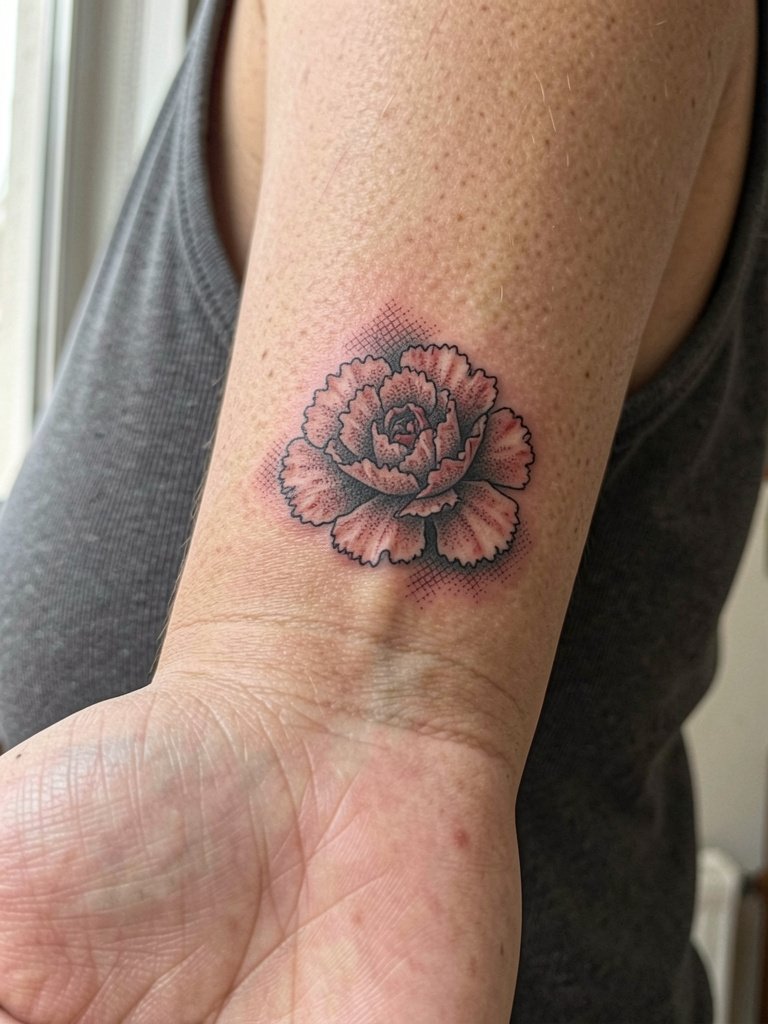
The embroidery style softens micro florals and makes a tiny carnation feel decorative without heavy fills. Expect a short session under forty minutes and a three to four out of ten pain level on the wrist. Micro styles risk early blurring if the stitches and stippling are too dense. Ask for slightly wider negative space around the petal edges so stipple texture reads after six months. For the session avoid bracelets on that wrist and wear a sleeveless top that gives the artist clear access. Plan on a potential touch-up around year two for super-micro work.
4. Tiny Behind-the-Ear Carnation on Mastoid Area
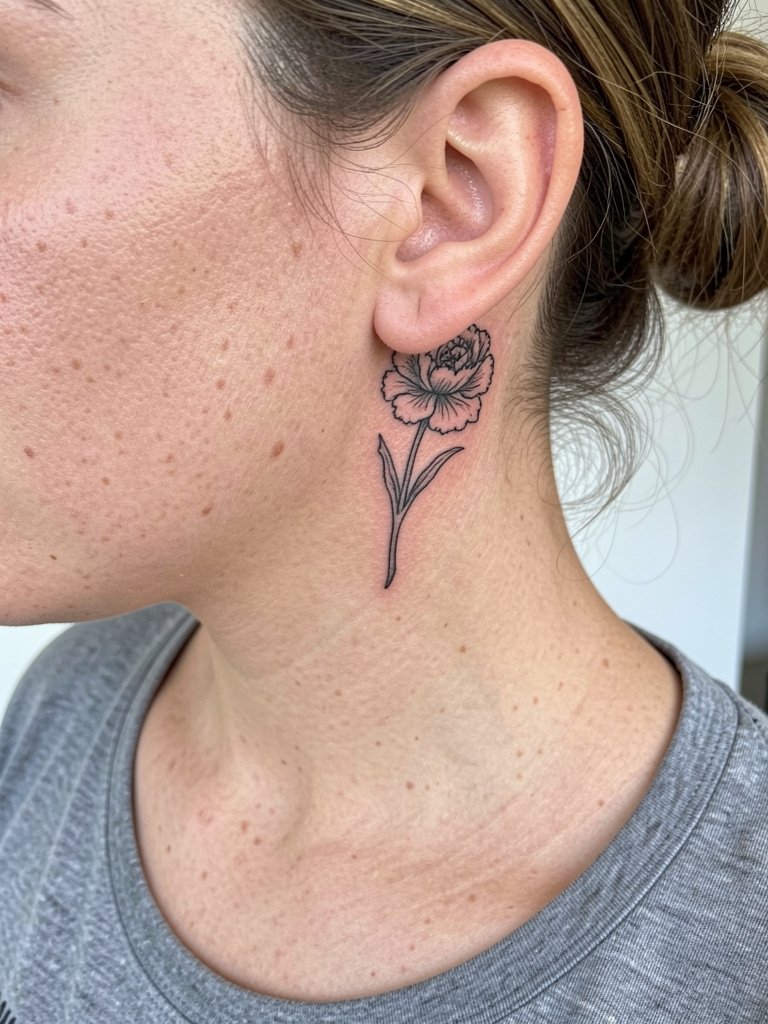
Behind-the-ear carnation pieces are ideal for clients who want discretion with impact. The spot tolerates micro detail, but the mastoid skin can be finicky if the artist overworks the area. Session time is short, typically thirty minutes. A common error is asking for extremely thin single-needle petals that vanish after healing. Bring a healed example that shows line thickness, and expect a one-year touch-up more often than for forearm work. Style this with hair tucked back or small studs, and consider a hair clip set for the appointment.
5. Ankle Carnation for Sneaker and Sandal Seasons
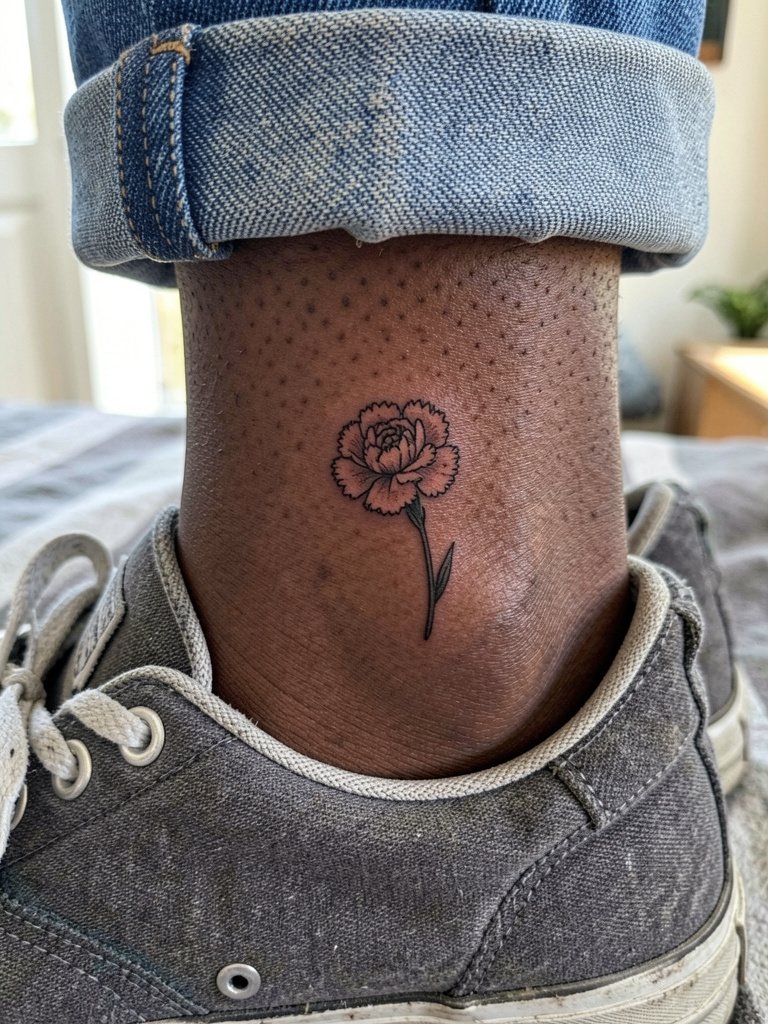
Ankle pieces are easy to hide or show depending on footwear. The main survival issue is friction from socks and shoe collars. For that reason, keep lines simple and avoid tiny interior petal work that the ankle will soften quickly. The session runs thirty to forty-five minutes and rates a five on the pain scale for most clients. Wear cropped straight-leg jeans or shorts to the appointment so the artist can access the area without pulling fabric. Expect a touch-up timeline in the first year if you wear tight footwear.
6. Inner Upper Arm Carnation with Extra Negative Space
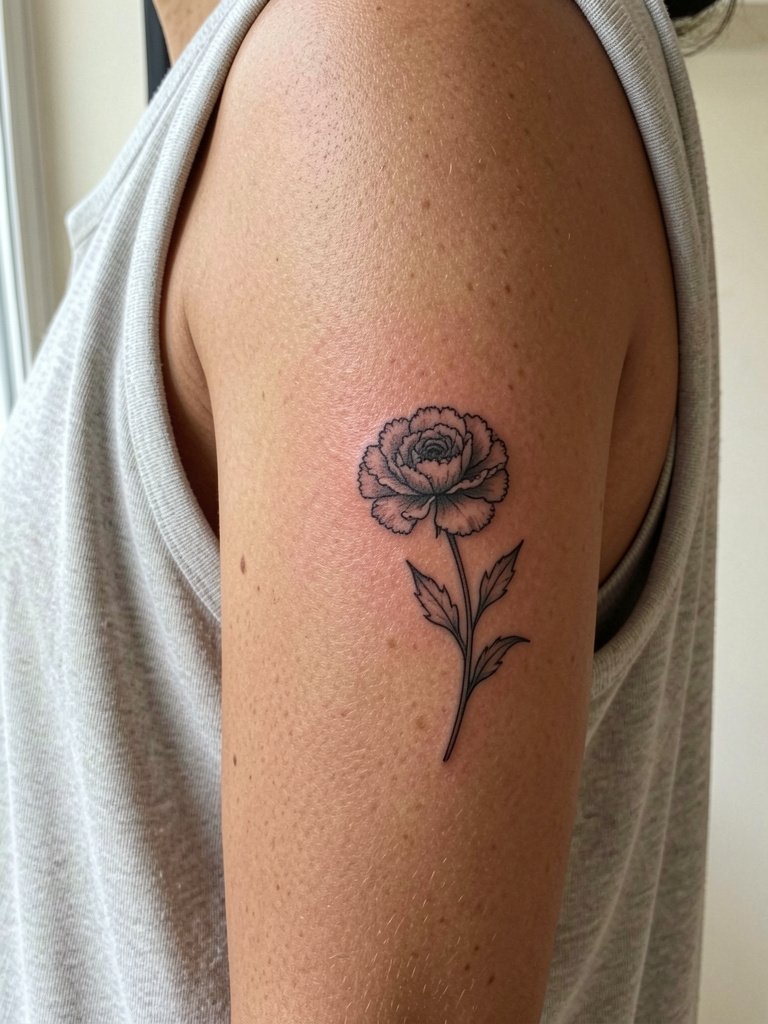
Inner upper arm placements are private and forgiving for slightly larger small pieces. The smooth medial skin holds linework well, but thin single-needle petals still risk fading if constrained into a tiny bloom. Plan for a session of forty-five to ninety minutes depending on foliage. Bring reference photos that show the exact negative space you want, and ask for spacing that preserves petal separations into year three. For the appointment wear a loose tank top so the artist can access the medial side without tugging clothing.
Studio Day Picks
The forearm and wrist pieces above benefit from a few small items that smooth the session and the first week of healing.
-
Stencil transfer paper kit. Useful to preview line placement on the inner forearm and wrist styles before the needle hits skin.
-
Topical numbing cream. Applied per package directions helps take the edge off short runs on the wrist and ankle.
-
Thin protective film roll. Keeps tiny ankle and finger tattoos protected from rubbing during the first 24 to 72 hours.
-
Fragrance-free gentle body wash. Cleans the healing area without irritating fine linework.
-
Aquaphor healing ointment. Thin application in the first days helps keep micro detail hydrated without clogging.
7. Carnation with Birth Month Lettering on the Collarbone
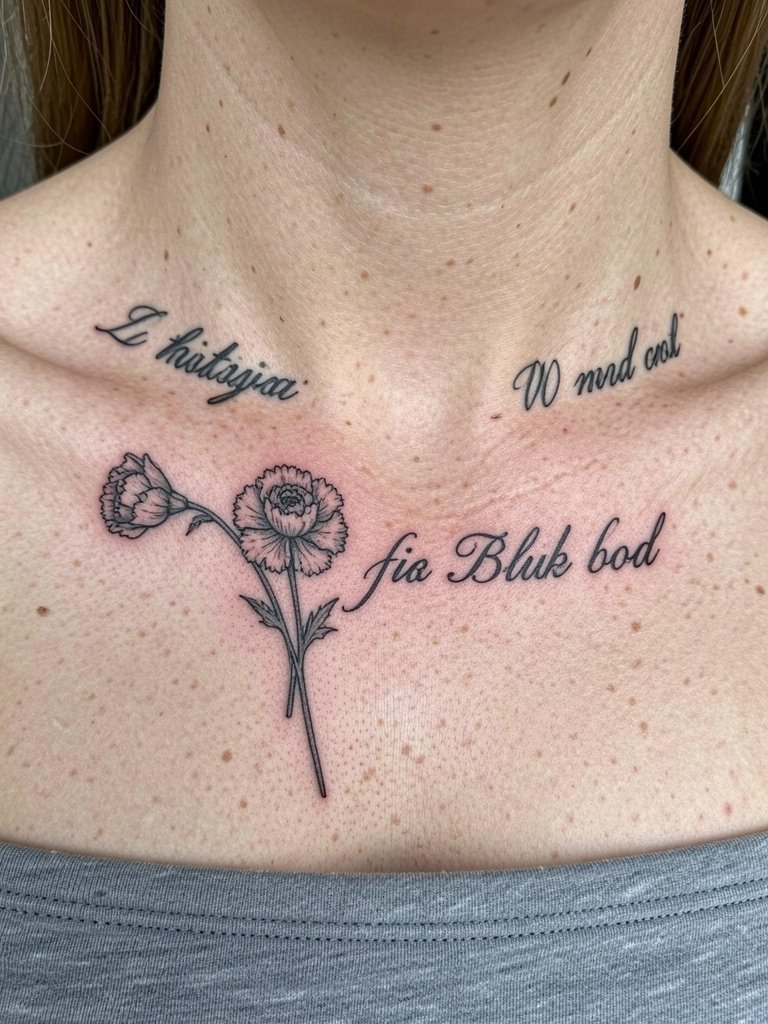
Pairing a carnation with a month or short script along the collarbone adds specificity without crowding the design. The collarbone sees clothing friction from straps and necklaces. Expect a one-hour session and a five to six pain level on most charts. A common mistake is using tiny cursive that blurs when the skin shifts. Instead ask for slightly bolder script weight and show scale at two and four inches. When showing off the piece try an off-shoulder top or layered delicate necklaces that sit below the lettering.
8. Larger Carnation and Foliage Mini Bouquet on Outer Upper Arm
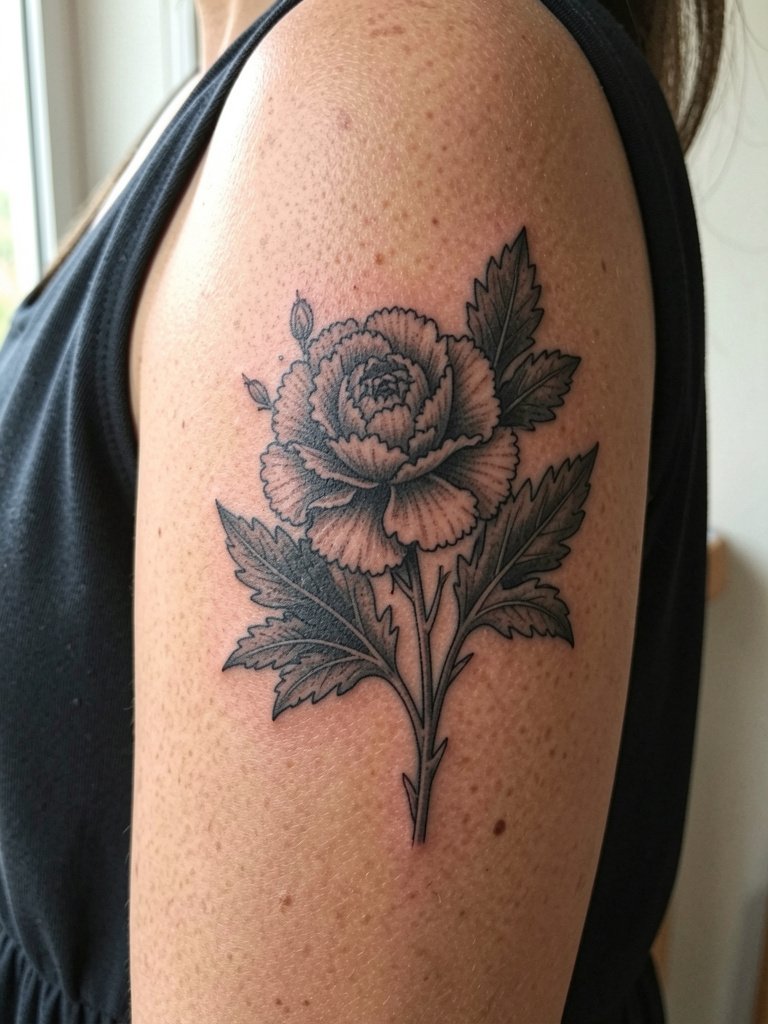
A mini bouquet gives the carnation room to breathe and holds detail better than micro single blooms. This placement tolerates more shading and sits well for a one to two session piece. The outer upper arm usually rates a three out of ten for pain. The mistake to avoid is compressing more than two blooms into a tiny area. For wardrobe pairings choose a sleeveless dress or relaxed tank that frames the outer arm without covering the tattoo. Expect the foliage edges to soften slightly by year three, but the composition will remain readable.
9. Red Carnation Accent on the Shoulder
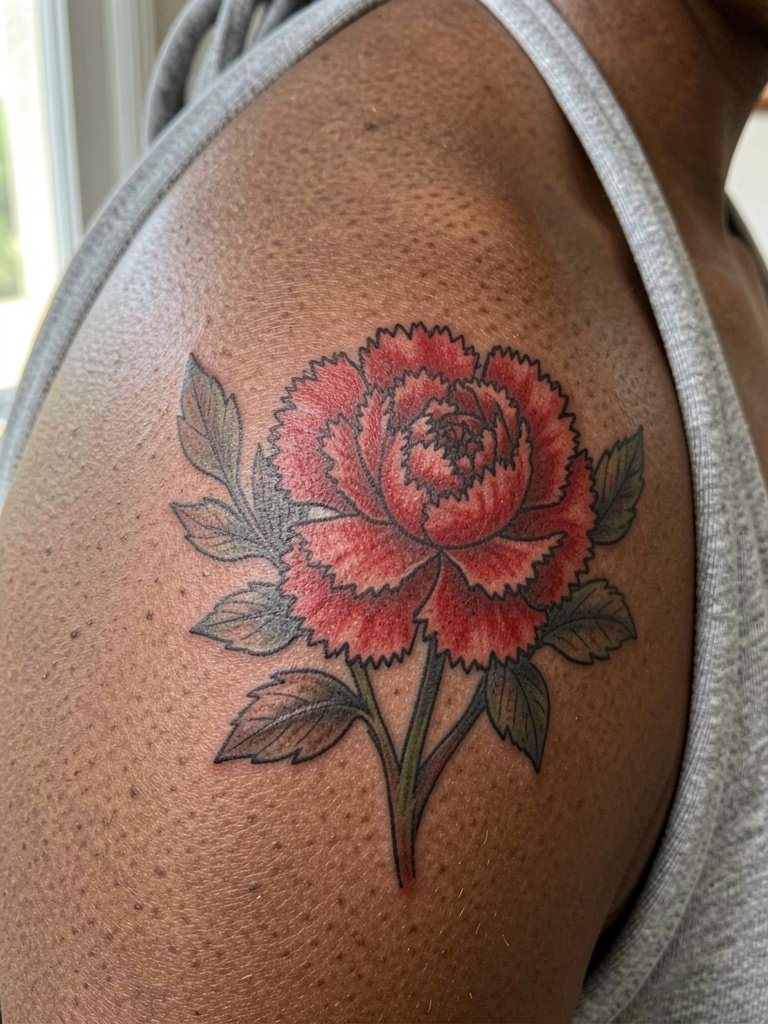
Color makes a carnation read instantly as that flower, but it brings a clear divide in opinion. One camp prefers color because carnations naturally map to pinks and reds and the saturation makes the flower pop in photos. A second camp favors black and gray because those tones age more predictably at small scales and avoid the washed-out patch look that pale pinks can develop. If you choose red, plan for deeper saturation initially and expect a possible refresher at year two to keep petals vibrant. Wear a halter top on show days.
10. Black and Gray Carnation on the Ribcage Skin
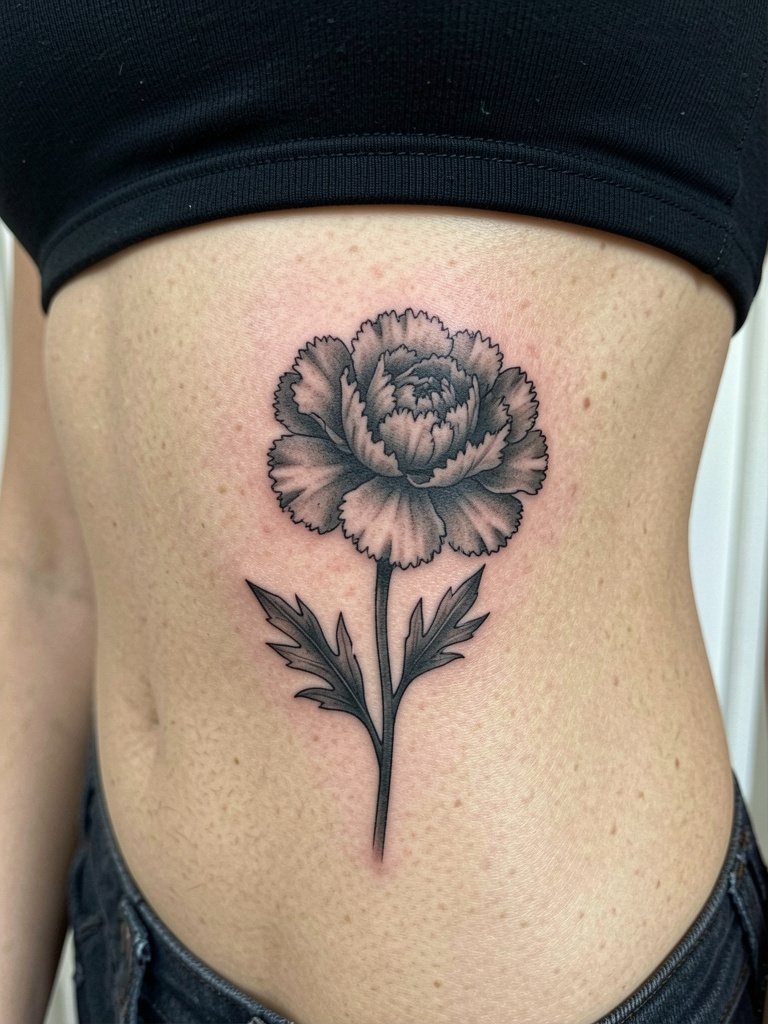
Black and gray tends to be chosen by people who care about long-term clarity. The ribcage is higher on the pain chart, often an eight out of ten, and breath work matters during the session. One real mistake is asking for ultra-intricate hairline petals there. The skin stretches with breathing and body changes, so use slightly bolder petal contours and wider spacing. For the appointment wear a soft sports bra or loose button-down so the artist can access the side torso without fabric tugging. Plan for a one to two hour session depending on shading.
11. Carnation with Dotwork Accents on the Calf
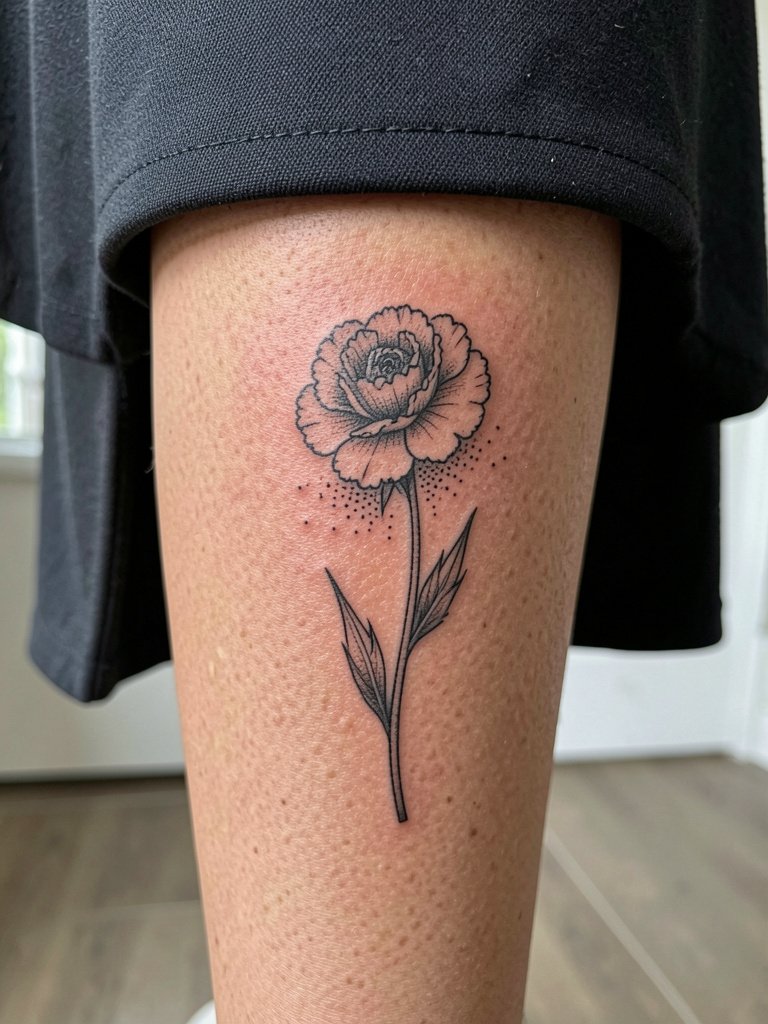
Dotwork adds texture without heavy mass and suits the calf because there is room for stipple gradients. The calf is a low to moderate pain area, and a small carnation with dot accents usually takes forty-five to eighty minutes. Common errors include using dot density that reads like solid shading at three months. Ask the artist to show the dot scale at fingertip distance so you see how it holds. For show-off pairings pick a midi skirt or cropped jeans that leave the calf visible in summer. Touch-ups are less frequent here than on hands or feet.
12. Carnation Paired with a Date or Name in Script on the Lower Back
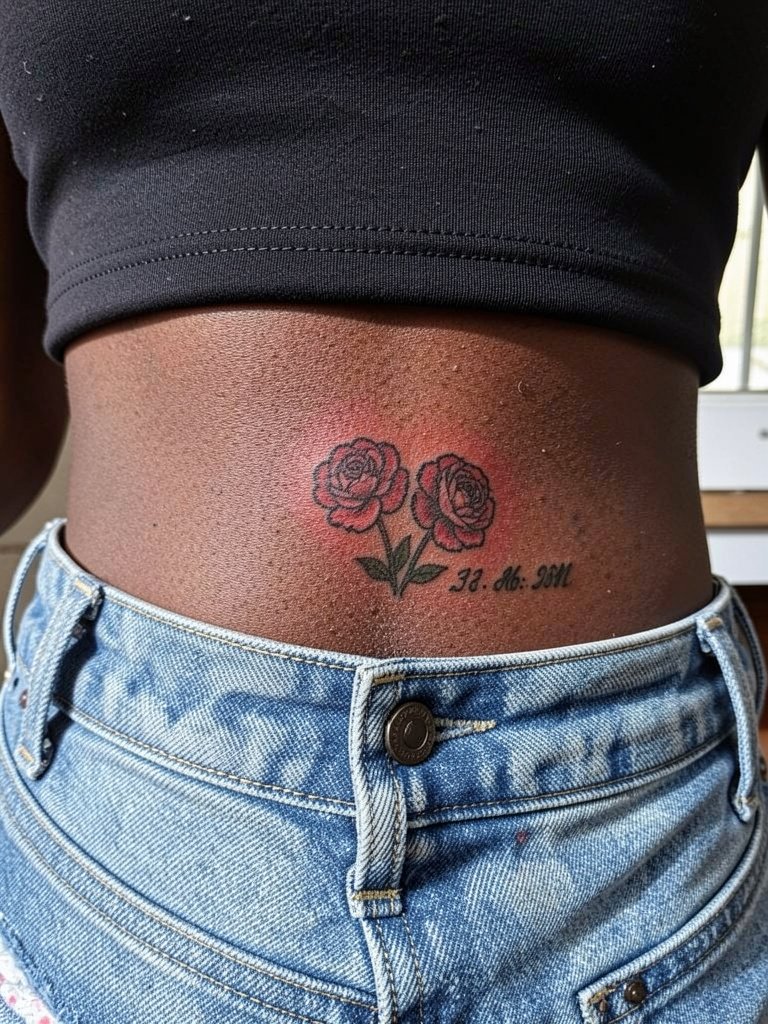
Lower back placements are private and often chosen for personal text pairings. The lower back skin moves with posture and clothing, so keep lettering slightly heavier than usual to prevent softening. A typical session is forty to sixty minutes. A common mistake is tiny cursive right above the waistband which can blur from constant contact with clothing. Request a script weight that remains legible at normal viewing distances and discuss how the placement sits relative to jeans. If you want to show it occasionally, choose low-back tops or swimwear designed to reveal the area.
13. Tiny Paper-Like Outline Style on the Finger
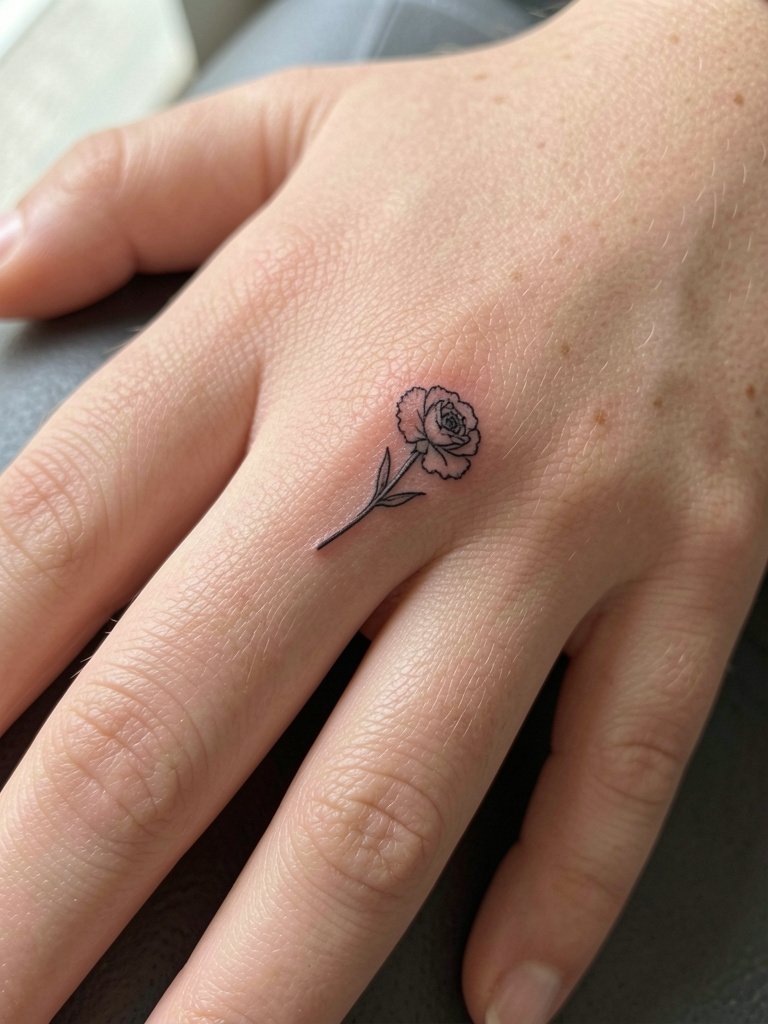
Finger tattoos are alluring for micro symbolism but they demand compromise. The skin on fingers moves and thins, so tiny paper-outline petals fade faster and often need touch-ups inside the first year. Sessions are short but you should expect frequent aftercare attention. A common error is expecting permanence comparable to arm ink. For the appointment do not wear rings on that finger and keep nails tidy to photograph healed work. Avoid tight jewelry on the hand while the tattoo heals.
14. Side Torso Carnation That Flows with the Body
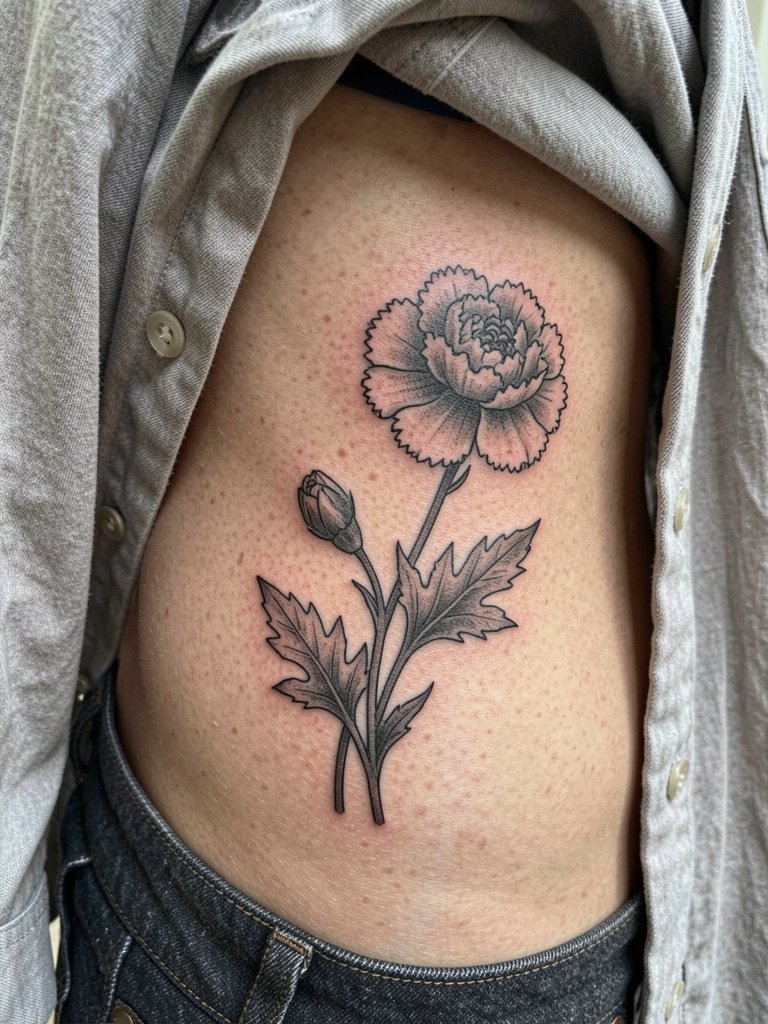
Side-torso placements let a carnation breathe with a curving stem and cascading leaves. The area can be tender and sits high on the pain chart during long shading passes. Designers often use slightly larger scale and softer shading to keep each petal readable after movement. A real mistake is trying for single-needle detail in a tiny panel on the ribs. Wear a loose button-down or sports bra for the session so the artist can access the side without fabric bunching. Expect staged breaks during shading to manage comfort.
15. Micro Carnation Near the Collar of a Shirt
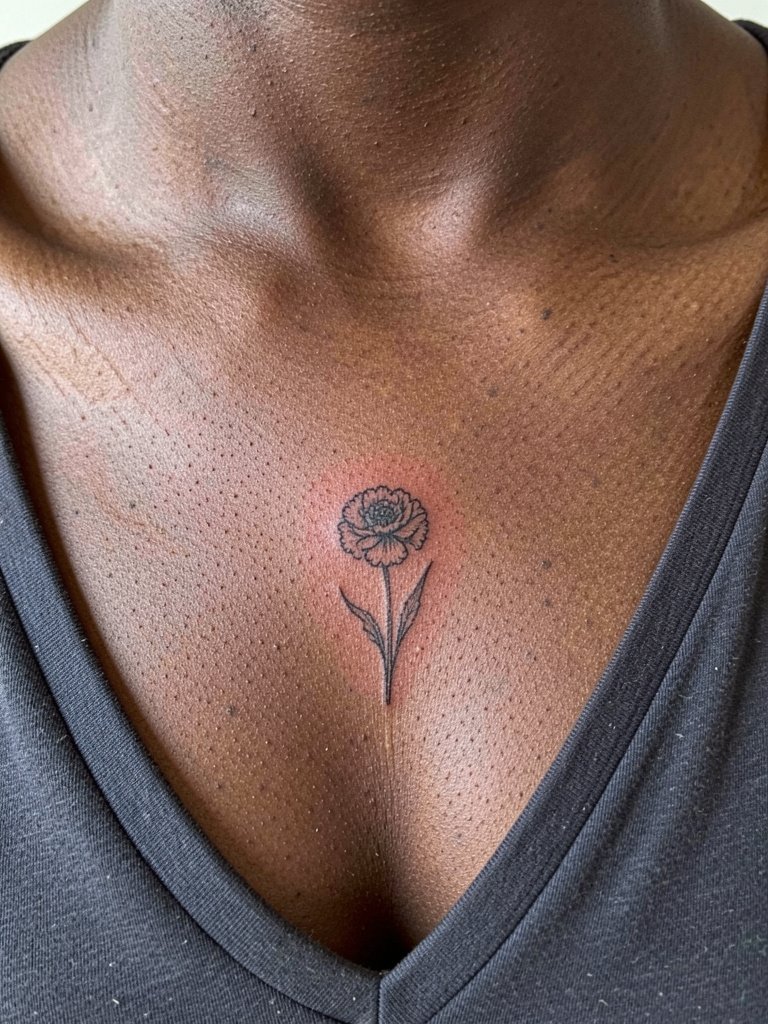
A small carnation placed to peek under shirt collars works as a subtle accent. The keys are correct line weight and placement relative to the neckline so the design does not get hidden by straps or jewelry. Sessions are brief and recovery is straightforward. Mistakes come from asking for too narrow a script or outline that disappears under clothing friction. For the appointment wear a wide V-neck or scoop-neck top so the artist can stencil and tattoo without tugging. If you show it often choose tops with intentional exposure around the collar.
16. Stylized Geometric Carnation on the Outer Forearm
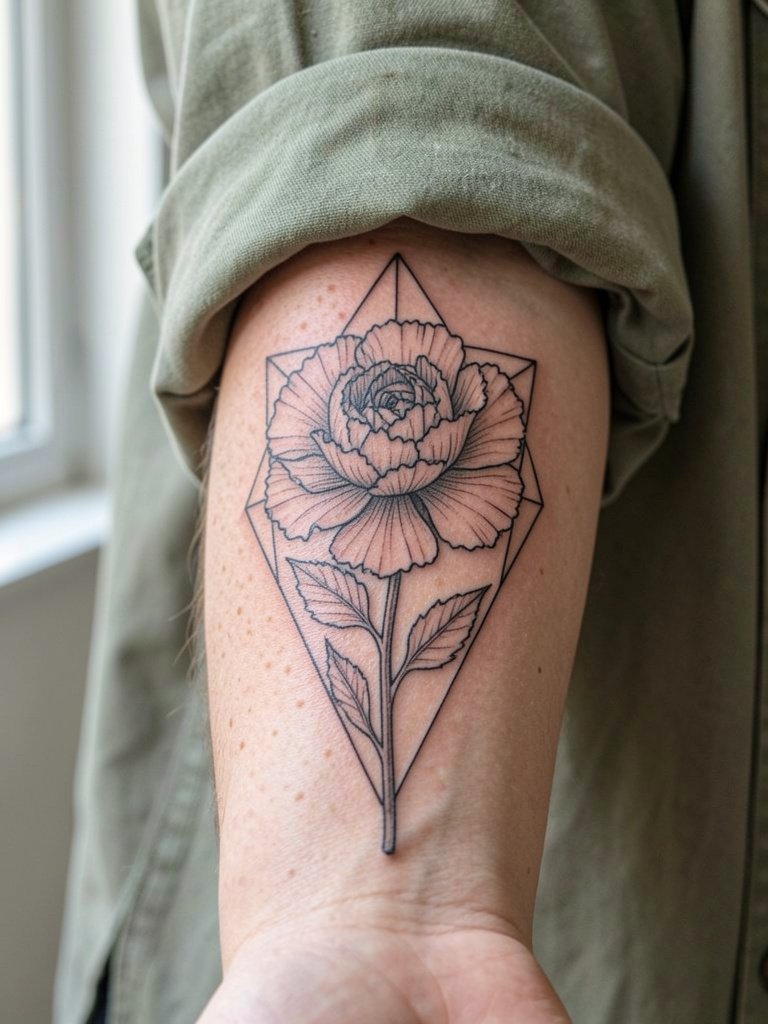
Geometry paired with a carnation gives a modern edge while keeping the bloom readable. Outer forearm is a low-pain spot and holds crisp linework well, but geometric lines need absolute evenness to avoid appearing lopsided after healing. A common error is mismatched angle alignment across the frame. Bring a ruler-style reference and ask for a stencil check from different arm angles. For styling pair with a relaxed overshirt with sleeves pushed back so the pattern is visible without crowding.
17. Minimalist Carnation on the Shoulder Blade
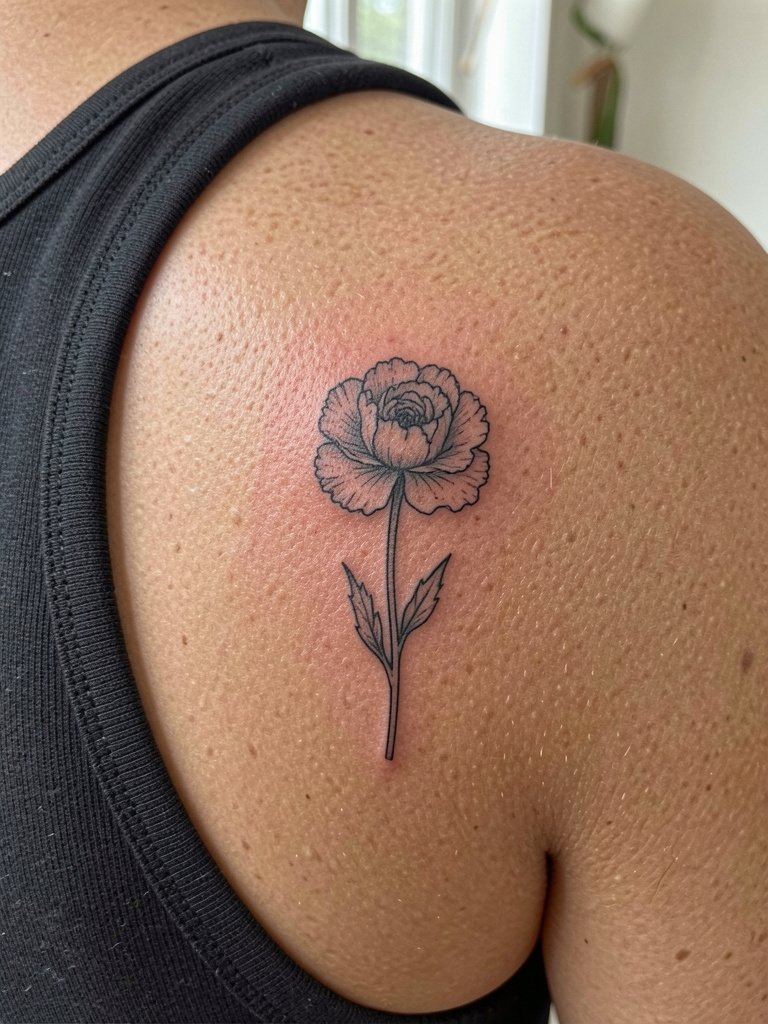
The shoulder blade gives a flat canvas for simple silhouettes that age well. Minimalist single-line carnation looks elegant here and does not suffer as much from blowout as wrist or finger pieces. Sessions are brief and pain is lower than on the ribs. A common mistake is asking for negative-space fine detail that disappears under clothing straps. For the session wear a racerback tank so the artist has clear access and the design photographs well when healed.
18. Carnation with Scripted Name on the Lumbar Area
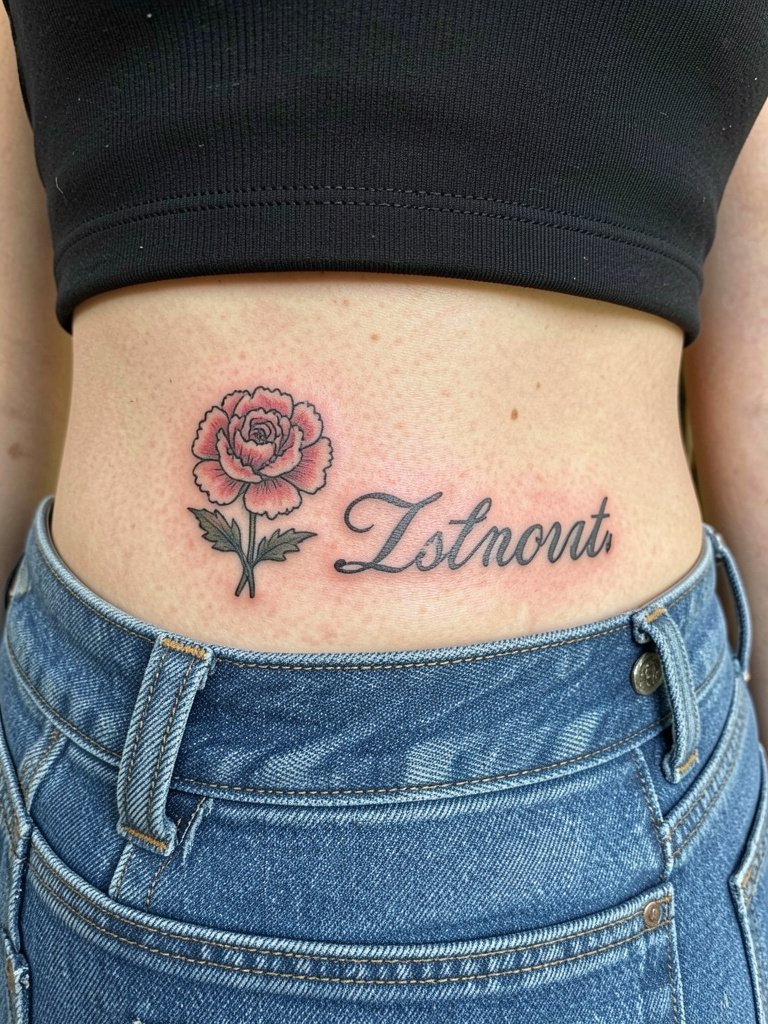
Combining a small carnation with a name on the lumbar area keeps the piece intimate. The lumbar skin tolerates shading but can rub against waistbands. Make sure the name font is bold enough to remain legible if the tattoo sits partially under clothing sometimes. A frequent mistake is tiny italic scripts that blur after a year. Wear low-rise or loose bottoms for the appointment and ask the artist to show the lettering at two sizes. This placement is mostly private but photographs beautifully when you want to share.
19. Paper-Outline Carnation on the Upper Thigh
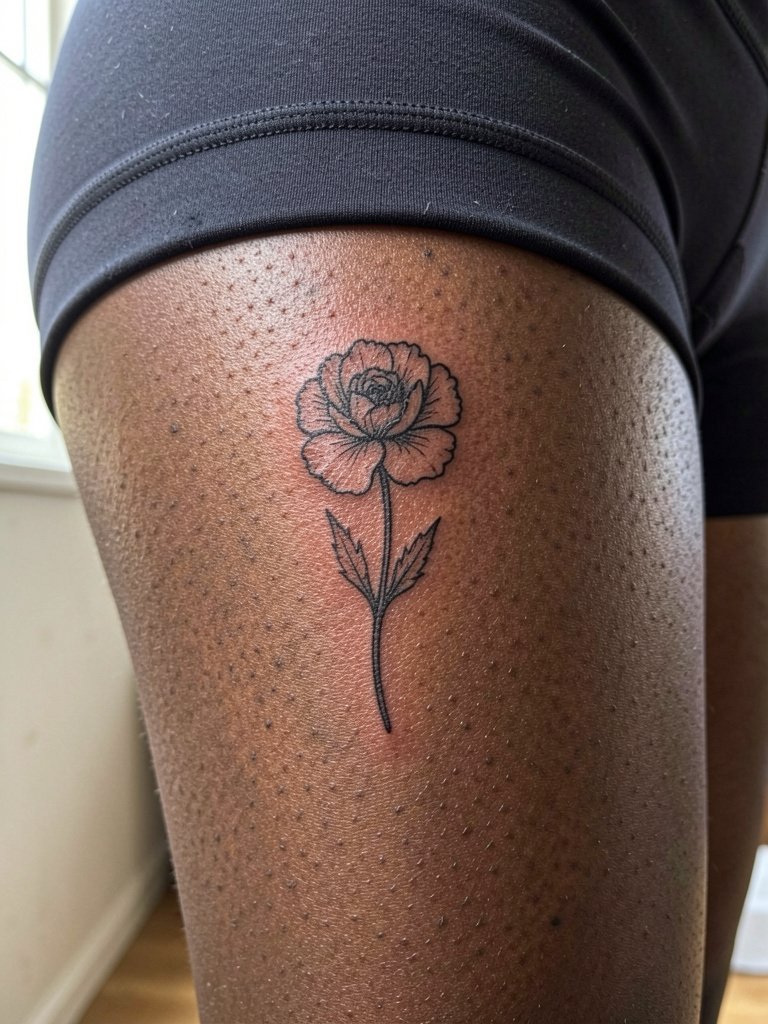
Upper thigh placements let you go a little larger while keeping the design private. The skin there tolerates single-line work if scaled to at least three inches. One mistake is trying for micro detail in an area that will be covered most of the time and then expecting constant crispness. For the session wear modest shorts so the artist can stencil the inner or outer thigh without fabric bunching. This location suits people who want a piece that can be shown selectively with skirts or swimwear.
20. Carnation with Stipple Halo on the Chest
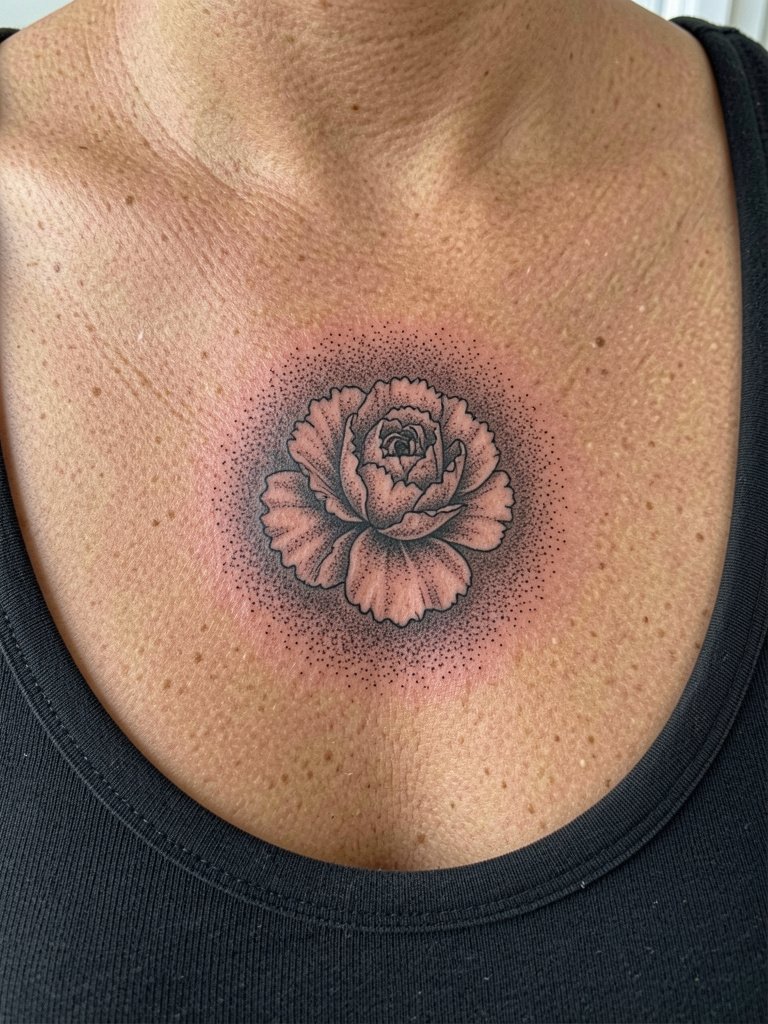
A stipple halo frames a carnation nicely on the sternum or upper chest without heavy fills. The sternum can be sensitive during shading, and breath control helps the artist keep lines consistent. A common misstep is too tight a stipple that looks muddy after healing. Ask the artist for a sample stipple scale on scrap skin or paper and request a test dot density. For the session pick a scoop-neck or wide V-neck tank so the chest is visible and accessible.
21. Watercolor-Tinged Carnation on the Shoulder Cap
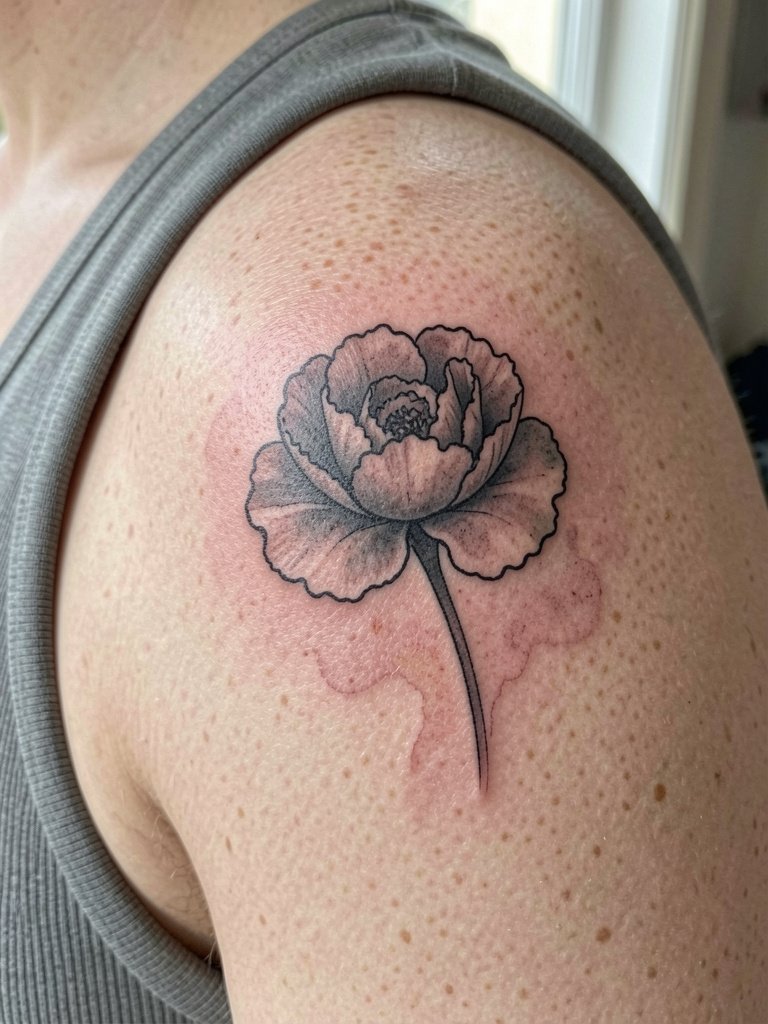
Color washes can be beautiful but carry visible tradeoffs for carnation petals. One camp loves watercolor for its painterly look. Another camp warns watercolor fades unevenly and looks weaker at tuberous sites. If you choose wash, ask for a stronger outline and deeper initial saturation so the watercolor reads after a year. For showing off the shoulder cap wear halter or racerback cuts that expose the area without rubbing. Expect a possible top-up in two to three years for the wash.
22. Carnation Wrapped Around the Wrist with Negative Space
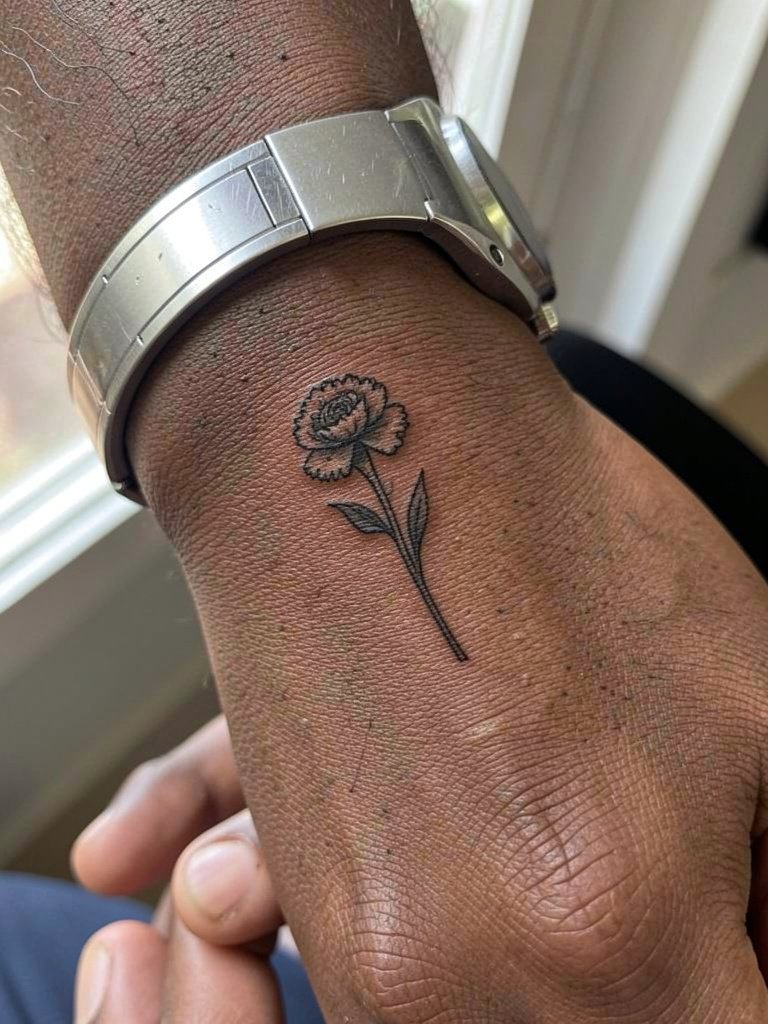
Wrist wraps look striking but are vulnerable to constant washing and sunlight. The common error is asking for tiny inner detail that the wrist skin erases quickly. I prefer slightly wider petal contours and planned negative space so the wrap reads at arm's length. Session time runs thirty to sixty minutes. For the session avoid bracelets on the tattoo wrist and consider a slim watch on the other wrist for balance. Aftercare attention in the first two weeks keeps fine line crispness longer.
23. Larger Side-Torso Carnation for a Statement Piece
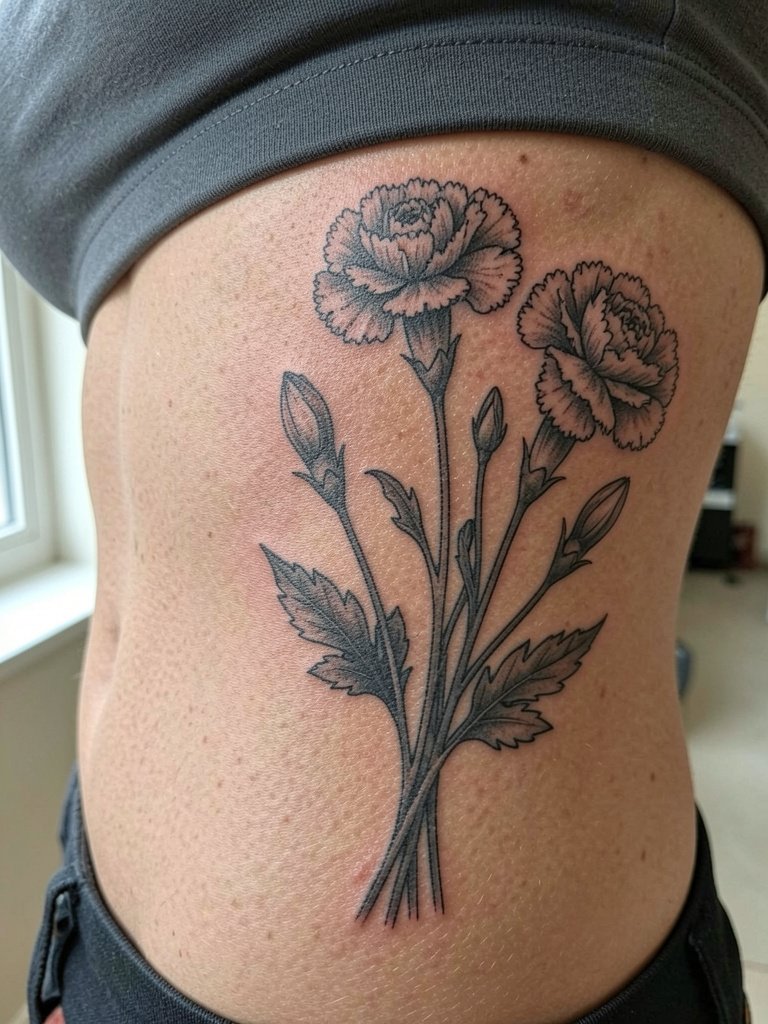
A larger side-torso carnation becomes a collector-style floral that ages well if given room. Designers often recommend 1.5 to 3 inches minimum petal spacing so the structure survives weight changes and motion. Pain and session time are higher on the ribs, and you should plan for staged appointments. A classic mistake is compressing too much fine detail into a small panel. For session wear loose button-downs or a sports bra to allow the artist to work without fabric interference. This placement photographs beautifully with high-waisted cuts or swimwear that reveals the side.
Frequently Asked Questions
Q: How much should I expect to pay for a small carnation tattoo?
A: Prices vary widely by city and studio minimums, so give yourself a pricing band rather than a fixed number. In my experience the smallest fine-line florals often still sit at or above a local shop's minimum, and session length, color, and touch-up likelihood all change the final cost.
Q: Will a fine-line carnation fade faster than black and gray?
A: Fine-line work can fade or blur if lines are too hair-thin, especially on the wrist, fingers, and ankles. Black and gray versions usually age more predictably at small scales because bolder contour and contrast keep petals readable longer.
Q: Should I do a single carnation or pair it with the snowdrop for January symbolism?
A: One camp prefers a single carnation for simplicity and small-scale durability. Another camp favors pairing with the snowdrop because the two-flower composition gives clearer January-specific meaning and more visual interest. Consider whether you want a discreet single bloom or a slightly larger bouquet that reads across a wider placement.
Q: Where can I find local artists and healed examples without naming accounts directly?
A: Search hashtags like #carnationtattoo and #birthflowertattoo on Instagram and TikTok then filter by location. Look for portfolios that explicitly show healed shots, not only fresh work. Reddit and tattoo forums also surface peer feedback on shop reputation and healed longevity.
Q: What should I wear to the appointment for a collarbone, rib, or ankle carnation?
A: Pick clothing that allows the artist direct access without being moved during the session. For collarbone choose an off-shoulder or wide V-neck top. For ribs wear a soft sports bra or loose button-down. For ankle bring shorts or cropped jeans. If you want specific items, try a wide V-neck top that stays in place and photographs the healed work well.