
Small leaf tattoos look effortless online but they often blur sooner than people expect. I have seen tiny maple outlines on wrists lose crispness faster than larger companion pieces. If you want an autumn leaf that still reads in photos years from now, plan for lineweight, spacing, and placement before the needle touches skin.
1. Single Maple Leaf Outline on the Wrist

A single maple outline on the inner wrist is the classic entry point for a seasonal leaf. One common debate here is about size. One camp says tiny is best because it is subtle, affordable, and easy to hide. The other camp says slightly larger pieces age better because veins and ultra-fine details can blur on a thin skin surface. For longevity pick a hair-heavier lineweight than your reference and keep internal veins minimal so the shape reads at six months and still at year three. For the appointment wear a short-sleeve tee so the artist can work with your wrist unencumbered. This placement is low pain and usually finishes in a single short session.
2. Three Drifting Leaves Across the Inner Forearm
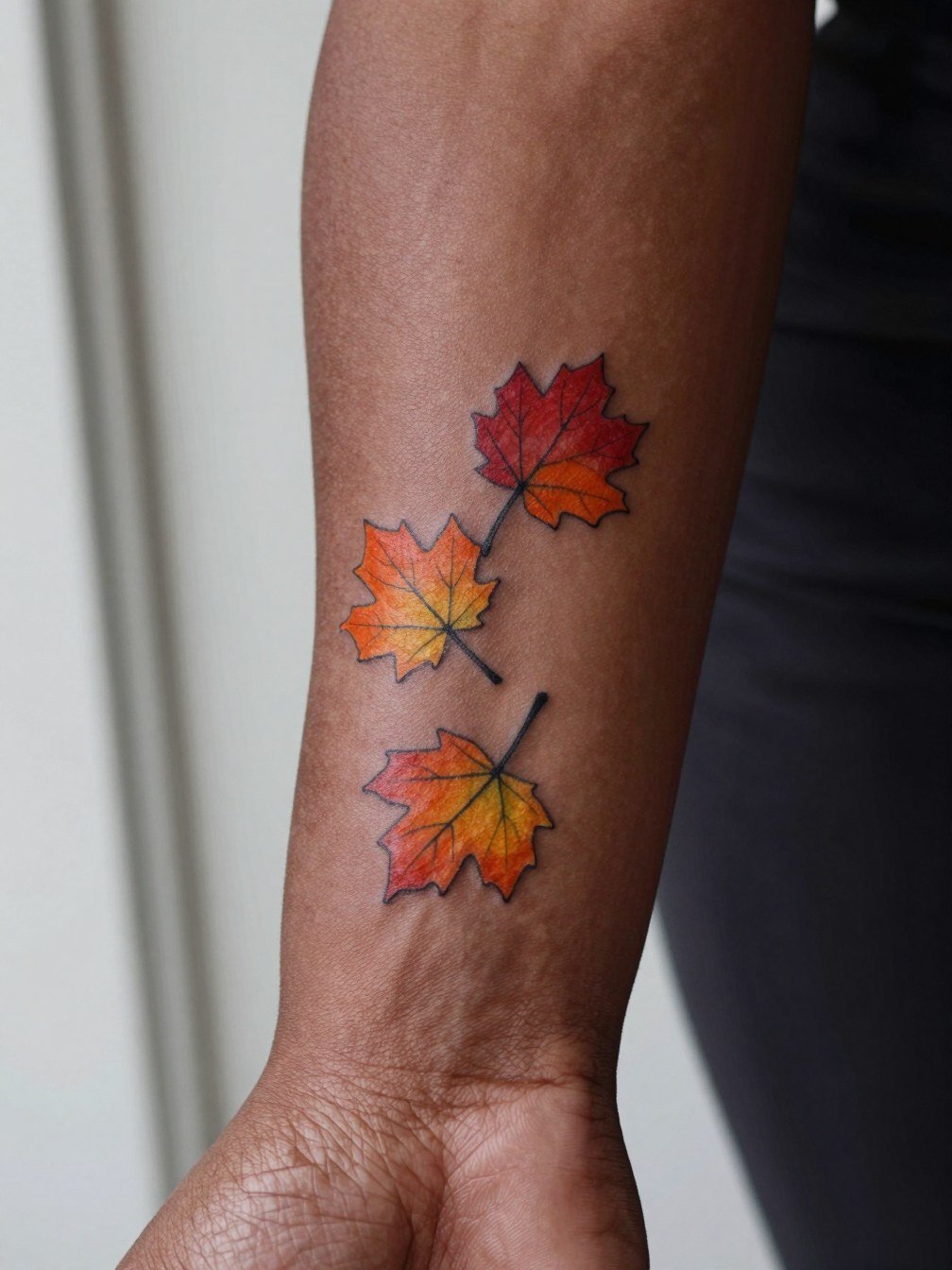
A trio of leaves gives movement and the option to expand later into branches or small flora. This composition reads across the arm because the spacing provides breathing room for each leaf. A typical mistake is crowding tiny vein details into each leaf which the inner forearm will blur into a gray patch by year two. Instead specify slightly wider spacing between veins and request stipple shading for texture rather than tiny hairlines. For showing the piece try a rolled-cuff linen shirt, and for the session wear a loose short-sleeve or button-down to give the artist full access. Expect one to two sessions depending on color saturation.
3. Oak Leaf and Acorn Pairing on the Inner Forearm
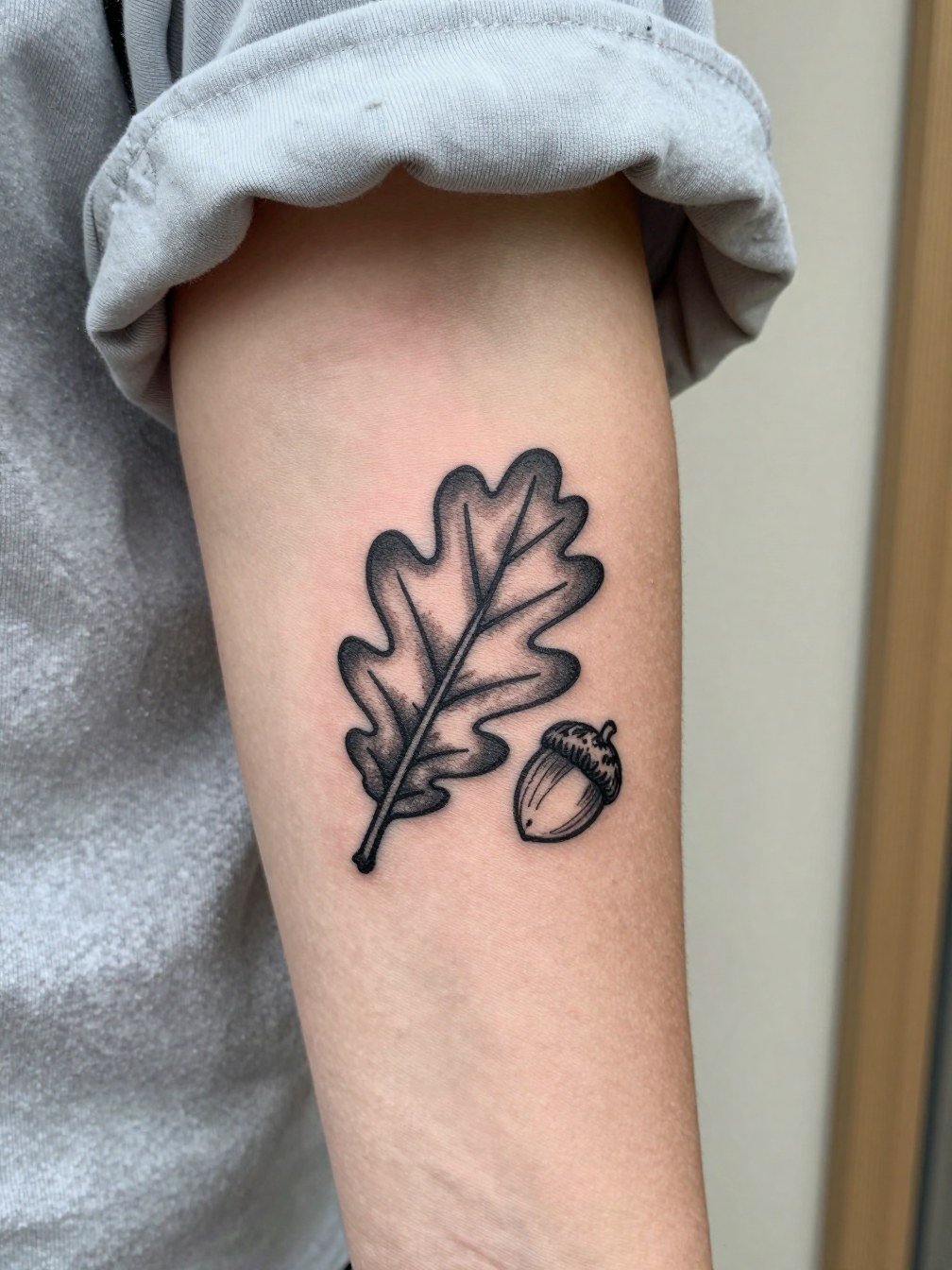
Pairing an oak leaf with an acorn gives a seasonal motif a layer of symbolism without overt wording. This pairing benefits from slightly bolder structure inside the acorn cap so the tiny shapes do not merge after healing. A common error is asking for ultra-fine hatch lines inside the leaf; those hatch lines soften into an indistinct texture on forearm skin. Instead request strong contour linework with subtle dot shading in the acorn. For everyday styling, stack a few thin rings on the opposite hand and roll your sleeves for a calm botanical look. Session time is usually short because there is minimal color and concentrated linework.
4. Ginkgo Leaf Tattoo on the Forearm
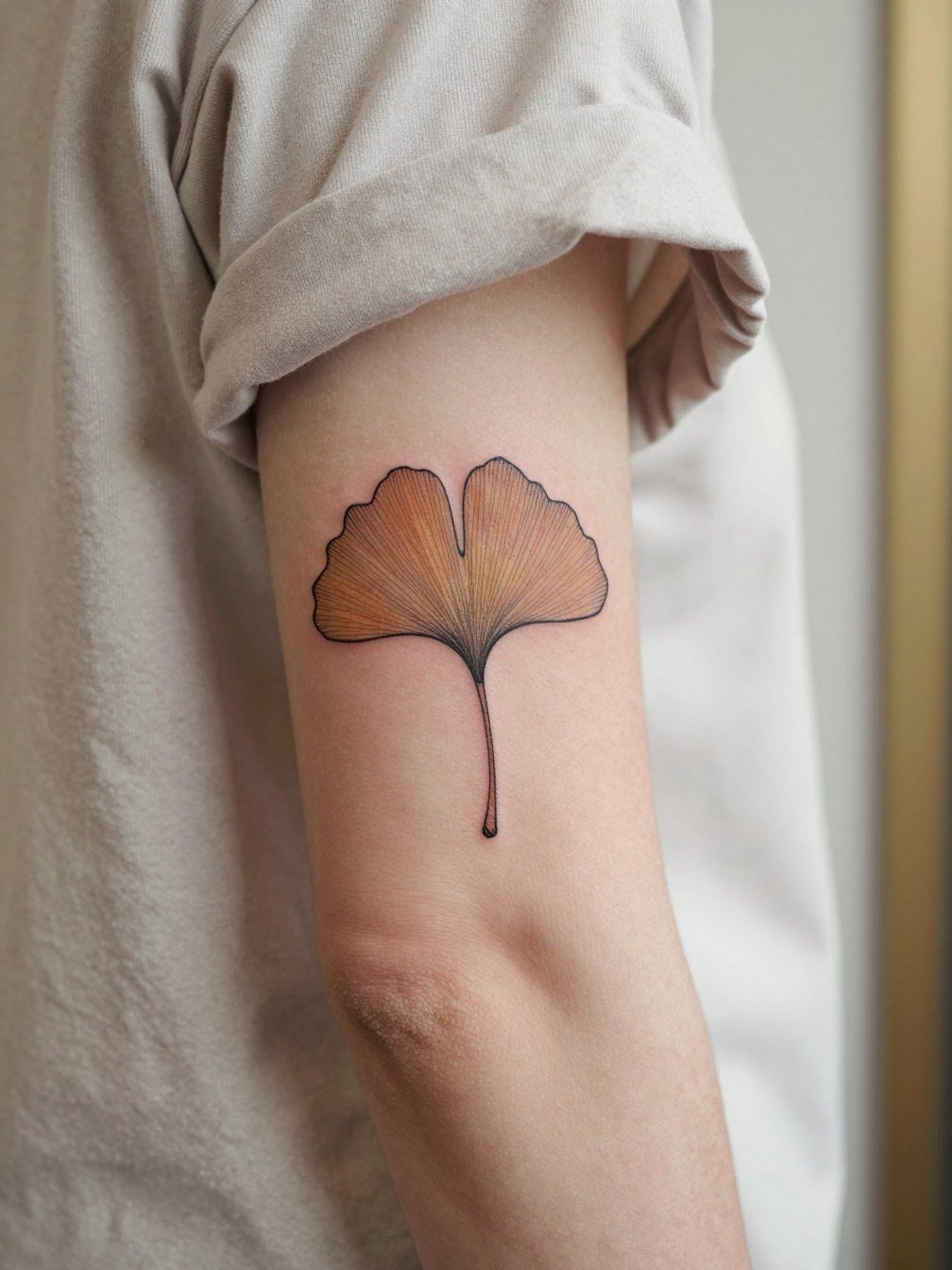
Ginkgo offers a distinctive silhouette compared with standard maple shapes and it holds up well at medium sizes. I recommend this for people who want a recognizable autumn symbol without repeating the same leaf seen everywhere. Watch out for overdoing watercolor blobs inside the fan. One practical approach is a black contour line with soft color washes inside so the structure remains if pigments fade. The forearm gives room for a medium scale so veins can breathe and details do not compress. Pair it with neutral tees and rolled sleeves to keep the leaf the focal point, and bring a couple of healed-photo references at your consultation so the artist can match saturation to your skin tone.
5. Autumn Leaf Wristlet or Leaf Band
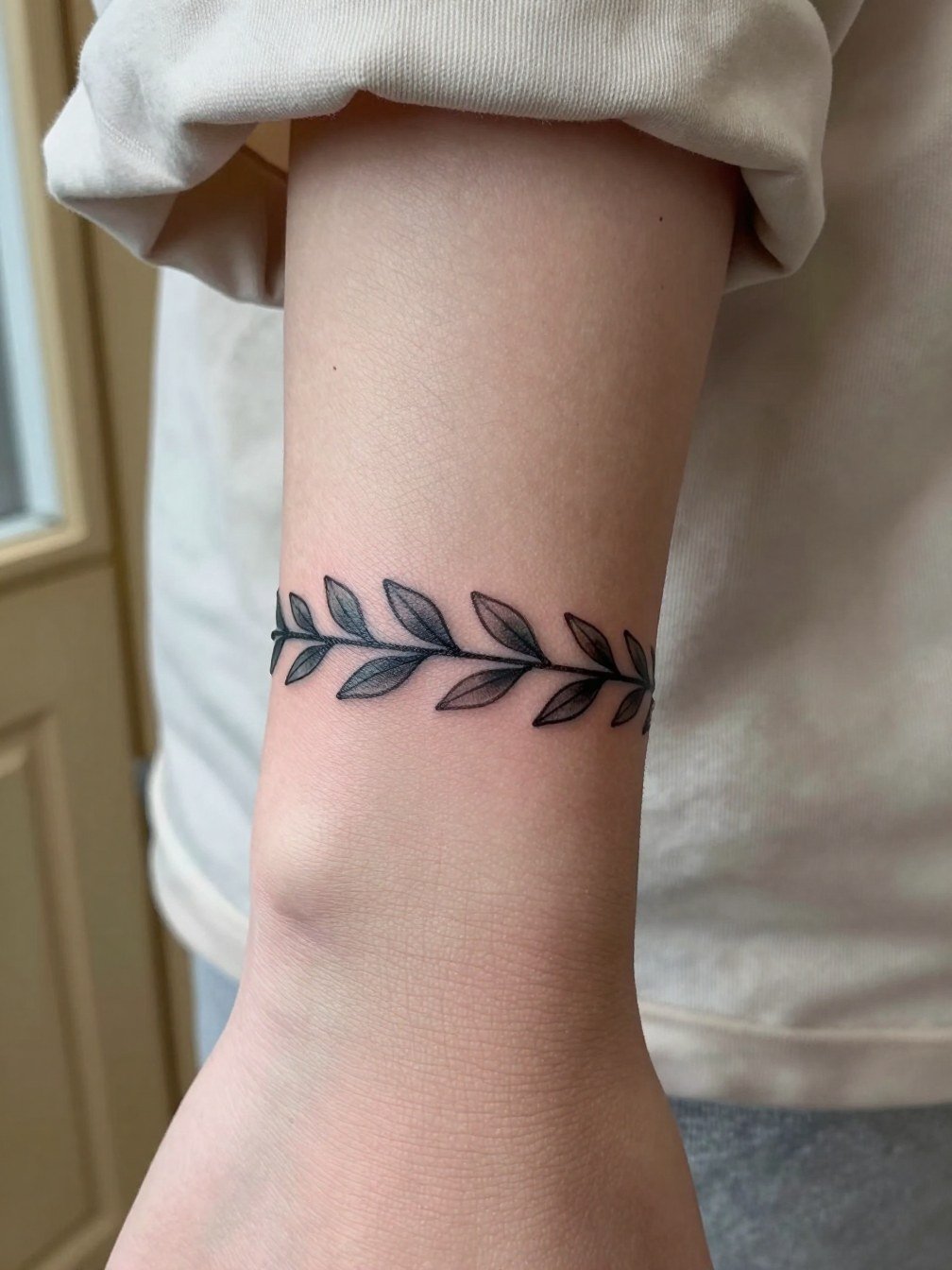
A wristlet band frames the wrist and reads like jewelry without being bulky. The critical consultation detail is rhythm and negative space. Tell the artist how many break points you want and whether the band should sit above or below the wrist crease. A common mistake is wrapping too tightly so the pattern overlaps when the wrist flexes, which makes sections collide after healing. For showing off this placement try a cropped sleeve top and keep watches off the tattoo wrist so the band remains visible. Sessions are usually one to two hours depending on complexity and color.
6. Small Falling Leaf on the Back of the Neck

A tiny nape leaf is subtle and easy to conceal with hair down. The mastoid area has thin skin so ultra-fine single-needle work can drift if done too light. I suggest a slightly bolder single-needle contour and minimal interior detail to keep the silhouette readable after six months. For the session wear your hair up in a low bun and pick a top that does not press the neckline. Pain is low to moderate and most of these finish in a single short visit.
Session Day Picks
These small placements above can be fidgety for a few days, so these items smooth the appointment and first week.
-
Stencil transfer paper kit. Lets you preview and reposition linework before the first pass, which matters for tiny wrist and nape pieces in ideas 1 and 6.
-
Topical numbing cream. Applied about 45 minutes before the session it can help with sensitive inner forearm or wrist work without altering the tattooing process.
-
Thin protective film roll. Useful for small wrist or hand-adjacent tattoos that face friction from clothing and daily washing.
-
Fragrance-free gentle body wash. Cleanses the area during short showers without stripping ink or irritating fresh lines.
-
Healing ointment option. A thin layer for the initial days helps control dryness for fine line work without clogging.
7. Autumn Branch with Multiple Leaves on the Shoulder
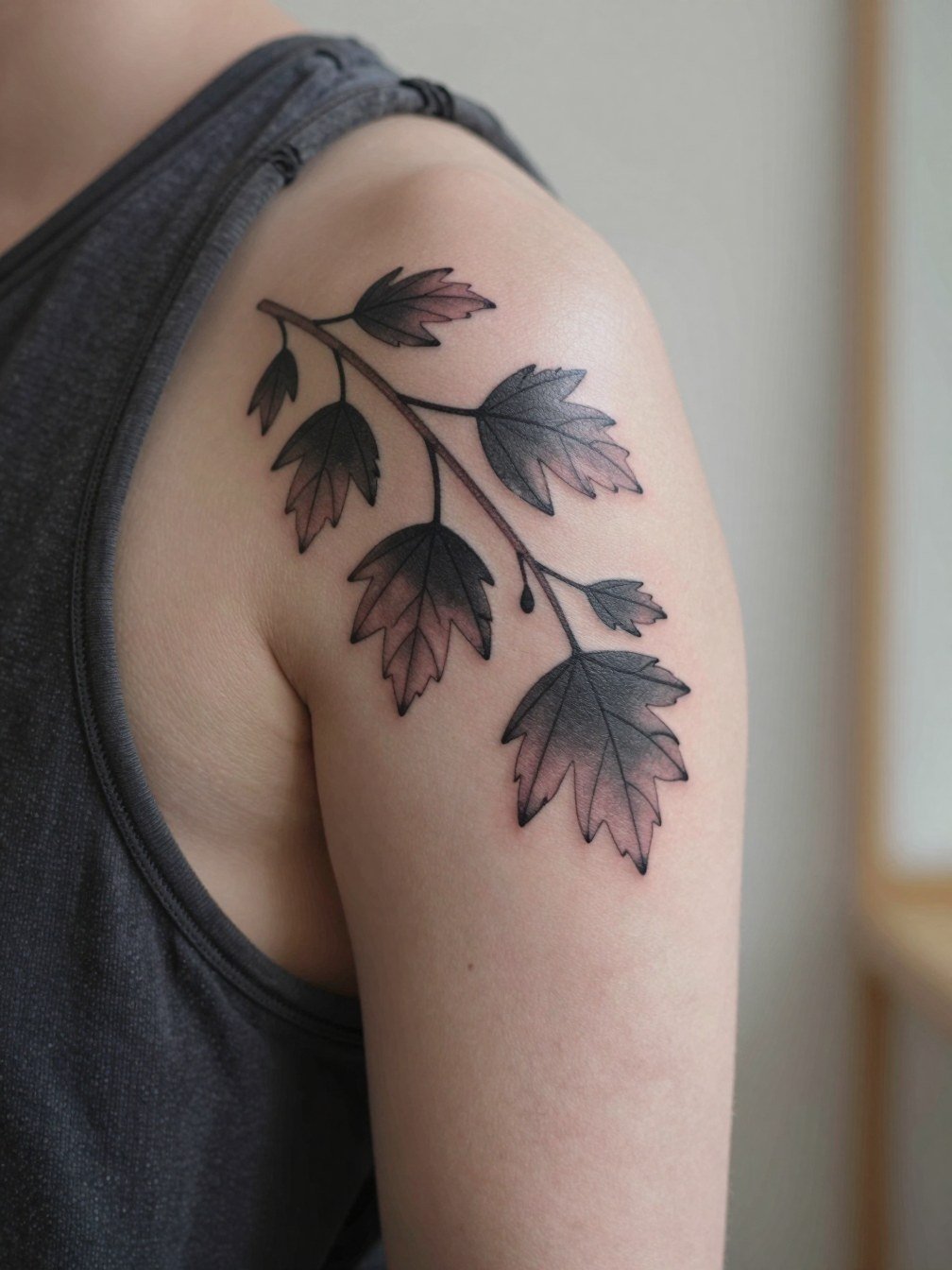
Shoulder placement gives the artist room to show curvature and flow. For this design pick a composition that follows the shoulder cap so movement reads in photos and when you wear sleeveless tanks. A frequent mistake is forcing a flat, linear branch onto curved shoulder skin which compresses veins and shortens the visual length. Ask the artist how the piece wraps with arm motion and request slightly larger leaf sizes than you think. For show-off outfits, try a sleeveless tank or one-shoulder top and bring a reference of the pose you want the branch to align with. Sessions can range from one to three hours based on color.
8. Falling Leaf Trail Down the Spine
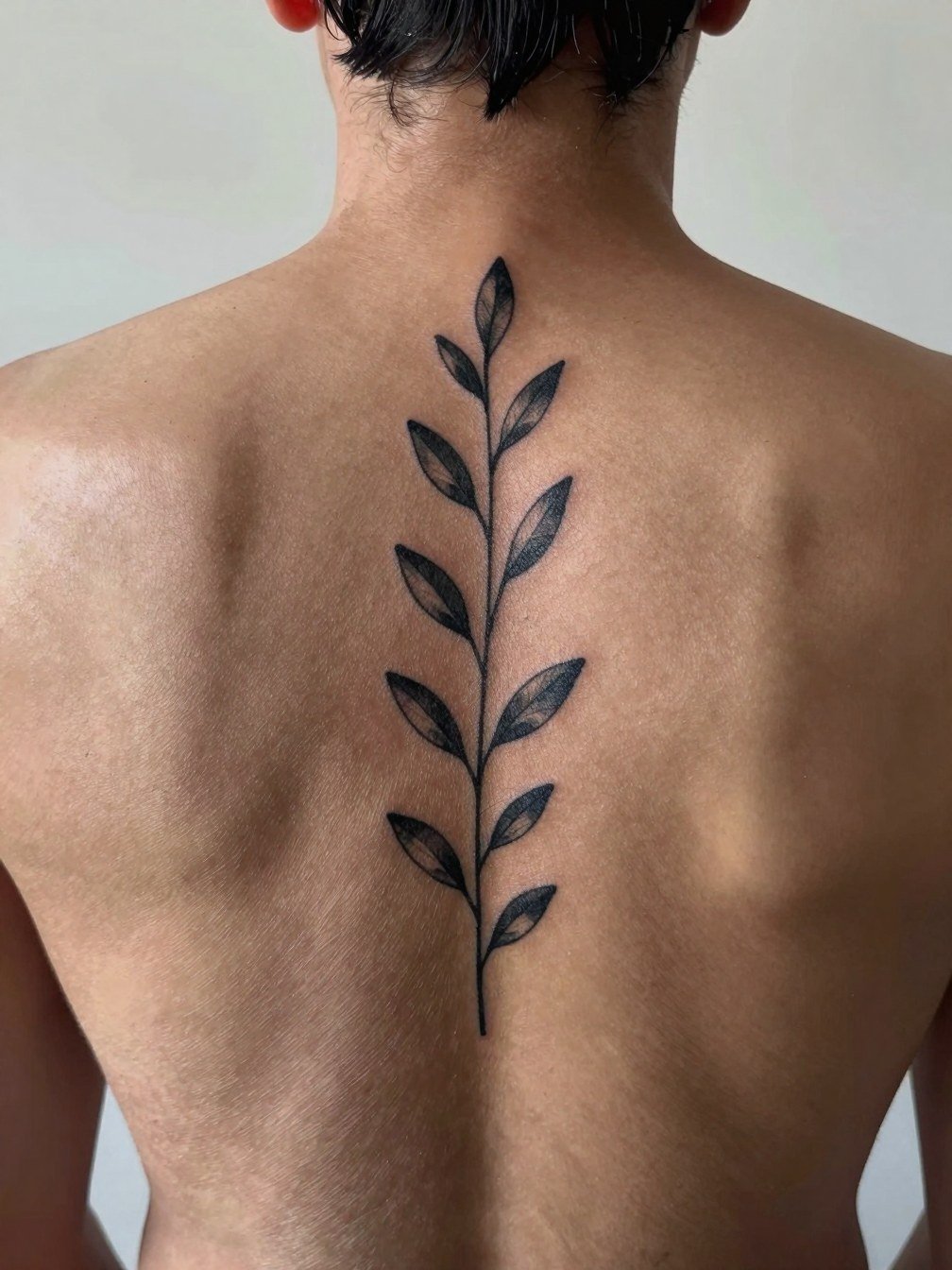
A vertical leaf trail is ideal for the spine because it follows the natural centerline. The spine has more motion and stretch than flat areas so space the leaves to allow for slight skin shifts. People sometimes request tiny veins on each leaf which can blur where the skin flexes. Instead specify cleaner contour lines and avoid tiny cross-hatching. For outfits a backless dress highlights this placement, and for the session pick a loose back-button or zip-front top so the artist can access the area without discomfort. Expect two to four short sessions depending on size.
9. Autumn Leaf on the Calf

The calf offers a flat surface that keeps leaf shapes readable from a distance. This placement is forgiving for bolder outlines and more saturated color, which helps with longevity. One mistake I see is packing too much tiny vein detail into a single leaf without a strong outline, which loses clarity when viewed from a few feet away. Keep the leaf scale slightly larger than you imagine and request strong contour linework if you want color accents. For showing the piece, cropped trousers or a midi skirt work well. Sessions typically fit into a one to two hour slot.
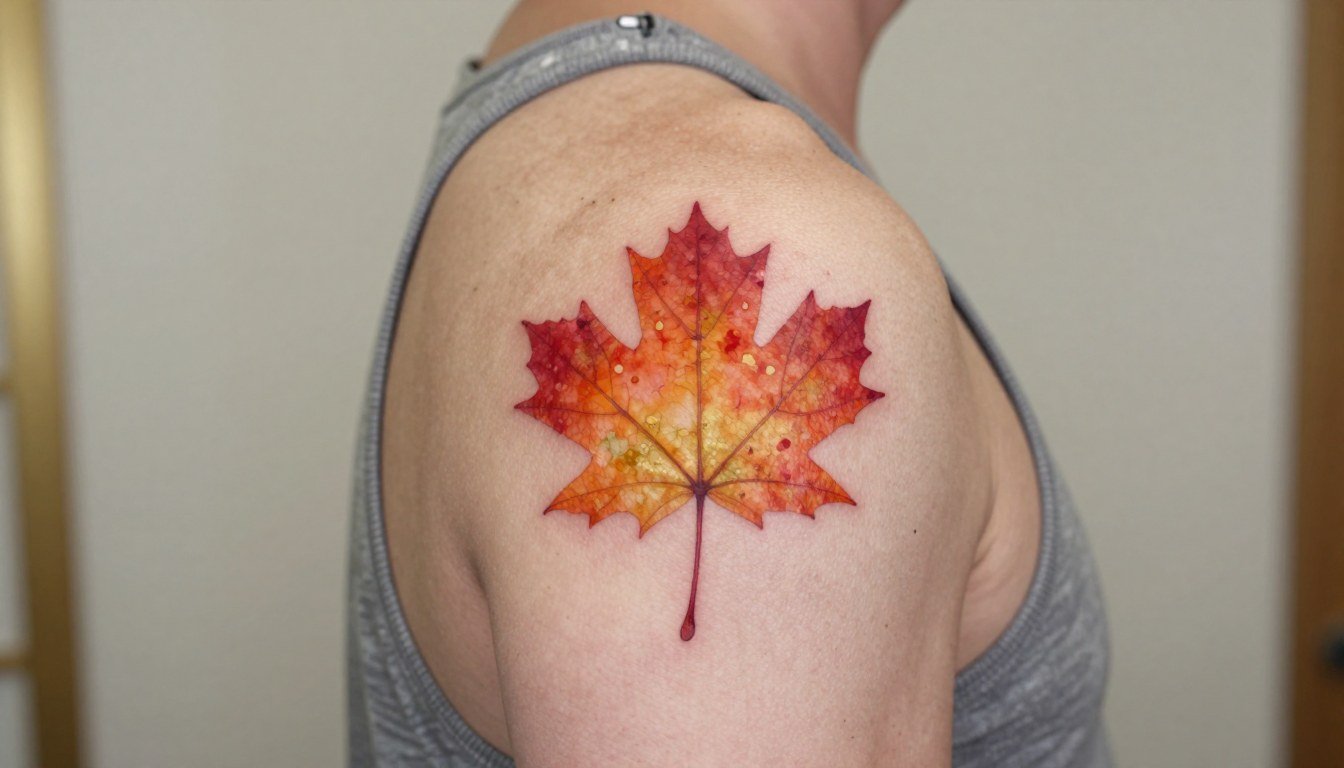
10. Color-Packed Maple Leaf on the Shoulder Blade
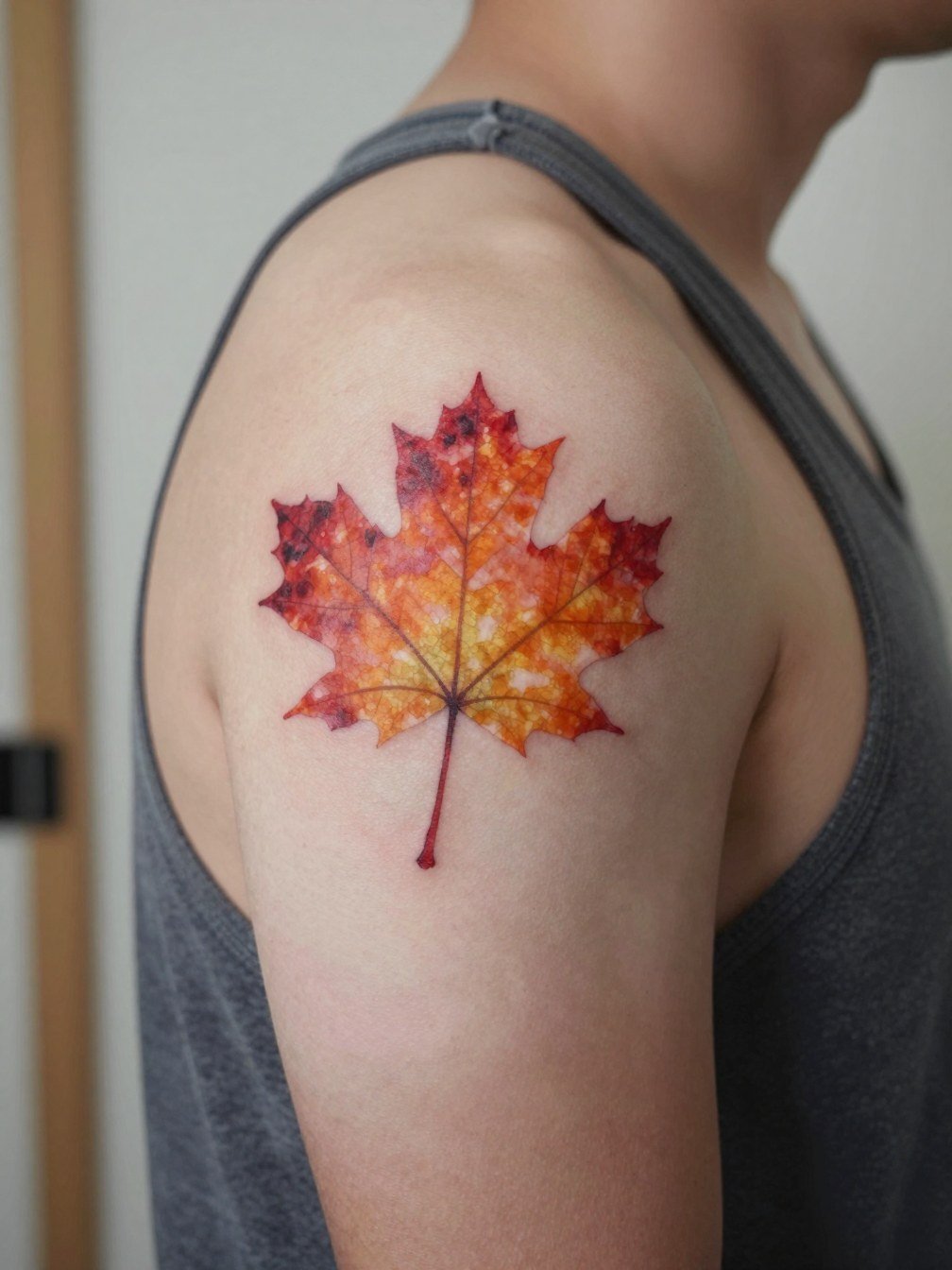
Color here gives the piece seasonal vibrancy, but there is a clear debate in the community about color versus black-and-gray. One camp says color wins because reds and golds are part of what makes an autumn leaf visually autumnal. The other camp says black-and-gray wins because color can fade faster and a strong black structure keeps the leaf readable longer, especially in smaller sizes. My practical recommendation is line-supported color. Ask for a bold contour and layered color saturation so the piece still reads if the pigments lose some brightness, and plan for touch-ups down the line. For show-off outfits try a racerback tank or a wide-neck tee that leaves the shoulder blade visible.
11. Leaf with a Mountain or Landscape Inside the Silhouette
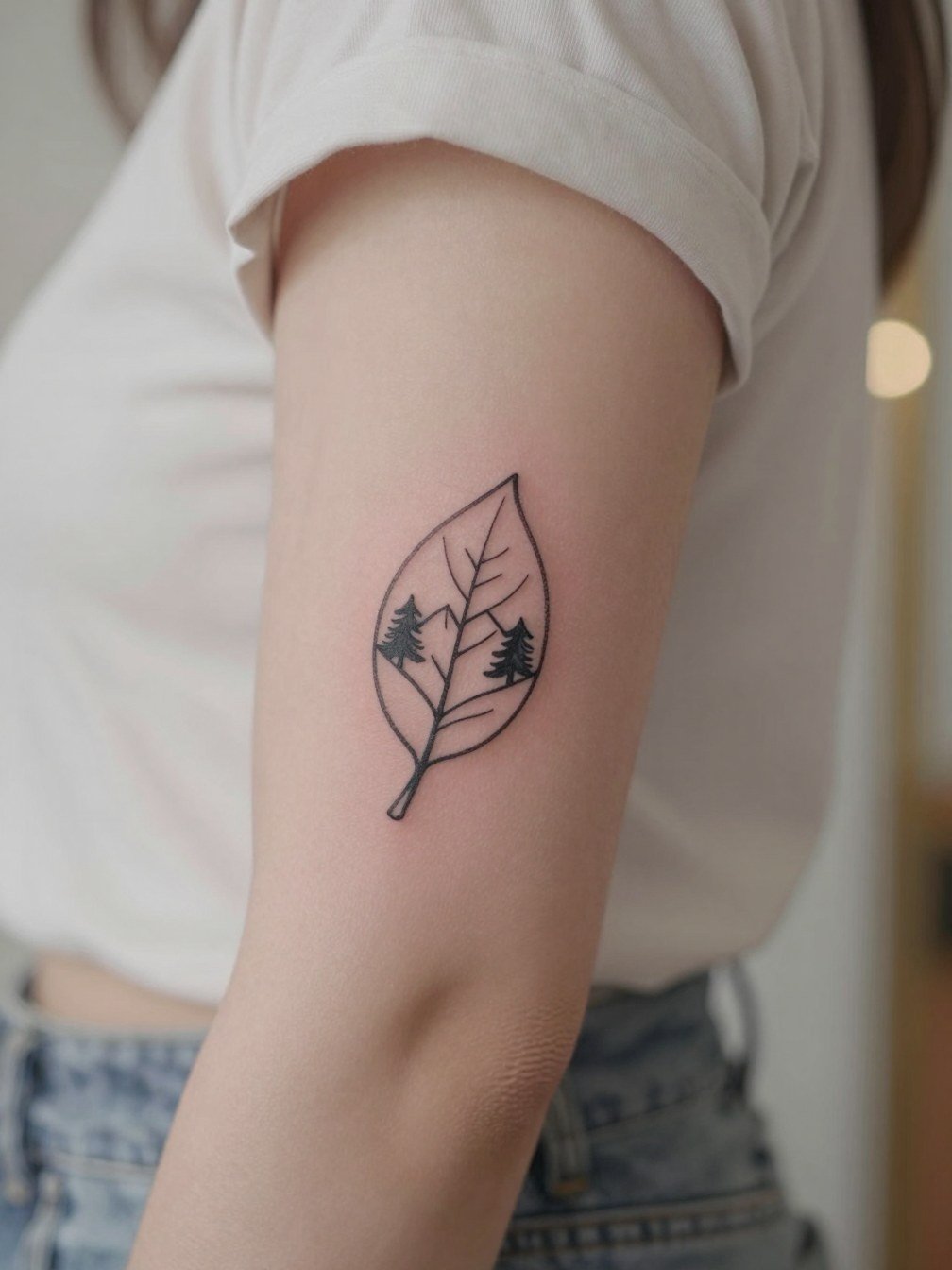
A landscape-inside-leaf turns a seasonal icon into a memory piece without using text. The tricky part is scale. Tiny interior landscapes lose detail quickly, so choose a medium leaf size on the forearm where the artist can include a few clear elements like a ridge line and a row of trees. If you want subtle color, request it as accents only and keep the interior mostly black-and-gray to preserve readability. For session wear pick a short sleeve or loose tee so the artist can access the forearm. This design is a great way to link autumn colors with a place or hike without obvious wording.
12. Traditional-Style Maple Leaf with Bold Outline
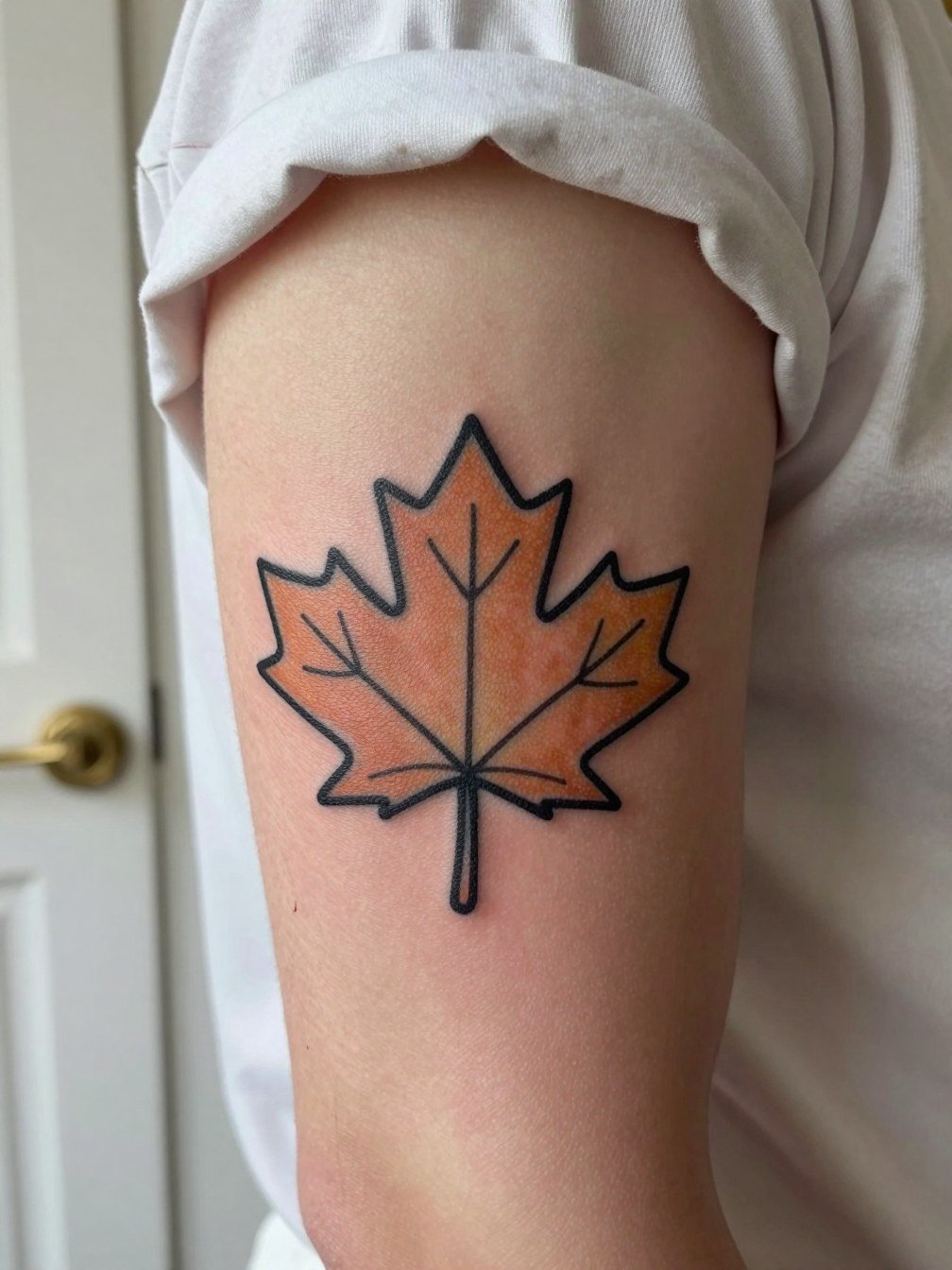
Traditional bold outlines are often recommended for longevity. There is a split in preference here. One camp favors saturated, watercolor-like color and soft edges for a natural look. The other camp argues that a heavy outline and flat fills will age better and retain shape as the skin changes. For anyone worried about future touch-ups choose a strong outline with saturated fills. The upper arm takes the impact well and rarely experiences the friction that erases detail, and the session time is usually moderate. This approach also helps with creating masculine-coded designs when you want a chunkier presence.
13. Full Autumn Sleeve with Leaves, Branches, and Acorns
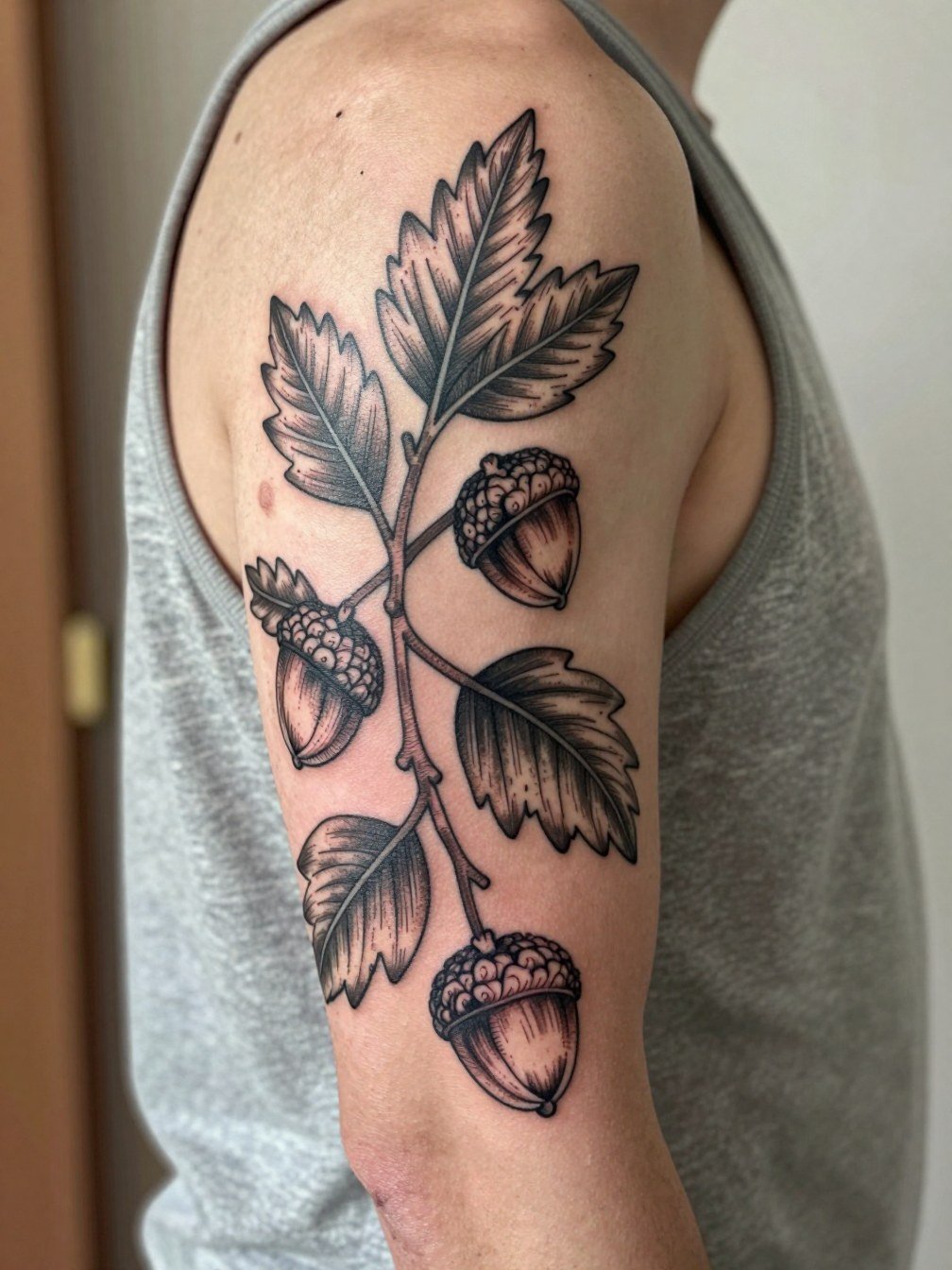
A sleeve lets you combine every autumn motif into a cohesive narrative across seasons and sizes. The main planning point is flow. Sleeves that try to cram too many tiny motifs into narrow bands risk losing individual elements to the overall texture after a few years. Instead prioritize a few focal leaves with supporting acorns and branches in negative space. Expect multiple sessions and discuss realistic staging with your artist so the piece heals well between appointments. For outfits, a sleeveless top or open cardigan showcases the composition and helps you gauge how new work sits with existing pieces.
Frequently Asked Questions
Q: How do I find local artists who show healed autumn leaf tattoos instead of only fresh photos?
A: Search Instagram and TikTok with hashtags like #autumnleaftattoo, #falltattooideas, #mapleleaftattoo and then filter by your city to spot local portfolios. Look for studio websites that explicitly show healed photos or use Reddit tattoo threads where people post long-term shots. Focus on artists who regularly post botanical pieces so you can compare how their linework and saturation hold up.
Q: Will color in an autumn leaf fade faster than black work, and how often will I need touch-ups?
A: Color can fade faster, especially reds and yellows that sit closer to the skin surface. Choosing a black structure first, layered color shades, and a modest touch-up timeline of every few years keeps the piece vibrant. Realistic expectation is a touch-up somewhere between two and five years depending on sun exposure and skin type.
Q: Which placements are best if I want the tattoo to stay readable as I age?
A: Areas with less constant friction like the upper arm, shoulder blade, and outer calf tend to hold detail better than thin-wrist or fingertip areas. For small leaves favor slightly larger scale and stronger contour lines on high-movement spots. If you want a discreet placement that still reads, the inner forearm and shoulder are reliable options.
Q: What should I wear to my session for a shoulder or forearm piece?
A: For shoulder work wear a sleeveless tank or button-front shirt that you can easily move aside. For forearm pieces pick a short sleeve or a rolled-cuff button-down so the artist has full access. If you want a quick option for shoulder blade photos later, a racerback tank shows the area well.
Q: Do leaf tattoos look good on darker skin tones, and how do I ensure contrast?
A: They do, but contrast and saturation choices matter more than style labels. Favor stronger outlines and higher-contrast fills for small pieces, and ask to see healed examples on deeper skin tones. Bringing multiple references and asking how the artist will adjust saturation gives you a clearer idea of the final look.
Q: How painful are these placements compared to each other?
A: Pain varies by person but here is a general sense: wrist and nape are lower-to-moderate sensitivity, inner forearm is usually mild, shoulder and calf moderate, and spine work ranges moderate to higher because of proximity to bone. Sessions for small leaves are often short so pain is manageable for most people.
