Someone I know spent eight months scrolling anime tattoo galleries before realizing the real problem was not finding cool art. It was picking a style and placement that would still read clearly on their skin in two years. These ten anime tattoos show up at conventions and on location tags this year, and each one comes with the practical tweaks I tell friends to ask for at the consultation.
1. Colossal Titan Blackwork on Upper Back
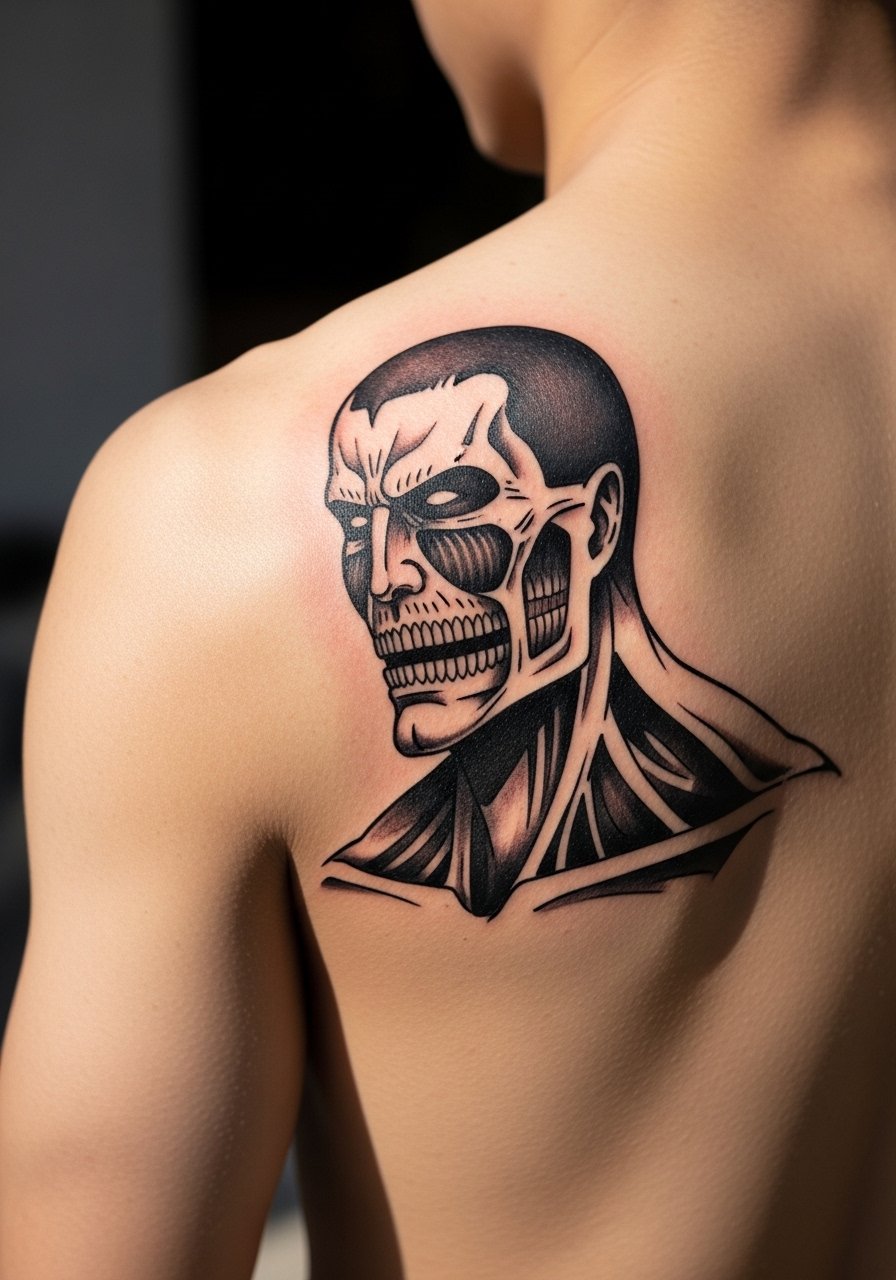
Someone I know first saw this style on a friend's back and said the scale felt like a landscape. Blackwork titans read from a distance, so they work on upper back or shoulder blade where the skin is broad. Artists split into two camps on this one. One camp says go very dense with saturated black so features do not wash out. The other camp prefers more negative space and stipple shading to hint at volume. Tell your artist you want heavy linework and high saturation, not tiny facial details. Expect 2 to 3 sessions, moderate pain for back work, and a likely touch-up at year two if you want that original contrast restored.
2. Denji Transformation Forearm in Neo-Traditional Style
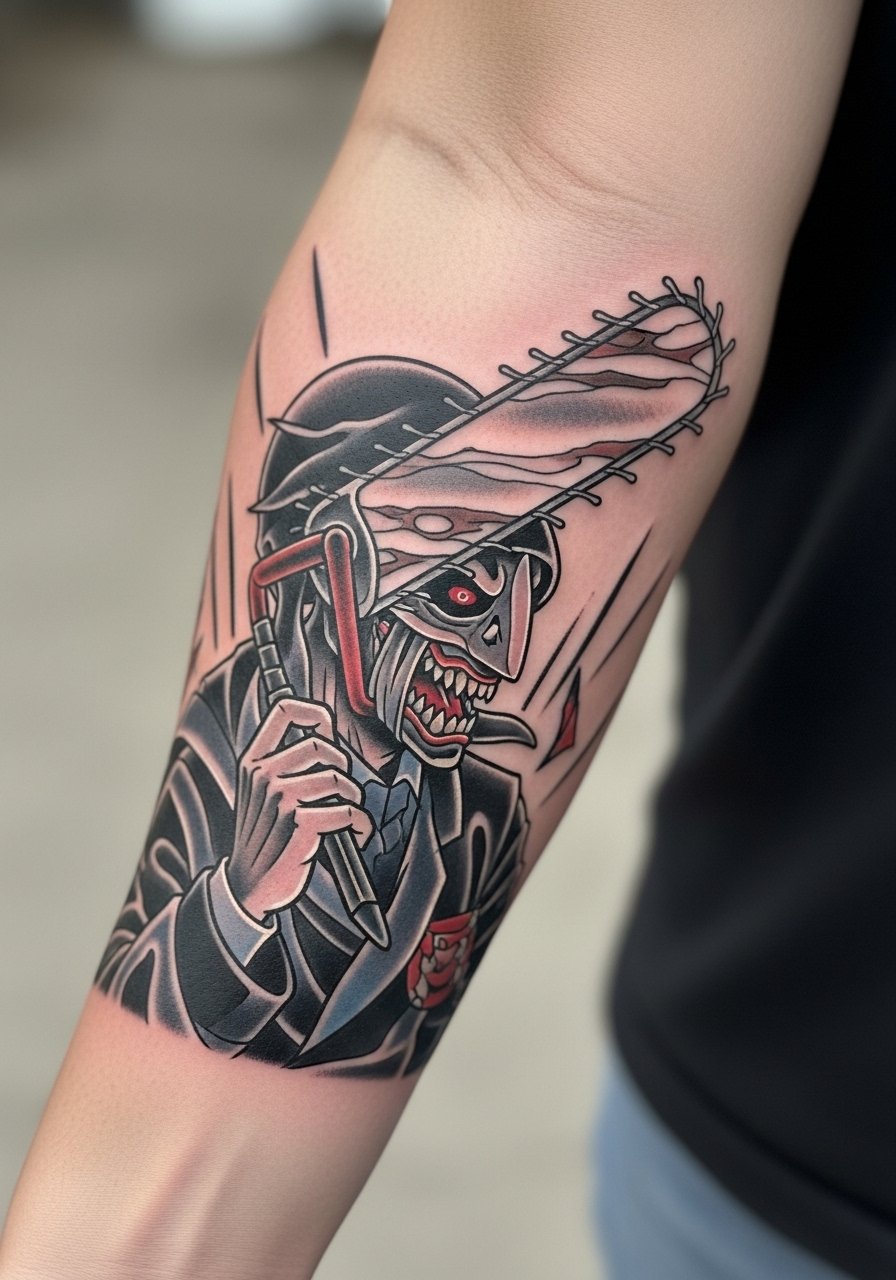
Fair warning. The forearm shows every detail close up and it gets sun more often than chest pieces. Neo-traditional Denji works well on the outer forearm or calf where color accents pop against black and gray. Say to your artist that you want punchy contrasts and a mix of whip shading with bold outlines, not soft watercolor fades. The session time is usually two medium sittings. Common mistake is shrinking the head too small and losing expression. On healed skin the color holds as long as saturation is strong, but expect subtle fading by year three on exposed forearms and plan for a touch-up if you want that fresh look.
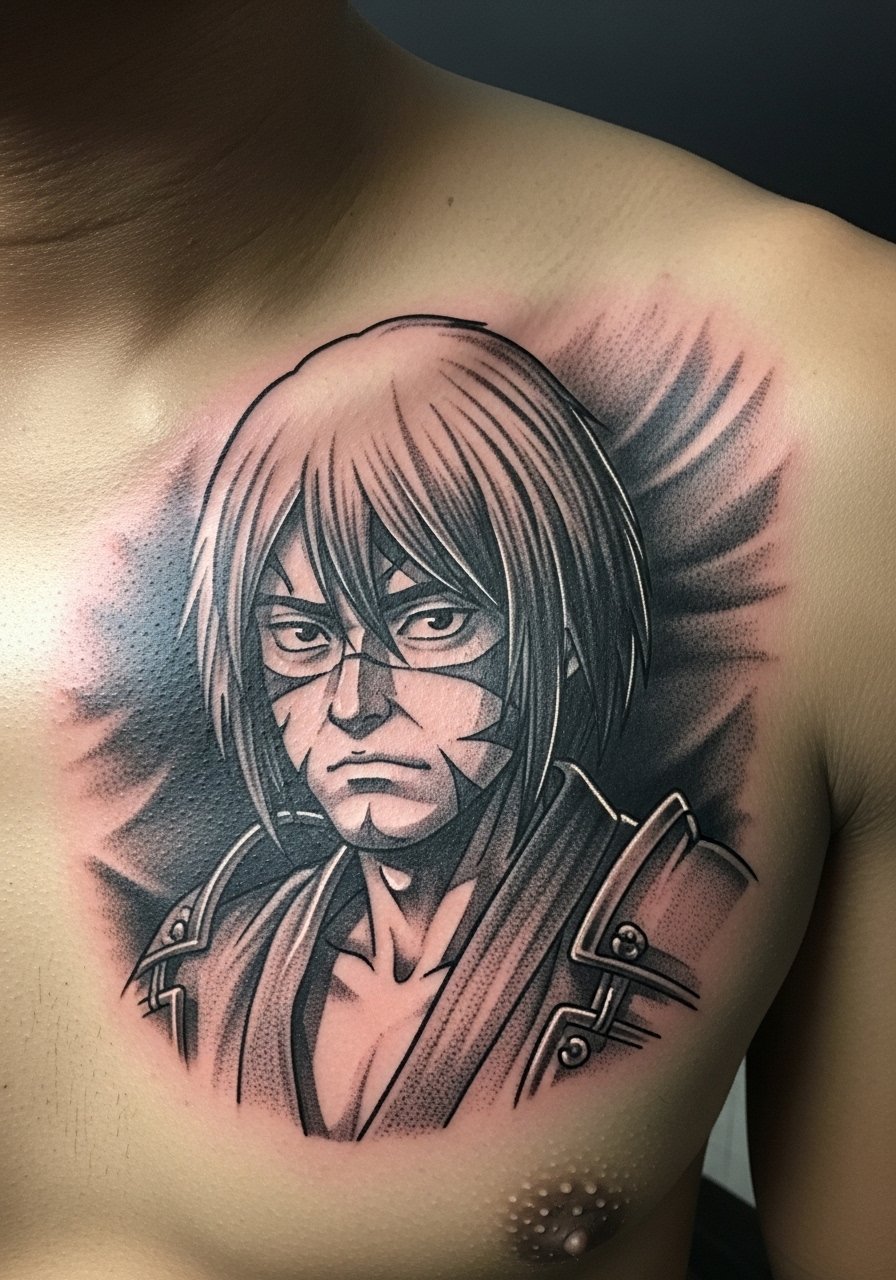
3. Himura Kenshin Samurai Portrait on Chest
Most watercolor-style portraits from five years ago look patchy now. For a Kenshin portrait pick illustrative realism with black and gray shading instead of soft watercolor washes. The chest gives room for medium-large scale and lets the portrait keep proportion as you move. At consultation show photos of the exact line weight you want and mention stipple shading for texture. Pain on the chest is medium-high for some guys, and session time is often three sittings. A common mistake is asking for too-small facial detail. If you scale the face to at least palm-size it keeps readable at two and five years healed.
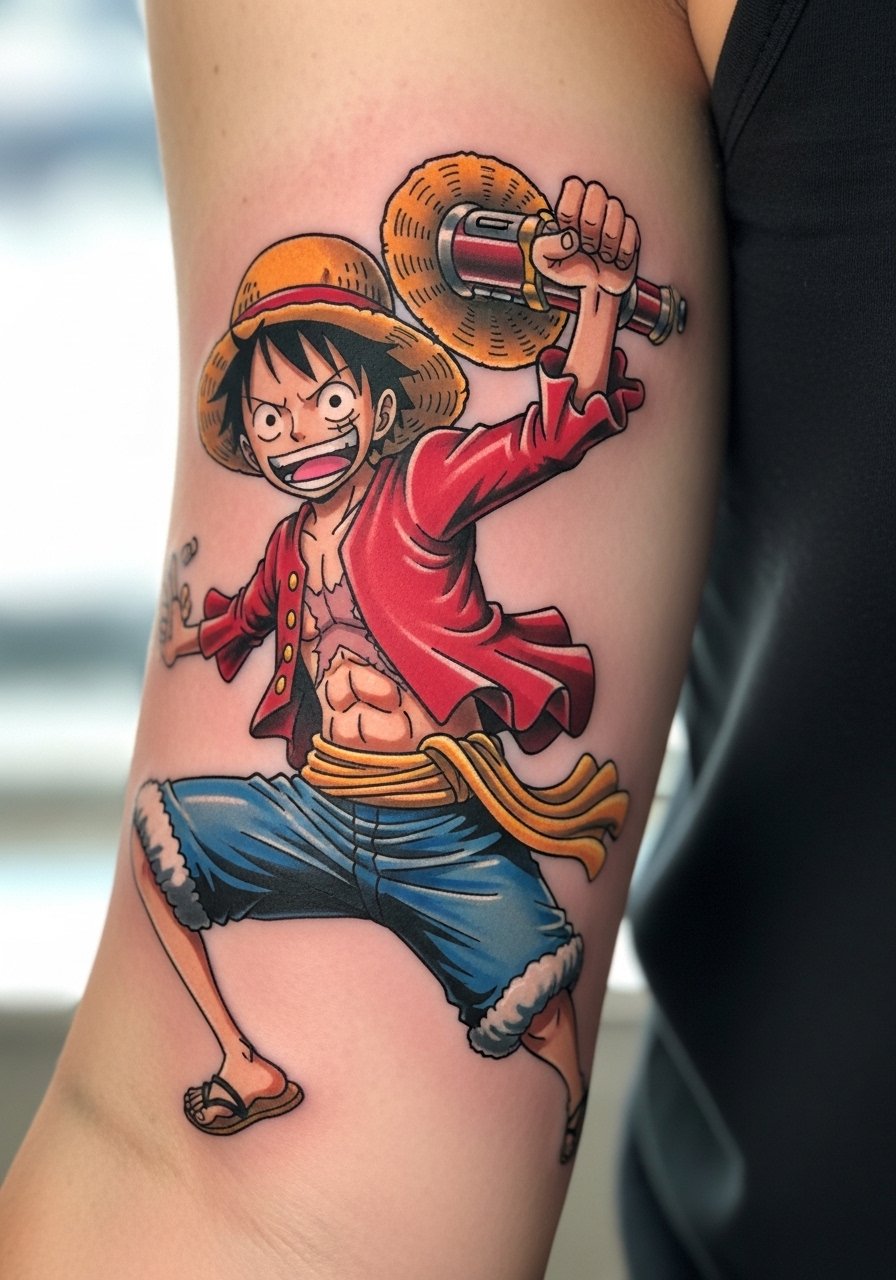
4. Monkey D. Luffy Dynamic Pose on Bicep
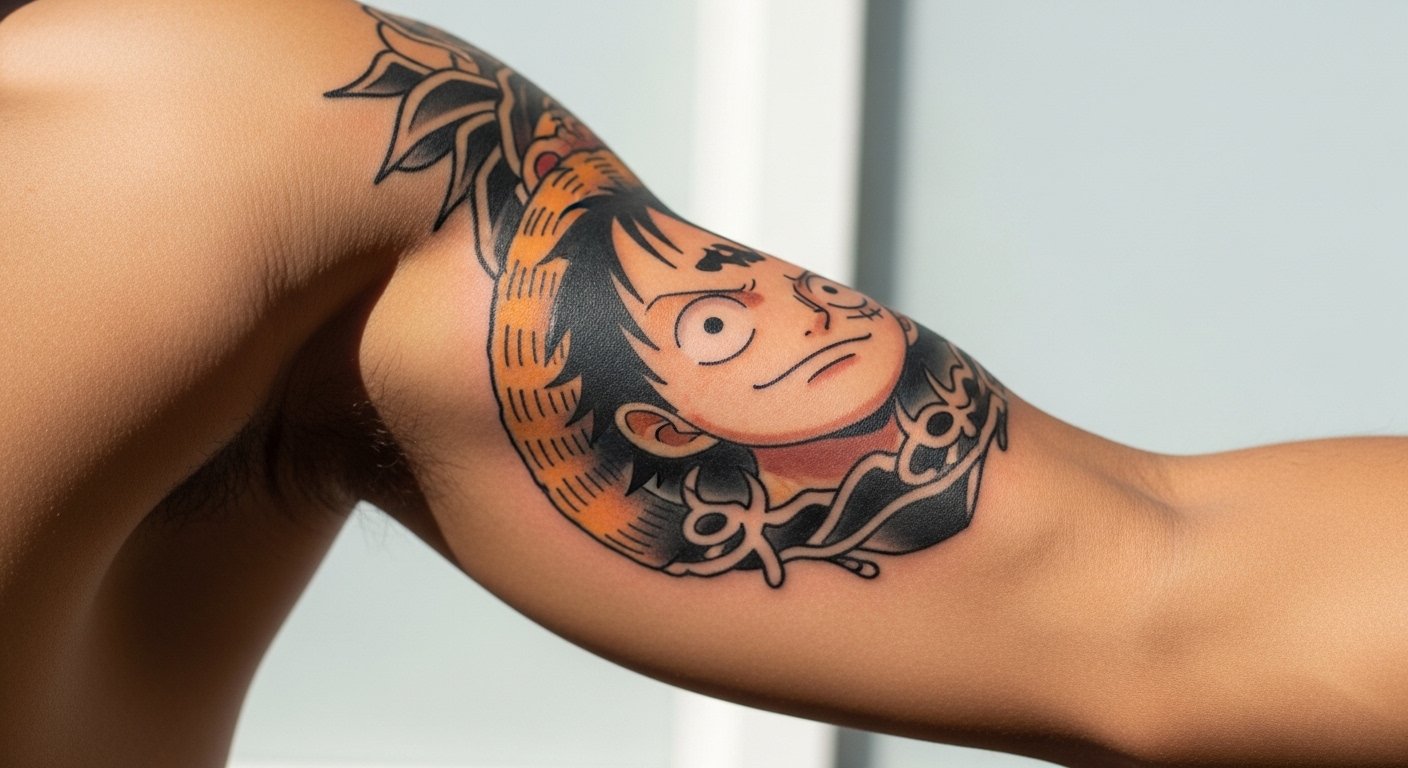
There is something about traditional anime linework with saturated colors that reads from across a room, and Luffy is a natural for a bicep piece. Place it on the outer bicep so muscle flex does not distort the pose as much. When you consult, ask for clean contour linework and controlled saturation, not airbrushed blends. Session time ranges two to four sittings for larger color blocks. A common error is using too many tiny highlights that disappear after healing. On darker skin tones pick stronger outlines and higher contrast so the silhouette stays legible as the years pass.
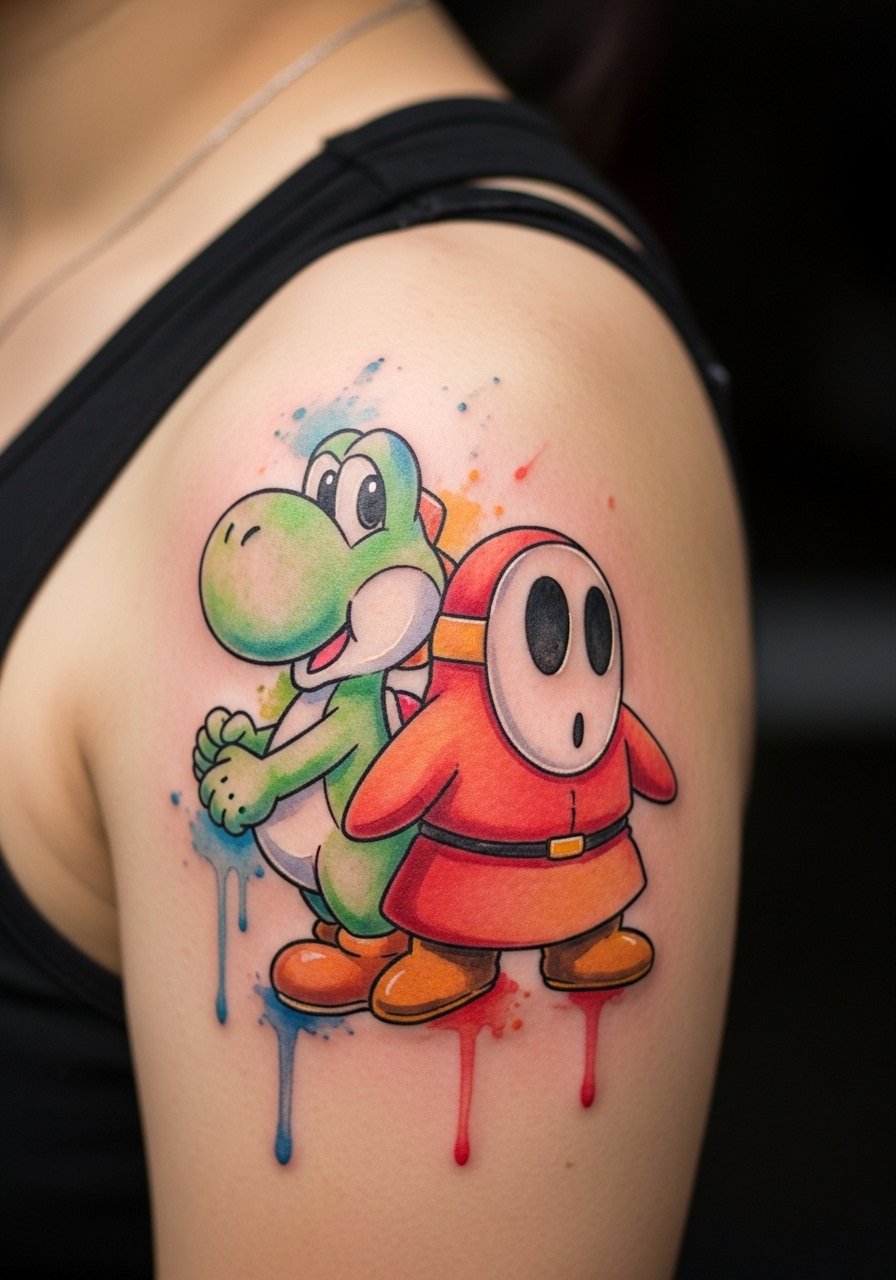
5. Yoshi and Shy Guy Watercolor Crossover on Shoulder
Mistake lead. The biggest mistake with watercolor crossovers is placing them on high-friction spots like the rib or inner arm. Shoulder placement keeps the paint-like edges intact longer. If you want a playful Yoshi and Shy Guy piece, insist on a designer who layers color over defined linework so the image keeps shape as the washes fade. Session time is usually one to two sittings for a small-medium shoulder piece. Watercolor fans debate longevity out loud. One camp accepts fading as part of the aesthetic. The other camp prefers mixing in crisp outlines so the motif remains readable years later.
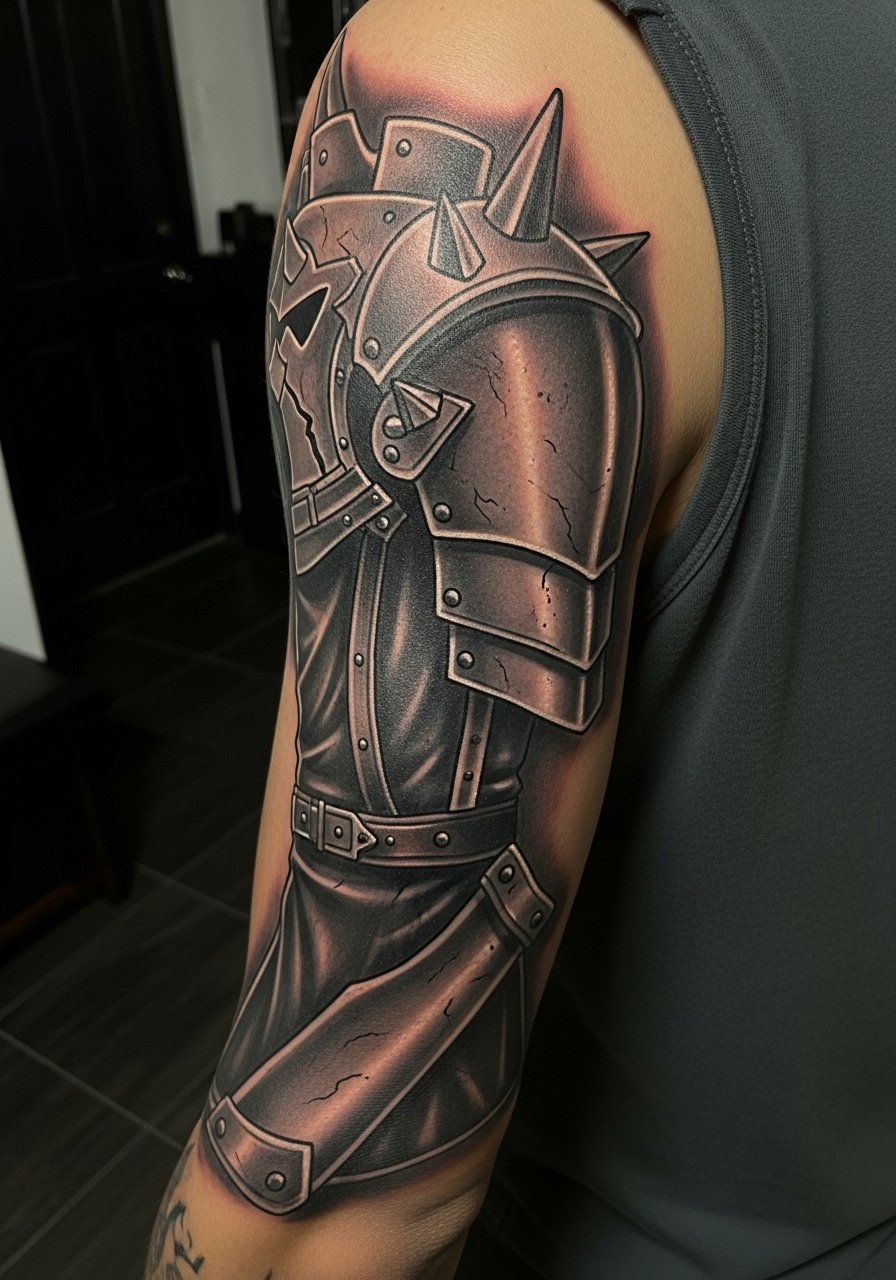
6. Alphonse Elric Neo-Traditional Sleeve Start
When you sit down with your artist for an Alphonse sleeve, bring references that show metal texture and armor joint details. Neo-traditional armor reads as wearable iconography when the metallic grays are rendered with controlled shading and small stipple highlights. This is a multi-session build that often starts as a back-of-arm or half-sleeve and grows. Pain varies by placement, but expect long sessions and breaks. A real mistake is asking for every tiny plate to be detailed at small scale. For longevity let the artist simplify some panels so saturation holds and touch-ups are less frequent later.
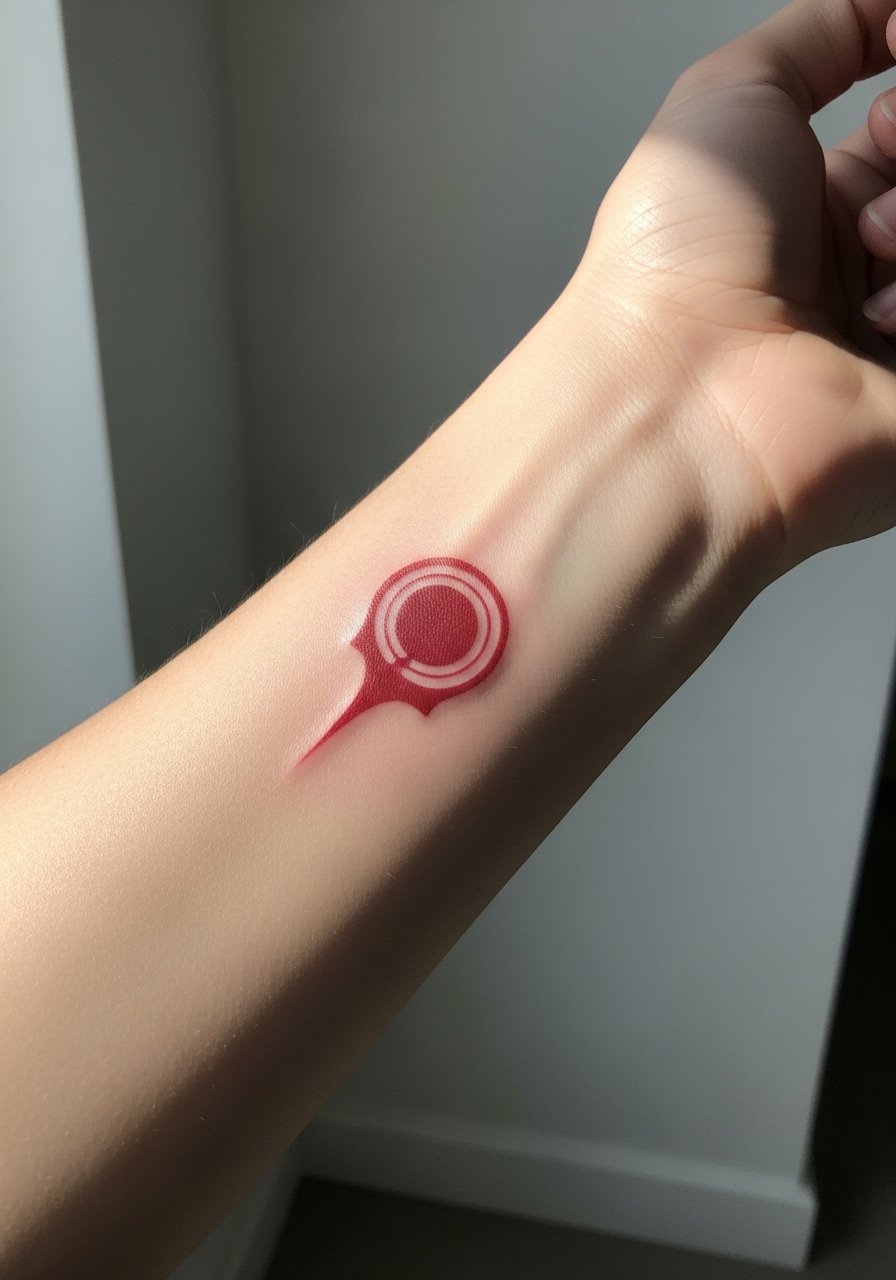
7. Fullmetal Alchemist Blood Seal on Inner Wrist
Consultation lead. When you sit down for the blood seal, say you want pigment that reads like deep red ink, not a washed-out pink. The wrist is an intimate spot and the seal looks striking small. Expect one short session and light to moderate pain. Artists split over color versus grayscale for small symbols. One camp argues that red inks can fade or shift faster. The other camp points out modern pigments keep color stable if saturation is right. A common mistake is scaling the seal too tiny. Make it large enough to retain crisp linework and plan for a touch-up at around year two if you wear a lot of sun-exposed clothing.
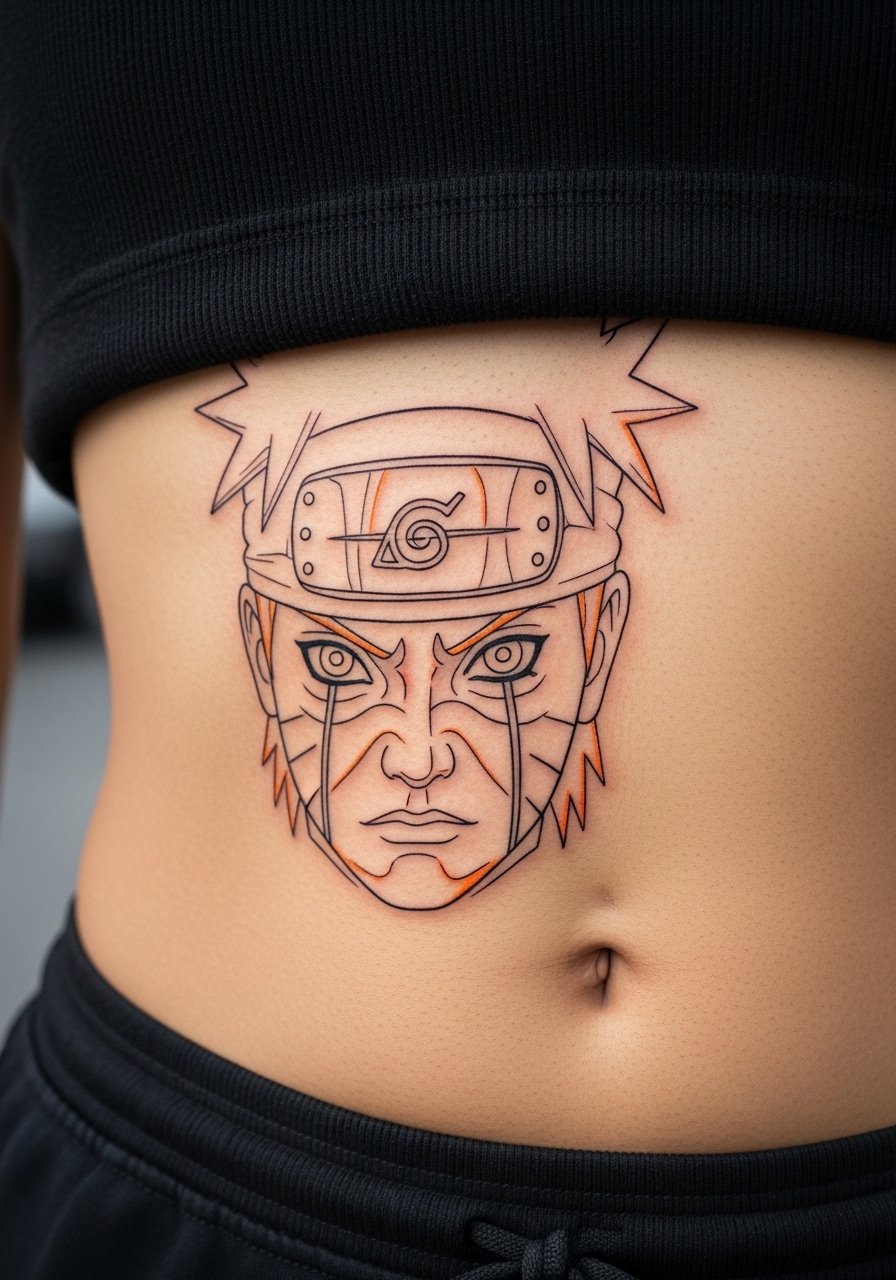
8. Naruto Sage Mode Face on Stomach
Visual impact lead. There is a raw intensity to a Sage Mode face on the stomach that reads well in orange-black contrast. Stomach placement softens pain compared with ribs but stretches with body changes. Tell your artist you want bold contouring around facial marks and strong saturation rather than fragile fine lines. Session time usually two sittings. A common mistake is asking for tiny facial features which blur faster with movement. On healed skin expect slight softening at six months and a clearer silhouette at two years. If you plan body changes talk through scaling and placement before booking.
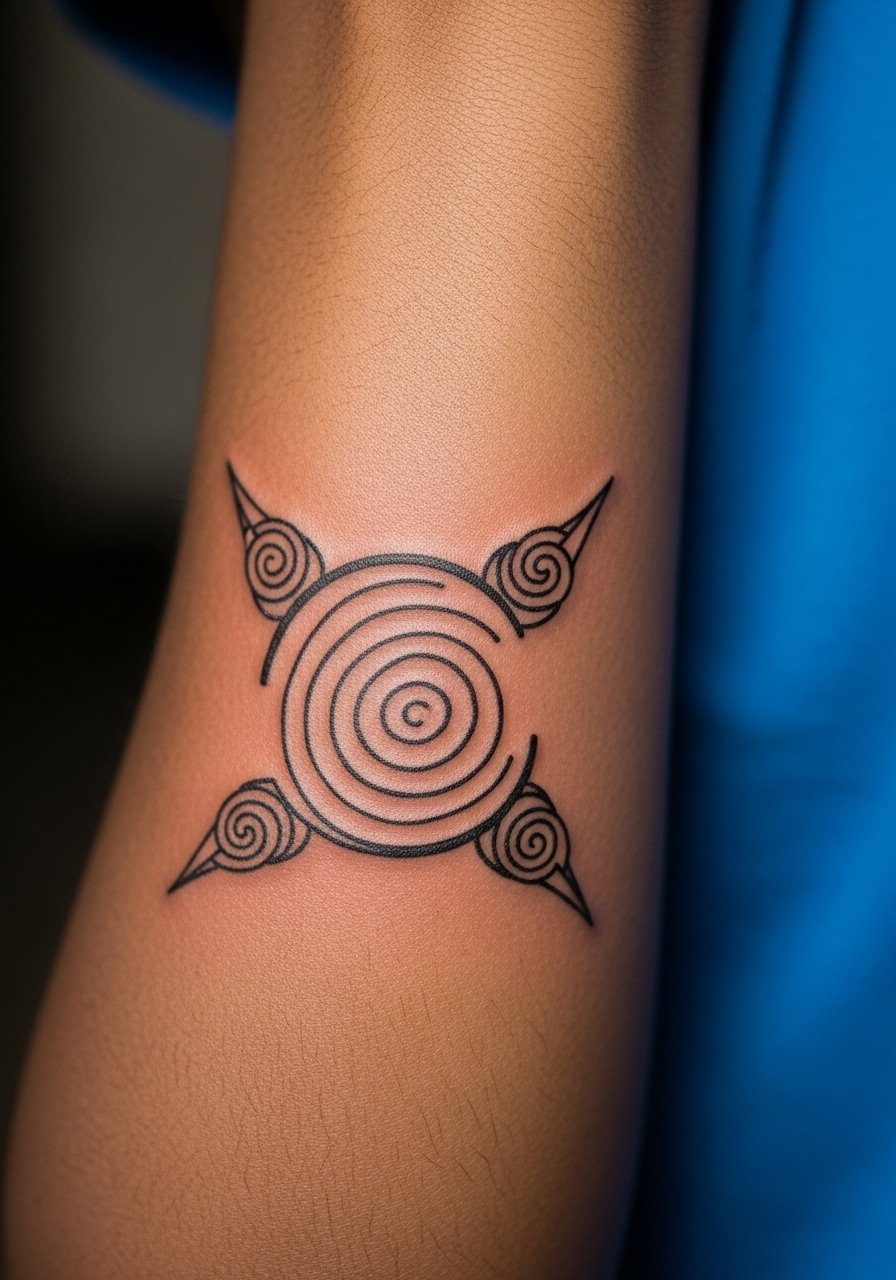
9. Nine-Tails Seal on Forearm or Stomach
Aging and healing lead. Fine line seals face a debate in the community. One group warns that fine line on hands and high-movement spots blurs within a couple of years. The other group says careful needle depth and spacing make fine line last if done by someone who understands placement. For the Nine-Tails seal pick forearm or upper stomach for better longevity. During the consult, ask for slightly heavier outer linework and tight spacing in the swirl so the shape holds after healing. Expect one to two sessions, low to moderate pain, and a likely touch-up at year three if you want the original crispness back.
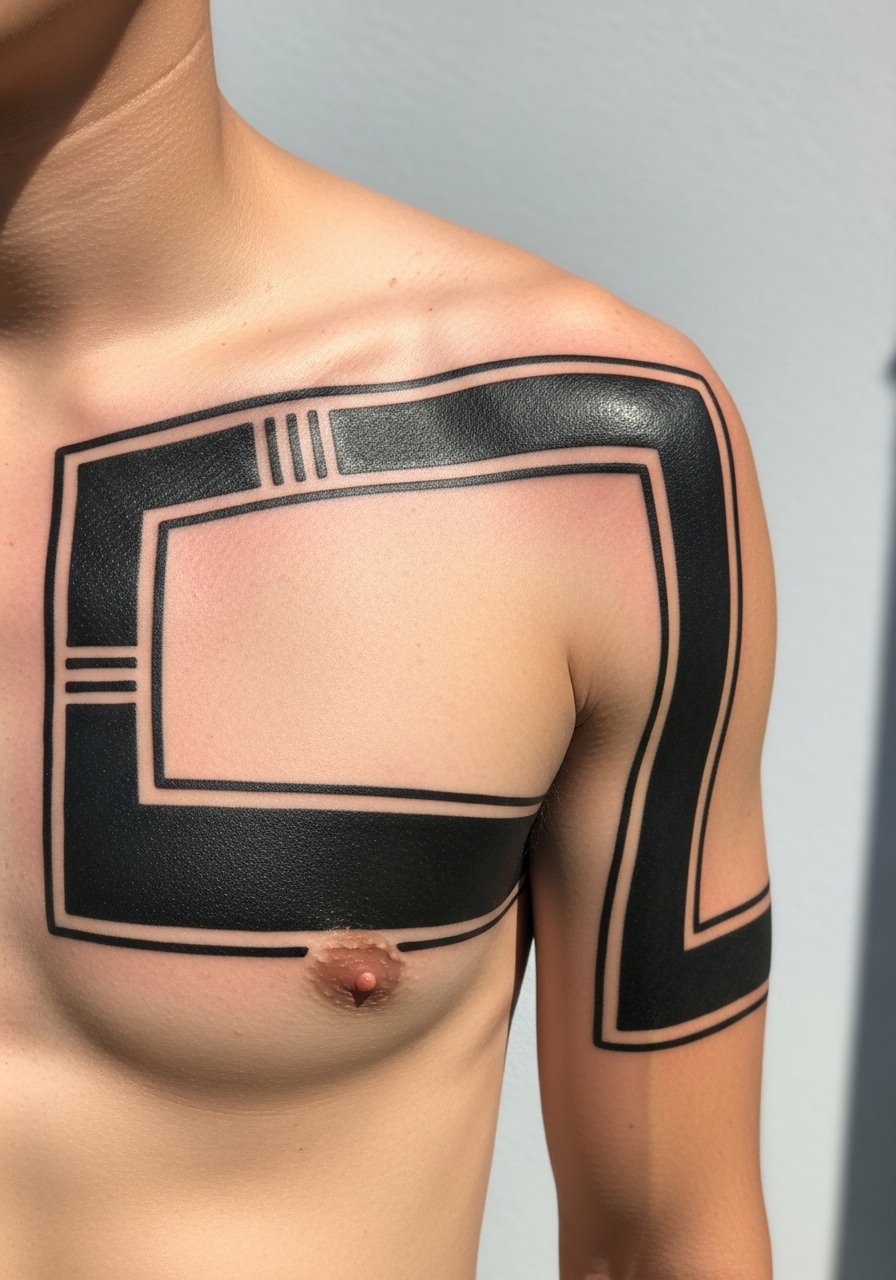
10. Sukuna Markings Integrated on Chest or Sleeve
Consultation lead. Sukuna markings make for bold graphic sleeves or chest pieces when executed as solid black work. Artists divide into two camps on placement fidelity. One camp says mirror the markings exactly on the body for maximal effect. The other camp adapts the marks to the body’s natural lines so the design breathes with movement. Tell your artist which you prefer and ask for solid saturation to avoid patchy fill. Expect two to three sessions and moderate pain on chest work. Blowout risk rises with overly tight linework on soft areas, so give the design room and plan a touch-up within two to three years.
Tattoo Prep and Aftercare Essentials
Below are practical items I recommend friends pack into their aftercare kit and pre-appointment bag. I built this list from conversations at five shops across Brooklyn and from watching healed pieces over several years.
Healing and aftercare
Fragrance-free gentle foaming cleanser. Use for the first week when your artist says to wash gently. Cleans without stripping ink and helps avoid scabbing issues.
Lightweight fragrance-free balm. A thin balm for day two through the first two weeks keeps the tattoo supple without suffocating the skin. Apply in a thin layer as instructed.
Medical-grade second skin bandage, single-roll. For larger or chest work this kind of occlusive dressing can protect fresh ink during the first 24 to 48 hours. Follow your artist’s timing.
Gentle mineral sunscreen, SPF 50. Long-term maintenance depends on sun protection. Use a mineral formula on healed tattoos to preserve saturation.
Pre-appointment prep
Soft cotton shirt with a wide neck. Wear something easy to remove that keeps the area accessible. Comfort matters when sessions run long.
Electrolyte drink mix packets. Bring hydration to long sessions. It helps with stamina and a steady skin tone during shading.
Long-term maintenance
Non-greasy moisturizing lotion, fragrance-free. Use daily on healed tattoos to keep skin healthy and color even.
Bandage strips and sterile gauze pack. Handy for unexpected knocks or if you need to cover a fresh touch-up after a session.
Every tattoo is different. Always follow your artist's specific aftercare instructions. Consult a dermatologist if you have skin concerns or unusual healing issues.
Frequently Asked Questions
Q: Will a blackwork Colossal Titan on my back need touch-ups more often than a color piece?
A: From what I have seen, solid blackwork tends to hold contrast longer than diluted color in large fields. Blackwork may still need a touch-up around year two or three if you want the original pitch-black saturation restored. Placement, sun exposure, and how much your skin stretches will change that timeline.
Q: Are fine line Naruto seals a bad idea for darker skin tones?
A: It depends on the line weight and placement. On darker tones I recommend slightly heavier outer lines and more spacing so the seal reads for years. Fine line can work if the artist plans for contrast and saturation up front. Ask for healed photos on similar skin tones during consultation.
Q: Do watercolor Yoshi pieces require different aftercare than standard color tattoos?
A: Yes and no. The hygiene rules are the same, but watercolor-style work often relies on softer washes that fade faster. I tell friends to be strict about sun protection and to expect earlier touch-ups if they want that painted look preserved. Use a lightweight balm in the first two weeks and sunscreen on healed pieces.
Q: How painful is a Sukuna chest piece compared with a forearm sleeve?
A: Chest work commonly rates higher on most personal pain scales than outer forearm sleeves. The chest has thinner tissue over bone in places and sessions can be longer. Forearm sleeves hurt less overall but can be annoying if many small sessions add up. Plan breaks and hydrate.
Q: If I want Alphonse armor but cannot afford a full sleeve now, how should I start?
A: Start with a strong anchor piece on the upper arm or back panel that can later connect. Ask the artist to use simplified plate details so adding panels blends naturally. Book the anchor as a custom flash session or a guest spot if budget is the constraint.
Q: Will a Nine-Tails seal on my stomach warp if I lose or gain weight?
A: The stomach moves and stretches with weight changes. If you anticipate body changes, place the seal off-center or on the upper stomach where skin stretches less. Discuss scale with your artist so the design remains legible after shifts.