
Someone I know spent eight months scrolling portfolios before realizing the core problem was not the designs. It was knowing which abstract florals actually age on real skin and where to place them so they keep reading over time. I spent time in five shops across Brooklyn and a tattoo convention asking artists about linework and fade patterns. Read on for ideas that solve common regrets and what to ask at your consult.
1. Abstract Peony with Geometric Petal Fragmentation on Outer Forearm
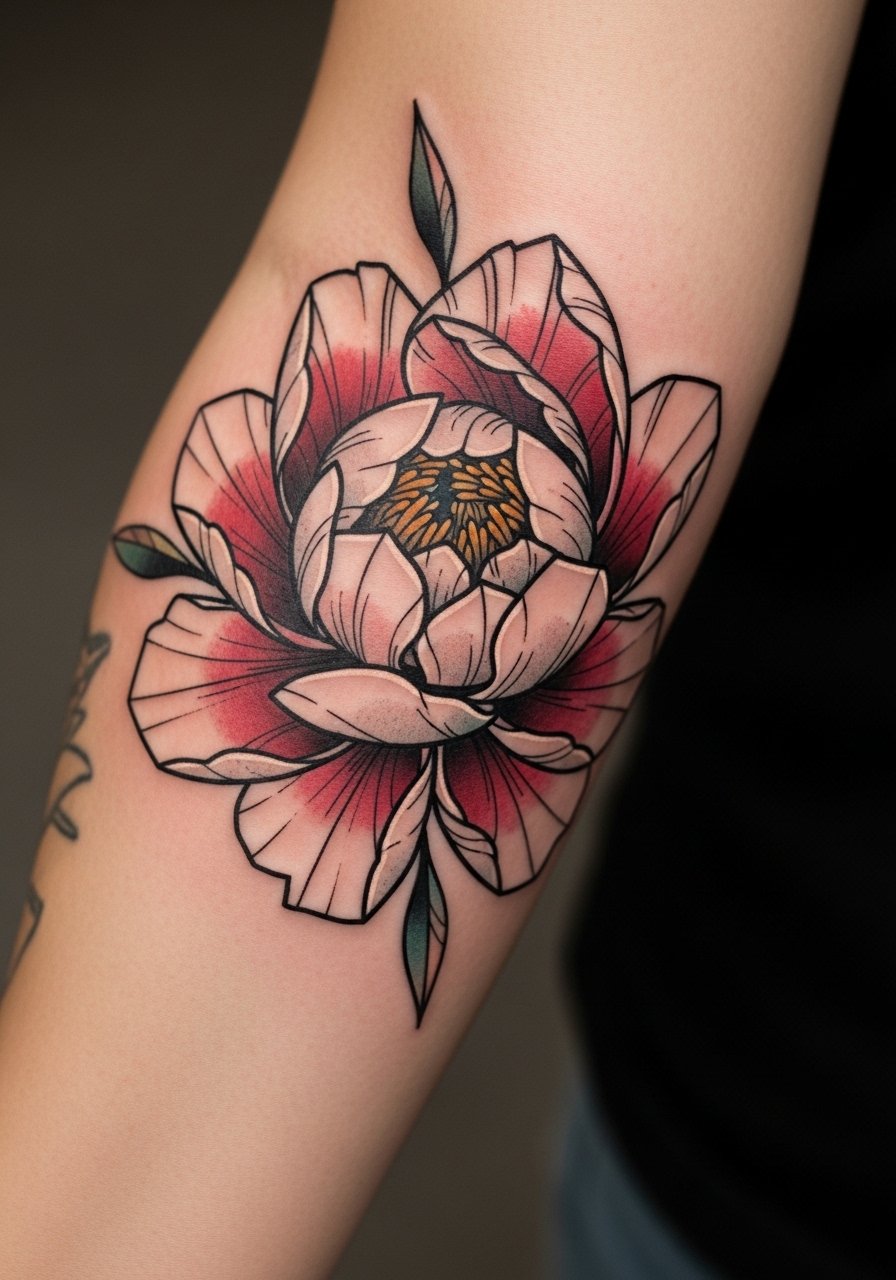
Someone I know first pointed at a forearm peony and said it read like motion. This version uses bold linework for the petal contours and geometric cuts inside petals so the piece reads from a distance. Tell your artist you want intact lineweight around the silhouette and lighter, broken geometry inside the petals. The common mistake is asking for ultra-fine interior lines that blur in a year. On the forearm the pain is low to moderate and a single 1-2 hour session often gets a healed result with good saturation. Expect touch-up discussions at year two for color pop, and ask for healed photos in portfolio during consultation.
2. Watercolor Tulip Bleed on Wrist
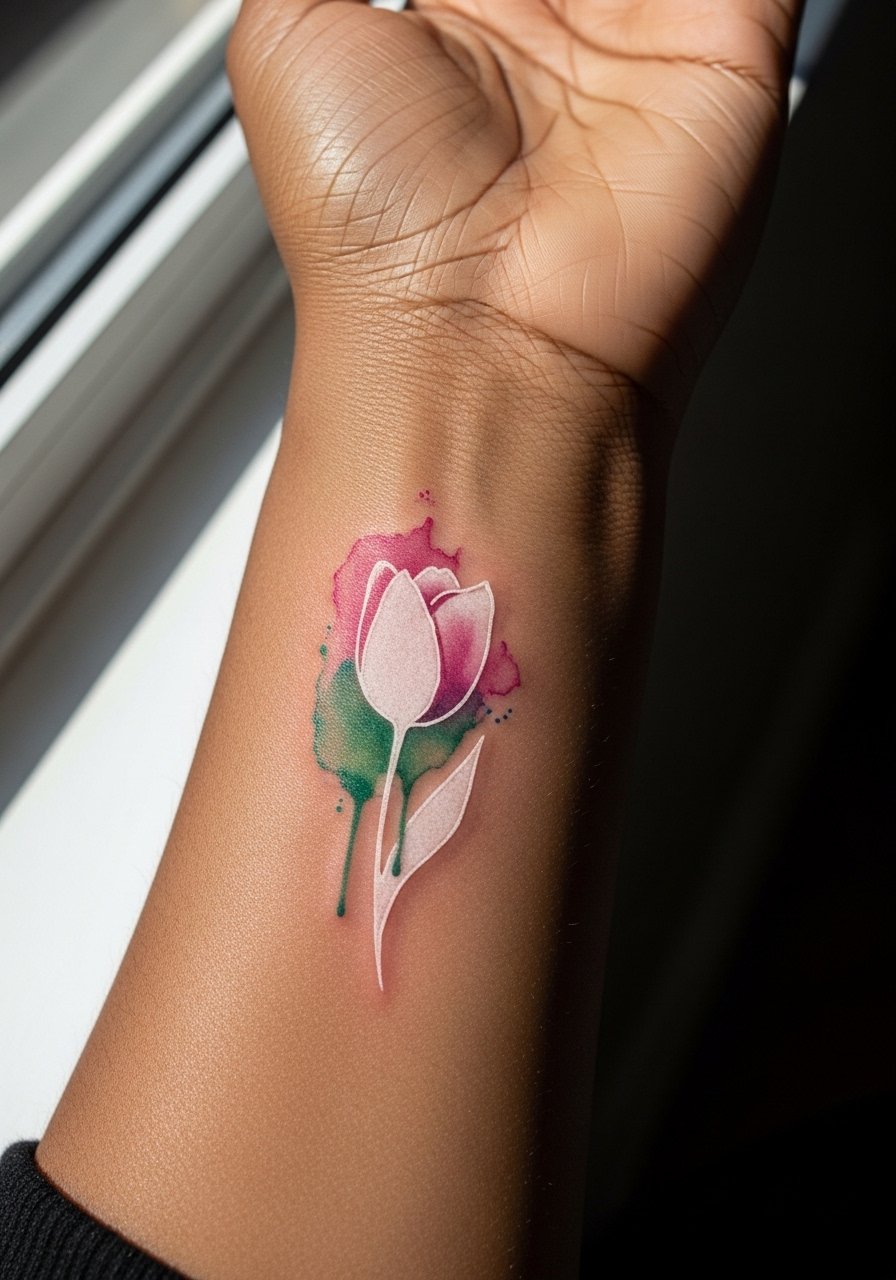
Fair warning: wrist skin shifts a lot with movement, but the wrist is a good spot if you want a tiny painterly tulip that breathes. For a watercolor bleed ask for feathered edges and controlled white space rather than a full wash that pools. The mistake I see is asking for the heaviest pigments, which can cake and fade unevenly on medium and darker tones. During your consult request healed photos of the artist's watercolor work on similar skin tones. Session time is usually a single short appointment. Plan on a touch-up in one to two years for balance and to prevent patchy fade from sun exposure.
3. Asymmetrical Abstract Lily on the Ribcage
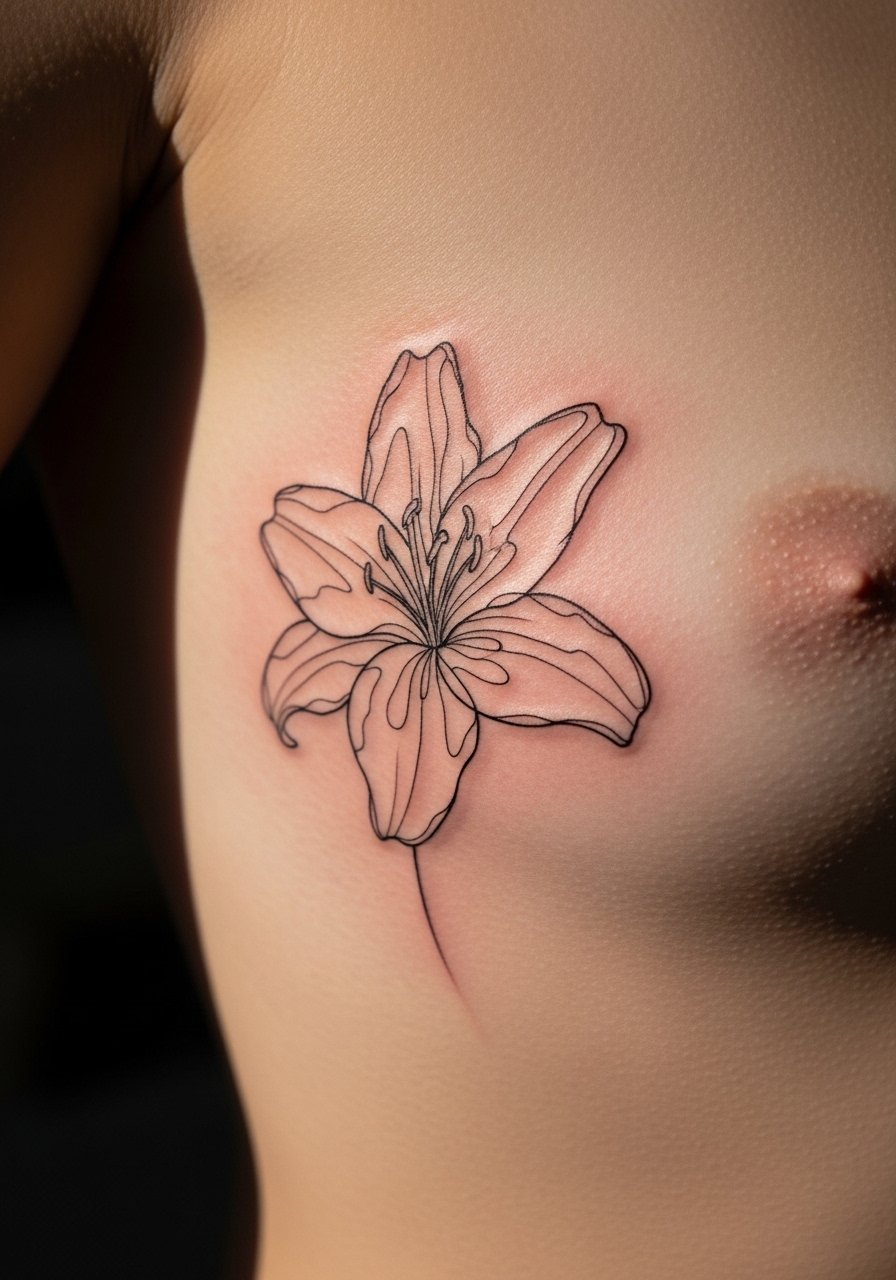
Fair warning: the ribcage rates high on pain scales. Artists split on fine line ribs into two camps. One camp says the skin stretch and movement blur ultra-fine lines within two years. The other camp argues that with slightly increased line weight and careful spacing fine line settles well. I recommend naming that split during your consult and asking which approach the artist uses. Ask for a slightly bolder contour and fewer hair-thin interior strokes. Expect a single session for a 3-inch vertical. Plan for a touch-up conversation at year two because ribs can shift with weight change.
4. Dotwork Orchid Fragments on the Ankle
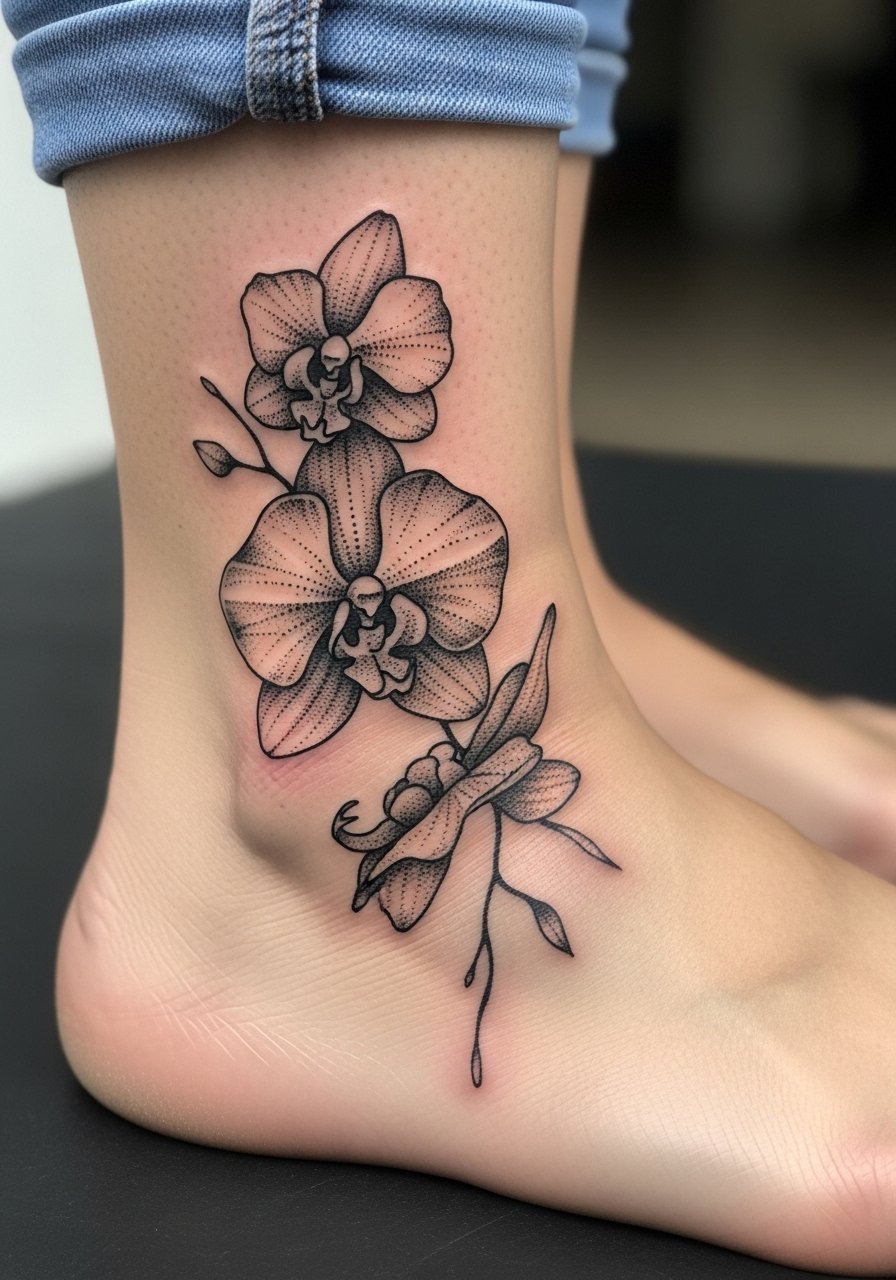
The ankle is a neat canvas for dot work because stipple shading reads well on the small surface area. I recommend asking for layered dot density instead of solid fills to preserve texture as the ink moves slightly with skin. A common mistake is asking for dense black fills that tend to look muddy once healed at that location. Expect two shorter sessions if the design requires depth. Blowout risk is moderate on the ankle so avoid extremely tight thin lines next to dense dots. Touch-ups at year three are normal for keeping crisp contrast.
5. Abstract Floral Mandala Hybrid on Upper Arm
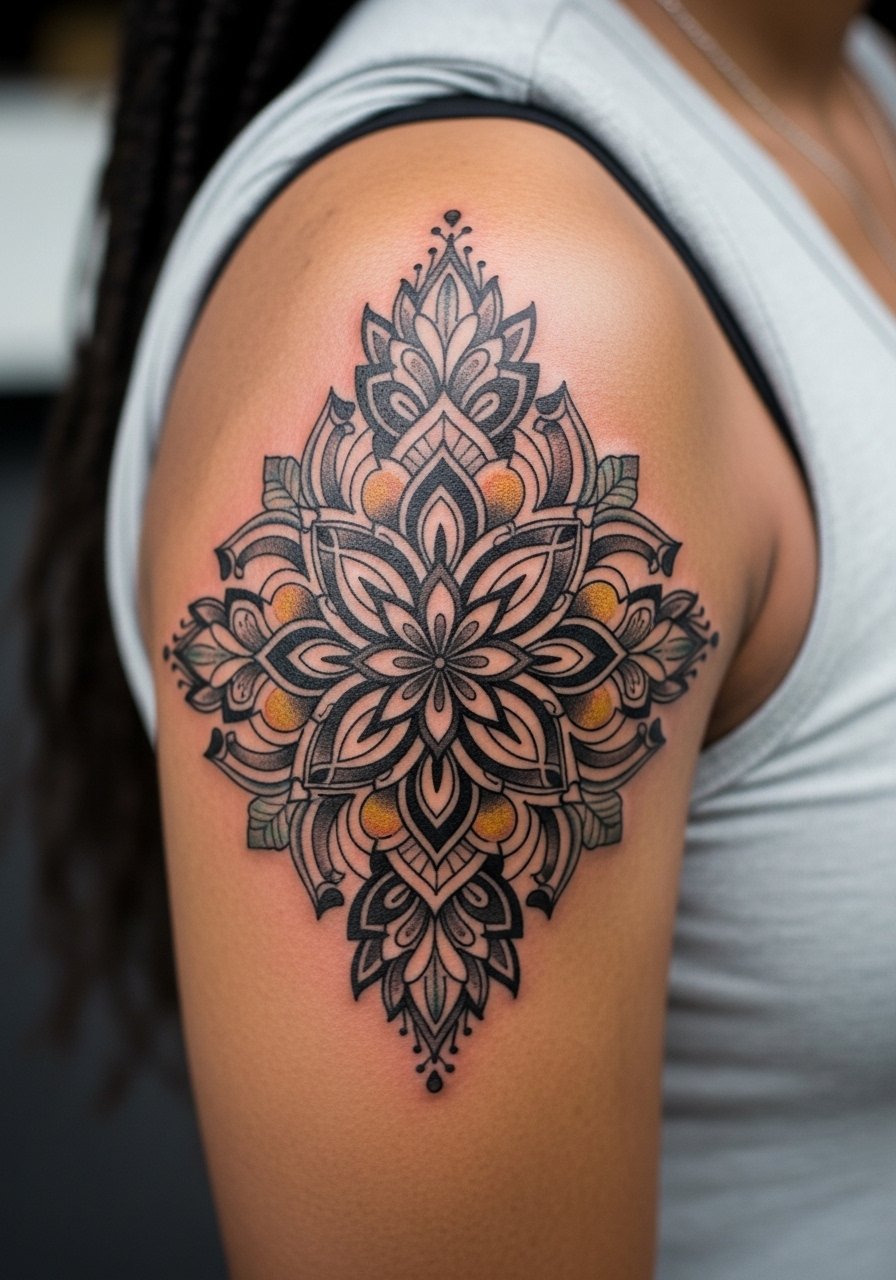
There is growing debate around mandala hybrids and cultural origins. One camp treats these patterns as ornamental and highly customizable. The other camp urges care because mandala geometry can trace to specific spiritual traditions. A short, respectful note to your artist about origin and the desire for an original variation avoids direct replication. This placement handles larger scale well and is forgiving during aging because of thicker linework and saturation. Sessions will be longer and spread over two to three appointments for a six-inch piece. Ask about spacing and symmetry checks during the stencil stage.
6. Deconstructed Rose in Negative Space on Inner Bicep
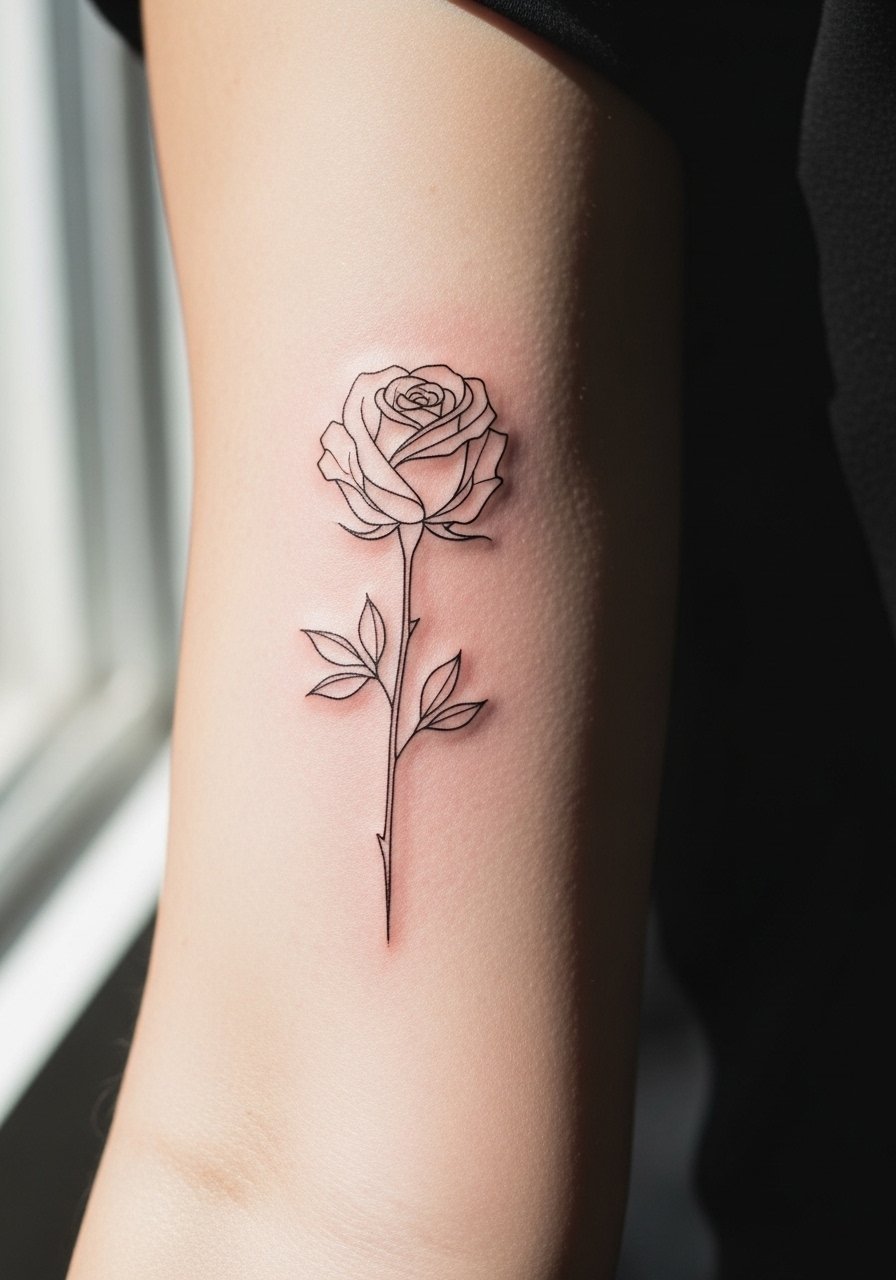
The inner bicep is a discreet spot that keeps negative space pieces readable without heavy saturation. Tell your artist you want the skin to function as petals so the outline is decisive and the interior is open. The common mistake is too many thin outline fragments that blur into a gray haze. Pain is moderate here and a single session usually covers a 2.5-inch design. Negative space helps avoid over-saturation and often ages cleaner, but expect touch-ups if you move to a fuller sleeve later.
7. Fluid Abstract Bloom Sleeve Starter on Outer Forearm
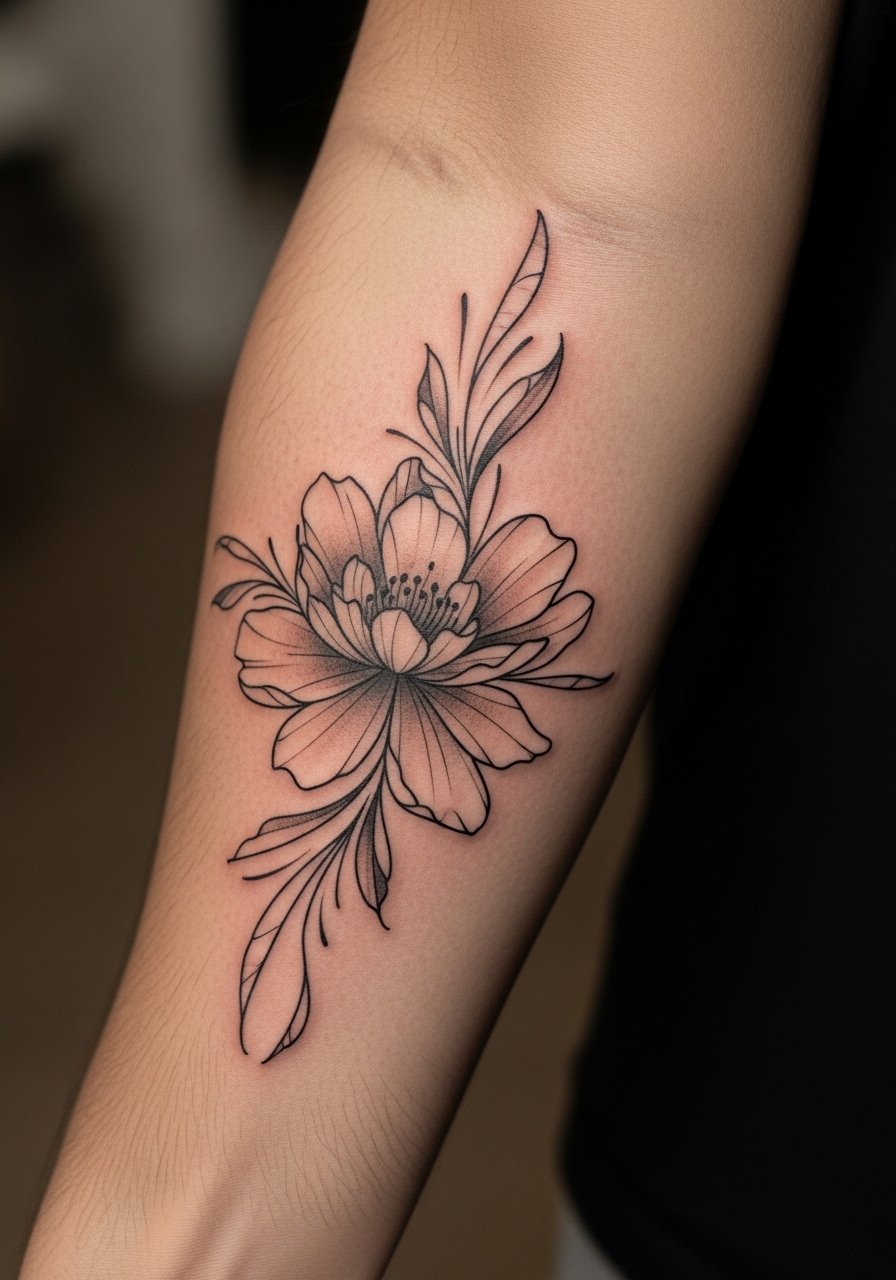
This one is for people planning an eventual sleeve. Start with a bold 8-inch abstract bloom that links with future elements. When you consult, specify modular edges that an artist can weave into larger pieces later. A common error is asking for a fully finished sleeve-like piece that leaves no room to add on. The outer forearm heals predictably and tolerates heavier saturation, which reduces early muddiness. Expect multiple sessions over months for shading and touch-ups as you expand. Think of this as phase one rather than a final sleeve.
8. Poppy Explosion with Color Bursts on Calf
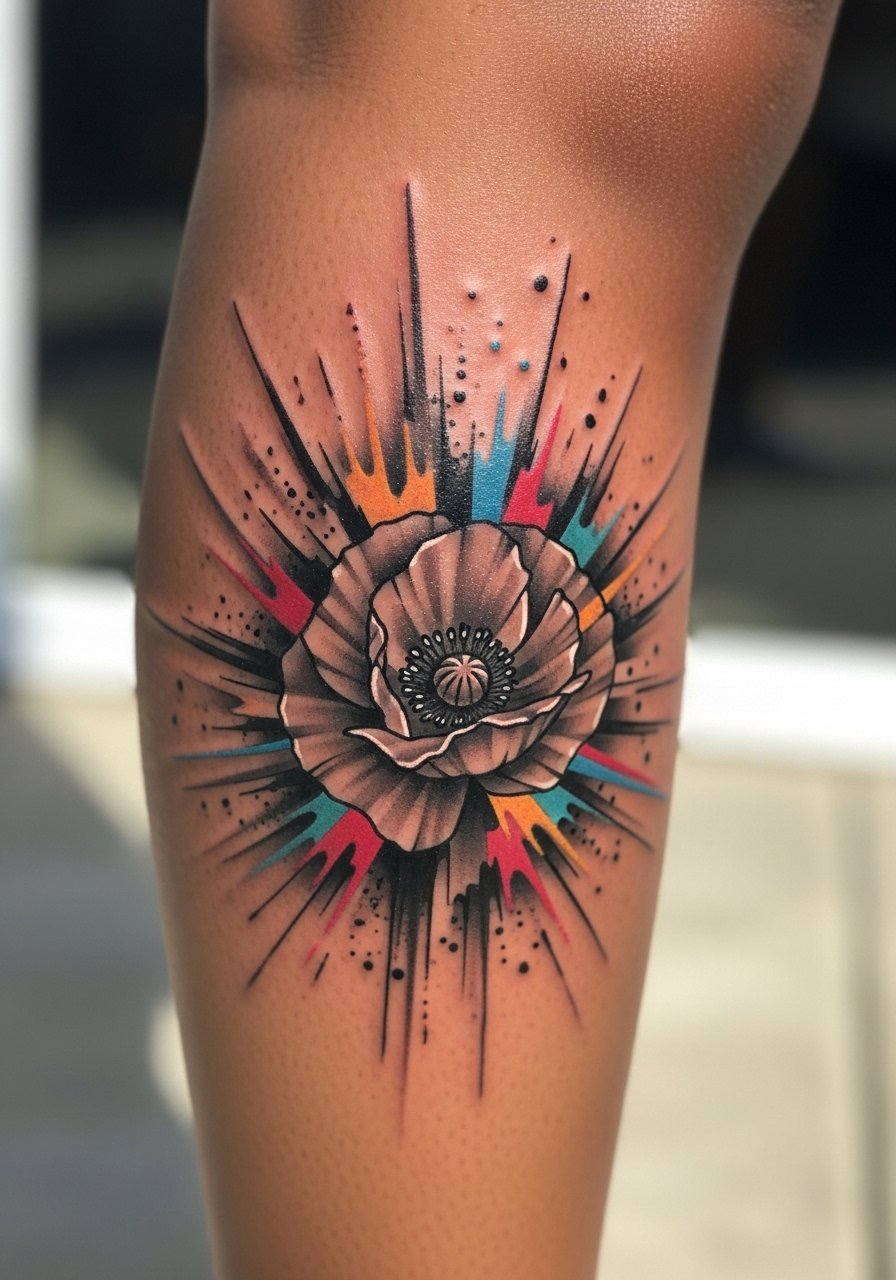
The calf is forgiving for bold abstract pieces that include color pops. I recommend asking for controlled gray wash backgrounds with isolated color bursts. The mistake I see is full-field watercolor across the calf without anchoring darks, which can read patchy when it fades. Session time is moderate and usually split into two if you want deep gray washes plus bright pigments. Calf placement reduces blowout risk and holds saturation longer than high-movement spots. Plan for a color touch-up at two to three years, especially for reds and yellows.
9. Layered Abstract Daisy for Fingers or Behind the Ear
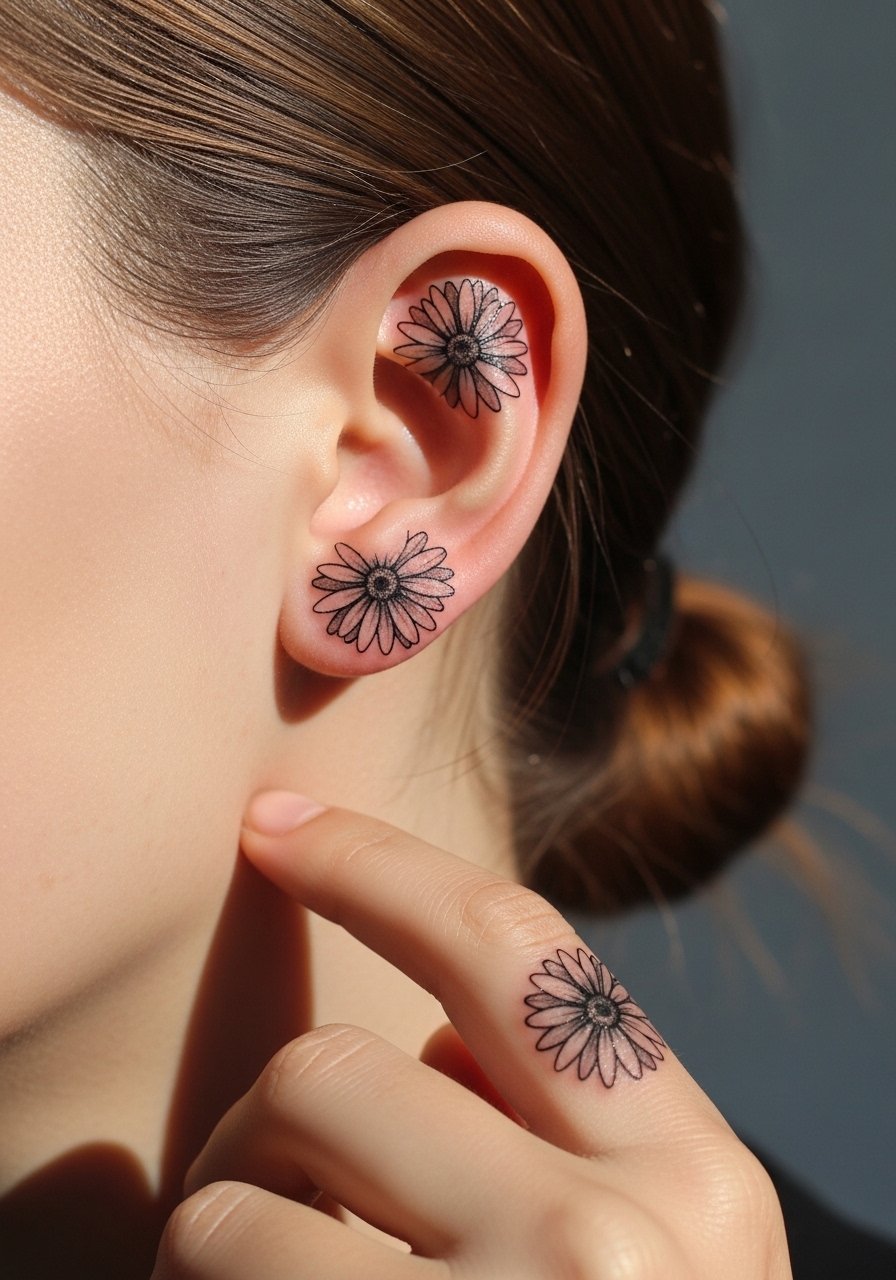
Small playful daisies are a popular first-timer pick, but joints age differently. Someone I know got a tiny stacked daisy on a finger and found the petals spread after several years. If you want a finger piece, ask for slightly bolder outlines and fewer tiny interior details. Behind the ear is a safer micro placement with low friction. Both placements heal quickly in a single short session but expect faster flattening and possible touch-ups earlier when placed on fingers. If discretion matters, behind the ear hides easily under hair.
10. Geometric Sunflower Core on Chest or Thigh
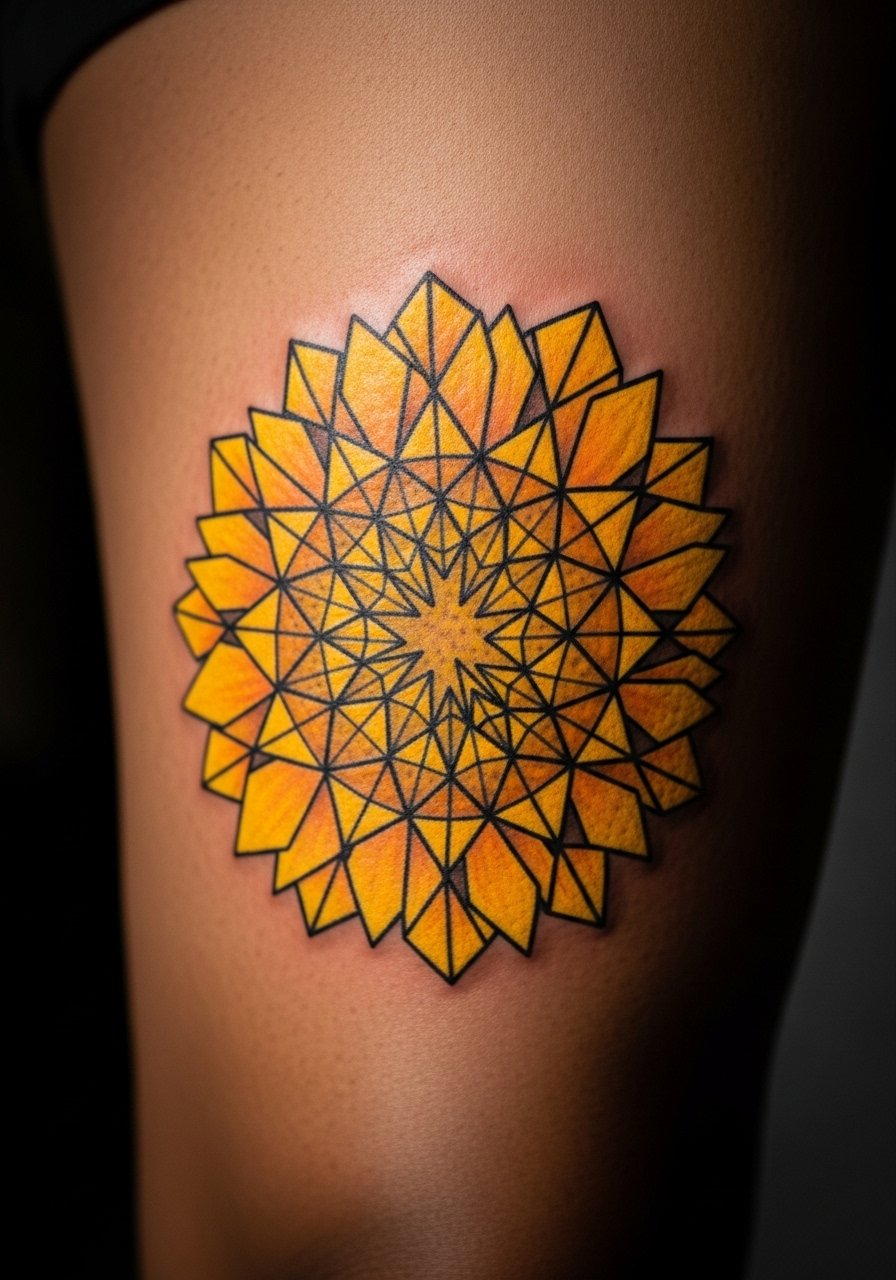
There is real power in a geometric core that reads as both floral and solar. For chest placement be aware of stretch with breathing. Thigh placement offers more surface stability and scales well. The main mistake is going too small with fine geometry, which can fuse over time. Ask for enough negative space between angles and slightly stronger linework so the shapes remain distinct as they age. Expect two sessions if you want color fills with crisp linework. Touch-ups at year three keep the yellow fills vibrant.
Tattoo Prep and Aftercare Essentials
When you book an abstract piece, prep and aftercare choices shape how the design reads at six months and beyond. I've noticed that UV exposure and early dehydration cause the biggest shifts in saturation, and artists I spoke with across shops always mention sun protection and gentle cleansing first. Below are practical items to keep on hand from before the session through the healed phase.
Healing and aftercare essentials:
Fragrance-free, noncomedogenic healing balm for tattoos (small tin).. Use in the thin layer stage after peeling subsides. Good for preventing crusty over-moisturizing and keeps ink supple during epithelialization.
Medical-grade second skin bandage, 4×4 inch sterile sheets.. Useful for the first 24 to 72 hours on high-friction placements like ribs or calves.
Gentle antibacterial foam cleanser, fragrance-free.. Clean with a light touch during the first week and pat dry.
Lightweight fragrance-free balm for long-term hydration.. Use after the initial healing to maintain skin elasticity and saturation.
Silicone scar sheet (small, reusable).. If you notice raised scarring, this helps smooth texture and is safe after the scab falls away.
Pre-appointment prep:
Hydration electrolyte tablets for a well-hydrated session.. Drink extra water 24 hours before your appointment.
Compression or loose clothing for the placement to avoid rubbing immediately after the session.. Wear something easy to remove that won’t stick to fresh ink.
Long-term maintenance:
Broad-spectrum mineral sunscreen SPF 50 for healed tattoos.. Sunscreen is essential to slow pigment breakdown and protect watercolor fades.
CeraVe moisturizing lotion for daily hydration.. A lightweight daily lotion keeps skin healthy and helps color hold.
Every tattoo is different. Always follow your artist's specific aftercare instructions. Consult a dermatologist if you have skin concerns or unusual healing issues.
Frequently Asked Questions
Q: Will fine line abstract lilies on the ribcage blur faster than similar work on the forearm?
A: It depends on line weight and spacing. Ribs move more with breathing and have thinner skin, which raises blur risk for ultra-thin strokes. Ask your artist whether they prefer slightly heavier contour lines and larger spacing for ribs. In my experience that approach helps delay noticeable softening by a couple of years.
Q: Do watercolor-style abstract tulips need different aftercare than black linework pieces?
A: Yes. Watercolor relies on thin pigment layers and benefits more from strict sun avoidance during healing and in the long term. Keep the area out of direct sun, use mineral sunscreen after fully healed, and expect a color touch-up sooner than for dense blackwork. Clean gently and avoid heavy ointments that can trap pigment under scabs.
Q: How should I find an artist who actually does abstract floral work without drifting into realism?
A: Use style-specific hashtags and location tags, for example #abstractflowertattoo and your city. Browse portfolios for healed photos and ask to see work on similar skin tones and placements. Tattoodo and local studio location tags help narrow the field. During the consult tell the artist which elements are non-negotiable, like broken geometry or stipple-only shading.
Q: Will small abstract daisies on fingers stretch weirdly as I age?
A: Fingers are high-movement and subject to constant friction. Small details can soften and require touch-ups sooner than other spots. If you want longevity, pick bolder contours and accept that a yearly or biennial touch-up may be necessary, or choose behind-the-ear placement for similar micro work.
Q: How much does an abstract flower tattoo generally cost in a city studio?
A: Expect a wide range based on size and the artist's hourly rate. Small painterly pieces often start in the low-range, while large ornamental mandalas or initial sleeve starters sit in the higher range. Ask about session length and hourly pricing at booking so you can budget for touch-ups as well.
Q: Are negative space knuckle florals a good alternative to ring tattoos for people who work in conservative industries?
A: They can be a subtle option, but hands and knuckles still read quickly and are visible in professional settings. If discretion is important, consider collarbone or behind-the-ear placements instead. If you pick knuckles, choose bold, simple shapes and ask about expected fading and touch-up frequency.