
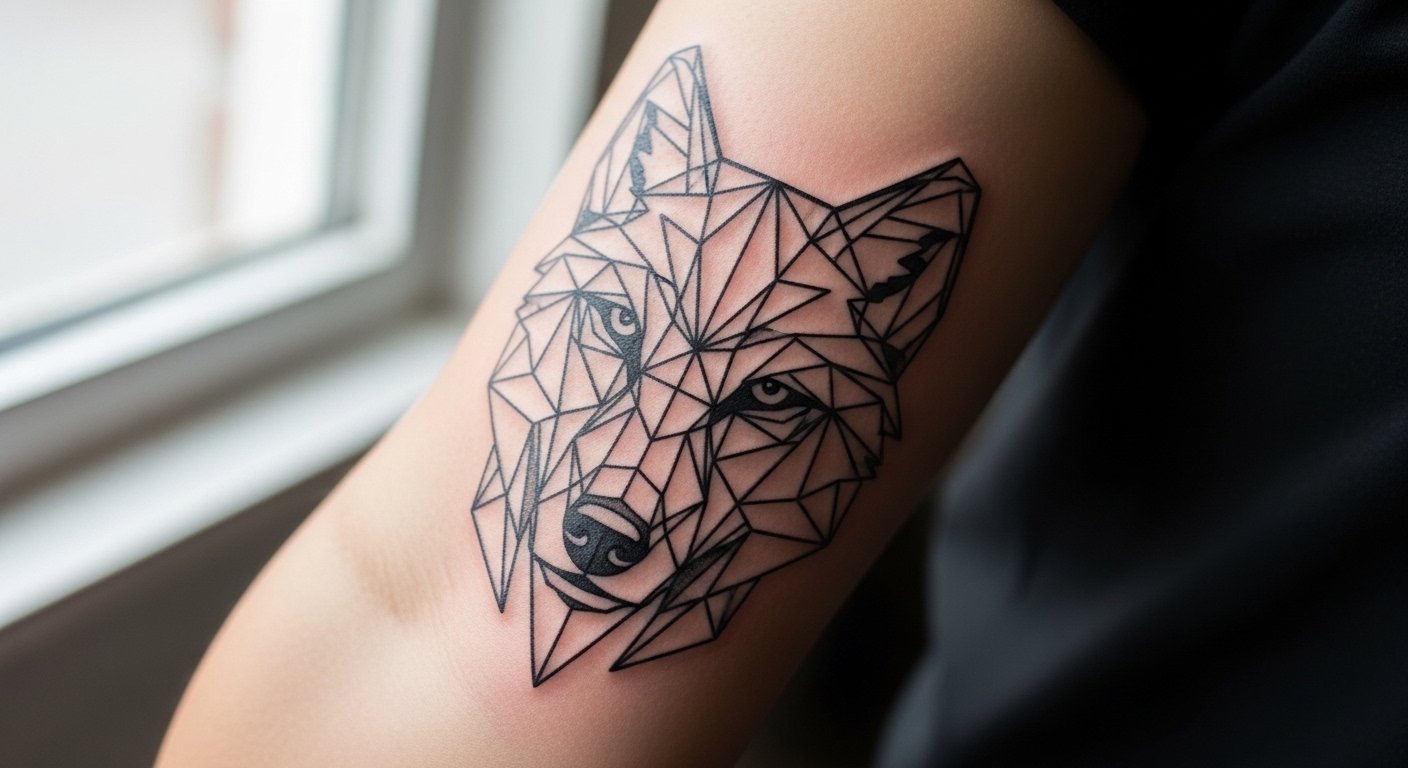
Someone I know spent months saving reference photos, then lost sleep over which style would still look crisp after a year. The problem is not finding a cool wolf design. It is knowing which small versions hold detail, where to place them, and what to ask your artist. Below are twelve small wolf tattoo ideas men are picking this year, with practical notes on aging, pain, and what to tell your artist at consult.
1. Micro-realism wolf eyes on inner wrist
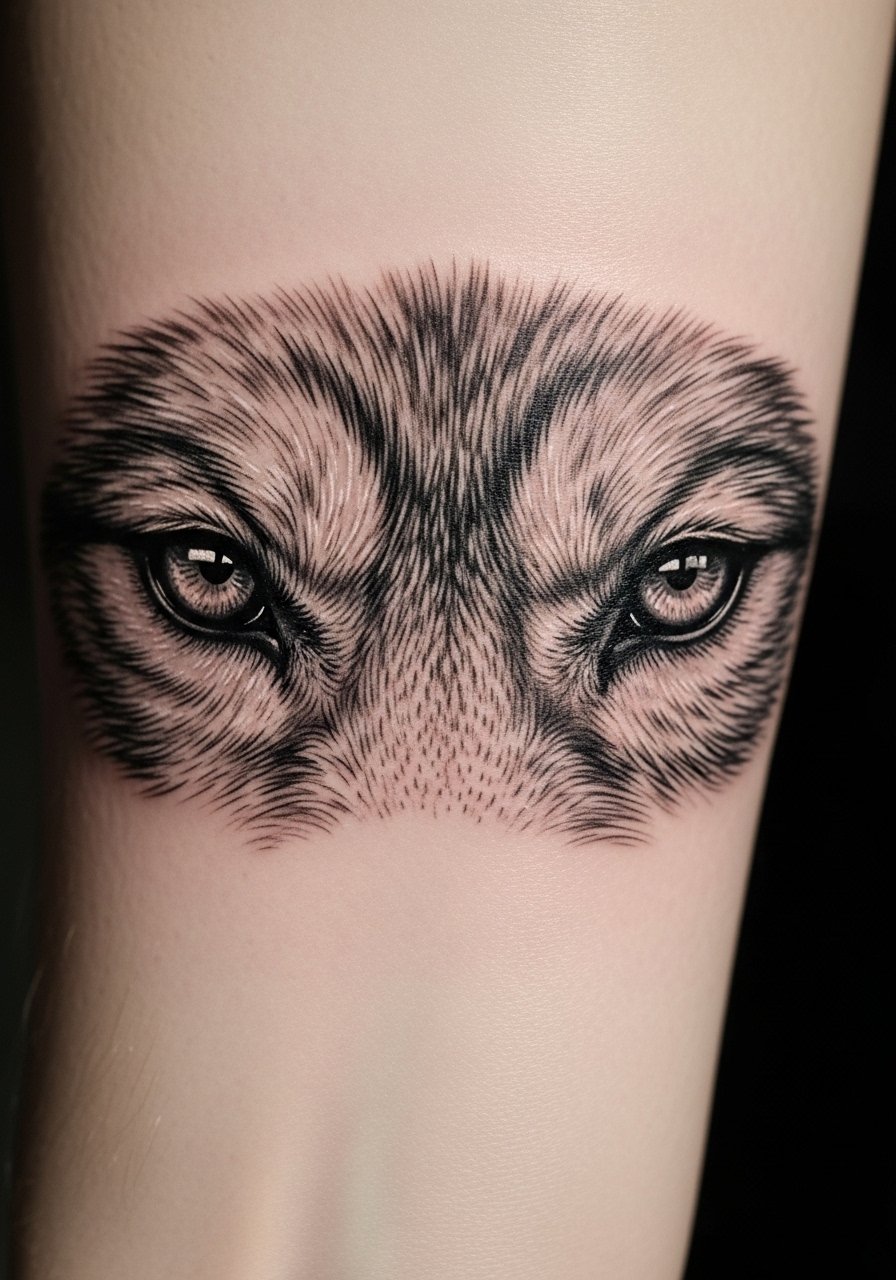
Someone I know first saw this tiny eye pair on a coworker and booked the same spot. Micro-realism packs intense gaze into a thumbprint sized area. Tell your artist you want high contrast around the iris and a tiny bit of stipple shading for texture. Common mistake is asking for too many whisker details at that scale. Expect a short session under an hour and light sting on the inner wrist. At six months the pupils should keep depth if saturation was dense. Plan a touch-up around year two if you live in sunny climates. For office-friendly wear, keep it tucked under a watch or sleeve.
2. Geometric wolf face on outer forearm
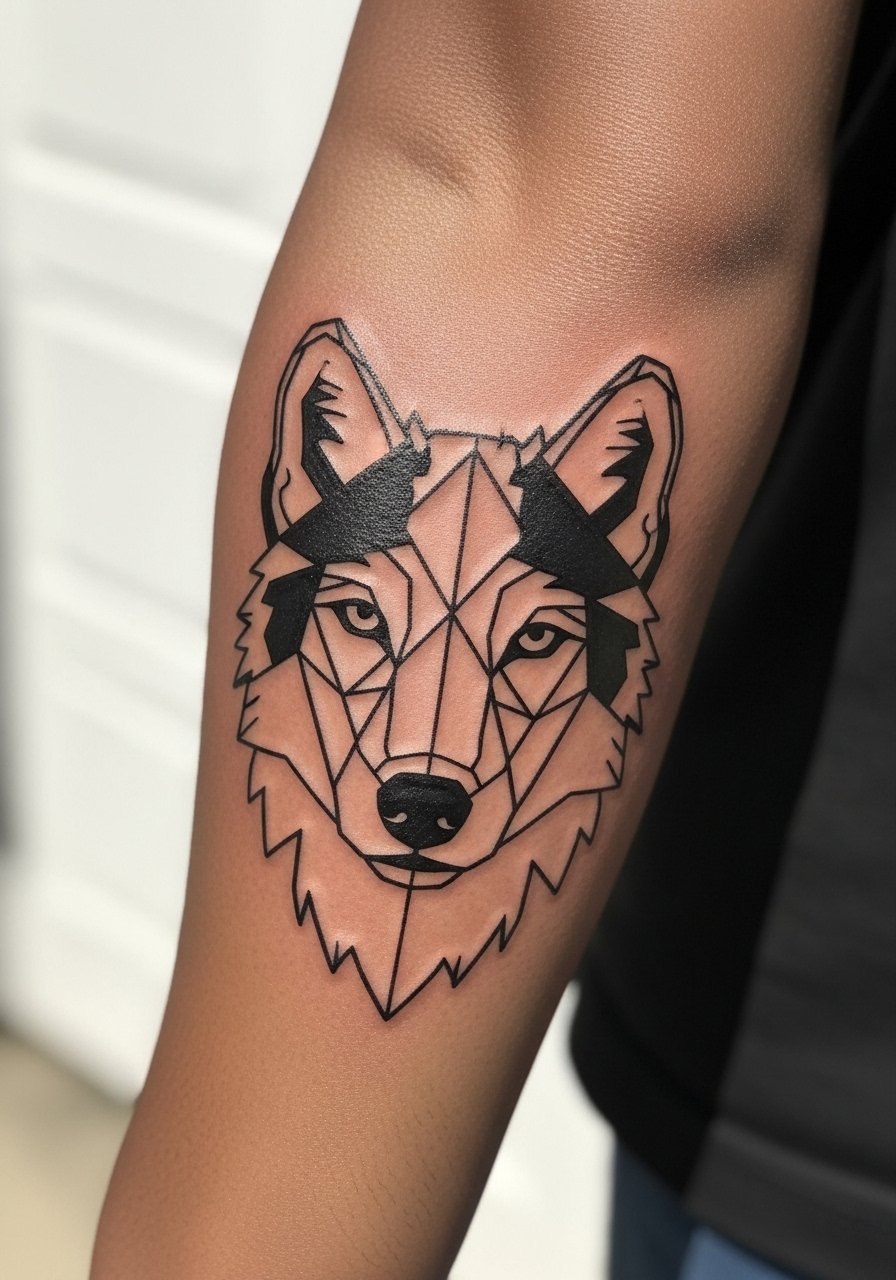
Fair warning. Fine line geometry splits artists on longevity. One camp says tight fine lines on forearms can blur on tanned skin. The other camp points out that bold geometric planes with generous spacing last much longer. Ask for slightly thicker anchor lines and a simplified inner grid so the shapes do not close up after healing. This piece reads well from a distance and takes one to two sessions. Expect mild discomfort and a two-year touch-up rhythm if you want crisp angles forever. Avoid asking for micro lines that run parallel and too close together. Use the hashtag #GeometricWolfTattoo when scouting portfolios.
3. Tiny wolf silhouette howling at moon behind the ear
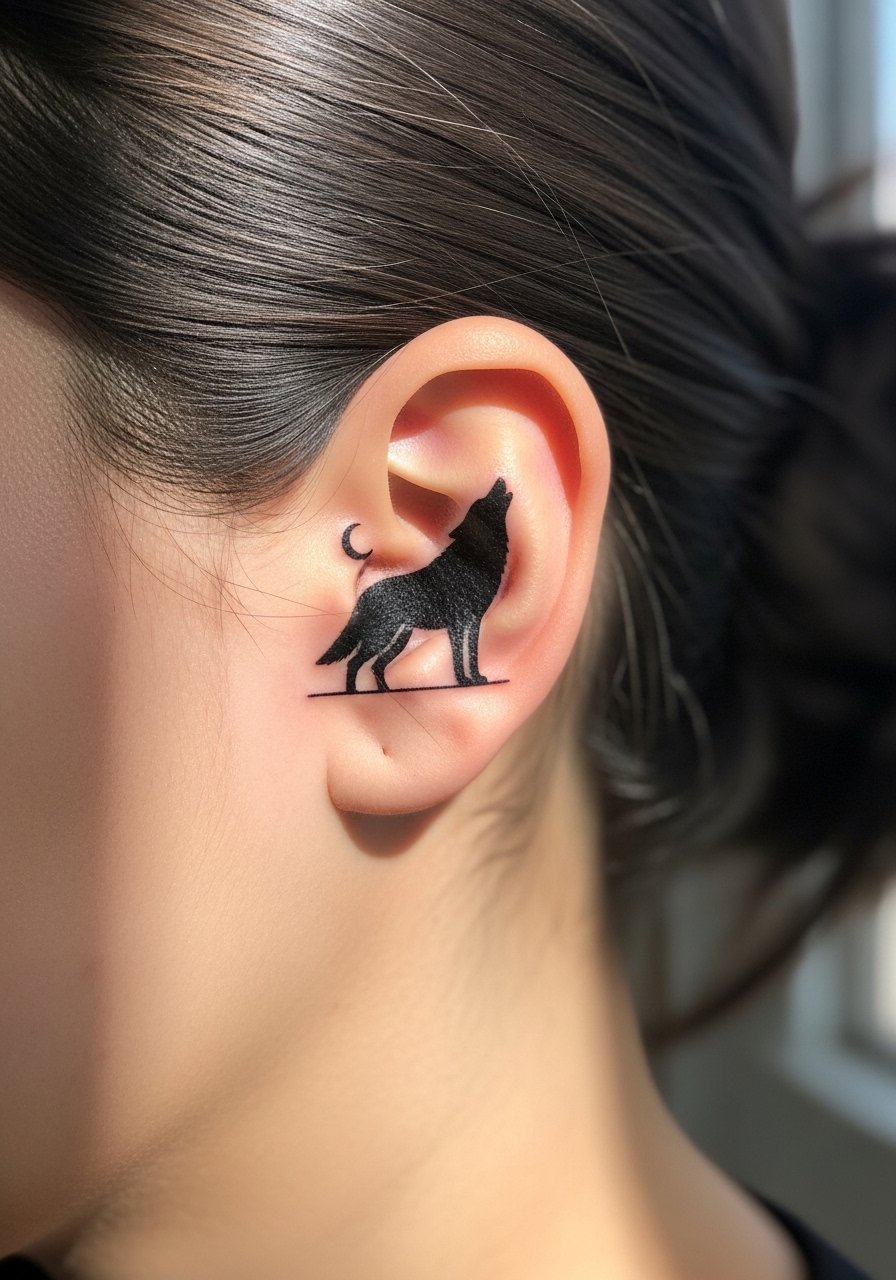
Behind-the-ear tattoos are discreet but sensitive. The placement is a three to four out of ten on most pain charts because the skin is thin. For a small howl silhouette, keep the moon as a simple dot so the negative space reads clean. A frequent mistake is over-detailing the muzzle, which becomes mud after healing. This one is a single quick session and tests your tolerance for close-contact healing. Note that hair and collars can rub the scab, so sleep on the opposite side and protect the area for the first week. If you worry about visibility, place it slightly lower toward the hairline.
4. Small neo-traditional wolf head with red eye on shoulder cap
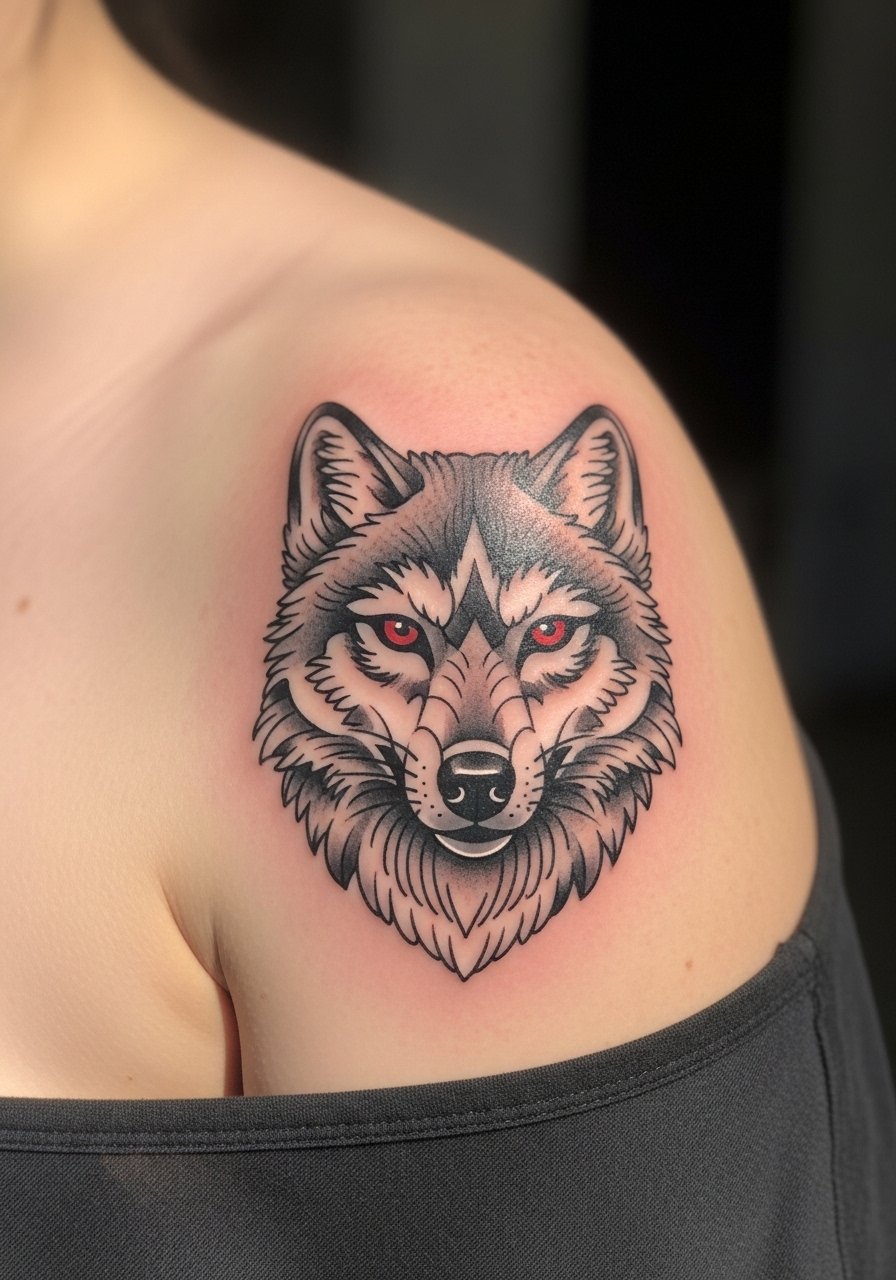
The visual impact here comes from one colored accent against solid black linework. When you consult, bring a photo showing the exact red hue and tell your artist you want strong outline contrast. The usual error is thin outlines with saturated color inside. That combo can make the color bleed in six months. This area is forgiving on stretch. Sessions are short and pain is moderate thanks to muscle padding. Touch-ups for color are typical at year two for small colored accents. If you work outdoors, commit to sunscreen on healed ink to prevent the red from dulling.
5. Technical gear wolf profile on inner bicep
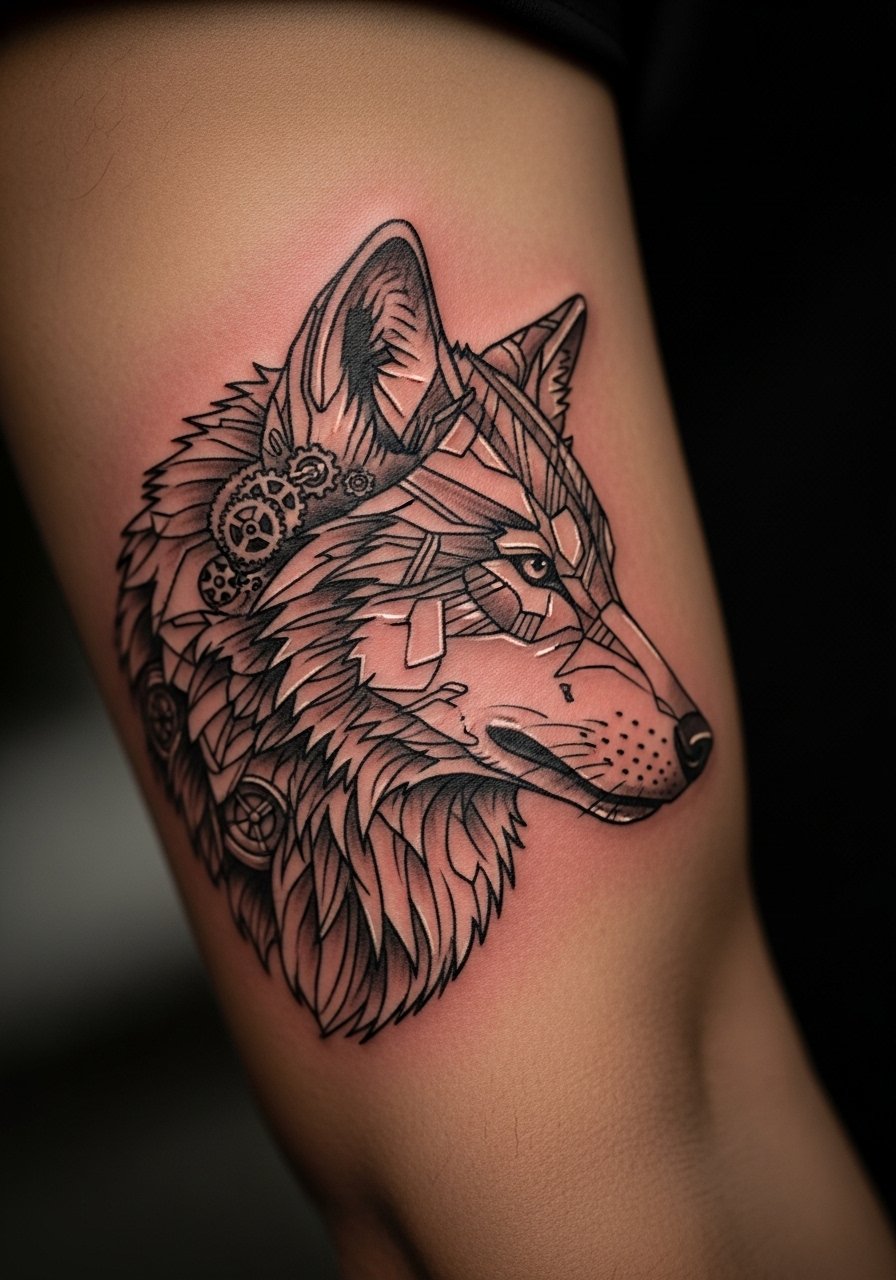
When you sit with an artist for this small tech wolf, emphasize readable gear shapes instead of tiny cogs. The biggest mistake is cramming micro mechanical parts into a two-inch space. Ask for higher contrast between metal elements and fur using stipple shading and whip shading for texture. Inner bicep is a lower visibility spot that flexes, so expect a moderate pain level. Over time, subtle gray washes may soften, but clean linework preserves the mechanical silhouette. If you want an evolving sleeve later, design this as a flash-friendly patch that can grow into adjoining custom work.
6. Mini lone-prowl silhouette on ankle
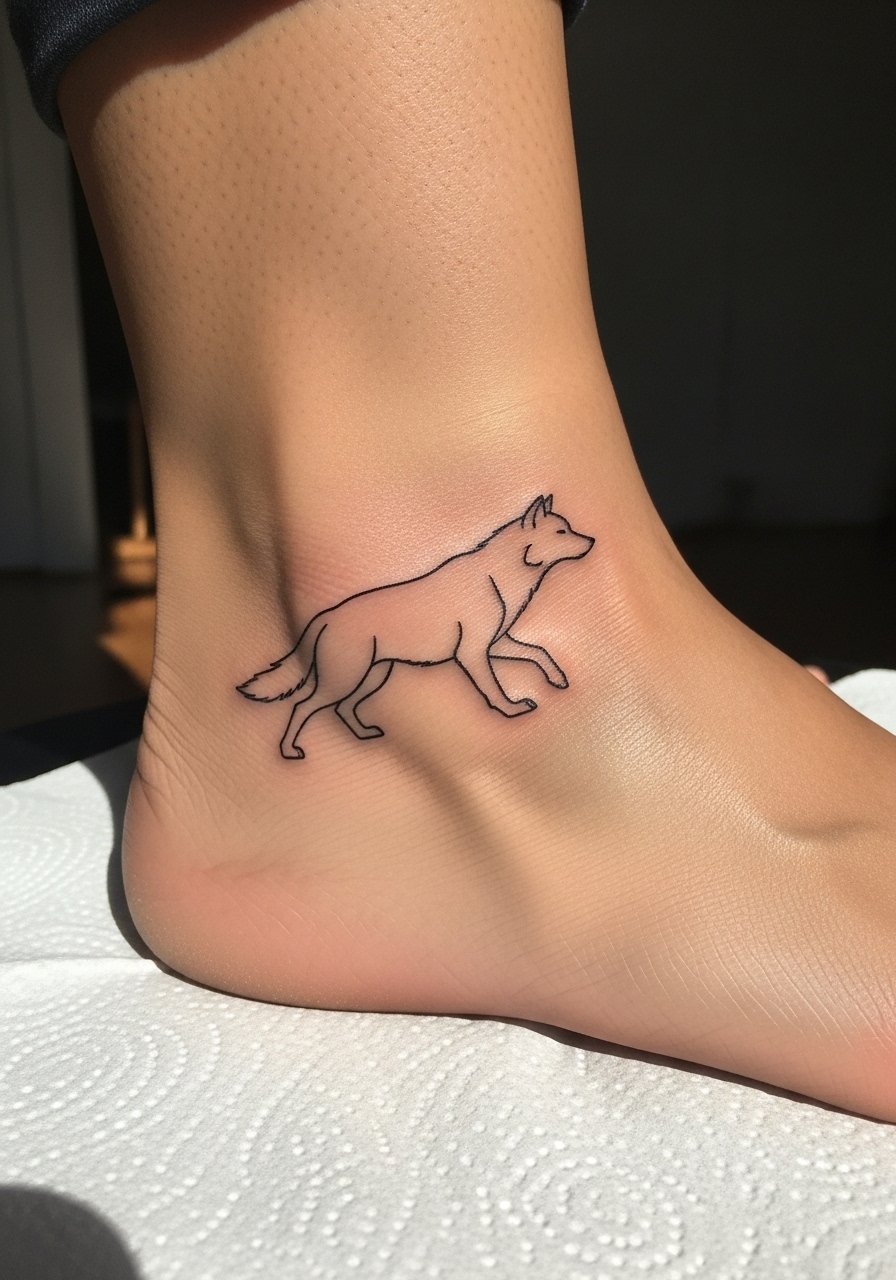
A lot of men like an ankle prowl for discreet symbolism. Keep the silhouette elongated to follow your leg line so it reads as movement. Common error is squaring the proportions which looks cramped on the ankle. Expect a quick session and a sharp sting because there is little padding. Blowout risk is low when the linework is simple and the artist avoids too much white space under the skin. Healed at six months the silhouette should stay legible. If you run or bike, protect the area while clothes rub the fresh scab.
7. Micro traditional wolf skull on chest pocket area
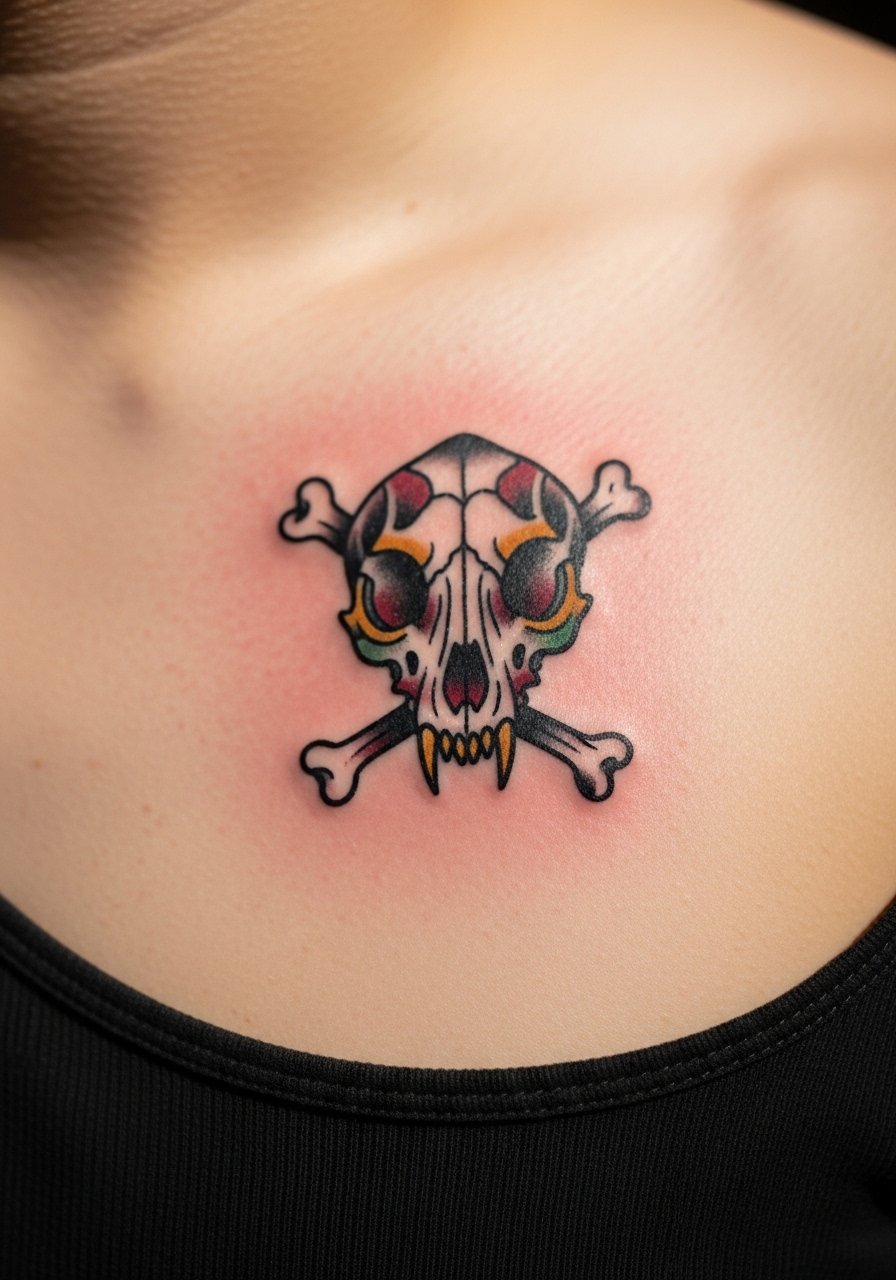
There is a 1950s American flash vibe to a tiny skull motif on the chest pocket area. Tell your artist you want solid outlines and restrained saturation. The chest pocket sees occasional friction from shirts so keep designs compact. The biggest mistake is thin outline plus heavy shading. That fades unevenly after a year. Pain ranges from mild to moderate. For a small piece, a single session is common. If you plan layered work later, leave some negative space around the skull so future pieces can sit beside it without merging.
8. Small paw print trail around ankle bone
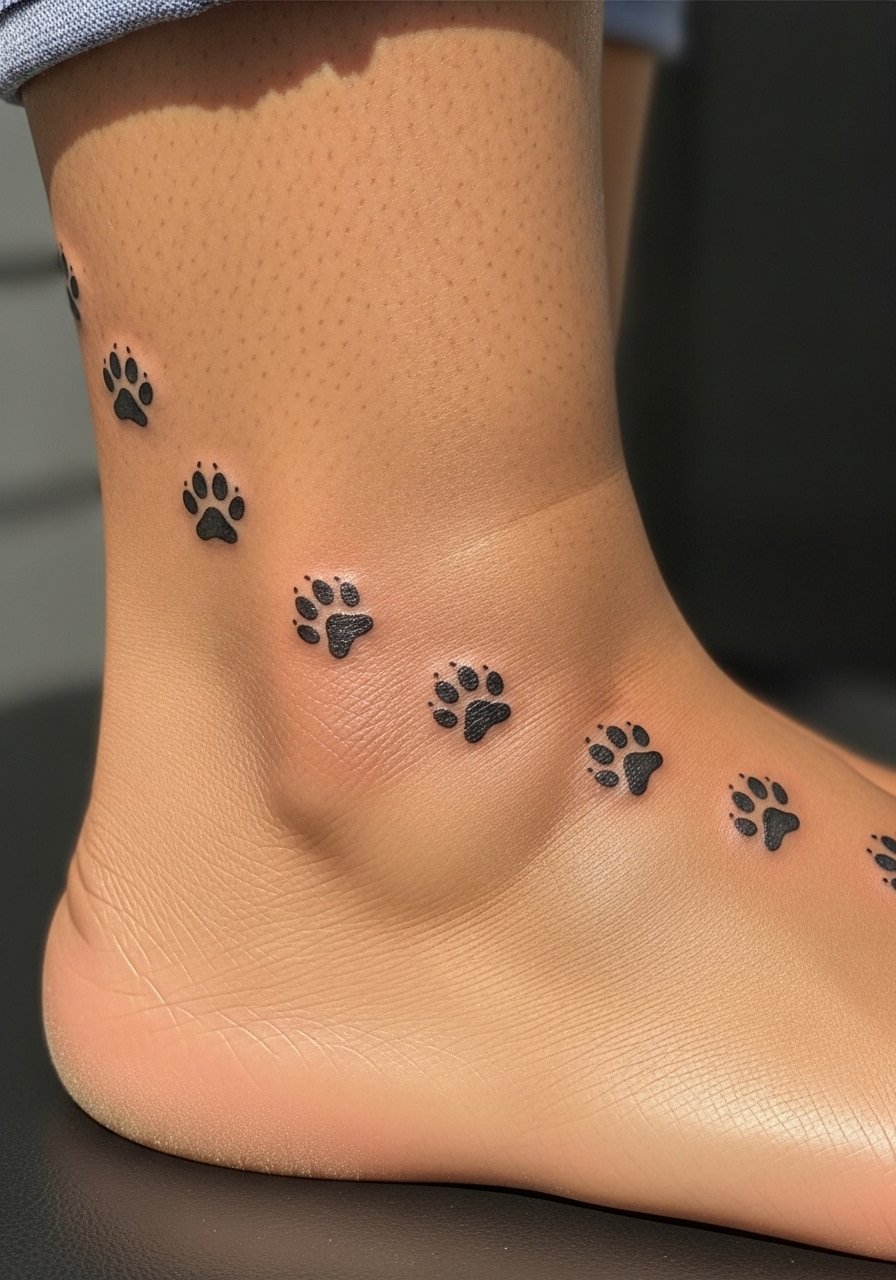
This elongating trail plays well with movement. When you describe it to an artist, specify spacing and orientation so the trail does not look like random dots. A frequent mistake is making the prints too close, which blurs into a single mark after healing. The ankle bone placement can be sharp on pain, but each print is tiny and quick. Aging is friendly for solid blackwork. Plan for occasional touch-ups if the foot sees heavy sun or repeated wear from shoes. This idea is great for subtle pack imagery without a full figurative head.
9. Ornamental wolf mandala on sternum edge
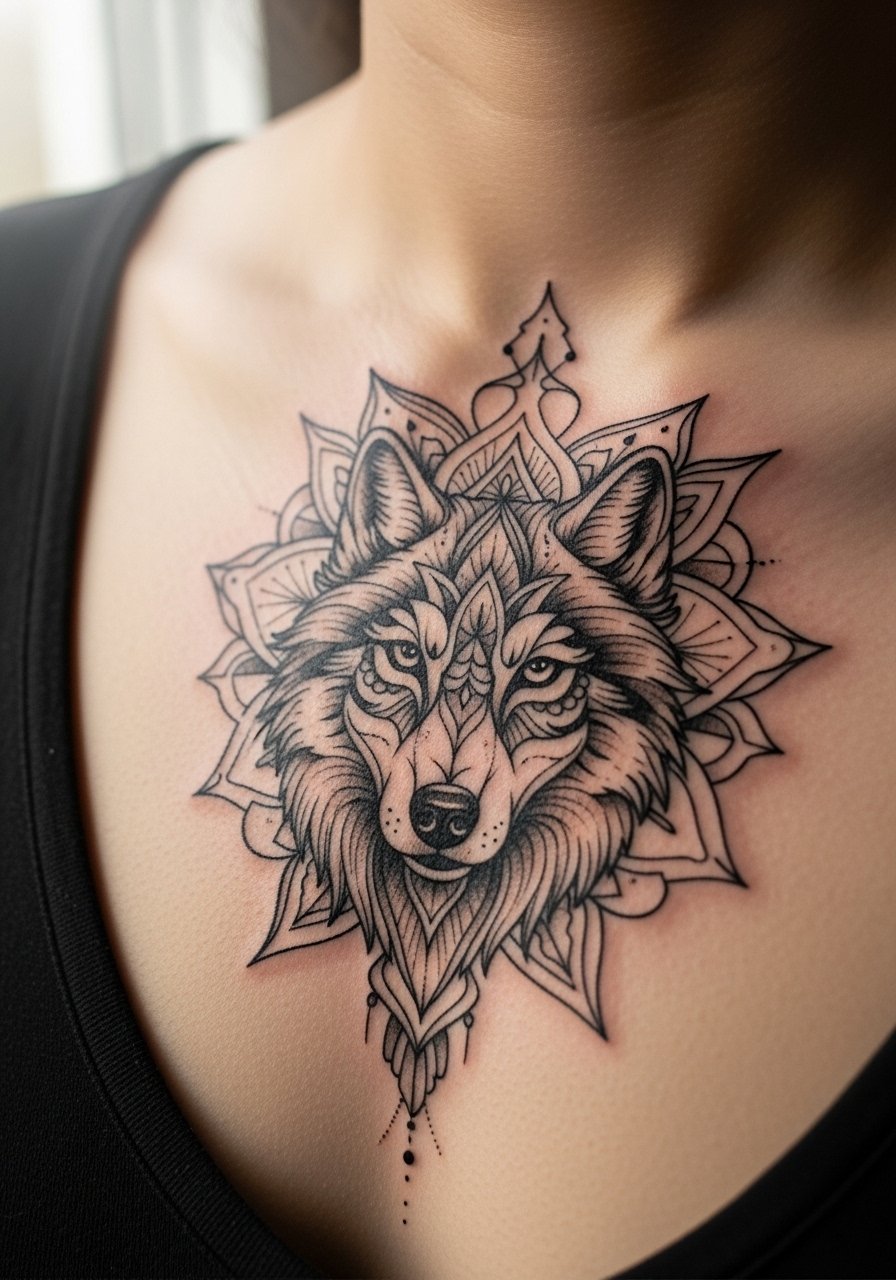
Sensitive placement note. Sternum work requires an artist experienced with chest curvature and breath control. This ornamental take uses radial linework to suggest a wolf rather than literal fur. Tell your artist you want heavier anchor lines and lighter inner dots. The controversy here is fine line versus bold line. One side argues that chest movement blurs fine line quickly. The other side says skilled spacing and needle depth keep a mandala crisp. Expect a moderate to high pain level and ask for a clear touch-up plan if you want the filigree to remain delicate over years.
10. Watercolor wolf splash behind the calf
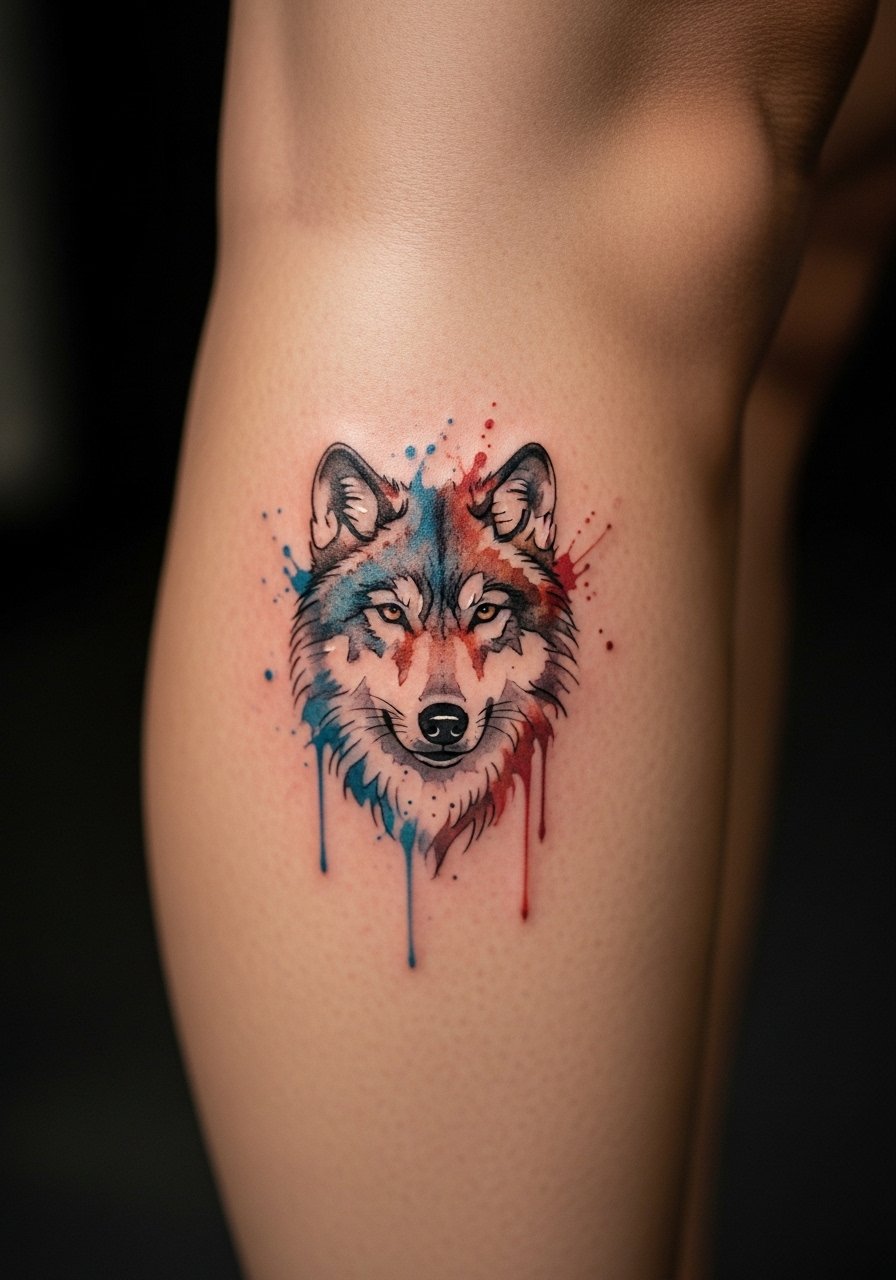
Watercolor edges age differently than blackwork. I've seen vibrant splashes go soft within a year if the artist packs too little saturation. For a small watercolor head, ask for stronger anchoring lines around key features so the paint has a frame. The back calf is forgiving on stretch and hides well. Sessions are short and pain is mild. If you want color to last, plan a color refresh at year two. Consider substituting tiny black accents where you want the most longevity. Use sunscreen on healed color to slow fading.
11. Tiny tribal-tinged wolf crest on shoulder blade
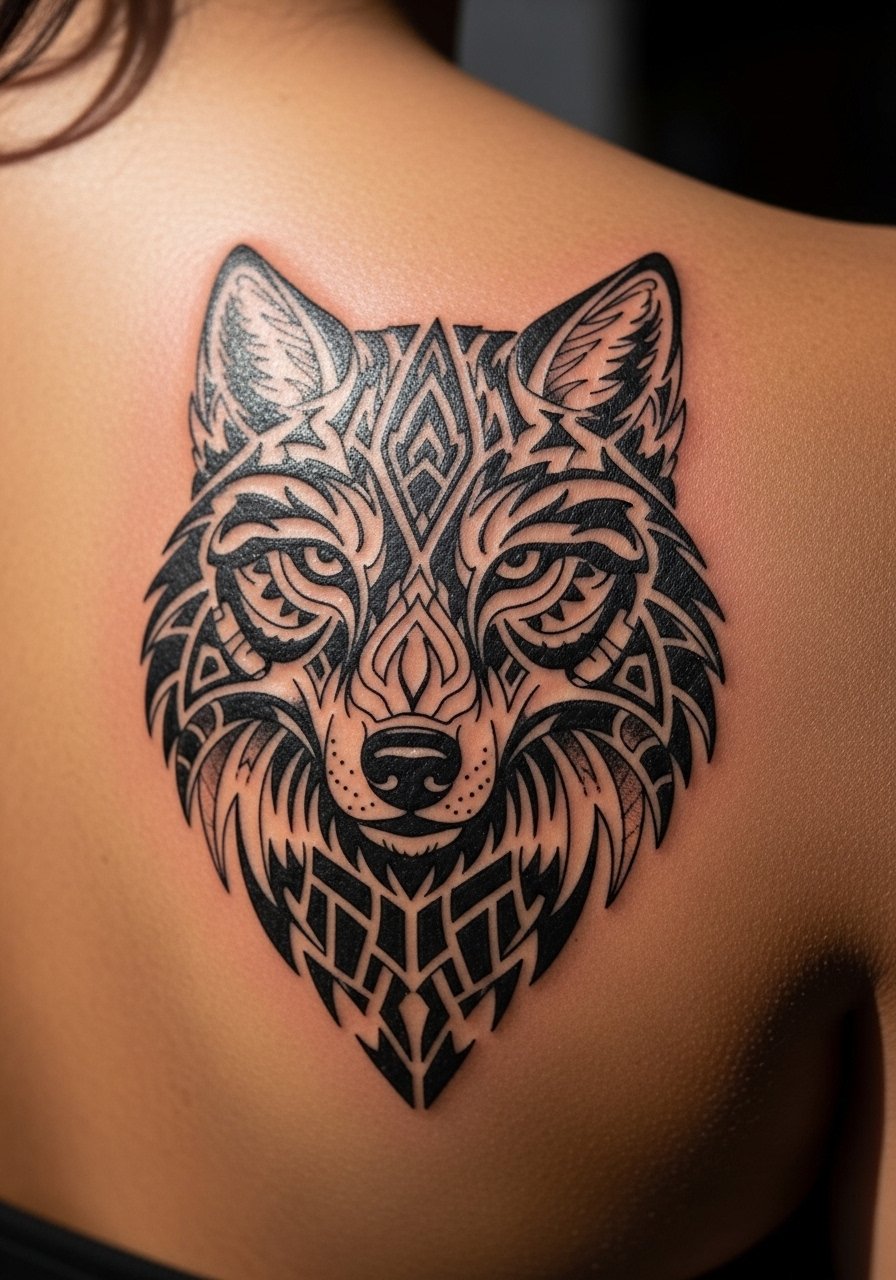
This design nods to pattern work without copying any sacred motifs. Cultural origin note. If you borrow tribal elements, opt for stylized nods rather than direct replicas. A common mistake is taking full traditional patterns that carry cultural weight. Shoulder blade placement is low pain and blends into a larger back build if desired. Tell your artist you want bold anchors and spaced negative areas so the pattern reads on dark skin. Expect a single session and a touch-up in two to three years depending on exposure.
12. Tiny mechanical paw with Roman date on inner forearm
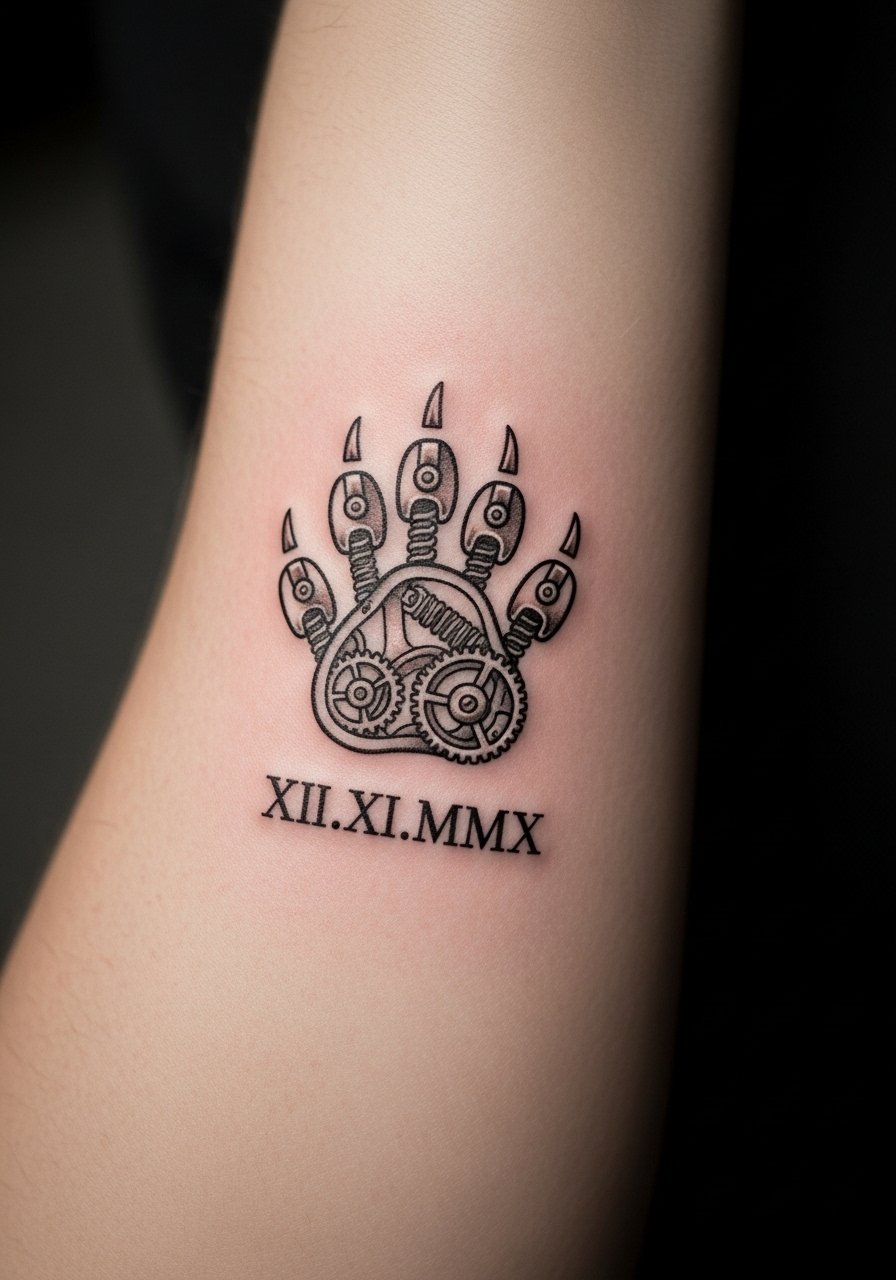
When text appears as part of a small tattoo, be specific about the exact wording. Use this exact format for Roman numerals. For the mechanical paw, ask for a simple gear impression rather than tiny teeth that will blur. Inner forearm is friendly for detail and rates a moderate session time. The main mistake is cramming script and micro-detail together. If this marks a date, place the numerals slightly apart from the paw so both elements age at their own pace. Touch-ups for crisp numerals are common at year three if you expose the area to sun.
Tattoo Prep and Aftercare Essentials
Fragrance-free gentle foaming cleanser. Use this to keep new ink clean without stripping scabs. Clean gently twice a day for the first week.
Lightweight fragrance-free moisturizing balm. Apply thin layers after cleaning to maintain hydration without suffocating scabs.
Medical-grade occlusive bandage, 6-inch roll. Useful for the first 24 to 72 hours on areas that rub clothing or shoes.
Saniderm medical-grade second skin bandage. This is the one mainstream product listed here. Many artists use it to reduce friction and keep washing to a minimum in the earliest phase.
Antibacterial non-irritating wound spray. Good for fresh breaks in a scab if you suspect contamination. Use sparingly and ask your artist before applying.
Soft breathable sleeve for protected wear. Handy for athletes who need to keep ink covered while training.
SPF 50 mineral sunscreen stick. Critical for long-term color preservation once ink is fully healed.
Silicone scar-reducing sheet, small strips. Use months after healing if raised texture appears and your artist approves.
Every tattoo is different. Always follow your artist's specific aftercare instructions. Consult a dermatologist if you have skin concerns or unusual healing issues.
Frequently Asked Questions
Q: Will a geometric fine line wolf on my forearm blur faster than a bold geometric wolf?
A: It depends on spacing and skin tone. Fine parallel lines that sit too close can merge faster, especially on tanned or darker skin. If you want geometry to age well, ask for stronger anchor lines and slightly wider negative space. Expect a potential refresh around year two to three if you wear shirts that rub the area or spend a lot of time in the sun.
Q: Do watercolor small wolves need different aftercare than blackwork ones?
A: Yes. Color pieces benefit from a little extra protection during the first month because pigment can fade if scabs form and flake prematurely. Use a gentle cleanser and the lightweight balm listed above. After healed, apply SPF regularly to slow color loss. Consider scheduling a color touch-up at year two if you want the splash to remain vivid.
Q: Is it okay to use numbing cream for a small sternum mandala session?
A: Artists are split on numbing. One camp says numbing helps clients sit still and reduces movement errors. The other camp worries numbing alters skin feel and may lead to uneven depth. If you consider numbing, ask the shop about their protocol and any effects they have observed. Numbing is more common for longer sessions and less common for quick, single-pass small pieces.
Q: How should I talk to an artist about keeping micro-realism wolf eyes sharp on light skin?
A: Bring clear close-up references and point out the exact level of contrast you want. Ask about saturation strategy and touch-up timelines. Mention if you expect heavy sun exposure, so the artist accounts for that with denser pigment. If the artist suggests micro lines that look fragile, request slightly thicker anchors to protect clarity long term.
Q: Do small wolf pieces on biceps stretch with muscle gain?
A: Small bicep tattoos can distort with significant size changes. If you plan to bulk up, opt for placements with less flexing or design the piece with motion in mind so it still reads when muscles change. If you gain or lose a lot of weight, allow for the possibility of a touch-up to restore proportions.