Most Zeus tattoos that still read well after five years are not the wispy single-needle portraits blowing up on boards. Heavy contrast, intentional spacing, and beard texture that respects skin movement keep faces defined over time. This list favors designs that balance facial detail with durable linework, plus placement and clothing tips so the tattoo ages the way you hope.
1. Zeus Portrait Crop on Outer Forearm
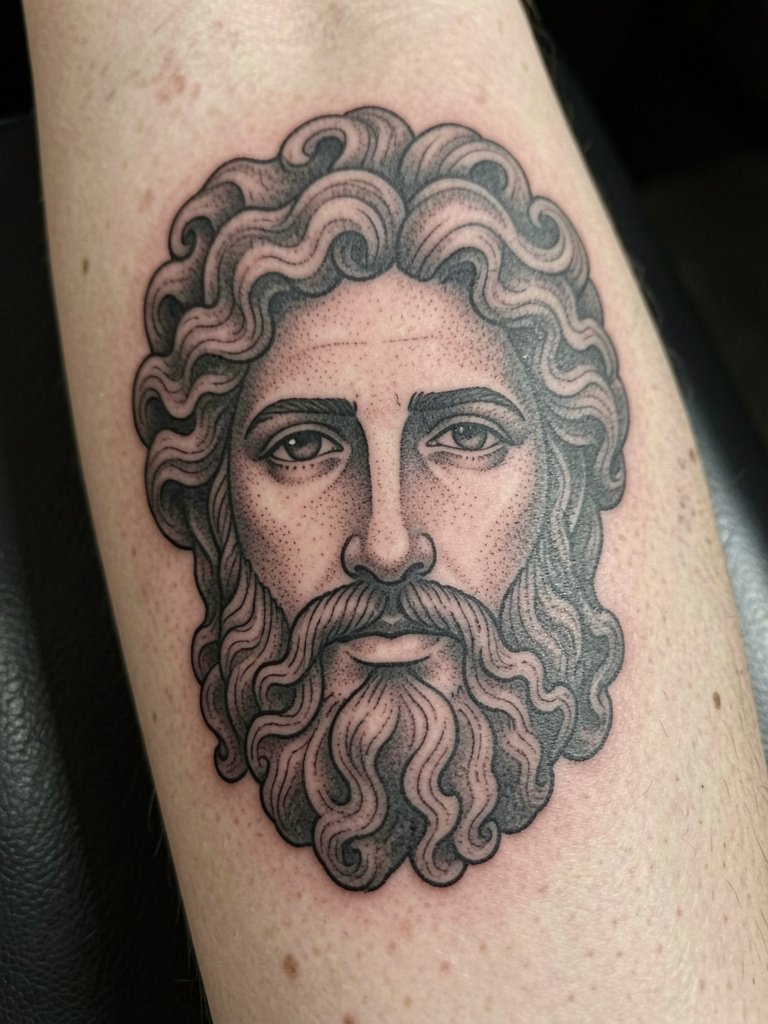
A portrait crop compresses Zeus into a wearable size without losing beard texture. I recommend this when you want facial detail but have forearm space only. Ask for slightly heavier linework on the beard so hair texture keeps definition at year two. A common mistake is asking for ultra-fine hair strokes that blur on the forearm with normal skin movement. Expect a single two- to three-hour session for a medium crop and a likely touch-up after the first year. For the session wear a short sleeve tee so the artist can work the whole outer forearm without awkward rolling.
2. Zeus Seated on Olympus, Upper Back Scene
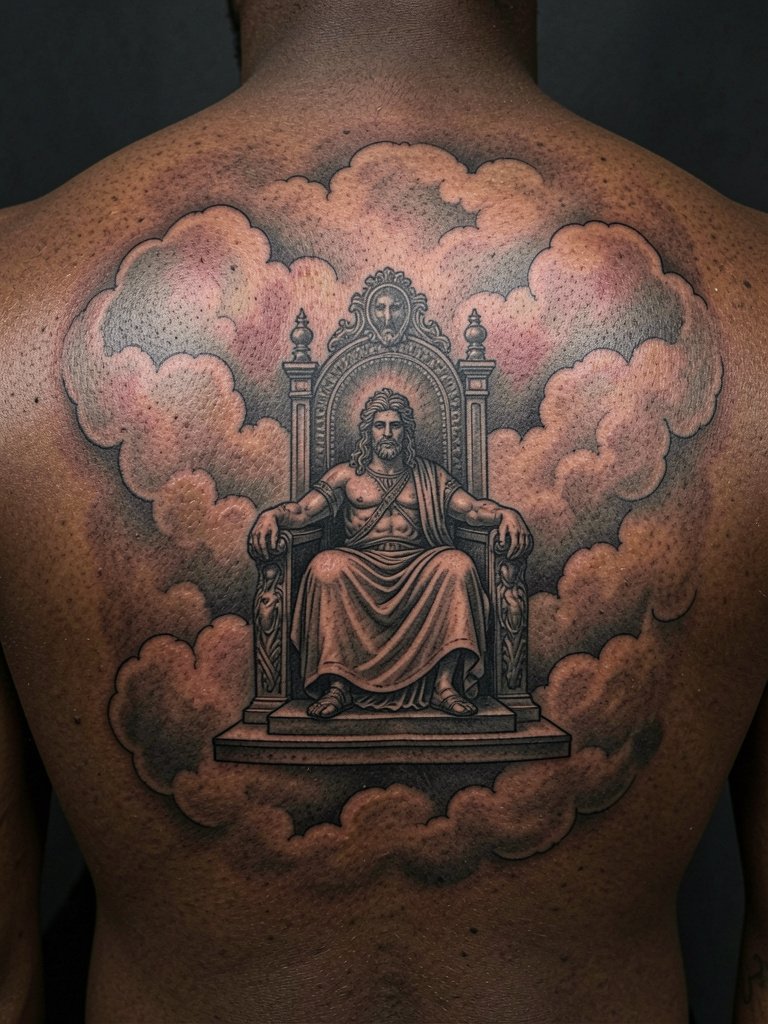
Large back pieces let artists stage Zeus with throne and atmosphere rather than force tiny facial detail. Use this when you want a cinematic composition that still reads from several feet away. Talk through background negative space so later additions like other gods do not crowd the face. An error I see is compressing too many miniature figures into one panel which muddies contrast. Sessions will be multiple and the ribs-to-shoulder skin will need careful saturation work to avoid patchy healing. For reveal moments, open-back festival wear shows the upper back without awkward dressing fuss.
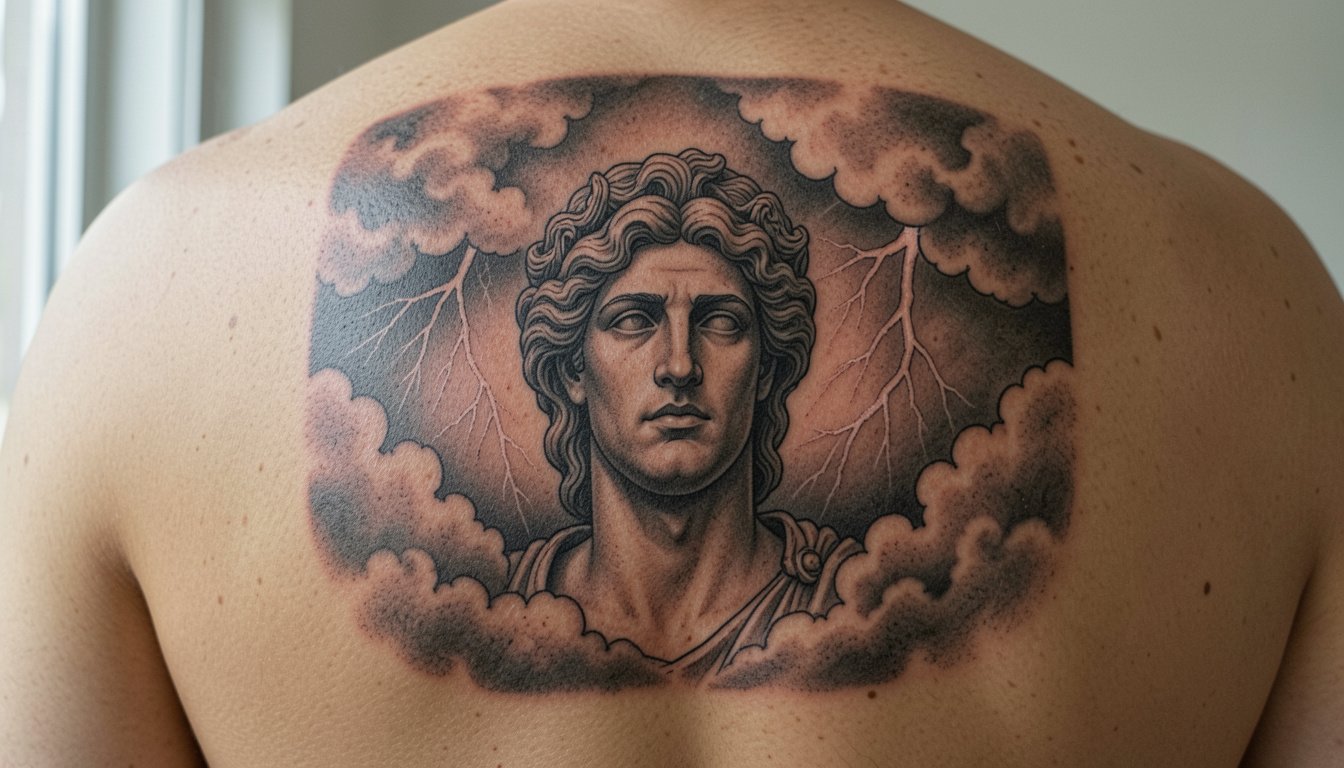
3. Black-and-Gray Zeus Head with Lightning Framing
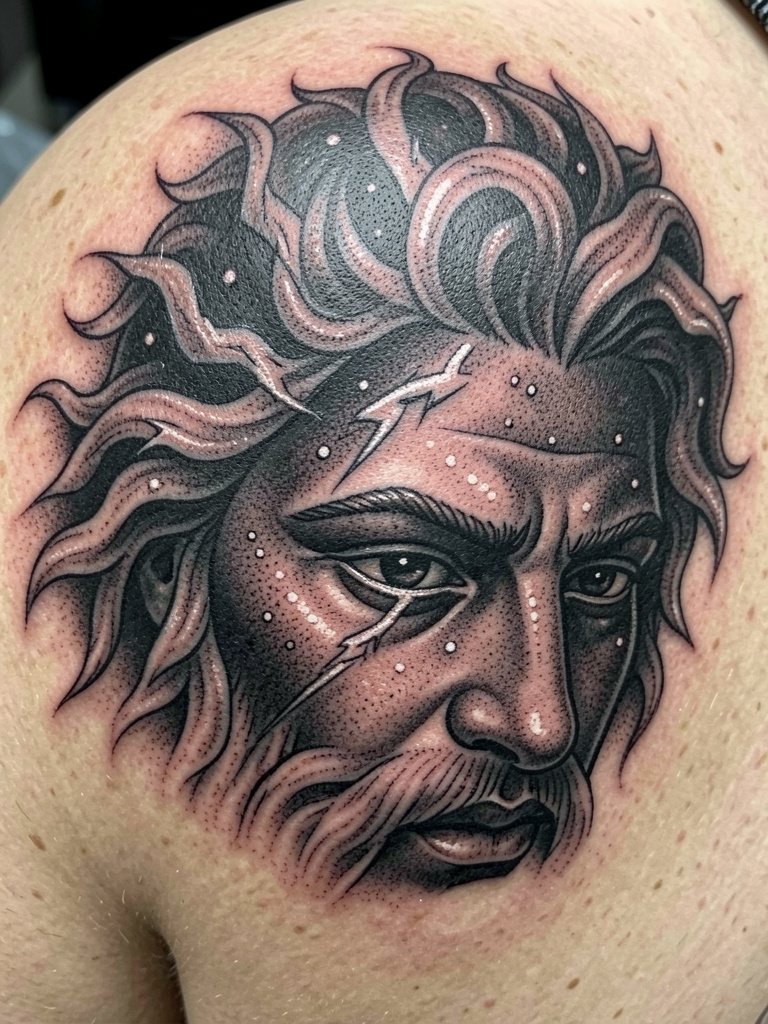
This option prioritizes contrast to preserve dramatic features over time. One camp favors realism because facial nuance and storm energy benefit from lifelike texture. The opposing camp prefers neo-traditional bold outlines because thick contours keep features legible as ink spreads a little with age. Both arguments are valid, and your choice should match whether you want long-term readability or lifelike detail. Ask the artist to show healed examples in both approaches and pick the one that fits your skin and lifestyle. Shoulder placement handles dense shading well, and a sleeveless top highlights the framing lightning.
4. Neo-Traditional Zeus Head with Bold Outline
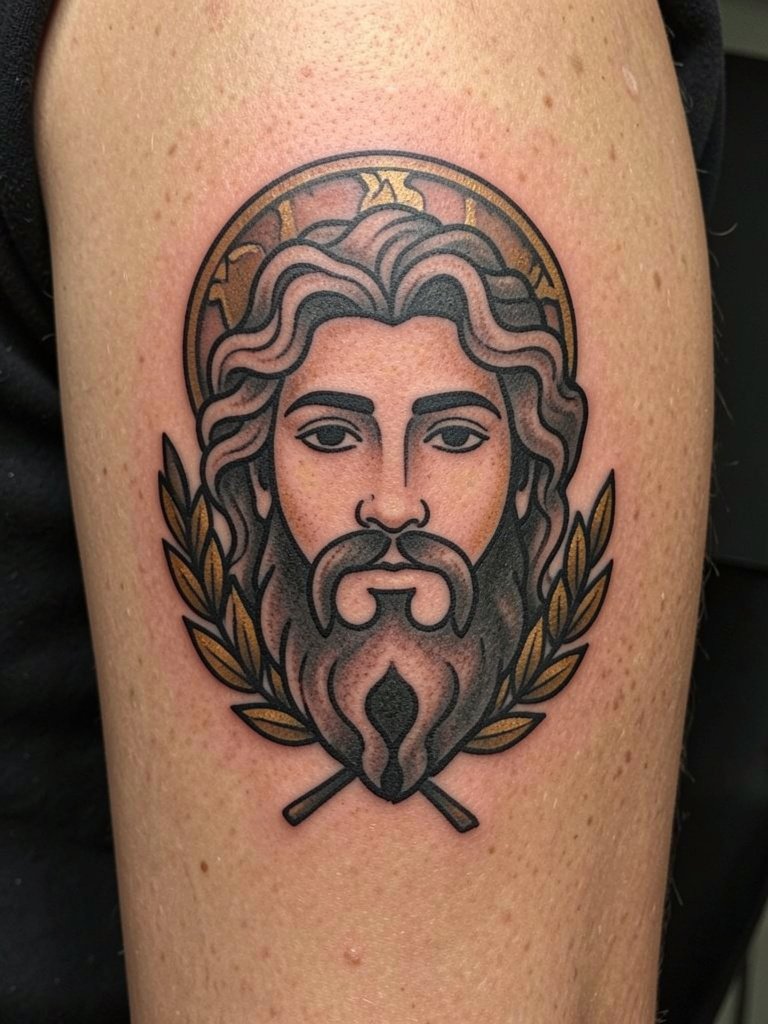
Neo-traditional gives Zeus strong silhouette and distance readability. Pick this when you want a design that holds up in crowded sleeves and reads from across a room. In consultations bring reference shots showing the exact line weight and color stops you like so the artist can map saturation. A frequent mistake is asking for overly fussy detail within a neo-trad frame which defeats the style. For showing the piece, wear a tank top or rolled sleeve so the clean outline stays visible in photos.
5. Zeus with Eagle Companion, Shoulder Blade
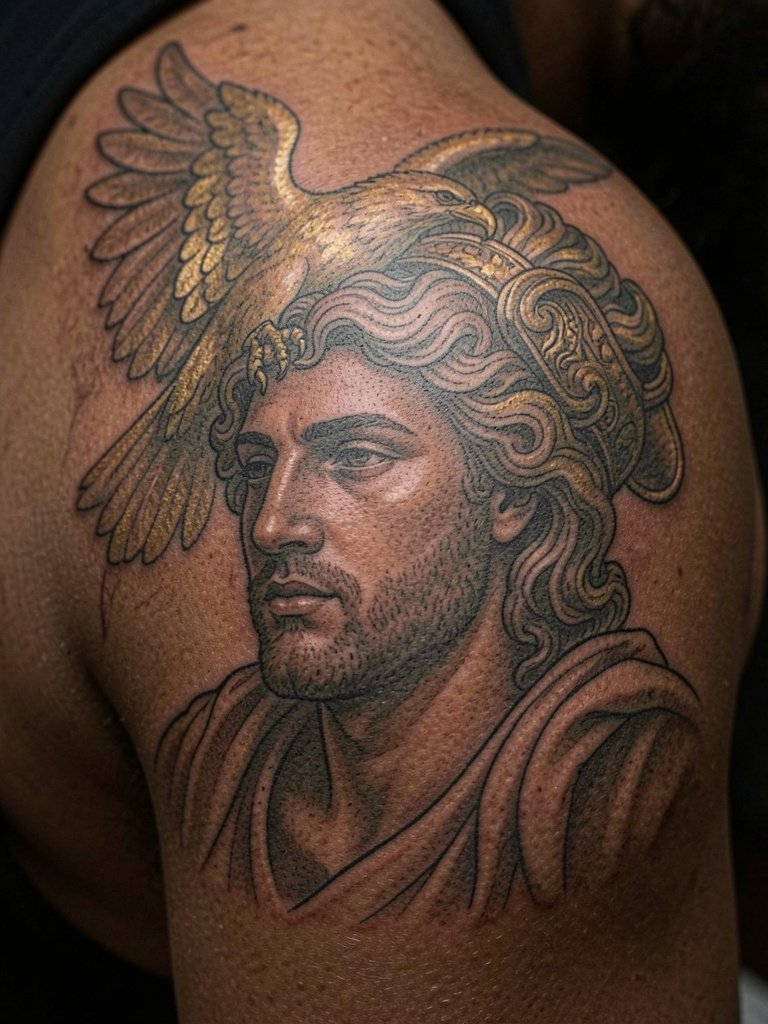
Adding an eagle layers symbolic meaning and gives the composition motion. This is useful when you want an animal element without a full sleeve. Discuss how the eagle interacts with Zeus visually so wings do not crowd facial shadow. People often pick an eagle reference that is too detailed for the intended size which leads to muddled feathers after healing. Shoulder blade placement tolerates heavier saturation and the piece pairs well with an open-button shirt for casual reveals. During the appointment wear a loose button-down so you can remove it without tugging the shoulder.
6. Small Thunderbolt Minimalist, Inner Wrist
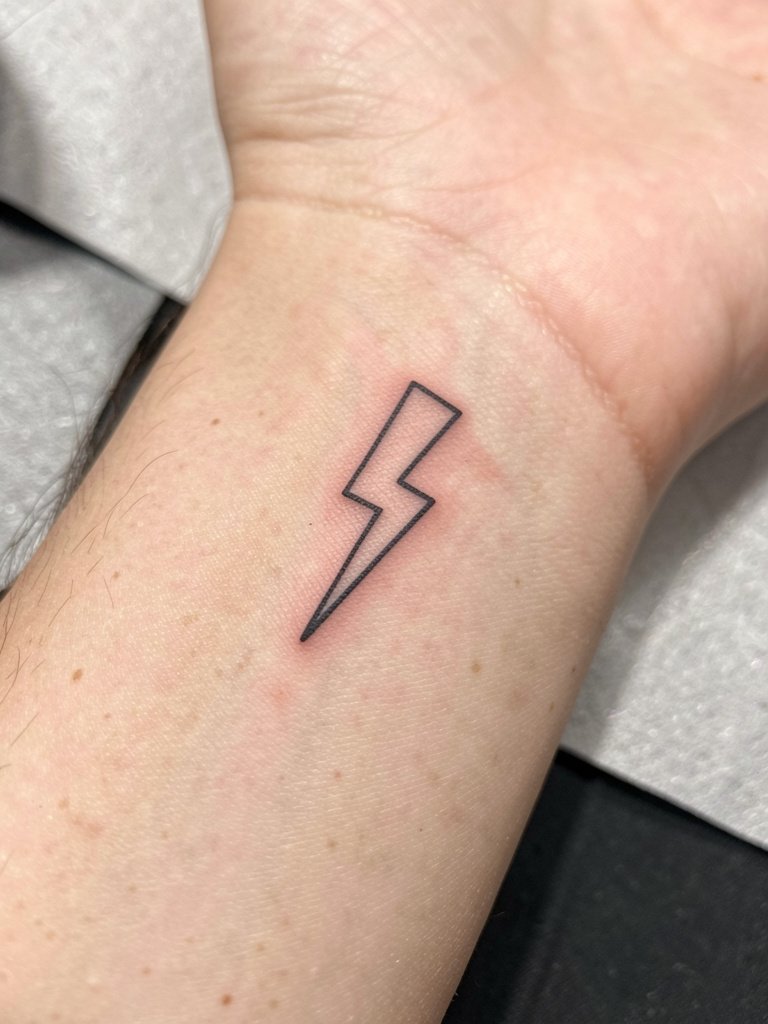
Minimal bolts condense the Zeus idea into a subtle symbol and fit first-timers. The inner wrist eats delicate lines faster than the forearm so request a slightly bolder main stroke to prevent early blur. A mistake I see is insisting on micro single-needle thickness for a wrist spot that sees constant motion and washing. This one heals in a single session but expect a one-year touch-up for crisp edges. For session comfort and clear access wear a cropped sleeve tee and skip bracelets on that wrist until fully healed.
Session Day Essentials
The portrait crops and wrist symbols above need different kit than large back panels. These five items keep the first 72 hours smoother across the placements in ideas 1 through 6.
- Stencil transfer paper kit. Helpful for previewing facial crops and small symbols so the stencil sits where you expect before the first pass.
- Topical numbing cream. Useful for sensitive spots like ribs and inner wrist when you want a calmer session without losing too much feedback.
- Thin protective film roll. Keeps wrist and shoulder blade tattoos clean during early showers and daily friction.
- Fragrance-free gentle body wash. Cleanses healing skin without stripping saturation from black-and-gray portraits.
- Aquaphor healing ointment. Thin application in the first days maintains moisture for fine beard detail while avoiding heavy residue.
7. Full Zeus Sleeve Centerpiece
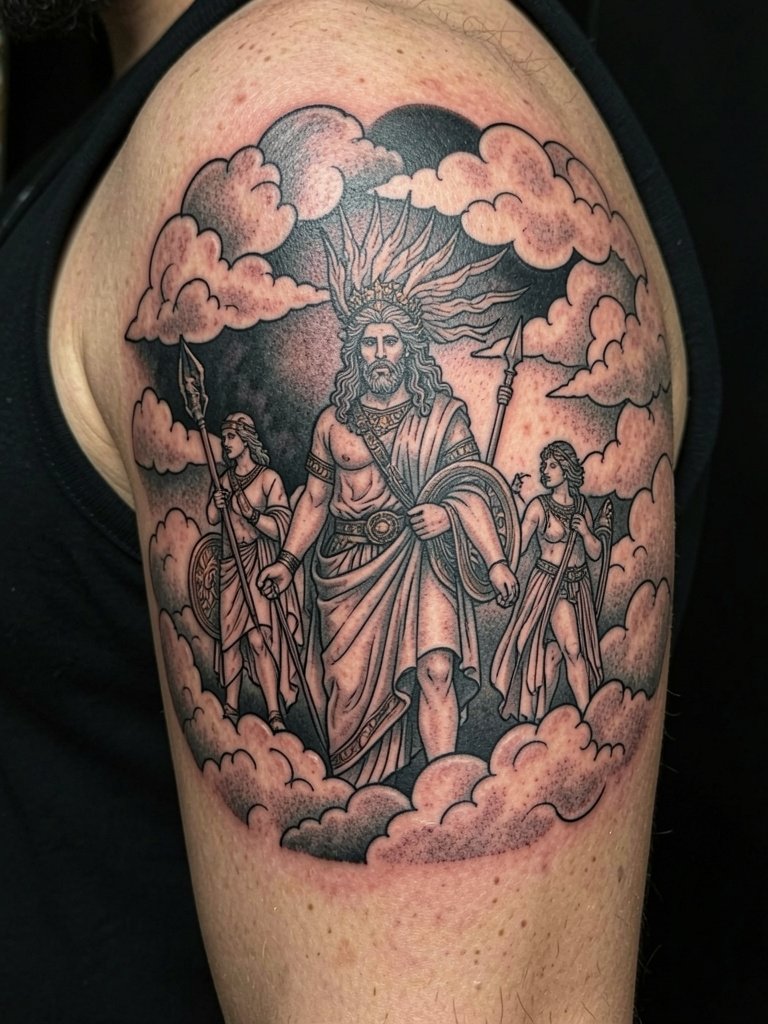
Use Zeus as the anchor when planning a mythology sleeve rather than painting him across the whole arm. The key is modular background that leaves room for Athena, Poseidon, or other figures later. Ask the artist how negative space will connect future panels so new additions do not look pasted on. A common misstep is over-detailing every figure at once which makes later expansion awkward. Sleeve work is multi-session and the outer arm tolerates heavy blackwork well. For appointments wear a muscle tank so the artist can access the full arm repeatedly without shifting clothing.
8. Zeus Throne Chest Piece
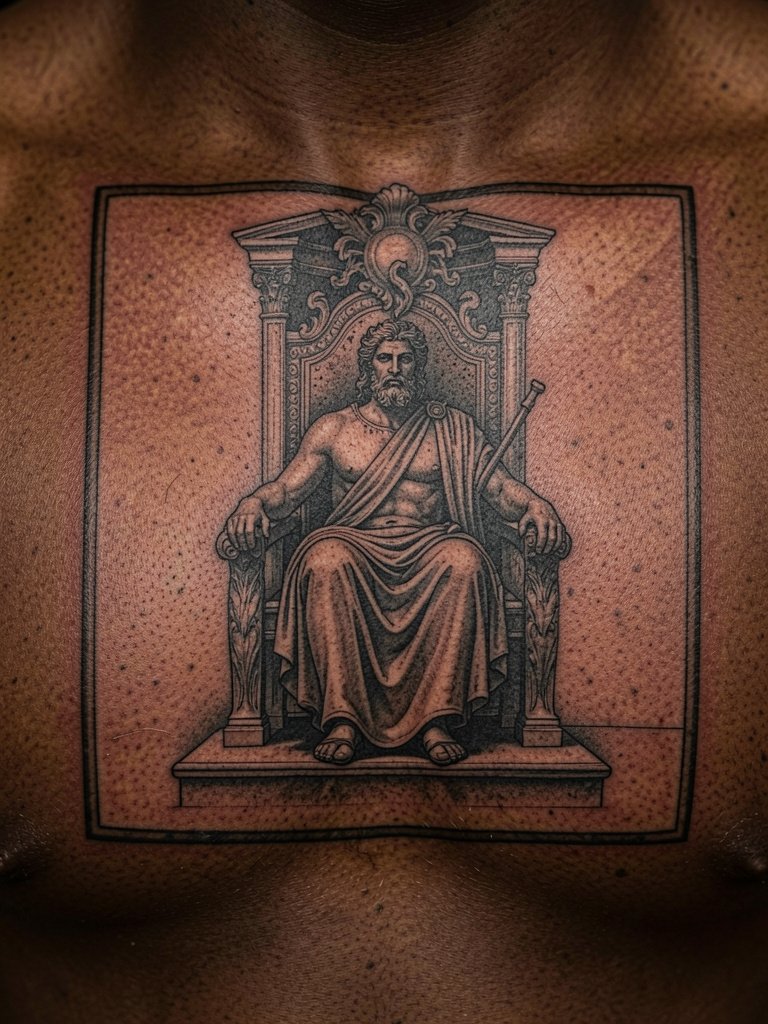
A chest throne composition reads like a central emblem and works for people comfortable with multi-session chest work. Chest skin shifts when you move and breathe so insist on a test stencil in the standing and lying positions to see how the throne reads. One camp prefers full myth scenes across the chest for completeness. The other camp favors a portrait-only chest piece that keeps cost and healing lower. State which you prefer and bring proportional reference images. For reveal styling, open-collar shirts show the upper chest effectively while still keeping daily wear practical.
9. Dark Storm Scene with Zeus, Ribcage Panel
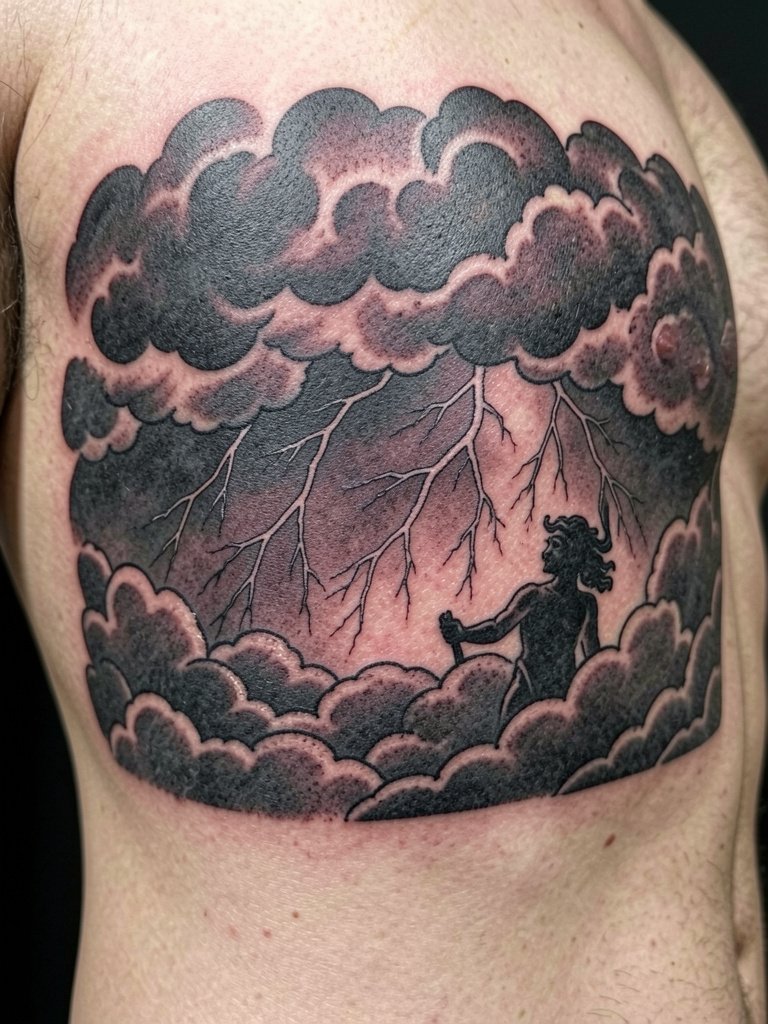
Ribcage pieces allow dramatic atmosphere but are high on the pain chart. If you want deep blacks in cloud fields ask the artist about session pacing so saturation is even without rushed passes. A common blunder is compressing tiny fine-line detail into the ribs which the skin cannot hold as clearly as the forearm. Expect several sessions and prepare for longer healing. For the session wear an oversized button-down so you can remove it without stretching the area.
10. Ornamental Zeus with Laurel, Upper Arm
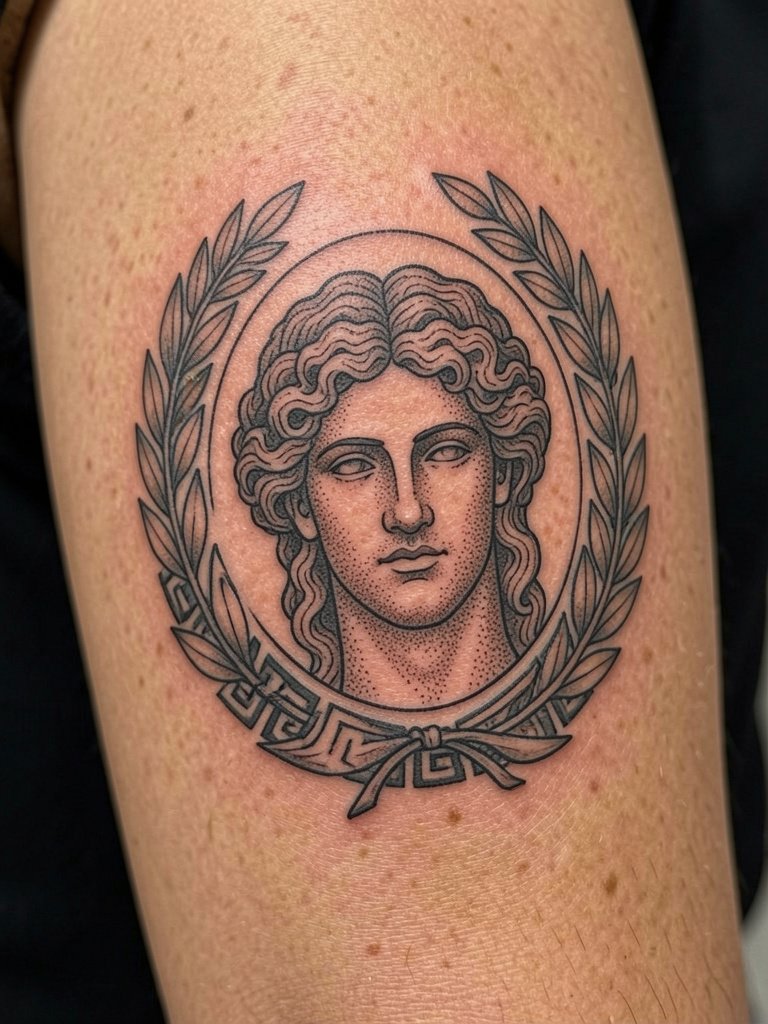
Classical framing makes Zeus feel formal without needing a literal scene. Use laurel and border work to create a badge-like piece that ages predictably. Bring examples of the exact border thickness you want because tiny meander lines tend to merge after healing. One practical tip is to increase spacing between ornamental elements so touch-ups are easier and less visible. Upper arm placement displays well with open overshirts and a loose button shirt highlights the framed composition.
11. Zeus Face Close-Up, Calf Portrait
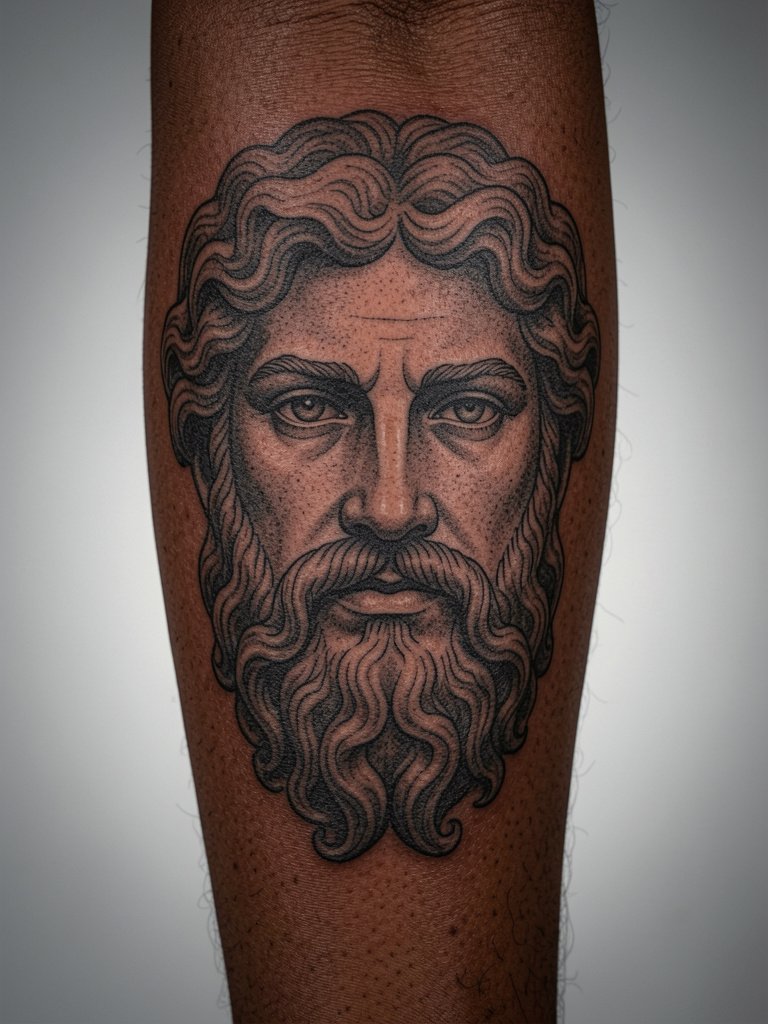
Calf placements let portraits sit vertically and avoid shoulder curvature issues. If you want intense beard detail request reference photos of healed calf portraits so you can see how texture settles on that skin type. A frequent error is using shoulder references for calf work which reads differently when healed. Calf sessions are moderate pain and typically finish in one long session for mid-sized portraits. To show the piece casually wear shorts with a clean hem and a low-profile shoe.
12. Zeus as Sleeve Connector, Modular Backgrounds
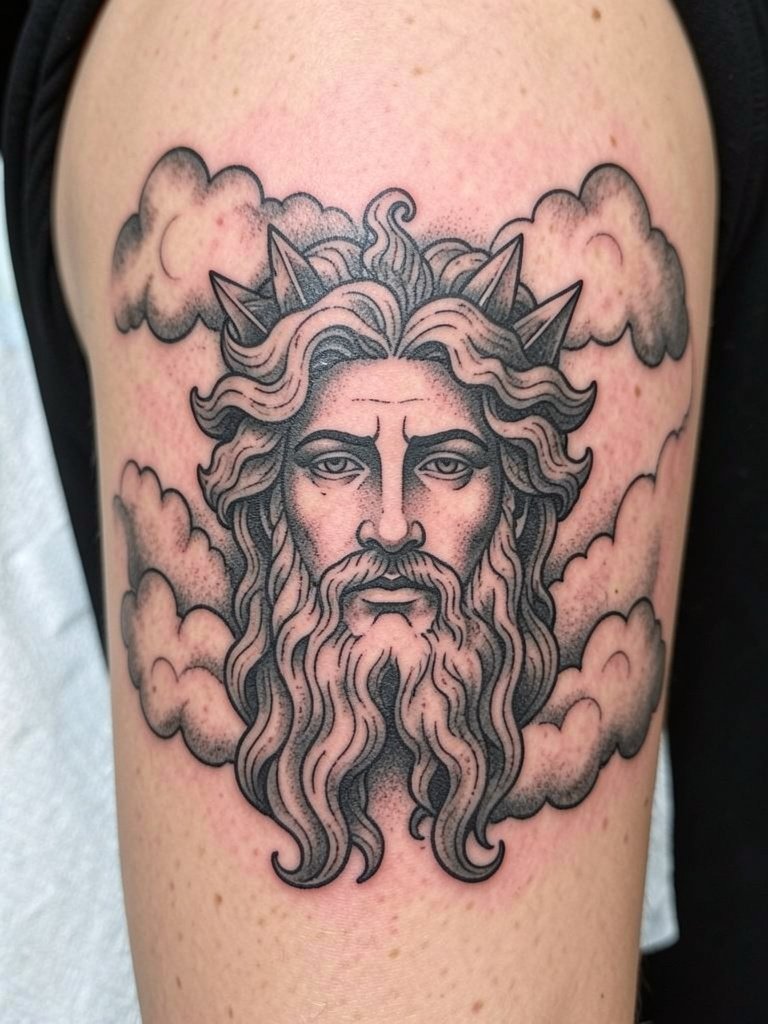
Design Zeus to anchor future additions rather than dominate them. Ask the artist to map future blank zones and to mark where other gods might sit so the current piece does not block later composition. The typical mistake is treating Zeus like a finished sleeve when you intend to expand later. Modular backgrounds with banded clouds and connective bolts make future touch-ups and expansions simpler. For sessions wear an open button shirt so the artist can check flow across the arm while you stand and move.
13. Portrait Crop for Forearm, Tight Beard Detail
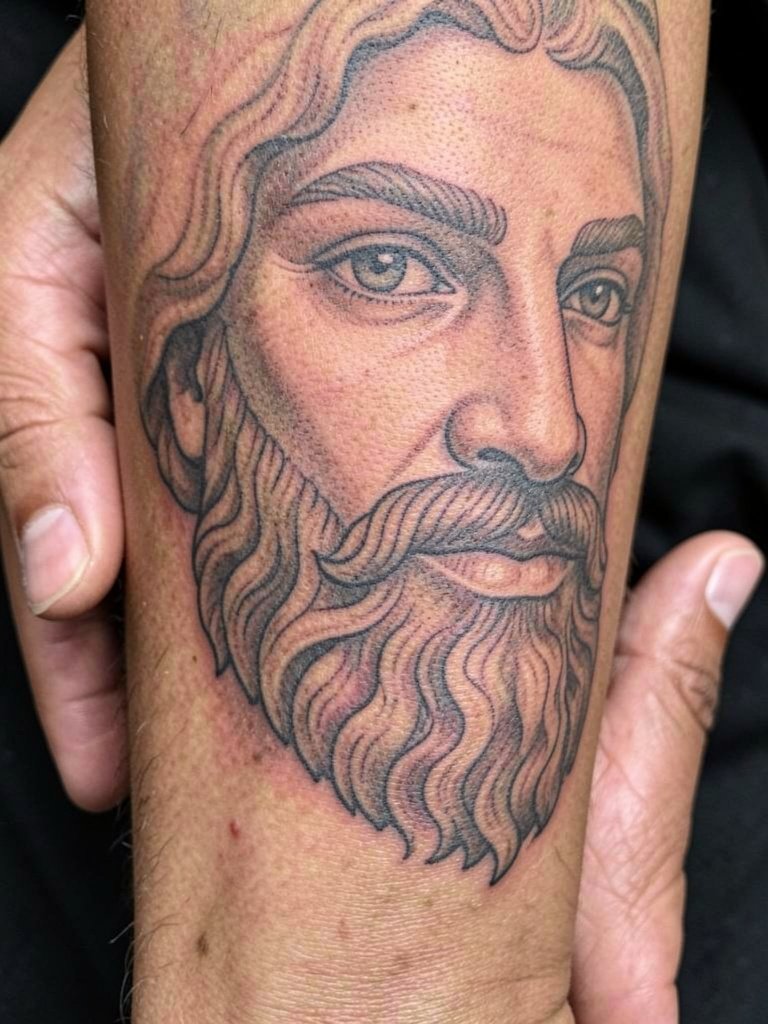
A tight forearm crop gives personality without full head-and-shoulders scale. Plan beard strokes with slightly increased spacing to avoid future merging. Ask for stencil placement while your arm is supinated to confirm how the beard flows with muscle movement. A common mistake is matching reference hair density exactly without accounting for the way forearm skin smooths during healing. Expect a couple of passes and schedule a one-year check to tidy crowed strokes. To show the piece, roll a denim jacket sleeve or wear a rolled sleeve button shirt.
14. Neo-Traditional Zeus on Calf with Bold Color Accents
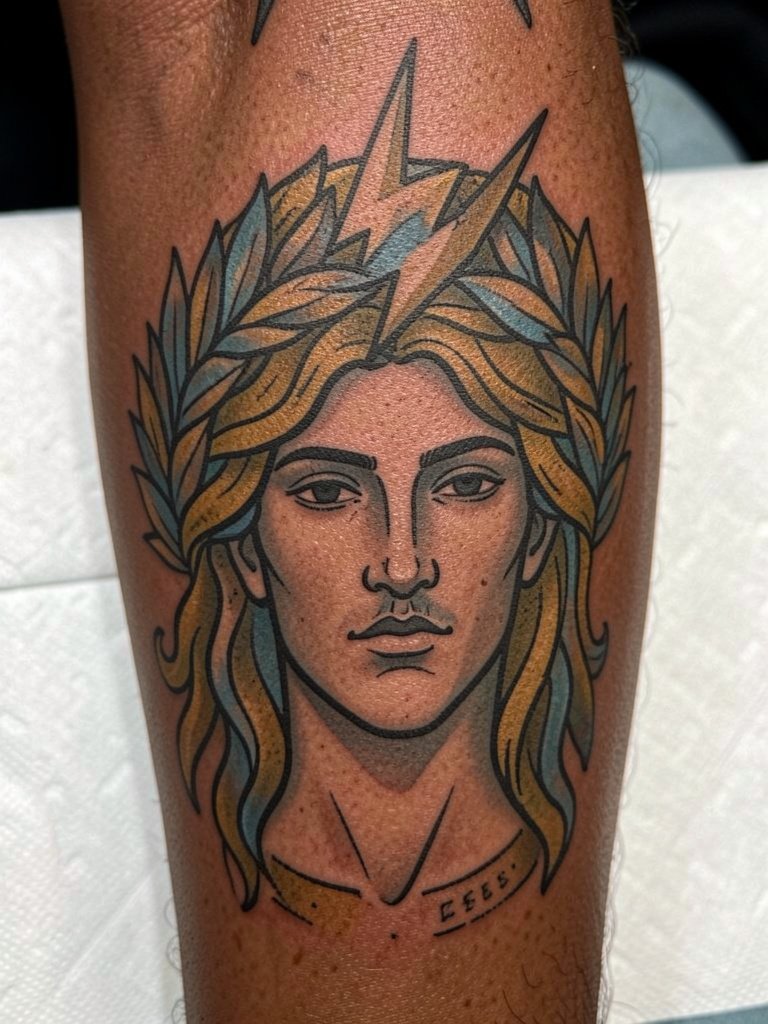
Add restrained color to neo-traditional pieces for cinematic pop while keeping readability. Color fans argue it enhances mythology mood and black-and-gray proponents say the contrast of pure grayscale ages more predictably. Name your priority so the saturation plan can be tailored to maintain contrast. Calf skin holds color well but avoid tiny color details that need high saturation to last. Show the piece with longer shorts and clean sneakers and wear loose shorts during the session so the artist can roll the leg up without pressure.
15. Zeus Face Close-Up on Outer Bicep, Healed Detail Focus
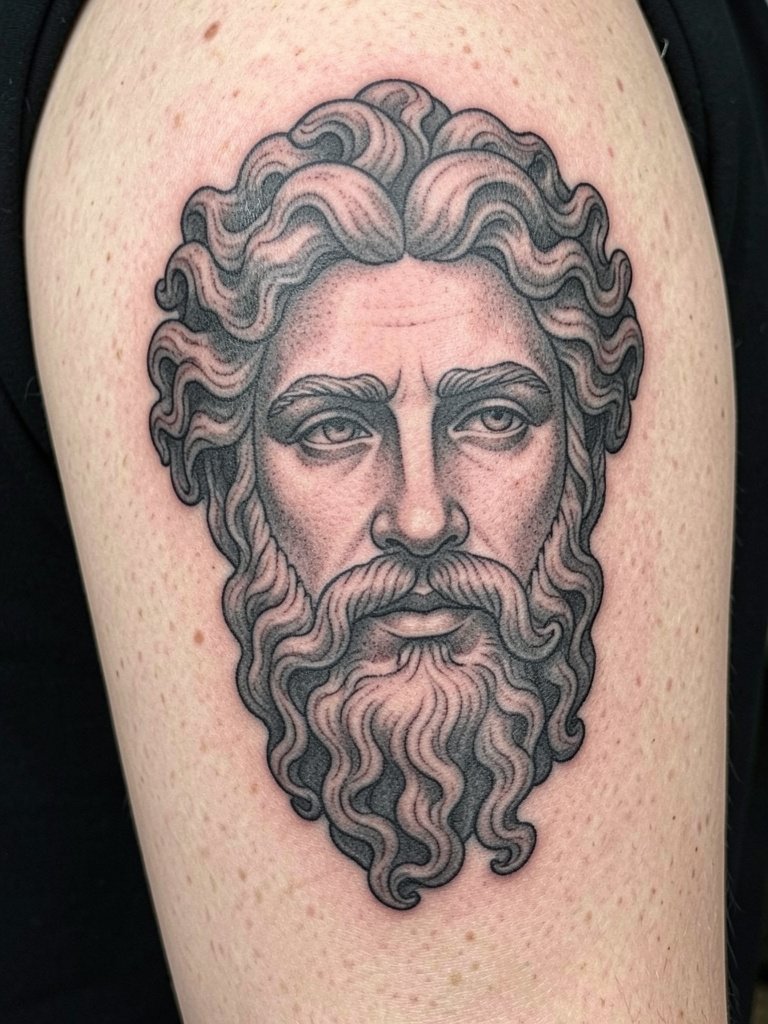
Outer bicep portraits read strongly and tolerate shading transitions. If you want the brow to stay defined, ask for micro-contrast peaks in the stencil so the artist can separate planes without relying on hairlines alone. People often request the same forehead texture they saw in a chest piece and end up with flattened shading on the bicep. Sessions are moderate in length and the site is forgiving for touch-ups. For showing off wear fitted tees that end above the shoulder cap and a clean watch on the opposite wrist.
16. Zeus on Throne, Full Chest and Sternum

A sternum-centered throne is bold and intimate. Sternum skin can be unforgiving so request a standing and supine stencil check to ensure the throne sits well when you breathe. A common error is underestimating sternum pain and booking back-to-back long sessions. This composition needs realistic pacing and scheduled breaks. For wardrobe pick open-collar shirts or deep V tees for reveal moments and bring button-downs that are easy to remove without stretching the chest during the appointment.
17. Blackwork Zeus with Heavy Clouds, Shoulder Cap
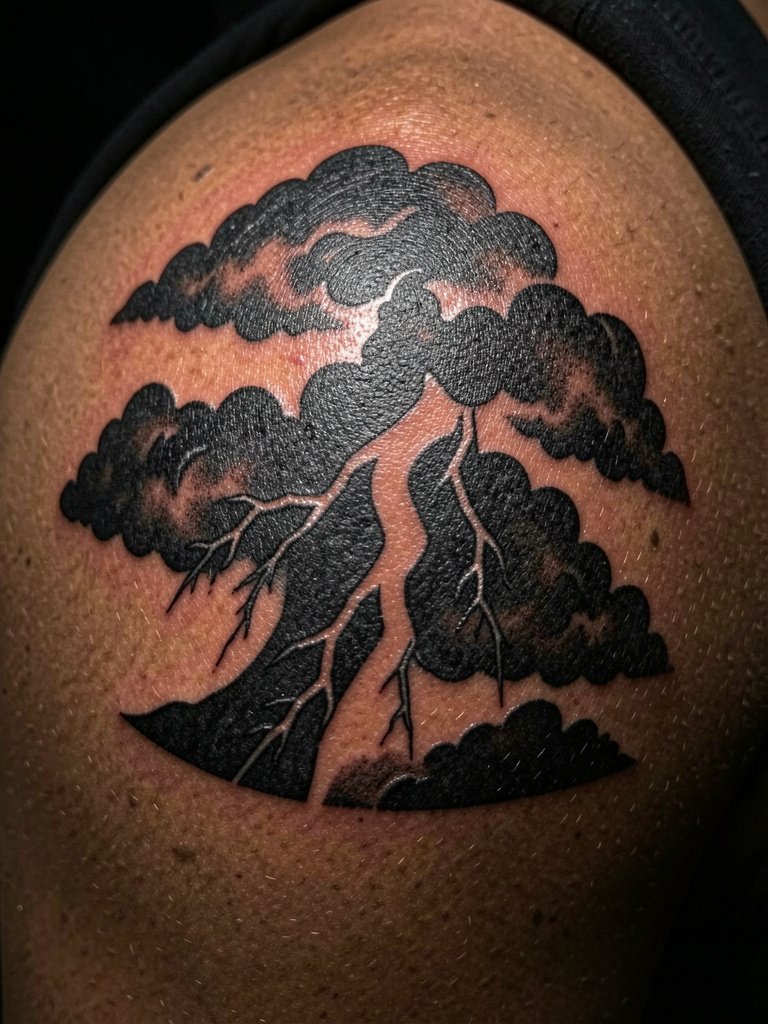
Blackwork creates graphic drama and resists visible aging if saturated consistently. If you prefer the blackfield approach ask about shading technique so adjacent flesh contrast remains. An error I see is patchy fills done in one session that do not heal evenly. Shoulder cap is forgiving for touch-ups but plan for a follow-up to even out saturation. For session comfort wear a tank top so the artist can access shoulder curvature without fabric interference.
18. Minimal Zeus Bolt on Ankle
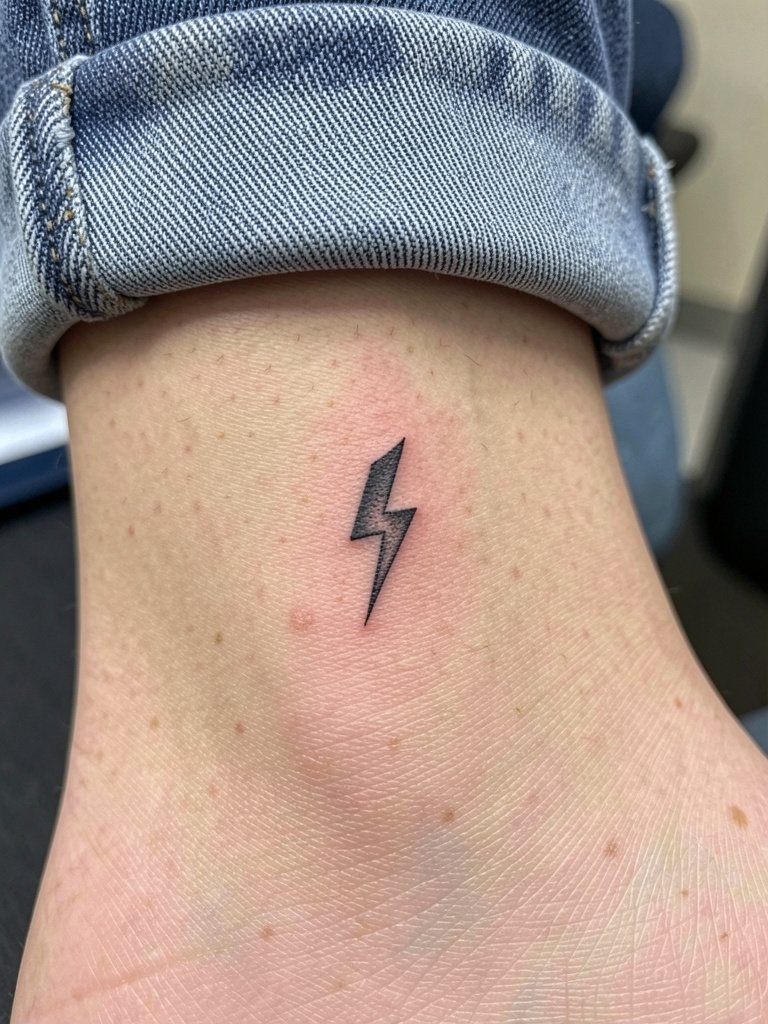
Ankle bolts are discreet and cheap in time but high in friction exposure. The big mistake is putting micro detail where shoe rubbing and socks will blur edges. Ask for a slightly thicker main line and plan for a touch-up after heavy walking seasons. Healing will require careful footwear choices for the first two weeks. For styling pair the ankle work with cropped pants or sandals and grab a pair of cropped straight leg pants to show it off.
19. Ornamental Crest Over the Sternum
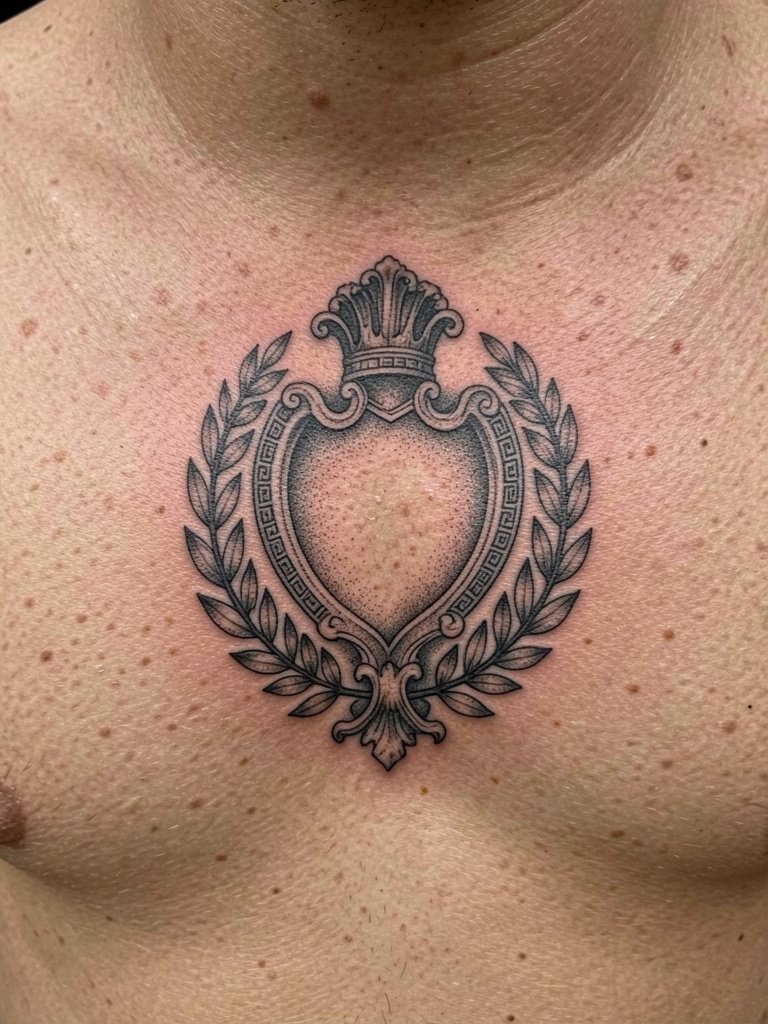
Ornamental crests lend a refined edge and age more cleanly than hyper-detailed faces in small areas. Because the sternum shifts, insist on slightly wider spacing between filigree elements otherwise lines merge. A mistake is requesting ultra-tight Greek key borders that do not hold over time. This placement suits layered necklaces for reveal looks. Pair the piece with a layered necklace set when you want it visible without showing everything at once.
20. Ribcage Storm Scene with Zeus Silhouette
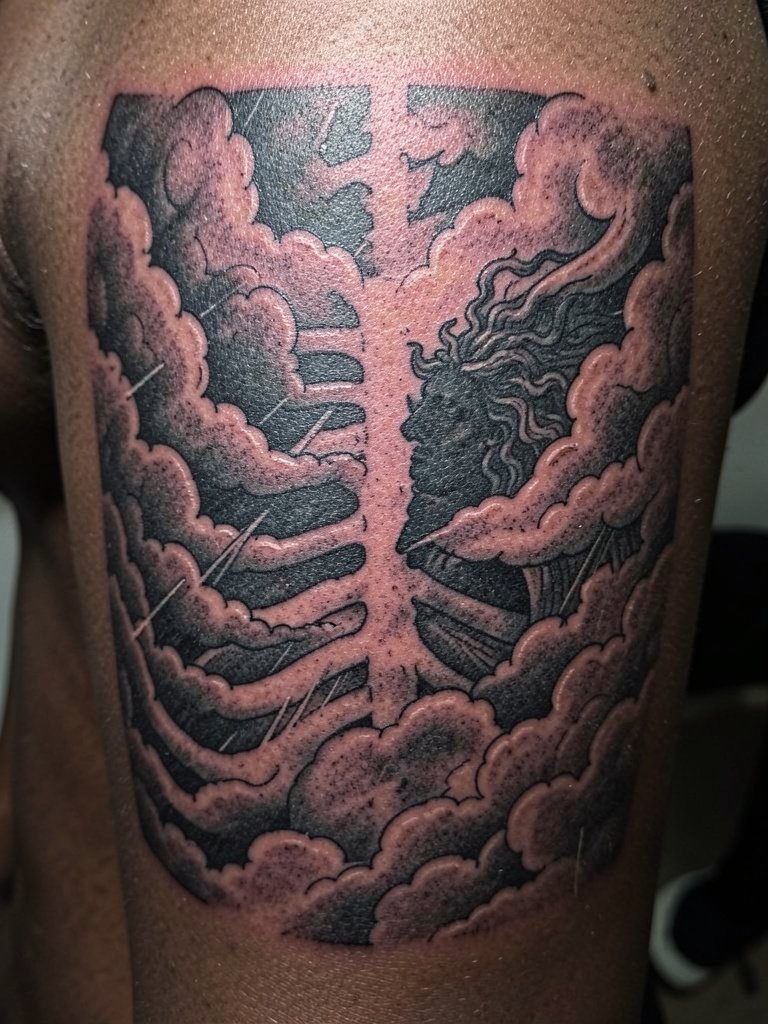
Ribcage drama reads cinematic but healing takes longer and pain is higher. The biggest error is compressing fine facial features into this moving canvas. If you want the silhouette effect ask the artist to design contrast bands so the silhouette remains crisp at 6 months and two years. Plan on staggered sessions and a numbing plan if you need it. Wear an oversized button-down on session day for easy removal and to avoid fabric rubbing during early healing.
21. Zeus Sleeve Centerpiece with Companion Figures
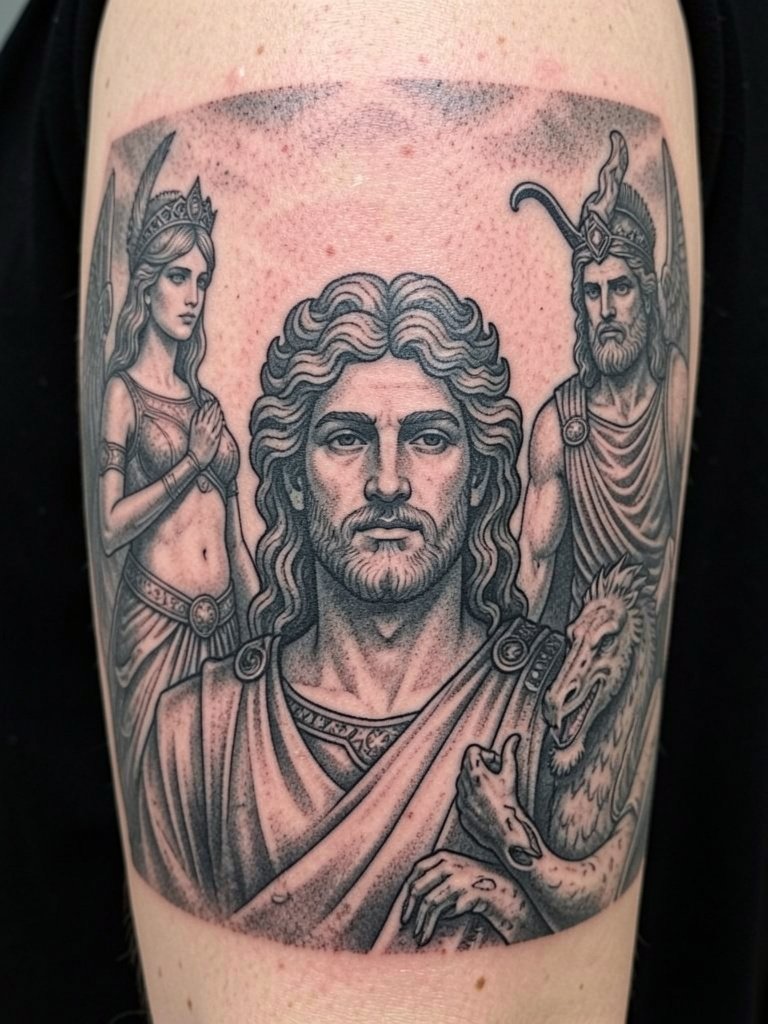
Place Zeus as the visual anchor so companion gods orbit rather than compete. Discuss negative-space templates in the consultation so each figure keeps breathing room as the sleeve grows. People often pick identical-scale portraits for every god which causes visual clutter. Sleeve projects are iterative so expect multiple sessions across months. For showing off pick sleeveless tops and coordinate with trainers who can keep your sessions paced. Bring references that match your desired tonal range.
22. Zeus with Eagle, Large Thigh Panel
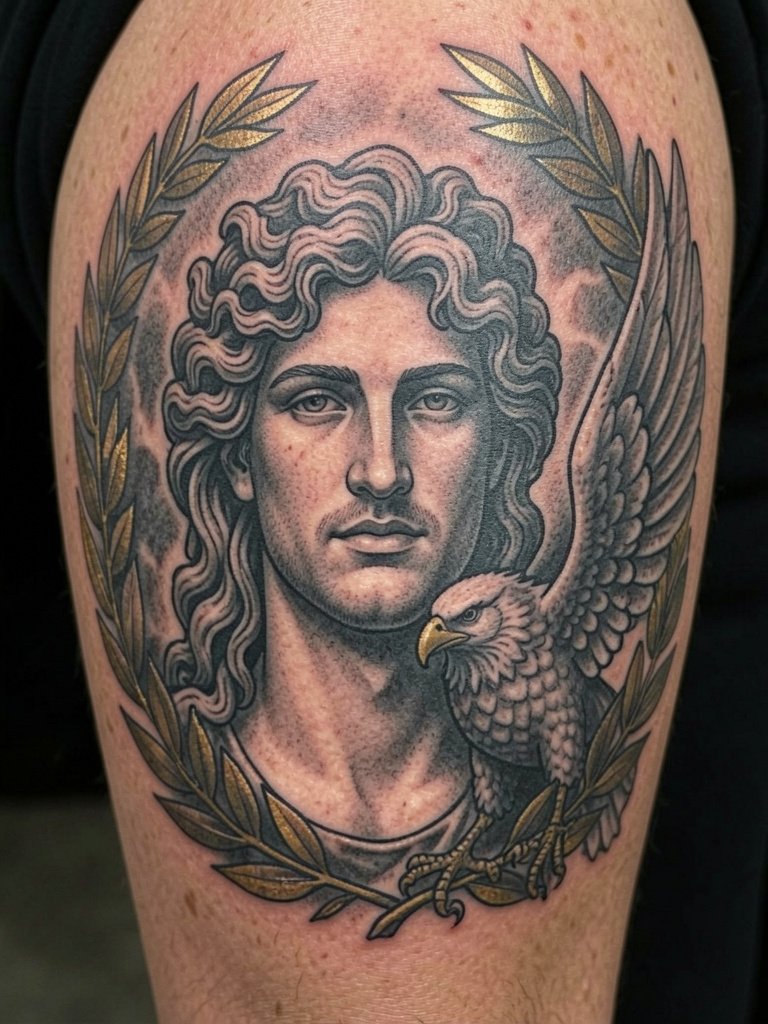
Thigh panels give room for expansive portrait plus animal detail without cramped lines. When requesting an eagle companion specify the feather scale so the artist does not over-detail feathers that will blur near the thigh crease. A practical mistake is scheduling a long single session without breaks which increases swelling and prolongs healing. For the session wear loose shorts or bike shorts so the artist can roll fabric up without pulling. After healing, longer shorts show the panel cleanly.
23. Tiny Zeus Symbol, Inner Forearm Script and Bolt
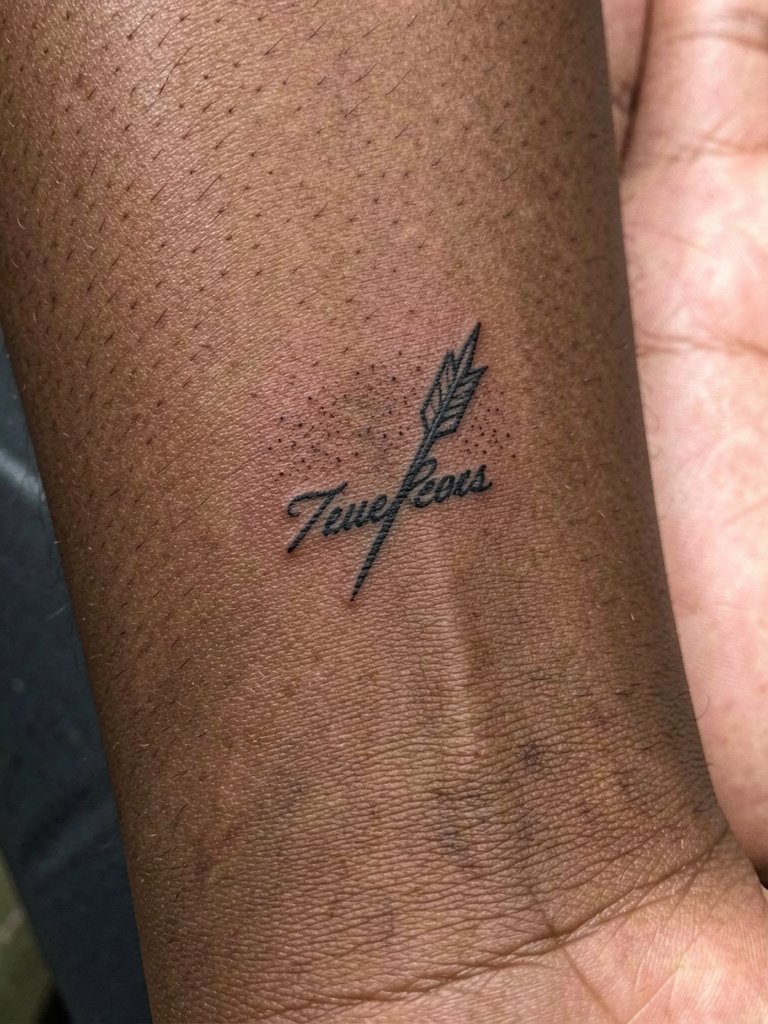
A small emblem pairs a bolt with a one-word script for a compact nod to Zeus. Because the inner forearm sees lots of motion and washing choose slightly heavier script strokes to keep readability. The common error is matching reference script weight exactly which can fade into an indistinct mark. This piece heals quickly but factor in a six- to twelve-month check for crispness. Wear short sleeves for the appointment and avoid bracelets on that arm until the ink has settled. A slim bracelet on the opposite wrist complements the look.
Frequently Asked Questions
Q: How much does a Zeus tattoo typically cost by size and style?
A: Pricing varies by shop and city so expect a wide range. As a practical guide, small minimalist bolts are typically a single short session and will cost much less than multi-session chest or back compositions. For accurate numbers get quotes from local studios with healed portfolios that match the exact style you want.
Q: Should I go color or black and gray for a Zeus portrait?
A: There are two camps on this. One camp says black and gray is safer because the contrast ages predictably and preserves facial detail longer. The other camp prefers controlled color accents because color can add cinematic depth when used sparingly. Think about how visible you want saturation to remain over five years and ask for healed examples in the chosen palette.
Q: Where can I find artists who do Zeus or Greek mythology work without naming specific accounts?
A: Search Instagram and TikTok with tags like #zeustattoo, #greektattoo, and #blackandgreytattoo and filter by location to find portfolios near you. Pinterest is good for composition ideas while Reddit tattoo threads help you spot healed shots and recovery notes. When you find a promising portfolio check for healed photos, not only fresh work.
Q: How do I make a Zeus portrait age better on small placements like the wrist or inner forearm?
A: Plan for slightly bolder main strokes and more spacing between fine details. Tell the artist you want line weight adjusted up a hair for longevity and show a reference scaled to the actual size. Expect touch-ups within the first one to two years for small high-motion spots.
Q: What should I wear to a session for chest, shoulder, and thigh Zeus pieces?
A: For chest book button-down shirts that you can remove cleanly or low-cut tops that expose the sternum without tugging. For shoulder and sleeve work choose tank tops or sleeveless shirts. For thigh work wear loose shorts or bike shorts that roll up without pressure on the area. These choices make access simple for the artist and reduce friction during early healing.