
I spent eight months bookmarking wolf tattoos before getting my first one. The hard part was not picking a cool wolf. It was finding a style that would still look good healed, and one that fit where I wanted it on my body. These 22 wolf ideas are styles artists are tattooing most in 2026, plus a few under-the-radar versions that actually age well.
This list focuses on fine line, traditional, micro-realism, and blackwork wolf designs. Placements range from inner forearm to ribs and full back pieces. From what I've seen, artists are favoring clean line weight and intentional negative space so pieces last longer healed.
1. Fine Line Howling Wolf on Inner Forearm
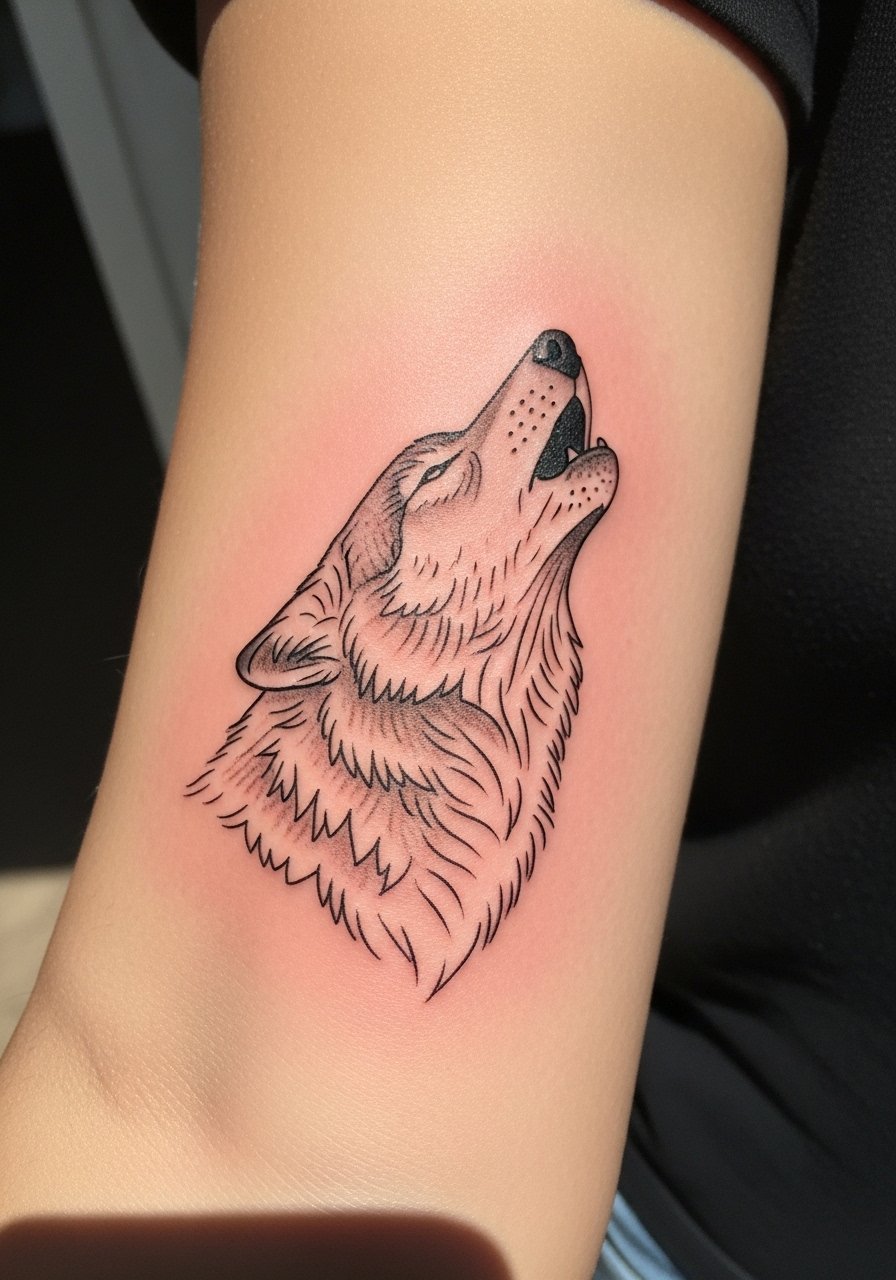
I first saw this style on a friend and loved how readable it stayed after a year. Fine line looks elegant on the inner forearm. Expect low to moderate pain while sitting. A single 1.5 to 2 hour session usually does it. Tell your artist you want consistent line weight and minimal dot shading. A common mistake is asking for ultra-fine lines too small, which blur into a gray patch after two years. At six months the lines soften. At two years you may see slight spread if lines were placed too close. Best for people who want a subtle, wearable wolf that reads like jewelry. For healing stick to a light ointment layer and avoid heavy creams the first week.
2. Neo-Traditional Wolf Head on Chest
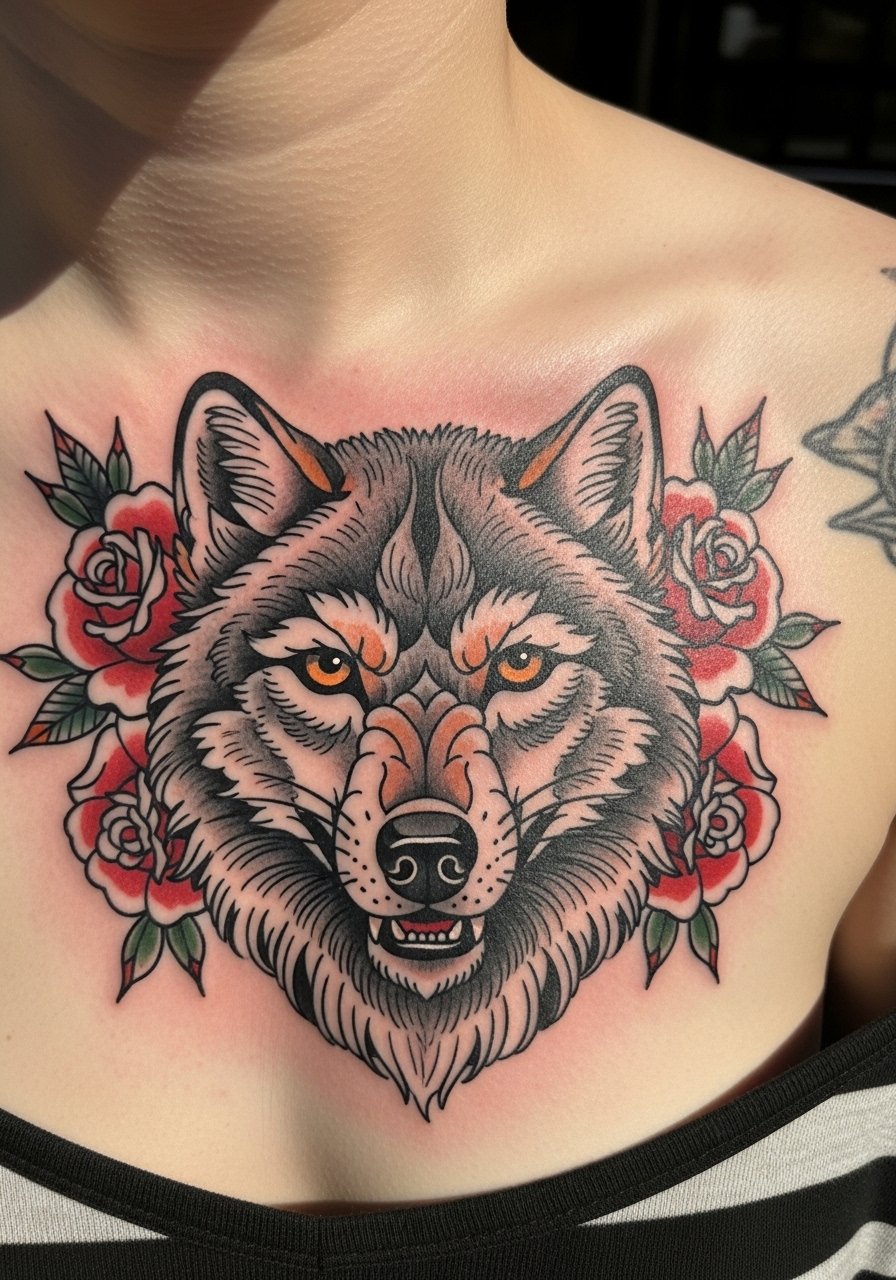
Fair warning, chest pieces can be noisy on the pain scale. I had clients tell me the sternum area stings more than the outer chest. Neo-traditional uses heavy outlines and saturated fills, so it looks great fresh and keeps structure as it heals. Plan two sessions for a medium-sized chest piece. Ask your artist for bold contrast between the dark outline and mid-tone fills. Many people make the mistake of shrinking the design too much for the chest. Neo-traditional needs room to breathe. After three months the color will soften but still pop if the black lines are solid. This design works well if you want a bold wolf that reads from across a room.
3. Blackwork Geometric Wolf on Upper Arm
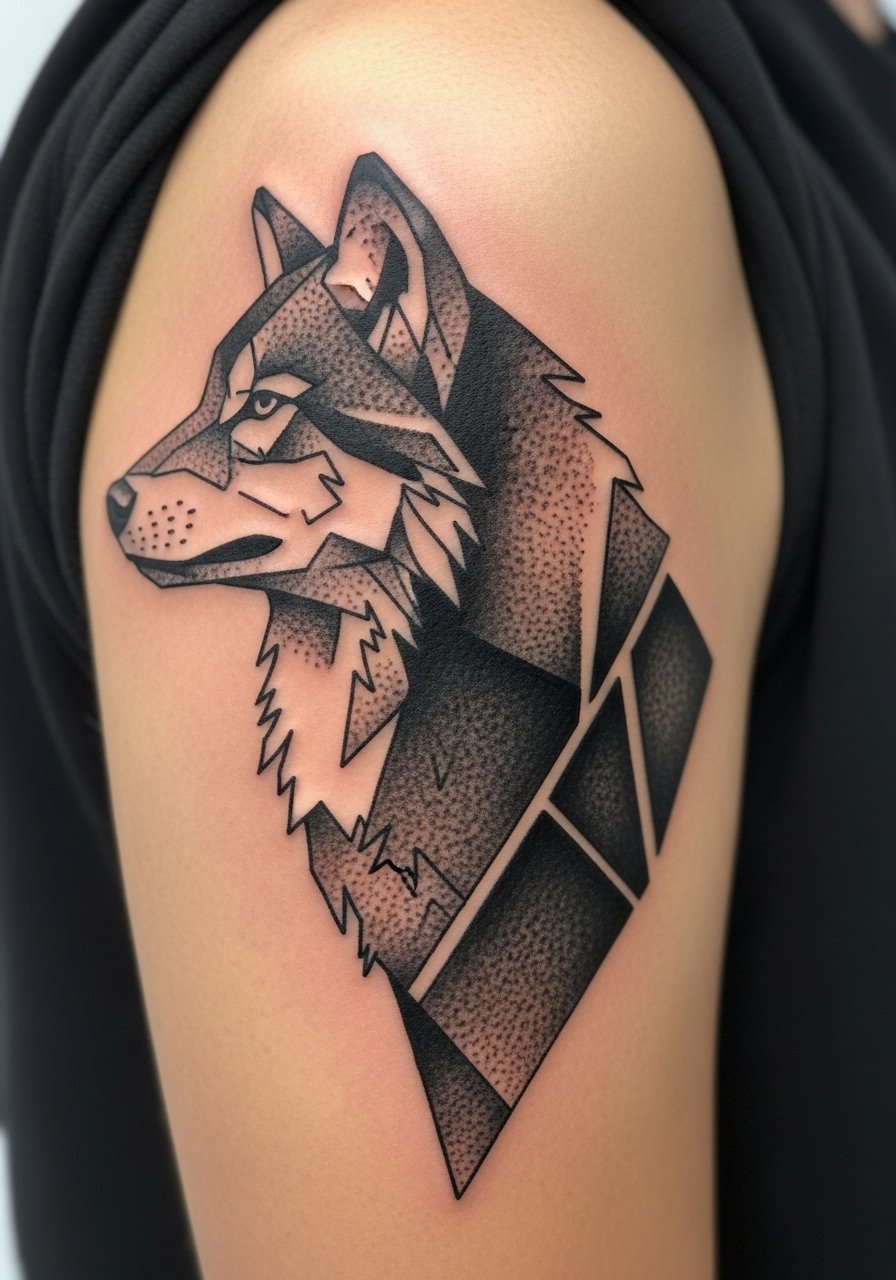
There's something about heavy black shapes that reads powerfully. I recommend this for someone who wants graphic presence without color. Upper arm pain is moderate. A single 2 to 3 hour session often covers a medium area. When you consult, bring images with the exact line thickness and negative space pattern you prefer. A frequent error I see is getting tiny geometric details that become muddy after a year. If you want the same wolf on the forearm it will need simpler shapes to avoid blurring. Blackwork holds up well if lines are bold and spacing is generous. Ask for denser black in the first pass to prevent patchy fill later.
4. Micro-Realism Wolf Portrait on Thigh
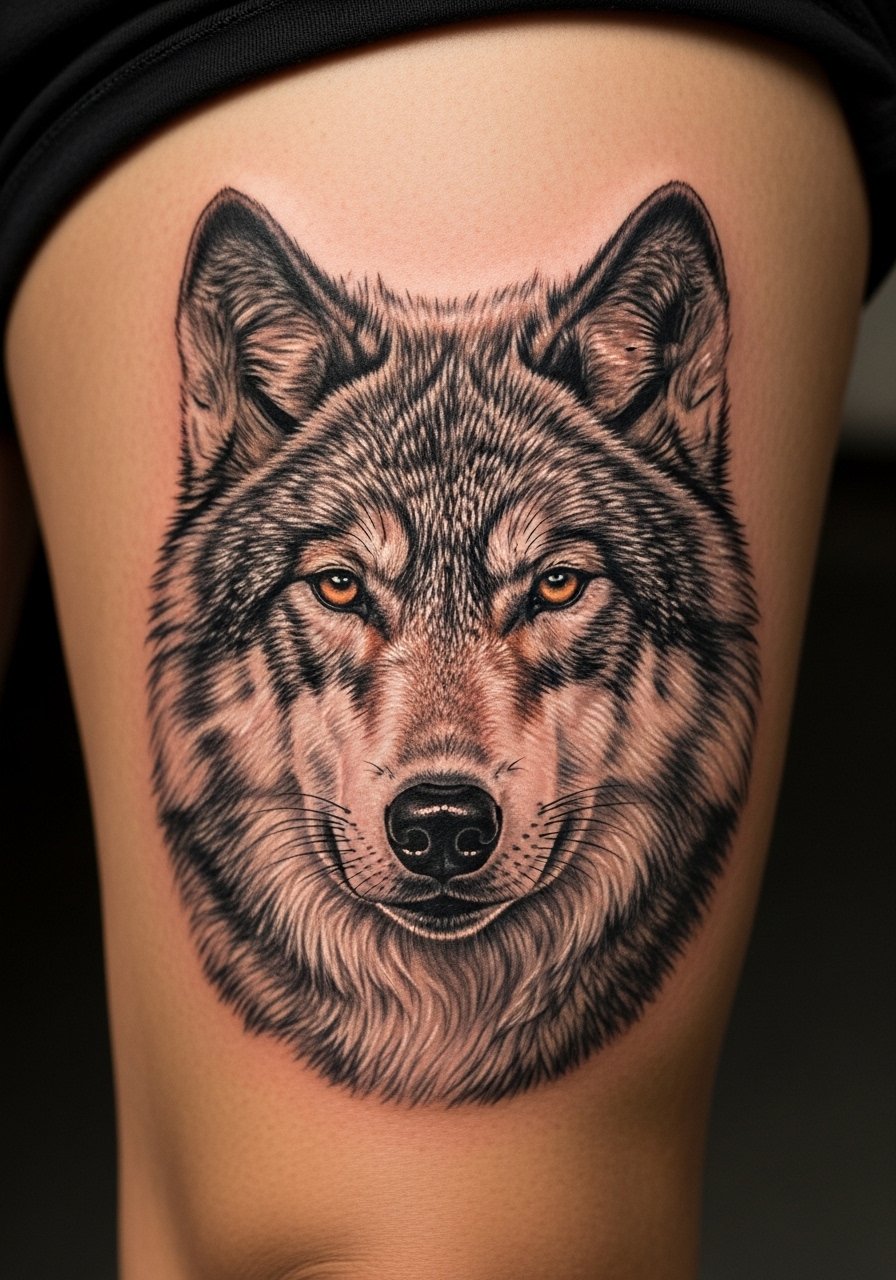
I remember seeing this at a convention and being struck by how lifelike it looked even after months. Thighs are great for long sessions and higher pain tolerance. Micro-realism demands a skilled hand and patience. Expect 3 to 5 hours for a finely detailed portrait. Tell the artist you want a strong focal point, usually one eye, and softer edges around the muzzle so it ages like a photograph, not a smudge. A common mistake is compressing too much detail into a small size. At six months the fine hairlines settle and the portrait softens. At two years, if the tonal work was balanced, the piece keeps its depth. Best for collectors who can commit to a longer session.
5. Watercolor Wolf With Night Sky on Ribcage
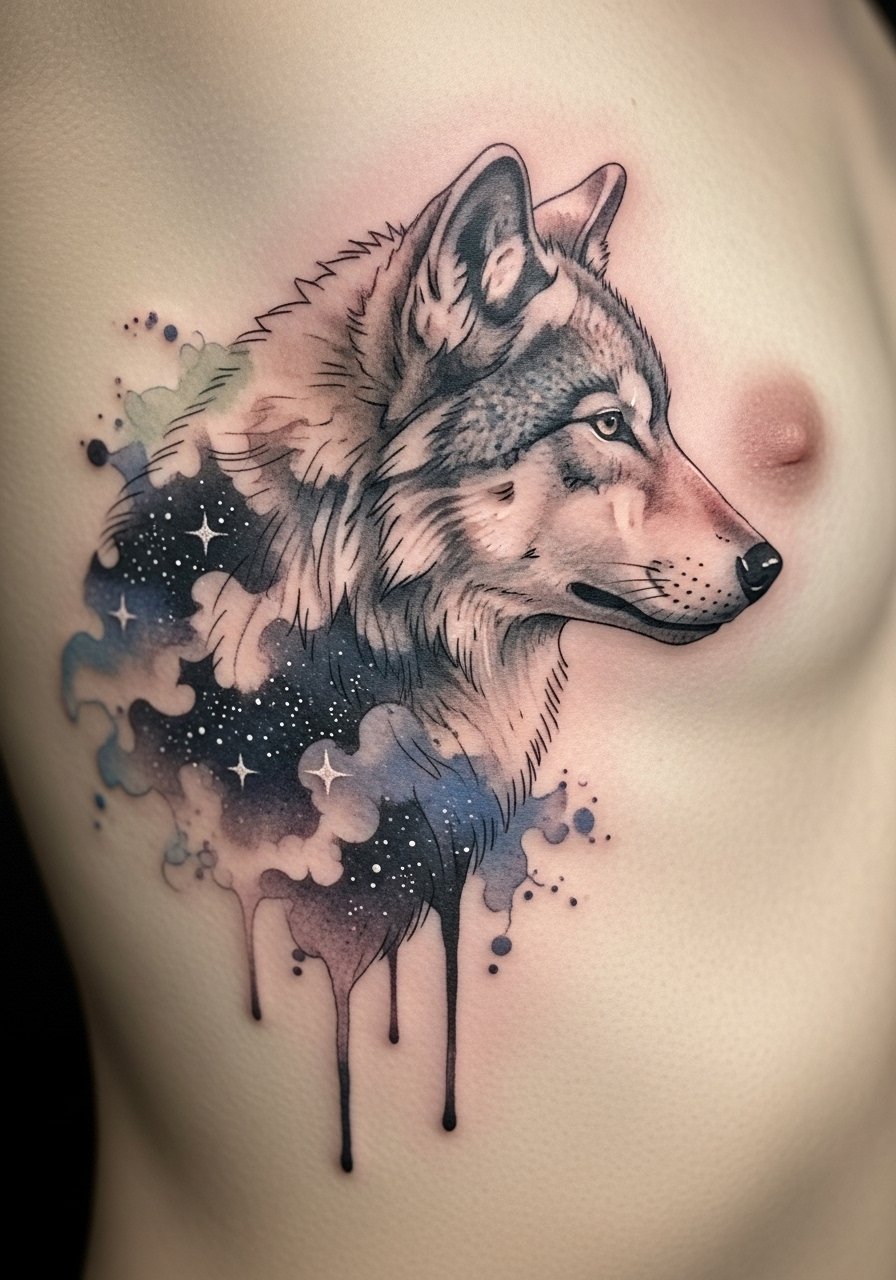
Fair warning, the ribcage is high on the pain scale. I sat through a rib session and it was intense. Watercolor techniques look ethereal on ribs because the body surface curves and the colors flow. Ask for slightly more pigment saturation than you think you need. Many watercolor pieces from years ago faded into faint stains because artists under-saturated. At six months the colors will bloom and then slowly soften by two years. If you want longevity, pair watercolor with fine black anchor lines, and tell your artist to protect contrast. Saniderm can help during the first 48 to 72 hours. I use a light balm after the first week to preserve color. Mad Rabbit Tattoo Balm, 2 oz.
6. Minimalist Line Wolf Behind Ear
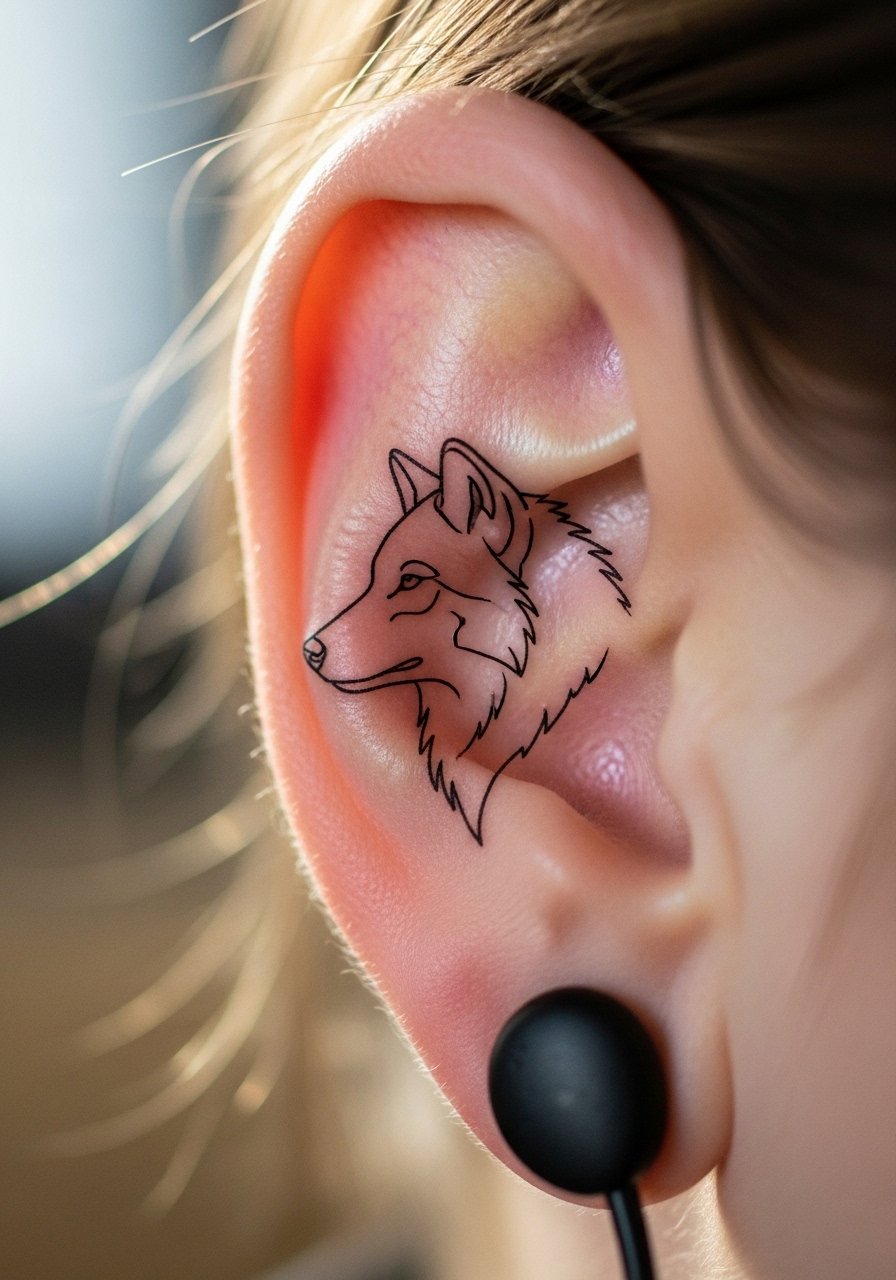
I like how discreet this placement is. Behind the ear is sensitive, so expect sharp short stings. Sessions are brief, often under 30 minutes. Minimalist line art needs consistent depth and a steady hand. Ask the artist for slightly thicker lines than a hairline so the tattoo doesn't vanish after a couple of years. A mistake is asking for ultra-thin lines placed too close to cartilage. At six months the lines will soften and may blur a bit. This idea is best for someone who wants a tiny statement. Avoid excessive detail or script here. Keep it simple and plan for touch-ups as the years go by.
7. Dotwork Mandala Wolf on Sternum
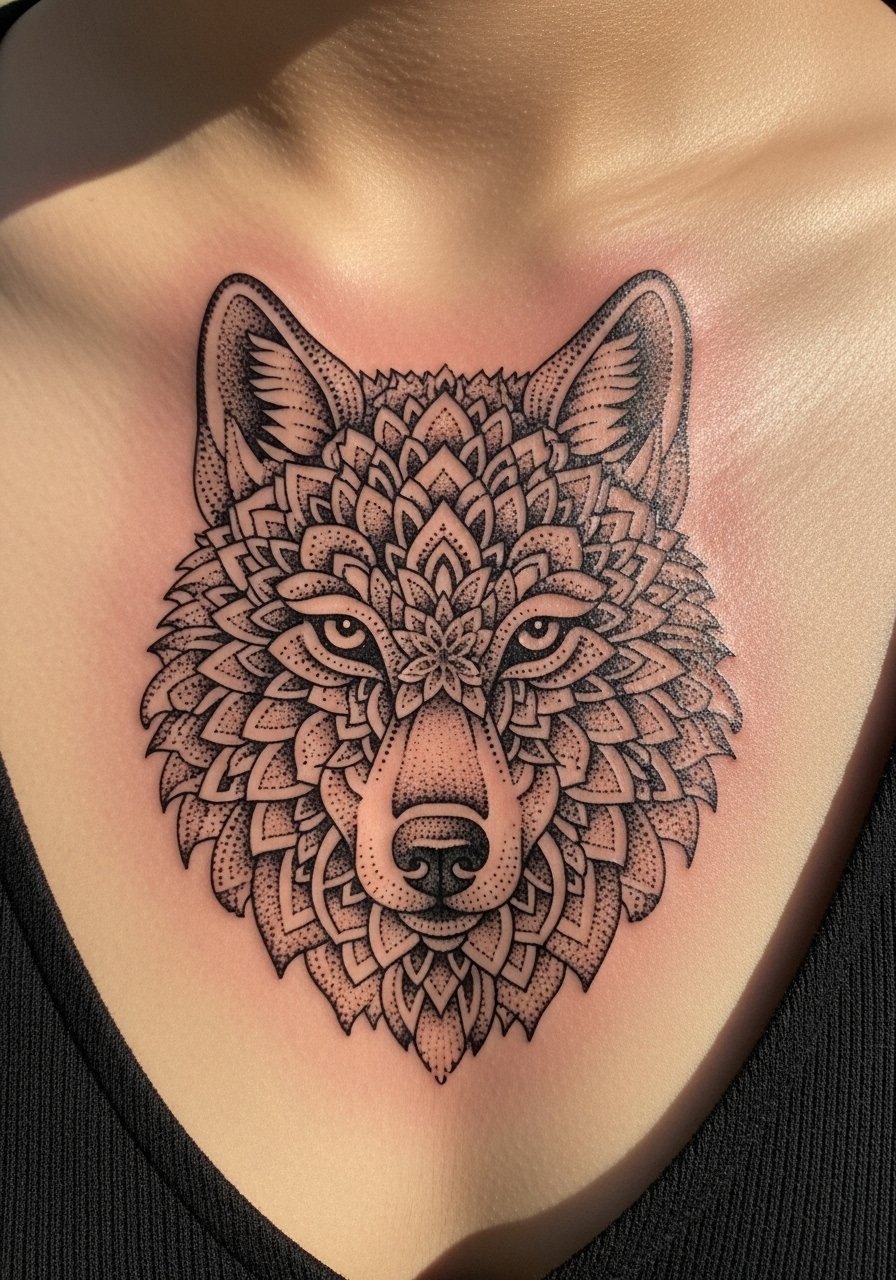
I first noticed dotwork mandala wolves at a tattoo jam and I was impressed by the visual depth. Sternum dotwork can be sore, especially near bone. A session might take 2 to 4 hours depending on size. Tell your artist you want consistent dot density and clear negative space for the mandala to breathe. A common error is cramming too many dots into a small area, which makes the design read as gray after healing. At six months stippling merges subtly. At two years the piece still holds pattern if spacing was planned well. This is a good choice if you want a spiritual, symmetrical wolf motif that feels meditative.
8. Japanese Irezumi Wolf Back Piece
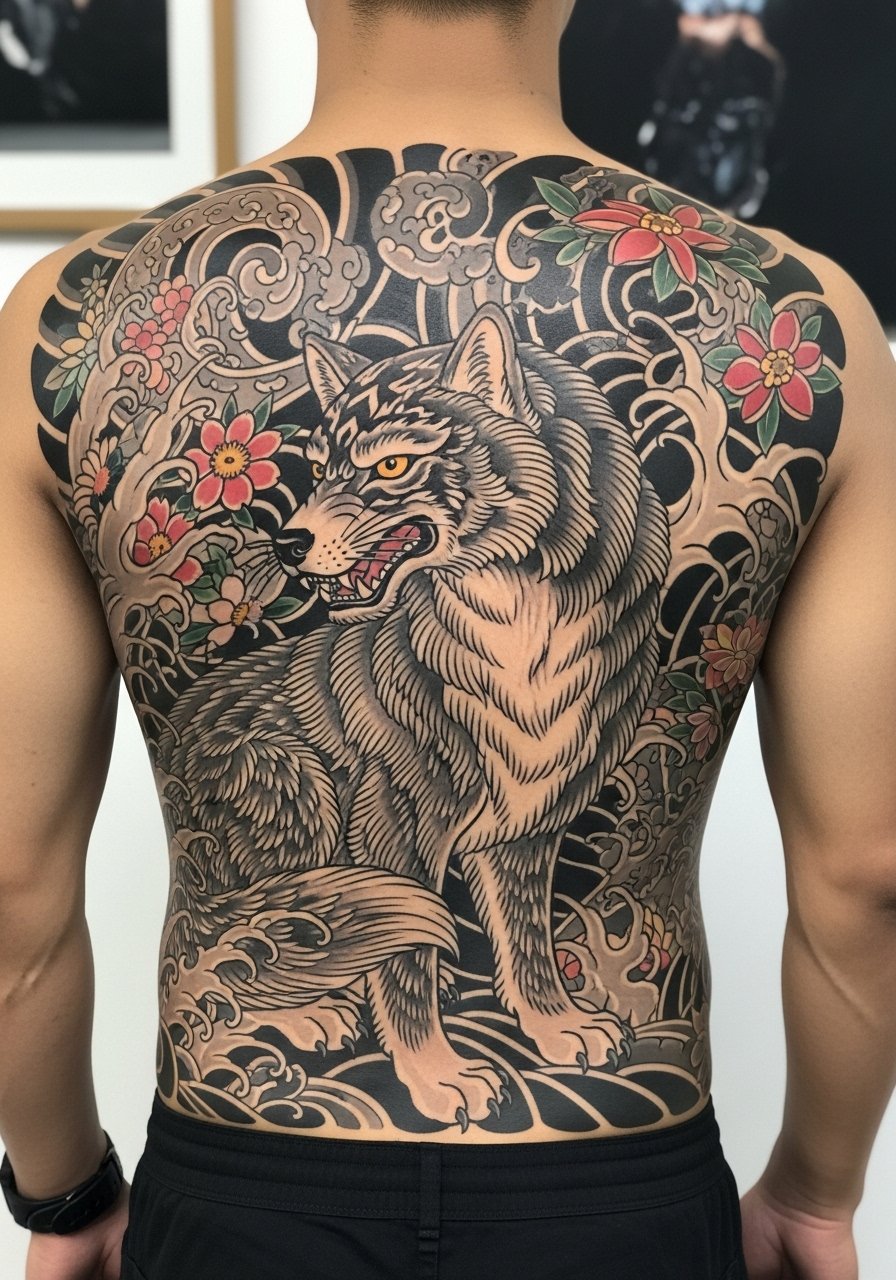
When I saw my first Irezumi wolf I liked how it told a story across the body. Full back pieces are a commitment and are high pain in certain zones. Expect multiple sessions over months. Irezumi thrives on flow. In your consultation show how you want the wolf to move with your spine and shoulder blades. A common mistake is forcing symmetry that fights body contours. Irezumi ages gracefully when the outlines are strong and the background is bold. After a year the colors settle and the composition reads as a single image. This design is best for someone ready for long-term projects and who wants mythic presence.
9. Surrealist Moon Wolf on Calf
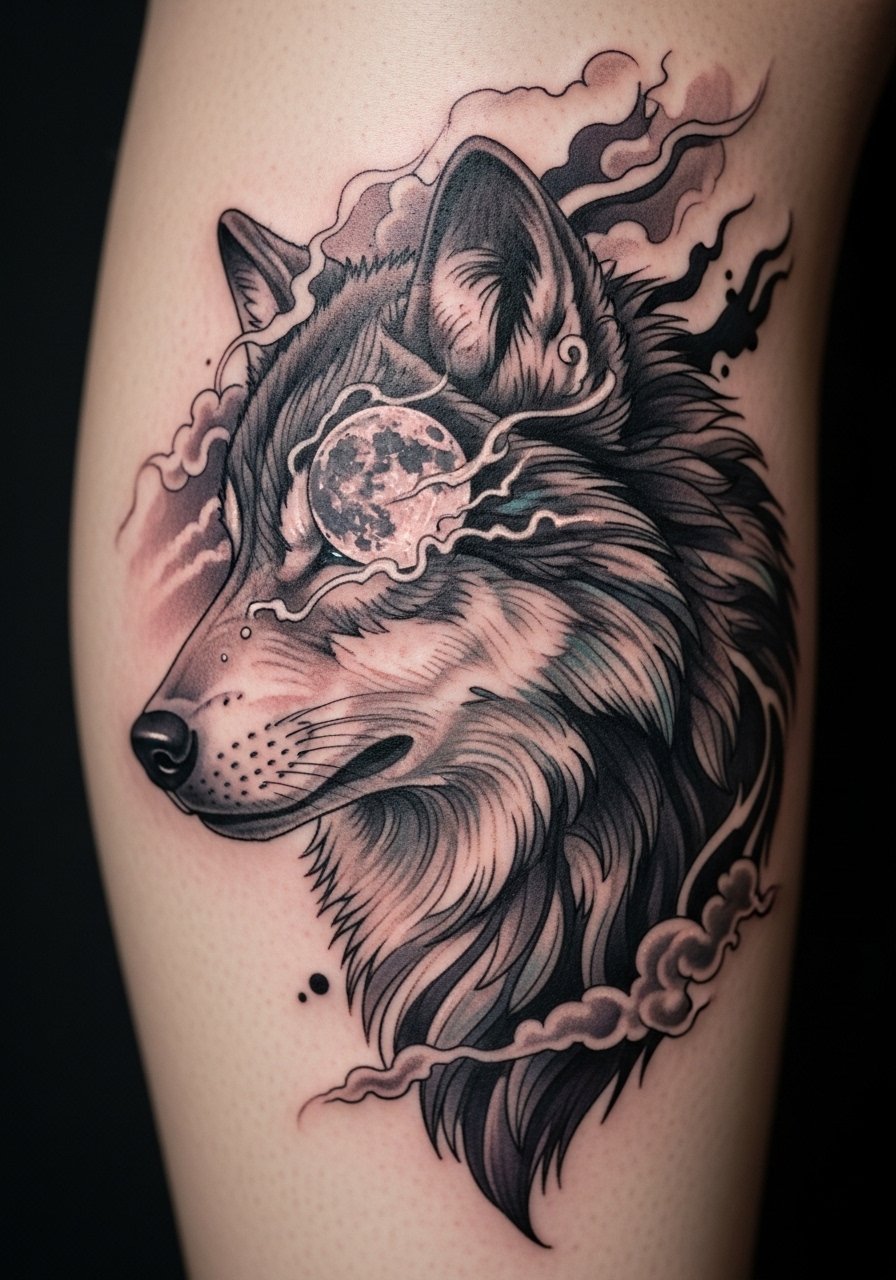
I picked this after seeing a piece that combined a wolf silhouette with a textured moon. Calf placement is easier to tolerate than ribs or sternum. Sessions are moderate in length. Tell the artist you want clear separation between the wolf and moon elements so the image still reads when standing. A common error is letting both elements merge without contrast. At six months gradients will blend. At two years you should still see the separate shapes if contrast was planned. This is a great pick if you want a slightly artistic, modern wolf with night-sky symbolism.
10. Tribal Polynesian Wolf on Shoulder Blade
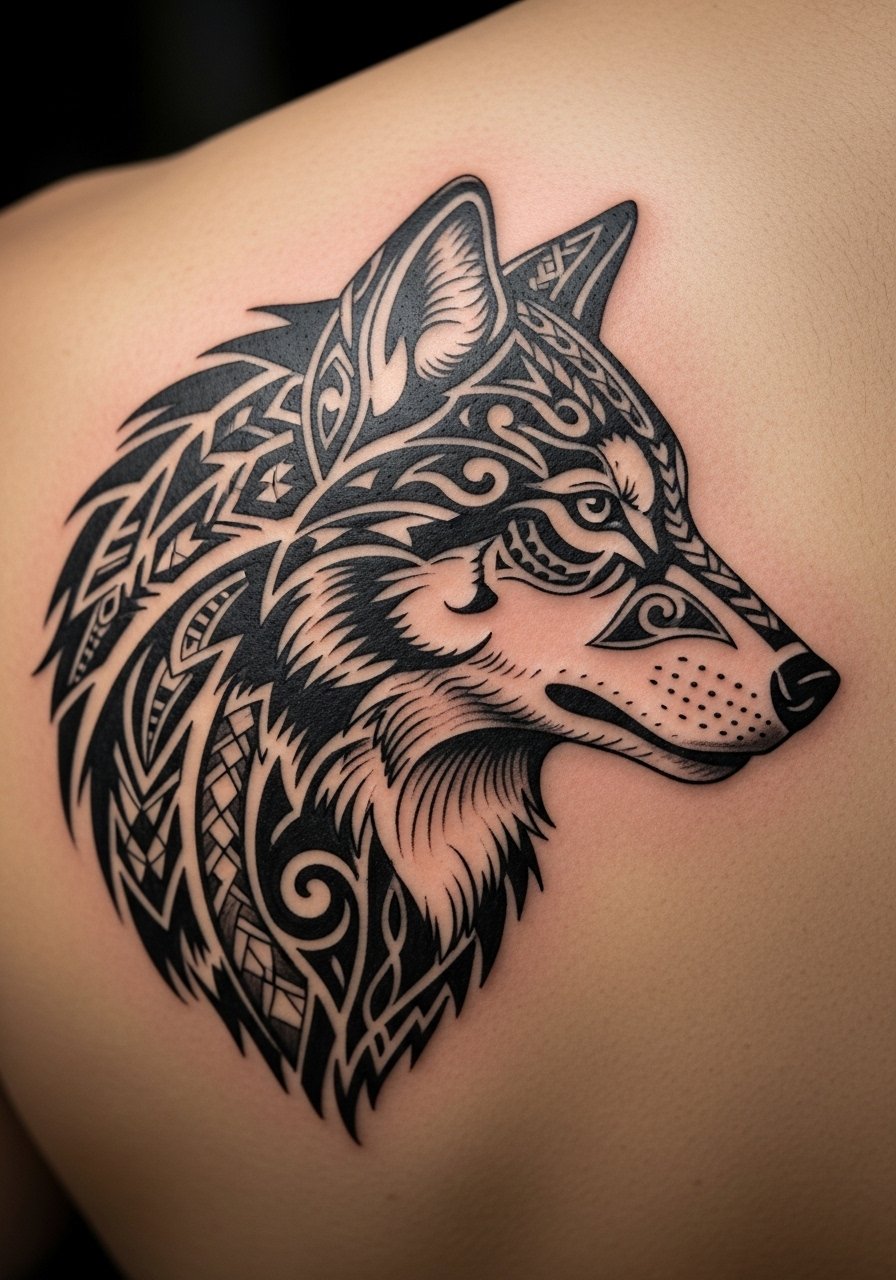
I recommend cultural designs only with an artist who understands the tradition. Shoulder blades tolerate sessions well. Tribal motifs need proportional elements to work with muscle flow. Bring references and be explicit about which symbols mean what. Many people make the mistake of copying patterns without understanding spacing, which can distort with movement and age poorly. At six months the bold black keeps shape. At two years the heavy black usually holds if applied with correct spacing. If you choose a Polynesian approach, find an artist who honors the culture and can adapt patterns to your anatomy.
11. Single-Needle Wolf Portrait on Wrist
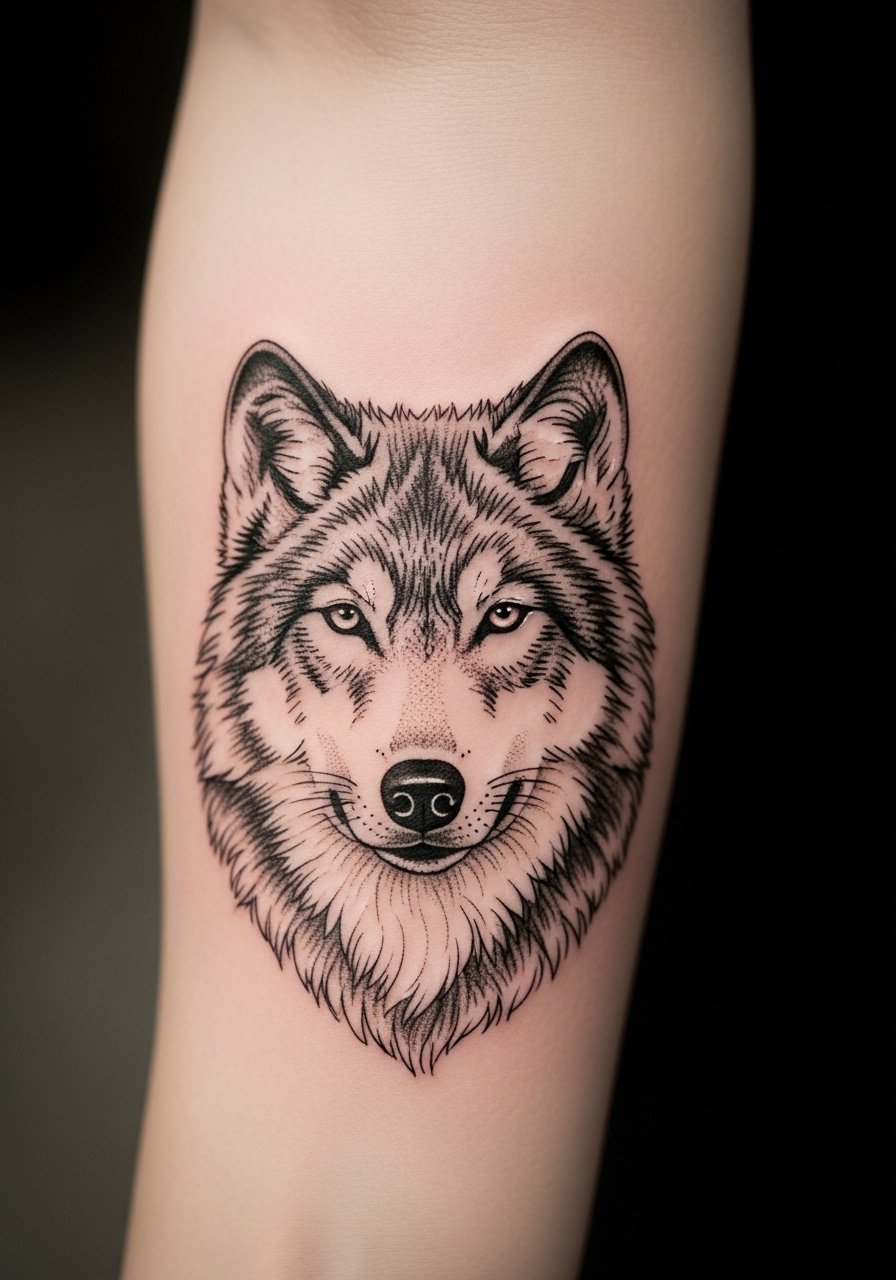
A wrist portrait reads very intimate. From what I've seen, single-needle portraits there look elegant for a year, but need micro touch-ups later. Wrist pain is moderate to high because of thin skin. Sessions are short, often under 90 minutes. Tell the artist you want a focal highlight in the eye and softer edges to avoid heavy contrast. A typical mistake is overworking the wrist, making the portrait too dark and muddy after healing. At six months the detail will mellow. At two years expect the lightest hairs to blur. For maintenance, consider a gentle balm like Hustle Butter Deluxe, 5 oz during the first month.
12. Negative Space Wolf Paw on Ankle
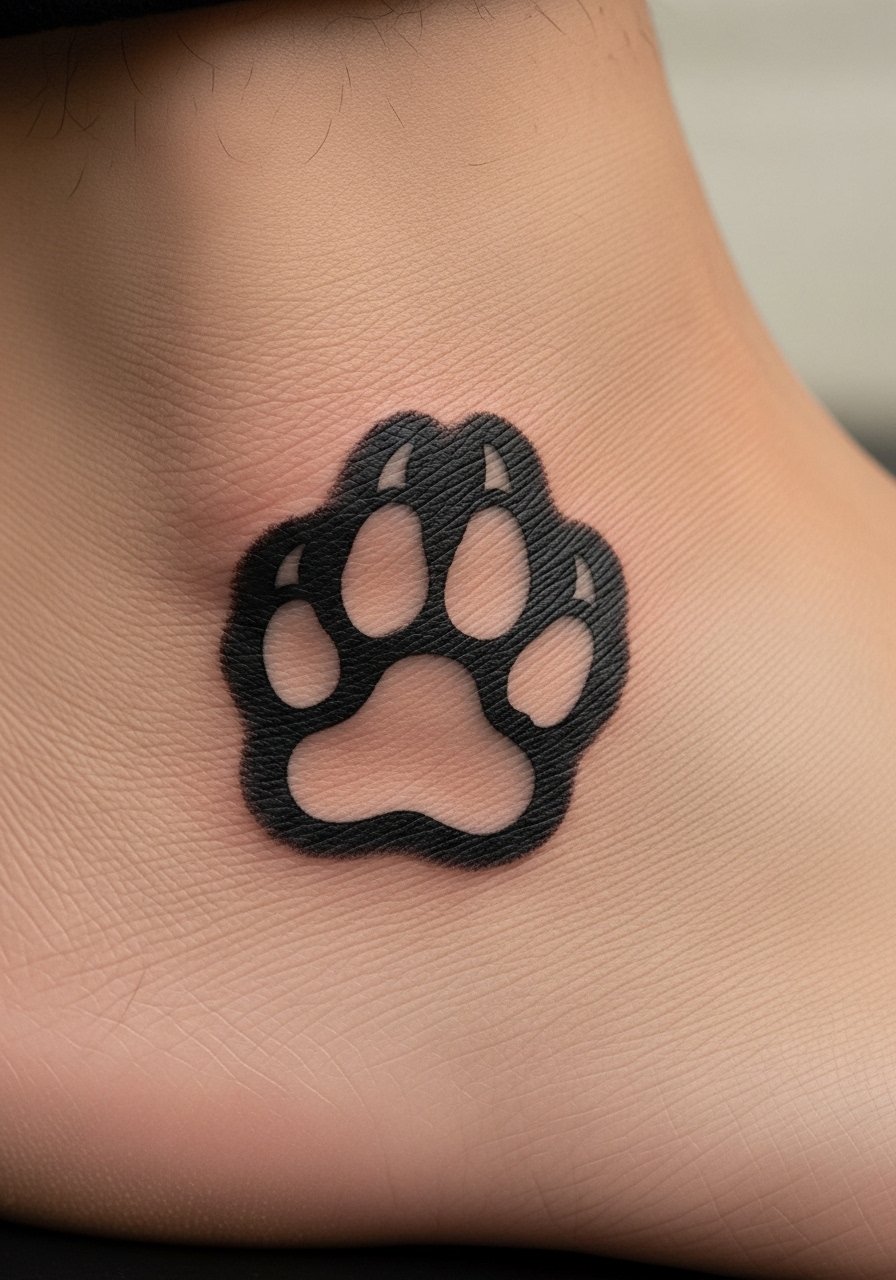
I like negative space for small placements. The ankle is bony, so pain spikes when needles hit bone. Sessions are short. Negative space works well here because it uses the skin as the image. Tell your artist you want sharp edges and a clear border. Many people make the mistake of adding too many tiny lines inside the negative area. At six months the contrast is still clear. At two years, if the black stays dense, the paw remains readable. This is a low-maintenance option that still reads bold and symbolic.
13. Scripted Wolf With "Memento Mori" on Ribcage
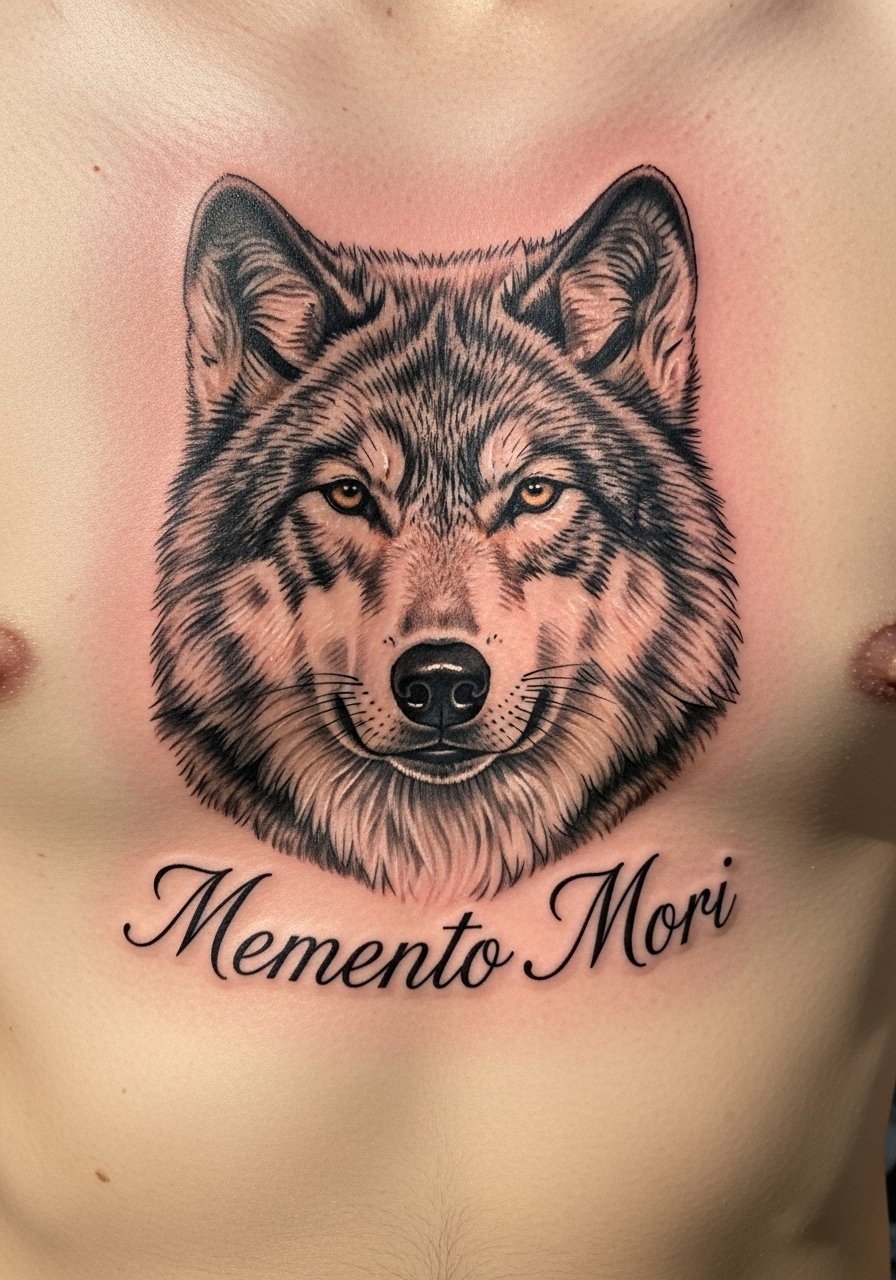
I chose the ribcage for the drama. Pain is high there, so plan accordingly. Combining a portrait wolf with the phrase "Memento Mori" gives a classical vibe. Tell your artist you want the script weight matched to the portrait so neither overpowers the other. A mistake I often see is script too small on ribs which fades into an unreadable line in two years. At six months the letters will soften. At two years, if the script had enough weight, it's still legible. If you want a phrase, pick one short line and ensure spacing is generous. Saniderm for the first 48 hours helps keep the script crisp.
14. Double Exposure Forest Wolf on Upper Back
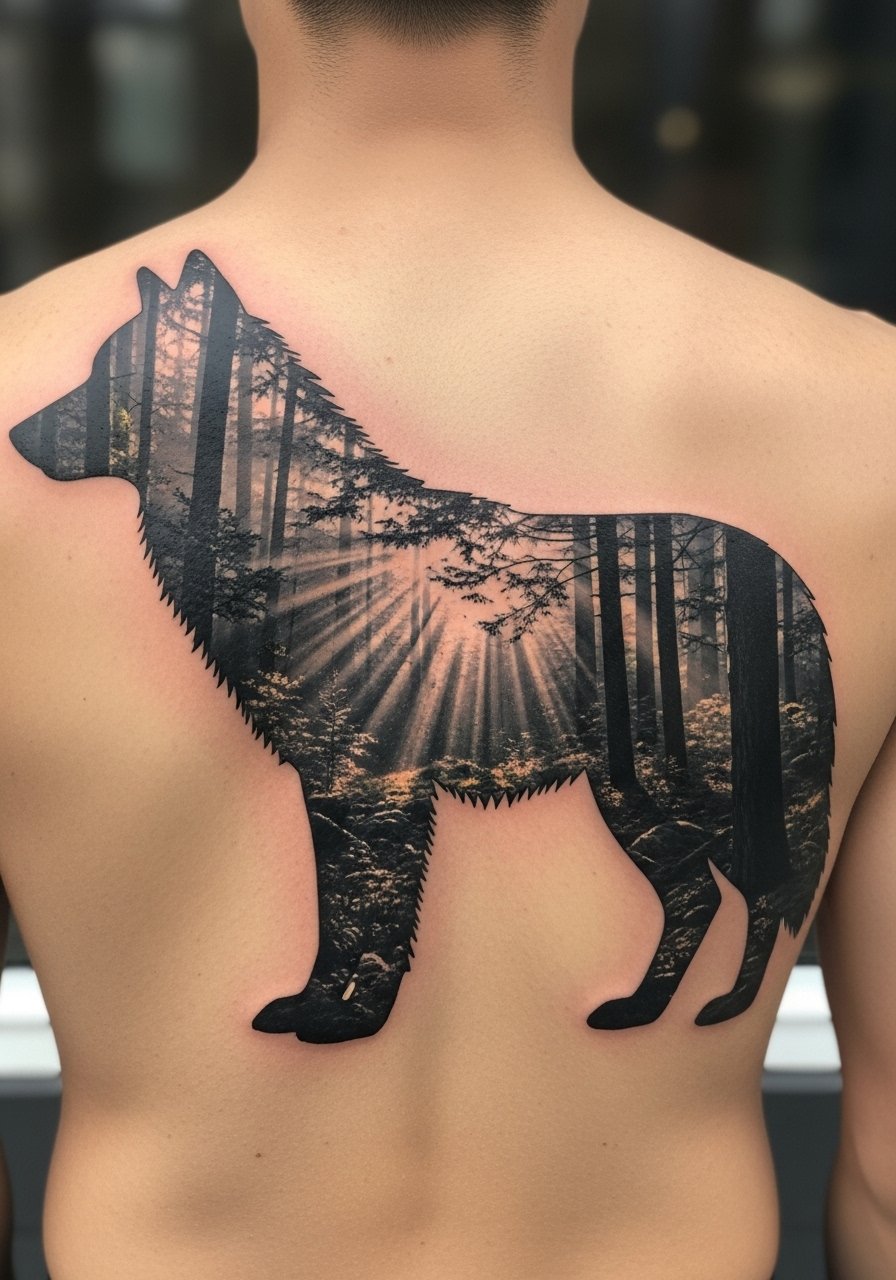
When I first saw a double exposure wolf I thought it was photography, not ink. Upper back gives a wide canvas. Sessions are multiple and can total 4 to 6 hours. Ask your artist to plan the silhouette and forest contrast so each layer stands alone. A common mistake is blending the layers too much, which makes both images unreadable after healing. At six months the forest texture will soften while the silhouette keeps shape. At two years, touch-ups may be needed on mid-tones. This is for someone who wants narrative depth and a tattoo that reads differently from each angle.
15. Realistic Wolf Eye on Hand
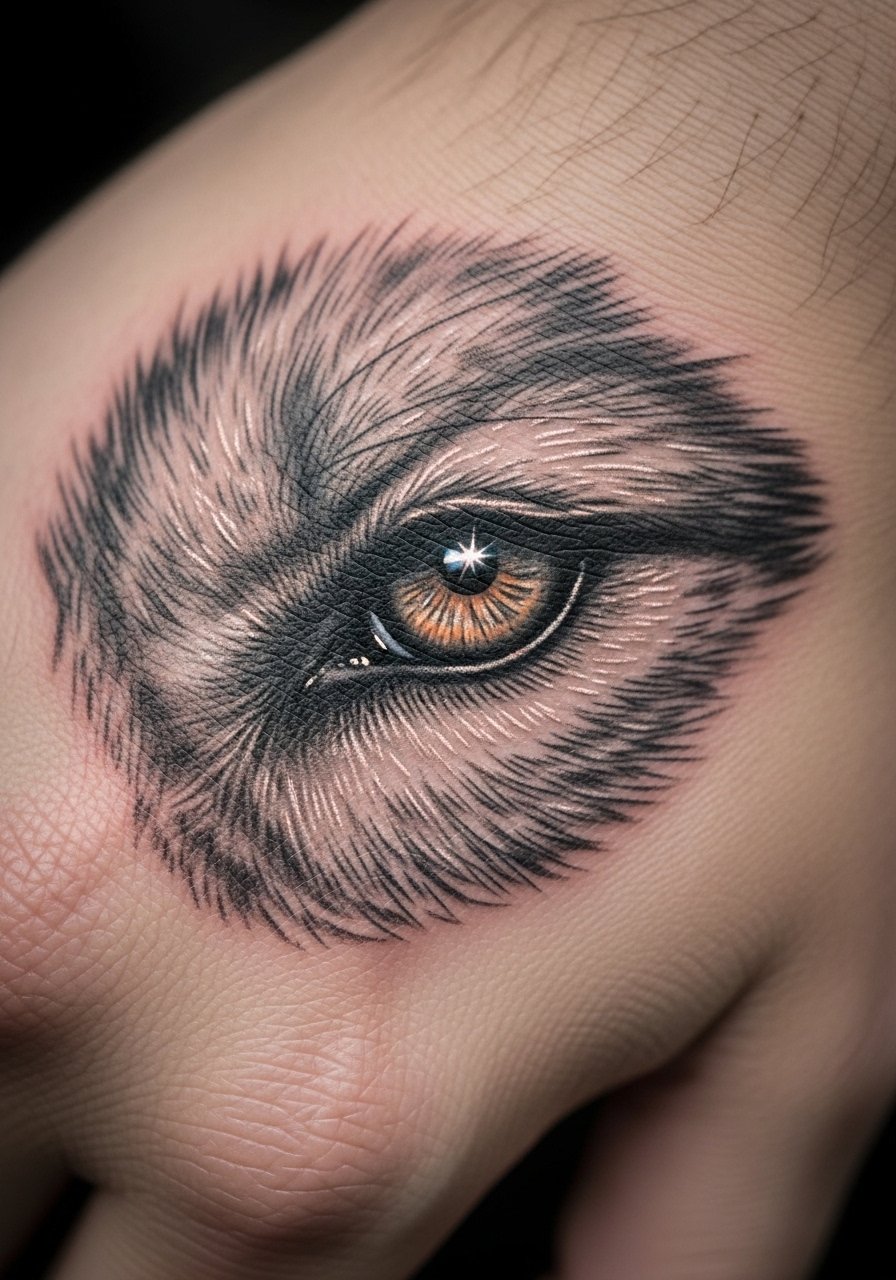
Hands are notorious for fading. I've seen bold hand tattoos lose crispness within a year. A realistic eye is striking but high maintenance. Expect quick sessions and sharp pain. Ask for a compact design with heavy contrast so the center detail keeps integrity against daily wear. The mistake is packing fine detail across knuckles. At six months the eye should still read if the black was solid. At two years you will likely need annual touch-ups. This is not a honeymoon placement. Choose it if you accept maintenance.
16. Botanical Wolves Full Sleeve
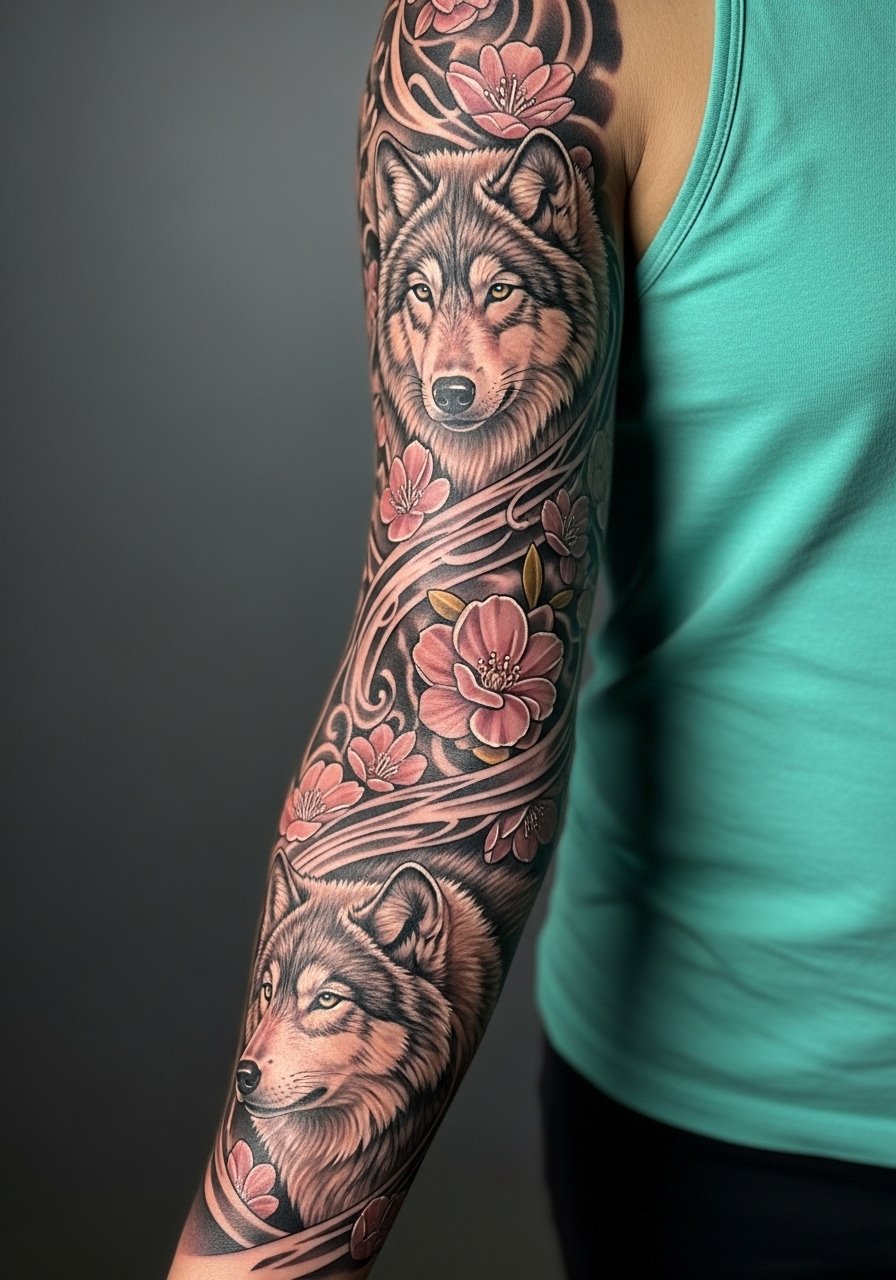
I saw a sleeve like this that told a seasonal story across the arm. Sleeves demand planning. Pain varies as the session moves across inner arm and elbow. Multiple long sessions are normal. Tell the artist how you want the wolves integrated with the plants, and mark where you want negative space to prevent overcrowding. A frequent error is filling every inch with detail, which ages into a muddy band. At six months the composition reads clearly. At two years continuity depends on contrast in the initial pass. This works for collectors who want narrative and botanical softness around the wolf elements.
17. Neo-Traditional Lone Wolf on Hip
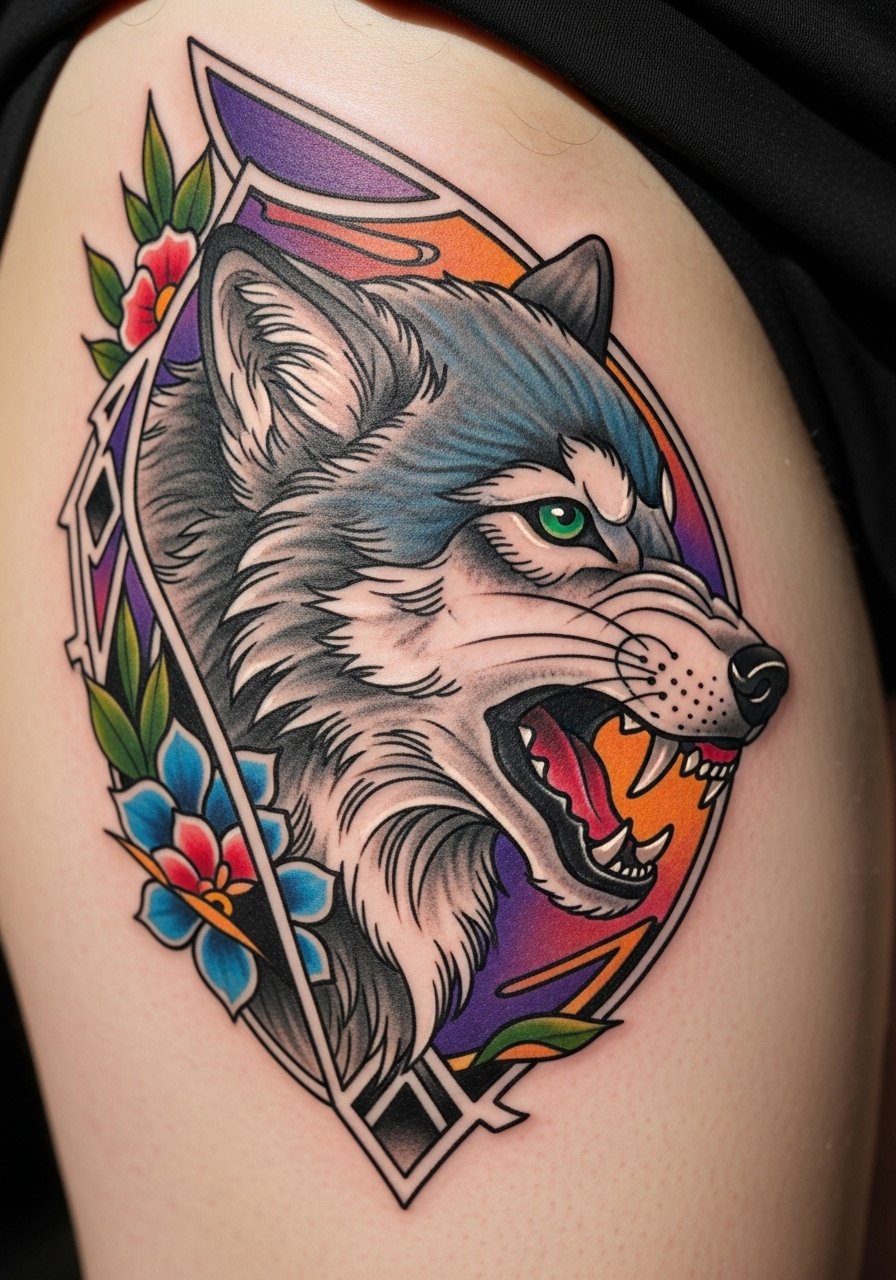
Hips are sensitive, especially near bone. I found neo-traditional styling sits well there because the bold lines anchor the color. Sessions are medium length. During consultation ask for a composition that curves with the hip so the wolf looks upright when you stand. Many people request too fine details on the hip and then notice blurring with clothes rubbing. At six months the jewel tones soften. At two years the bold outlines preserve the shape. This is a sexy, private placement for someone who wants a standalone statement.
18. Silhouette Running Wolf Along Collarbone
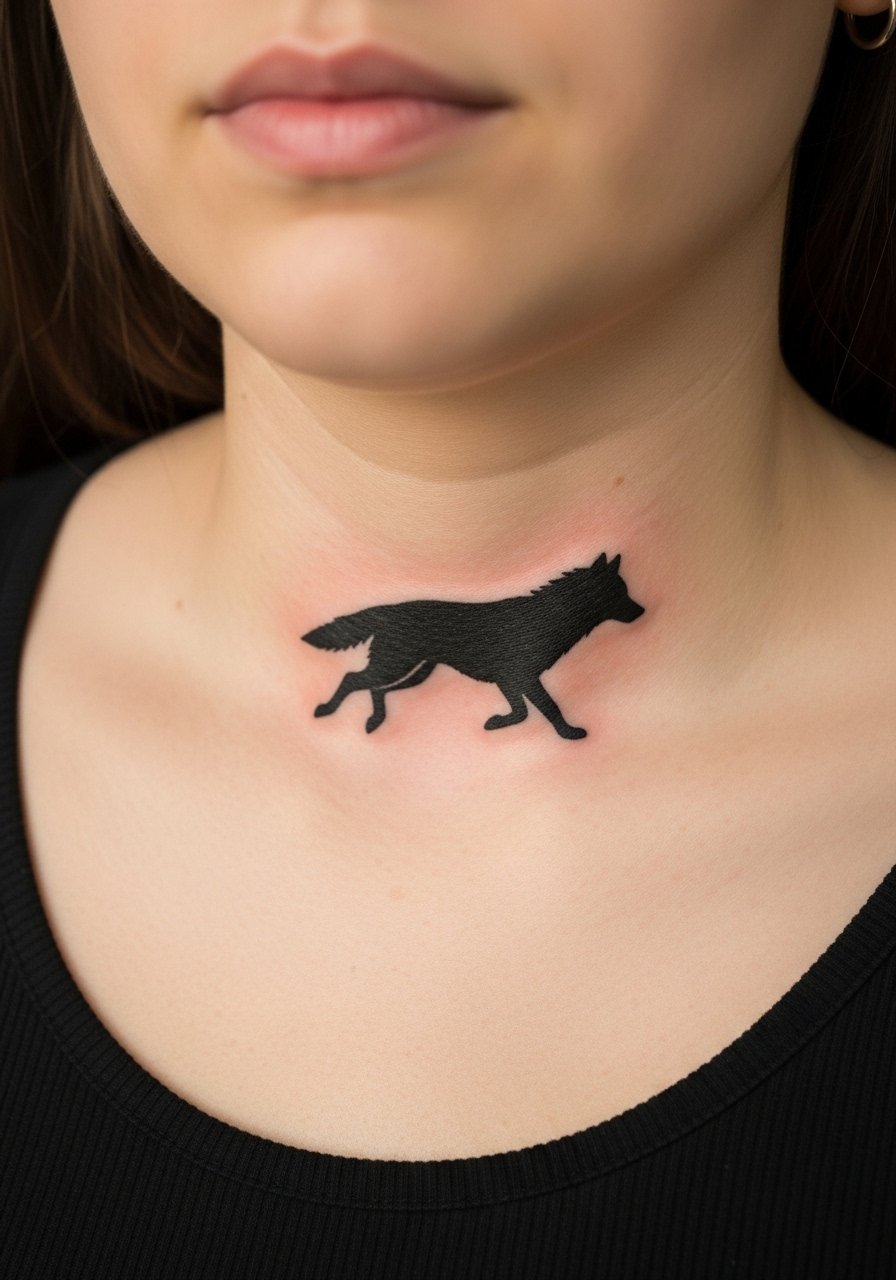
I like collarbone silhouettes for movement. Pain is moderate and sessions are short. This design reads well with a minimal silhouette because your collarline creates natural flow. Tell the artist to size the wolf so it follows the collarbone curve and not cut off at shoulder joints. People often make the mistake of centering the wolf too high or too low which breaks the illusion when moving. At six months the silhouette looks crisp. At two years the edge may feather but usually remains recognizable. Great for someone who wants a dynamic, low-detail piece.
19. Geometric Low-Poly Wolf on Shin
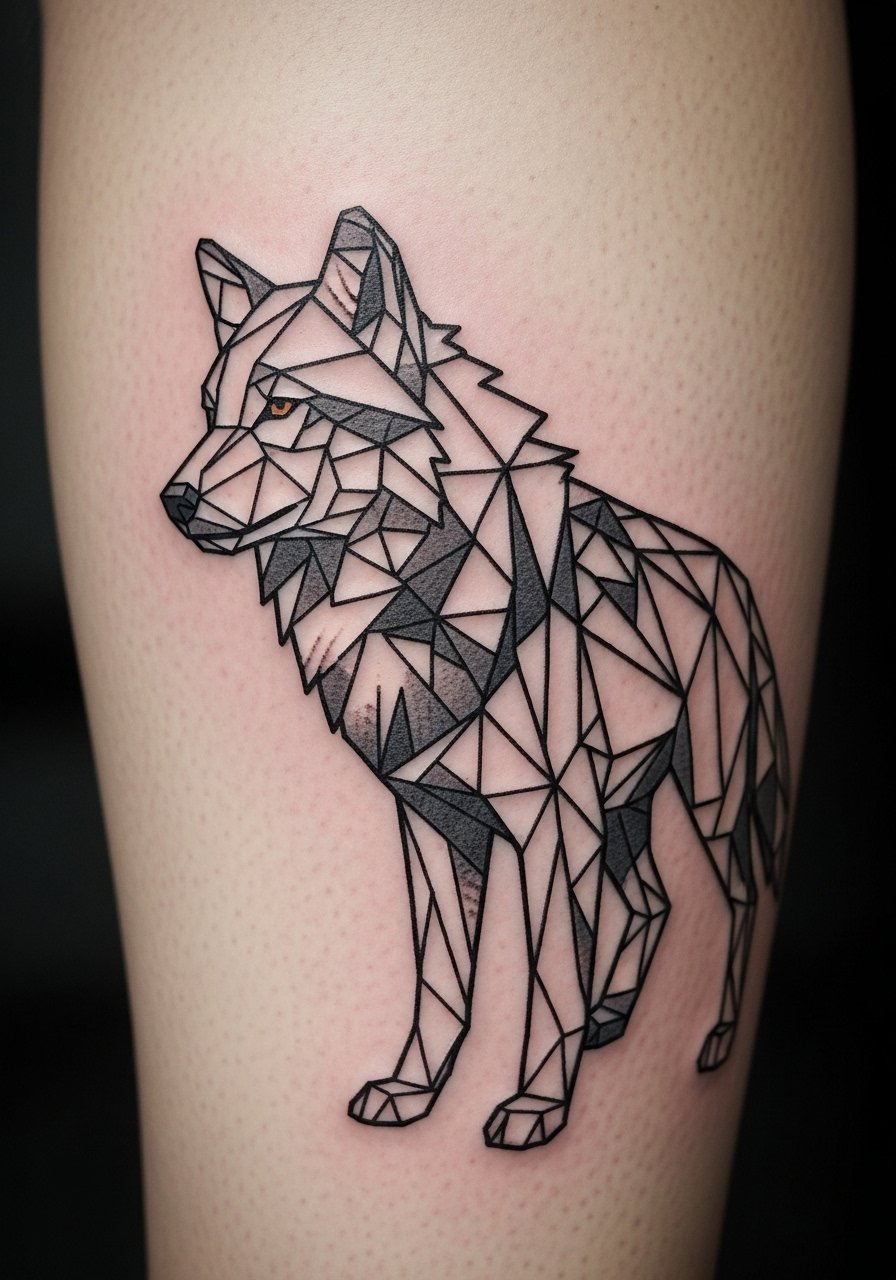
I noticed low-poly wolves in tattoo groups and liked their architectural feel. Shin pain varies with bone exposure. Sessions are moderate. Ask for clear separation between planes and consistent line angles. A common mistake is tiny polygons that blur into a gray mass. At six months the planes keep their shape if spacing was adequate. At two years, touch-ups on line intersections may be needed. This is a modern, design-forward choice that pairs well with minimalist limbs or a full-leg concept.
20. Stained Glass Wolf on Inner Bicep
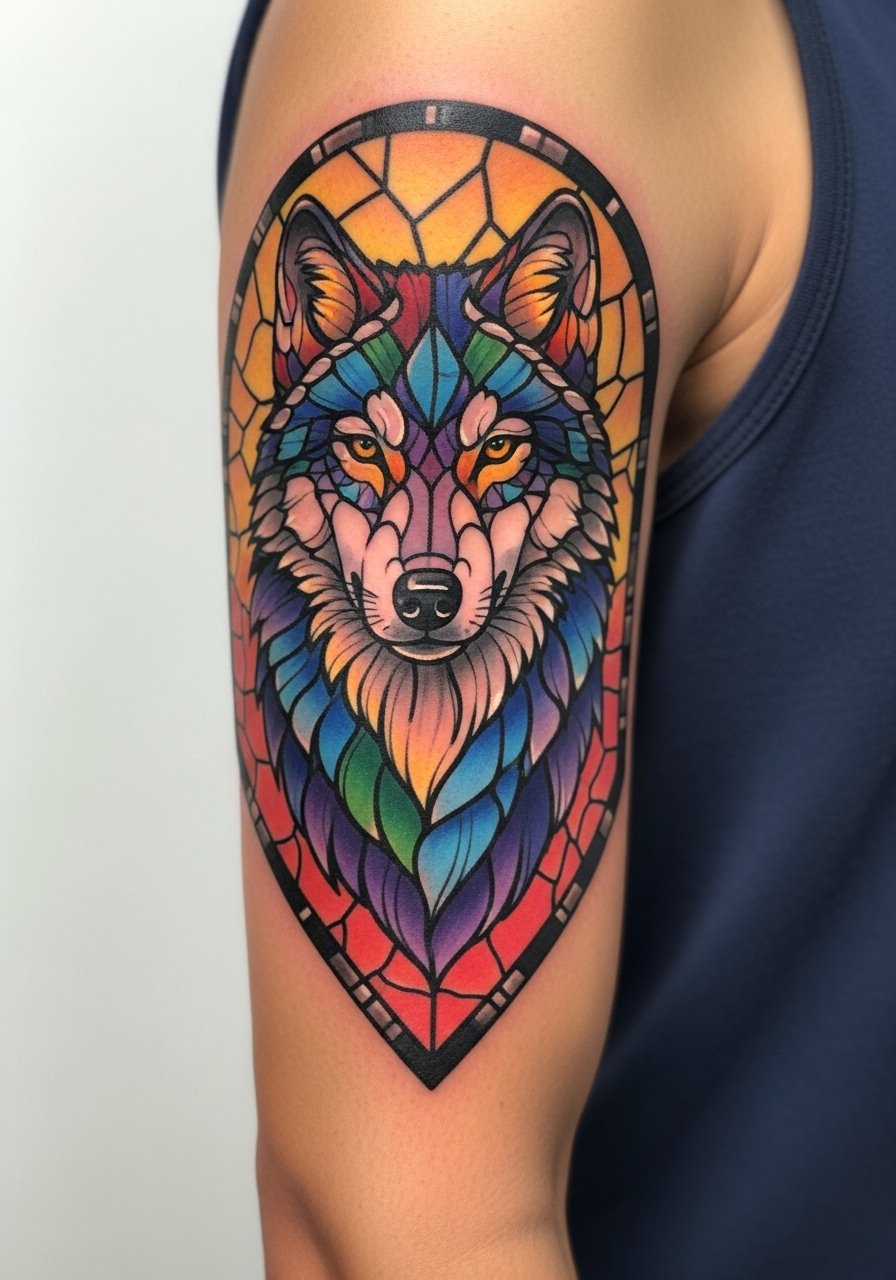
I found this approach at an art gallery and then on a tattoo portfolio. Inner bicep tolerates sessions if you can sit still. The stained glass look uses heavy outlines which help the colors stay separated over time. During the consult show the palette you want and ask for slightly denser color fills than usual. The mistake is soft outlines that let colors bleed into each other. At six months the color panels balance. At two years the lead lines preserve the panels. This style is playful and graphic, and it ages well when outlines are decisive.
21. Minimalist Paw Print Trail Along Foot
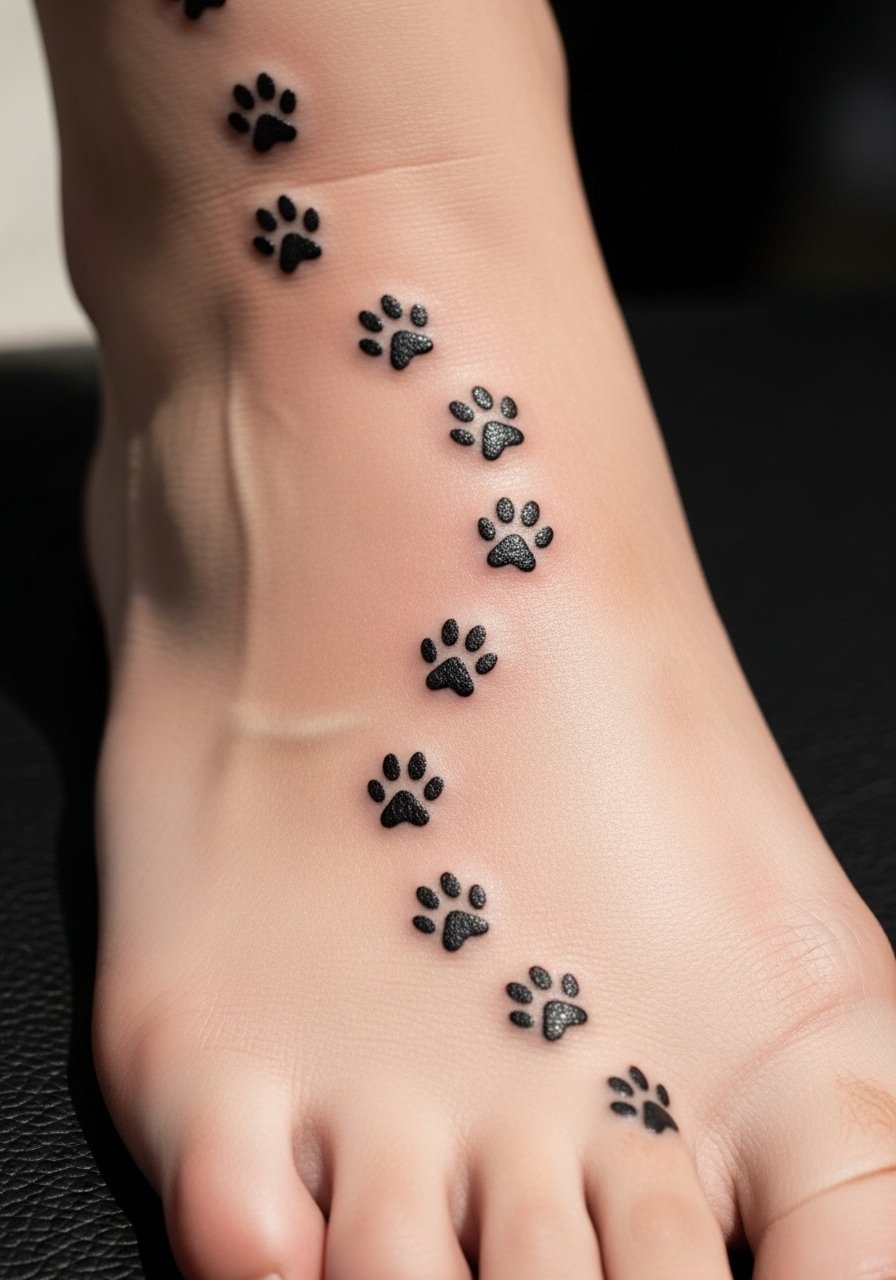
Feet fade faster because of friction. I had a friend whose foot prints needed a touch-up after a year. If you want low-profile symbolism this is a sweet choice. Pain is high on top of the foot. Sessions are short. Tell your artist you want generous spacing between prints to avoid merging under socks or shoes. A mistake is making prints too dense or too close to the toes where wear is greatest. At six months the prints will soften. At two years expect some loss of definition. Plan on annual maintenance if you love the placement.
22. Fine Line Howling Wolf Behind Knee
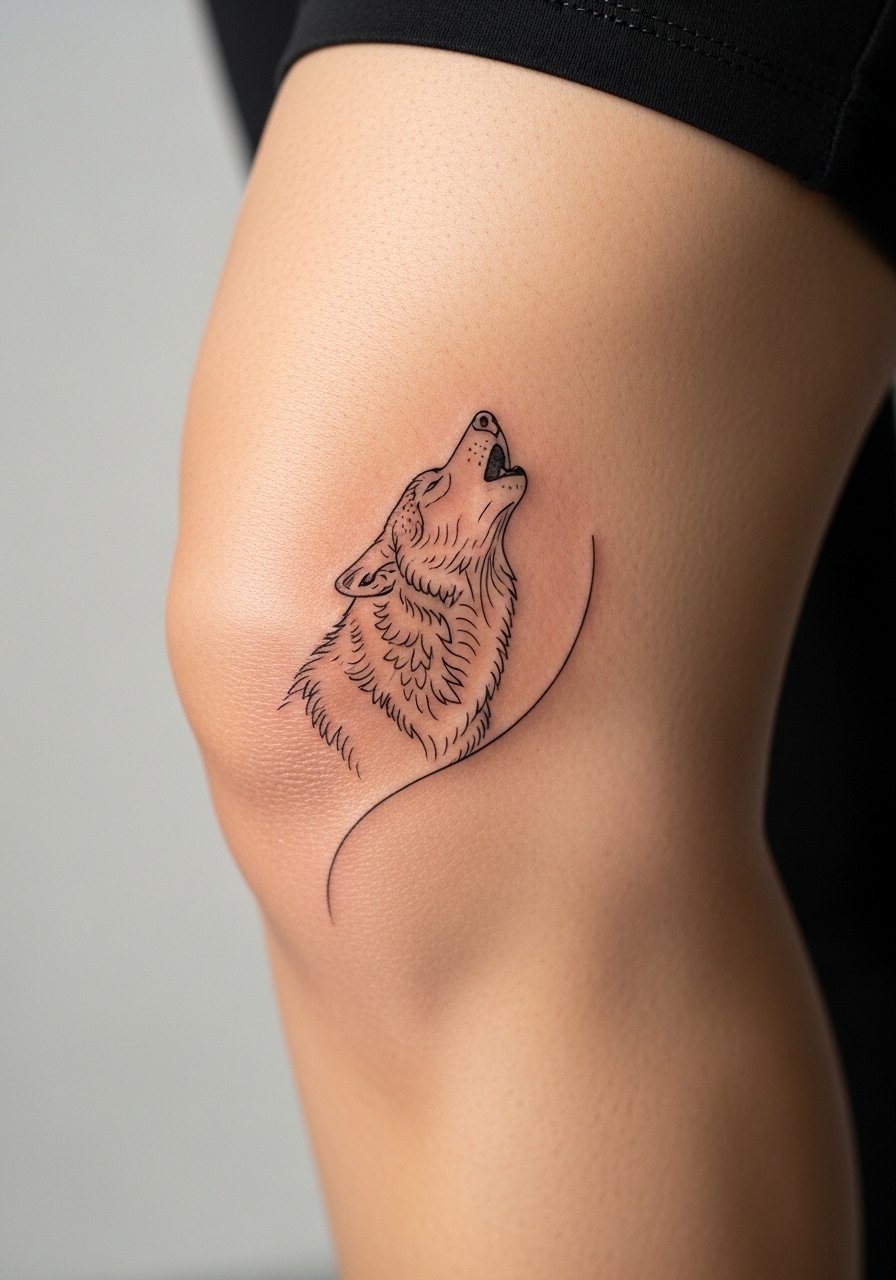
I wanted to finish with something unexpected. Behind the knee is sensitive and moves a lot. Fine line here reads intimate when your leg is extended. Sessions are short to moderate. Ask your artist to design the wolf with motion in mind so the composition doesn't warp when you bend. The biggest mistake is placing heavy detail directly in creases. At six months fine lines will settle and the piece will harmonize with skin folds. At two years, if lines were slightly bolder to begin with, the tattoo will remain readable. This placement is for people seeking a private, soft statement.
Tattoo Prep and Aftercare Essentials
- Aquaphor Healing Ointment, 14oz tube. Industry standard for the first 3 to 5 days. I use a thin layer at night
- Saniderm Transparent Adhesive Bandage, 6-inch roll. Second skin healing method. Every artist I know recommends it for the first 24 to 72 hours
- CeraVe Fragrance-Free Moisturizing Lotion, 16 oz pump. Daily moisturizer for days 4 to 14. I prefer the pump bottle for hygiene
- Dr. Bronner's Unscented Castile Soap, 32 oz. Gentle cleanser for rinsing twice a day the first week. Dilute a small drop with water
Before Your Appointment:
- Numbing Cream With 5% Lidocaine, 30g. Apply 30 to 45 minutes before your session only if your artist approves. Some artists prefer no numbing
- Tattoo Stencil Transfer Paper, A4 Pack. Useful if you want to test placement at home before your appointment
Long-Term Maintenance:
- SPF 50 Sunscreen Stick For Tattoos, Travel Size. Use on healed tattoos whenever they see sun. I carry one for beach days
- Mad Rabbit Tattoo Balm, 2 oz. Long-term maintenance for vibrancy. Artists I know recommend it for healed pieces
- Hustle Butter Deluxe, 5 oz. Vegan alternative that works during healing and after. Smells better than most aftercare
Optional Comfort Items:
- Tattoo Numbing Spray, 4 oz. Handy for touch-ups or sensitive areas mid-session
- Hydrocolloid Bandages, Large Size. Good alternative to Saniderm for small to medium tattoos
From what I've gathered, most artists recommend simple soap and a light, fragrance-free moisturizer after the initial ointment period. I trust Saniderm for the first 48 hours when I can. For long-term vibrancy I apply an SPF stick to sun-exposed pieces.
Frequently Asked Questions
Q: Will fine line wolf tattoos blur into each other if I get a full sleeve?
A: I've noticed fine line sleeves need careful spacing. If you want a full sleeve of fine line wolves tell your artist to build in negative space and use slightly bolder primary lines. That prevents adjacent elements from merging after two years. Consider asking for thicker anchor lines and lighter interior detail. For aftercare try CeraVe Fragrance-Free Moisturizing Lotion, 16 oz pump during the peeling phase.
Q: Do watercolor-style wolf tattoos need different aftercare than traditional ones?
A: From what I've seen, watercolor pieces often start with softer saturation. Protecting pigment early matters more. I follow the same basic routine, but I avoid heavy creams the first two weeks and prefer a light balm like Mad Rabbit Tattoo Balm, 2 oz after day four. Ask your artist if they recommend Saniderm for that specific pigment approach.
Q: Are hand and foot wolf tattoos worth it if I want long-term detail?
A: Hands and feet wear down faster. I tell people to expect maintenance. If you want crisp detail in those areas choose bold shapes and accept touch-ups every year or so. Using a strong initial outline helps. Carrying a sunscreen stick like SPF 50 Sunscreen Stick For Tattoos, Travel Size for exposed hands prevents accelerated fading.
Q: How painful is a ribcage watercolor wolf compared with a thigh micro-realism portrait?
A: In my experience ribs are significantly more painful than thighs. Ribs hit bone and thin tissue. Micro-realism on the thigh is dense work but the flesh buffers pain. Plan breaks and discuss numbing options with your artist. If you use numbing cream, bring Numbing Cream With 5% Lidocaine, 30g only after confirming the artist approves.
Q: What should I say to my artist if I want a double exposure wolf to read clearly on my upper back?
A: Tell your artist you want distinct layers, with the silhouette staying solid and the inner scene having reduced detail. Ask for test layouts that show the silhouette overlaid on the scene. From what I’ve seen, clear boundaries between layers prevent the image from becoming muddy after healing. Consider asking about a staged session so the silhouette lines are reinforced in a separate pass.
Q: Are tribal Polynesian wolf designs respectful to get if I am not from that culture?
A: I advise caution. Every artist I’ve talked to recommends learning the meaning of the symbols you’re considering. If you pursue this, work with an artist trained in that style and be transparent about your intentions. Plan to adapt elements to fit your anatomy and avoid copying sacred motifs without permission.
Q: What aftercare products should I bring to my appointment and use in the first week?
A: Bring a gentle soap like Dr. Bronner's Unscented Castile Soap, 32 oz for the first rinse. After the initial period, use a thin layer of Aquaphor Healing Ointment, 14oz tube for up to five days. If your artist prefers a second-skin approach, have Saniderm Transparent Adhesive Bandage, 6-inch roll on hand.
Q: How do I prevent a wolf tattoo from losing color on sun-exposed areas like the chest or forearm?
A: I've noticed UV exposure is the biggest ink killer. Use an SPF 50 stick regularly on healed tattoos. Reapply during long sun exposure. Also consider slightly higher initial saturation and ask your artist for dense black anchor lines. Over time you'll still need touch-ups, but sun care slows that schedule.