
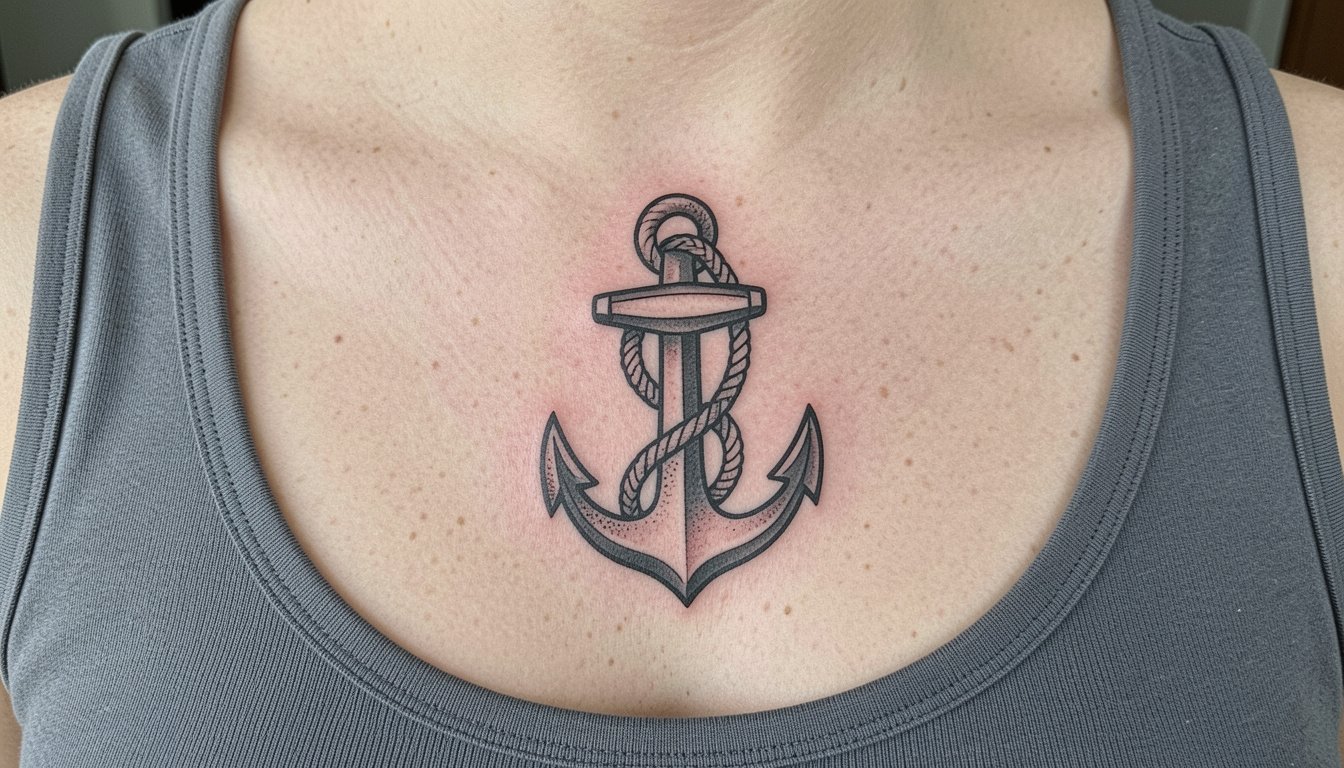
Bold black work holds up in ways people expect and in ways they do not. The quickest pieces to read at year five are the ones punched in with confident outlines and heavy saturation, not the faint single-needle riffs that look fragile on day one. One camp argues bold traditional linework and heavy black fill resist blur and read for years. Another camp champions ultra-fine single-needle detail for delicacy and minimal visual noise. I will show black old school motifs that age well and how to size, place, and dress them so they still read after a few touch-ups.
1. Bold American Rose on Outer Forearm
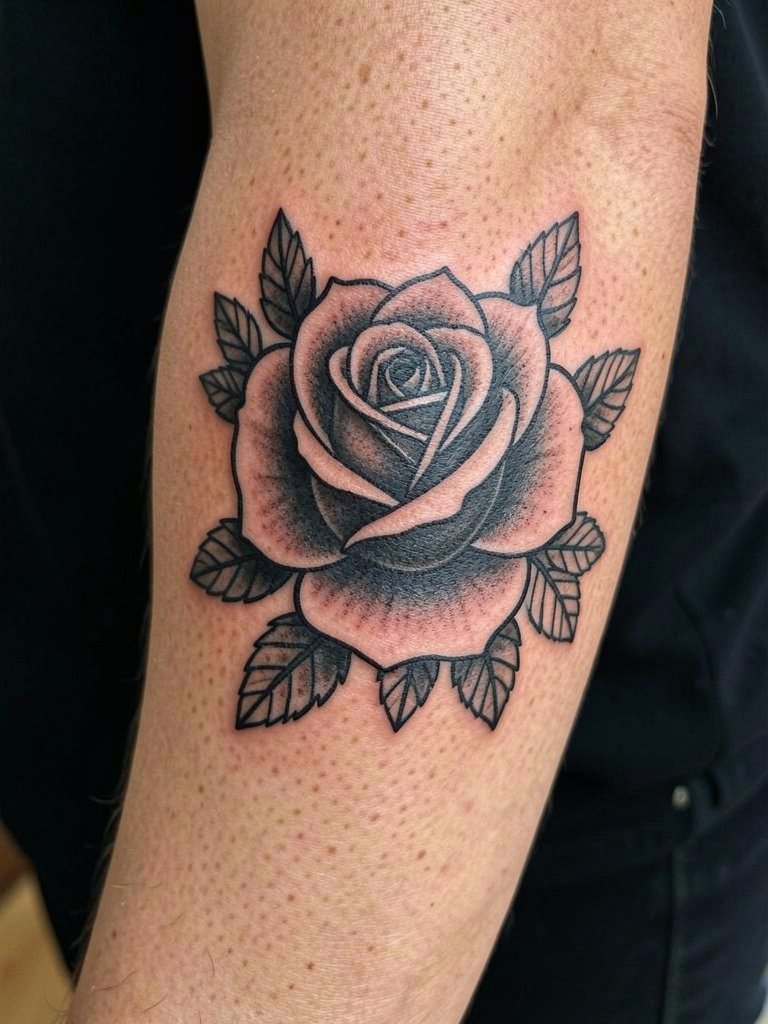
A classic American rose loves the outer forearm because it gets room to breathe and it ages into an identifiable silhouette. Pain for this placement is low to moderate and most sessions finish in 45 to 90 minutes depending on size. Ask for bold outlines and strong black fill, not micro-shading only, so the center holds as the skin settles. A common mistake is shrinking the bloom into a three-inch detail piece. At six months the edges will look crisp. At two years the black will soften slightly. At five years the silhouette still reads from a short distance. For show-off wear, pair this with rolled linen sleeves that expose the forearm for warm-weather nights.
2. Anchor with Rope on Inner Wrist
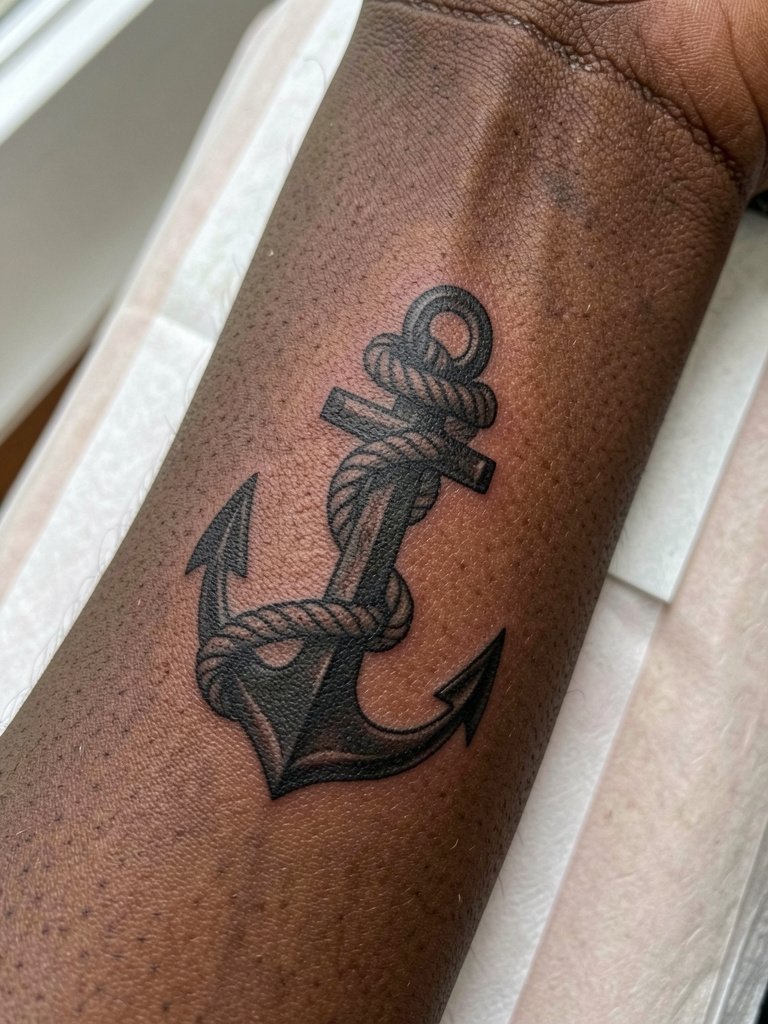
The inner wrist is useful for small traditional anchors when you want a timeless symbol in black only. Expect moderate sensitivity and a session time around 30 to 60 minutes. The key detail to discuss is spacing between rope twists and the anchor's lineweight. Request slightly heavier linework than the reference so the rope does not blur into a solid mass at year three. Frequent washing and wrist movement increase blowout risk, so plan for a touch-up around year two. Show this off with a minimal cuff bracelet that frames the piece without rubbing the skin.
3. Traditional Black Eagle on Upper Arm
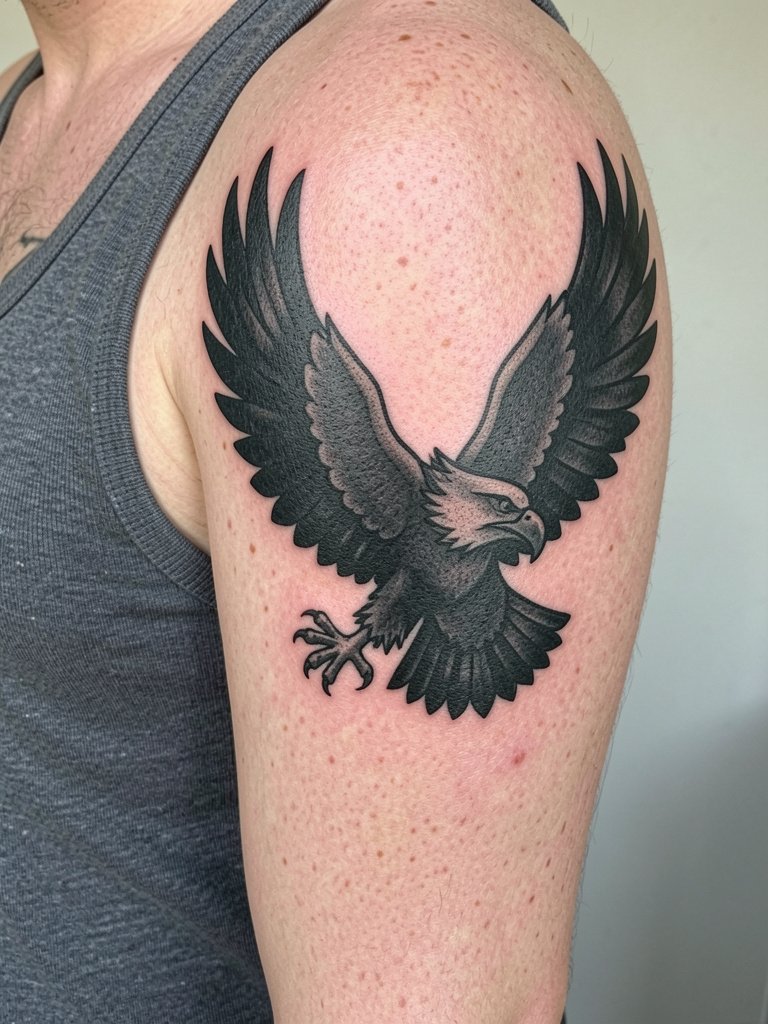
This is a workhorse placement for traditional black motifs because the upper arm tolerates saturation well. Pain is moderate and sessions run 60 to 150 minutes for larger wings. Tell the artist you want bold feather blocks and clear negative space between wing segments so the composition reads from a distance. A common mistake is over-detailing the feathers which causes softening later. At six months the black will be intense. By year two the edges mellow and the negative spaces define the wings. For outfits, this piece pairs with sleeveless chambray shirts that let the eagle sit center stage.
4. Nautical Star on Back of Hand
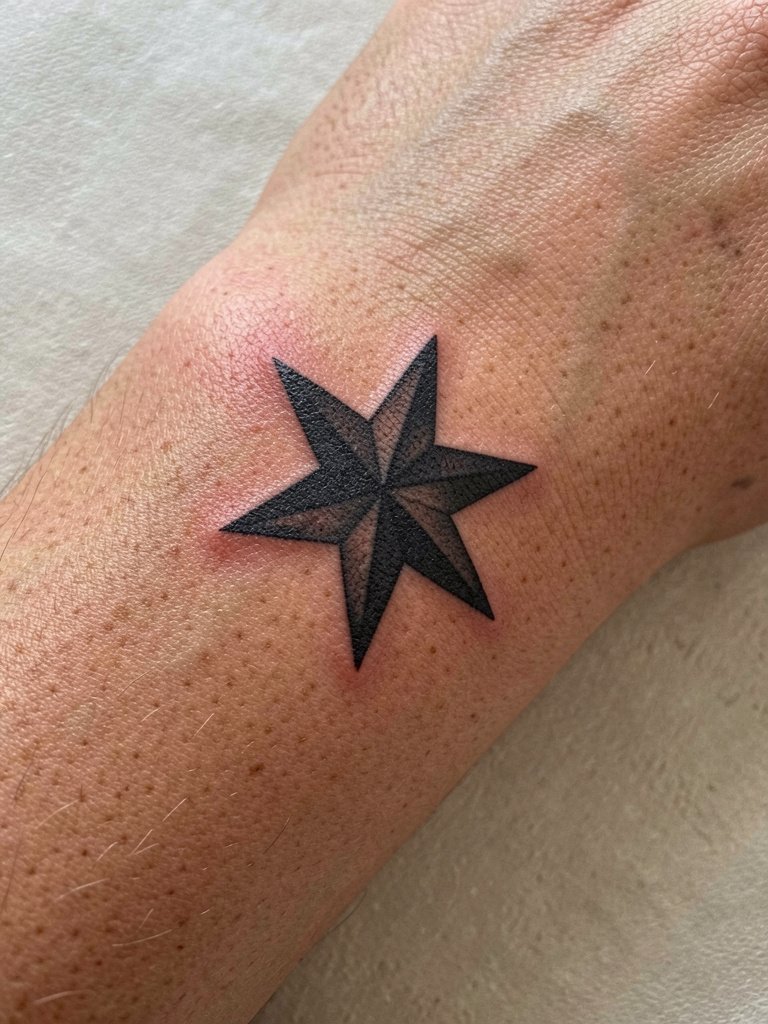
Hand pieces are high maintenance and likely to need touch-ups sooner. The back of the hand often feels intense for three to five hours during the session. Bring realistic expectations about fading. Ask for strong outline weight and dense black fill so the star keeps its geometry through heavy washing and sun exposure. A common mistake is choosing micro detail inside the points. At six months the fill will look even. At two years you may notice edge softening. Plan for a touch-up in year one if you expect heavy daily use. Wear a lightweight ring stack that complements the central motif without rubbing the skin.
5. Classic Black Dagger on Sternum
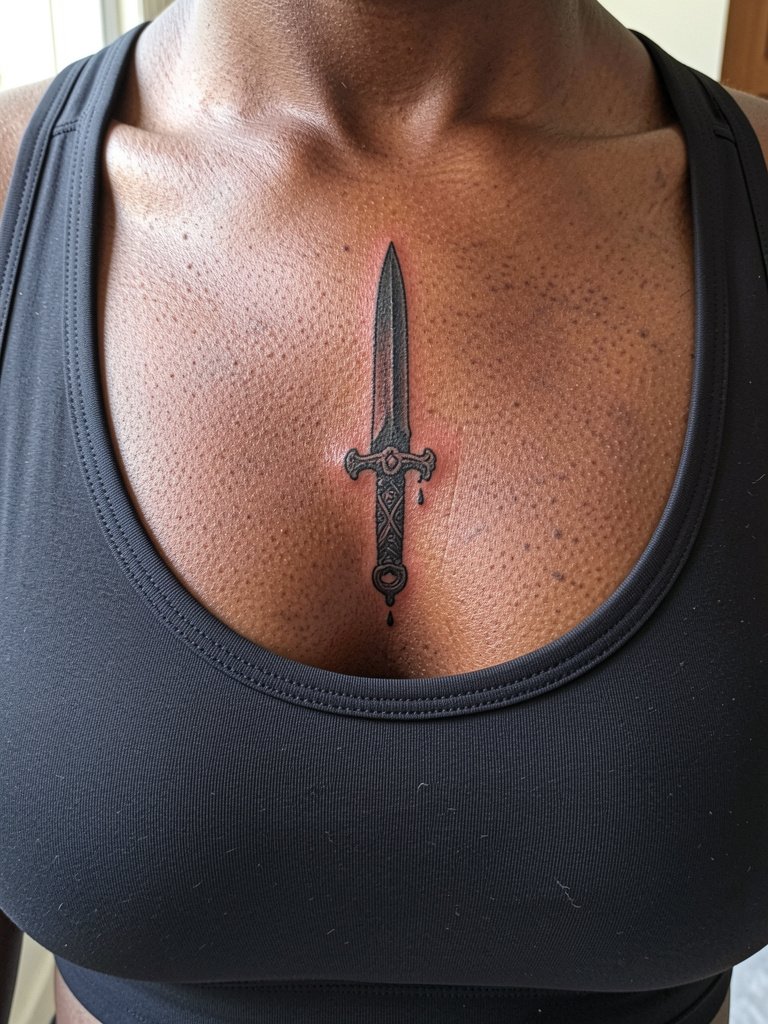
Sternum pieces are intimate and require an artist comfortable with chest anatomy. Pain is high for many people and sessions are often split into shorter passes. Specify that you want the blade silhouette to read clean with modest stipple shading only. The biggest mistake is over-detailing the hilt and expecting the tiny lines to hold under compression from clothing. At six months the dagger will look crisp. At two years the central shadowing may need a light touch-up. For appointment wear, bring a fitted sports bra that provides access and keeps the fabric stable. Also note that some artists decline sternum work if they do not do intimate placements professionally.
6. Swallow Pair at Collarbone
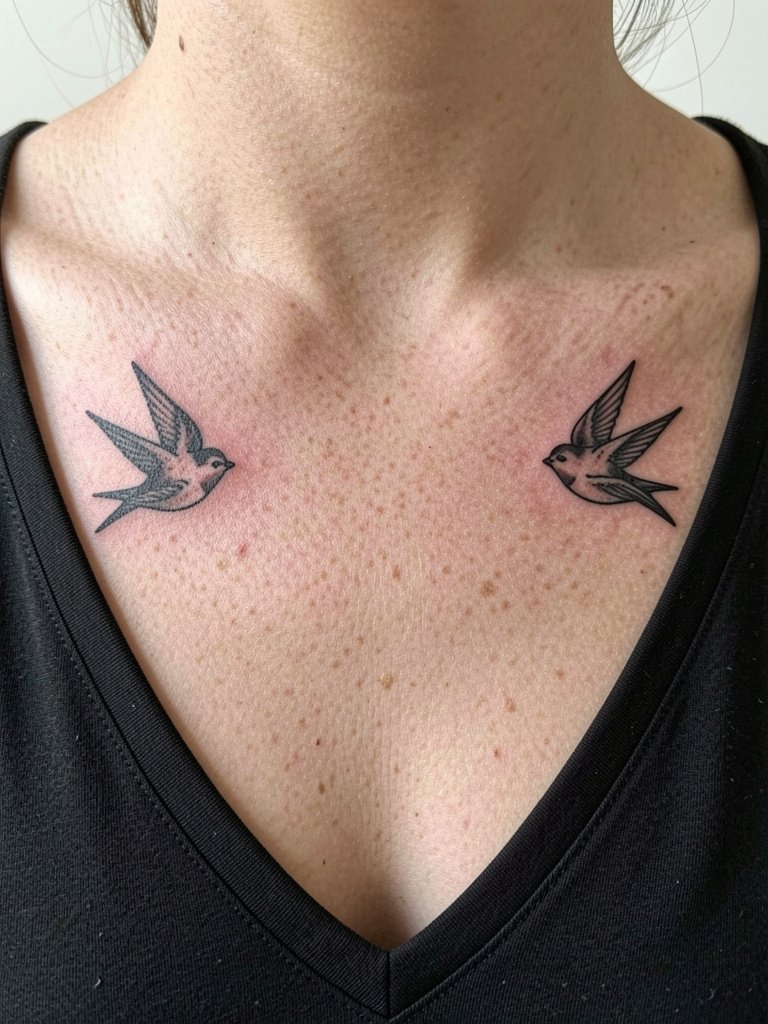
Collarbone birds are visible and flattering when sized right. Pain across the clavicle can spike because the bone sits close to the skin. Sessions are usually 30 to 60 minutes for both birds. Ask the artist for compact wings and slightly heavier outer lines so the wing tips do not blur into the collarbone shadow. A common mistake is placing the birds too close to the bone which speeds fading. At six months the outlines remain bold. By two years some feather detail can soften and a touch-up may be needed around year three. For show-off outfits wear open-back midi dresses or scoop-neck tees that frame the collarbone.
Session Day Picks
These first six placements include wrists, sternum, and collarbone work that need easy access on chair day and thoughtful first-week care.
-
Stencil transfer paper kit. Lets you preview line placement on skin so the anchor and swallow layouts hit the muscle contours seen above.
-
Topical numbing cream. A 45-minute application helps with sternum and collarbone sessions without blurring reference lines when applied correctly.
-
Thin protective film roll. Useful on wrist and hand placements to reduce friction while the outermost epidermis re-forms.
-
Fragrance-free body wash. Gentle cleansing prevents irritation on pieces that sit near clothing edges.
-
Aquaphor healing ointment. Thin application for first days keeps fine edges moisturized for small traditional work without clogging.
7. Bold Black Rose on Thigh
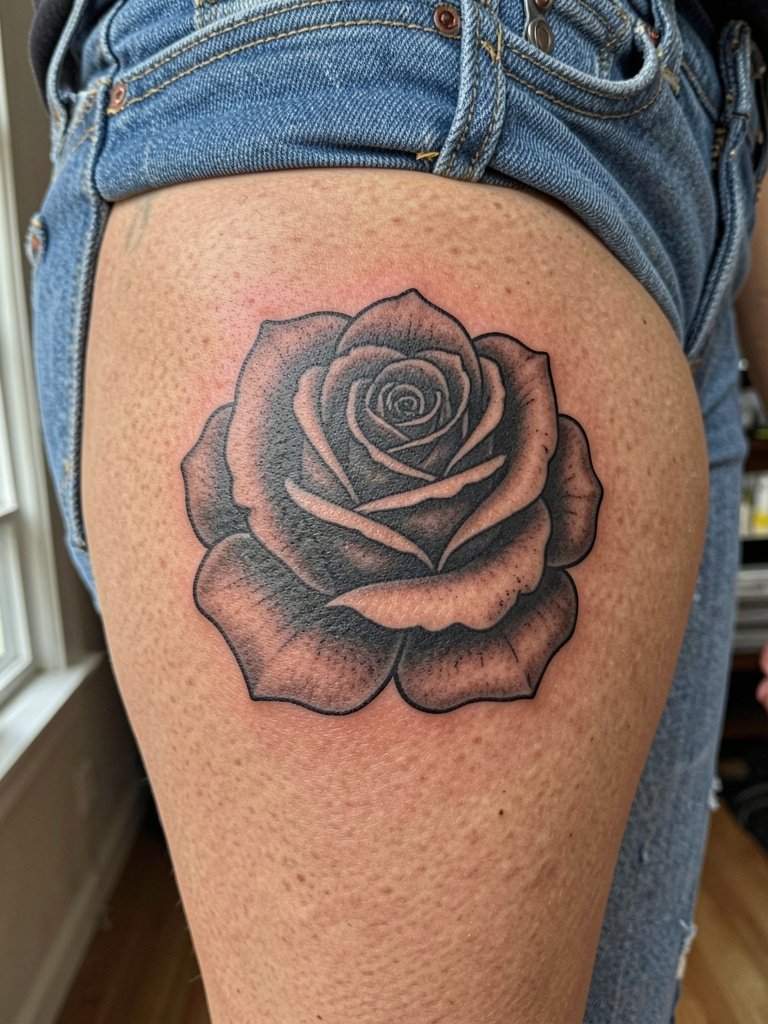
The outer thigh is forgiving of saturation and large shapes. Pain is generally lower here and sessions can run from one to three hours. Discuss how the bloom will sit under jeans and whether the design will peek when wearing skirts. A frequent mistake is adding tiny filigree close to the hip crease. At six months the black will look deep. At two years the outline will soften a touch but the overall form stays legible. For evenings out, this pair nicely with fitted high-waist skirts that let the rose show when you sit or cross your legs.
8. Minimal Black Ship on Calf
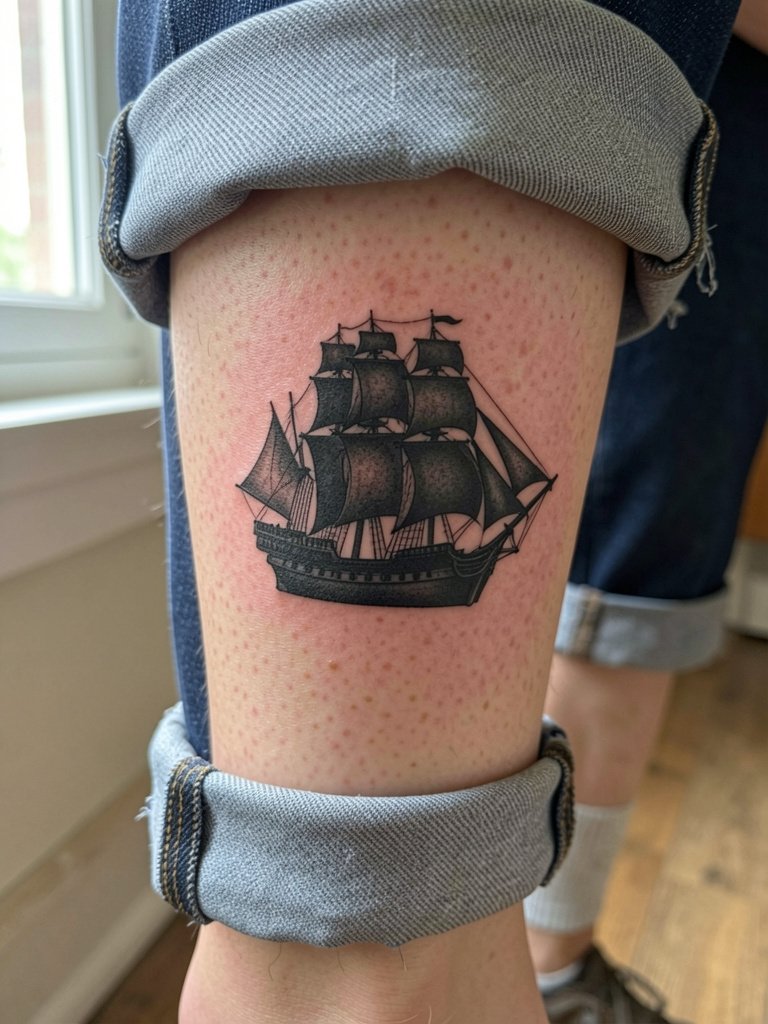
Calf placements tolerate bold blackwork and have lower blowout risk than inner arm or wrist. Session time is usually 45 to 120 minutes depending on size. In consultation, ask the artist to keep mast and sail blocks simplified so they age into a readable silhouette. A common error is crowding the hull with tiny waves. At six months the ship will look solid. Two years in, negative space separates from the sails and the piece still reads on long walks. Wear rolled cuff jeans to reveal the lower calf when you want to show the ship.
9. Black Traditional Panther on Ribcage
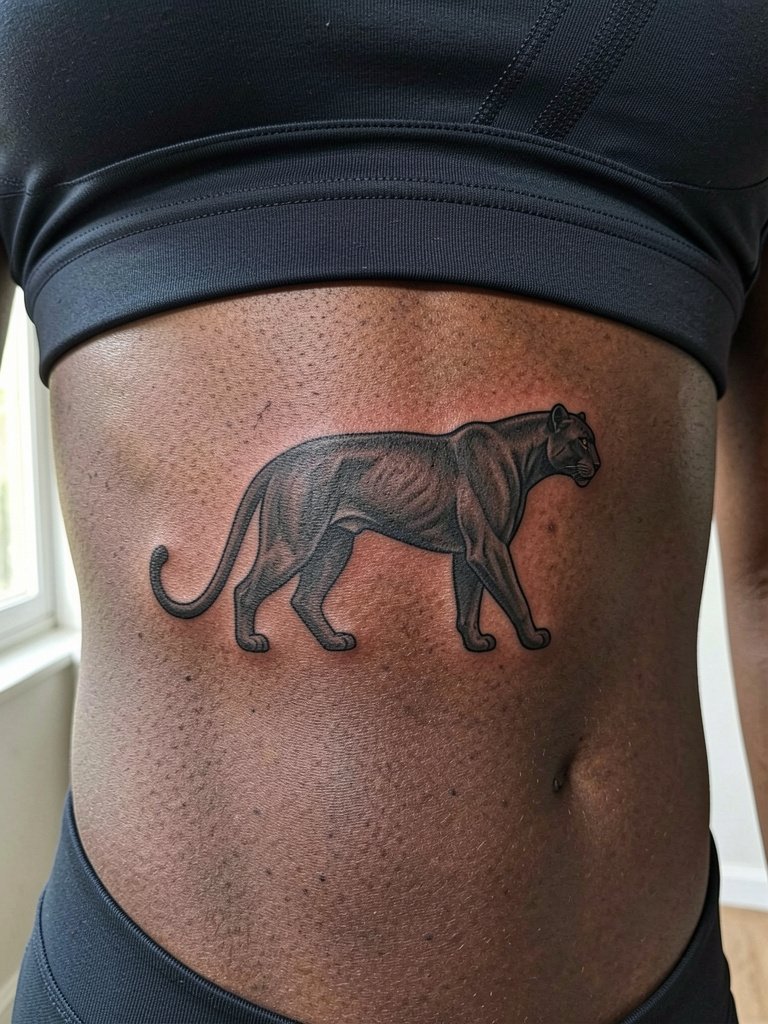
Ribcage pieces demand realistic prep. Pain is high to severe for many people and sessions are often split. One contentious point is fine-line work on the ribs. One camp says ribs cause lines to blur within two years. Another camp insists that with correct needle depth and slightly wider spacing, fine line can settle well. For this panther, prefer bold silhouette and negative space for longevity. Detail-packed whisker lines and micro-stippling often blur fastest. At six months the shape is solid. At two years the lean silhouette will still read but expect a touch-up if you live an active outdoor life. Wear a fitted cropped top to the session so the artist can access the side torso without fabric movement.
10. Traditional Lock and Key on Inner Bicep
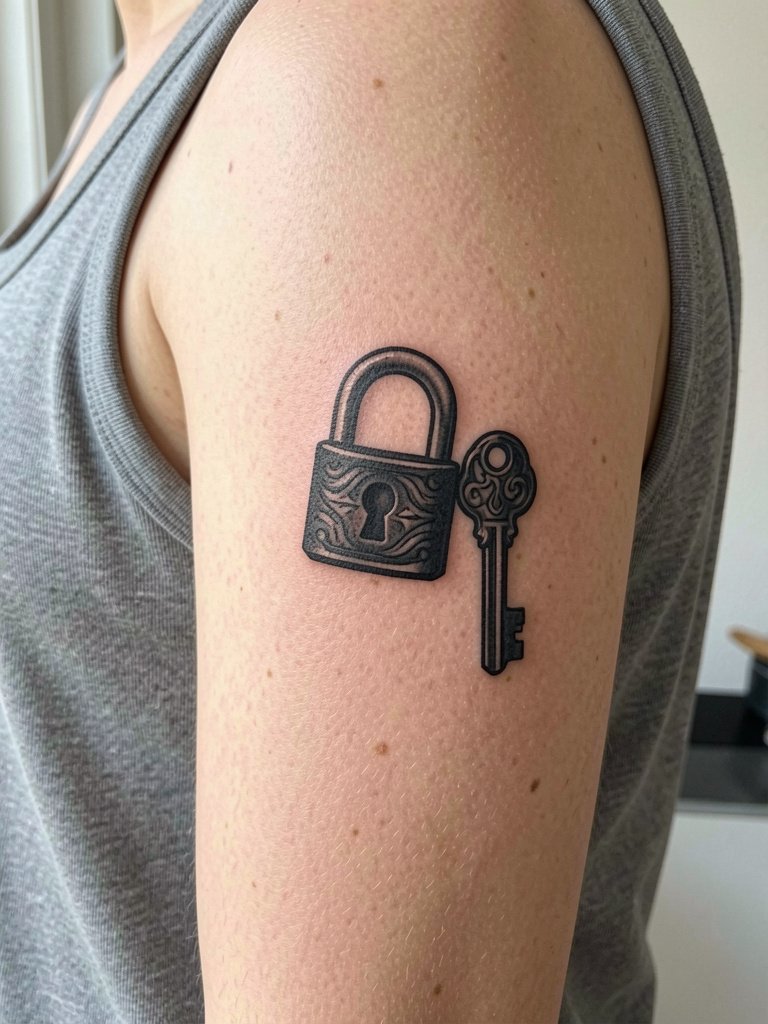
The inner bicep hides well and heals with fewer wear issues than hands. Pain sits at moderate to high. Sessions usually take 60 to 120 minutes for paired pieces. Ask for slightly heavier outer lines and clear spacing between lock teeth and key notches so the negative space remains readable as the skin ages. A typical mistake is putting overly fine key teeth inside the lock. At six months the lock and key look crisp. At two years small interior lines may smear and require a touch-up. For appointment comfort, wear a loose tank top so the artist has easy access and your sleeve does not chafe the fresh ink.
11. Solid Black Hourglass on Back of Neck
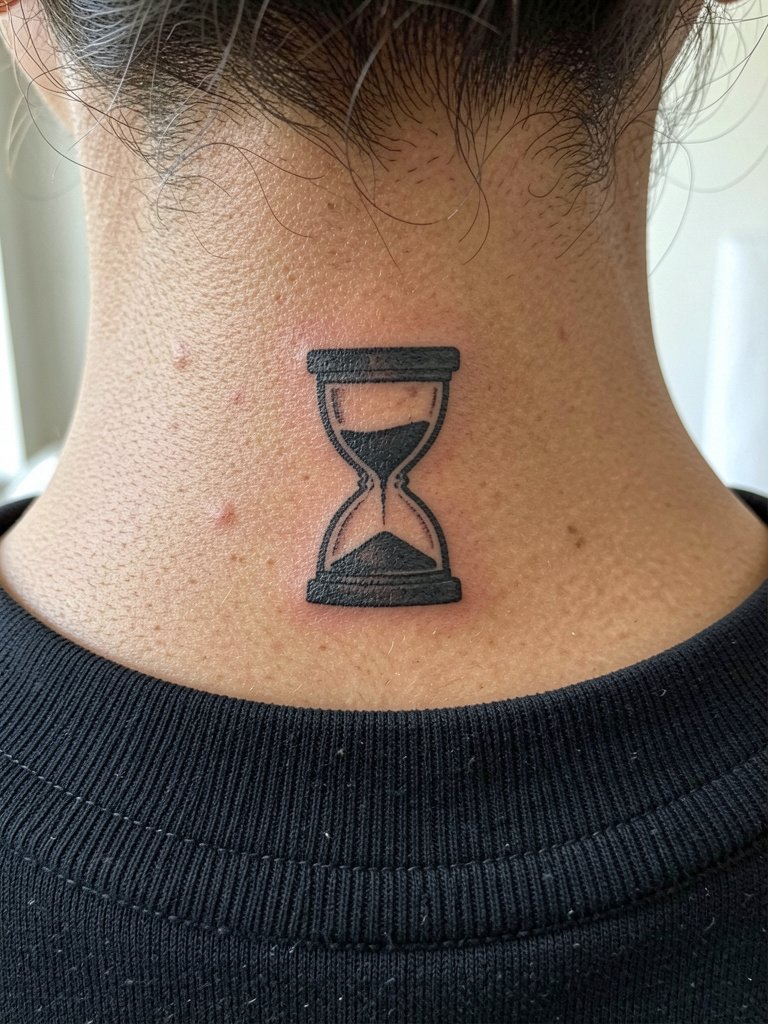
Nape tattoos are visible and can be discreet under hair. Pain is usually moderate and sessions are brief for simple silhouettes. Discuss hairline placement with the artist so the hourglass sits where your hair will frame it naturally. The common mistake is placing the design too low where waistline rubbing can affect healing. At six months the silhouette remains bold. At two years the black will soften but the shape stays identifiable. Style this with short updos or natural pulled-back hair to reveal the nape piece. If you keep long hair down most of the time, this piece becomes a private detail until you pull it back.
12. Black Traditional Ship Wheel on Shoulder Blade
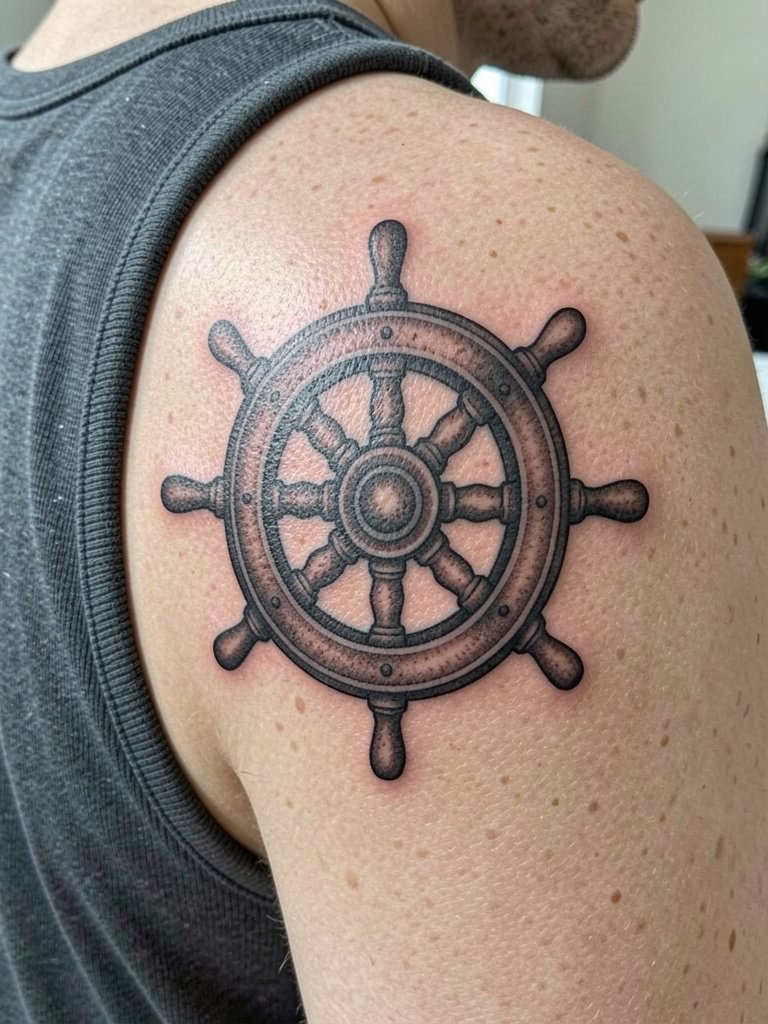
The shoulder blade is forgiving for solid blackwork and strong geometry. Pain is moderate. Sessions run 60 to 120 minutes for a medium wheel. Tell the artist you want bold spokes and a clear hub so the negative spaces remain defined as the skin stretches. A mistake is adding tiny rivet detail that fills in later. At six months the wheel looks crisp. At two years the spokes will soften but the radial shape remains. This placement looks great with open-back tops that let the wheel breathe when you want to show it.
13. Traditional Black Compass on Sternum Edge
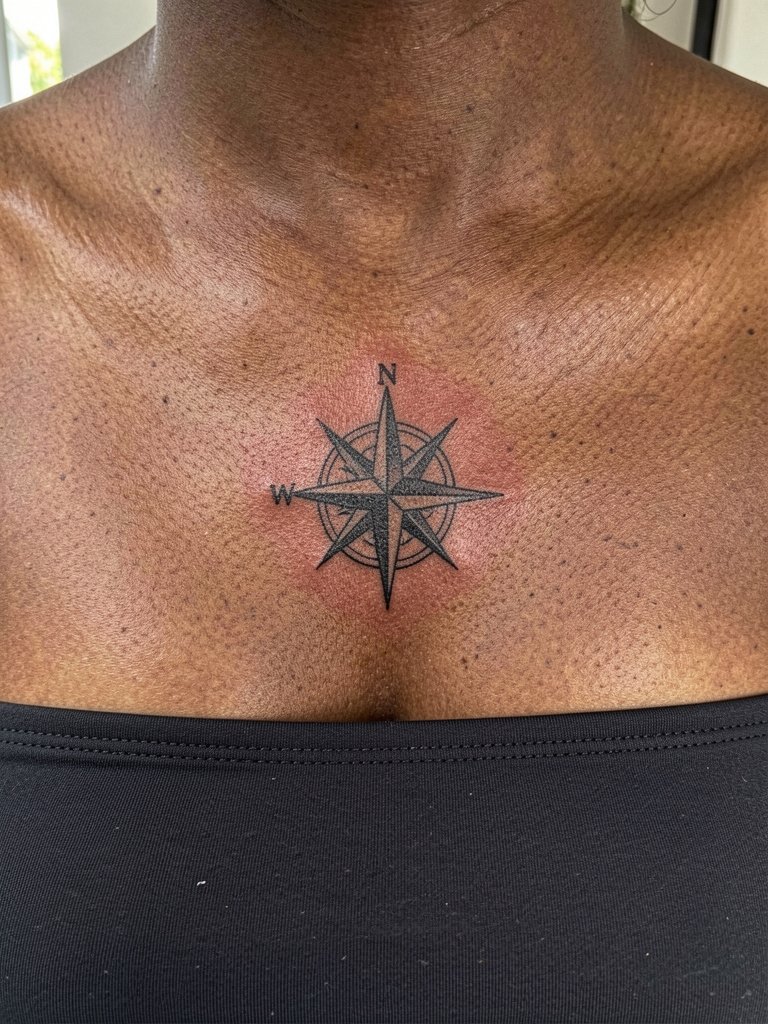
Compass work near the sternum suits symmetrical, bold points rather than lots of internal filigree. Pain can be high and sessions may require breaks. Be explicit with the artist about how large the negative spaces should be between each compass point so the piece does not blur into a starburst later. Tiny directional markers tend to age faster. At six months the black reads solid. By two years you may need a line refresh if you swim or sunbathe frequently. For session wear, a fitted bandeau or sports bra gives access and keeps fabric from rubbing the fresh ink.
14. Black Script Banner on Upper Arm
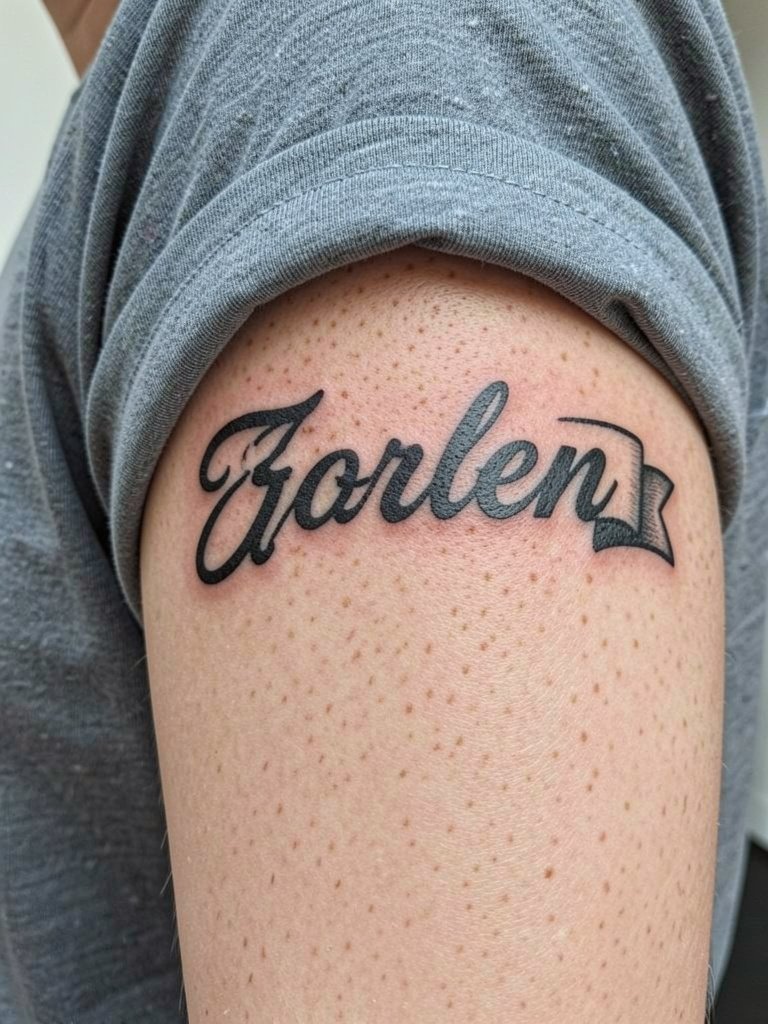
Script in bold traditional banners translates well when the lettering is given breathing room and strong weight. Pain is moderate and this session can take 30 to 90 minutes depending on the length. Ask the artist to increase lineweight slightly from your reference and to avoid ultra-thin swashes. The most common mistake is choosing ornate lettering too small for the arm. At six months the banner will sit clean. At two years the finer tails may blur slightly and a small touch-up will restore crispness. For wardrobe, pair this with short-sleeve vintage tees that frame the banner without covering it.
15. Black Traditional Anchor on Ankle
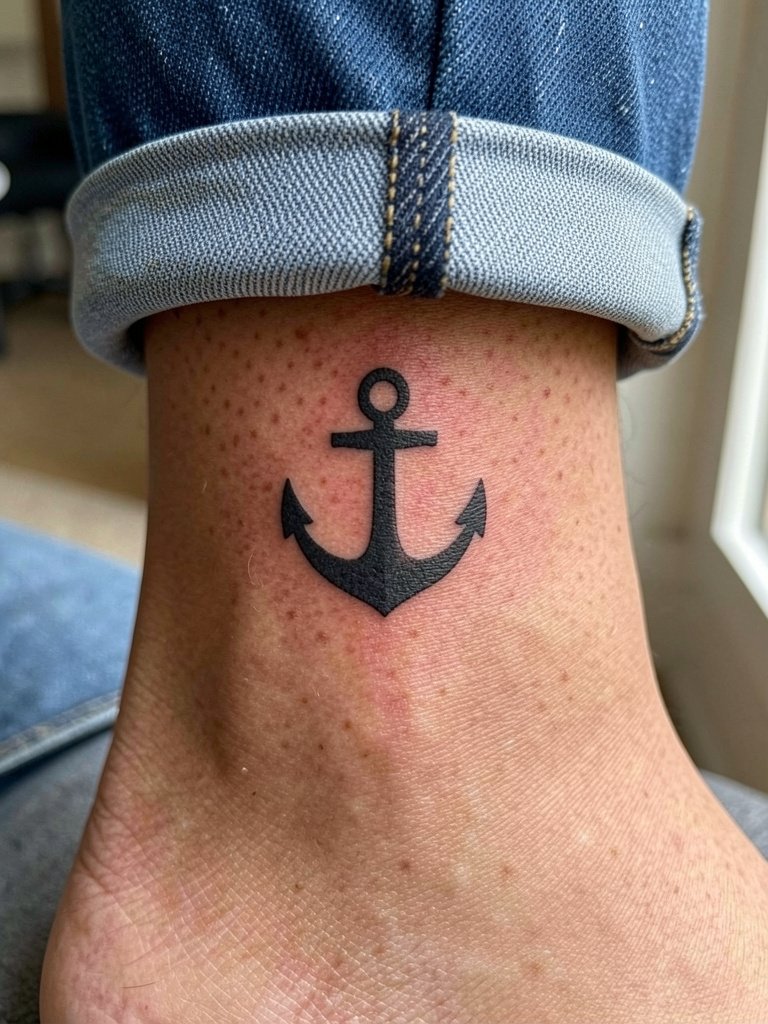
Ankle anchors are small showpieces with higher friction from socks and shoes during healing. Pain varies and sessions are often brief at 20 to 45 minutes. Tell the artist to keep the base wide and the shank bold so the piece does not feather from repeated rubbing. A common mistake is placing a delicate anchor too close to the bone. At six months the silhouette is steady. By two years the outer edges may soften slightly and a touch-up keeps the crisp outline. Wear ankle-wrap sandals or cropped pants to display the ankle piece once healed.
16. Black Traditional Rose and Dagger Sleeve Accent
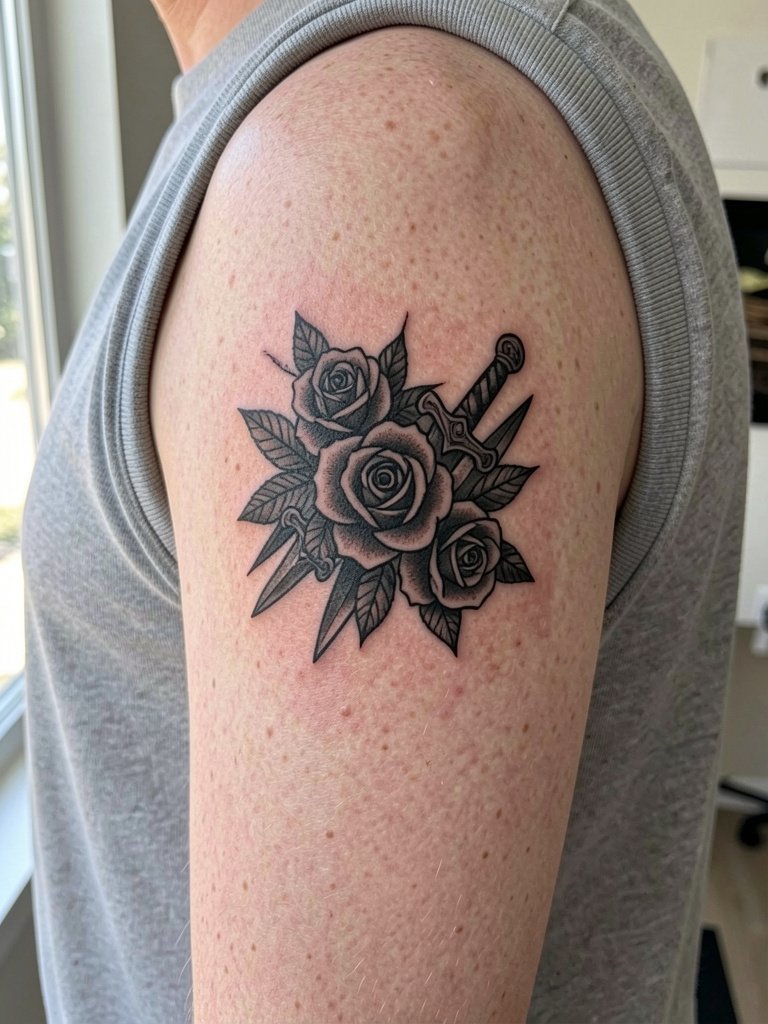
Small sleeve accents are about composition and breathing room. Pain is moderate and a focused session runs 60 to 150 minutes depending on how many elements you combine. Tell the artist to plan the negative space like a gallery. A big mistake is jamming motifs together at the same scale. At six months the grouping reads clean. At two years the areas with lots of tiny touches may need a refresh while larger silhouettes remain solid. Pair this accent with sleeveless denim vests when you want to show the arm in layered outfits.
17. Black Traditional Spider Web on Elbow
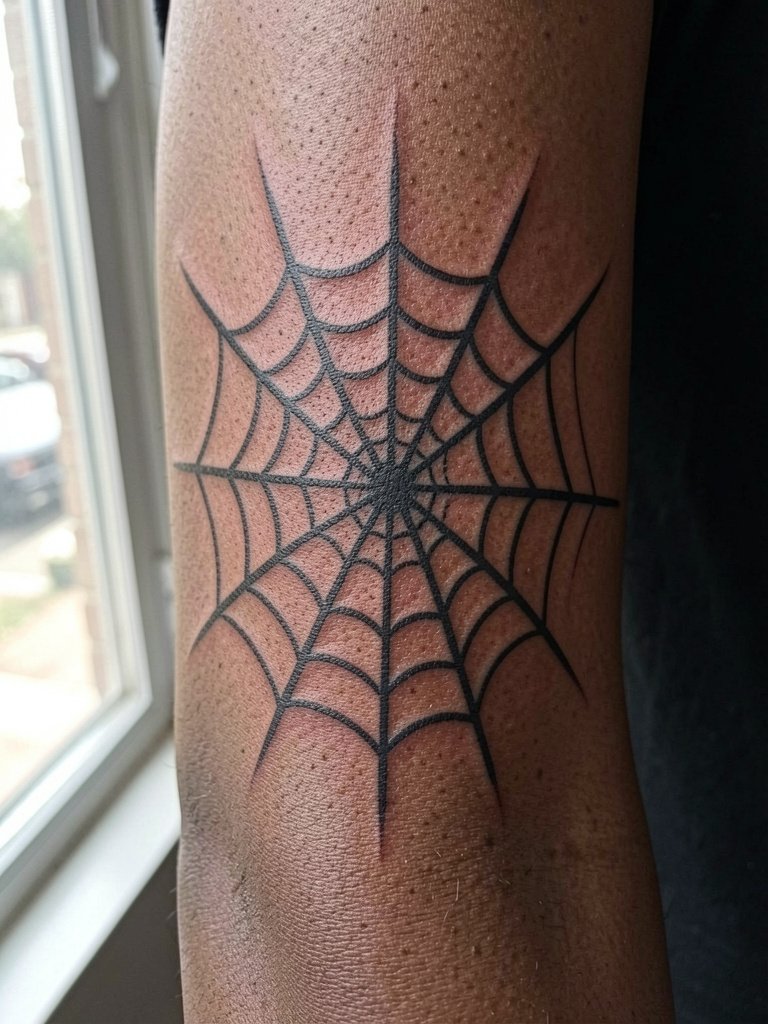
The elbow is a high-movement spot and the skin texture complicates linework. Pain is high and sessions on the point can be short and repeated. Request thicker radial lines and simplified intersections so the web keeps its geometry. A common mistake is trying to pack tiny cobweb detail into the very center which can fill in. At six months the web looks complete. At two years the central joins may blur and a touch-up restores crisp arcs. For practical wear on chair day, a loose long sleeve that can be removed without catching the fresh ink is easiest.
18. Black Traditional Skull on Lower Back
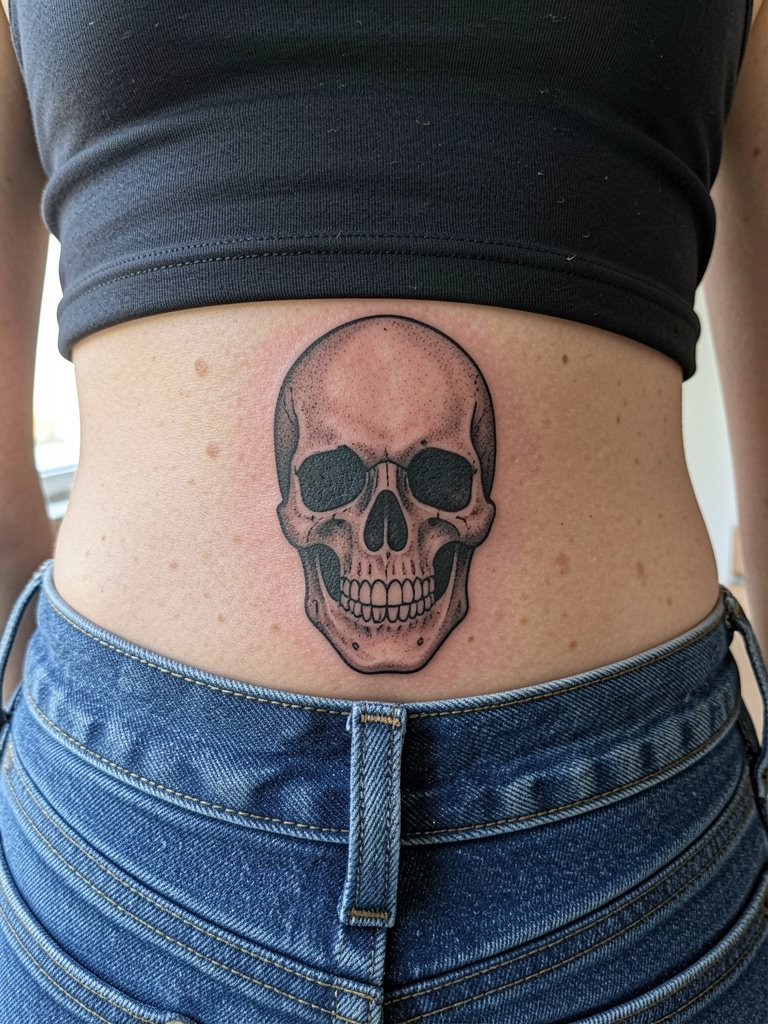
Lower back pieces have good canvas and tolerate heavy blackwork. Pain is usually moderate. Sessions vary greatly depending on size. The consultation should clarify whether the skull will sit centered above the waistband and how waistband friction might affect the bottom edge. A common mistake is placing fragile jawline detail too close to the belt. At six months the skull will look solid. At two years the lower edge might need a slight refresh from repeated waist movement. For showing off, low-rise jeans and cropped tops reveal the placement in a flattering way.
19. Traditional Black Candle on Forearm
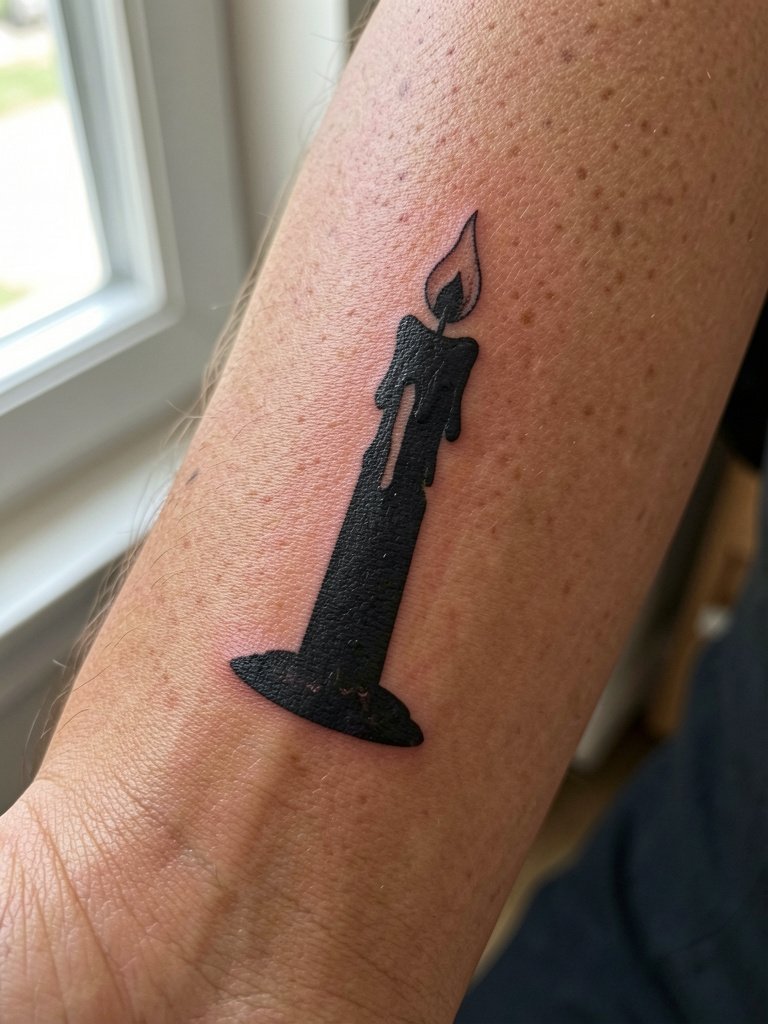
Candles form a vertical element that fits the forearm well. Pain is low to moderate and most sessions are 45 to 90 minutes. Specify that the flame be kept as negative space and that wax drips are bold blocks rather than micro-lines. Many people request delicate flame lines that blur after movement and washing. At six months the silhouette is clean. At two years the thin inner lines may lose separation and a small touch-up can sharpen the negative space. Style with rolled-up linen shirts for relaxed evenings when you want the forearm visible.
20. Black Traditional Lighthouse on Calf Wrap
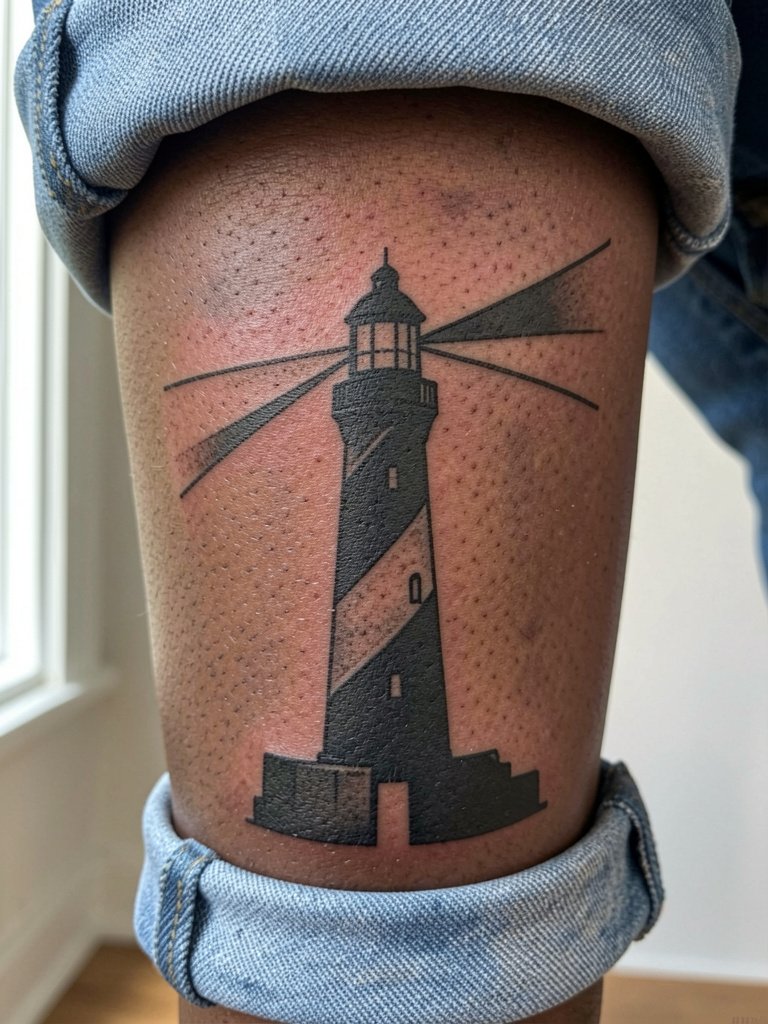
A calf wrap gives the lighthouse a sense of rotation and distance. Pain is moderate. Sessions range from 90 to 180 minutes for wraps. Discuss how far the beam should extend and where the base meets the muscle so the piece does not look distorted when you walk. Overly intricate windows and tiny rivet marks are a mistake here. At six months the black will be dense. At two years the wrap still reads from most angles but may require a touch-up if outdoor exposure is frequent. Pair with rolled cuff shorts when you want to display the wrap.
21. Black Traditional Crescent Moon Behind Ear
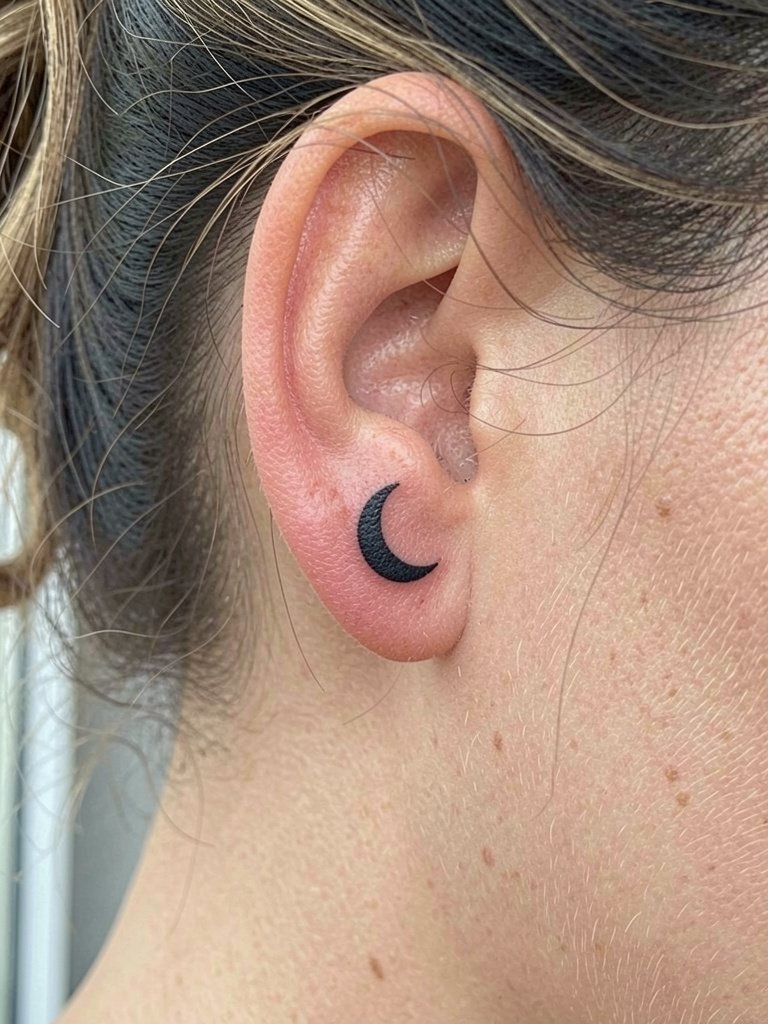
Behind-the-ear pieces are small and discreet. Pain is mild to moderate and sessions are short. Ask for a solid crescent with a slightly thicker outer edge so the silhouette keeps its curve as the skin moves. The mistake is trying to squeeze micro stars or dots in the tiny space. At six months the crescent holds. At two years the thinner sides may show lightening and a quick touch-up resolves unevenness. If you like tiny accents, this works with minimalist studs or small hoop earrings rather than heavy chains that could rub the area.
22. Black Traditional Heart with Banner on Chest
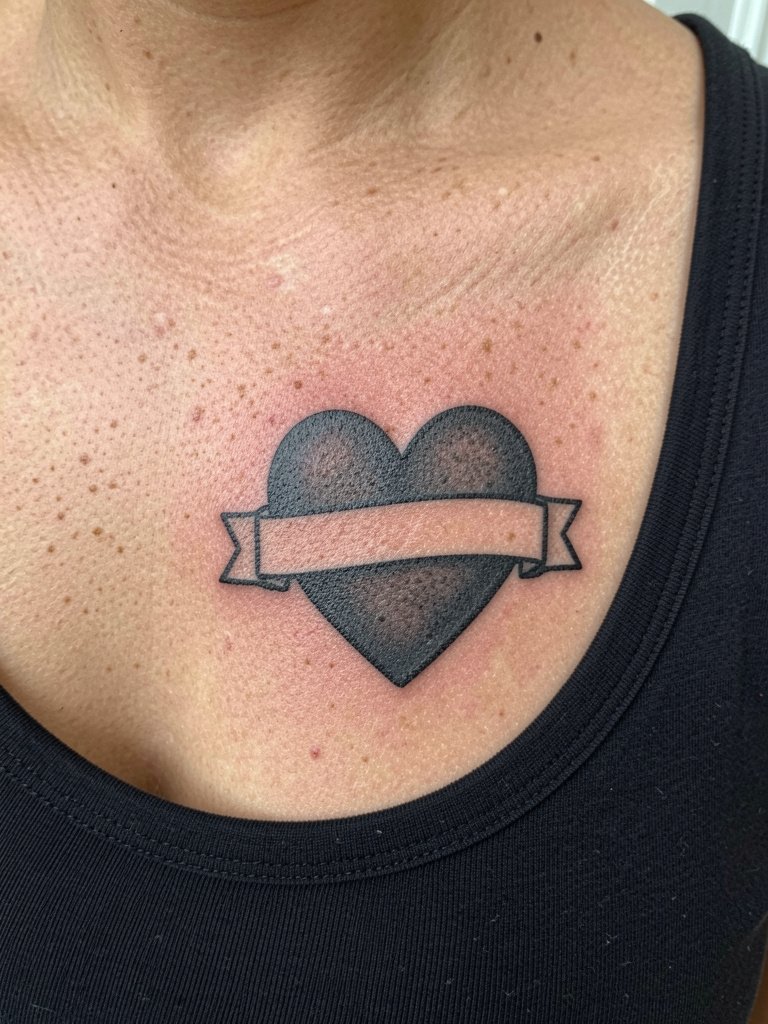
Chest hearts are highly visible and interact with movement. Pain is moderate to high. Sessions last 45 to 120 minutes. When planning a banner, be explicit about the scale of the lettering and the width of the banner so the text remains readable long term. A common error is choosing a tight script inside a narrow banner. At six months the heart looks strong. By two years small script can blur and require re-inking. For showcasing, try open-collar shirts that reveal the left chest when you want to feature the heart.
23. Black Traditional Fox Head on Throat Side
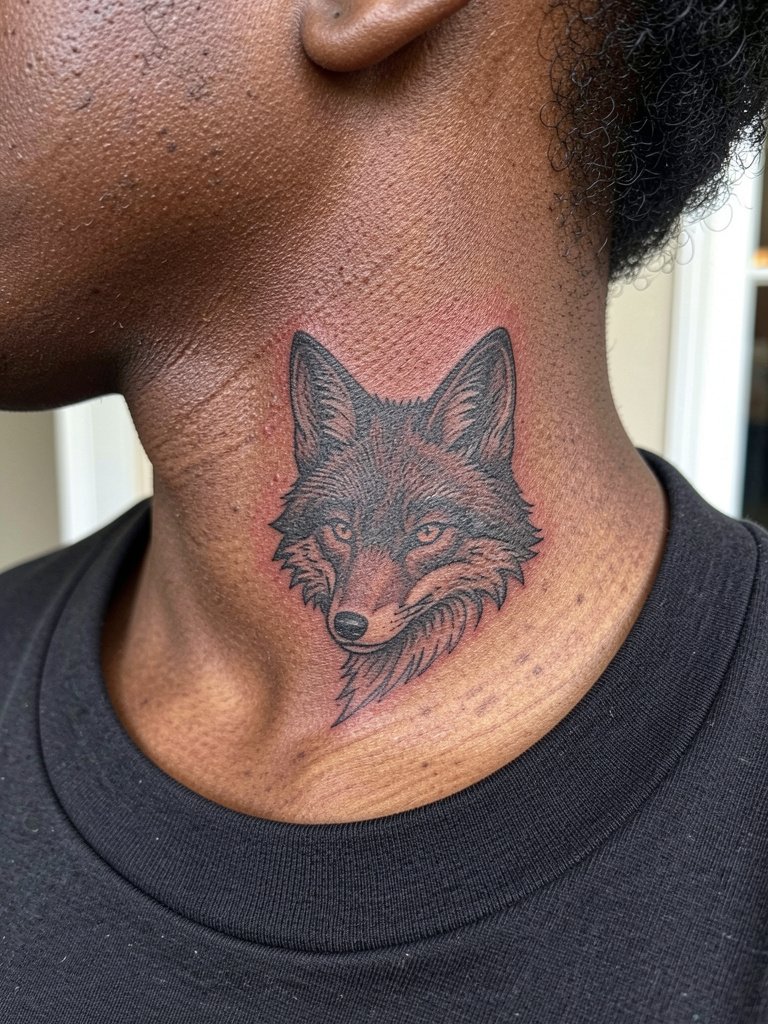
Side-of-neck pieces read boldly and make a statement. Pain can be high due to thin skin and proximity to the throat. Sessions are short for compact portraits. In consultation, confirm exactly how high behind the ear the fox sits and ask for simplified shading and heavy outlines to prevent bleed into facial shadows. Overly detailed facial fur lines are a common mistake here. At six months the head keeps contrast. At two years the edges may soften and a light touch-up will bring back the crisp jawline. Style with wide-neck tops that frame the lateral neck rather than high collars.
24. Black Traditional Hourglass on Thigh Inner Side
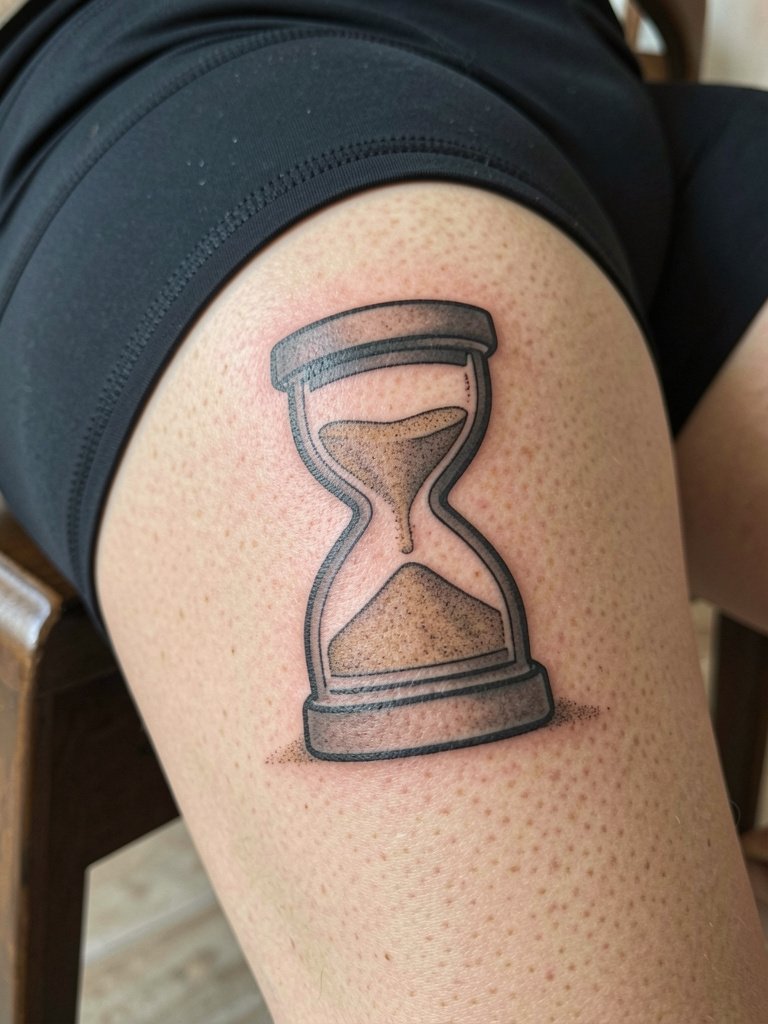
Inner thigh work is private and heals under less sun exposure but it sees friction from clothing. Pain ranges moderate to high. Sessions should be scheduled with a comfortable chair and breaks. Ask for bold outer lines and simple interior sand shapes so the piece does not go muddy. The mistake is packing tiny grain detail. At six months the hourglass sits clean. At two years minimal softening may occur along the edges and a touch-up keeps the silhouette strong. For session clothing, wear fitted bike shorts so the artist has steady access and you avoid fabric shifting.
25. Black Traditional Ship Anchor Cluster on Chest Pocket
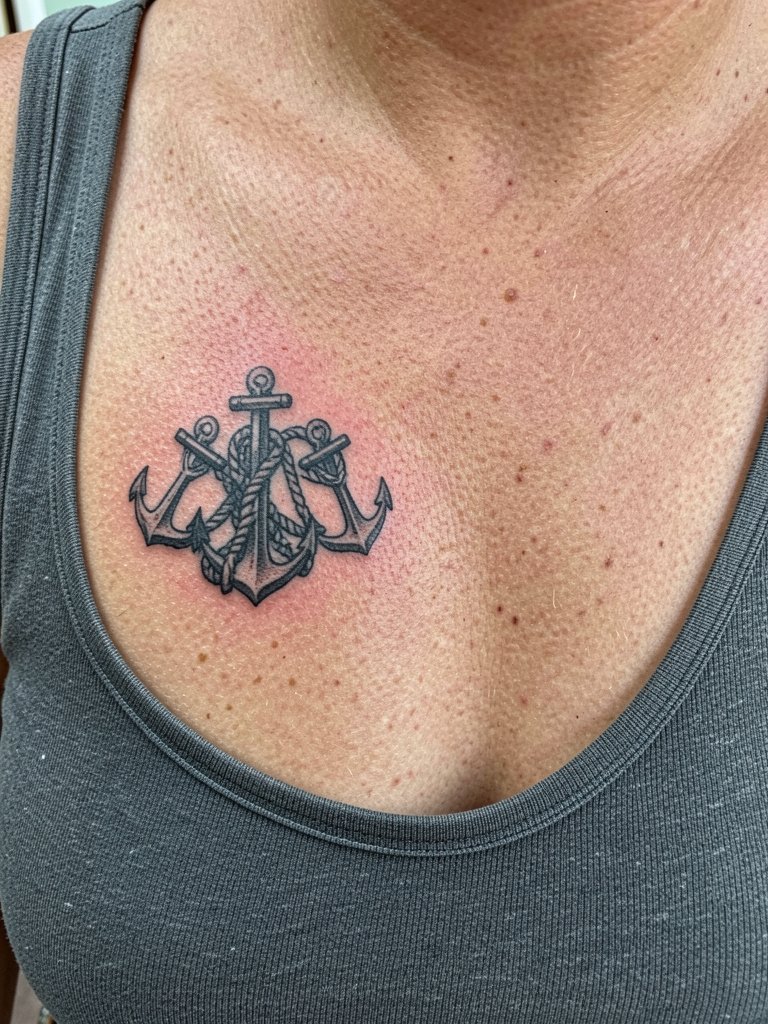
Pocket clusters are playful and read well when elements are scaled consistently. Pain is moderate. Sessions can be done in one long pass or two shorter ones. Tell the artist you want each anchor scaled to a consistent unit so the cluster reads like a printed pocket. Tiny mismatched scales are a common mistake that makes the cluster look busy. At six months the grouping is distinct. At two years a touch-up may be useful on smaller anchors. Pair with open-collar casual shirts that let the chest pocket peek out.
26. Black Traditional Coin on Ribcage Panel
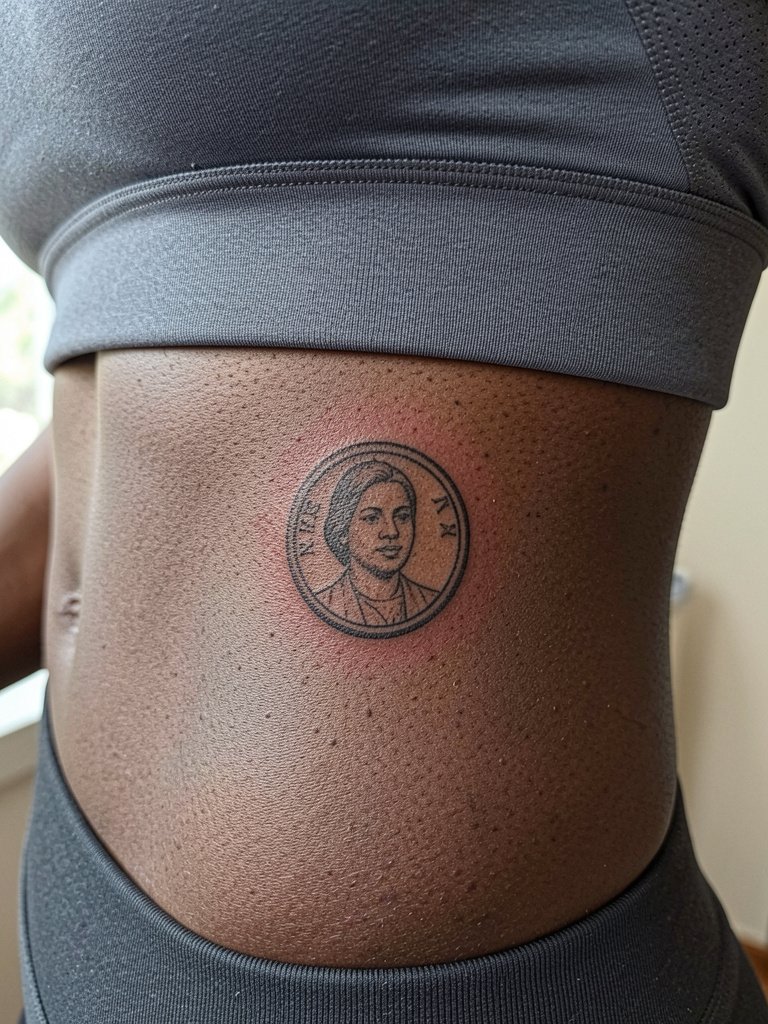
Small circular motifs on the ribs need extra margin. Pain is high. Sessions for coins are short but require a confident hand. Ask for a bold outer ring and simplified inner portrait so the coin reads when viewed from a distance. Overworking tiny facial features inside a coin leads to early blur. At six months the coin looks solid. At two years the inner portrait may require a single-line refresh. If you plan to sunbathe, shield the area during healing to slow fading.
27. Black Traditional Lightning Bolt on Forearm Side
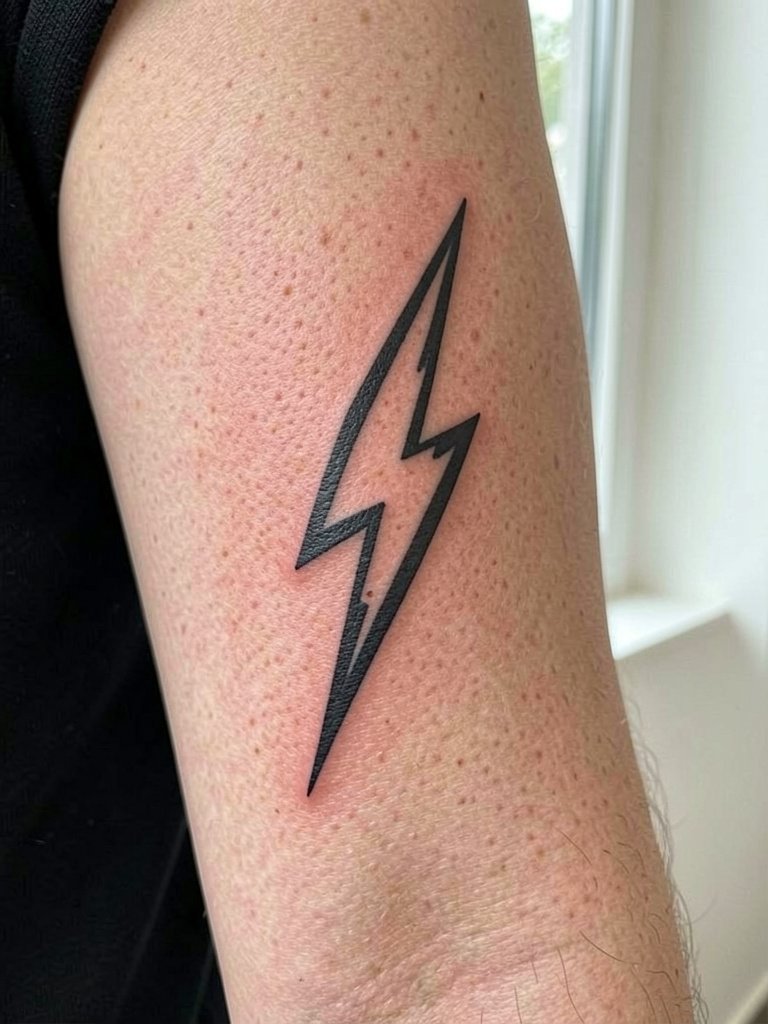
A lightning bolt is a compact graphic that ages well when its angles are bold. Pain is low to moderate and sessions are quick at 20 to 45 minutes. Request crisp, thick outer lines and keep internal accents as negative space. The typical mistake is choosing a hairline bolt with tiny internal shading that blurs. At six months the bolt will remain crisp. By two years the edges may soften slightly and a micro touch-up restores the stark geometry. For daily wear, this piece looks modern with short-sleeve henleys that reveal the outer forearm without constriction.
Frequently Asked Questions
Q: How do traditional black old school pieces age compared with single-needle fine-line tattoos?
A: In my experience, bold traditional black pieces tend to read longer without frequent retouches because the thick outlines and saturated fills leave room for natural softening. Fine-line single-needle work can look delicate and detailed at first and then lose that crispness faster on certain body zones. If you prefer detail, ask for slightly heavier lineweight and a touch of negative space to preserve clarity.
Q: Are there placements I should avoid for extremely small traditional motifs?
A: Yes, high-friction or thin-skin spots like the fingers, palms, and very close to the bone often eat small detail. For tiny anchors, stars, or letters, choose the outer forearm, calf, or thigh instead. For session wear, bring clothing that gives the artist stable access and does not rub the fresh ink, such as a loose tank top or fitted bike shorts depending on placement.
Q: Where can I find healed examples and portfolios without naming artists directly?
A: Search platform tags and community threads with topic-specific keywords and location filters. Use hashtags and terms that match the style and placement you want. Try location filters on social platforms, look through portfolio sites using keywords like "traditional blackwork healed" and "old school black tattoo healed," and browse community forums for tagged healed shots in different skin tones.
Q: How often should I expect touch-ups for traditional black pieces?
A: Plan for a likely small touch-up around year one to two for visible, high-wear placements like hands and wrists. Larger saturated work on the upper arm and thigh often goes longer between corrections. I have seen chest and ribcage pieces need earlier refreshes if they get a lot of sun or friction.
Q: What should I wear to the session for placements like sternum, ribs, or inner thigh?
A: Wear clothing that the artist can work around without you needing to adjust fabric during the session. For sternum or chest, a fitted sports bra works. For ribs and side torso, a cropped top that sits above the rib area is best. For inner thigh work, fitted bike shorts keep the area accessible while maintaining modesty.