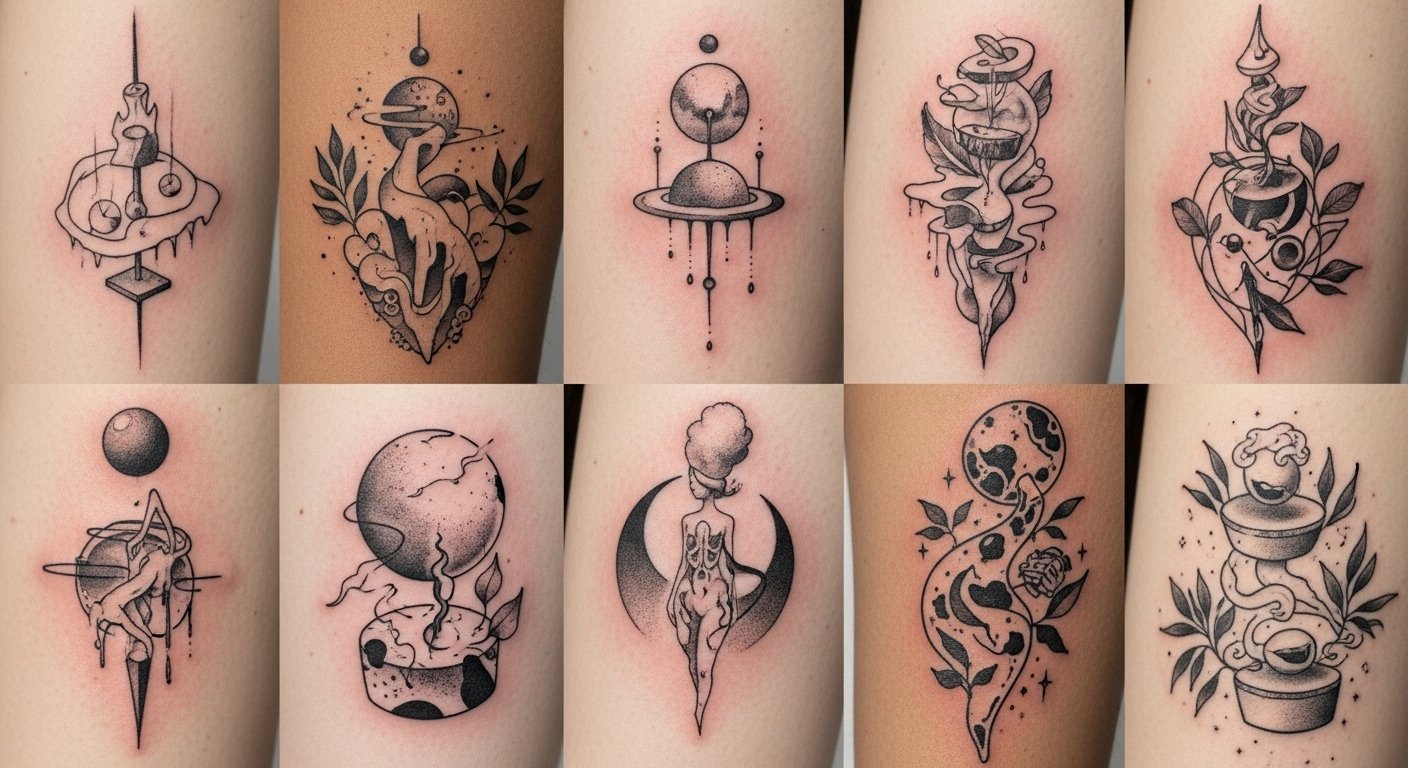
I spent months chasing surreal tattoo ideas online before I realized my real problem: knowing which dreamlike designs would still read clearly after healing. I wanted ink that felt like a remembered dream, not a blurry mess six months later. These 26 surreal tattoos lean on fine line, micro-realism, blackwork, and soft color washes—the styles I keep seeing last through real life and still feel otherworldly.
This list focuses on surreal, dreamlike designs that work as small placements or full statement pieces. Ideal for forearm, ribs, thigh, and behind-the-ear placements. From what I’ve seen in 2026 trends, double-exposure and floating anatomy pieces keep coming up—and they age differently depending on line weight and saturation.
1. Fine Line Surreal Sleeve on Inner Forearm
Style/Technique: Fine Line / Illustrative
Pain Level: Medium (3-4/10)
Session Time: Multiple 2-4 hour sessions
Best For: Statement piece, visible but easy to cover
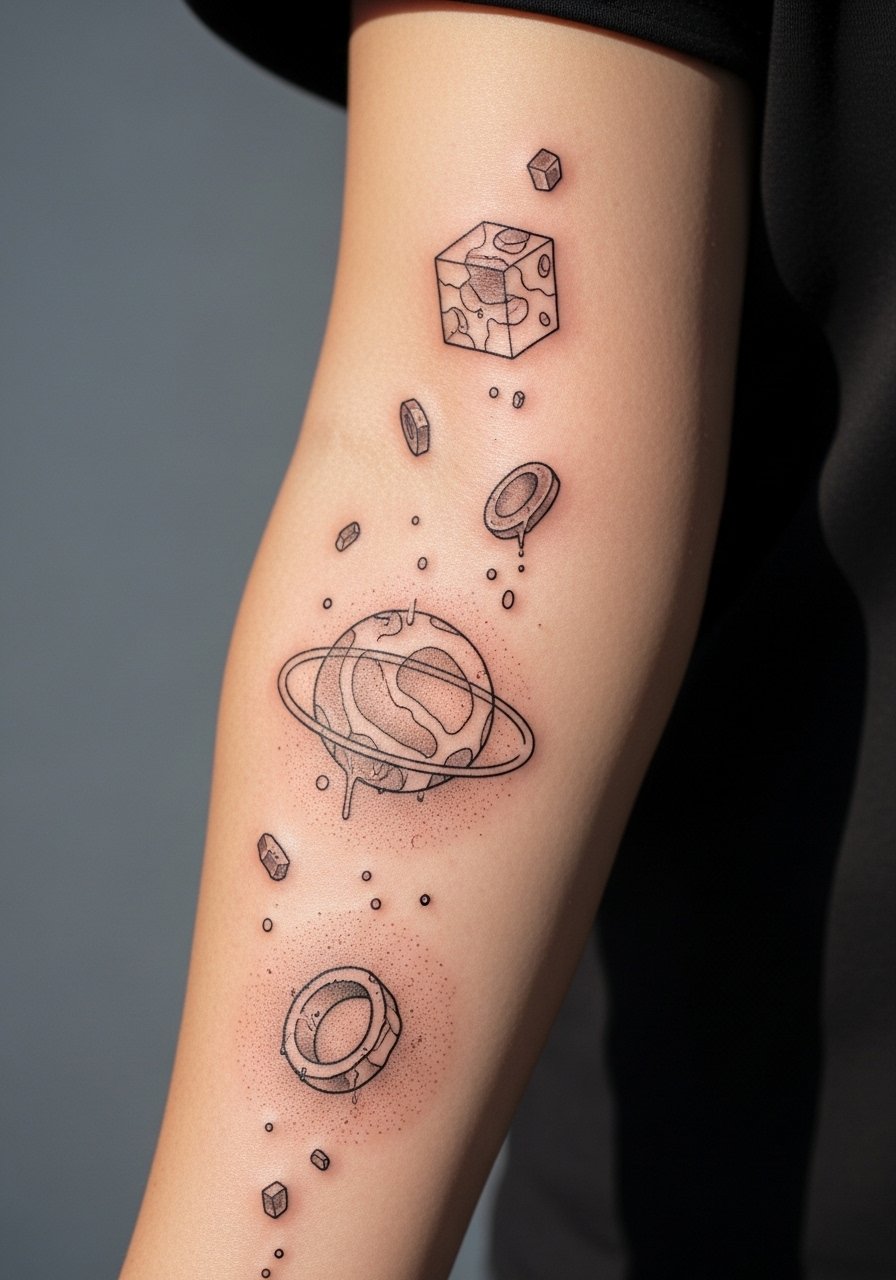
I chose this style when I wanted a sleeve that felt like a sequence of dreams. Fine lines let tiny surreal details—floating eyes, melting clocks—sit together without overpowering. Inner forearm is tolerant of line work and shows detail well healed. Expect moderate discomfort during long sessions. Heals in 2-3 weeks on the surface; full settling takes a few months. Fine lines can blur if lines sit too close—ask your artist for slight spacing. Look for artists known for precision and illustrative dotwork.
2. Micro-Realism Double Exposure on Upper Arm
Style/Technique: Micro-Realism / Double Exposure
Pain Level: Low-Medium (2-4/10)
Session Time: 3-6 hours
Best For: Visible, photographic feel
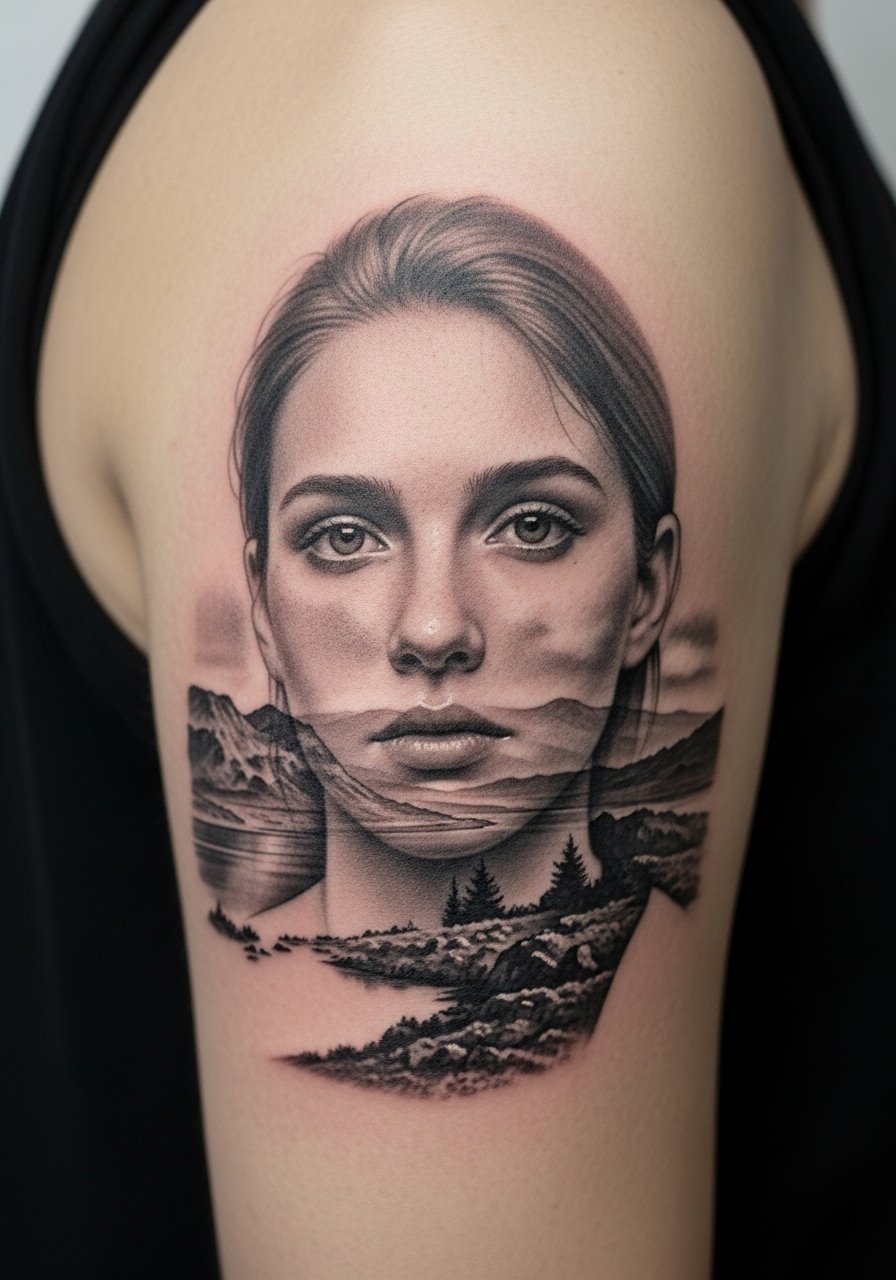
Micro-realism double exposure blends a portrait with a landscape or celestial element. It looks like a fragment of a dream captured in ink. Upper arm is forgiving for blending and tonal work. Pain is moderate but manageable. Expect several hours to get smooth gradients. Healed results depend on contrast—ask for slightly stronger saturation than you think for longevity. Common mistake: making tiny facial features too small; they lose clarity. Seek artists with strong portfolio examples of healed micro realism.
3. Blackwork Surreal Spine Column
Style/Technique: Blackwork / Geometric-Surreal
Pain Level: High (6-8/10)
Session Time: Multiple sessions, 1-3 hours each
Best For: Bold statement, dramatic silhouette
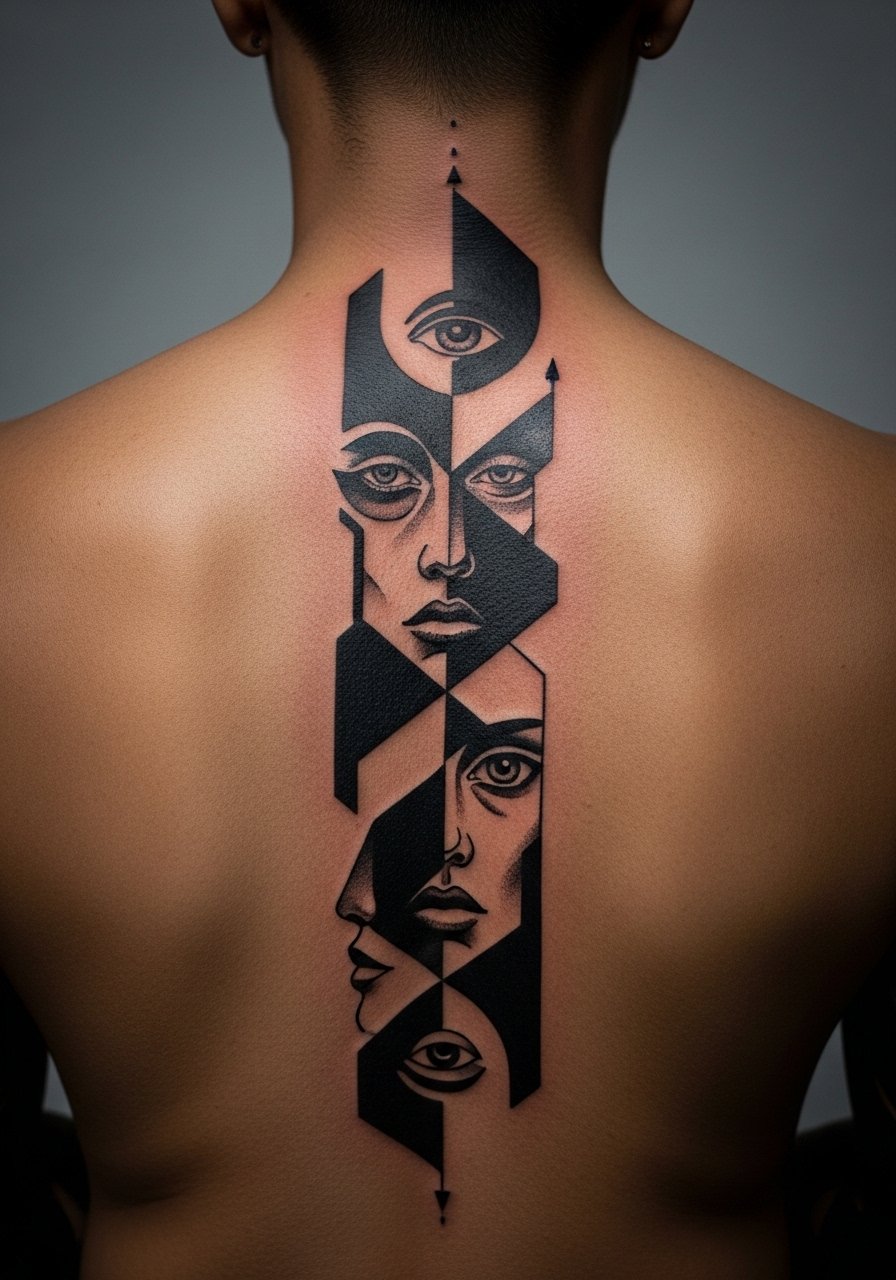
A blackwork spine piece reads like a carved totem in motion. The central column of dense black and negative-space faces creates a dreamlike rhythm. Spine placement is intense on pain and requires breaks. Solid black blocks age well if done correctly, but edges can soften—ask for crisp transitions. Healing needs gentle care to avoid scabbing on solid fills. Artists who specialize in blackwork will recommend proper layering to prevent blowouts.
4. Watercolor Surreal Landscape on Ribcage
Style/Technique: Watercolor / Painterly
Pain Level: High (7-8/10)
Session Time: 2-4 hours per session
Best For: Hidden, intimate art
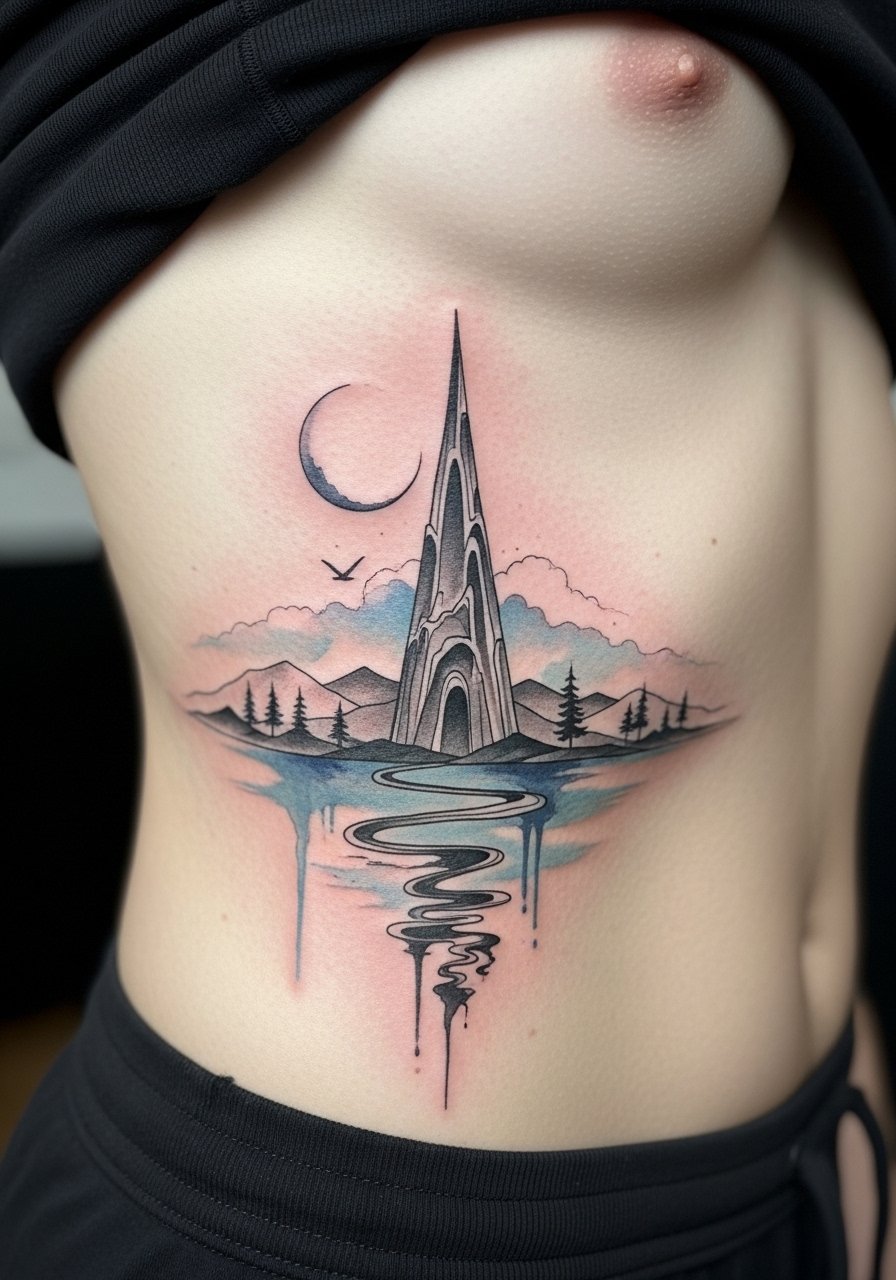
Ribcage watercolor gives a floating, dreamlike scene—impressionistic skies, melting horizons. The rib area hurts more but looks gorgeous tucked under clothing. Colors can look muted while healing; they settle back after a few months. Watercolor fades faster than black, so expect touch-ups if you love vibrancy. Ask your artist about pigment choice and saturation. Common mistake: too many tiny details in watercolor—simpler shapes keep the dream feel and age better.
5. Neo-Traditional Surreal Portrait on Thigh
Style/Technique: Neo-Traditional / Color-Heavy
Pain Level: Medium (4-5/10)
Session Time: 3-6 hours
Best For: Bold color, easy to hide
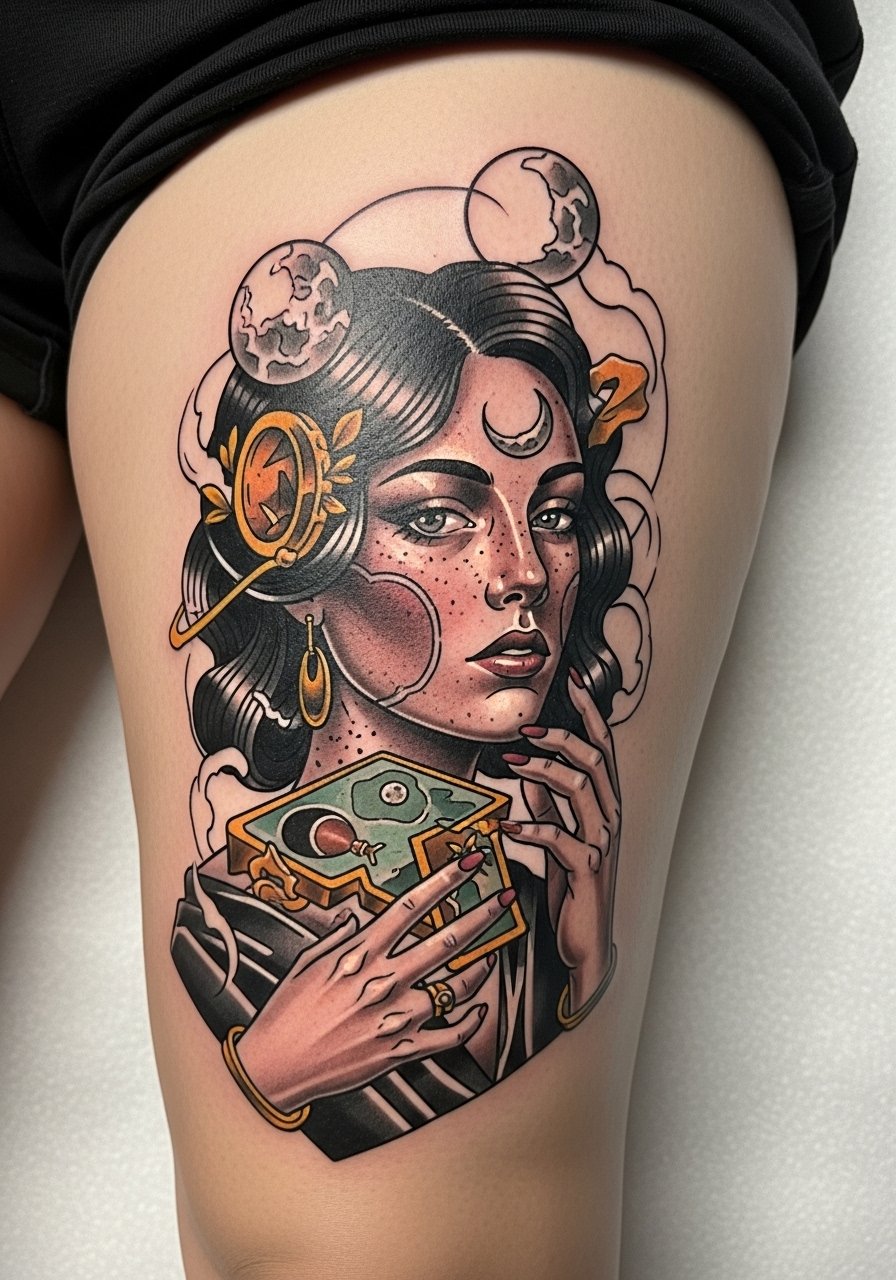
Neo-traditional lets you pair bold outlines with surreal iconography—floating objects, symbolic animals, or mismatched anatomy. Thigh placement is comfortable and shows color retention well. Pain is moderate. Color holds best here compared with sun-exposed areas. A common issue is overcrowding the composition—leave negative space to keep the dreamlike vibe. Look for artists who balance linework and painterly fills.
6. Minimalist Line Surreal Behind Ear Motif
Style/Technique: Minimalist / Line Art
Pain Level: Low (2-3/10)
Session Time: 30-60 minutes
Best For: First-timers, subtle ink
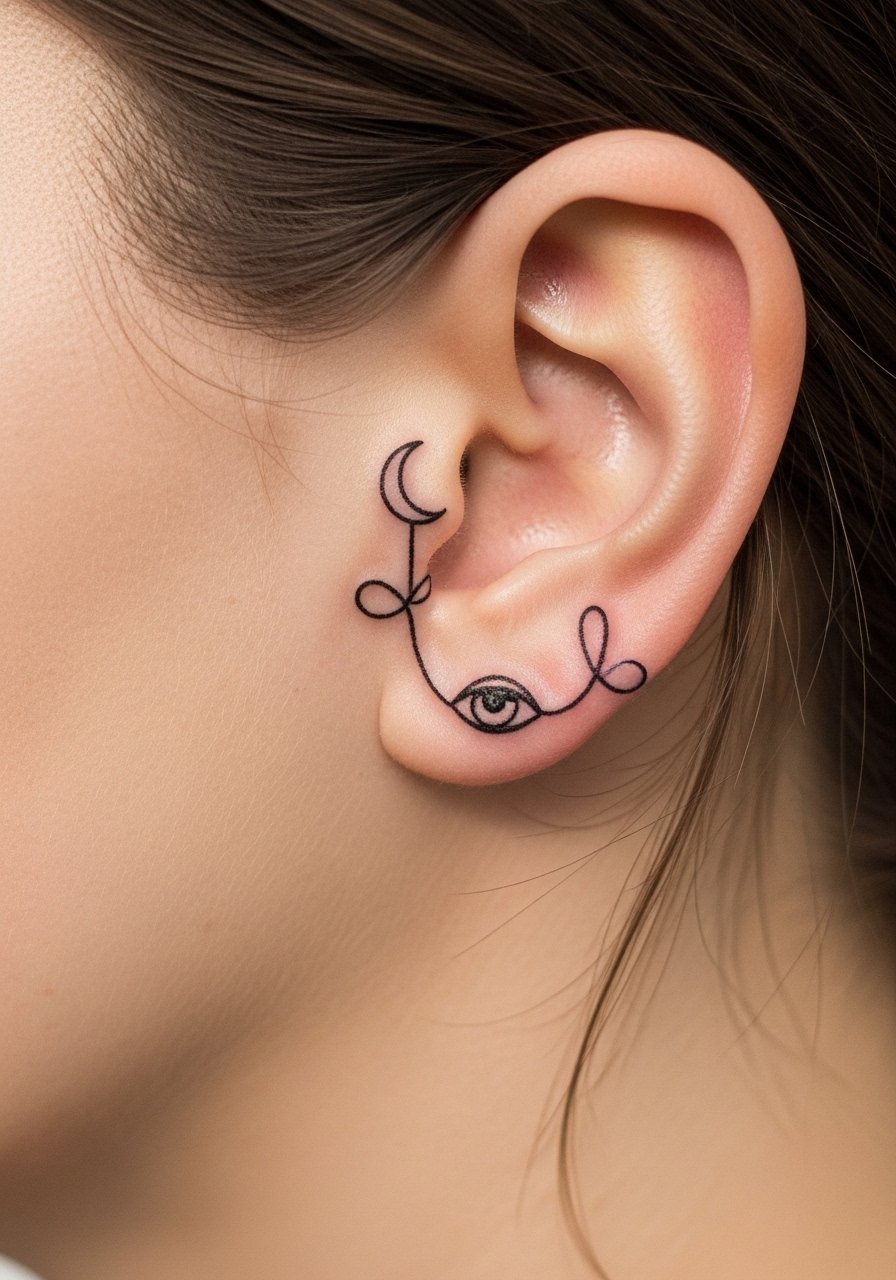
Tiny surreal motifs behind the ear are sweet and personal. Clean single lines form small dream elements. Pain is low but the area can tingle. Heals quickly—surface healed in 1-2 weeks. Fine single lines can fade faster, so opt for slightly bolder lines if you want longevity. Avoid placing too many crossing lines in a tiny space. Ask for healed examples on similar placements.
7. Surrealist Hand Tattoo with Floating Objects
Style/Technique: Illustrative / Fine Line
Pain Level: High (6-7/10)
Session Time: 1-3 hours
Best For: Visible, interactive placement
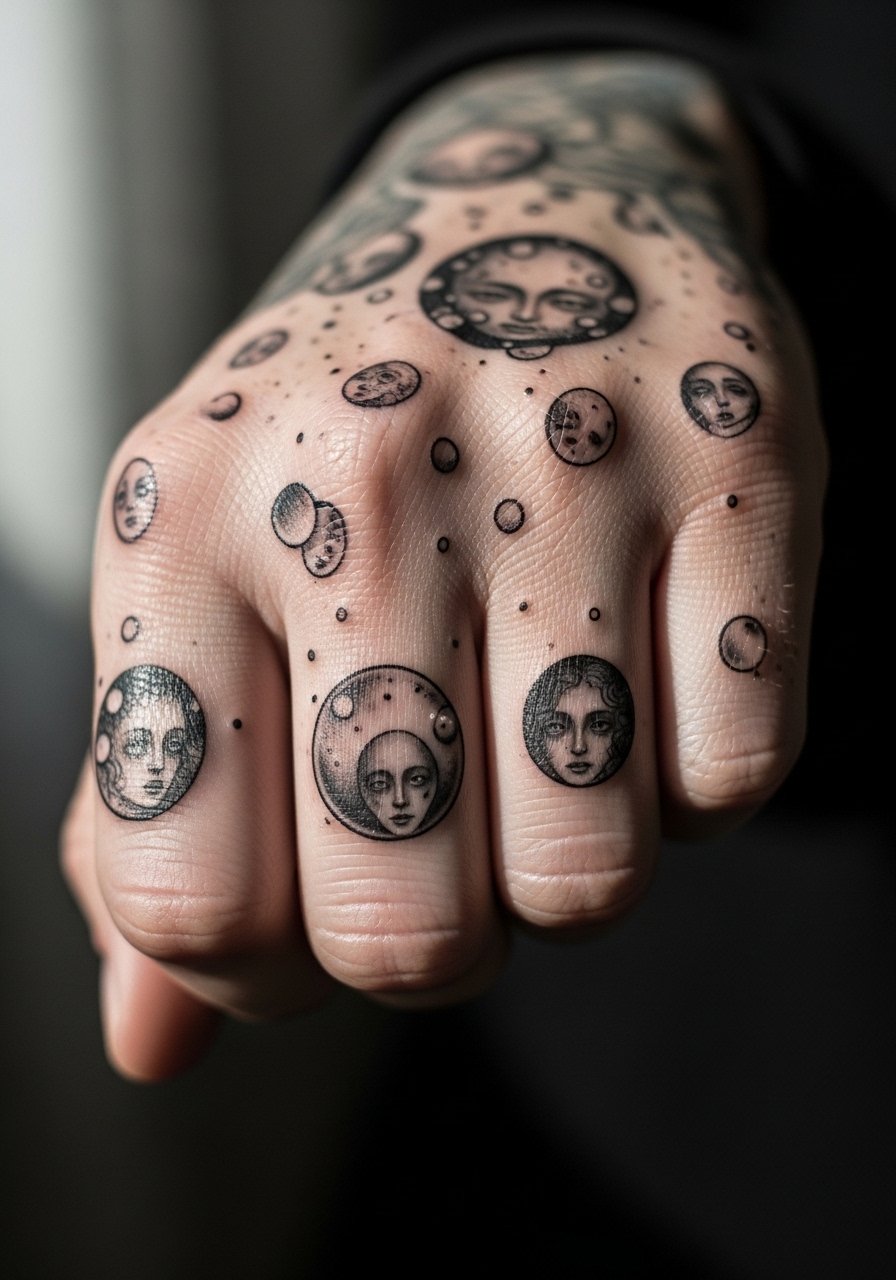
Hands are expressive but tough for durability. A surreal arrangement of floating objects across the hand looks like play caught mid-motion. Expect higher pain and faster fading because hands get so much wear. Healed ink often softens, so lines should be slightly stronger than you’d pick for the forearm. Artists may recommend touch-ups. Avoid tiny text or delicate details that disappear fast.
8. Micro-Realism Eye in Palm
Style/Technique: Micro-Realism / Single-Subject
Pain Level: High (7/10)
Session Time: 1-2 hours
Best For: Bold symbolic piece
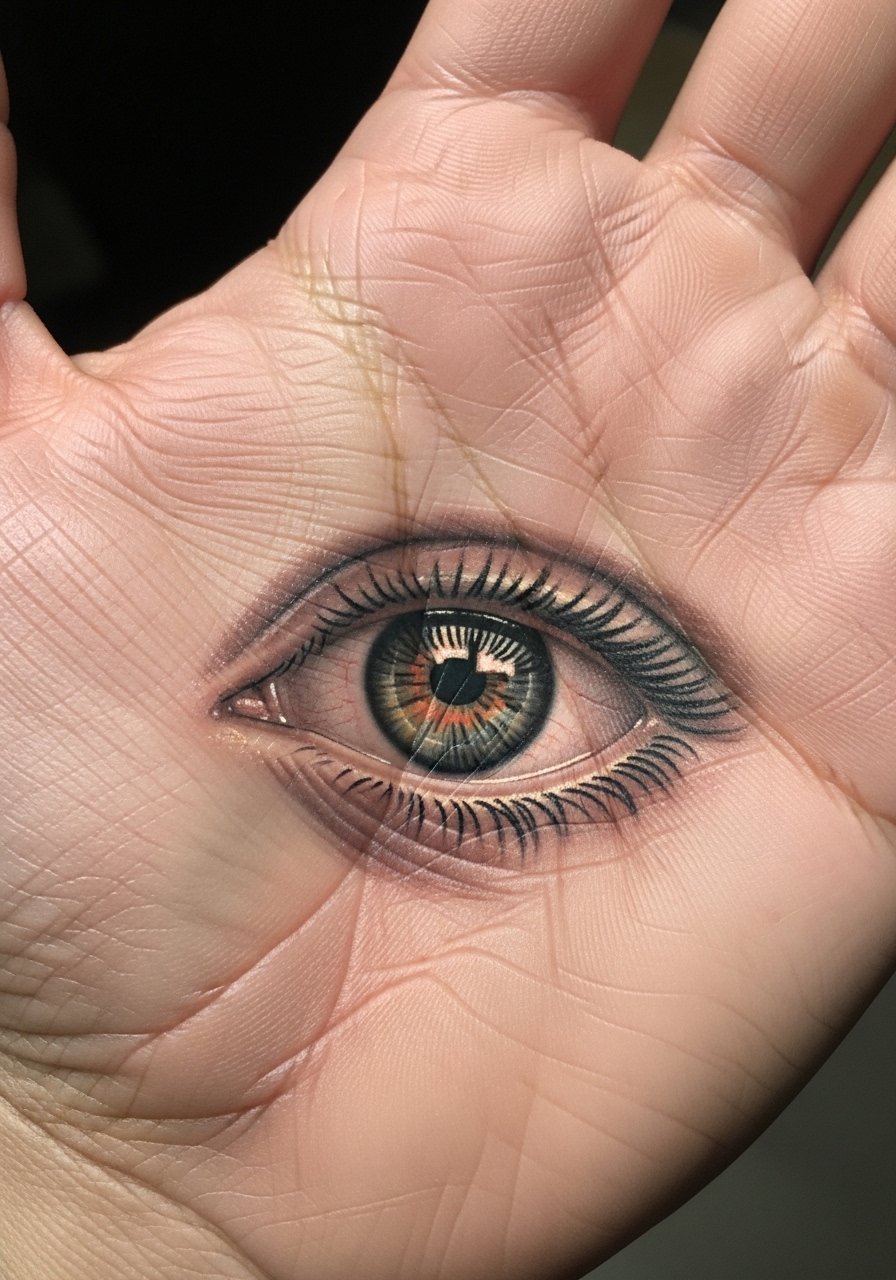
A single micro-realistic eye in a palm or inner wrist feels like a lucid symbol. Palms are notorious for quick fading and heavy touch-ups, so discuss expectations. Pain in this area is sharp. Healed detail may soften; artists sometimes suggest the inner wrist instead for similar visibility and better longevity.
9. Surreal Celestial Backpiece with Planets
Style/Technique: Blackwork + Color / Cosmic
Pain Level: Medium-High (5-7/10)
Session Time: Multiple long sessions
Best For: Large statement, back canvas
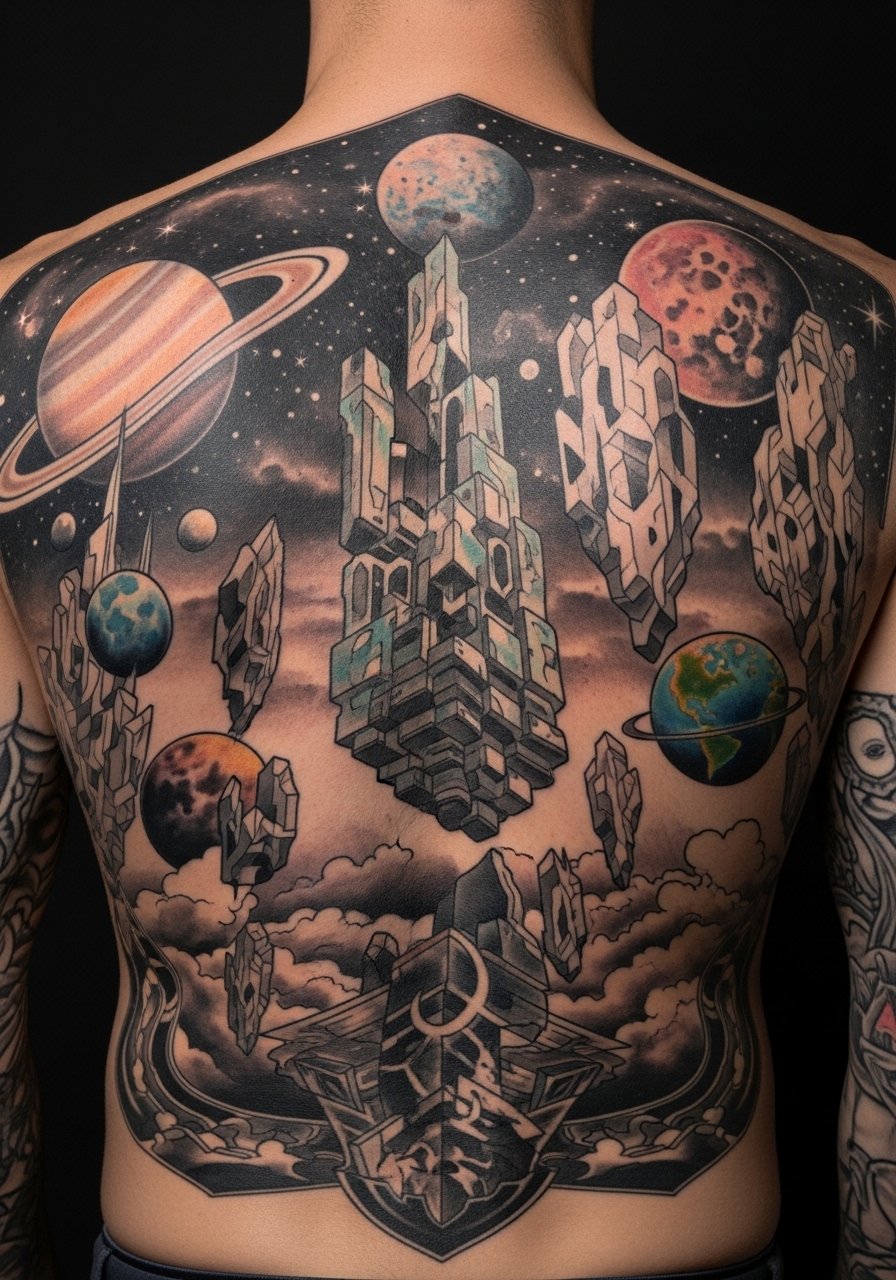
Large backpieces allow expansive surreal scenes. Planets, floating staircases, and stacked moons create a narrative across the canvas. Pain varies by area; spine and ribs hurt more. Large pieces age well when built with solid blacks and saturated midtones. Avoid overly thin tiny stars across large areas—aim for contrast and readable shapes. Artists who do illustrative murals are best here.
10. Surrealist Collarbone Script and Tiny Symbols
Style/Technique: Fine Line / Script + Icon
Pain Level: Medium (3-5/10)
Session Time: 30-90 minutes
Best For: Subtle, visible neckline art
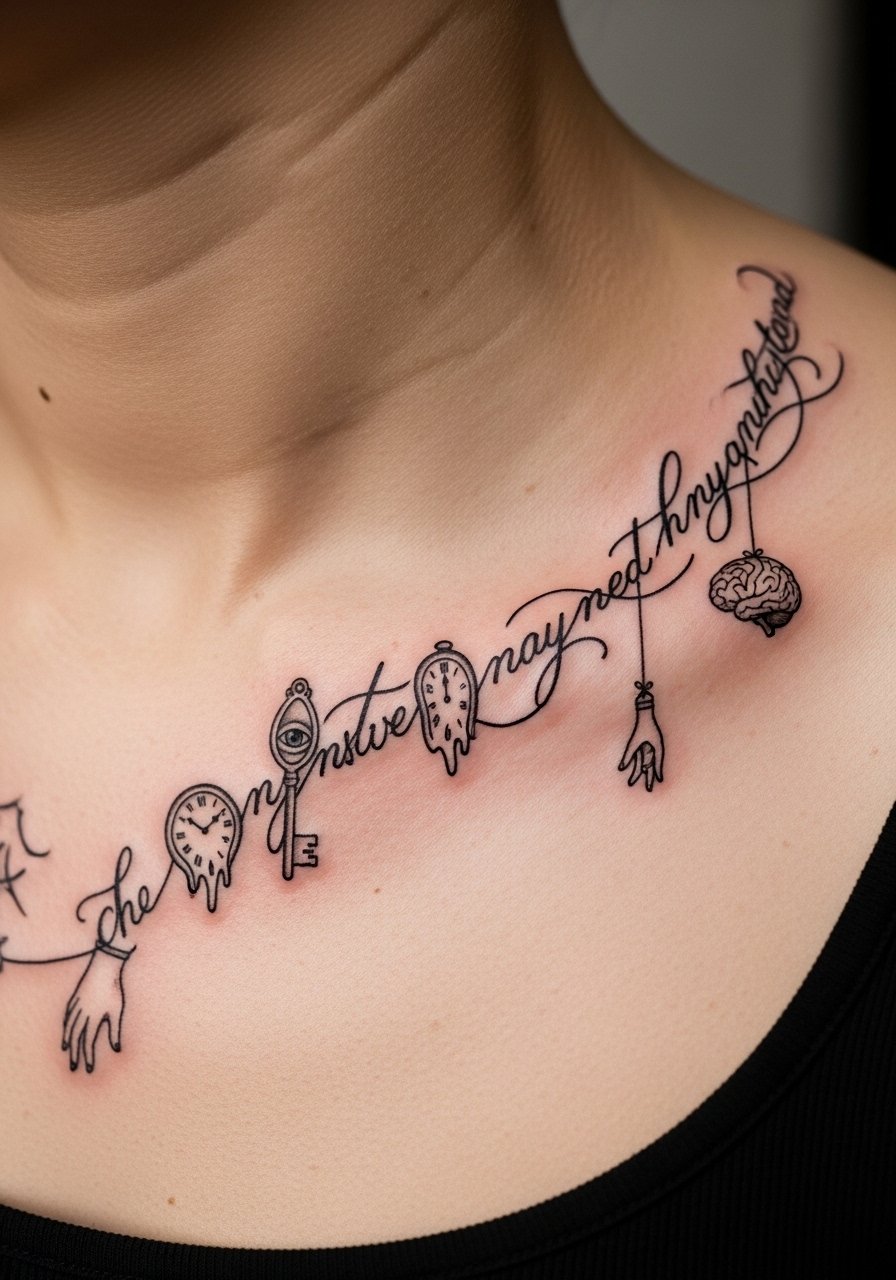
Collarbones are great for slender surreal script woven with tiny symbols—floating keys, crescent moons, or eyes. Visibility is high, and pain is moderate. Script and thin lines here can blur if letters are too small—ask for slightly thicker script. Heals in 2-3 weeks; sun exposure can dull color, so daily SPF is important.
11. Dreamlike Ankle Tattoo: Melting Landscape
Style/Technique: Minimalist / Soft Shading
Pain Level: Medium (4-6/10)
Session Time: 1-2 hours
Best For: Easy-to-hide, delicate scenes
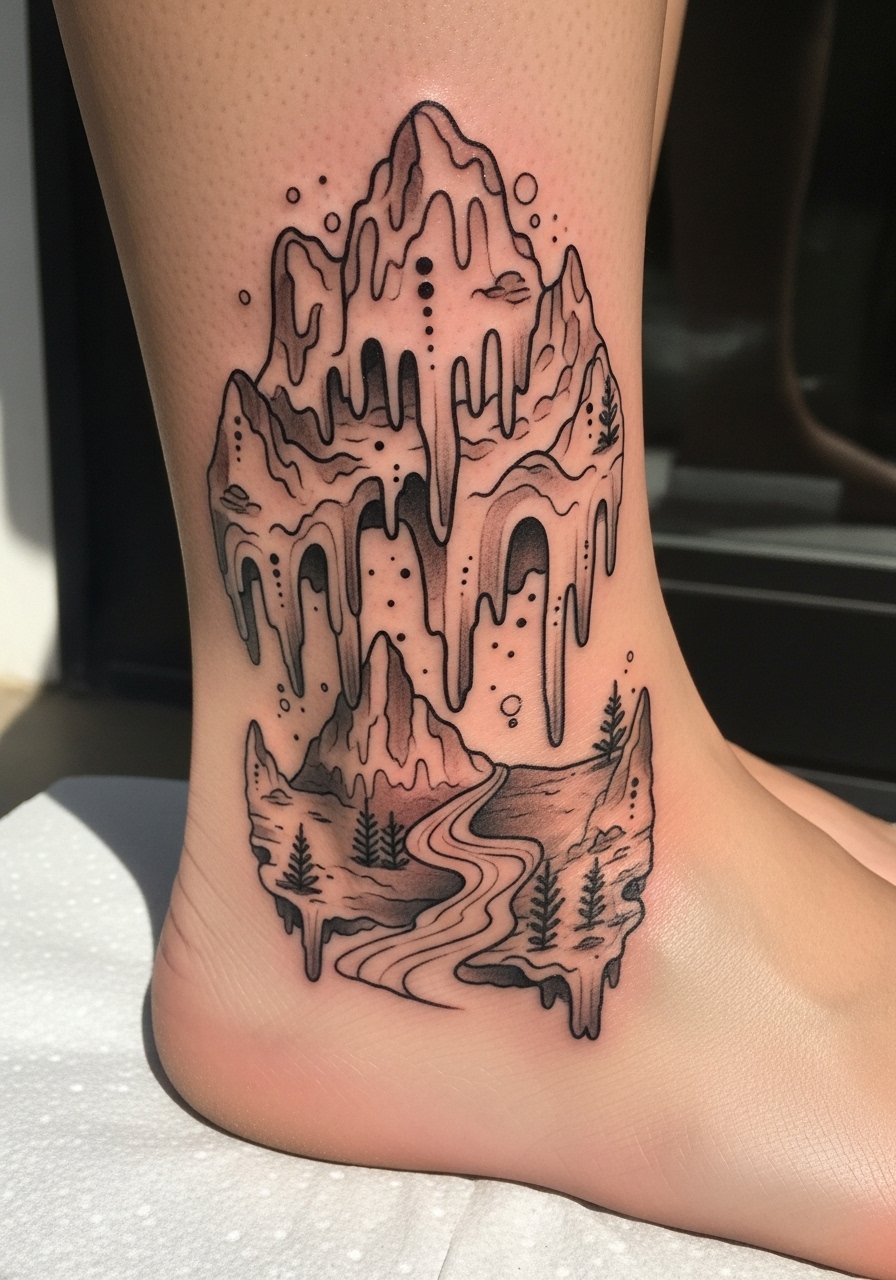
An ankle melting landscape feels like a snapshot of a dream stepping out of your shoe. The area hurts more near bone. Small scenes need clean composition to avoid blurring as they heal. Healed lines retain character if given healthy spacing. Ask for slightly denser shading in gray wash to preserve the effect.
12. Surreal Eye and Moon Rib Panel
Style/Technique: Illustrative / Graywash
Pain Level: High (7-8/10)
Session Time: 2-4 hours
Best For: Hidden, intimate symbolism
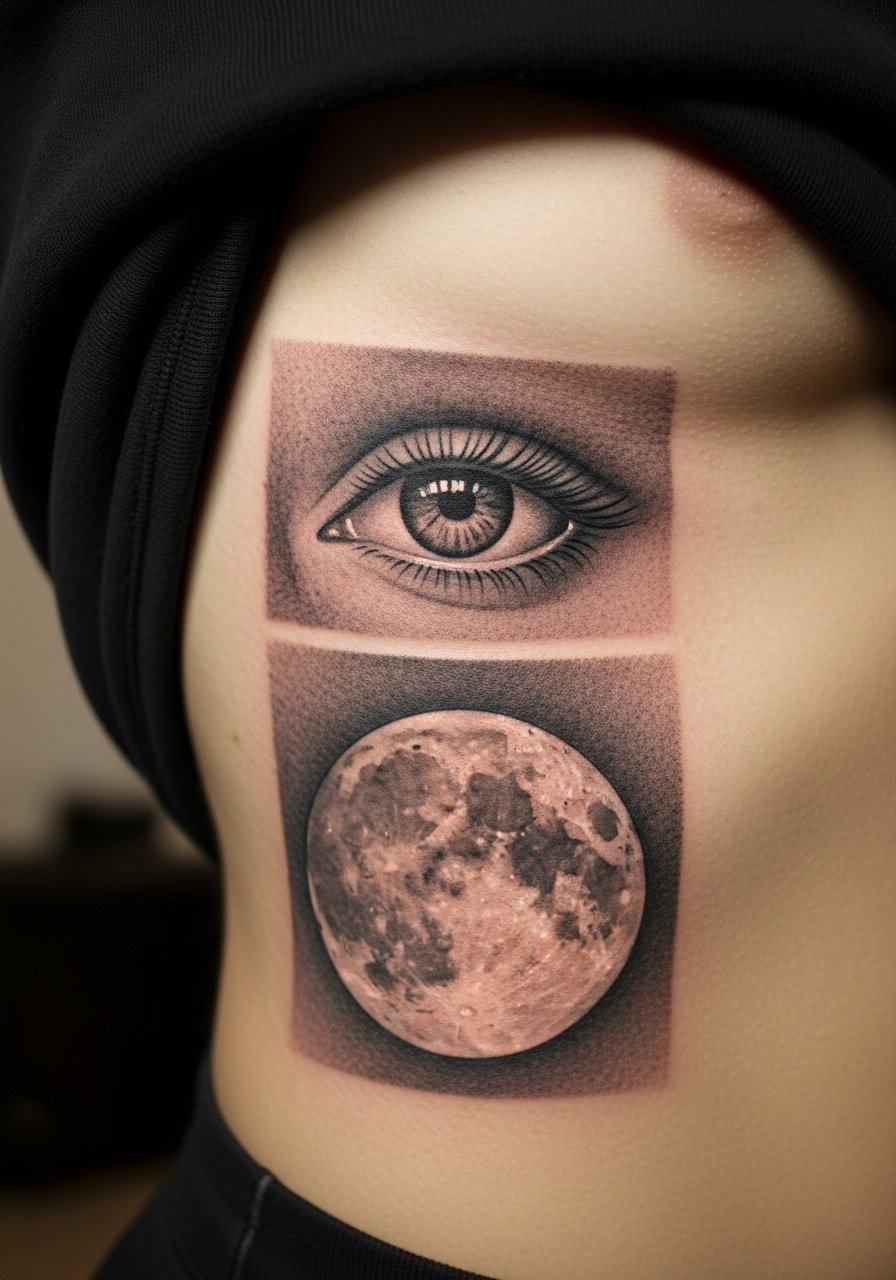
Rib panels allow vertical surreal compositions—an oversized eye, overlapping moons, subtle faces. Pain is high but the results are private and powerful. Graywash ages nicely if the gradients are broad and not stippled too finely. Scabbing from the rib can dull tiny details—follow aftercare and expect a brighter look after full healing.
13. Surreal Throat/Adams Apple Script and Symbols
Style/Technique: Fine Line / Script + Icon
Pain Level: High (7-8/10)
Session Time: 1-2 hours
Best For: Bold visibility, statement pieces
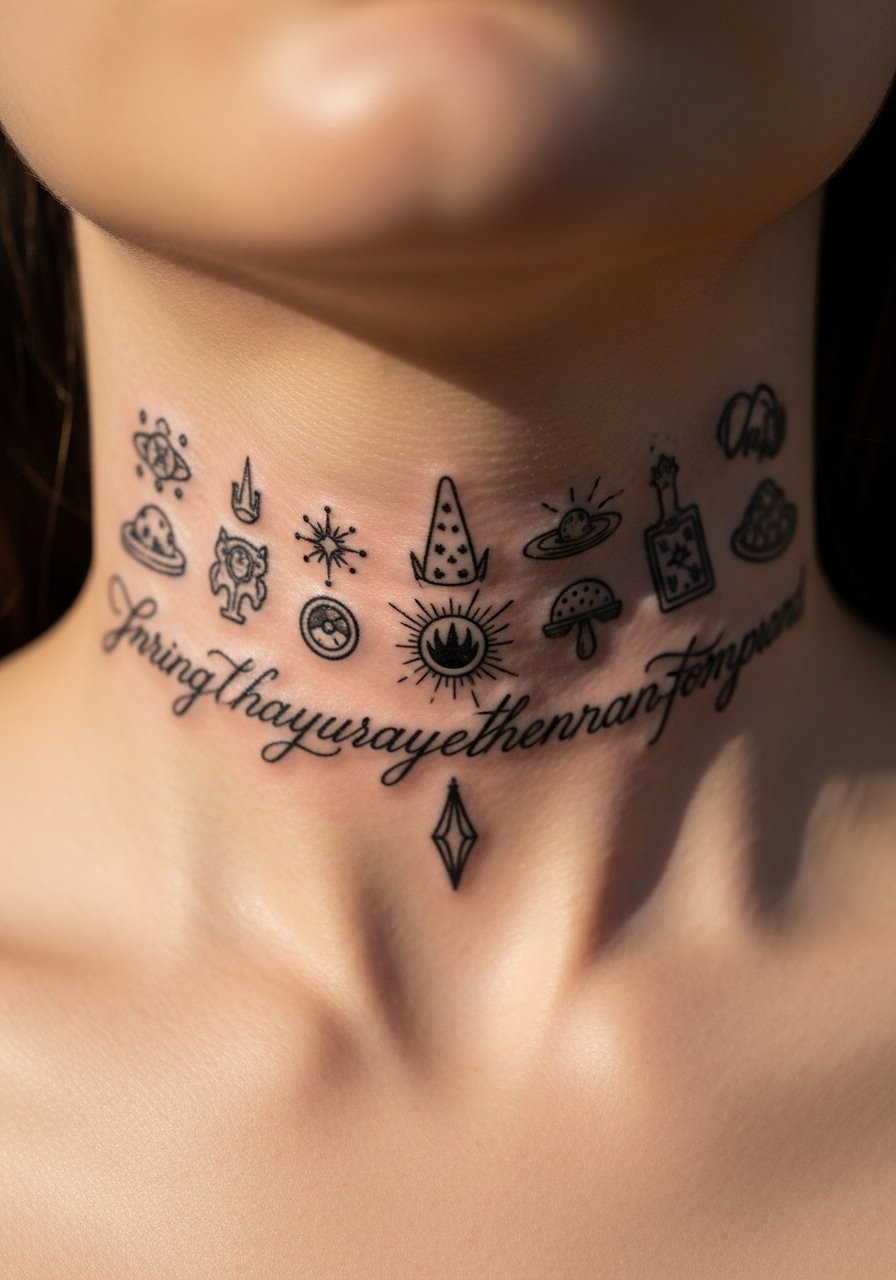
Neck and throat placements are punchy but painful and require confidence. Script there reads as a chant or whisper. Healed ink can darken slightly as the skin moves—keep lines bold enough. Artists may advise against overly intricate details in such a moving area. Think about long-term visibility and workplace implications before committing.
14. Surrealist Sleeve Companion on Outer Forearm
Style/Technique: Mixed (Fine Line + Color)
Pain Level: Medium (3-5/10)
Session Time: 2-5 hours per session
Best For: Cohesive arm story
A companion piece extends a sleeve’s dream narrative. The outer forearm is forgiving and great for people who want visibility without extreme pain. Mixing fine line details with soft color fills gives depth that heals predictably. Avoid tiny overlapping patterns that become a visual mush—space matters.
15. Geometric Surreal Face on Calf
Style/Technique: Blackwork + Geometric
Pain Level: Medium (4-6/10)
Session Time: 2-3 hours
Best For: Bold shape, leg art
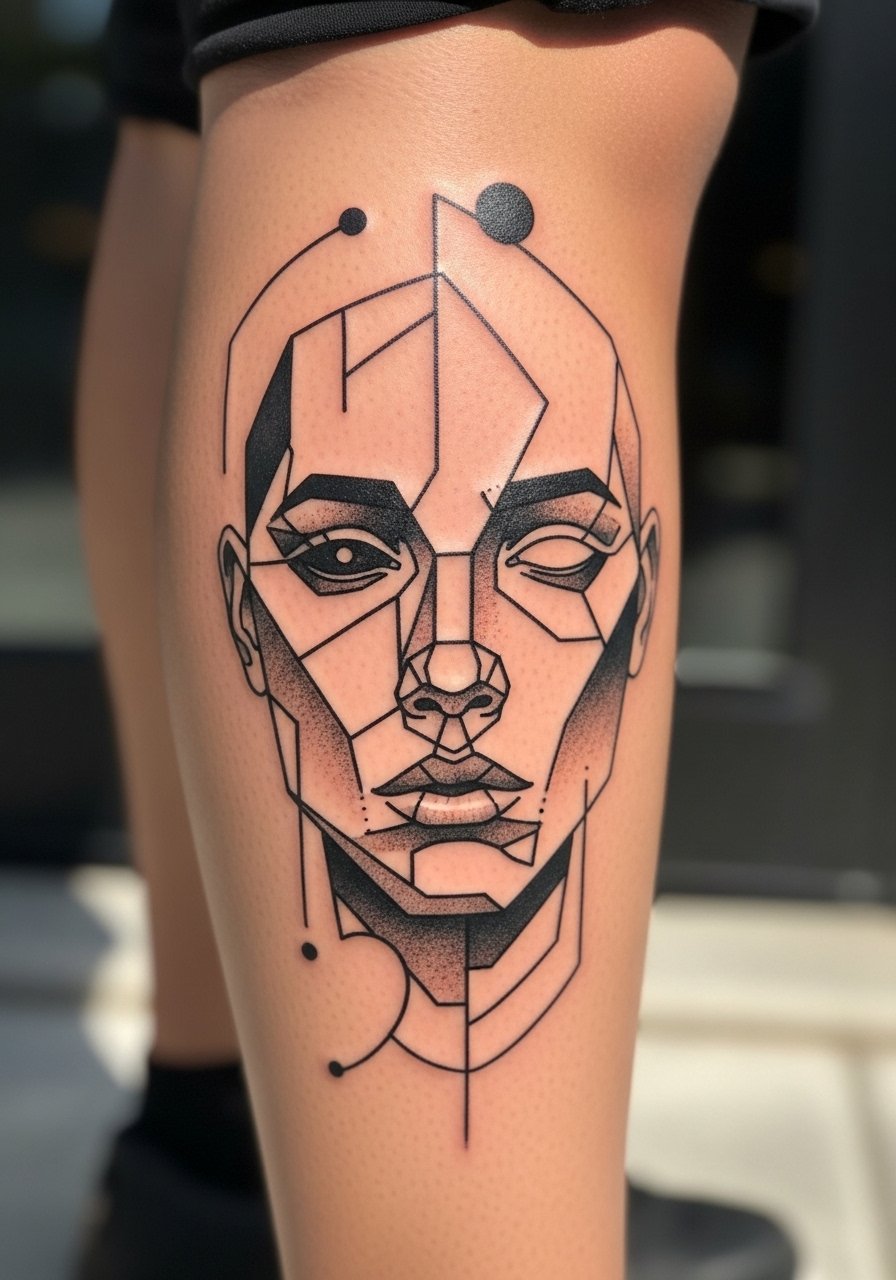
Calf pieces let you play with scale. A surreal face split by geometry reads clearly from a distance. Calf skin holds ink well; pain is moderate. Geometric edges should be crisp to age well. Ask for stencils aligned with muscle flow to avoid distortion when you move.
16. Surreal Petal Eye on Shoulder Blade
Style/Technique: Neo-Traditional / Floral-Surreal
Pain Level: Medium (3-5/10)
Session Time: 1-3 hours
Best For: Easy-to-hide, classic placement
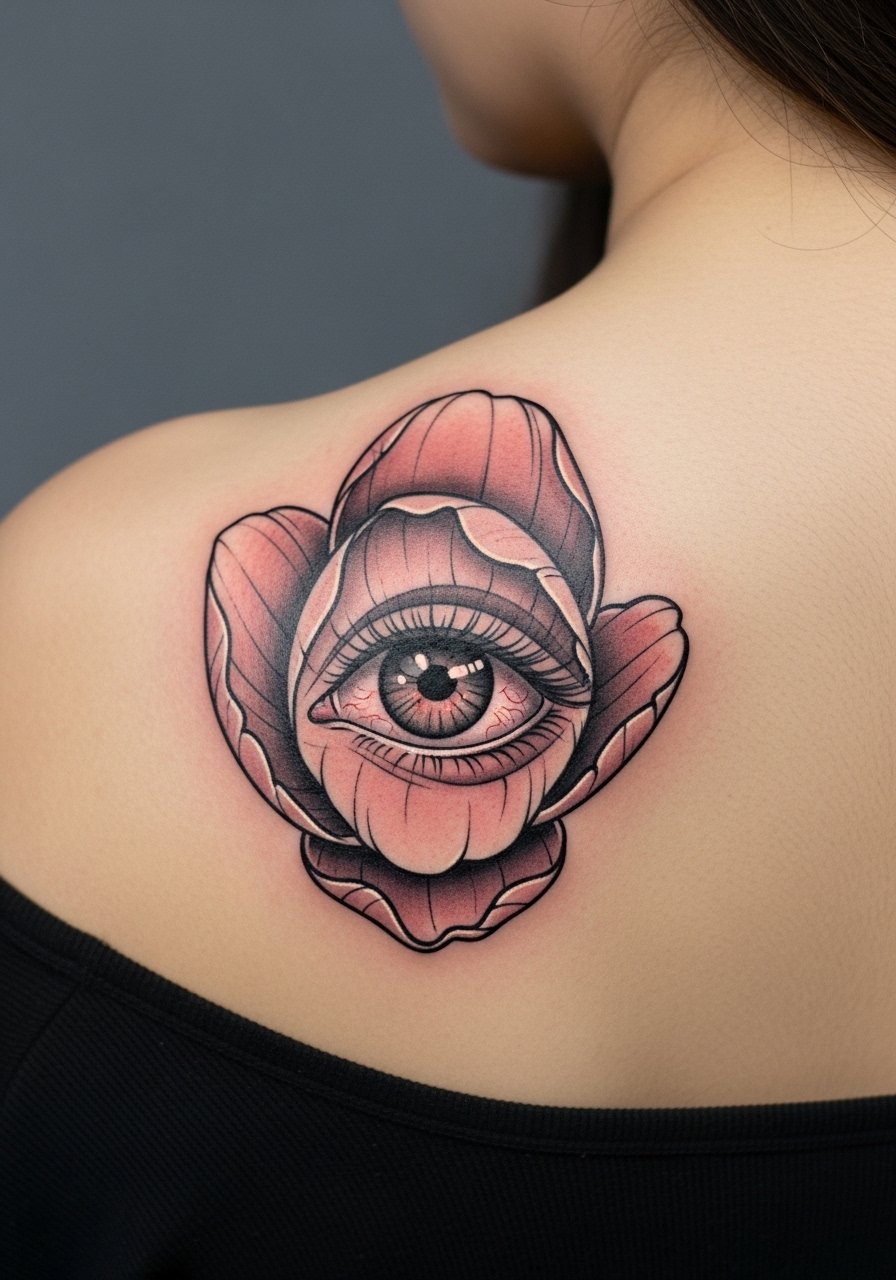
Shoulder blades are reliable for mid-sized surreal motifs. The petal-eye—an eye nested in a bloom—feels poetic. Pain is manageable. Colors here keep their saturation well. Common mistake: too much micro-detail in petals; broader strokes age better. Look for artists who do neo-traditional floral work.
17. Surreal Minimalist Fingerline Loop
Style/Technique: Minimalist / Single Line
Pain Level: High (6-7/10)
Session Time: 15-45 minutes
Best For: Tiny, tactile symbolism
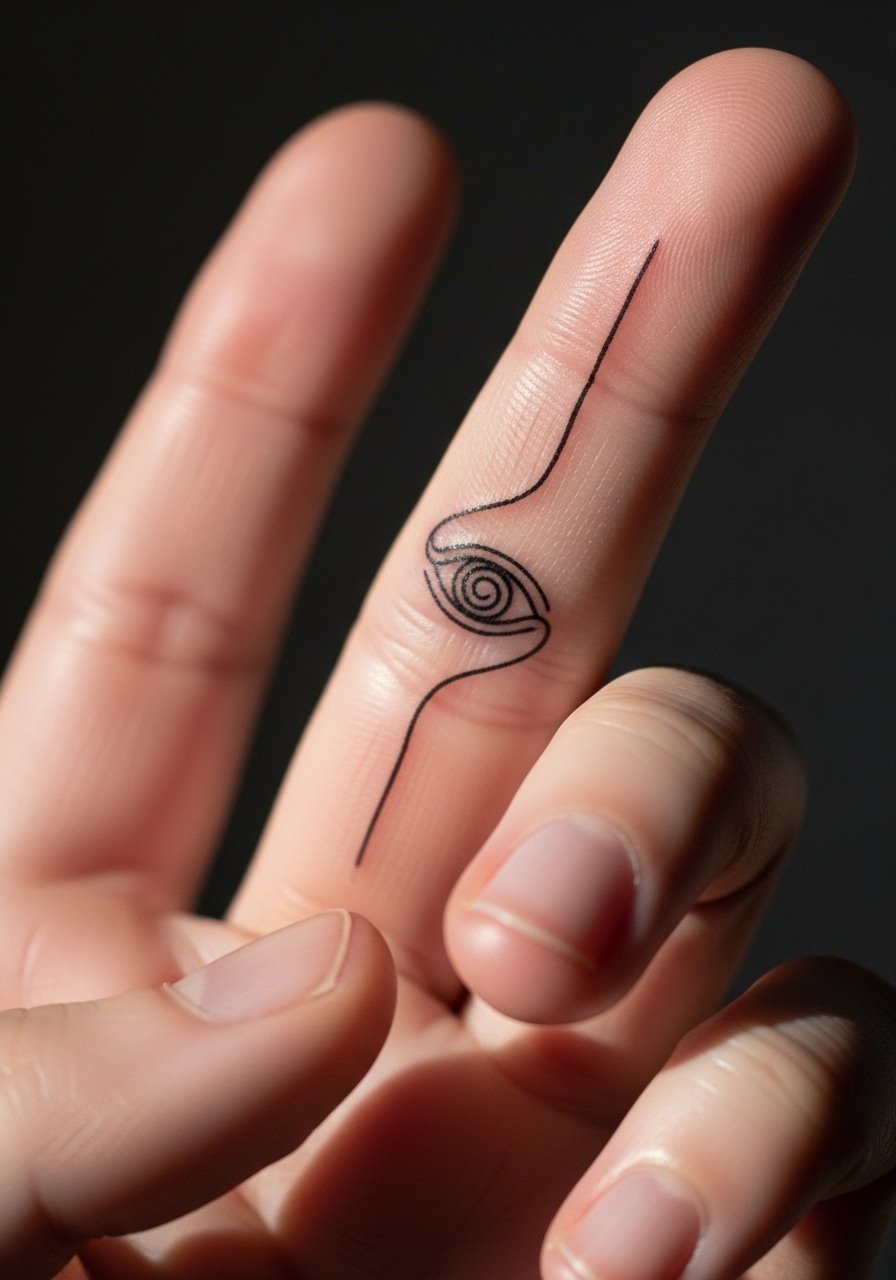
Finger tattoos are intimate and fade fast. A small surreal loop or symbol can feel like a private amulet. Pain on fingers is sharp and healing requires patience—expect faster loss of pigment. Ask for bolder line weight than you think and accept that touch-ups may be necessary.
18. Surrealist Ear-Curve Tiny Constellation
Style/Technique: Dotwork / Minimal
Pain Level: Low-Medium (2-4/10)
Session Time: 20-40 minutes
Best For: Tiny, delicate accents
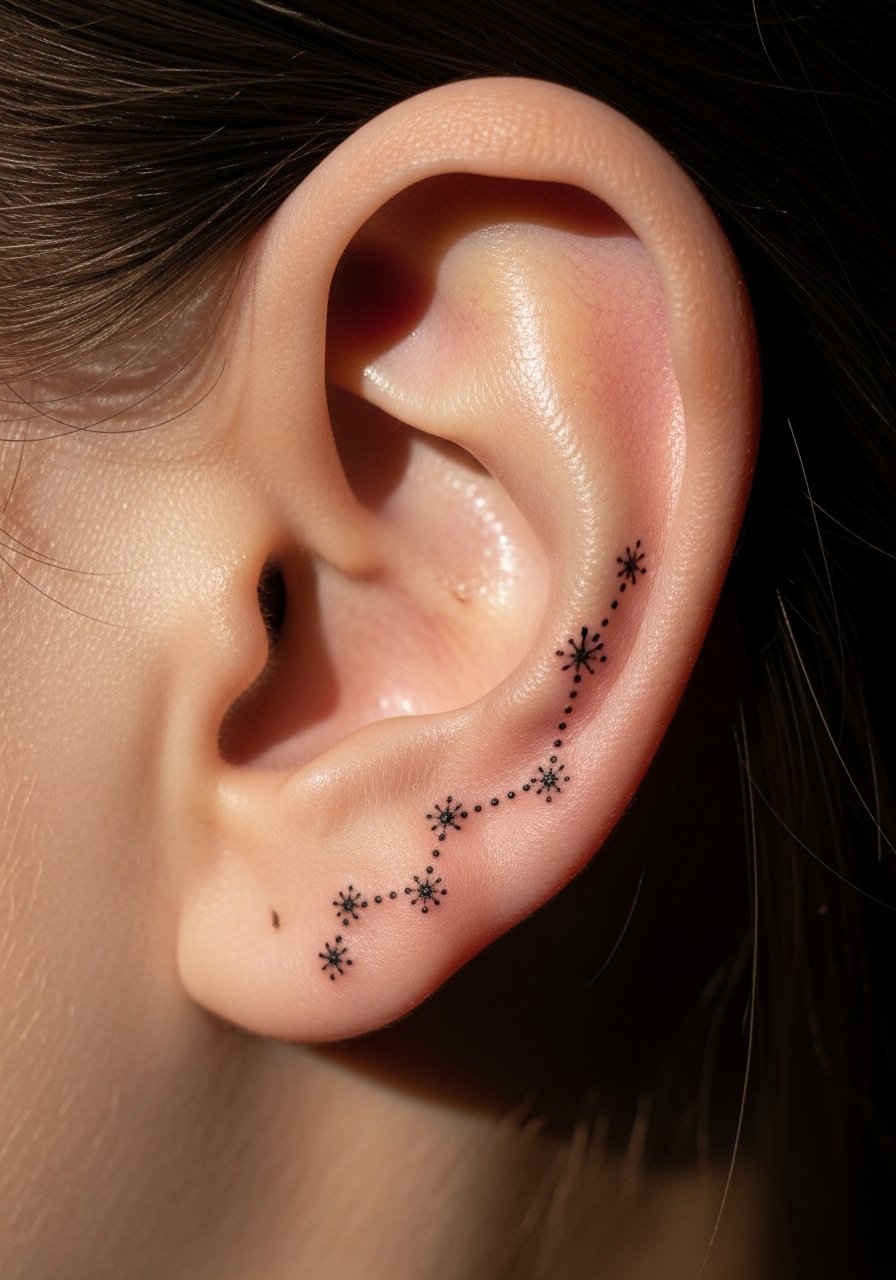
Small dotwork constellations along the ear fit the surreal aesthetic without screaming. The area is low to medium on pain. Dots need careful spacing—too close and they merge. Artists who do fine dotwork will show healed portfolios; ask to see them.
19. Surreal Chest Mirror Imagery
Style/Technique: Illustrative / Symmetrical
Pain Level: High (6-8/10)
Session Time: Multiple sessions
Best For: Symmetrical statement pieces
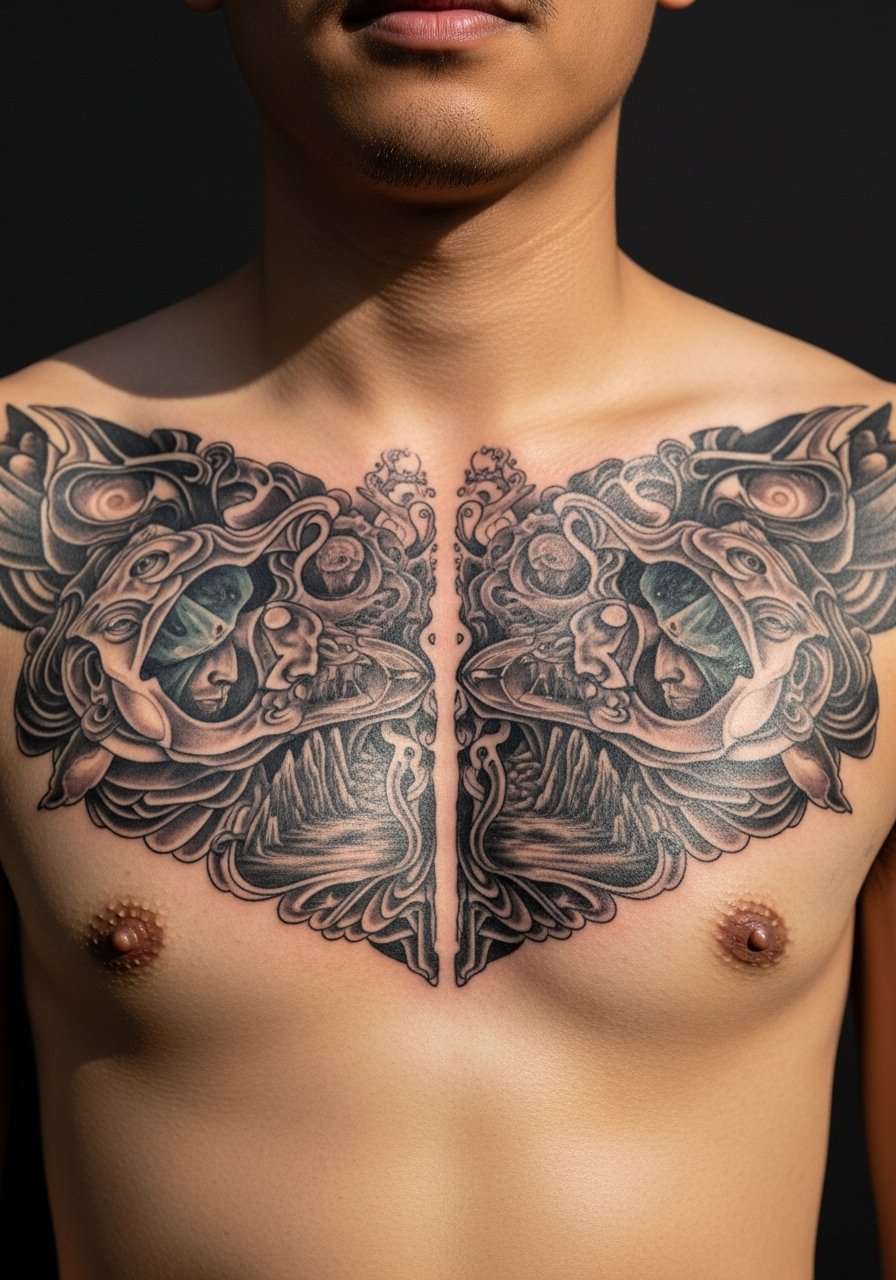
Chest pieces create center-stage surreal symmetry—mirrored faces or landscapes split down the sternum. Pain spikes near bone and nipple area. Healed results look epic when designed for the chest’s natural lines. Keep negative space to let the composition breathe.
20. Surreal Ankle Band with Tiny Scenes
Style/Technique: Minimalist / Wraparound
Pain Level: Medium (4-5/10)
Session Time: 1-2 hours
Best For: Repeats, small narratives
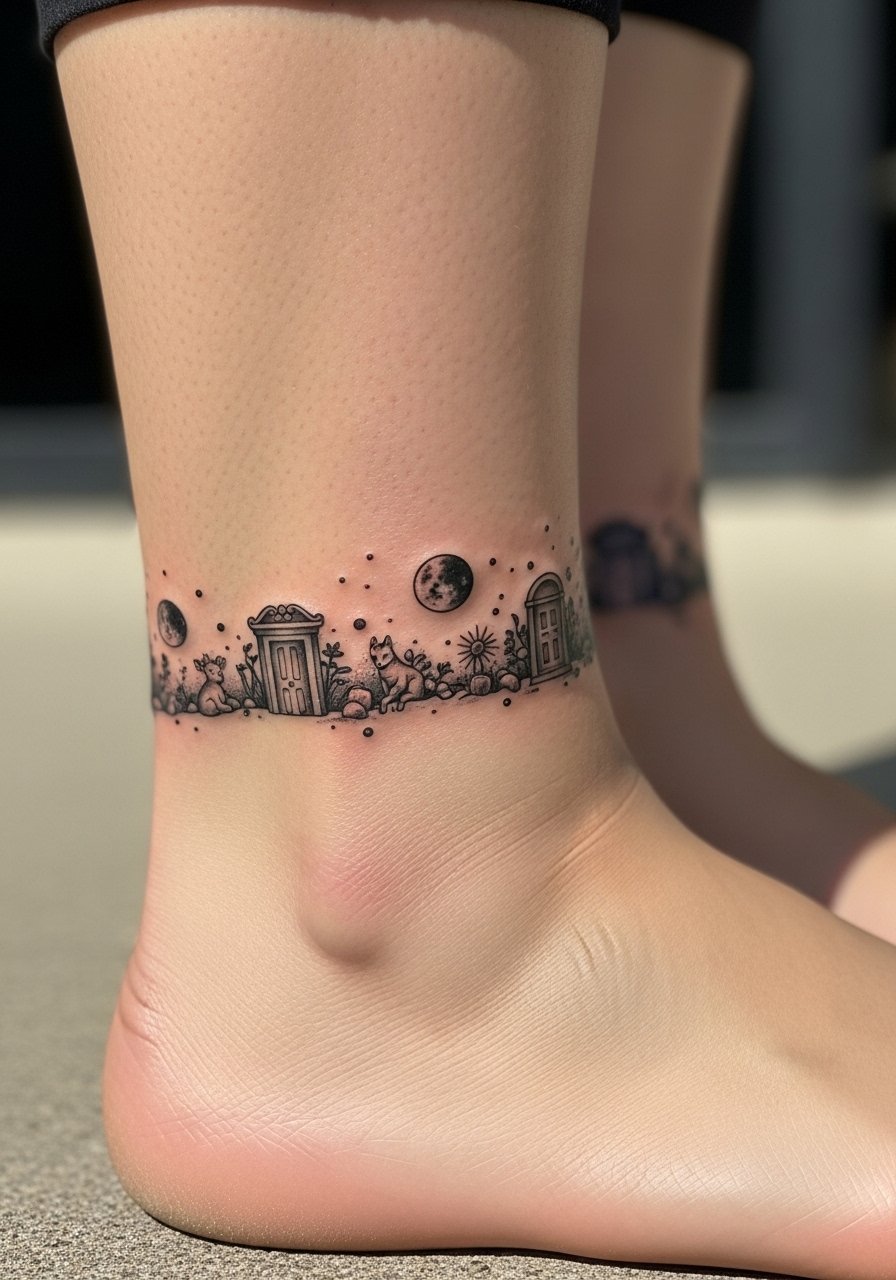
Ankle bands composed of tiny surreal vignettes turn into a wearable storyboard. The skin near the ankle is thin, so lines should be confident. Expect movement-related distortion; plan the wrap so scenes read when standing. Heals well with good care.
21. Surreal Micro-Realism Planet on Behind Knee
Style/Technique: Micro-Realism / Small Scale
Pain Level: High (6-7/10)
Session Time: 1-2 hours
Best For: Hidden spot, playful piece
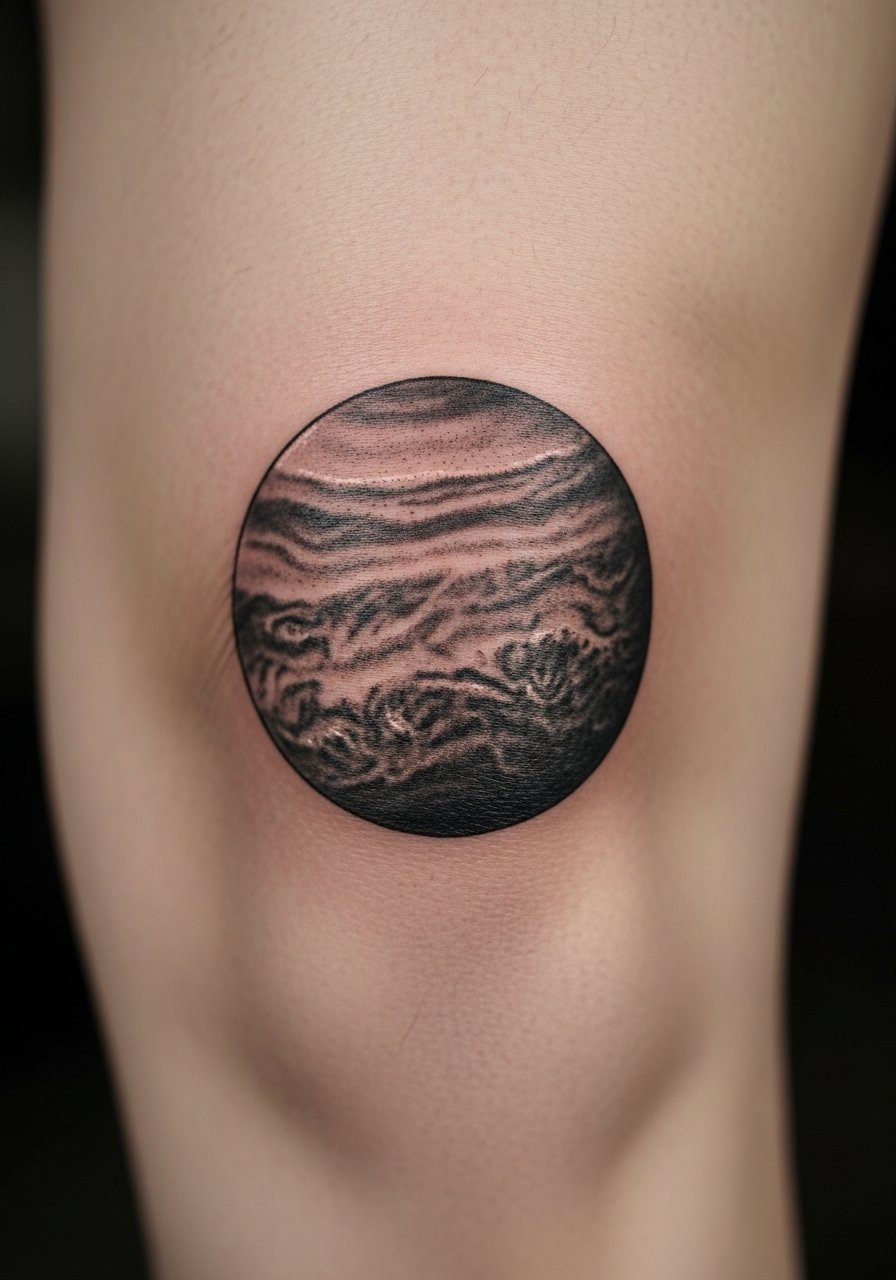
Behind-knee tattoos show off when you bend but are tricky to heal. Creases can cause pigment movement; artists experienced with joint areas will advise on placement. Pain is sharp. Micro details may soften; keep the design bold in value contrasts.
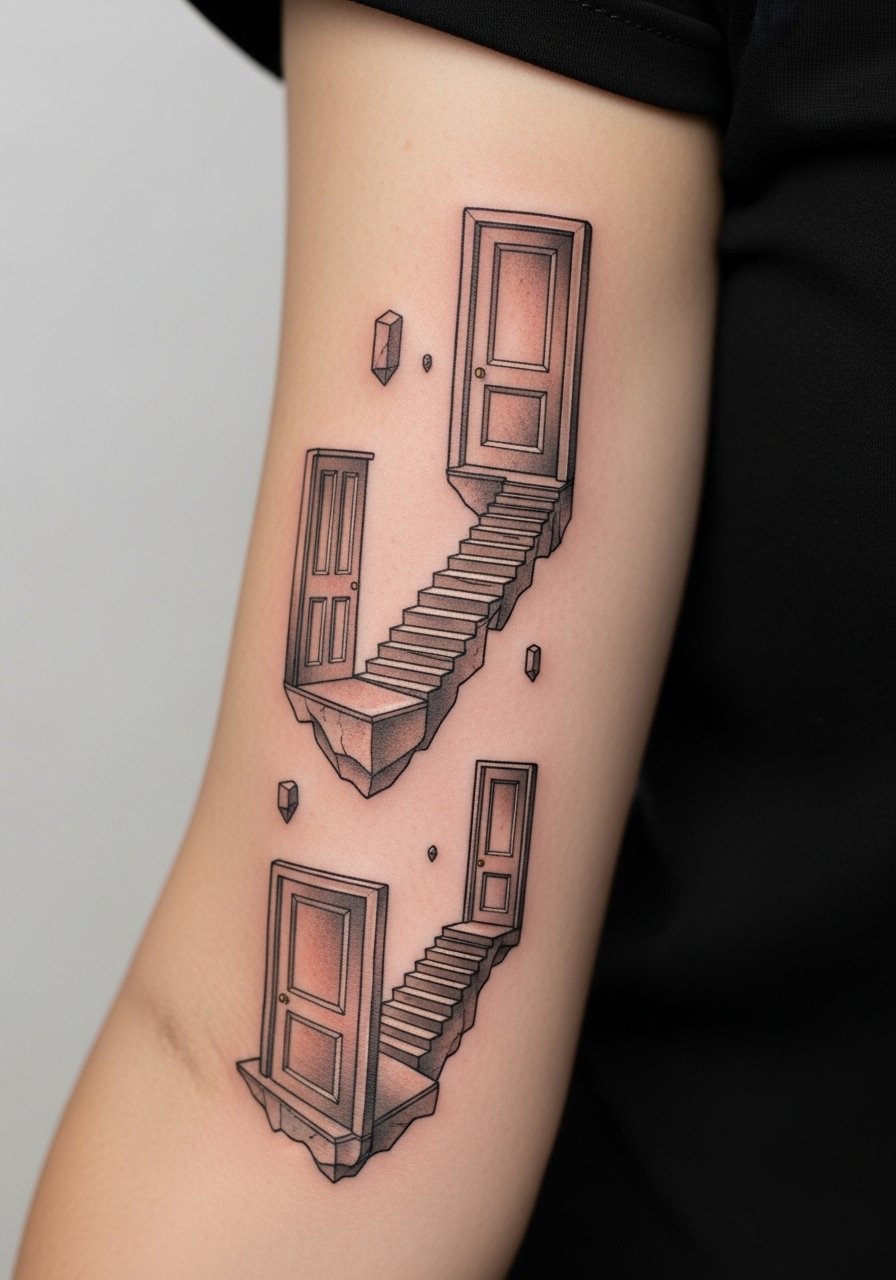
22. Surreal Floating Architecture on Forearm
Style/Technique: Linework + Graywash
Pain Level: Medium (3-5/10)
Session Time: 2-4 hours
Best For: Architectural, narrative designs
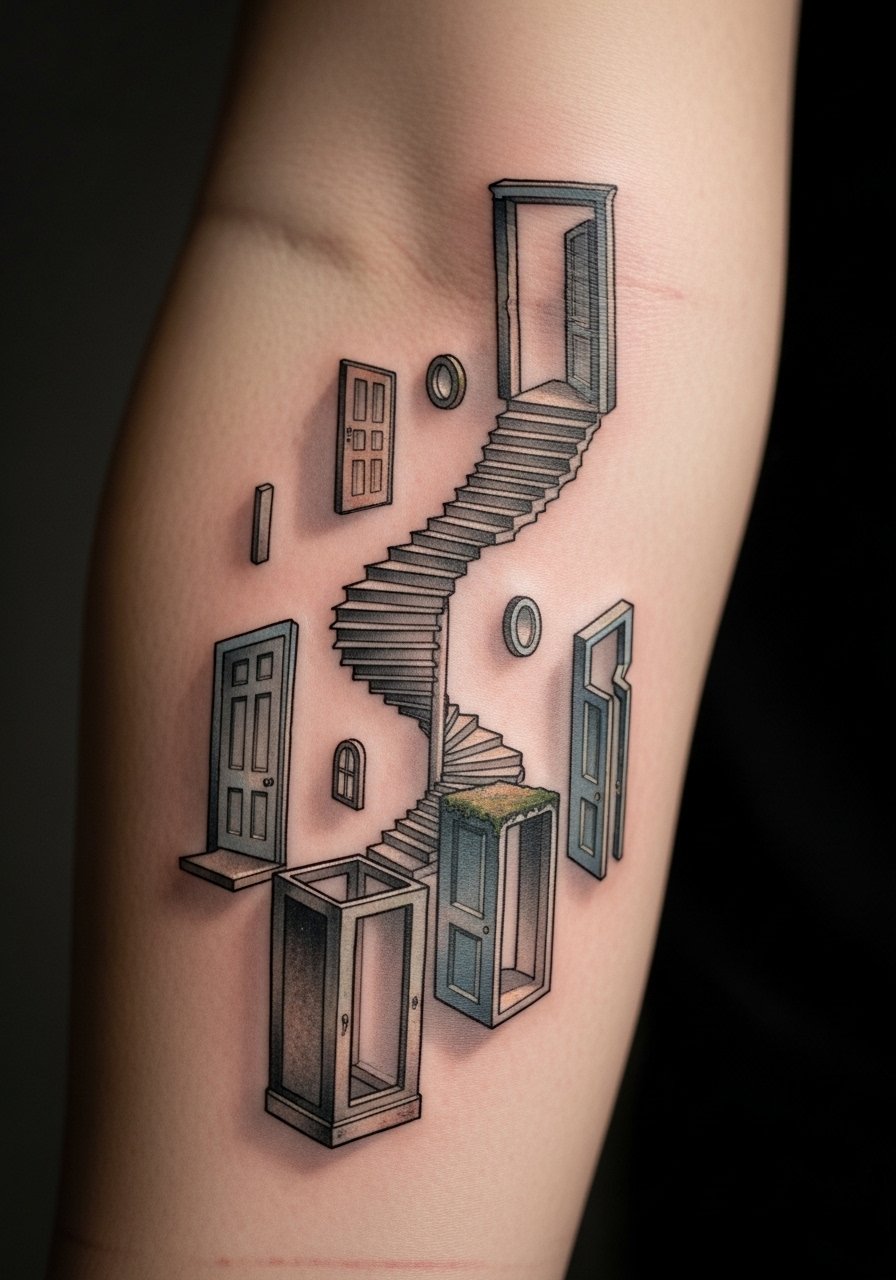
Floating architecture—stairways to nowhere—feels classically surreal. Forearm placement balances visibility and longevity. Good line spacing and confident graywash helps the illusion survive healing. Avoid tiny interior details that vanish; focus on readable silhouettes.
23. Surrealist Single-Needle Portrait Fragment on Ear Flap
Style/Technique: Single-Needle / Micro-Realism
Pain Level: Medium-High (5-7/10)
Session Time: 1-2 hours
Best For: Tiny portrait fragments
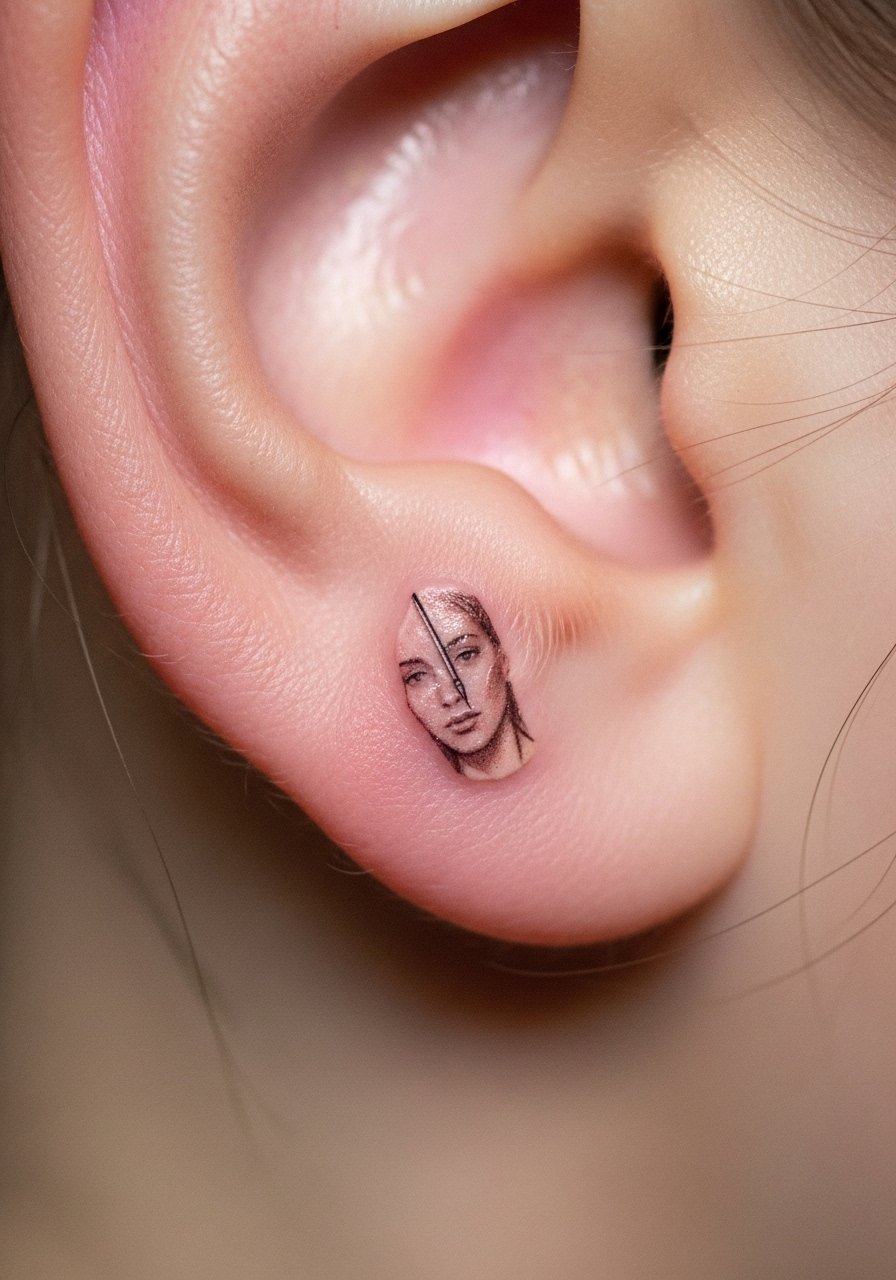
Ear flap portraits are tiny, intimate, and demand skill. Single-needle portraits can look fragile—ask your artist about longevity on this mobile area. Pain is moderate. Healed contrast may be lower than expected; request stronger midtones.
24. Surreal Botanical Halo on Nape
Style/Technique: Illustrative / Fine Line + Dotwork
Pain Level: Medium (3-5/10)
Session Time: 1-2 hours
Best For: Hidden elegance, up-do reveal
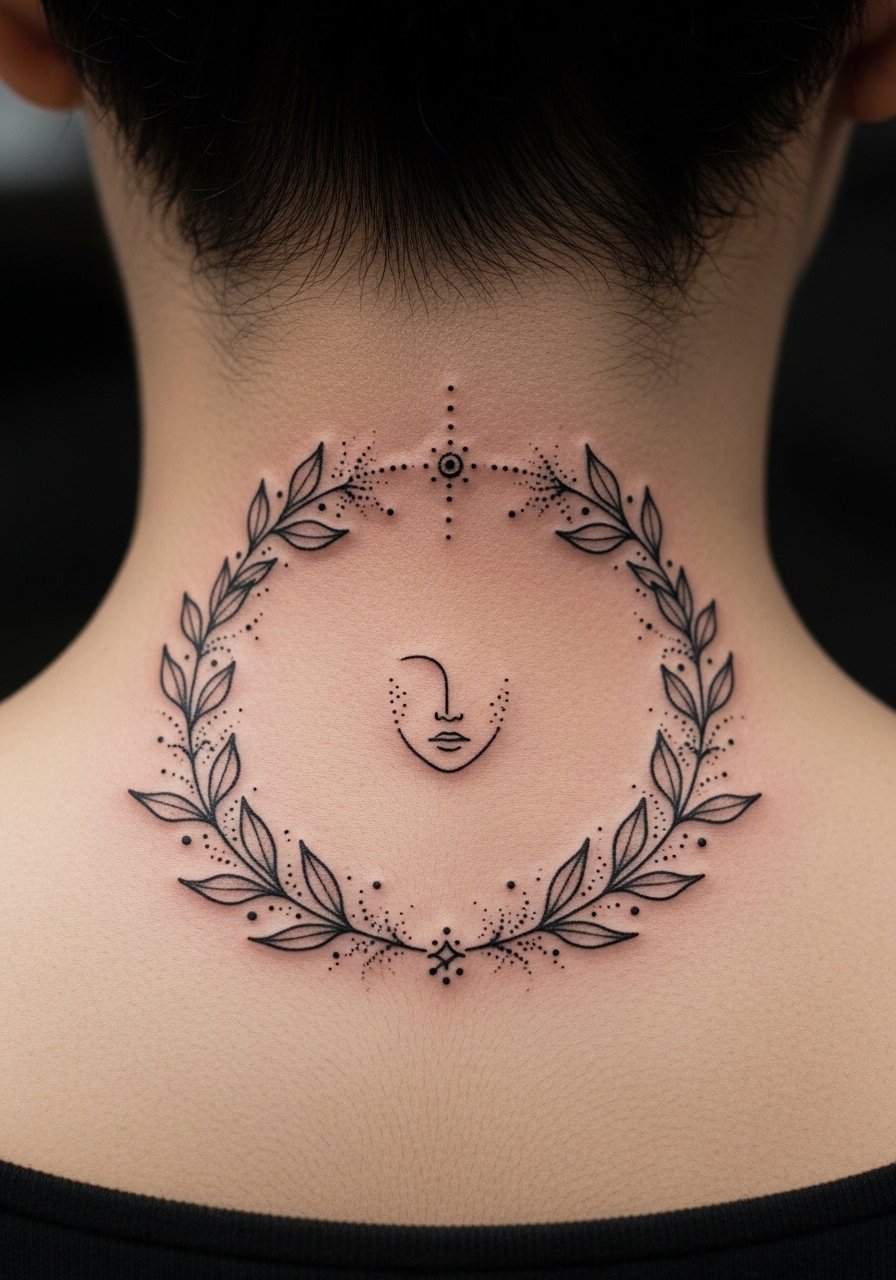
A nape botanical halo reads like a crown worn by the back of your head. The area is great for showing off when hair is up. Fine lines and dotwork sit well here if spaced properly. Pain is moderate. Keep elements simple to prevent line merging.
25. Surreal Collage Sternum to Solar Plexus
Style/Technique: Mixed Media Style / Illustrative
Pain Level: High (7-8/10)
Session Time: Multiple sessions
Best For: Large frontal narrative pieces
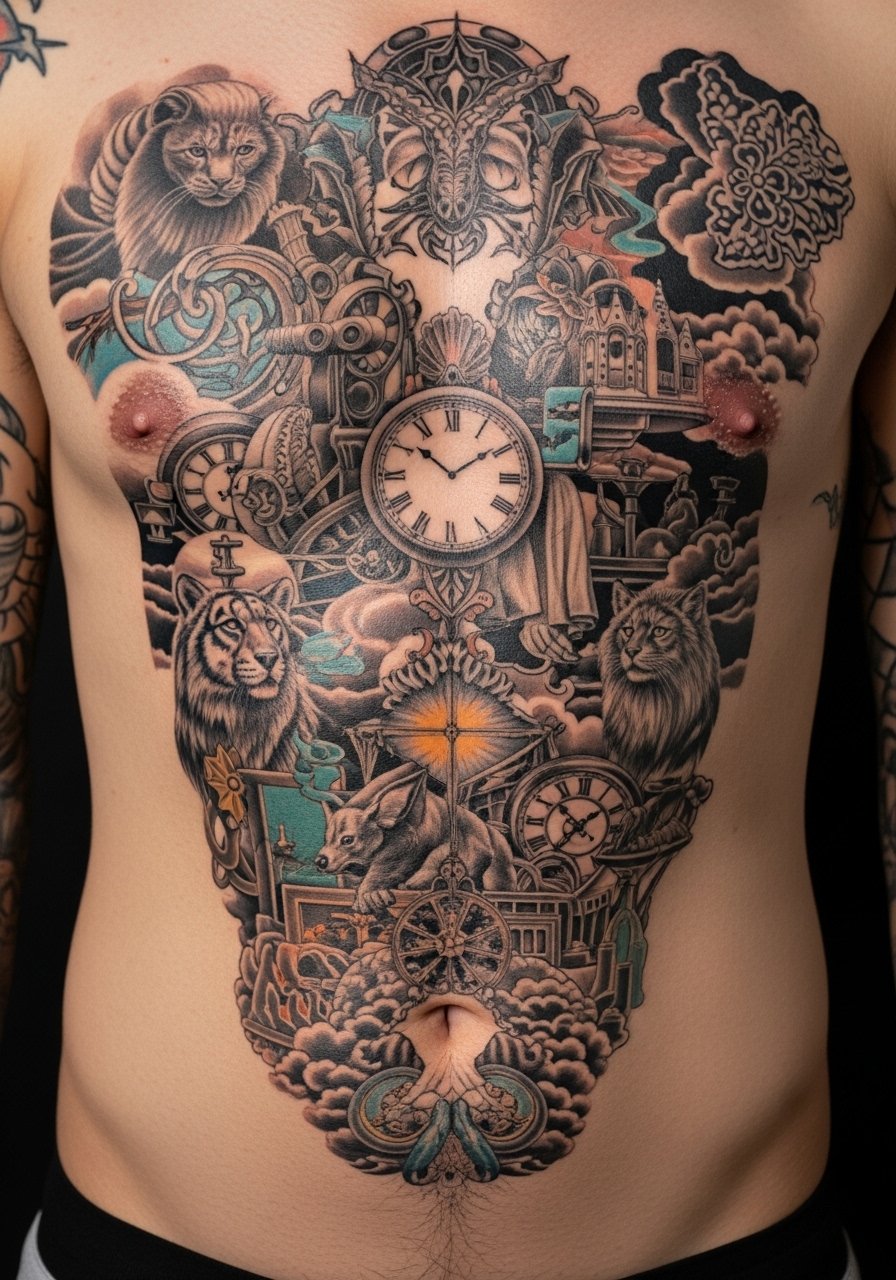
A collage across the sternum and solar plexus weaves many dream pieces into one readable narrative. Pain is significant across the sternum. Healed composition benefits from bold anchors and simplified secondary elements. Artists who curate story tattoos excel here.
26. Surreal Negative Space Ring on Finger Base
Style/Technique: Blackwork + Negative Space
Pain Level: High (6-7/10)
Session Time: 30-60 minutes
Best For: Subtle symbolic bands
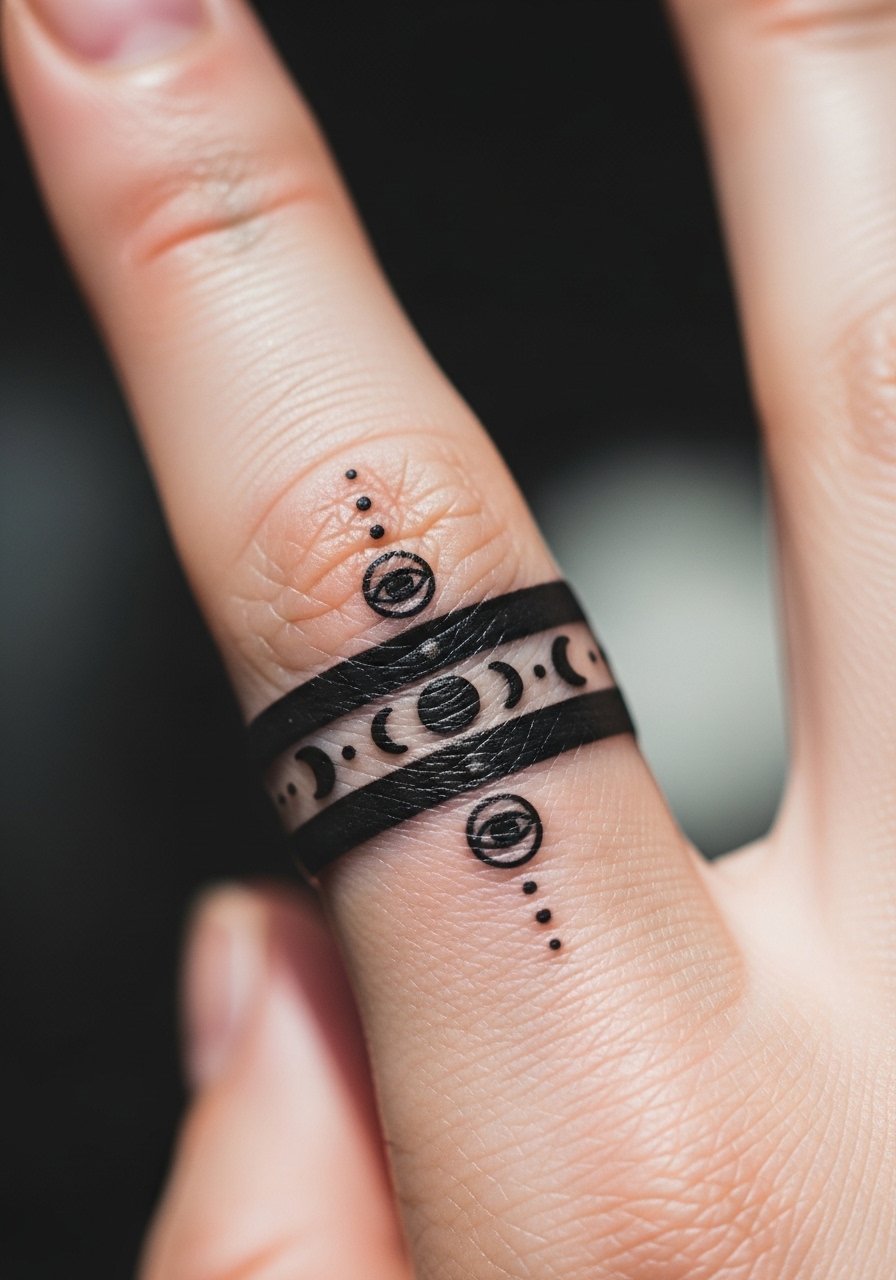
Negative space rings look like carved artifacts on the skin. Finger base holds slightly better than superficial knuckle work. Heals with wear, so keep lines bold and simple. This subtle surreal touch reads like a personal talisman.
Tattoo Prep and Aftercare Essentials
Aftercare Essentials:
- Aquaphor Healing Ointment, 14 oz tube — Great first 3-5 days
- Saniderm Transparent Adhesive Bandage, 6-inch roll — Second-skin method many artists recommend
- CeraVe Fragrance-Free Moisturizing Lotion, 12 oz — For days 4-14 moisturizing
- Dr. Bronner's Unscented Castile Soap, 8 oz — Gentle cleaning
Before Your Appointment:
- Tattoo Numbing Cream with 5% Lidocaine, 1 oz — Ask your artist before use
- Tattoo Stencil Transfer Paper, 8.5×11 pack — If you want to mock up placement at home
Long-Term Maintenance:
- SPF 50 Sunscreen Stick for Tattoos, 0.5 oz — Daily protection
- Mad Rabbit Tattoo Balm, 2 oz — Healed skin maintenance
- Hustle Butter Deluxe, 4 oz — Vegan aftercare option
Optional Comfort Items:
- Tattoo Numbing Spray, 1 oz — For touch-ups or sensitive sessions
- Hydrocolloid Bandages, Large Pack — Useful for spot protection
Frequently Asked Questions
Q: How bad does a tattoo actually hurt?
A: Pain depends a lot on placement and your tolerance. Outer arm/forearm usually feels like a 3/10. Ribs, sternum, and hands are closer to 7-8/10. It’s more of a burning or scratching than sharp stabbing for most spots. For sensitive areas, consider a numbing cream with 5% lidocaine but ask your artist first.
Q: What if I regret my surreal design later?
A: I always tell people to sit on an idea for several months. Surreal designs age into personal myths, so pick symbols that mean something. If you’re uncertain, choose placements easy to hide (upper thigh, upper arm) so regret doesn’t feel public. Laser removal is an option, but it’s a long process—treat it as a last resort.
Q: How do I keep surreal colors from fading?
A: From what I’ve seen, UV exposure and friction are the biggest culprits. Use an SPF 50 sunscreen stick for tattoos whenever your ink is exposed. Maintain with a fragrance-free moisturizer like CeraVe. Black and gray hold best on darker tones; bright washes need touch-ups over years.
Q: Can I work out after getting a tattoo?
A: Wait at least 48-72 hours before intense workouts. If the tattoo is on a flex area (elbow, knee), give it more time—up to a week—because movement stretches healing skin. Sweating can introduce bacteria; keep the area clean with a gentle soap like Dr. Bronner’s Unscented and moisturize as advised.
Q: Should I get a small tattoo first to test my tolerance?
A: Only if you actually want a small tattoo. Don’t get a filler piece you dislike just to test pain. Pain varies more by placement than size, so a tiny hand tattoo might hurt more than a larger outer arm piece. If you’re nervous, pick a less painful area like the outer upper arm.
Q: How long does a tattoo take to heal?
A: Surface healing usually happens in 2-3 weeks. Full dermal settling can take 2-3 months. The first week is critical—keep it clean, lightly moisturized, and use a second-skin product like Saniderm if your artist recommends it. Expect some peeling around day 3-7; don’t pick scabs.
Q: Do tattoos look different on various skin tones?
A: Yes. Black and gray work reads beautifully across tones. Bright neon colors may appear less saturated on deeper skin and white ink can be subtle. I always advise finding artists who regularly tattoo your skin tone and can show healed examples.
Q: What are common mistakes with surreal tattoos?
A: Over-detailing tiny areas, choosing placements that move a lot without adjusting design, and skipping healed-reference checks. Ask to see healed photos from the artist, not just fresh work. If you want longevity, prioritize clearer shapes, proper spacing, and slightly stronger line weight for fine elements.