
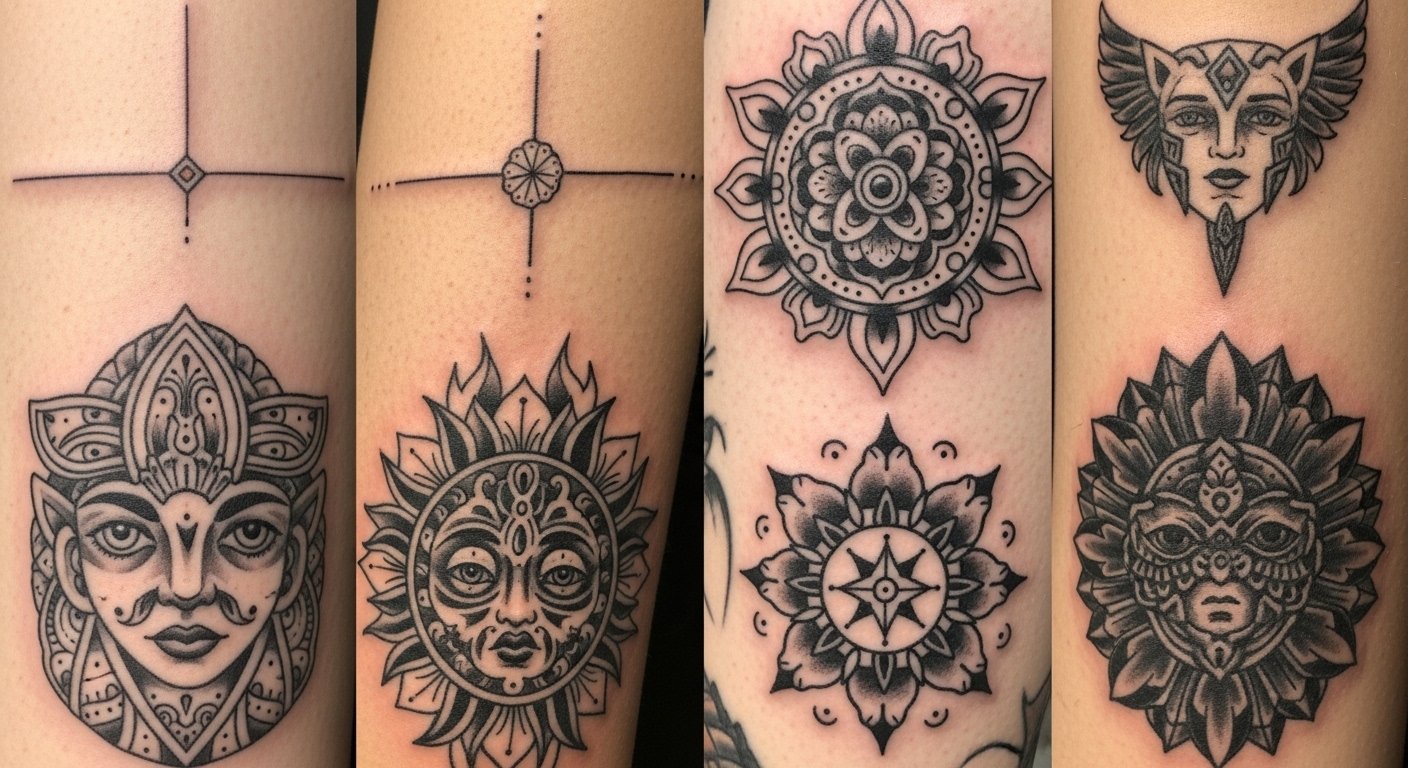
I spent months narrowing down skull tattoos I actually liked, not just the most reposted images. What mattered was how each style healed, how bold it read from a distance, and whether it still looked good a year later. These are 26 skull tattoo ideas I pulled from artists I follow and pieces I studied in person.
This list leans into fine line, traditional, blackwork, micro-realism, and a few under-covered approaches. Many pieces work well on forearms, ribs, chest, and calves. From what I've seen in 2026, skulls paired with florals, geometric frames, and negative space are getting the most consistent praise from artists and collectors.
1. Fine Line Skull On Inner Forearm
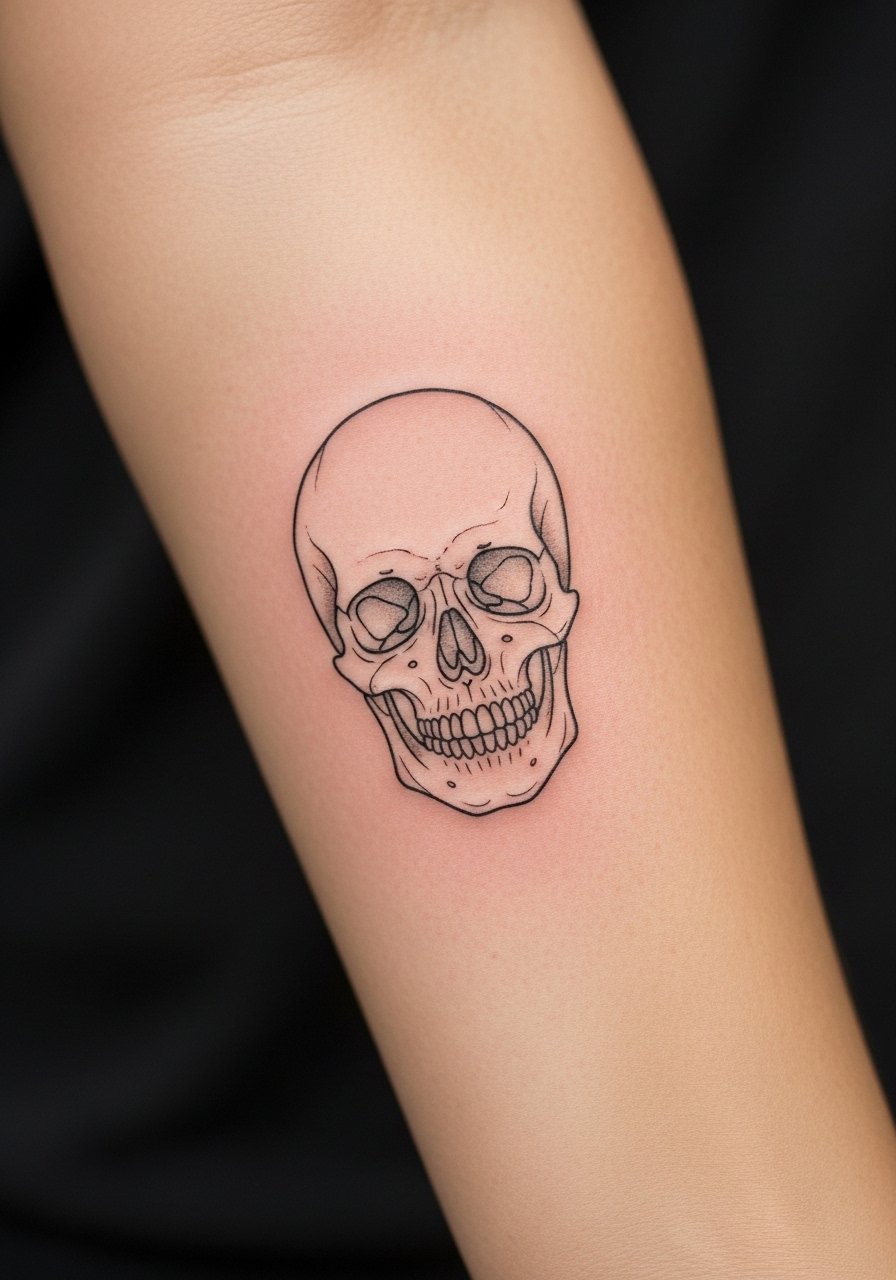
I first noticed this style on a friend who wanted a subtle reminder, not a billboard. Fine line skulls read delicate up close, but you must accept they soften faster. Pain on the inner forearm is low to moderate. Expect one short session around 45 to 90 minutes. Ask your artist for slightly stronger outer lines so the silhouette stays readable after a year. A common mistake is packing in too many tiny details, which blur. For longevity, keep contrast and empty space. At six months the lines should be soft but defined. At two years the tiny cracks may merge. Bring photos of exact line weight during your consult.
2. Traditional Sugar Skull On Thigh
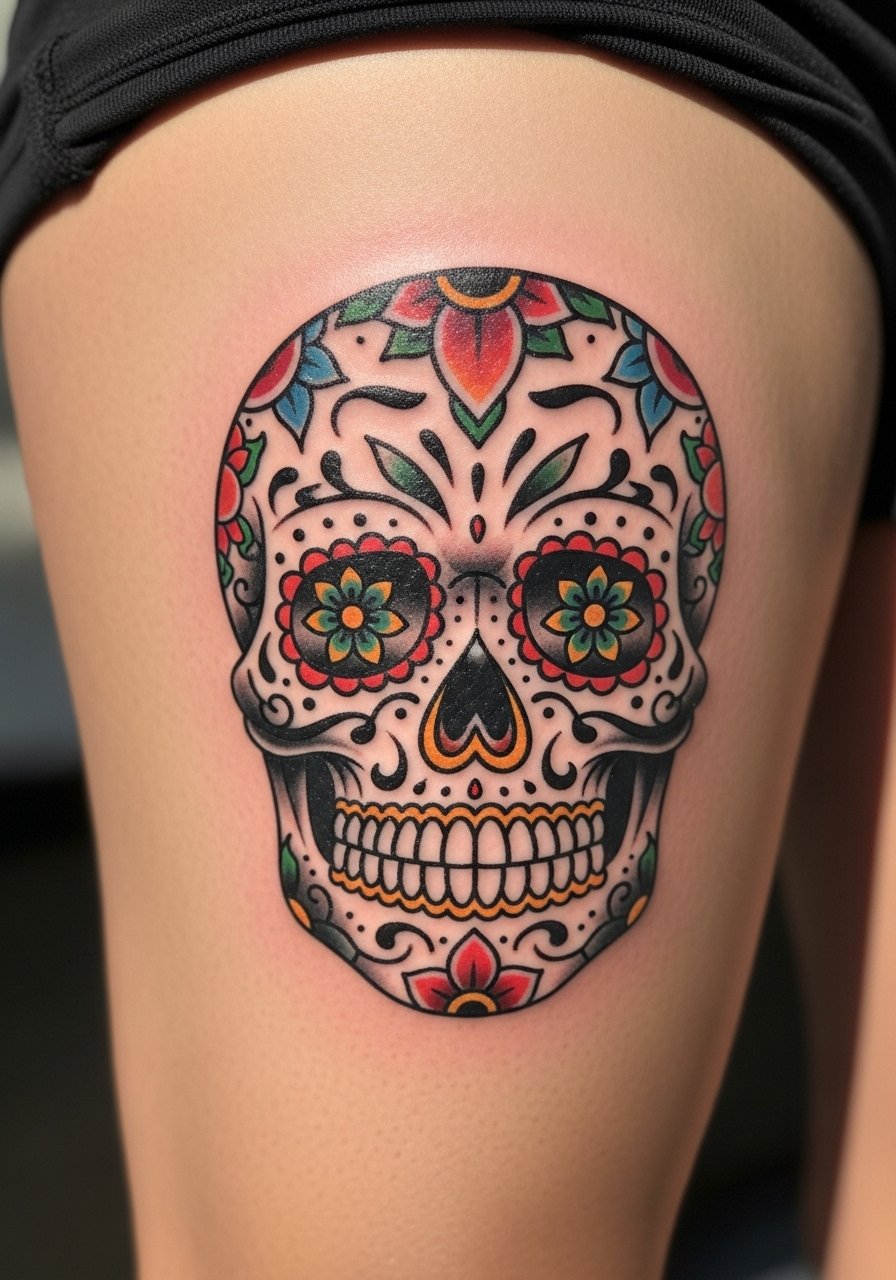
Fair warning, thigh tattoos feel like a long hug more than sharp pain. I saw this design on someone who wanted bold color and cultural nods. Traditional style uses thick outlines and solid fills, so color holds well compared with fine line work. Sessions often run two to three hours. Tell your artist to keep petals and roses bold, not micro-detailed, so they retain vibrancy. A mistake I see is trying watercolor fills inside a traditional sugar skull. The watercolor will fade faster and muddy with the heavy black. After two years, well-executed traditional skulls still read crisply. If you want color that pops, request saturated pigments and healing products to avoid scabbing loss.
3. Micro-Realism Skull Portrait On Upper Arm
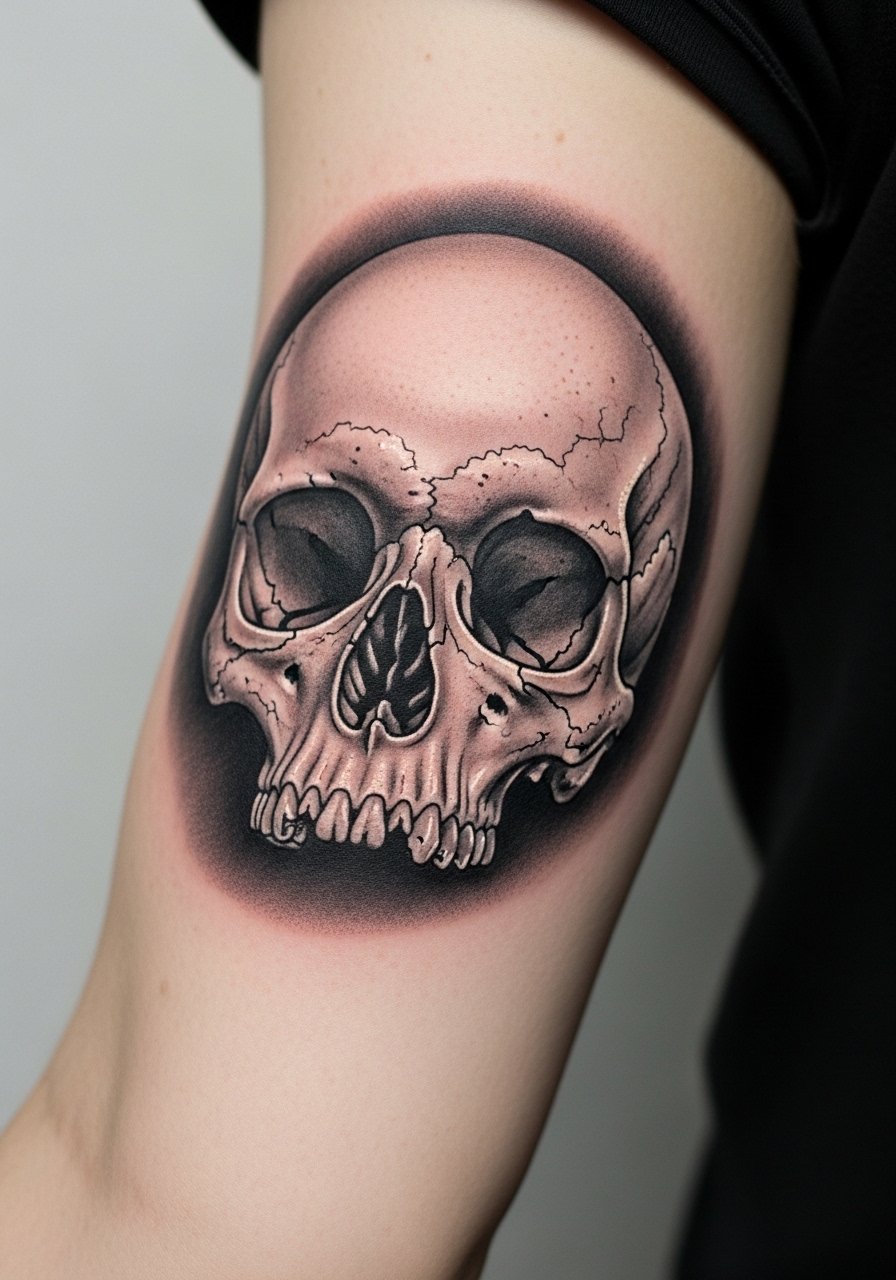
I discovered micro-realism skulls in a studio gallery. These look like photographs. Expect a higher pain level on the outer arm than on inner forearm, but many say it's tolerable. Sessions range from two to five hours depending on size. Ask for high-contrast highlights to prevent the midtones from flattening after a year. A frequent error is scaling the portrait too small. Tiny realism loses definition fast. At six months the shadows settle. At three years, small midtone gradients can blur into a flatter gray. If you want portrait-level detail, plan for touch-ups and longer sessions.
4. Neo-Traditional Skull With Roses On Chest
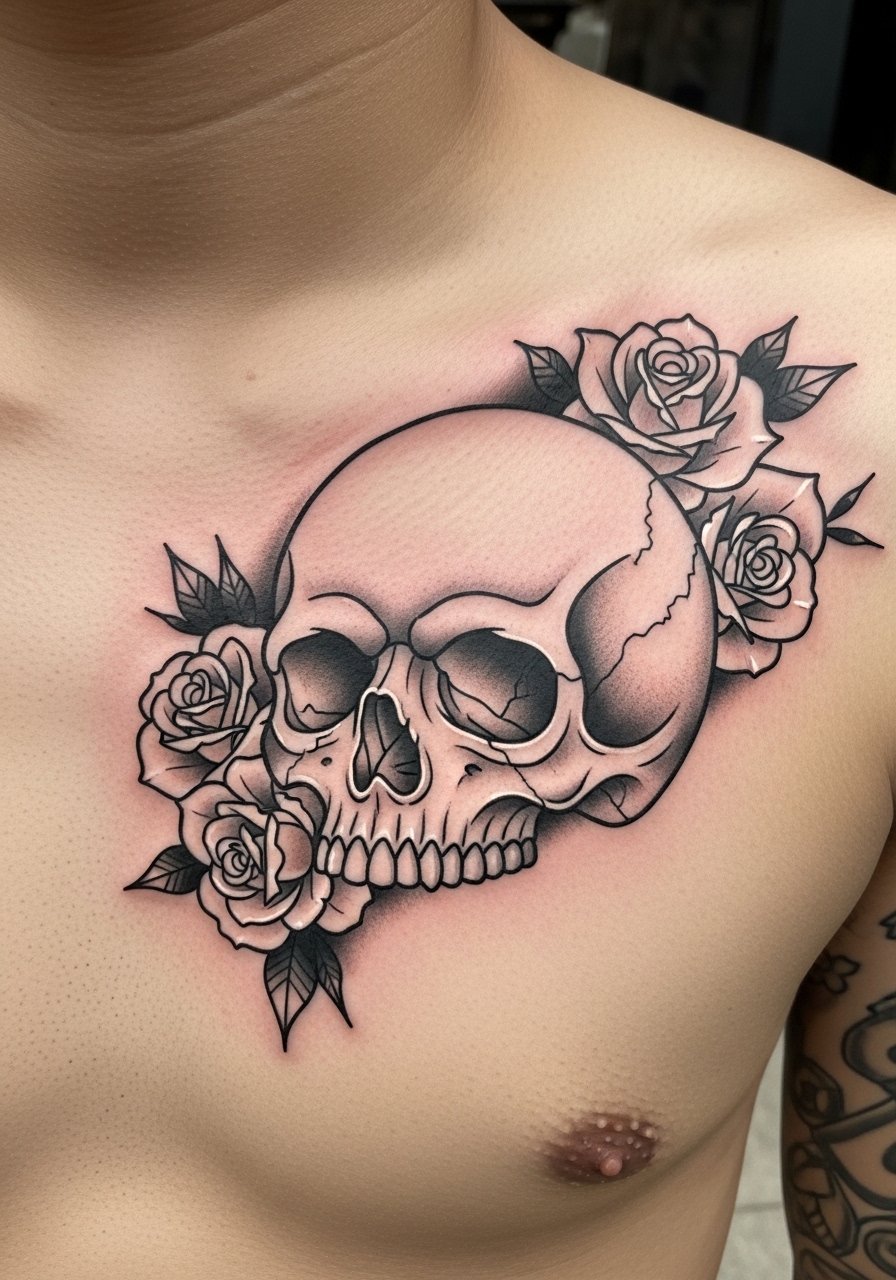
When I met someone with this piece, they said chest pain surprised them. The sternum and ribs are sensitive. Neo-traditional gives you strong shapes and decorative shading that sit well on chest contours. Expect two sessions for larger pieces. Tell your artist to design with body curves in mind, not a flat photo. A common mistake is placing too-small roses on the sternum. They need breathing room. I find these age gracefully because the thick outlines survive fading. After a year, the roses and skull still separate visually. If you bruise easily, schedule shorter sessions.
5. Blackwork Geometric Skull On Calf
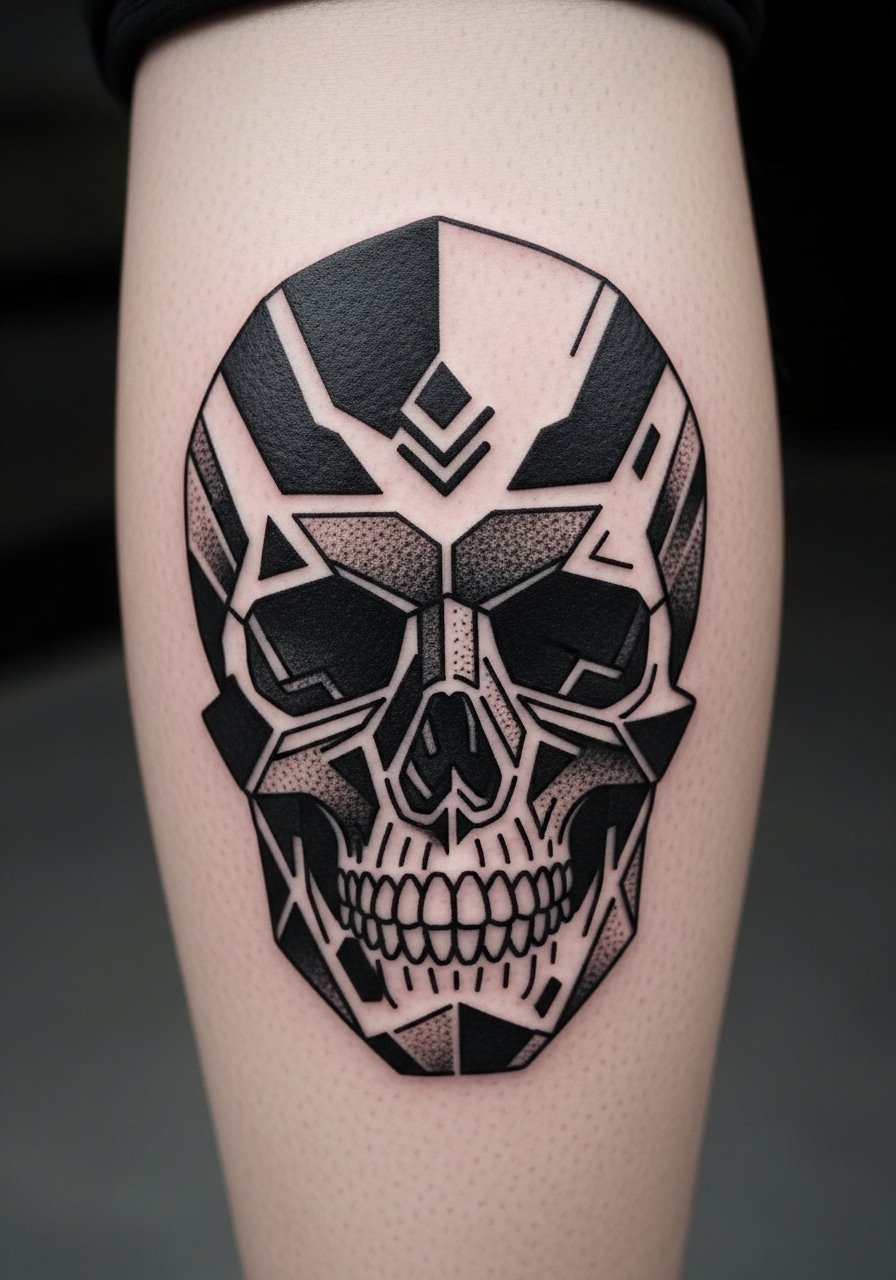
I love blackwork for readability at a distance. Calf pain is moderate and sessions can be long because of the heavy filling. Artists I spoke with recommend mapping the geometry to muscle lines so the piece shifts with movement. Tell your artist you want solid, even black packing. A poor version has patchy fills and shows streaks when healed. At six months the black should be dense. At two years, patchiness becomes obvious if not done right. This design works if you want a statement piece that still reads cleanly after years of sun exposure.
6. Watercolor Skull On Ribcage
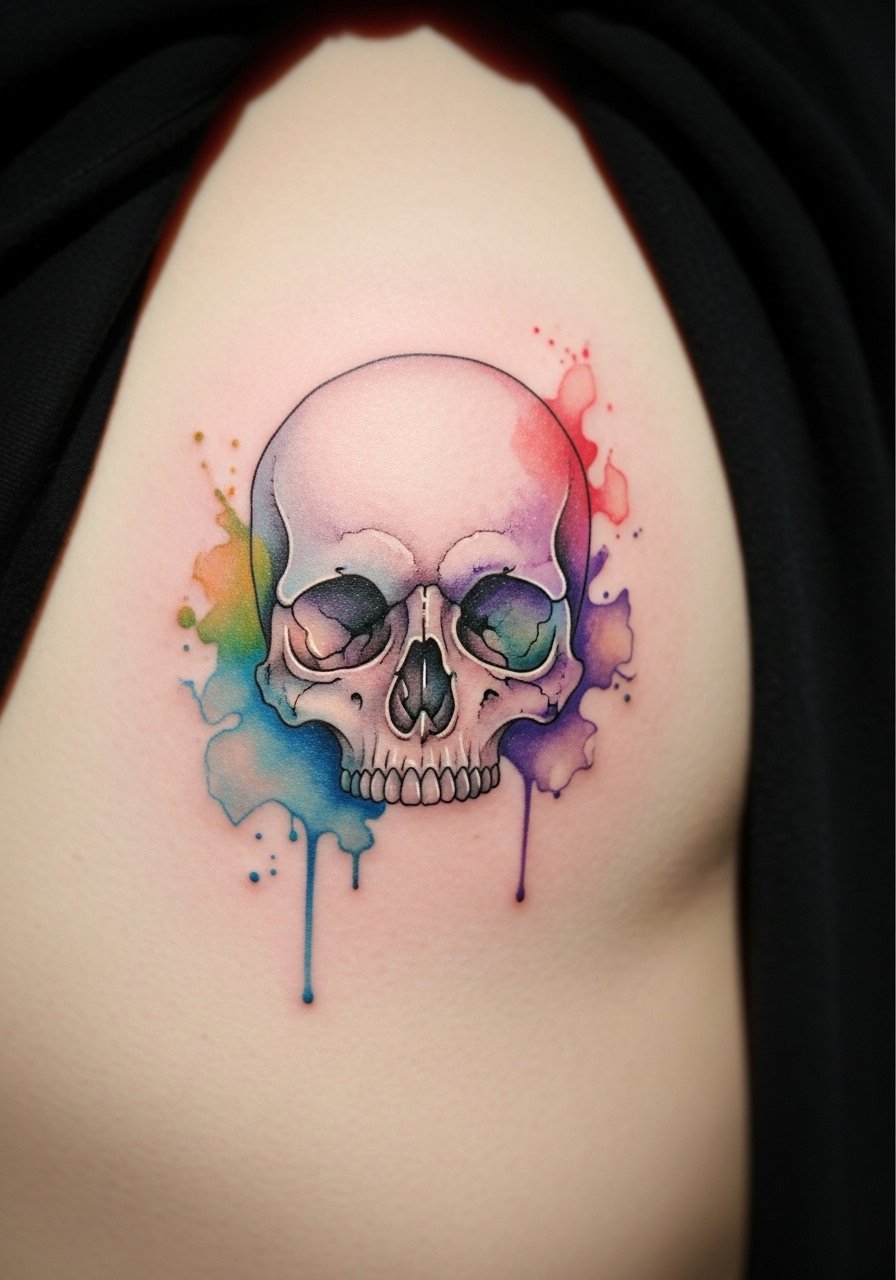
Fair warning, ribs are painful. I saw a watercolor skull where the bleeding colors blended into the skin beautifully after months. Watercolor skulls age differently than solid styles. They look soft from the start and can fade into a cloudy wash if care is poor. Sessions are usually split. Ask for slightly stronger pigment borders where color meets bone work. A common mistake is requesting tiny watercolor details; those vanish faster. At six months expect softer edges. After two years you may need color touch-ups to revive vibrancy. Use a high SPF on healed pieces.
7. Minimalist Line Art Skull Behind Ear
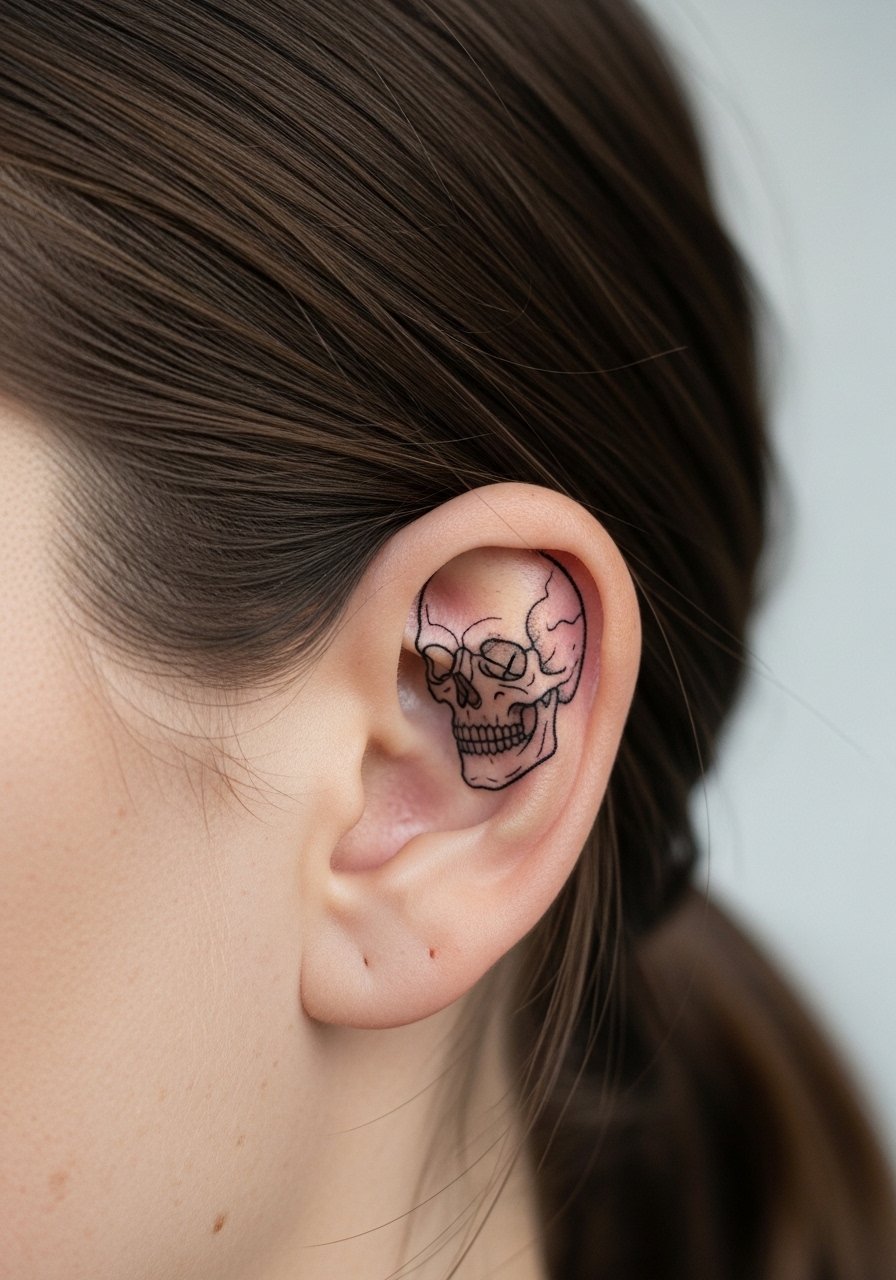
I first saw this tucked behind a musician's ear. Pain is sharp but short for that spot. Minimalist skulls look chic when sized correctly. Session time is brief. Ask your artist to keep line weight slightly heavier than you think. Small, ultra-fine lines blur fastest. A typical mistake is choosing a complex expression or shading for such a tight area. Behind-ear tattoos heal differently because of hair and friction. At six months tiny lines may soften to single strokes. If you want longevity, pick a small but confident outline instead of fine shading.
8. Dotwork Mandala Skull On Sternum
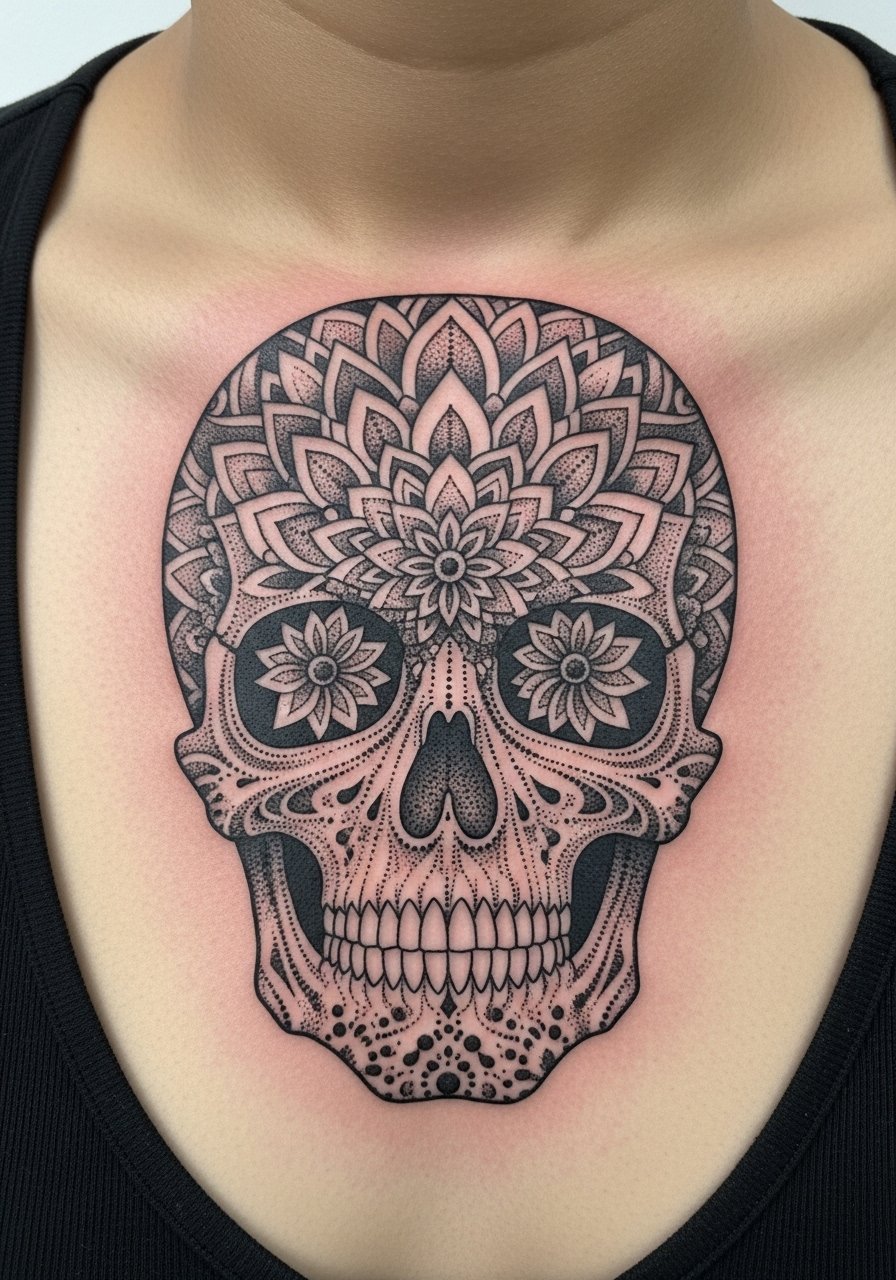
When I saw this design, I noticed the way dots fall into the body's natural shadows. Sternum work is high on the pain chart. Dotwork demands patience. Sessions usually span several sittings. Tell the artist if you want dense dots or airy spacing. Too-dense dotwork can scar and read as a gray blotch. A mistake is packing too many tiny dots near the sternum where skin moves a lot. At six months, dot gradients look soft. At two years, overly tight dotwork can lose texture. Ask for a test patch or start with a smaller section.
9. Skull And Hourglass On Forearm
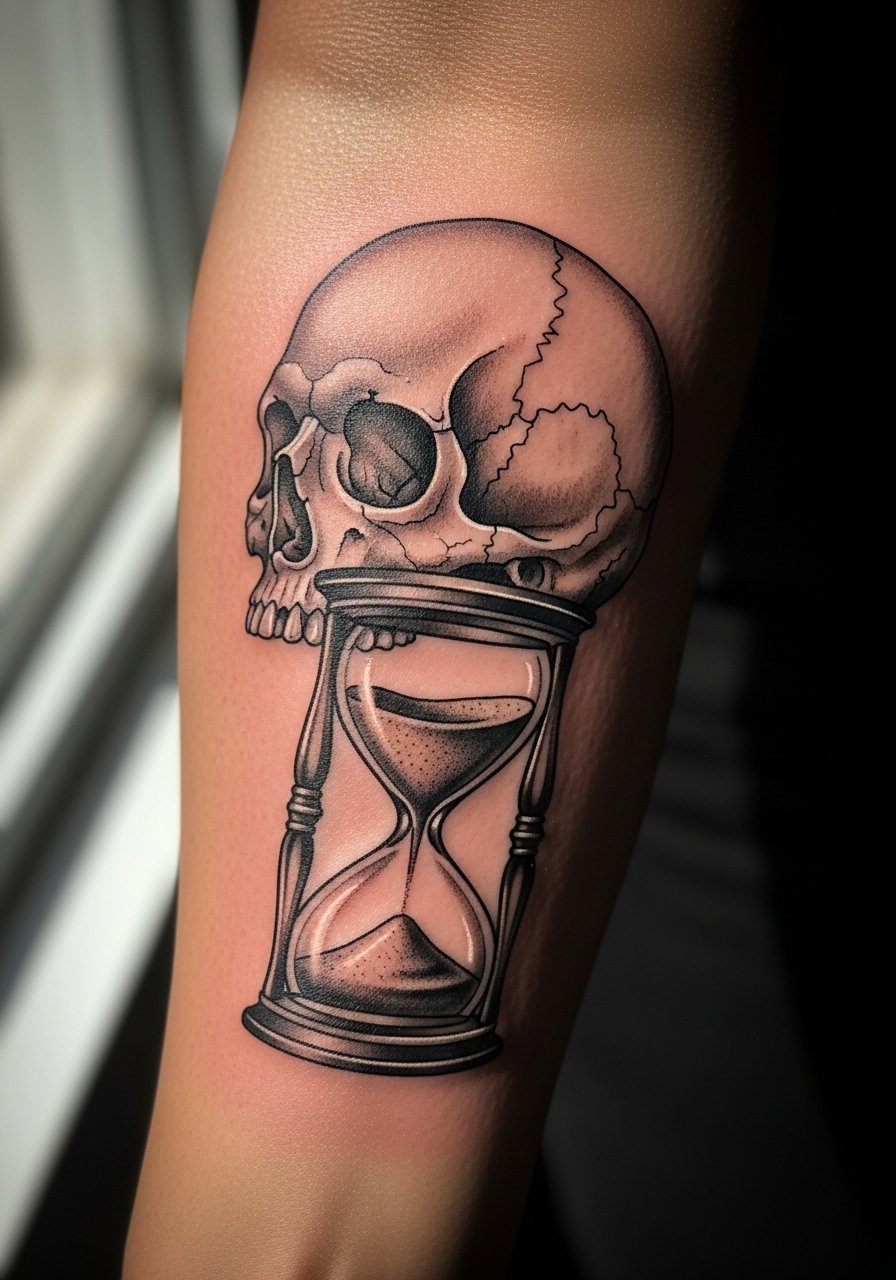
I recommend forearm placement when symbolism matters. I met someone who chose this as a reminder about time. Pain on the outer forearm is low. The design reads well in daylight and at night. Ask your artist to balance the hourglass scale so sand areas avoid tiny dots that disappear. A common misstep is cramming too many background elements. For sessions, plan 90 minutes to two hours. At one year the skull will keep its shape if outlines are solid. If you want the hourglass sand to remain distinct, request crisp contrasts during the consult.
10. Floral Skull Half Sleeve On Upper Arm
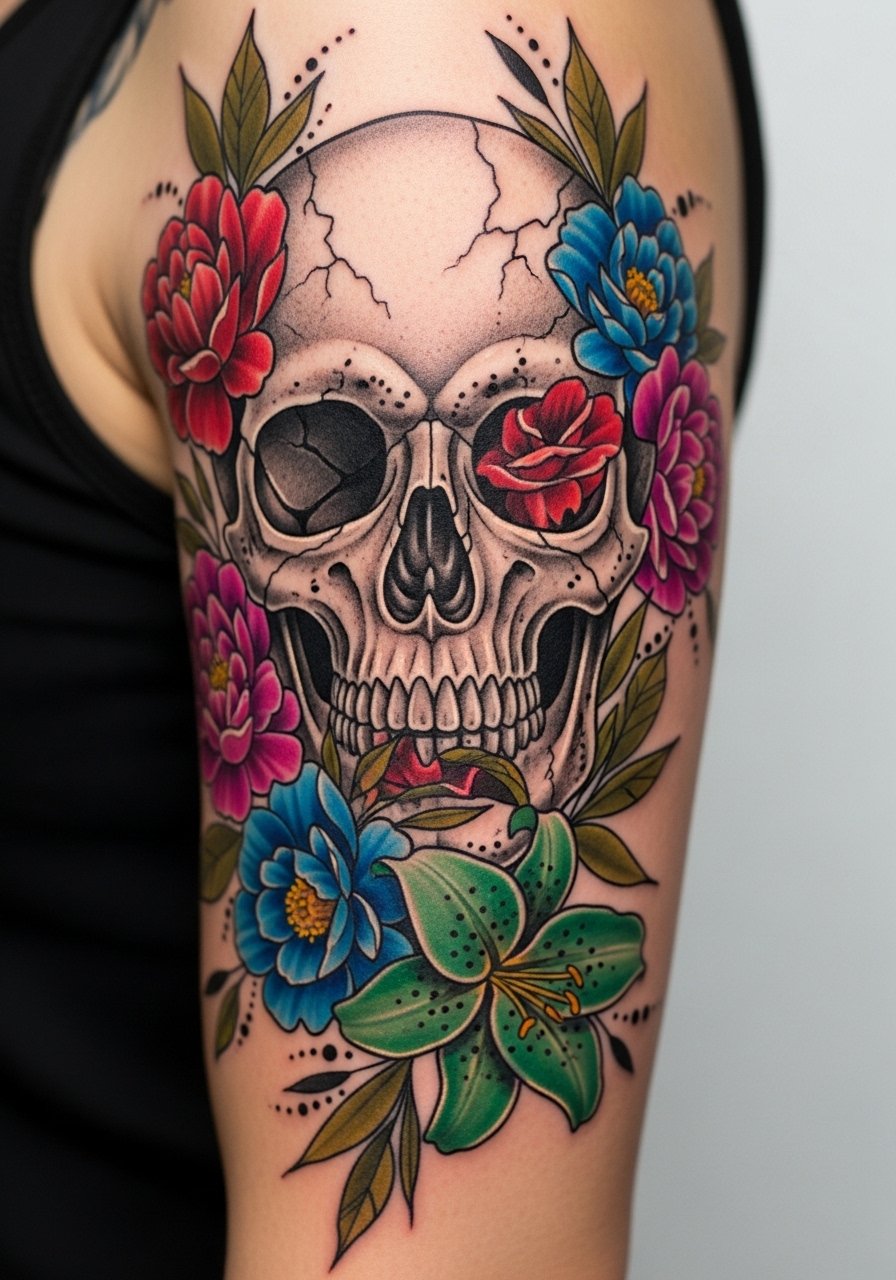
I spotted this after a festival and loved the story-driven layout. Upper arm tolerates longer sessions. Half sleeves often require planning across two to four sessions. Tell your artist which flowers mean something to you, and ask them to keep larger petals over areas that move less. Small filler florals near the elbow blur quicker. A mistake is choking the skull with too many leaves. At six months, the floral edges soften. At three years solid shapes remain if you use long-term balms. If you sweat a lot, expect extra fading where friction is constant.
11. Negative Space Skull On Back Shoulder
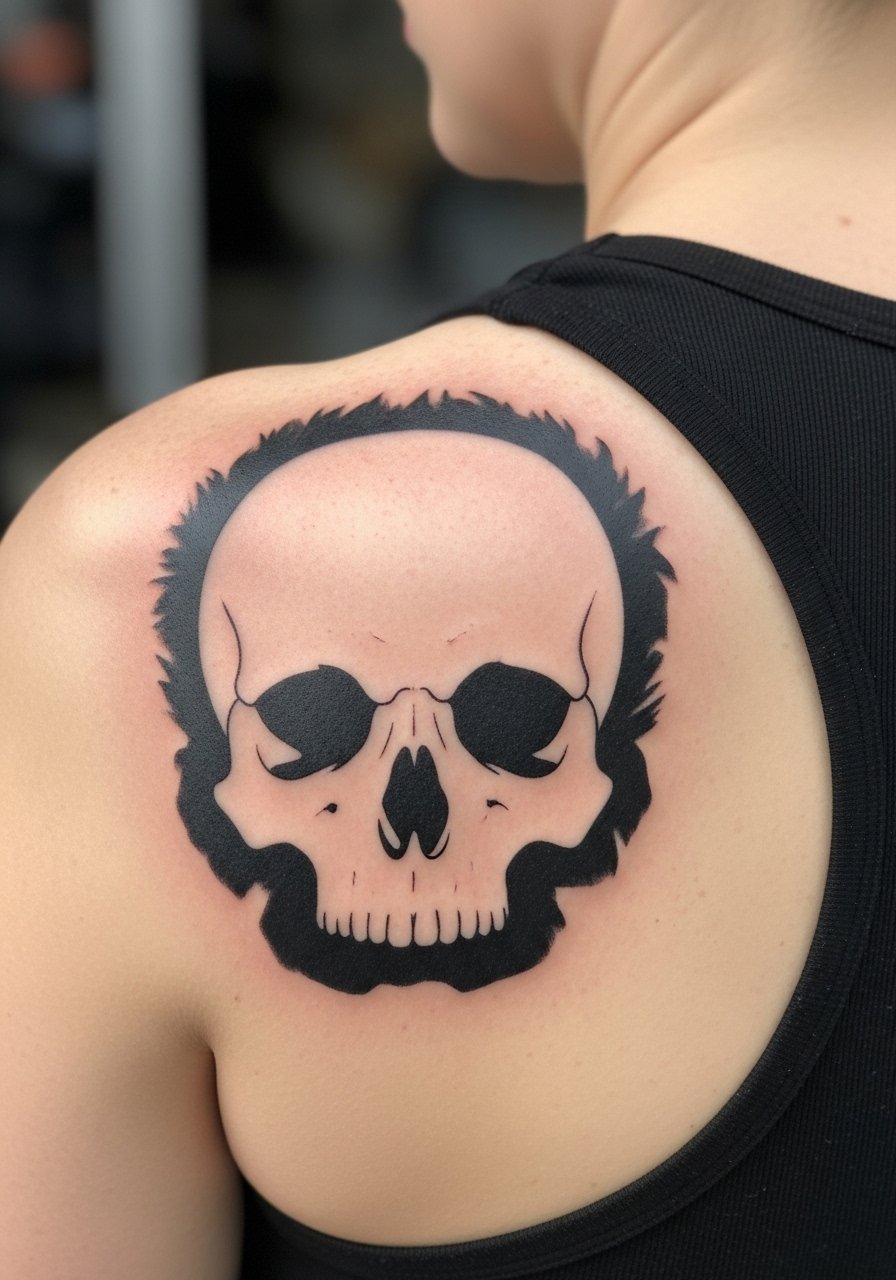
I noticed this piece while at a convention. Negative space can read instantly from a distance. Back shoulder pain is moderate. Sessions usually take one long sitting. Tell your artist you want crisp edges where skin meets black. A common mistake is leaving small gaps that fill during healing. After six months, the black should be stable. After two years, thin areas of black can thin if not applied heavily. This design is forgiving if you avoid tiny interior details inside the negative space.
12. Japanese-Inspired Skull On Full Back
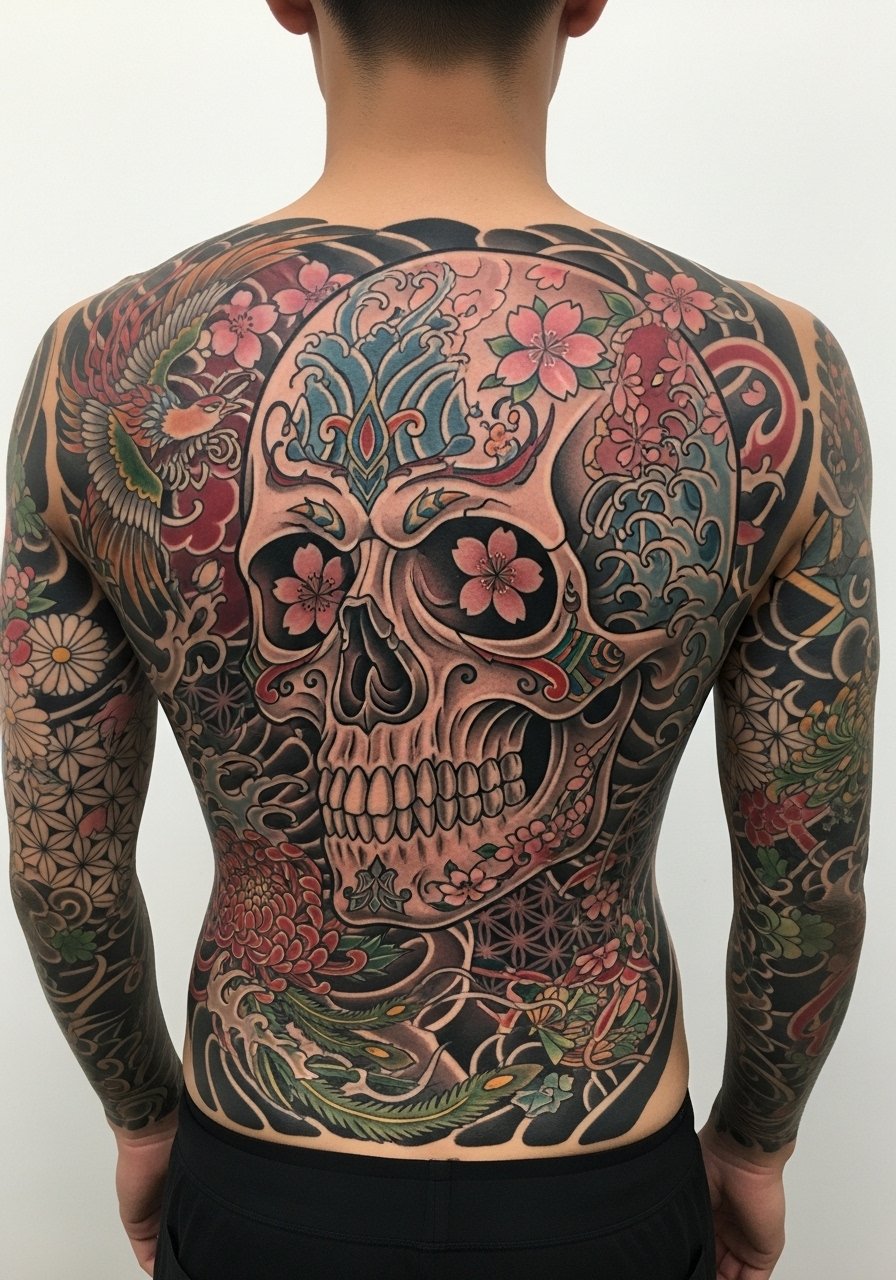
When I saw this in a portfolio, I appreciated the flow across the body. A full-back skull with Japanese elements needs multiple long sessions. Expect moderate to high pain in places like the spine. During the consult, ask how the design will interact with your back hair and posture. The biggest error is using Western skull proportions that clash with Japanese wave patterns. A well-composed piece ages nicely because of heavy linework. At two years colors and blacks remain readable if you protect the skin from sun.
13. Surrealist Skull Portrait On Thigh
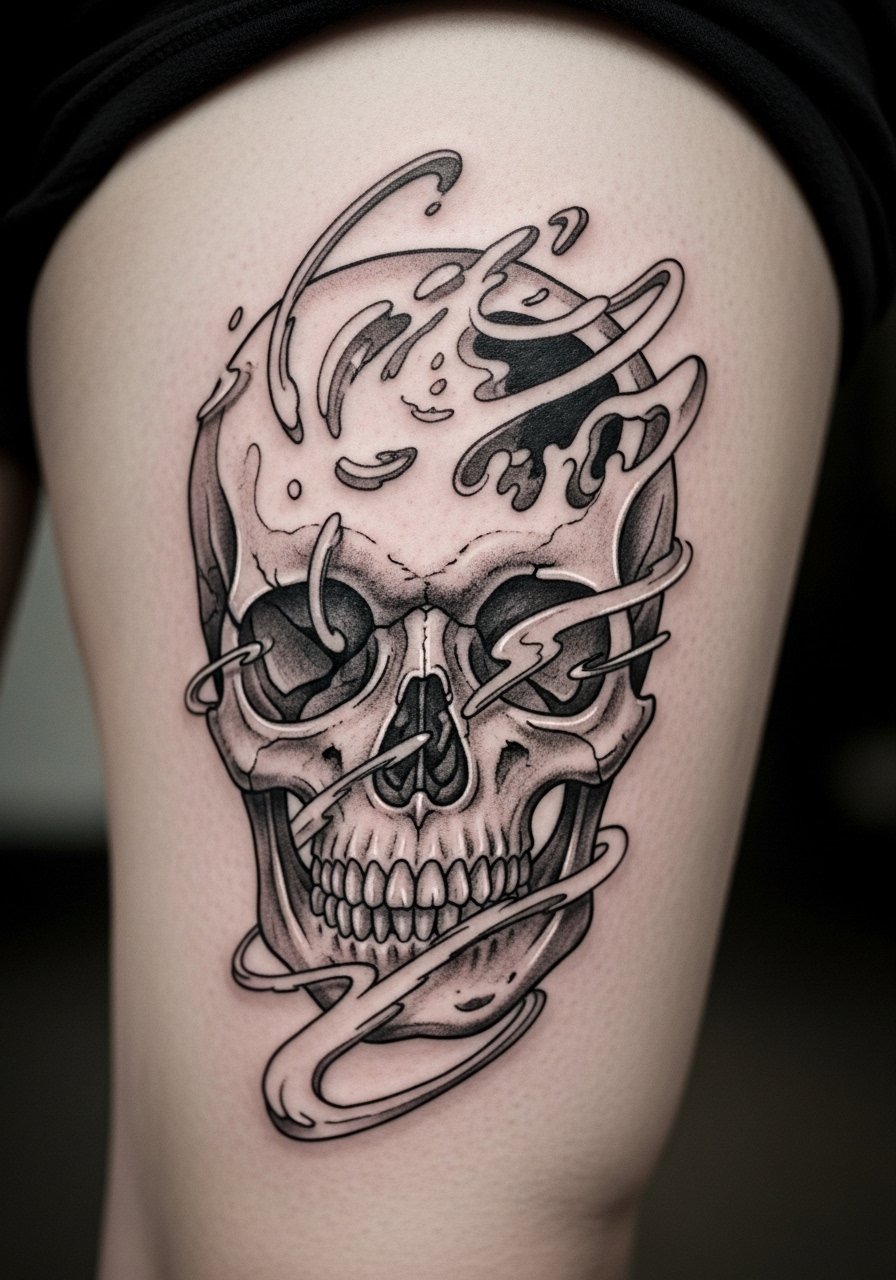
I came across a surrealist skull that incorporated eyes floating away. Thigh placement tolerates large, experimental ideas. Pain varies but is usually manageable. Ask the artist how the abstract elements will compress when you sit. A mistake is packing too much fine detail into the inner thigh. That area moves and can cause blurring. Sessions often run several hours. After one year, surrealist shading can still look dynamic if contrast is maintained. If you want the piece to age well, choose bold anchor shapes with delicate accents.
14. Tiny Skull Stack On Finger
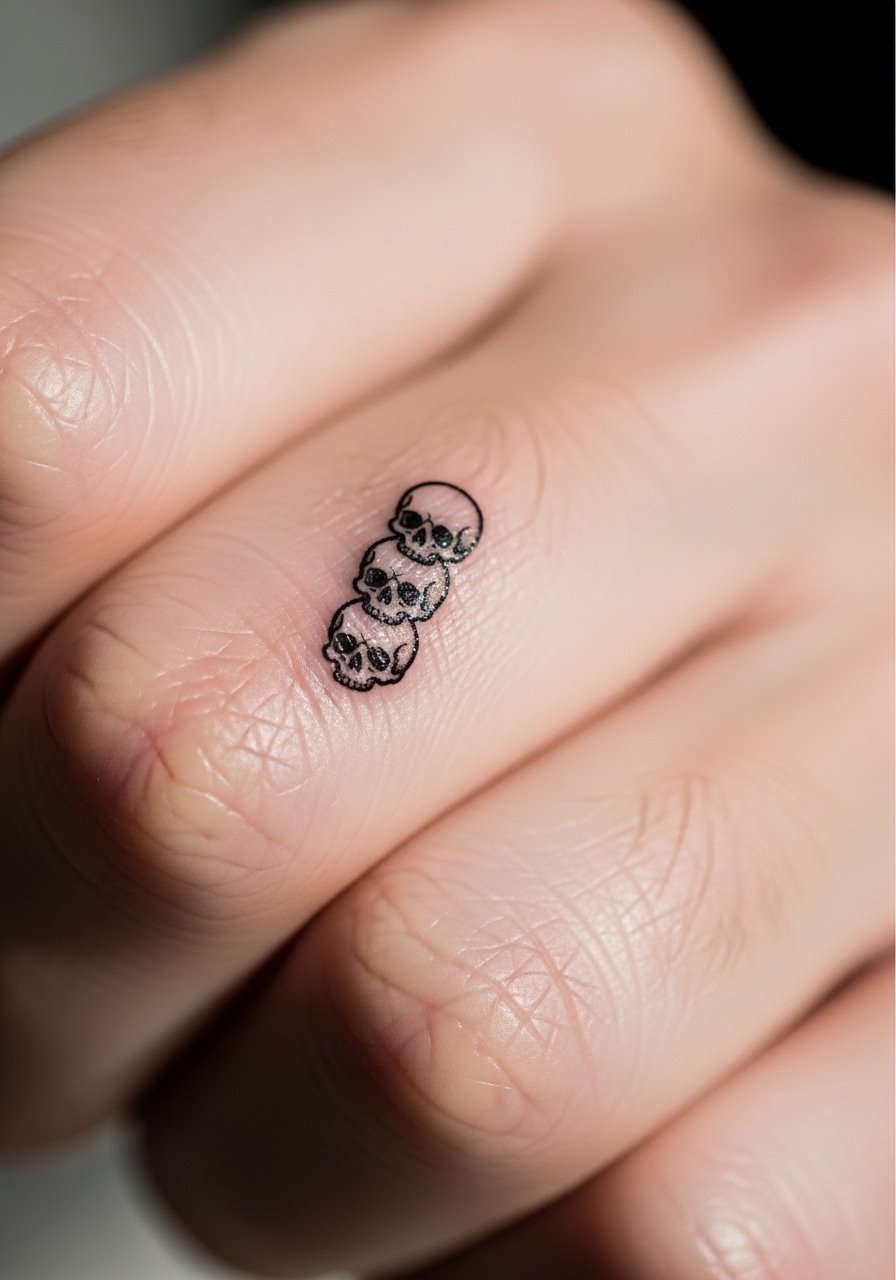
I tried this on a friend. Fingers are high maintenance. Pain is sharp and the skin heals quickly, but ink fades faster. Sessions are short. Ask for simple shapes and thicker lines than you think you need. A common mistake is demanding micro-shading on knuckles. That disappears within months. Expect touch-ups if you want it to last. At six months the skulls will look soft. At two years, most finger tattoos need refreshers. If you work with your hands, consider placement on the side of the finger to extend longevity.
15. Ornamental Skull On Back Of Hand
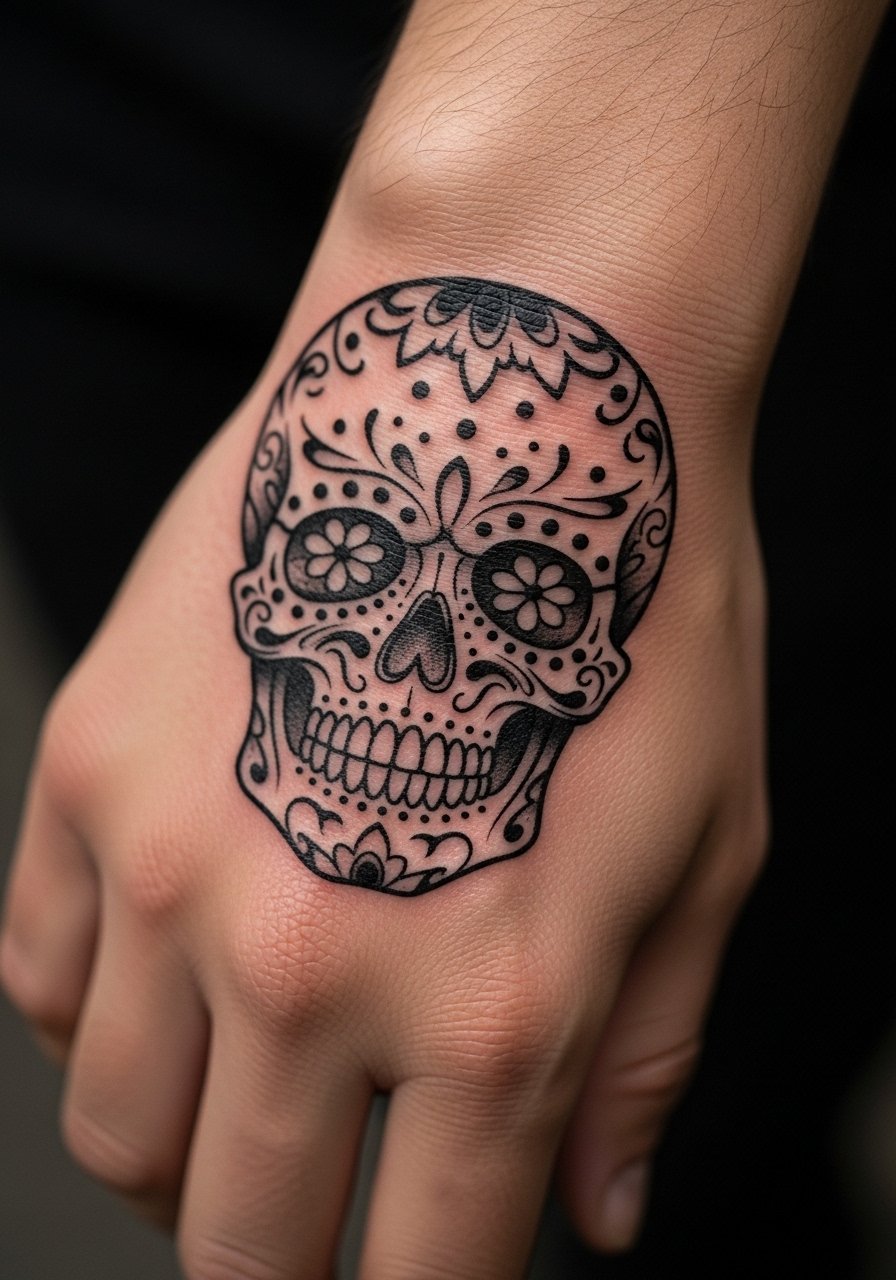
I noticed ornamental pieces read like jewelry. The back of the hand is exposed and ages with sun and washing. Pain is sharp. Sessions take under two hours for medium detail. Tell your artist you want anti-fade strategies. A mistake I see is heavy micro-detail that breaks down with constant use. After one year, ornaments may blur into darker shapes. If you want this look, discuss touch-up plans in your consult. I also recommend a travel-size SPF stick in the long-term care kit.
16. Celtic Knot Skull On Calf
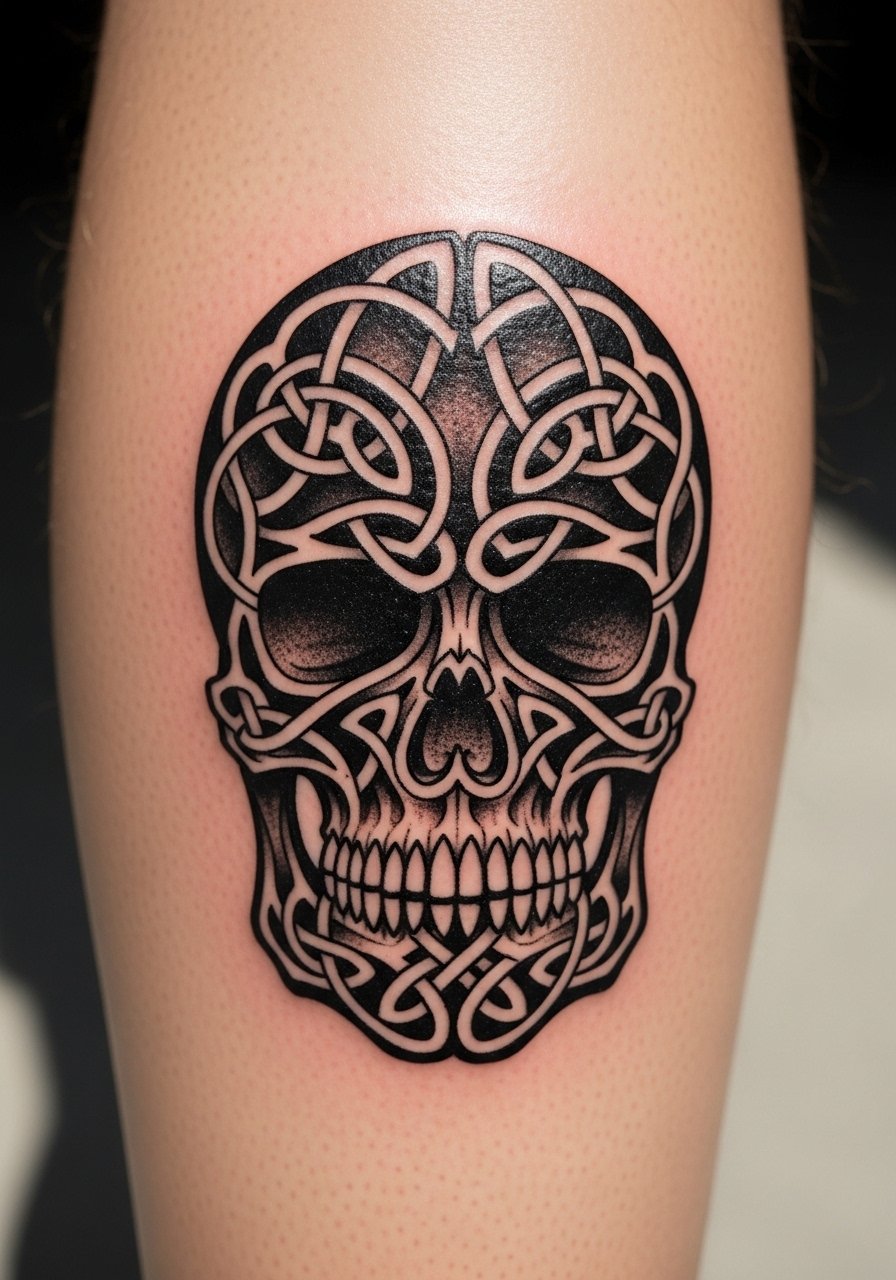
I found this in a shop window, and it struck me how movement brought the knots to life. Calf placement tolerates a lot of blackwork. Pain is moderate. Sessions may be single long sittings. Ask the artist to test line tension so knots read rather than muddle. A common mistake is making the knots too tight for the skin area. At six months the interlace should remain distinct. If you run regularly, expect some softening along the edges over two years. Plan for a yearly checkup.
17. Tribal Skull On Sternum
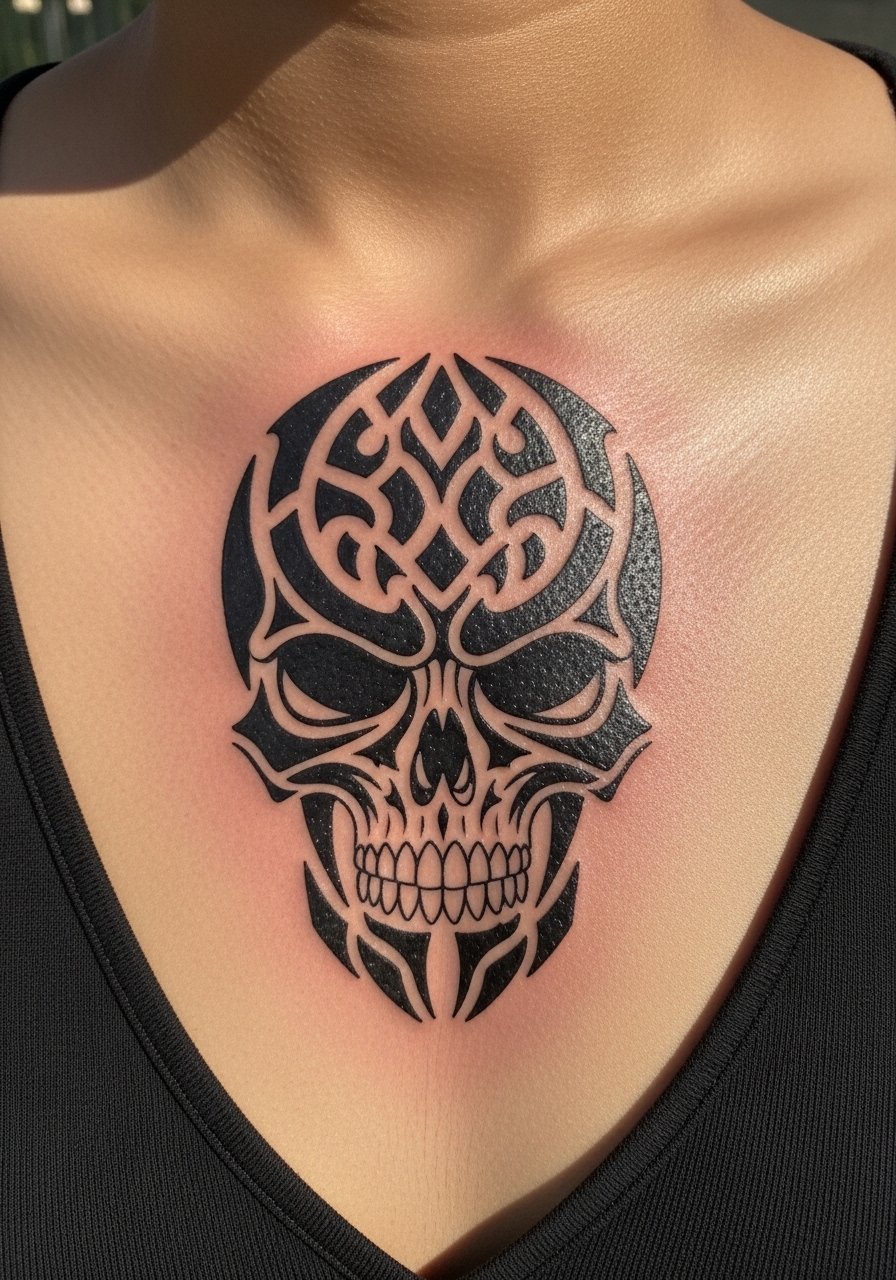
I chatted with an artist who recommended tribal motifs for clients wanting bold, graphic statements. Sternum pain is high but the result is dramatic. Sessions often split into two. Be clear about cultural influences and ask the artist to avoid appropriative symbols unless you have permission. A typical mistake is overcomplicating the negative shapes. After a year, strong blackwork holds better than fine detail. If you have thin skin, expect more sensitivity. Consider keeping lines slightly thicker for durability.
18. Anatomical Skull Cross-Section On Ribcage
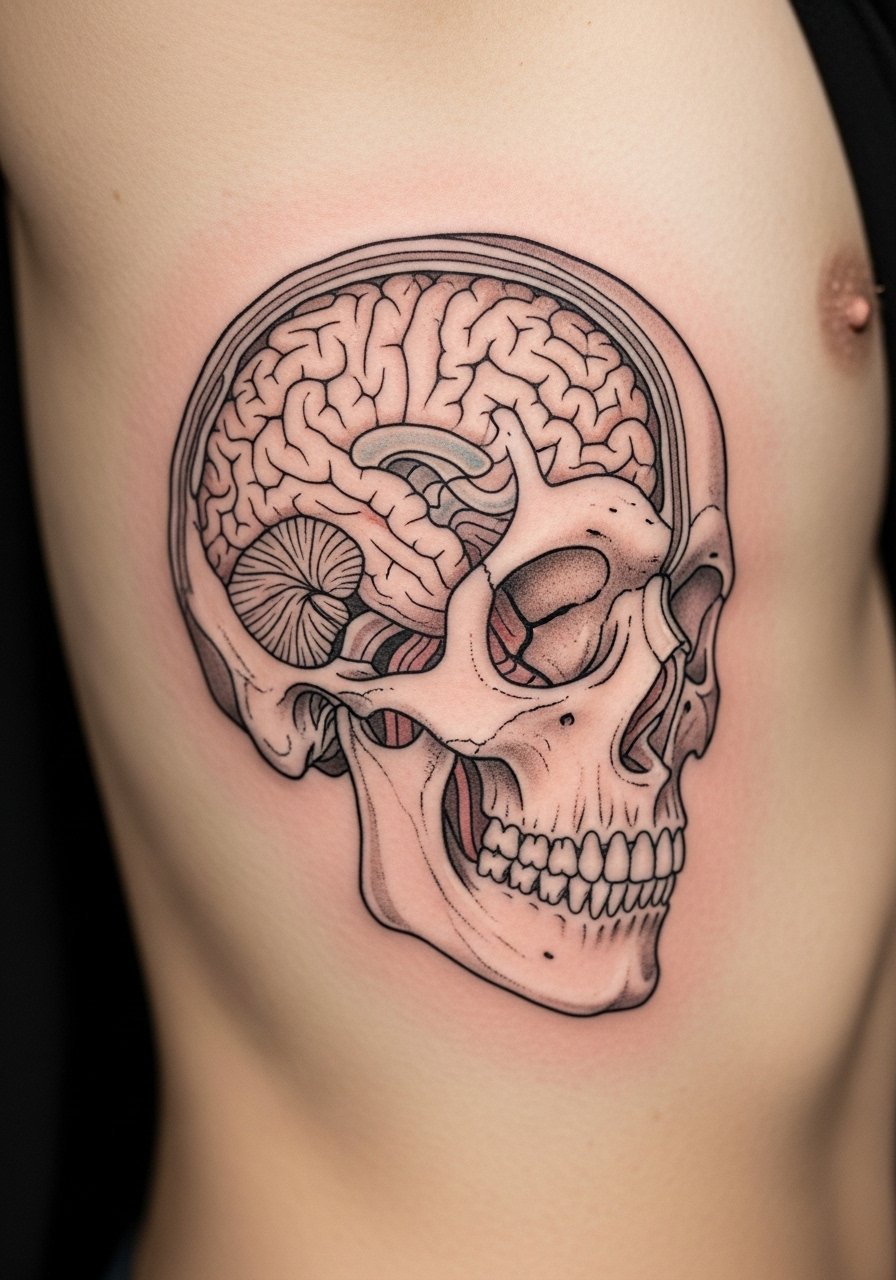
I loved this when I saw a medical student with one. Ribs are painful. The precision of cross-sections needs an artist comfortable with micro-realism. Sessions are long. Ask the artist to scale the tiny cavities slightly bigger than textbook reference. Too-small anatomical details blur. A mistake is crowding labels or tiny hatchwork. At six months the piece retains its structure if contrast is well established. If you want realism without constant touch-ups, pick larger than life proportions.
19. Sugar Skull Face Paint On Thigh
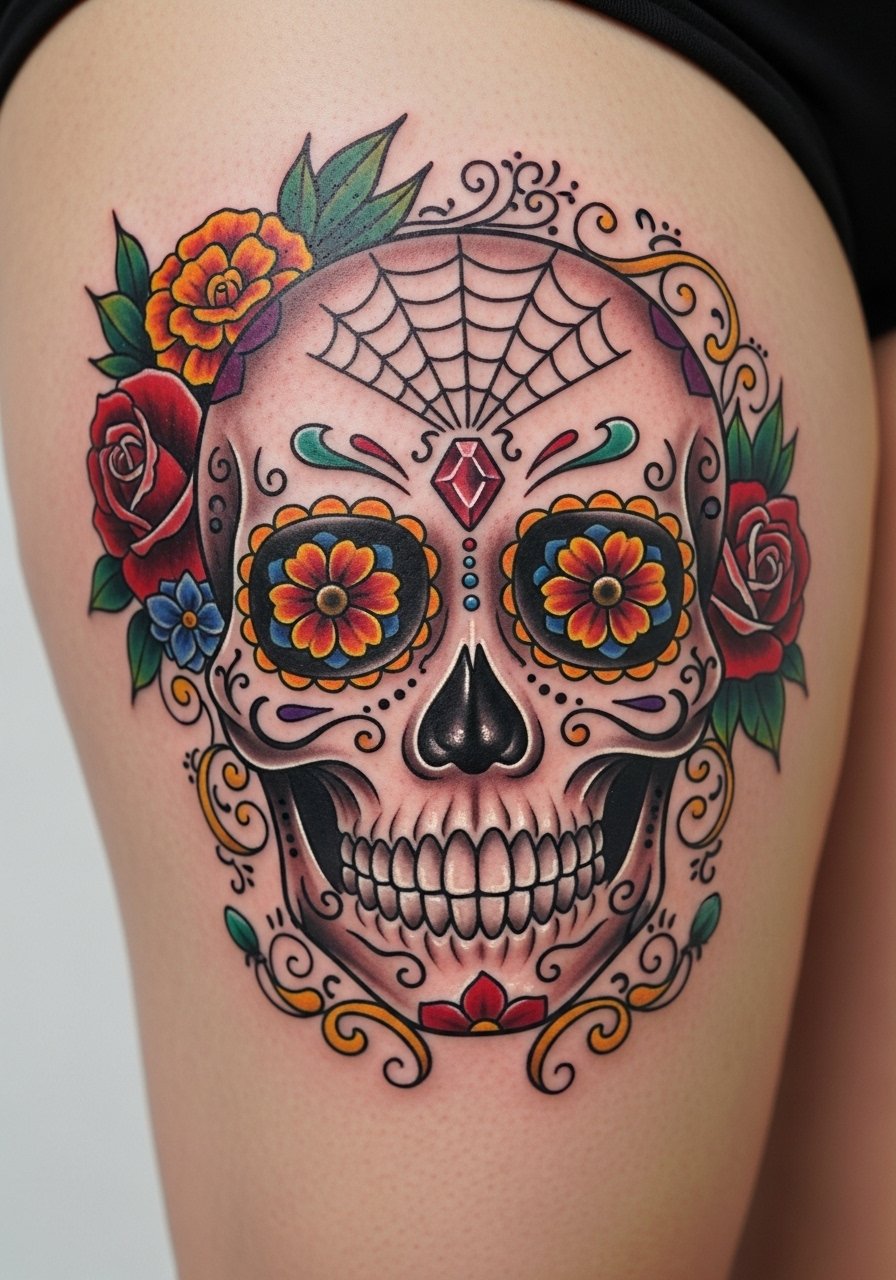
I saw someone choose this as a tribute piece. Thighs allow theatrical detail and color. Pain is moderate. Sessions often take several hours. Tell your artist which facial elements to emphasize so the design reads when you move. A mistake is adding too many tiny jewels or dots that fade into blur. After one year, saturated colors remain if you follow a solid aftercare routine. If you plan to hide it for work, thigh placement gives you that flexibility.
20. Neo-Tribal Skull Sleeve On Upper Arm
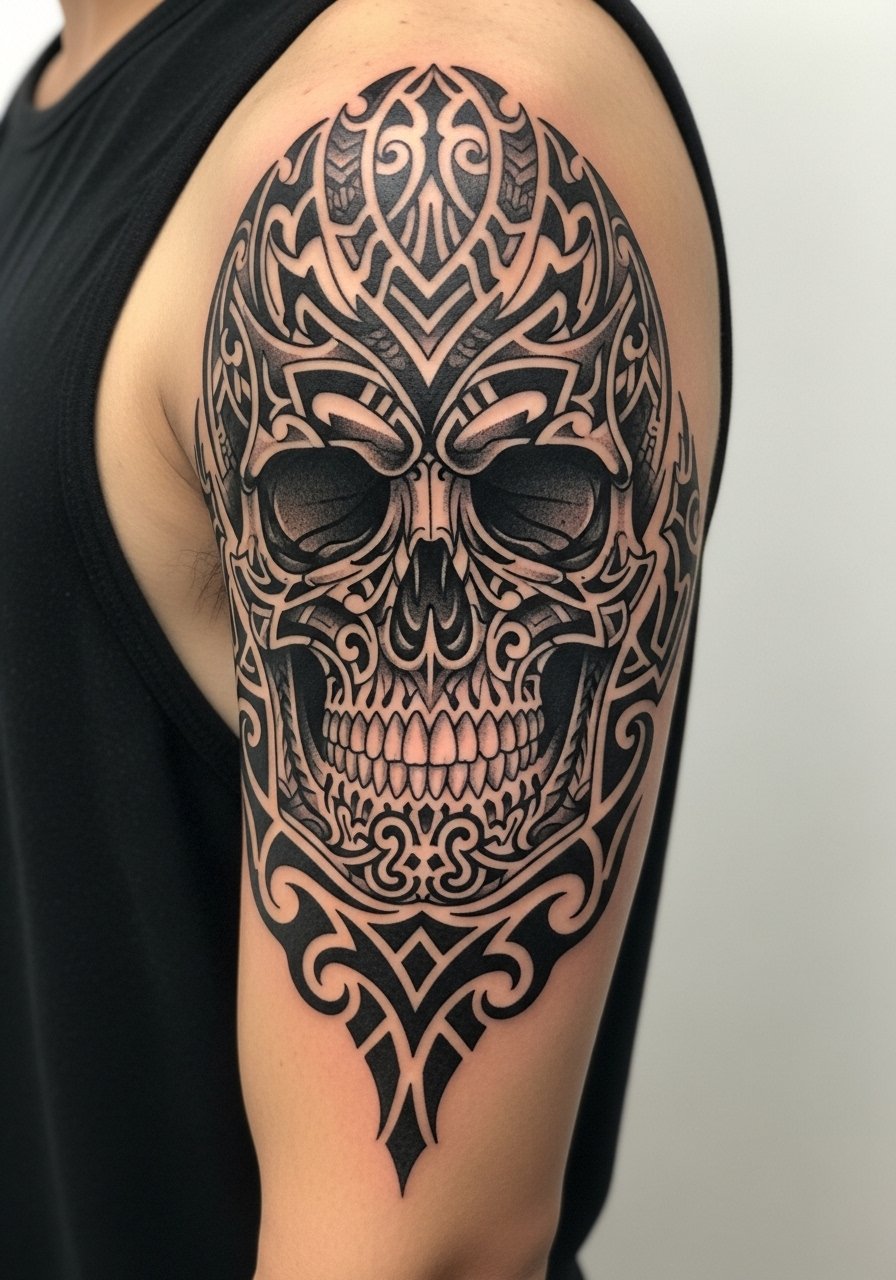
I first noticed a neo-tribal sleeve on an athlete. Upper arm sleeves handle movement and look cohesive. Pain is moderate. Multiple sessions create the wrap. Ask your artist to pace the negative spaces so the skull silhouette stays readable. A common error is overfilling every gap. After a year, big black areas hold up. If you sweat heavily, expect faster edge wear. Keep the skin moisturized to reduce flaking and pigment loss.
21. Floral Skull Calavera On Ribcage
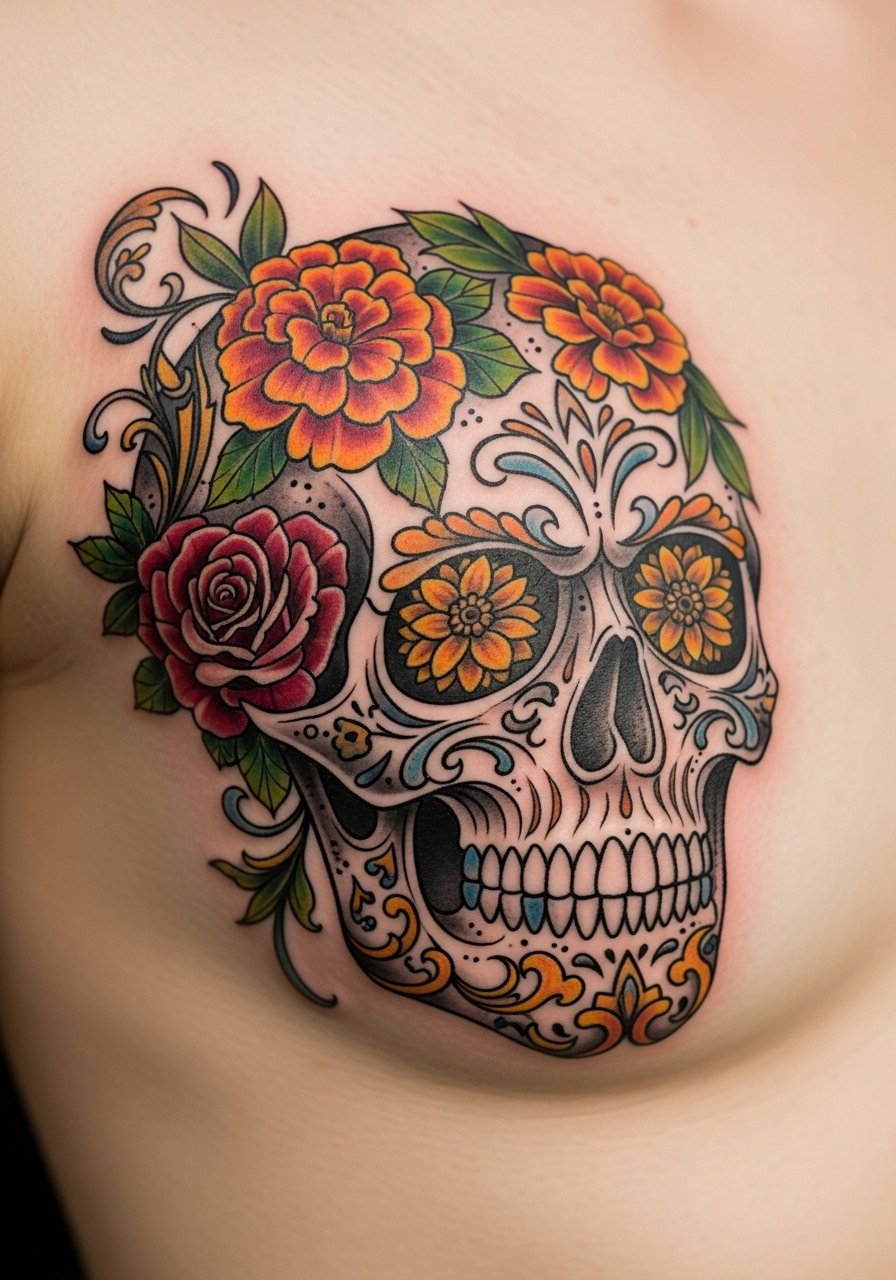
I spotted a calavera that balanced flowers and teeth beautifully. Ribs hurt, but the result sits close to your heart. Sessions are usually broken up. Ask for larger petals and less micro-texture. Tiny lacework in that area flattens fast. At six months the piece should breathe. After two years, graceful aging depends on strong initial contrast. If you plan to add on later, map future pieces during the consult.
22. Minimal Black Skull On Behind Knee
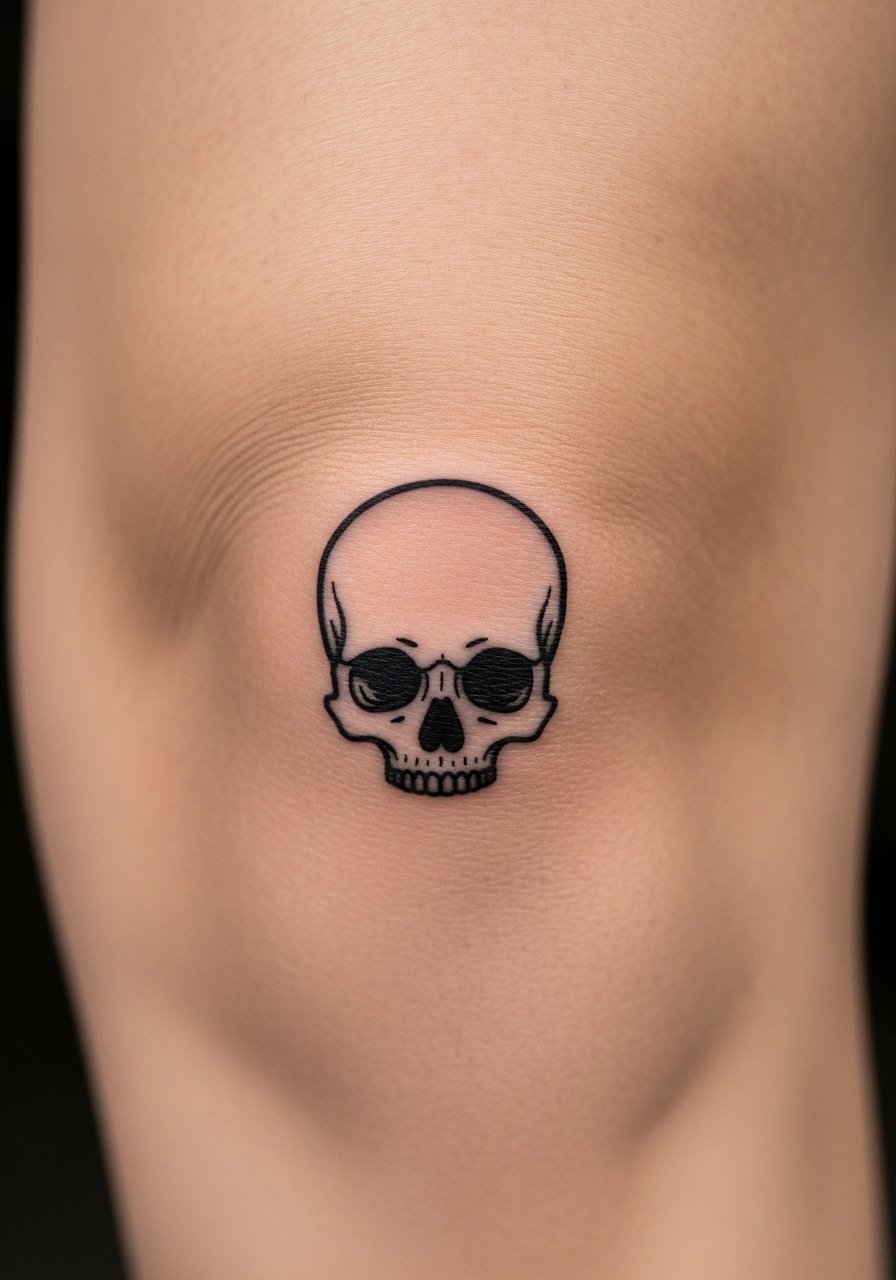
I saw this tucked in a dancer and it moved with the leg. Behind-knee tattoos can be painful because of tendons and movement. Keep shapes simple. Sessions are short. Tell the artist you want the skull centered on the fold to avoid distortion. A mistake is placing delicate detail directly on the crease. At six months, simple blacks hold better than shading there. If you run often, expect quicker softening and plan for touch-ups.
23. Portrait Skull Hybrid On Collarbone
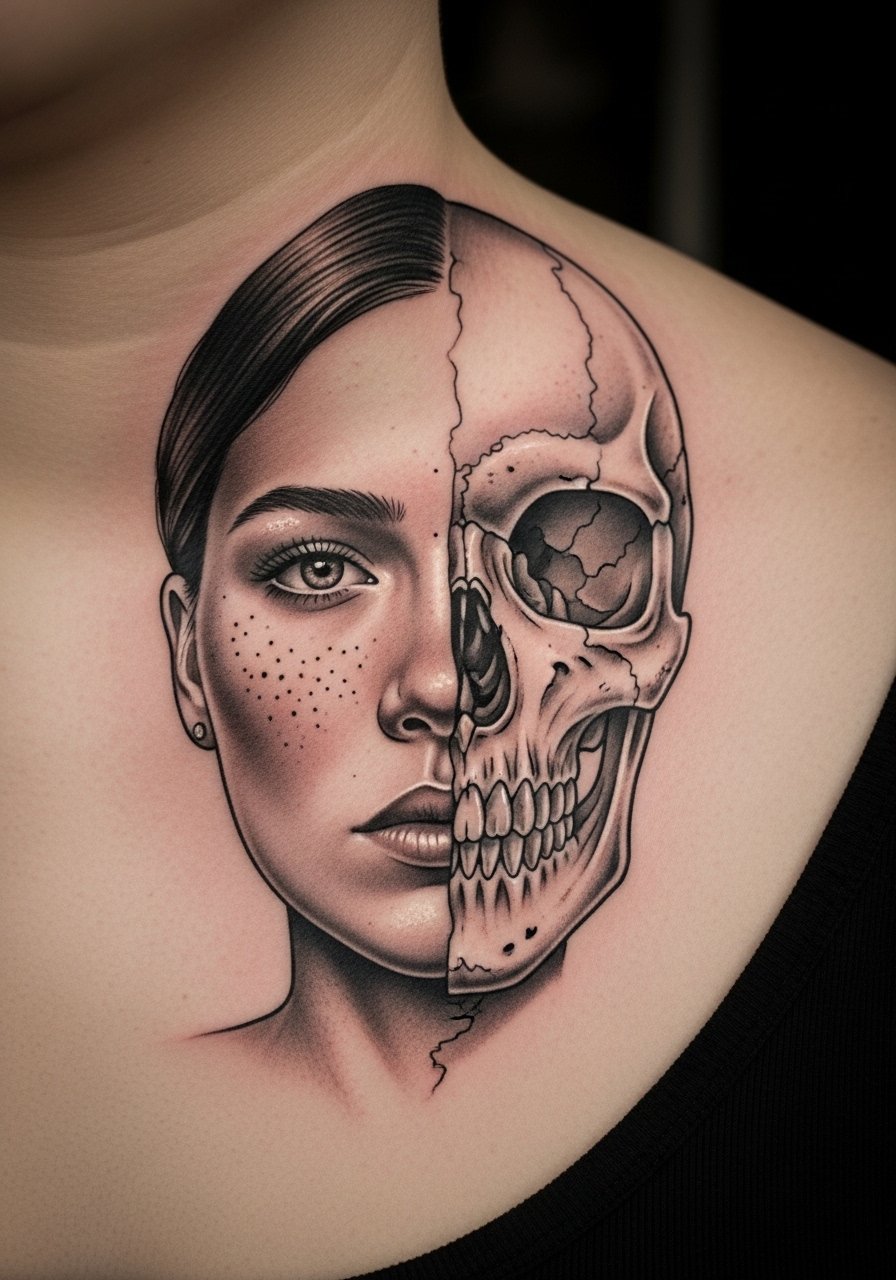
I talked to a client who merged a loved one's portrait with skull elements as a memorial. Collarbone pain is high near bone. Sessions may be broken up. Be precise in your brief. Ask the artist how they will keep facial features readable near the bone. A mistake is trying extreme realism directly on the collarbone without larger surrounding shapes. At a year the hybrid reads best when anchored by bold lines around the jaw and hairline. Plan for touch-ups if you want the portrait aspect to last.
24. Gothic Lace Skull On Ribcage Side
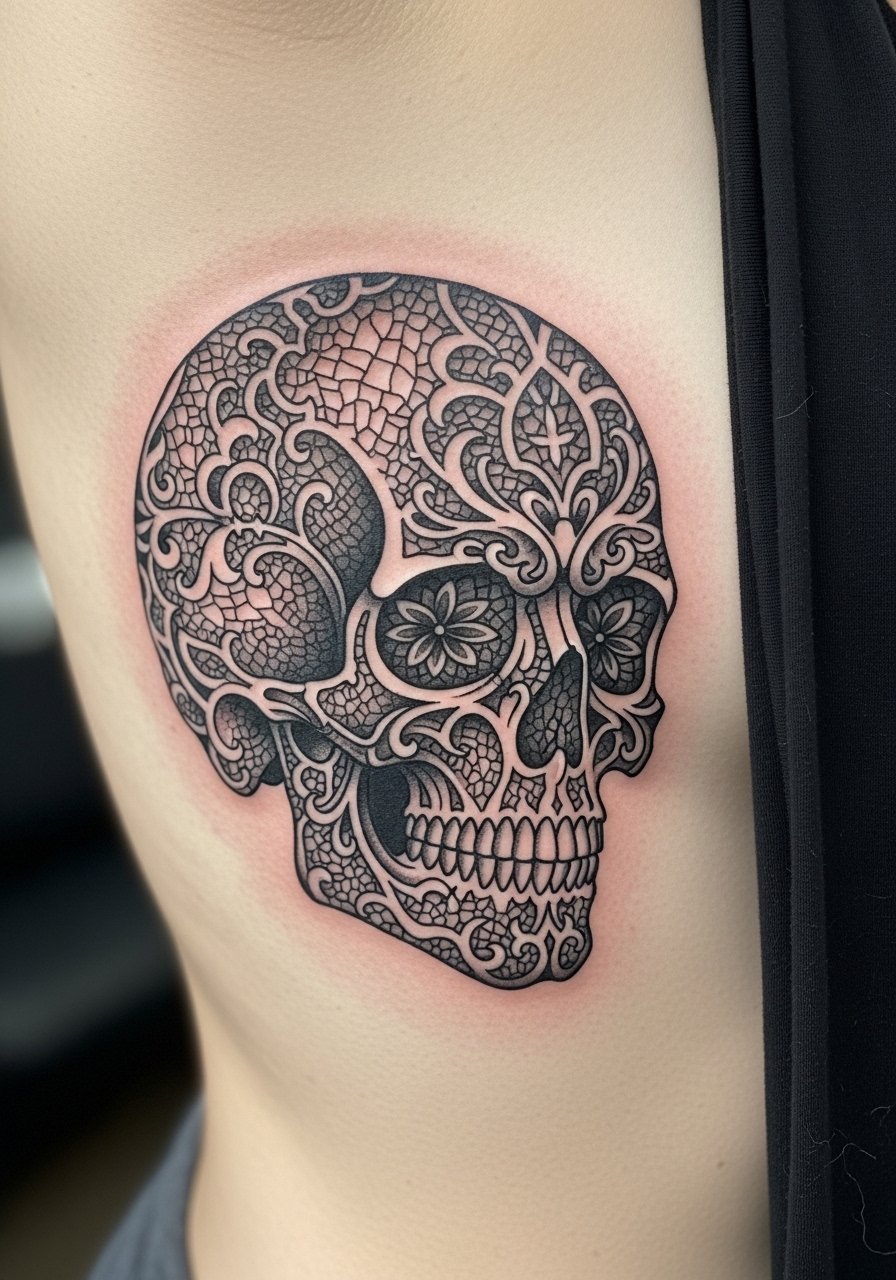
I noticed lace motifs add femininity without losing edge. Ribs are painful but they let you display a sweeping curved lace. Expect multiple sessions. Tell your artist to keep lace openings larger at first so they do not close up in healing. A common mistake is demanding micro-lace in a highly mobile area. At six months, lace softens. At two years, tiny loops can merge. If you want the lace to remain delicate, plan on conservative spacing and periodic refreshers.
25. Memento Mori Script With Skull On Wrist
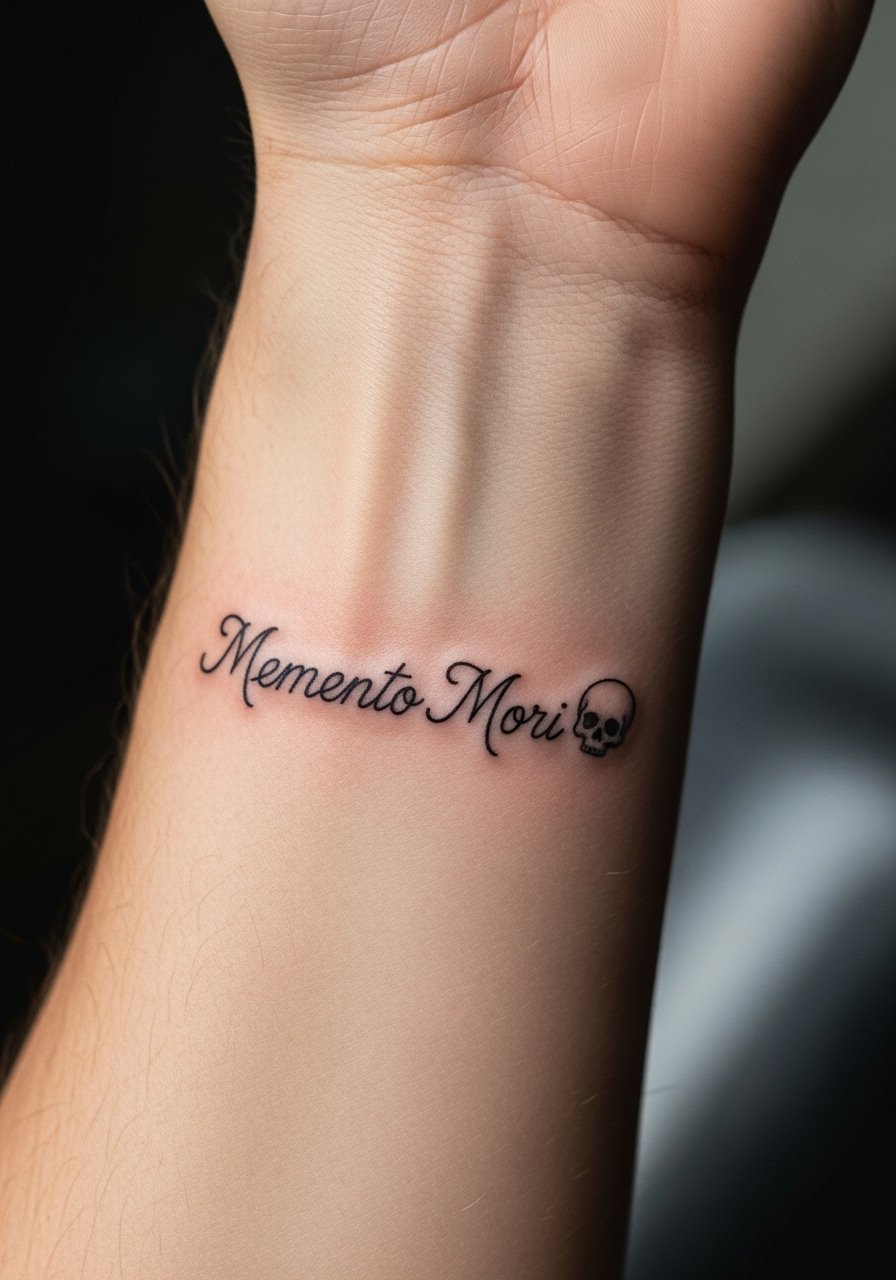
I got this idea from a friend who wanted a daily reminder. Wrist tattoos feel sharp during application and see a lot of sun and wash cycles. Keep the script bold enough to survive. During the consult, specify the exact phrase and font size. I recommend a slightly bolder script than your initial impulse. A frequent error is lettering that is too thin. At six months the script should still be readable. At two years, thin letters often need refreshers. Use an SPF stick for daily protection.
26. Surreal Floral Skull Sleeve On Forearm
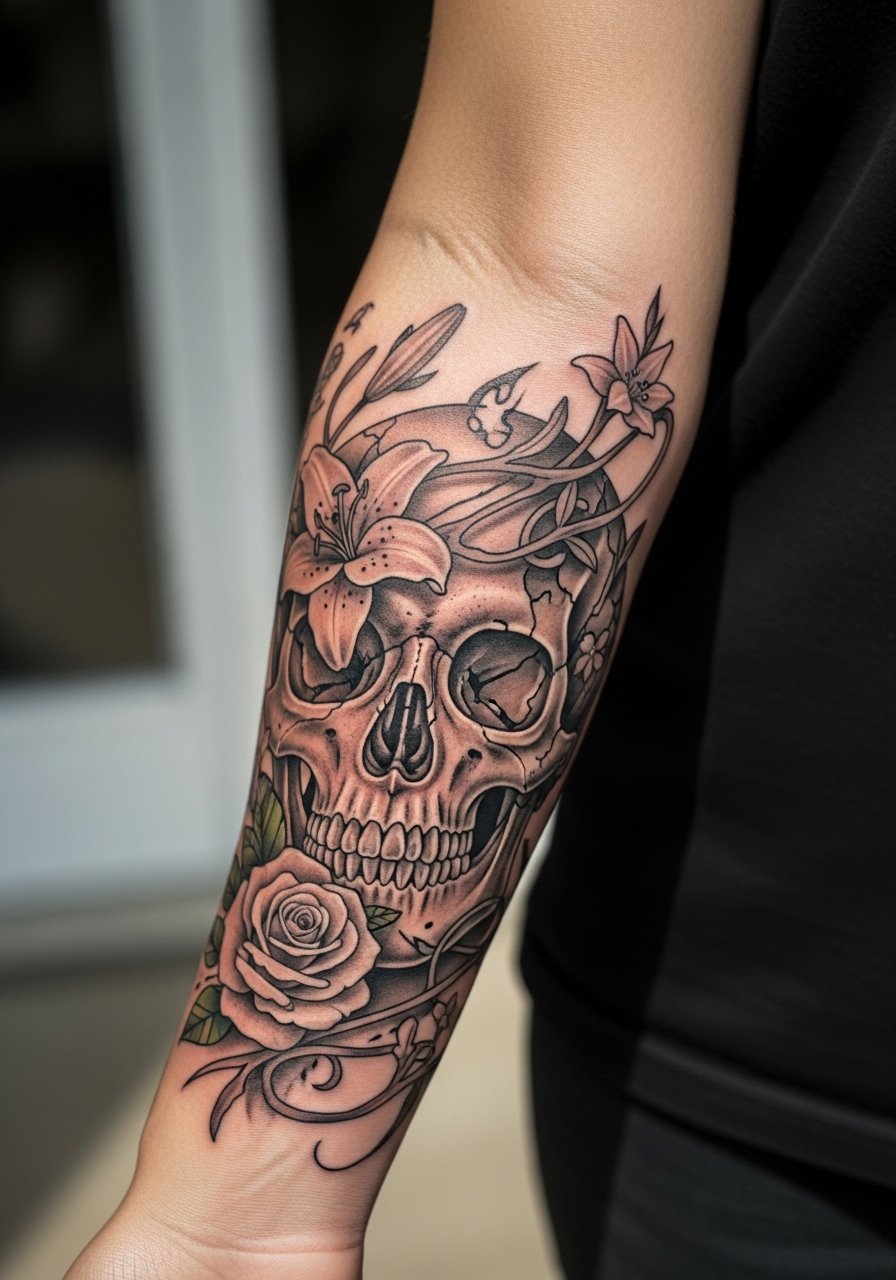
I ended up loving a sleeve that combined surreal motifs with skull shapes weaving through flowers. Forearms allow long compositions and moderate pain. Plan for multiple sittings. Ask your artist to create big anchors so the surreal bits do not read as clutter. One mistake is trying to cram too many focal points into a single forearm. At one year this style reads well if the major shapes remain high-contrast. If you want a living, evolving sleeve, map future additions with your artist during the first consult.
Tattoo Prep and Aftercare Essentials
Aftercare. Prep. Long-term maintenance. I keep my kit simple. Every artist I've talked to has slightly different preferences, but these items come up again and again.
Aftercare:
- Aquaphor Healing Ointment, 14oz tube. Industry standard for first 3-5 days. I use a thin layer at night
- Saniderm Transparent Adhesive Bandage, 6-inch roll. Second skin healing method. Every artist I know recommends it for the first 24 to 72 hours
- CeraVe Fragrance-Free Moisturizing Lotion, 16 oz pump. Daily moisturizer for days 4 to 14. I prefer the pump bottle for hygiene
- Dr. Bronner's Unscented Castile Soap, 32 oz. Gentle cleanser for rinsing twice a day the first week. Dilute a small drop with water
Before Your Appointment:
- Numbing Cream with 5% Lidocaine, 30g tube. Apply 30 to 45 minutes before your session only if your artist approves. Some artists prefer no numbing
- Tattoo Stencil Transfer Paper, A4 Pack. Useful if you want to test placement at home before your appointment
Long-Term Maintenance:
- SPF 50 Sunscreen Stick for Tattoos, Travel Size. Use on healed tattoos whenever they see sun. I carry one for beach days
- Mad Rabbit Tattoo Balm, 2 oz. Long-term maintenance for vibrancy. Artists I know recommend it for healed pieces
- Hustle Butter Deluxe, 5 oz. Vegan alternative that works during healing and after. Smells better than most aftercare
Optional Comfort Items:
- Tattoo Numbing Spray, 4 oz. Handy for touch-ups or sensitive areas mid-session
- Hydrocolloid Bandages, Large Size Pack. Good alternative to Saniderm for small to medium tattoos
I use Saniderm the first night for cheek or rib work. For hands and fingers I skip ointment and rely on fragrance-free lotion after day three. Every artist I've talked to will remind you about SPF for long-term color retention.
Frequently Asked Questions
Q: Will fine line skulls blur into each other on a full sleeve?
A: From what I've seen, yes if lines are ultra-fine and packed tightly. For a full sleeve, ask your artist to increase line weight slightly and use negative space to separate elements. Also request stronger outer lines on key shapes. If you have delicate lines on the inner sleeve near the elbow they will soften faster. Use CeraVe Fragrance-Free Moisturizing Lotion, 16 oz pump during healing to reduce flaking and scab loss.
Q: Do watercolor skull tattoos need different aftercare than traditional blackwork?
A: In my experience, watercolor skulls need gentler handling because the pigment sits in softer washes. Use a mild cleanser like Dr. Bronner's Unscented Castile Soap, 32 oz for the first week and avoid heavy ointments that can trap moisture and cause color migration. After the first week switch to a fragrance-free lotion and keep sun exposure minimal to protect the washes.
Q: How painful is a ribcage skull compared with a calf blackwork skull?
A: From my experience, ribs hurt more because of proximity to bone and thin skin. Calf blackwork can be tiring due to long sessions and heavy packing, but the pain is usually more tolerable. For ribs, split sessions into shorter sittings and schedule rest days. For large calf fills, bring hydration and an electrolyte snack.
Q: What should I tell my artist when I want a sugar skull with floral elements on the thigh?
A: Be specific about scale, color saturation, and which flowers matter to you. Tell them you want larger petal shapes and less micro-dot filler so the design ages cleanly. Ask how they plan to space elements to avoid overlap during healing. If you plan to conceal it for work, double-check placement on the thigh for coverage.
Q: Can I use numbing cream for a chest or sternum skull?
A: I've used numbing creams with approval from my artist on sensitive chest spots. Never apply before confirming with the artist. If they approve, use a 5% lidocaine product and follow timing instructions. Keep in mind numbing can change how your skin reacts and may mask discomfort that signals an issue, so proceed cautiously.
Q: How do behind-ear skulls hold up long term?
A: From what I've seen, behind-ear tattoos tend to soften because of hair friction and limited skin thickness. If you want a skull there, ask for slightly heavier lines and minimal shading. Keep the area dry during healing and expect more frequent touch-ups than forearm or calf work.
Q: Which aftercare products actually help maintain bold blackwork on a calf or back piece?
A: Artists I trust recommend an initial regimen of cleansing with a mild soap like Dr. Bronner's Unscented Castile Soap, 32 oz, then a thin layer of Aquaphor Healing Ointment, 14oz tube for the first few days. After day three, switch to CeraVe Fragrance-Free Moisturizing Lotion, 16 oz pump and long-term use of Mad Rabbit Tattoo Balm, 2 oz for vibrancy.