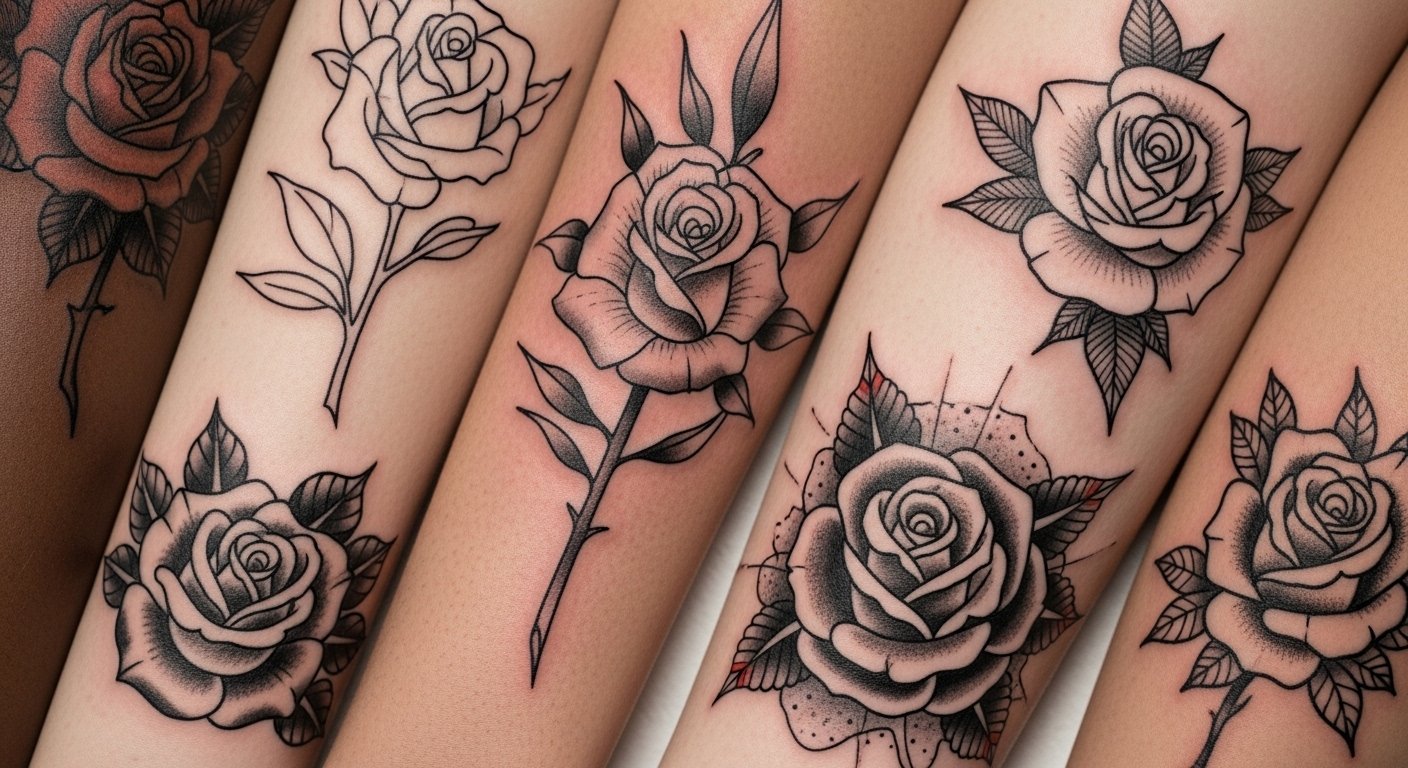
I spent eight months saving reference photos and talking to artists before I got my first rose. The problem I kept running into was not the design. It was knowing which style would still look good after a year or five. These 26 rose tattoos are what I keep seeing on artists' books in 2026. I picked ideas that age well and that make sense on real skin.
This list focuses on fine line, traditional, micro-realism, blackwork, and watercolor-adjacent styles. Good placements range from inner forearm to ribcage and collarbone. From what I've seen, minimal fine line roses and bold color roses are both trending, but they age very differently. Pick the style that fits your life and sun exposure habits.
1. Fine Line Single Rose On Inner Forearm
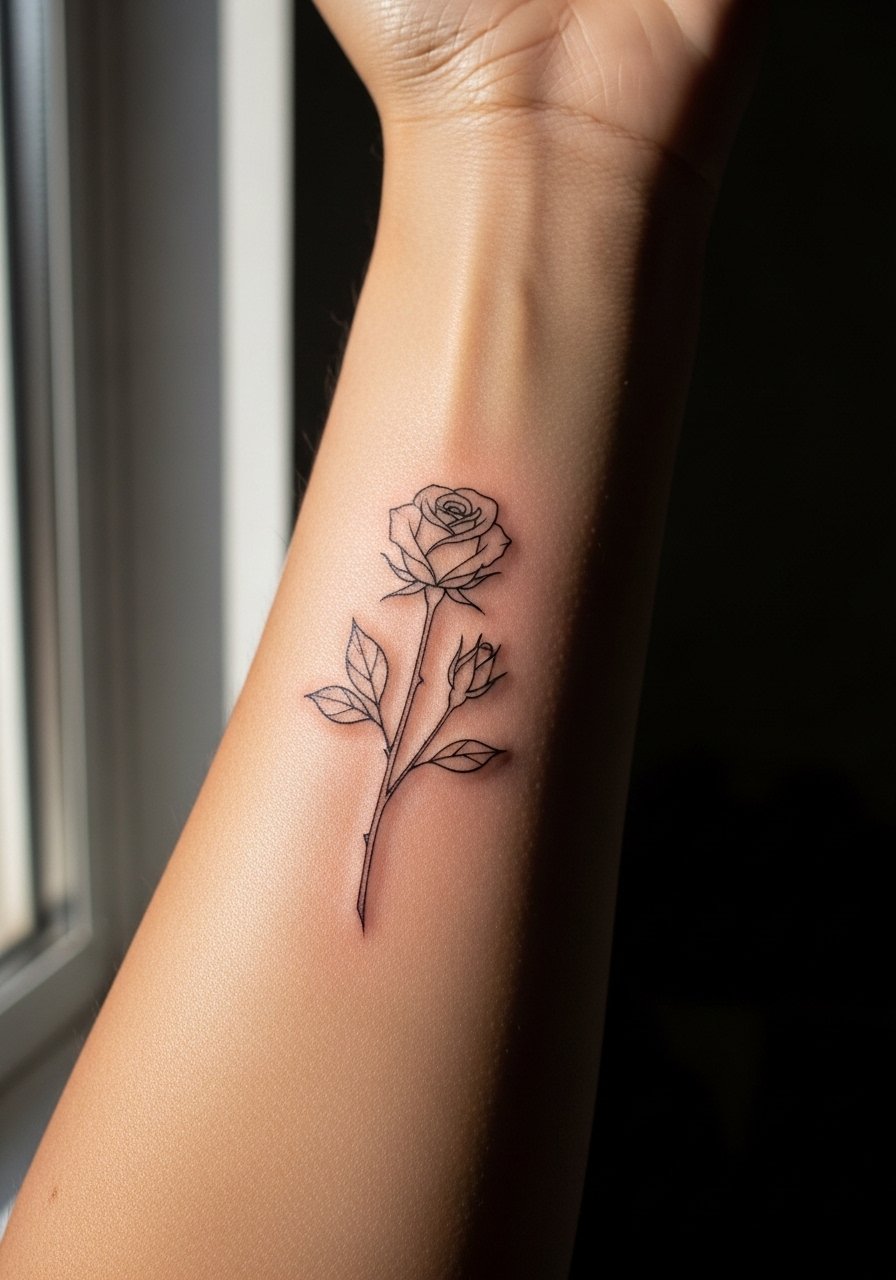
I first noticed this exact placement on a friend who wanted something discreet but visible. Fine line works here because the forearm has smooth skin and flat surface. Expect low to moderate pain. Sessions are short, often under an hour. Tell your artist you want slightly thicker stems near the base so lines don't vanish after a year. A common mistake is requesting ultra-thin lines with tiny details. From what I've seen, those blur into a faint smudge by two years. Healed look at six months shows soft edges. By two to five years you may need a micro-touch to re-crisp fine dots. Ask for archival reference photos from your artist during consult.
2. Traditional Bold Rose On Upper Arm
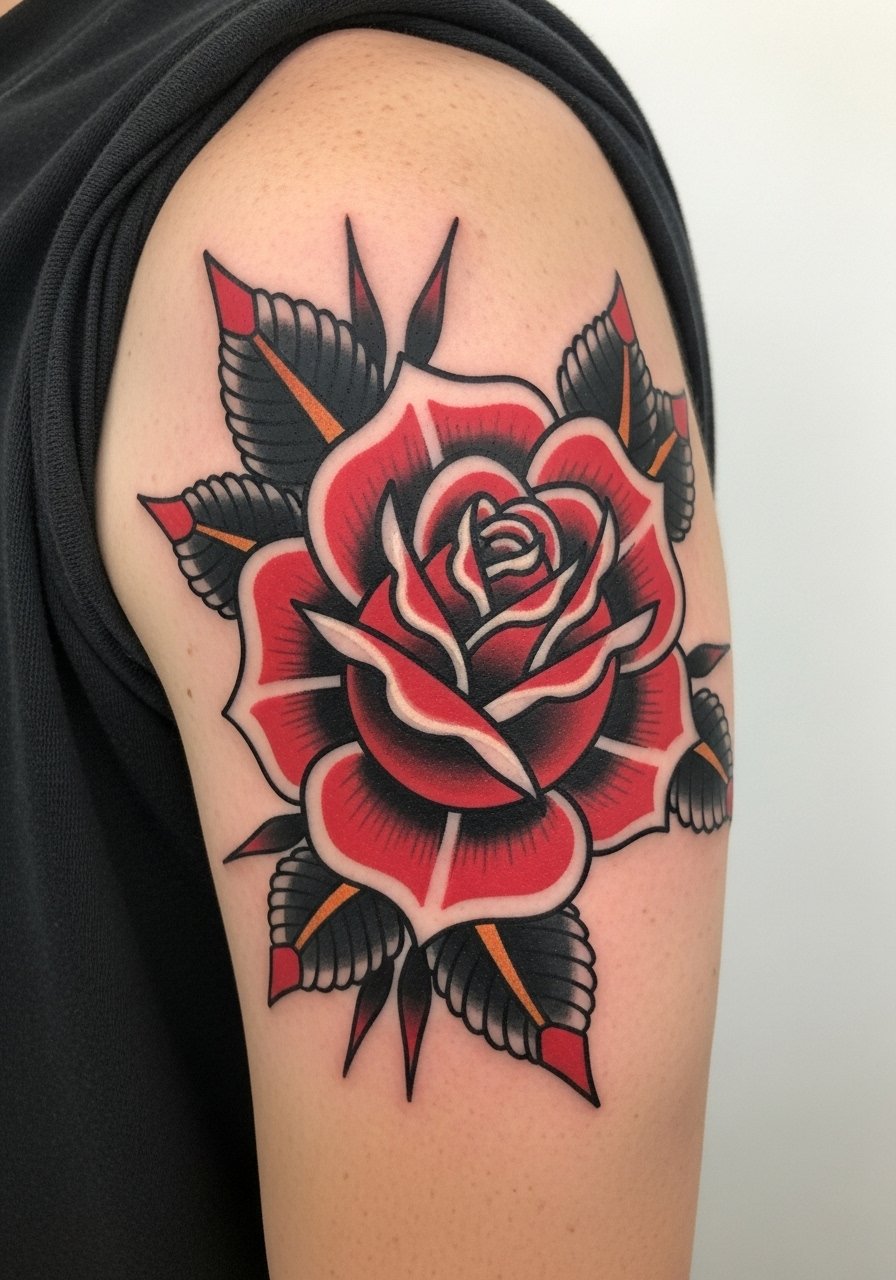
Bold traditional roses read from across the room. I spotted this style on a biker jacket sleeve and loved the high-contrast look. Pain on the upper arm is mild. Sessions usually wrap in one to two hours. Traditional ink holds color well, but watch sun. From what I’ve gathered, heavy black outlines keep the roses legible even as color softens over years. Artists I know recommend solid fill instead of tiny shading when you want longevity. A frequent error is asking for tiny petals inside the outline. They often merge. Ask for saturated color with clean outlines during the consult so your artist plans for touch-up timelines.
3. Micro-Realism Rose On Sternum
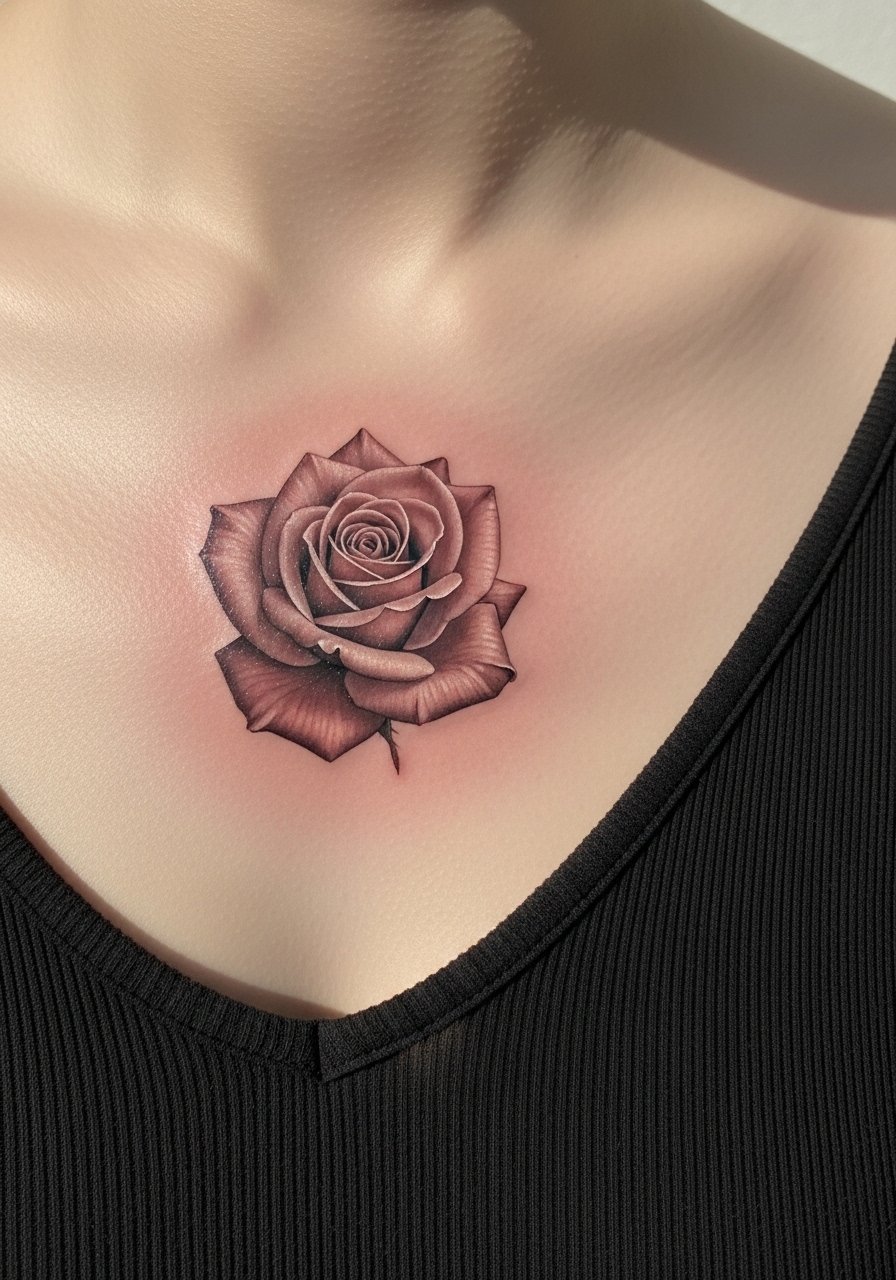
Fair warning, sternum work stings more than the arm. I got a small micro-realism piece there and it was a 7 out of 10 on pain. The effect is worth it for intimate placement. Micro-realism needs an experienced artist who knows how to leave negative space. Session time can be one to three hours depending on detail. Healed at six months, the fine shading looks soft. By two years, tiny high-contrast points may fade. Common mistake is packing too much tiny detail in a tiny tattoo. Tell your artist you want selective highlights and deeper shadows, not an overload of micro-dots.
4. Blackwork Geometric Rose On Thigh
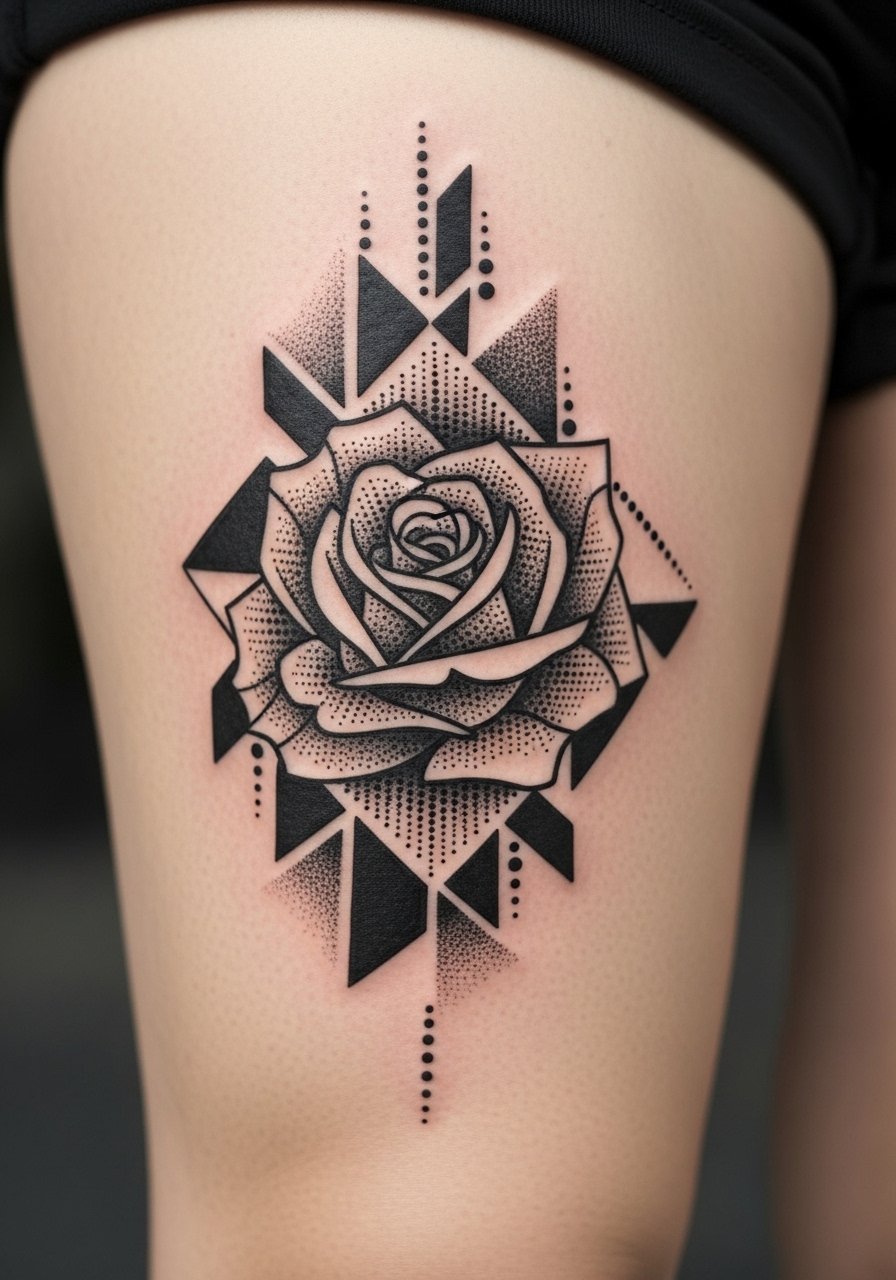
The thigh gives room for geometry and large blackwork that ages well. I first saw this while watching an artist build negative space around a rose. Pain is low on the fleshy thigh. Sessions can be longer, often two to four hours. Heavy blackwork tends to hold up superbly because saturated areas age slower than tiny lines. A typical mistake is making geometric patterns too tight. They need breathing room or lines will blur into the shapes over time. In consult, ask for scaling guidelines so the pattern reads at a distance and still looks balanced up close.
5. Watercolor Rose With Subtle Outline On Ribcage
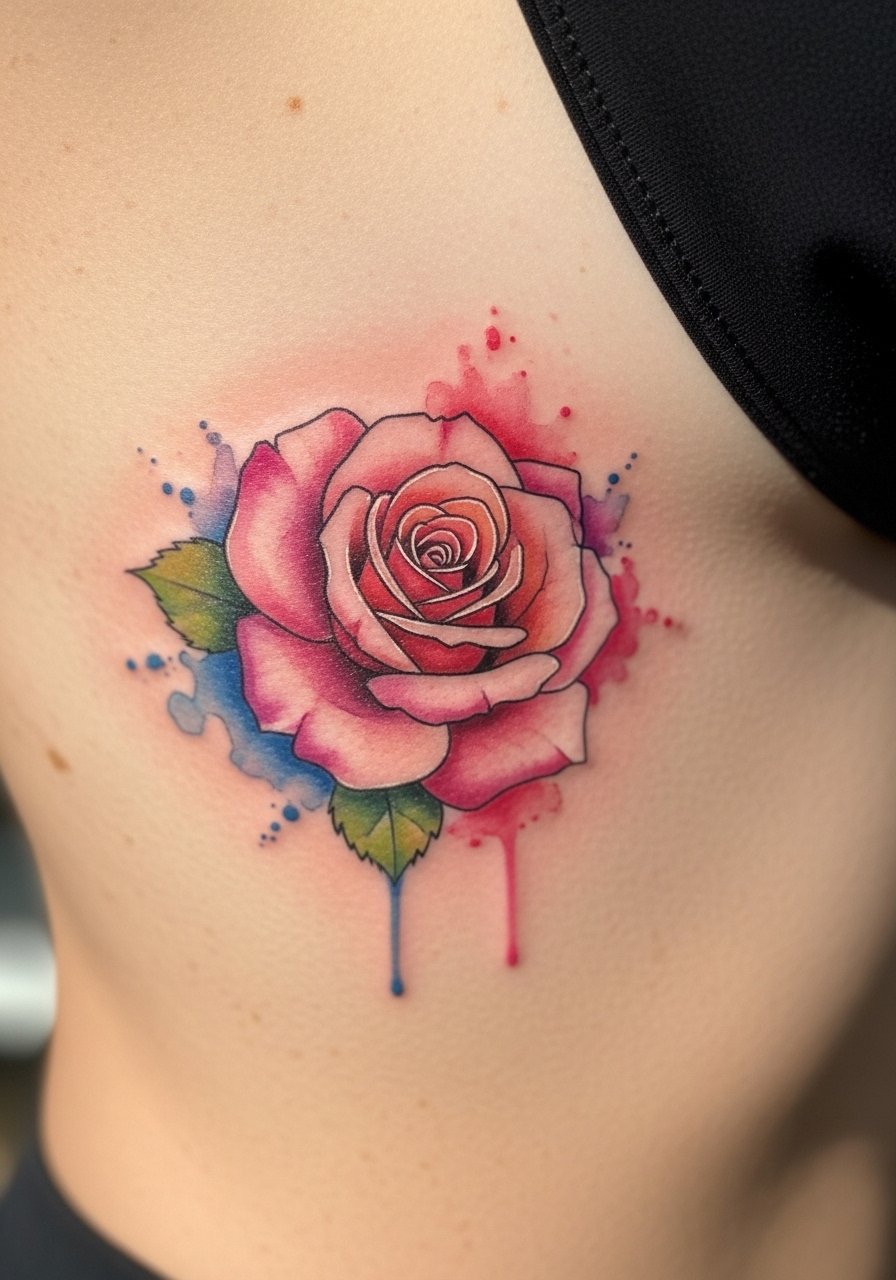
Ribcage tattoos are painful, expect sharp twinges between ribs. I watched plenty of watercolor roses fade badly when the pigment was too diluted. The version I recommend keeps a subtle outline to protect the shape. Sessions are medium length, often 90 minutes to three hours. Healed at six months, the colors should settle into a soft wash. By five years, some pigments may need refresh. A mistake I see is asking for pastel washes without outline on a sun-exposed area. Ask your artist for pigments that have a reputation for staying vibrant and a plan for occasional touch-ups.
6. Minimalist Line Rose Behind Ear
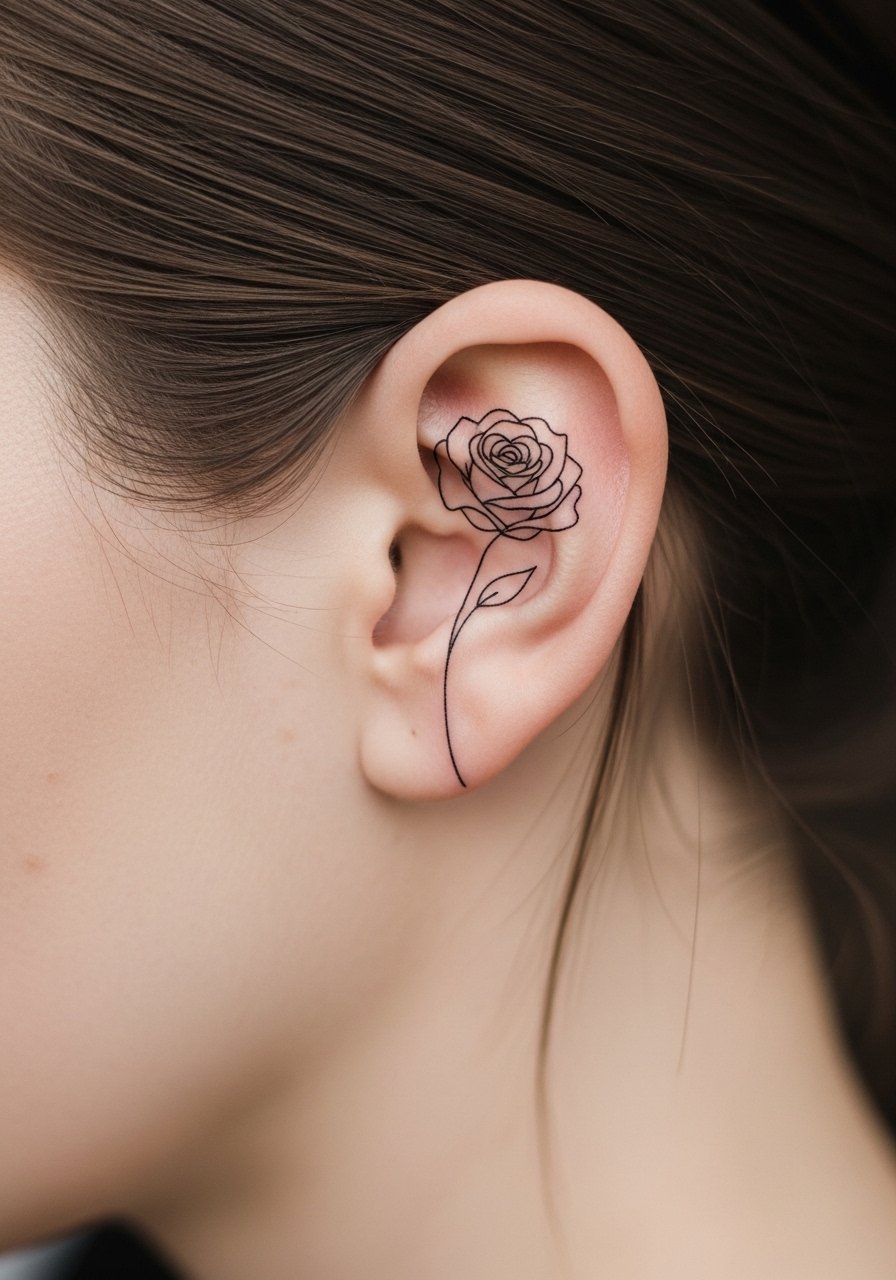
I love tiny behind-ear roses for low-key style. Pain is quick but sharp. Most artists finish these in under 30 minutes. The trick is keeping the line bold enough so it does not vanish. From what I've noticed, ultra-thin continuous single-line tattoos can blur into an indecipherable line after two years. Avoid designs with tiny loops or micro-dots behind the ear. Tell your artist you want slightly bolder single-line weight and ask to see healed photos of similar placements. Clean aftercare matters here because the area is prone to rubbing with hair.
7. Neo-Traditional Rose With Banner On Upper Chest
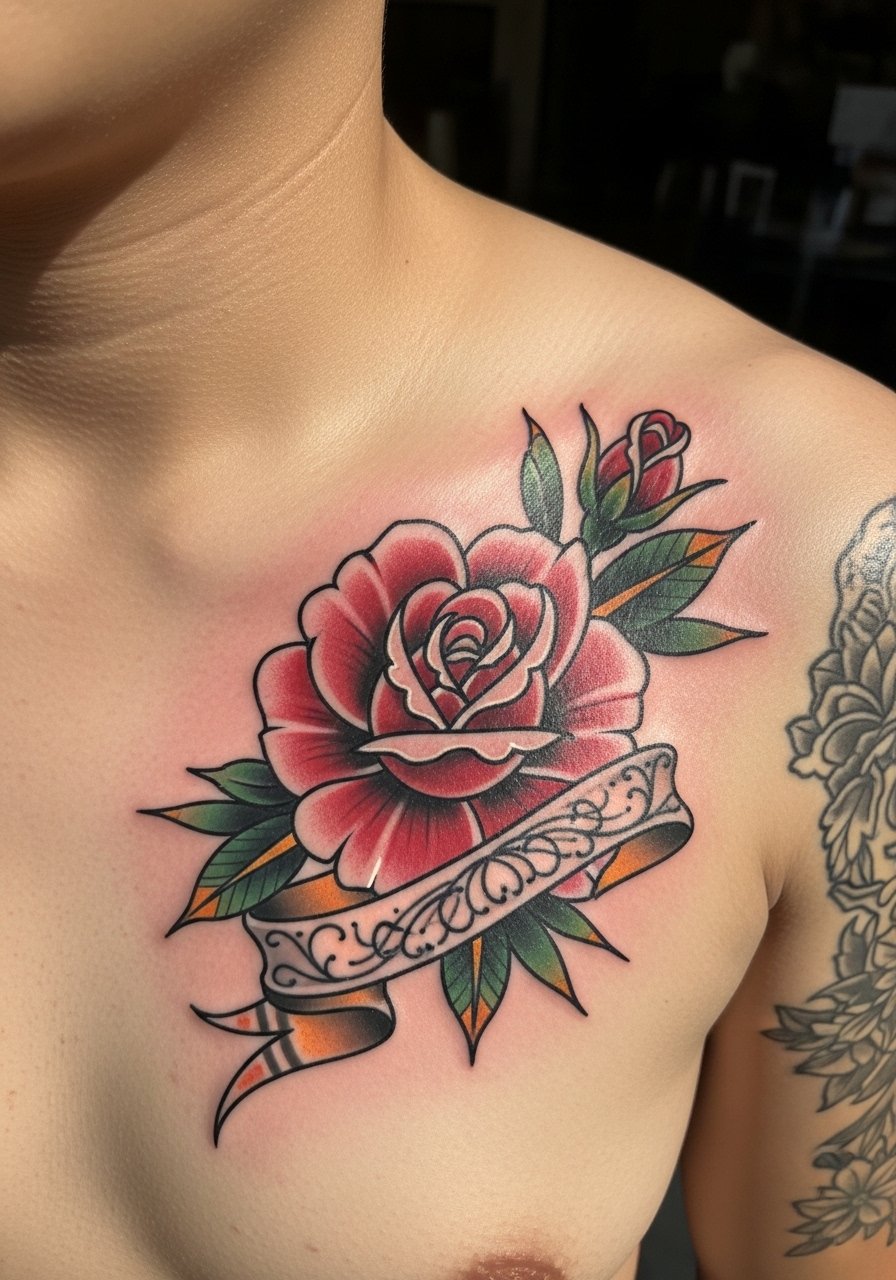
I first fell for this on a street tattoo flash sheet. The banner adds a personal touch. Chest work has moderate pain, especially near the sternum. Sessions are two to three hours. Neo-traditional holds color well if the artist uses dense saturation. A common mistake is overcrowding the banner with long text. Short words or initials age cleaner. If you want lettering, specify font size and request healed examples. Ask your artist how the chest moves with breathing and to test placement with temporary transfers.
8. Black And Grey Single Rose On Ribcage
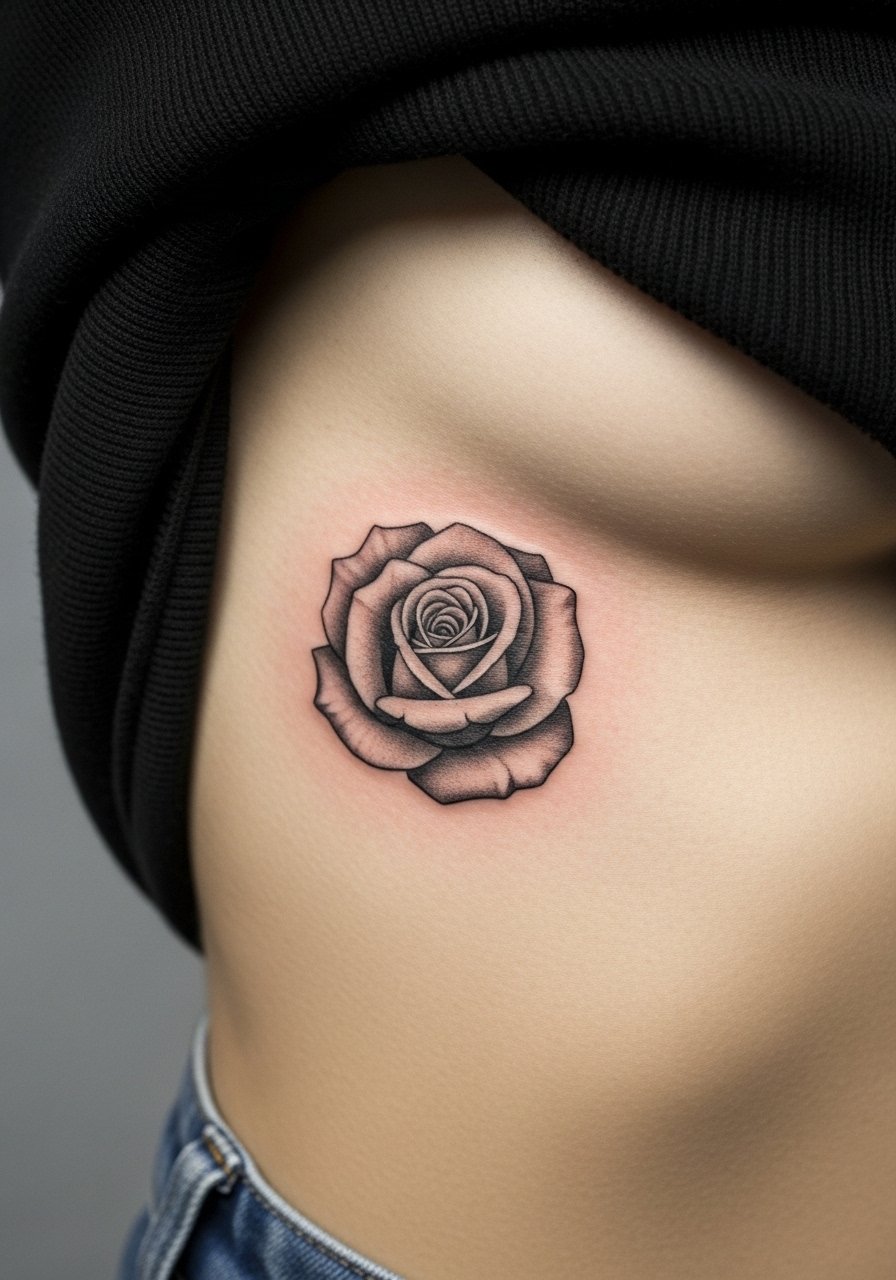
Pain on the ribs is high, but a single black and grey rose can be elegant and timeless. I got one there and the shading felt like a long scraping sensation. Expect two to three hour sessions for a medium piece. Black and grey ages well because it relies on contrast rather than color, but watch for heavy grey wash in small areas. Many people request dense grey gradients that later look muddy. Ask your artist to preserve negative space and to use crisp transitions. At six months the shading will have softened. At two years you might only need a light touch-up to restore contrast.
9. Small Red Rose On Ankle
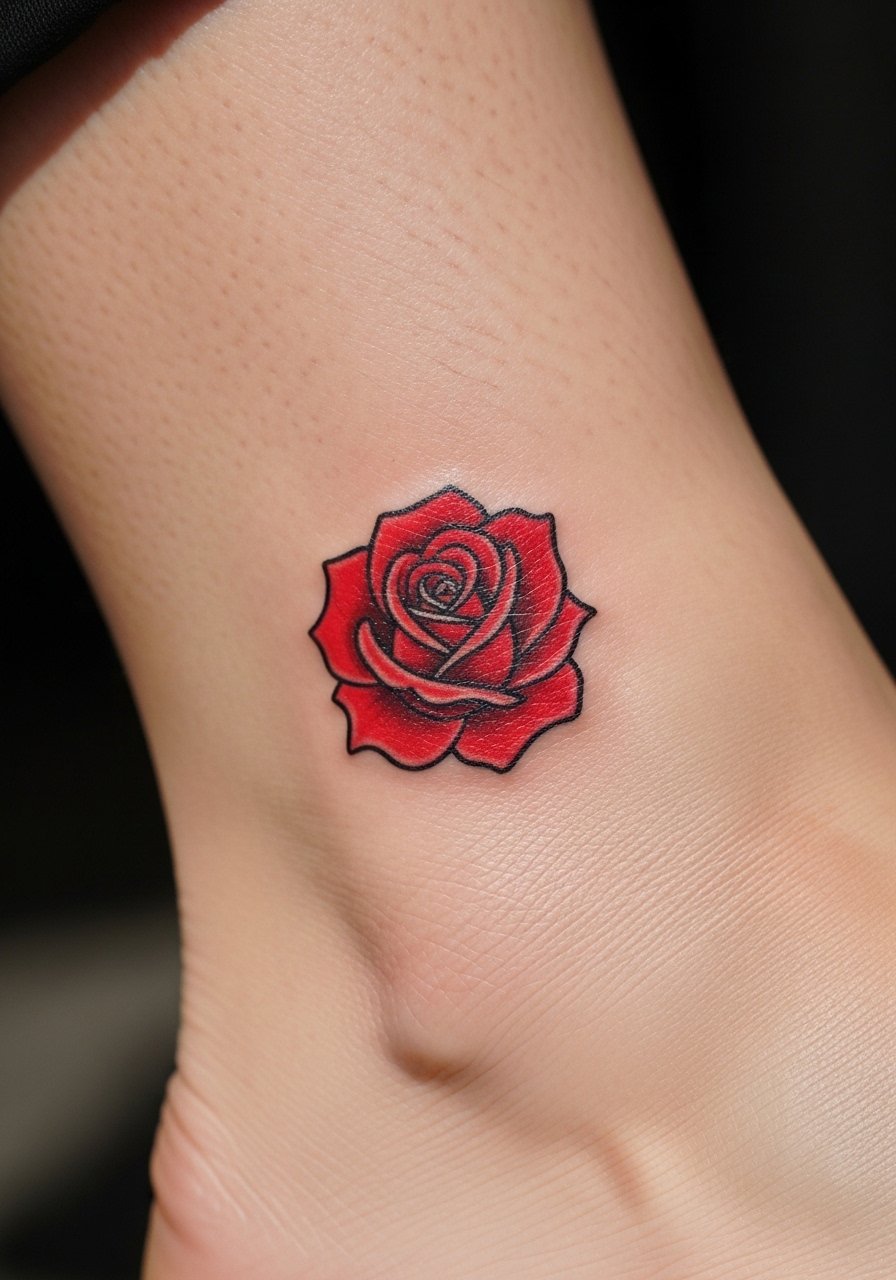
Ankle tattoos are notorious for healing issues due to shoes and movement. I learned this the hard way when my ankle scabbed more than my arm. Pain is moderate. Short sessions of 30 to 60 minutes work fine. Red pigment can stay vivid if applied well, but the ankle sees friction. A common misstep is placing the rose where boots rub. Ask your artist to place it slightly above the bone and to plan for more sessions if you want saturated color. Use gentle cleansers and avoid tight shoes while healing.
10. Rose And Dagger Traditional On Forearm
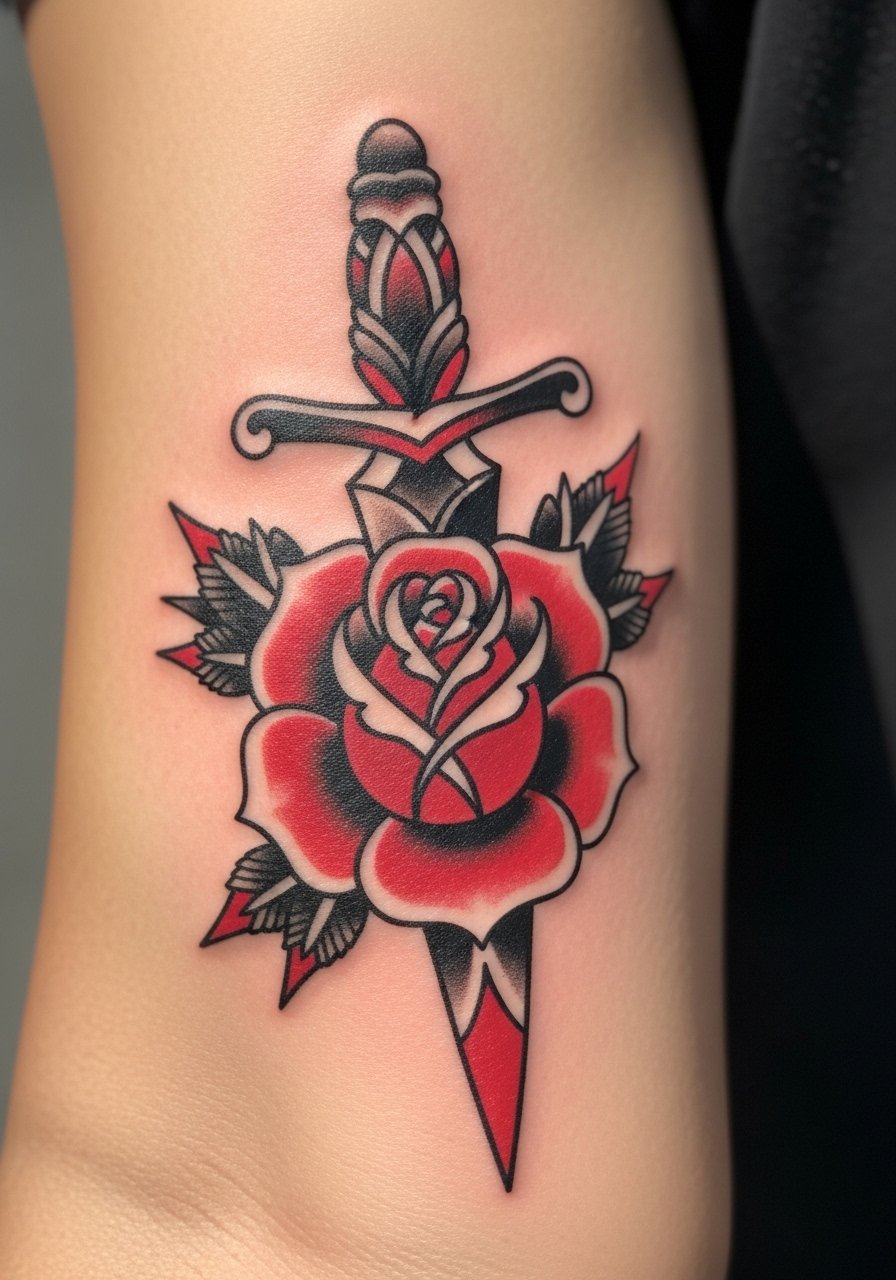
I saw this combo on a tattoo shop wall and loved its narrative feel. Forearm placement reads well and is low pain. Session time varies from one to three hours. The bold outlines make it resilient. A mistake I often see is shrinking the dagger details too small when the client wants a big visual. Tell your artist how large you want it to read from arm's length. If you care about longevity, insist on solid black outlines and full fill to prevent early blurring. At two years it still looks strong provided you avoid heavy sun exposure.
11. Single Stem Rose On Rib Cage With Script
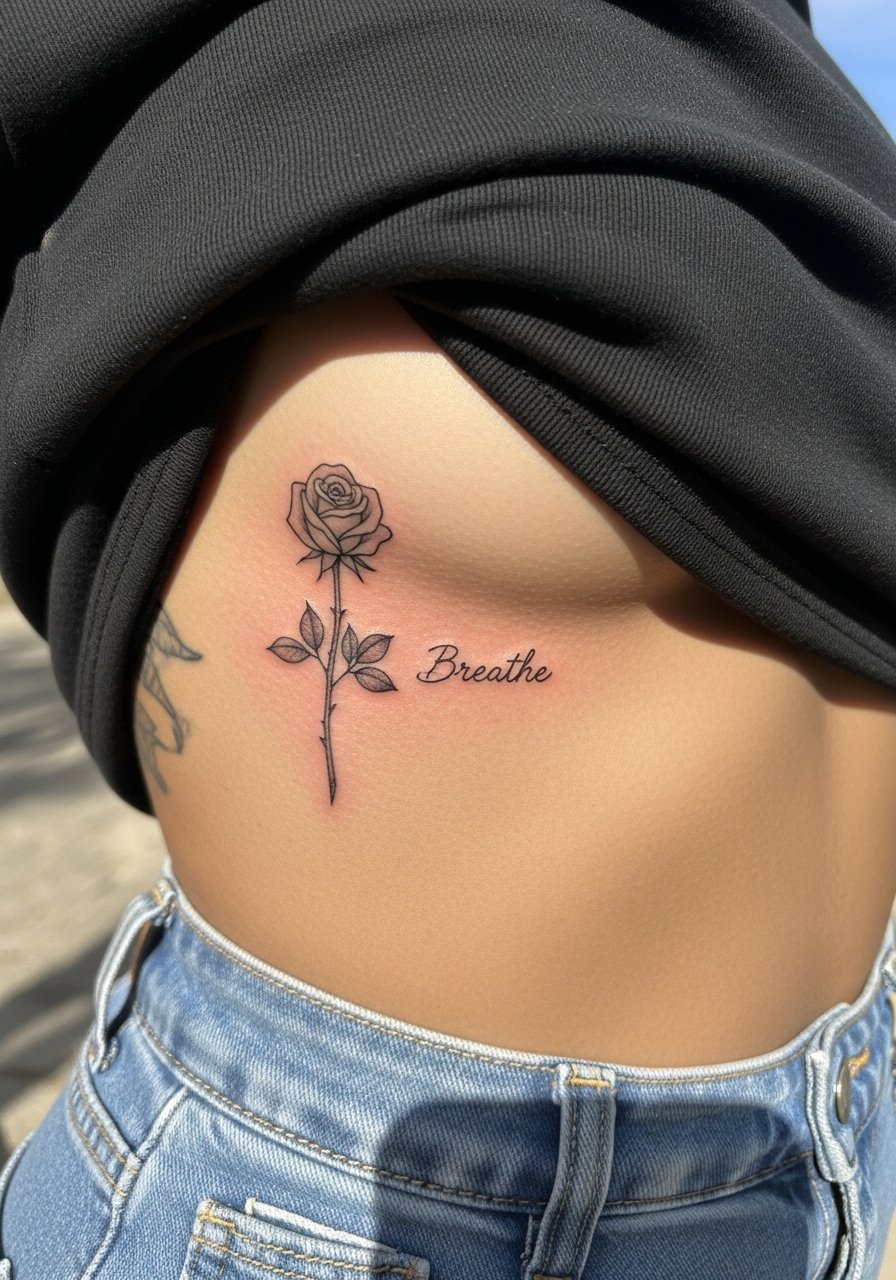
I got a ribcage rose with a short word and the script tested my patience. Ribcage lettering needs scale. Tiny script will blur. Pain is significant here. Sessions run one to two hours for a small piece. Healed at six months, the script softened. At two years, the word can become less legible if lines were too thin. When you consult, show the artist the exact word and font size. Ask for slightly bolder letter forms and request a healed sample of similar text on skin. Keep the phrase short, like "Breathe" or a name.
12. Watercolor Rose Sleeve On Upper Arm
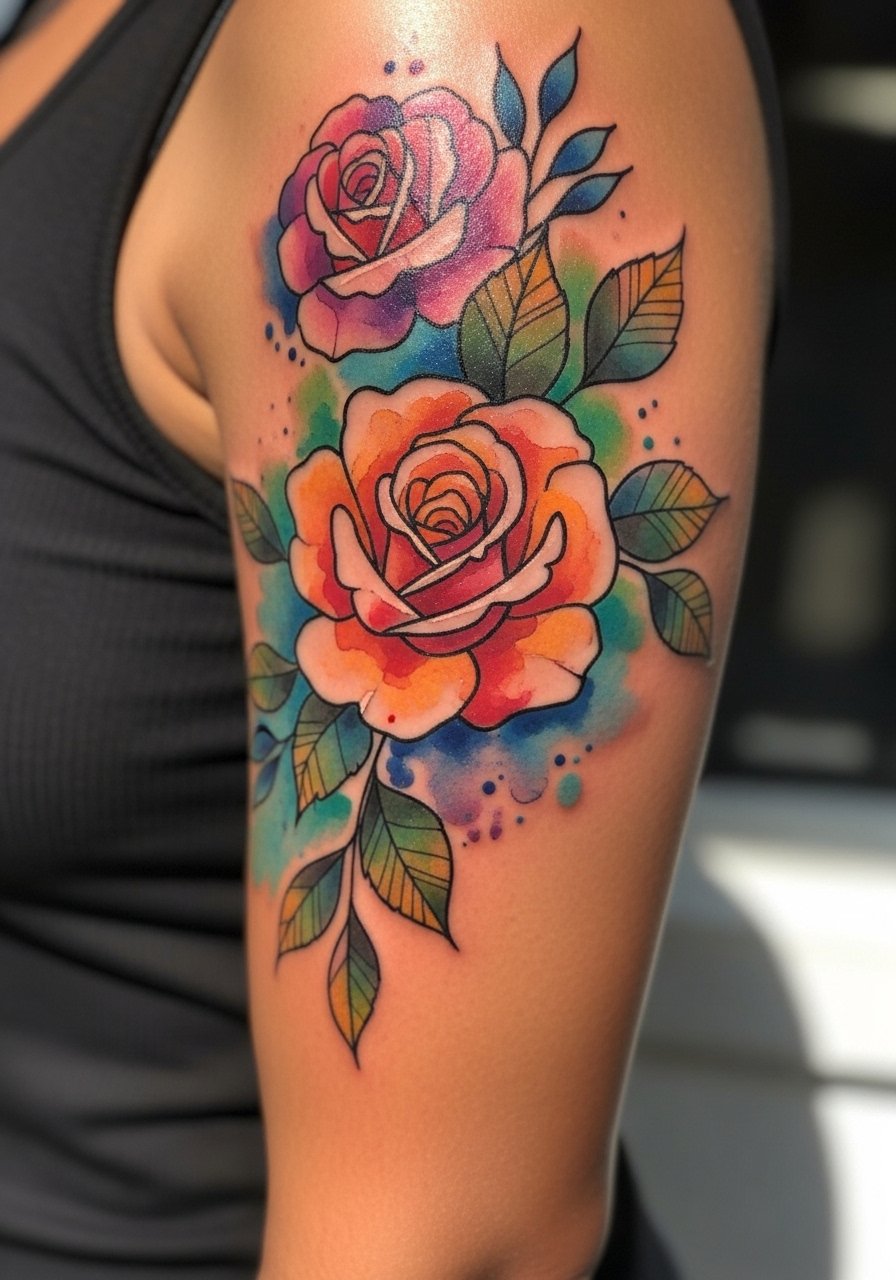
I first saw a half-sleeve watercolor that looked painterly but had no structure and faded badly. The better approach pairs washes with darker anchors so the design keeps form. Upper arm pain is mild and sessions can be multi-day. Expect three to six hour blocks for a sleeve. Healed color at six months shows blending. After a few years, pale pigments may need refresh. Avoid asking for random splotches without outline. During consult, ask how the artist plans to anchor the wash with darker strokes so the rose stays readable.
13. Dotwork Rose On Collarbone
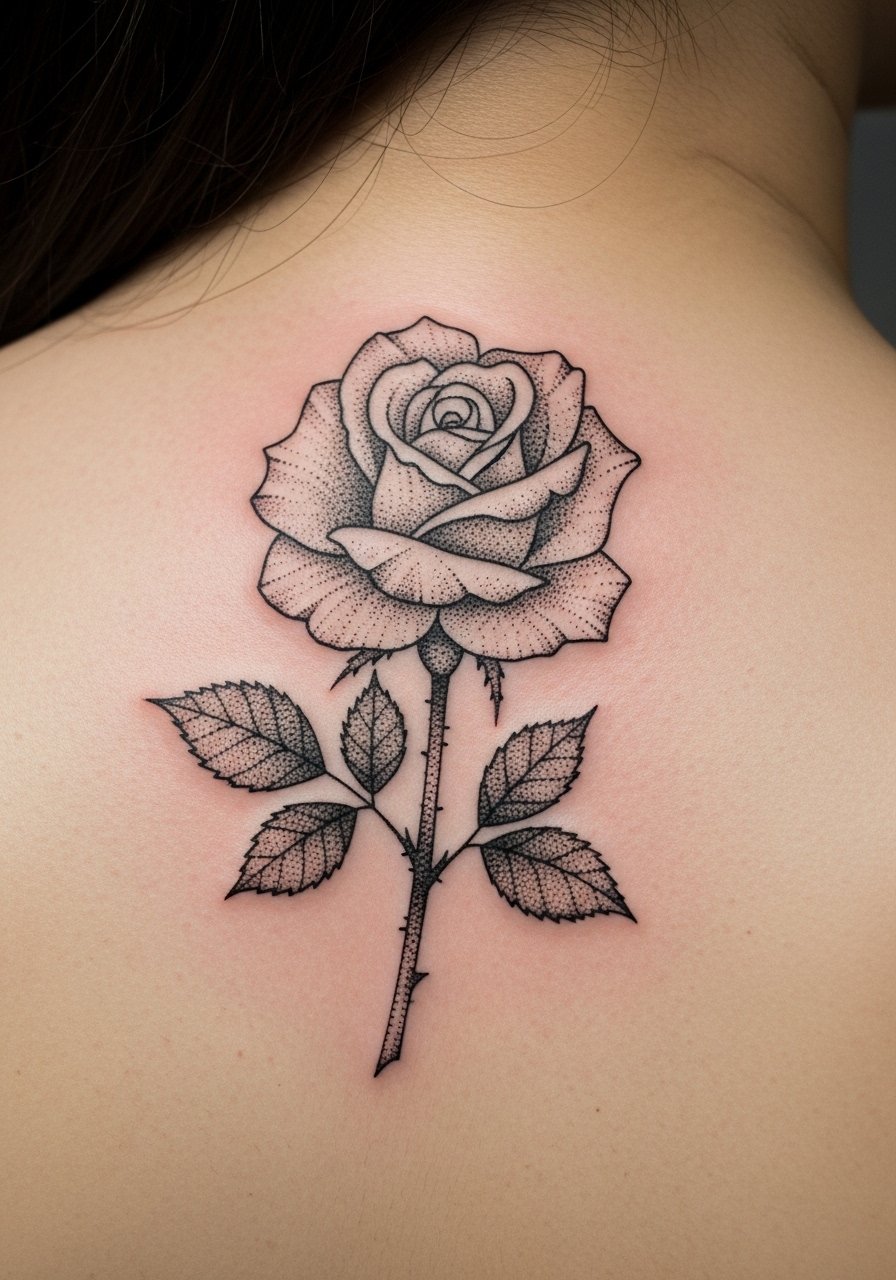
The collarbone is a delicate place for dots. I noticed dotwork blurs faster in areas with thin skin. Pain is moderate and sometimes sharp near bone. Sessions often take one to two hours. Dotwork ages differently. At six months the stippling looks textured. By two years, dots can merge if they are too dense. Avoid overpacking dotwork and ask for spacing so the pattern reads at a distance. Tell your artist you want visible negative space between dots to preserve the gradient over time.
14. Realistic Rose On Thigh Wrap
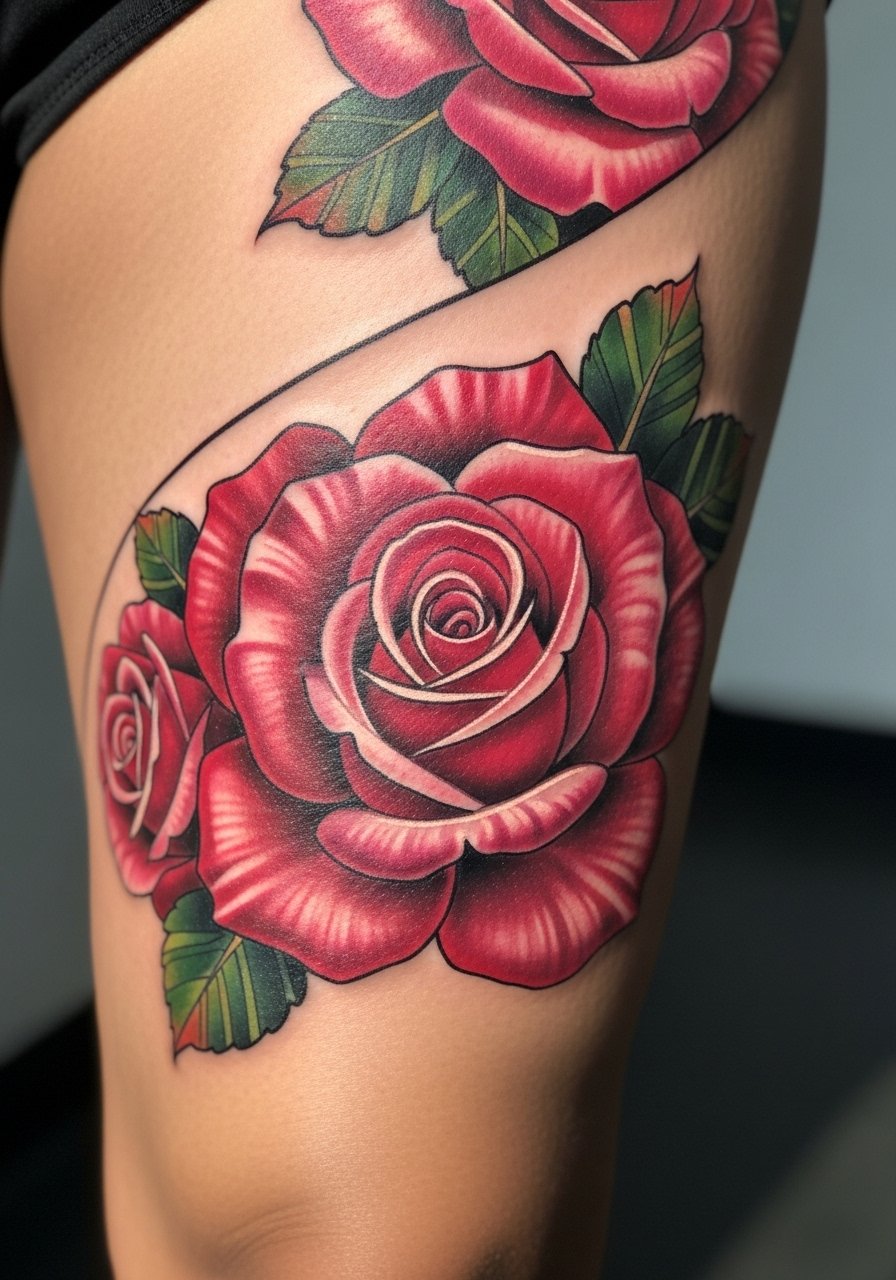
Thigh gives artists space to render highly realistic roses. I recommend this for people who want a photo-like blossom but also want an area that heals easily. Pain is low on fleshy thigh. Sessions can be long, three to five hours. Realism holds well if shading is layered, not stippled. A mistake is cramming hyper-detail into a tiny area. In consult, show clear photo references and ask the artist how they handle depth without tiny micro-lines that blur. Healed at one year, realism still reads as texture instead of fuzz.
15. Tiny Single Petal Behind Finger
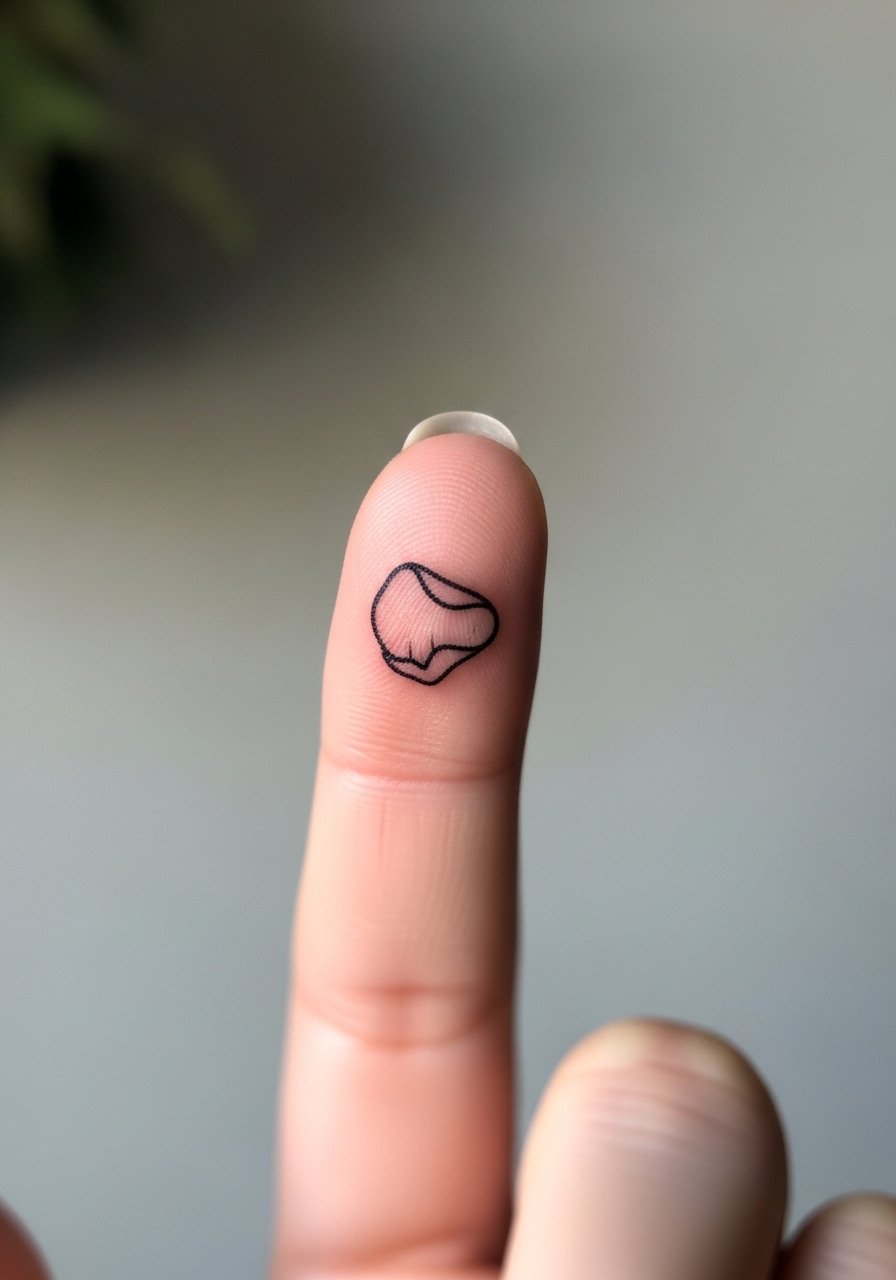
Finger tattoos are convenient but notoriously temperamental. I tried a tiny petal there and it needed touch-ups. Pain is sharp and quick. Sessions are fast, often 15 to 30 minutes. Fingers shed skin more, so pigment loss is common. A frequent mistake is insisting on ultra-fine detail. I suggest a simplified shape with slightly heavier line weight. Tell your artist you understand possible fading and ask about follow-up touch-up policy. Expect maintenance at one to two year intervals.
16. Single Line Continuous Rose On Wrist
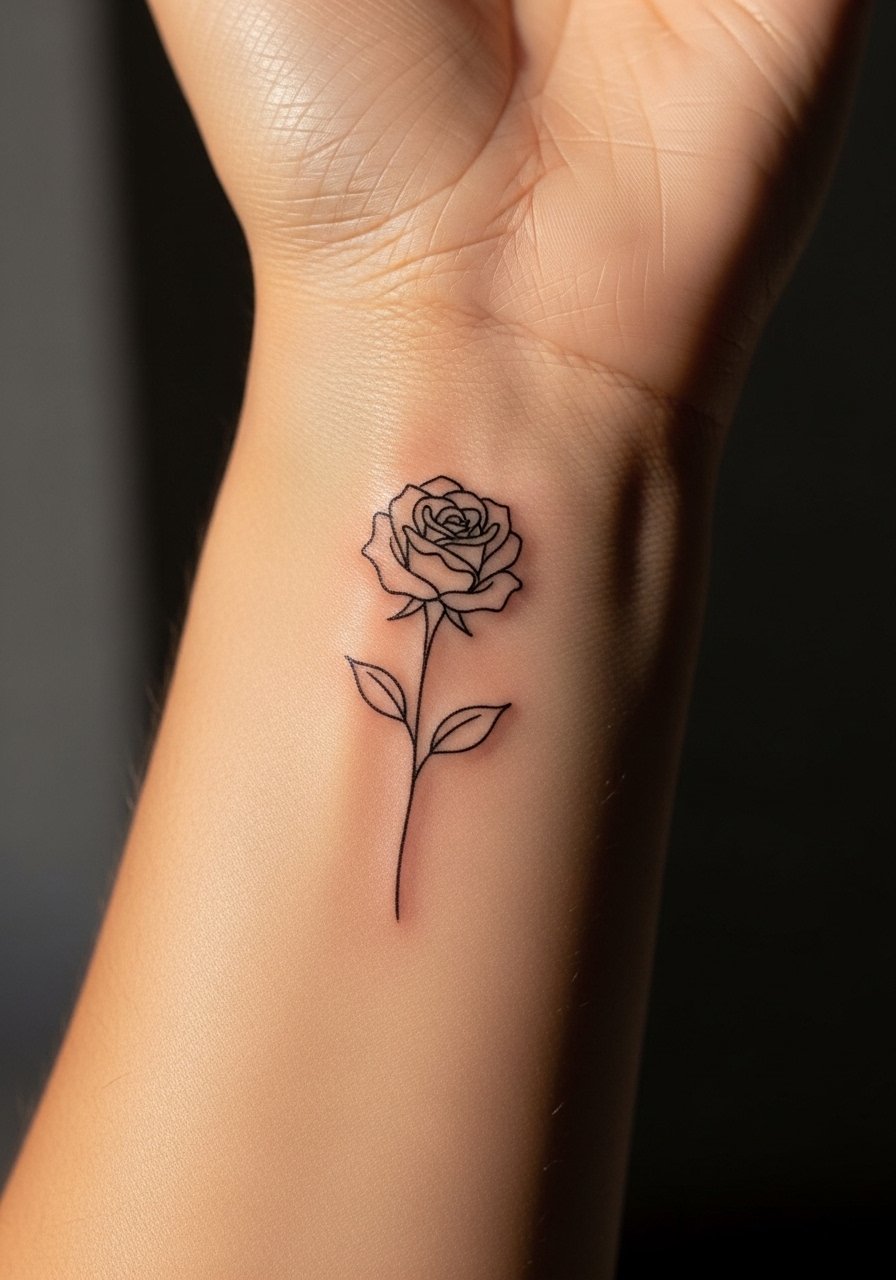
I love single line pieces for their simplicity. The wrist is visible and feels personal. Pain is low to moderate. Sessions are quick, under an hour usually. The problem I see is artists using a line too thin. Over time that line can break into a soft blur. Ask for a continuous stroke with a slightly heavier weight than you think you want. At six months it looks crisp. At two years it will soften but should remain recognizable if line weight was adequate.
17. Rose And Skull Dark Micro-Realism On Calf
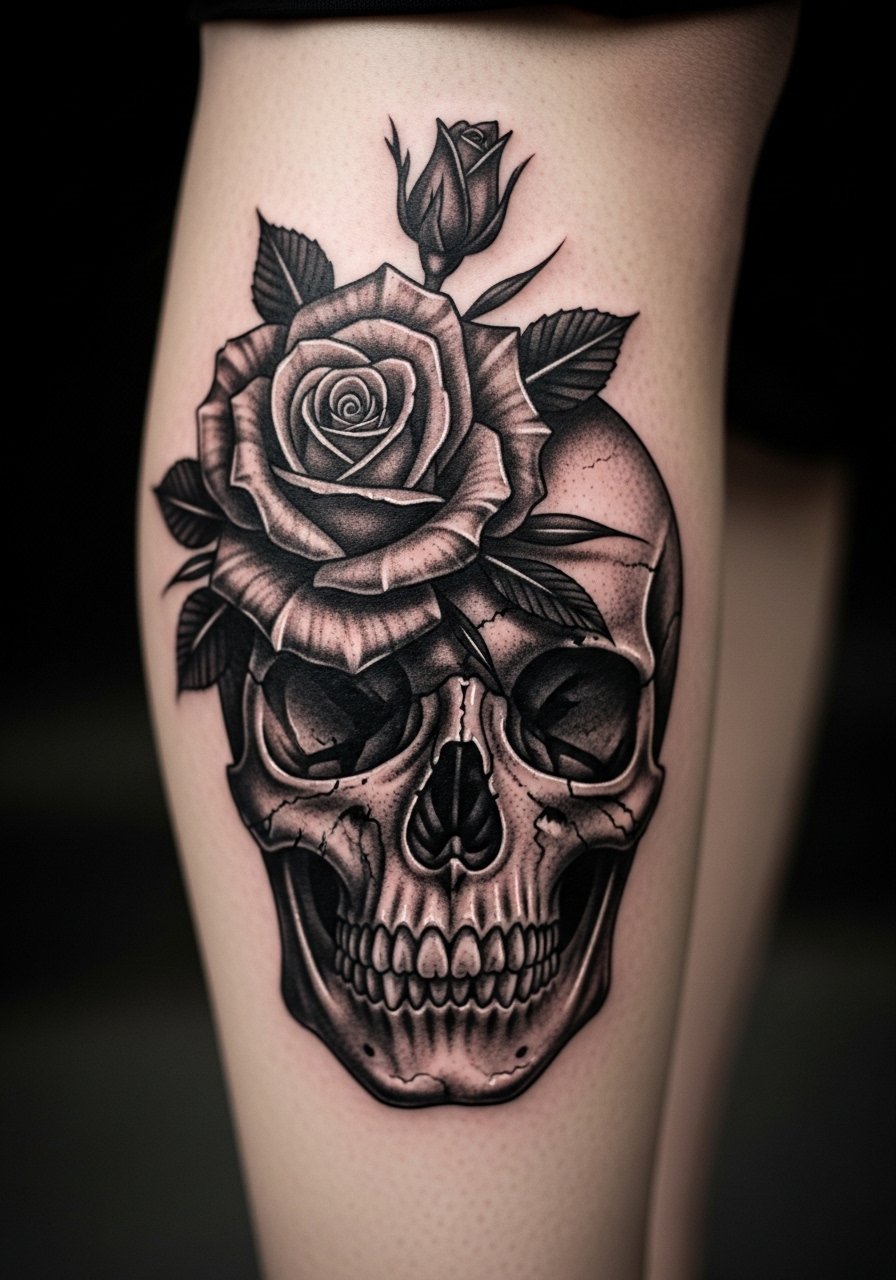
I noticed this motif on collectors who like moody imagery. The calf is forgiving for dark work. Pain is low. Sessions are often two to four hours. Micro-realism here needs careful planning so the skull and rose don't compete for attention. A bad move is compressing both elements into a tiny space. Ask your artist how they will manage negative space and which element will take visual priority. Healed results at six months show defined shadow. Expect contrast to mellow slightly over time.
18. Minimal Dot Rose On Behind Shoulder
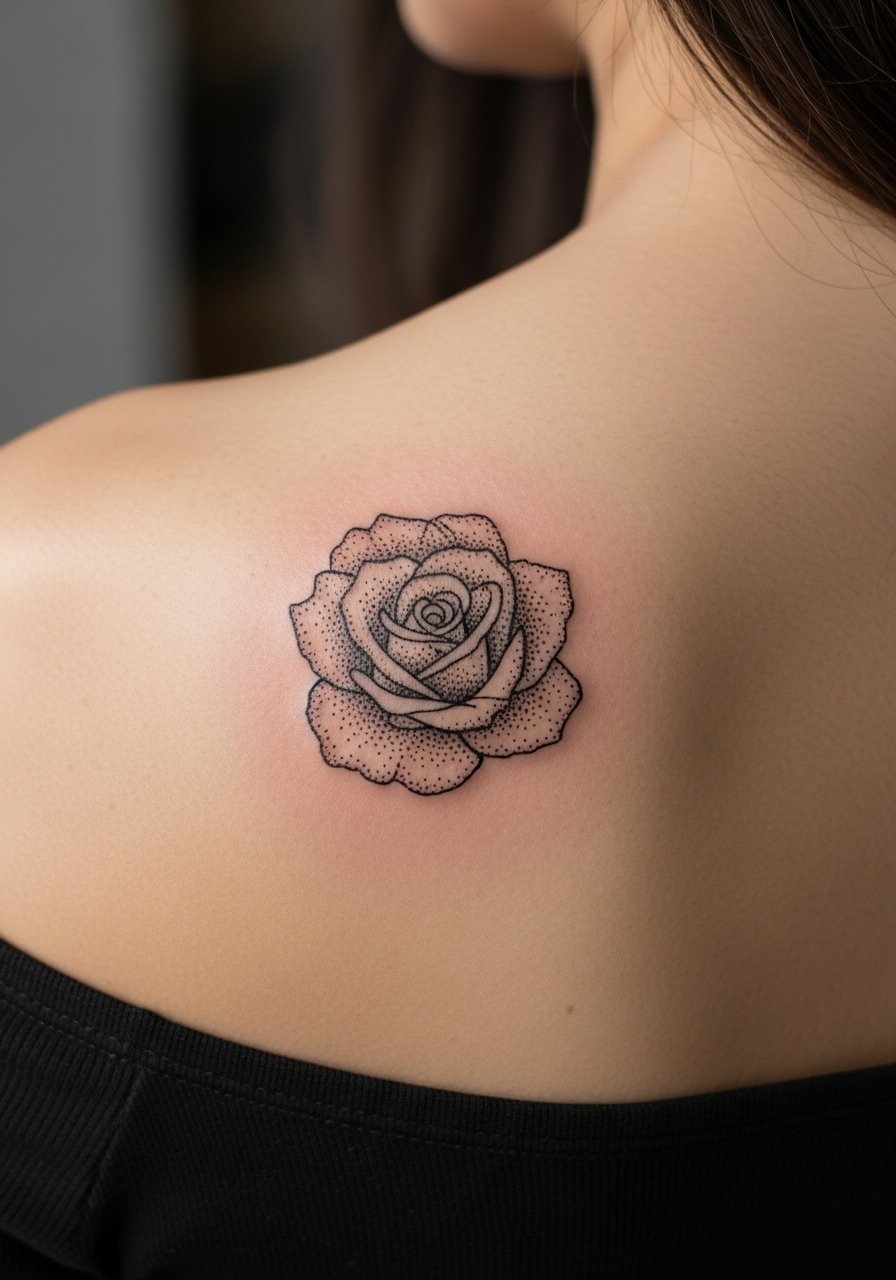
I like sparse dot roses because they read as whisper tattoos. Behind the shoulder is a low-interaction area so healing is smooth. Pain is mild. Sessions are short. The common issue is making dots too close. They can merge with motion and time. Tell your artist you want airy spacing and ask for a mock healed template. At six months the dot gradients look soft. Over years, the pattern keeps its airy feel if spacing was respected.
19. Rose With Geometric Halo On Back Of Neck
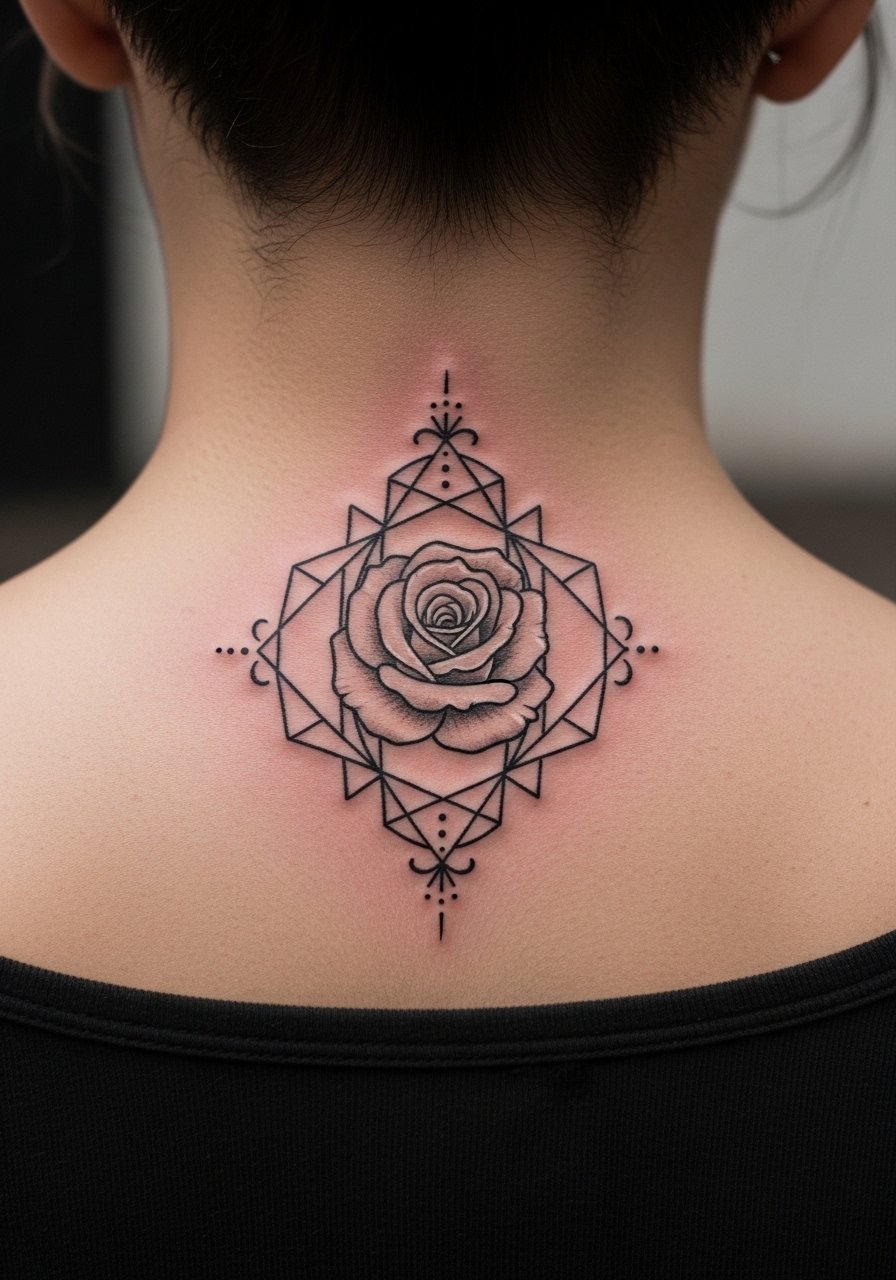
Neck placement is bold and slightly more painful. I saw a version that used too many fine lines and lost clarity. The right move pairs a central rose with thicker geometric lines. Sessions can be one to two hours. For longevity, solid geometry around the flower helps the piece keep shape as the rose ages. A mistake is asking for everything tiny. In consult, request scale tests so the halo reads from a normal social distance. Avoid overly delicate filigree that will blur.
20. Botanical Sleeve With Small Roses On Forearm
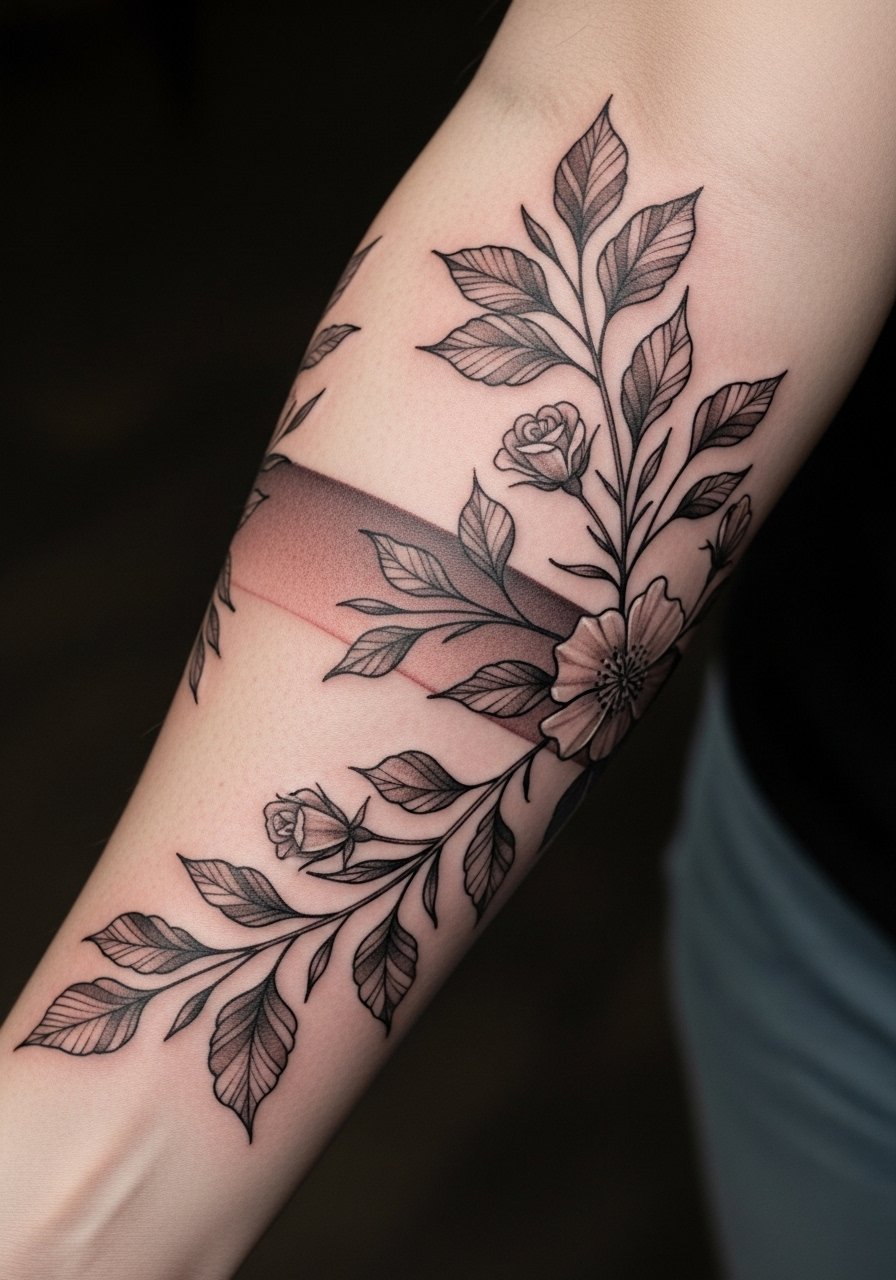
I recommend this if you want a larger composition without one giant focal rose. The forearm allows wraparound flow. Pain is manageable. Multiple sessions over weeks are typical. What helps aging is varying line weight and mixing color with blackwork. A problem I see is repetitive tiny roses without contrast. Ask your artist to plan darker anchors and lighter fillers so the sleeve reads as intended after a year. Expect softened edges at six months. Touch-ups usually keep the piece cohesive.
21. Tiny Seedling Rose On Hip Bone
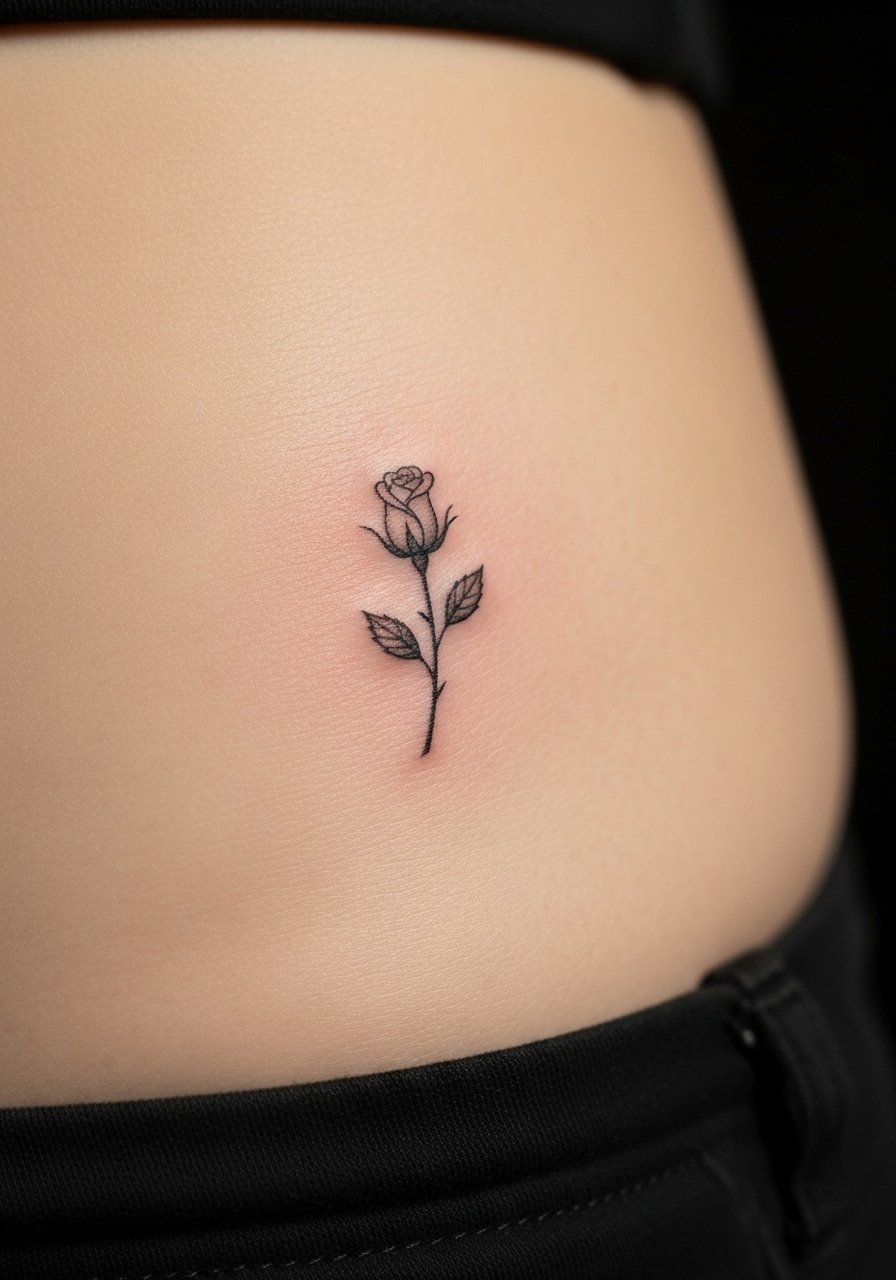
Hip bones can be tender. I got a small bud there and it felt like pressure on bone. Sessions are short. Small hip tattoos can fade fast if hidden under tight clothing during healing. A common mistake is placing the tattoo where waistbands rub. During consult, test temporary placement with clothing. Ask your artist to keep the piece compact and slightly bolder than you imagine. Healed at six months it looks delicate. Plan for a touch-up if you want it to remain crisp.
22. Rose And Mandala Fusion On Spine
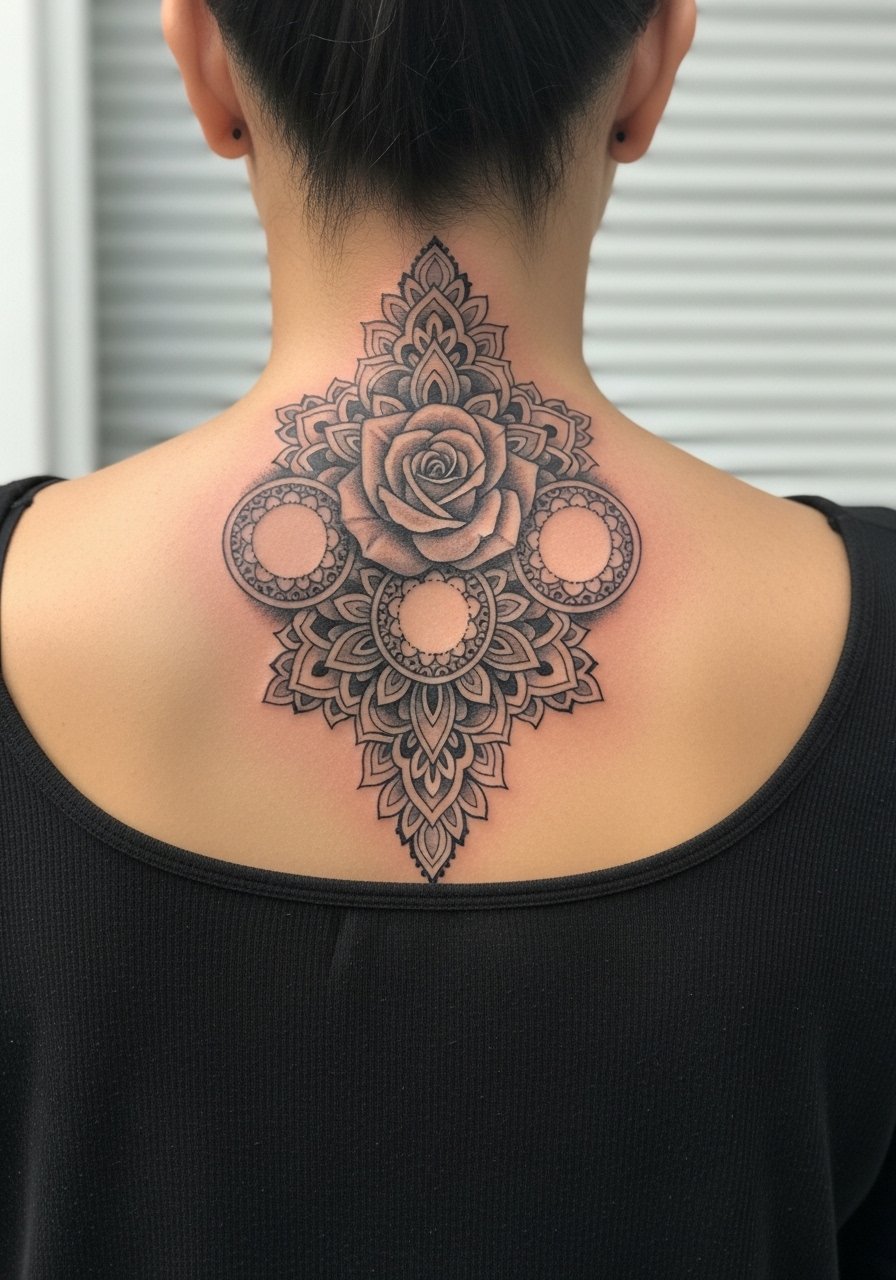
I first saw a spine fusion that blended floral and sacred geometry. Spine work ranges from uncomfortable to painful. Sessions are long and require breaks. The fusion reads beautifully when the mandala provides structure around the rose. Mistakes include over-detailing the mandala lines too tightly. For longevity, ask your artist to scale the mandala so it stays readable at two years. At six months the composition looks cohesive. Expect subtle softening of micro-lines over time.
23. Color Block Rose On Calf Sleeve
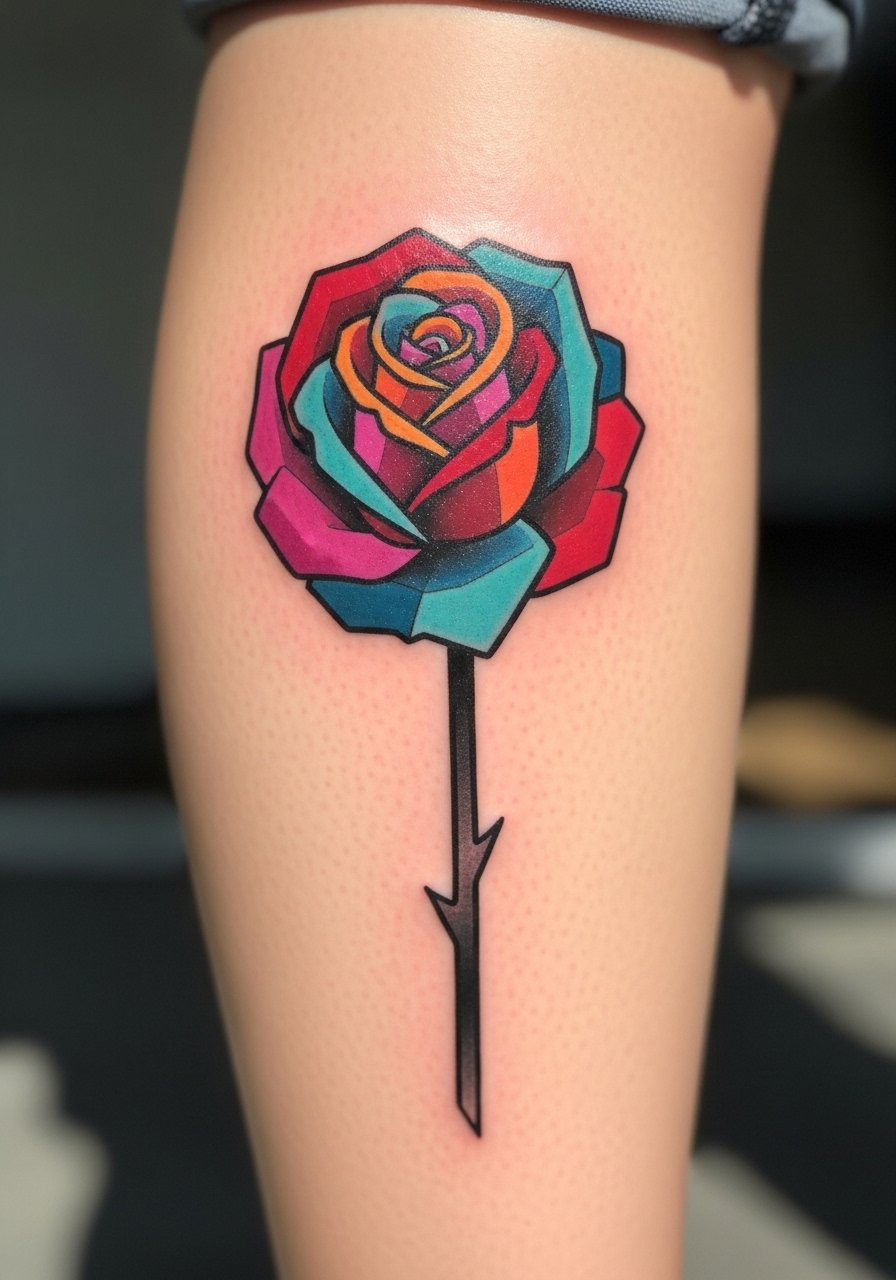
Color block is modern and graphic. I saw a calf sleeve that used flat panels to let the rose pop. Calf is forgiving. Pain is low. Sessions span multiple sittings. This style ages well because large flat color stays visible longer than tiny gradients. A mistake people make is mixing too many thin color transitions. Ask your artist for bold blocks and for pigment choices that hold in your skin tone. Healed results remain vibrant with periodic maintenance.
24. Rose Wreath Around Ankle
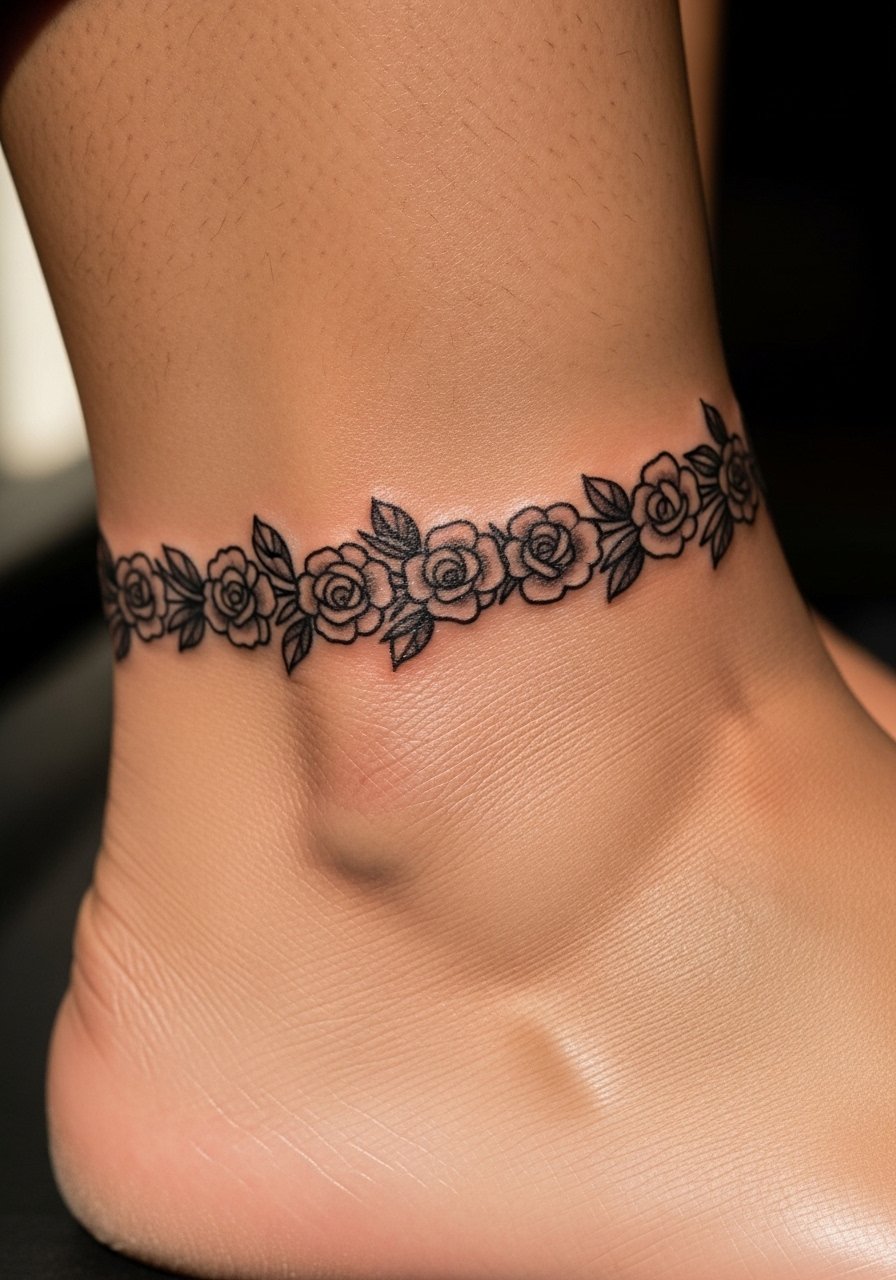
Rings around the ankle are pretty but need placement planning. I recommend spacing the roses so they sit between ankle bones and avoid high-friction zones. Pain is moderate. Sessions are one to two hours. A common error is creating a continuous heavy band that rubs under socks. Request a gap or slightly raised placement where shoes won't press. At six months the wreath looks delicate. Expect the lower side to need touch-up first because of friction.
25. Rose Cluster Behind Shoulder Blade
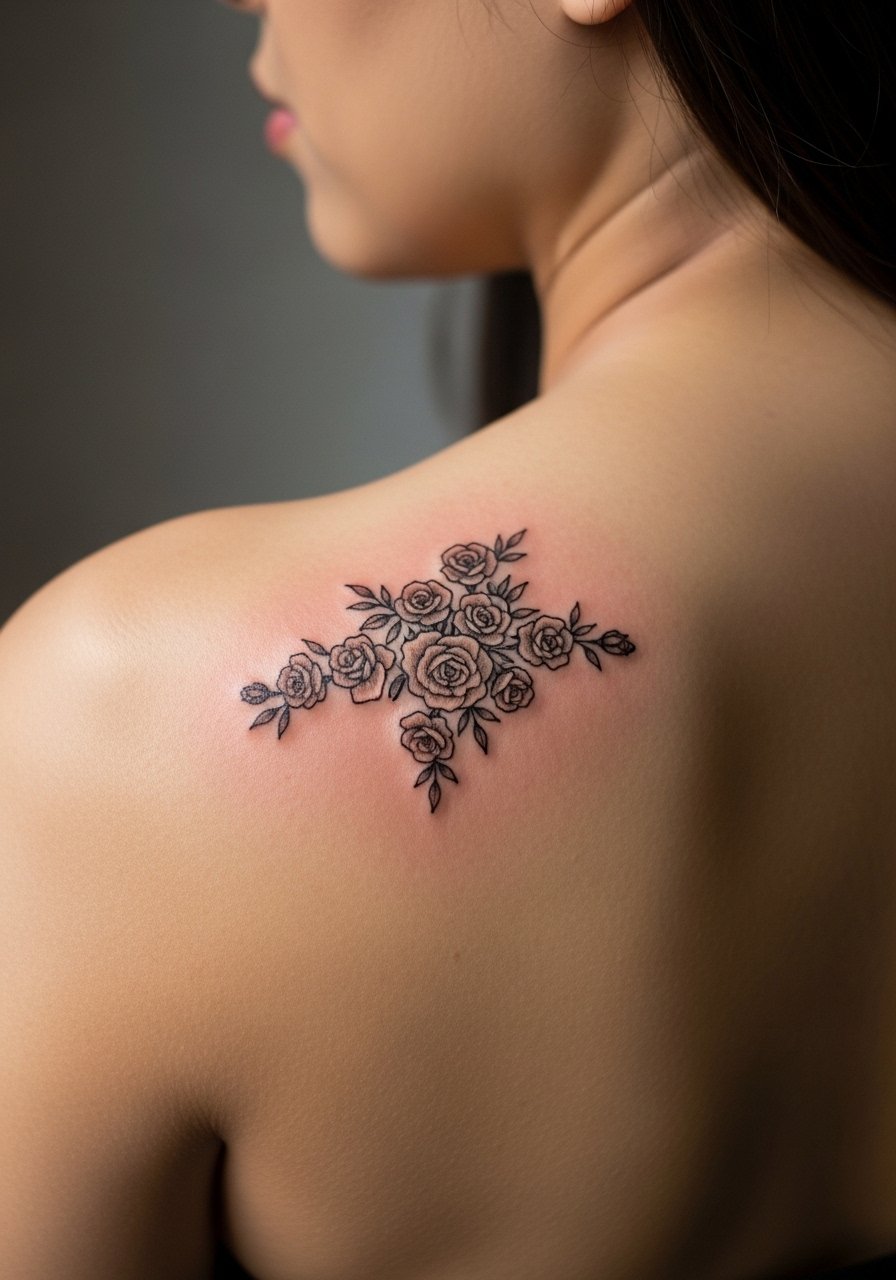
I like clusters because they let you build a piece over years. Behind the shoulder blade is a good long-term canvas. Pain is mild. Sessions can be split into small builds. The risk is making each bloom too tiny. Tiny clusters blend together over time. Ask your artist to design with layered sizes so depth remains. Healed at six months the cluster reads organic. You can add elements later without the original feeling crowded.
26. Abstract Line Rose Over Collarbone
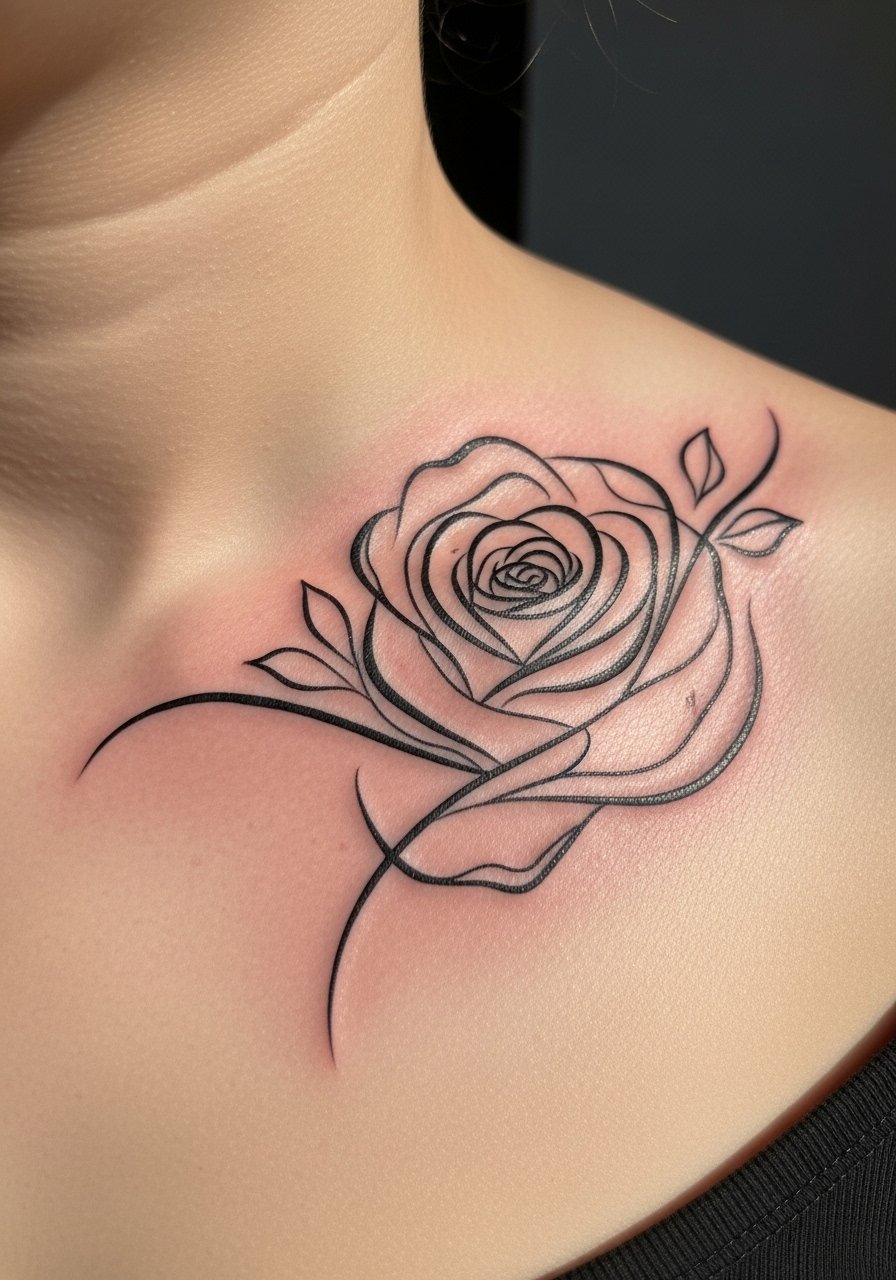
I discovered abstract line roses on gallery-style portfolios. Collarbone placement shows off the shapes. Pain is moderate near bone. Sessions are usually under two hours. The abstract approach ages well if lines are intentional and not overly faint. A common mistake is asking for nearly invisible strokes that vanish. During consult, show artists your desired visibility in healed photos. Ask for a graphical plan so the line work maintains its flow as the skin settles.
Tattoo Prep and Aftercare Essentials
Healing supplies I actually use and products artists I know recommend. Grouped so you know when to use each.
Healing Basics:
- Aquaphor Healing Ointment, 14oz tube. Great for the first 3 to 5 days. I apply a very thin layer at night after cleaning
- Saniderm Transparent Adhesive Bandage, 6-inch roll. Every artist I know recommends it for the first 24 to 72 hours as a second skin option
- CeraVe Fragrance-Free Moisturizing Lotion, 12 oz pump. Use from day 4 to 14. Pump bottle keeps it hygienic
- Dr. Bronner's Unscented Castile Soap, 32 oz. Gentle cleanser for twice daily rinses the first week. Dilute a drop with water
Before Your Appointment:
- Numbing Cream With 5% Lidocaine, 30g. Use only if your artist approves. Apply 30 to 45 minutes before the session
- Tattoo Stencil Transfer Paper, A4 Pack. Handy for testing placement at home with temporary transfers
Long-Term Maintenance:
- SPF 50 Sunscreen Stick For Tattoos, 0.5 oz travel size. I carry this for beach and outdoor days to protect healed ink
- Mad Rabbit Tattoo Balm, 2 oz. Good for long-term vibrancy on healed pieces
- Hustle Butter Deluxe, 5 oz. A vegan option I use during healing and occasionally after
Optional Comfort Items:
- Tattoo Numbing Spray, 4 oz. Useful for sensitive spots and touch-ups if your artist allows it
- Hydrocolloid Bandages, Large Size 10-Pack. Good alternate to Saniderm for small to medium pieces
A few notes from my experience. Use soap and water only for the first week, then switch to a fragrance-free lotion. Every artist I've talked to says sun protection is the number one long-term ink saver. If you choose a bandage method, follow the timeline exactly. Trust the artist's heal instructions over internet advice when they give specifics for your skin type.
Frequently Asked Questions
Q: Will fine line roses blur into each other if I get a full sleeve of them?
A: From what I've seen, fine line florals can blur when packed tightly. If you want a sleeve, tell your artist to vary line weight and include negative space. Ask them to scale individual roses so larger blooms anchor the design and small ones act as filler. You can also ask for occasional darker accents to preserve contrast. For aftercare try CeraVe Fragrance-Free Moisturizing Lotion, 12 oz pump during the second week to keep edges soft, not muddy.
Q: Do watercolor-style roses need different aftercare than traditional ones?
A: In my experience, watercolor roses need the same basic care but demand attention to sun and touch-ups. Watercolor pigments can be more prone to fading because they rely on subtle washes. Use sunscreen like SPF 50 Sunscreen Stick For Tattoos, 0.5 oz travel size on healed pieces. During the first two weeks follow gentle cleansing and light moisturizing. I've had artists suggest planning for a color refresh at the two to five year mark with watercolor pieces.
Q: Is a ribcage rose worth the pain and how does it age?
A: I have one and I would say yes if you can handle the pain. The ribs hurt but the placement looks amazing with clothing options. Black and grey rib roses hold better than pale color washes because less pigment type is lost in shallow shading. Expect a sharper look at six months and a slightly softer contrast at two years. Ask your artist to preserve negative space and to avoid very fine dotted shading that can merge on the ribs.
Q: Can I get Saniderm on a wrist rose or will it trap moisture and cause issues?
A: From what I've done, Saniderm works on wrists if you apply it smoothly and follow removal timing. Wrists move a lot so watch for edge lift. If your bandage starts peeling, remove it early and switch to open air healing with gentle soap and lotion. If you're worried about adhesive, try hydrocolloid pads like Hydrocolloid Bandages, Large Size 10-Pack for small pieces. Every artist I've talked to has their own preference, so ask before your session.
Q: For a realistic thigh rose, what should I ask my artist to ensure it still looks good after two years?
A: Ask for layered shading rather than a single heavy grey wash. From what I've seen, multiple tones with clear transitions age better. Request reference photos of healed realism on similar skin tones and ask how many sessions they anticipate. Also discuss touch-up expectations up front. For maintenance, I use Mad Rabbit Tattoo Balm, 2 oz occasionally on healed realism to keep contrast.
Q: Are finger and ankle roses realistic if I want low maintenance?
A: Not really. Fingers and ankles are high-wear areas. In my experience those placements require periodic touch-ups. If you want low maintenance, choose thigh, upper arm, or back placements. If you still prefer a finger or ankle, tell your artist you accept future maintenance. Use gentle cleansing and avoid tight footwear while healing on ankles to reduce pigment loss.
Q: What should I show my artist to get a neo-traditional rose with a banner the way I imagine it?
A: Bring three reference photos. One showing color palette, one showing banner style and lettering size, and one showing placement on a body similar to yours. I always tell artists my preferred banner wording and ask to see a mock stencil. Keep text short and ask for bolder letter forms to avoid blurring. If you plan to protect the piece long-term use SPF 50 Sunscreen Stick For Tattoos, 0.5 oz travel size on healed skin as part of maintenance.