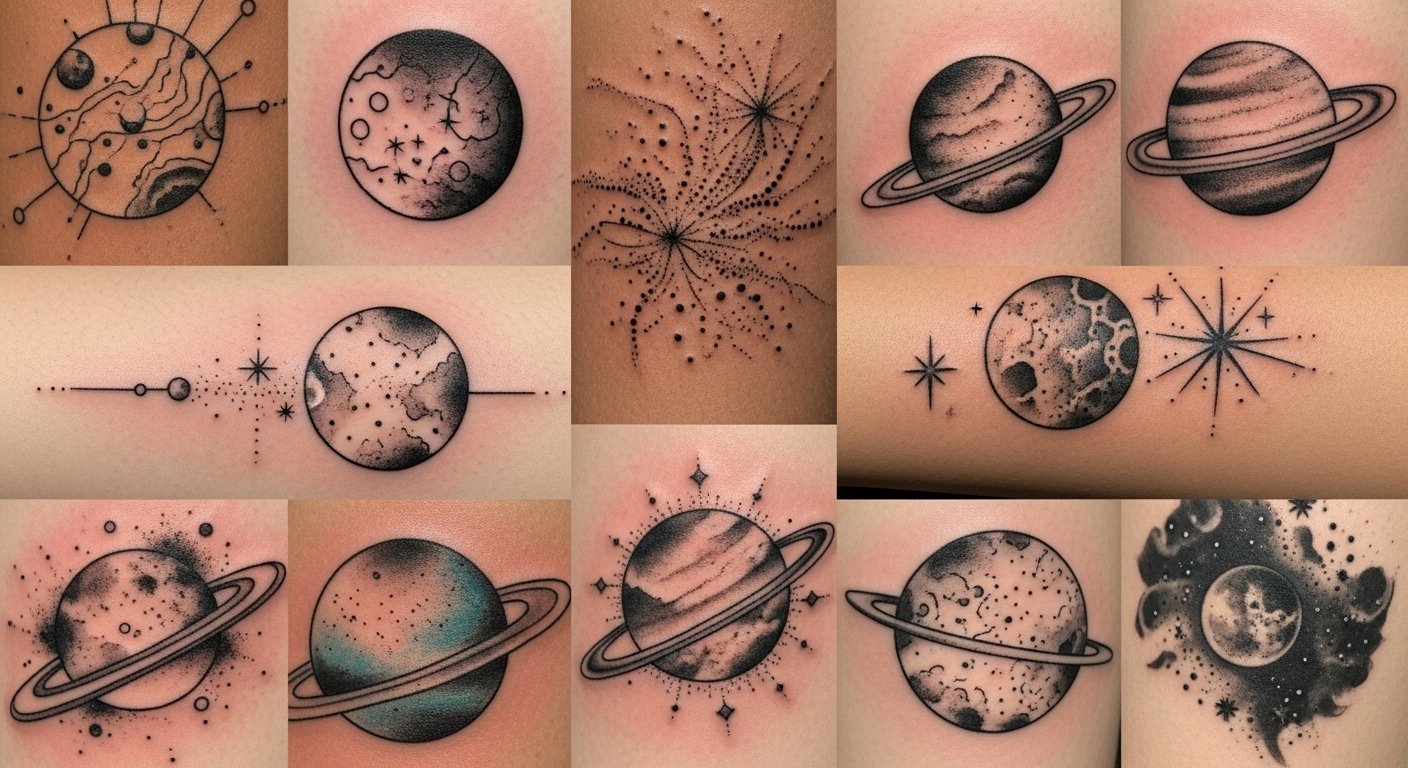
I spent months pinning planet tattoo ideas before I realized my hang-up: some styles look awesome fresh but don’t age the way I wanted. These 22 planet-based designs are the ones I kept returning to—styles artists still recommend in 2026 and the placements that actually heal and hold up over time.
This list focuses on minimalist, geometric, and realistic planet tattoo designs that work as small pieces or full space tattoo sleeves. These ideas fit forearms, wrists, thighs, and leg sleeves—the placements I see most often holding color and line work over time.
1. Fine Line Saturn Ring on Wrist
Style/Technique: Fine Line / Minimalist
Pain Level: Low (2-3/10)
Session Time: 1 session, 1-2 hours
Best For: First tattoo, subtle visibility
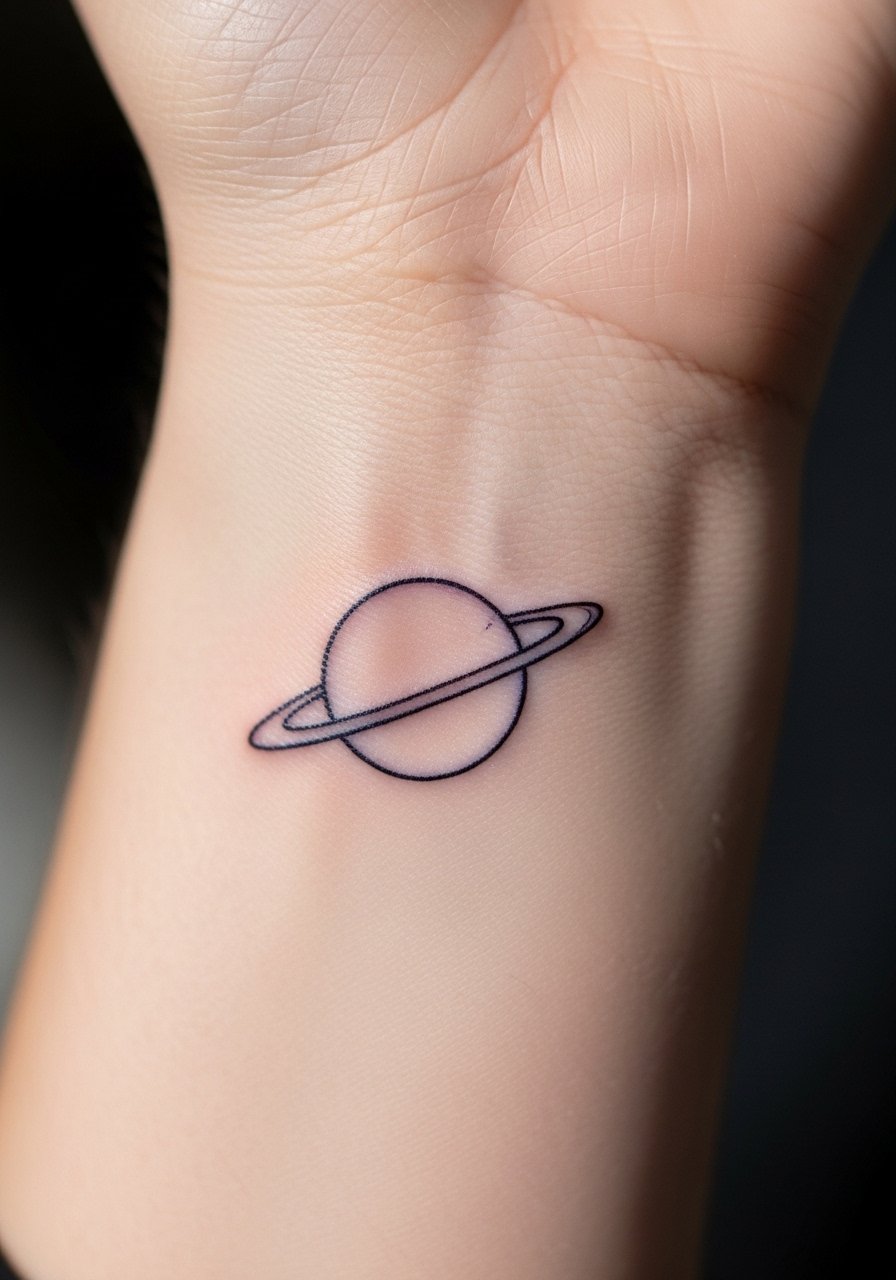
I love how Saturn reads symbolic without shouting. Fine line suits the wrist because it can be tiny yet detailed. Expect light sting during the session and quick surface healing in 1–2 weeks. From what I’ve seen, thin lines blur if the artist presses too hard—ask for a slightly bolder outline if you want long-term crispness. Search portfolios for minimalist planet tattoos and fine line work.
2. Moon Phases Collarbone Line
Style/Technique: Fine Line / Dotwork
Pain Level: Medium (4-5/10)
Session Time: 1-2 sessions, 1-3 hours
Best For: Symbolic piece, easy to hide with clothing
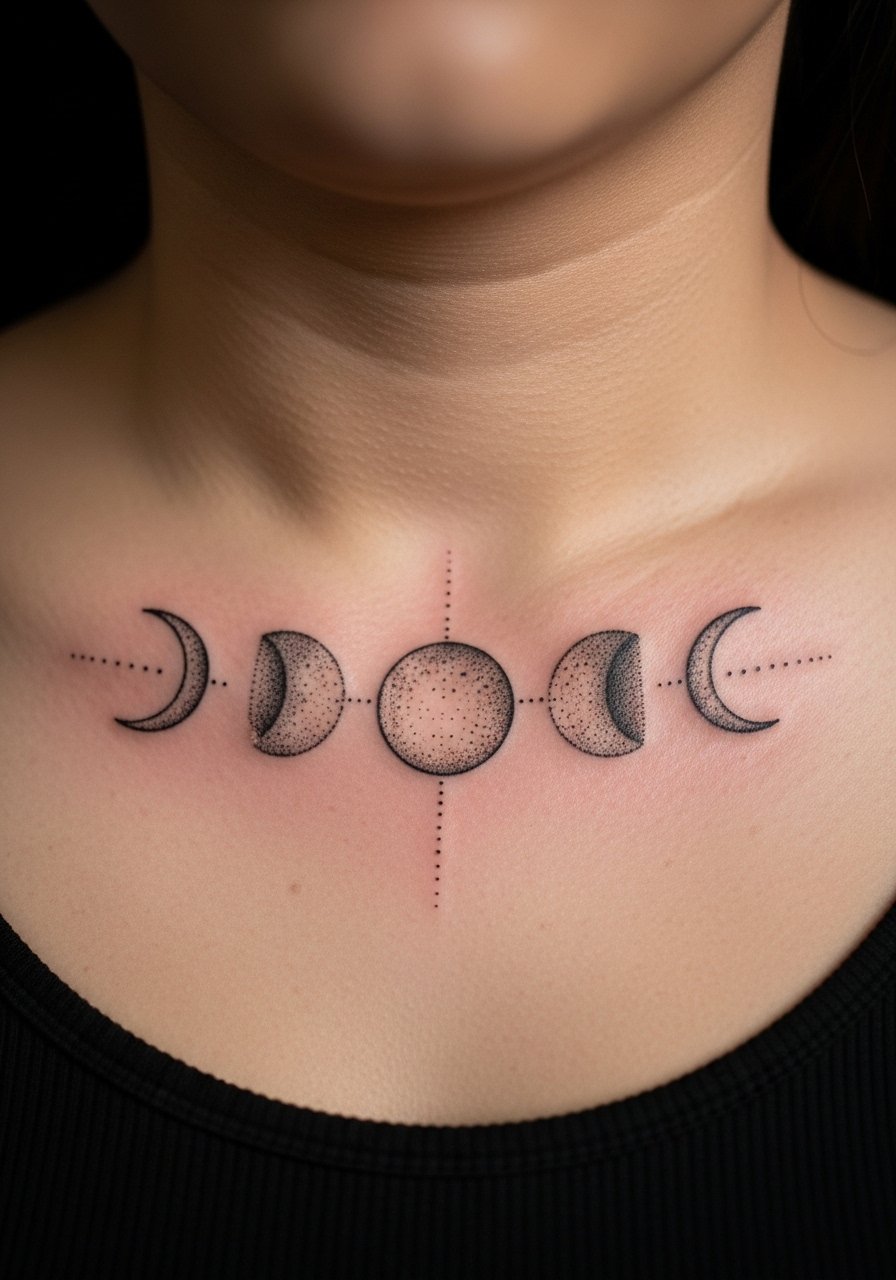
Moon phases read as personal rhythm and work beautifully along the collarbone. The placement is sensitive—expect more buzz than the forearm but it heals predictably. Dotwork adds texture and helps aging hide minor line spreading. A common mistake is getting lines too thin; ask your artist about dot-shading to keep it readable years later.
3. Simple Black Planet Row on Forearm
Style/Technique: Minimalist / Blackwork
Pain Level: Low (2-3/10)
Session Time: 1 session, 30–90 minutes
Best For: First-timers, easy-to-hide option
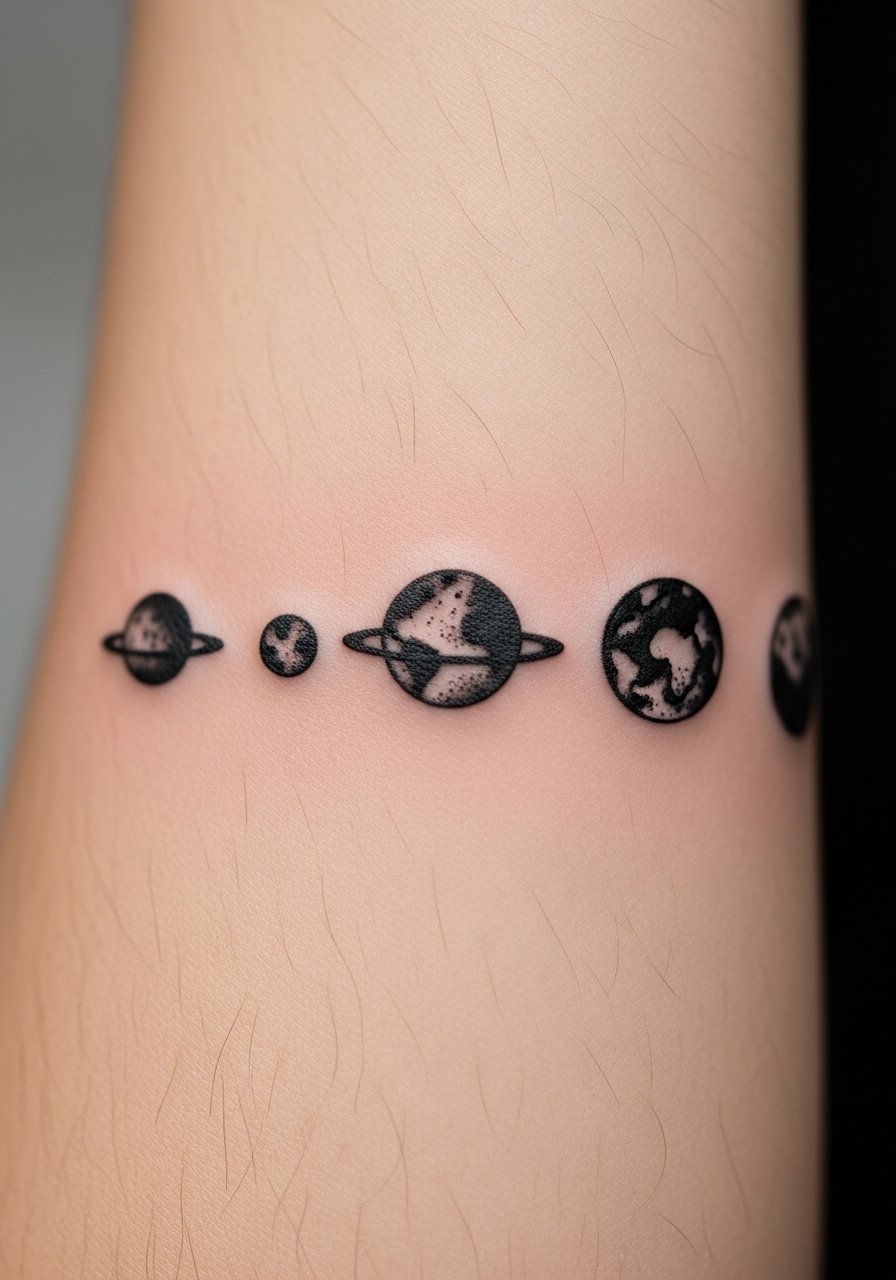
A linear row of tiny planets is my go-to recommendation for people nervous about needles. Clean blackwork ages well because black holds longer than some colors. Placement on the forearm is low-pain and easy to show off. Avoid overly tiny fills—solid small shapes tend to keep their form better than intricate tiny details.
4. Geometric Planet Mandala on Shoulder
Style/Technique: Geometric / Dotwork
Pain Level: Medium (4/5)
Session Time: 2 sessions, 2–4 hours each
Best For: Medium statement, customizable canvas
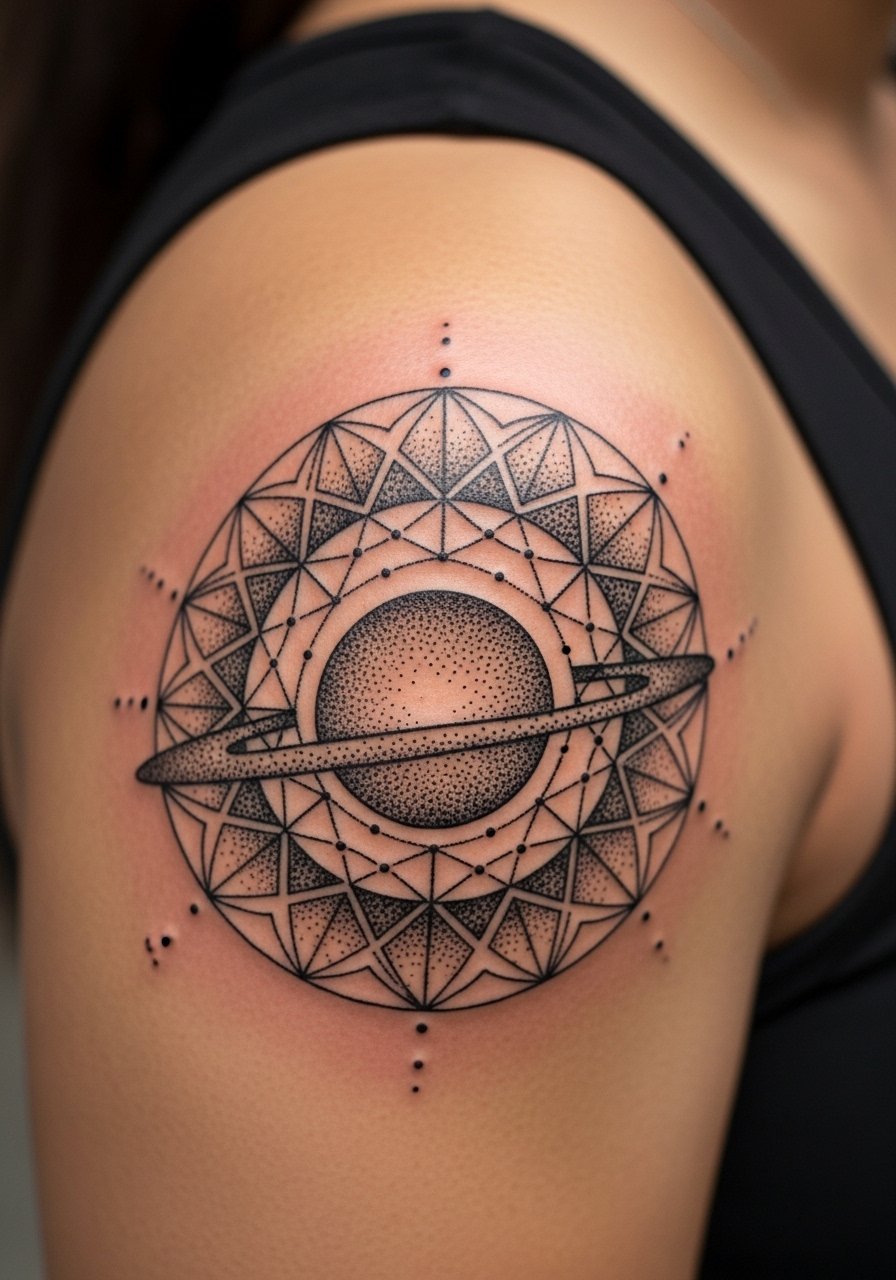
Geometric space tattoos combine math-like symmetry with planets for a modern vibe. The shoulder offers a rounded canvas that holds dotwork well. Dot shading helps disguise line spread, so the mandala stays pleasing as it ages. Ask for healed examples of geometric space tattoos in the artist’s portfolio—this style needs steady hands.
5. Watercolor Galaxy Planet on Upper Arm
Style/Technique: Watercolor / Painterly
Pain Level: Low-Medium (3-4/10)
Session Time: 1–2 sessions, 2–4 hours
Best For: Color lovers, artistic statement
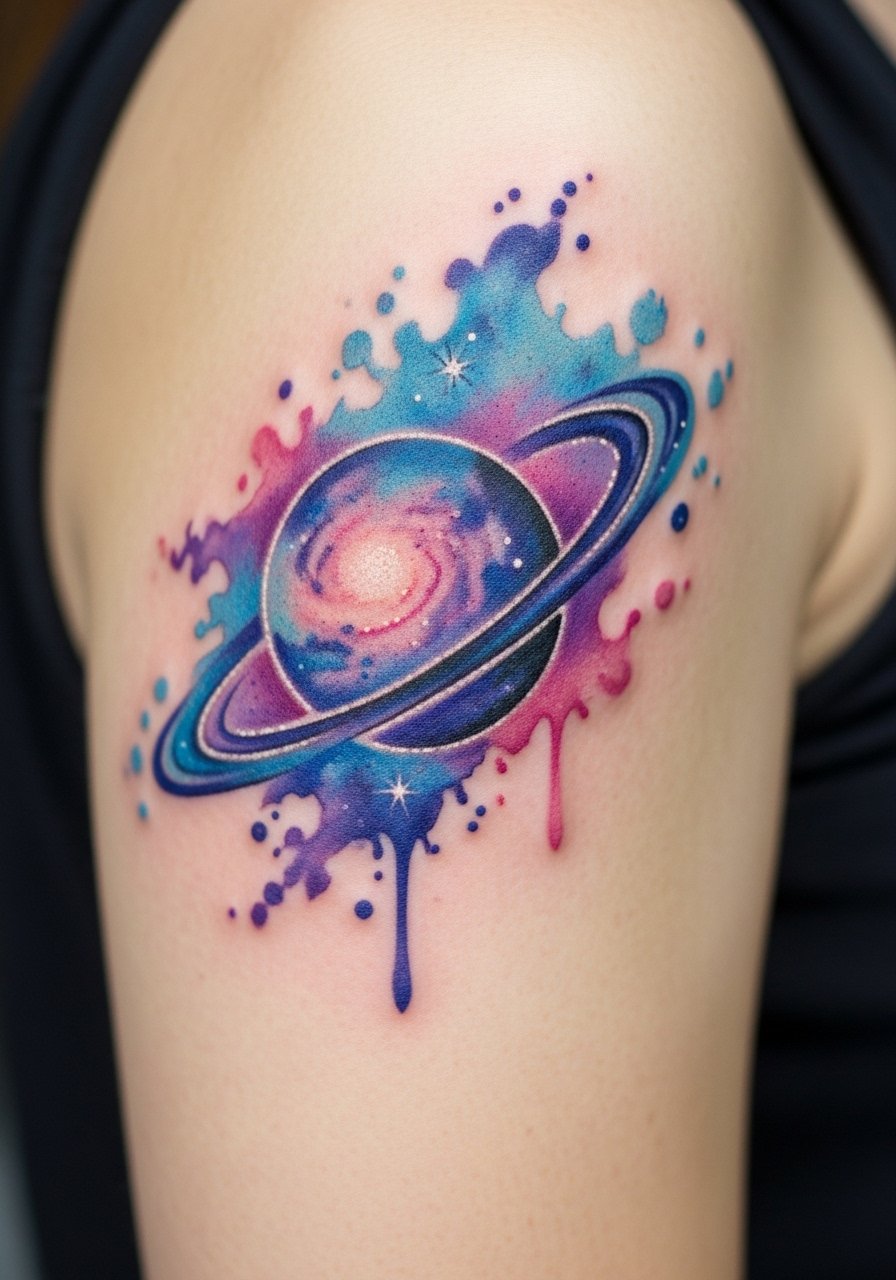
Watercolor planets look ethereal and feel cosmic, but they mellow as they heal. Upper arm flesh is forgiving for color blending and less painful than ribs. From what I’ve seen, watercolor needs touch-ups to keep vibrancy—artists skilled in color saturation for tattoos are worth seeking. Avoid tiny watercolor pieces; bigger patches hold gradients better.
6. Realistic 3D Planet Portrait on Calf
Style/Technique: Realism / 3D Shading
Pain Level: Medium (4-5/10)
Session Time: Multiple sessions, 2–4 hours each
Best For: Statement realism, visible on leg
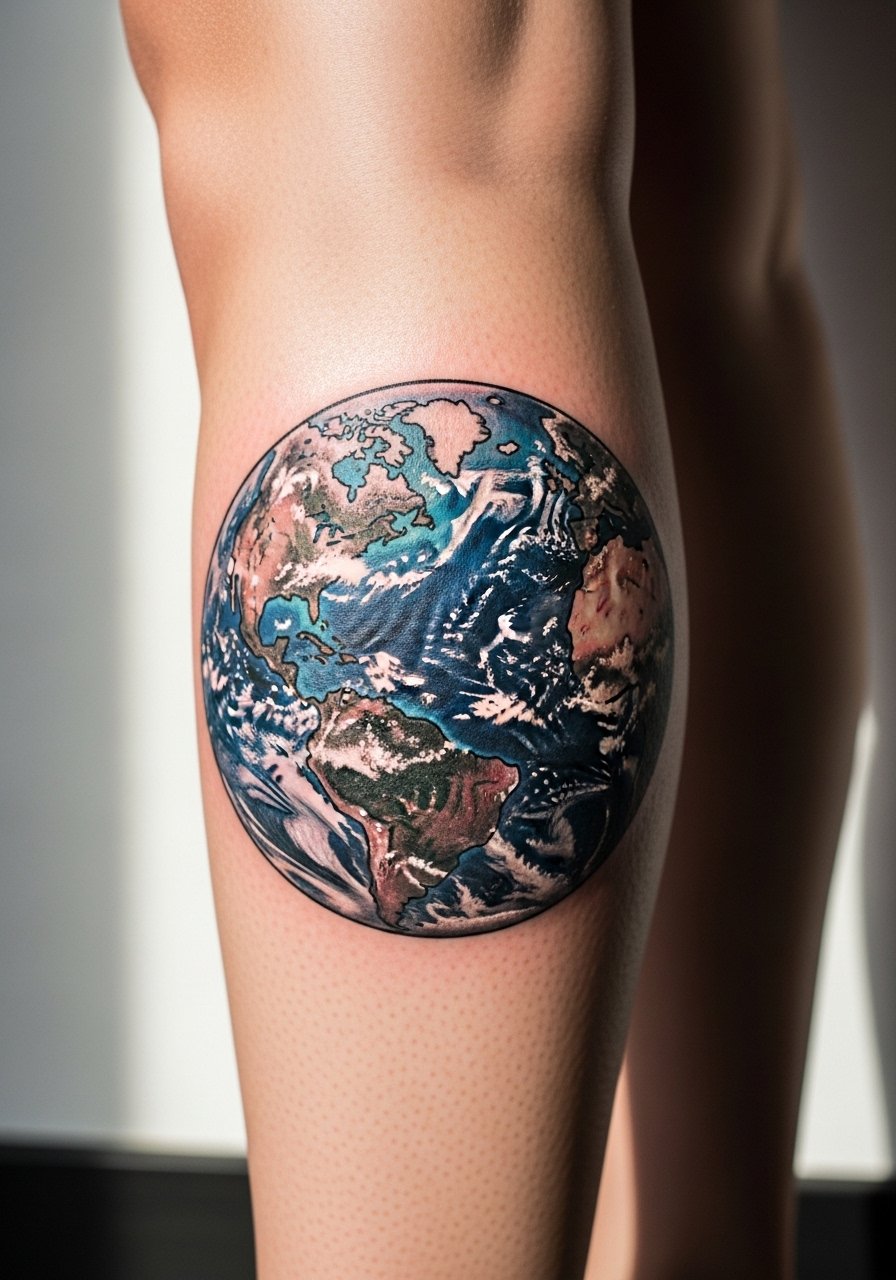
A lifelike planet portrait looks cinematic on the calf. The flesh there takes shading well, letting artists build depth. Expect several sessions for layered color and highlights. I’ve noticed realism ages nicely if the artist uses strong contrasts; ask to see healed realism pieces to judge how their shading holds up.
7. Solar System Orbiting Sleeve (Half Forearm)
Style/Technique: Neo-Traditional / Realism Mix
Pain Level: Medium-High (5-7/10)
Session Time: Multiple sessions, several hours each
Best For: Collectors, cohesive story pieces
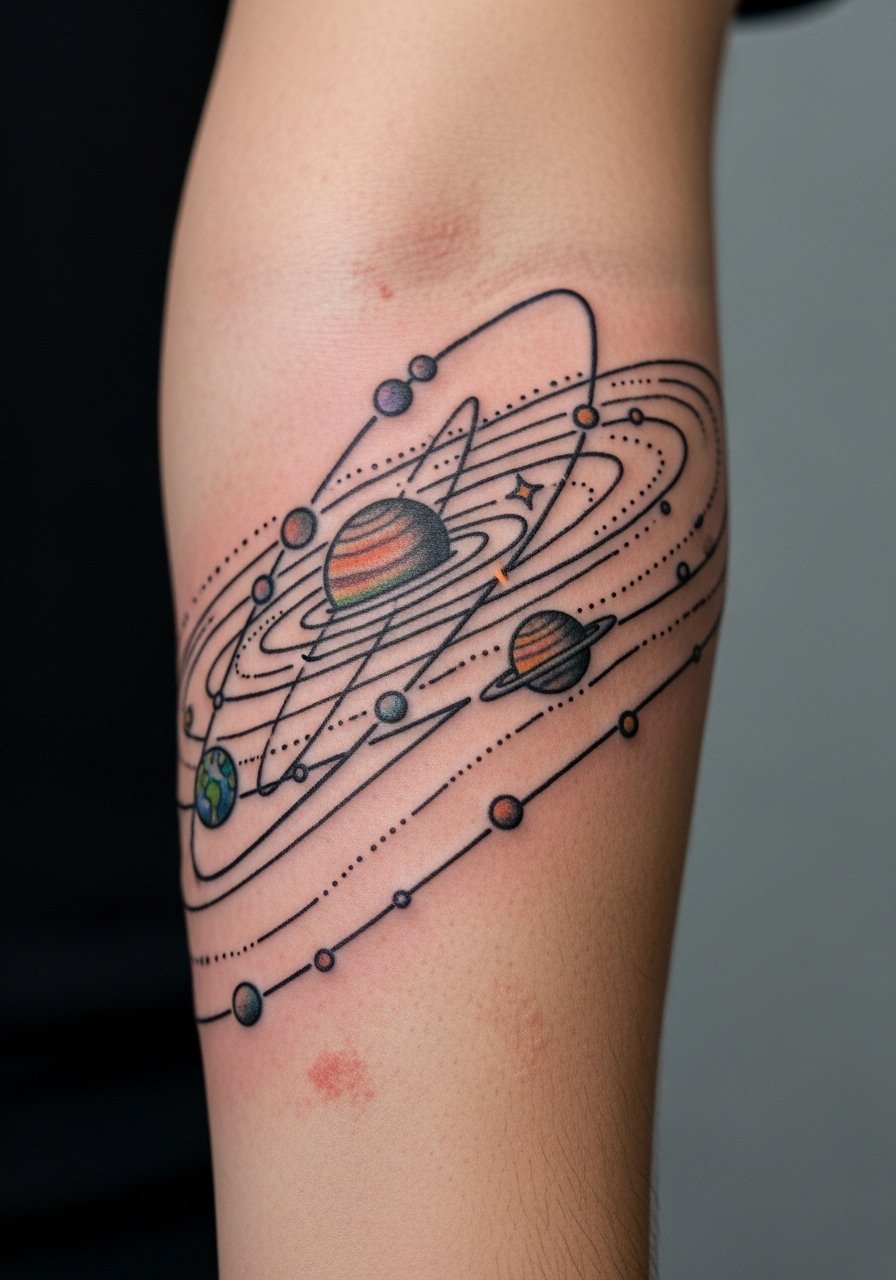
Orbiting-systems make a narrative sleeve without being cluttered. Forearm sleeves are easier to manage for aftercare than full-arm wraps. This is a commitment—plan sessions and ask artists about how they transition planets and stars. Common mistake: cramming too many tiny planets; negative space keeps clarity.
8. Space Leg Sleeve Full Thigh
Style/Technique: Neo-Traditional / Realism
Pain Level: Medium-High (5-7/10)
Session Time: Multiple long sessions
Best For: Big canvases, dramatic color
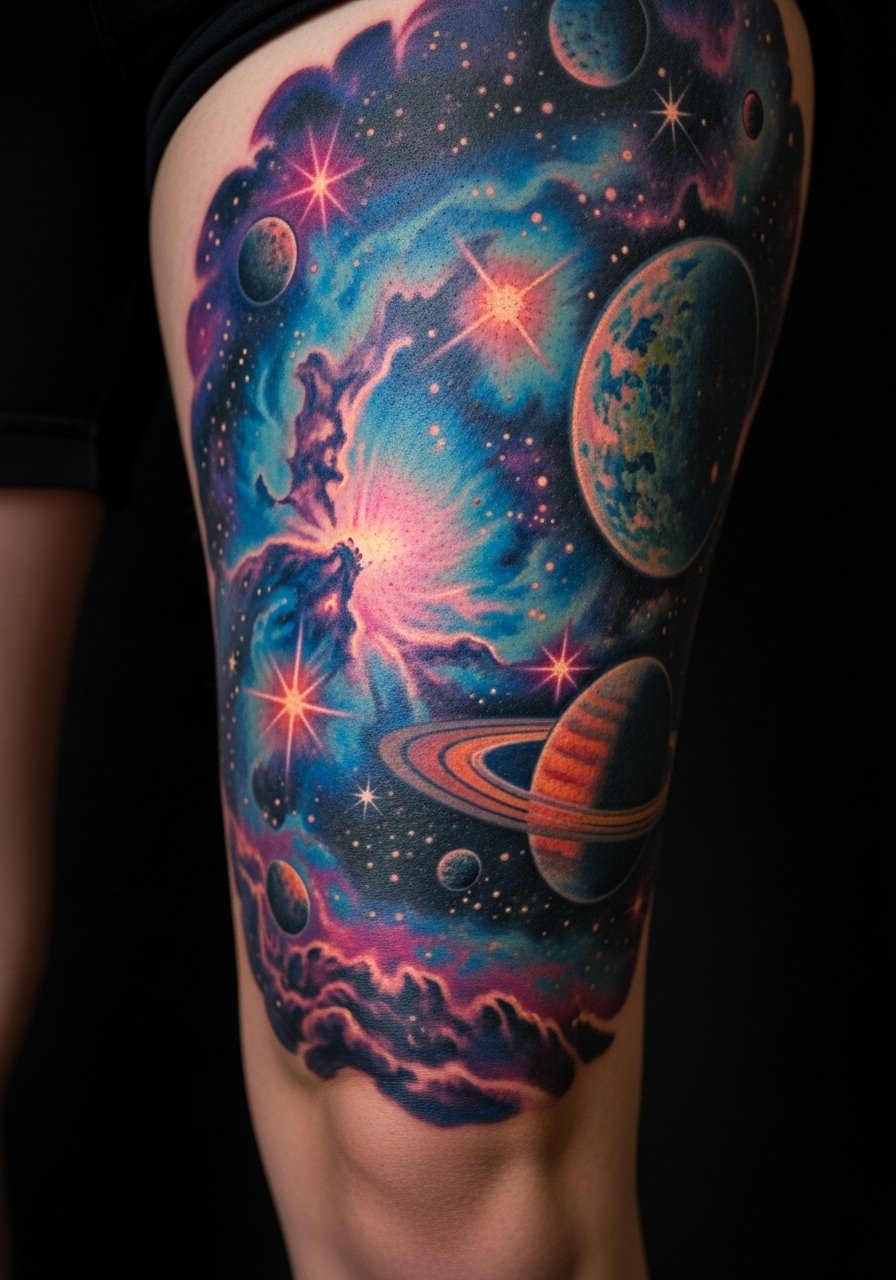
Leg sleeves give artists room for sprawling galaxies and planet clusters. Thigh skin tolerates longer sessions and usually heals without shifting lines. From what I’ve gathered, legs are a great option if you want scale without the constant visibility of arm sleeves. Keep in mind movement areas (behind knee) can be more painful and prone to stretch.
9. Dotwork Planet Texture on Inner Arm
Style/Technique: Dotwork / Blackwork
Pain Level: Low-Medium (3-4/10)
Session Time: 1–2 sessions
Best For: Textured, meditative pieces
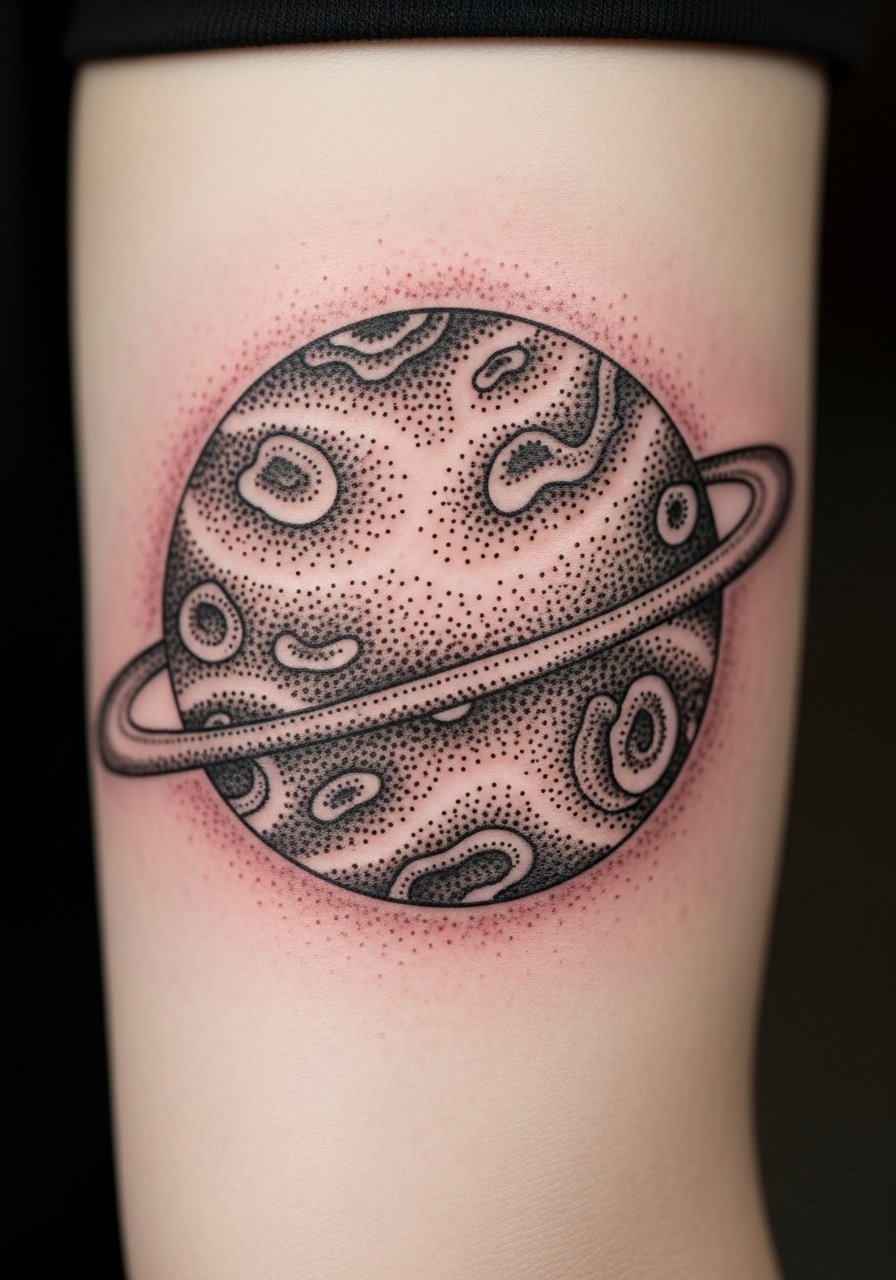
Dotwork creates tactile surfaces that age gracefully since stippling hides minor spreading. Inner arm is less sun-exposed, so black dotwork often retains contrast. If you like meditative detail, this is a style to request. Avoid requesting too fine stippling on very thin skin—dotwork looks best with deliberate density.
10. Planets With Constellations on Shoulder Blade
Style/Technique: Fine Line / Geometric
Pain Level: Low (2-4/10)
Session Time: 1–2 sessions
Best For: Medium symbolic piece, easy concealment
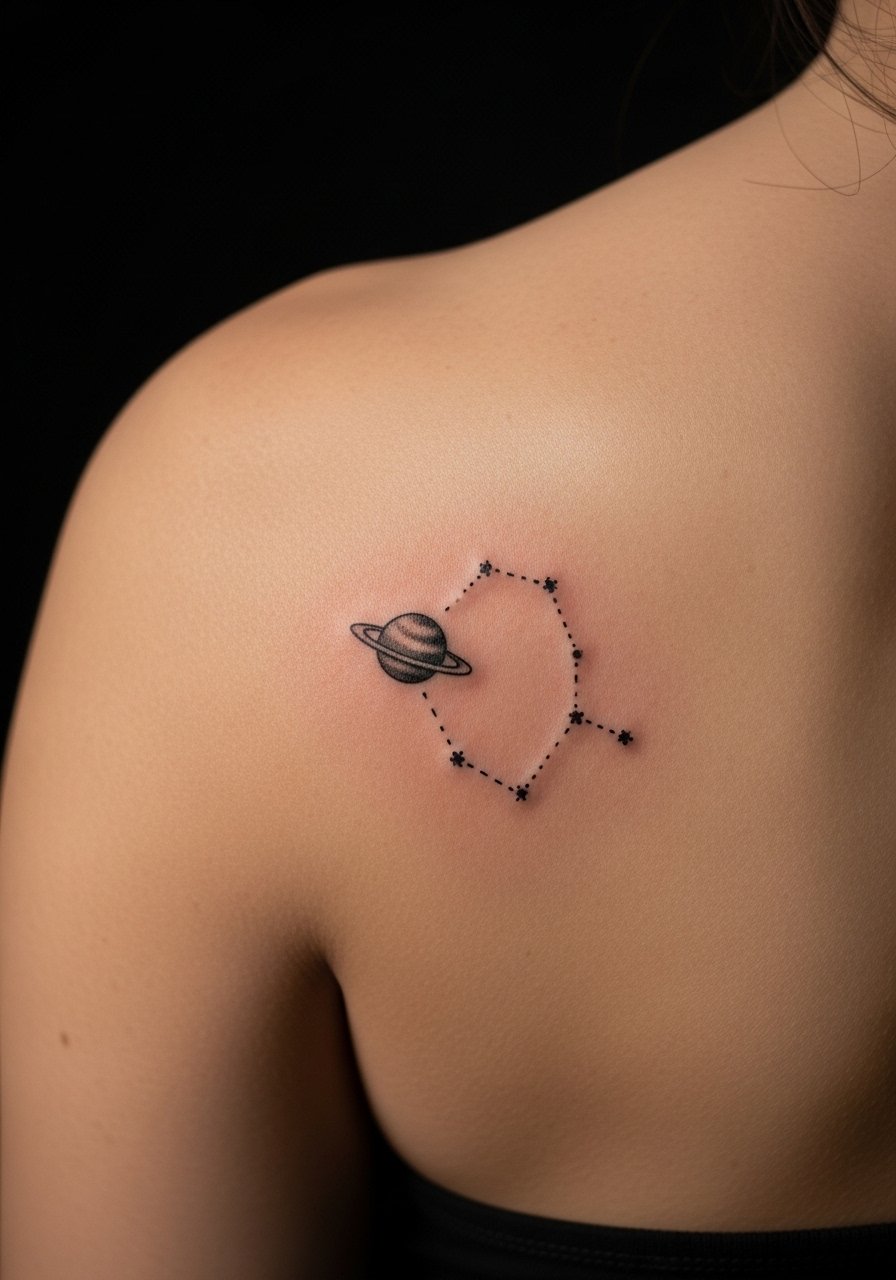
Pairing planets and constellations gives cosmic context and adds meaning. Shoulder blade placement is low-pain and easy to cover. I recommend asking for slightly heavier star dots so they don’t disappear over years. This style works well for those wondering the best planet tattoo placement for medium visibility without constant exposure.
11. Abstract Cosmic Planets Behind Ear
Style/Technique: Abstract / Minimal Color
Pain Level: High (6-7/10)
Session Time: 1 session, under 90 minutes
Best For: Tiny, unconventional placement
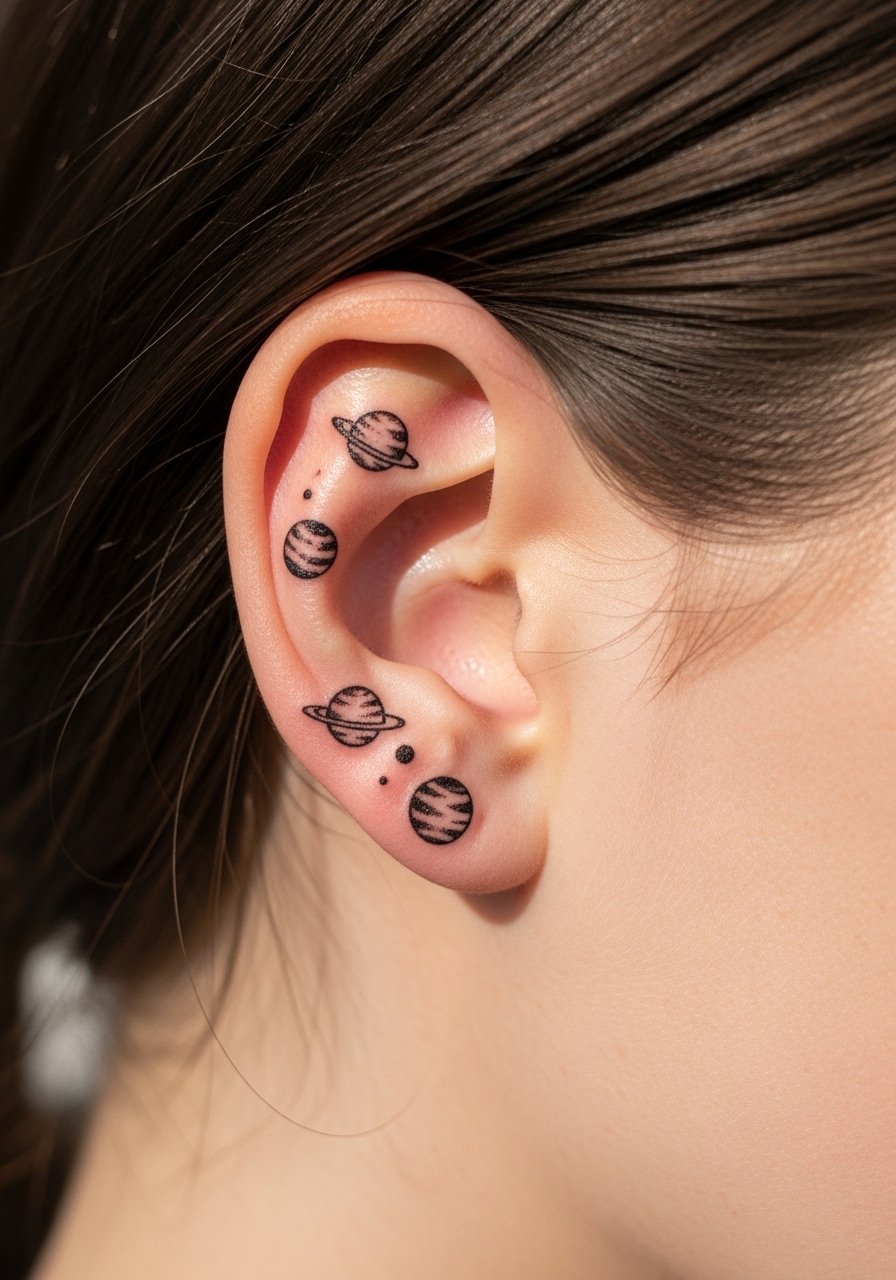
Hand and head placements are edgy and age uniquely—behind the ear is small but visible to those close to you. Abstract planets let you avoid literal representation. Expect more sting and a few days of tenderness. Because of the tiny canvas, stick to bold shapes rather than fine gradients.
12. New School Bold Planet on Chest
Style/Technique: New School / Illustrative
Pain Level: Medium (4-6/10)
Session Time: 2–3 sessions
Best For: Color statement, expressive storytelling
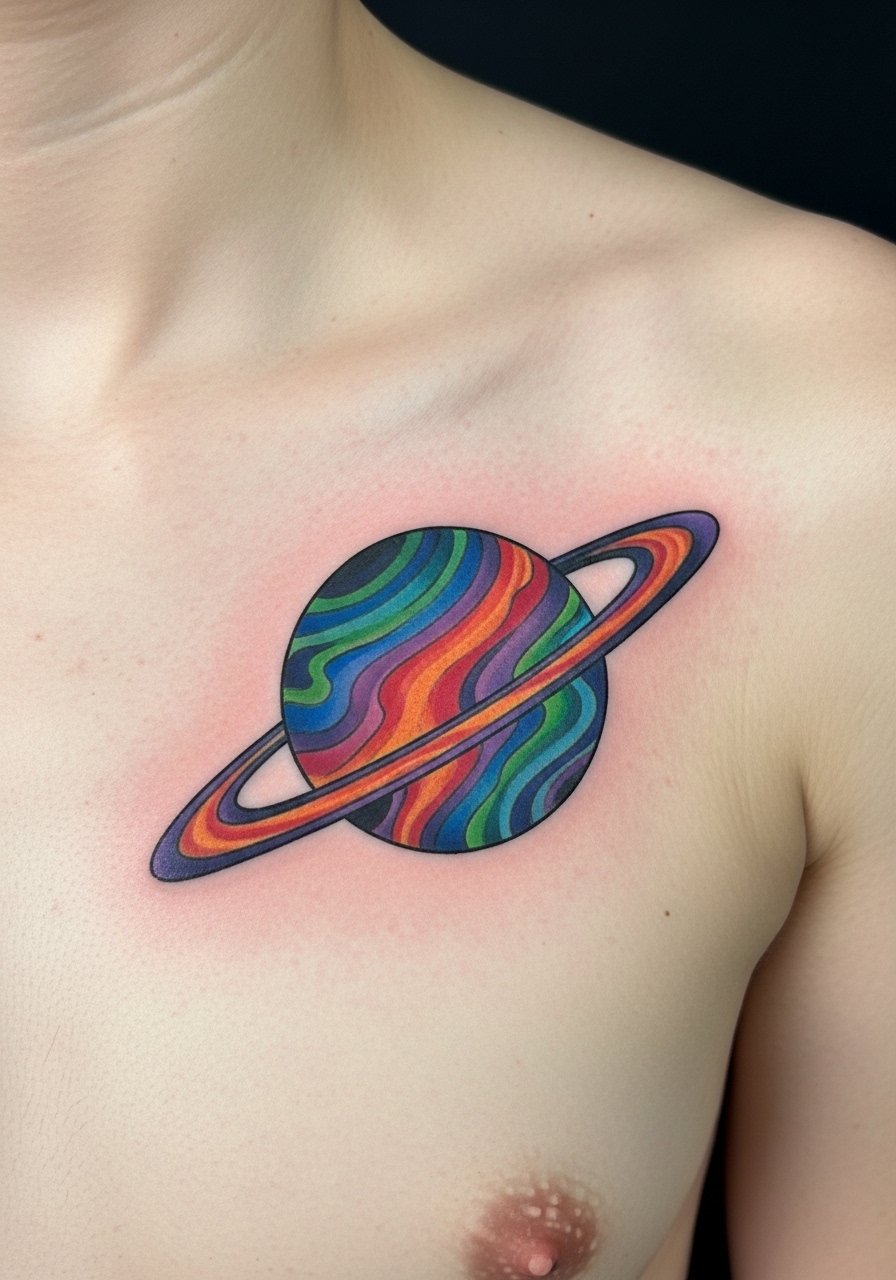
New school brings saturated color and thick outlines—great for chest pieces that need to read from a distance. I’ve seen these keep personality even as colors soften. Avoid tiny text or overly detailed small elements; this style is happiest with bold shapes and clear contrasts.
13. Minimalist Single Planet on Ankle
Style/Technique: Minimalist / Fine Line
Pain Level: Medium-High (4-6/10)
Session Time: 1 session, 30–60 minutes
Best For: First small piece, discreet placement
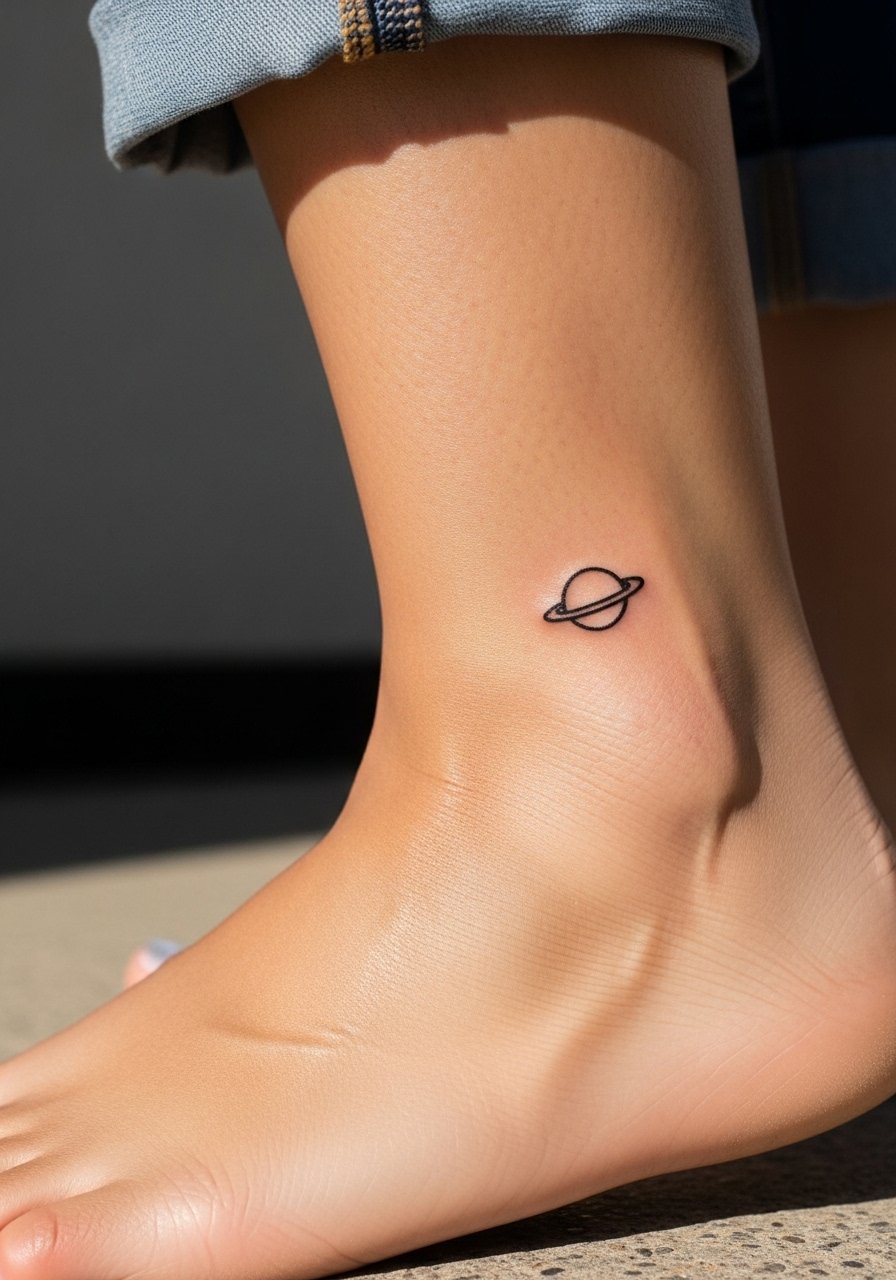
Ankles look delicate but can be surprisingly painful due to bone proximity. Minimalist planet tattoos here are discreet and symbolic. Keep designs simple—tiny shaded gradients tend to blur in high-motion areas like ankles. I tell friends to expect slower healing because shoes can rub.
14. Planet Merged With Flowers on Thigh (Unique Hybrid)
Style/Technique: Botanical / Realism Mix
Pain Level: Medium (4-5/10)
Session Time: 2 sessions
Best For: Nature-cosmic hybrid, personalized symbolism
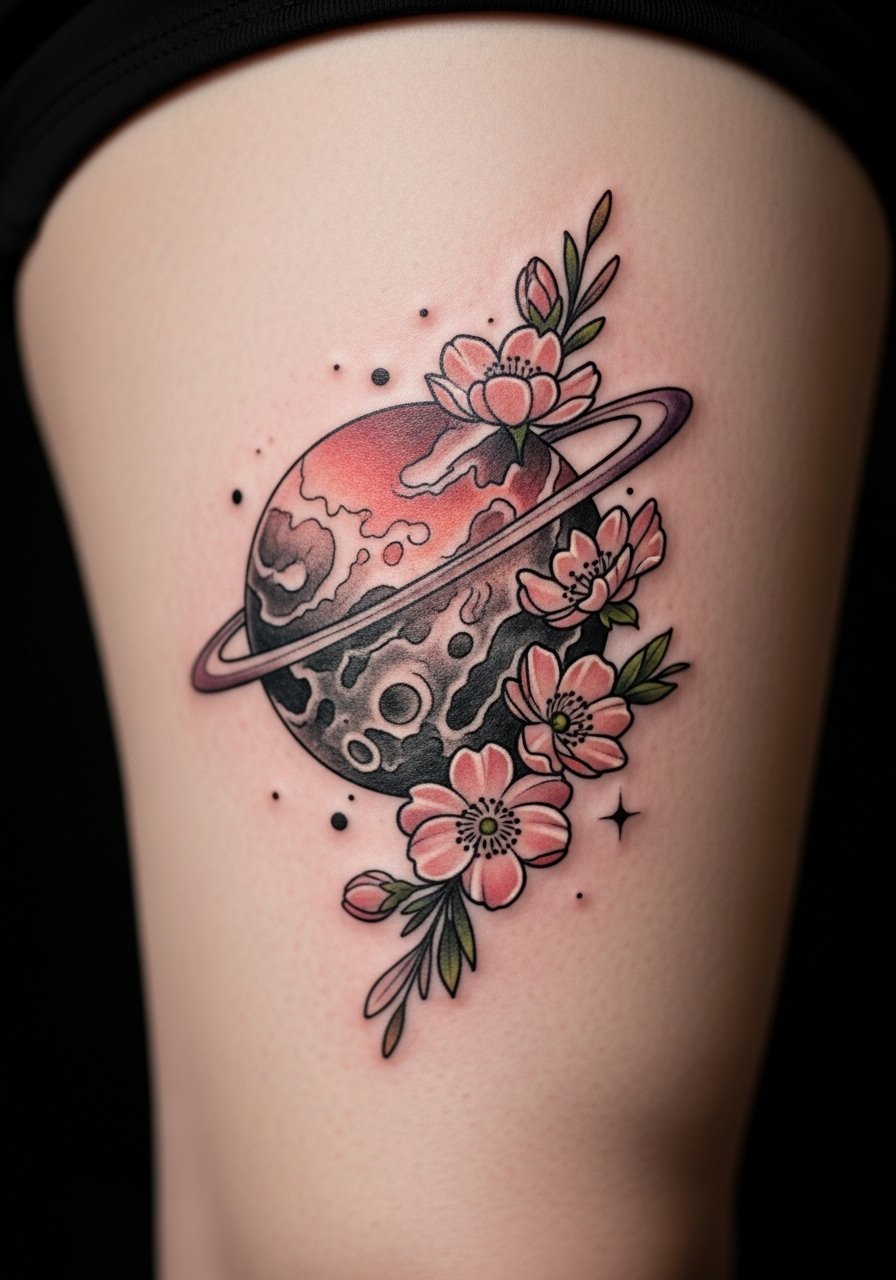
This is one of the hybrids I rarely saw elsewhere but love: planets combined with flowers merge Earth and cosmos symbolism. Thighs give room for flow and bigger petals that age well. Ask for test sketches showing how the planet and blooms overlap—busy merges can look muddled if not composed carefully.
15. Animal Totem Orbiting a Planet on Ribcage (Unique Hybrid)
Style/Technique: Illustrative / Neo-Traditional
Pain Level: High (7-8/10)
Session Time: Multiple short sessions
Best For: Personal symbolism, dramatic placement
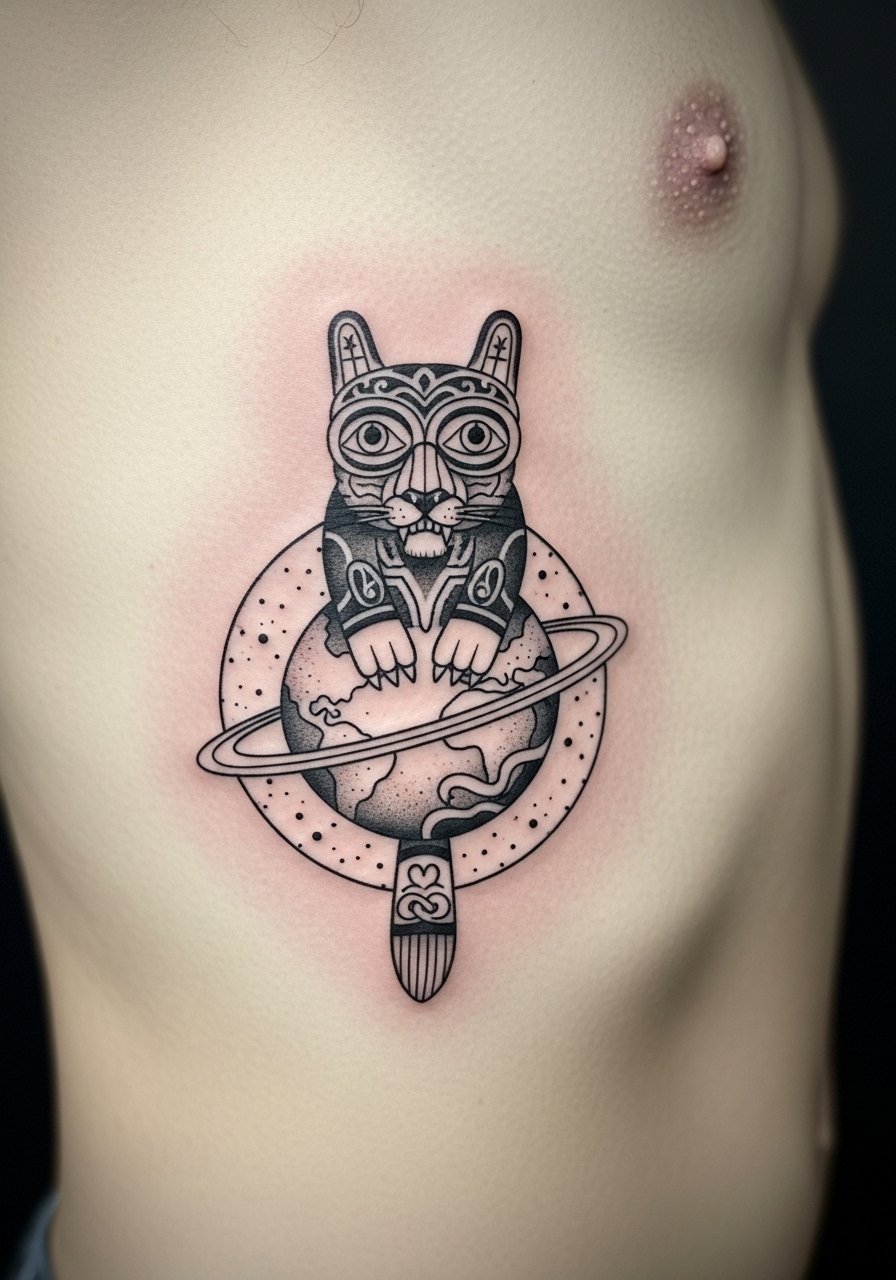
Tattooing animal totems with orbiting planets tells an inner-story. Ribcage placement is sensitive—expect serious discomfort but strong aesthetic payoff. I recommend booking shorter sessions to manage pain. Make sure the artist shows healed ribcage pieces so you can judge how lines hold in that tender area.
16. Micro Black Space Row Behind Finger
Style/Technique: Micro / Blackwork
Pain Level: High (6-8/10)
Session Time: 1 session, 30–45 minutes
Best For: Very small, starter tattoo test
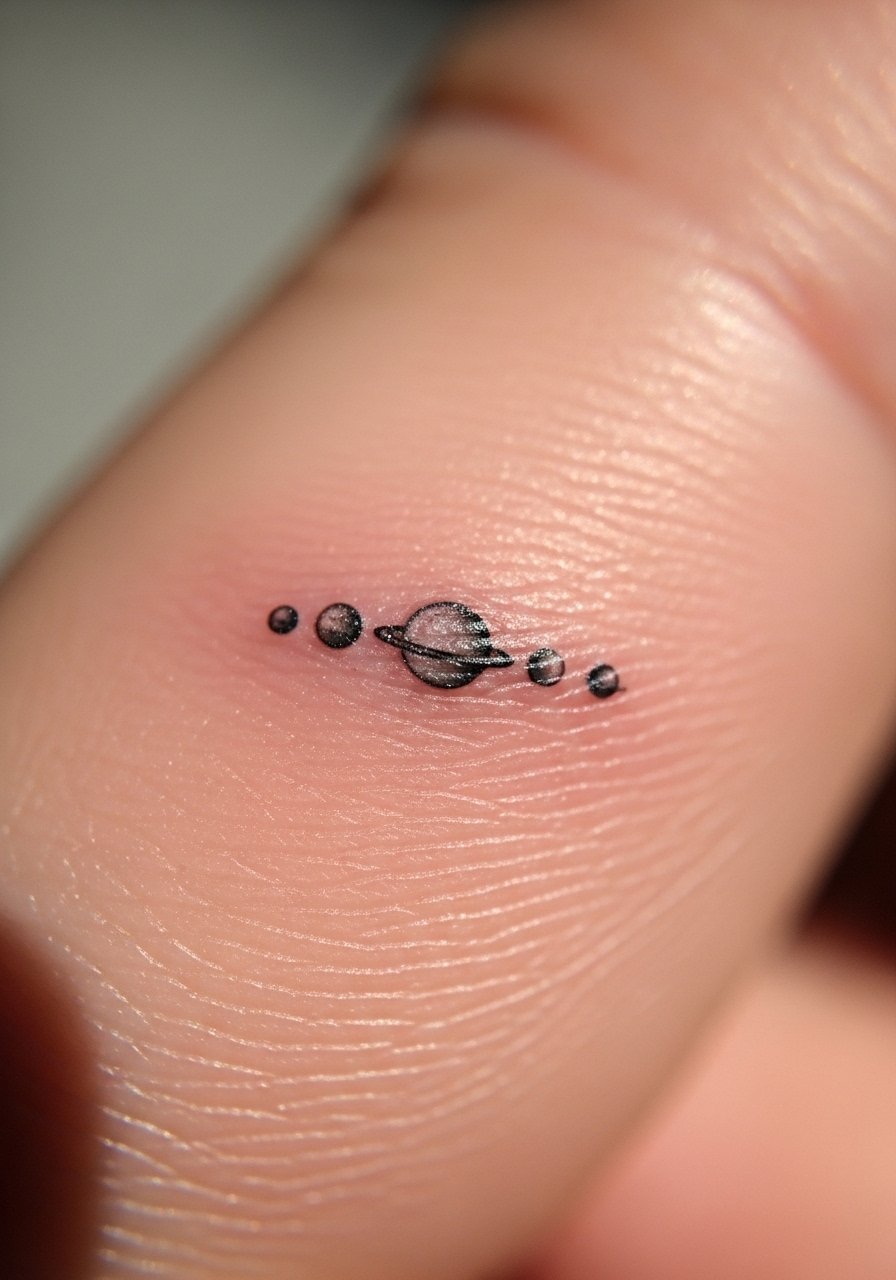
Micro black rows are an under-covered starter idea I often recommend when someone wants minimal commitment. Fingers fade faster and need touch-ups, so consider a finger-side placement for slightly better longevity. I caution against over-detail in micro work—the simpler, the better.
17. Orbiting Planets With Quote on Forearm (Unique Hybrid)
Style/Technique: Fine Line / Script Mix
Pain Level: Low-Medium (3-4/10)
Session Time: 1–2 sessions
Best For: Personal motto plus cosmic visuals
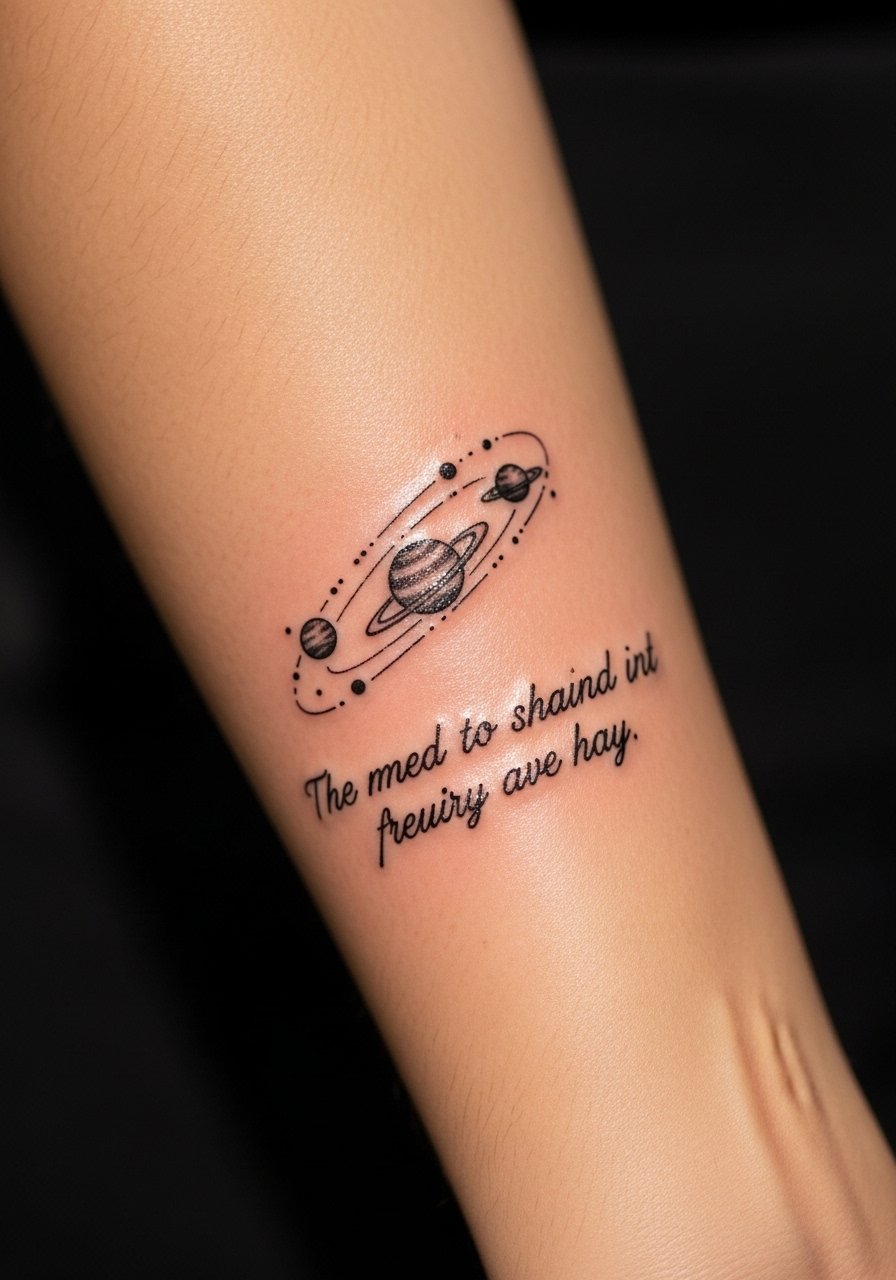
Combining planets with an inspirational quote turns imagery into a daily reminder. Forearm placement is low-pain and great for visibility. Keep script short and bold enough to survive line spread. I like this for people worried about regretting a purely symbolic design—they get both image and meaning.
18. Ringed Planet With Geometric Halo on Thigh
Style/Technique: Geometric / Neo-Traditional
Pain Level: Medium (4-5/10)
Session Time: 1–2 sessions
Best For: Decorative, feminine or unisex look
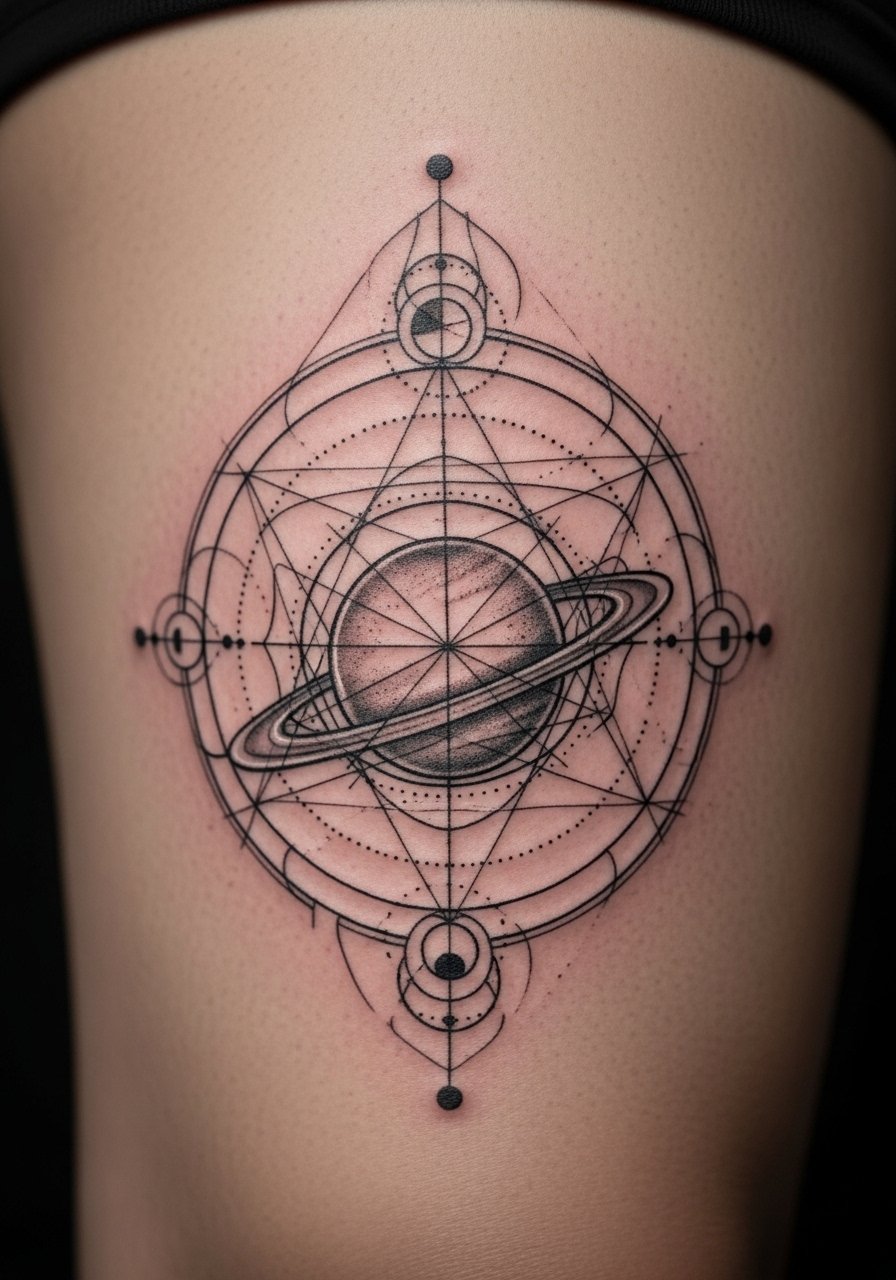
A geometric halo frames a planet and gives a modern, refined look. Thigh placement means less sun exposure so the fine geometry tends to hold. Ask your artist how lines will balance with your body curve—good composition avoids distortion.
19. Retro Planet Portrait on Upper Arm
Style/Technique: Illustrative / Retro Palette
Pain Level: Low-Medium (3-4/10)
Session Time: 1–2 sessions
Best For: Nostalgic aesthetic, classic visibility
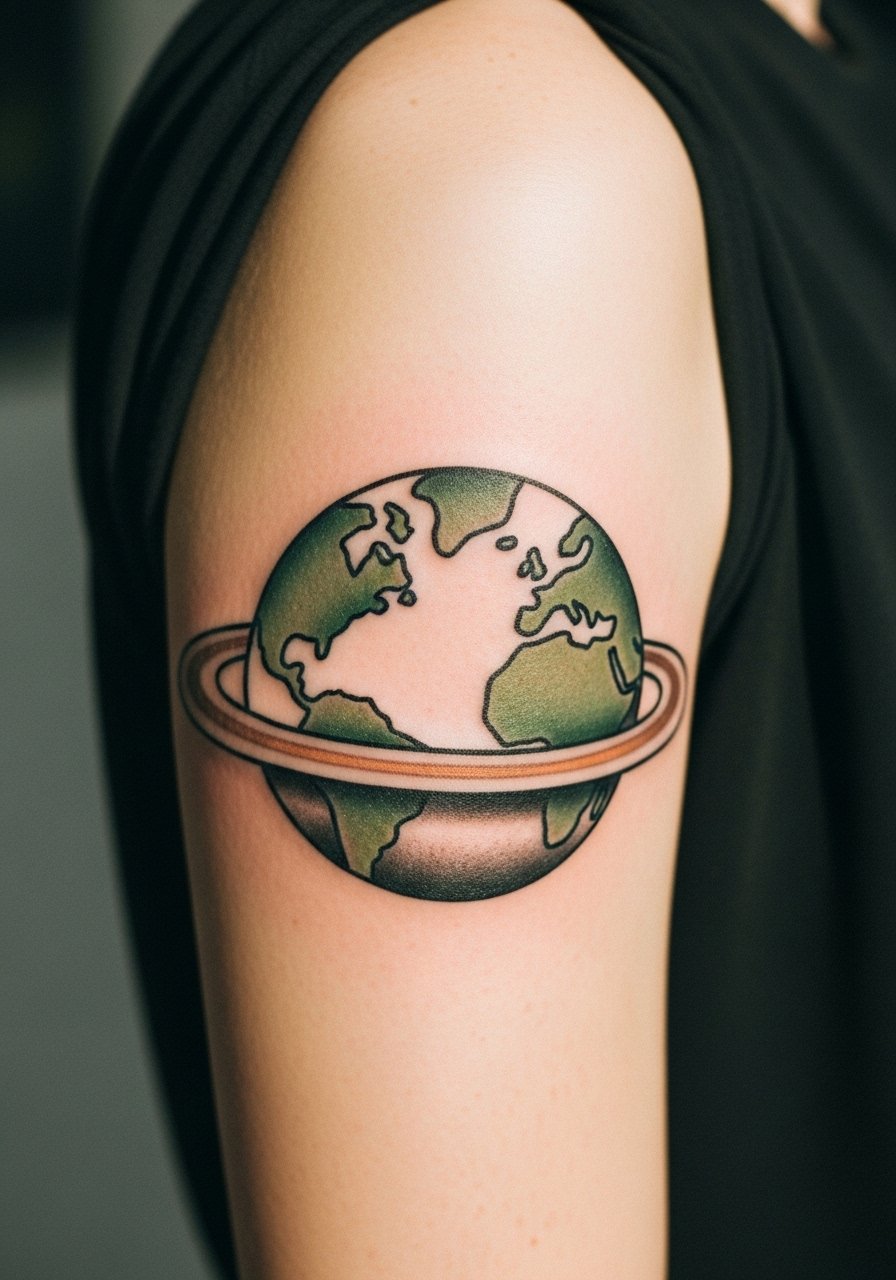
Retro palettes (muted oranges, teal) give planets a vintage feel. Upper arm is forgiving for color and common for first big pieces. From my experience, muted colors need strong outlines to keep clarity—ask your artist for healed shots of their color fades.
20. Celestial Compass With Planet on Sternum
Style/Technique: Fine Line / Symbolic
Pain Level: High (7-9/10)
Session Time: 1–3 sessions
Best For: Centered symbolic statement
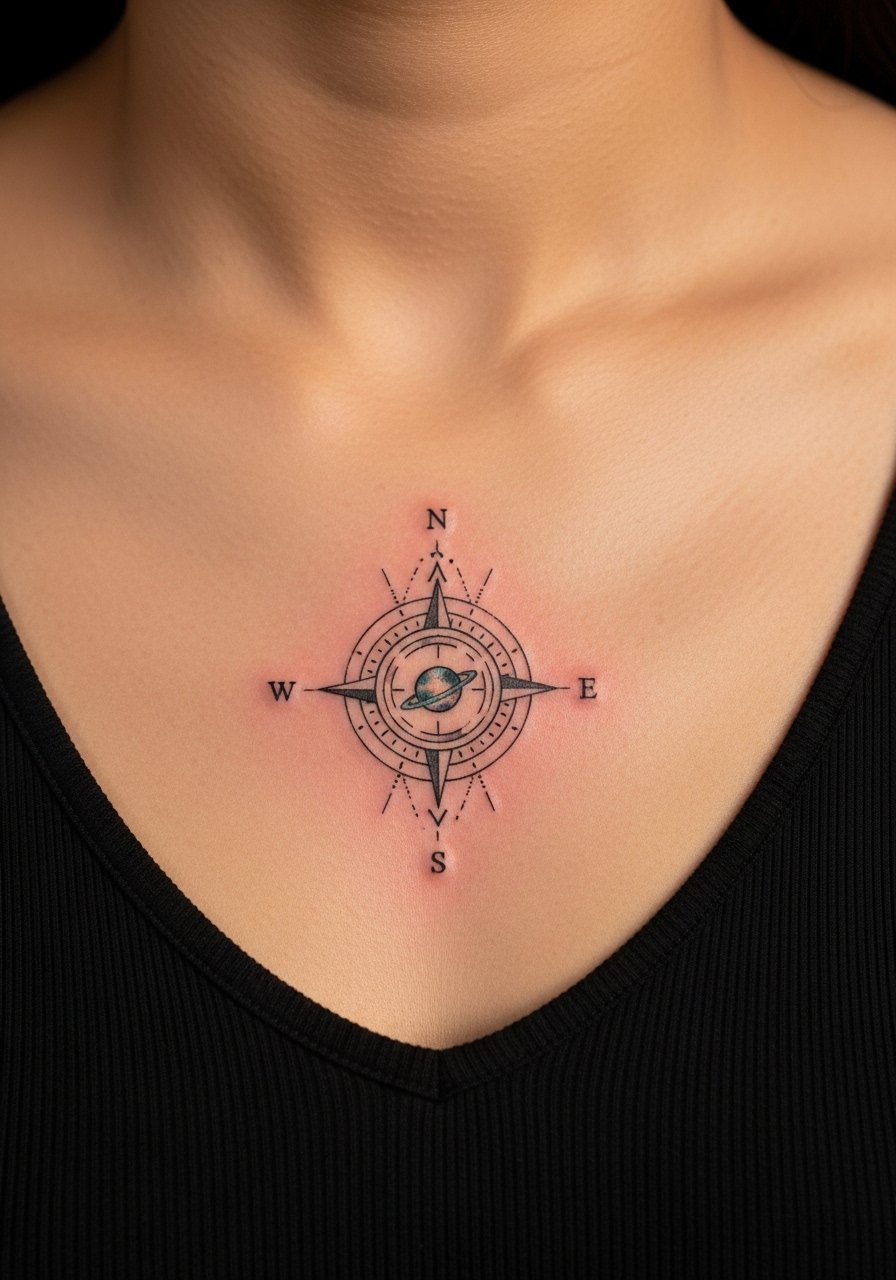
Sternum pieces are striking and meaningful, but painful during application. The compass-planet motif centers purpose and roam. Because chest skin moves with breathing, ask your artist how lines will account for curvature so the compass reads straight over time.
21. Solar Eclipse Half-Planet on Rib Line
Style/Technique: Blackwork / Fine Line
Pain Level: High (7-8/10)
Session Time: 1–2 sessions
Best For: Dramatic contrast, symbolic cycles
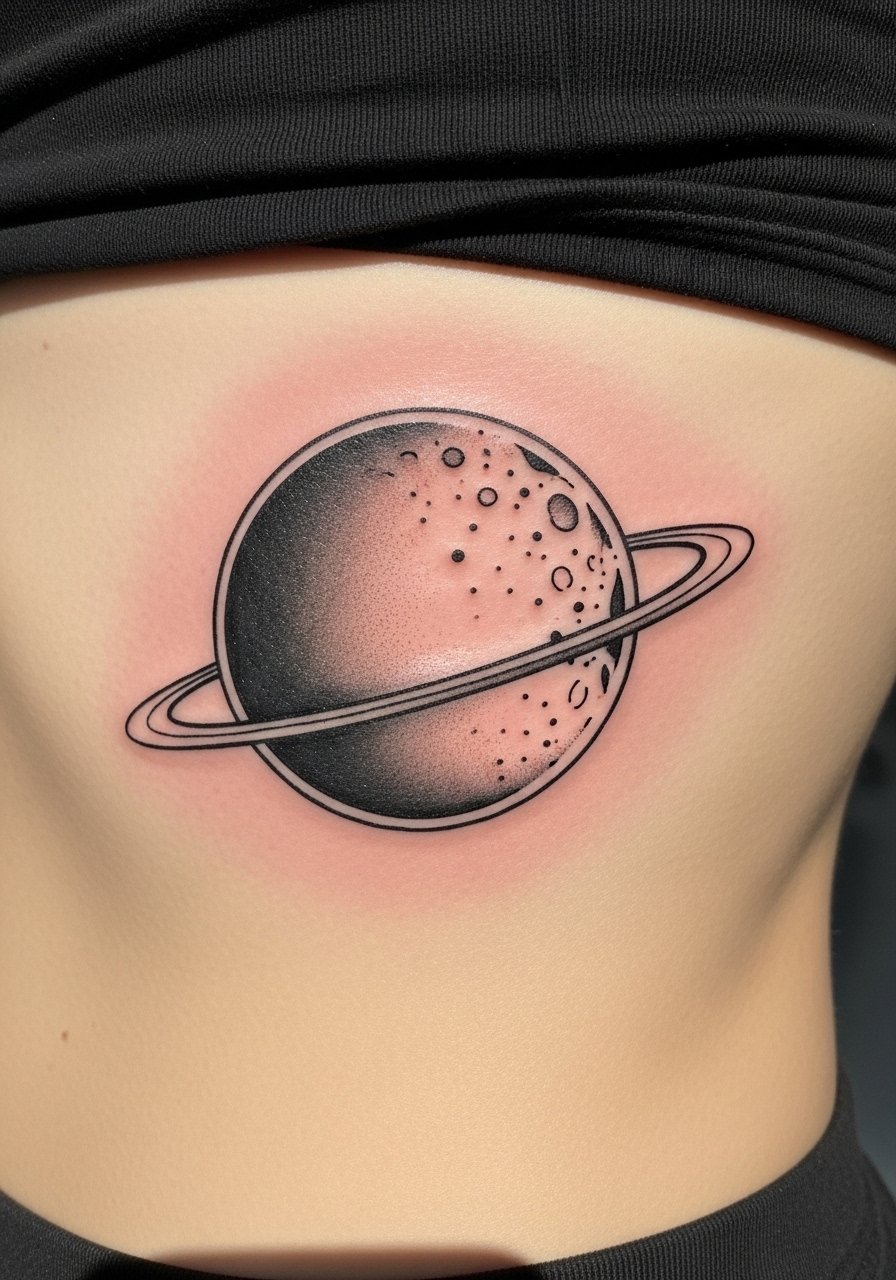
Eclipse imagery reads as transition and is visually strong in blackwork. Ribs are painful but produce memorable pieces. Strong black fills hold up better than faint gradients in this zone. I suggest letting the artist know your pain tolerance so you can split sessions.
22. Space Girl With Planet Halo on Back (Trend)
Style/Technique: New School / Illustrative
Pain Level: Medium-High (5-7/10)
Session Time: Multiple sessions
Best For: Feminine narrative, large back canvas
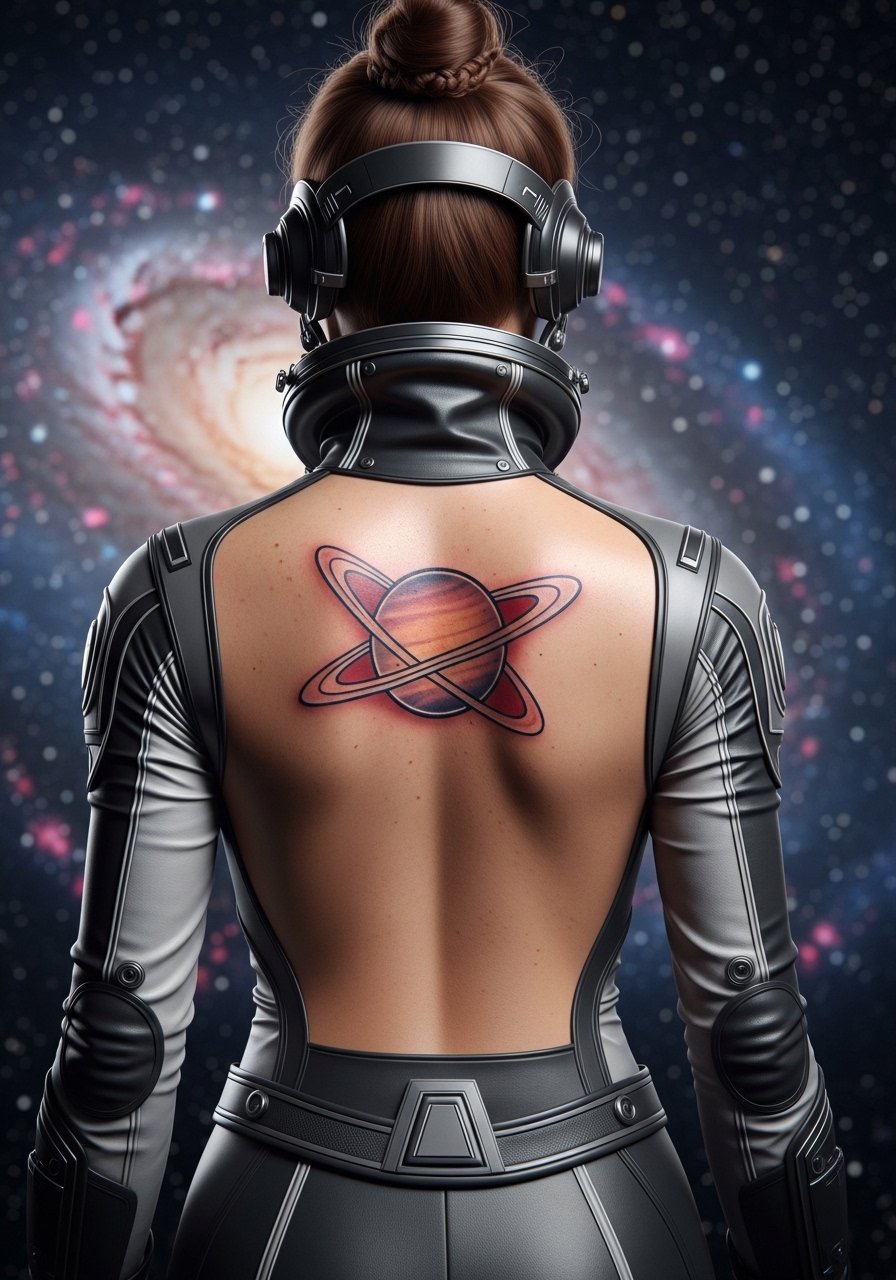
Space girl designs mix portraiture with planetary elements for empowering storytelling. The back gives scale for detail and flow. Expect several sessions, and request healed backwork images to gauge how illustrative lines and colors settle. Placement allows customization—add constellations or quotes to personalize.
Tattoo Prep and Aftercare Essentials
Aftercare Essentials:
- Aquaphor Healing Ointment, 14oz tube — For initial moist care first 3–5 days
- Saniderm Transparent Adhesive Bandage, 6-inch roll — Second-skin protection for first 24–72 hours
- Dr. Bronner's Unscented Castile Soap, 32 oz — Gentle cleaning during first week
- CeraVe Fragrance-Free Moisturizing Lotion, 12 oz — Daily moisturizer after initial healing
Before Your Appointment:
- Numbing Cream with 5% Lidocaine, 30g — Use only after checking with your artist
- Tattoo Stencil Transfer Paper, A4 Pack — For testing placement at home
Long-Term Maintenance:
- SPF 50 Sunscreen Stick for Tattoos — Daily sun protection to prevent fading
- Mad Rabbit Tattoo Balm, 2 oz — For ongoing color maintenance
- Hustle Butter Deluxe, 2 oz — Vegan aftercare option for healed skin
Optional Comfort Items:
- Tattoo Numbing Spray — For touch-ups or sensitive sessions
- Hydrocolloid Bandages, Large Pack — For small tattoo scab protection during active healing
I list brands I’ve used or seen recommended by artists. From my experience, Saniderm or a thin layer of Aquaphor immediately after the session helps the tattoo settle, then switch to fragrance-free lotion. Sunscreen is essential once healed.
Frequently Asked Questions
Q: How bad does a tattoo actually hurt?
A: Pain depends on placement and your tolerance. Outer forearm or upper arm tends to be low (around a 3/10 in my experience). Ribcage, sternum, and ankle spike higher. If you’re anxious, ask about a numbing cream with lidocaine—some artists allow it for sensitive spots.
Q: What if I regret my tattoo?
A: Sit with a design for months before committing, or start with a small minimalist planet tattoo on an easy-to-hide spot like the upper thigh. If you still regret it later, options exist but they take time. I recommend picking timeless symbolism—moon phases or Saturn rings—if you want longevity.
Q: How do I keep my planet tattoo from fading?
A: From what I’ve seen, daily sunscreen use is the biggest factor. Use an SPF 50 sunscreen stick on exposed tattoos and keep skin moisturized with a fragrance-free lotion. Black and dotwork styles generally maintain contrast longer than delicate watercolor.
Q: Can I work out after getting a tattoo?
A: Wait 48–72 hours minimum before heavy sweating. For areas that flex a lot (elbow, knee) give it a week. Sweat increases infection risk and can affect ink retention. Clean gently with a mild soap and follow your artist’s aftercare plan.
Q: Should I get a small tattoo first to test my pain tolerance?
A: Only if it’s a design you genuinely want. Pain varies more by placement than size. A tiny wrist or finger piece can actually hurt more than a large forearm design. Think about placement first, then scale.
Q: How long does a tattoo take to heal?
A: Surface healing is usually 2–3 weeks; full settling takes 2–3 months. The first week is critical—keep it clean, lightly moisturized, and out of direct sun. Expect peeling around days 3–7; do not pick.
Q: Do tattoos look different on different skin tones?
A: Yes. Black and gray show well across tones. Bright yellows and pastels can read muted on deeper skin. White ink is often subtle on darker tones. I always advise checking an artist’s healed photos on skin tones similar to yours.
Q: What aftercare products should I bring to the studio or have ready?
A: Bring a gentle soap and a fragrance-free lotion for after the first bandage comes off. Many artists recommend Aquaphor for the initial days and switching to a lotion like CeraVe afterward. If you want extra protection for the first day, Saniderm is widely used—ask your artist if they apply it.