
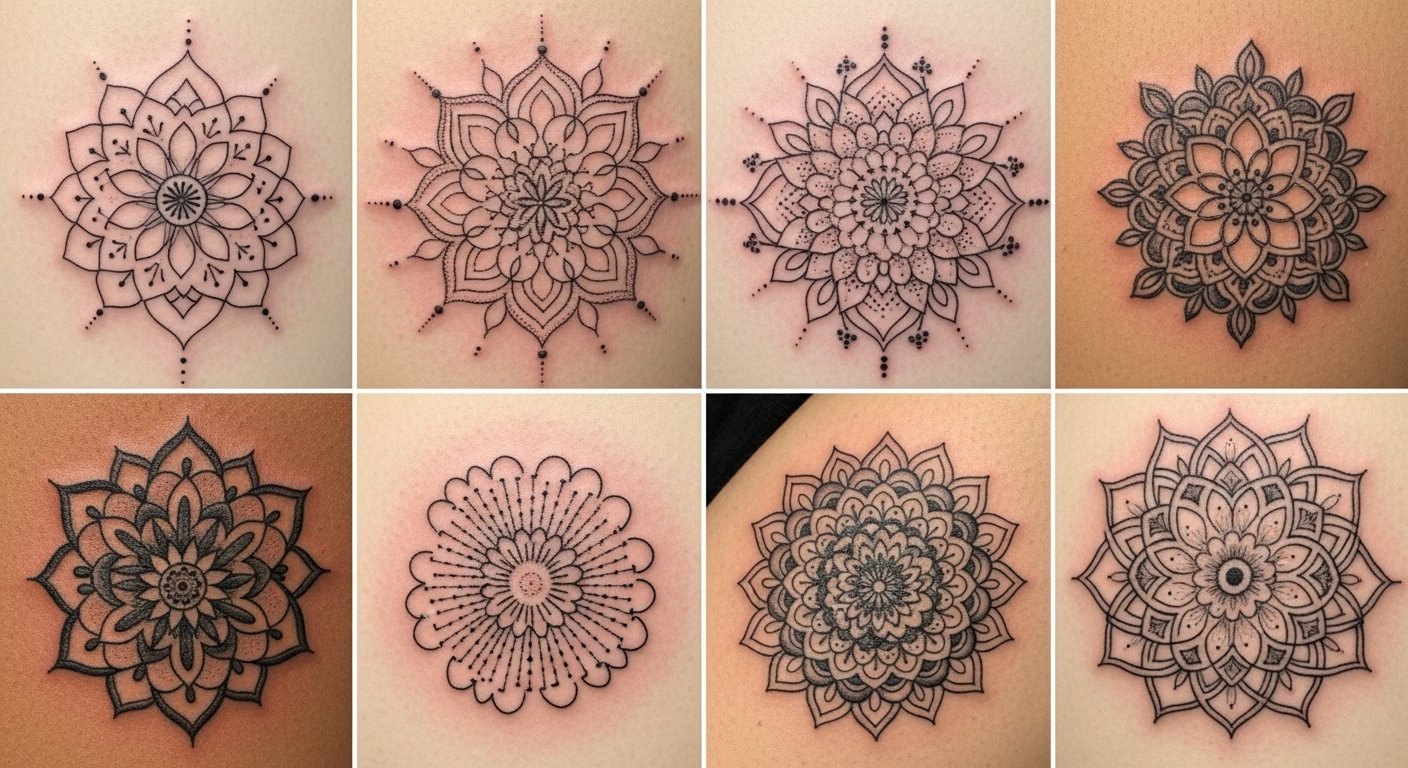
I spent months narrowing down mandala ideas after I realized calm comes less from the flash and more from how a design sits on your body over time. I wanted designs that still read soft and meditative after healing. These 21 mandala tattoos are the ones I kept returning to in my research and on studio walls.
This list focuses on mandala tattoos across fine line, dotwork, and blackwork styles. I picked placements that work for first-timers and seasoned collectors. From what I've seen in studios lately, symmetry and negative space are trending, and artists are pairing mandalas with delicate botanicals to help them age better.
1. Fine Line Mini Mandala on Inner Wrist
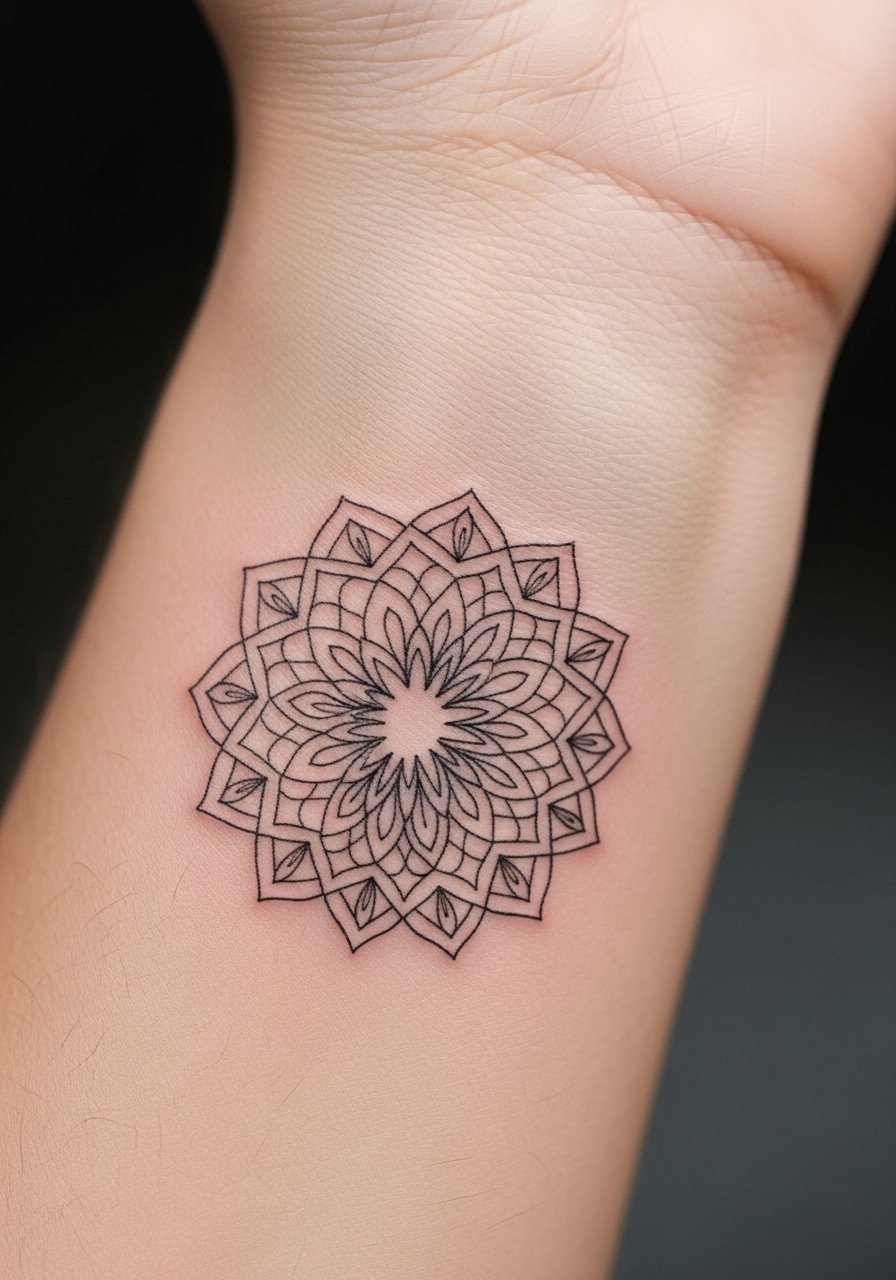
I first saw this on a friend who meditates daily. The small inner wrist mandala reads calm when your hands are folded. Expect a 2 out of 10 pain level for most people. Session time is short, often 20 to 40 minutes. Ask your artist for slightly thicker outer lines so the pattern stays legible after a year. A common mistake is asking for ultra-thin concentric lines. They blur together after a few years. For a long-lasting result ask for crisp spacing and avoid tiny micro-shading. Healed at six months this looks soft. At two years the outer rings show most wear. This is great for someone who wants a discreet, meaningful piece.
2. Dotwork Full Mandala on Sternum
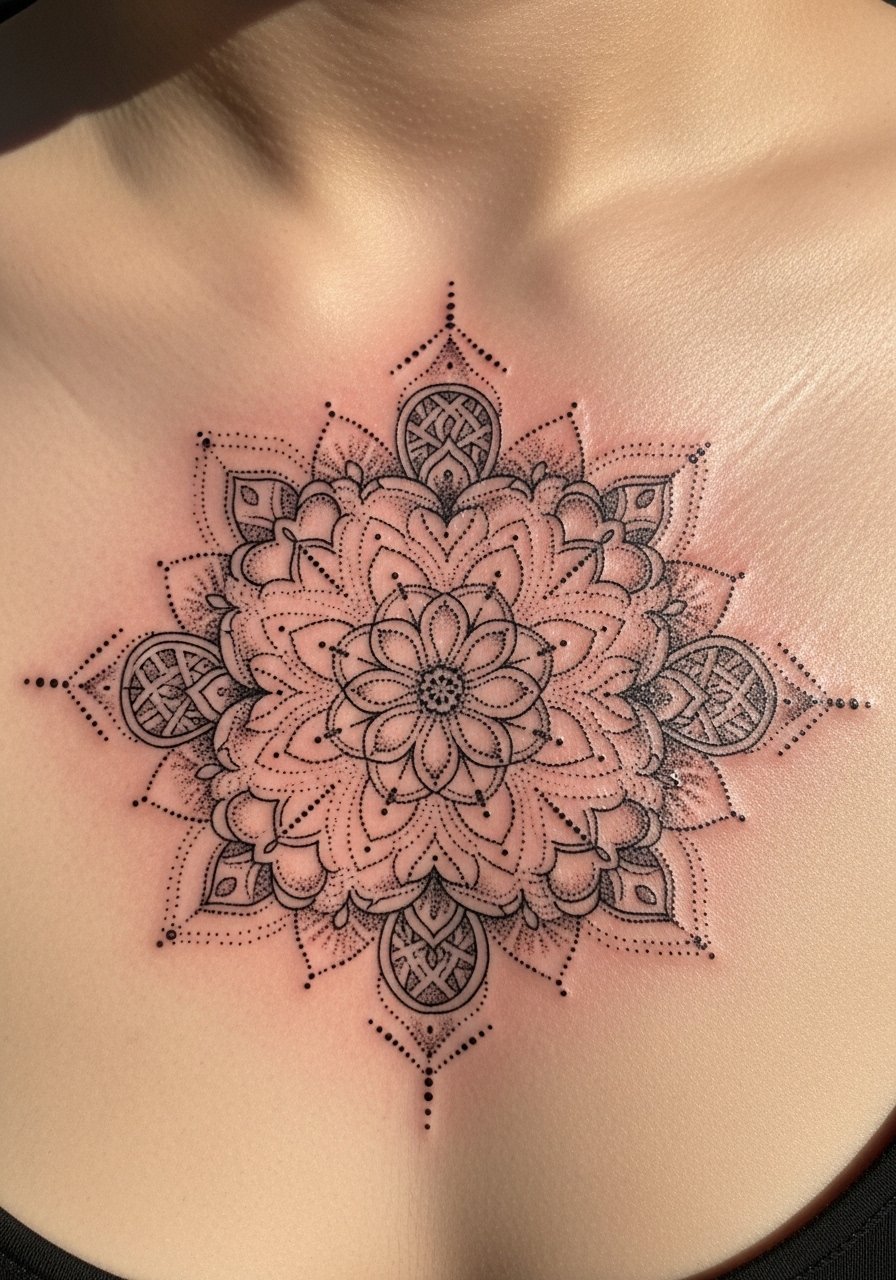
Fair warning, the sternum can be a 6 to 8 out of 10 on pain. That said, the visual payoff is strong because the chest gives the mandala room to breathe. Dotwork takes longer. Plan for a 90 minute to 3 hour session. During consultation tell your artist to build density toward the center, not outward. A mistake I see is over-spreading dots, which creates muddy shading. At six months dot gradients look crisp. By year three the outer dots fade first. This style suits people who want a meditative, center-chest focal point. Ask about touch-up windows at three to six months to keep definition.
3. Blackwork Half-Sleeve Mandala with Floral Accents on Upper Arm
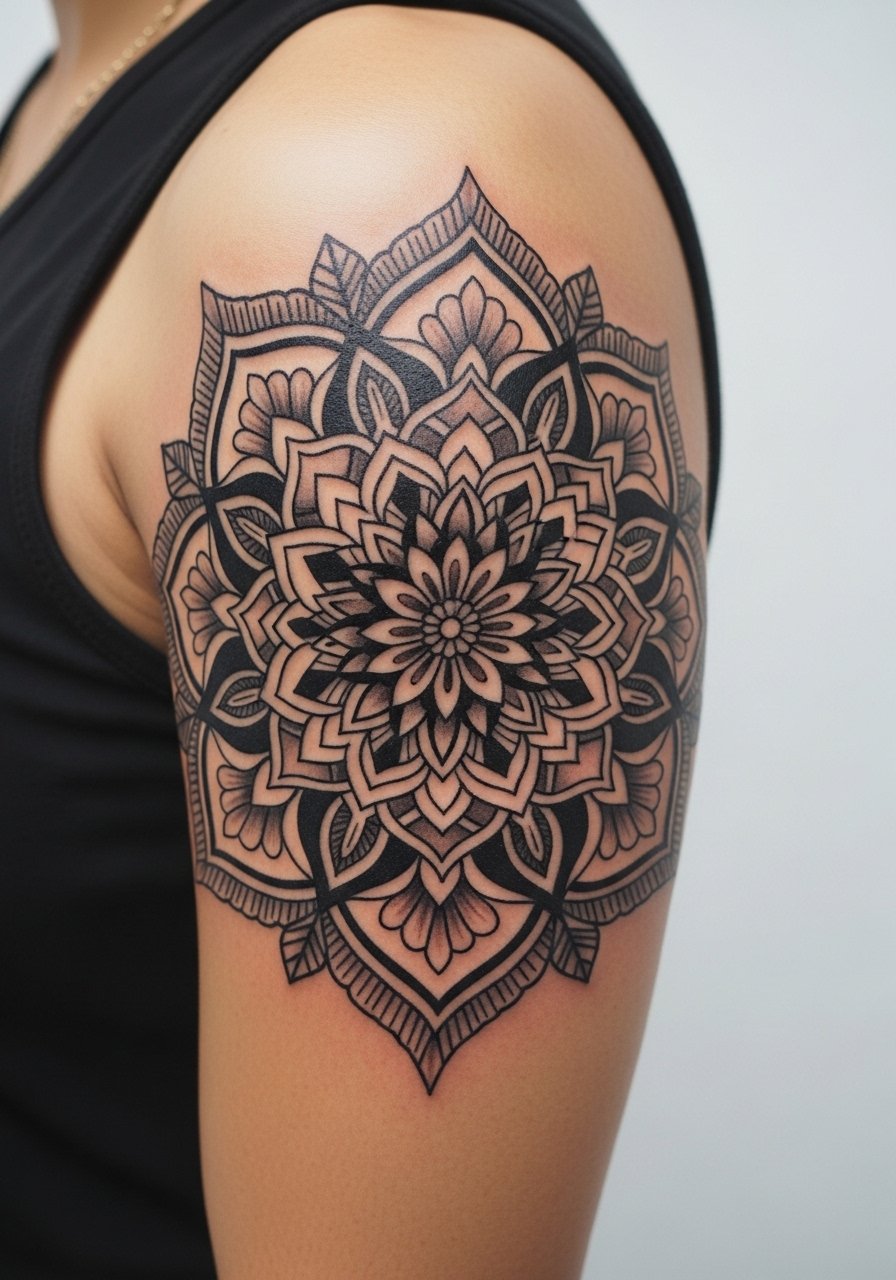
There's something powerful about bold black fills paired with floral negative space. I noticed artists favor this for collectors who want contrast. Pain for the upper arm is mild. Sessions are broken into two or three 2 hour blocks. Tell your artist you want heavy contrast and leave room for skin breaks between motifs. A common mistake is packing too much tiny detail into the bicep curve. Healed, black fills hold best. Fine floral filigree will soften after two years. If you plan to add color later, mention that in the consult so the blackwork layout allows for overlays.
4. Tiny Mandala Behind Ear in Minimalist Style
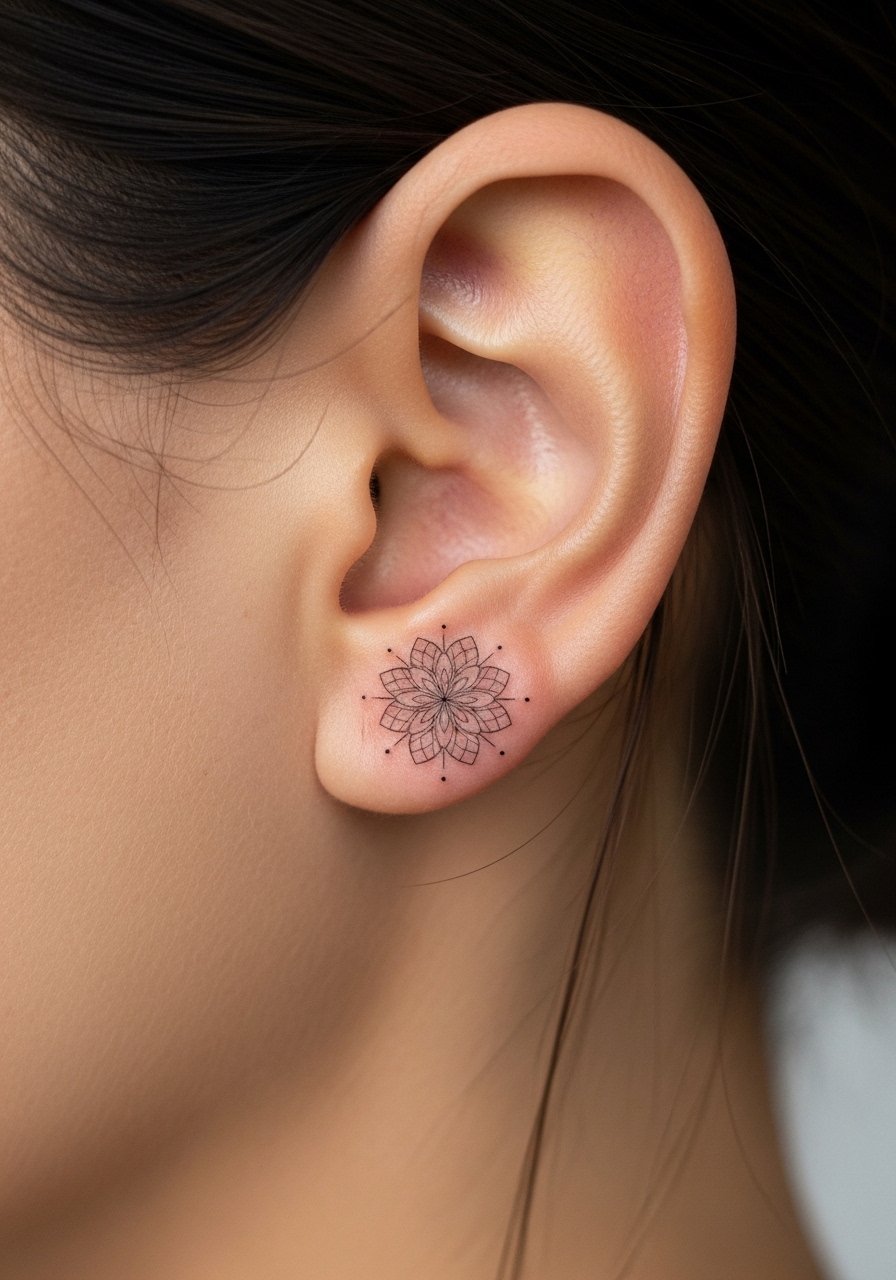
I saw this on a barista and copied the placement idea for a client who wanted quiet symbolism. Behind the ear is low pain but awkward for the artist. Sessions are quick, often under 30 minutes. The mistake people make is asking for overly complex geometry at that scale. Ask for simplified petal shapes and a thicker outline so the design remains readable. At six months the mandala looks like a soft dot. After two years tiny lines may blur. This is excellent for someone who wants a secretive, minimalist talisman.
5. Geometric Mandala on Ribcage with Negative Space Leaves
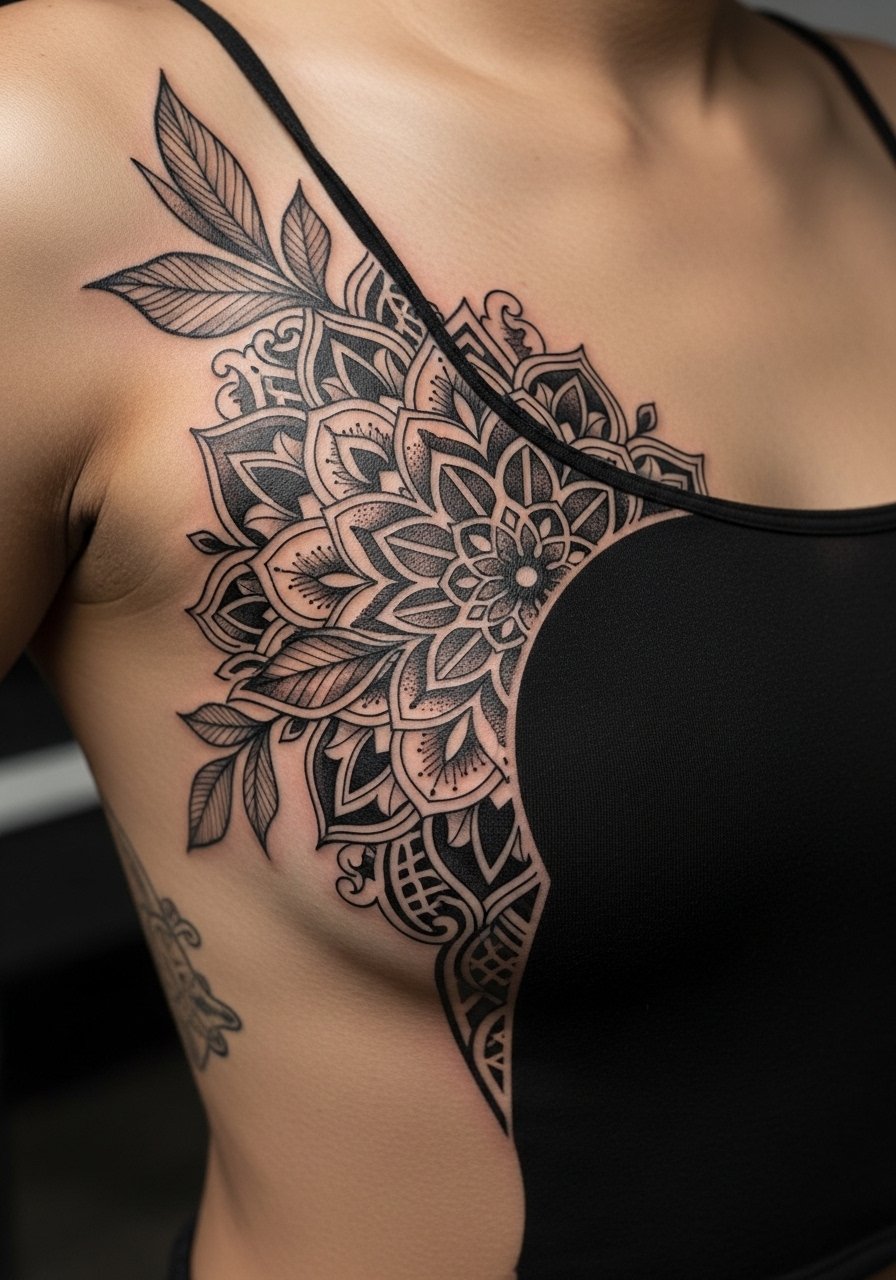
Fair warning, ribs are painful. I rate it a 7 out of 10. The area makes mandalas feel intimate and expansive. Expect 2 to 3 hour sessions. Tell your artist you want large gaps between rings. The biggest mistake is going too small on the ribs. The stretch of skin and movement makes tiny work bleed. Healed at six months the lines sit well if spaced properly. At two years inner rings might lose crispness. This placement is best if you want a more private, statement piece that peeks out with certain clothing.
6. Micro Dot Mandala on Ankle with Tiny Crescent Moon
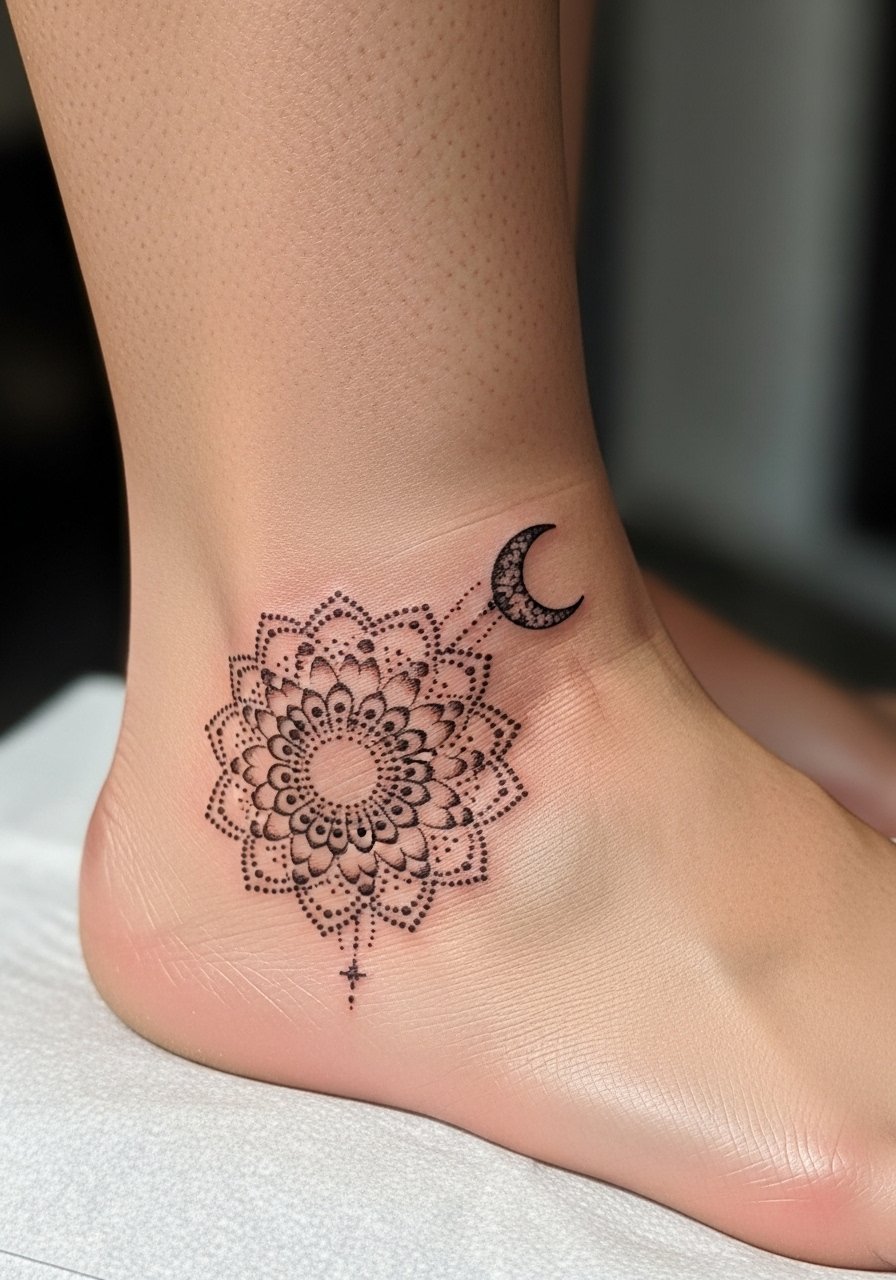
I noticed ankle mandalas are trending for people who like jewelry-like tattoos. Pain is moderate, around 4 out of 10. Sessions are 30 to 60 minutes. Ask your artist to anchor the design at one side so it flows with ankle bones. A typical error is making the mandala perfectly circular without accounting for the ankle curve. At six months dot gradients remain crisp if dots were spaced generously. Shoes and socks speed up fading, so plan touch-ups if you wear them daily. This suits someone who likes petite symbolism and foot jewelry vibes.
7. Mandala Ribcage Watercolor Wash Accent
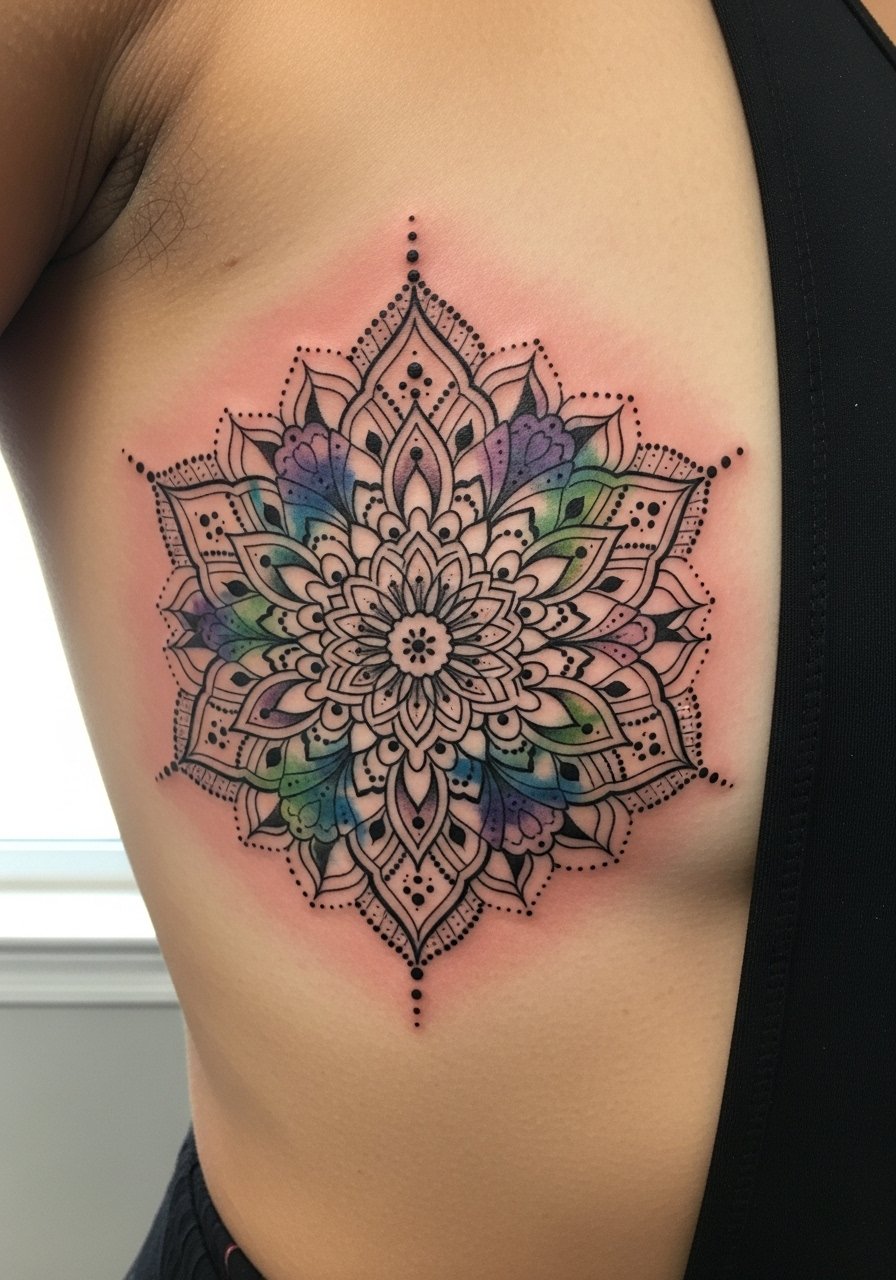
Most watercolor treatments on ribs fade faster than solid ink. I recommend pairing watercolor with strong mandala outlines. Pain is high here. Sessions run long. Tell your artist you want the watercolor muted and layered under the black. A common mistake is too much pastel saturation. After six months the watercolor will soften. At two years the paint-like areas are the first to go. This option is good if you want an artistic piece that looks like a painted talisman, but accept more maintenance.
8. Sacred Geometry Mandala on Spine in Blackwork
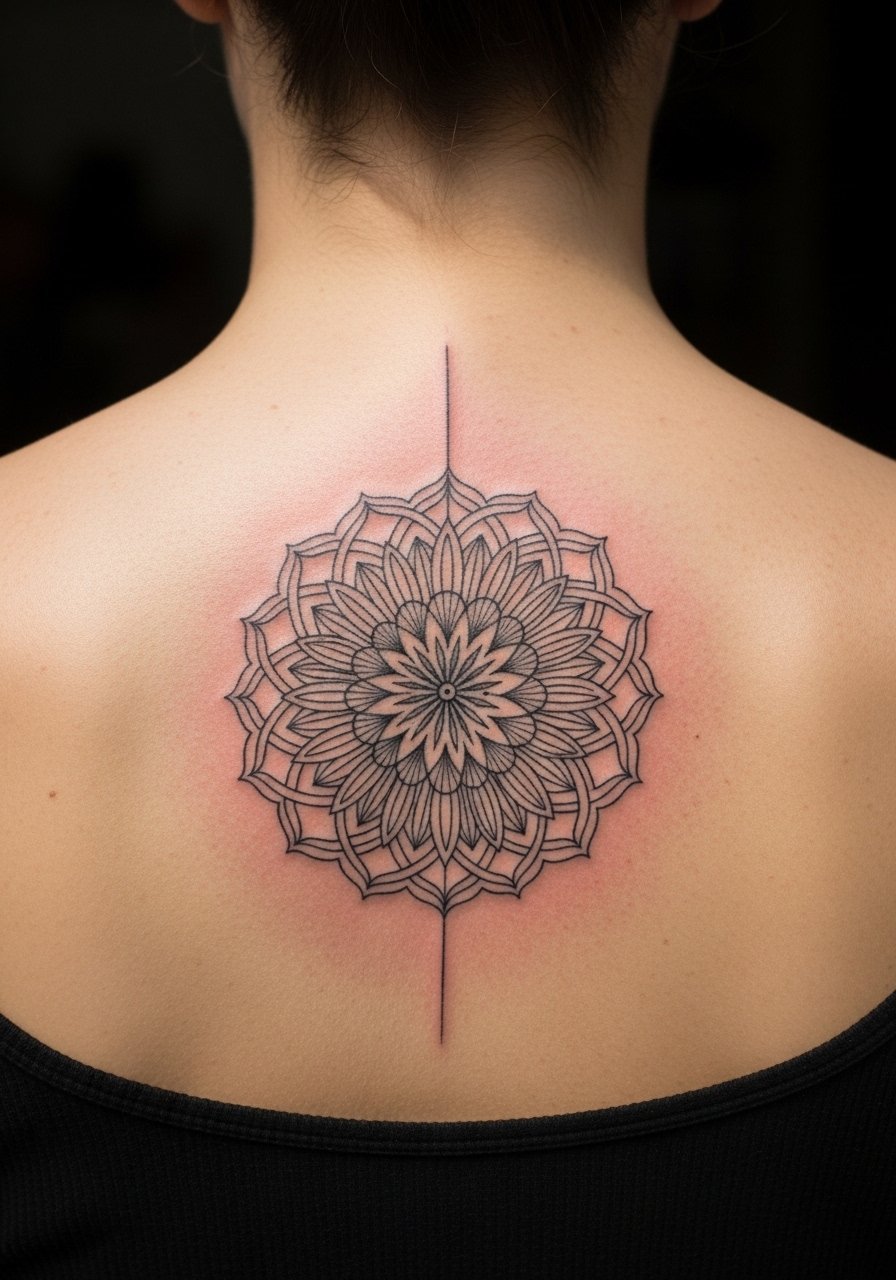
When I saw this on a client I loved how it read from far away. Spine placement has variable pain depending on vertebrae exposure. Plan 60 to 120 minutes. During consult request clear vertical alignment guides so the mandala stays centered. A mistake is skipping reference photos for posture differences. At six months lines settle and may thicken slightly. After three years expect some softening along long straight lines. This is great if you want a bold central axis piece that wears like a vertical symbol.
9. Floral Mandala Thigh Panel in Neo-Traditional Linework
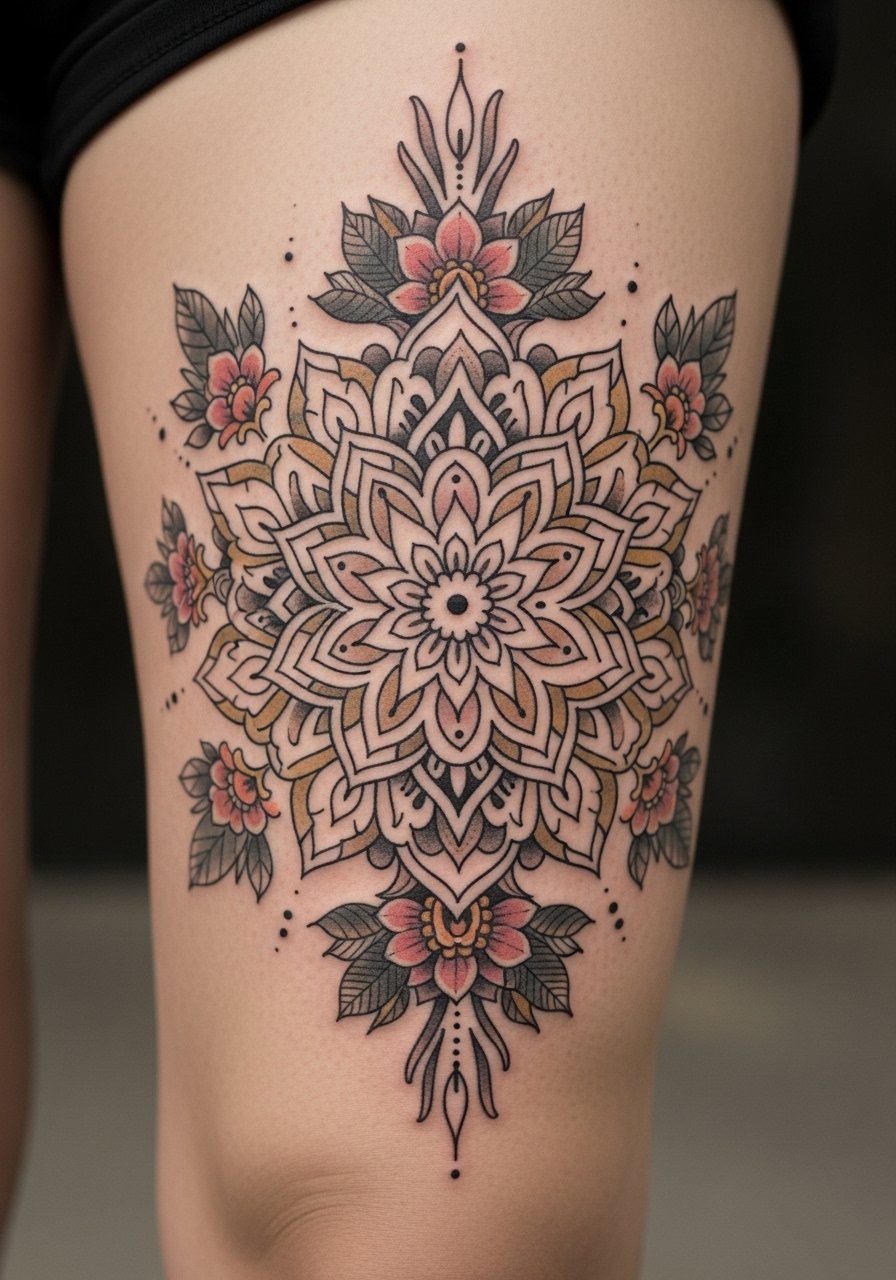
I recommend the thigh for larger mandalas that can integrate florals. Pain is low to moderate. Sessions often span 90 minutes to three hours. Tell your artist you want petals to follow muscle curves. People sometimes pick too many tiny petals, which muddles after healing. At six months color sits well. At five years warm colors may soften. This placement works for those who want a bigger piece with personal imagery that can be hidden or shown.
10. Single Line Continuous Mandala on Collarbone
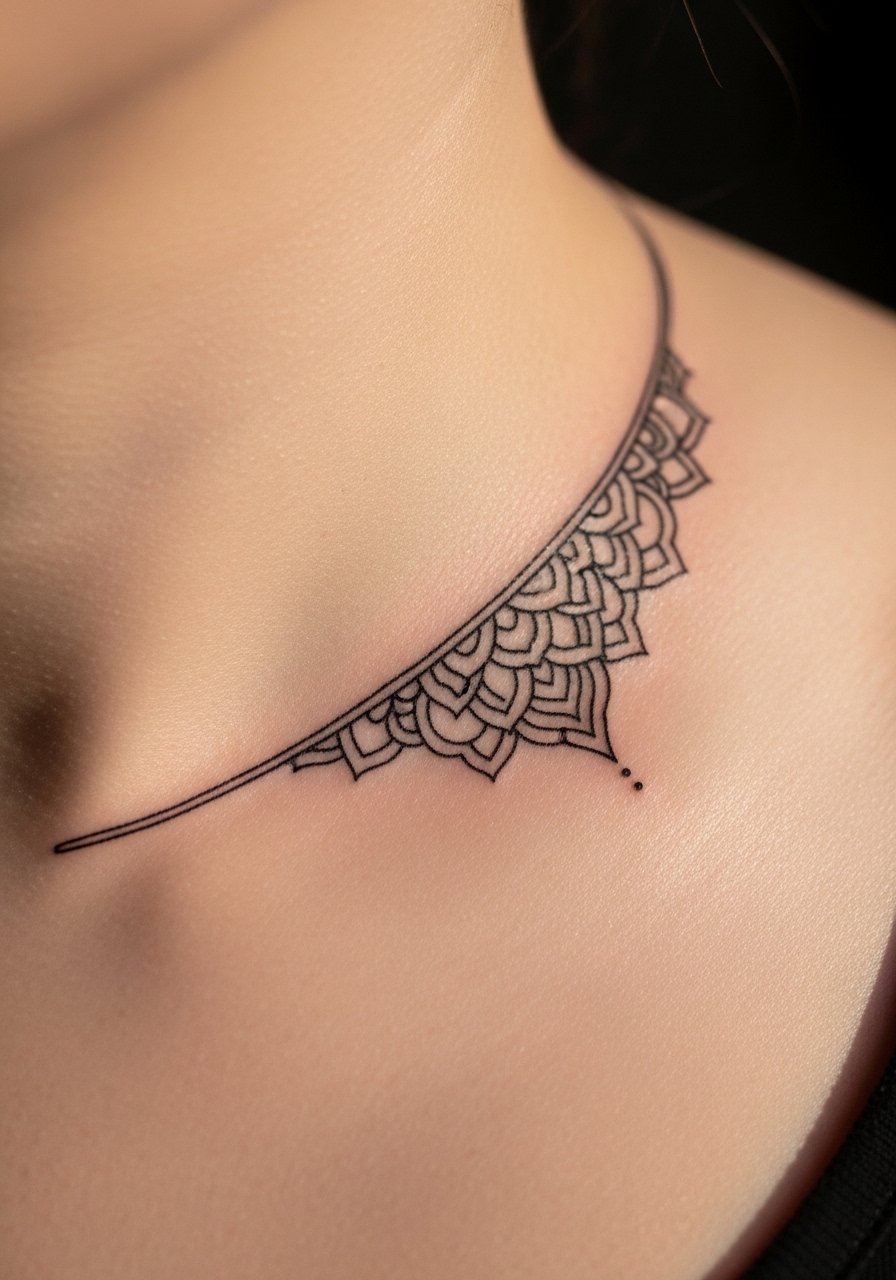
I first noticed continuous line mandalas in a minimalist community. Collarbone placement shows off the design when you wear open necklines. Pain varies across the bone, 5 to 7 out of 10. Sessions are shorter, 30 to 60 minutes, but require steady hands. The common mistake is requesting ultra-thin single paths. They blur into a single band over time. Ask for a slightly bolder line and ask the artist to map the collarbone contour. At two years the single-stroke look will still read if executed with intention.
11. Mandala Palm-Sized Center Back with Soft Shading
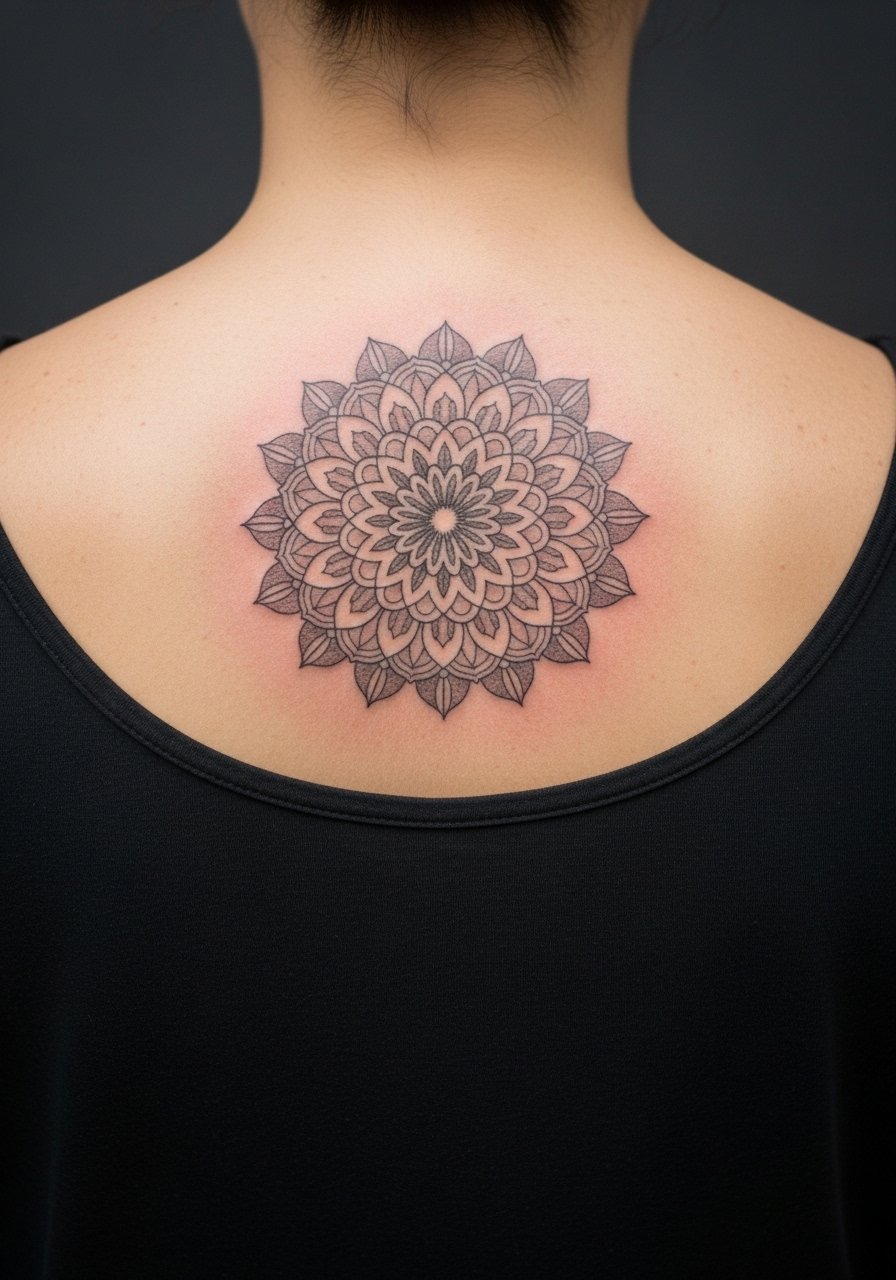
I picked this for someone who wanted a meditative focal point on their back. The back is forgiving for detail. Pain is low. Expect 90 to 180 minute sessions. Tell the artist to use shallow shading toward the edges. A typical error is overworking the edges, which creates heavy healed shadows. At six months shading looks soft. At three to five years darker center blacks stay the longest. This placement suits people who want a larger, contemplative piece without constant exposure to sun.
12. Mandala Around Navel for Radial Symmetry
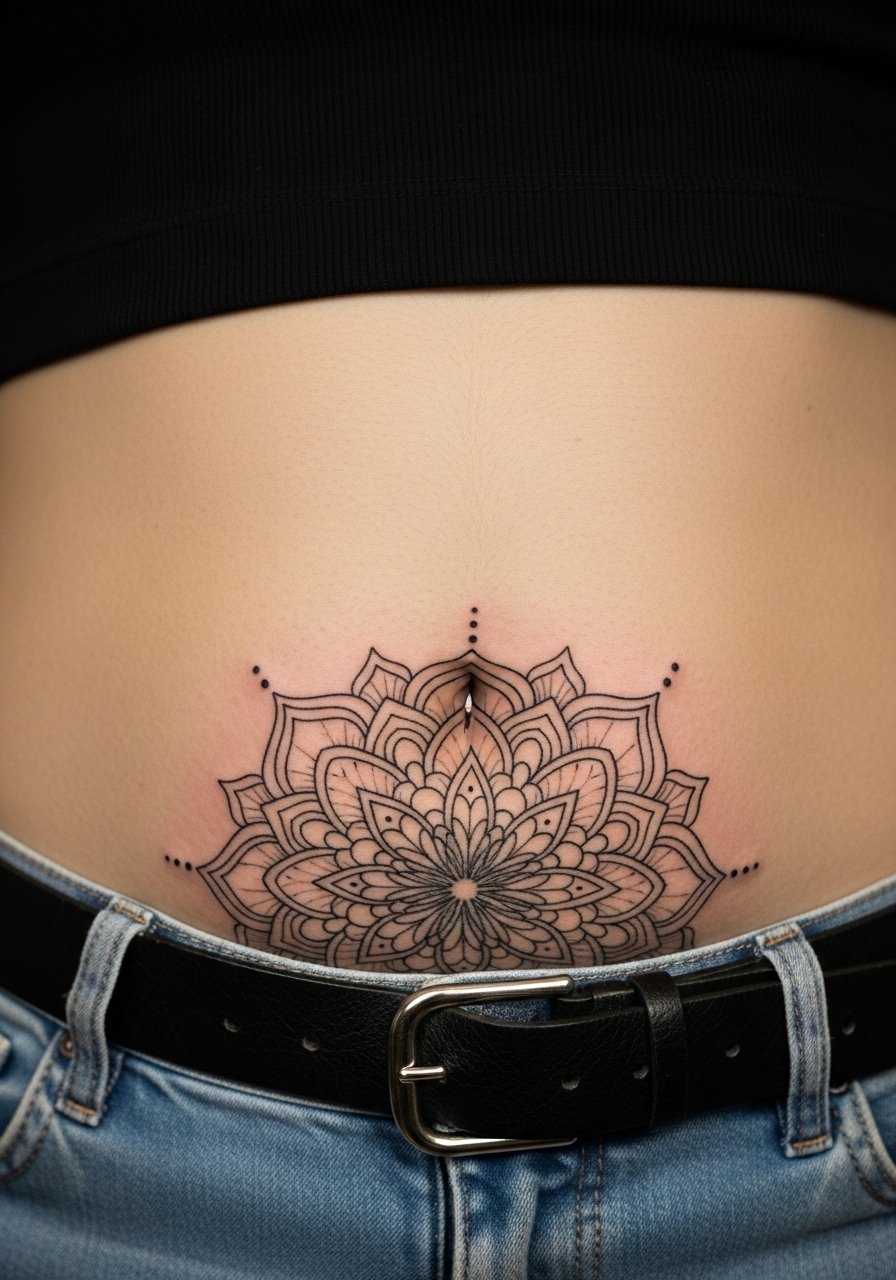
If you plan for body changes like pregnancy know this area will shift. I've seen navel mandalas hold up when artists leave small gaps and avoid micro-detail. Pain is moderate. Sessions are 60 to 120 minutes. Tell your artist to account for skin stretch and leave breathing room in the center. People often pack tiny lacework close to the belly button. That vanishes with time. After a year the outer rings remain, inner lace softens. This is best for someone who wants a central body ornament that moves with clothing.
13. Mandala Sleeve Cap on Shoulder in Dotwork and Linework Blend
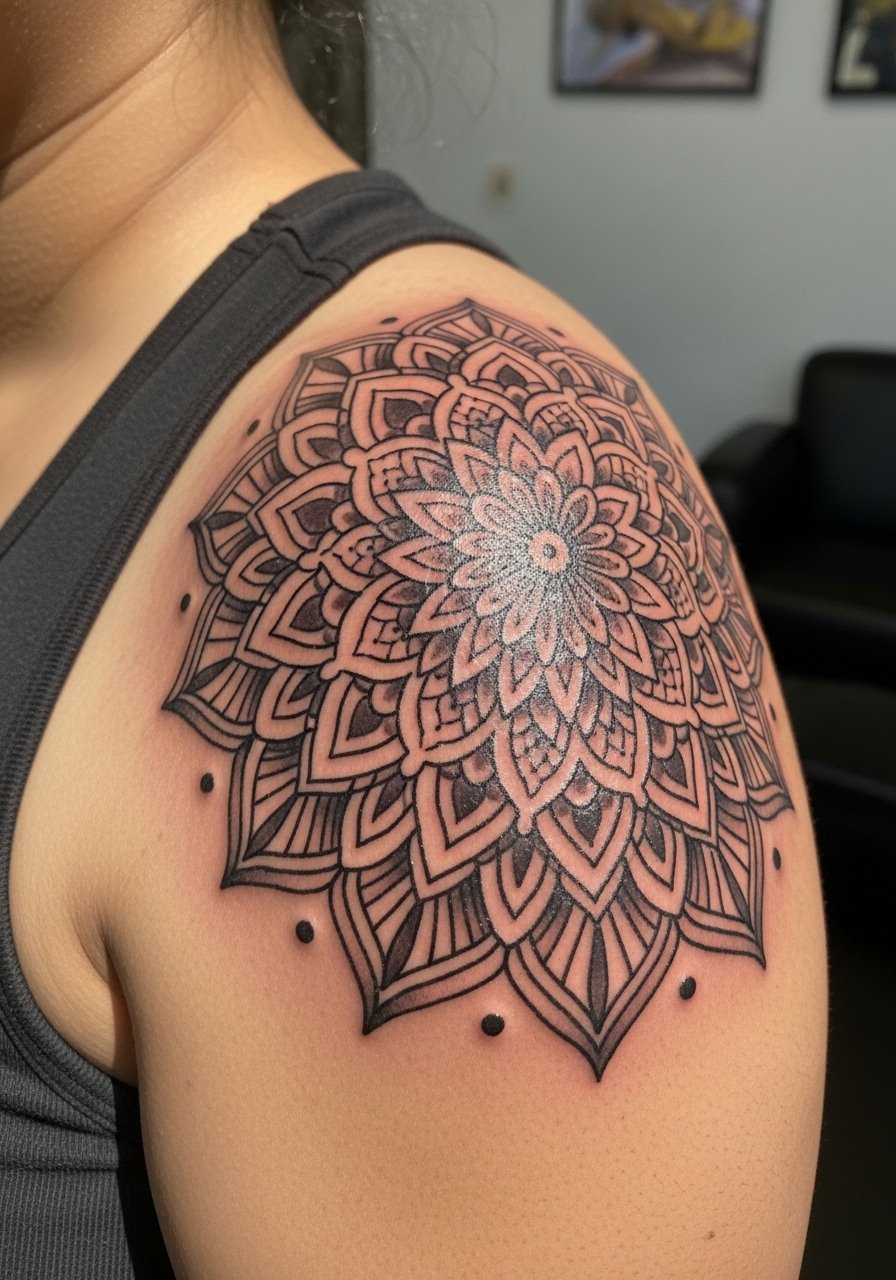
I saw this on a photographer who wanted a framing piece for future sleeves. Shoulders handle heavy ink well. Pain is low. Session time depends on size, typically two 90 minute blocks. When consulting ask for transition zones to future work. The mistake is ending the mandala abruptly at the deltoid. That creates a patchy look when adding to it later. At two years the cap reads cohesive if artists planned for flow. This is ideal for collectors building a sleeve over time.
14. Neo-Traditional Mandala on Calf with Bold Outlines
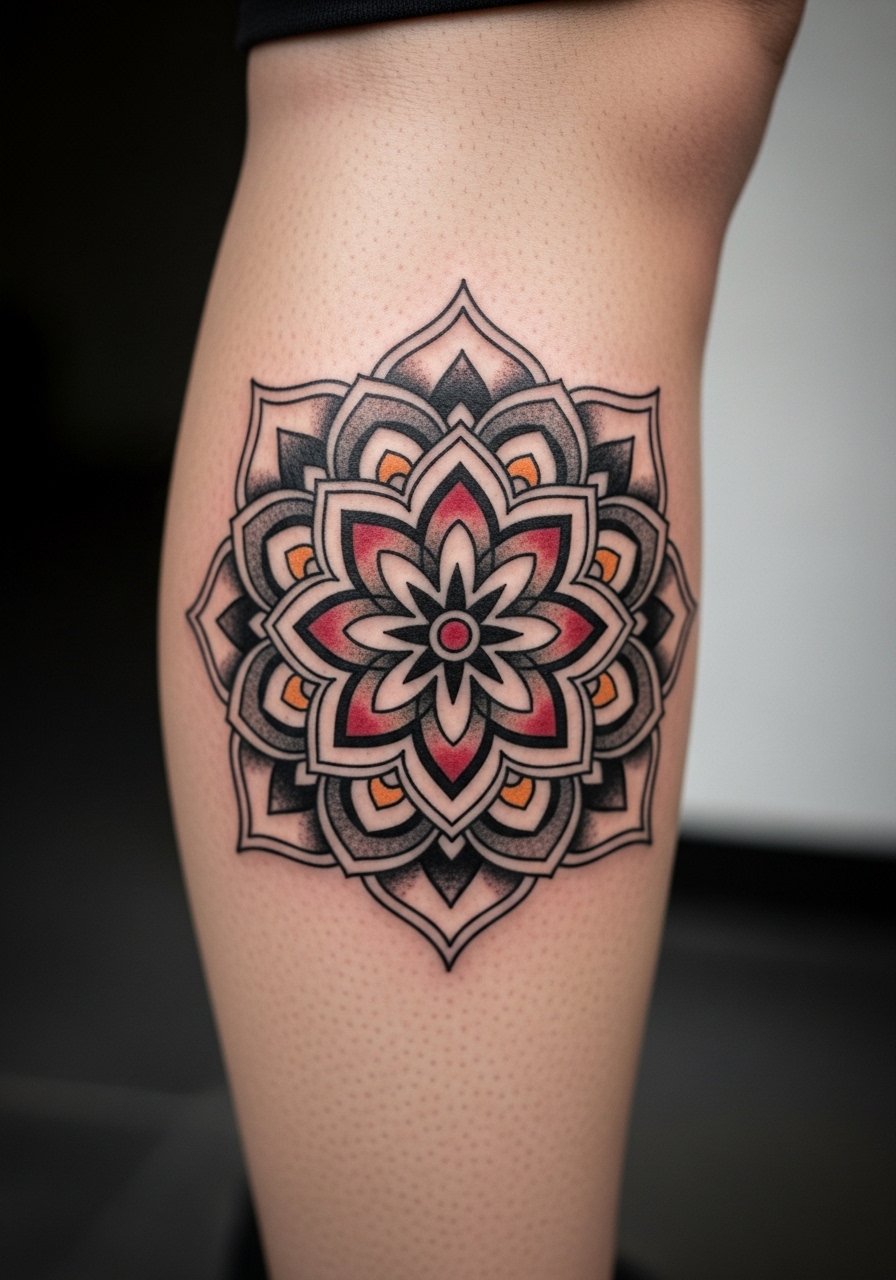
Calf placement feels jewelry-like and ages well because it avoids constant sun. Pain is mild. Sessions 60 to 120 minutes. Ask the artist to use bold outer lines and leave inner details more open. A common error is overfilling small shapes with color. Healed color may soften. At five years bolder outlines still read strong. This suits someone who wants vivid black anchor points with soft internal detail.
15. Mandala Palm Print Cover-Up for Small Scar
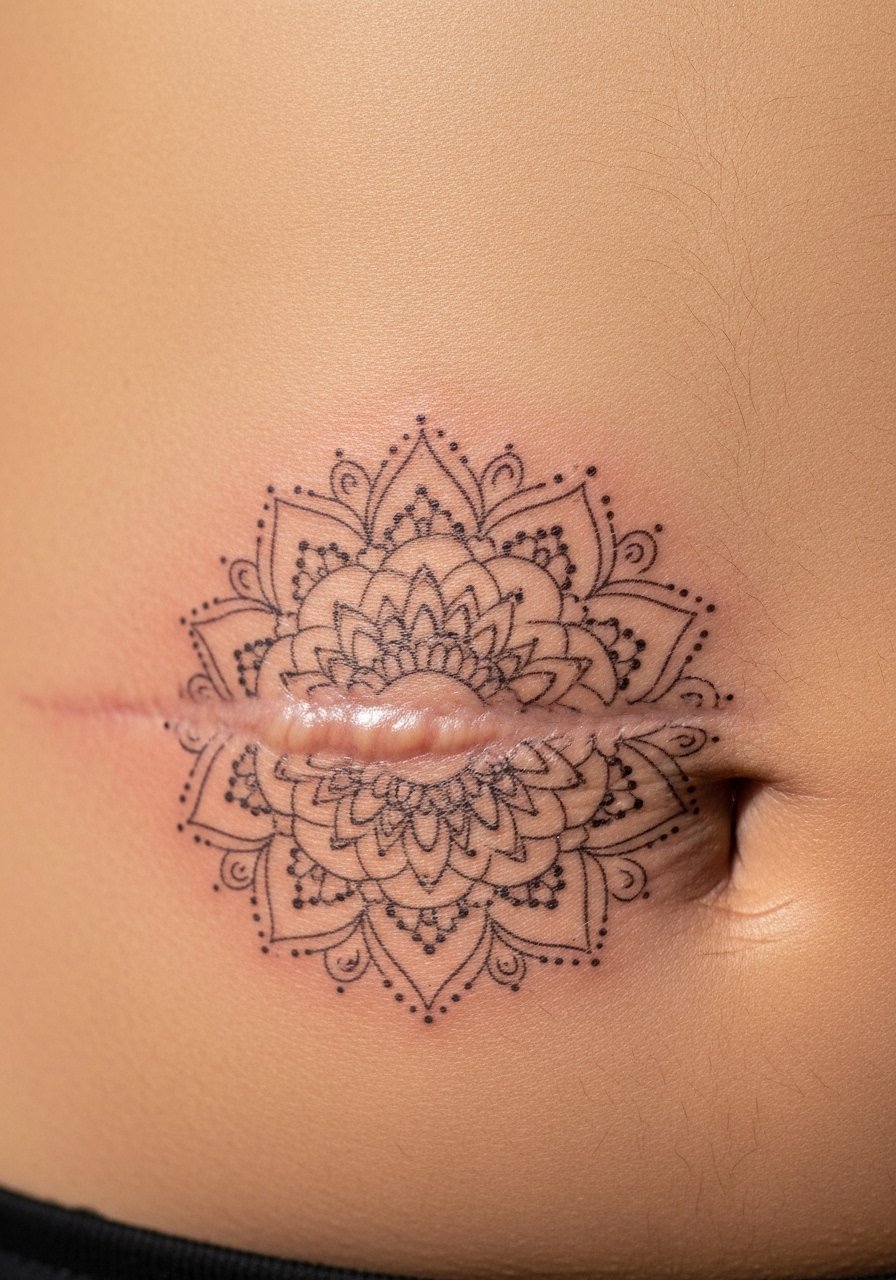
I included this because mandalas adapt well for scar camouflage. I worked with an artist who uses dot gradients to distract from raised tissue. Pain depends on scar sensitivity. Sessions vary. Tell your artist exactly where the scar is and how it feels when touched. The mistake is expecting identical ink absorption on scar tissue. Scarred skin takes ink differently. At six months color may look patchy. Touch-ups are normal. This idea is for anyone wanting to hide a small scar while keeping symbolic symmetry.
16. Mandala with Script Ribbon on Forearm
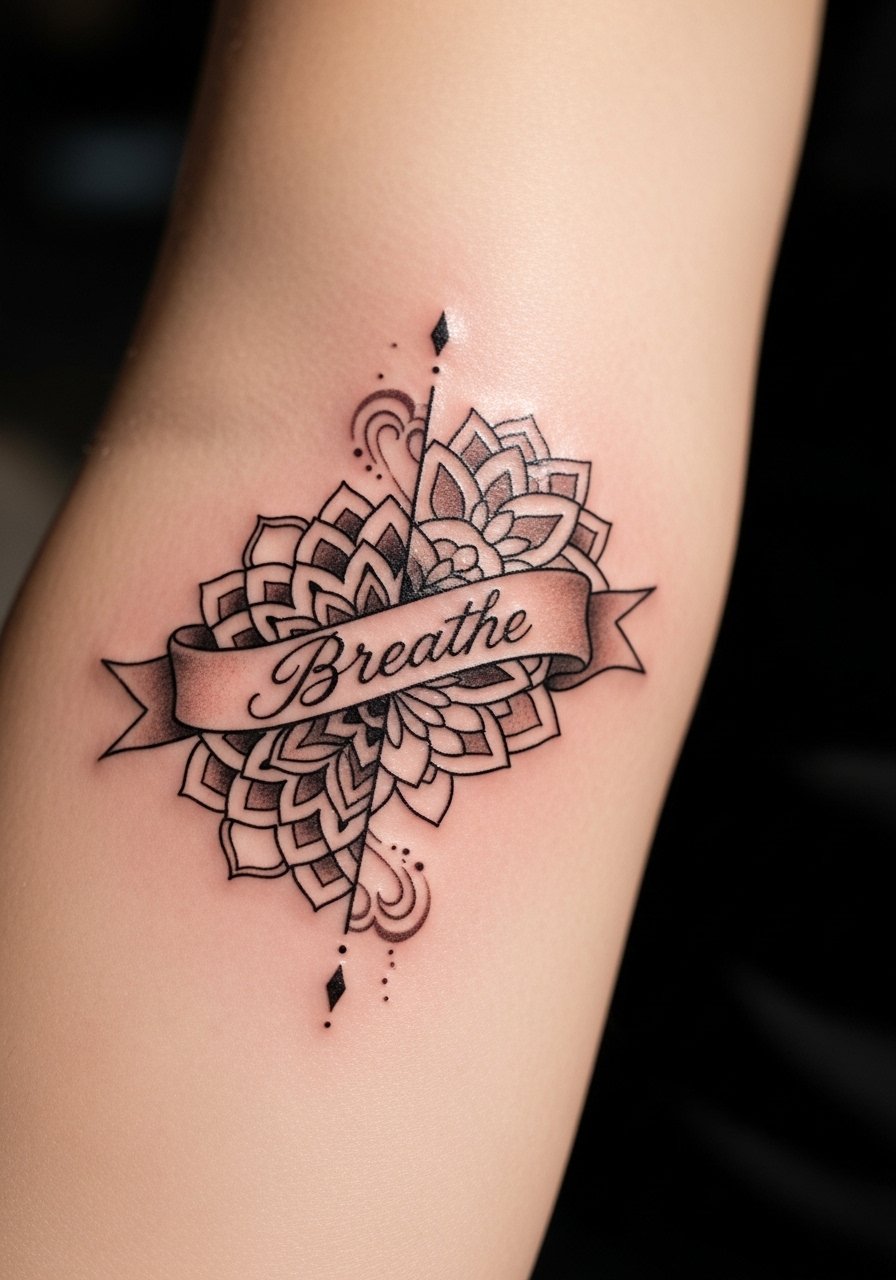
I recommend pairing a mandala with a small script for those who want reminder tattoos. Forearms are moderate pain. Sessions are typically 30 to 90 minutes. During consult specify exact lettering and size. The big mistake is combining tiny script with busy mandala edges. Script needs breathing room. At six months script holds well if line weight is consistent. At two years fine script may require a refresh. This suits someone who wants a visible daily cue integrated into meditative geometry.
17. White Ink Highlighted Mandala on Inner Thigh
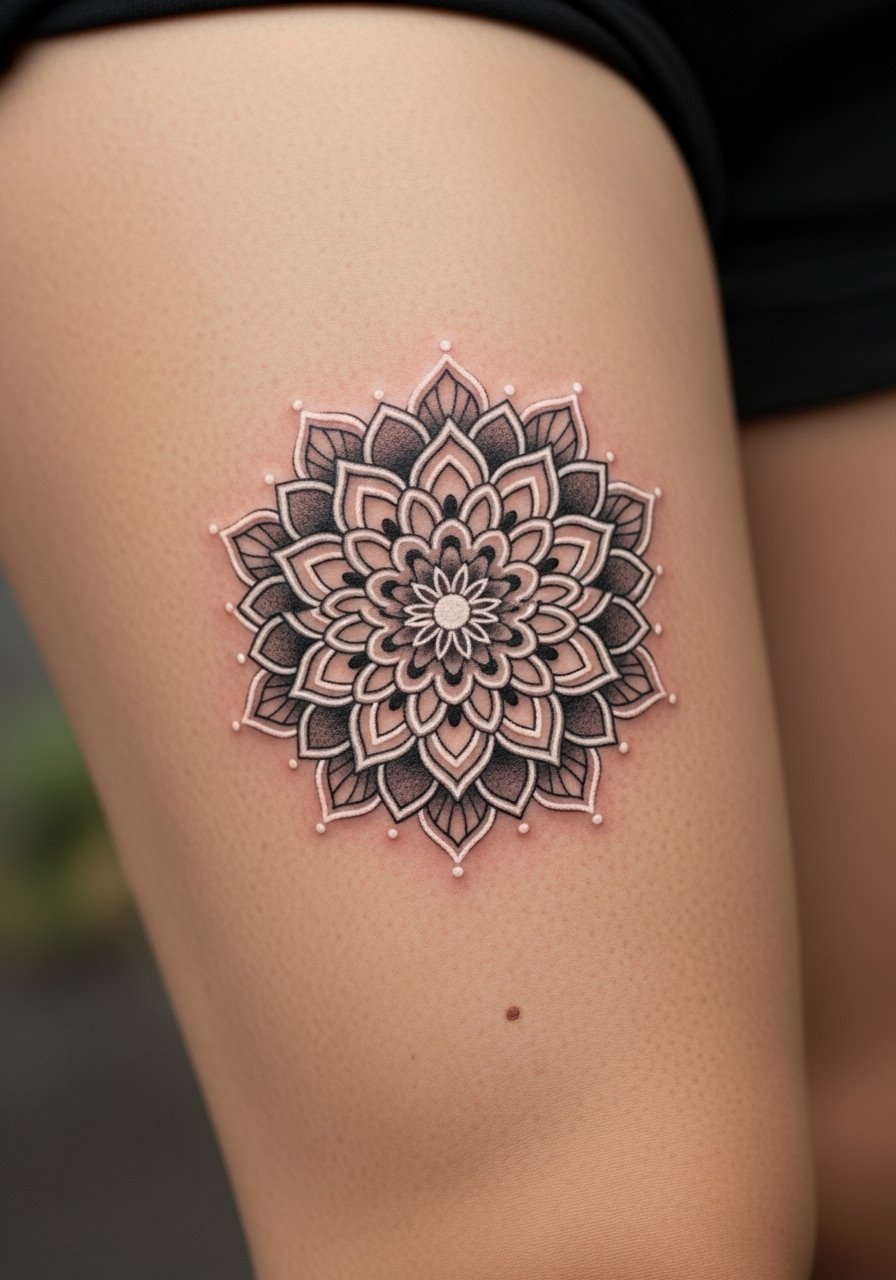
White ink can add luminosity, but it also fades faster. I saw an artist use it sparingly to lift petals. Inner thigh is low to moderate pain. Sessions often 60 to 120 minutes. Tell the artist you want minimal white, only as highlights. Overusing white is the common mistake. At six months white remains visible. At two to three years it often blends into a lighter tone. This is for people who want subtle contrast and don't mind occasional touch-ups.
18. Mandala Behind Knee in Fine Line Dot Accents
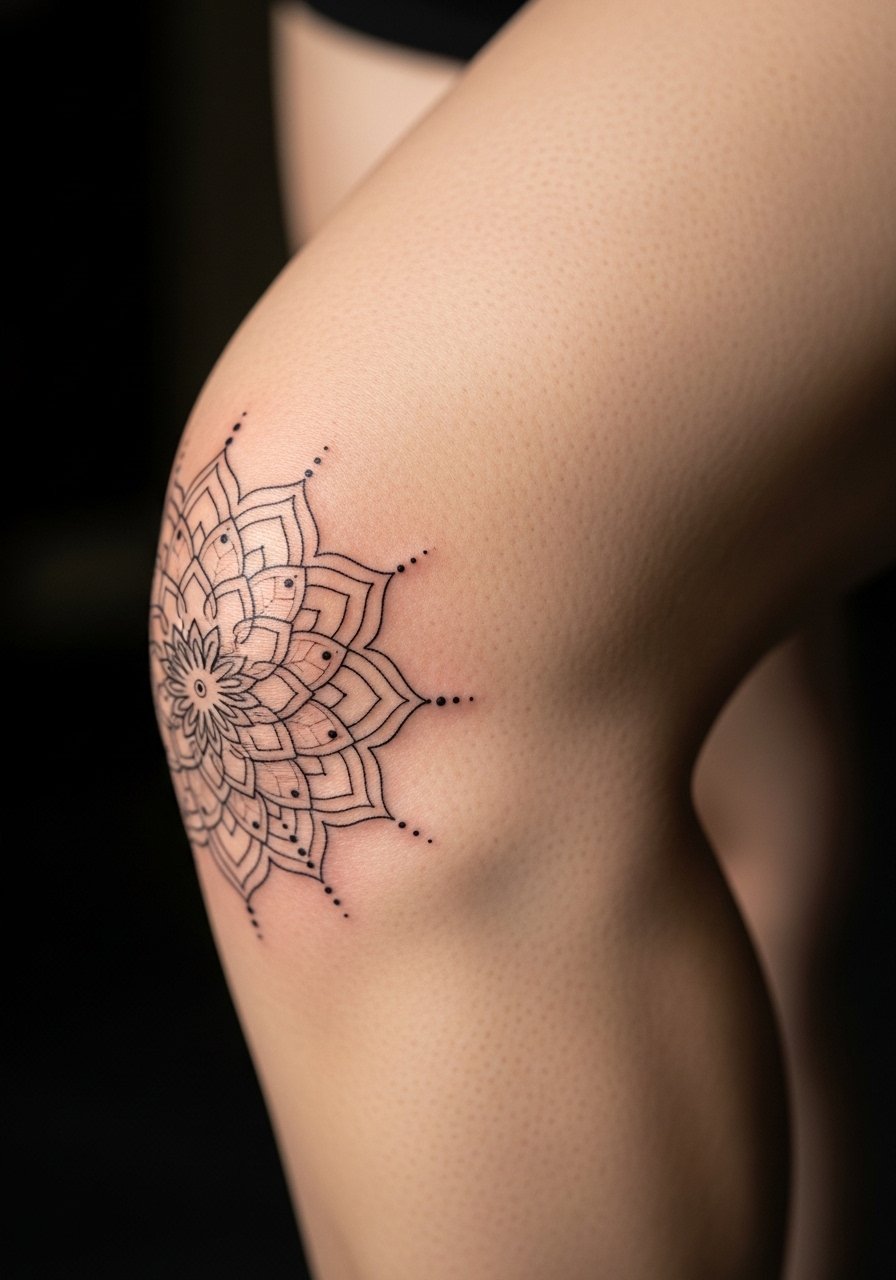
I recommend behind the knee for playful visibility. Pain spikes when the joint is worked. Expect a 5 to 7 pain rating. Sessions are usually under 90 minutes. Ask your artist to account for skin folding when you sit. The common mistake is placing too much micro detail in the fold area. At six months the design reads cohesive if spacing is generous. At two years tiny details near folds may blur. This placement is good if you like subtle surprises that show when you move.
19. Mandala Areola Surround in Subtle Dotwork
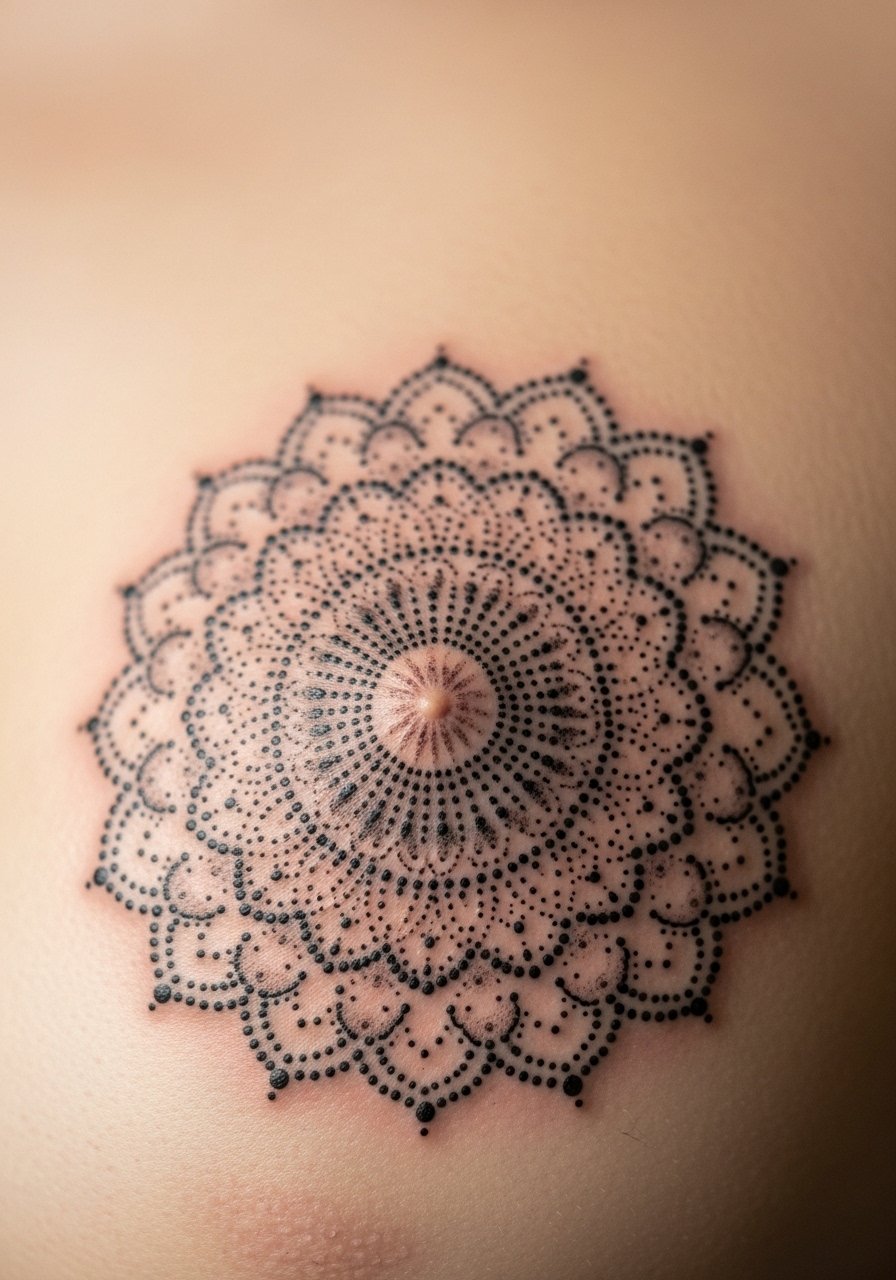
I include this because mandalas can be very personal when placed around the areola. Pain and sensitivity vary greatly. Sessions should be discussed carefully with an experienced artist. Tell them about any scarring or recent surgeries. A big mistake is choosing inexperienced artists for this sensitive area. Healed results can be soft and intimate. Over time dotwork can fade and may need touch-ups. This is best for people seeking symbolic body-centering or post-reconstruction decoration.
20. Mandala Behind Shoulder Blade with Subtle Color Wash
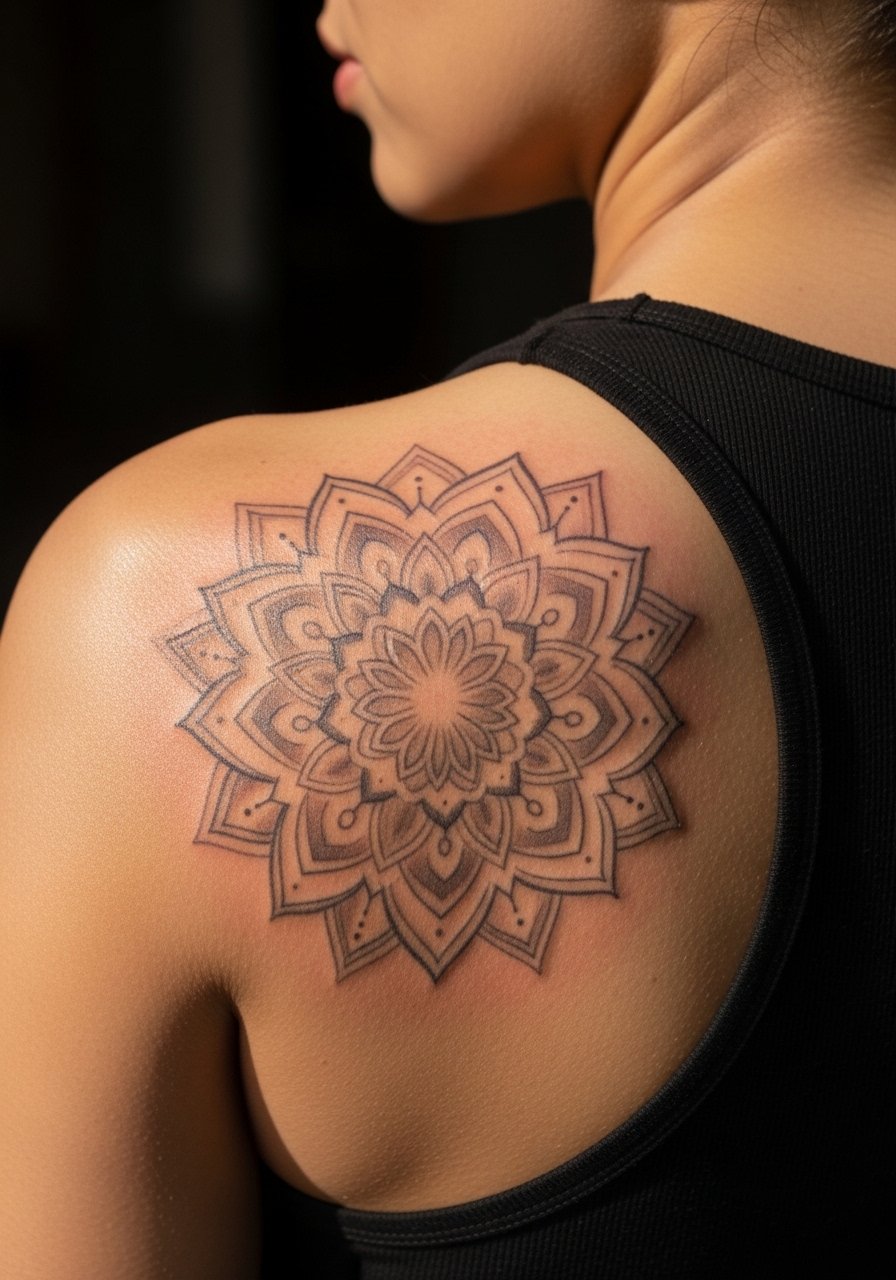
I noticed shoulder-blade mandalas suit movement. Pain is low. Sessions are 60 to 150 minutes. Tell your artist how you want the piece to interact with shoulder blades when you move. People sometimes place the mandala too high, which looks awkward in motion. At six months the color wash should have mellowed. At three years muted color will be softer but still read. Choose this if you want a piece that looks both hidden and dynamic with posture.
21. Mandala Finger Tip Tiny Dotwork Cluster
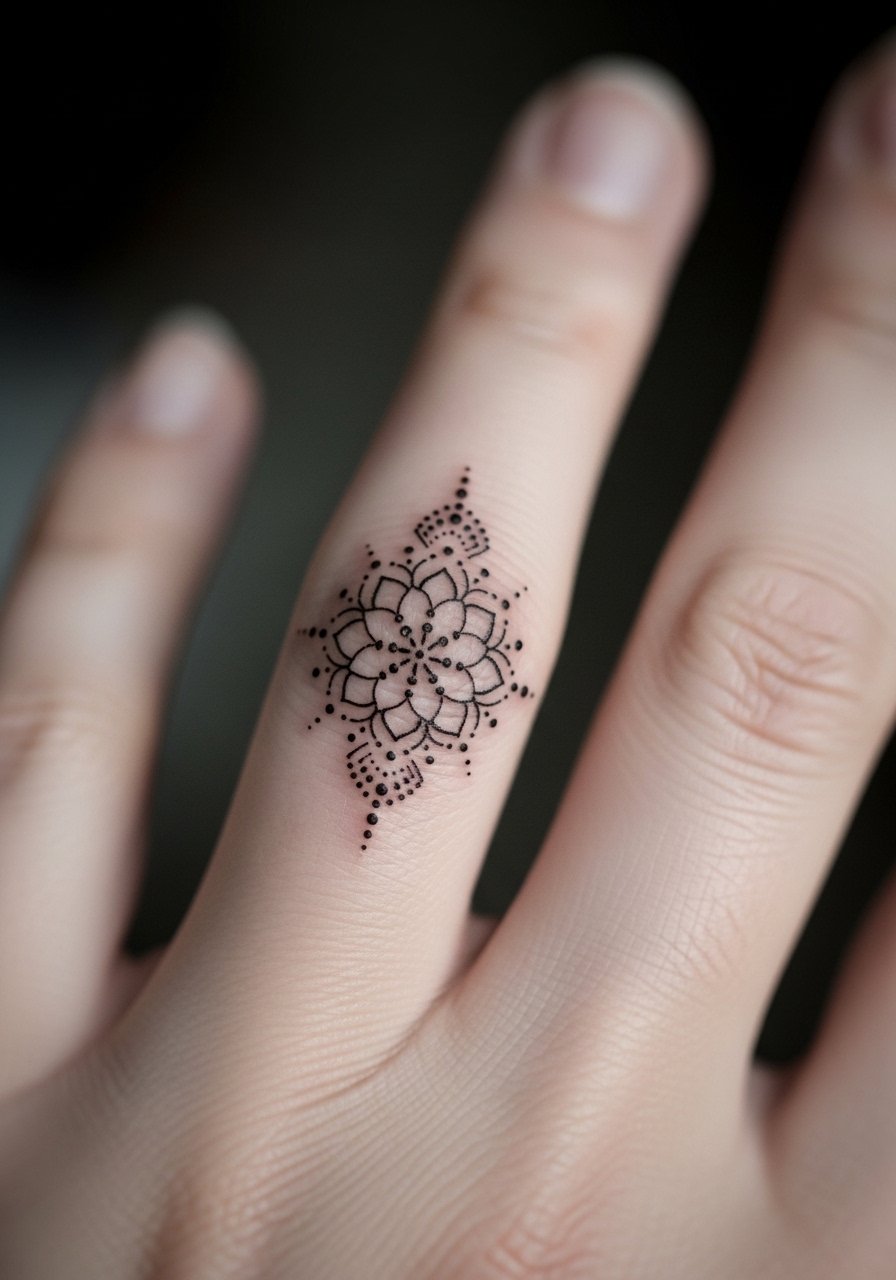
Small fingertip tattoos have high maintenance. I've seen them blur faster than most placements. Pain is sharp but brief. Sessions are very short, often under 20 minutes, but expect touch-ups. Tell the artist you accept the temporary nature and plan for a yearly refresh. The common mistake is expecting permanence on high-wear skin. At six months lines already soften. At two years many will have faded significantly. This is perfect for someone who likes ephemeral, tactile reminders and doesn't mind redoing them.
Tattoo Prep and Aftercare Essentials
After your tattoo session your care routine matters more than you think for longevity. I prefer a minimal regime that keeps the area clean and moist. Below are products I actually use or recommend after talking with artists.
[Custom Aftercare List]
Aquaphor Healing Ointment, 14oz tube . Industry standard for first 3-5 days. I use a thin layer at night
Saniderm Transparent Adhesive Bandage, 6-inch roll . Second skin healing method. Every artist I know recommends it for the first 24 to 72 hours
CeraVe Fragrance-Free Moisturizing Lotion, 12 oz pump . Daily moisturizer for days 4 to 14. I prefer the pump bottle for hygiene
Dr. Bronner's Unscented Castile Soap, 32 oz . Gentle cleanser for rinsing twice a day the first week. Dilute a small drop with water
Numbing Cream with 5% Lidocaine, 30g . Apply 30 to 45 minutes before your session only if your artist approves. Some artists prefer no numbing
Tattoo Stencil Transfer Paper, A4 Pack . Useful if you want to test placement at home before your appointment
SPF 50 Sunscreen Stick for Tattoos, Travel Size . Use on healed tattoos whenever they see sun. I carry one for beach days
Mad Rabbit Tattoo Balm, 2 oz . Long-term maintenance for vibrancy. Artists I know recommend it for healed pieces
Hustle Butter Deluxe, 5 oz . Vegan alternative that works during healing and after. Smells better than most aftercare
Tattoo Numbing Spray, 4 oz . Handy for touch-ups or sensitive areas mid-session
Hydrocolloid Bandages, Large Size . Good alternative to Saniderm for small to medium tattoos
Frequently Asked Questions
Q: Will fine line mandala work as a full sleeve and not blur into a texture mess?
A: In my experience, fine line mandalas can work as part of a sleeve if you give each motif room. Tell your artist to mix line weights, use negative space, and reserve bolder anchor lines. I would avoid micro-lace everywhere. Also consider planning touch-ups at the one year mark. For maintenance I like CeraVe Fragrance-Free Moisturizing Lotion for daily care.
Q: Do watercolor accents change the aftercare or healing timeline for a mandala on the ribs?
A: From what I've seen, watercolor accents need the same cleaning routine but accept faster fading. I recommend gentle washes and a thin layer of Aquaphor Healing Ointment, 14oz tube for the first few nights. Expect the color to soften by six months. Plan on touch-ups if you want the watercolor bright years later.
Q: Can a mandala cover or camouflage a scar effectively?
A: Yes, mandalas are great for scar camouflage when executed by someone experienced. Tell your artist the scar age and texture. I have seen artists use dot gradients and heavier outlines to mask irregularities. Be prepared for slower pigment uptake and possible touch-ups. Hydrocolloid patches like Hydrocolloid Bandages, Large Size helped one client protect the area during initial healing.
Q: How should I prepare if I want a mandala near the areola or on reconstructed tissue?
A: I always advise scheduling a consult first. Mention any reconstruction history and bring medical notes if possible. Look for an artist with experience in medical or cover-up tattoos. Expect more conservative session plans and possible multiple short sessions. Aftercare leans on gentle cleansing and medical-grade ointments, and I recommend discussing aftercare products like Hustle Butter Deluxe, 5 oz with your artist before starting.
Q: Will tiny fingertip mandalas stay crisp if I work with my hands a lot?
A: From what I've seen, fingertips are high-wear zones. Lines on fingertips often blur within months. If you still want the look, accept regular touch-ups. Ask for slightly bolder dots rather than ultra-fine lines. During healing keep the area clean and avoid soaking. A lightweight balm such as Mad Rabbit Tattoo Balm, 2 oz is what I recommend for short-term maintenance.
Q: I want a mandala and plan to sunbathe. What should I do to protect it long-term?
A: Every artist I have talked to says UV is the enemy. Keep your healed mandala covered or use a high-SPF option. I carry an SPF 50 Sunscreen Stick for Tattoos, Travel Size for beach days. Reapply frequently. For fresh tattoos avoid direct sun until fully healed, usually two weeks of careful protection.