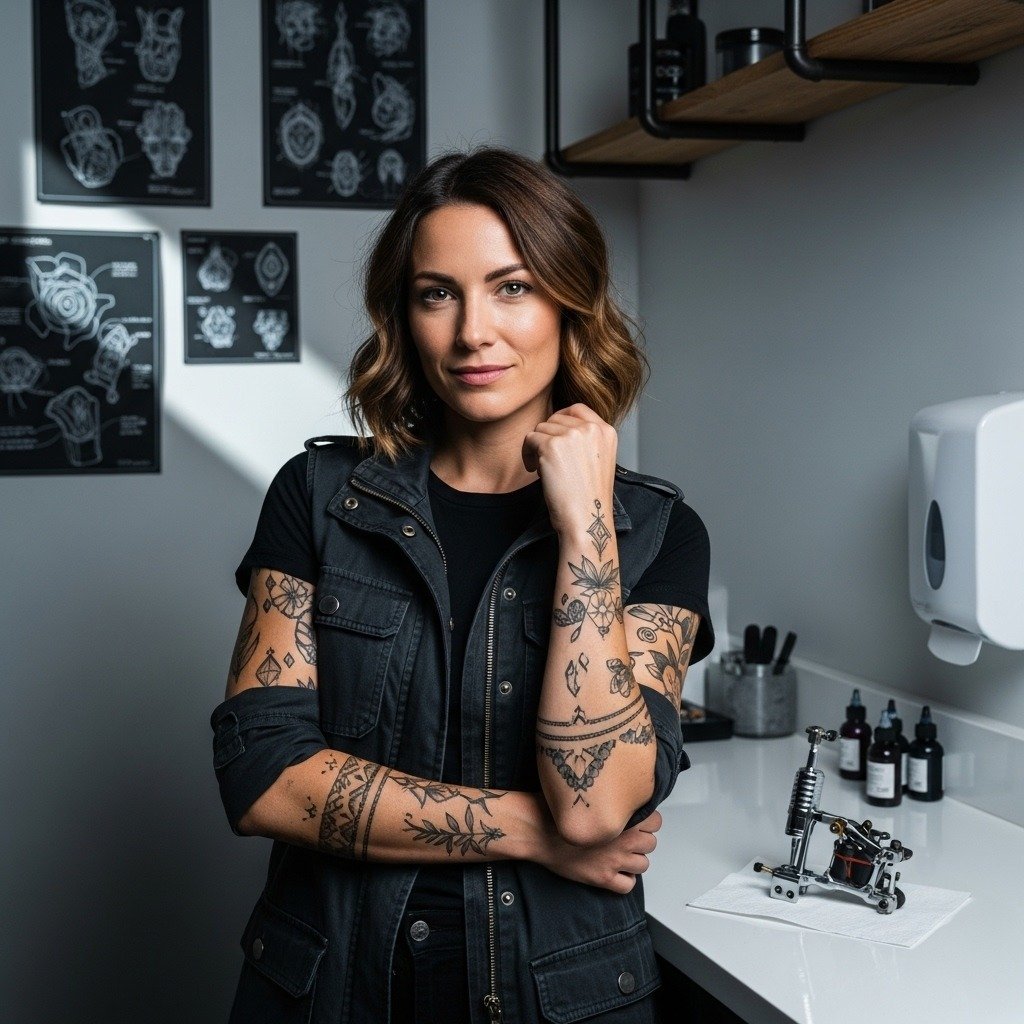
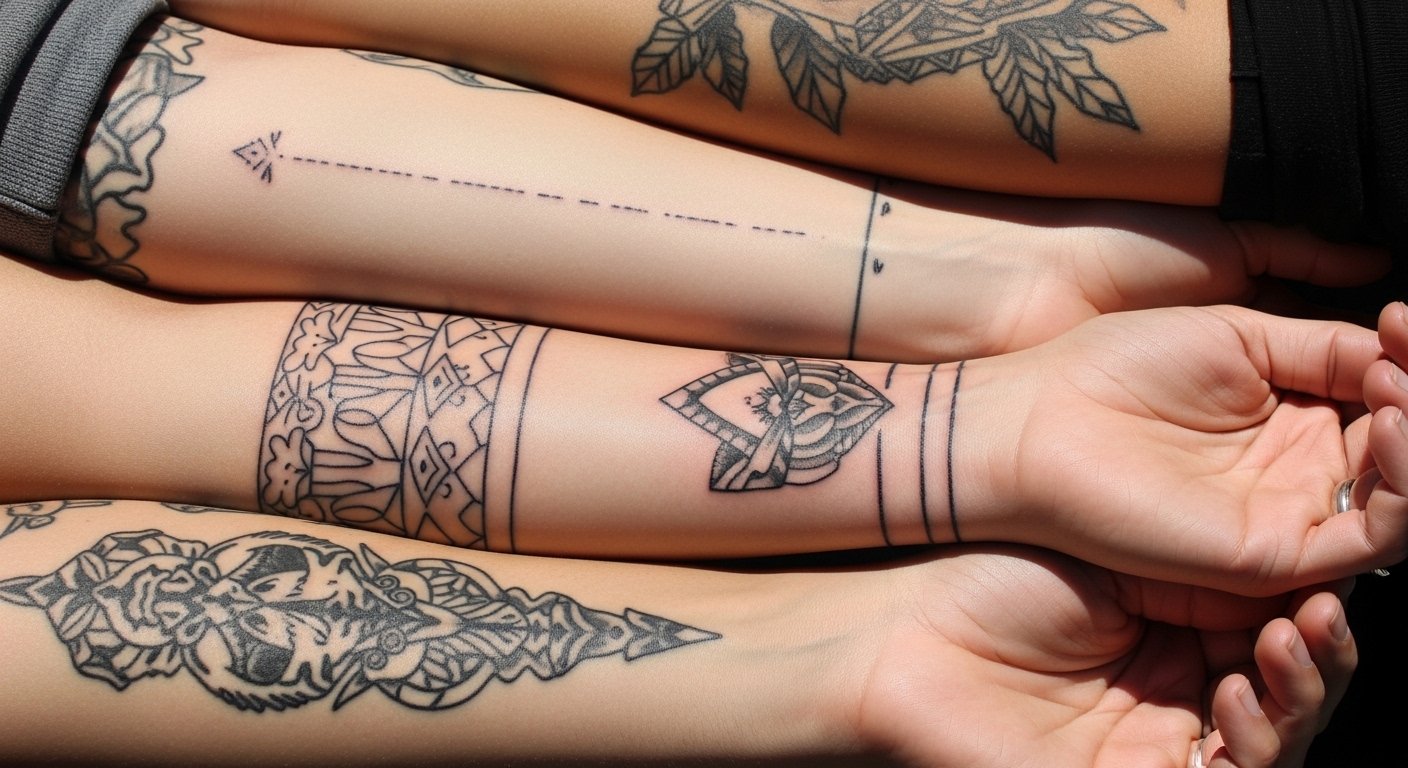
I spent months staring at forearm photos before I realized the real question: which forearm tattoos actually look crisp years later? I tested styles on healed pieces, talked to artists, and watched how inks settle. These 25 clean forearm tattoos are designs I keep coming back to—styles that read well fresh and still look sharp after healing.
Quick context: This list focuses on clean, timeless forearm work—fine line, blackwork, neo-traditional, and micro-realism. Forearm tattoos are visible and versatile; they work for inner and outer placements. I leaned on 2025 trends like minimal negative-space and UV accents, and on growth in tattoo prevalence (about 30–35% of U.S. adults have at least one tattoo — Statista) and the clear role of sunscreen in preventing fading (dermatology sources show UV is the main fading driver).
Fine Line Botanical on Inner Forearm
Style/Technique: Fine Line / Illustrative
Pain Level: Low-Medium (3/10)
Session Time: 1-3 hours
Best For: First visible piece, meaningful imagery
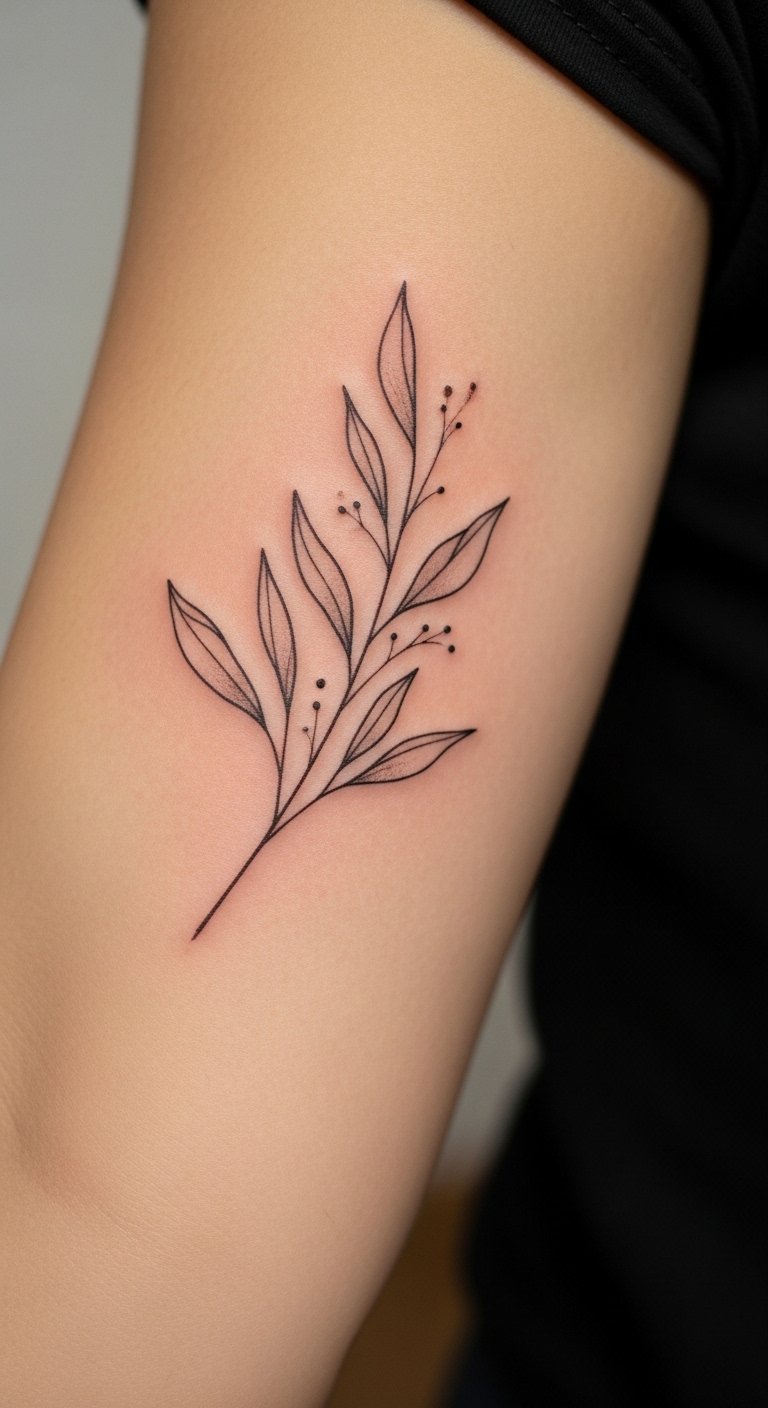
I love this when I want subtle meaning. Fine line plants read delicate and move with the forearm. Inner forearm feels less painful than near the wrist—expect mild rubbing sensations. Heals in 2–3 weeks on the surface; lines can blur slightly if too thin. Ask for slightly heavier main stems and consistent line weight. Avoid hairline lines that vanish when healed.
Minimalist Single-Line Portrait on Outer Forearm
Style/Technique: Minimalist / Single-Line
Pain Level: Low (2-3/10)
Session Time: 1-2 hours
Best For: Subtle, modern statement
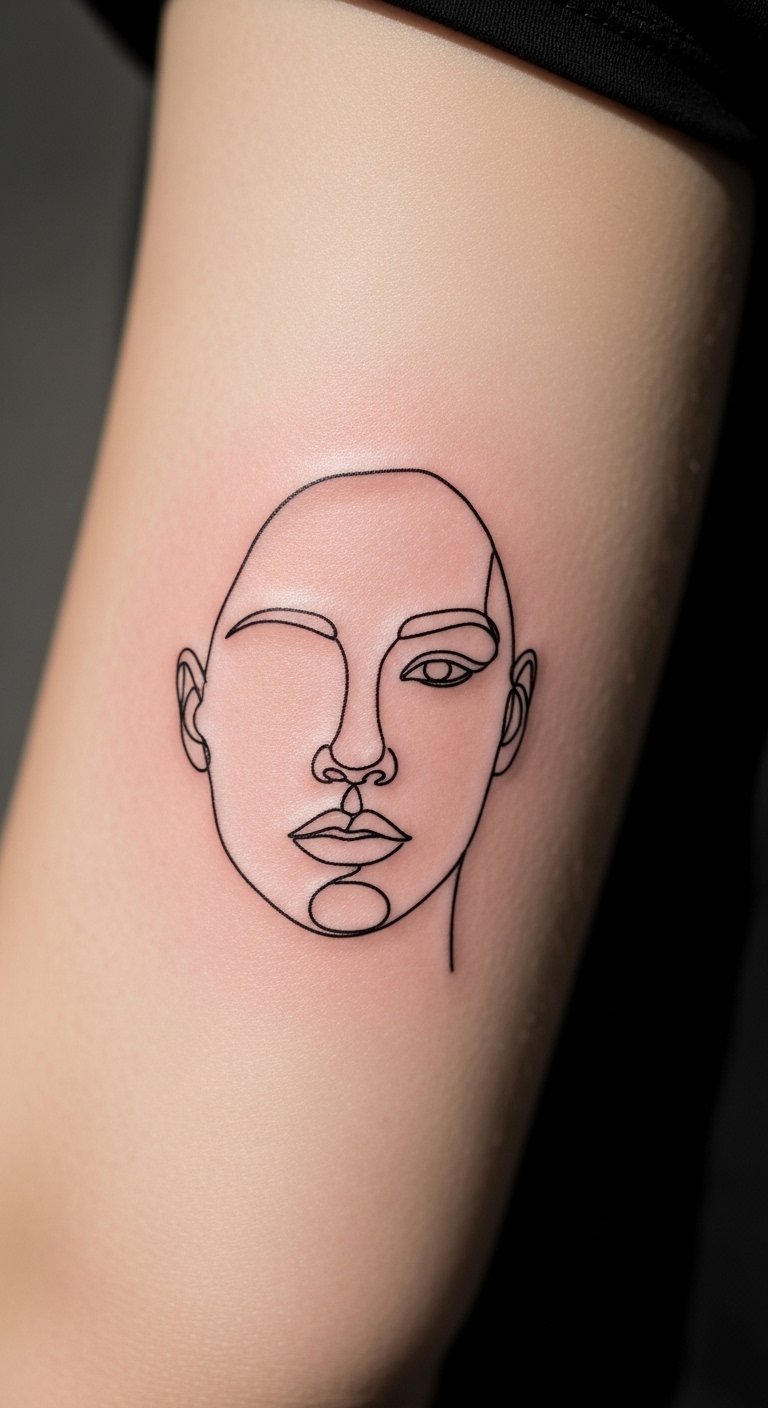
Single-line pieces feel modern and intentional. They read well healed because the eye follows clean contour rather than tiny details. Outer forearm tolerates this with low pain and quick healing. Common mistake: asking for ultra-fine lines—request moderate line thickness to prevent early blur. This pairs well with minimalist and meaningful keywords.
Blackwork Geometric Band on Outer Forearm
Style/Technique: Blackwork / Geometric
Pain Level: Medium (4/10)
Session Time: 1-3 hours
Best For: Bold, high-contrast look
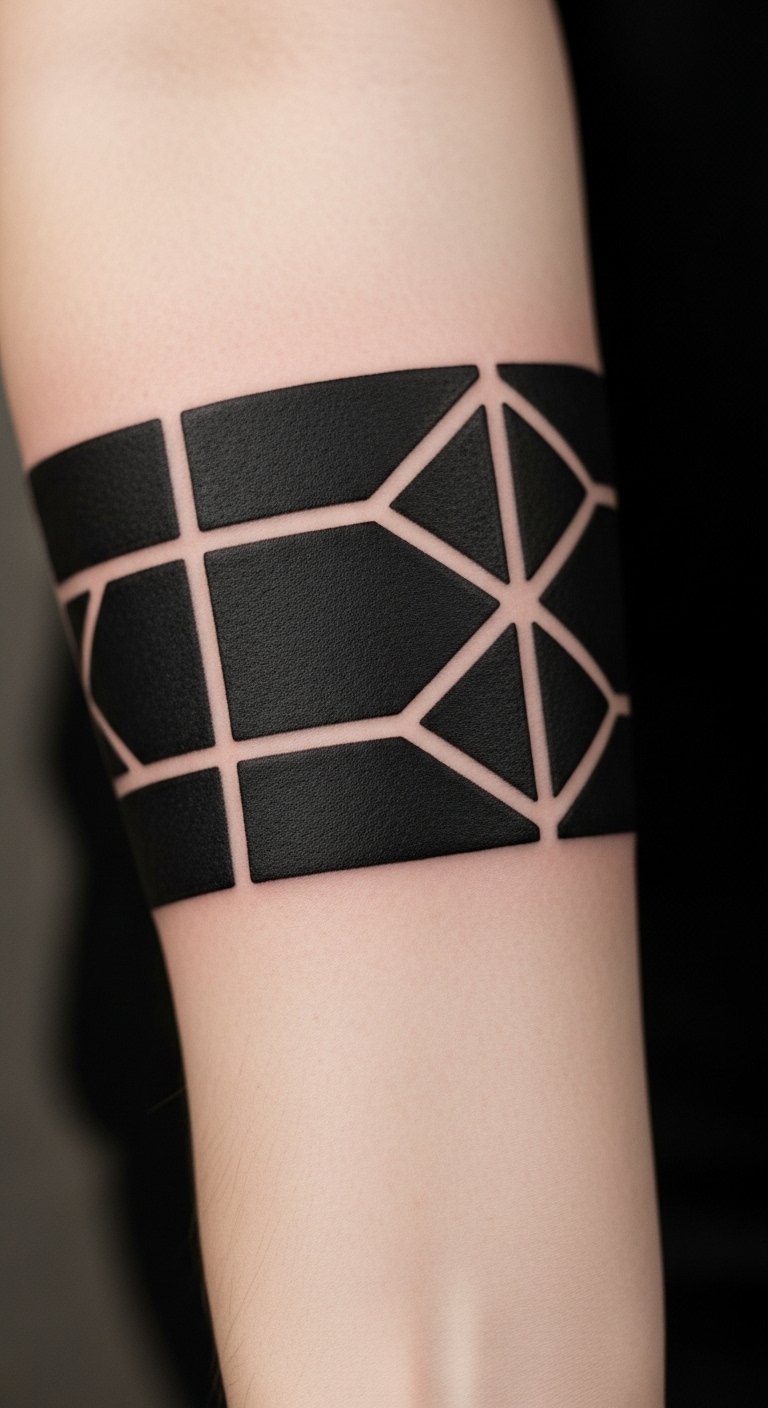
Blackwork holds up well over time. Geometric bands create a clean, structured look that ages predictably—black ink fades slowly. Outer forearm pain is manageable. Heals in 2–4 weeks. Avoid tiny dotwork inside large black fields unless your artist uses dense packing; otherwise, those dots can soften.
Micro-Realism Pet Portrait Near Wrist
Style/Technique: Micro-Realism / Portrait
Pain Level: Medium (4-5/10)
Session Time: 1-3 hours
Best For: Personal, detailed keepsake
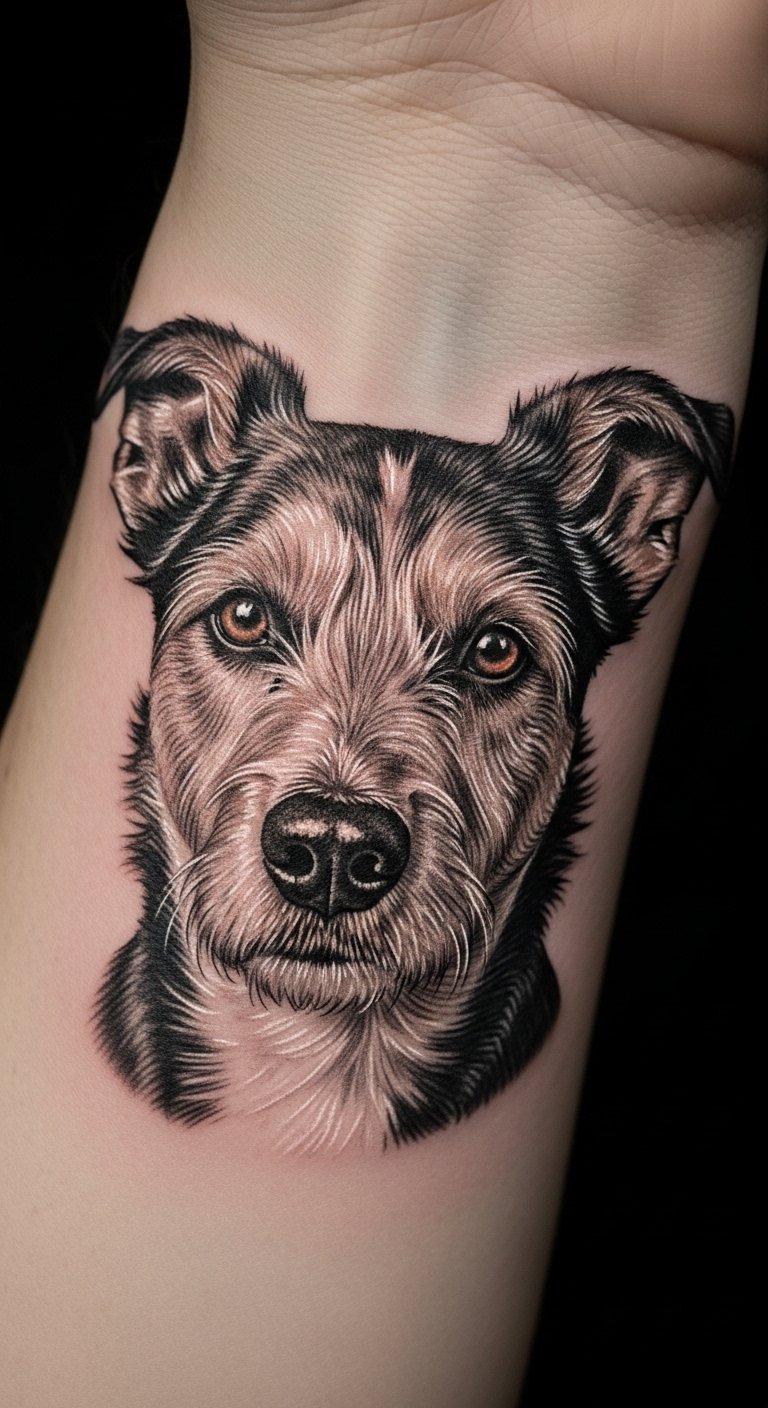
Micro-realism on the forearm looks intimate and personal. Near the wrist, expect higher sensitivity and more movement while healing. Fine shading can look dull mid-heal; it brightens after two months. Ask to see healed portfolio examples. Common mistake: tiny portraits with too-low contrast—they can become muddy when healed.
Neo-Traditional Floral on Outer Forearm
Style/Technique: Neo-Traditional / Color
Pain Level: Low-Medium (3/10)
Session Time: 2-4 hours
Best For: Color that lasts and reads bold
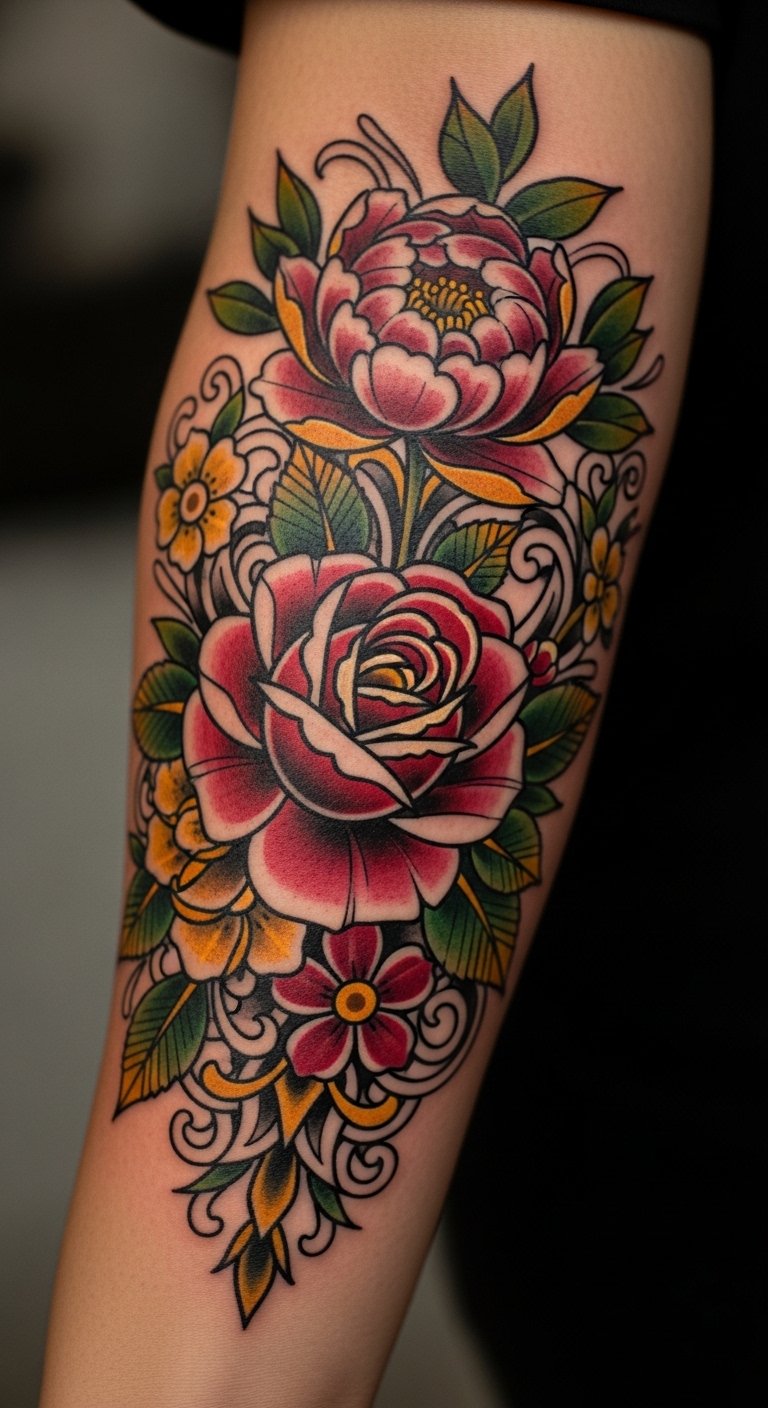
Neo-traditional uses strong outlines and color blocking, so it keeps its shape as skin ages. Outer forearm gives good canvas and modest pain. Colors soften over time—blacks stay strongest. Avoid tiny color gradients; ask for bold fills and clear outlines for longevity.
Delicate Script Quote Along Inner Forearm
Style/Technique: Fine Line / Script
Pain Level: Low (2-3/10)
Session Time: 1 hour
Best For: Meaningful, readable text
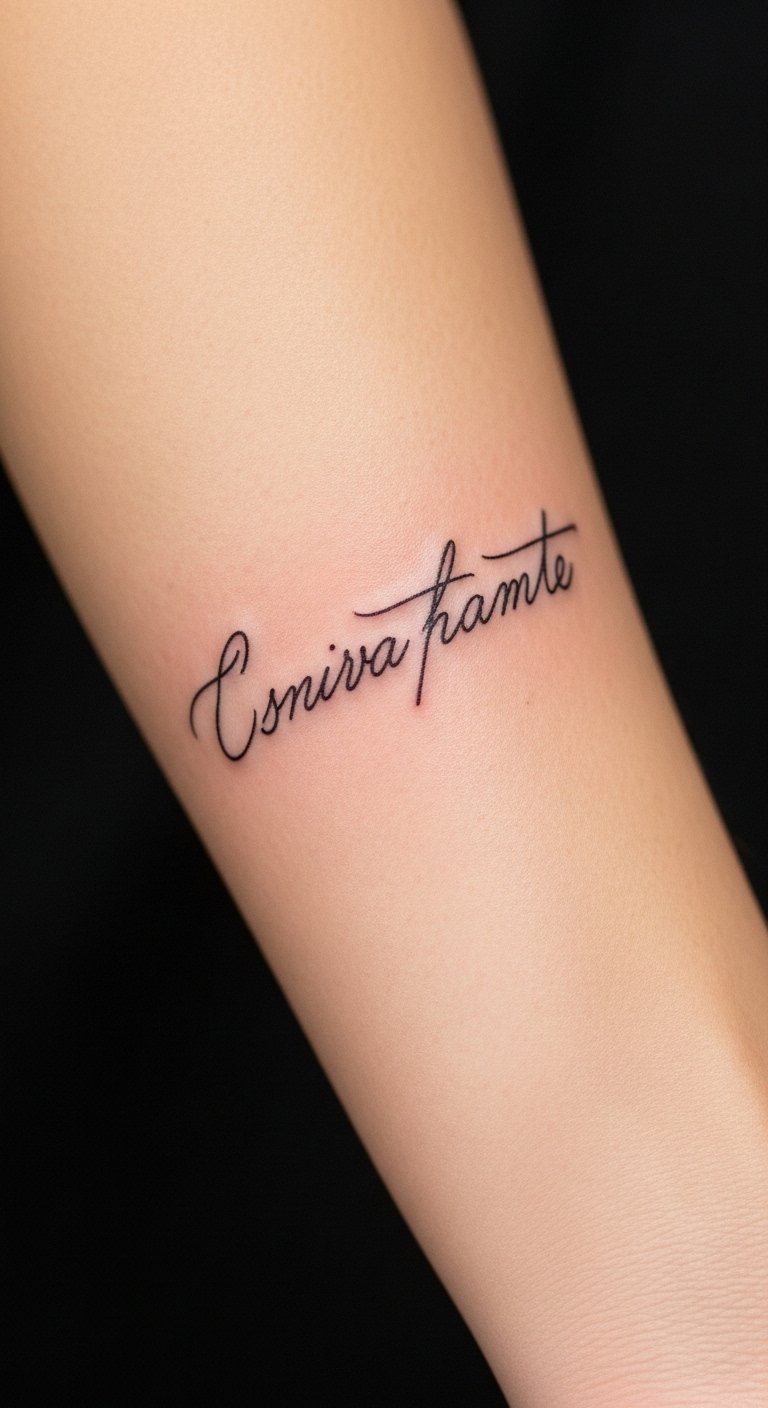
Script feels personal and clean on the inner forearm. Choose a typeface that’s thick enough to remain legible when healed. Expect minor scabbing first week; full clarity around 2 months. Avoid extremely ornate fonts that merge with time—ask for simpler lettering with slightly heavier strokes.
Stipple Dot Topographic Map on Outer Forearm
Style/Technique: Dotwork / Topographic
Pain Level: Medium (4/10)
Session Time: 2-3 hours
Best For: Subtle texture, nerdy maps
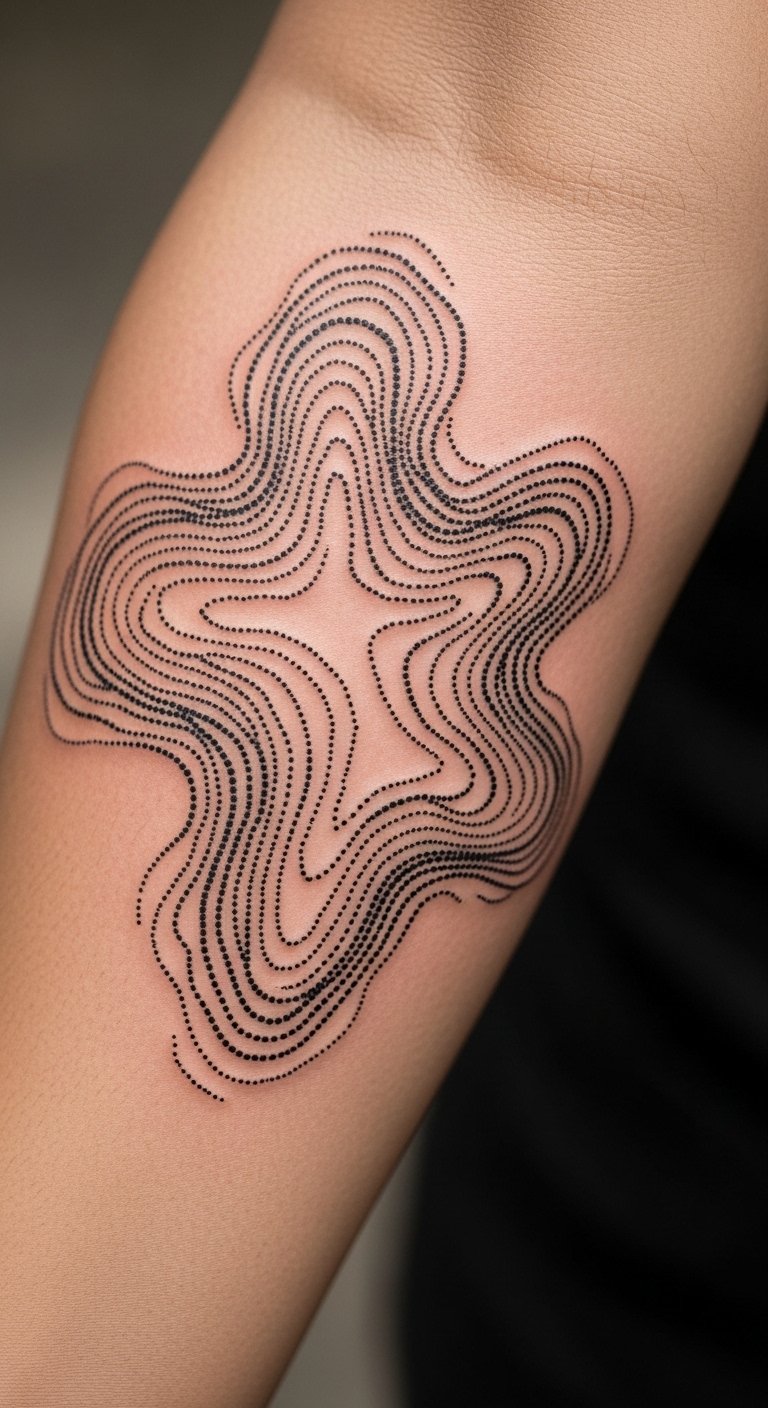
Micro-dot topography reads like texture and holds interest as it heals. Dotwork can be sensitive near inner forearm due to repeated passes. It ages well if dots are spaced and not too tiny. Ask the artist about healed examples of dotwork on forearms to ensure density is right.
Traditional Sailor Rose on Outer Forearm
Style/Technique: Traditional / American
Pain Level: Low (2-3/10)
Session Time: 1-2 hours
Best For: Classic, timeless look
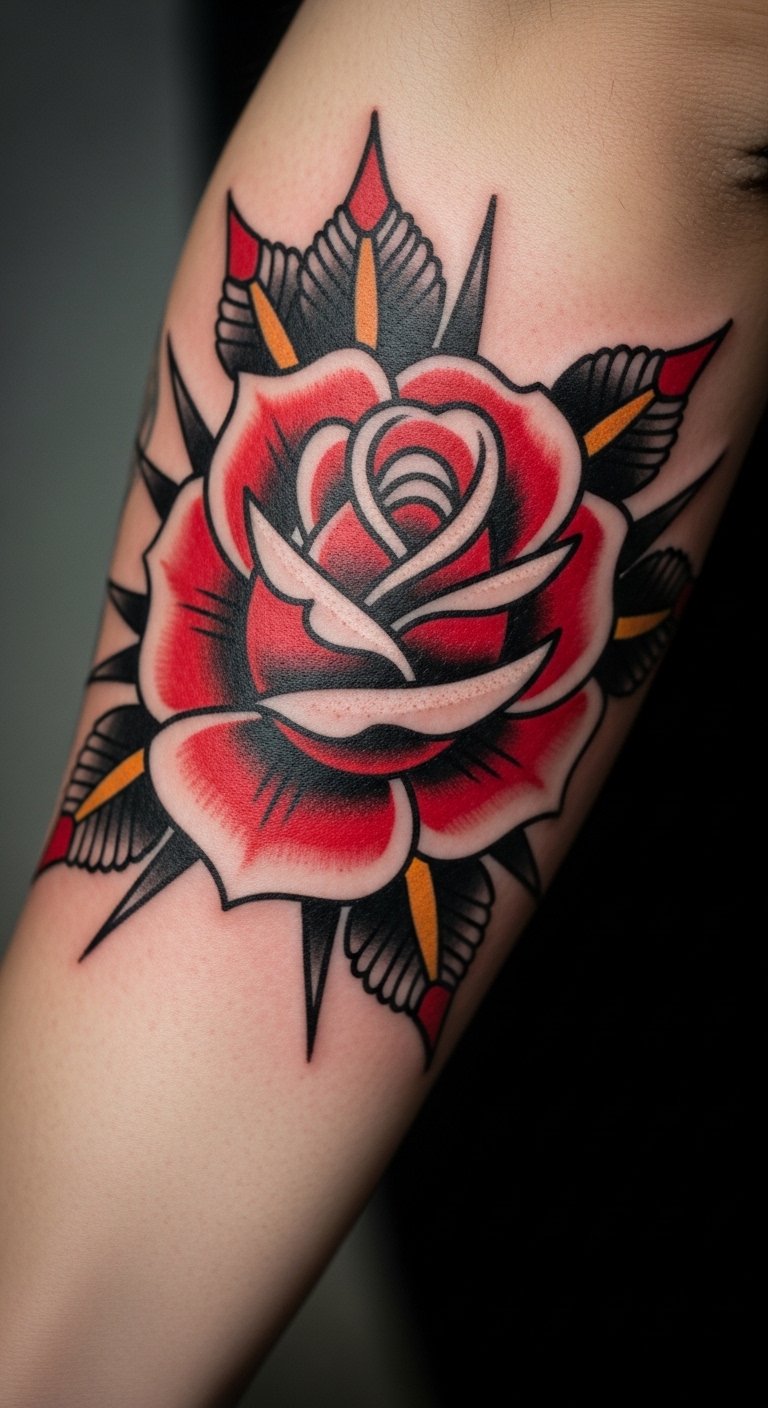
Traditional pieces are forgiving. Bold outlines protect the design from early blurring. Outer forearm placement reduces stretching and keeps the rose readable. Heals reliably in a few weeks. Avoid over-detailing inside petals—bold shapes age better.
Black Ink Script Wrap Around Forearm
Style/Technique: Script / Blackwork
Pain Level: Medium (4/10)
Session Time: 1-2 hours
Best For: Readable, wraparound statement
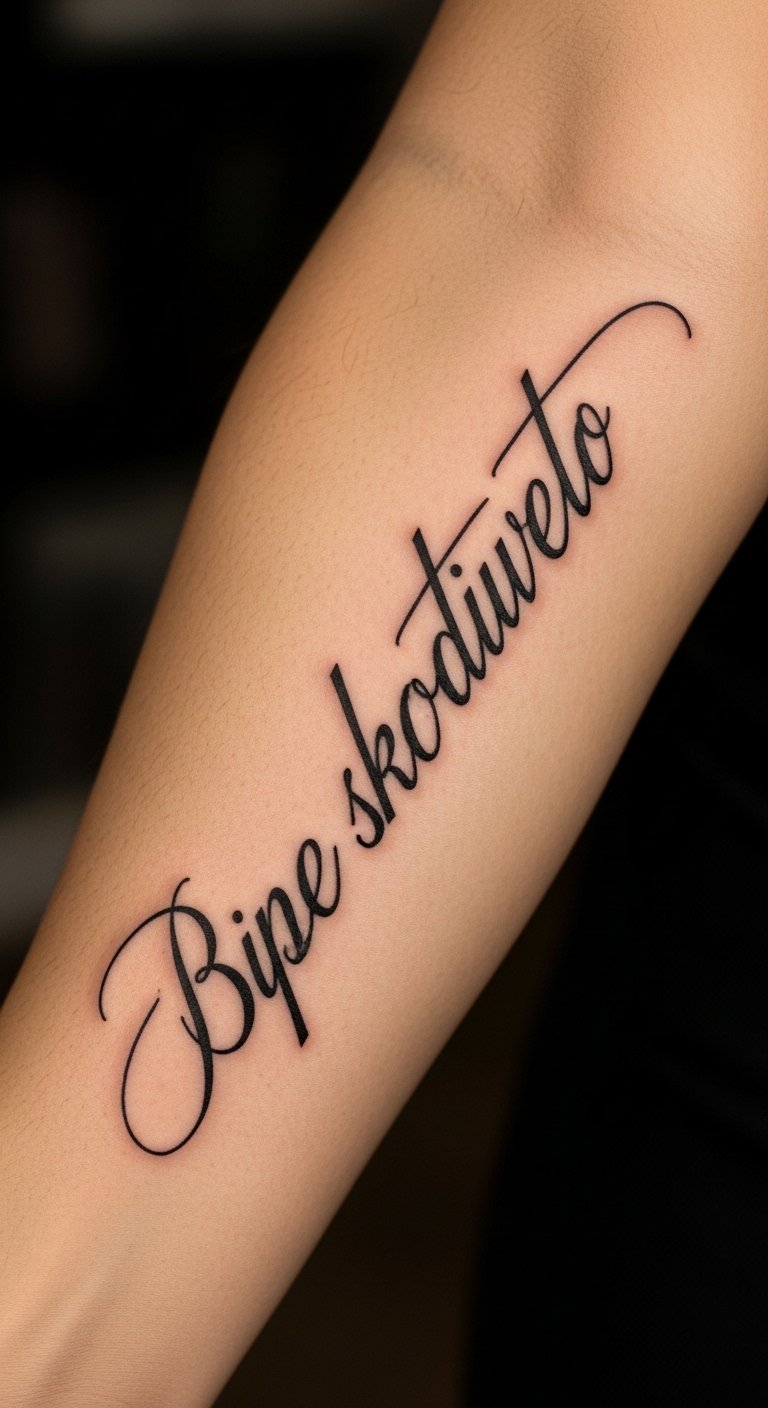
Wraps feel intentional and sculpt the arm visually. Expect more discomfort where the wrap crosses bony areas. For longevity, choose bold strokes rather than ultra-fine calligraphy. Heals in 2–4 weeks; keep it moisturized to prevent scabbing from breaking up letters.
Fine Line Constellation With Coordinates Inner Forearm
Style/Technique: Fine Line / Minimalist
Pain Level: Low (2-3/10)
Session Time: 1 hour
Best For: Meaningful, low-visibility
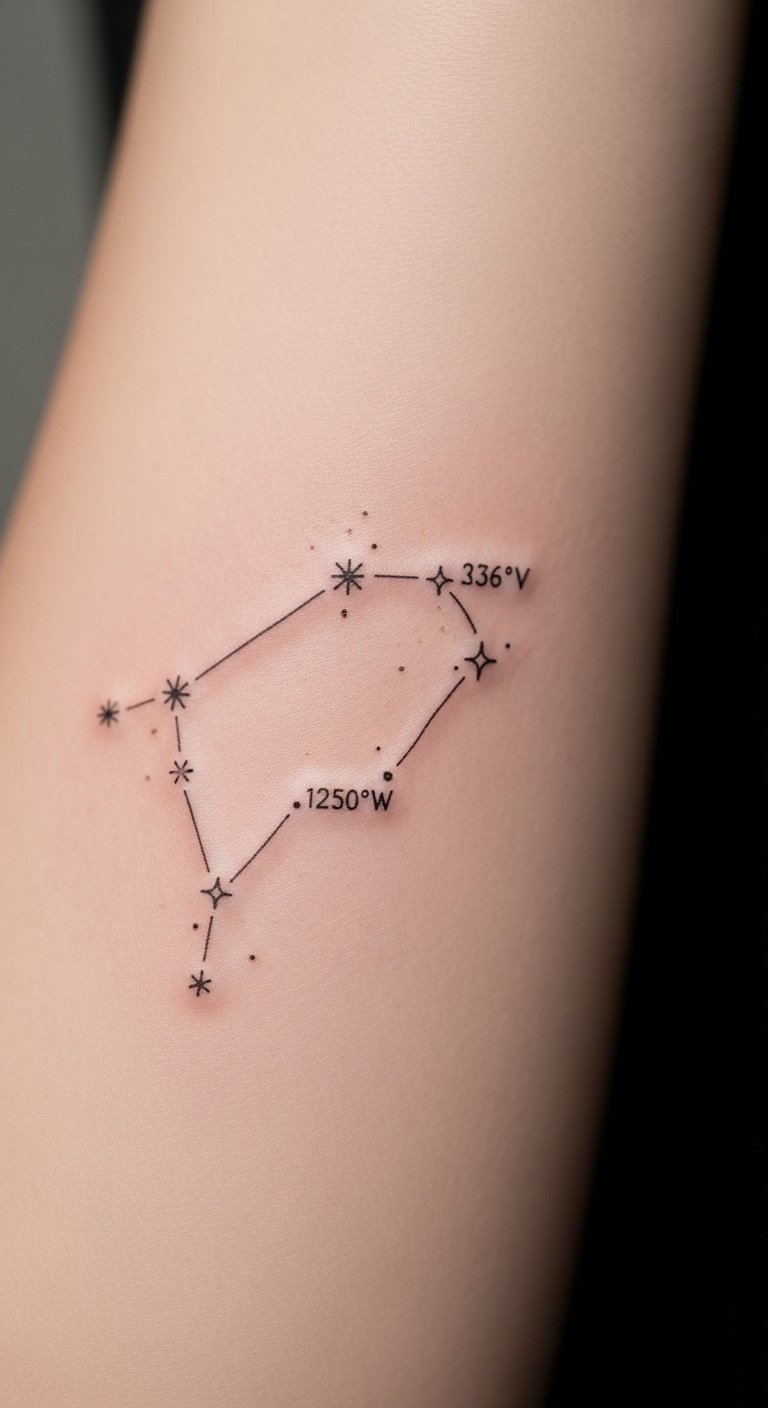
Tiny constellations and coordinates are meaningful and age nicely if lines are slightly bolder than "hairline." Inner forearm keeps it private and low-pain. Avoid cramped numbers—they blur. Ask for clear spacing and gentle dot sizes.
Micro-Illustration Compass on Outer Forearm
Style/Technique: Micro-Realism / Illustrative
Pain Level: Low-Medium (3/10)
Session Time: 1-2 hours
Best For: Travel-inspired, directional symbolism
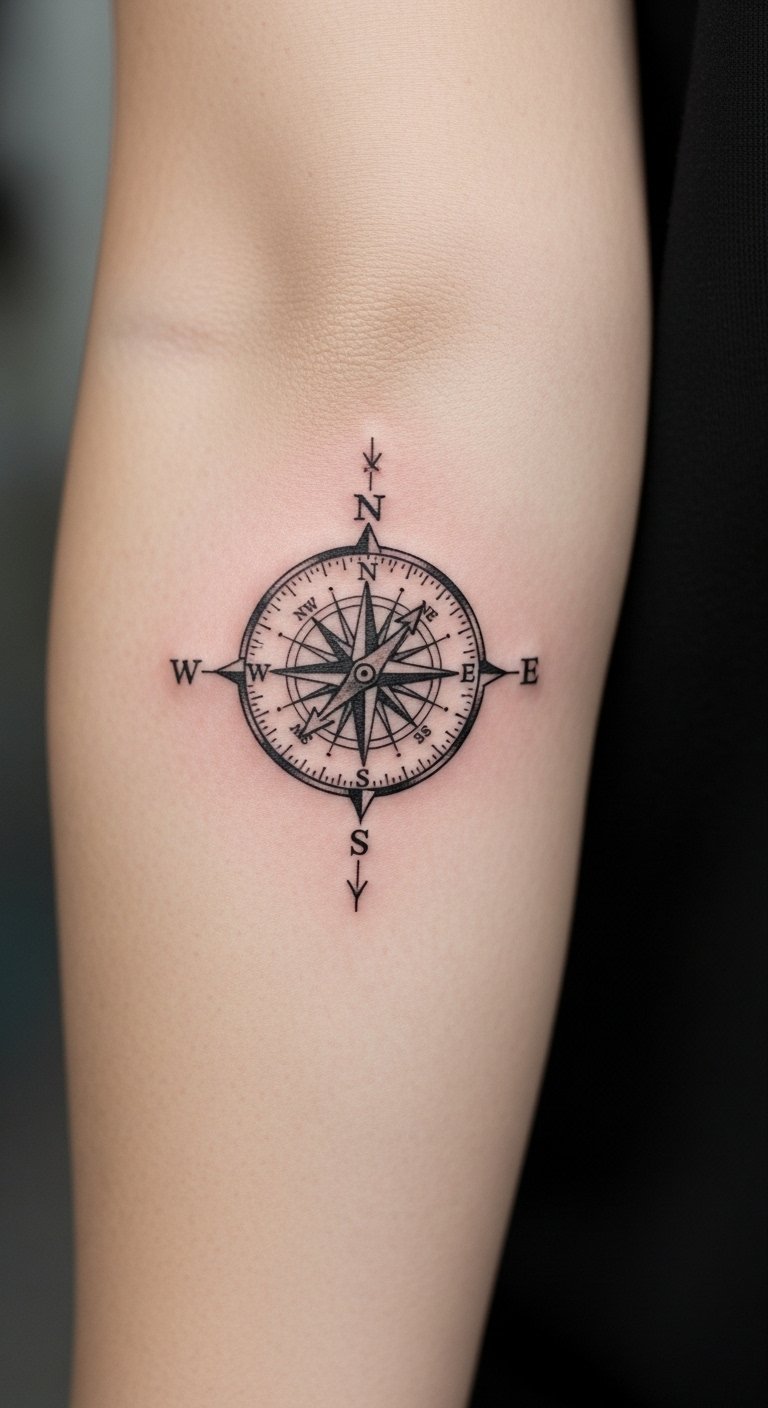
A micro compass reads as purposeful and elegant. On the forearm it holds shape and is easy to show or conceal. Small shading heals dull then brightens; check healed samples. Don't overcomplicate the map marks—clarity is key.
Blackwork Negative-Space Barcode on Inner Forearm (Unique)
Style/Technique: Blackwork / Negative Space
Pain Level: Medium (4/10)
Session Time: 1-2 hours
Best For: Graphic, modern look
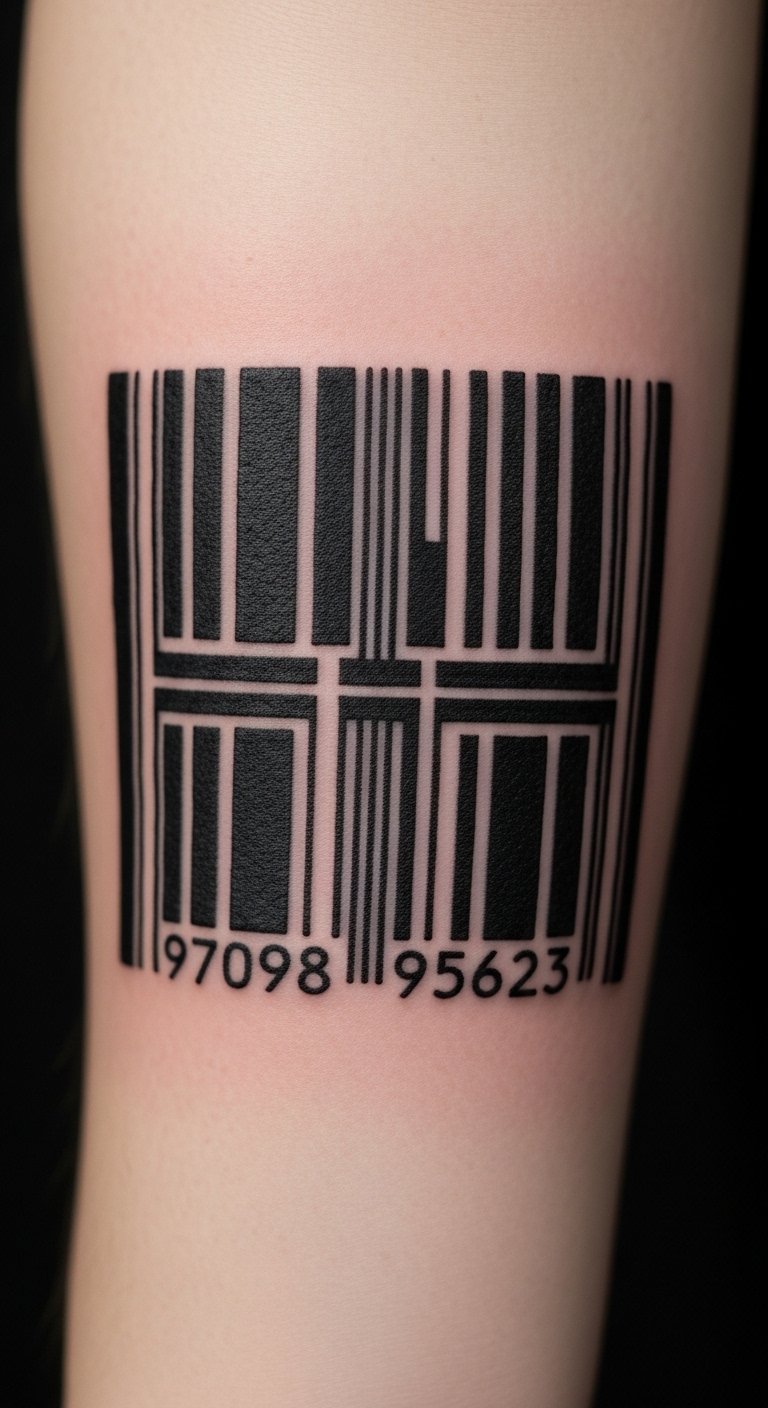
Negative-space barcodes are a fresh, under-covered angle. They look sharp healed because pattern relies on contrast, not tiny details. Inner forearm can be sensitive near wrist—expect some burn. Avoid overly tight bars; give breathing room so the negative space stays clean.
Watercolor Crescent Moon on Outer Forearm
Style/Technique: Watercolor / Painterly
Pain Level: Low-Medium (3/10)
Session Time: 1-2 hours
Best For: Soft color washes and mood
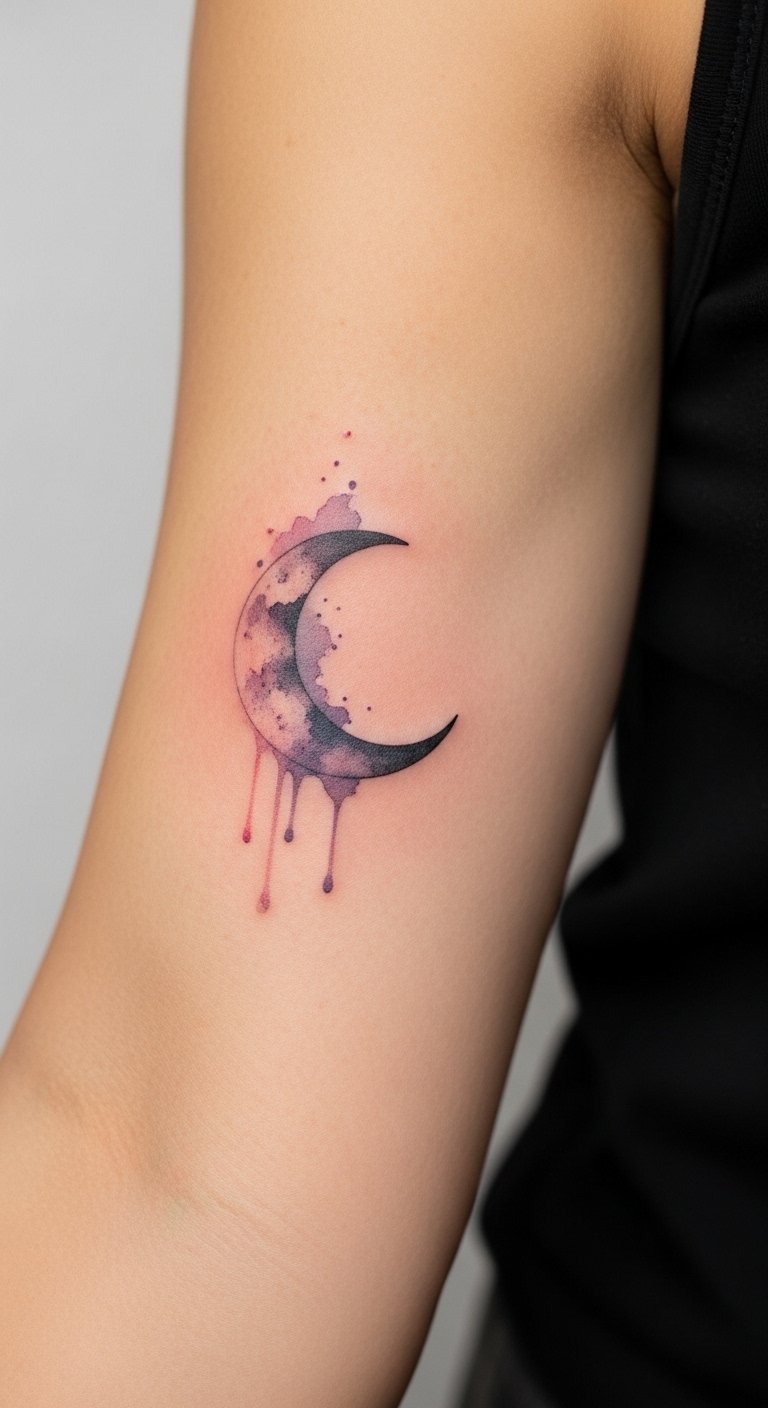
Watercolor looks ethereal but needs careful saturation to survive healing. I recommend bold anchors (tiny black outline) mixed with watercolor to protect edges. Outer forearm handles color well. Ask for healed examples—many artists over-soften, which blurs midterm.
Minimalist Arrow Stack on Inner Forearm
Style/Technique: Minimalist / Line Work
Pain Level: Low (2/10)
Session Time: 30-60 minutes
Best For: Test piece, symbolic stacks
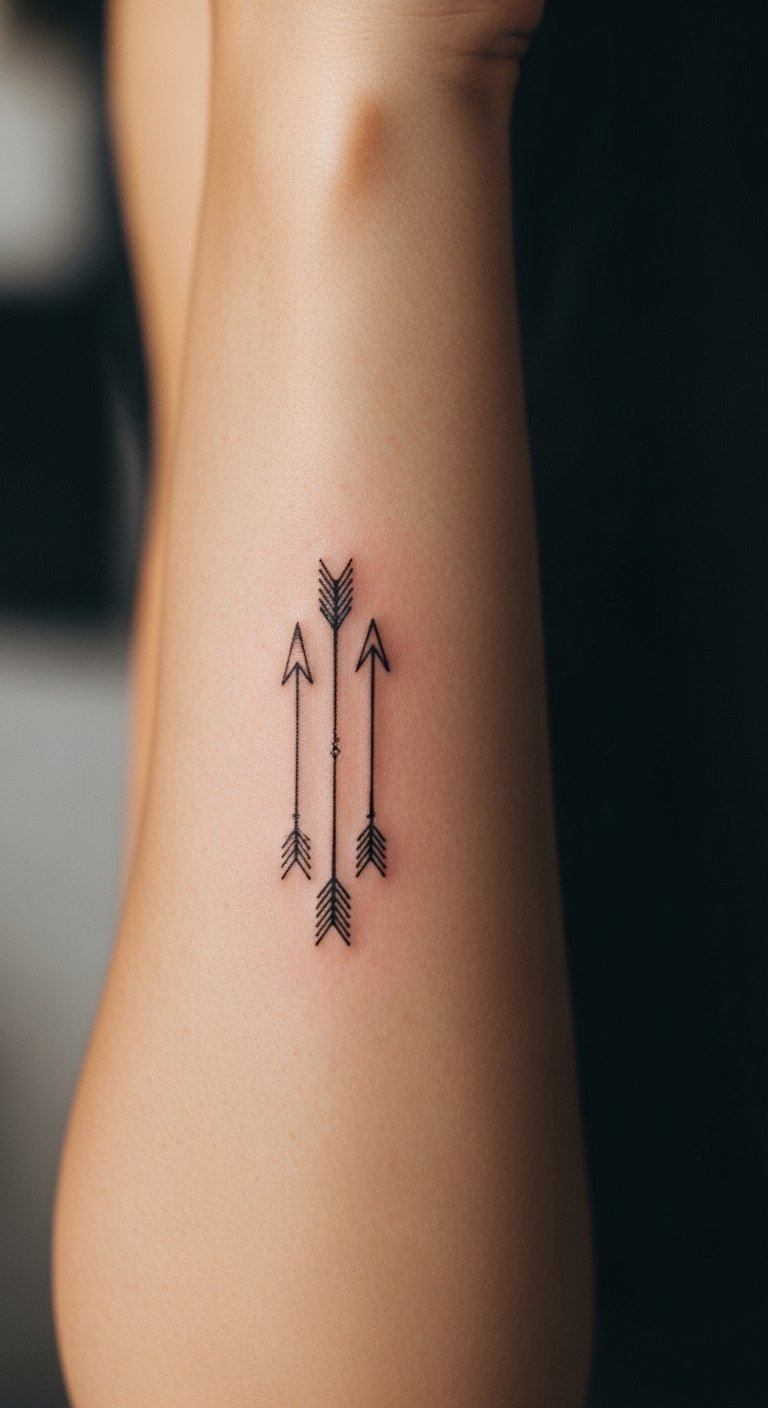
Simple arrow stacks are quick and meaningful. They heal fast with low pain. Lines should be slightly thicker than a single hair to avoid early break. Common mistake: making arrows too close—give them space so they don't merge when healed.
Micro-Rosebud With Shadow Near Wrist
Style/Technique: Micro-Realism / Tiny Color
Pain Level: Medium (4/10)
Session Time: 1 hour
Best For: Petite color accent
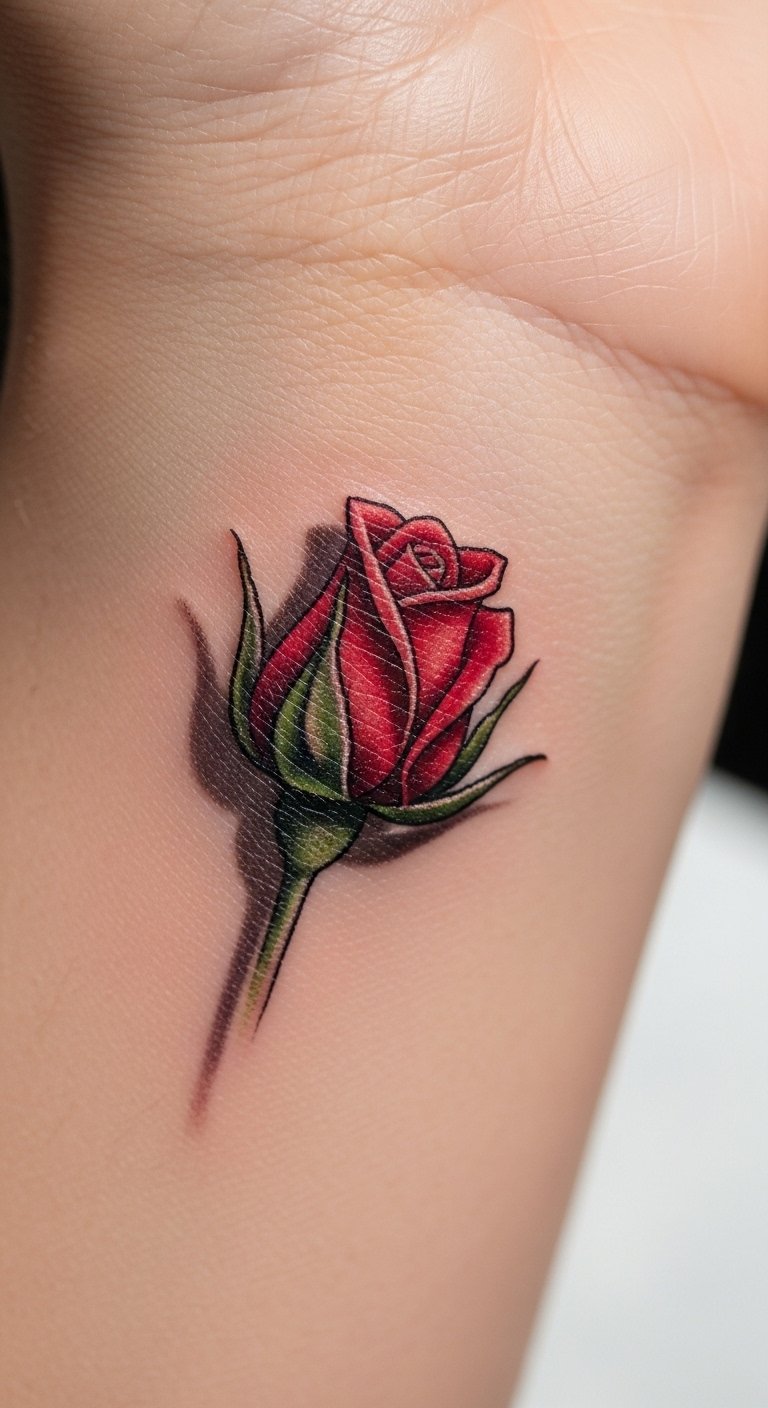
Small colored roses read charming and hold up if the artist packs color well. Wrist area is bony—pain rises a bit. Expect scabbing; colors look muted mid-heal. Avoid extremely light colors (pale yellow) which fade faster on forearms.
UV Accent Linework Hidden On Inner Forearm (Unique)
Style/Technique: UV / Accent Work
Pain Level: Low-Medium (3/10)
Session Time: 1 hour
Best For: Hidden-detail, nightlife-friendly
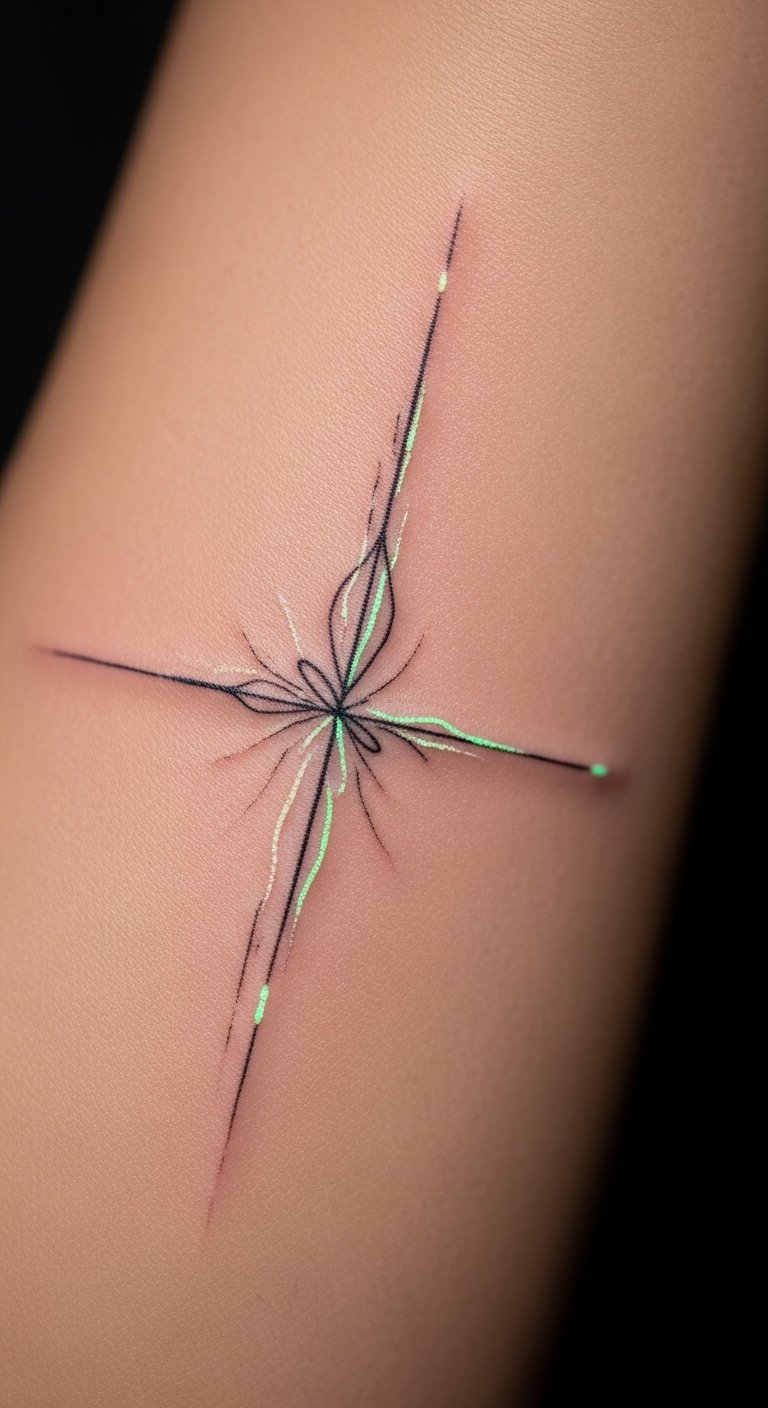
UV accents are an under-covered trend I tested: they add a secret pop under blacklight while leaving the main design classic. UV ink rules vary—ask about healed examples. Healing and aging depend on UV ink quality; pair with solid black outlines to maintain visibility during the day.
Blackout Accent Wrist Cuff On Outer Forearm
Style/Technique: Blackwork / Cuff
Pain Level: Medium-High (5/10)
Session Time: 1-3 hours
Best For: Bold visual block
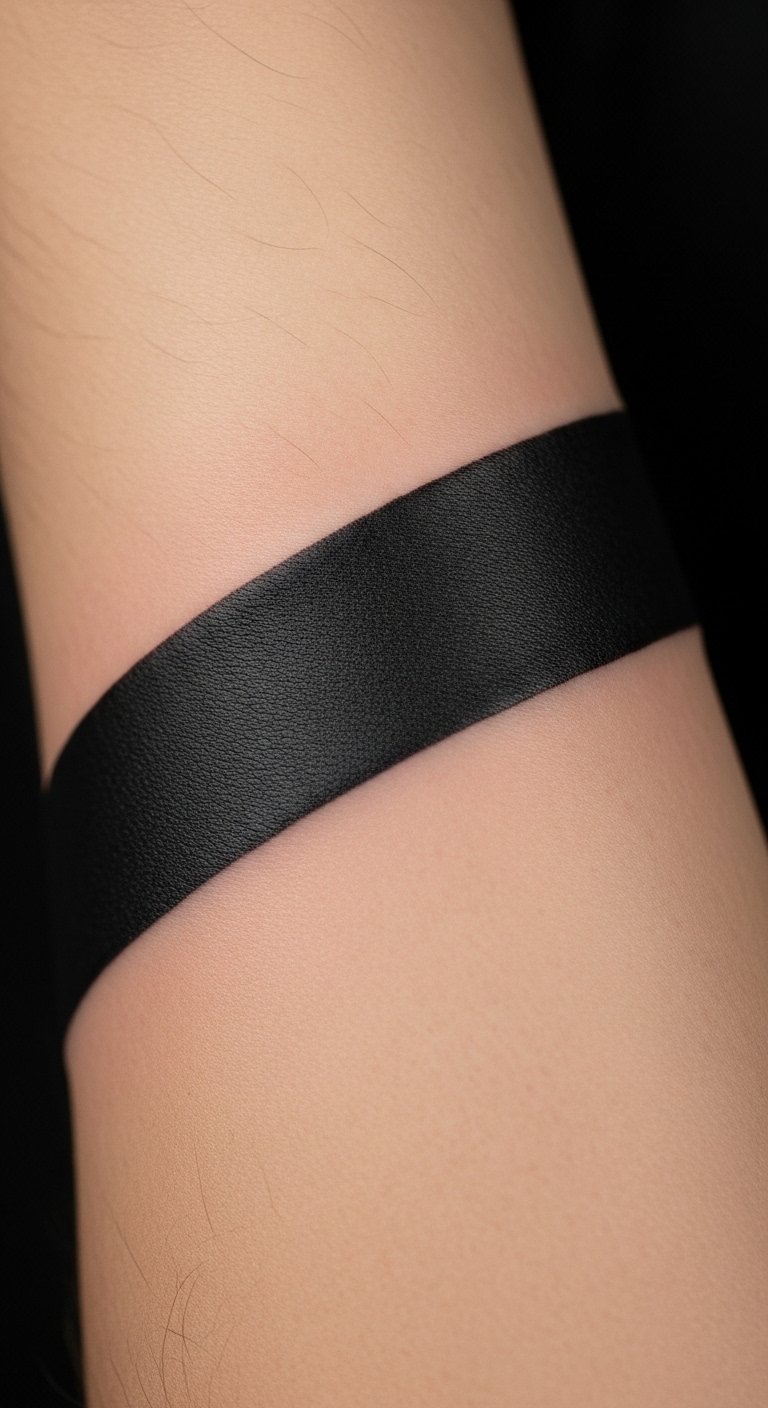
Partial blackout cuffs make a bold frame for forearm tattoos. Large black areas age predictably but require good saturation. Expect heavier discomfort near bone. Avoid uneven edges—ask for crisp linework to prevent blotchy healing.
Tiny Symbol Stack Near Elbow Crease
Style/Technique: Minimalist / Iconic
Pain Level: Medium (4/10)
Session Time: 30-60 minutes
Best For: Compact meaningful symbols
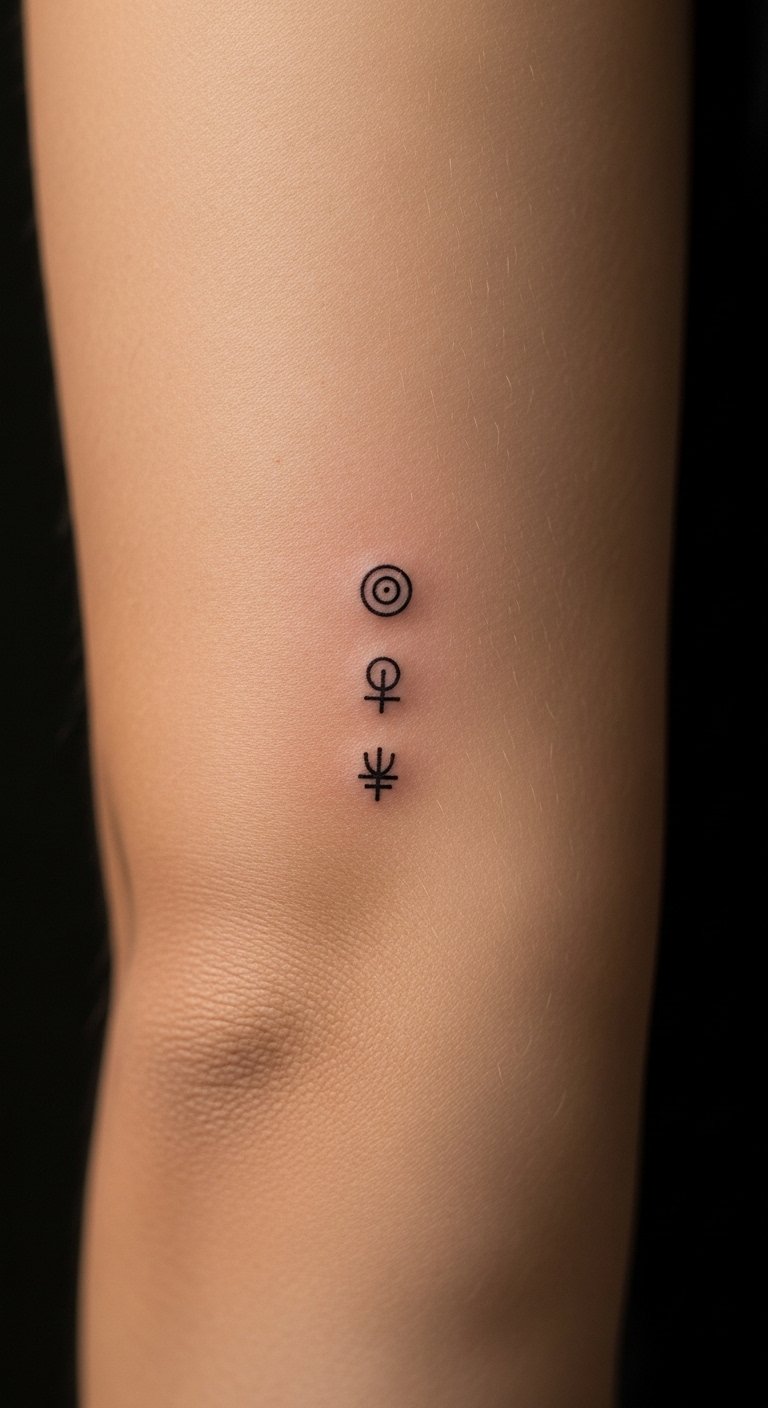
Placement near elbow crease increases pain and movement during healing. Small icons are great if spaced and slightly bolder. Watch for extra scabbing from flexing; avoid placing multiple tiny elements too close.
Fine Line Fern Along Inner Forearm
Style/Technique: Fine Line / Botanical
Pain Level: Low-Medium (3/10)
Session Time: 1-2 hours
Best For: Organic flow, elongating the arm
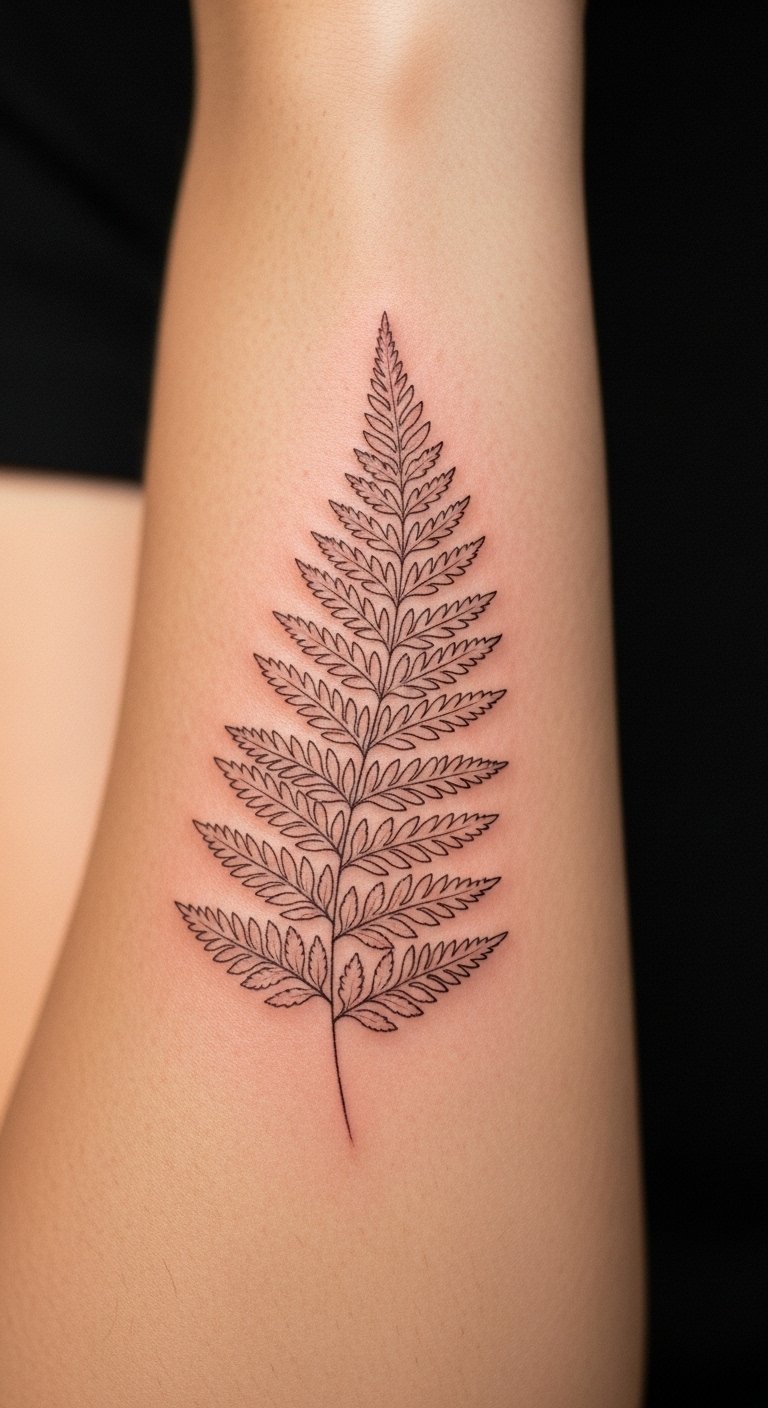
Botanical lines follow the arm's flow and tend to age nicely when stems are slightly bold. Inner forearm movement is minimal, so healing is steady. Don't ask for feather-light veins—give main veins definition to avoid blur.
Micro-Realism Eye With Teardrop Outer Forearm
Style/Technique: Micro-Realism / Symbolic
Pain Level: Medium (4/10)
Session Time: 1-2 hours
Best For: Evocative, expressive pieces
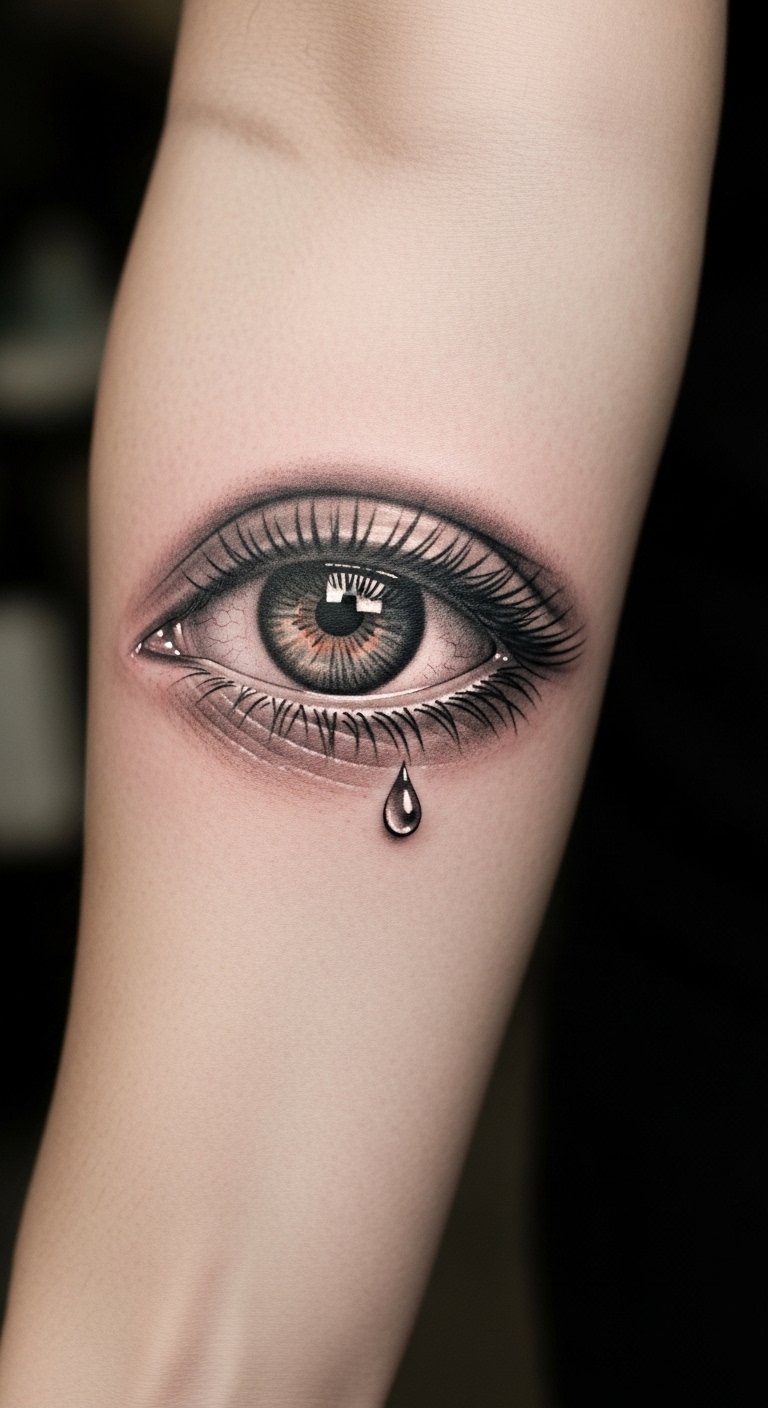
Small realistic eyes can be striking. Fine shading should have contrast to avoid muddying. Outer forearm handles detail well. Ask for healed photos to see how pupils and lashes settle.
Neo-Traditional Animal Motif On Outer Forearm
Style/Technique: Neo-Traditional / Figurative
Pain Level: Low-Medium (3/10)
Session Time: 2-4 hours
Best For: Bold subject, personality-driven
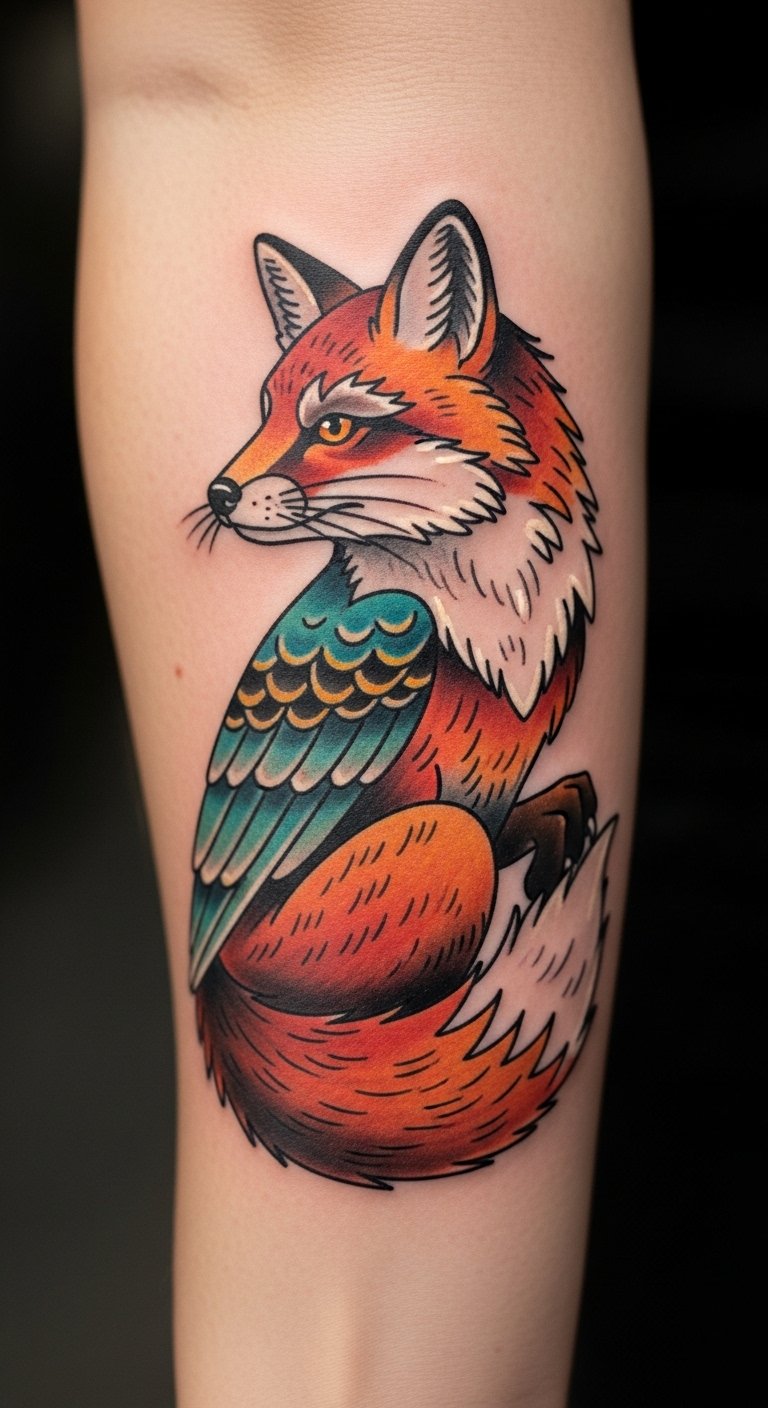
Neo-traditional animals read expressive and bold. Strong outlines protect fine interior color work. This ages predictably and is great for a statement that still reads clean from a distance.
Minimal Wave Line With Negative Space
Style/Technique: Minimalist / Negative Space
Pain Level: Low (2/10)
Session Time: 30-60 minutes
Best For: Coastal or calm aesthetic
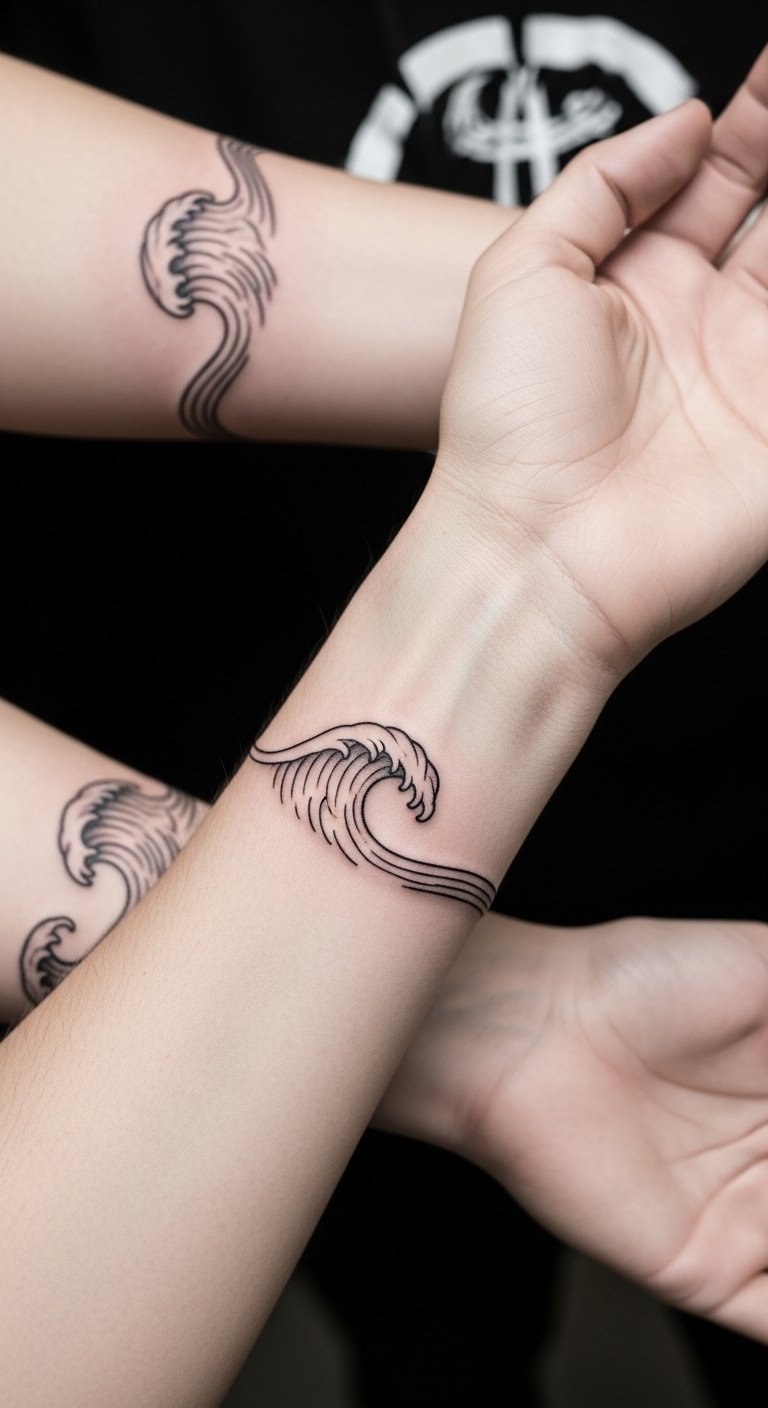
Simple wave lines age well and require little maintenance. Negative space helps the design pop. Avoid overly thin undulations; request steadier line weight.
Single-Needle Script Band Near Wrist
Style/Technique: Single-Needle / Script
Pain Level: Medium (4/10)
Session Time: 1-2 hours
Best For: Personal mantra in a band
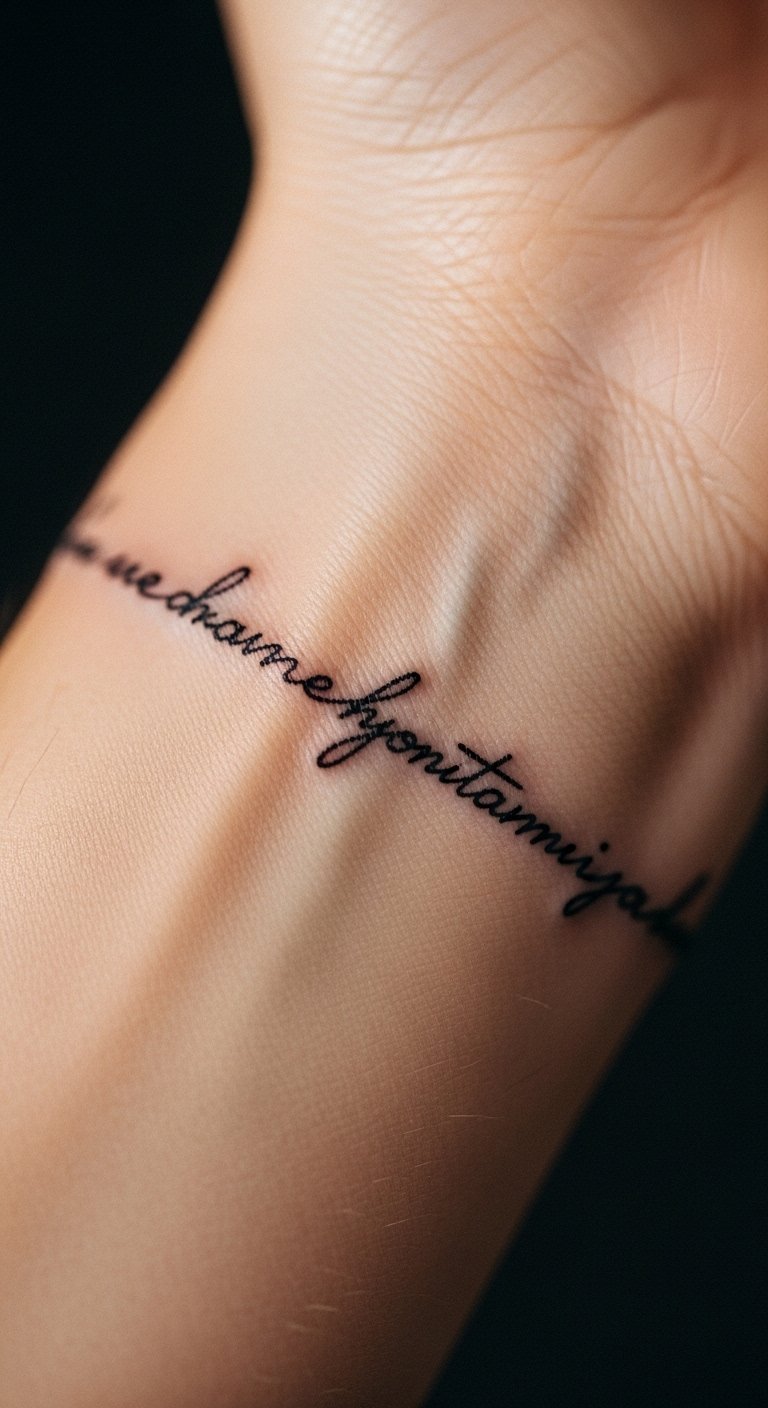
Single-needle scripts look delicate but need careful thickness. Wrist area adds sensitivity; healing is visible early. Ask for slightly bolder strokes to maintain legibility over years.
Micro-Map Linework Along Outer Forearm
Style/Technique: Linework / Cartographic
Pain Level: Low-Medium (3/10)
Session Time: 1-2 hours
Best For: Travel-sentiment, linear design
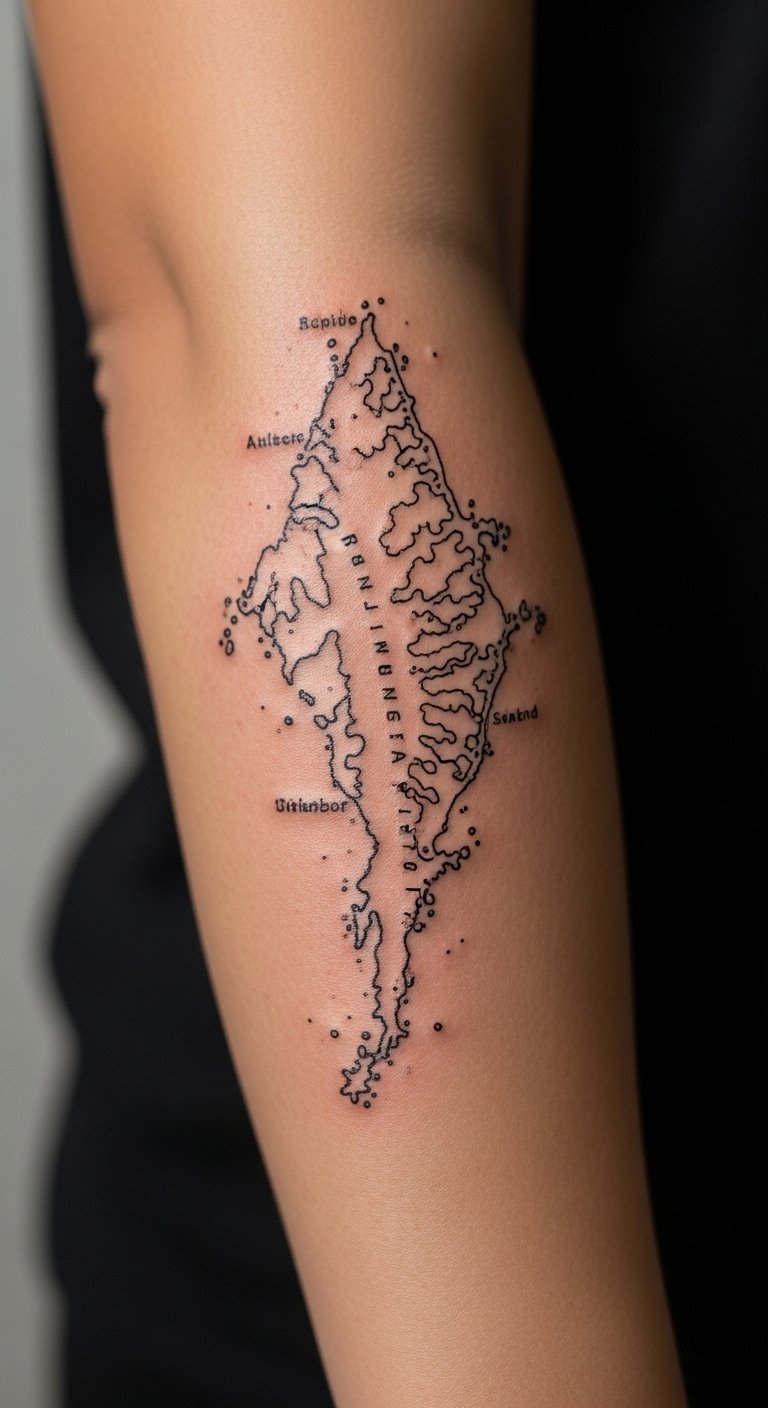
Linear maps use negative space and line clarity. Outer forearm minimizes stretching. Avoid ultra-miniature annotations; opt for a readable scale.
Botanical Silhouette Band Across Inner Forearm
Style/Technique: Blackwork / Silhouette
Pain Level: Low-Medium (3/10)
Session Time: 1-2 hours
Best For: Subtle band with organic shapes
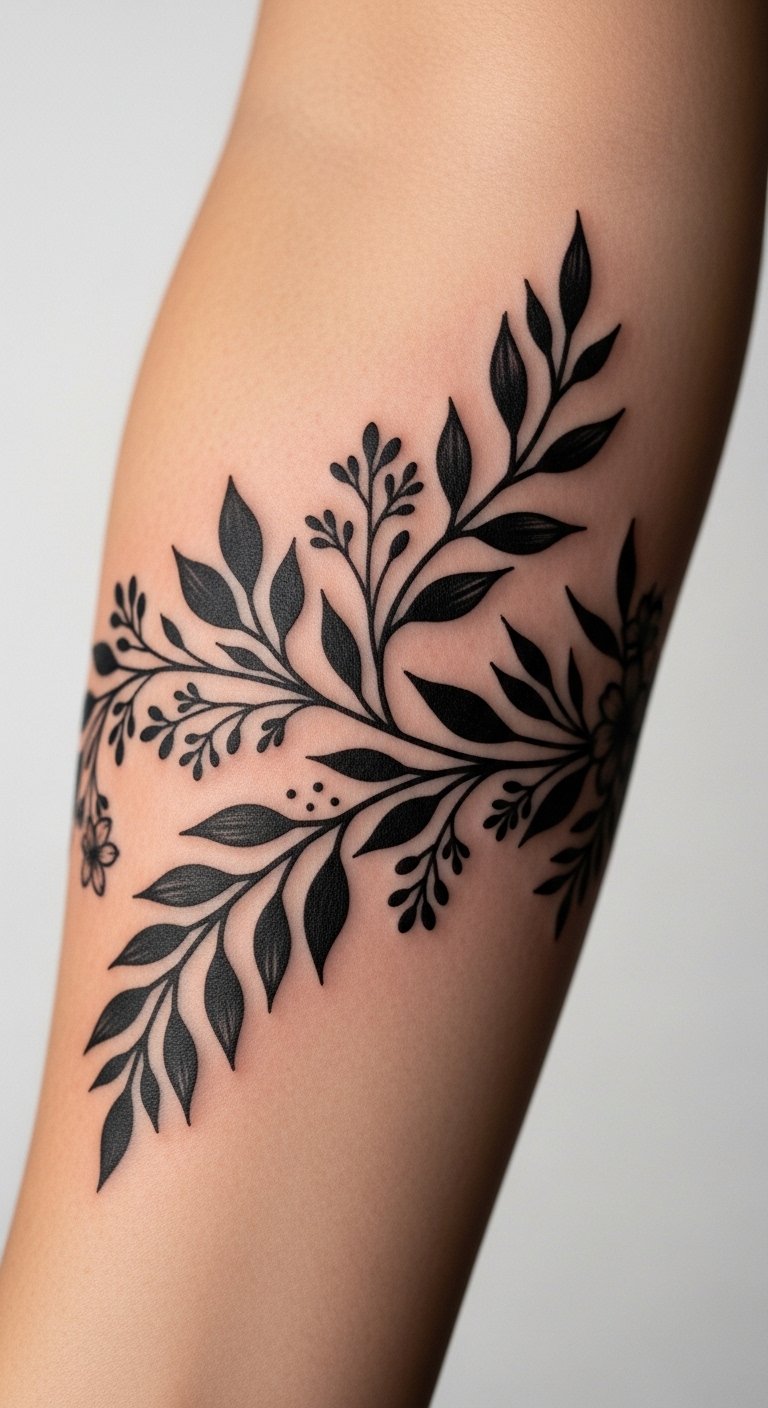
Silhouettes read well because they’re high-contrast. Inner forearm placement keeps it personal. Ensure solid black packing for longevity and avoid thin interior detailing.
Tattoo Prep and Aftercare Essentials
Aftercare is as important as the design. These are products I and artists I trust use and recommend for forearm healing, long-term maintenance, and prep.
Aftercare Essentials:
- Aquaphor Healing Ointment, 14oz — Recommended first 3-5 days
- Saniderm Transparent Adhesive Bandage, 6-inch roll — Second-skin healing option
- CeraVe Fragrance-Free Moisturizing Lotion, 12 oz — Daily moisturizer after initial ointment stage
- Dr. Bronner's Unscented Castile Soap, 16 oz — Gentle cleaning in first two weeks
Before Your Appointment:
- Numbing Cream with 5% Lidocaine — Use only if your artist approves
- Tattoo Stencil Transfer Paper, 8.5×11 — For at-home mockups
Long-Term Maintenance:
- SPF 50 Sunscreen Stick for Tattoos — Daily protection to prevent fading
- Mad Rabbit Tattoo Balm, 2 oz — Keeps healed ink vibrant
- Hustle Butter Deluxe, 8 oz — Vegan aftercare alternative
Optional Comfort Items:
- Tattoo Numbing Spray — For touch-ups
- Hydrocolloid Bandages Large — For spot protection after scab stage
These match what artists commonly recommend vs. marketing hype—Saniderm and Aquaphor are often suggested for initial phases; CeraVe for long-term hydration.
Frequently Asked Questions
Q: How bad does a forearm tattoo hurt?
A: Forearm pain is generally 2–4/10—outer forearm is one of the easier spots. Inner wrist or near the elbow crease runs higher. For sensitive areas, discuss numbing cream with your artist.
Q: How long until a forearm tattoo heals?
A: Surface healing is 2–3 weeks. Full skin remodeling takes 2–3 months. First week is critical—clean with gentle soap and use Aquaphor initially.
Q: Will color fade faster on forearms?
A: Yes—UV exposure speeds fading. Daily use of an SPF 50 sunscreen stick prevents most sun-related fading.
Q: Can I exercise after getting inked?
A: Wait 48–72 hours before light activity. Avoid heavy sweating and friction for at least a week to reduce infection risk.
Q: Should I test a small tattoo first?
A: Only if you actually want a small piece. Pain varies by placement more than size. Small forearm tattoos still heal and feel different than larger, slower sessions.
Q: Do tattoos look different on darker skin?
A: Black and gray read well across tones. Bright pastels may appear muted—ask to see healed work on your skin tone.
Conclusion
Do your research, sit with your idea, and pick a design that reads well healed. A short consultation clarifies line weight and placement. For upkeep, keep Aquaphor and daily sunscreen handy. Which forearm style are you leaning toward?