I spent eight months obsessing over dragon art before I got inked. The real challenge was choosing a style that actually holds up over time. Some dragon trends fade fast. Other looks get better as the skin settles. Below are 31 dragon tattoo ideas I vetted with artists and collectors, the ones that own a room and age like champions.
This list focuses on a range of styles from fine line dragons to full traditional Japanese back pieces. Placements range from wrists to full backs. From what I’ve seen, artists in 2026 favor bold contrast and smart negative space more than tiny, high-detail dragons on high-movement spots.
1. Fine Line Dragon Sleeve On Inner Forearm
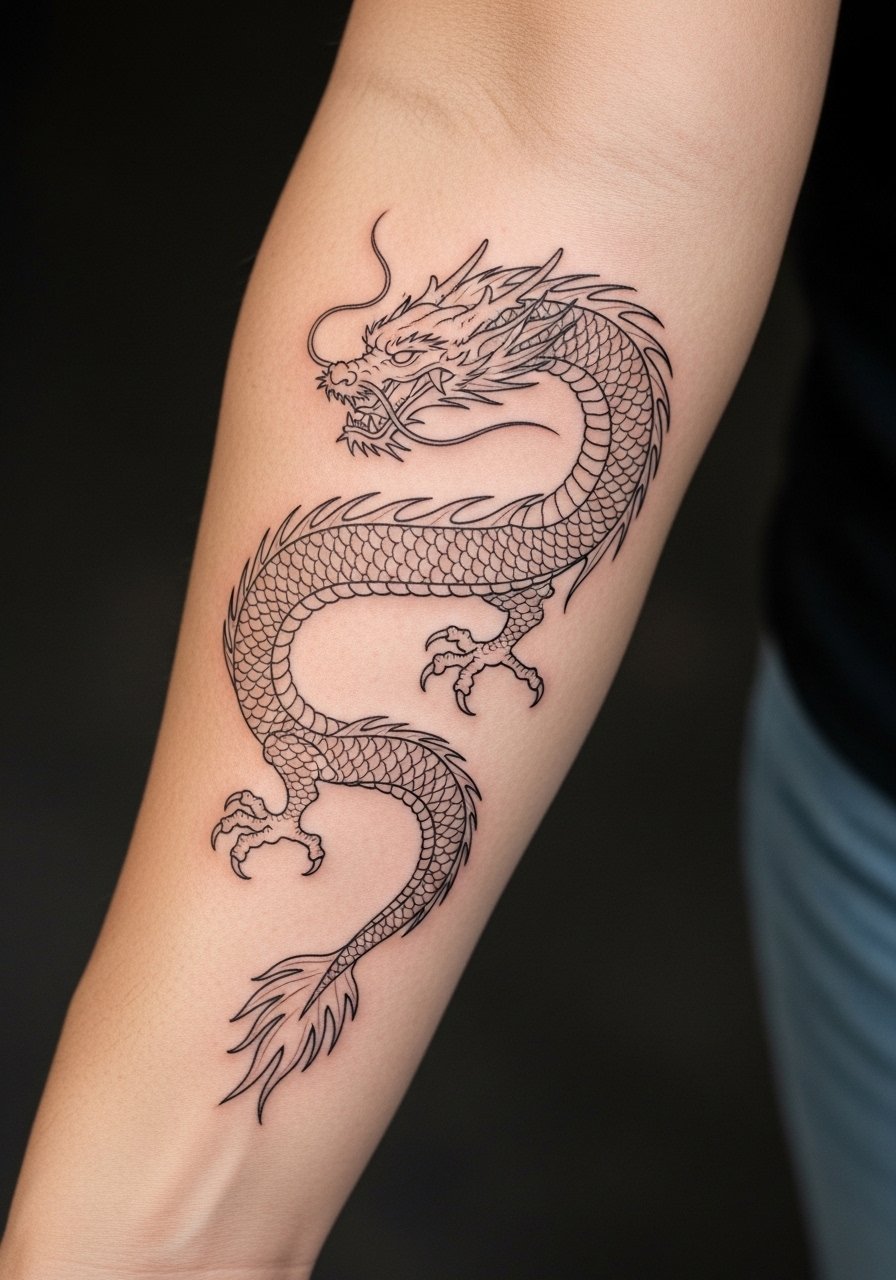
I first saw this on a shop apprentice and it stuck with me. Fine line dragons read intimate. They hug the curve of the forearm and move when you flex. Expect moderate pain for the inner forearm. Sessions run 2 to 4 hours depending on detail. Ask your artist to slightly thicken the main contour lines. Small single hairlines will blur over two years. I recommend leaving tiny scales out of the design if you want it to age clean. A common mistake is asking for ultra-thin lines everywhere. Tell your artist you want defined primary lines and lighter secondary details. Healed, they look airy and directional. Avoid placing too close to wrist joints unless you accept more fading.
2. Traditional Japanese Dragon Back Piece On Full Back
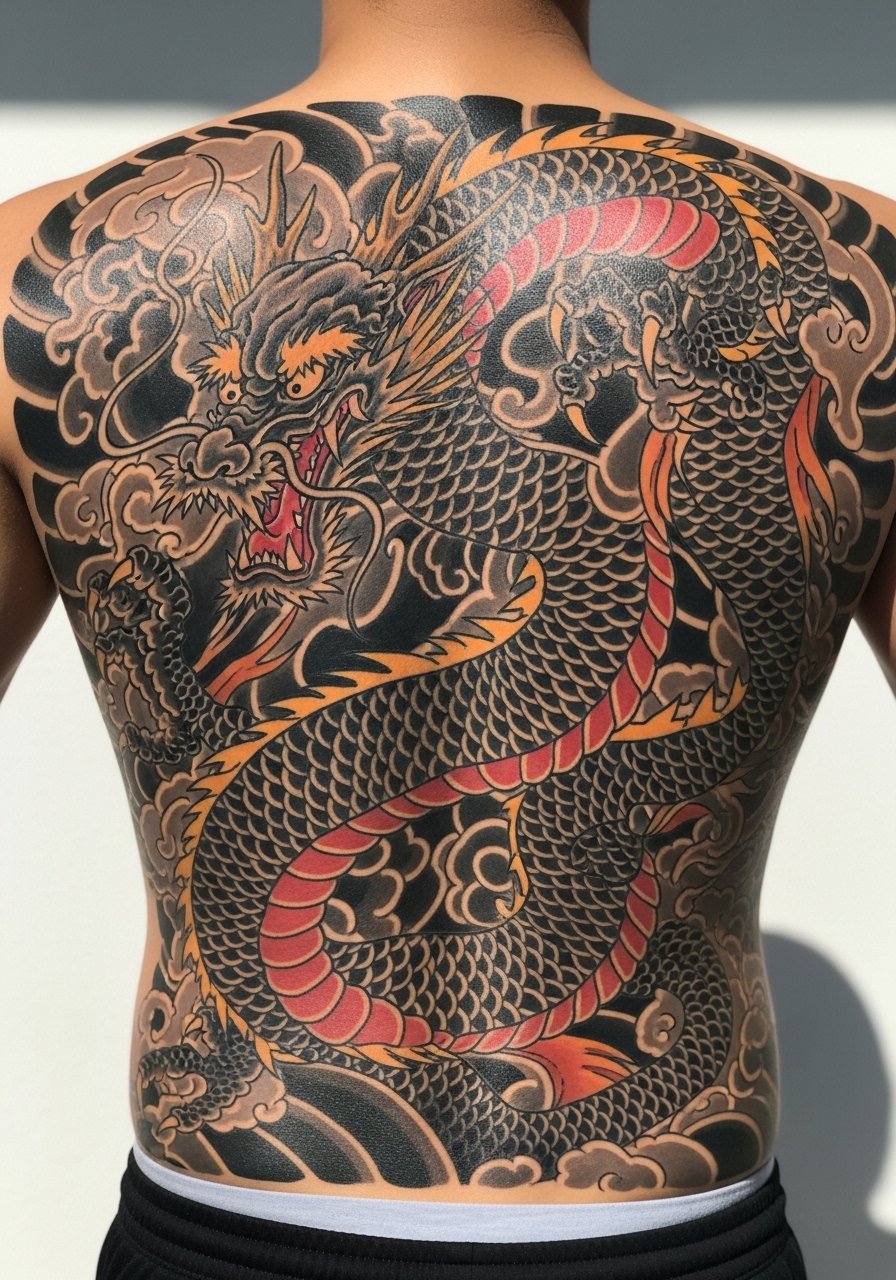
Fair warning, a full back dragon on the traditional Japanese scale is a commitment of multiple long sessions. I watched one friend go over four sessions across six months. Pain varies but the lower back is tougher. The payoff is dramatic. Colors and thick outlines hold well on the back. When consulting, bring reference for scale, claw placement, and maw expressions. The mistake I see is squeezing too many small motifs into the dragon. Let the dragon dominate. Overly intricate scales will compress over time. Expect touch-ups at one to three years for color refresh. This style suits collectors who want a narrative piece rather than a tiny emblem.
3. Micro-Realism Dragon Portrait On Upper Arm
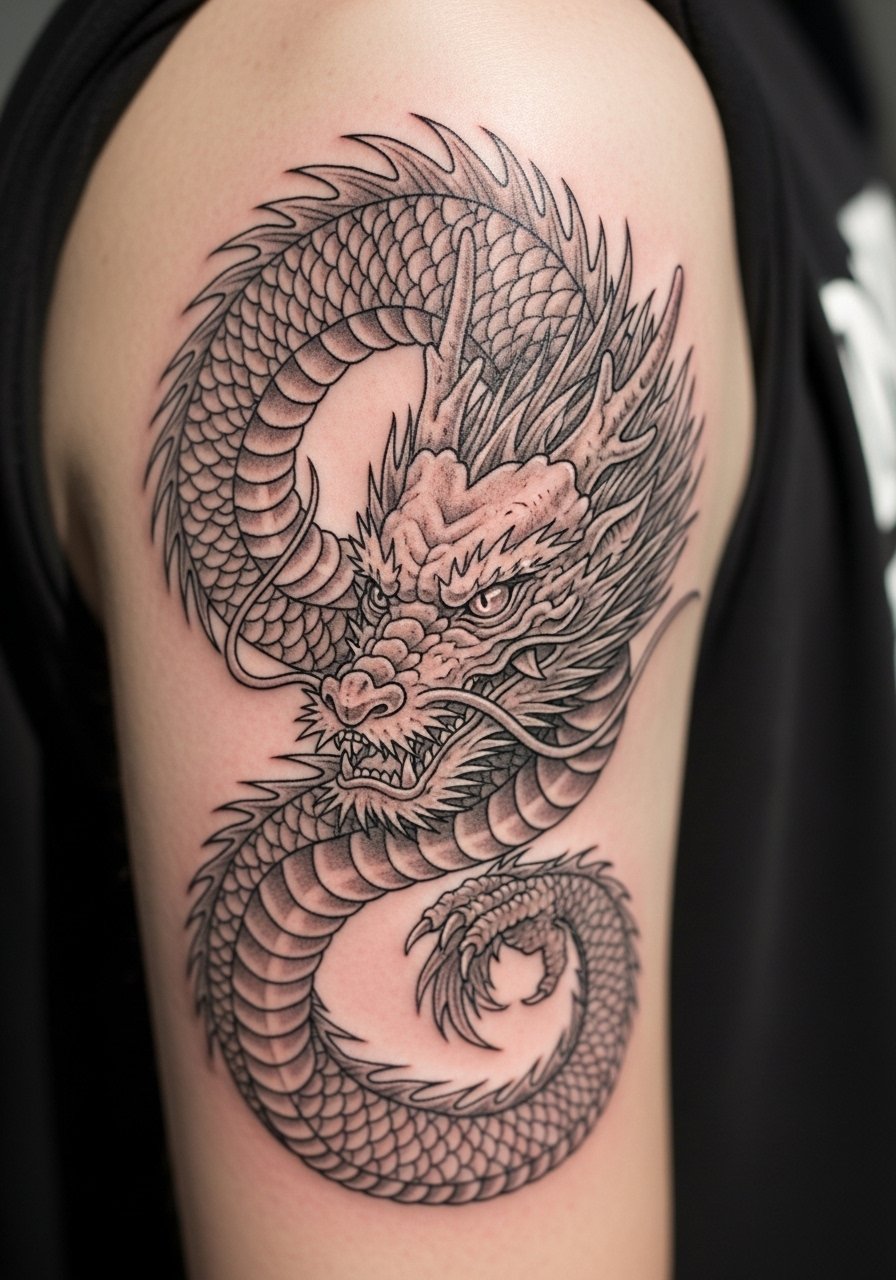
The first shop I visited showed me a micro-realistic dragon eye and it felt alive. This is for people who want realism but in a compact area. Upper arm pain is mild to moderate. Sessions typically last 1.5 to 3 hours for a single portrait. Ask your artist for contrast at the pupil and a soft fade at the edges. Micro-realism blurs faster on thin skin. From what I’ve seen, shading needs room to breathe. A common slip is asking for ultra-tiny textures that become muddled after a year. If you want this on the forearm instead, scale up by 20 percent to preserve detail.
4. Neo-Traditional Dragon on Ribcage
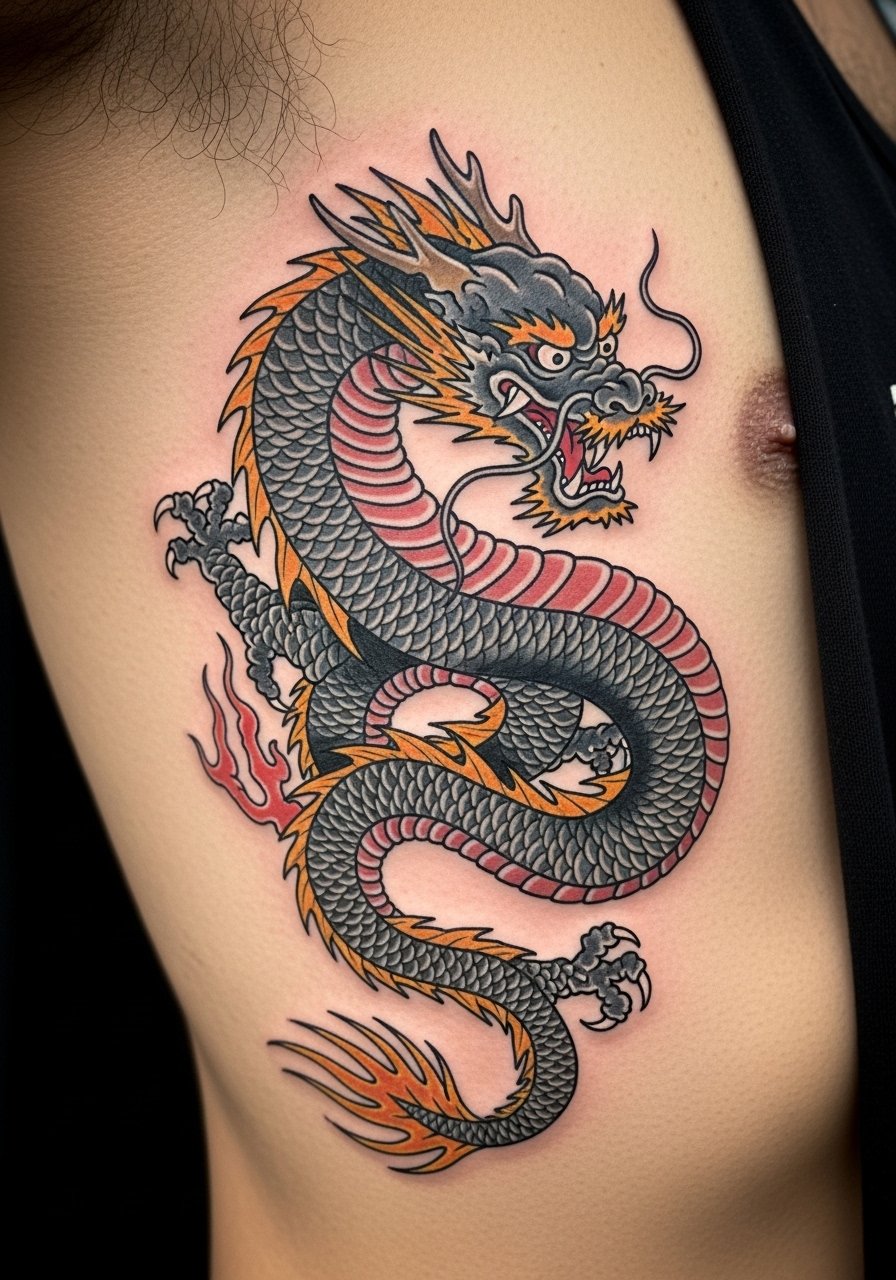
Fair warning, the ribcage is high on the pain scale. I got ink there once and it was intense for long runs. Neo-traditional gives you bold shapes and saturated color, which lasts well on the ribs. Sessions are often split into two because of the pain. Tell your artist to prioritize line strength for the first session. A common mistake is asking for tiny color gradients across ribs. Skin moves a lot there and soft gradients can patchy heal. Healed pieces keep their silhouette strongly. If you want more longevity, ask for slightly thicker outlines around the dragon.
5. Blackwork Dragon Armband On Upper Arm
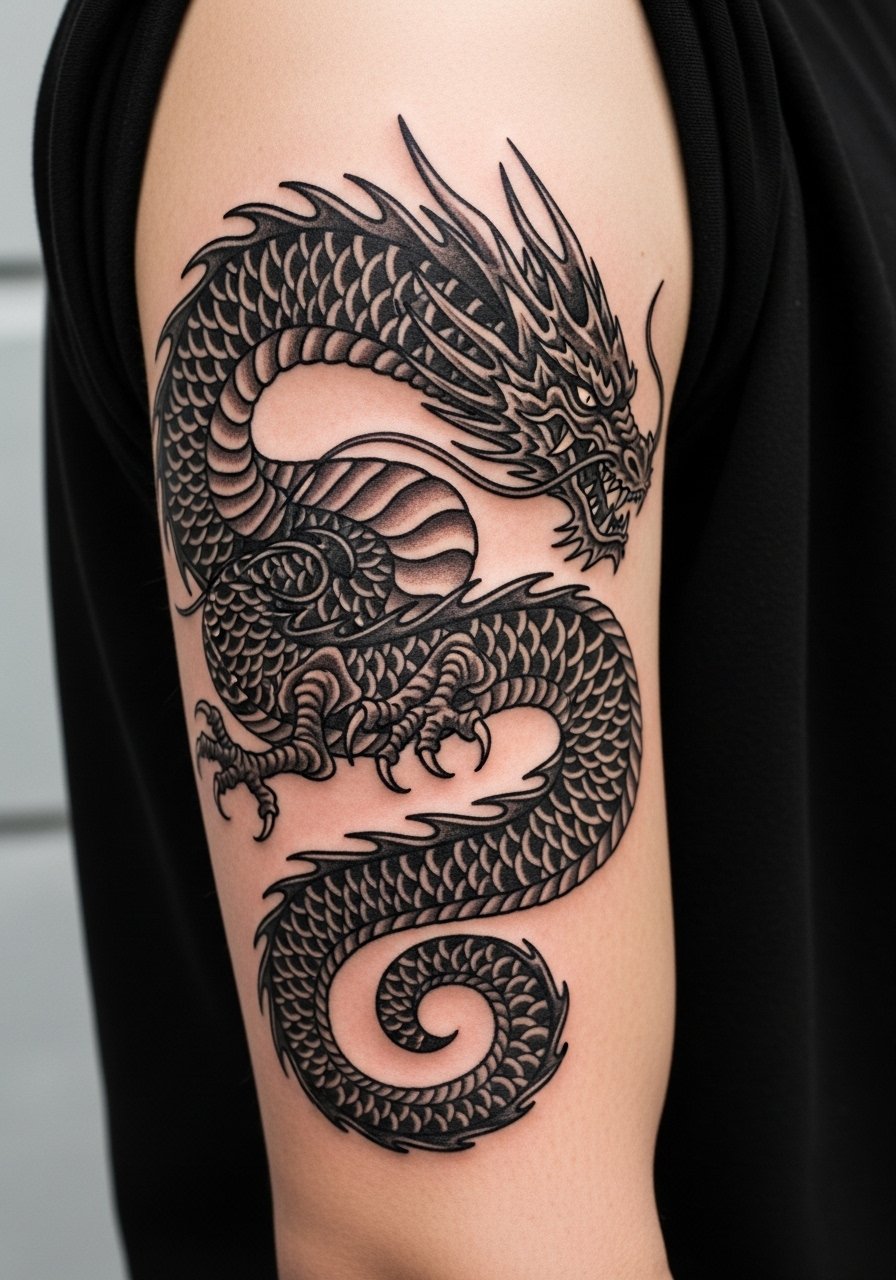
There is something about solid black wrapping a muscle that reads powerful across a room. Blackwork ages the best if the ink pack is dense and shapes are simple. Pain on the upper arm is mild. A single session can finish most armbands. Tell the artist you want strong negative space between the dragon scales and solid fills for durability. People often make the design too thin. Thin bands will soften within two years. If you plan a sleeve later, design the armband so it can integrate or stand alone.
6. Watercolor Dragon Splash On Shoulder Blade
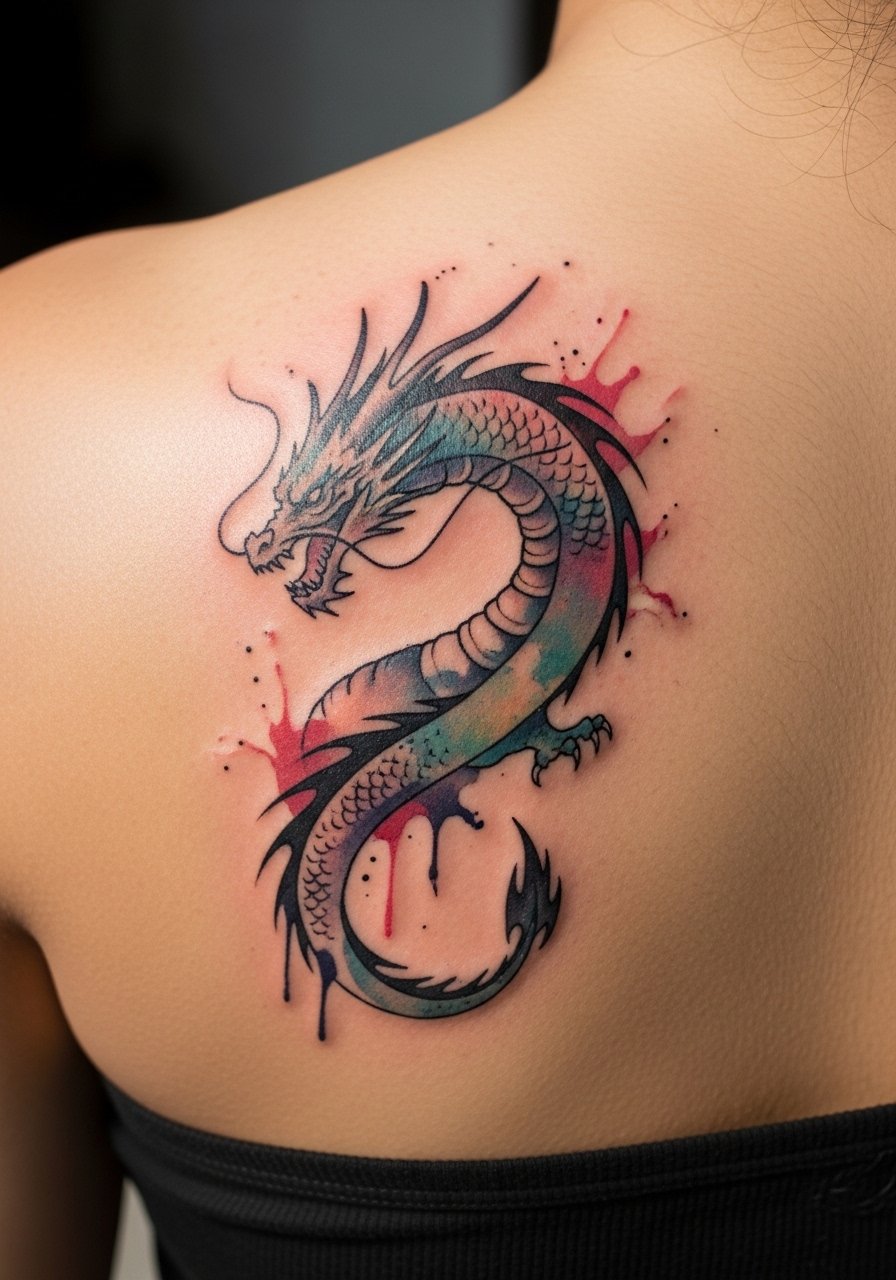
Most watercolor tattoos I saw from five years ago faded into muddy patches. This version works because the dragon has solid anchors, like a thin black outline around key shapes. Shoulder blade pain is moderate and sessions are usually 1 to 3 hours. Tell your artist to lock in small black anchors first, then layer the color. A common mistake is relying solely on wash effects with no contrast. Healed, the watercolor will soften but the composition stays readable if contrast exists. UV exposure will dim the colors fast. Keep sun protection in mind.
7. Minimalist Line Dragon Behind Ear
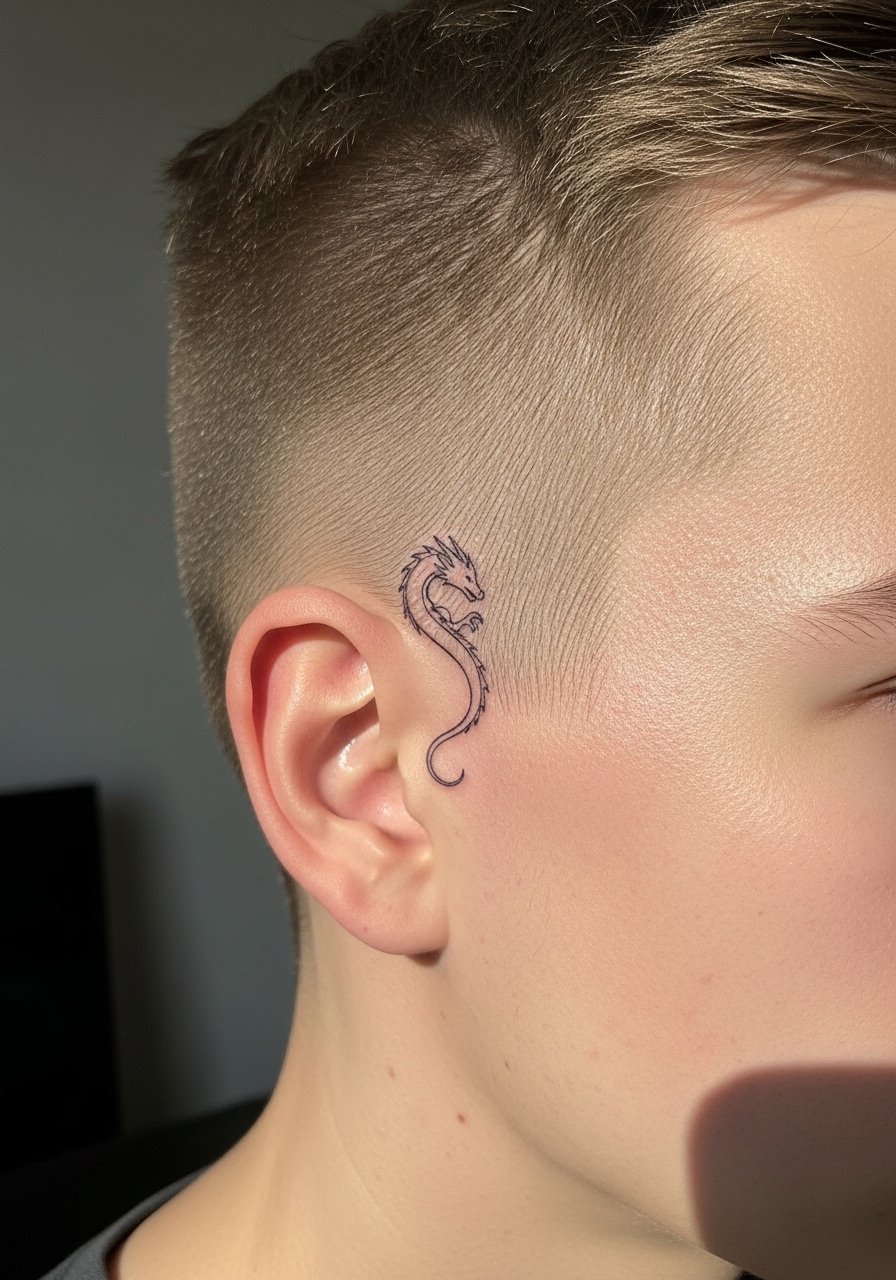
I recommend this for first-timers who want a tiny, meaningful piece. Behind ear pain is sharp but quick because of shallow skin. Sessions last under an hour. Ask for slightly bolder exit points at the tail and head to avoid full loss of shape as it ages. People often request ultra-thin continuous single-line dragons and then wonder why the curve goes soft at six months. The trick I learned is to keep the line simple but vary thickness subtly. At 2 years it will have softened. If you want it visible in short hair, tell the artist to place it lower.
8. Celtic Knot Dragon On Chest Sternum
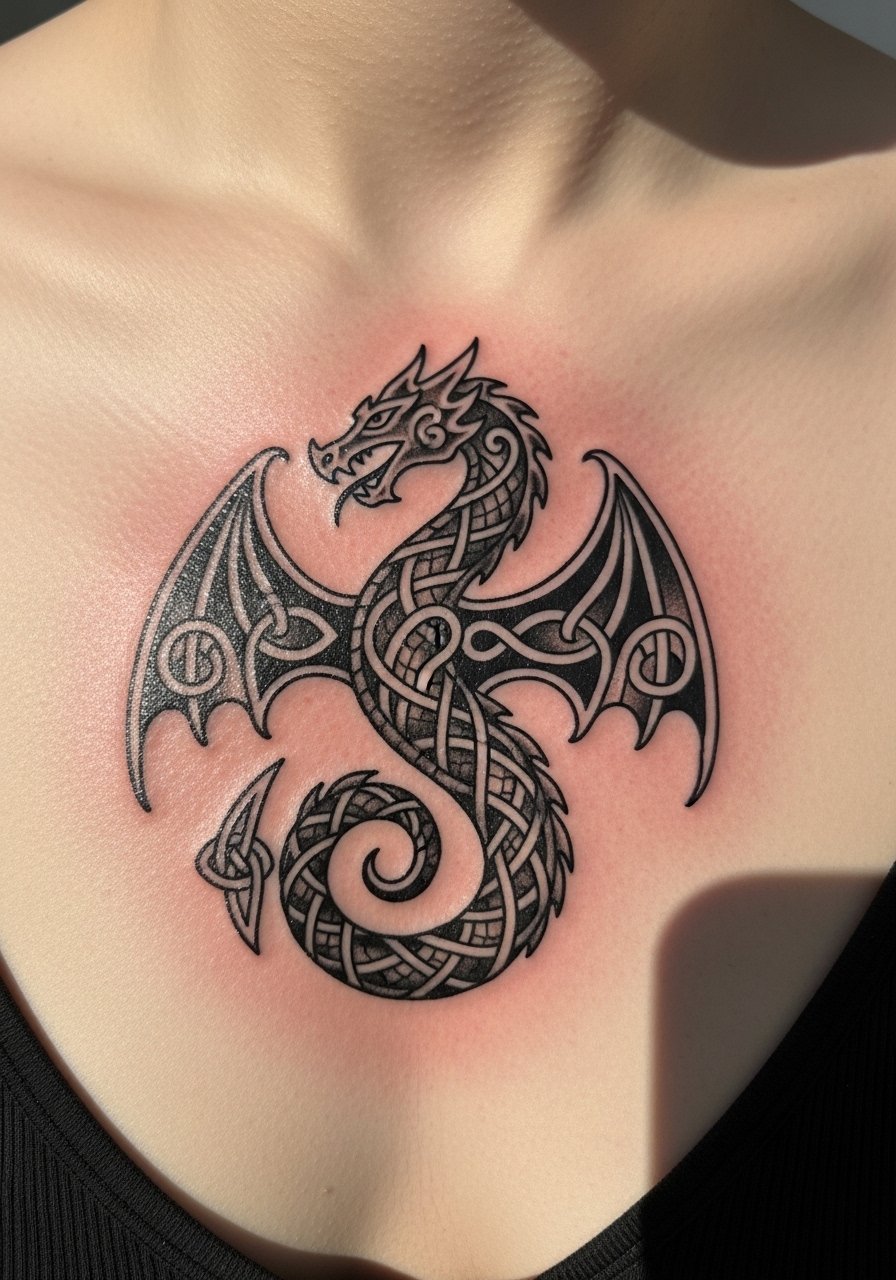
When I found a chest sternum knot, I loved how the loops mimic rib curves. Sternum pain is high because of bone proximity. Sessions usually break into short bursts. Ask your artist to map the knots over your sternum in the consultation so the center aligns with your bone structure. A common mistake is making knot loops too tight. Tight knots fray over time. Let the loops breathe. Healed, blackwork holds strongly here if the artist prioritizes thick linework. This suits people who want a central, symbolic piece.
9. Micro Dragon Finger Band On Ring Finger
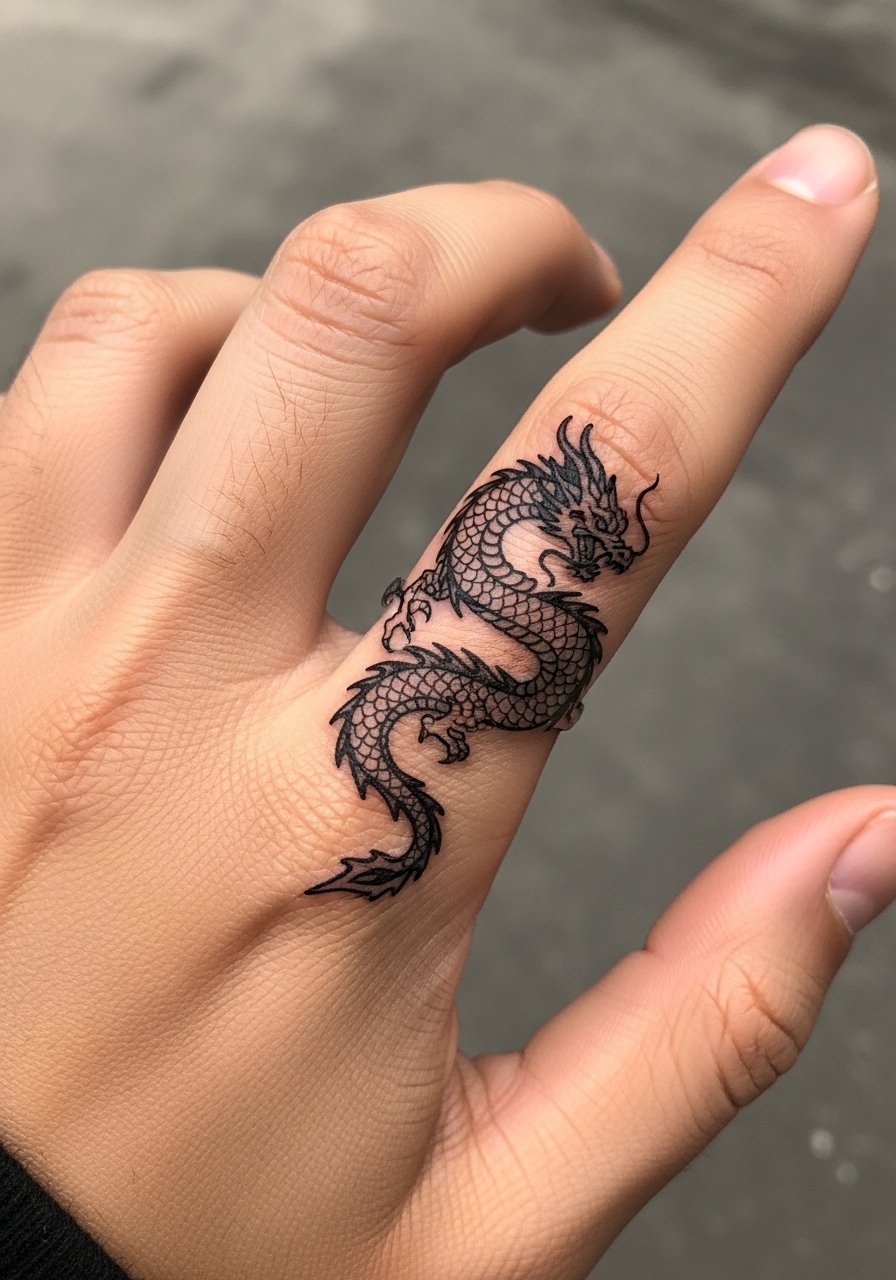
Small finger tattoos age faster. I had one fade dramatically within a year. A micro dragon band will require touch-ups. Pain is sharp but short. Sessions are quick, often under 45 minutes. Ask your artist for heavier line anchors at the top and bottom of the band. Many clients request consistent thin lines all around and then complain about patchiness. If you want longevity, accept bolder lines and expect a touch-up at 6 to 12 months. Consider a ring finger alternative like the outer side of the finger for better retention.
10. Geometric Dotwork Dragon On Calf
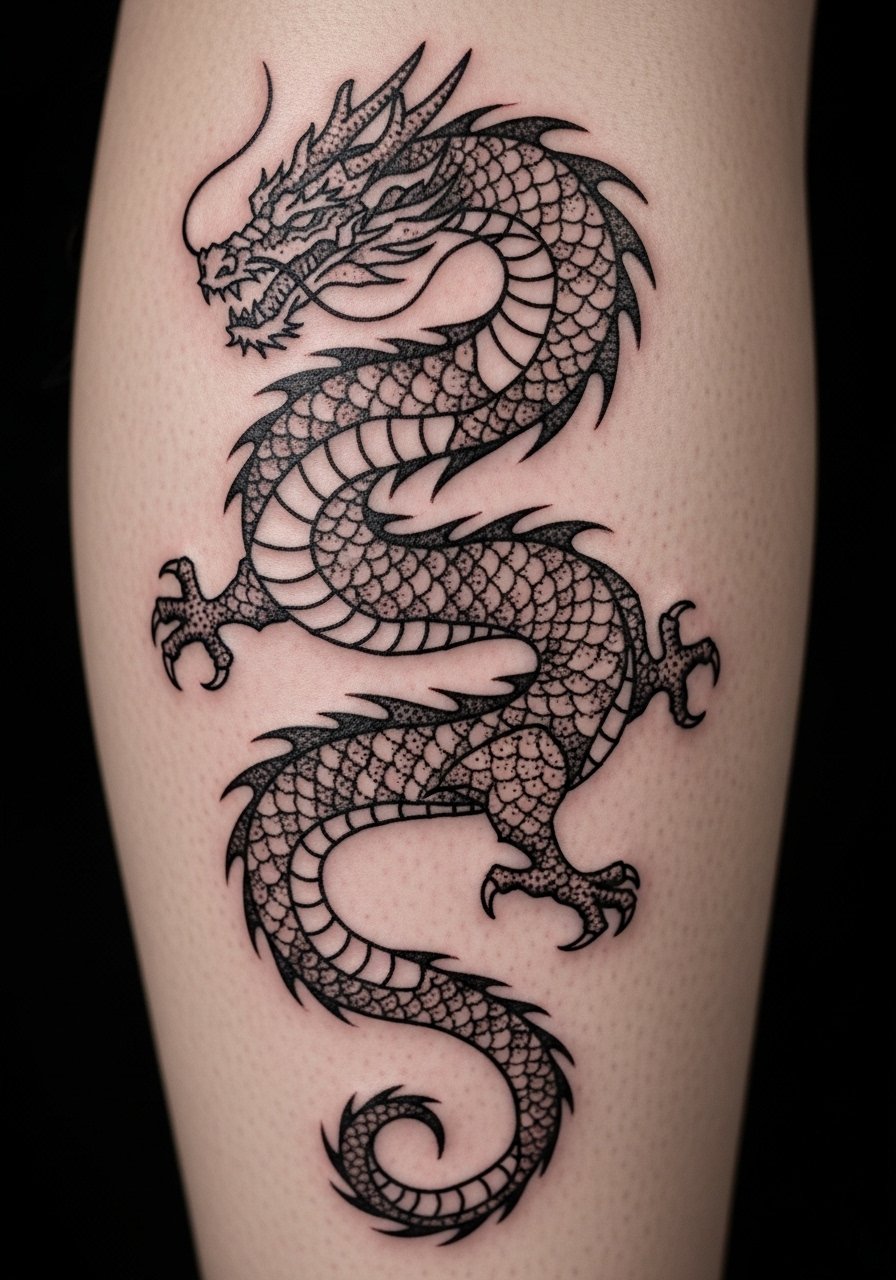
I first noticed this style at a convention booth and appreciated how the dotwork plays with muscle shape. Calf pain is low to moderate. Sessions run 2 to 4 hours for complex dot gradients. Tell the artist you want denser dots in shadow areas and lighter spacing in highlights. A common mistake is over-concentrating dots in tiny zones, which can become muddy. Dotwork ages well when scaled properly because the small marks become a cohesive texture. If placed on the inner calf it will settle differently than on the outer calf. Discuss placement in your consult.
11. Micro-Realism Eye Of Dragon On Nape
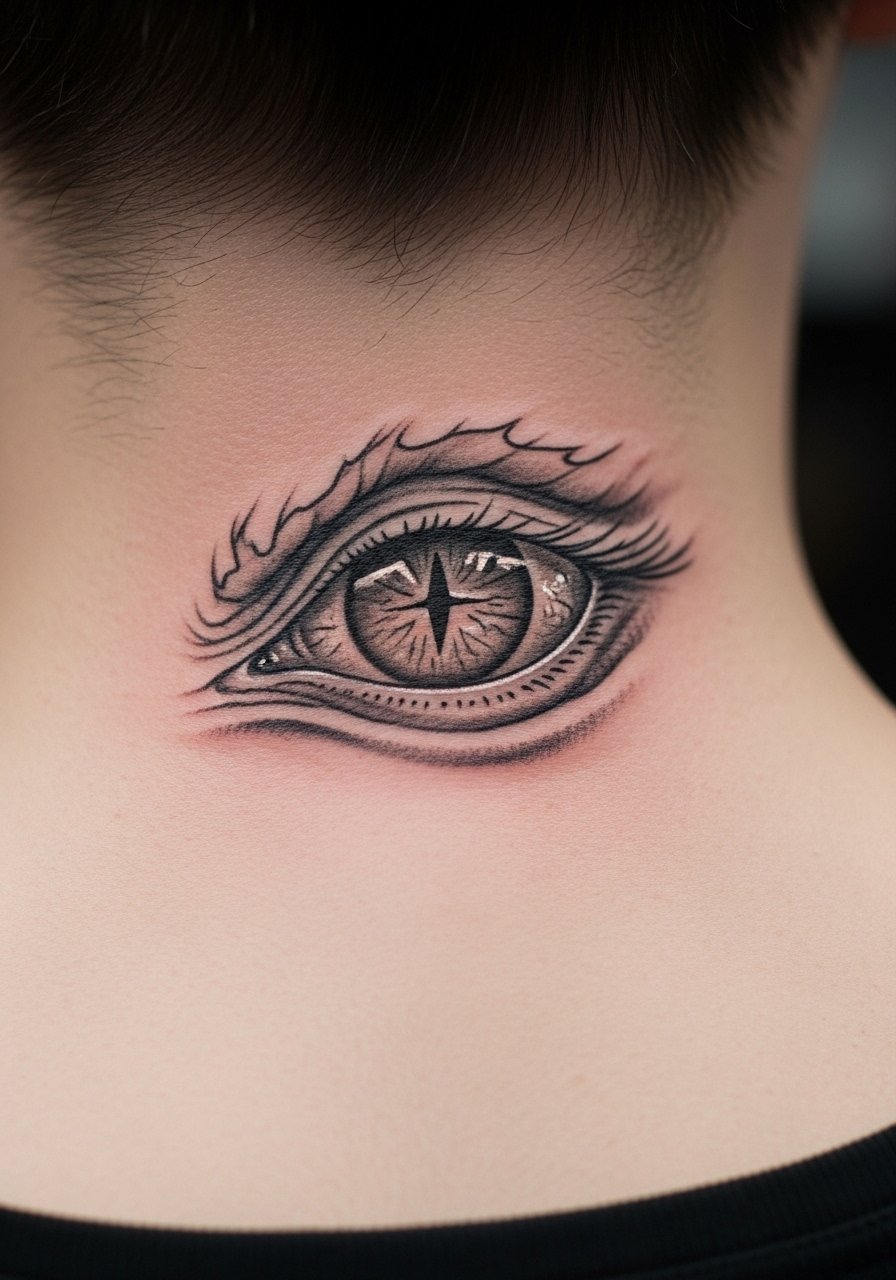
The nape presents a hidden canvas that peeks out when you want it to. Pain is moderate. Sessions are short. For micro-realism on the nape, specify the level of contrast you want. I found that artists who push for high contrast in the pupil preserve the focal point longer. A mistake people make is expecting hyper-detail to persist on this moving area. After a year, delicate textures soften. If you need the eye to read from a distance, scale it slightly larger than you think.
12. Illustrative Dragon Thigh Piece With Florals
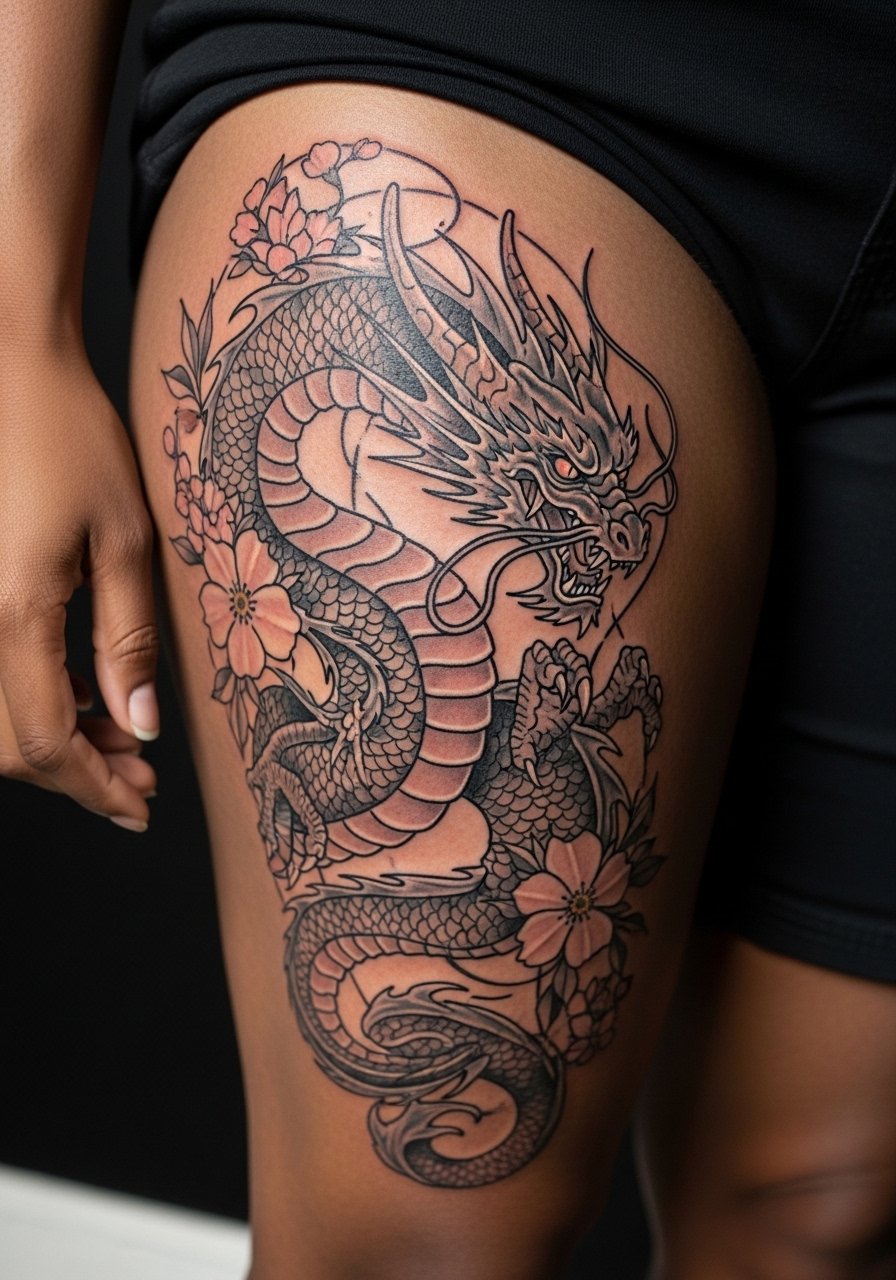
Thigh tattoos give you space for storytelling. Pain on the outer thigh is mild. Sessions can be long. I saw this style hold up well because artists leave breathing room around scales and flowers. Ask your artist to plan color zones and leave skin space between scale rows. A common mistake is overfilling the thigh with tiny details that blur when skin stretches. Healed, bold shapes and moderate textures look best. If you plan future legs work, tell your artist how you might expand the piece.
13. Single Line Continuous Dragon Across Collarbone
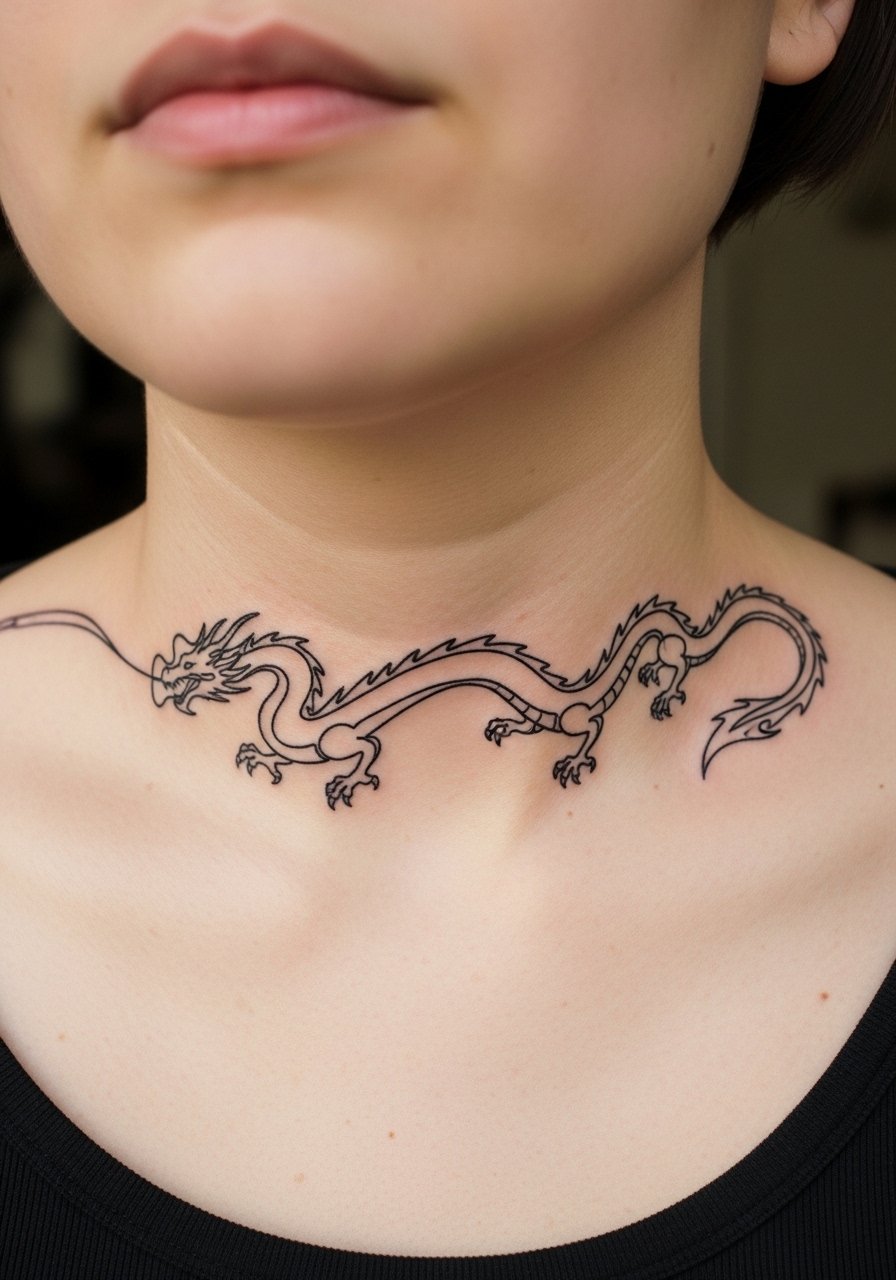
This opening is about consultation. Bring a drawn layout that follows your collarbone curve. Collarbones hurt and the skin is thin. Sessions are short but painful in spots. Ask your artist to anchor the line at three points to prevent total loss of shape as it ages. The mistake I often see is too thin a single line. That loses clarity by year two. Slightly thicker line weights at the head and tail will preserve the piece. If you have shoulder movement patterns that lift the skin, tell the artist during the consult.
14. Neo-Japanese Dragon Half Sleeve On Outer Arm
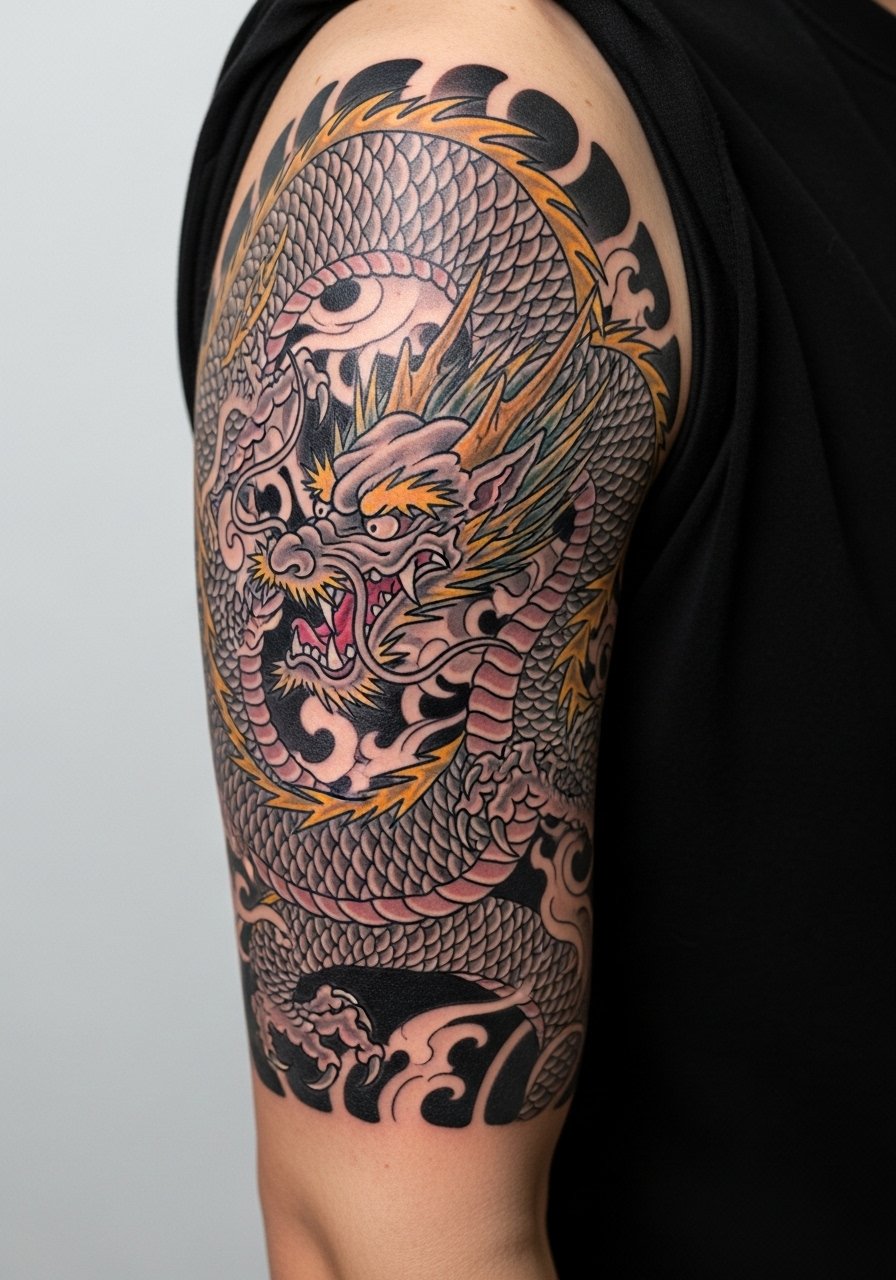
I saw one of these read like a mural. Outer arm pain is easy to manage. Half sleeves take multiple sessions but look cohesive because the dragon flows with muscle contours. During consultation, discuss how the head will sit near the shoulder and the tail toward the elbow. The common mistake is cramming too many background motifs. Keep backgrounds simpler. Healed, neo-Japanese with strong black will remain graphic. Plan for color refresh at one to three years if you want it vibrant.
15. Blackwork Dragon Chest Plate Over Pectorals
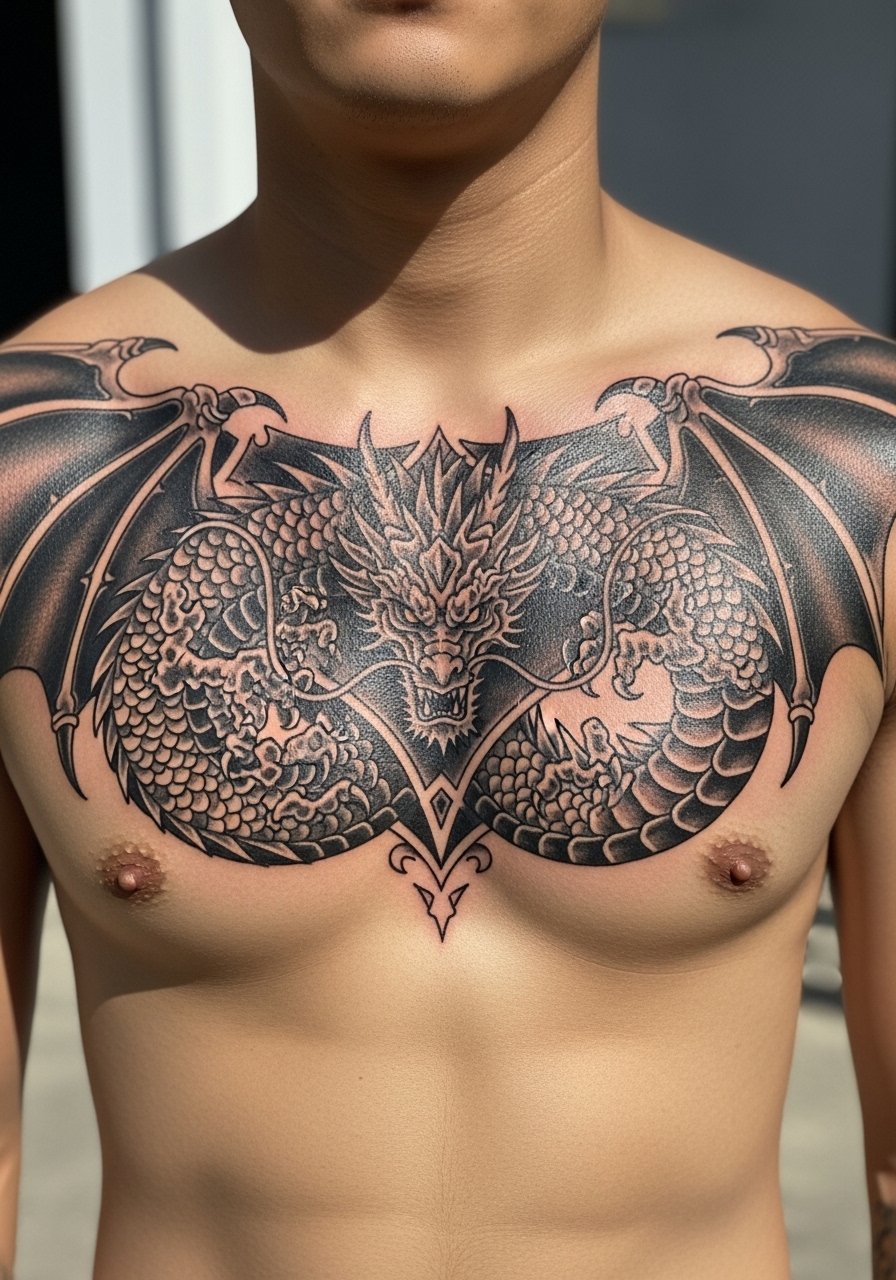
When I saw a blackwork chest plate, I noticed how it reads from across a room. Chest work can be painful along the sternum and less so over muscle. Sessions vary. Ask your artist to map the design so the dragon’s spine follows your chest contour. A common error is assuming thin black patterns will stay crisp. Solid fills and clear negative space are safer long term. If you plan to combine with neck tattoos later, plan spacing now. Healed, black plates are low maintenance compared to color pieces.
16. Watercolor Dragon Calf Sleeve With Galaxy Colors
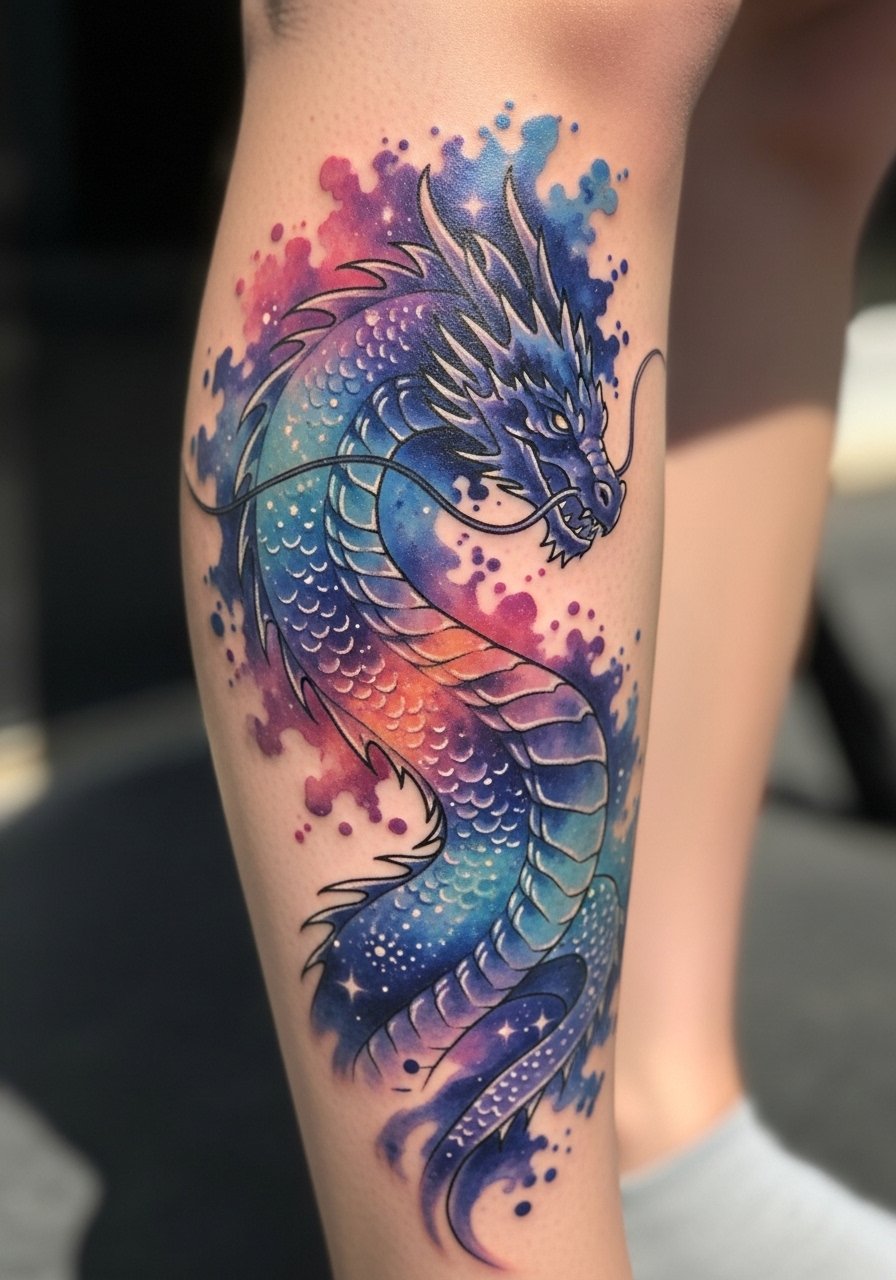
I first bookmarked this on an artist’s page because of the color palette. Calf skin accepts color well. Pain is manageable. The risk with watercolor is color migration or dulling. During the consult, ask for a few solid anchor points in black or dark blue to hold the composition together. People treat watercolor like a painting on skin and forget contrast. Healed, colors will soften. Use dedicated tattoo sunscreen on this area to preserve the vibrancy. If you often run or cycle, tell the artist so they can plan areas of less motion.
17. Minimal Outline Dragon On Ankle
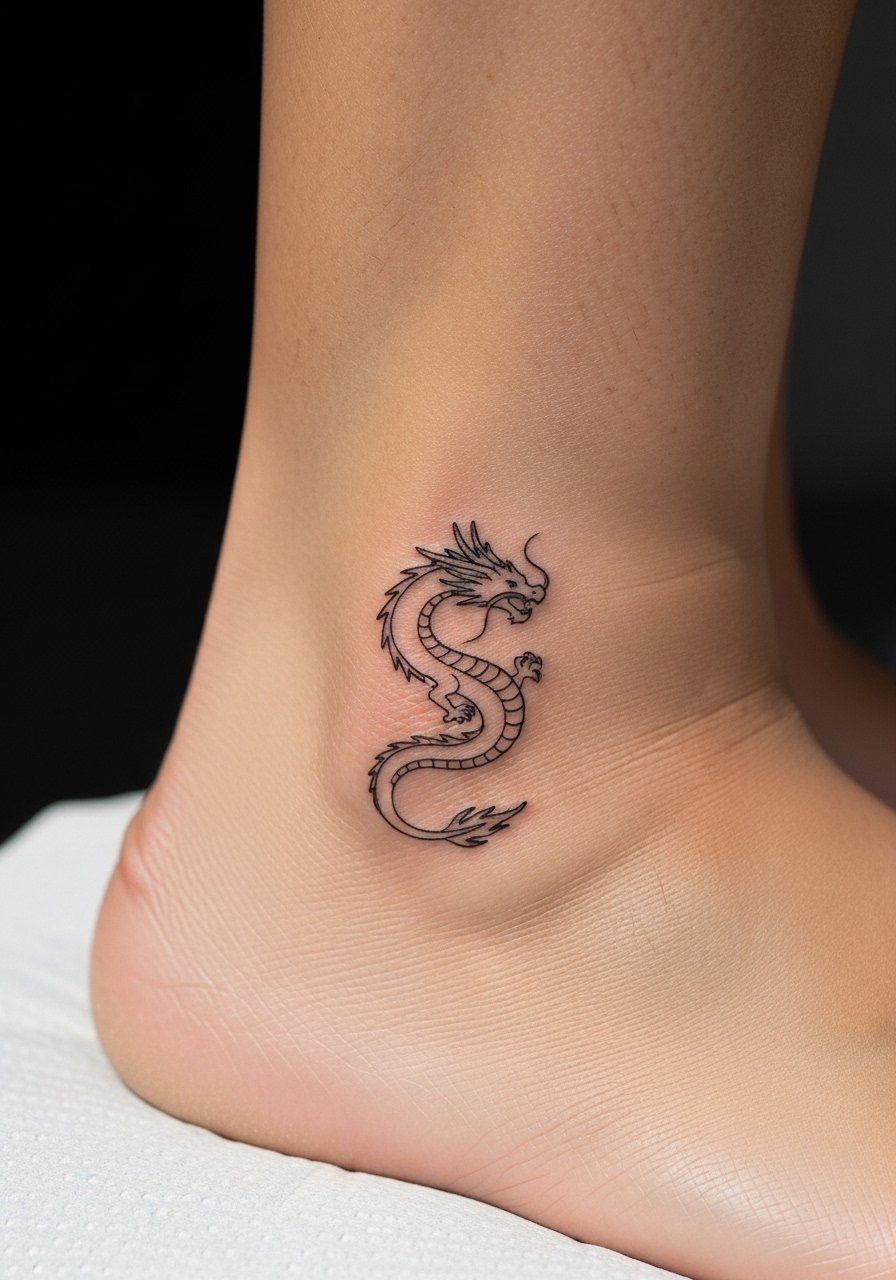
Ankles are notorious for fading. I had a friend who needed touch-ups there often. Pain is sharp due to bone proximity. Sessions are brief. For an outline dragon, ask for reinforced linework at contact points and consider placing it slightly above the ankle bone. A frequent mistake is asking for single-fine outlines hugging the bone. Those thin lines spread fast. Expect a touch-up within a year. If you wear socks often, consider placement on the outside ankle to reduce friction.
18. Illustrative Dragon Rib Cage With Script
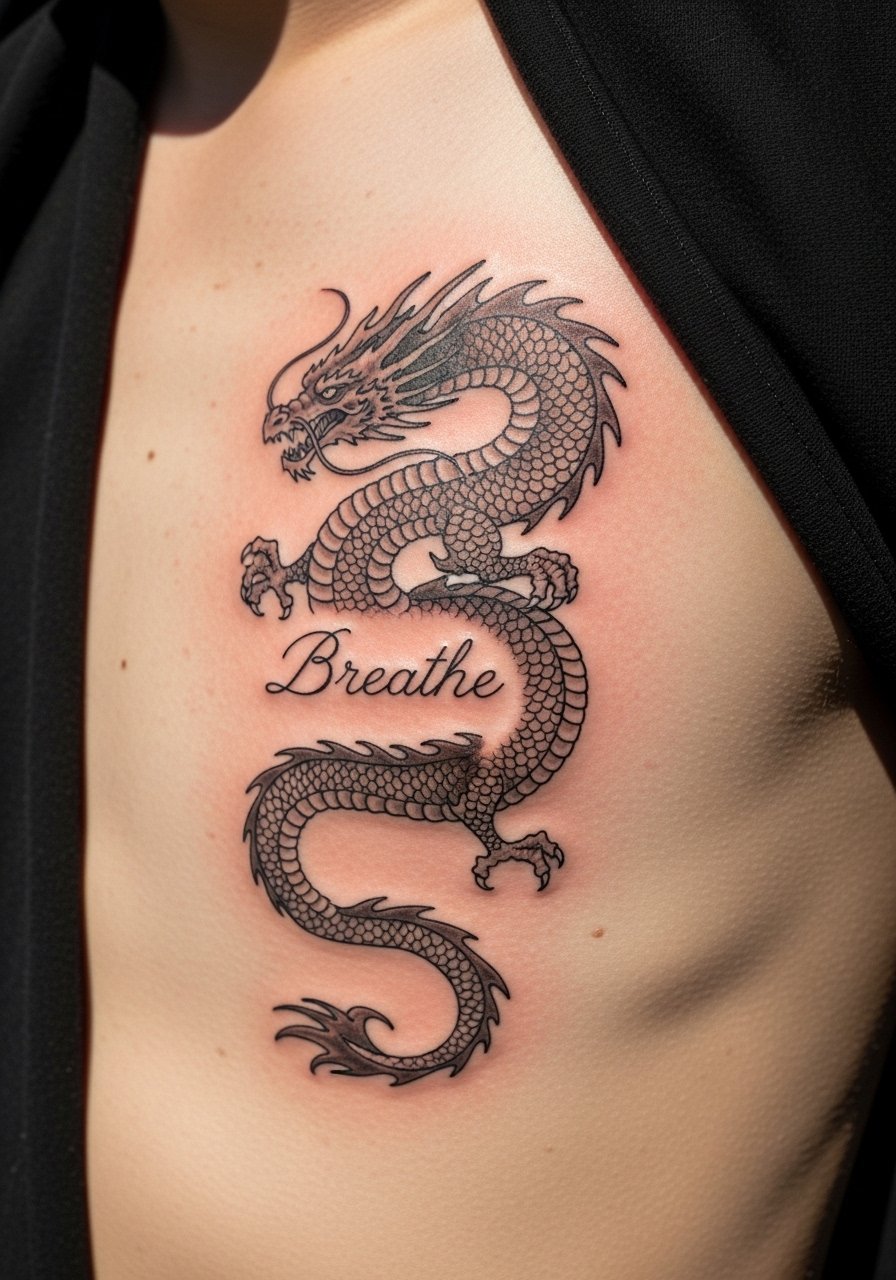
I recommend clarity in script. A friend had a rib piece with tiny lettering that blurred. Rib pain is intense. When you talk to your artist, specify the exact script weight for the word you want. In my experience you need slightly heavier letters for rib placement. A mistake is expecting hairline script to remain crisp there. Healed, the dragon’s bold shapes will outperform the script if the letters are too delicate. If you want the script to remain legible, increase font size a bit and ask for solid strokes.
19. Bioluminescent UV Dragon Shoulder Cap
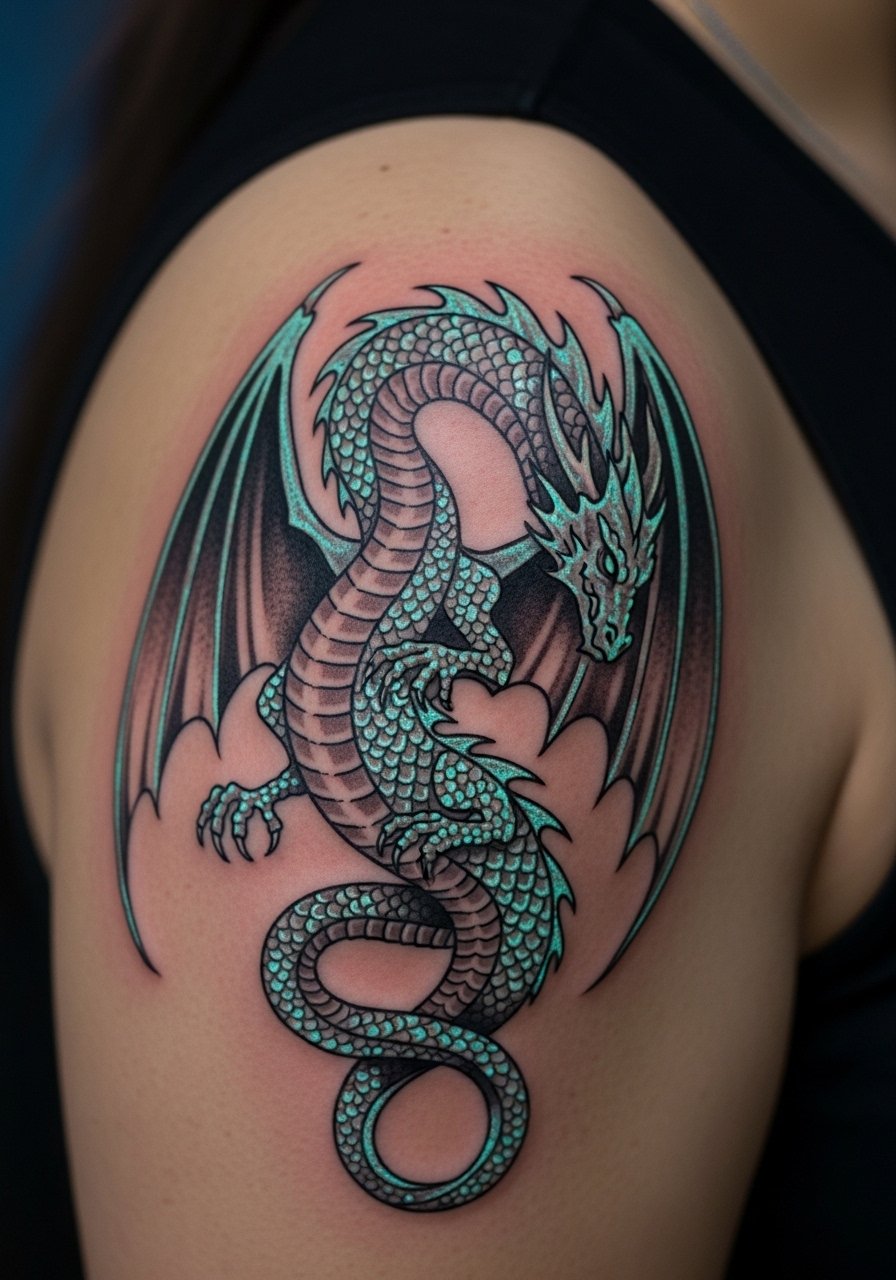
UV ink makes the design pop under blacklight. I have one friend who loved club lighting for show pieces. Shoulder cap pain is moderate. Sessions are similar to color work. Ask your artist about the UV ink brand and long-term stability. Many artists I’ve talked to recommend combining UV accents with solid black anchors. The mistake is relying wholly on UV for design readability in daylight. Healed, the UV is subtle in natural light and needs black or color base for daytime definition. Expect more frequent touch-ups for full vibrancy.
20. Micro Dragon Behind Knee Pop Of Color
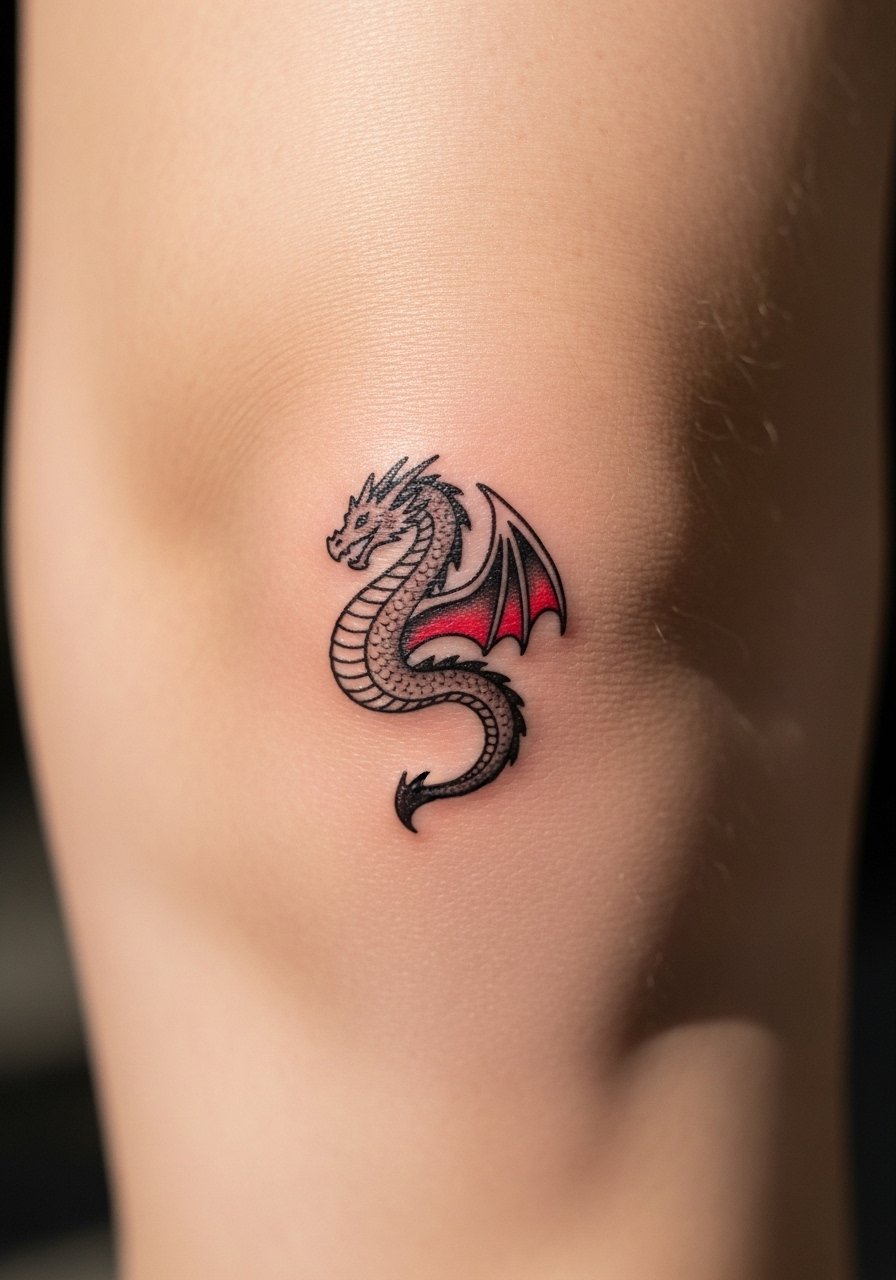
Behind the knee is a tricky, high-movement area. Pain is moderate to high. Sessions are short. I advise avoiding too much detail because skin folding will distort it. Ask your artist to place color accents where the skin stretches least. A common mistake is cramming scales into the folds. Healed, small motifs can look playful, but expect softer edges at six months. If you do lots of squatting or athletic movement, discuss that in your consult so they can plan placement accordingly.
21. Koi-Dragon Fusion On Lower Leg
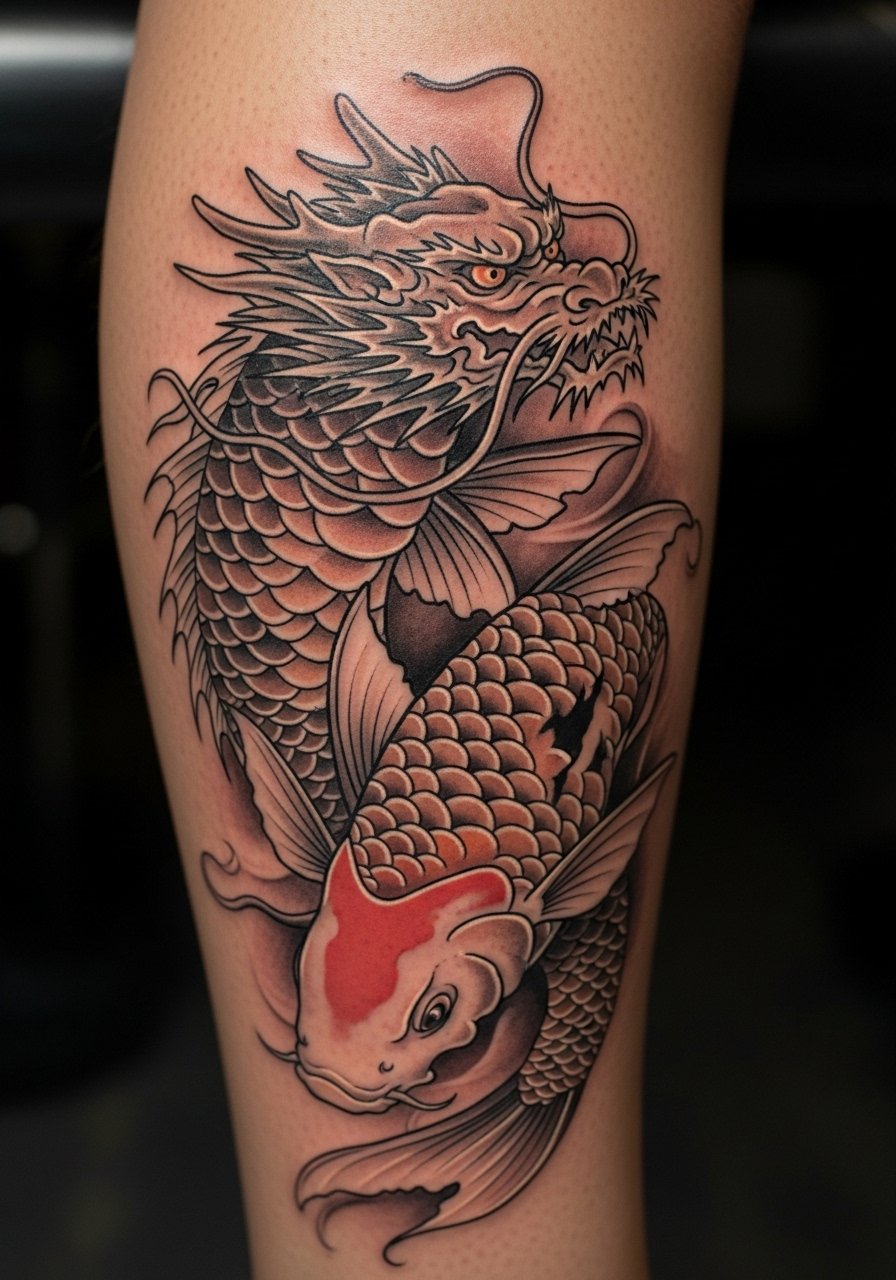
I fell for this hybrid at a pier tattoo fair. It combines the flow of a koi with dragon features for symbolic movement. Lower leg pain is mild. Sessions run two to four hours. During consultation, show pictures of both koi and dragon elements you like. The mistake is trying to cram both styles at microscopic scale. Keep scale moderate so the fish scales and dragon anatomy remain readable. Healed, blended motifs age well because the larger scale reads even when minor texture softens.
22. Ornamental Mandala Dragon On Sternum
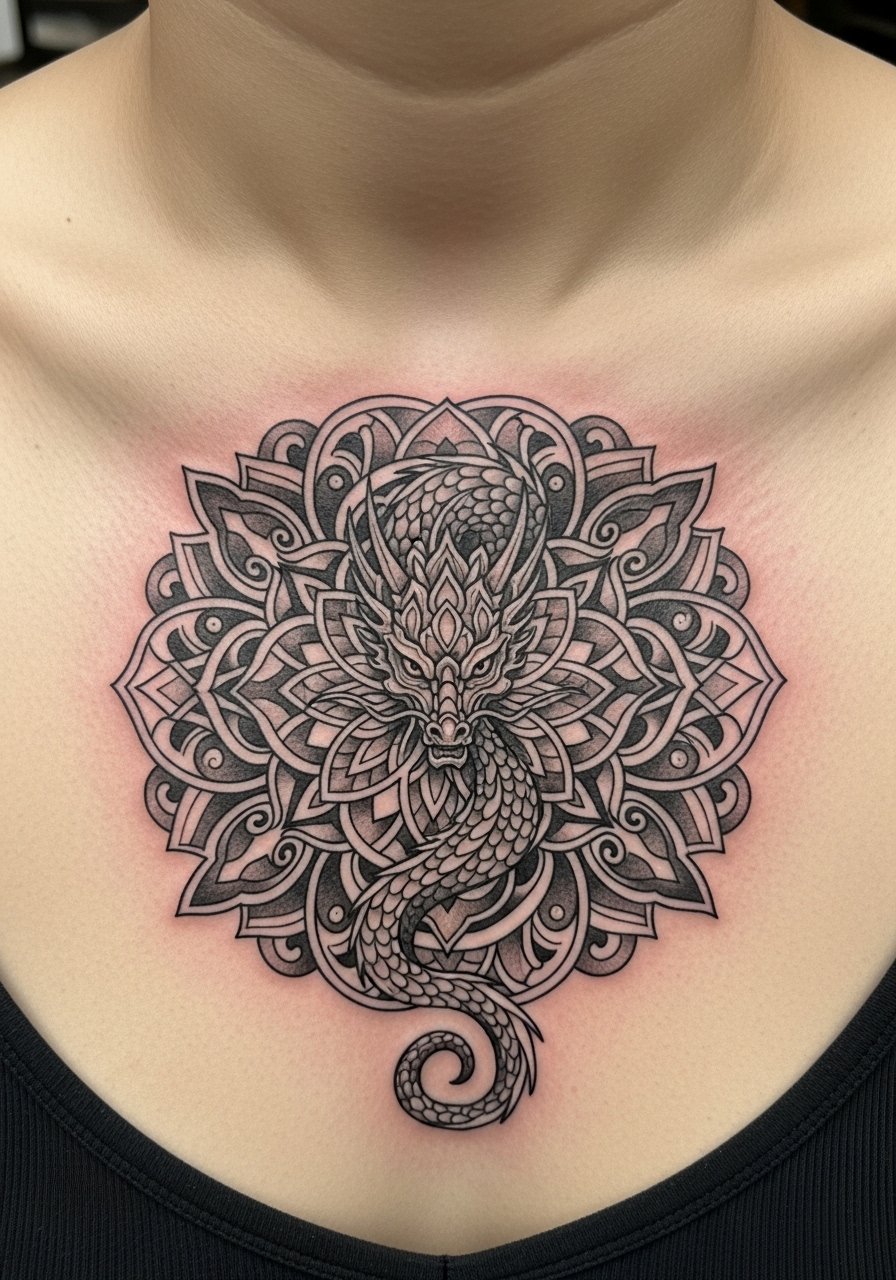
I love how symmetry plays over the sternum. Pain is high. Sessions often are broken into two. Ask your artist to map the mandala with you to align with rib contours. People often ask for intricate lacework that ends up bleeding into a gray mass. Keep key rings of the mandala bold. A healed piece retains structure when primary rings are solid. If you want subtle fill work, expect touch-ups within two years.
23. Tiny Dragon Behind Ear With Gem Accent
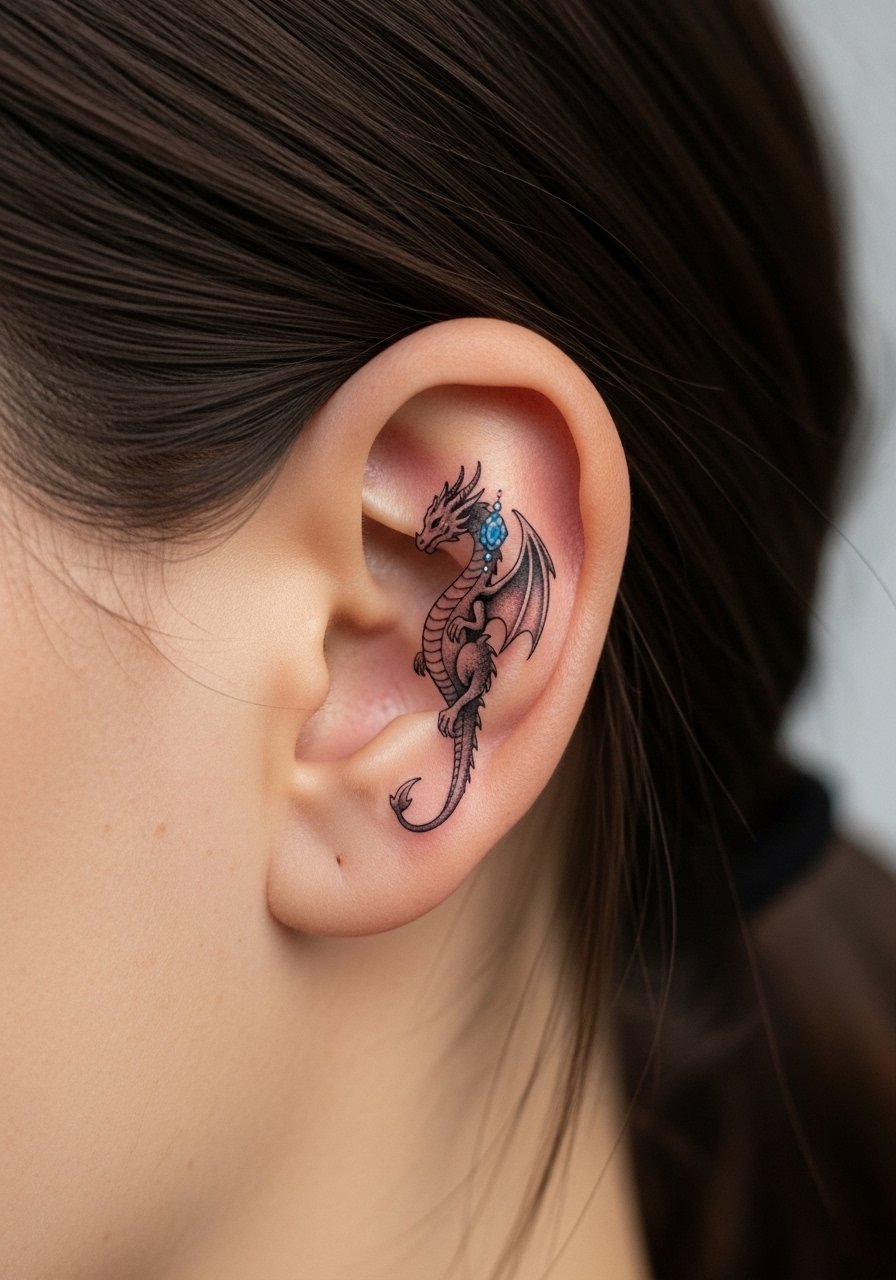
This opening mentions a common mistake. People pick tiny jewels that look great fresh and then dim quickly. Behind ear is fast pain and fast heal. Ask for a tiny dark anchor point near the gem so the shape lasts. I advise slightly larger gem sizes than you imagine. Healed gems soften. If you want it visible with short hair, tell the artist exactly where to place it during the consult.
24. Tribal Dragon Lower Back With Flowing Tail
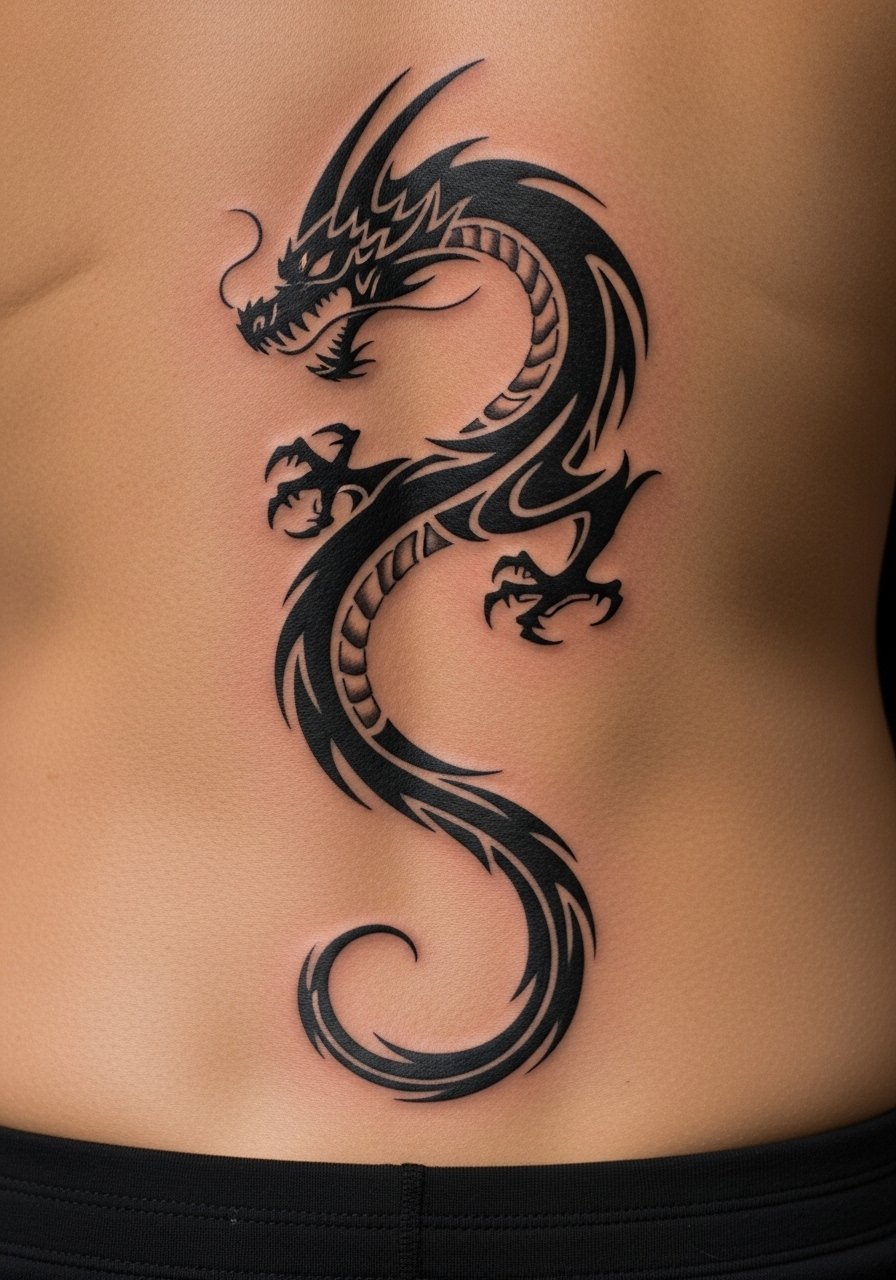
Lower back tribal pieces used to be trendy and still work when well composed. Pain varies by area. Sessions are moderate in length. The key is letting the tail flow into natural lower back curves. A standard error is overcomplicated tribal knots that read messy after healing. Solid, bold lines are more reliable. Healed, the design looks graphic and easy to integrate with adjacent work.
25. Dragon Skull Combo On Forearm
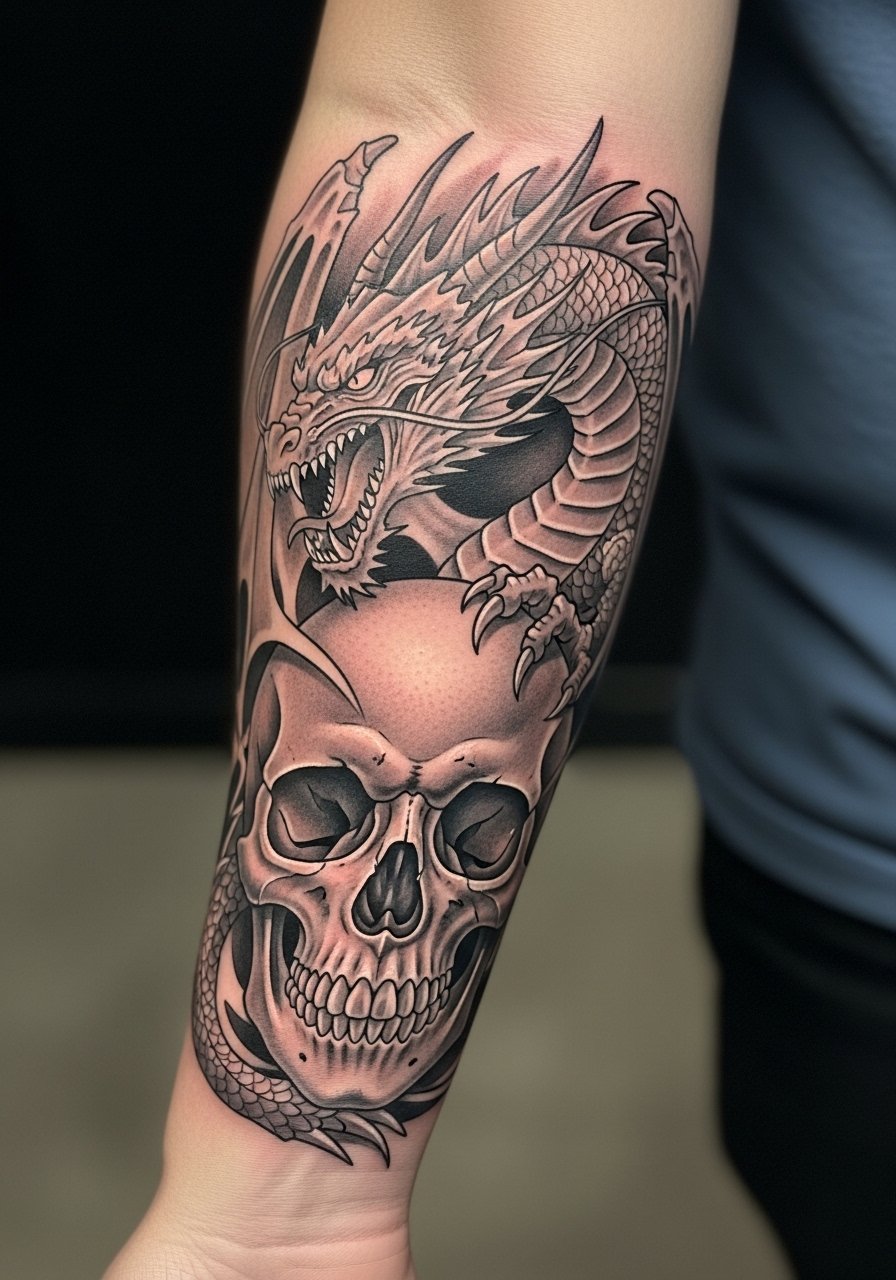
I noticed this hybrid at a shop where collectors liked darker motifs. Forearm pain is manageable. Sessions can be 2 to 4 hours. When you consult, decide if you want realism or illustrative shading. Mixing the two requires the artist to commit to clear contrast zones. Many people pick mixed textures without defined contrast and then the skull and dragon wash together. Healed, a balanced mix holds if the artist locks in the darker anchor tones first. Forearm placement makes this visible and dramatic.
26. Micro Dragon Behind Wrist Peeking Over Watch
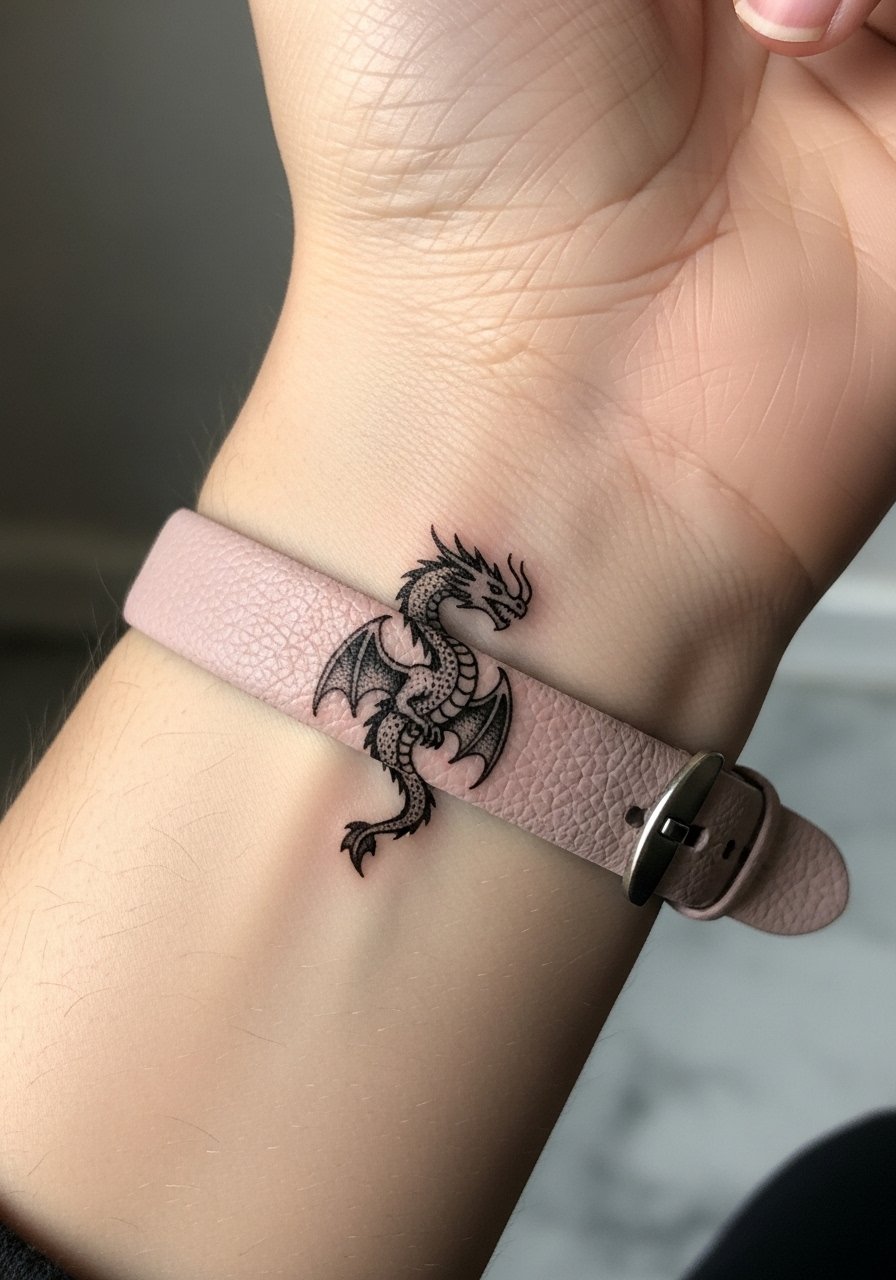
I recommend considering how jewelry will sit. A micro dragon behind the wrist can be obscured by watch bands and bracelets. Pain is quick and sharp. Sessions are fast. Tell your artist exactly where your watch or bracelet sits so the dragon peeks out where you want it. A common oversight is placing the design under a bracelet line, leading to constant rubbing and fading. Healed, small designs near wearable items need more frequent refreshes.
27. Minimalist Geometric Dragon On Inner Bicep
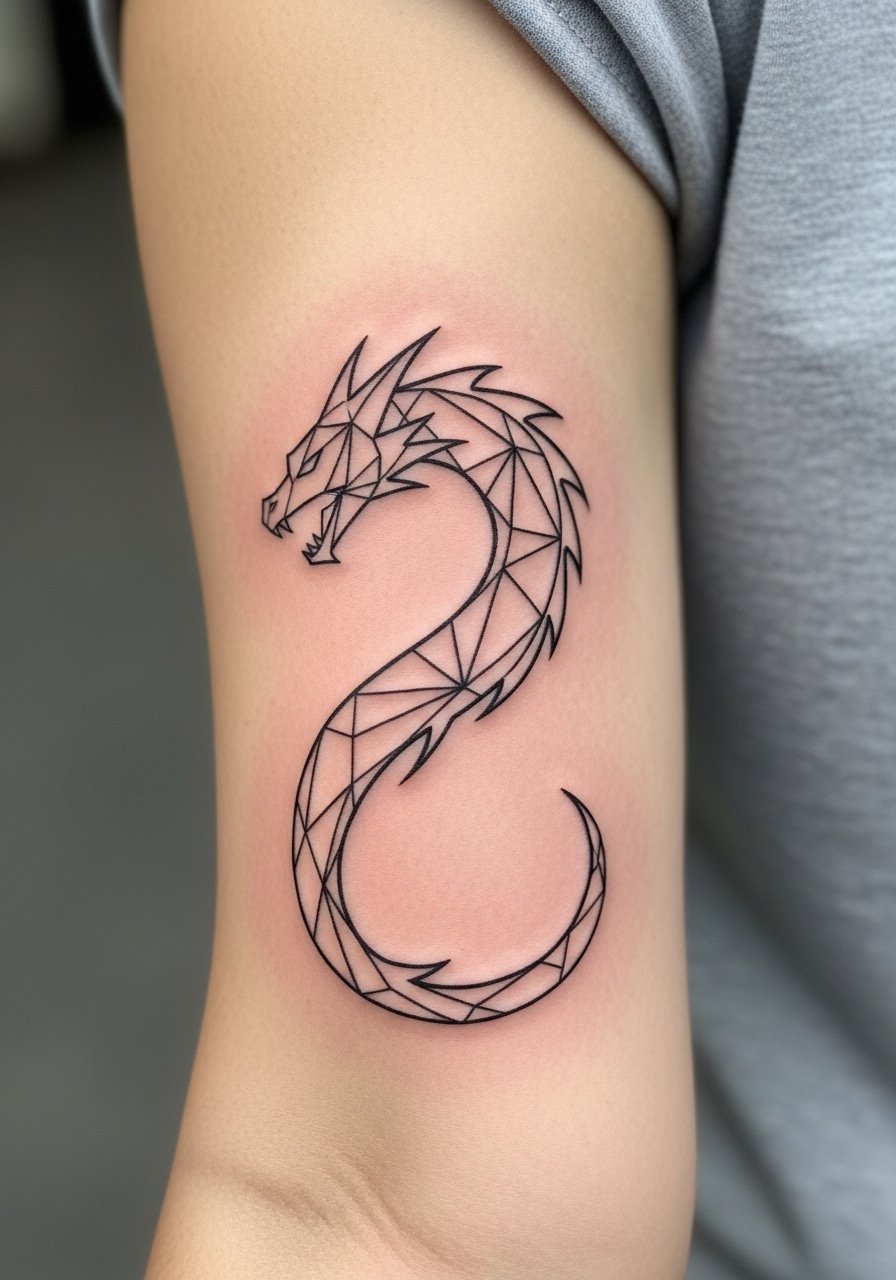
Inner bicep placement is personal and often hidden. Pain is moderate. Sessions last 1.5 to 2.5 hours. I suggest telling your artist how you flex your arm so geometric shapes align with muscle definition. A typical mistake is forcing perfect geometry onto curved muscle without accounting for tone. Healed, clean geometric shapes read well if lines are given slight allowances for the bicep bulge. If you plan a sleeve, discuss expansion plans.
28. Micro-Realism Dragon Scale Patch On Foot Top
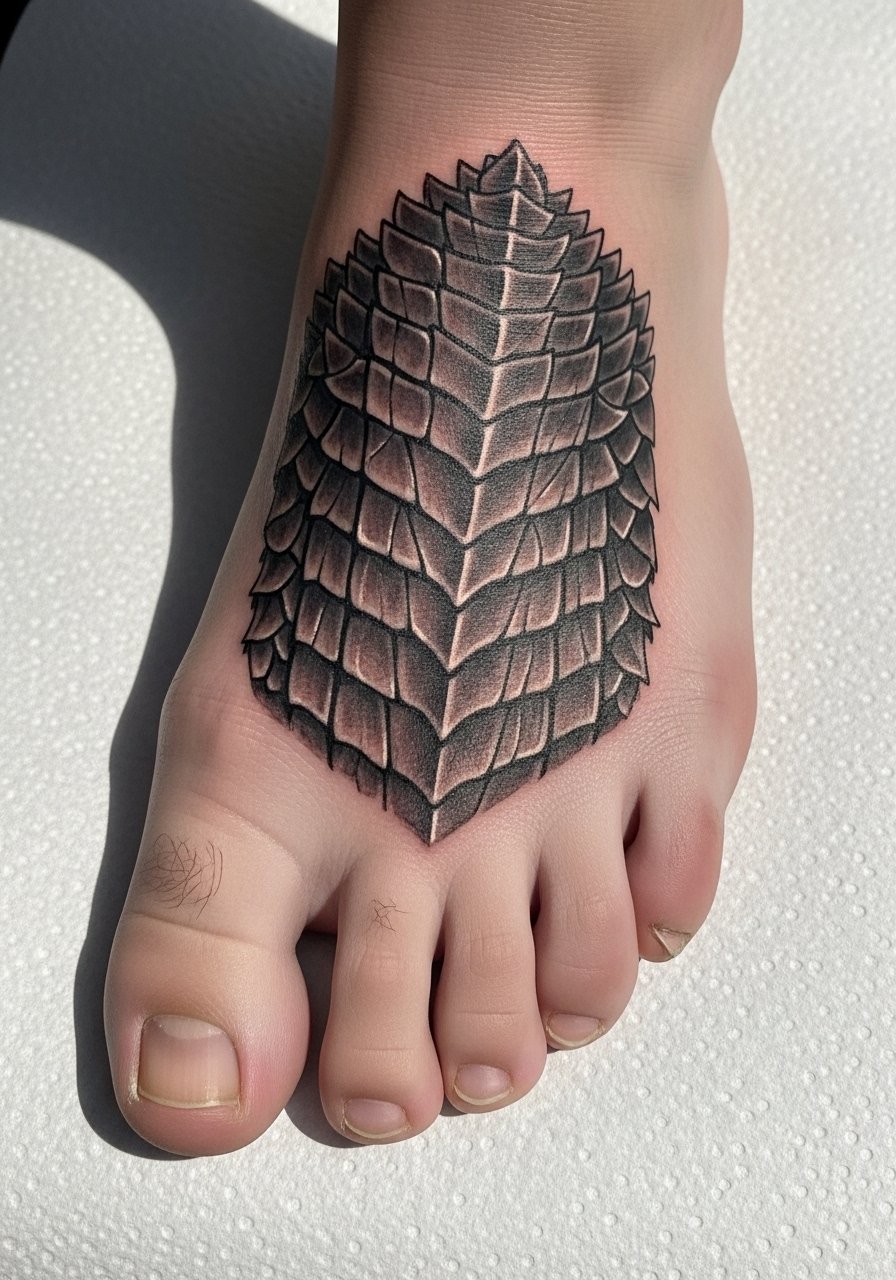
Feet are high maintenance with friction from shoes. I had a foot piece that needed touch-ups early. Pain is high. Sessions are short. For a scale patch, ask your artist to limit detail near areas that rub. Many people place intricate scales over zones that constantly flex. Healed, the patch looks great if positioned between high-friction seams. Expect a touch-up at six months to a year depending on footwear habits.
29. Scripted Dragon Quote With Dragon Spine On Forearm
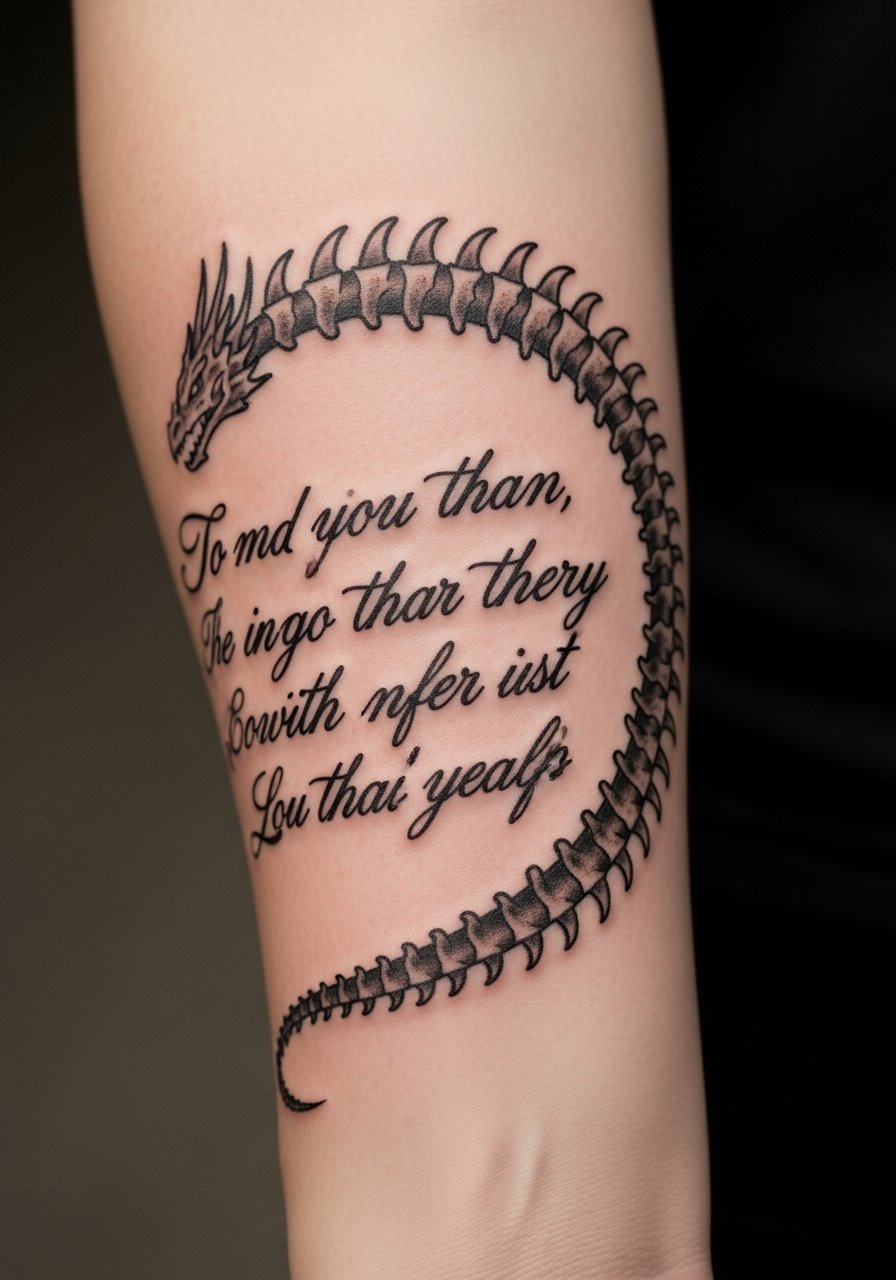
I like tattoos that combine line drawing with text. For forearm script paired with a dragon spine, choose a font weight that matches the illustration. Forearm pain is mild. Sessions are moderate. A mistake I see is choosing hairline script that fades faster than the accompanying illustration. When you consult, ask for script with slightly heavier downstrokes to match the lineweight. Healed, the composition reads balanced if the artist sets matching contrast.
30. Negative Space Dragon Scar Camouflage On Scar Site
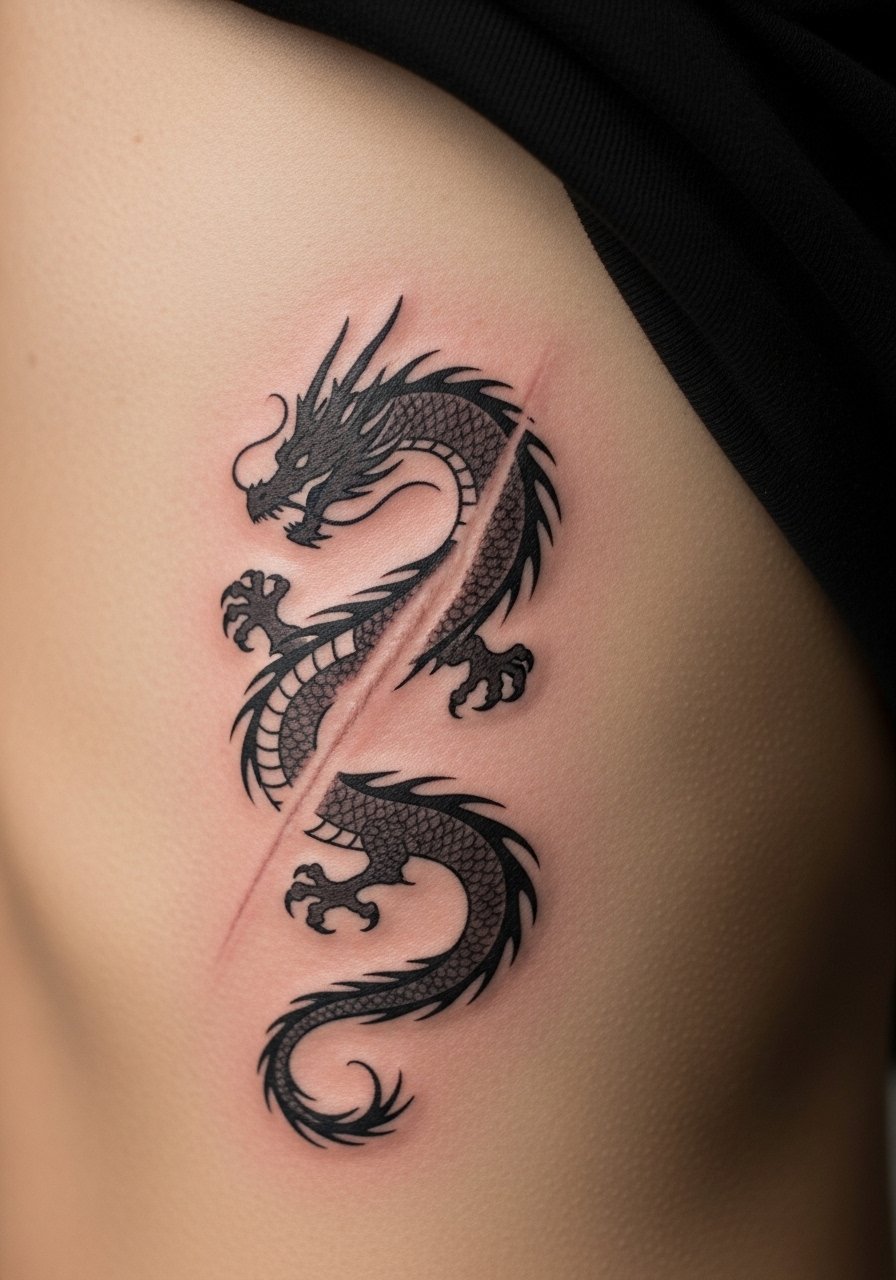
I worked with someone who used a dragon to mask a long surgical scar. Negative space works because it uses untouched skin as part of the design. Pain varies by scar sensitivity. Sessions often require careful test shading. Tell your artist about scar texture and healing history. A common mistake is expecting full coverage like normal skin. Scarred tissue takes ink differently. From what I’ve seen, artists who plan negative shapes around scar lines get the most natural-looking results. Healed, the scar can appear integrated but may need touch-ups.
31. UV Accent Micro Dragon On Shoulder Blade For Festivals
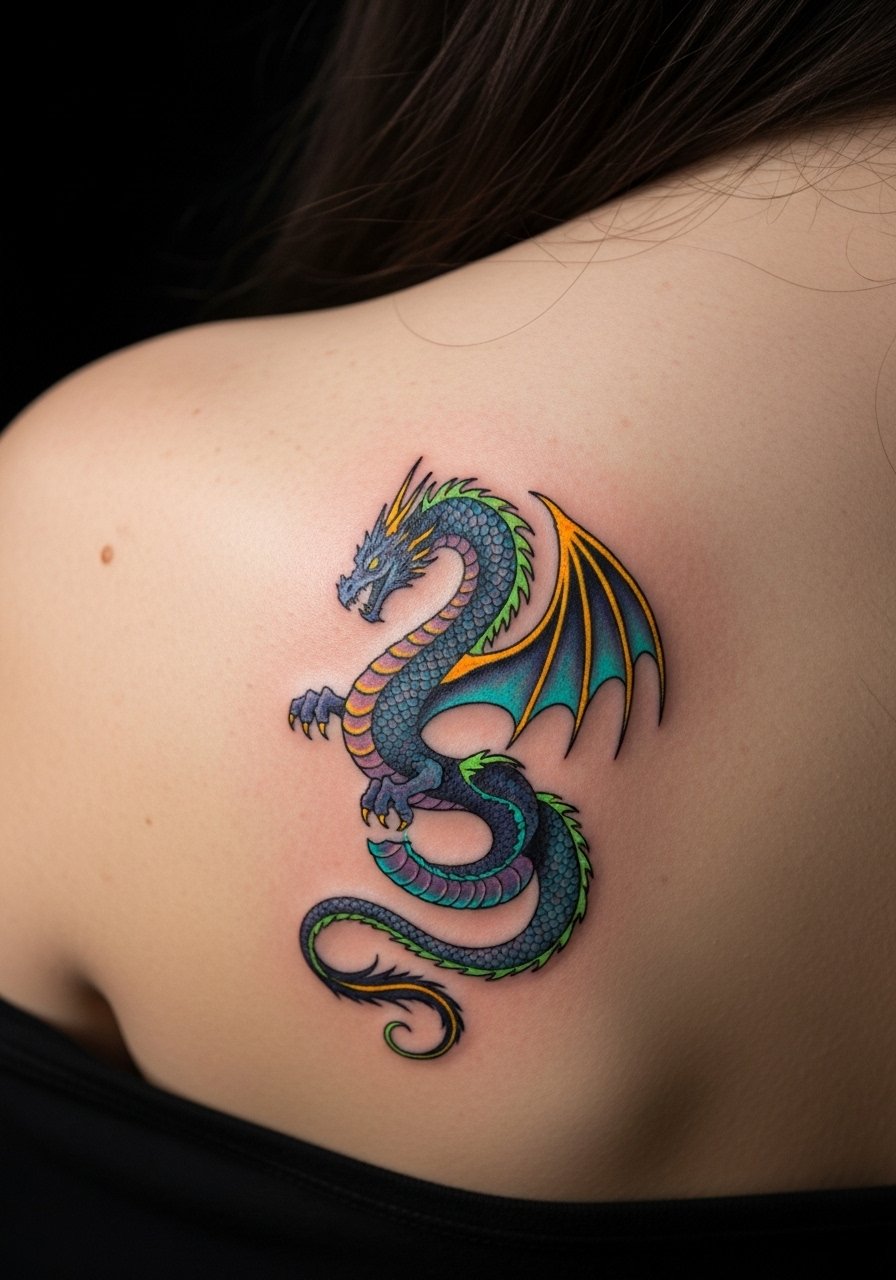
I picked this last because it’s a playful festival piece. Shoulder blade accepts UV accents well. Pain is moderate. Sessions are similar to small color jobs. Ask your artist which UV brand they use and how it layers over base colors. A big mistake is relying only on UV pigment for daytime visibility. Combine UV with subtle base color or black anchors. Healed, the accent is subtle in daylight and glows under blacklight. Plan for periodic refresh if you frequently use it for events.
Tattoo Prep and Aftercare Essentials
Product Description. Aquaphor Healing Ointment, 14oz tube. Industry standard for first 3-5 days. I use a thin layer at night.
Product Description. Saniderm Transparent Adhesive Bandage, 6-inch roll. Second skin healing method. Every artist I know recommends it for the first 24 to 72 hours.
Product Description. CeraVe Fragrance-Free Moisturizing Lotion. Daily moisturizer for days 4 to 14. I prefer the pump bottle for hygiene.
Product Description. Dr. Bronner's Unscented Castile Soap. Gentle cleanser for rinsing twice a day the first week. Dilute a small drop with water.
Product Description. Numbing cream with 5% lidocaine, 30g. Apply 30 to 45 minutes before your session only if your artist approves. Some artists prefer no numbing.
Product Description. Tattoo stencil transfer paper, A4 pack. Useful if you want to test placement at home before your appointment.
Product Description. SPF 50 sunscreen stick for tattoos, travel size. Use on healed tattoos whenever they see sun. I carry one for beach days.
Product Description. Mad Rabbit Tattoo Balm, 2 oz. Long-term maintenance for vibrancy. Artists I know recommend it for healed pieces.
Product Description. Hustle Butter Deluxe, 5 oz. Vegan alternative that works during healing and after. Smells better than most aftercare.
Product Description. Tattoo numbing spray, 4 oz. Handy for touch-ups or sensitive areas mid-session.
Product Description. Hydrocolloid bandages, large size. Good alternative to Saniderm for small to medium tattoos.
Product Description. After Inked Tattoo Moisturizer, 2 oz. Lightweight, keeps healed ink supple. Many clients I know use it for daily maintenance.
Frequently Asked Questions
Q: Will fine line dragons blur into each other if I get a full sleeve?
A: From what I’ve seen, fine line full sleeves need strong primary lines. If an artist only uses hairlines across an entire sleeve, the details will merge after a year. Ask for a hierarchy of line weights during your consult. Request thicker contour lines for the dragon’s body and lighter internal lines for texture. For aftercare, I use Aquaphor the first few nights and then CeraVe lotion. Aquaphor Healing Ointment, 14oz tube helps during the first three days.
Q: Do watercolor-style dragons need different aftercare than traditional ones?
A: In my experience, the aftercare routine is the same but the priorities shift. Watercolor relies on softer color transitions. That means less friction and consistent sunscreen after healing. Use a gentle cleanser like Dr. Bronner's for the first week. Dr. Bronner's Unscented Castile Soap is what I recommend. Avoid heavy ointments long term because they can trap sweat in color zones.
Q: Will UV ink hold up on a shoulder blade if I want it for festivals?
A: UV accents can hold up if paired with dark anchors. I’ve seen pure UV pieces fade faster because daylight visibility is low. Ask your artist to combine UV with a small base of black or color. I carry an SPF stick when I’m out in the sun to protect festival pieces. SPF 50 sunscreen stick for tattoos, travel size is handy for quick reapplication.
Q: How do scarred areas accept dragon ink for camouflage?
A: From what I’ve gathered, scar tissue takes ink unevenly. Negative space designs work best because they use your natural skin as part of the pattern. Tell your artist about the age and texture of the scar. Some artists do test pokes to show expected results. Plan for touch-ups and realistic expectations. Hydrocolloid bandages can help protect early healing when working on scar tissue. Hydrocolloid bandages, large size is a product I’ve seen used.
Q: If I want a tiny dragon on my finger, what should I tell my artist?
A: Tell them you want reinforced line anchors and accept that it will need a touch-up. Fingers are high-wear zones. Ask for bolder starting lines and plan a check-in at six months. I recommend using a light maintenance balm like Mad Rabbit after the piece heals. Mad Rabbit Tattoo Balm, 2 oz keeps small tattoos looking fresh.
Q: How often will a watercolor calf dragon need touch-ups?
A: From what I’ve seen, watercolor legs need touch-ups every 1 to 3 years to keep saturation. It depends on sun exposure and activity. Use a good sunscreen and avoid constant chafing from tight clothing. I keep Hustle Butter handy during week two to soothe the area. Hustle Butter Deluxe, 5 oz
Q: Is a micro-realism dragon eye on the nape a good first tattoo?
A: It can be, if you accept that micro-realism requires skill and may soften. Pain is moderate and sessions are short. I’d only recommend this to a first-timer if they want a subtle, personal piece and they’re prepared for a possible touch-up at one year. Use CeraVe lotion during the maintenance phase. CeraVe Fragrance-Free Moisturizing Lotion