
The wispiest scripture scripts you see online often look the best fresh and the worst after a few years. Slightly heavier single-needle lettering or a tiny symbol pair tends to keep the words legible without losing that understated vibe. Read on for 15 placement-aware verse ideas, how each ages, what to tell your artist to preserve clarity, and which wardrobe pieces highlight the finished work.
1. Philippians 4:13 on the Wrist with a Tiny Cross

A wrist verse reads like a daily bookmark, but the inner wrist rubs against watches and cuffs. One camp warns that ultra-thin single-needle script blurs fast on that hinge zone. The other camp says fine line can hold if the artist spaces letters and goes a hair thicker than the reference. For this piece, ask for slightly heavier single-needle weight and two millimeters extra spacing between letters so the text stays readable after a touch-up. Expect a short session and light discomfort when the needle crosses the wrist crease. Show-off pairing: a thin chain bracelet set on the opposite wrist frames the verse without covering it.
2. Proverbs 31:25 Flowing Along the Inner Forearm
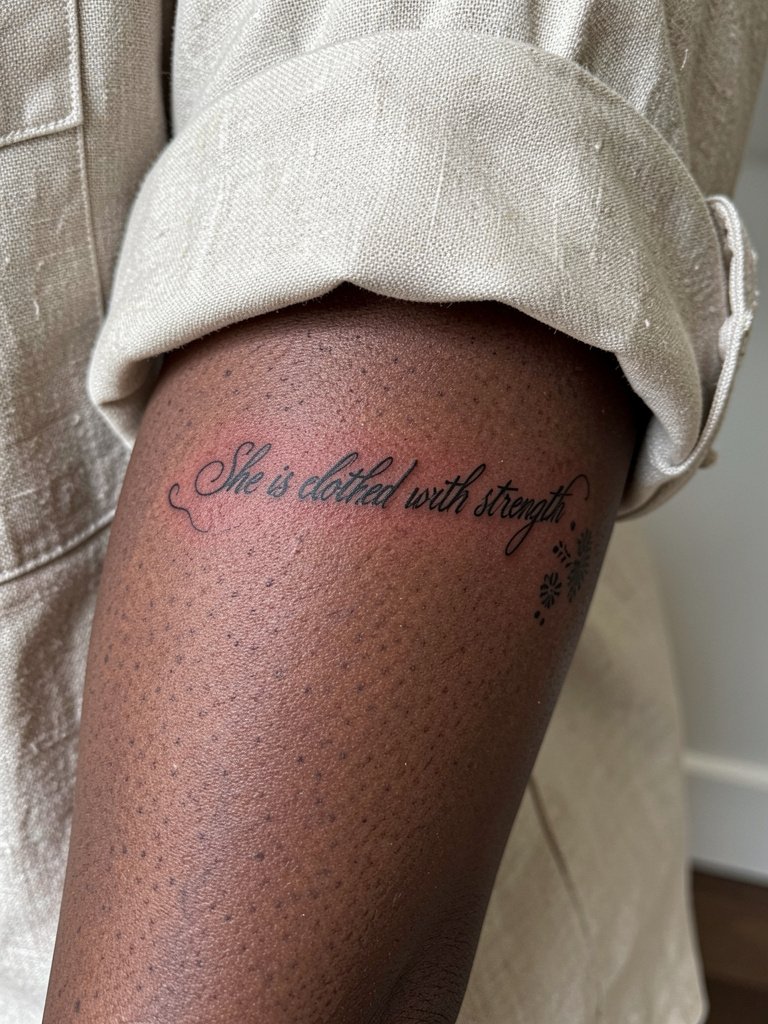
Longer single-line verses suit the inner forearm because there is room for spacing. The common mistake is copying a Pinterest cursive and insisting on ultra-thin strokes. For a line this length, specify line height so the artist can map three different font sizes on the stencil for readability checks. Movement makes the inner forearm more forgiving than the wrist, though stipple shading around symbols can soften over time. Session wear: a loose short-sleeve or a linen button-down that rolls up easily. When showing it off, a linen button down women in cream keeps attention on the script.
3. Isaiah 41:10 Below the Clavicle with a Floral Accent
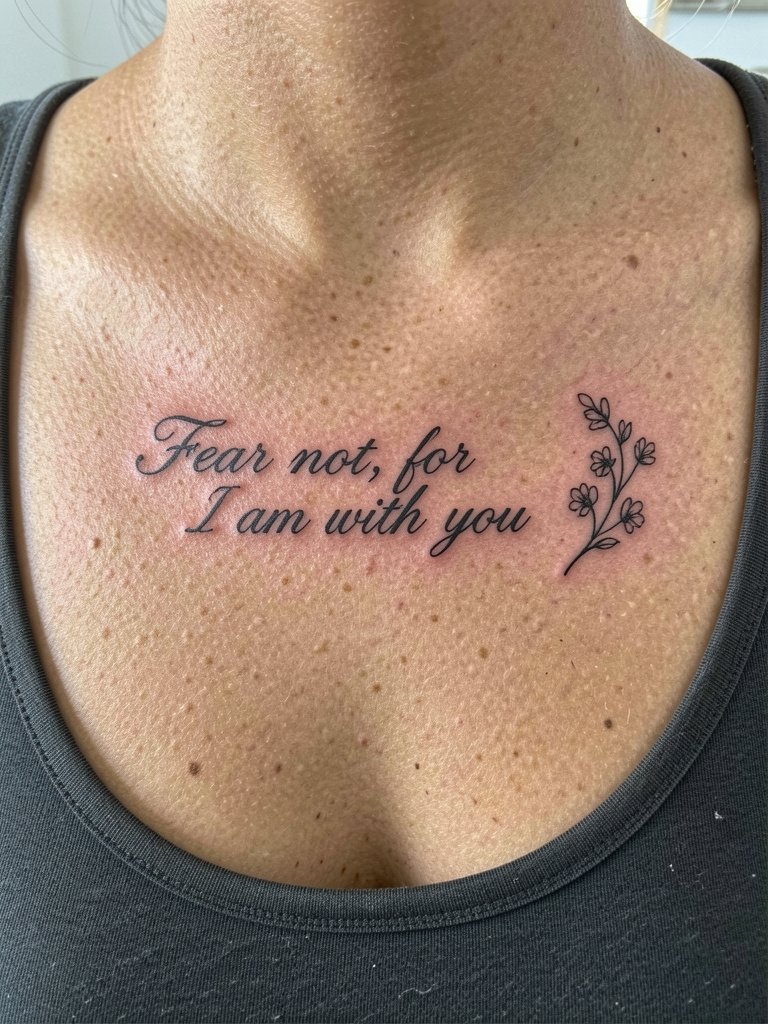
A chest placement lets a mid-length verse breathe without looking like a paragraph. People often pack in too many decorative elements around the words and end up with visual clutter. Ask the artist to place the floral accent so it frames the last few letters rather than crossing the baseline. Pain here is moderate and session time depends on floral detail. For low-key reveals, layer with a delicate pendant necklace that stops above the script so the verse remains visible.
4. Jeremiah 29:11 as an Ankle Micro with Tiny Stars
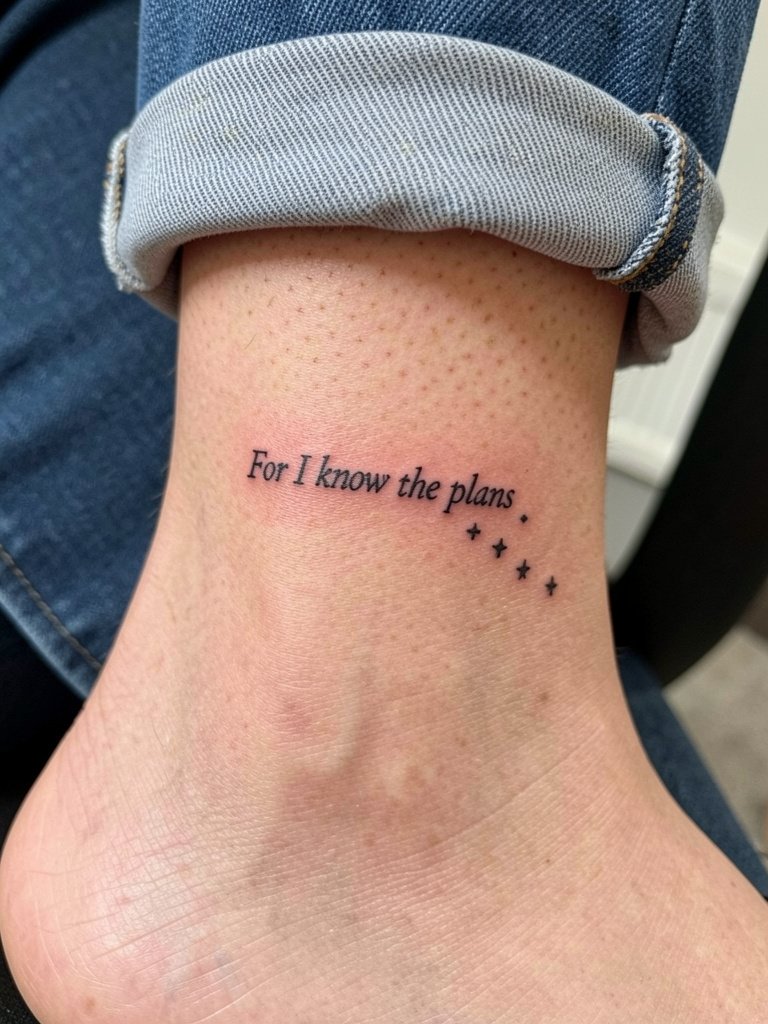
Ankle scripts live in a high-friction area from socks and shoes, so bold silhouettes beat fragile filigree. The common mistake is requesting hairline script at three-point font size. Instead, pick a compact short phrase and pair it with tiny dot work stars for breathing room. Session time is brief but the spot is prone to scabbing when shoes rub. Show-off pairing for summer: ankle strap sandals that reveal the placement and keep the stars visible.
5. Romans 8:31 Bold on the Outer Forearm
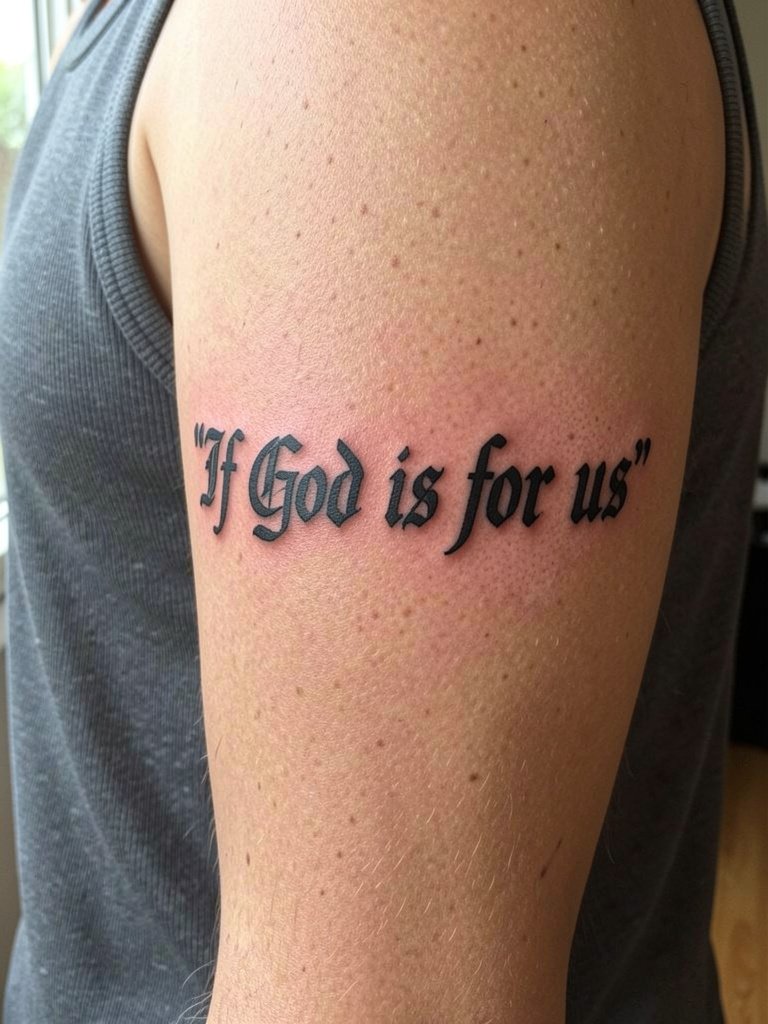
Thicker blackletter-style script holds up better on this exposed surface. People sometimes pick a tiny blackletter font that becomes unreadable once healed. Ask the artist to map the letters at twice the minimum readable height and preview it at arm length to verify legibility. Outer forearm tends to show sun fade over years, so plan for an annual sunscreen routine once healed. Styling tip: push up a blazer sleeve to reveal the line beside a black blazer women for a dressed-up contrast.
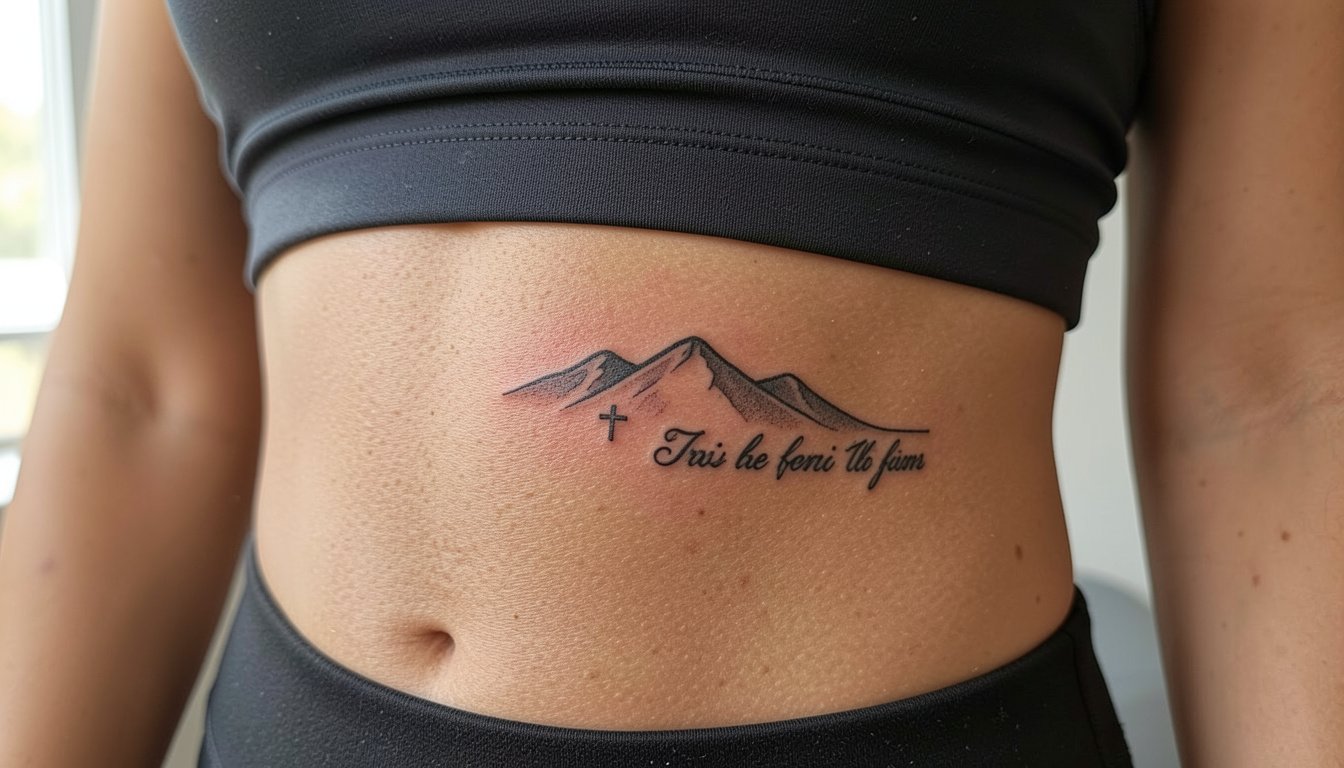
6. Psalm 23:4 as a Ribcage Scene with Cross and Hills
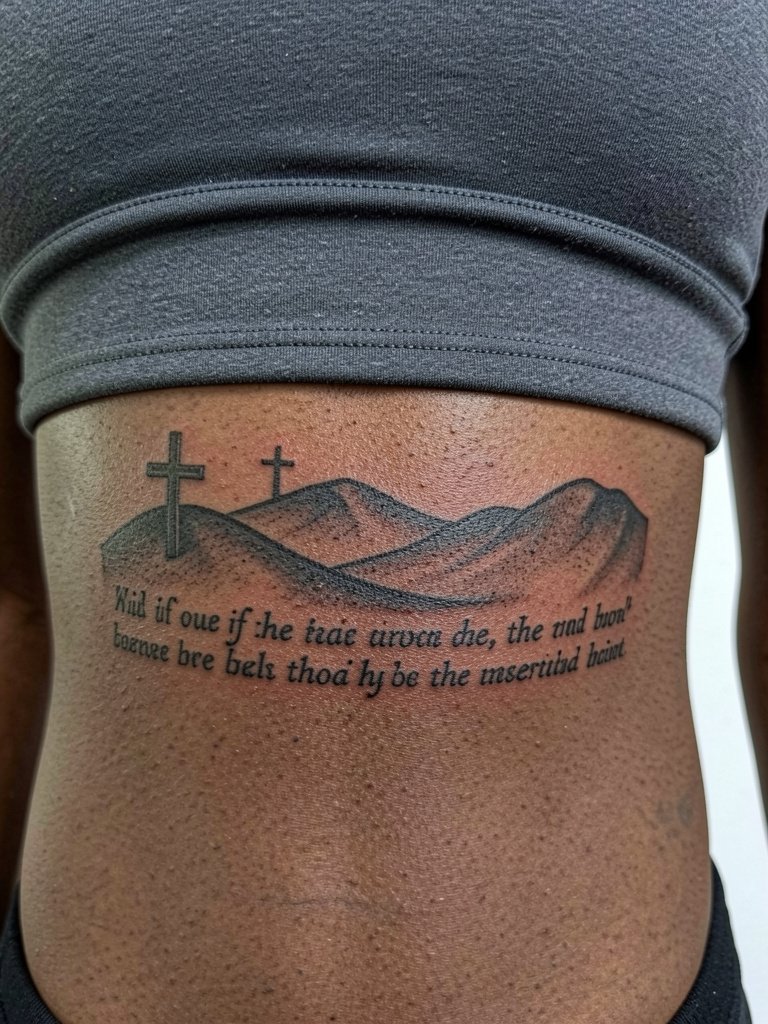
Ribcage work reads private and intimate, but fine line here divides opinion. One camp argues that the stretch and movement on the side torso make ultra-thin script blur within two years. The other camp says that with proper needle depth and slightly wider spacing, fine line settles fine and can look very refined. For longer verses, break text into two stacked lines and have the artist test spacing on the stencil while you breathe normally. Pain is higher here, so plan for a longer session and bring snacks and a loose sports bra for access.
7. “I Can Do All Things” with a Mountain Silhouette on the Inner Forearm
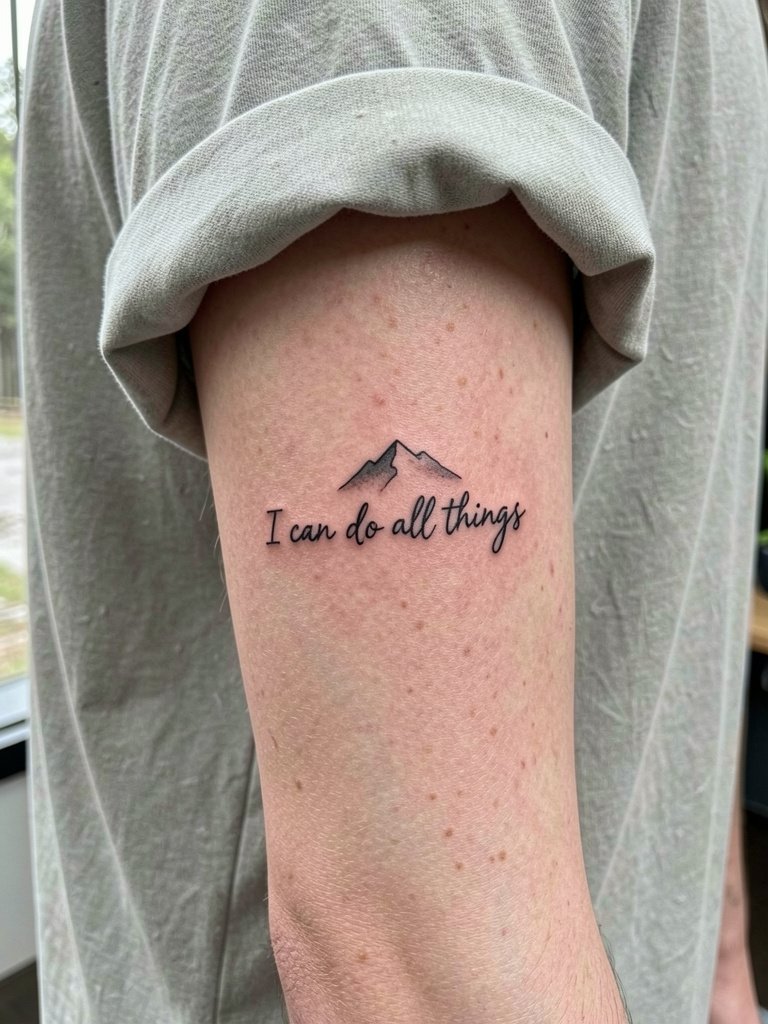
Symbol-plus-verse combos help short passages avoid looking like text blocks. A frequent misstep is squeezing the mountain into the letter spacing. Tell the artist to place the silhouette an inch below the script baseline so both elements read independently. Inner forearm movement is moderate so single-needle mountains with solid contour lines age better than shaded miniatures. Session wear: a loose tee you can roll up easily. When styling, an oversized white shirt women that rolls at the cuff frames the verse naturally.
8. John 16:33 as a Vertical Ribcage Line in Serif
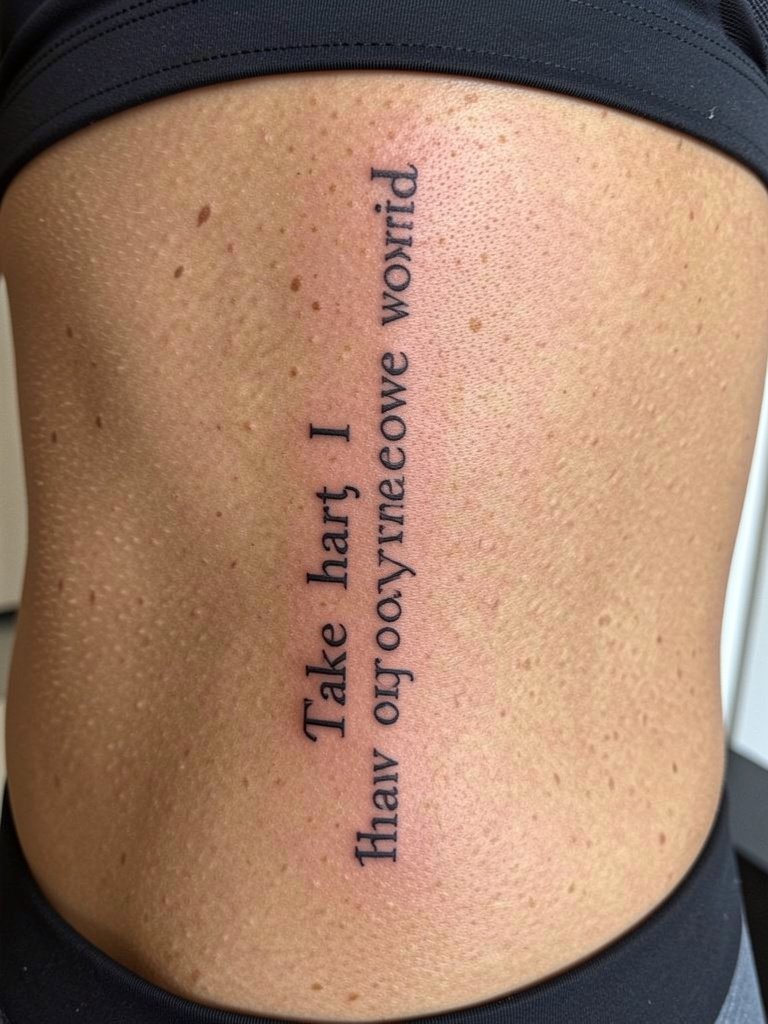
Vertical layouts suit the rib because the spine line matches the text flow. A common mistake is choosing a serif with hairline strokes that the ribcage will blur. Ask for a serif with stronger stem widths and a preview of the vertical composition on your torso. Pain will spike over the lower ribs. Expect one longer session or two shorter visits depending on line length. Because this piece is private, plan reveal outfits like a side tie dress women for beach and summer wear.
9. 1 Corinthians 16:14 with a Tiny Dove at the Wrist
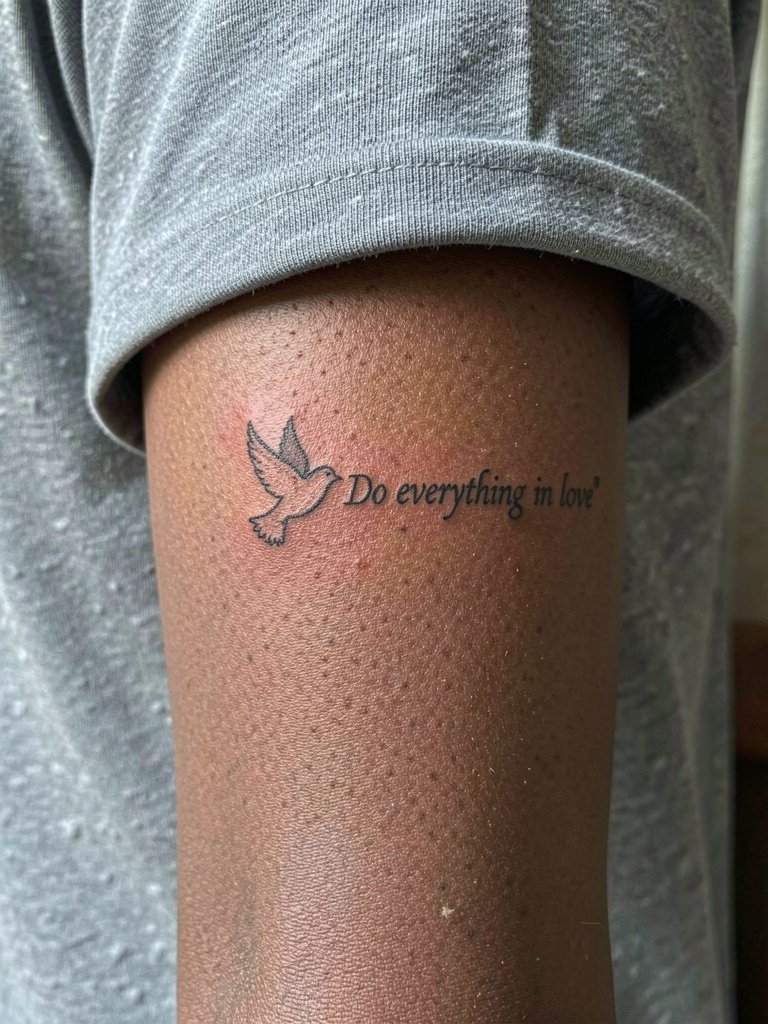
Short verses with a small symbol are friendly for tiny placements. Avoid tiny pictograms with soft internal detail because they can turn into blobs. Specify silhouette-only fill for the dove and request a two-millimeter buffer between the bird and the letters. Wrist scripts need sunscreen after healing and occasional touch-ups for clarity. Session wear: short sleeves and no bracelets on the tattooed wrist. To show the piece, choose a minimalist watch women on the opposite wrist so the script stays visible.
10. Micro "Fear Not" Behind the Ear
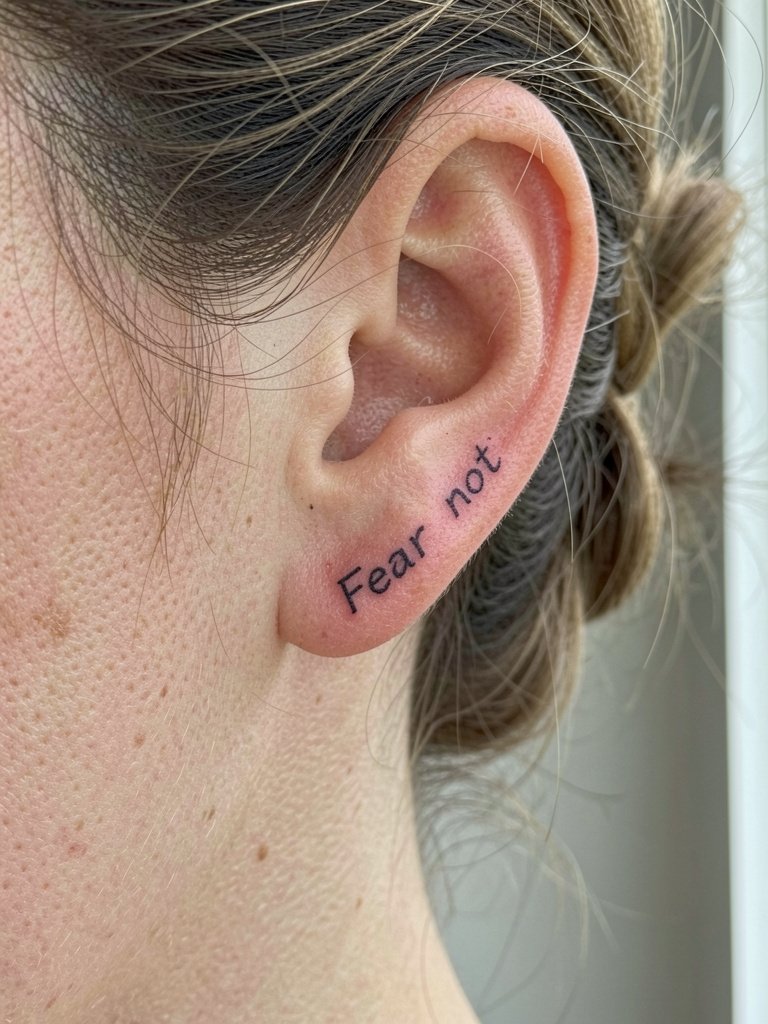
Behind-the-ear micro scripts are discreet by design but scale matters. The biggest error is shrinking a font until it cannot be read at arm's length. Ask the artist to write the word on tracing paper and hold it in place at typical viewing distance before inking. Healing is quick and the pain level is low to moderate. Wear hair up for the session so the artist has clear access and to check final placement. No accessory links for this private placement feel forced.
11. Psalm 46:5 Along the Collarbone with a Crescent Moon
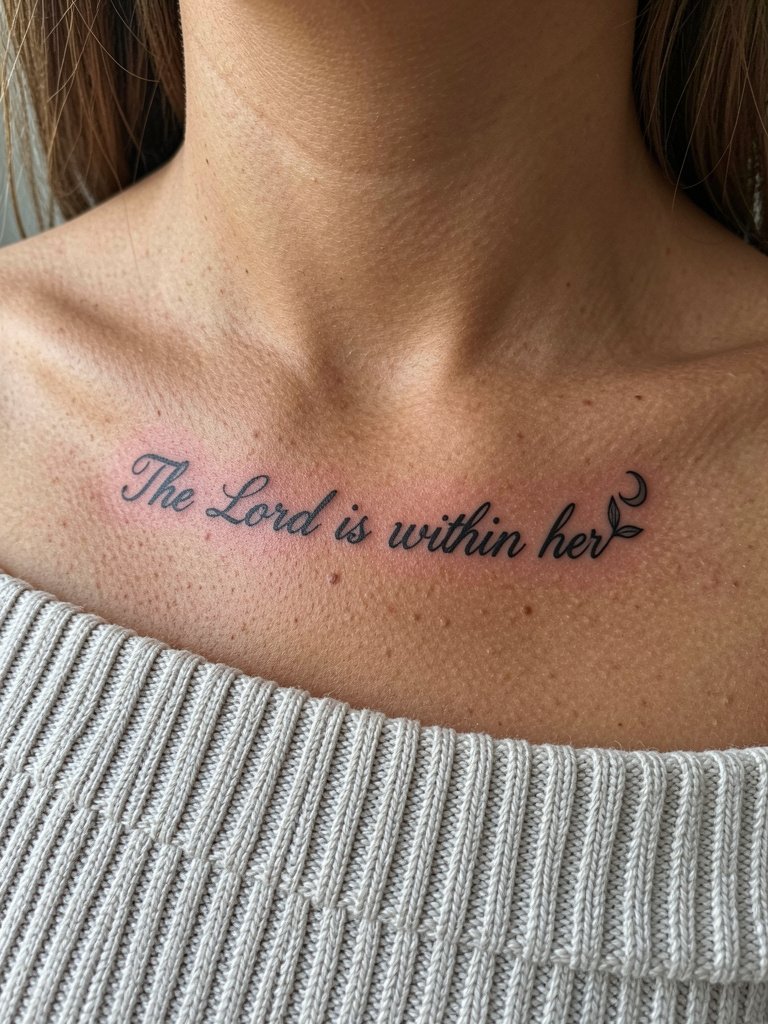
Collarbone scripts need to follow the bone contour for a neat read. The common mistake is having the text run straight across instead of arcing slightly with the clavicle. Have the artist place the stencil and sit up to check the curve before the first pass. This area can be sensitive where the needle crosses the bone. For evening looks, pair with a off shoulder sweater women or camisole that frames the script.
12. Vertical Nape Verse in Thin Script
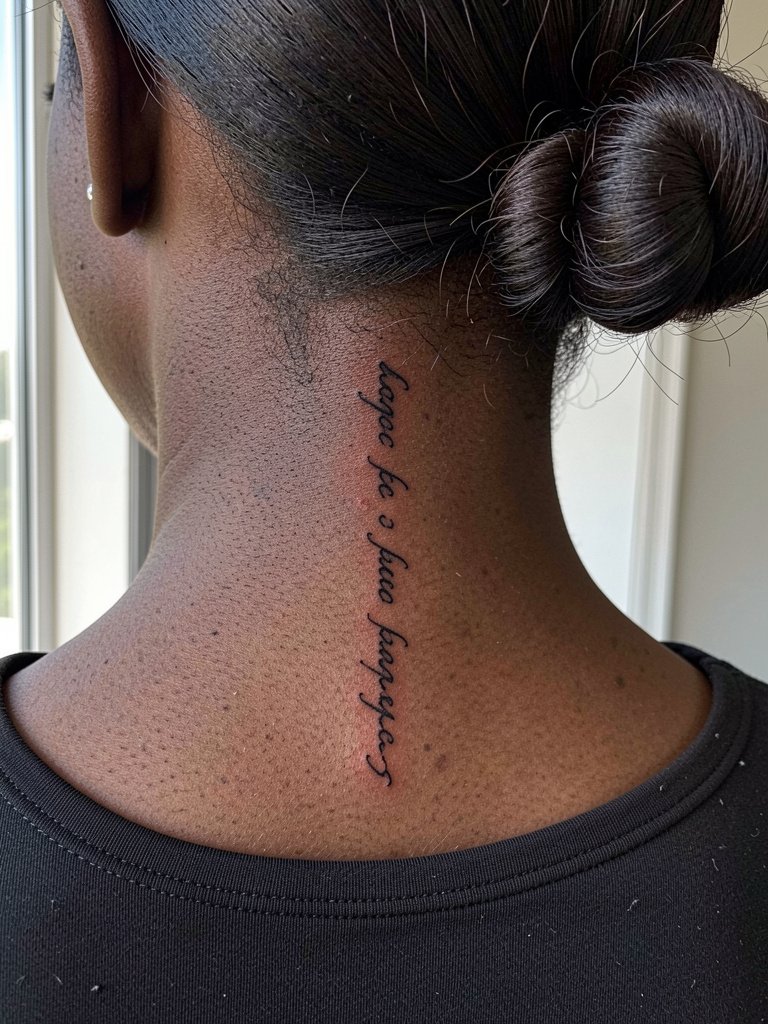
Nape tattoos look hidden by default and reveal with hair up. The mistake is picking ultra-slim letters without considering hair regrowth that can obscure the first year. For vertical text, instruct the artist to preview spacing when your head is neutral, not tilted. Healing may require avoiding necklaces that brush the area for a few weeks. Pack a hair claw clip women to keep hair up during the session and the early healing phase.
13. Rosary-Like Script Across the Sternum

Sternum layouts read devotional, but the area moves with breathing and can cause line drift if the beads are too tiny. Artists disagree on bead spacing for the sternum, so bring a reference of bead diameter and ask the artist to mock it on the chest while you breathe naturally. Pain and session time are higher than small wrist work. For reveal styling, layer with a front open bralette for occasions when you want to show the piece.
14. Shoulder Verse with Dove or Angel Wing Accent
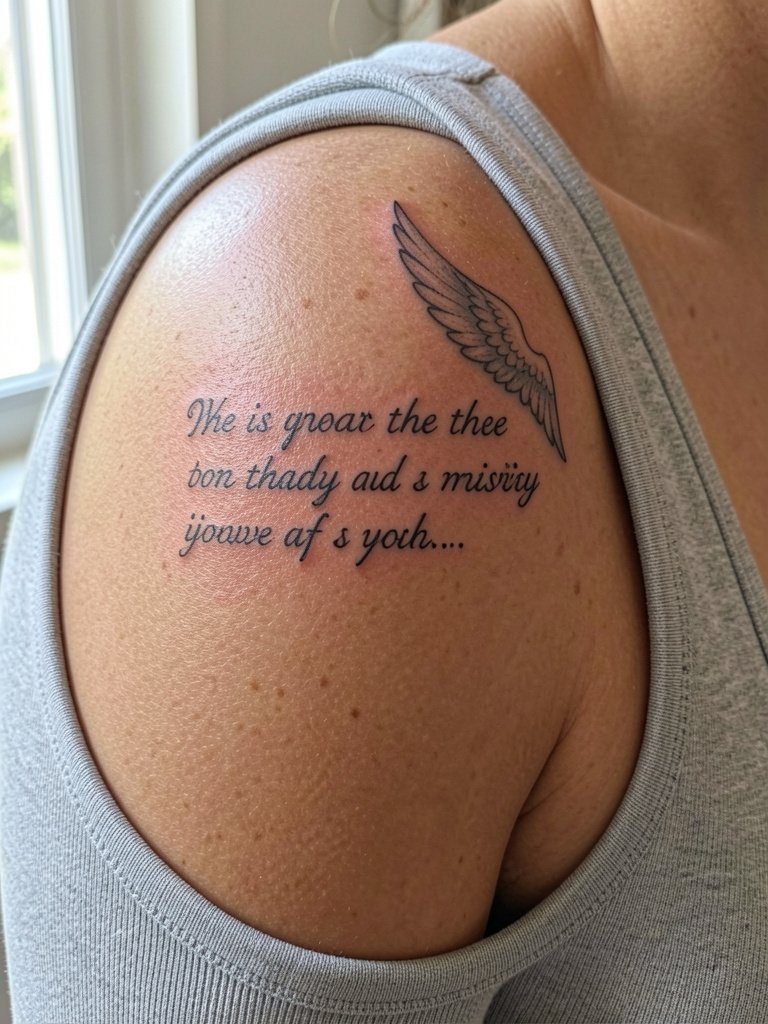
Shoulder placements are forgiving for a tiny script plus icon. Avoid asking for detailed feather texture at very small scale because feathers can blur. Instead, request a simplified wing silhouette and a line weight that reads from arm length. Session time is short and pain is low compared to ribs. For casual styling, square-neck tanks or square neck tank women frame the shoulder without covering the wing.
15. Short Verse on the Hip Bone Above the Waistband
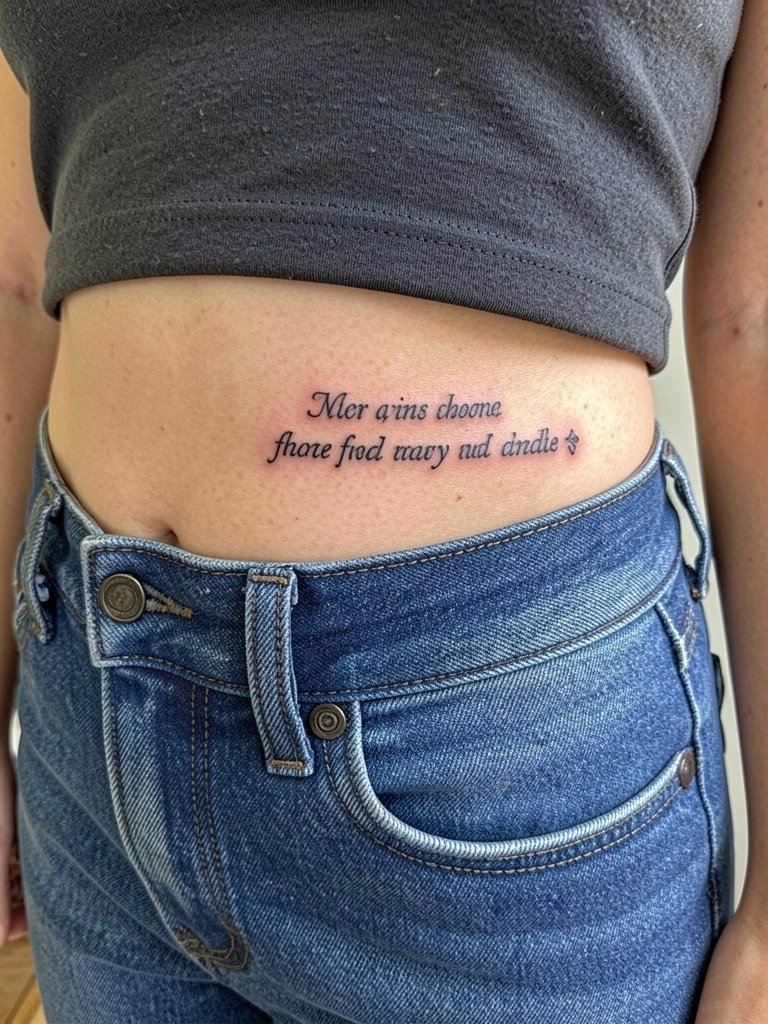
Hip placements give a private, flirty placement for a short verse but are close to clothing edges that can rub while healing. The mistake is choosing a design that sits directly under tight waistbands. Tell the artist to place the line at least an inch above your usual waistband so friction is minimized. For the session, wear low-rise jeans that you can button and keep on so the artist can visualize final coverage. When you want to show the tattoo, a cropped straight leg jeans women and a cropped tee do the job.
Pre-Session Essentials
Those smaller wrist, forearm, and collarbone scripts above have different healing profiles than larger illustrative pieces, so a few focused products make the first week easier and reduce the need for early touch-ups.
-
Naked Bee Tattoo Balm. A lighter balm option that users report sits well on fine line script without the heavy greasiness that hides tiny strokes during healing.
-
Bepanthen Ointment. A gentler alternative for those who react to petrolatum, useful when you need a thin protective layer on sensitive placements like the wrist.
-
Tattoo Goo Aftercare. A midweight traditional balm people still reach for when they prefer a familiar scent profile and occlusive protection for rubbed areas.
-
Inkeeze Tattoo Aftercare. A midweight balm that balances between petroleum-heavy ointments and ultra-light lotions, handy on micro-script that can get greasy under heavy ointment.
-
Second-skin Tattoo Wrap. For busy sleepers and those who want a protected first 24 to 72 hours, a second-skin film reduces friction from bedding and clothing while you decide on longer term aftercare.
Frequently Asked Questions
Q: How much should I expect to pay for a small scripture tattoo and why do tiny pieces sometimes cost as much as larger ones?
A: Many shops have a minimum rate to cover setup and sterile supplies, so a tiny verse can land in the same price band as a small symbol. Custom lettering, stencil time, and healed examples the artist can show you also add to the quote. If price is the main concern, book a consult and ask the artist to show a two-size stencil so you can see how scale affects cost and longevity.
Q: Is fine line script a bad idea for the wrist or ribs?
A: Artists split into two camps on this. One camp says ultra-thin single-needle script blurs fast on high-movement zones like the wrist and ribs and recommends a slightly heavier weight. The other camp argues that with proper spacing and correct needle depth, fine line can settle well in those areas and keep the minimalist look. If you want fine line, ask the artist for a spacing mockup on your skin and a healed photo of similar placement so you can judge the long-term result.
Q: Which aftercare method is better for small script, Saniderm or dry healing?
A: There are two clear positions. Fans of second-skin wraps say the film protects against friction and contamination through the worst of swelling and scabbing. Dry healing advocates counter that adhesive can irritate sensitive skin and make detection of early issues harder. Consider your skin sensitivity, sleeping habits, and whether you can avoid tight clothing on the area. Try to get the artist to outline a 48 to 72 hour plan for your specific skin type.
Q: How should I search for healed scripture examples and local artists without naming or following specific accounts?
A: Start with style-first hashtags like #scripttattoo, #bibleversetattoo, or #finelinetattoo and add your city in the location filter to surface local portfolios. Browse directory sites with queries such as "script ribcage tattoo" or "wrist script tattoo" to find healed shots. Reddit tattoo threads also surface real-world healed photos that show how linework ages across skin tones.
Q: I have deeper skin tone. What should I ask an artist to ensure text remains legible over time?
A: Request stronger line weight, slightly wider letter spacing, and high-contrast black ink rather than pale gray washes. Ask the artist to show healed photos on similar skin tones and to place a 1.5 to 2 millimeter sample stroke on non-visible skin during consultation so you can see how saturation looks. Avoid ultra-fine script, and plan a touch-up window at 12 to 18 months if you want the letters to remain crisp.
Q: When should I expect to get a touch-up on a micro-script piece?
A: Micro-script often needs a touch-up in the first 6 to 18 months because tiny strokes can soften as the skin settles. Large pieces may go longer before needing attention. Ask your artist at the time of booking how they handle free or reduced-rate touch-ups and what timeline they recommend based on your placement and skin type.
Q: What should I wear to the session for different verse placements?
A: Match your outfit to access. For wrist and forearm work, wear short sleeves or a rolled sleeve. For collarbone, choose a scoop-neck or wide V-neck top that stays in place. For ribs or sternum, a fitted sports bra or front-open bralette makes access easier. Pack loose, comfortable clothing for recovery and avoid tight waistbands over hip or rib placements during the first week.