I spent months bookmarking angel tattoos before I realized the real filter was durability, not just the sketch. I wanted designs that read like protection, not decoration. These 19 angel tattoos lean into armor, the kind that still looks meaningful after years of sun and life.
This list focuses on styles that feel protective, from blackwork shields to delicate guardian figures. Most of these work well on chest, forearm, ribs, and thigh. From what I've seen in artist posts this year, chunky outlines and contrast hold up best over time.
1. Fine Line Guardian Angel on Inner Forearm
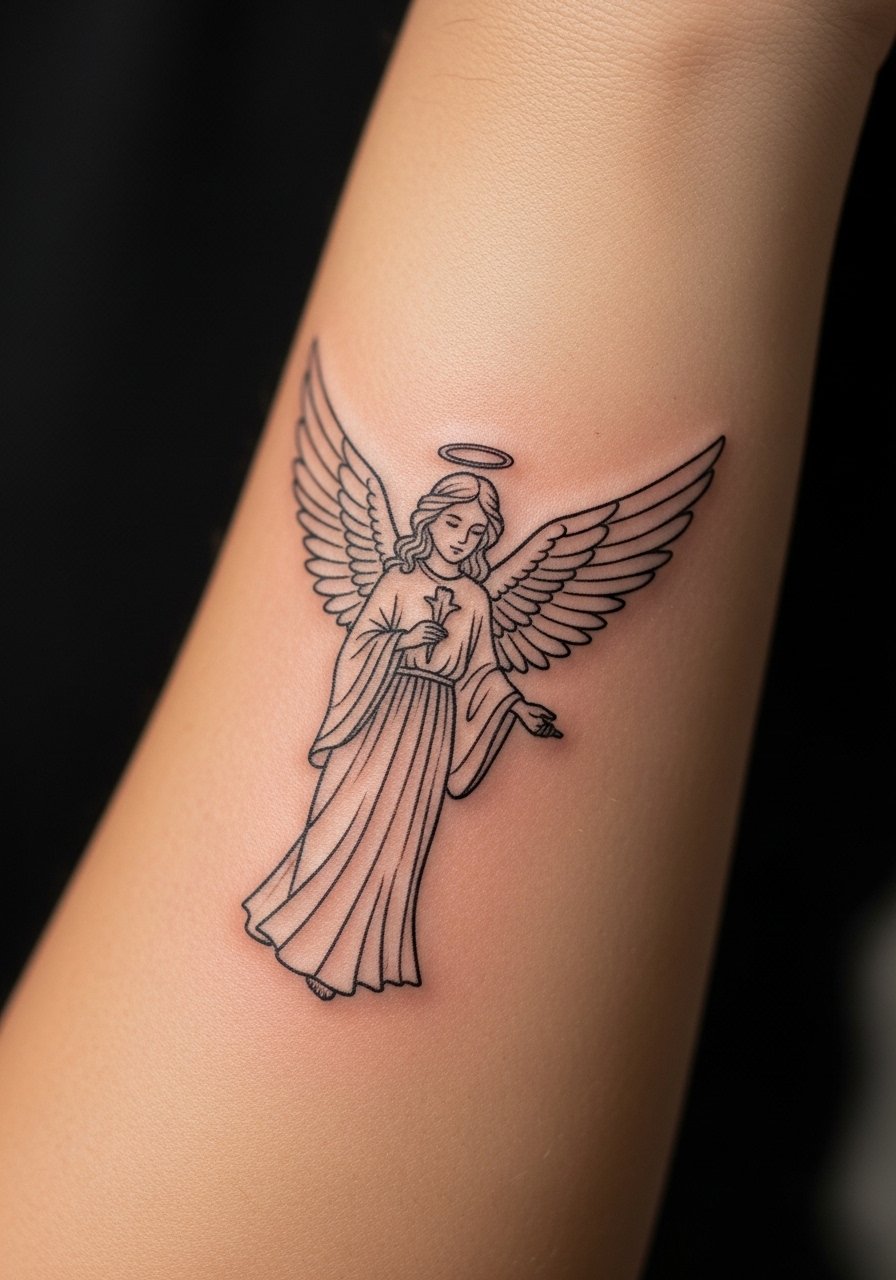
I first saw this on a friend who wanted subtle protection. Expect low to moderate pain on the inner forearm. Sessions run short, usually 1 to 2 hours. Ask your artist for slightly heavier key lines around the silhouette so the angel reads from afar after a year. A common mistake is too-thin lines across the whole piece. That version fades into a gray smudge after two years. Tell your artist you want intentional variance in line weight, with slightly bolder contours and soft hatch shading inside. Healed, the wings keep a soft, airy look at six months, but they will lose some crispness by year three. If you want longevity, avoid tiny feathers packed tightly.
2. Traditional Angel With Shield on Upper Arm
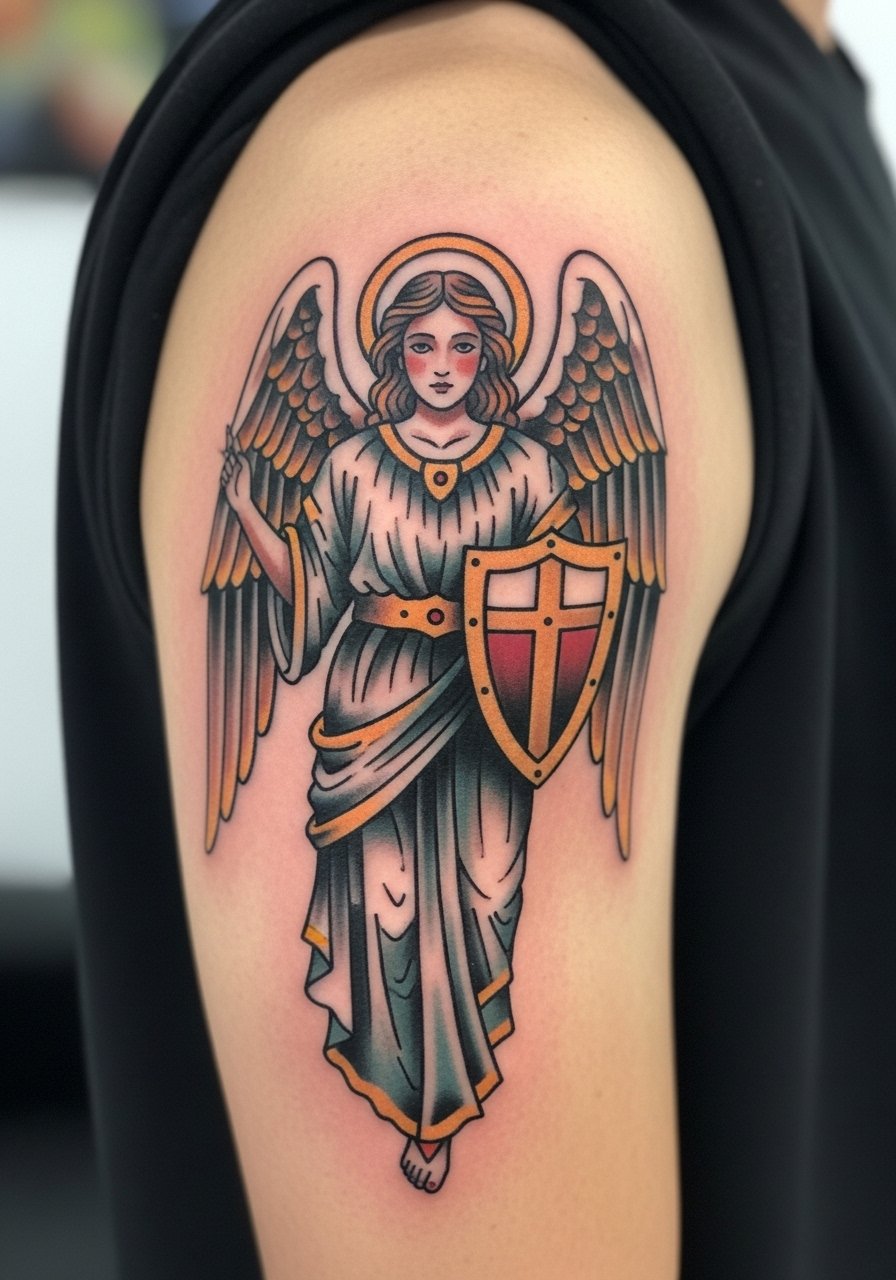
Bold black outlines and saturated color read like armor in a traditional treatment. I recommend this for people who want a visible statement and can handle moderate pain on the upper arm. Sessions take 2 to 4 hours depending on color. Tell your artist to keep color blocks large and avoid tiny color dots. Small color work tends to blur into muddy patches as it ages. A version I saw that used very small gradients lost vibrancy after sun exposure. The right approach keeps the shield readable even at two years healed. If you want to place this on the bicep or tricep the curvature changes how the shield sits. Try the design on the actual arm with stencil movement before committing.
3. Blackwork Archangel Back Piece
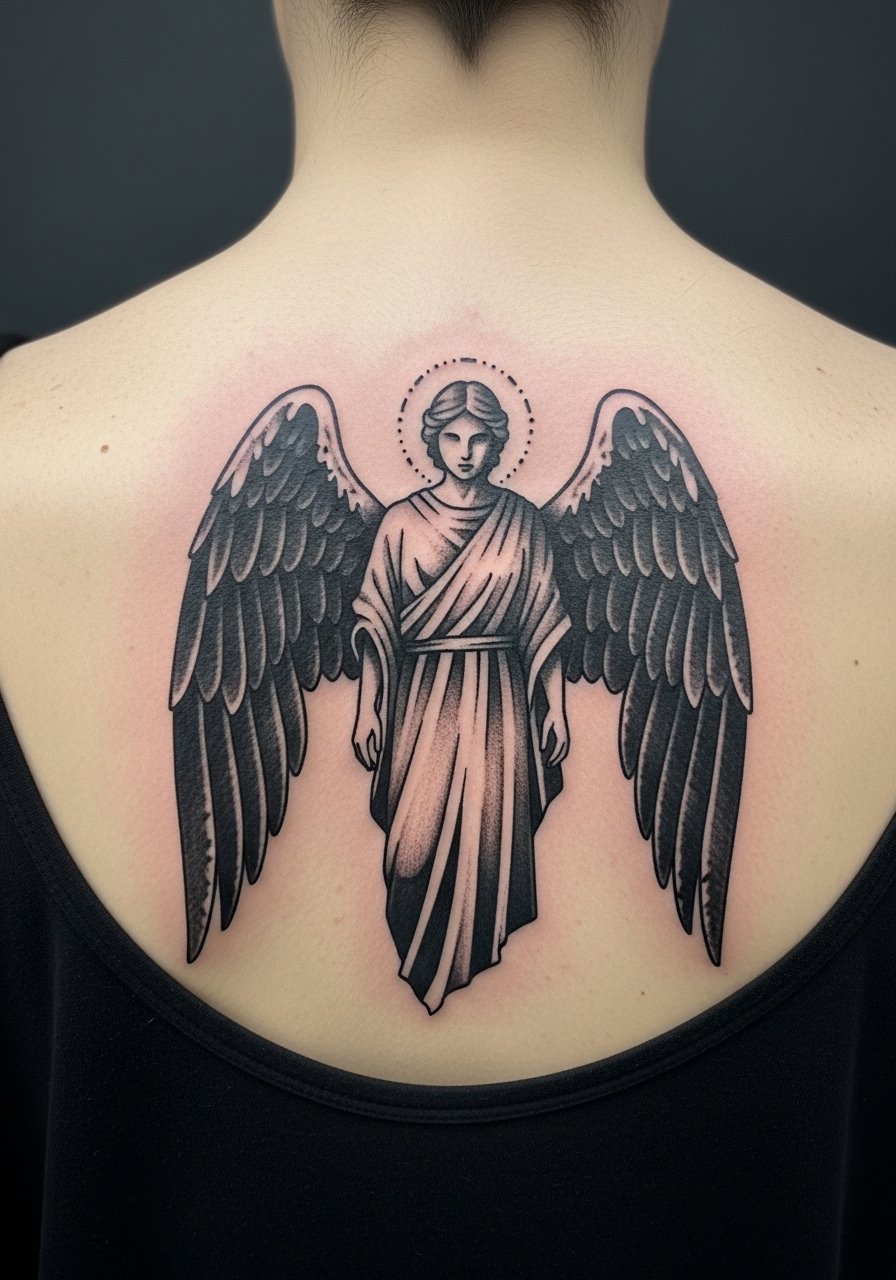
Fair warning, the upper back is a medium pain area but the payoff is dramatic. I recommend blackwork for a full-back angel if you want armor-like presence. Sessions will be multiple, usually three to five. Ask for solid blocks of black with plenty of negative space. Artists I know say that patchy black fills happen when you try to rush the session. A common mistake is too many tiny white highlights. They often disappear. Over time, solid black holds better than fine shading. At six months the contrast is high. At two years the blacks soften but the silhouette stays intact if the fills were done properly. Plan for layered sessions and let the artist focus on saturation.
4. Micro-Realism Angel Portrait on Chest
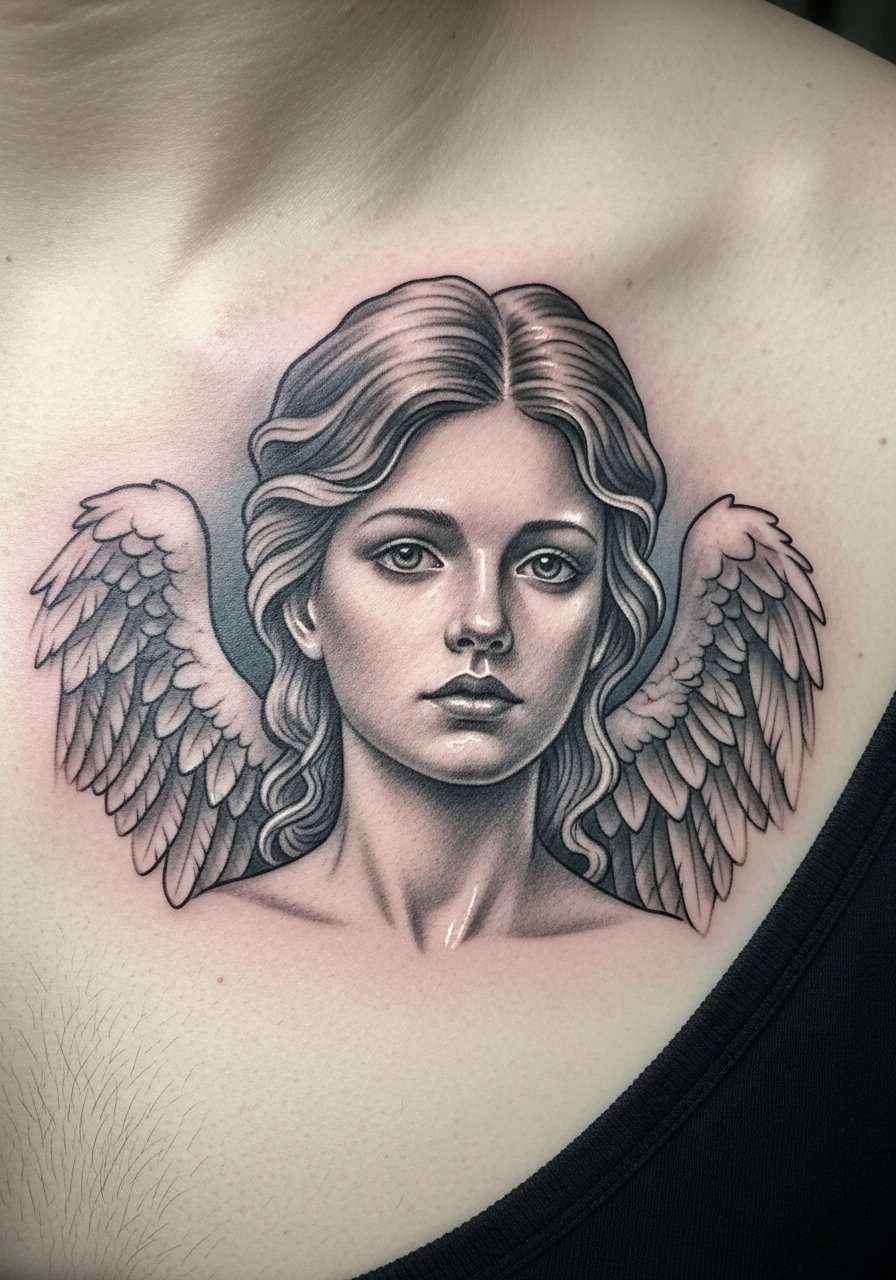
When I saw a chest portrait done in micro-realism I noticed how vulnerable it felt, like a chest plate of memory. Chest tattoos can be a 7 out of 10 on the pain scale for many people. Sessions vary, often 2 to 6 hours. Tell your artist you want contrast in focal areas, like eyes and halo, and faded skin tones elsewhere. The biggest mistake is packing too much fine detail across a large chest area. Tiny facial details blur faster. If you want longevity, keep the portrait scale moderate and give the main features room. At six months fine highlights look crisp. By three years the tiny dots will soften. Photoreference helps, and request an initial small test patch if you have very light or very dark skin.
5. Neo-Traditional Angel Helmet on Thigh
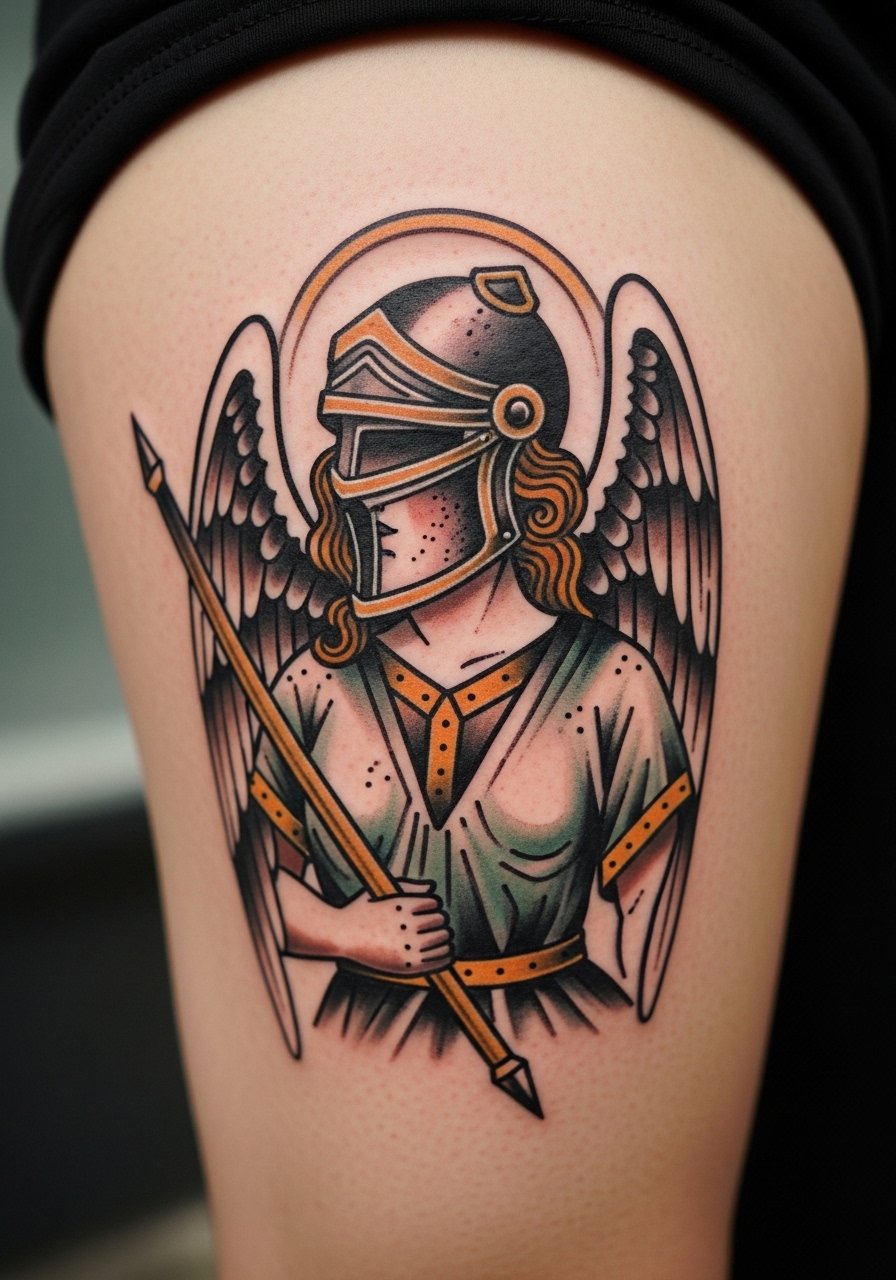
I chose this placement after seeing how thigh flesh holds color. The thigh is forgiving and less painful than ribs. A neo-traditional helmeted angel reads like armor because of thick outlines and stylized shading. Plan for a 2 to 3 hour session. During consultation say you want clean outlines and saturated fills in large shapes. The mistake I see is clients asking for tiny texture work across the helmet. Those tiny details wash out on the thigh where sweat and clothing cause extra friction. Healed at one year, the helmet should still be crisp if the lines were left bold. If you want a version that ages gracefully pick fewer color gradients and more solid areas.
6. Dotwork Wing Shield on Ribcage
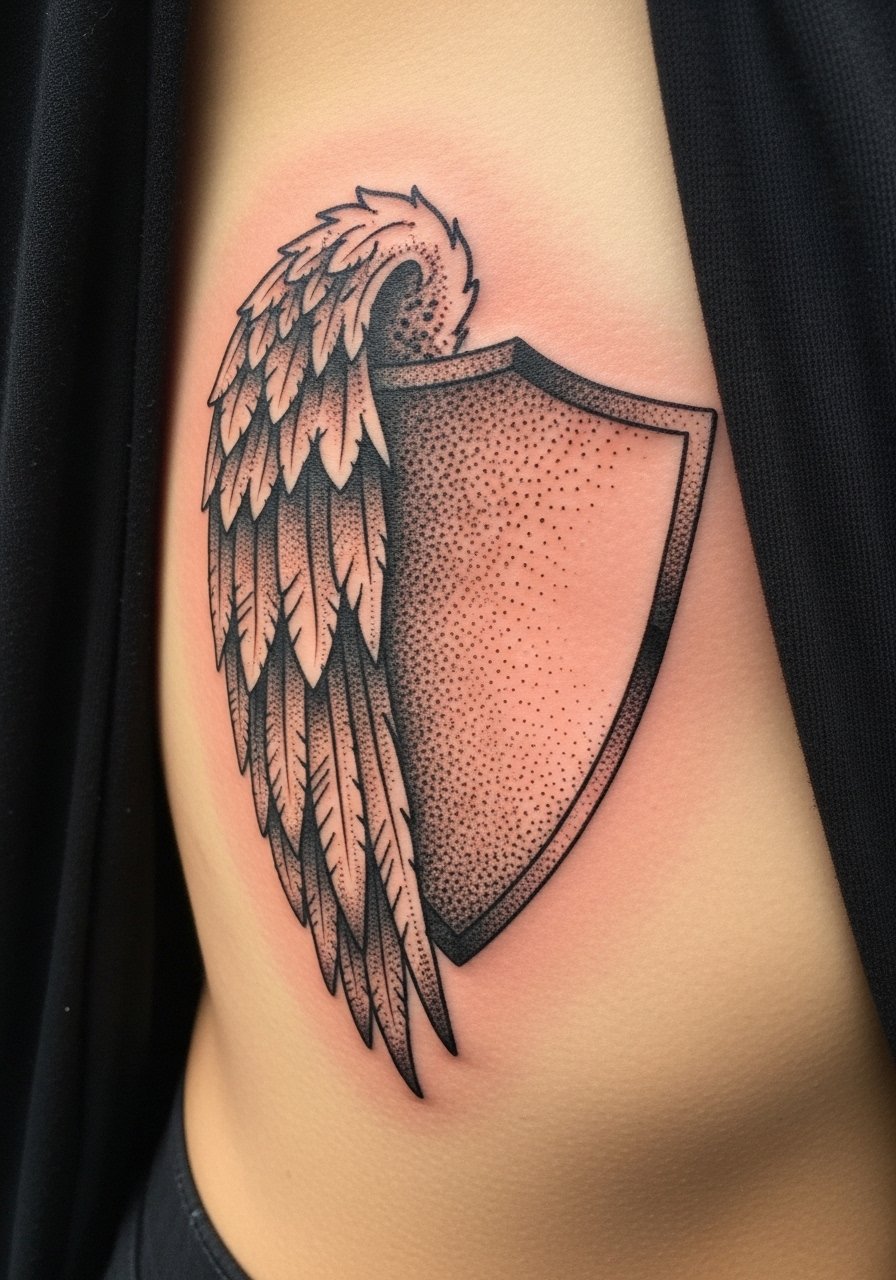
Fair warning, the ribcage hurts more than most spots. I chose dotwork here because stippling creates a textured armor feel without heavy black. Sessions depend on size, usually 2 to 4 hours. Tell your artist to space the dots with breathing room. I have seen dotwork done too densely and it turned into blocky gray after a year. At six months the stipple holds well. At two years tiny dot tattoos can blur if they were placed too close. If you want this as a side piece consider making the outer edge bolder so the shield silhouette survives when the center softens.
7. Stained Glass Halo on Upper Back Shoulder
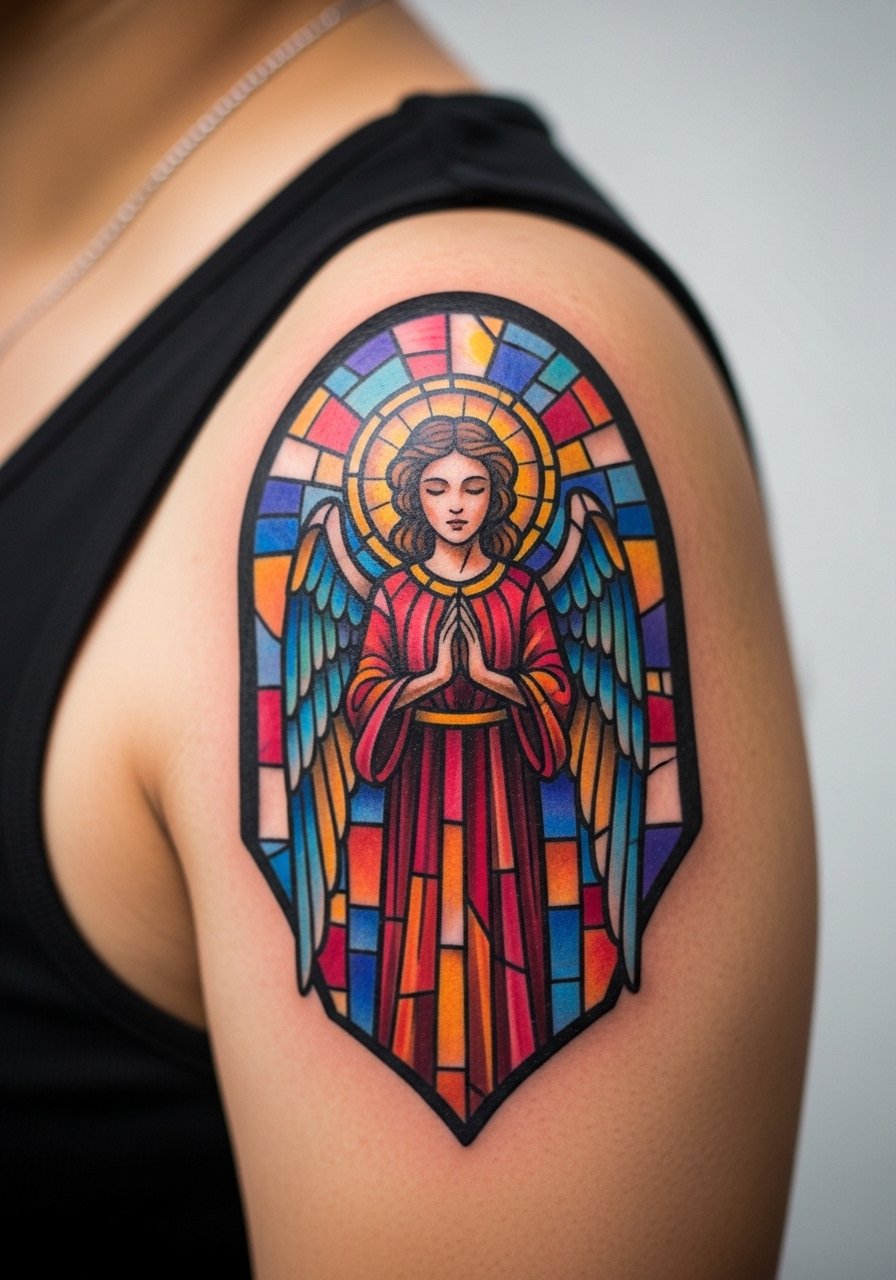
I saw this in an artist's portfolio and loved how color panels mimic armor plating. Placement on the shoulder is lower pain and moves well with clothing. Sessions usually run 1.5 to 3 hours. Ask for strong leading lines between each color cell. A common mistake is tiny mosaic pieces. They become indistinct when the tattoo ages. The stained glass approach ages better when pieces are larger and contrast is high. At six months color will mellow slightly. At three years plan to touch up if you want vibrancy kept. Also ask about sun protection because color longevity depends heavily on SPF use.
8. Minimalist Line Halo Behind Ear
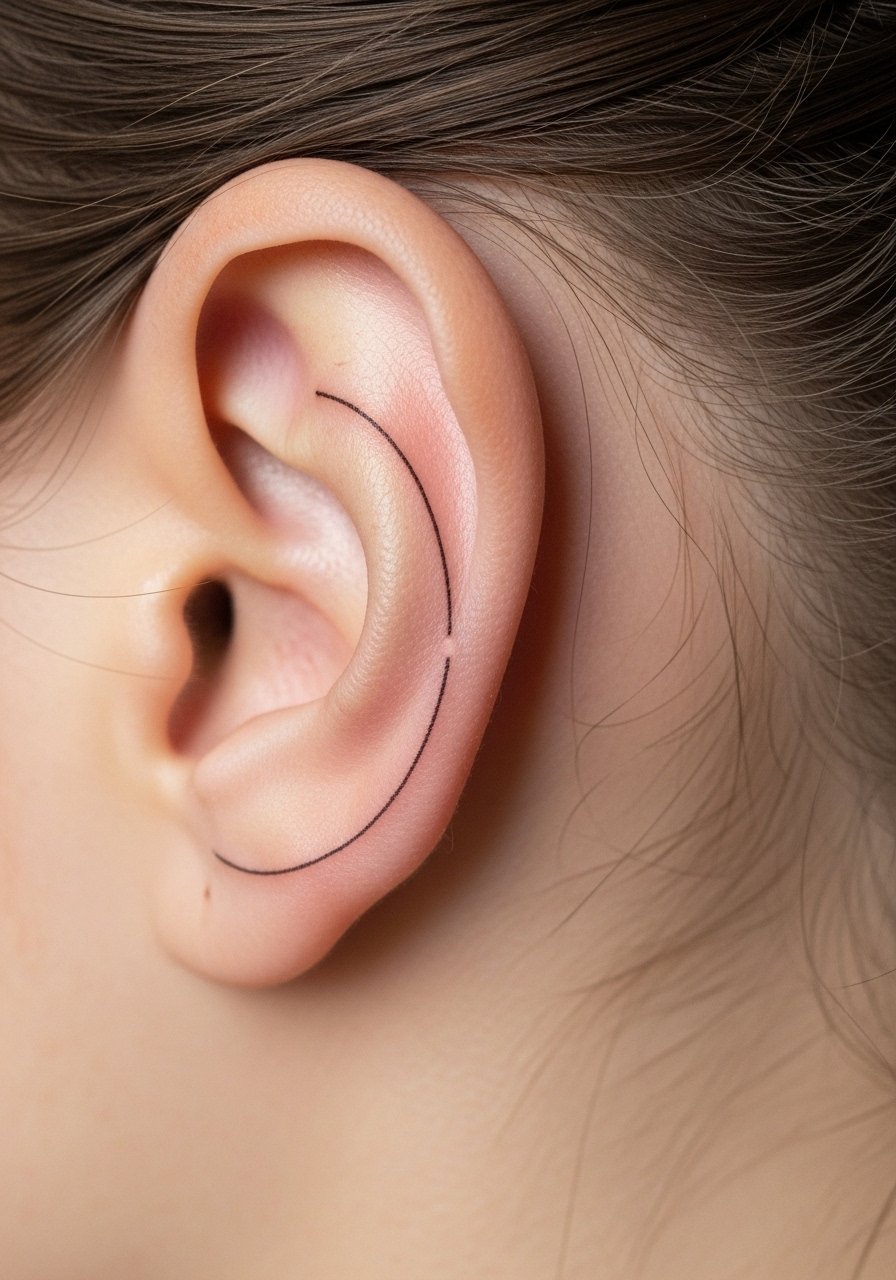
I got a behind ear piece once to test placement for future work. Pain is brief but sharp. This is low commitment, quick, often under 30 minutes. Minimalist lines look elegant at first but can blur in a year if too thin. Tell your artist you want slightly firmer single-needle work and ask about using a tiny bold anchor line so the halo reads after healing. A mistake is ordering ultra-thin single lines that vanish into skin texture. If you like the minimalist vibe but worry about aging, choose a modest thickness up front. Clean healed lines at six months look crisp. Watch them after six to 12 months.
9. Chiaroscuro Angel on Sternum
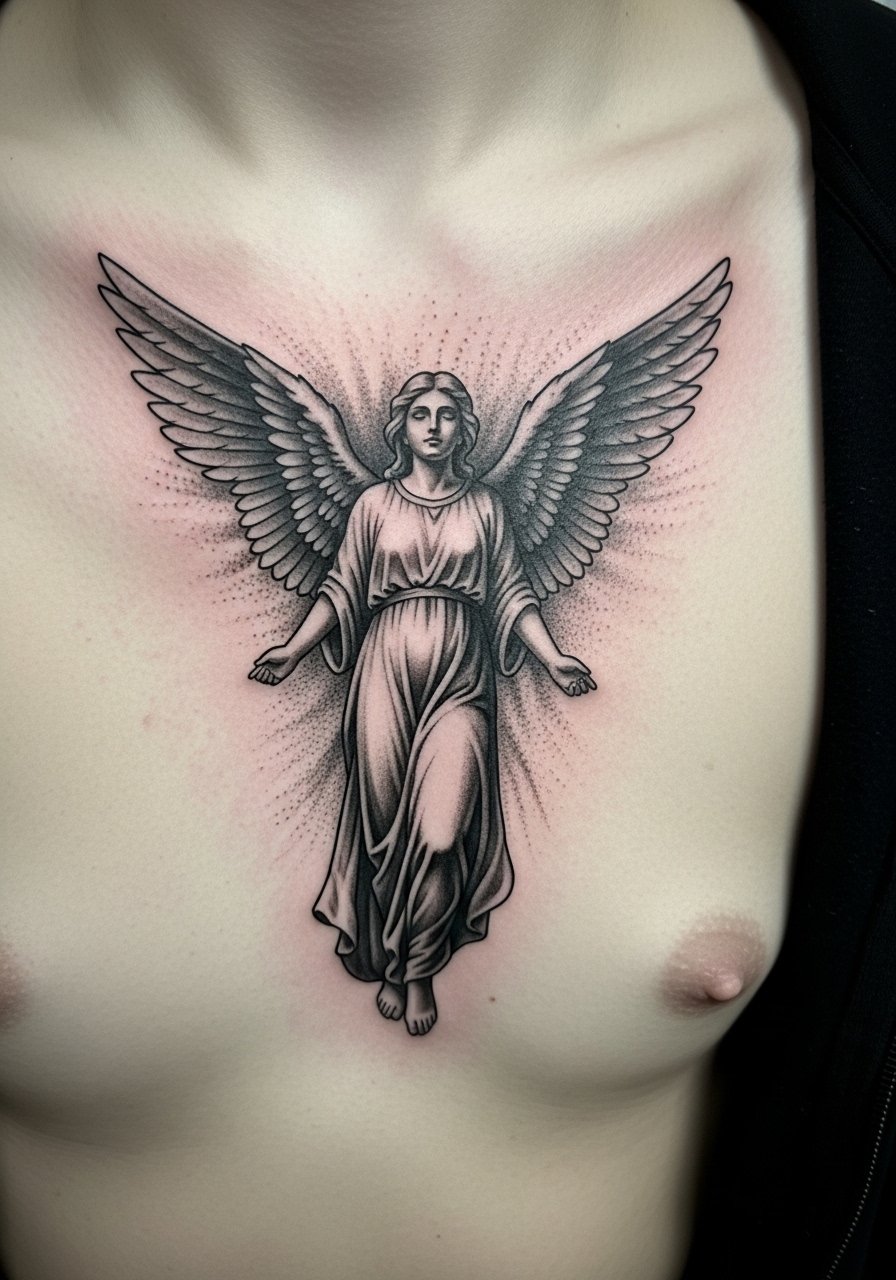
The sternum can be intense pain but it gives dramatic placement for a chest armor theme. Chiaroscuro uses strong light and dark contrast to make the angel feel sculpted. Sessions are usually long, 3 to 6 hours. Request a clear focal light source in the reference so your artist can plan shadow placement. A mistake I notice is adding too much gray wash across the sternum. That turns into uniform gray and loses depth. When healed at one year the highlights still pop if the darks were layered properly. Ask your artist about staged sessions so shading can heal between passes.
10. Single-Needle Script Angel Quote on Collarbone
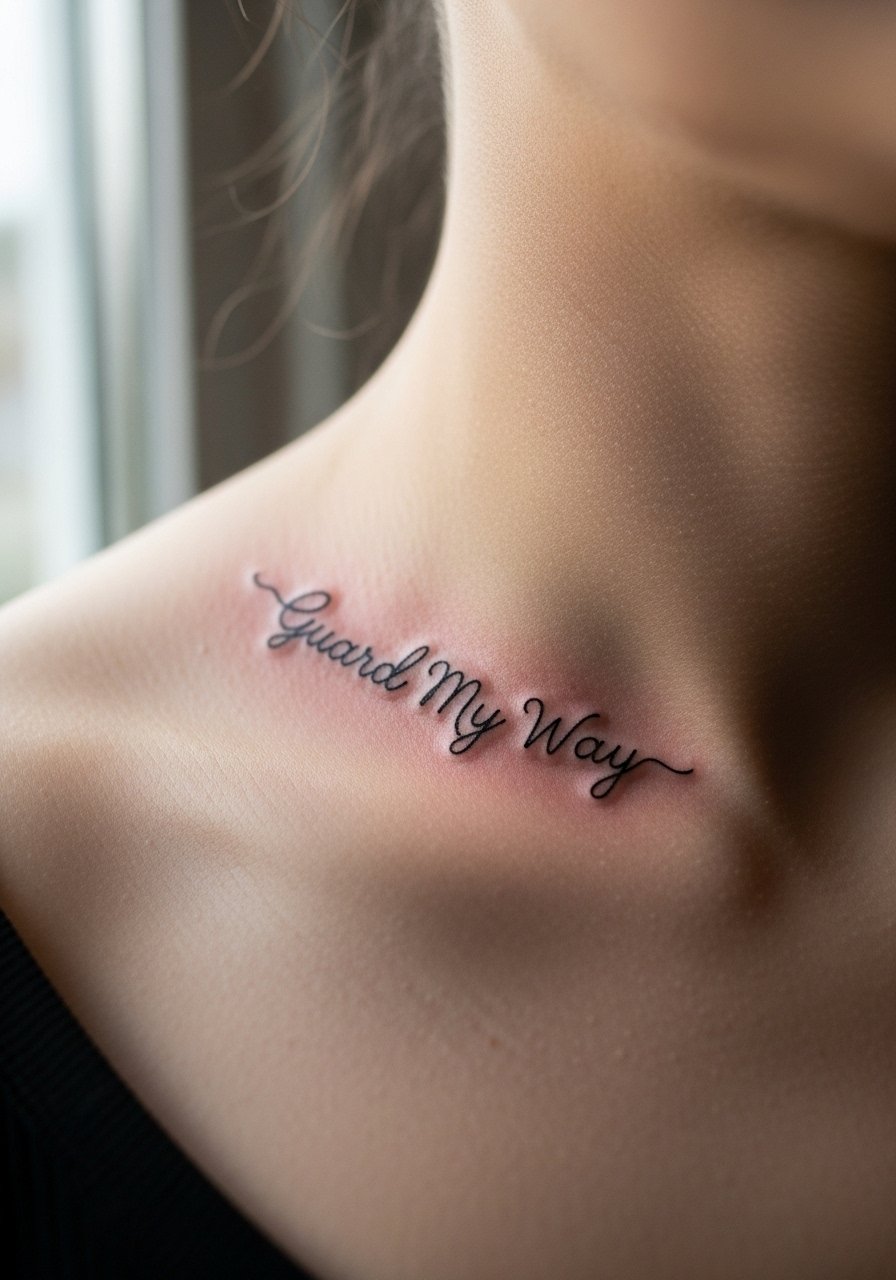
I recommend single-needle script on the collarbone only if you want intimate wording that reads like a talisman. Collarbone pain varies and often feels sharp when needle hits bone. Sessions are short. If you want text, specify the exact phrase and font during consultation. I have seen tiny script fade into illegibility when placed too close to the bone and too thin. The text "Guard My Way" looks like a band of armor to the wearer. Ask for slightly thicker downstrokes and consistent spacing so the word remains legible after two years. Healed, thin script softens quickly on the collarbone compared to forearm placements.
11. Geometric Angel Crest on Calf
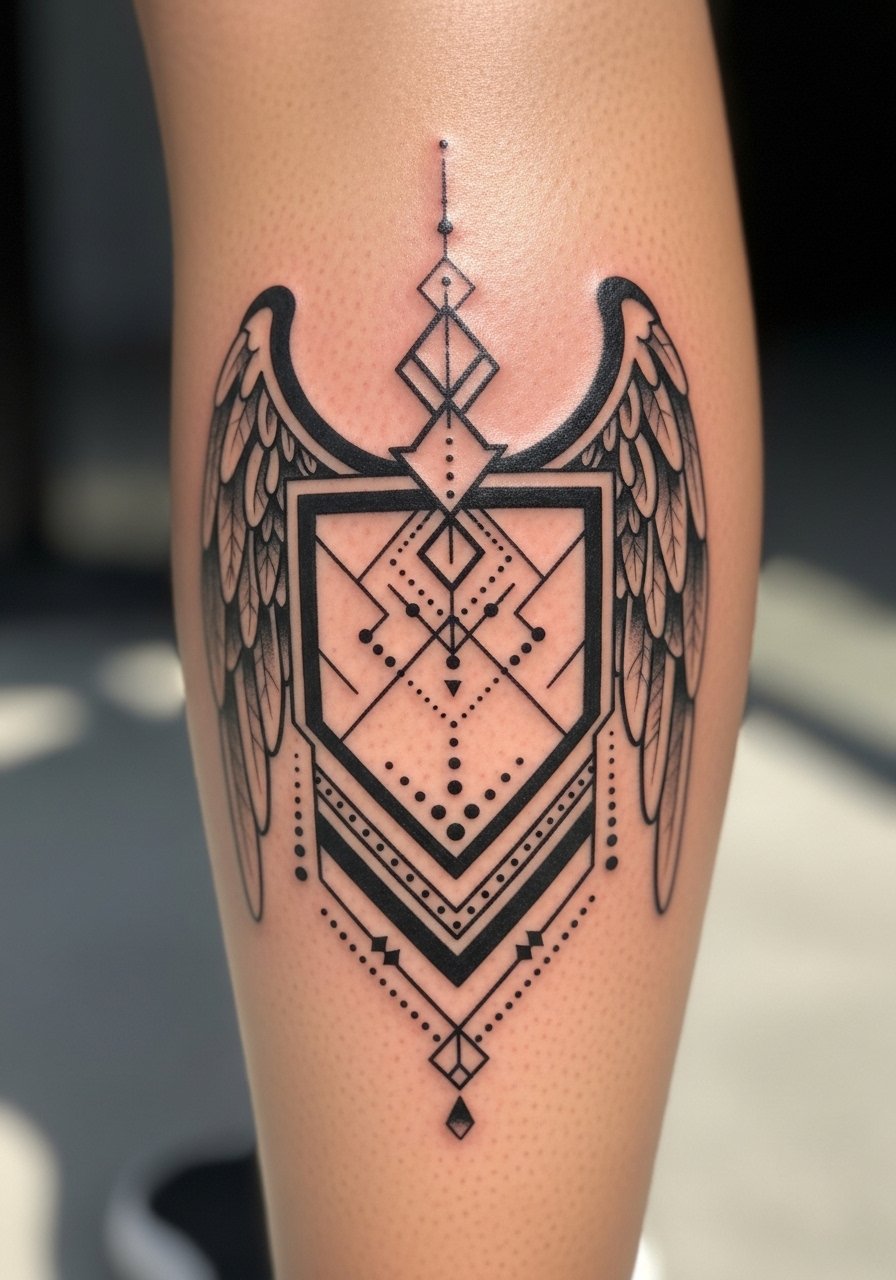
I chose the calf because it holds linework well and is easy to hide. A geometric crest reads architectural, like plated armor. Pain is moderate. Sessions run 1 to 2 hours. Tell your artist you want crisp angle junctions and negative space kept clean. A common mistake is making the geometry too small. Small angles become fuzzy. At six months the crest keeps structure. At two years, connection points need to have been left slightly thicker to prevent line breaks. If you plan to add more pieces later the calf offers nice canvas continuity.
12. Watercolor Winged Shield on Thigh Outer
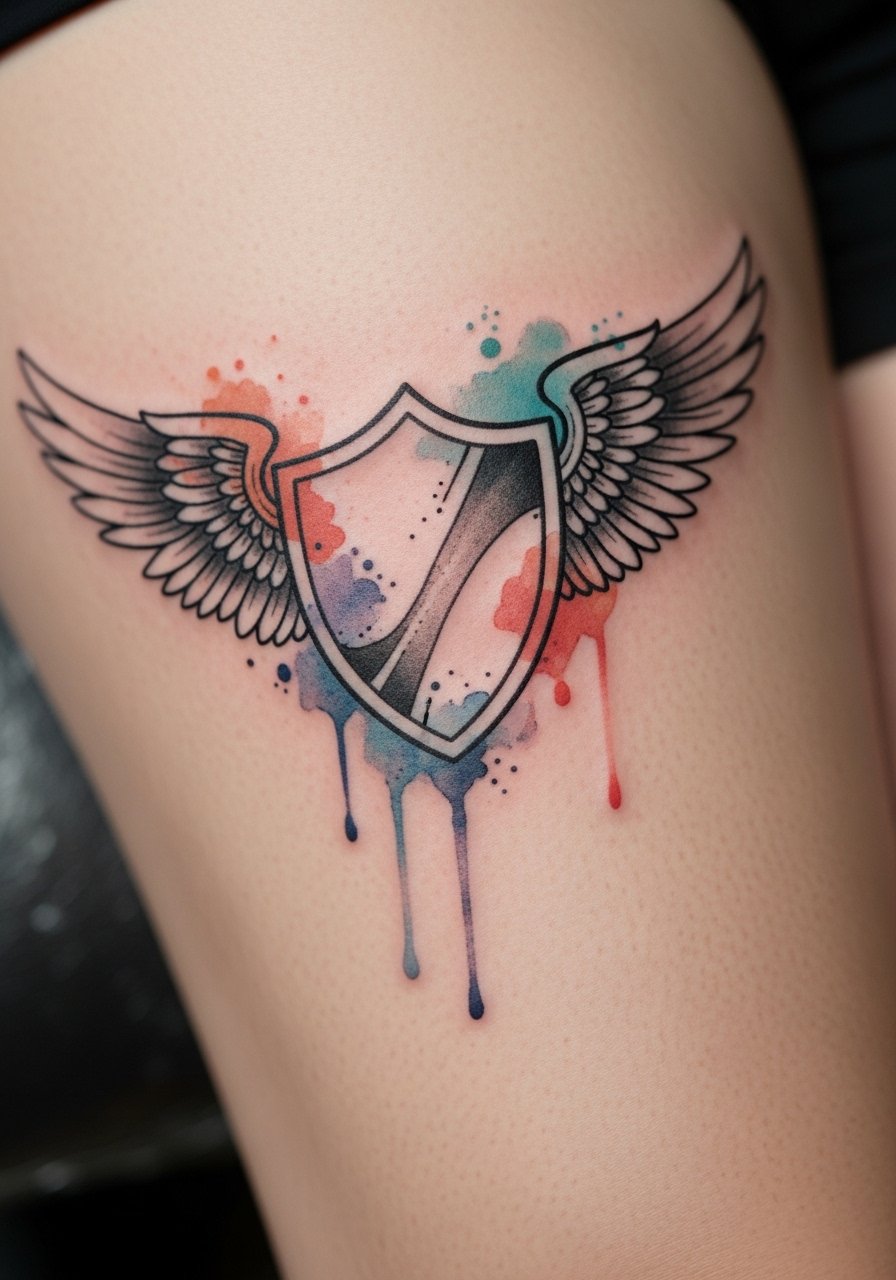
I learned watercolor ages differently. On the thigh it looks like a painted crest for a while. Expect less pain and longer sessions for color blending, often 2 to 4 hours. Tell the artist you want the watercolor to stay as an accent and to keep the shield outline solid. The biggest mistake is skipping a defining outline. Without it the watercolor spreads and looks like a bruise after a couple of years. At six months the washes are beautiful. At three years some hues will fade unless you protect the piece from sun. If you love the soft effect but want longevity, plan for touch-ups every few years.
13. Armor Plate Plaque on Forearm in Blackwork
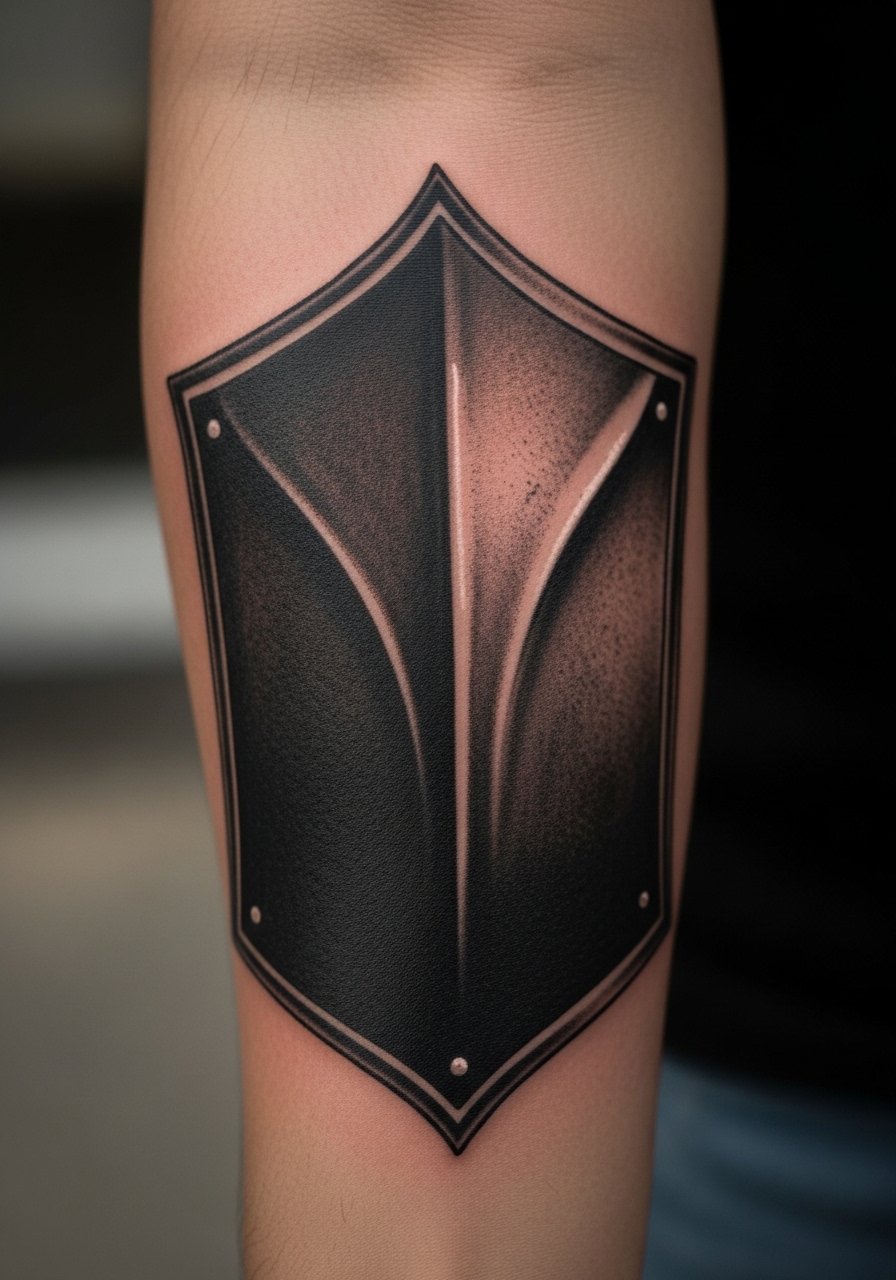
There is something protective about a forearm plaque. I saw one that read like worn metal. Pain is moderate to low. Sessions typically take 1.5 to 3 hours. Ask for areas of solid black framed by negative space. Small textured fills often blur. The common mistake is over-texturing the "metal" surface with too many tiny scratches. Those details wash out. Solid contrast ages best. At six months the plaque maintains an armor-like feel. At two years you might see some softening in the edges, but the form remains if lines were left strong.
14. Micro-Realistic Wing on Ankle
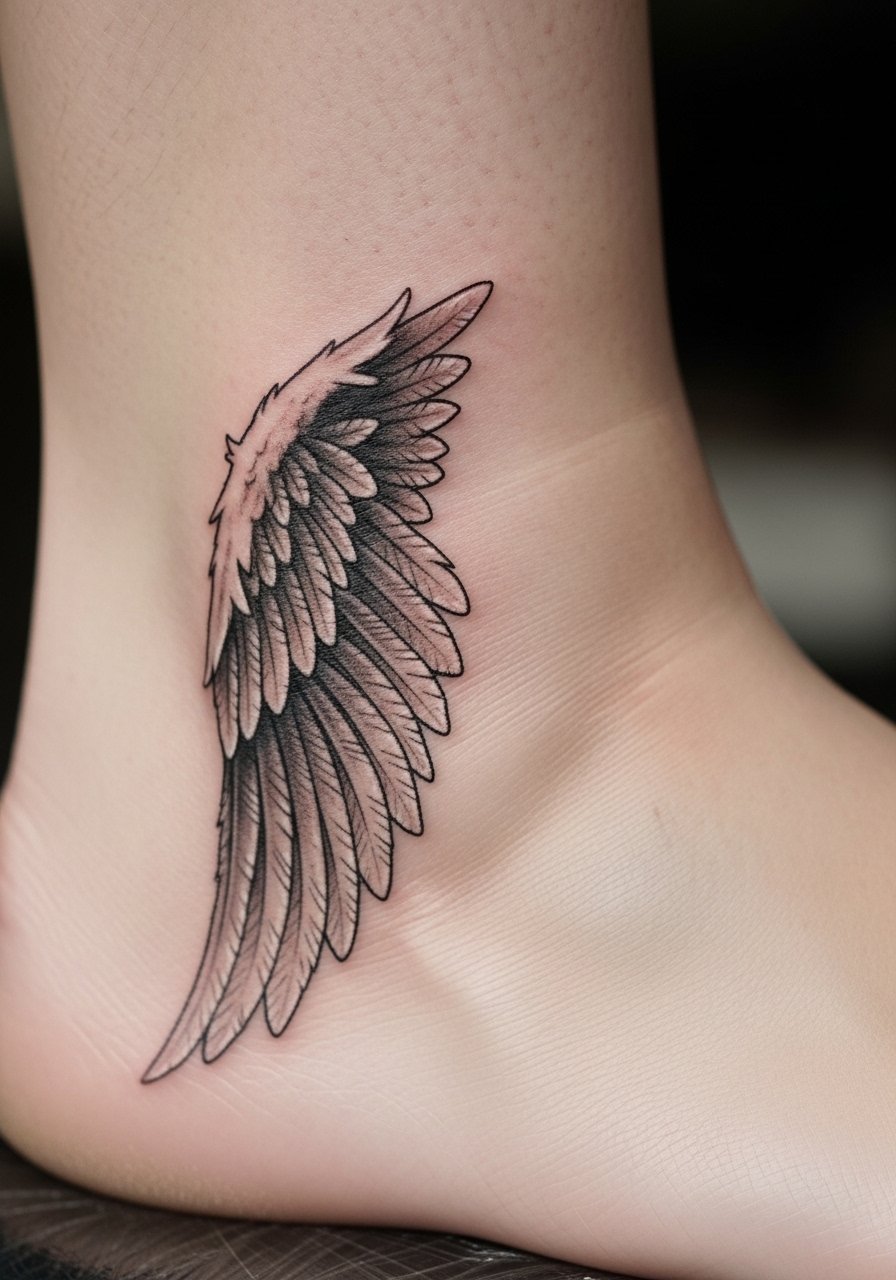
Ankles are bony and can sting. I recommend small micro-realistic wings here only if you accept potential blurring. Sessions are short, usually under an hour. Tell your artist you want simplified feather clusters rather than dozens of tiny barbs. I have seen ultra-detailed ankle wings lose clarity after a year. The trick is to suggest a slight scale-up of primary feathers. Six months healed looks delicate. At two years expect some blending. If you want a crisp ankle piece pick fewer strong strokes.
15. Illustrative Angel with Sword on Outer Bicep
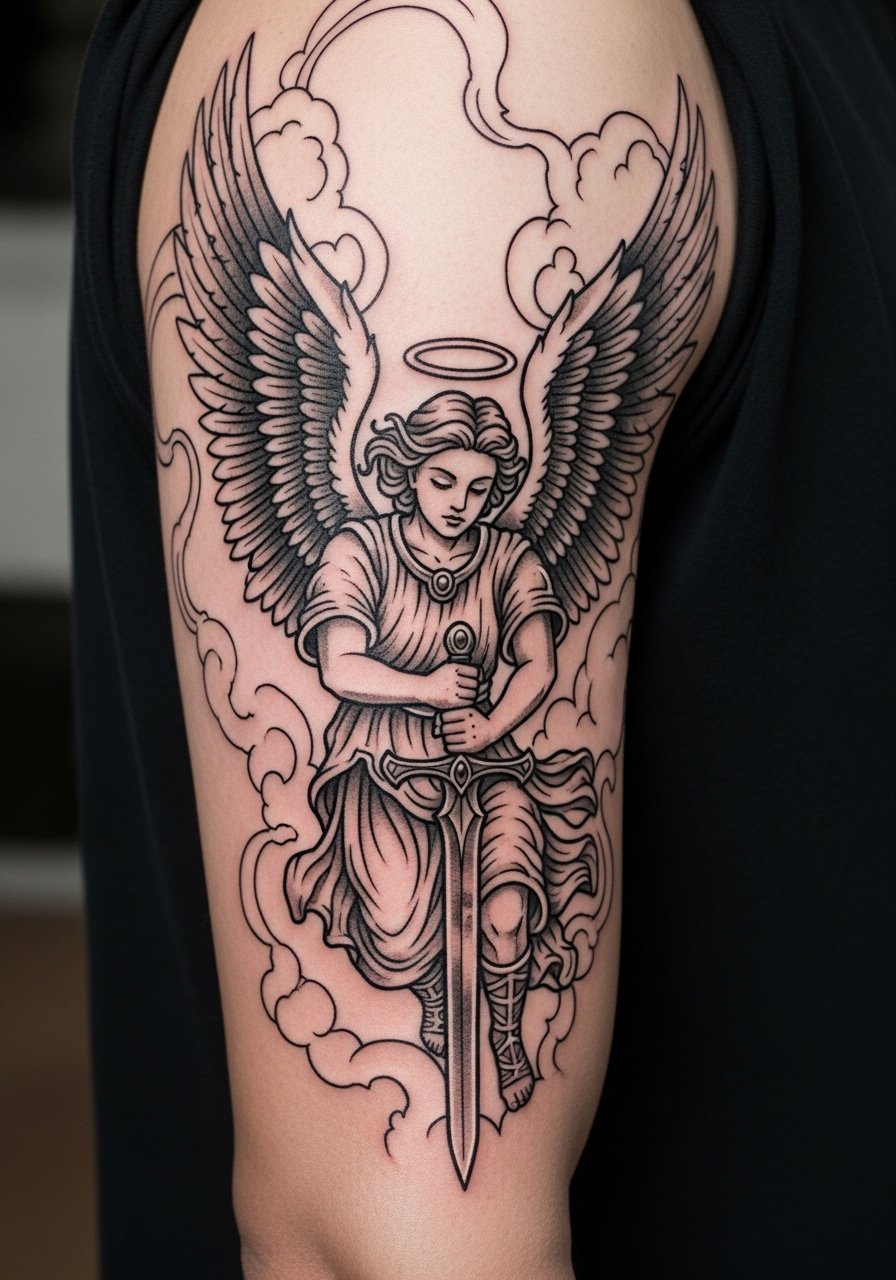
I recommend the outer bicep for pieces that need visual distance. It hurts less and shows well. Illustrative work balances detail and readability, making the sword feel like a ward. Sessions run 2 to 4 hours. Ask the artist for directional shading to match your muscle flow. A common mistake is placing too many small background details that compete with the main figure. When healed at one year the sword and angel remain clear if the foreground was prioritized. If you exercise frequently, remember the area sees friction from clothing which can soften ink during healing.
16. Gothic Black Angel on Throat Side
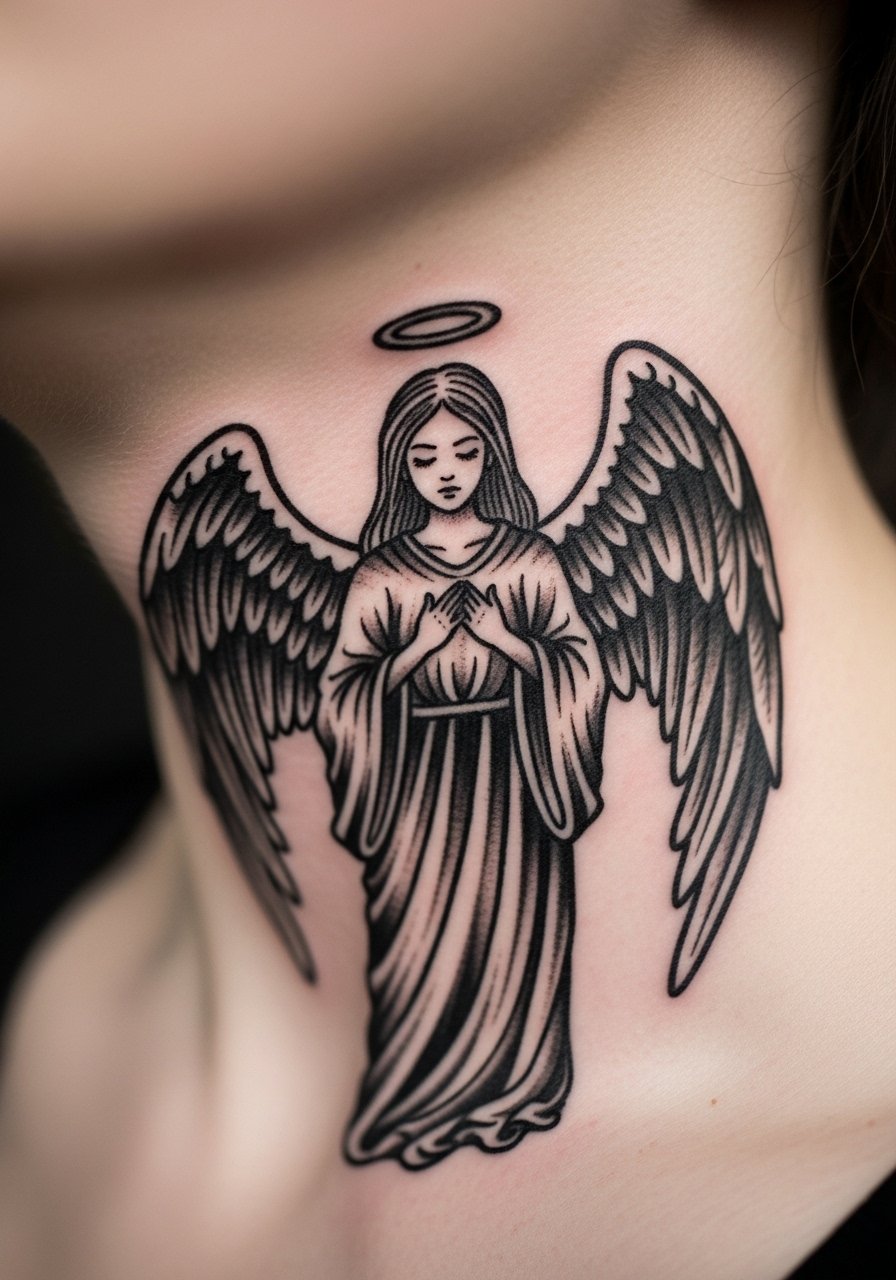
I almost did this myself and stopped because of the sensitivity. The side of the throat is painful and very visible. Gothic blackwork reads like a neck plate. Sessions are short but intense. Tell your artist you want saturated black and clean borders. The mistake here is trying to cram tiny ornamental flourishes near the jaw. They tend to blur and complicate touch-ups. At six months the black looks strong. At two years expect some softening, but heavy black holds much better than intricate shading in this zone. Think about future career visibility before committing.
17. Shielded Angel Sleeve Accent on Full Sleeve
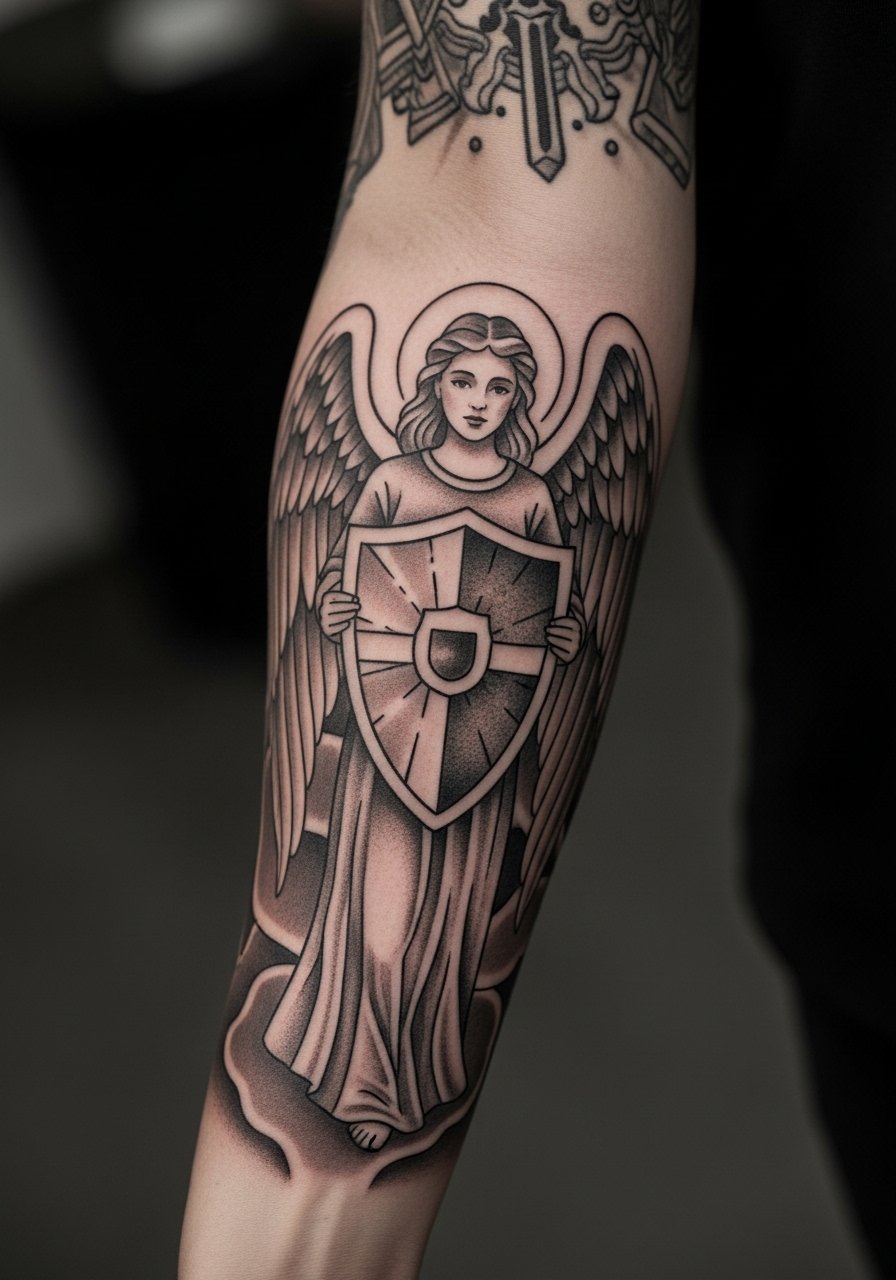
When I helped design a sleeve I learned integration matters. A shielded angel as an accent works if the sleeve has consistent line weight. Sleeve work is long, multiple sessions across months. Mention to your artist that you want the angel to serve as a focal panel, not lost among background elements. A consistent mistake is mismatched line weights between existing pieces and the new angel. That makes the angel look like an afterthought. Healed at one year the focal panel still draws the eye if contrasts were matched. Communicate continuity during consultation.
18. Small Guardian Sigil on Wrist
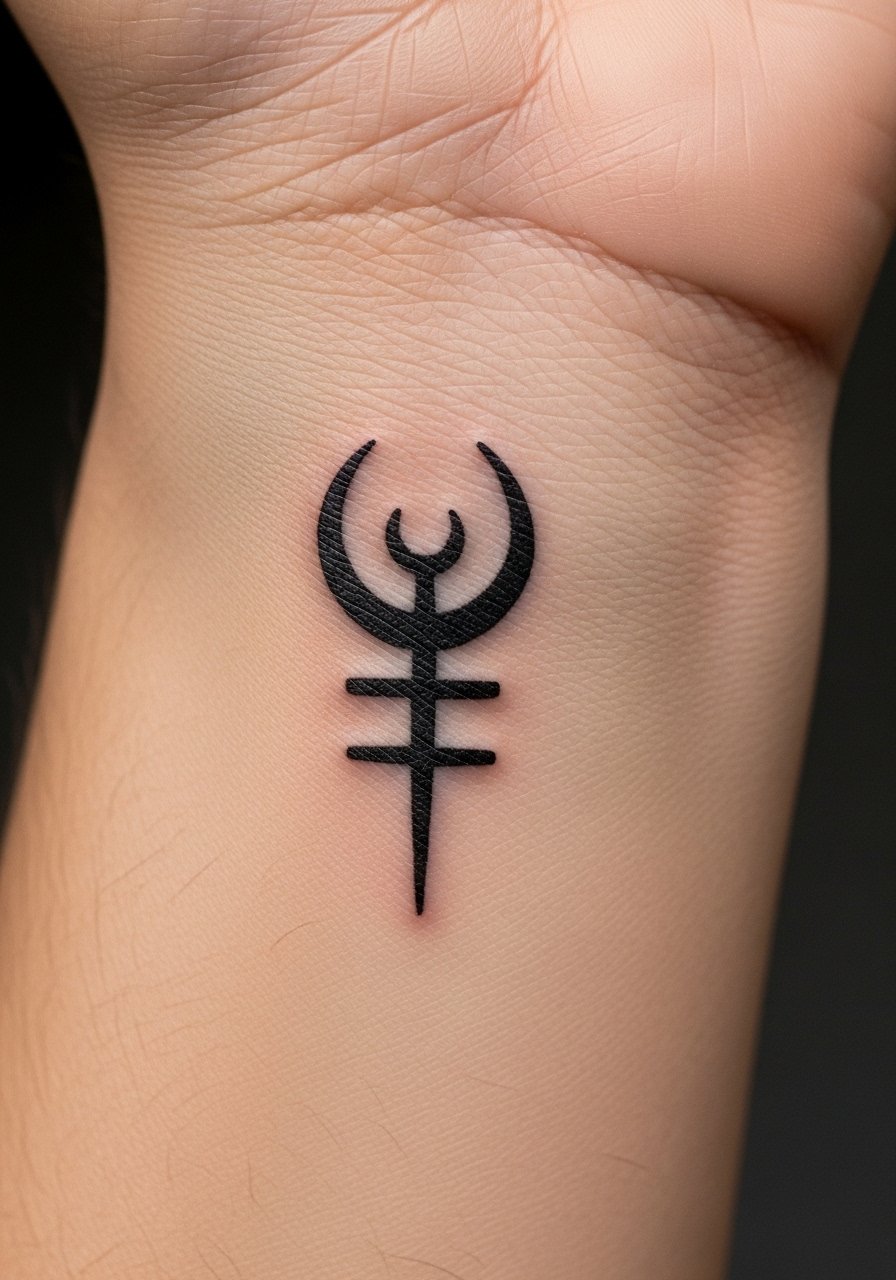
I wear a tiny sigil on my wrist and I like the feeling of constant protection. The wrist hurts a bit when the artist crosses the bone. Sessions are quick. Tell your artist the exact scale you want and insist on slightly thicker main strokes. I have seen sigils drawn too thin and they blurred into an unrecognizable mark. A strong outline prevents that. At six months most crisp sigils still read clearly. Plan a touch-up if the wrist gets frequent sun or friction from watches.
19. Thunderous Angel Back Plate With Wings Spanning Shoulders
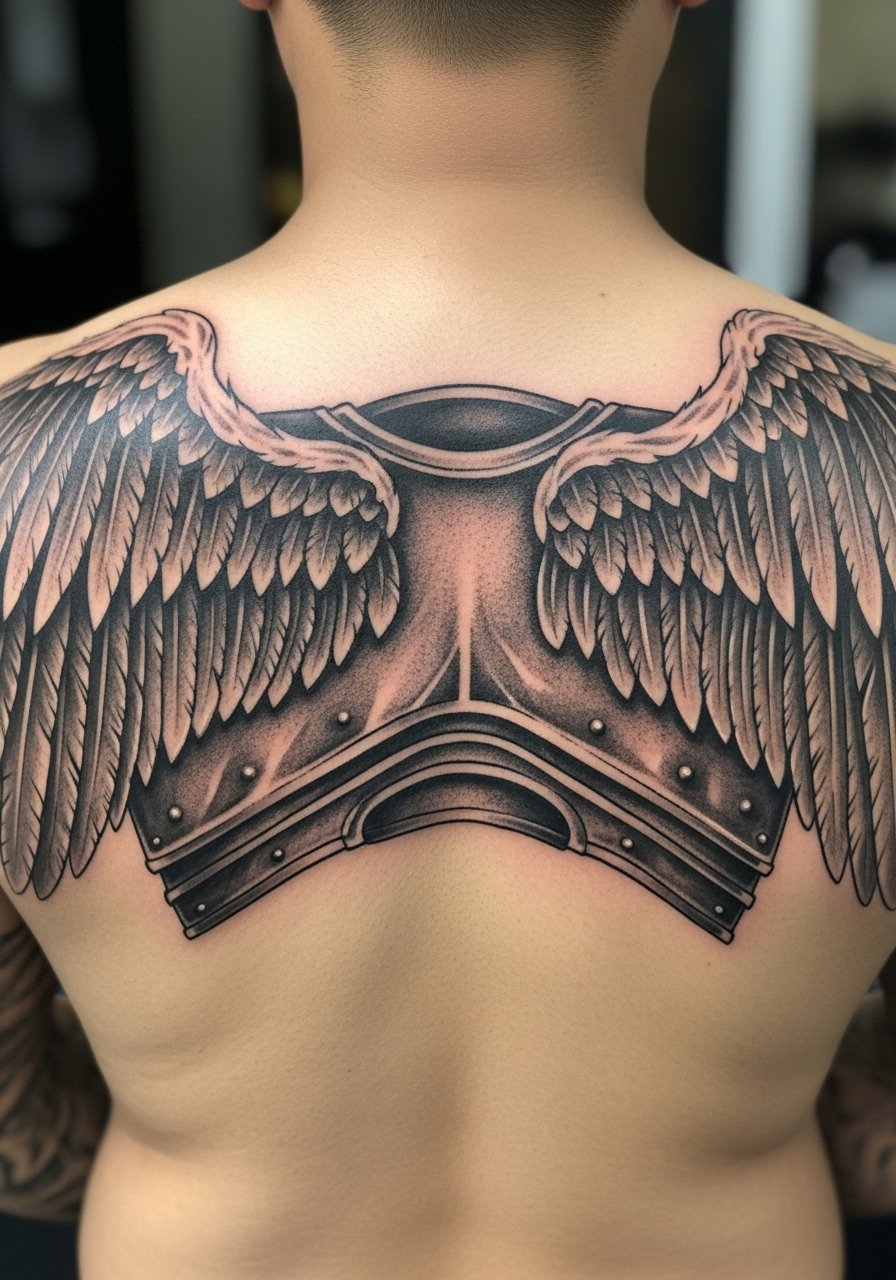
I saved the biggest for last. A full back plate is committed work and will be multiple long sessions. Pain varies across the back but expect higher sensitivity near the spine. The armor feel comes from large wings and a defined chest plate. During consultation request staged shading sessions and discuss how the wings will taper into the shoulders. A mistake I see is trying to cram filament-level feathers across the whole back. Those thin elements rarely survive long term. Healed after a year the wings should still read like a protective spread if the artist used bold structural lines. Plan for long-term maintenance and sun protection.
Tattoo Prep and Aftercare Essentials
[Aftercare Essentials] Provide everything you need to keep armor-like tattoos in top shape. I recommend products I actually use and the ones artists I know suggest.
- Aquaphor Healing Ointment, 14oz tube. Industry standard for first 3 to 5 days. I use a thin layer at night
- Saniderm Transparent Adhesive Bandage, 6-inch roll. Second skin healing method. Every artist I know recommends it for the first 24 to 72 hours
- CeraVe Fragrance-Free Moisturizing Lotion, 12 oz. Daily moisturizer for days 4 to 14. I prefer the pump bottle for hygiene
- Dr. Bronner's Unscented Castile Soap, 32 oz. Gentle cleanser for rinsing twice a day the first week. Dilute a small drop with water
- Numbing Cream with 5% Lidocaine, 30g. Apply 30 to 45 minutes before your session only if your artist approves. Some artists prefer no numbing
- Tattoo Stencil Transfer Paper, A4 Pack. Useful if you want to test placement at home before your appointment
- SPF 50 Sunscreen Stick for Tattoos, 0.5 oz travel size. Use on healed tattoos whenever they see sun. I carry one for beach days
- Mad Rabbit Tattoo Balm, 2 oz. Long-term maintenance for vibrancy. Artists I know recommend it for healed pieces
- Hustle Butter Deluxe, 5 oz. Vegan alternative that works during healing and after. Smells better than most aftercare
- Tattoo Numbing Spray, 4 oz. Handy for touch-ups or sensitive areas mid-session
- Hydrocolloid Bandages, Large Size Pack. Good alternative to Saniderm for small to medium tattoos
- Antibacterial Hand Sanitizer Gel, 8 oz. Keep hands clean when applying aftercare creams
When prepping I avoid heavy alcohol or exfoliation on the area for at least 48 hours prior. From what I've seen most artists want the skin healthy and slightly hydrated. For long-term maintenance I use sunscreen daily on exposed pieces. Every artist I've talked to says UV protection is the single best thing you can do for ink longevity.
Frequently Asked Questions
Q: Will fine line angel wings blur into each other if I get a sleeve of them?
A: From what I've seen, fine line wings blur fastest when they are packed tightly across a sleeve. If you want a wings sleeve ask your artist to alternate line weight and leave negative space between feather clusters. Also plan for staged sessions so lines can settle before the next pass. Use a light daily moisturizer like CeraVe Fragrance-Free Moisturizing Lotion, 12 oz during healing to help prevent scabbing that pulls ink.
Q: Do watercolor angel shields need different aftercare than blackwork pieces?
A: In my experience watercolor needs the same basic care but it benefits more from sun protection once healed because colors fade faster. During the first two weeks focus on gentle cleansing with a mild soap like Dr. Bronner's Unscented Castile Soap, 32 oz and light moisturizing. After the piece is fully healed use an SPF stick like SPF 50 Sunscreen Stick for Tattoos, 0.5 oz travel size on sunny days to protect pigment.
Q: How should I prepare for a ribcage angel in dotwork style, since ribs hurt?
A: I tell friends to eat a good meal and hydrate before the session. Some artists approve a topical numbing cream like Numbing Cream with 5% Lidocaine, 30g applied only with their permission. During the appointment expect multiple short breaks. For dotwork specifically ask the artist to space dots intentionally so the piece ages without merging into a gray block. I have seen too-dense dotwork on ribs collapse within two years.
Q: Can a collarbone script be bold enough to last and still look delicate?
A: Yes. Ask your artist for slightly thicker downstrokes in the script and consistent letter spacing. I have had clients choose a slightly bolder single-needle approach that reads delicate at a glance but keeps legibility after a year. Use light moisturizing while healing and consider a touch-up at the one-year mark if your collarbone sees a lot of sun.
Q: Which aftercare product is the safest for people with sensitive skin?
A: From what I've used and heard from artists, Hustle Butter Deluxe, 5 oz and plain Aquaphor Healing Ointment, 14oz tube are generally well tolerated. If you have known allergies test a small amount on intact skin first. For cleansing pick a fragrance-free soap like Dr. Bronner's Unscented Castile Soap, 32 oz and stop use if you get irritation, then discuss alternatives with your artist.
Q: How often should I plan touch-ups for high-contrast blackwork angel pieces on the back?
A: In my experience heavy blackwork holds longer, but if you want the highest possible contrast plan for a small touch-up between two and five years. Sun exposure and skin friction affect this. Using long-term maintenance like Mad Rabbit Tattoo Balm, 2 oz helps keep the surface hydrated which I find preserves vibrancy. If you exercise a lot or have frequent sun exposure check the piece annually for fading.