
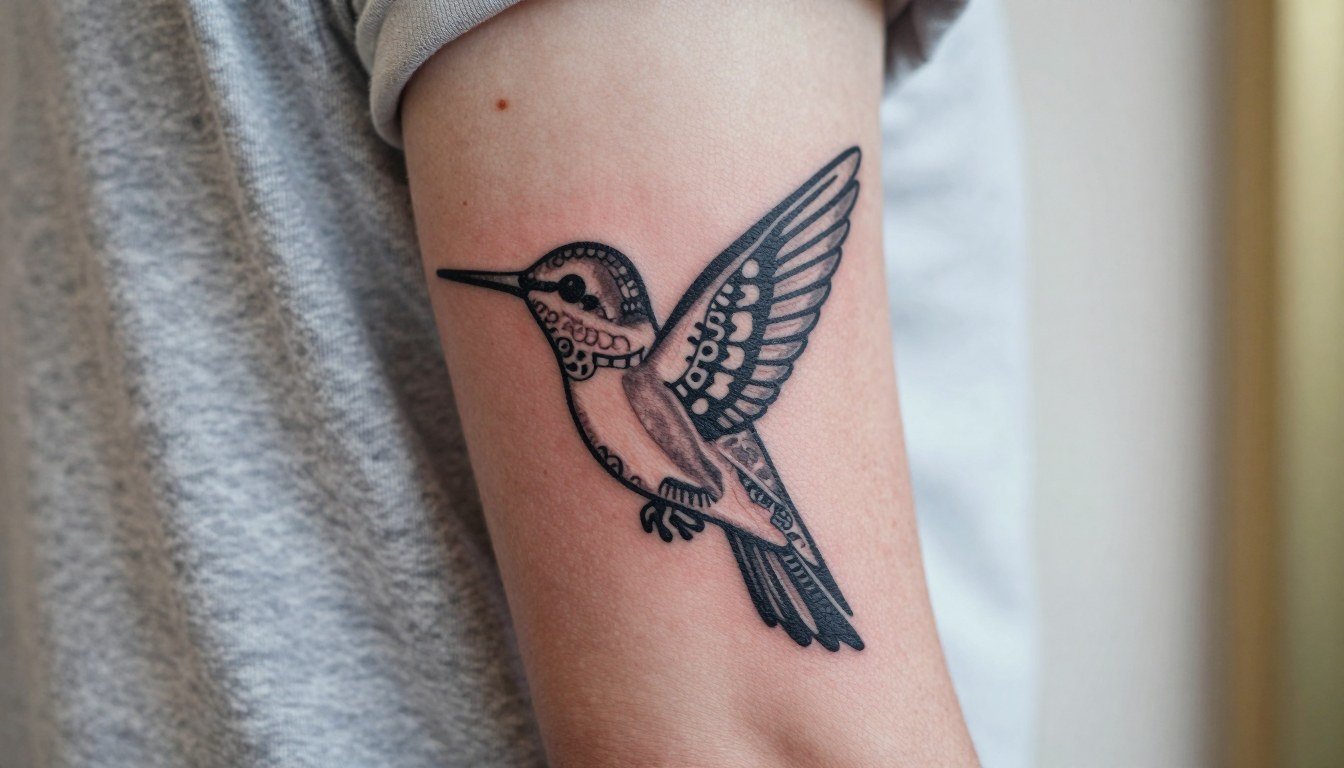
Color realism can make an Aztec hummingbird look alive, and it can also hide into a soft blur faster than you expect. Black-and-grey keeps the silhouette readable but can lose the electric pop that draws people to the motif in the first place. Pick the visual priority you care about now, and plan spacing, lineweight, and placement so the bird still reads the day after healing and five years down the line.
1. Color realism hummingbird with Aztec-style headdress
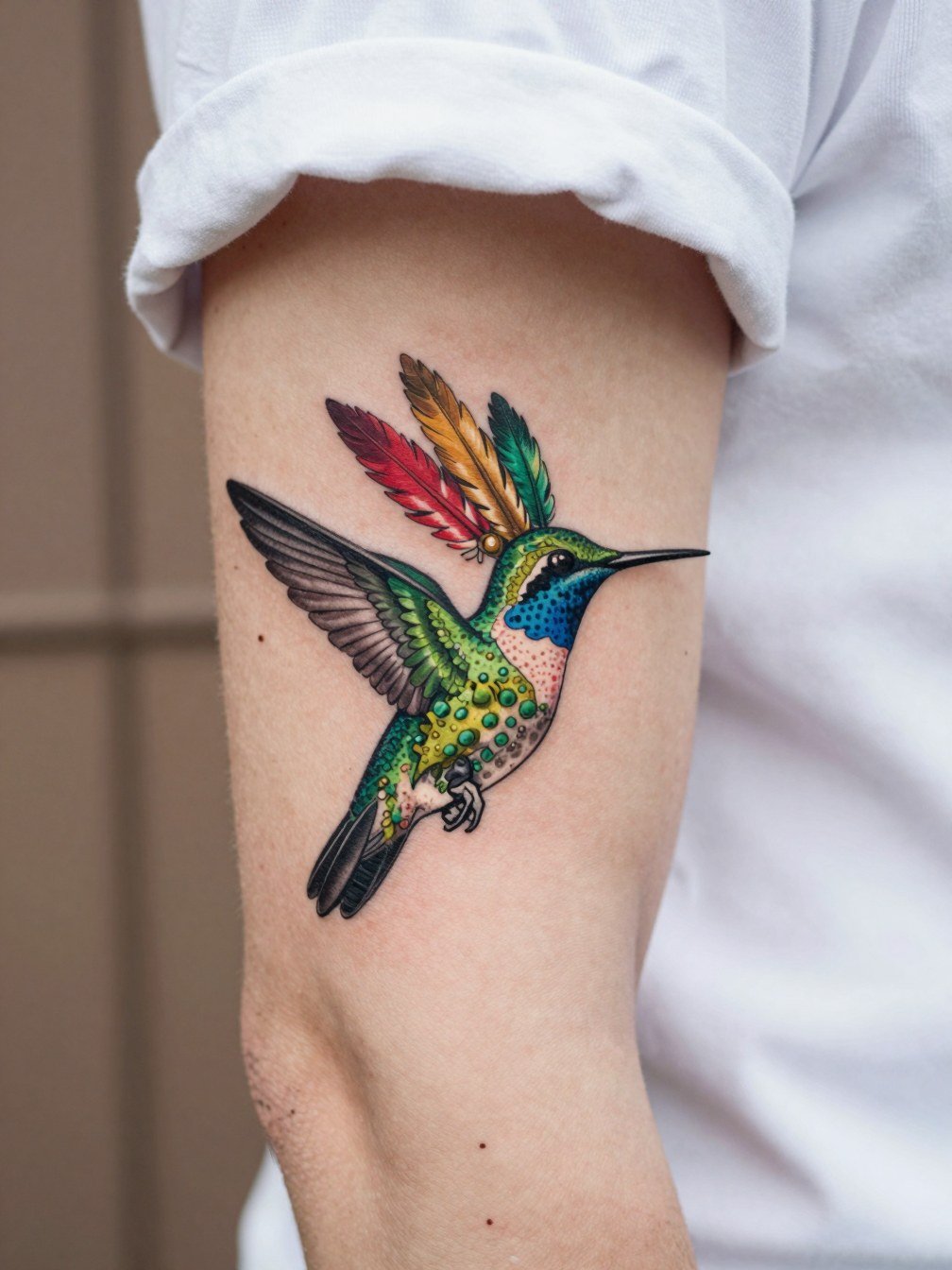
A mid-sized color realism bird with Aztec ornament reads as a statement when placed on the throat. One camp argues vivid color best suits hummingbirds because the natural palette reinforces the motif. The opposing camp favors black-and-grey as the long-term read because monochrome keeps detail legible as the skin changes. If you want color, request slightly larger feather cells and denser saturation in the stencil so the greens and blues keep their edge after healing. For the session, wear a loose neck tee so the artist can stencil and work without tight collars rubbing the area. Expect moderate pain at the throat and one to two sessions depending on saturation. Avoid ultra-fine feather detail at small scale because it can blur into fuzz within a few years.
2. Black-and-grey hummingbird with Aztec helmet motif
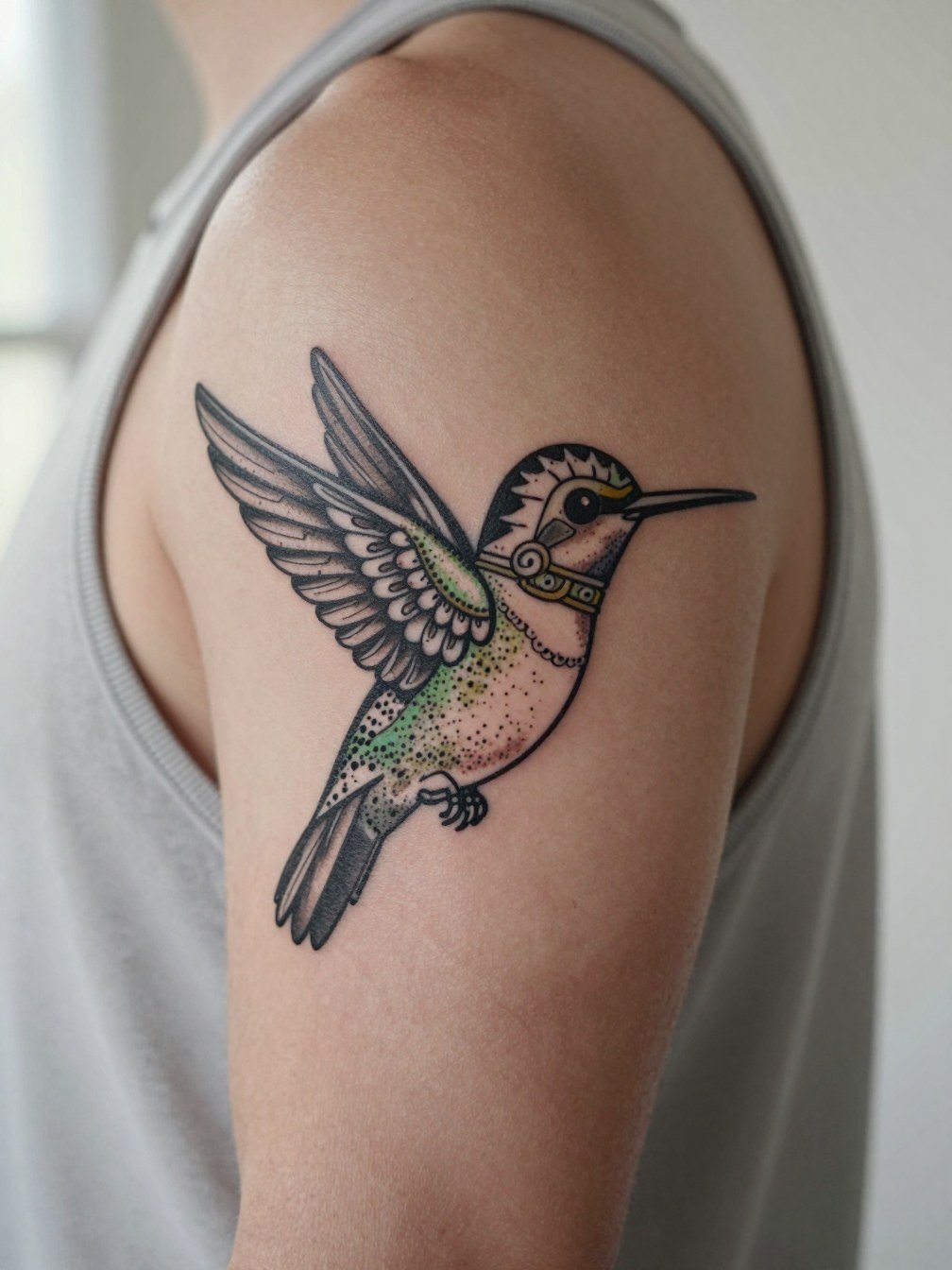
Black-and-grey lets the Aztec helmet read like armor without relying on saturation. Choose this if you want lower maintenance and clearer contrast at distance. Ask the artist for heavier linework around the helmet and slightly looser spacing in the feather work so the shading does not merge over time. A common mistake is asking for micro detail inside the helmet at a small scale, which tends to blur by year three. Session time is usually one medium-length appointment with moderate discomfort on the outer arm. Expect a touch-up window around the one-year mark for crispness in the helmet accents.
3. Memorial hummingbird honoring a loved one
For a memorial piece, scale and placement matter more than ornament. A small-to-medium bird on the inner forearm or wrist fits daily wear and keeps the image personal without dominating clothing choices. Bring two reference photos: one showing the scale you want at three inches, and one at five inches. Tell the artist you want slightly bolder contour lines so the tiny feathers stay legible when the skin settles. A frequent mistake is cramming too many Aztec elements into a tiny memorial, which reads cluttered after healing. Pair the wrist option with a thin bracelet on the opposite wrist to balance the look. The session feels quick but the wrist can sting during edges and across joints. Plan a touch-up after six to twelve months if you notice softening.
4. Aztec-inspired hummingbird with geometric framing
Geometric framing gives an Aztec bird a striking graphic silhouette that reads at a distance. One camp insists the framing should reference authentic Aztec geometry and iconography with clear motif relationships. The other camp treats the geometry as an aesthetic device and prioritizes balance and scale over strict cultural fidelity. If you want the geometry to feel authentic, request clear spacing between repeat motifs and avoid tiny filigree. If you want it more decorative, allow the artist to simplify patterns for stronger readability. Calf placement tolerates larger scales well, and blowout risk is lower here than on thin-skin areas.
5. Hummingbird with floral pairing for Día de los Muertos-adjacent symbolism
Adding florals softens a warrior motif into a commemorative composition without losing motion. If you want Día de los Muertos adjacency, specify which floral types you prefer and whether color should be saturated or muted. A misstep is treating the flower as background filler rather than a compositional partner, which crowds the bird. For show-off outfits, a linen button-down with rolled sleeves frames upper-arm pieces nicely. Session time increases with added floral detail, expect longer linework and color passes. Ask the artist to map negative space between petals and wing feathers so the design breathes as it heals.
6. Small hummingbird in flight, simplified
A small, essentialized bird is a classic first tattoo because it fits many locations and heals quickly. For tiny hummingbirds, ask for slightly thicker lineweight than the idealized single-needle sketch so the form lasts. A common mistake is insisting on ultra-thin single-needle detail at very small sizes. The ankle sees lots of friction from socks and shoes, so plan session wear accordingly and keep the area protected during the first week. Expect a short session and perhaps a touch-up at six months if any linework softens.
Pre-Session Essentials
Those first six designs include visible placements and delicate feather work, so a few small kit items smooth the appointment and the first week of healing.
-
Stencil transfer paper kit. Lets you preview placement and lineweight on the skin before the first pass, useful for throat and chest stencils.
-
Topical numbing cream. Apply as directed before sessions that hit sensitive zones like the throat or ribcage to reduce discomfort.
-
Thin protective film roll. Keeps visible placements like wrists and ankles protected from friction and water in the first 24 to 72 hours.
-
Fragrance-free body wash. Gentle cleansing helps avoid irritation while the tattoo forms its outer layer.
-
Healing ointment. A thin application supports initial moisture without suffocating needle channels and is handy after the first bandage is removed.
7. Fine line hummingbird with negative space wings
Negative-space wings give a light, airy feel while staying legible at small to medium scales. For inner forearm placement, request slightly heavier primary outlines and deliberate spacing in the negative areas so the wings do not collapse into grey after a year. A frequent error is asking for single-needle contrast everywhere. Instead, specify where you want delicate stippling and where you want anchor lines. For show-off outfits, a rolled-cuff linen shirt frames the inner forearm cleanly. The session is generally comfortable for most people and one short appointment usually suffices.
8. Upper-throat hummingbird statement piece
Throat placement makes a medium bird feel monumental even when the design is modest in size. Remember that one group prefers visible statement placement because it is part of the piece's energy. Another group prefers lower-visibility spots for wearability and easier healing. If you want throat work, ask the artist to show you the stencil at full-scale and then one size larger so you can see how spacing works with movement. Wear a loose neckline on session day so the artist can reach the area without fabric rubbing. Throat skin can be sensitive, so expect a higher pain level and plan for careful aftercare around collars.
9. Traditional-inspired hummingbird with thick outline
A traditional approach uses bold contours and limited color to preserve readability across years. This style is strong for shoulder placement because the shape survives stretch and sun exposure better than thin filigree. Tell the artist you want classic flat fills and slightly exaggerated wing shapes so the motif reads at a distance. A common mistake is asking for tiny interior detail inside the wing when the traditional silhouette does the heavy lifting. Session time is moderate, and touch-ups for color are less frequent if the fills are applied with solid saturation. Wear a sleeveless top on appointment day for easy access.
10. Small symbolic hummingbird for remembrance or resilience
Tiny collarbone pieces read intimate and personal, and they pair elegantly with minimalist jewelry. For this placement, ask the artist for a clean silhouette with slightly heavier contour so the tiny shape does not feather into surrounding skin. Avoid overworking internal detail in such a small design. For show-off looks, a delicate choker or off-shoulder top highlights the placement. The collarbone can be moderately painful while lining is applied, but the session is short. Expect one session and possibly a touch-up if any linework softens after healing.
11. Hummingbird with Aztec-inspired mask or armor details
Turning the bird into a narrative figure with mask and armor gives the tattoo a warrior tone. If you choose this route, specify which elements you want emphasized, for example the mask's eye shape or the armor's embossed lines. A common error is asking for full armor engraving at too small a scale, which loses definition as shading merges. Outer forearm placement shows motion well and is lower risk for blowout than inner bicep. Session time is one to two passes depending on color. Discuss realistic touch-up expectations for the armor etching if you want it to stay crisp.
12. Black-and-grey upper chest hummingbird
The upper chest gives enough real estate for wingspan and motion without forcing the design too large. Black-and-grey keeps the piece readable across skin tones and reduces the need for frequent color touch-ups. Ask the artist to space feather details wider than a standard realism reference so the shading stays distinct at two years and five years healed. A mistake is compressing too many thin feather lines into the chest piece, which can merge when the skin moves. For show-off pairing, scoop-neck tops and open button-downs frame the piece without interfering with healing. Expect moderate pain and one to two sessions.
13. Hybrid realism with Aztec armor accents for larger canvas
A hybrid realism approach lets the bird look natural while Aztec armor cues lend a narrative edge. For larger placements like an upper-arm wrap, request reference photos showing how the feathers flow with muscle shape so the motion follows the limb. A typical mistake is flattening the bird into a static badge; ask for layered feather planes and armor highlights instead. Wear a sleeveless tank on appointment day for access and comfort. Session time is longer for hybrid realism and can require two or more appointments depending on saturation. Plan touch-ups after the first year to preserve highlight contrast.
Frequently Asked Questions
Q: How much should I expect to pay for an Aztec hummingbird tattoo?
A: Price ranges vary by shop, size, and detail. Small symbolic pieces often fall in the low to mid hundreds of dollars, medium realistic or color pieces are commonly a few hundred to under a thousand, and large hybrid or multi-session throat and chest work can approach the upper hundreds to low thousands. Your best move is to compare portfolios and ask studios for a session estimate based on the size and saturation you want.
Q: Which ages better, color realism or black-and-grey, for this motif?
A: Color realism looks vibrant fresh, but it demands more sun protection and occasional touch-ups to keep saturation bright. Black-and-grey reads more consistently as it ages, and heavier linework helps it stay readable across years. If you want color but worry about maintenance, pick a limited palette and stronger primary lines so the form holds as pigments soften.
Q: How should I plan healing for throat or upper-chest placements?
A: Those visible placements face extra friction from collars and necklaces, so wear loose necklines and avoid tight chains during the first two weeks. Keep the area clean with gentle, fragrance-free wash and pat dry. Protect the tattoo from direct sun once healed. If your work crosses the collar or bra area, plan for longer aftercare vigilance because movement and moisture increase the chance of scabbing.
Q: Where can I find Aztec hummingbird portfolios and healed examples?
A: Search Instagram and TikTok for phrases like "aztec hummingbird tattoo" and add style tags such as "color realism hummingbird" or "black and grey hummingbird" to narrow results. Browse Reddit tattoo threads to see personal posts and healed shots in different skin tones. Use location filters on social platforms or portfolio sites when you want artists near you. Look for portfolios that show both fresh and healed images so you can judge how lines and saturation hold up over time.
Q: Can I wear jewelry or certain clothes to show off a new collarbone or wrist piece?
A: Yes, styling helps. For collarbone pieces, delicate chokers frame the area without covering the tattoo, and off-shoulder tops let the shape speak. For wrist pieces, thin bracelet sets on the opposite wrist create balance. If you plan to wear accessories right after the session, wait until the initial scabbing phase passes so metal or bands do not rub the healing skin.
