
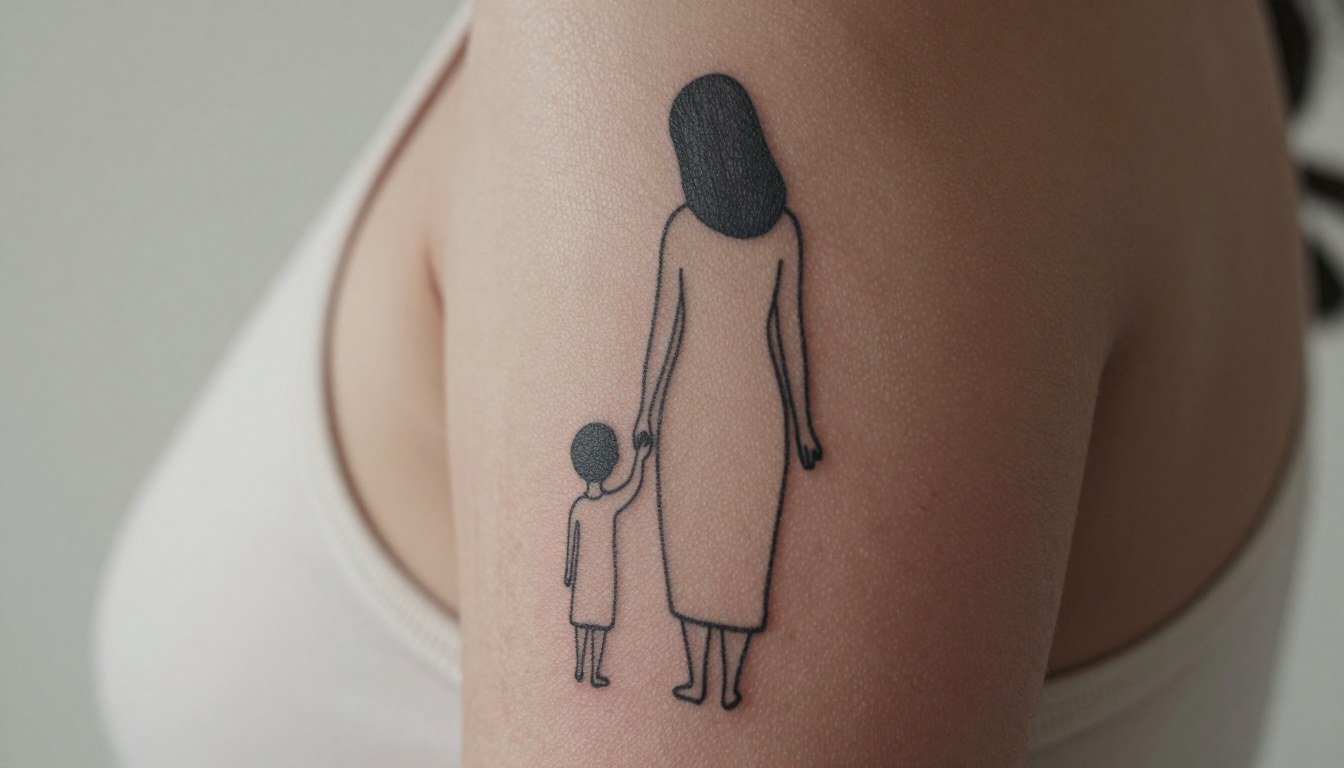
The tiniest mom-baby pieces can read as diary entries or as smears if the composition and placement are off. I keep seeing parents pick a single-needle script because it looks fragile on the save board and then regret the ghosted letters later. With a few sizing and spacing choices you can keep that intimate look while avoiding blowout, and the next section shows a budget-friendly footprint option that holds up.
1. Tiny Baby Footprints, Black Linework

A fingertip-sized pair of footprints reads instantly. For this placement I recommend slightly heavier linework than the single-needle reference you like online, because the inner forearm moves and scraped micro-lines can merge over five years. Expect a short session under an hour and low-to-moderate pain for most people. Bring a clean print of the actual footprints and highlight the darkest arches so the artist can translate the highest-contrast areas into stable linework. A common mistake is asking for ultra-fine loops inside toes, which soften into smudges after a year. If you want to show it off, roll up a sleeve linen shirt for everyday photos and wear short sleeves to the appointment so the artist has clear access.
2. Child Handwriting Script on Inner Forearm

Names in actual handwriting feel direct and intimate. One camp prefers names because the meaning is obvious at a glance. The other camp favors symbols because they can feel flexible if family situations change. If you plan to use handwriting, wait until the child can write a stable sample or use a newborn scrawl you really love. Specify to the artist that lineweight should be a touch bolder than the raw sample so the script holds at year two and year five. Touch-up after 12 to 18 months is common for single-needle text. For session wear, choose a linen button down that unbuttons easily so the artist can rotate the arm without tugging fabric.
3. Mother-and-Child Silhouette, Flowing Line Art
This style reads emotional without portrait-level detail. For ribs expect higher pain and a longer session than a wrist piece, often 60 to 90 minutes. The ribs move with breathing and weight changes, so plan slightly wider spacing between key curves to avoid the lines compressing into one another. A typical failure is putting the silhouette into a very small footprint on ribs; the result looks muddied at two years. Ask the artist to show a scale mockup at three and five inches so you can see how the lineweight translates. If you plan to reveal it selectively, pair the piece with a fitted cropped top or bralette and consider wearing a sports bra for the session for easy access.
4. Birth Flower with Initial or Tiny Date
Birth flowers are readable and familiar, which is why many people pick them. One side argues they are beautiful and easy to personalize with stems and ribbons. The other side says they are too common and recommends a more specific motif tied to the child. If you like florals but want less repeat, tuck a birth time or tiny initial into the stem so the image remains botanical but gains individual data. Keep contrast high between petals and linework so stipple shading does not blur at the edges over time. This placement pairs well with cropped denim jackets for photos and bring a cropped denim jacket to frame the forearm when showing the healed piece.
5. Realistic Footprint Traced from a Print
A true footprint from an actual print preserves unique whorls and creases. The main technical constraint is minimum readable size. Smaller than two inches across and those tiny ridge details turn into gray puddles after healing. Plan for a medium-size piece on the top of foot or forearm. Foot tattoos face friction from footwear and washing, so expect touch-ups at 12 to 18 months more often than a forearm piece. For the appointment, wear strappy sandals and loose pants that can be rolled so your artist can work without pressure on the area. Be explicit about which ridges in the print you want emphasized so the tattoo keeps the right character at year two.
6. Two Tiny Footprints with Birthdate Underneath
This layout is compact and expandable for siblings. A common mistake is making the date numerals too thin; slightly thicker numerals read longer without losing the minimalist look. The ankle has moderate pain and constant movement, so choose clear spacing and expect a touch-up timeline similar to top of foot pieces. Keep the footprints about an inch apart and the date in a compact monospace font so the digits do not blur into a line over time. For walking-around outfits, cropped trousers and low socks showcase the ankle. Try a pair of cropped ankle pants for reveal photos.
Studio Day Picks
The forearm, ankle, and foot pieces above heal differently from chest work, so these small items smooth out the session and the first week.
-
Stencil transfer paper kit. Lets you tape and preview the footprint and handwriting placement on skin before committing, which matters for the forearm and ankle scales above.
-
Topical numbing cream. Applied per instructions about 30 to 45 minutes before the session eases the wrist and ankle sensitivity without changing line retention.
-
Thin protective film roll. Useful for keeping foot tattoos clean during the first week of walking and washing.
-
Fragrance-free gentle body wash. A mild cleanser for daily showers that avoids irritating newly inked linework on small pieces.
-
Aquaphor healing ointment. A trusted mainstream option for the thin initial layer during the first two to three days that locks in moisture without suffocating the needle channels.
7. Mother-Baby Animal Pairing, Bear or Elephant
Animal pairings give a softer symbolic reading without literal portraits. Choose simplified silhouettes and limit color areas if you want lower touch-up needs. The outer upper arm is forgiving on movement and usually a lower pain zone than ribs or sternum. Ask for a reference showing how the shading will look at three and five years because neo-traditional color fades differently than black linework. The biggest mistake is over-detailing fur at a very small scale, which becomes indistinct as saturation spreads. For summertime reveals, sleeveless tops and tank dresses show the piece cleanly.
8. Pocket Watch with Birth Time on Forearm
A pocket watch gives a birth announcement feel without letters. For this motif ask the artist to leave clear negative space around the hands and numerals, because tiny clockwork details can blur into a gray mass by year three. Expect a medium session around 60 to 90 minutes and moderate pain on the forearm. The forearm benefits from boxy sleeves and cropped denim jackets when you want to show the piece. For appointments, wear a cropped denim jacket that you can slip off easily without tugging at the forearm.
9. Constellation or Star Map for Birth Date
Star maps are modern and gender-neutral, but the collarbone area sees stretching from arm movement and sleeping positions. One common problem is over-clustering dots tightly; leave room so the points stay distinct at year two. For this placement expect light-to-moderate pain and a short session. If you want it visible with evening outfits pair it with scoop-neck tops and delicate layered chains. A scoop neck top keeps the piece framed without competing for attention.
10. Tiny Heart with Mom and Child Initials
Classic heart-and-banner layouts read clearly at a distance and are easy to scale. Keep the banner thick enough that the initials stay legible and avoid super-fine serif strokes that blur. The upper chest is moderately painful and benefits from a session-friendly top like a wide V-neck that can be removed without overexposing. If you prefer color, use a muted red for the fill and expect slightly more fading over time than black ink. Plan a touch-up at 12 to 24 months if you want saturated color to stay consistent.
11. Matching Mother-Child Line Art Figures
Matching line figures let multiple family members add complementary pieces later. The inner upper arm is a stable canvas but not immune to blowout if lines are too close. Artists split on fine line here. One side says single-needle lines give intimacy and will settle fine if spaced properly. The other side recommends slightly bolder lines so the figures do not blur into each other after several years. Ask for a mockup that exaggerates line spacing at the size you want so you can choose the right balance. Pain is low to moderate and sessions are typically under an hour for a small pair.
Frequently Asked Questions
Q: How do I avoid a tattoo feeling cheesy in a few years?
A: Pick one distinct personal layer that only you would choose, like a handwriting sample, a birth time, or a footprint with a cropped detail. For small designs favor slightly heavier linework and clear negative space so the piece keeps its form at two and five years.
Q: What size should a realistic footprint be to remain legible?
A: Aim for at least two inches across for micro-realism so ridge detail survives healing. On top of foot or forearm sizing like that still reads as small but keeps the essential lines from smudging.
Q: Should I use black ink or color for a baby tattoo?
A: Black ink offers the best longevity for tiny details because saturation and contrast last longer. Color can work well for floral or rainbow-baby pieces but plan for earlier touch-ups where saturation matters.
Q: Where can I find artist portfolios and real healed examples without naming specific shops?
A: Search Instagram and TikTok with hashtags such as #momtattoo, #babytattoo, #footprinttattoo and add your city to find local portfolios that post healed photos. Reddit threads in parenting and tattoo communities are useful for seeing which ideas people chose and which ones needed touch-ups, and studio portfolio searches with terms like "handwriting tattoo" or "fine line baby footprint" help locate healed examples.
Q: What should I wear to the appointment for an ankle or forearm piece?
A: Wear loose pants or cropped trousers for ankle work and short sleeves or a button-down for forearm sessions so the artist has room to work. For ankle sessions a pair of low cut socks or summer sandals makes aftercare rinses easier without rubbing the fresh ink.
