
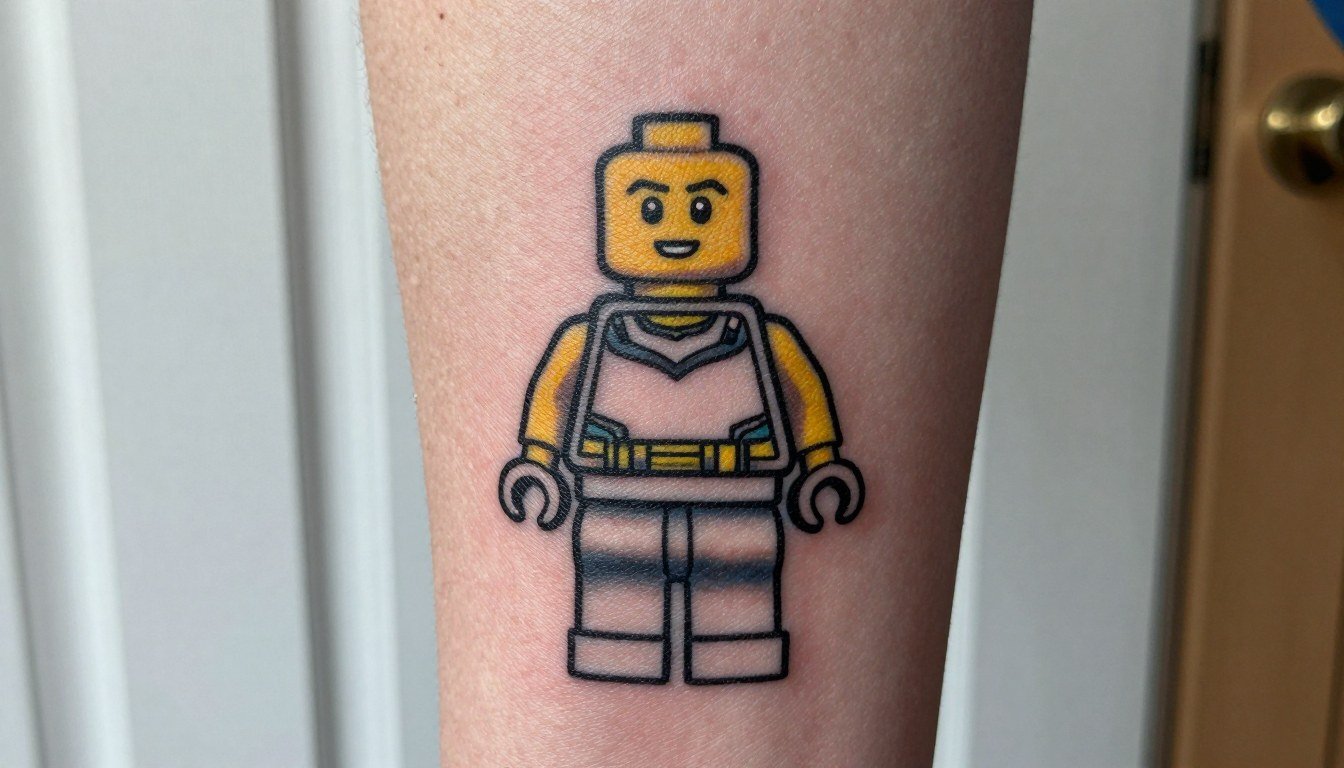
A clean LEGO Batman minifigure works best when the stencil solves three worries at once: it reads like a toy, it avoids the "AI-looking" sterile polish, and it leaves enough room so the tiny emblem and cowl survive healing. Pick bold outline and simple color blocks over fiddly micro detail, and plan for a single session if you want a palm- to hand-sized portrait that still looks crisp after a year of normal wear.
1. LEGO Batman minifigure portrait on outer forearm
A palm-sized minifigure portrait on the outer forearm reads instantly and lets the toy silhouette hold the joke. For this placement expect moderate chair time and manageable pain for most people. Use bold linework and flat color zones to protect the tiny emblem and facial features from blurring as the piece heals. A common mistake is asking for single-needle micro detail at three inches. Instead, request slightly heavier lineweight and simple color blocking so saturation holds up at 1 to 2 years healed. During the session wear a short-sleeve tee so the artist has clear access. For showing the piece, rolled-up sleeves and a minimal watch on the opposite wrist frame the forearm nicely, try rolled sleeve t shirt to style it.
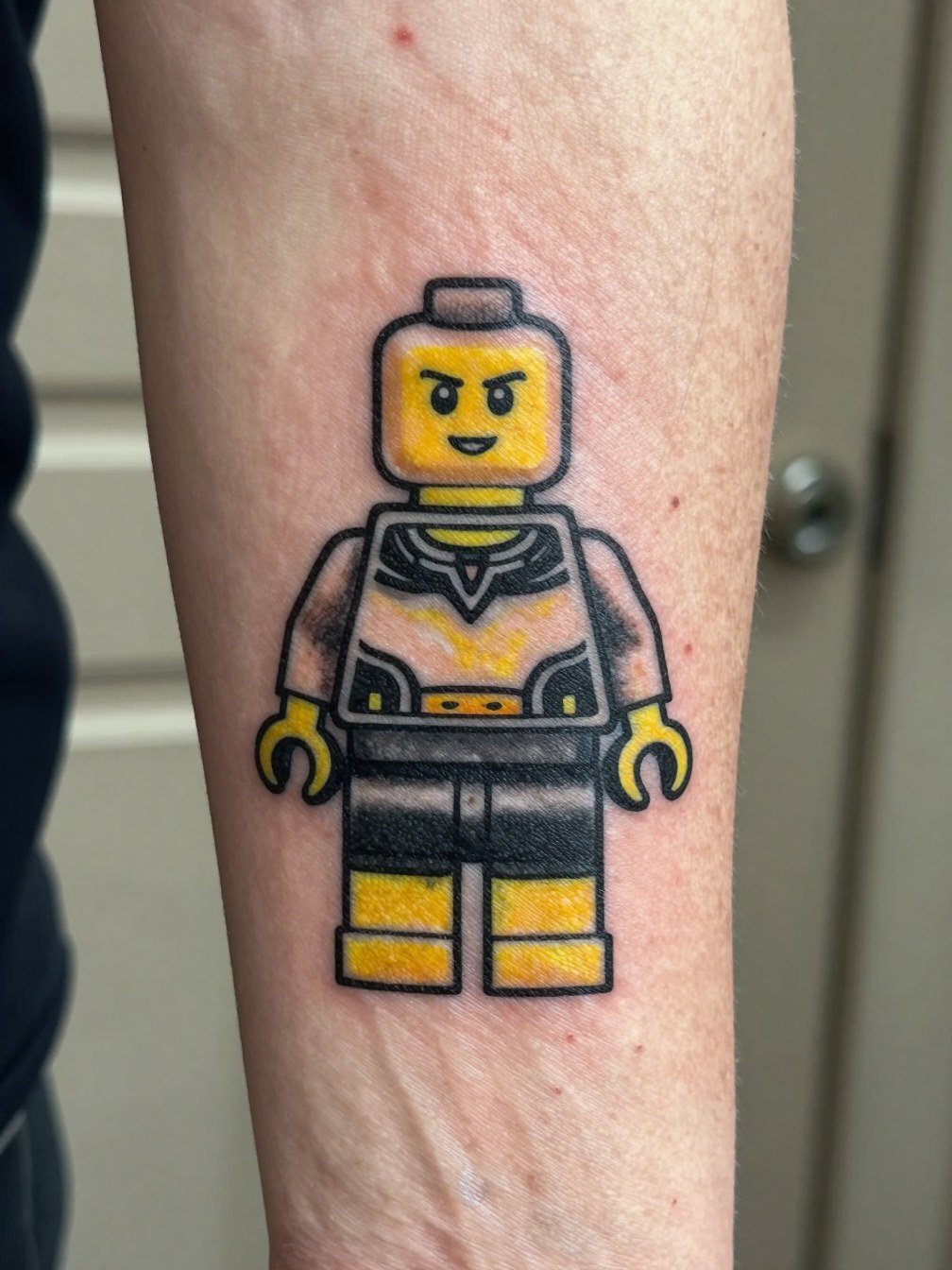
2. Disassembled LEGO Batman stack on inner forearm
Stacking head, torso, and legs is clever and toy-authentic, and it favors the inner forearm where the palm-up surface gives a clean vertical canvas. The inner forearm eats fine detail less than wrists, but beware making each piece too tiny. One useful consultation note is to bring reference photos at two sizes so the artist can show how the gaps between elements will read at three versus five inches. If you want wardrobe tips for showing this off, a relaxed button-down shirt that rolls to the elbow pairs well. Try relaxed button down shirt for casual display. Expect a single session for a 3 to 4 inch stack and a light touch of discomfort when the needle passes near the radius bone.

3. LEGO Batman with speech bubble on upper arm
A speech bubble injects humor and helps the minifigure become a personality rather than a static portrait. Upper arm placement tolerates medium scale and gives room for clear lettering. Keep the caption short so lettering stabilizes after healing, and ask for clean negative space inside the bubble so the words do not blur into the figure over time. For the session wear an easy short-sleeve top or a muscle tee if you need full shoulder access. If you want to show the piece off casually, a sleeveless tee or denim overshirt works well. Add one small color anchor, usually yellow, and avoid overfilling the bubble with shading that competes with the figure.
4. Gotham-style backdrop panel on outer upper arm
Turning the minifigure into a scene reads like a little comic panel and works best on the outer upper arm where the curved surface helps cape motion look natural. This approach has a debate built in. One camp prefers keeping the figure toy-like and simple so the LEGO silhouette stays front and center. The other camp wants cinematic contrast and brooding skies so Batman reads heroic first. Name both camps when planning and decide what matters more to you. If you prefer the toy-first route, keep the skyline graphic and tight with silhouette-only buildings. If you prefer the cinematic route, ask the artist to plan darker washes but keep the minifigure proportions intact so the toy element does not disappear. Sessions can run two to four hours depending on backdrop complexity.
5. Tiny LEGO Batman icon on the wrist
A wrist icon is low-commitment and hits the fandom note without dominating your arm. The trade-off is size versus readability. Tiny facial details and logos often blur by year two, so increase the scale slightly above micro size and prioritize a bold silhouette with one yellow accent dot for the face or belt. The wrist is sensitive, expect a brief but sharp session that often needs a touch-up at the six to twelve month mark. For the appointment skip watches on that wrist and wear a short-sleeve or cropped tee. To style the finished tattoo, a thin bracelet stack on the opposite wrist balances the look and keeps attention on the icon.
6. Adam West homage minifigure on outer forearm
A retro Adam West-inspired minifigure blends vintage Batman nostalgia with playful LEGO charm. The look uses softer comic-style features and muted accents rather than hyper-real plastic gloss. If you want nostalgia without childishness, choose restrained color and a confident pose rather than oversized speech bubbles or cartoon slapstick. For the session wear a short-sleeve tee so the artist can access the forearm easily. This idea also touches the cute-versus-tough debate. One camp wants bright, toy-like cheer. The other camp wants a more heroic, shaded portrait that reads serious. State which atmosphere you want and request the exact lineweight and shading density to get it right. For showing this piece off, rolled sleeves and a minimalist watch pair well, try minimalist watch men.
Session Day Picks
The forearm, wrist, and upper arm pieces above all benefit from simple session prep items that make the chair time less fussy and the first week of healing easier.
-
Stencil transfer paper kit. Helps you preview linework on skin before the needle, which matters for keeping the minifigure proportions accurate on the first pass.
-
Tattoo numbing cream. Useful for wrist and inner forearm sensitivity when you have a short but dense detail session.
-
Thin protective film roll. Protects wrist and forearm pieces from friction in the first days, especially helpful for palm-up inner forearm stacks.
-
Fragrance-free gentle body wash. Cleanses the healing area without irritating fresh ink and reduces the chance of scab picking.
-
Aquaphor healing ointment. A mainstream option for the initial thin-layer moisture window that many people find keeps fine line work from scabbing heavily.
7. Partial sleeve panel with LEGO Batman patch on outer arm
A patchwork sleeve lets collectors add one pop-culture square at a time and keeps skin between panels for future additions. This style demands planning for scale and visual breathing room so each minifigure panel reads across the arc of the arm. A common mistake is crowding panels with too much background texture. Leave open skin margins and consider a framed comic panel border to separate elements. Sessions require multiple visits and artists will sketch composition templates first, so bring varied references at the consultation. For showing off, a boxy tee with larger arm openings frames a partial sleeve well. Over time the bold outlines will be the detail that endures, while tiny interior dots and micro-shading usually need touch-ups.
8. Thigh-sized LEGO Batman portrait for clearer detail
A front or outer upper thigh piece gives the artist room to render toy-like proportions without compromise. This placement is forgiving for scale so you can include cape texture and light reflections without shrinking the emblem into indistinct ink. The session may be uncomfortable at times when the needle hits near the femoral crease, but most people tolerate a thigh session well. For appointment comfort wear loose shorts that lift easily or biker-short layers that the artist can move aside, try loose lounge shorts. Healed at two years the piece should retain saturation if the initial lineweight is strong and the color anchor is restrained.
9. Thick black outline LEGO Batman on the calf
Using bold contouring helps this style survive movement and aging on the calf, where skin shifts with muscle. A traditional-inspired pop illustration approach keeps forms readable at a glance and reduces blowout risk. Calf sessions are typically two short passes and the pain sits at a medium level for most people. When planning, ask for slightly heavier outer lines and avoid tiny internal linework that can migrate. For styling, cropped pants or straight-leg shorts highlight calf pieces, try straight leg shorts for casual display. Touch-ups at two to three years are common if the inner fills lose contrast.
10. LEGO Batman cape texture close-up on outer forearm
Focusing on cape texture and reflections makes a small figure feel dimensional, but it adds session time and requires careful shading. This placement reads well on the forearm and keeps the figure compact while letting the cape do the heavy visual work. A mistake is overworking micro-highlights that need constant touch-ups. Instead, ask for layered greywash and crisp white sparing highlights to suggest plastic gloss. For the session wear short sleeves and for showing off choose a simple watch and rolled sleeves. A subtle highlight and strong saturation make the piece read as toy plastic rather than flat ink.
11. Mini-face close-up on wrist or ankle
A compact square head close-up reads well when the face is simplified into essential shapes. Make the face scale larger relative to the head so eyes, brows, and mask lines keep contrast. For the ankle option plan footwear that avoids friction for two weeks, and for the wrist remove watches on the tattoo side for initial healing. A common aging issue is tiny facial strokes softening into a single dark patch. Request wider spacing between facial lines and a slightly heavier eyebrow line to avoid early merging. Sessions are short and sharp, and touch-ups are often cosmetic rather than structural.
12. LEGO Batman crossover shoulder piece
Pairing LEGO Batman with another LEGO hero rewards collectors who want two fandoms in one balanced composition. The shoulder offers a rounded surface that makes two small figures sit naturally, but avoid stacking them so tight the silhouettes fight. Ask the artist to plan negative space between characters and to sketch how the two will read as a unit on the shoulder cap. For session wear choose a tank top or an open button-down you can remove easily, try open button down for appointment convenience. Expect a two to three hour session for two medium figures and plan a follow-up pass if color saturation needs boosting.
13. Clean toy geometry inner forearm panel
Preserving the minifigure geometry is what makes LEGO translations feel authentic. The inner forearm palm-up surface is ideal for a vertical panel that keeps proportions rigid and clean. A mistake is softening hips and head curves to make the figure look more realistic. Instead, insist on geometric edges, visible seams where blocks meet, and flat color planes. For the session wear a loose button-down with sleeves you can roll above the elbow. Bringing a stencil that shows exact block joins helps the artist keep the toy proportions correct during the transfer stage. Healed at five years the rigid geometry holds better than anything with lots of micro shading.
14. LEGO Batman partial sleeve building block element
If you are planning a larger fandom sleeve, make the LEGO Batman piece a modular panel that can slot into future additions. Designing with a framed edge and open skin margins gives future artists anchor points. The outer arm is an easy place to start a patchwork sleeve with consistent spacing. For the session wear a loose tee or button-front shirt and plan multiple short appointments rather than one long marathon. When showing this piece in casual outfits choose an oversized tee with larger sleeves to reveal the panels naturally, try oversized tee. Over the first two healing years, the bold outlines will demand fewer touch-ups than micro-shaded backgrounds.
15. Inner forearm toy-geometry small portrait for first-timers
This is a friendly first-tattoo option for collectors who want clear LEGO identity without a sleeve commitment. The inner forearm placement gives visibility and easier healing than many hand or finger locations. For first-timers ask for a palm-sized version rather than ultra-micro so the face and emblem keep distinct shapes after six months. The session is usually quick and tolerable, with localized soreness for a few days. For session wear a soft knit pullover or a loose button-down so sleeves are easy to roll and the artist can access the palm-up surface. For display the inner forearm pairs well with rolled cuffs on shirts and clean knit layers.
Frequently Asked Questions
Q: How much does a LEGO Batman tattoo cost?
A: Prices vary by size, style, and studio, but expect a small wrist or inner forearm icon to start at an hourly-rate single session range and larger portrait or panel work to fall into a multi-session range. The main cost drivers are session length and color saturation needs. If budget matters, choose a simpler bold-outline version rather than heavy micro shading.
Q: How do I make sure the tattoo looks like a toy minifigure and not just Batman?
A: Emphasize geometric proportions, visible seams between head and torso, and limited color blocking during the consultation. Bring references that highlight blocky silhouettes and ask for a stencil preview at size so you can confirm the spacing before the needle hits skin. That prevents the common "costume-only" look.
Q: Where can I find portfolios and healed examples without naming specific artists?
A: Search hashtags like #legobatmantattoo, #legotattoo, and #nerdtattoo on Instagram and TikTok while filtering by city to find nearby portfolios. Reddit communities such as r/LegoBatman and r/nerdtattoos show candid healed photos and user reaction threads that reveal whether designs read as minifigures or not. Use portfolio pages to check if an artist's linework holds at the scale you want.
Q: What placements hurt more and what should I expect for touch-ups?
A: Wrists and ankles tend to be sharper but brief in pain. Ribs and sternum are higher on most pain charts and may need breaks. For touch-ups, small wrist icons and micro detail often need a touch-up at six to twelve months. Larger forearm and thigh pieces usually hold color longer, but expect occasional saturation boosts at two to three years.
Q: Should I pick full color or black-and-grey with a yellow accent?
A: Both camps make valid points. Full color keeps LEGO identity visually immediate because yellow is a clear anchor. Black-and-grey ages more predictably and still works if the silhouette is strong. If you want a compromise, keep the piece primarily black-and-grey and reserve one yellow anchor for the face or belt so the minifigure reads toy-first.
Q: Can I get matching or couples LEGO Batman tattoos?
A: Yes. Matching minifigures or complementary crossover pieces work well because the scale tends to be small and forgiving. Plan paired placement so both tattoos age similarly, and consider matching lineweight and saturation settings so touch-up timelines align.
Q: Any tips for the appointment day wardrobe?
A: Pick clothes that give the artist clear access to the placement without awkward undressing. For forearm pieces wear short sleeves or rolled cuffs, for inner forearm a relaxed button-down is handy, and for thigh work choose loose shorts. One helpful item for forearm and bicep sessions is a soft knit pullover that rolls cleanly and keeps you comfortable during breaks.
