
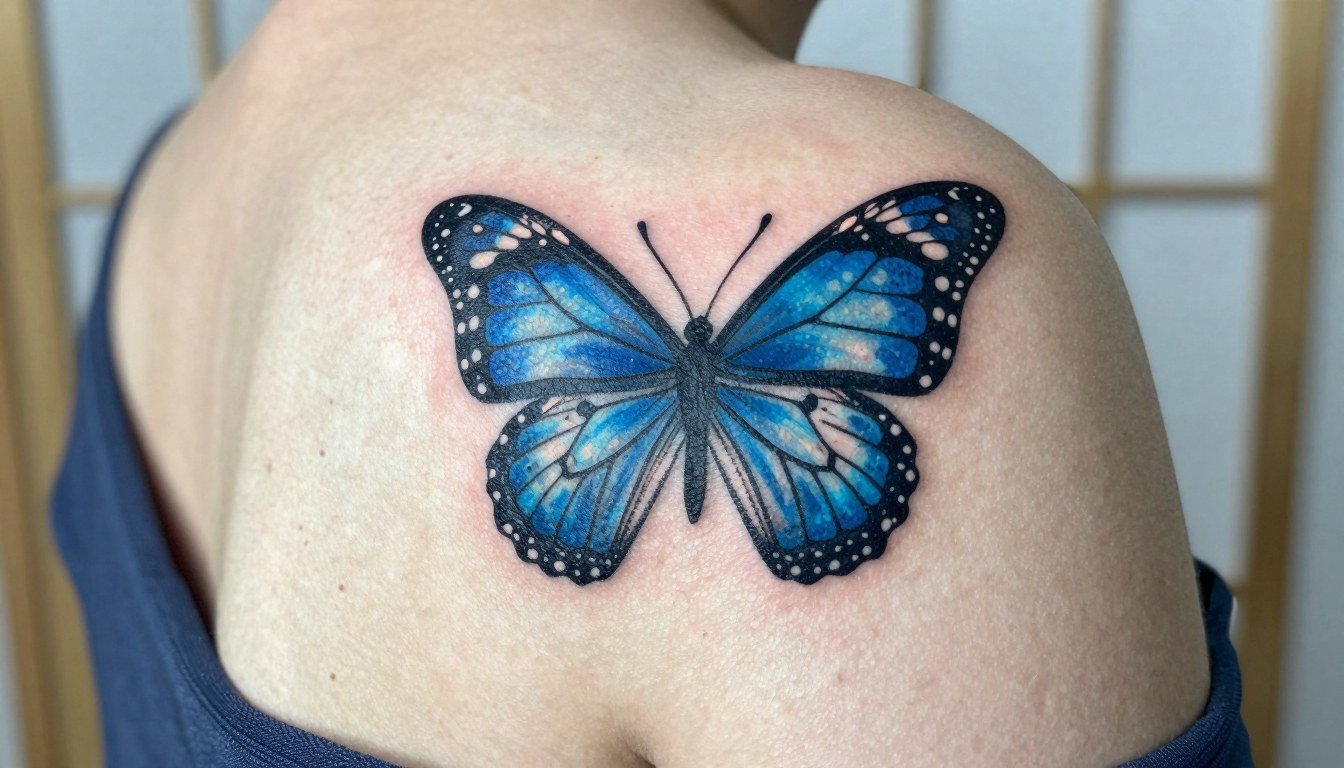
Blue takes the monarch motif in a quieter direction, trading the usual orange for tones that read like calm or storm. On skin, a blue monarch can read delicate or bold depending on line weight and saturation, and the difference matters for how the piece looks at year three. These sections show placements, what to request in your consult, and which outfits highlight the color shift best.
1. Delicate Inner Forearm Monarch in Soft Indigo
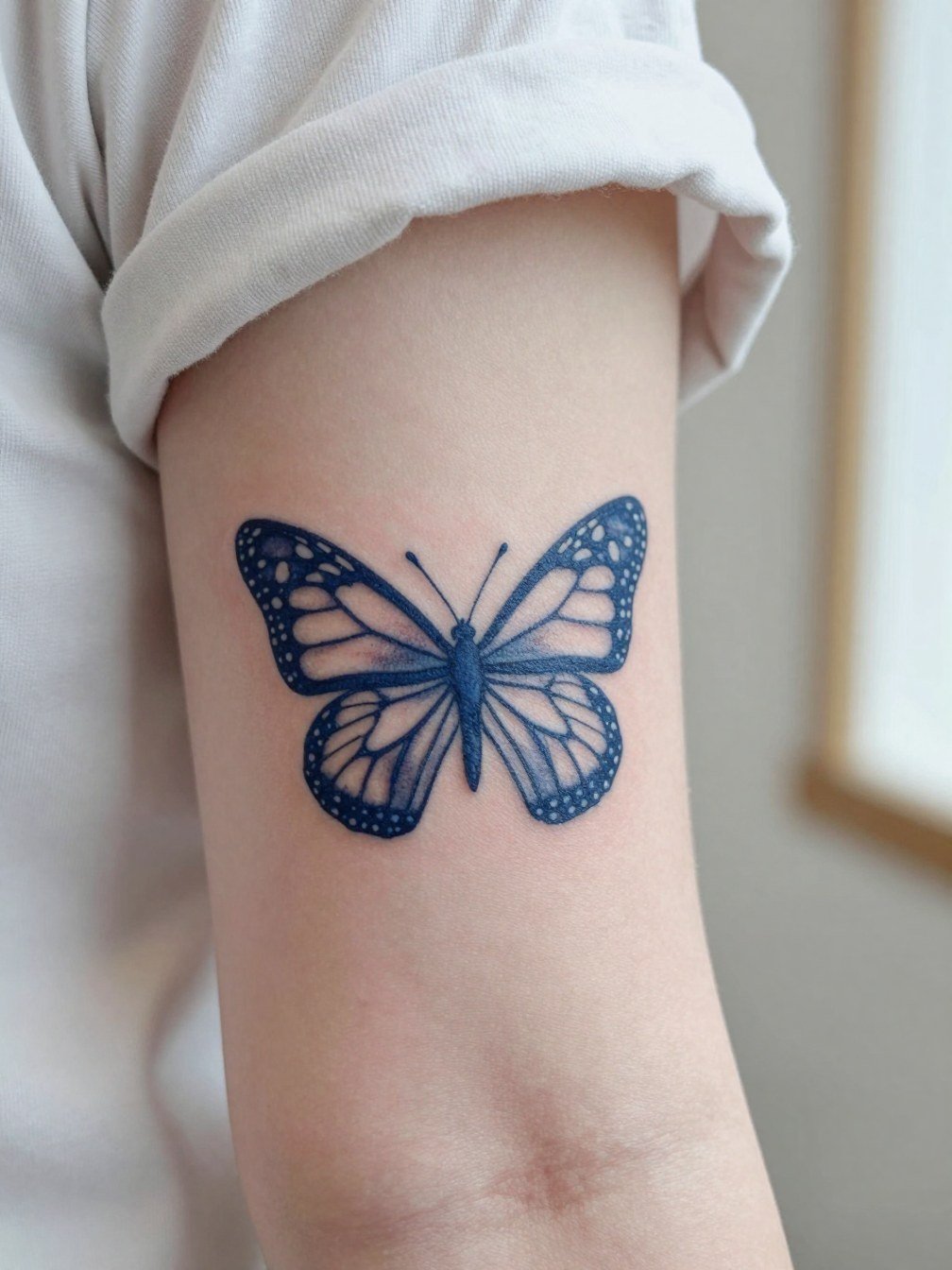
A fine single-needle blue monarch on the inner forearm reads intimate and scans well under short sleeves. Request slightly heavier linework than your Pinterest reference so the antennae and wing veins do not blur at year two. Session time is usually under an hour for a palm-sized piece and pain sits around a four out of ten. The common mistake is going too small with single-needle details, which leads to patchy saturation and the need for early touch-up. For showing the piece, a rolled sleeve or a linen button-up shirt frames the forearm without distracting from the cool blues.
2. Ankle Monarch Cluster with Micro-Realism Accents

Ankle clusters let you play with scale and negative space without committing to a large canvas. On this placement expect a two to three hour session if the artist layers micro shading for wing texture. The ankle moves and rubs against socks and low shoes, so ask for slightly increased saturation in outer wing edges for longevity. Blowout risk is moderate if the artist packs too many tiny lines into a confined area. For evenings out, pair the ankle with strappy low sandals that expose the design and avoid high socks while healing to reduce friction.
3. Collarbone Monarch with Geometric Negative Space
A collarbone placement reads bold even at a modest size because the bone creates natural contrast. Ask for geometric negative space so the wings keep breathing room and do not merge with the collarbone shadow after one year. Expect a one to two hour session and a pain level around six out of ten. Many people pick too-fine internal details that fade faster than the outline, so specify clearer, slightly heavier interior veins to prevent early touch-up. Pair this with wide-neck tops to show off one side without exposing the whole torso.
4. Watercolor Blue Monarch Over the Sternum
Sternum watercolor looks ethereal but ages differently from saturated work. One group argues watercolor bleeds into an indistinct patch within a couple of years on sternum skin. The other group counters that careful layering of pigment with a faint outline keeps the watercolor appearance intact. If you choose this style, expect a longer session and plan for a structured touch-up at nine to twelve months. For the appointment, wear a fitted sports bra you can remove or reposition easily and avoid lingerie that shifts the ink area during healing.
5. Neo-Traditional Shoulder Monarch with Bold Outlines
Neo-traditional color saturation keeps a blue monarch legible from a distance and makes touch-ups simple when needed. For the outer shoulder, pain is low and sessions run from one to three hours depending on ornamentation. A frequent mistake is under-sizing the decorative set piece, which makes the central monarch feel cramped. Discuss saturation levels so the blues do not muddy in the midtones. This placement pairs well with tank tops and off-shoulder sweaters that let the silhouette read without covering the wing edges.
6. Tiny Wrist Monarch in Sky Blue
Wrist tattoos present a high-visibility choice but need maintenance. The radial wrist gets constant washing and sun exposure so plan for touch-up at year one to keep the blue vibrant. Pain is moderate and session time for a tiny monarch is short, often under 45 minutes. The common error is asking for too much internal texture in a micro piece, which reads as noise after healing. For session comfort, wear a loose long-sleeve you can roll up easily and consider a simple thin bracelet to frame the area after healing.
Session Essentials
The forearm, wrist, shoulder, and collarbone picks above have different healing needs, so a small kit helps the first week and the session day itself.
-
Stencil transfer paper kit. Lets you preview placement directly on skin for the delicate forearm and collarbone pieces above.
-
Topical numbing cream. Applied according to the product instructions eases sensitivity for sternum or shoulder sessions without altering linework.
-
Thin protective film roll. Useful for wrist and ankle tattoos to reduce friction from clothing during the first few days.
-
Fragrance-free gentle body wash. Cleanses healing skin without added perfumes that can irritate fresh tattoos.
-
Aquaphor healing ointment. A mainstream go-to for initial moisture control during the first three to five days without clogging tiny needle channels.
7. Back-of-Neck Monarch in Cerulean Linework
The nape is discreet but visible when hair is up. Expect a short session and a pain level around four out of ten. A common misstep is cramming too much color into the shallow neck skin, which can cause early blurring. Ask for slightly more spacing between wing veins and a modest touch-up plan at six to nine months. For showing off the nape, pick tops with wide necklines and consider a delicate choker or open-collar shirt rather than heavy scarves that rub during healing.
8. Thigh Monarch with Botanical Frame
Upper-thigh work gives room for detail and lets you avoid sun exposure while healing. Sessions can run three to four hours for larger botanical frames and pain is generally moderate. The inner thigh retains color well, but friction from tight clothing can dull saturation, so wear loose bottoms while healing. Avoid asking for extremely fine inner-vein detail at small scale, as the thigh reads best when designs have a bit of breathing room. For show-off wear, consider midi skirts or high-slit dresses that reveal the piece without chafing the area.
9. Ribcage Fine-Line Blue Monarch with Soft Shading
Ribcage placements spark debate. One camp argues fine-line ribs blur within two years because the skin stretches and the lines are too close. The other camp says with slightly wider spacing and controlled needle depth, fine line settles fine and keeps its airy look. If you favor the fine-line approach, plan on a touch-up window at nine to twelve months and discuss slight spacing increases during the consult. Pain is higher here, so plan for a longer session and bring comfortable clothing that allows access without repositioning the torso.
10. Sleeve Accent Monarchs with Dot Work Trails
Accent monarchs lend motion to a sleeve without overloading the primary imagery. Discuss how dot work flight trails integrate with existing linework to avoid visual clutter at longer distances. Sessions vary depending on total sleeve density but expect multiple shorter visits for layering and saturation. A common mistake is placing identical-size butterflies in a line, which flattens the composition; vary scale for depth. For outfits, cuffed sleeves or three-quarter tops let the flight trail peek out without exposing the full sleeve.
11. Finger Tip Micro Monarch in Powder Blue
Finger and hand tattoos sit in a high-wear zone and need honest planning. Micro monarchs here fade faster and often require touch-ups every one to two years. Specify bolder edge contour than the reference so the silhouette stays legible despite frequent washing. Session time is short but healing demands care. For showing off a finger piece without heavy wear during healing, try stacking with a slim sterling-style ring that complements the blue tone.
12. Full-Back Monarch Pair with Mirror Symmetry
Full-back pieces let you scale a monarch into a statement without losing detail. Sessions will be long and typically split across visits for saturation and layering. A common mistake is requesting near-identical mirror images without accounting for spine asymmetry; ask the artist to map the composition with a clear midline. Expect touch-up needs around year two depending on sun exposure. When you want to show the top of the back, a low-back dress or cropped top highlights the wings while protecting the lower back during daily wear.
13. Calf Monarch with Neo-Japanese Waves
Calf placements are forgiving and show well with movement. Neo-Japanese elements give the monarch context and help the composition age harmoniously. Sessions vary from two to four hours and pain is usually mild to moderate. A frequent error is over-detailing the background, which can overshadow the insect; prioritize wing clarity for longevity. For footwear and styling, mid-calf boots or ankle boots pair cleanly with the motif and let the calf art be visible in cool-weather looks.
14. Solar Plexus Monarch with Minimalist Script
Solar plexus placements sit where torso movement is constant, so plan for modest line weight and slightly larger script spacing for legibility over time. The area can be sensitive and sessions are medium length. The main mistake is script placed too close to decorative wings, which compresses both elements. If you want a discreet reveal, pair with high-waisted bottoms and crop tops that show the design without rubbing the healing skin.
15. Deltoid Monarch with Metallic Blue Highlights
Shoulder deltoid work takes color well and gives the monarch a jewel-like presence when saturation is executed correctly. Ask for high-contrast edges and ask the artist to test a small metallic wash sample on a similarly pigmented area to preview how the blues reflect on your skin. Sessions are typically one to two hours and pain is mild. For summer showing, sleeveless tops and open-back tanks let the metallic blues catch daylight without friction during healing.
16. Abstract Geometric Monarch on the Thigh Side
Geometric abstracts let you play with the monarch shape while keeping a modern edge. The thigh is tolerant of heavier shapes, which means the piece can survive minimal touch-ups if designed with bold contours. Session length depends on coverage but plan for a multi-hour appointment if you want crisp geometry. Avoid cramming too many intersecting lines at very small scale, which increases blowout risk. Styling with high-waist skirts or tailored shorts keeps the design visible without constant friction.
17. Chest Band Monarch Trio with Symmetrical Spacing
A chest band of small monarchs is symmetrical and decorative when spacing is planned from the start. Expect a session under two hours for the trio and a pain level moderate due to proximity to bone. The typical error is uneven spacing that becomes obvious when the chest expands or contracts. During the consult, present a ruler-based mockup so the artist maps exact distances. For visible styling, scoop-neck or square-neck tops provide balance and let the band read across the chest cleanly.
Frequently Asked Questions
Q: Will a blue monarch tattoo fade faster than orange monarch colors?
A: In my observation the fade rate depends more on saturation and sun exposure than on hue itself. Blues can look cooler even as they fade, but heavy sun on the forearm, chest, or wrist accelerates loss. Strong initial saturation and regular sunscreen on healed tattoos extend vibrancy.
Q: How should I prepare clothing for a sternum or ribcage session?
A: Wear a fitted sports bra or a cropped top you can shift without tugging the skin, and choose bottoms with a waistband that fastens cleanly below the area. Loose elastic-free garments reduce friction during the first 48 hours and make aftercare easier.
Q: Where can I find portfolios and healed examples without naming artists?
A: Search hashtags on social platforms for variations like #BlueMonarchTattoo and #MonarchInBlue, use location filters on TikTok and Instagram to find healed shots in nearby cities, and visit portfolio sites that let you filter by subject and style. Reddit tattoo threads often contain user-posted healed images across skin tones that help with realistic expectations.
Q: How often should I plan touch-ups for small placements like fingers and wrists?
A: For high-wear zones expect a touch-up within twelve to eighteen months, sometimes sooner for fingers. Budget one short follow-up session in the first year and another as needed depending on lifestyle and sun exposure.
Q: Are there cultural concerns with butterfly imagery I should consider?
A: Butterflies are broadly symbolic in many cultures and often used as personal metaphors. If your design borrows from specific cultural motifs or ceremonial styles, mention provenance and intent during the consult so the design respects origin and avoids appropriation.
