

A fine line sunflower can feel like a private emblem on the wrist. A little too thin and it softens into a smudge after a few years. A little too bold and it loses the dainty look that drew you in. The trick is picking the right line weight, spacing, and placement so the petals keep their shape as the skin settles. Read these ideas with an eye for longevity and the clothing that actually shows the ink.
1. Single-needle Sunflower on the Wrist
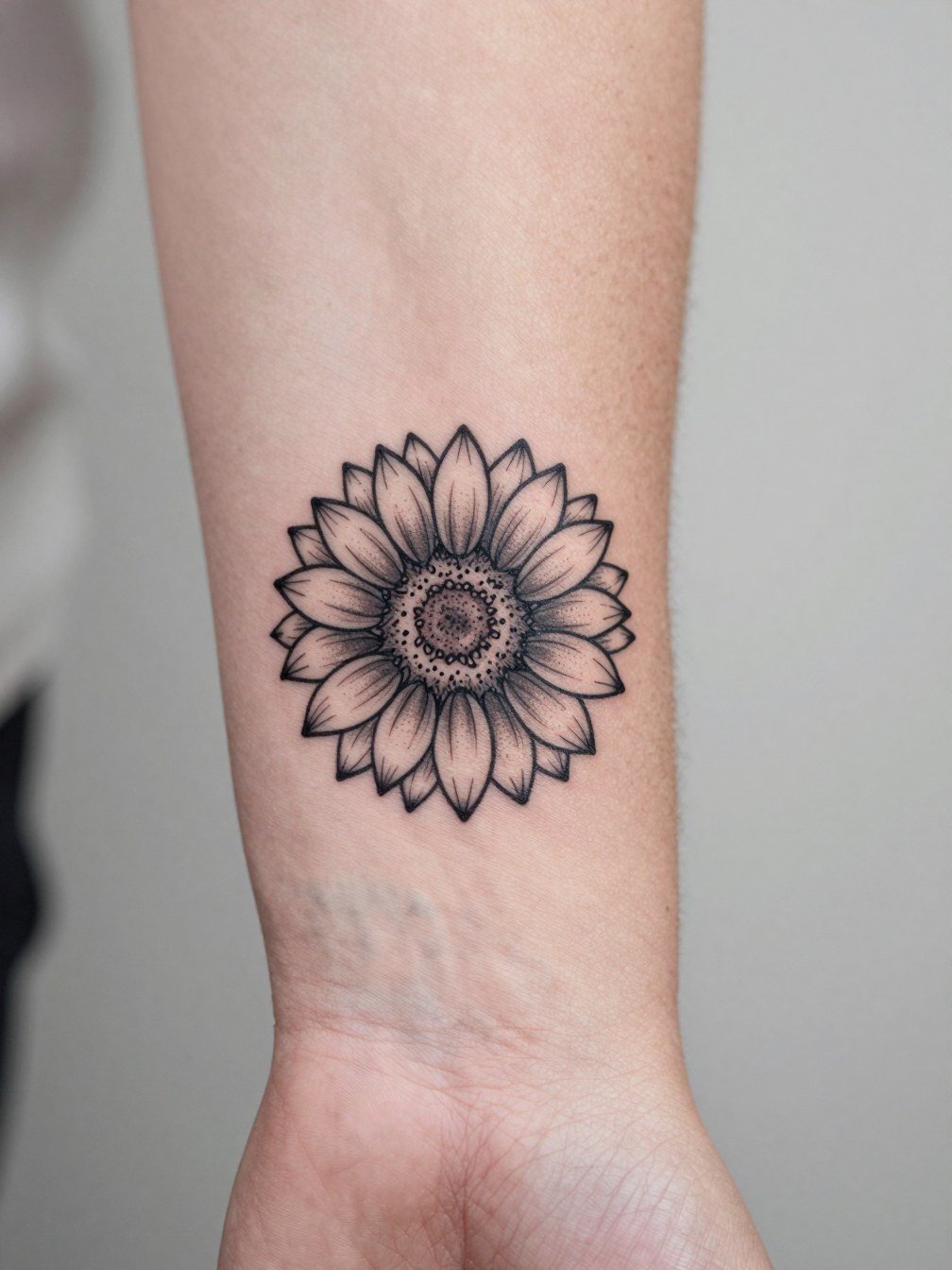
The wrist is the classic first-tattoo spot for a small fine line sunflower. I recommend a slightly heavier single-needle contour than what people pin on Pinterest to avoid early blurring. Ask for a clear distance between petals so the center does not fill in over time, and request healed portfolio photos at similar scales. Expect a short session of about 30 to 45 minutes and a moderate sensitivity level from wrist bones and tendons. A common mistake is requesting ultra-micro detail inside the center, which tends to muddy by year three. For showing off, pair this with a rolled-sleeve shirt and a thin bracelet stack so the tattoo reads without being crowded.
2. Vertical Sunflower Along the Inner Forearm

Use the inner forearm when you want a slightly larger composition that still reads subtle. The longer canvas lets the artist open the petals and increase spacing so petals do not merge as the skin ages. For the consultation, bring one reference that shows the flower at three inches and another at five inches so the artist can demonstrate how line weight scales. If you want color, request the yellow be used only as a wash in the petal tips, not a fully saturated fill. Expect a one-hour session and mild to moderate discomfort. This placement looks great with linen button-downs worn with sleeves rolled once.
3. Outline-only Sunflower on the Outer Forearm
An outline-only approach keeps the piece airy and lowers the risk of faded color patchiness. I recommend this when you want the sunflower shape without extra maintenance. Insist during the consult that petal junctions have tiny gaps rather than closed, crowded lines. Small outlines can age into softer silhouettes, so plan for a possible touch-up at year two if you want crisp edges. The outer forearm shows clearly while wearing tees. A common mistake is asking for hair-thin outlines without specifying spacing, which invites blowout where the ink spreads under the skin. For a relaxed vibe pair it with a soft cotton tee.
4. Small Sunflower with Minimal Shading on the Collarbone
The collarbone gives a small floral a flattering, slightly exposed canvas. This placement sees sun and friction less than the wrist, which helps retention. Mention during your consult that you want the seed head rendered with tiny stipple shading rather than solid fill. That keeps the center readable at two and five years. Pain is above average for bony areas so expect a 45 to 75 minute session with sharper moments. A mistake is requesting heavy shading that sits poorly on thin chest skin. For show-off outfits, a wide V-neck or open-back midi dress will keep the sunflower visible without forcing too much exposure.
5. Tiny Sunflower Accent Behind the Ear
Behind-the-ear sunflowers are discreet and charming when you want a subtle accent. The area is small so plan for a scaled-down seed structure and fewer petals. A key consultation point is needle depth and minimal movement to avoid blowout on thinner skin. Sessions are brief, about 20 to 30 minutes, but the skin there can make lines soften faster than on the forearm. The common mistake is packing in too many petals. This placement pairs with short hair or an updo, so consider a hair clip that frames the area on days you want it visible.
6. Sunflower Wrapped Around a Wrist Scar
Custom compositions that work with scars require a planning-first approach. During the consult, ask the artist to map the scar and show a drawn proposal of how the stem will curve to avoid placing a lot of concentrated detail over irregular tissue. Scars can hold ink differently, so the design should keep linework flowing around the mark rather than trying to hide it completely. Expect a single session with a possibility of a follow-up touch-up at three months if the scar interferes with saturation. For session comfort, wear a short-sleeve or easily pushed-up sleeve, such as a sleeveless tank top.
Pre-Session Essentials
The wrist and forearm pieces above heal differently from chest and behind-ear work, and a few small items make the session and the first week easier.
- Stencil transfer paper kit. Lets you preview the linework on skin so you can confirm spacing and petal gaps before the needle hits.
- Topical numbing cream. Applied per product directions about 45 minutes ahead reduces sharpness around bony areas like the wrist without changing how the linework settles.
- Thin protective film roll. Useful for small wrist or finger pieces that face constant friction in the first few days.
- Fragrance-free body wash. Gentle cleansers keep delicate linework from irritation during daily showers.
- Healing ointment. A thin layer for the first 48 hours can lock in moisture for fine line work while letting the skin breathe.
7. Small Sunflower on the Ankle
Ankle tattoos face constant rubbing from socks and shoes, so silhouettes usually outperform fine filigree here. I advise leaving the center of the sunflower slightly open and avoiding microstippling that can fade irregularly. Session time is short, around 30 minutes, but plan for slower healing if you wear closed shoes daily. Common mistakes include placing delicate cross-hatching right on the ankle bone, which blurs with motion. For session wear, opt for rolled-up jeans or loose shorts so the artist has clear access without tugging. A cuffed pant look frames the ankle tattoo well once healed.
8. Tiny Sunflower at the Base of the Thumb
Hand and thumb-base tattoos are very visible but risk faster fading and blowout due to frequent washing and friction. If you want a micro sunflower here, keep the design extremely simple and expect more frequent touch-ups than an arm piece. Discuss the likelihood of a year-one touch-up and how the artist plans to avoid heavy saturation in the webbed skin. Pain is higher than a forearm session but sessions run under 30 minutes. A frequent mistake is expecting the same longevity as an inner forearm piece. For daily life, minimal jewelry and mindful hand care help the linework settle.
9. Single-needle Sunflower on the Side Rib
Ribcage placements split artists into two camps. One camp argues the skin movement and stretch on the ribs make ultra-fine lines blur within two years. The other camp says that with slightly wider spacing and careful needle depth fine line can settle and look good for several years. If you pick ribs, insist on seeing healed work from three years out at the same scale. Expect a longer session length and higher pain, so plan session logistics accordingly. A common error is pushing for extreme micro detail that the rib skin cannot hold.
10. Tiny Sunflower on the Side of the Neck
Side-of-neck sunflowers are quietly visible when you wear hair up. The neck is a dynamic area so keep the design compact and avoid dense interiors that can smear with movement. During the consult ask for a slightly bolder outer contour than you might choose for the wrist. Sessions are brief but can feel sharp. A mistake is asking for a full shaded center on this spot. If you want to show it casually, pair with open-collar shirts and a relaxed button shirt that frames the neckline without covering the area.
11. Fine Line Sunflower on the Upper Shoulder Blade
The shoulder blade accepts medium-sized fine line blooms well because the skin there is relatively stable. Ask the artist how shoulder movement during sleep might affect thin lines and plan for slightly increased spacing on petal tips. Sessions are comfortable and usually around 45 minutes. A mistake is choosing an extremely flat composition that reads poorly when the shoulder blade flexes. For wardrobe, open-back tops and tank dresses show the sunflower without overexposing the area.
12. Micro Sunflower on the Side of the Finger
Finger skin is thin and mobile so micro tattoos there rarely age like forearm pieces. If you choose a finger sunflower, plan for a design that embraces fading and expect a touch-up within the first year. Ask during your consult how the artist staggers needle passes to avoid overworking the tissue. Sessions are very short but the long-term maintenance is higher. A common mistake is insisting on interior shading; keep it outlined with a dot center. Rings and thin bands can complement this placement but remember frequent washing will speed fading.
13. Small Sunflower at the Top of the Foot
Foot tattoos see lots of rubbing from shoes and can lose crispness faster than arm pieces. If you want a subtle sunflower here, keep the center sparse and the petals open. During the consult request that the artist anticipate touch-ups and outline a realistic maintenance plan. Pain is moderate to high depending on shoe pressure. A mistake is asking for dense color on the foot. Sandal season pairs well with this spot, so consider minimalist sandals that do not rub the tattoo during the first month.
14. Subtle Sunflower on the Inner Bicep
The inner bicep gives a hidden canvas that ages well when the lines have space. For this placement ask for slightly bolder petal contours and an explanation of blowout risk on softer inner-arm tissue. Expect a session of roughly 45 minutes and a moderate pain rating. A common mistake is requesting hairline detail there, which the inner skin often cannot hold. This placement looks intentional with rolled-sleeve linen shirts and relaxed tees, so consider a boxy tee for casual displays.
15. Minimalist Sunflower at the Top of the Ribcage Under the Collarbone
This spot is slightly higher on the ribs and often experiences both sun exposure and stretch from movement. Some artists caution that ultra-fine work here can blur sooner, while others point to three-year healed photos showing good retention. One camp says the area needs wider spacing to survive. The other camp argues careful needle depth and spacing keep detail intact. Prepare for a longer session if you combine multiple small blooms. A mistake is asking for dense stipple shading across the top rib line. For after-session comfort, a fitted sports bra that does not rub the area makes the first week easier.
Frequently Asked Questions
Q: Will a tiny fine line sunflower blur within five years?
A: It depends on scale, line weight, and placement. Small petals with hairline contours are the most vulnerable. Slightly increasing line weight and leaving breathing space between petals helps considerably. Ask your artist to show healed examples at similar sizes and placements.
Q: Can I add yellow color to a tiny sunflower without it fading fast?
A: Small yellow fills are prone to fading faster than black outlines. If you want color, request the yellow as a light wash on petal tips rather than a saturated fill. That reduces uneven fading and keeps contrast between the outline and the color.
Q: How should I find local artists who post healed fine line sunflowers?
A: Search Instagram and TikTok with the phrase fine line sunflower tattoo plus your city name to narrow local portfolios. Look for posts that explicitly show healed shots at multiple time points. Reddit threads with healed-vs-fresh comparisons are useful for real-world reports.
Q: What should I wear to a forearm or wrist session?
A: For inner forearm or wrist work, wear a loose button-down shirt you can roll or slide up without tugging the area. For ankle or foot sessions, slip-on shoes make post-session dressing easier. Keep clothing choices comfortable and easy to adjust.
Q: Are touch-ups common for fine line sunflowers?
A: Yes, touch-ups are more likely for ultra-small placements and areas with heavy friction. Expect a realistic touch-up timeline of one to two years for fingers, hands, and feet, and a possible touch-up at two to three years for wrists and ankles depending on wear.
