
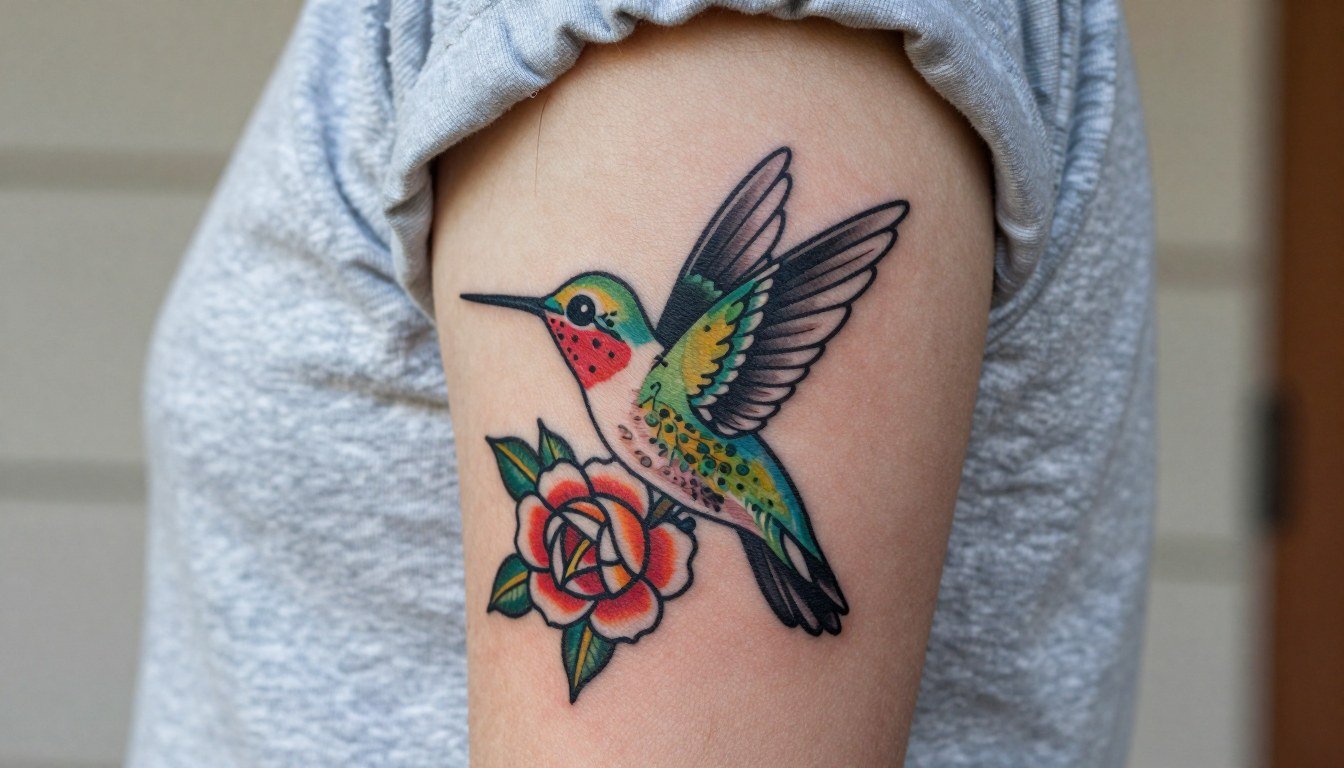
The bold hummingbird pieces that still look crisp years later often started with the same surprising decision: slightly heavier linework and fewer tiny color zones. That choice keeps wing bars readable as skin ages, and it makes small memorial flowers less likely to blur into an undifferentiated patch. Read on for 15 hummingbird directions, where to place them, what to tell your artist about line weight and spacing, and how to dress for the session so the stencil sits right.
1. Traditional Hummingbird with Flowers on the Shoulder
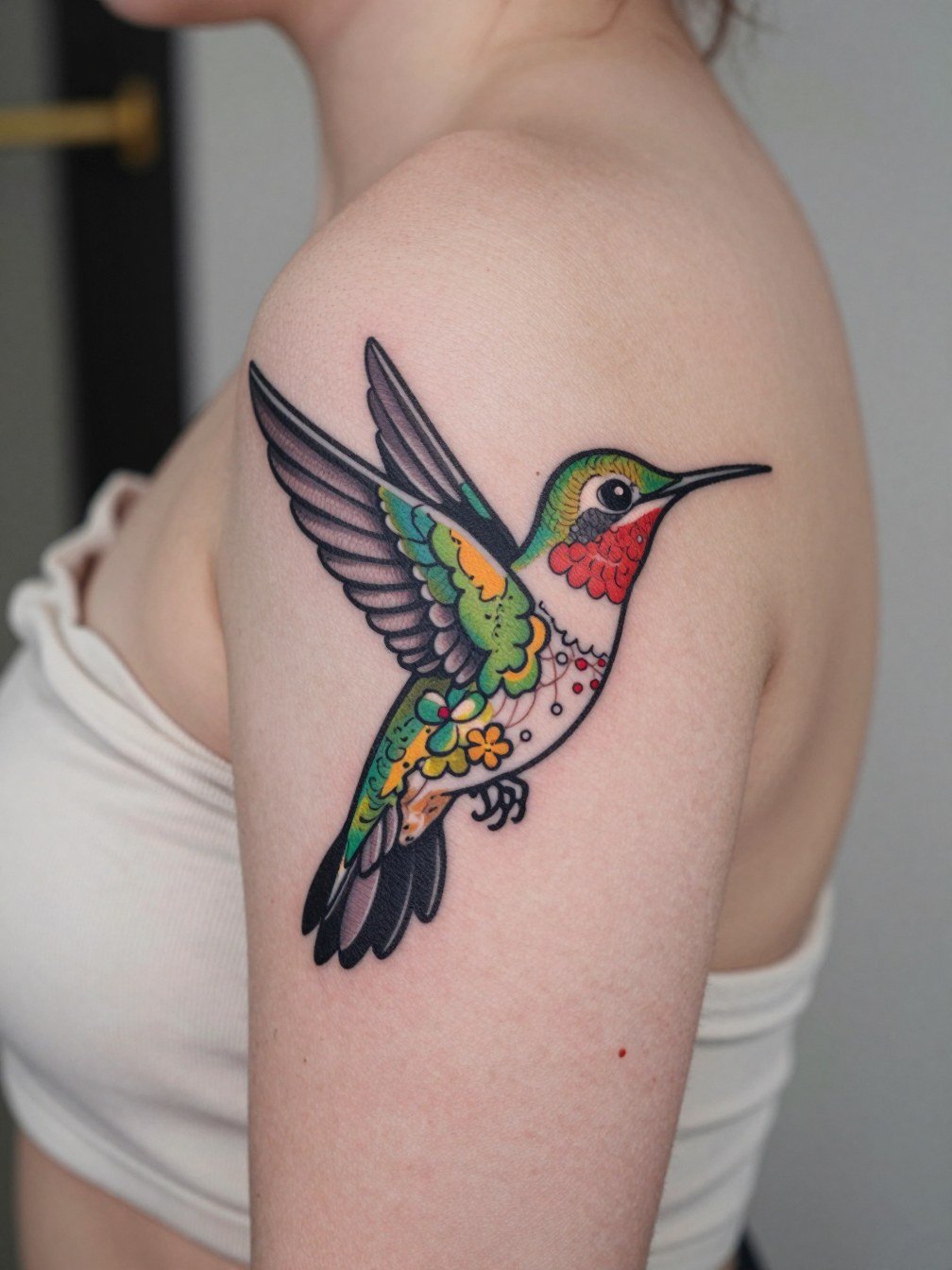
This classic pairing is where hummingbirds read instantly, especially on the shoulder cap where the curve complements wing motion. I recommend asking for a medium lineweight rather than a single-needle outline so the wing bars and beak keep definition at two and five years healed. Common mistake is packing tiny floral details too close to the bird, which makes petals merge as saturation softens. Session-wise, expect one to two hours for a medium piece and to wear a loose tank so the artist can access the shoulder without fabric rubbing the fresh ink. For showing it off, pair with an off shoulder top in a solid neutral, which keeps attention on the bird and color blocks.
2. Stained-Glass Hummingbird on the Outer Upper Arm

Stained-glass treatments rely on clear partition lines to keep separate color planes readable. Recommend a slightly larger scale than a micro piece so each color panel has room to breathe and avoid muddiness after the first touch-up window. A real mistake is trying to cram six tiny panes into a two-inch band. In consultation, bring an image showing the exact panel shapes and ask for the partition lines to be at least two millimeters apart at the narrowest point so blowout risk drops. Expect a single longer session if the piece is kept medium. For casual outfit pairing, short sleeves with a clean cuff line frame the outer arm, and a rolled sleeve t shirt presents the tattoo like a framed artwork.
3. Fine Line Hummingbird Silhouette on the Wrist
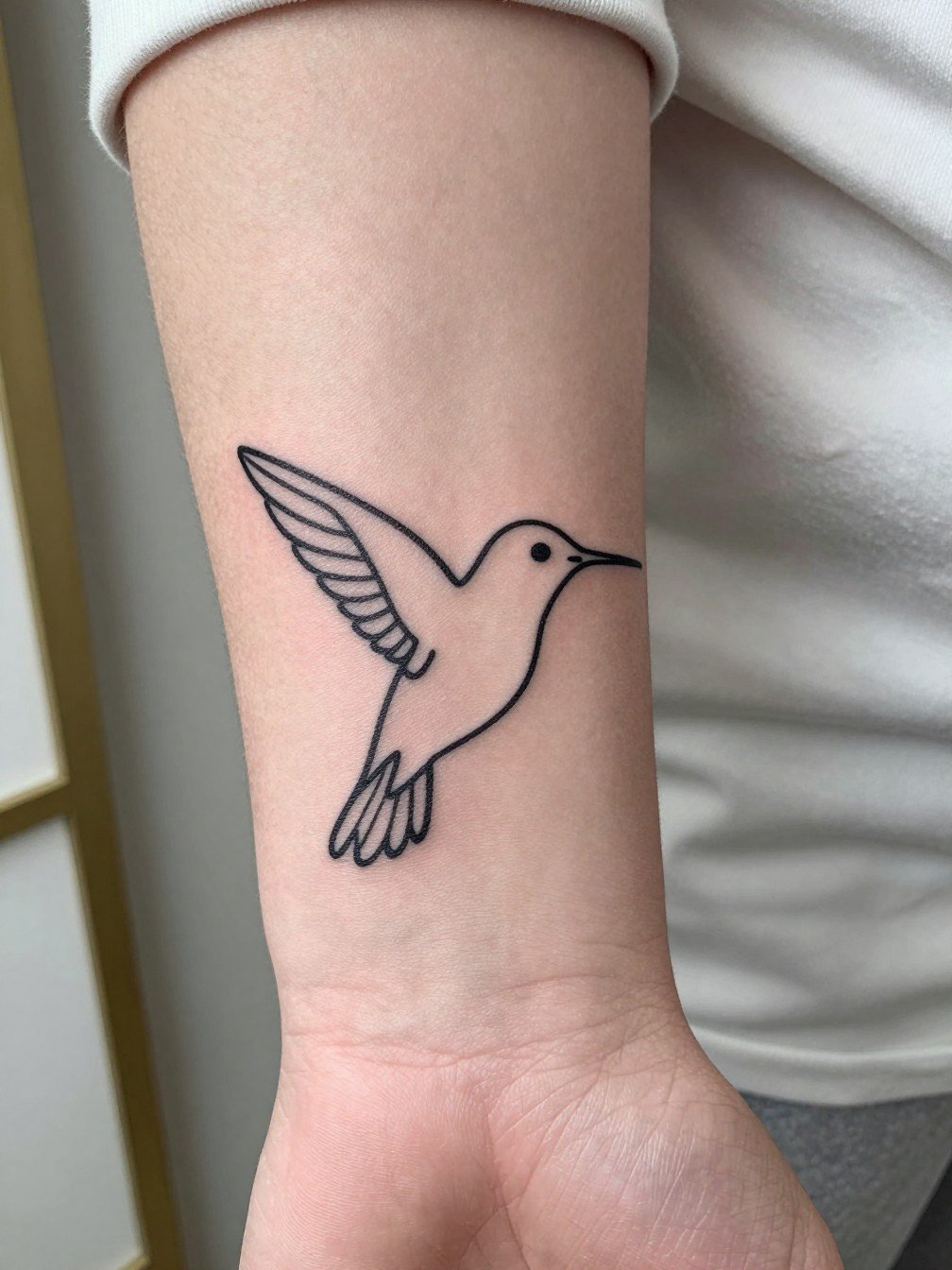
Fine line silhouettes are elegant for wrists but they split opinion. One camp favors the lighter look because it reads as a minimal accent and fits first tattoo tastes. The other camp argues that the wrist flexes and the skin texture causes thin lines to blur within a couple of years unless spacing and depth are adjusted. If you want this route, have the contour drawn slightly thicker than your ideal day-one photo and ask to preview how the silhouette reads at three inches and four inches in the stencil. Avoid requesting micro feathers inside the silhouette, because those details rarely survive the first touch-up period. For appointment wear, short sleeves and no bracelets are essential. For display, a bare wrist or a single thin chain on the opposite wrist keeps attention on the silhouette and pairs well with a minimalist watch.
4. Blackwork Hummingbird on the Inner Forearm
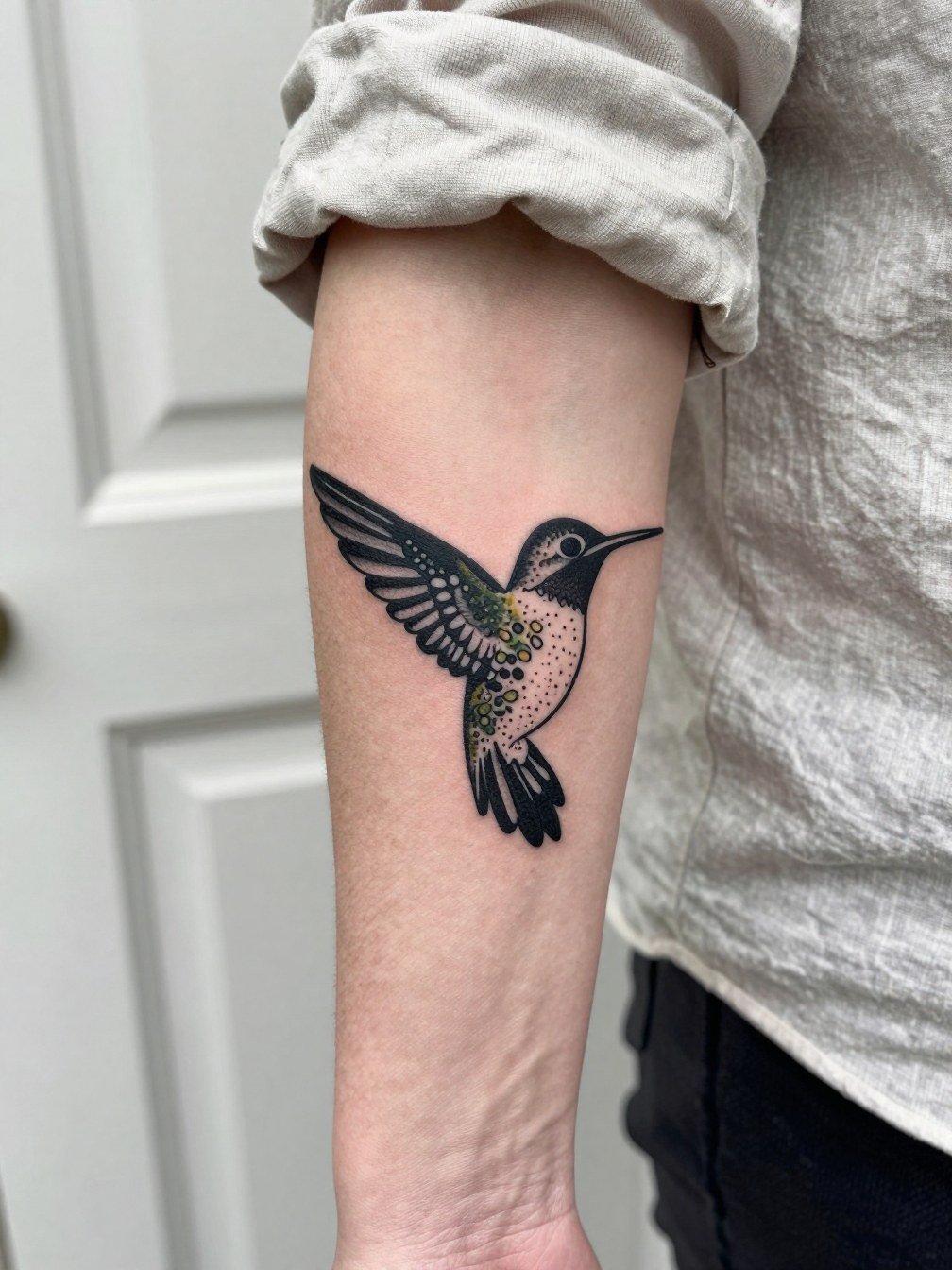
Blackwork is a practical choice when longevity matters. The solid saturation keeps the bird readable at distance and reduces the need for frequent touch-ups compared with tiny color zones. A common error is overloading the bird with thin internal linework that defeats the black silhouette intent. In consultation, have the artist show a contrast overlay so you can see how negative space will define feathers. Expect one solid session for medium pieces and mild soreness along the inner forearm that eases after the first day. This placement looks great with a linen button down and rolled cuffs, and a linen button down shirt is a practical session choice since cuffs give the artist clear access.
5. Micro-Realism Hummingbird on the Outer Forearm
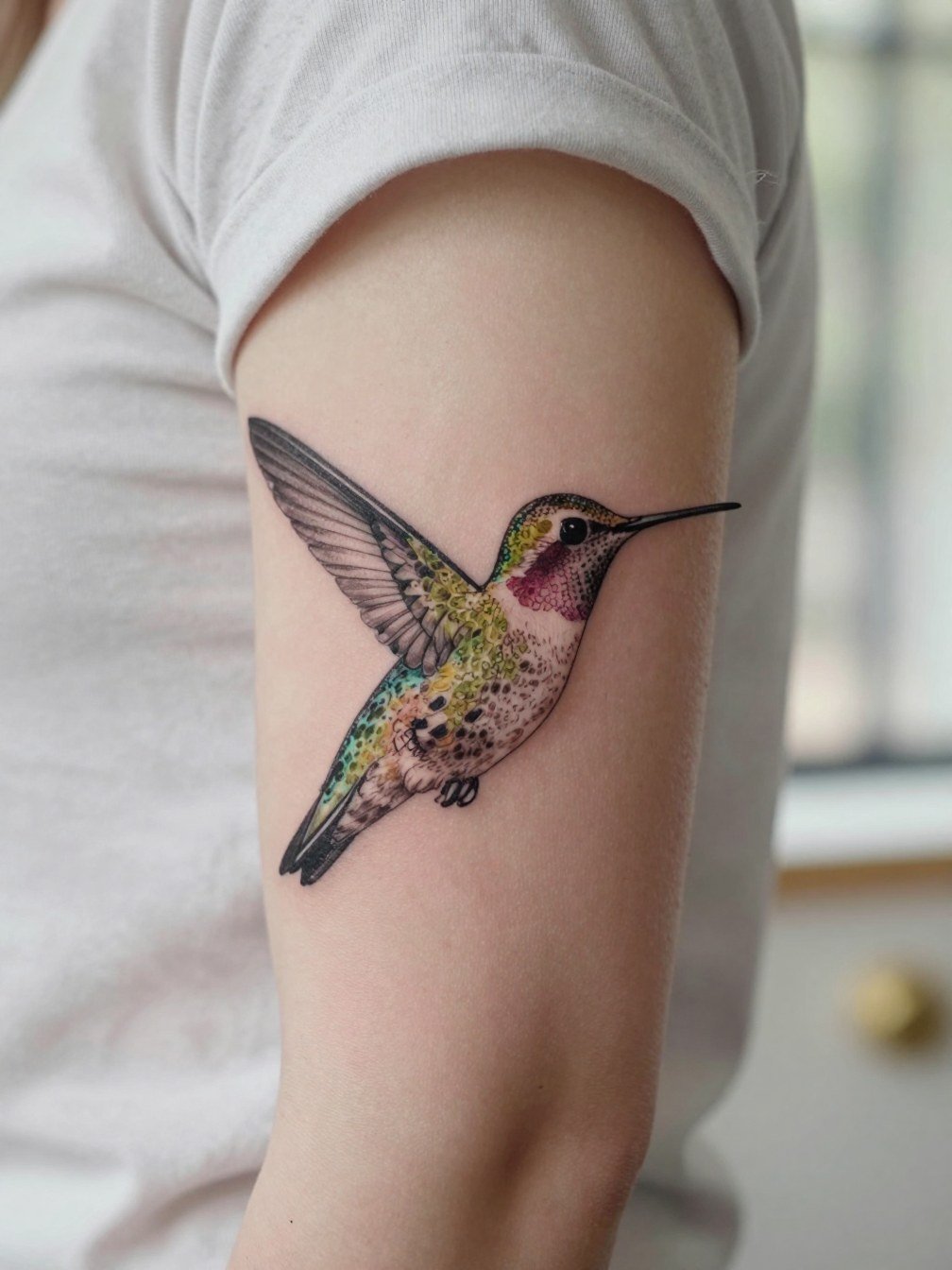
Micro-realism captures feather motion without requiring a full sleeve, but it needs precise saturation and controlled stipple shading to read after healing. The biggest mistake is shrinking a detailed reference down without adjusting line weight and contrast. In the consult, bring a close-up reference and ask the artist to map out where stipple shading will be used versus continuous tone so you both agree on texture. At six months healed you should see crisp feather edges if the piece had proper saturation. Expect 1 to 2 sessions depending on the level of detail. For everyday style, a fitted basic tee keeps the arm clean and lets the realism read naturally, and a fitted basic tee works well with cropped jackets.
6. Watercolor Hummingbird with Floral Accents on the Shoulder Blade
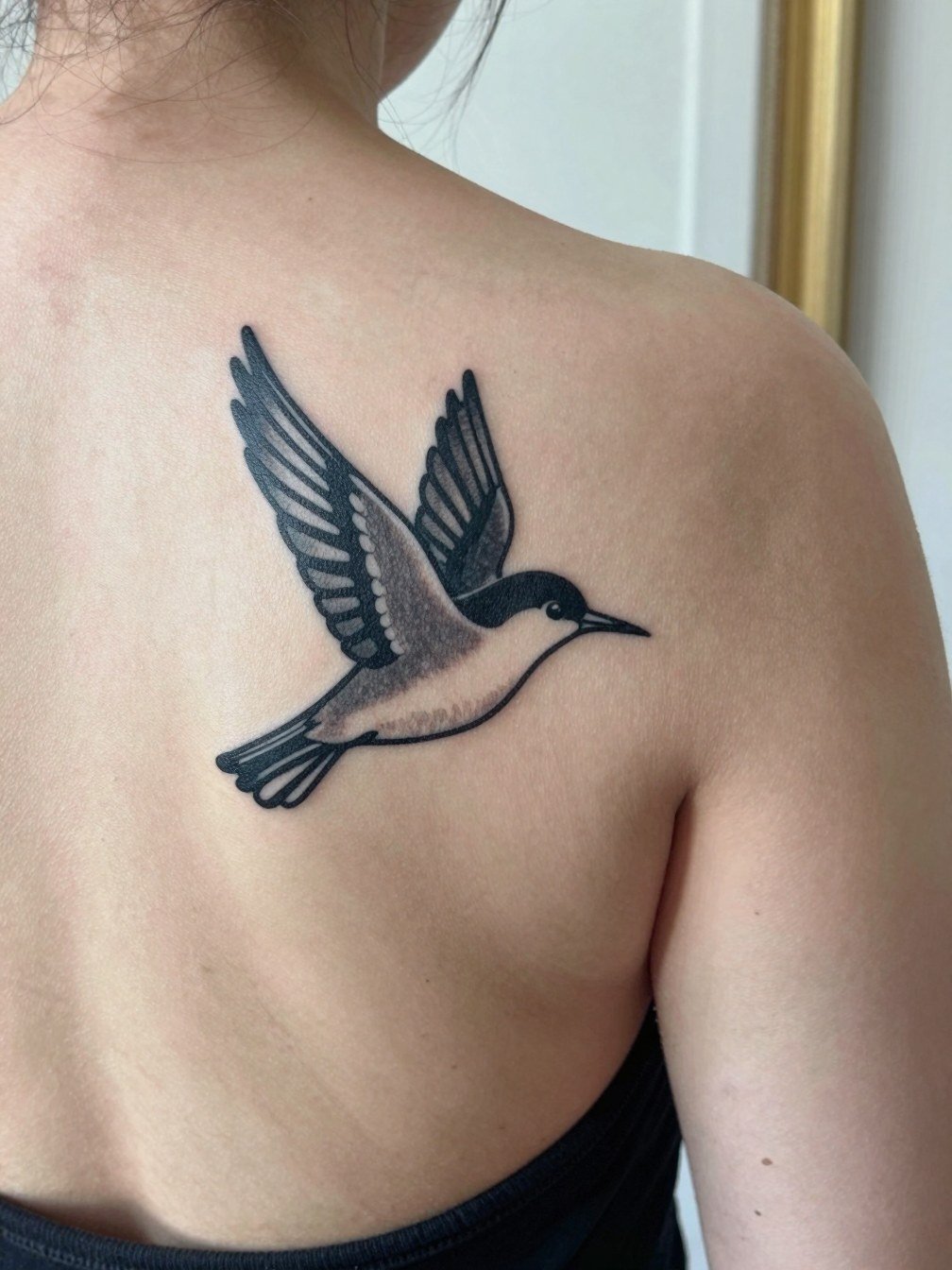
Watercolor pieces create movement, but color longevity is a real trade-off. One standpoint says color makes hummingbirds feel more natural and lively, especially with floral accents that match actual plumage. The opposing standpoint points out that bright accents, particularly reds, often fade quickly and can require touch-ups within a year. If you choose watercolor, ask for saturation maps and reserve bright red for small accents only so the overall wash still reads after fading. Shoulder blade placement gives the piece room to breathe and usually heals with lower friction than ribs, and for sessions wear something bra-friendly or a loose tank the artist can shift aside without tugging. For nights out, low-back tops and strappy dresses frame the shoulder blade nicely and pair well with a washable cover-up.
Pre-Session Essentials
The first six ideas include visible placements and small color zones that benefit from a few non-technical items on hand for the appointment and first week.
-
Fractionated coconut oil. A lightweight later-stage moisturizer that some artists OK once the tattoo is past the initial scab phase, helpful for avoiding heavy residue on micro-realism areas.
-
Curel fragrance-free lotion. A gentle daily lotion to use after the first few days when ointments are no longer recommended and you want even hydration without over-coating.
-
Lubriderm fragrance-free lotion. Another low-irritant option for the middle healing stage that keeps saturation looking even without heavy perfume ingredients.
-
Dri-loc second skin bandage. Helpful for the very earliest hours to protect a fresh shoulder blade or wrist tattoo from friction at home.
-
Fragrance-free gentle soap. Use for daily washing during the first week to clean without irritating pigments and to minimize scab disruption.
7. Mostly Traditional Hummingbird with Limited Palette on Outer Upper Arm
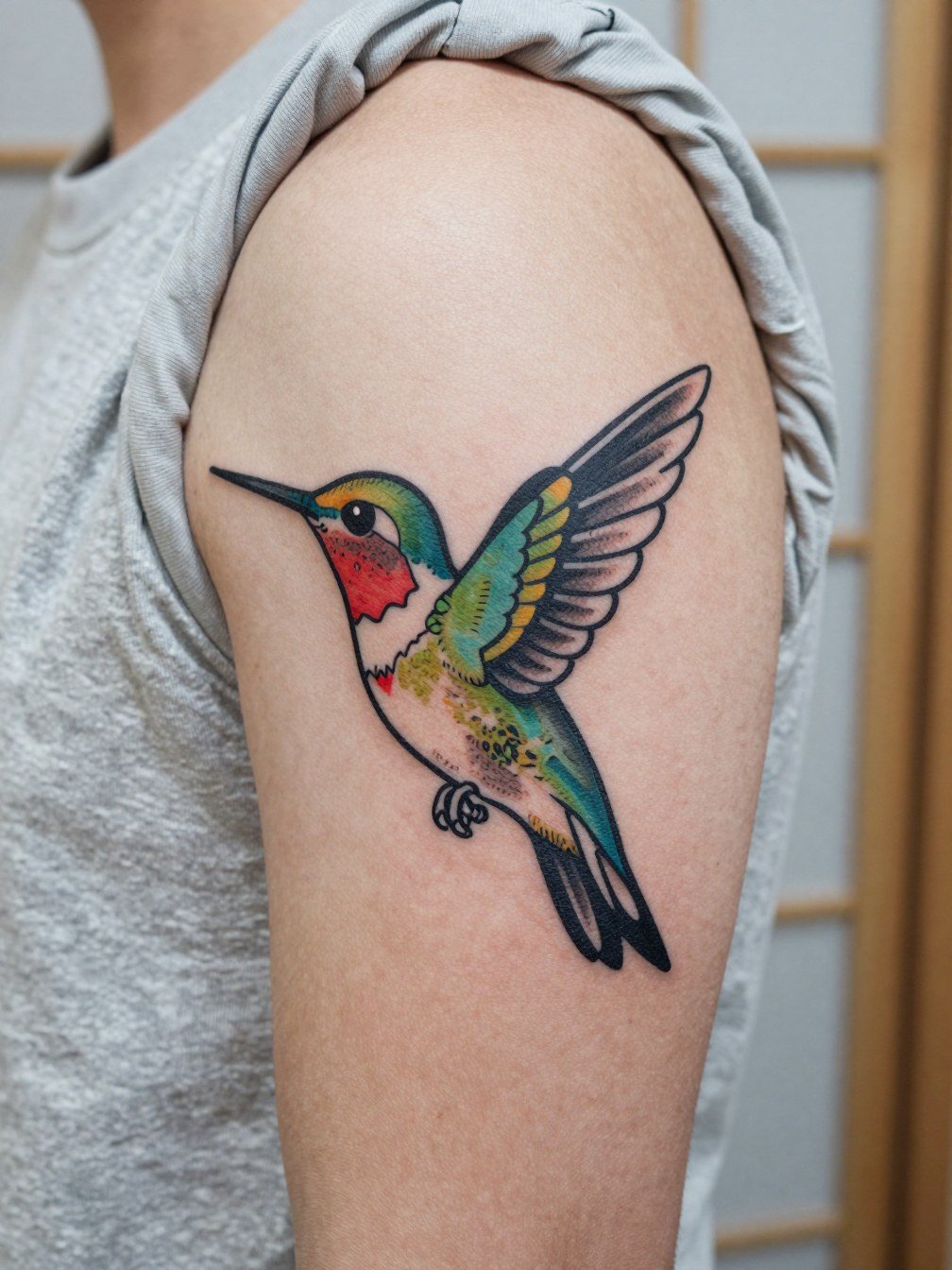
A limited palette keeps the bird readable as colors soften. Recommend planning two main color stops with a bold outline so the bird keeps contrast at year three. Mistake to avoid is requesting many tiny color flecks inside the wing; those merge faster than flat color blocks. Discuss with the artist where the outline will sit relative to color fills and whether the piece should be scaled up one inch to preserve feather detail. This placement usually fits comfortably into one to two sessions, and the arm tolerates touch-ups well if you need to refresh saturation later.
8. Hummingbird with Memorial Flowers on the Inner Forearm
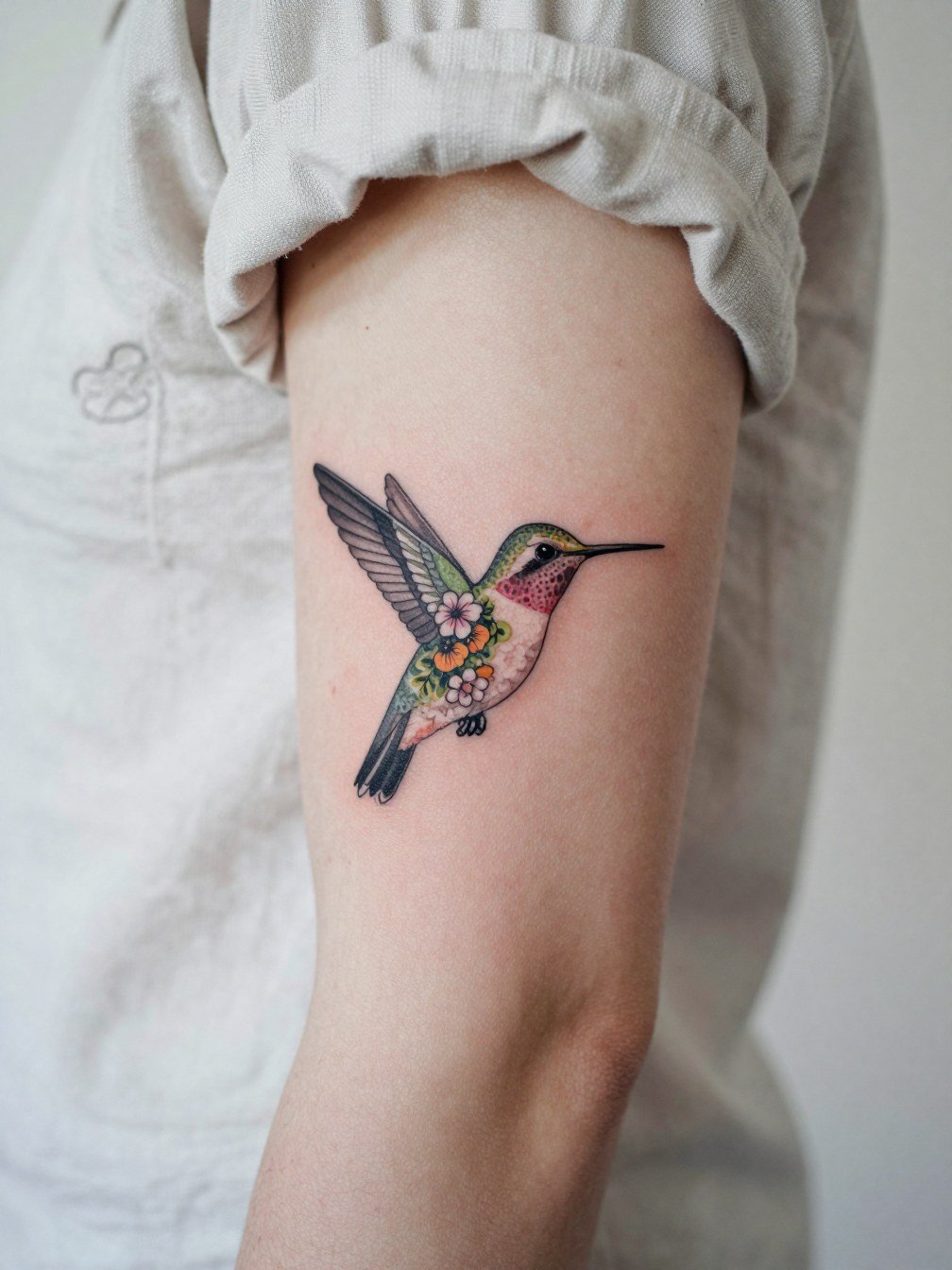
Memorial pieces are personal because the chosen blossoms reference a person or memory. One practical error is overcrowding the inner forearm with multiple flower types that compete with the bird. A better approach is to select one or two key blooms and match petal sizes to the bird scale so the composition reads clearly at arm length. Talk about which flower species you want and whether their color must be exact or symbolic. Inner forearm touch-ups are straightforward, and the area tends to settle well with medium linework. For showing off and for the session, a linen button down with rolled cuffs gives easy access and complements the illustrative look, and a linen button down shirt works for both.
9. Armored or Aztec-Inspired Hummingbird on the Upper Arm

Ornamental treatments add cultural weight but require sensitivity. Mention explicitly in the consult which motifs are being referenced and whether the design borrows traditional geometry or is purely decorative. A common mistake is calling something "Aztec" while using generic tribal motifs that misrepresent origin. Expect a larger design to need two to three sessions for full detail and stipple shading. The upper arm handles dense ornamentation well because the skin does not flex as much as inner joints. If you like sleeves, this theme can anchor an extended arm composition later.
10. Hummingbird with Flowers on the Shoulder Cap

The shoulder cap is ideal for compositions that need a natural curve to show wing sweep. The main misstep is forcing a linear composition onto the rounded shoulder, which compresses detail. In planning, have the artist draw the wings following the shoulder arc and ask to see the stencil while standing so you can test how the motion sits with natural posture. This placement usually heals with less friction than rib placements, and it reads well with sleeveless or boat-neck tops. To show the piece off for photos or evenings out, a strappy dress or tank exposes the curve without competing with the color.
11. Tiny Hummingbird Behind the Ear or on the Nape
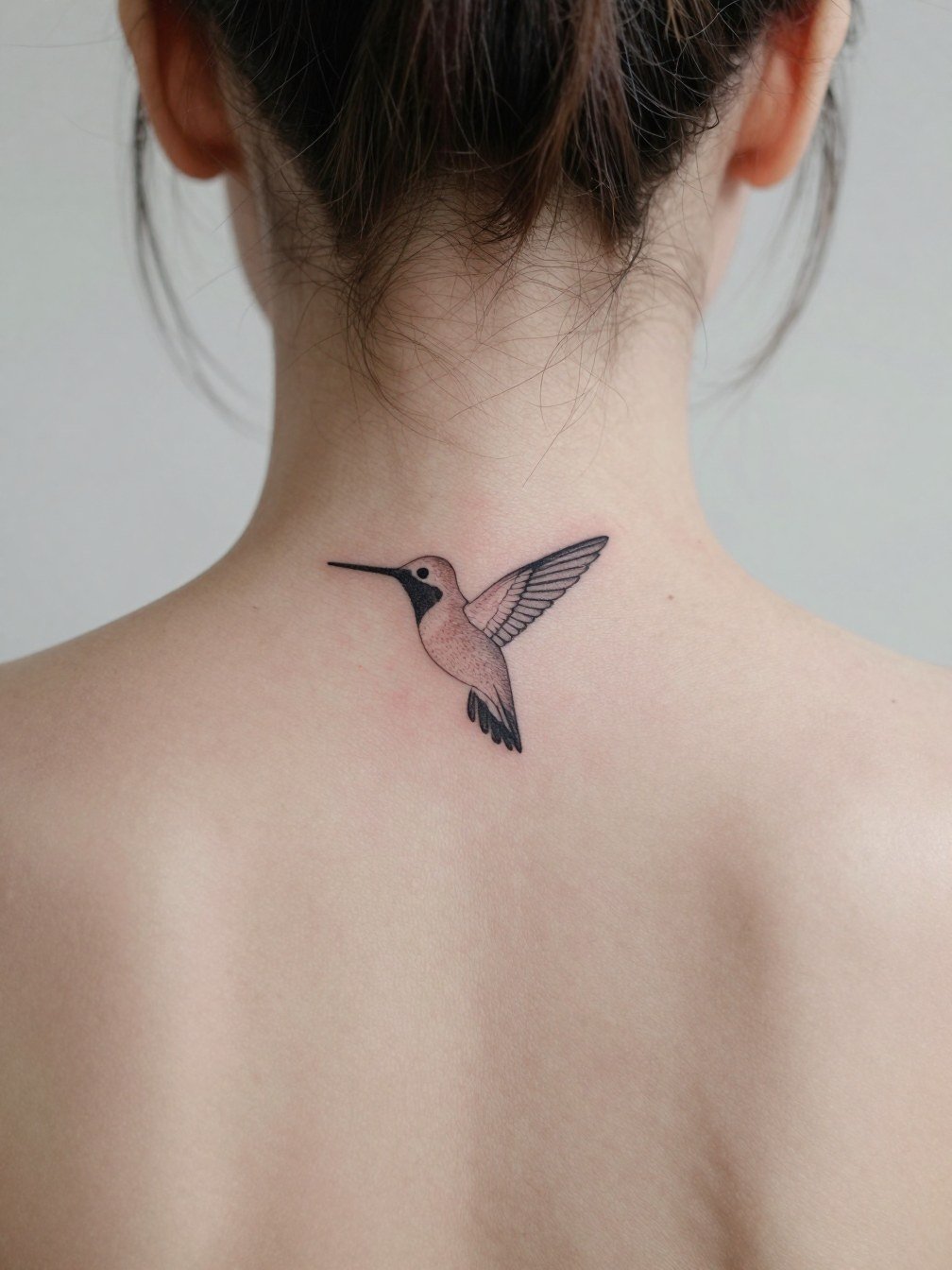
Small nape pieces are discreet and read best when kept simple. The frequent mistake is adding too much internal feathering into a one-inch design. Ask the artist to keep the silhouette clear and to show how the shape looks with hair down and hair up so you understand visibility. Note that the mastoid area may need a specialized machine technique for consistent saturation, so plan for a single short session and check for healed photos on similar skin tones. This is a placement where healed references matter more than fresh images.
12. Healed Hummingbird with a Bright Flower Accent on the Outer Forearm

This type of section shows how a single saturated accent behaves over time. A practical tip is to reserve red for one flower only and increase surrounding outline contrast so the red does not appear to sink into adjacent tones as it fades. A common oversight is expecting the red to behave like blue or green; it does not. At six months you will see strong color; by year two red often needs a touch-up if full vibrancy matters to you. For session wear and later displays, a cropped sweatshirt or fitted tee keeps the arm unobstructed and the accent visible, and a cropped sweatshirt women pairs well with casual looks.
13. Side Torso Hummingbird in Flight on the Ribcage
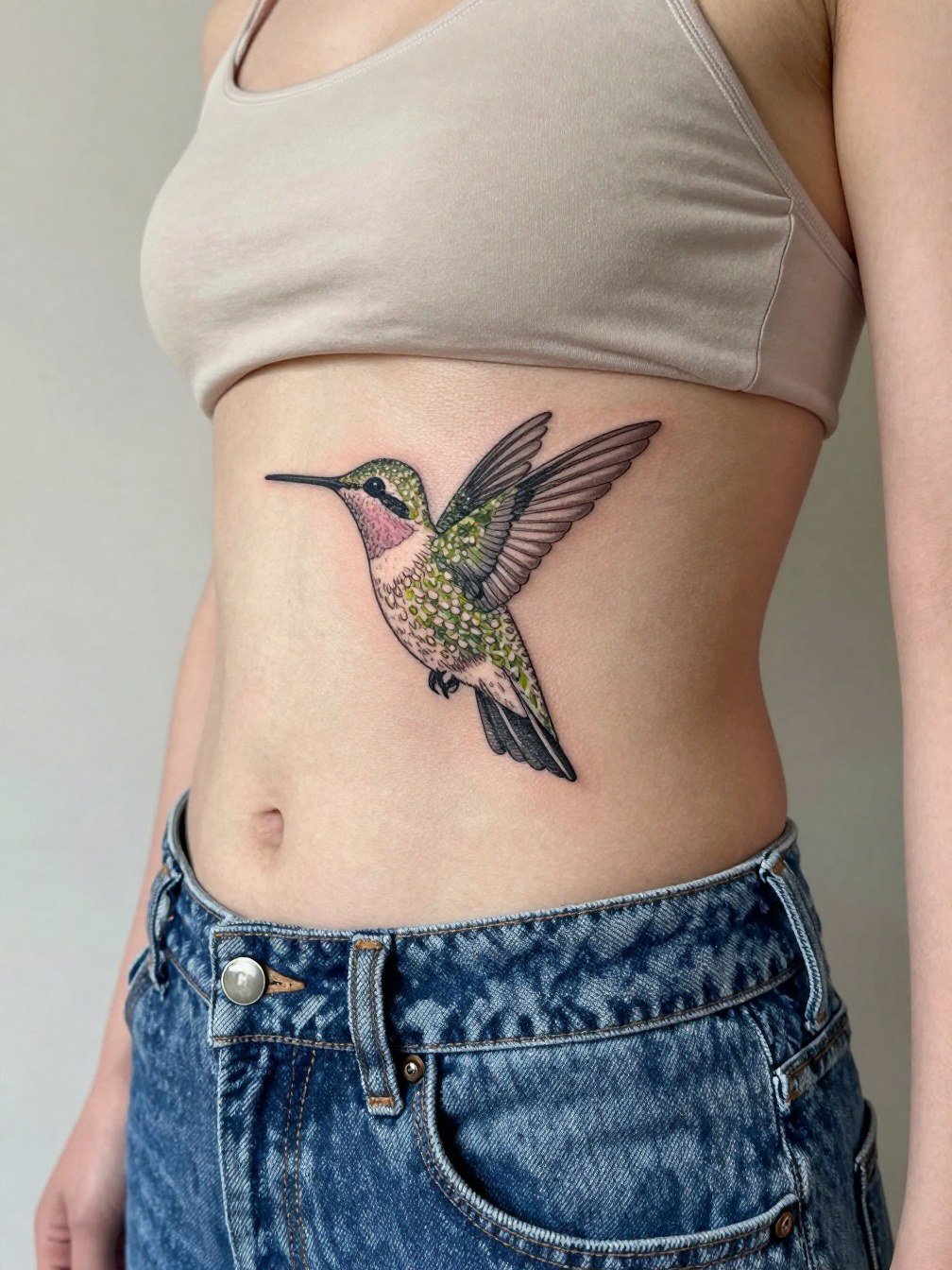
Ribcage placements are beautiful for flight poses but the area is sensitive and moves with breathing. Some people accept the pain for the body line. In practice, one camp says fine line on ribs blurs quickly because the skin stretches and creases, especially near the lowest ribs. Another camp maintains that with slightly wider spacing and correct needle depth, fine line can settle well and has examples at three years healed. If you pick ribs, plan for breathing breaks, consider numbing strategies, and agree on spacing that sacrifices a hair of delicacy for durability. Wear a loose button-down and soft waistband shorts for comfort during the session.
14. Back-Shoulder Hummingbird with Extended Wings

A wide back-shoulder canvas lets the wings breathe and reduces crowding. The main mistake is compressing too many floral elements into the wingspan. Discuss wing span and negative space with the artist so the silhouette reads from across a room. Sessions for this size usually run longer but often finish in one or two sittings depending on detail. For showing the piece, low-back tops and open-back layers display the wing sweep elegantly, and a low back top pairs well for evening looks.
15. Simple Single-Hummingbird Flash for Forearm or Ankle
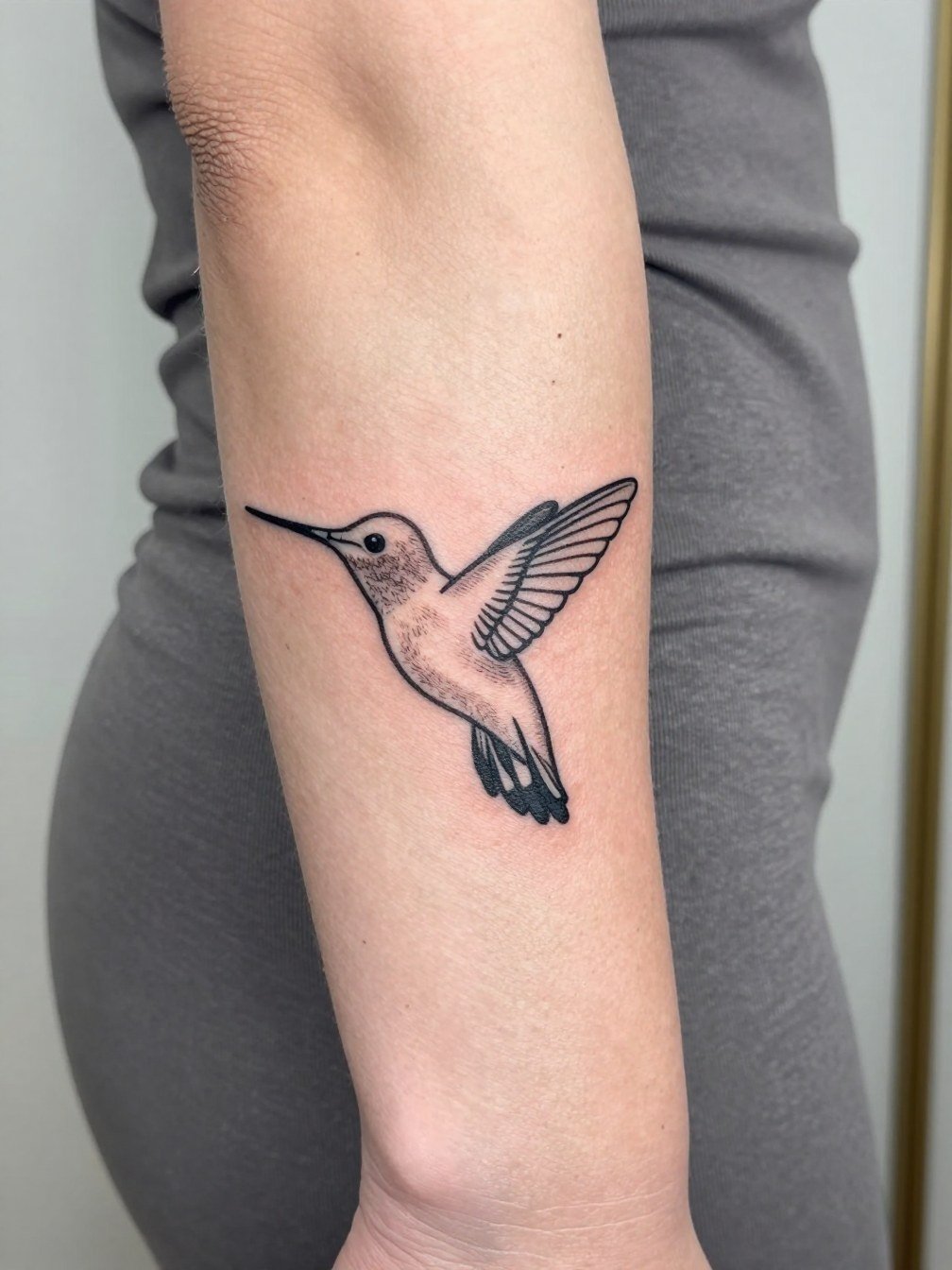
Flash pieces are great first tattoos because they tend to be pre-drawn for quick sessions and predictable outcomes. The usual trap is choosing a busy flash that looks great small on paper but loses detail on the skin; pick a flash with confident contours and ask for a slight scale increase if you want detail to survive. These pieces are typically one-session work and inexpensive compared with custom designs that require artist time. For the wrist or forearm, a thin bracelet on the opposite wrist helps frame the bird, and for ankle placements choose footwear styles that do not rub the fresh ink during the first week. A subtle accessory like a thin chain bracelet pairs well with a forearm flash.
Frequently Asked Questions
Q: How much does a hummingbird tattoo cost for a medium shoulder piece?
A: Prices vary by shop and region, but medium shoulder pieces commonly fall into the local shop minimum plus hourly time. Expect cost to reflect session time, custom design work, and whether you want saturated color. Be prepared for a touch-up budget in the first year if you choose saturated red or very delicate color zones.
Q: Which placements age best for detailed feather work?
A: Outer forearm, shoulder cap, and back-shoulder panels tend to age more predictably because the skin is flatter and sees less constant flex. Ribs, inner thigh, and wrist are riskier for ultra-fine feather detail because motion and friction accelerate line spread.
Q: Where can I find healed examples and local artists who do hummingbird tattoo design work?
A: Search Instagram and TikTok with tags like #hummingbirdtattoo, #birdtattoo, and add your city name to narrow local portfolios. Reddit threads are especially useful for healed posts, so look for healed-photo comments in r/tattoos and motif-specific threads to see how colors and linework settle on different skin tones. Use portfolio platforms and local studio searches with keywords such as "hummingbird blackwork" or "hummingbird fine line" to compare healed work across artists.
Q: Should I pick color or black and gray for a memorial hummingbird?
A: Both choices have pros and cons. Color can reference real-life flowers and make the bird feel vivid, but bright pigments like red often need touch-ups sooner. Black and gray or mostly blackwork holds shape better over time and reduces retouch frequency. If you want color, limit saturated zones and plan a potential touch-up at the one-year mark.
Q: What should I wear to a shoulder or ribcage session so the artist can work without fuss?
A: For shoulder pieces, wear a loose tank or a button-front top so the artist can access the cap without tugging fabric. For ribcage work, a loose button-down and soft waistband shorts minimize pressure on the area. If you like, bring a spare loose top to change into after the session. For showing off healed shoulder or back work, an open-back top or strappy dress reveals the area without rubbing.
Q: How long before a watercolor hummingbird needs a touch-up compared with a blackwork piece?
A: Watercolor work often shows fading earlier because the saturation is lighter in wash areas, so expect a possible touch-up within one to two years if you want original vibrancy back. Blackwork pieces, with solid saturation and bolder outlines, usually go longer between touch-ups. Keep in mind that lifestyle factors like sun exposure and swim frequency change timelines.
Q: Can I get a tiny fine-line hummingbird on darker skin and still expect detail to show?
A: Yes, but ask to see healed photos on similar skin tones. On darker skin, spacing and slightly stronger linework help define silhouettes. Request the artist demonstrate how lineweight will scale for visibility rather than simply copying a light-skin reference.
