

Minimal small red leaves keep turning up in saved boards, but what lasts is not the tiniest outline you can find. Saturation, clear maple geometry, and placement that avoids constant rubbing make the difference between a crisp icon and a faded blur in a few years. Read these ideas through the lens of how they will look at six months and at five years, with practical notes on what to bring to the consultation.
1. Single Red Maple Leaf Mini Tattoo, Wrist
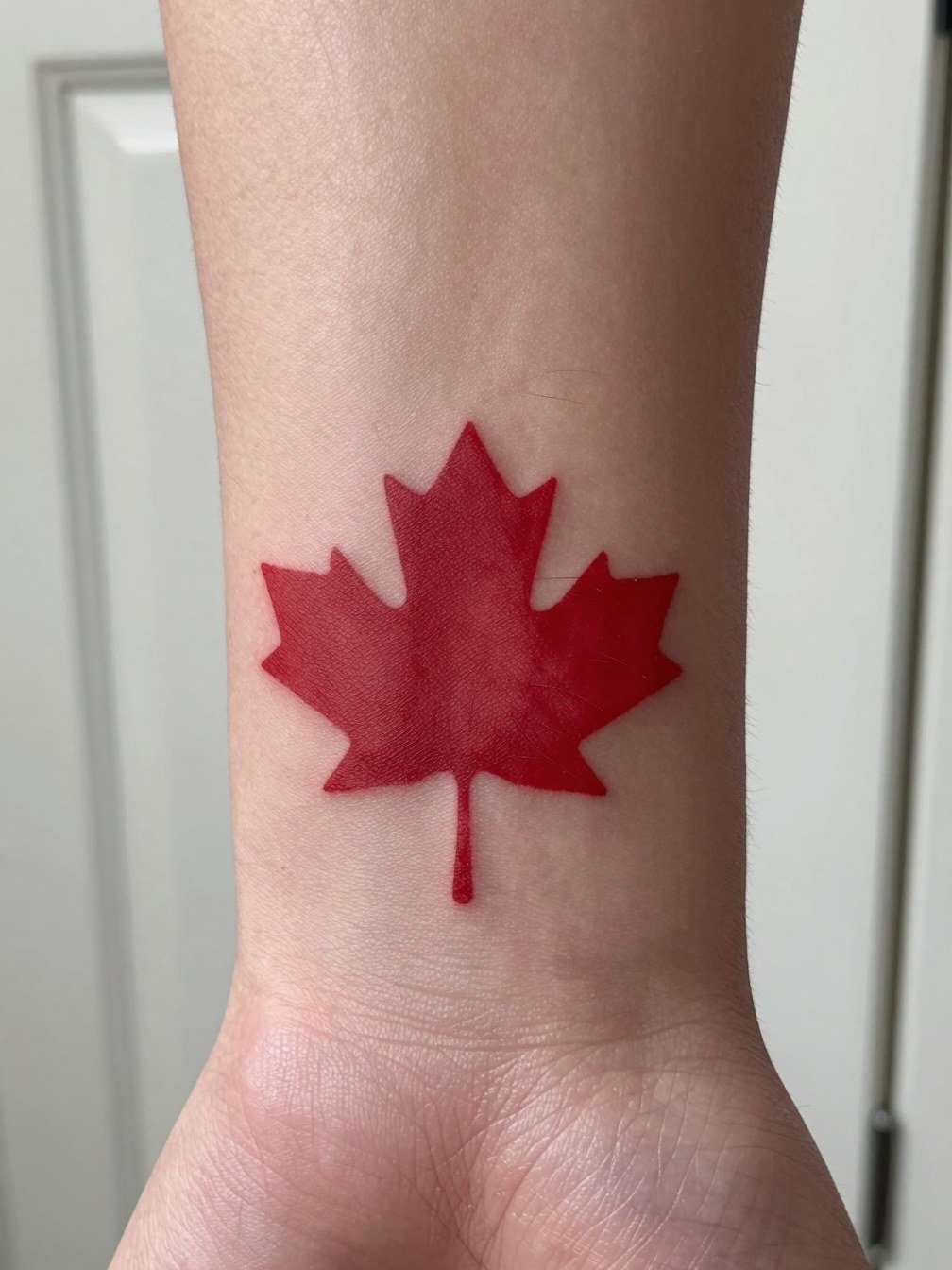
A one-leaf wrist piece reads instantly and works when you want a low-commitment symbol that still looks deliberate. I recommend a slightly bolder silhouette with a short stem and a hint of central vein so it reads as maple rather than another leaf. Tell the artist you want a 1 to 1.5 inch clean shape with slightly heavier linework at the lobes so saturation holds with time. Common mistakes are single-needle outlines that vanish under wrist friction. Session time is short, often thirty to forty minutes, and pain lands at a moderate three to five on most charts because of thin skin. This placement shows well with a thin chain bracelet on the opposite wrist for balance.
2. Red Maple Leaf Over the Heart
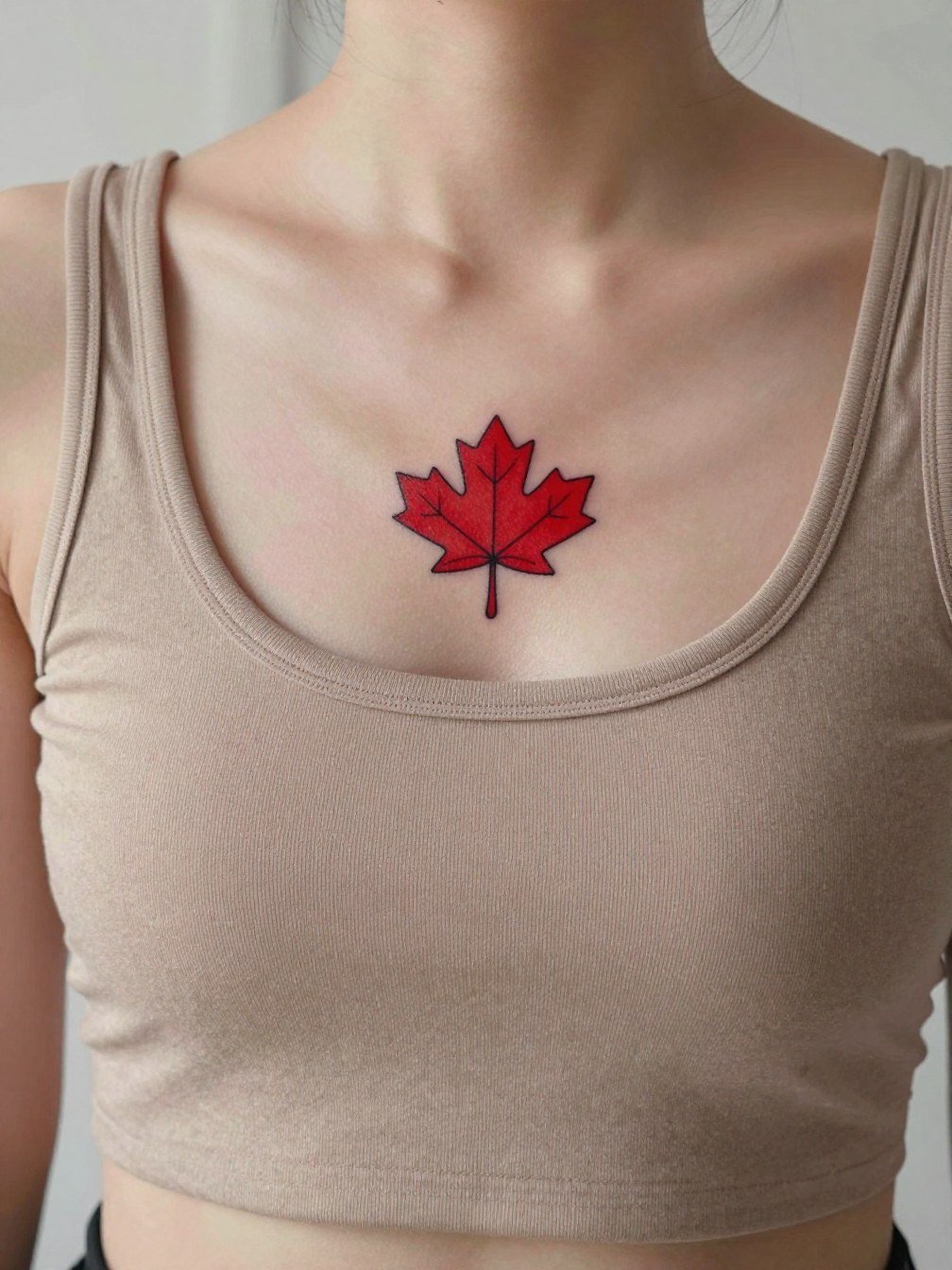
A left-chest maple leaf is a quiet but visible choice when you want the symbol close to the heart. For this area I suggest a small illustrative leaf with a black contour to protect the shape as the red fades. During your consultation bring a photo of the exact placement relative to the collarbone so the artist can adjust size for clothing lines. A common aging issue here is using ultra-thin veins that blur into the skin over time. Expect a 30 to 60 minute session and a pain rating that can be higher if placed near the sternum edge. Show it off with a delicate pendant necklace that sits just above the leaf.
3. Red Maple Leaf on the Outer Wrist, Palm-Down
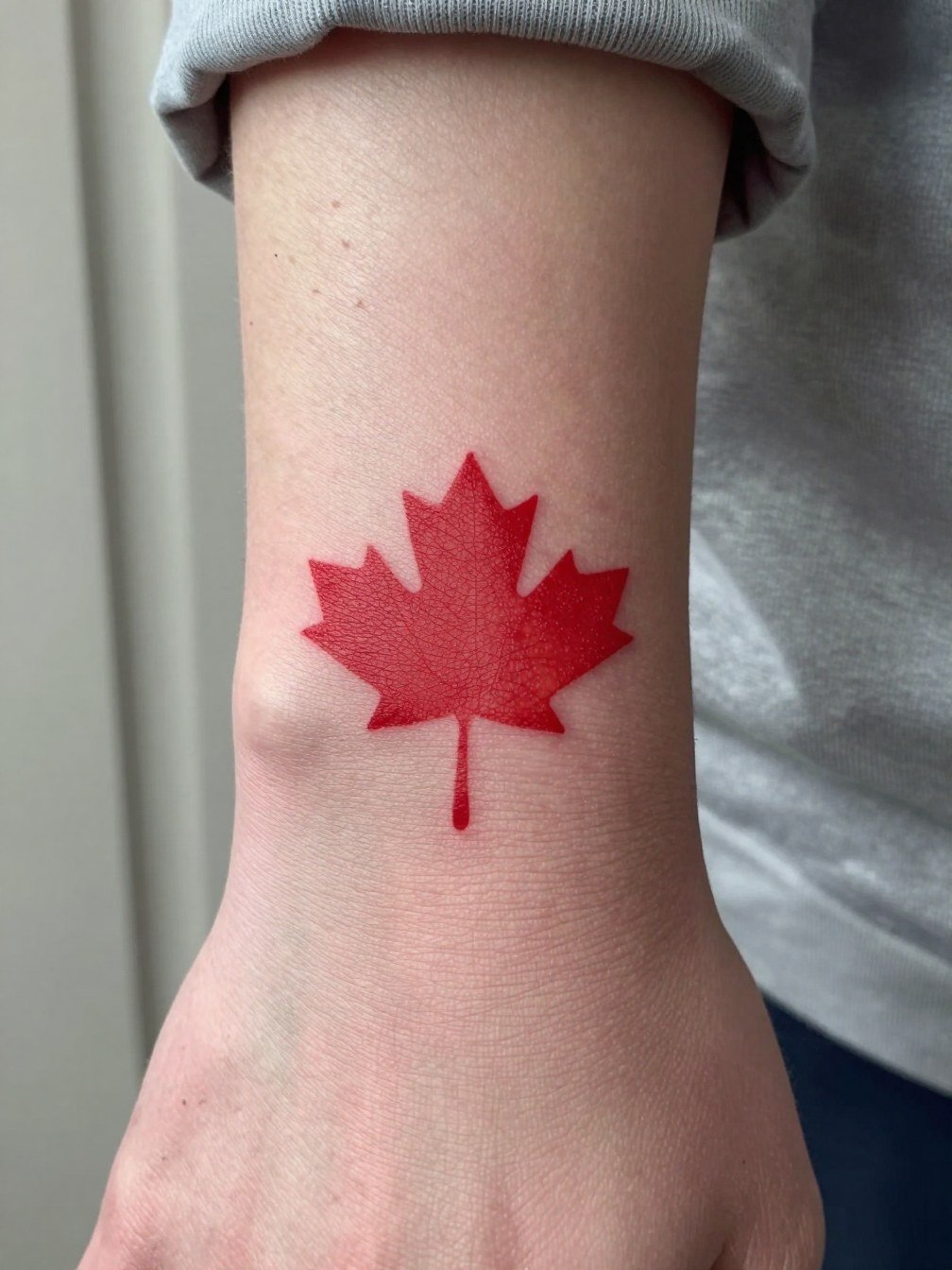
The outer wrist is a high-visibility spot that favors a simple silhouette. Orientation matters here, so consider the stem pointing toward the hand for a deliberate look that reads when your palm is down. Ask for reference stencils at full size so you can confirm how it sits while your hand moves. The most common mistake is putting the design too close to the wrist crease where wear and washing speed up saturation loss. Expect a short session and a three to five pain rating. Pair it with a minimalist watch on the opposite wrist to keep the visual balance.
4. Red Maple Leaf on the Inner Forearm
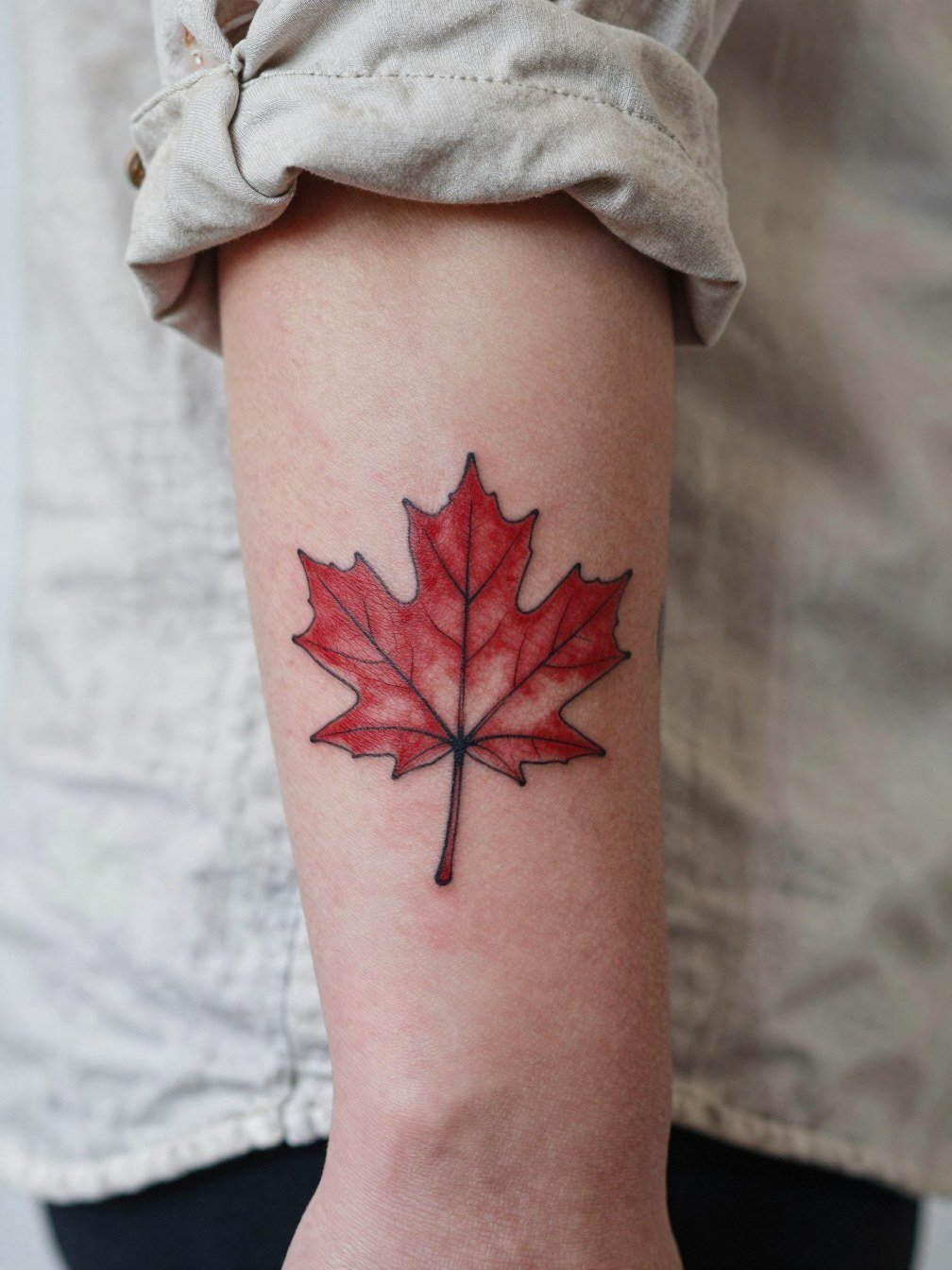
Inner forearm gives enough real estate to show a leaf with a touch of detail while still being easy to cover. One practical split here is about color choices. One camp prefers solid red-only fills because the color reads as authentic and bold. The other camp favors a black outline plus red fill because the outline preserves the silhouette as the red softens over years. Both positions are legitimate, so decide which outcome you want and book a consultation that specifies line weight and saturation targets. A typical session runs forty to ninety minutes depending on size. For showing off, roll up a linen button down shirt so the tattoo sits in the cuffed gap.
5. Red Maple Leaf with Patriotic Text, Inner Forearm
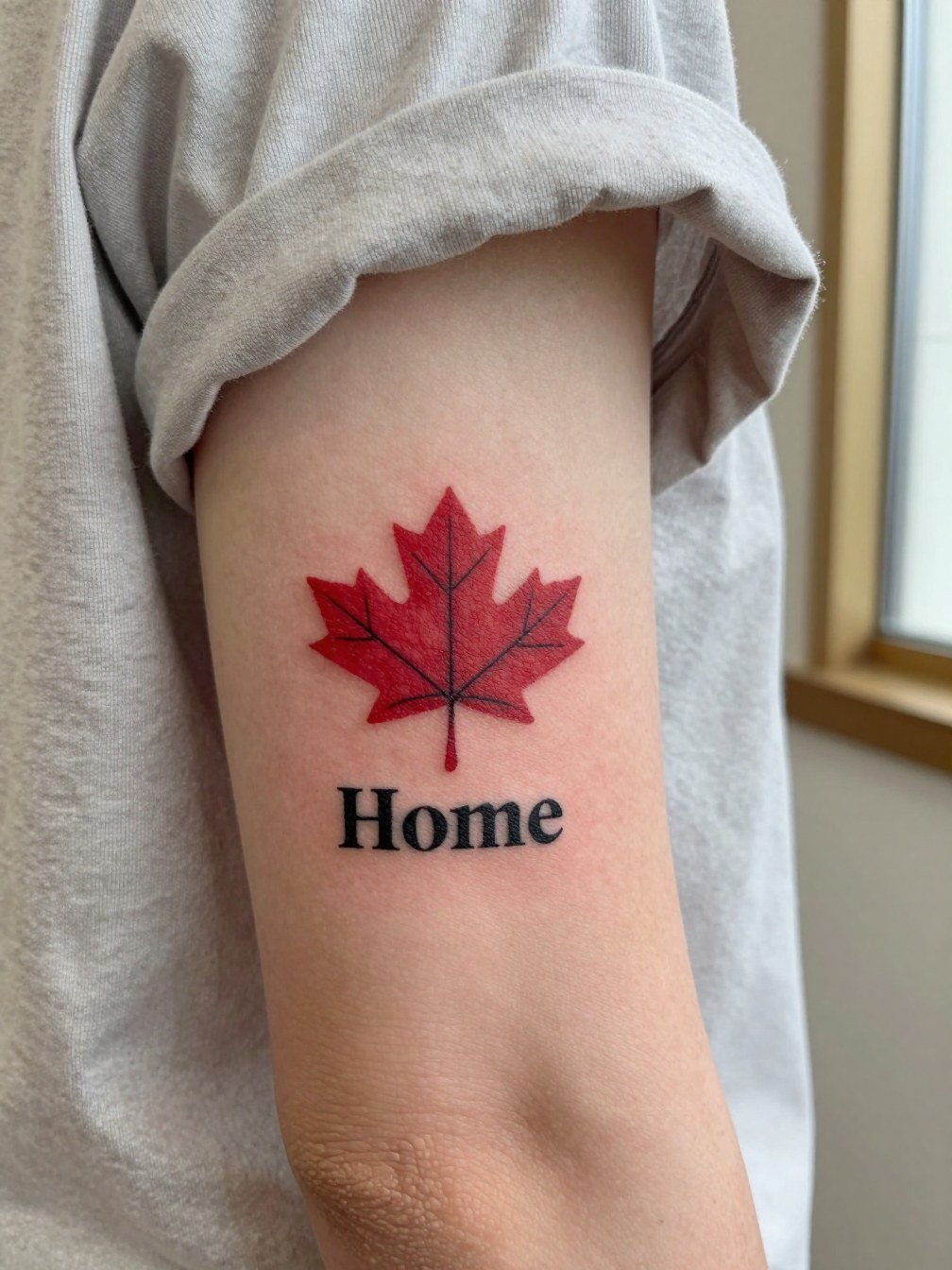
Combining text with the leaf personalizes the symbol quickly, but the choice of words changes how others read it. If you want a heritage marker, pick a short single word or date rather than a slogan that could read political. Bring the exact word or date in the font you like so the artist can show how it reads at the chosen scale. A common mistake is cramming long script under a tiny leaf which blurs as the ink settles. Expect a single-session small-piece appointment and moderate pain. For daytime wear, neutral rolled cuffs and a simple ring stack complement the look.
6. Red Maple Leaf with Falling Motion, Outer Forearm or Calf

Adding motion helps a single icon feel organic and less logo-like. For this composition ask the artist to show the flow on your limb so the leaves read with muscle movement. A practical aging note is that motion lines and tiny drops can blur, so keep the linework confident and avoid micro-hatching. Sessions for a small falling cluster usually run forty to ninety minutes depending on detail, and touch-ups are common at year two for color refresh. Wear an oversized tee with sleeves pushed up during show-off photos to highlight the arc, and for the appointment wear an easy-roll sleeve.
Session Day Picks
The wrist and forearm pieces above each pose different session-day needs, from quick stencils to extra saturation for color pieces.
- Stencil transfer paper kit. Lets you preview the placement on skin at size, which is useful for wrist and chest options so you can confirm rotation and stem direction.
- Topical numbing cream. Applied per product instructions reduces the sting for calf or rib sessions without affecting linework.
- Thin protective film roll. Useful for ankle and wrist pieces to protect during the first days of friction from socks and watches.
- Fragrance-free gentle body wash. Cleans healing skin without irritating color work on limbs or chest.
- Aquaphor healing ointment. Thin layers the first two to three days lock in moisture for small color fills without suffocating the needle channels.
7. Geometric Maple Leaf, Outer Forearm
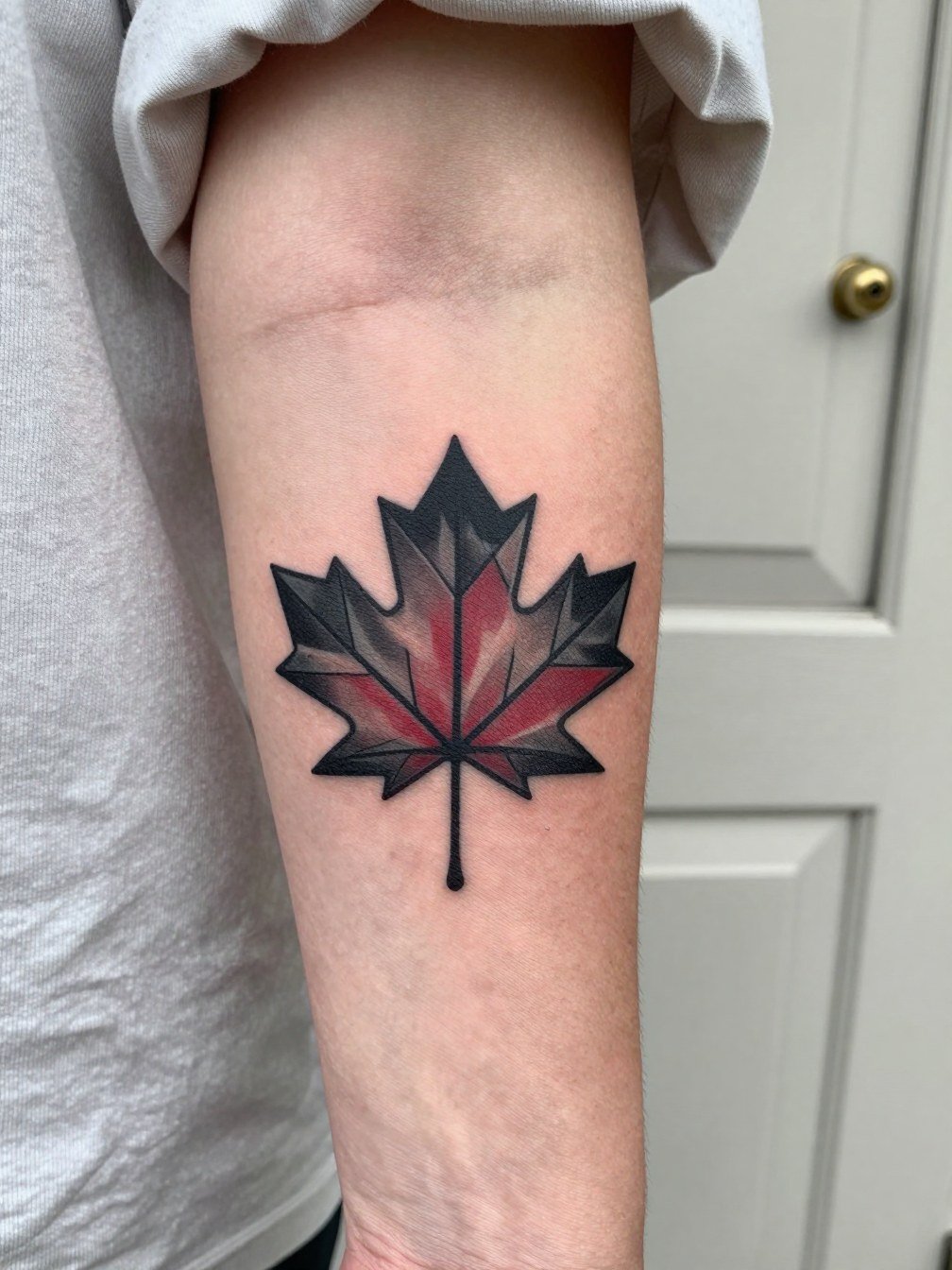
Geometry adds a modern edge and helps the leaf read as intentional art. There is also a cultural framing split worth naming. Some people treat the maple leaf strictly as a national symbol, preferring bold red fills to read as patriotic. Others wear the leaf as a private marker of home, memory, or family, choosing subtle geometry and placement that feels personal rather than public. Decide which reading you prefer and brief the artist on how visible you want the symbolism to be. Geometric pieces need room to breathe, so avoid going smaller than two inches. This placement pairs well with oversized tee sleeves pushed up for a casual reveal.
8. Maple Leaf with Color Gradient, Calf or Upper Arm
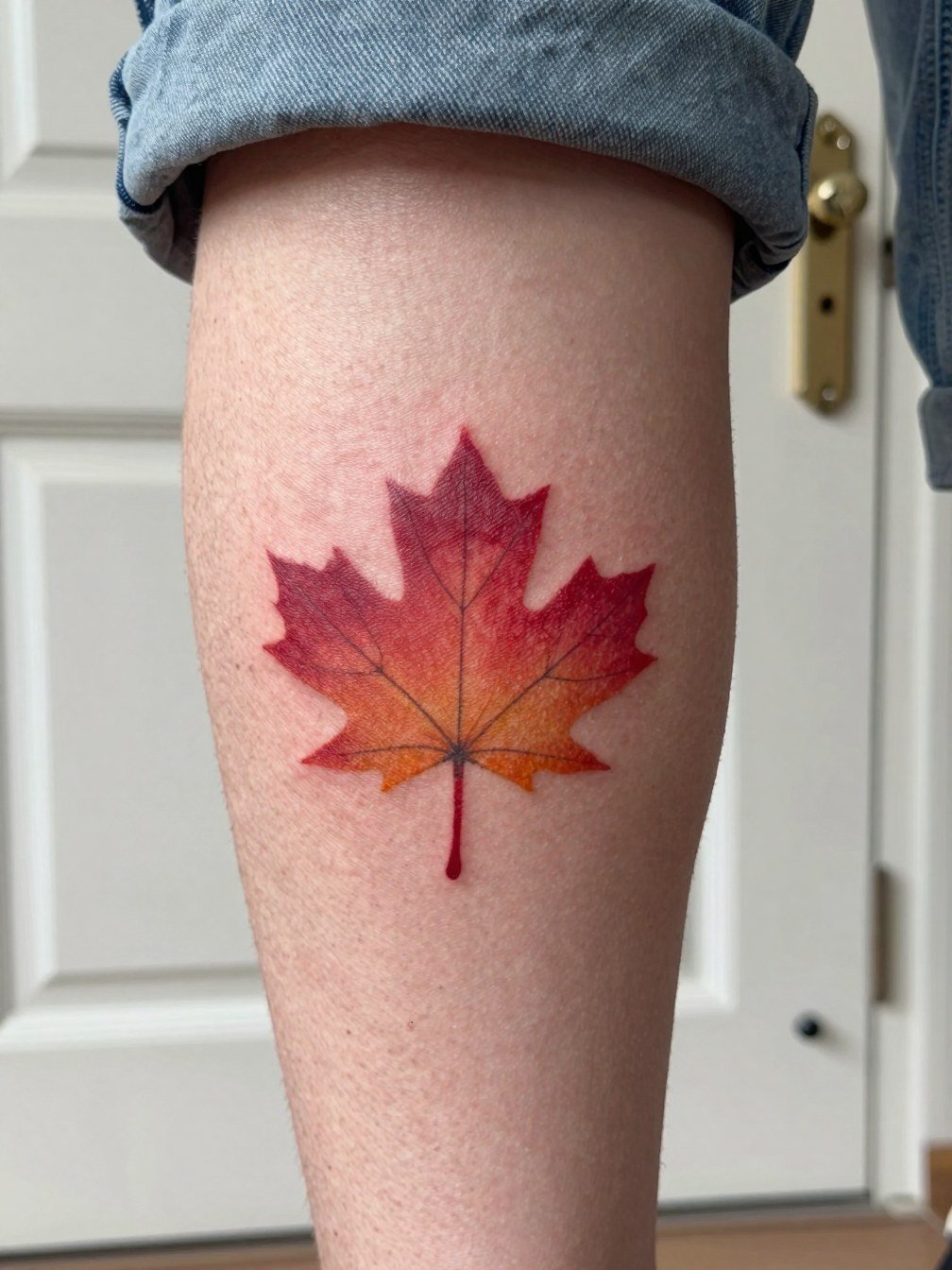
Gradients give the leaf depth but they depend on saturation to age well. A common mistake is chasing subtle blends on very small pieces where color migration makes the gradient muddy in a few years. Use this technique on the calf or upper arm where you can go slightly larger and get better color layering. For the consultation bring healed gradient references so the artist knows the depth you want. Session time often runs longer for layered color, and a touch-up at year one can restore the core red if it softens. Wear cropped pants or low-rise shorts to show off a calf piece.
9. Red Maple Leaf on the Back of the Neck, Nape

The nape is discreet unless your hair is up, which makes it excellent for a small symbol that flashes in social moments. The main technical concern is hair rubbing and sunscreen contact which can fade red faster than on other sites. Ask the artist how they expect the pigment to sit under hair and whether a thin black anchor line would help longevity. Sessions are short and pain is usually moderate because the area sits over thin soft tissue. For styling, wear your hair up or choose small hoop earrings that echo the scale and draw attention upward.
10. Red Maple Leaf on the Ankle
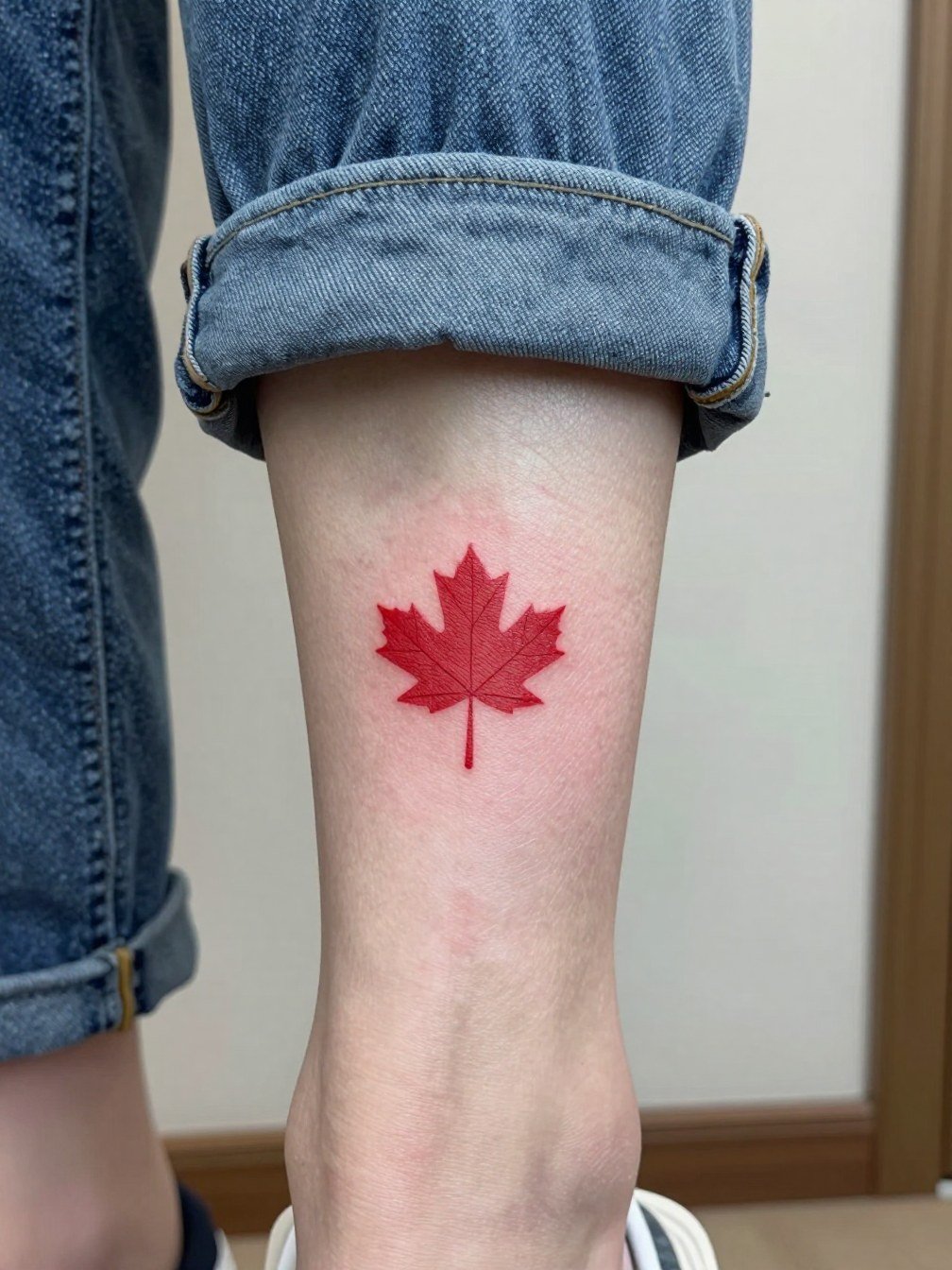
An ankle leaf sits in a high-friction zone because of socks and shoes, so clean silhouettes beat filigree here. One frequent error is placing the design where the shoe strap rubs, which accelerates fading. For this placement ask to see healed ankle photos and plan on a touch-up at year one if you wear tight footwear regularly. Sessions are short but the area can feel sharp because the bone lies close to the skin. Style it with cropped jeans or strappy sandals in warm months to show the piece.
11. Red Maple Leaf on the Ribcage
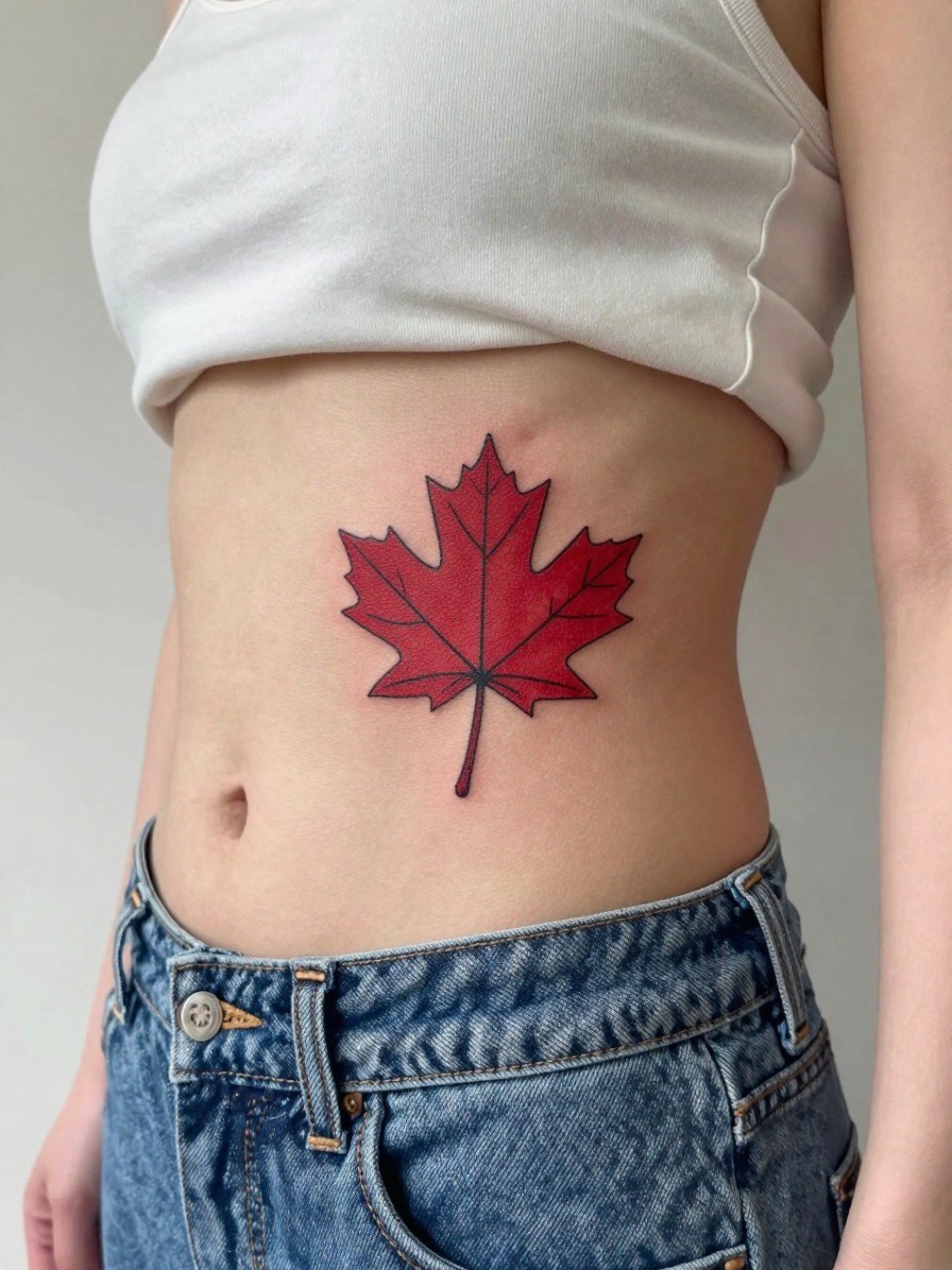
Ribcage pieces curve with the body and feel intimate by design. Artists debate whether fine line is a good match here. One camp argues that the stretch and movement of ribs blurs fine single-needle work within two years. The other camp counters that with slightly wider spacing and proper depth, fine line can hold beautifully on ribs. If you prefer a crisp outcome, ask for slightly heavier line weight and discuss touch-up timing up front. Rib sessions can be longer and more painful, often rated six to eight, so plan clothing that gives the artist access and comfort during longer sittings.
Frequently Asked Questions
Q: Will a small red maple leaf look like a weed leaf, and how do I avoid that?
A: Keep the maple geometry clear with five distinct lobes and a visible stem. Ask for a short central vein or a slight notch at the top lobe so the silhouette reads botanical rather than ambiguous. Orientation also helps, so a stem pointing toward the hand or toward the body changes how viewers interpret the shape.
Q: How does red ink age and what can I expect in touch-ups?
A: Red tends to soften faster than black, so dense saturation and slightly bolder outlines extend legibility. Most color small pieces benefit from a touch-up around year one to refresh saturation, especially on high-friction sites like wrists and ankles. Plan that into the appointment budget as a normal part of color work.
Q: Where can I find healed examples and artists who show red ink results without naming individual shops?
A: Search Instagram and TikTok hashtags such as #mapletattoo and #redmapleleaftattoo and use location filters to find nearby portfolios. Reddit tattoo threads are also useful for healed photos and long-term wear notes. For local discovery use queries like "your city maple leaf tattoo portfolio" on booking platforms and look specifically for healed images, not only fresh work.
Q: What should I wear to the session for each placement so the artist has access?
A: Wear clothing that gives clear access without needing fabric to be pulled. For wrist or forearm choose short sleeves or a sleeveless top. For chest or ribs pick a button-up or a fitted scoop-neck you can shift aside. For ankle and calf wear shorts or cropped pants that stay fastened. Bring a loose drawstring linen pant if you prefer extra comfort during longer leg sessions.
Q: Is a minimalist maple leaf a good first tattoo?
A: Yes, but plan the design to avoid micro-detail that the skin cannot hold at small scale. A simple filled silhouette or a clean outlined leaf with a small stem is forgiving. Confirm stencil size in the chair and set expectations on a one-visit touch-up if the artist recommends it.
