
Small motifs like acorns punish vague direction and reward small technical choices. A tiny single-needle acorn that reads crisp at year three usually had slightly heavier linework, a clean cap-to-body contrast, and a placement that avoids constant rubbing. Read through the first idea to see how the same motif behaves on the wrist, then compare larger botanical options if you want something that ages with more presence.
1. Fine Line Micro Acorn on Inner Wrist
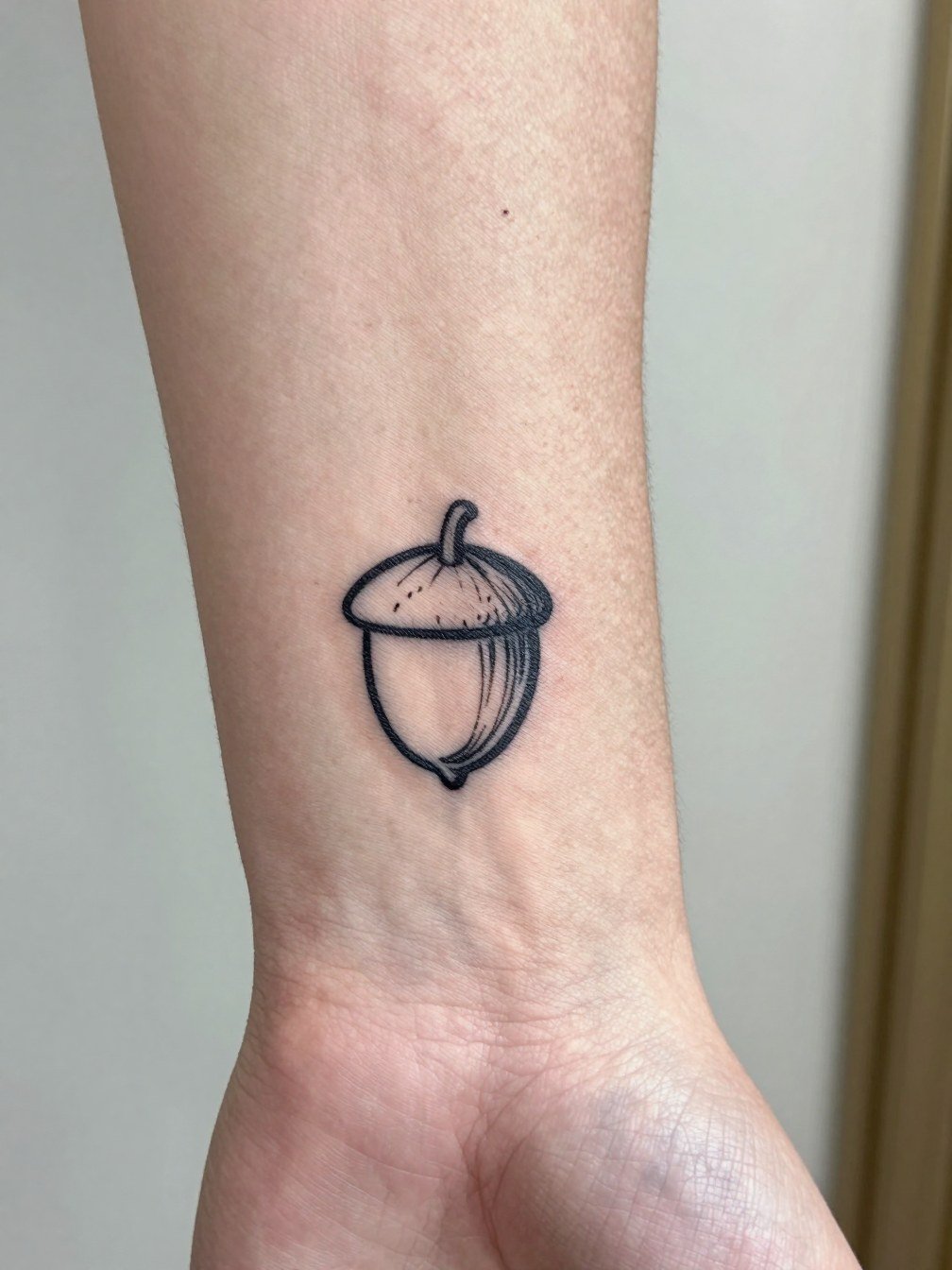
A micro acorn on the inner wrist reads intimate and quiet for daily wear. I recommend this when you want a small symbol of "small beginnings" without committing to a sleeve. Lineweight should be a touch heavier than pure single-needle references so the cap texture holds after a year. One camp of artists warns that ultra-fine single-needle work on the wrist blurs quickly because of thin skin and frequent washing. The other camp says slightly bolder single-needle spacing and conservative placement will settle and still look crisp at year three, and they can point to healed photos to show the difference. Expect a 30 to 60 minute session with moderate wrist sensitivity and a likely touch-up around year two for crispness. Pair this with stackable bracelets that sit above the design to frame it, for example a simple thin gold bracelet that keeps attention on the tattoo while leaving the skin visible.
2. Sprouting Acorn Behind the Ear
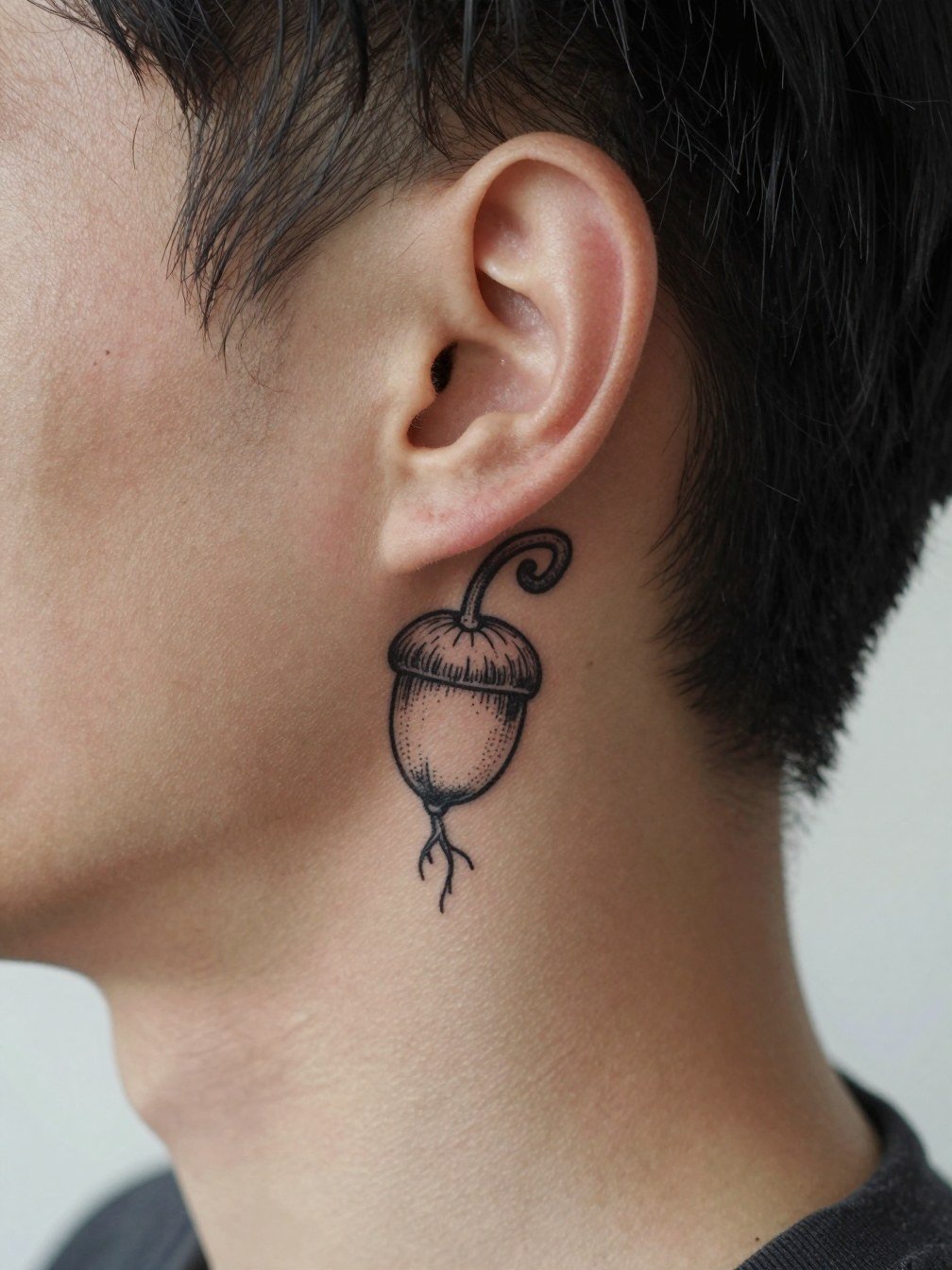
A sprouting acorn behind the ear is a small, private emblem that surfaces when hair is up. It is ideal for first-timers who want a tiny symbolic piece that also photographs well for social sharing. Discuss exact line spacing and how the artist will avoid the hairline so the tattoo does not migrate into hair-bearing skin. People sometimes ask for filigree caps that are too delicate, and those details routinely soften into an indistinct smudge. For the session wear, plan to arrive with hair up and a pair of studs to keep the area visible; a simple hair claw clip makes it easy for the artist and helps you preview how it will show with updos.
3. Tiny Traditional Acorn on the Ankle
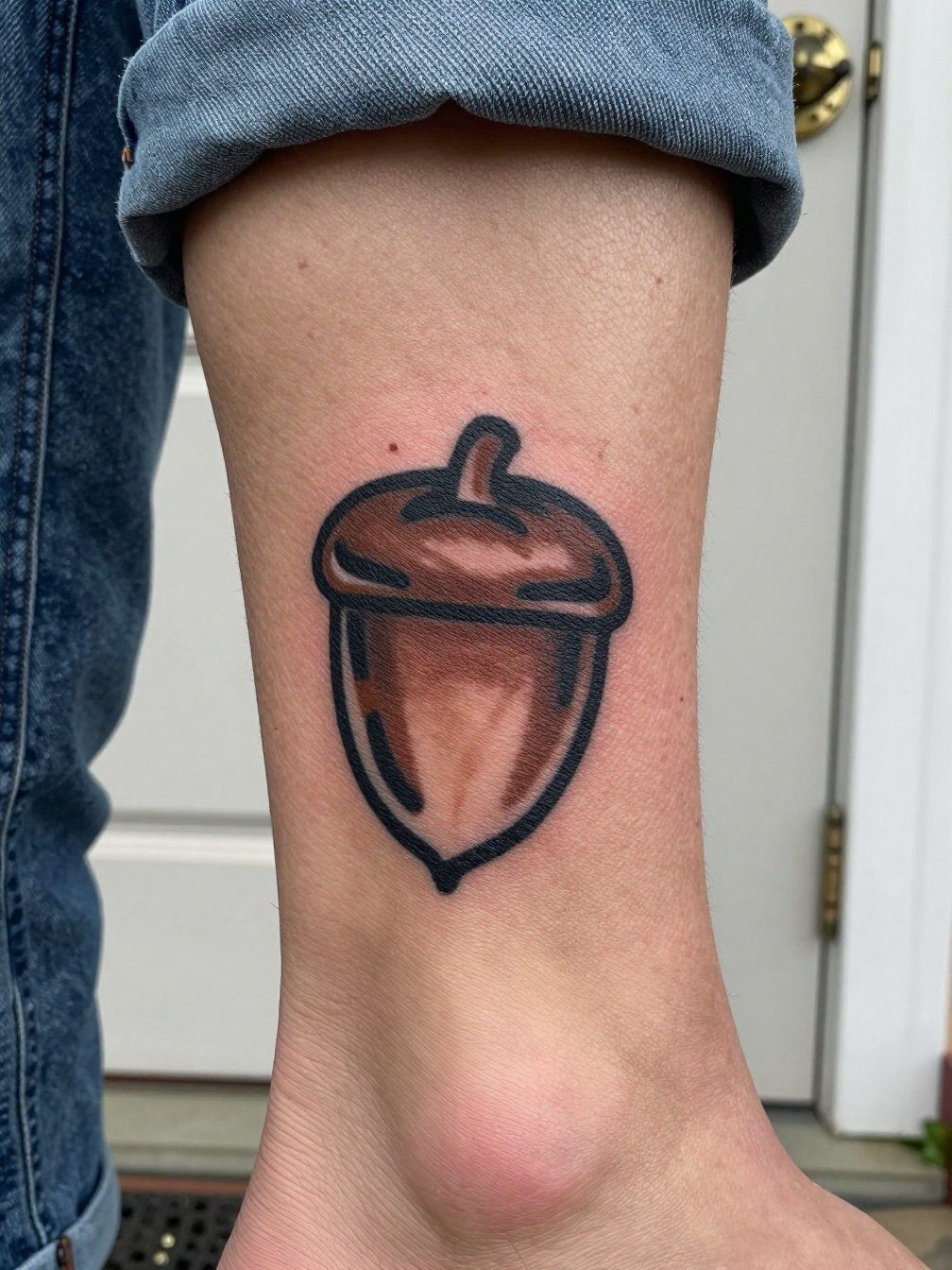
The ankle is great for a bold micro acorn that still reads from a short distance. Traditional black outlines help the cap stay readable through footwear friction and seasonal wear. Common mistakes include asking for tiny shaded caps that vanish into shoe rubbing; bold outlines solve that. Expect low to moderate pain and a 30 to 90 minute session depending on color fills. To show it off, wear ankle bracelets or low sneakers; try a subtle beaded anklet that frames the tattoo without covering it.
4. Acorn Outline on the Side Ribcage

Rib placements are intimate and the skin there moves with breathing and body changes. One group of artists says fine-line work on ribs blurs within two years because of stretch and friction under clothing. The opposing group argues that with slightly increased lineweight and careful spacing, fine-line pieces can settle neatly, and they will show healed photos to support that claim. If you like the idea but worry about healing, ask for a modest increase in contour thickness and allow the artist to space cap details wider than a wrist design. Sessions here tend to be longer and more uncomfortable than wrist work, so plan soft, loose clothing for the ride home. For session wear, a long loose tee you can lift up without tightness helps the artist access the side rib area.
5. Pair of Mini Acorns on Opposite Collarbones
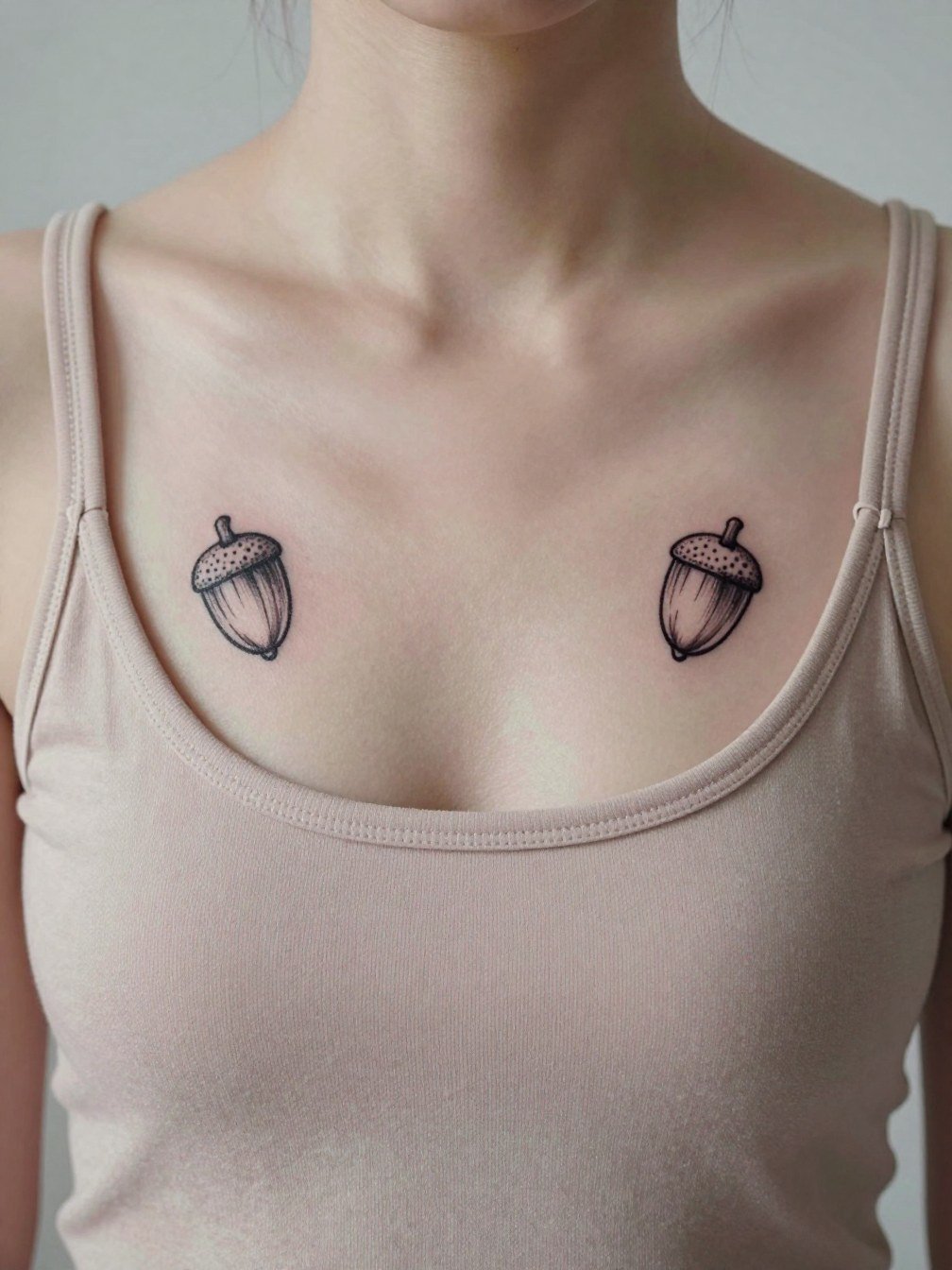
Symmetrical acorns on each collarbone make a compact visual statement that pairs nicely with open-neck tops. These read best with a small but solid cap-to-body contrast so the mirror effect stays clear at six months and beyond. A frequent mistake is forcing tiny script or initials under the acorns that crowd the area; keep text larger and sparse if you add it. Sessions are short and the collarbone has moderate sensitivity. For styling, low scoop or boat-neck tops help the pair remain visible; consider an open-front blouse that frames the collarbone without covering the ink.
6. Illustrative Oak Branch on Upper Arm
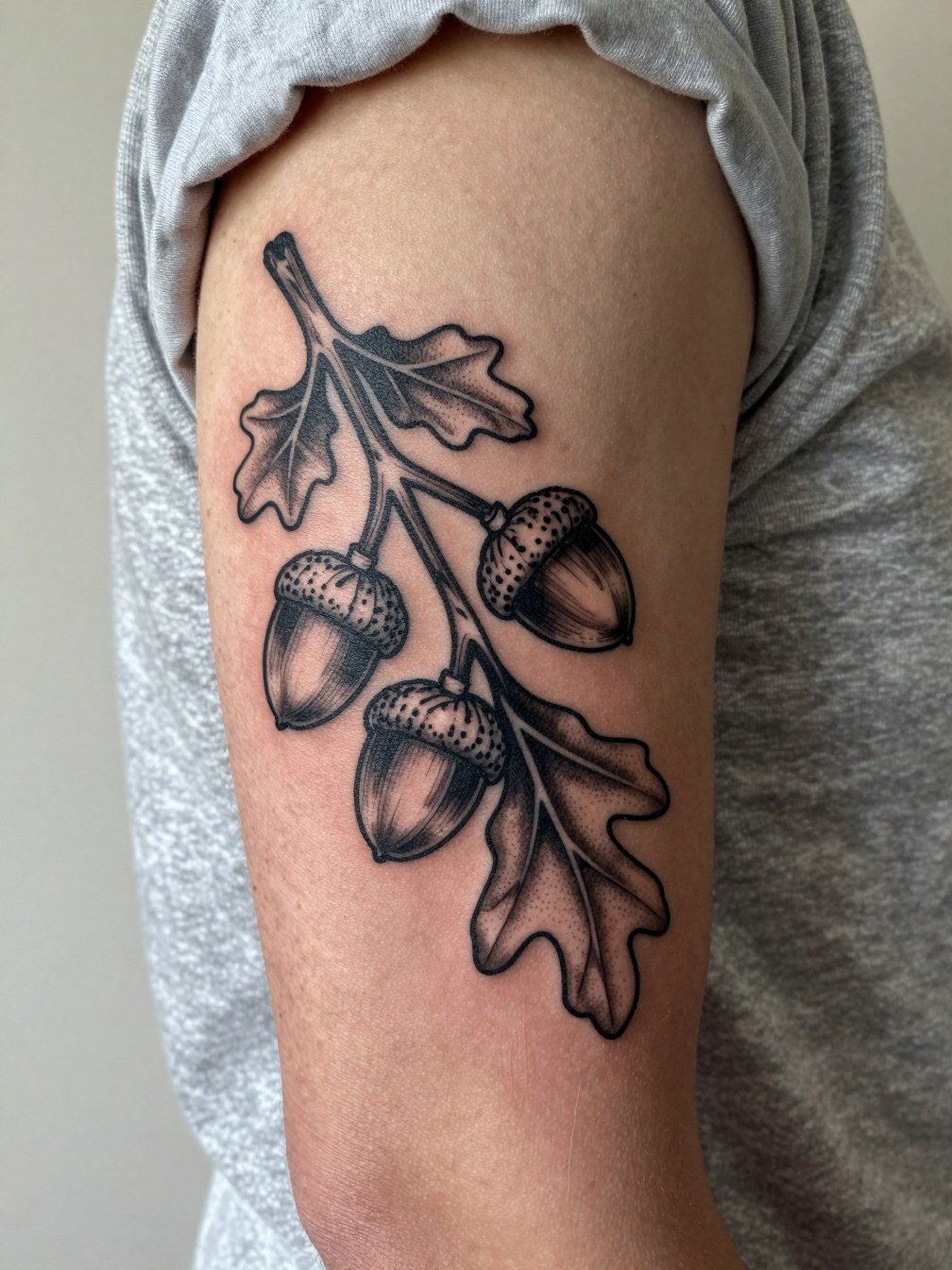
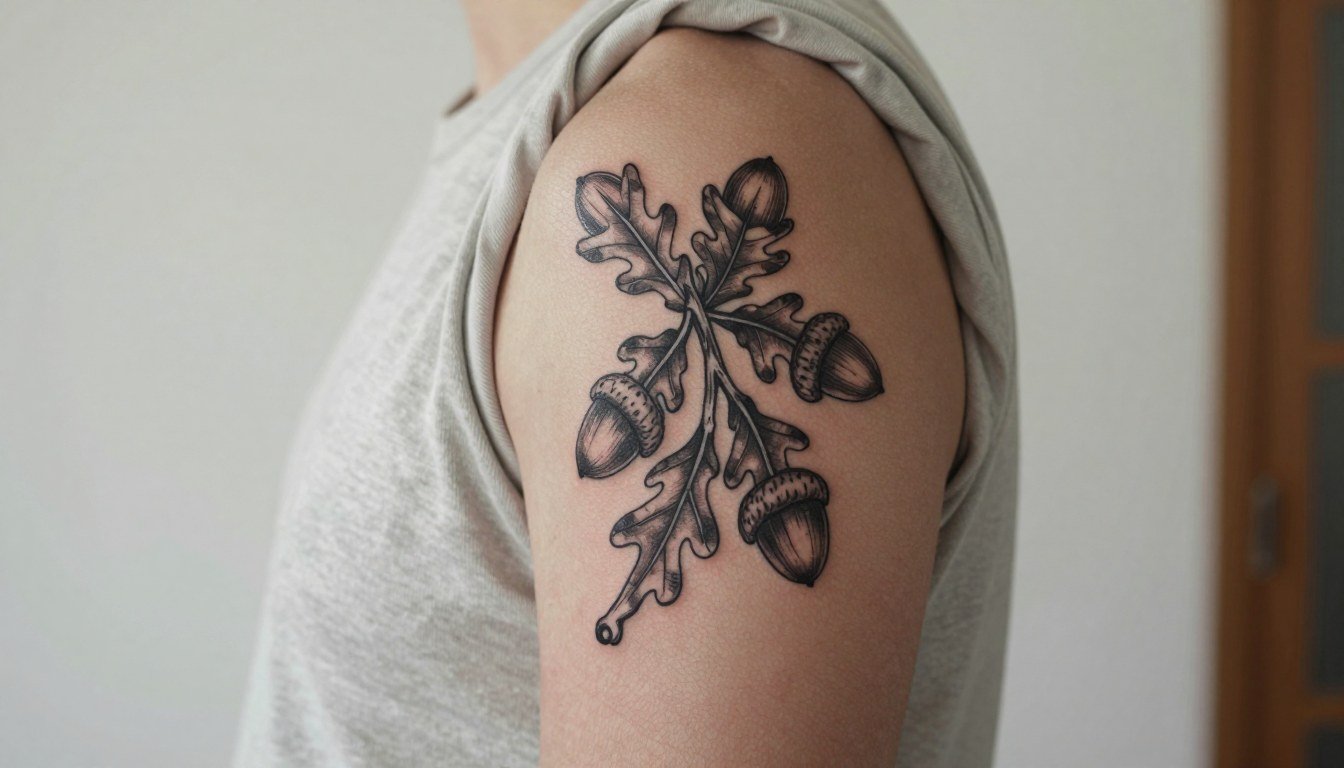
An upper-arm oak branch gives room for naturalistic detail and lets an acorn motif expand into a small scene. Recommend this when you want a botanical piece that can be easily extended into a half sleeve later. Discuss pacing with your artist, bring reference photos showing the exact branch curve you want, and ask them to sketch how the piece looks at three, six, and ten inches. A common aging issue is overpacked stipple that clumps after a few years; ask for slightly more spacing between dots for longevity. Sessions take longer and are lower pain than ribs. This placement works with rolled sleeves and sleeveless tops if you want occasional reveal during summer.
Pre-Session Essentials
The wrist, ankle, and behind-the-ear pieces above heal differently from larger botanical work, so a few small items smooth out the session and the first week.
-
Stencil transfer paper kit. Lets you preview the linework directly on skin before the needle hits, helpful for micro acorns and mirrored collarbone pieces.
-
Topical numbing cream. Applied per product directions eases the edge on ribs and sternum sessions without affecting pigment saturation when used correctly.
-
Thin protective film roll. Keeps ankle and finger tattoos clean during the first week of friction from socks and shoes.
-
Fragrance-free gentle body wash. Cleanses healing areas without stripping pigment or irritating sensitive skin.
-
Aquaphor healing ointment. A thin layer for the first few days helps locks in moisture for fine-line caps while allowing the skin to breathe during the early healing window.
7. Watercolor Acorn with Soft Wash on Shoulder Blade
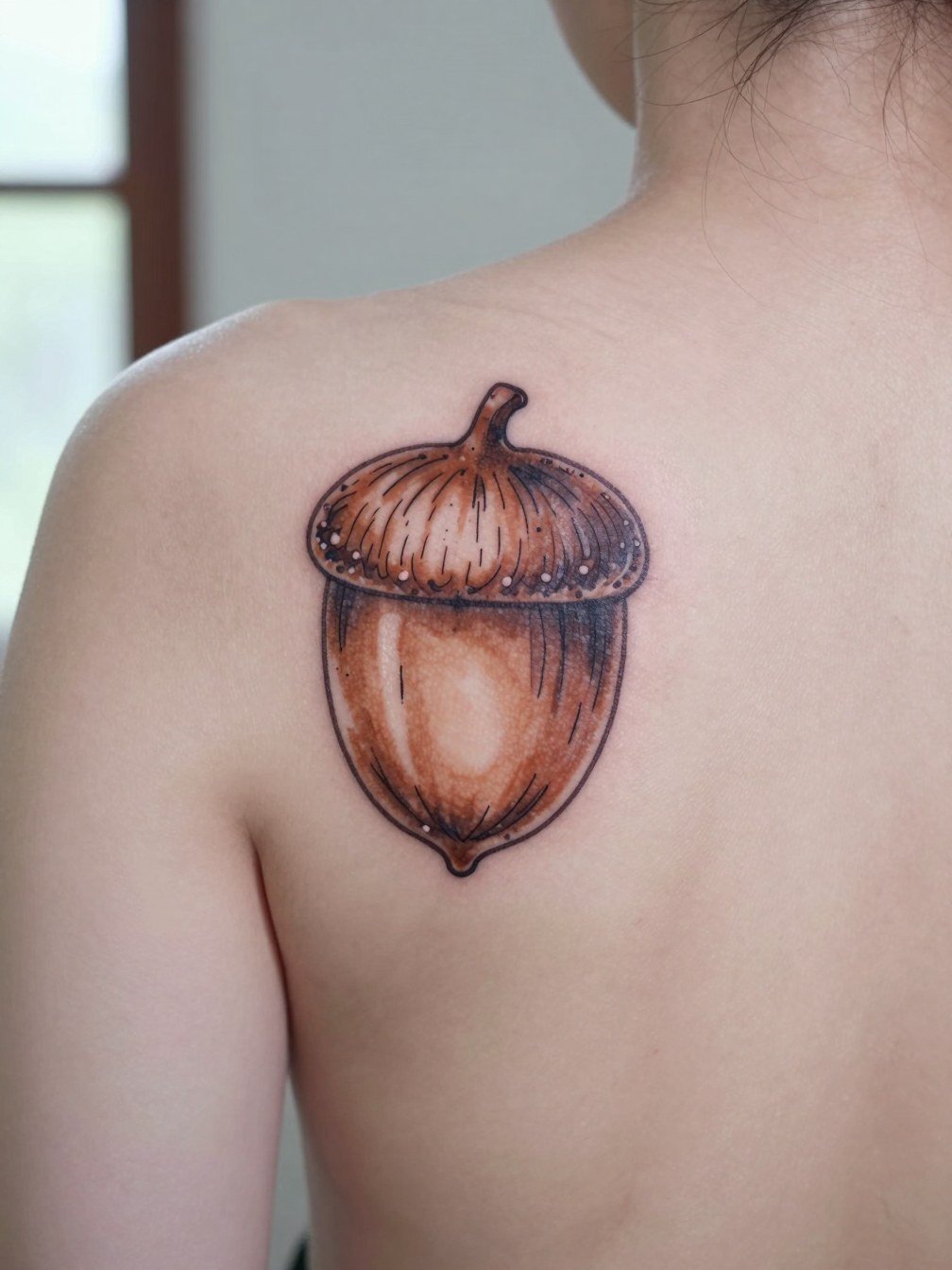
A watercolor acorn feels like an artist sketch pinned to skin, best saved for the shoulder blade where movement is gentler. This style ages differently from blackwork; pigments can soften and spread subtly, so choose diluted color placement over high-saturation fills. A common error is requesting super-faint washes without any outline, which tends to wash out by year two. Sessions require careful layering and a softer hand, so expect a multi-pass approach and a likely touch-up in year one. For nights out, open-back dresses let the shoulder blade piece be visible; a low-back slip dress highlights the area without friction.
8. Geometric Acorn Cluster on Inner Forearm
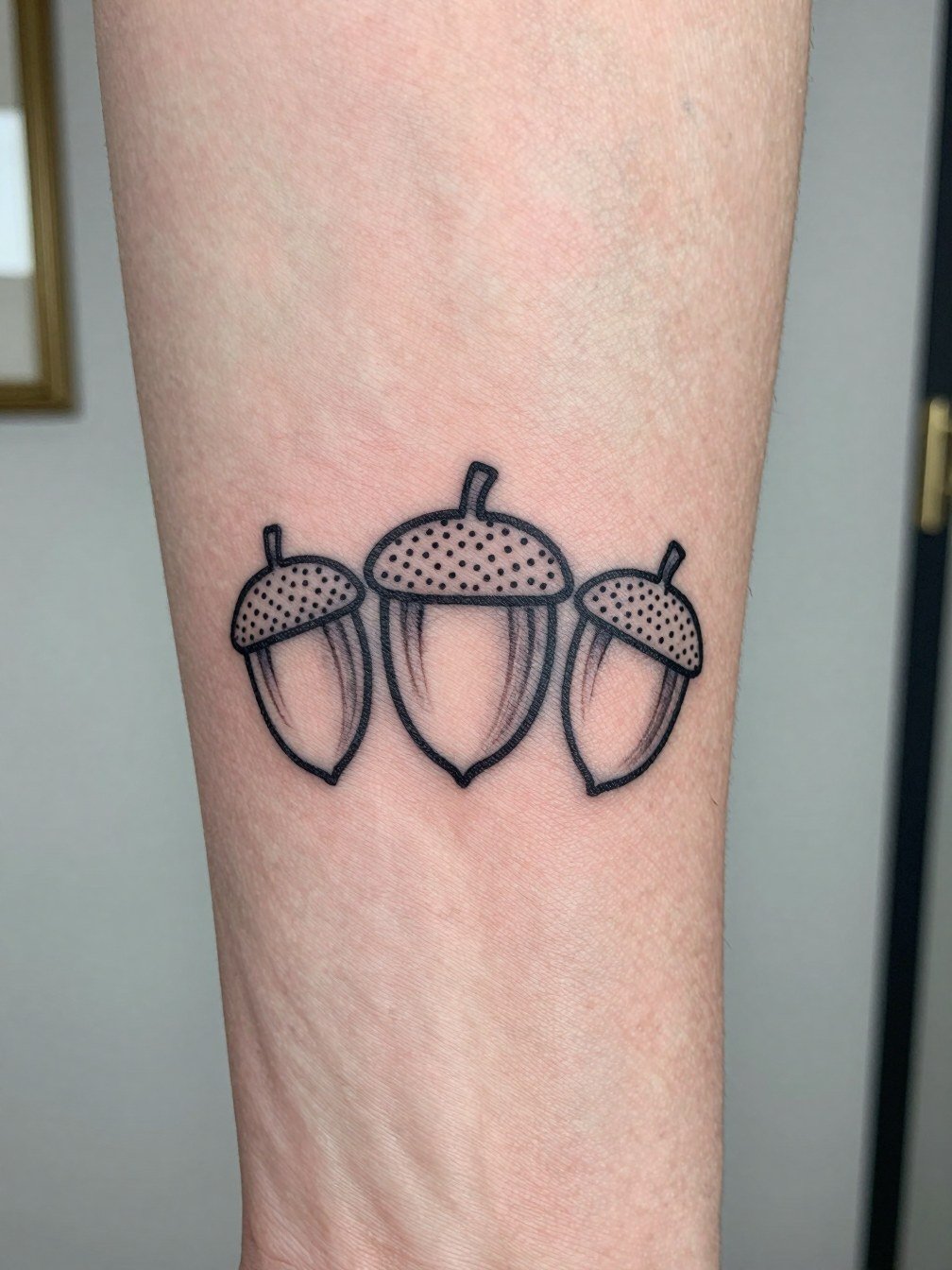
Geometric acorn clusters read as modern and structured, and the inner forearm gives you a flat canvas for precise linework. Ask the artist to test the exact triangle scale on your arm before starting so the negative space reads well at three inches. One aging pitfall is choosing lines too tight; tight geometry compresses over time and the shapes stop reading clean. Inner forearm work is lower pain and photographs well, and it typically needs a touch-up at year two for edge crispness. Pair this with rolled sleeves or a mid-forearm cuff for a neat reveal; a linen button-down shirt works for showing the forearm without crowding the design.
9. Bold Blackwork Acorn on the Calf
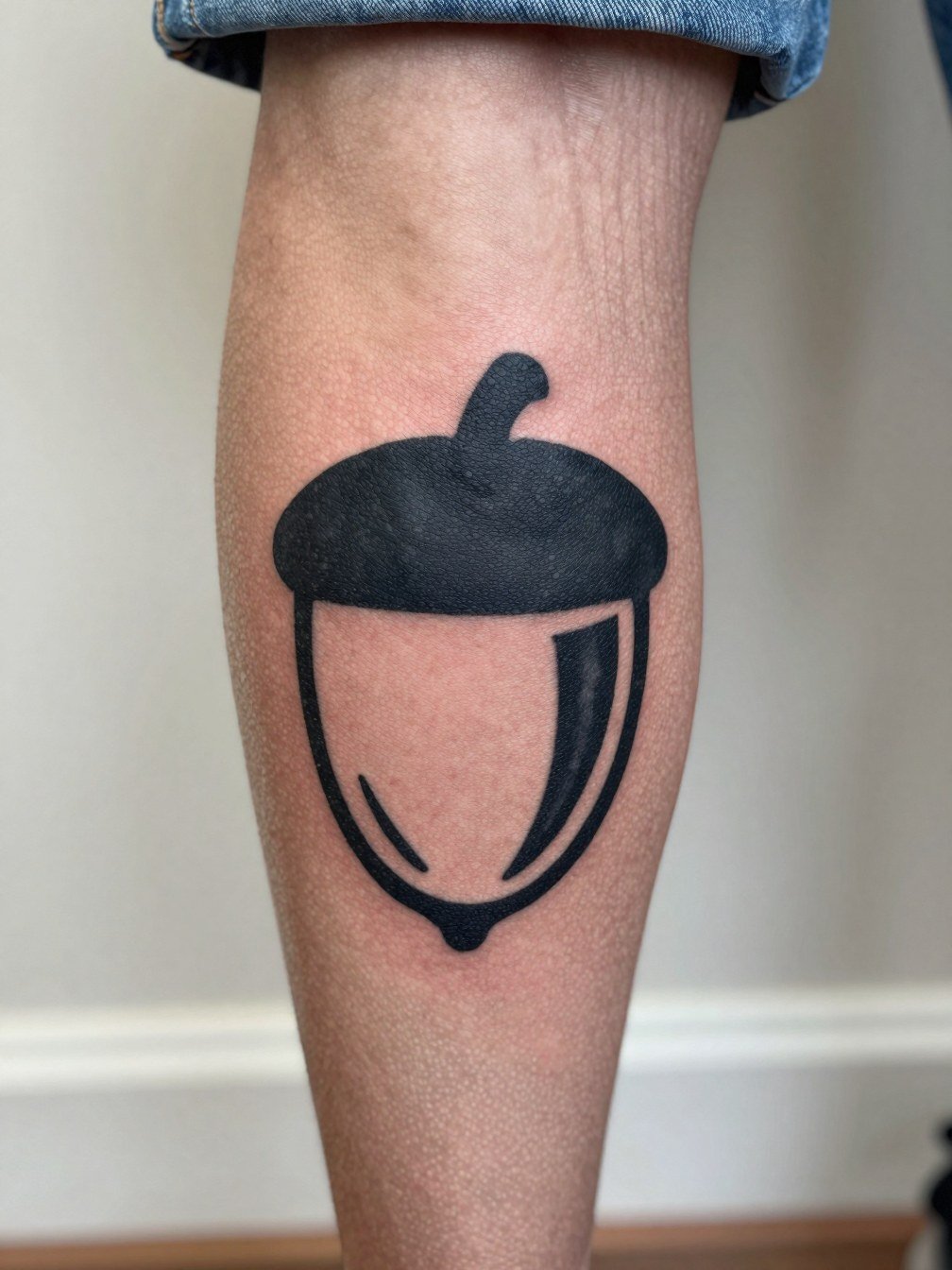
Calf placements handle saturated blackwork well and suit a larger statement acorn that still reads clean from a distance. This is the choice when you want longevity and minimal touch-ups because saturated black ages predictably. A real mistake is shrinking a blackwork concept to a micro size where the fill creates scabbing and uneven healing. Calf sessions are moderate in pain and often finished in one appointment. Choose footwear and shorts that let the piece breathe during the early healing stage, and avoid tight boots that press over fresh black fills.
10. Tiny Acorn with Roman Numeral on Side Finger
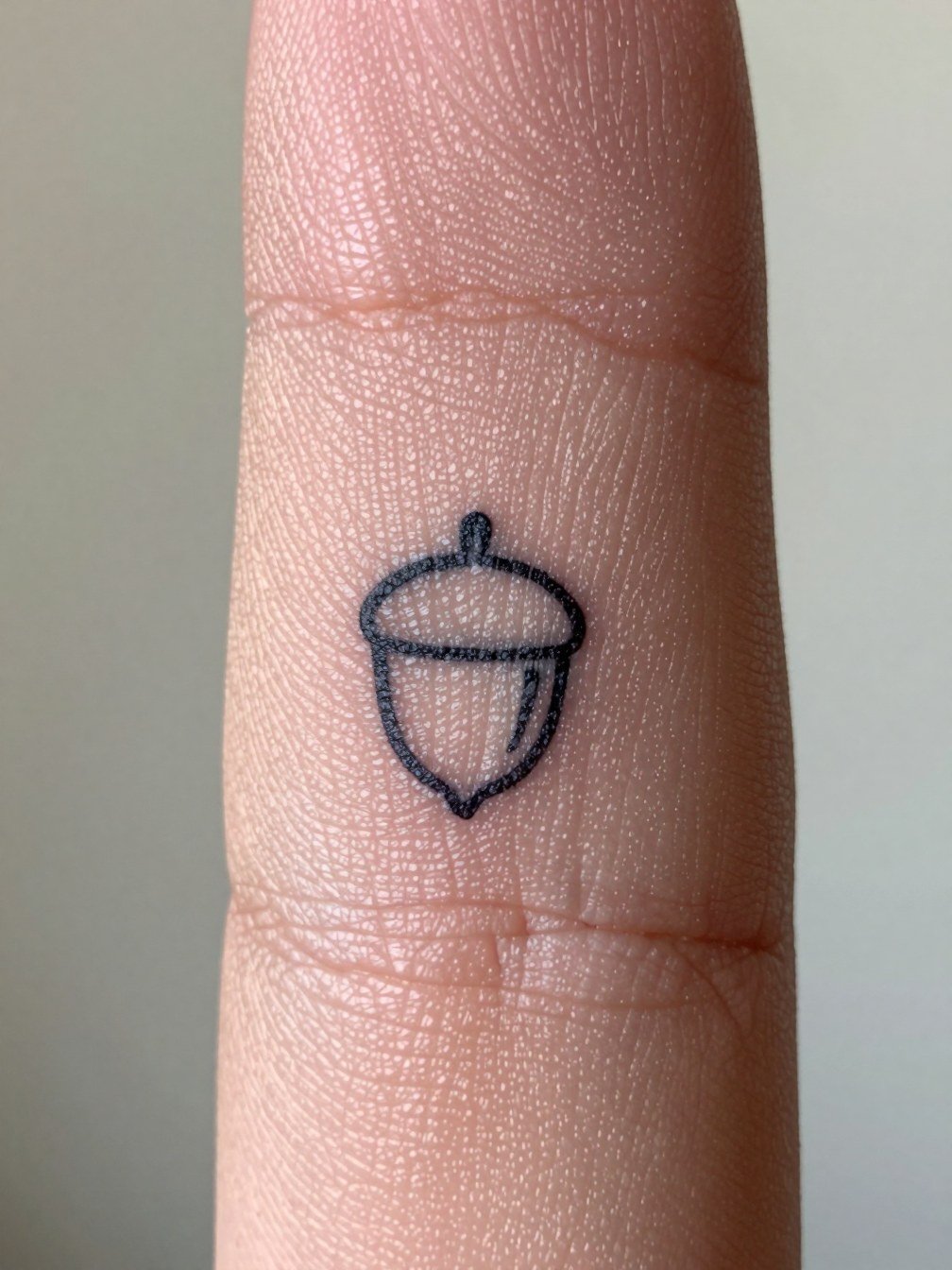
Finger placements are intimate and demand realistic expectations about fading and touch-ups. For a side-finger acorn with a Roman numeral, ask for slightly thicker strokes than your reference to compensate for skin movement and frequent washing. People make the mistake of requesting ultra-tiny script that becomes illegible; a modest scale and bolder numeral stay readable. Sessions are quick but the finger's thin skin can be painful. To style this without covering it, keep ring stacks minimal and choose thinner band rings that do not rub the area; a thin stacking ring set frames the tattoo and keeps it visible.
11. Sprig of Oak Leaves with Acorn Near the Ankle

An oak sprig near the ankle gives a clean vertical line that flatters ankle anatomy and avoids constant shoe friction if placed slightly higher. Ask the artist to map the stem so it follows the tibia curve rather than crossing bony landmarks that scab more. A usual mistake is placing the sprig too low where socks rub the fresh ink. Sessions are short and pain is mild to moderate. For footwear choices during healing, low sneakers or open sandals that avoid pressure on the ink keep healing steady.
12. Acorn Necklace Outline on Upper Chest

A central chest acorn like a pendant reads deliberate and pairs naturally with necklaces. The sternum is a sensitive area so expect more discomfort and a longer healing window. When choosing thin chest script or pendant details, request slightly bolder anchor points so the pendant silhouette does not blur over time. Some artists take a conservative stance against ultra-fine chest work because of stretch and body-shape change, while another group will accept it if the client understands a higher chance of a year-one touch-up. Plan for at least a two-hour session depending on shading, and pick tops that leave the sternum exposed without rubbing during recovery.
13. Acorn Filler for Sleeve
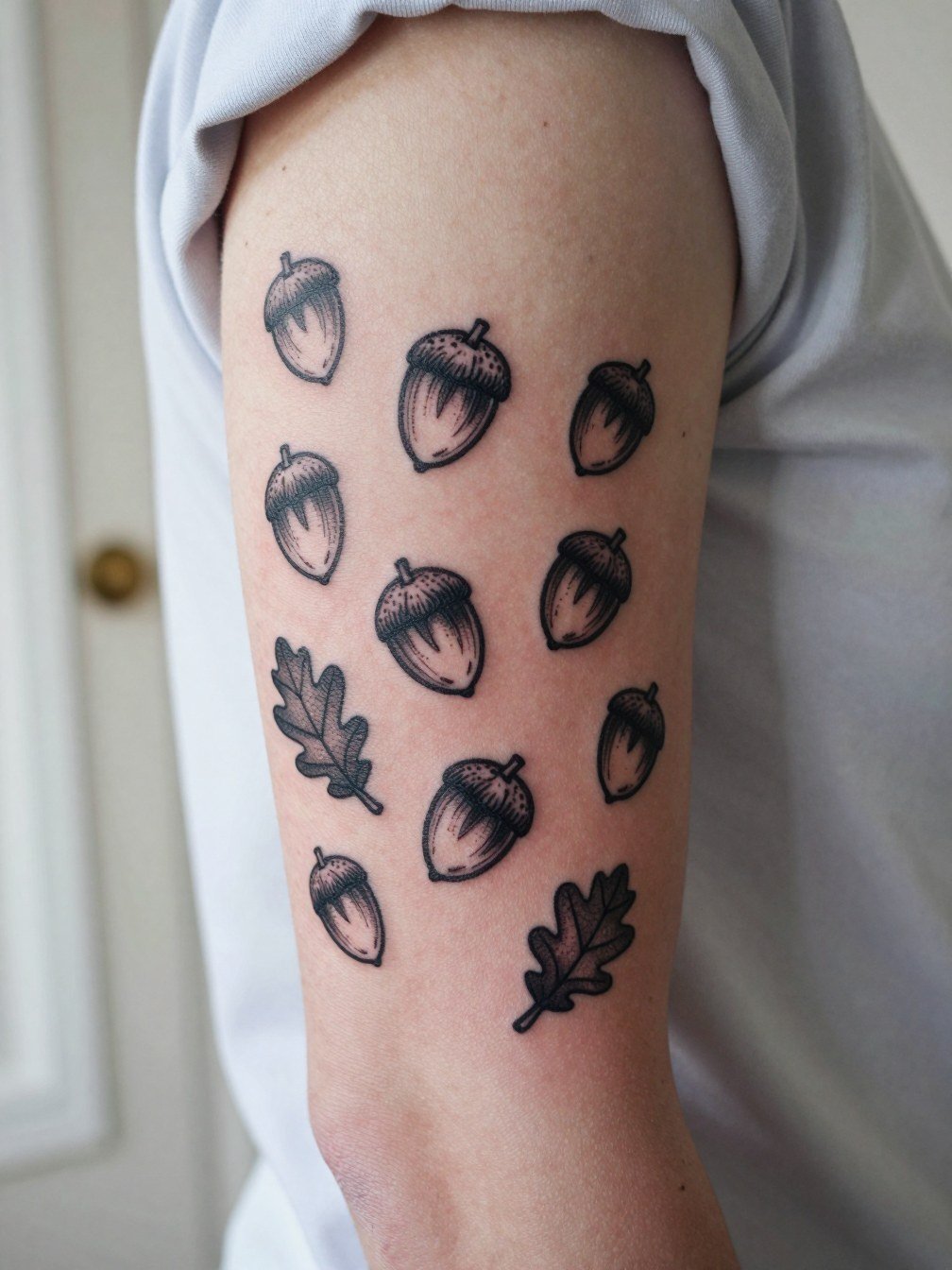
Using acorns as filler in a sleeve keeps botanical continuity without competing with main subjects. Recommend varying cap sizes and alternating stipple with whip shading so the fillers read at arm distance. A common mistake is repeating the exact same acorn silhouette across the sleeve; variation prevents a tiled look as the arm moves. Sessions for filler work come in multiple shorter visits, and the pain is manageable across the broader muscle area. Because this piece is part of a larger composition, trust the design rhythm the artist proposes when they map negative space and flow.
14. Negative Space Acorn on the Hip

Negative-space techniques make an acorn appear as a pendant of bare skin against dense black, and the hip is a flattering canvas for that contrast. Discuss edge sharpness and the amount of surrounding black at consultation so the uninked acorn remains readable after healing. One mistake is underestimating how heavy black backgrounds take longer to settle and may require a brief touch-up to even out saturation. The hip allows for easy concealment and straightforward sessions if you wear low-rise jeans that sit naturally below the ink.
15. Acorn Mandala at the Nape of the Neck

A nape mandala that centers an acorn mixes ornamental rhythm with symbolic focus and photographs well with hair up. Because the nape sees hair movement and product contact, ask about spacing and dot size to keep the mandala readable after grooming. People sometimes choose extremely tight dot work that softens into a blur under hair friction, so allow the artist to open the dots slightly. Sessions are short and the area is moderately sensitive. Wear hair up and bring a loose shirt that you can remove without touching the fresh ink.
Frequently Asked Questions
Q: How much should I expect to pay for a small acorn tattoo like the wrist or ankle designs?
A: Prices vary by studio and city, but in my experience small micro acorns are commonly billed as short appointments or minimums. Expect a range tied to the shop's minimum session rate and the artist's experience rather than a fixed dollar amount for each idea.
Q: How do acorn tattoos age over five years for different styles?
A: Bold blackwork and traditional outlines tend to hold the longest because saturation resists blurring. Fine single-needle and watercolor washes may soften faster and often need a year-one touch-up to maintain crispness. Placement matters a lot because friction and sun exposure are the biggest drivers of change.
Q: Where can I find healed examples and artist portfolios without naming specific people?
A: Search platform tags and keywords like #acorntattoo, #botanicaltattoo, and #microtattoo on Instagram and TikTok while applying your city filter to find local portfolios. Reddit tattoo communities and gallery pages on portfolio sites also show healed photos across skin tones. Use keyword searches plus "healed" or "aftercare" to narrow to older pieces.
Q: What should I wear to my appointment for a collarbone, rib, or hip acorn?
A: For collarbone and upper-chest pieces choose a scoop-neck tank that exposes the area without needing to shift fabric. For ribs and hip, a loose cropped tee or fitted tank that stays put works best so the artist has clear access. If you want a specific look after healing, bring outfit photos so placement and scale match what you plan to wear.
Q: How often will I need a touch-up for a small acorn?
A: Expect a realistic timeline of one possible touch-up within the first two years for fine-line pieces and less frequent need for bold blackwork. Factors like sun exposure, friction, and skin type influence this, so plan follow-up checks with your artist on a one-year basis if you want to keep the edges crisp.
