Statement: Fine, airy single-needle monarchs look gorgeous in photos, but they are not the safest longevity bet for high-friction spots unless you size and space the pattern carefully. Pick the style that matches how you want the tattoo to read at year five, not just how it photographs on day one. Read on for species-accurate monarch ideas, placement tradeoffs, and wardrobe tips that help the ink keep its shape.
1. Tiny Monarch on the Wrist
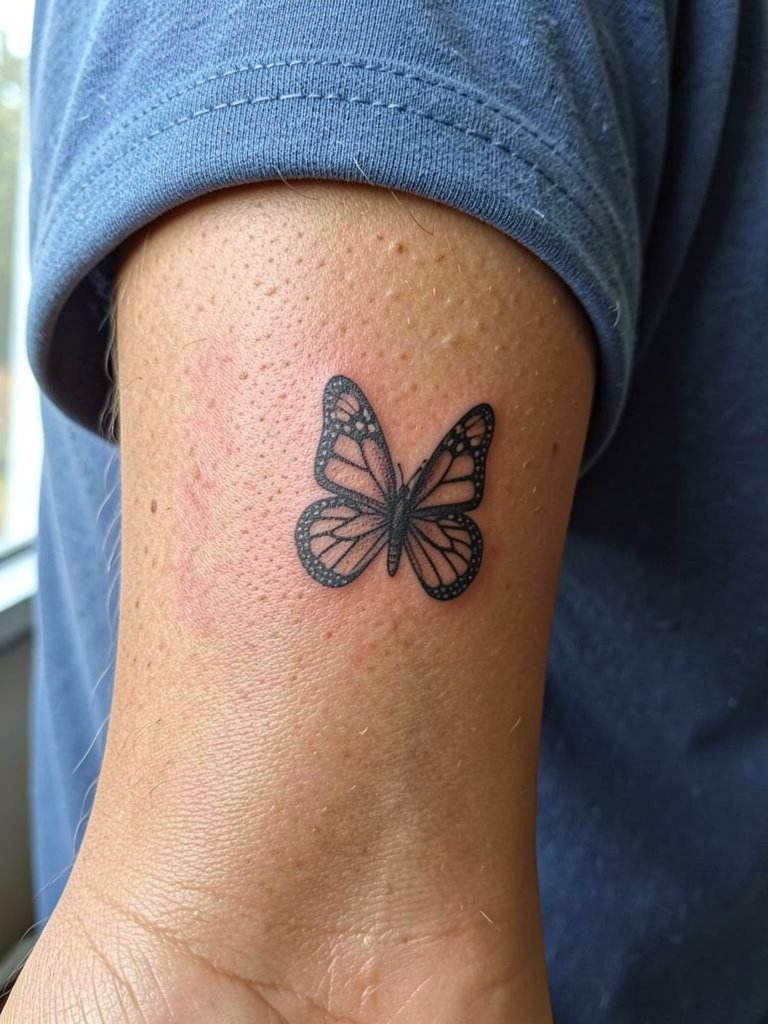
Tiny wrist monarchs are a go-to for a first tattoo because they read as personal and are easy to hide under bracelets. Expect a 30 to 45 minute session for a well-spaced one-inch piece. The common mistake is requesting ultra-thin single-needle wings at a scale that leaves no negative space. Ask for slightly heavier line weight and clearer wing cells so the pattern does not blur into a dark smudge after two years. The inner wrist rubs against shirts and watches, so touch-ups are often needed at year one. For show-off styling, pair it with a slim chain bracelet like thin chain bracelets that keeps the tattoo visible without rubbing.
2. Fine Line Monarch at the Collarbone
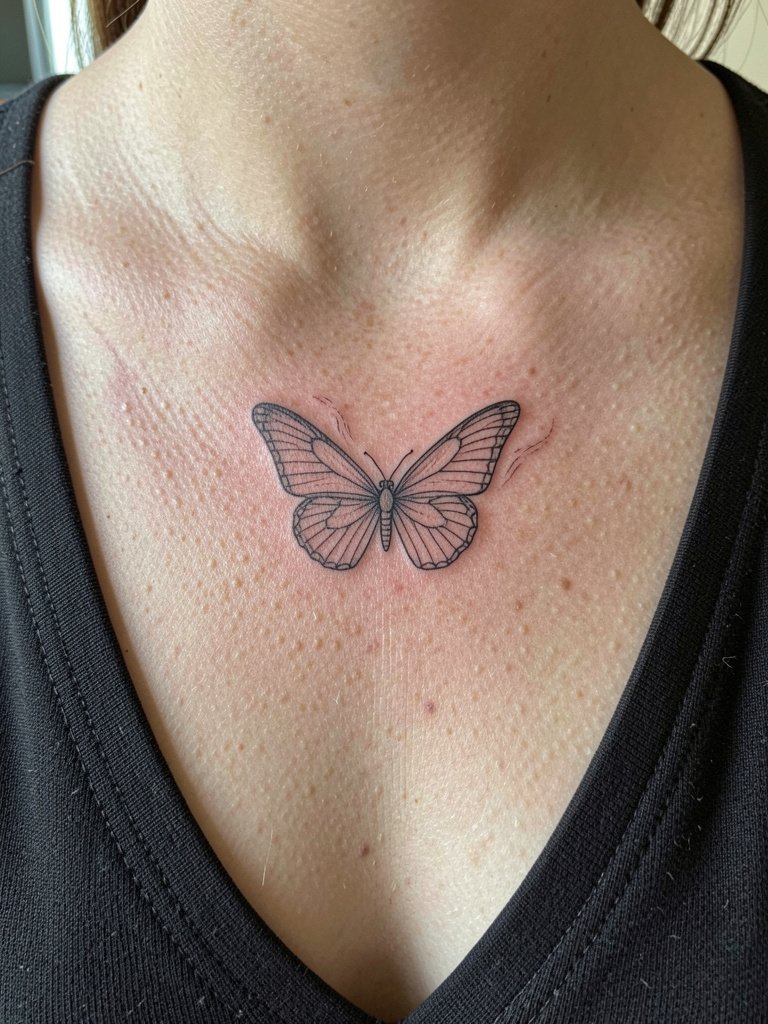
A collarbone monarch reads as jewelry and photographs well with off-shoulder tops. Plan for a single-needle outline but size it so the wing veins have breathing room. During consultation, bring two reference images showing the exact line weight and the wing cell pattern at three inches and at five inches. The frequent aging problem is compressing the wing cells into too-tight lines, which softens into an indistinct patch by year three. For session comfort wear a strapless or wide-neck top and remove necklaces. To style the area, try layered fine necklaces and an off shoulder blouse that frames the horizontal wings.
3. Micro-Realism Monarch on the Inner Forearm
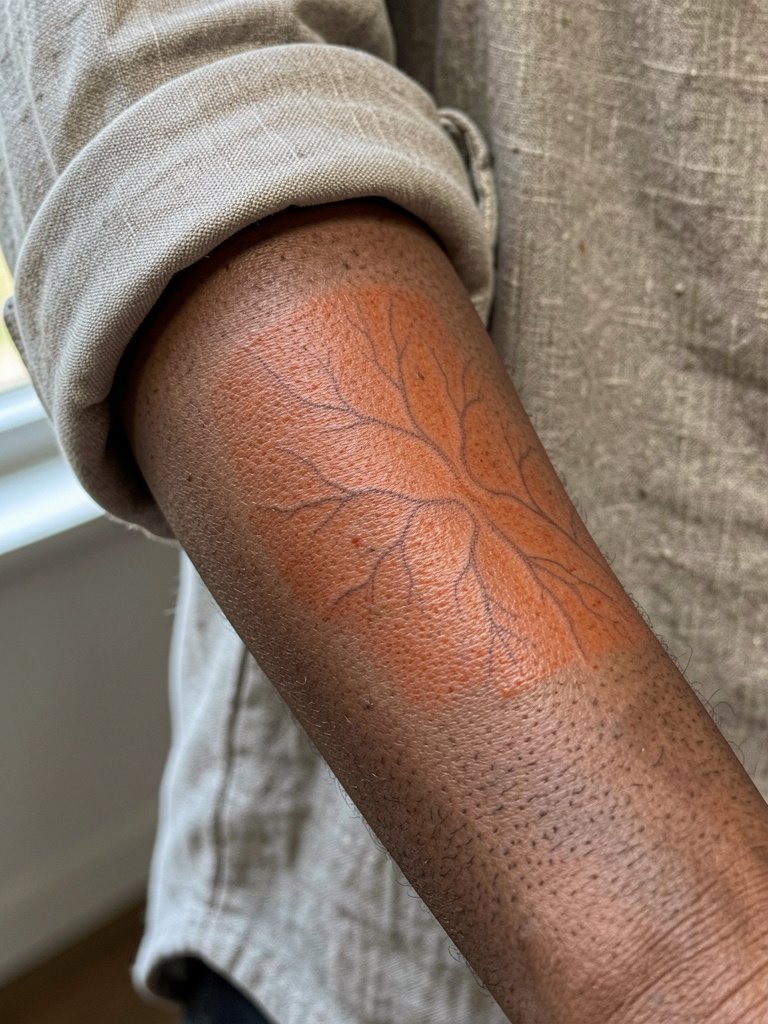
Micro-realism gives a monarch species accuracy without large scale. This piece works when you want lifelike wing texture on a visible plane. Expect a one- to two-hour session depending on saturation. Tell the artist you want vein detail preserved and ask for reference close-ups that show the black border pattern. A mistake is compressing too much shadow into the wings, which can read muddy at six months. At six months the orange should still pop; at two years expect some softening and possible edge feathering. For daytime outfits, a rolled-cuff linen shirt highlights the inner forearm and keeps the tattoo visible. Try a linen button down that you can push to the elbow.
4. Black-and-Gray Monarch on the Shoulder Blade
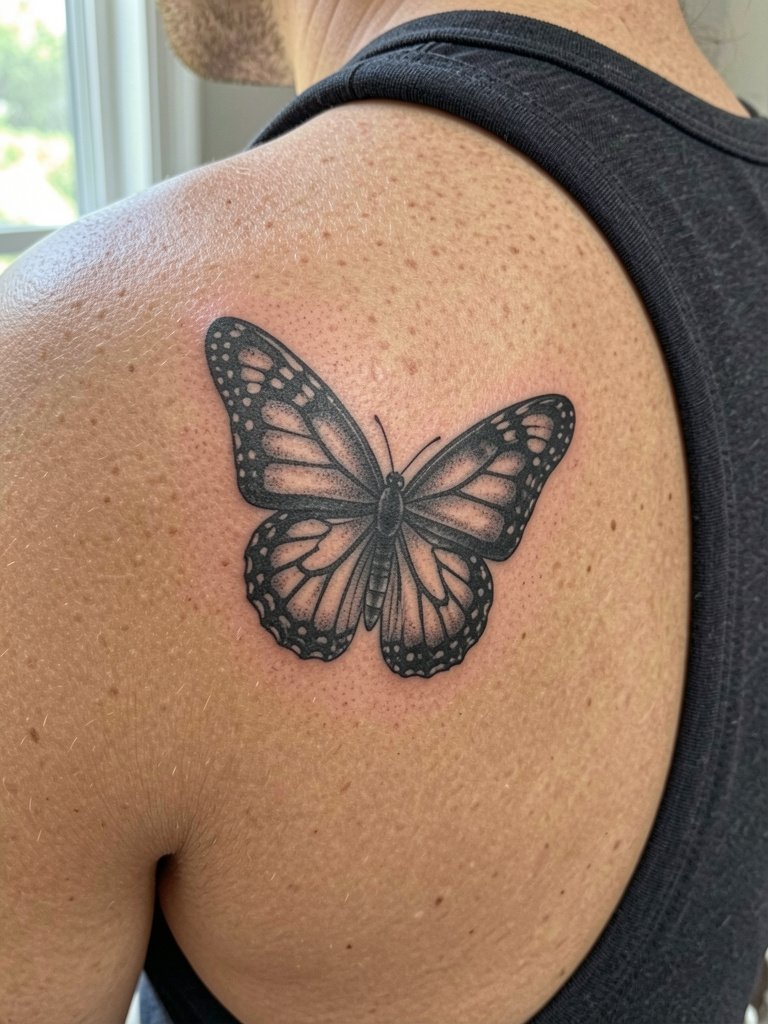
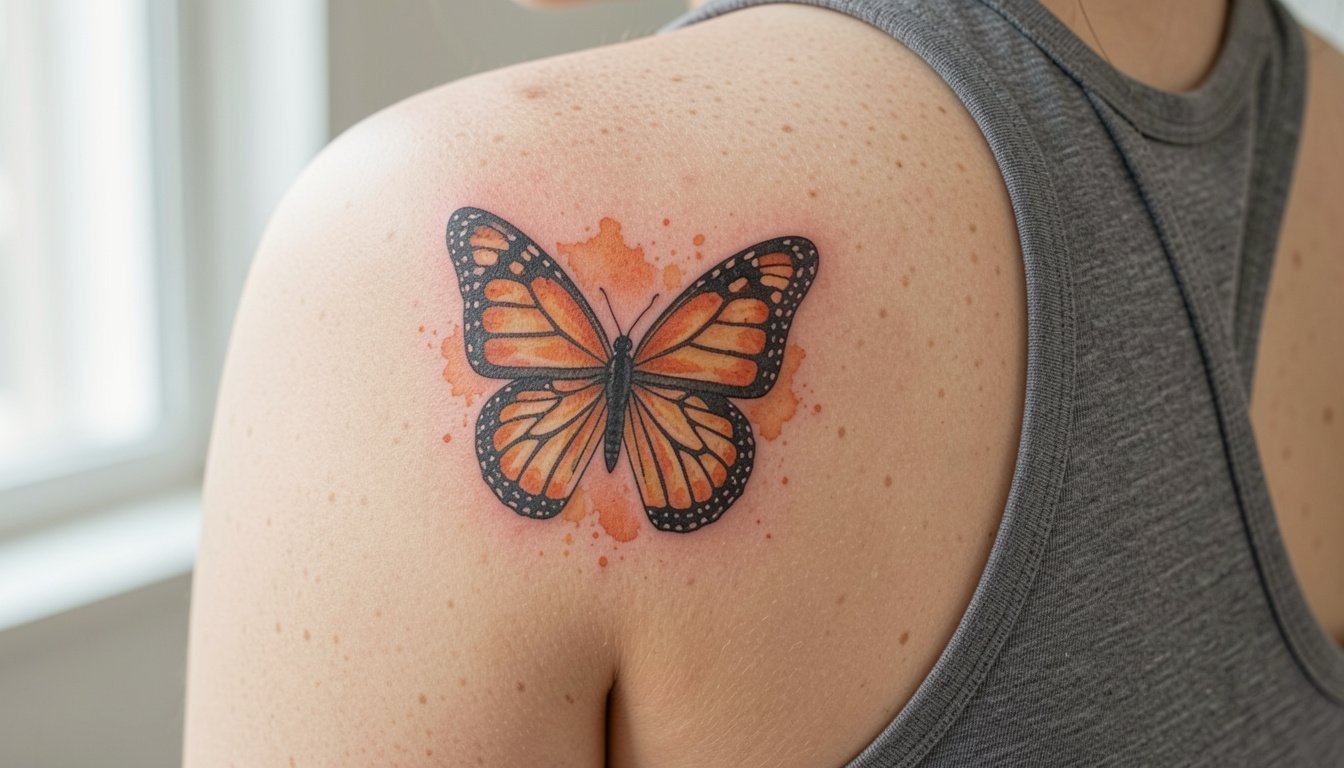
Choosing black-and-gray reduces long-term color fade and keeps the wing pattern readable on a large, flat canvas. This placement gives symmetry and room for a balanced composition. One camp favors color because monarchs are defined by orange and black. The other camp favors grayscale for longevity and subtler wear. The first camp says color is essential to species accuracy and visual impact. The second camp says strong black contrast and careful shading preserve the silhouette better over years. For an appointment wear a racerback top for easy access and plan on one long session or two shorter ones if layering is needed.
5. Watercolor Monarch on the Thigh
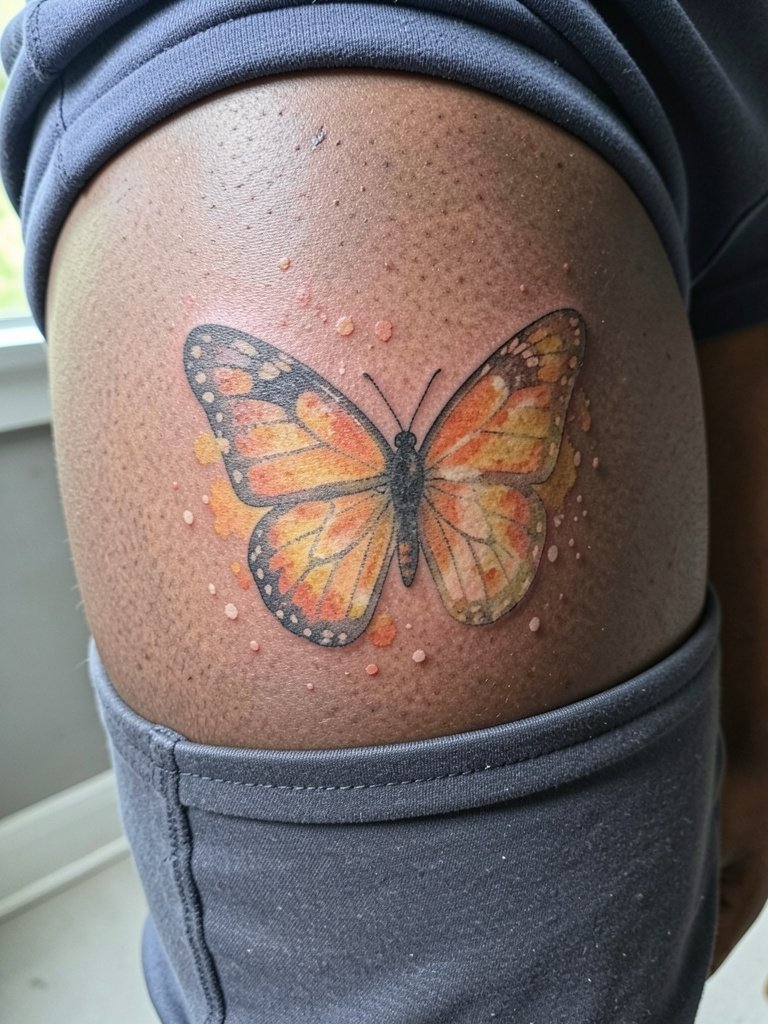
Watercolor monarchs feel painterly and feminine because the washes suggest motion. The main caution is placement. The outer thigh tolerates larger color fields and is easy to conceal for work. Request the artist to anchor the wash with a subtle outline so the wings retain shape as color lightens. A common mistake is relying on only soft washes with no solid border, which can diffuse into an indistinct blur by year three. For the session, bring loose shorts you can roll up easily. For evenings, pair the thigh piece with cropped straight-leg jeans or sandals that show the lower leg and ankle. Try cropped straight leg jeans when you want the ink on display.
6. Symmetrical Sternum Monarch
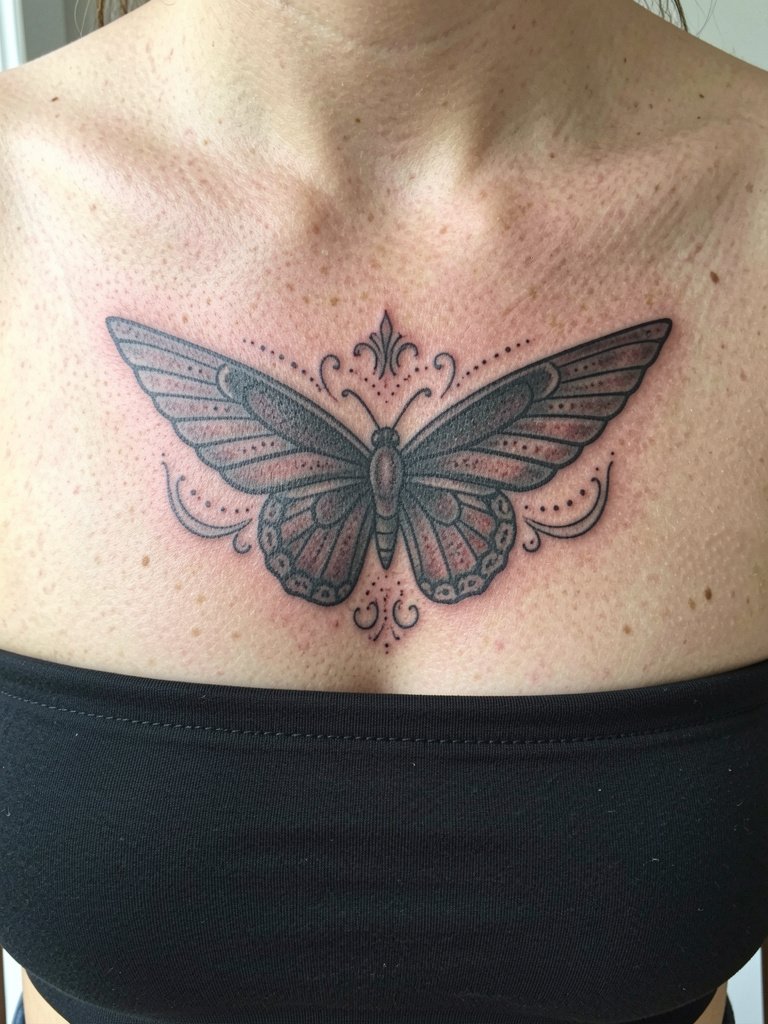
Sternum monarchs sit on the body midline and read like a piece of jewelry. Plan for a session of one to three hours depending on ornamental detail. Discuss symmetry tolerances with the artist and bring a clear chest-framing photo so they can map the wings to your natural curves. A typical mistake is centering on the sternum without accounting for breast movement, which can skew the wings when standing versus lying down. Expect more tenderness here during the session than on the arm. For show-off styling think deep-V tops and a delicate pendant that sits just above the wings for balance.
Pre-Session Essentials
The wrist, sternum, and thigh pieces above each heal under different pressures, so a handful of items makes the session and first week easier.
-
Stencil transfer paper kit. Useful for practicing placement at home so you can judge scale on the wrist and sternum before booking.
-
Topical numbing cream. Applied as directed about 45 minutes before helps comfort on sensitive placements like the sternum and inner thigh.
-
Thin protective film roll. Keeps small wrist and finger tattoos cleaner during the first days of frequent hand washing.
-
Fragrance-free gentle body wash. A mild cleanser helps avoid irritation on large back and thigh areas while they heal.
-
Aquaphor healing ointment. Thin layers in the earliest days lock in moisture for detailed linework without clogging the tiny needle channels.
7. American Traditional Monarch on the Upper Arm
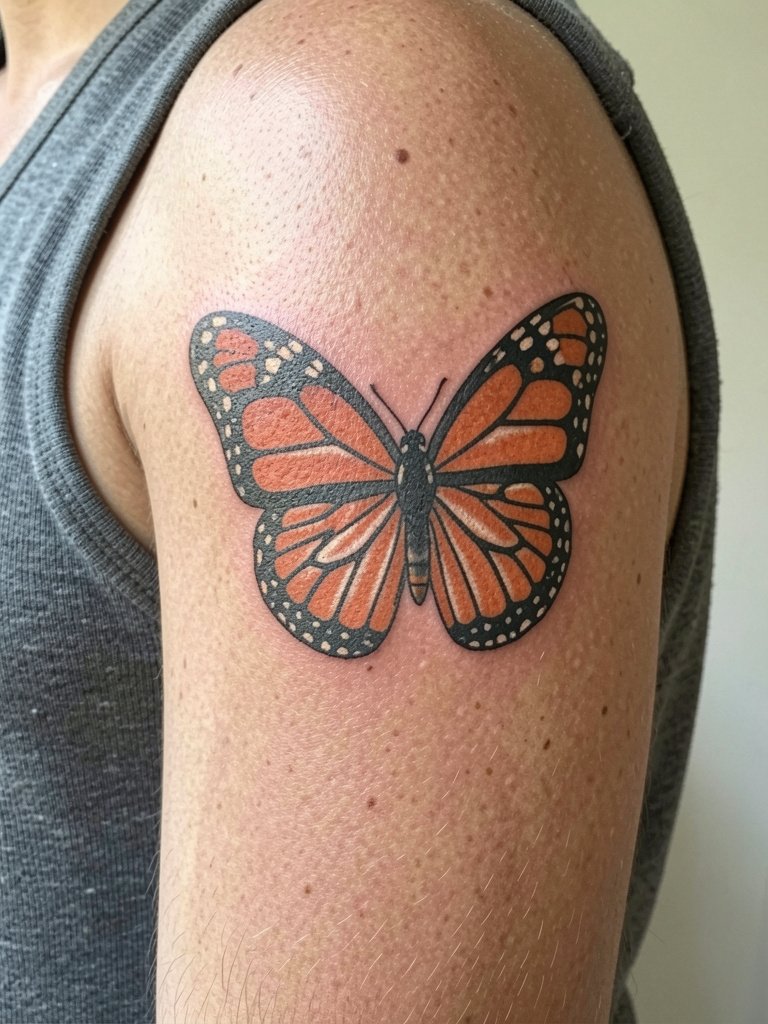
Traditional monarch palettes pair well with bold black framing that ages into a classic look. This is a smart pick if you want the monarch to read at a glance across years. The session is straightforward and usually under two hours for a medium upper arm piece. Tell the artist you want solid saturation and a clean border so the orange remains distinct from the black when faded. A bad version uses thin outlines that the bold color eats into as it ages. For casual outfits this placement pairs with neutral fitted tees and cuff bracelets. Add a cuff bracelet to balance the arm visually.
8. Patchwork Monarch in a Buildable Sleeve
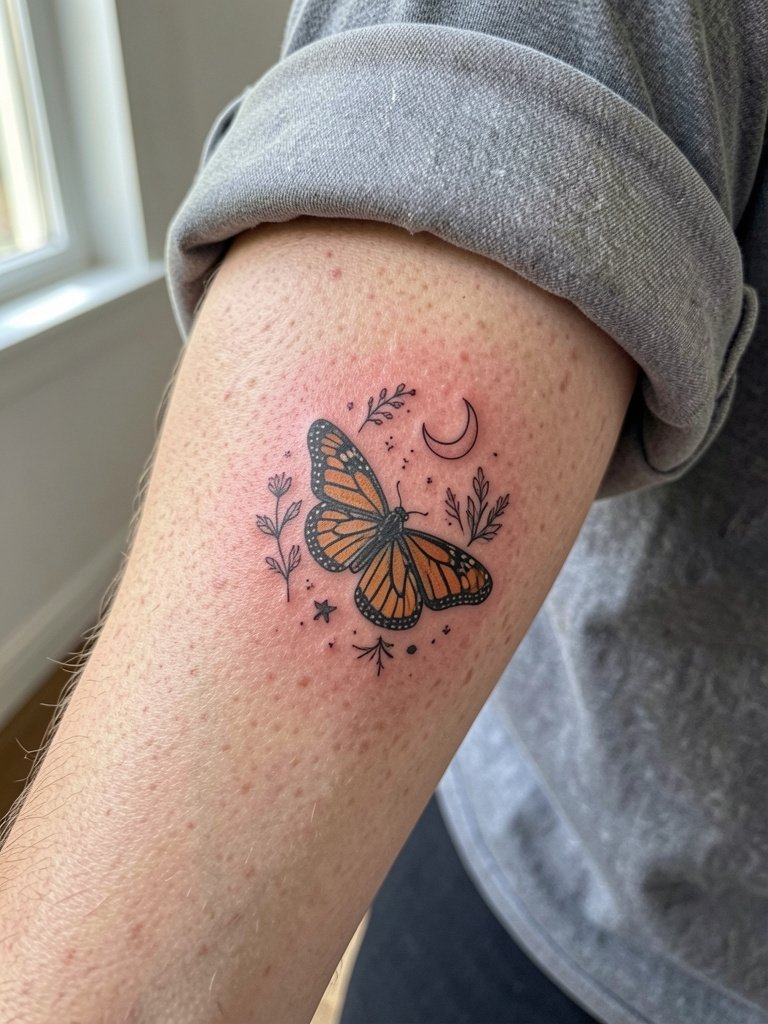
Collectors often add a monarch as one of several small motifs in a patchwork arrangement. This approach lets you build over time and match scale across placements. During your consultation, show the artist the other pieces and ask about spacing so the wings do not crowd future motifs. A common error is failing to plan negative space, which forces later pieces into awkward overlap. Patchwork on the forearm ages predictably because touch-ups are straightforward. For session wear bring a button-down you can roll and keep sleeves clean between sittings.
9. Micro Monarch Behind the Ear
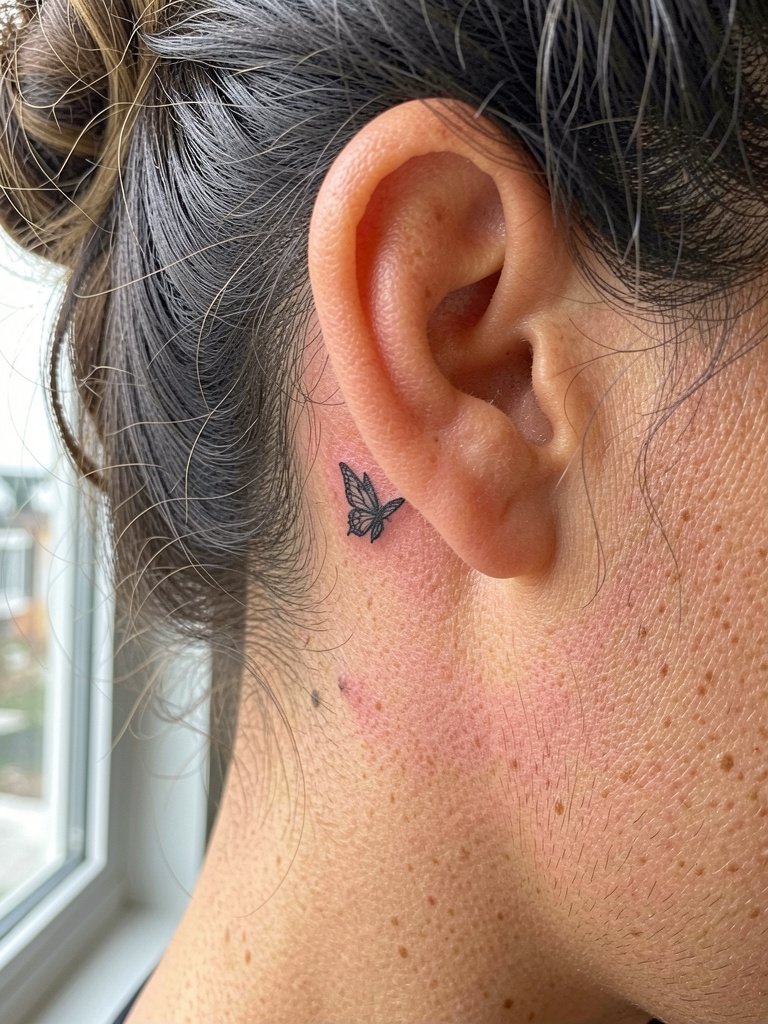
Behind-ear monarchs are discreet and low-commitment visually, but the area heals differently because of hair and sweat. Sessions are short, often under 20 minutes. Explain exact placement to the artist using a tight photo and ask for a bold silhouette rather than fragile detail. The mistake is trying to cram wing cells into a dot-sized area. Healed, the silhouette stays recognizable though fine veins will disappear. Style it with updos and claw clips to reveal the spot. If you often wear long hair down, keep this piece simple because visibility will be rare.
10. Tiny Finger Monarch
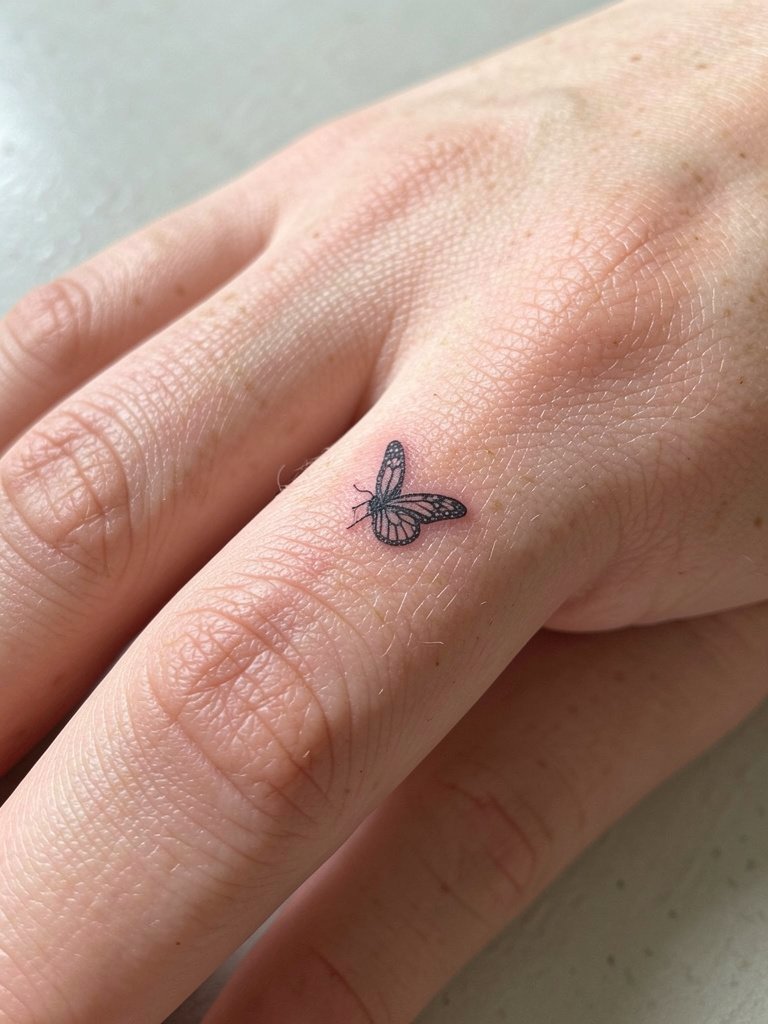
Finger tattoos are trendy but touch-up prone because of constant washing and friction. Expect a short, sharp session and a high likelihood of a one-year refresher. The key is to scale the design to the finger's anatomy and accept that fine detail will soften. Ask for simple negative-space wings and slightly heavier outlines to maximize longevity. Avoid expecting single-needle veins to survive routine hand washing. For styling, choose rings on the opposite hand to avoid rubbing and consider no show socks if you're pairing with sandals that draw attention to the feet and hands in the same outfit.
11. Large Back-Piece Monarch with Open Wings
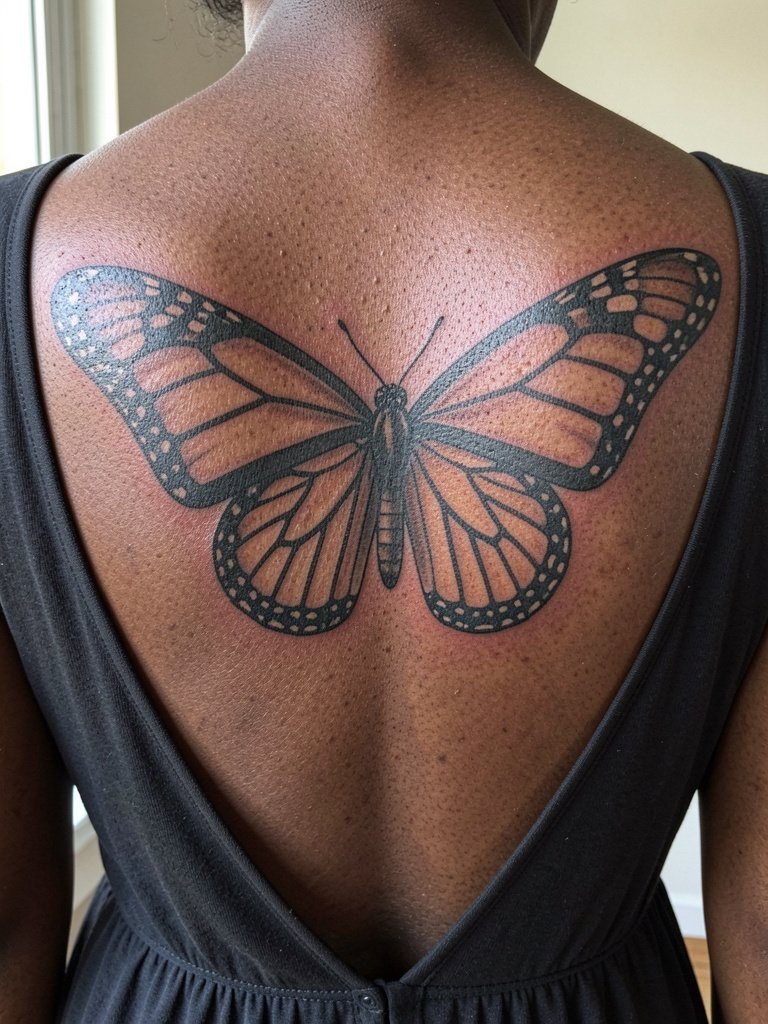
Back-pieces let a monarch become the centerpiece of a larger composition because the canvas is expansive. Expect multiple sessions and a clear plan for symmetry. Discuss how the wings will sit when you stand straight and when you lean forward so the composition reads in both poses. A mistake is laying out mirrored wings without accounting for shoulder asymmetry. At two years the shading will soften and may need touch-up to retain contrast. For show occasions choose racerback or open-back dresses that frame the wings without covering the shoulder blades. A fitted open-back dress highlights the symmetry.
12. Collarbone Monarch with Motion Lines
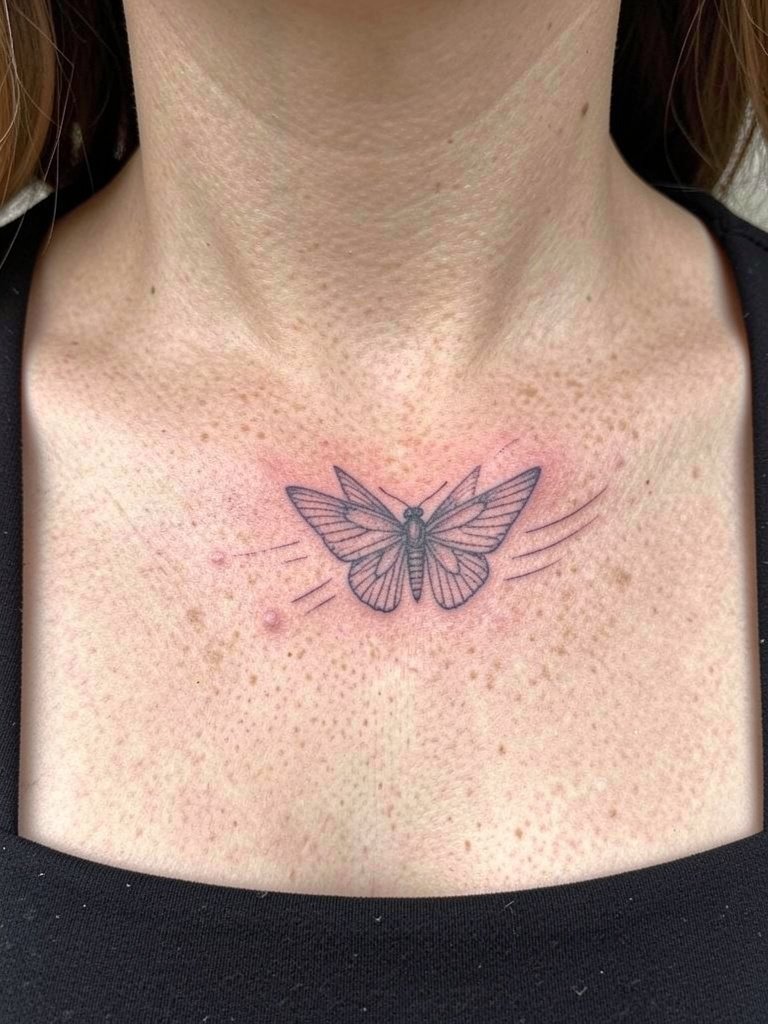
A collarbone piece that includes flutter lines gives the tattoo energy when you move. This placement works best with a slightly wider spacing between wing lines to prevent feathering. During the consult be specific about how bold you want the motion strokes and whether they fade into stipple shading or remain solid. A common error is overcomplicating the motion marks so they read as stray ink after healing. For wardrobe, square-neck tops and layered necklaces echo the horizontal line of the wings. Try a square neck top to keep the piece visible without competing jewelry.
13. Nape Monarch for Hidden Reveal
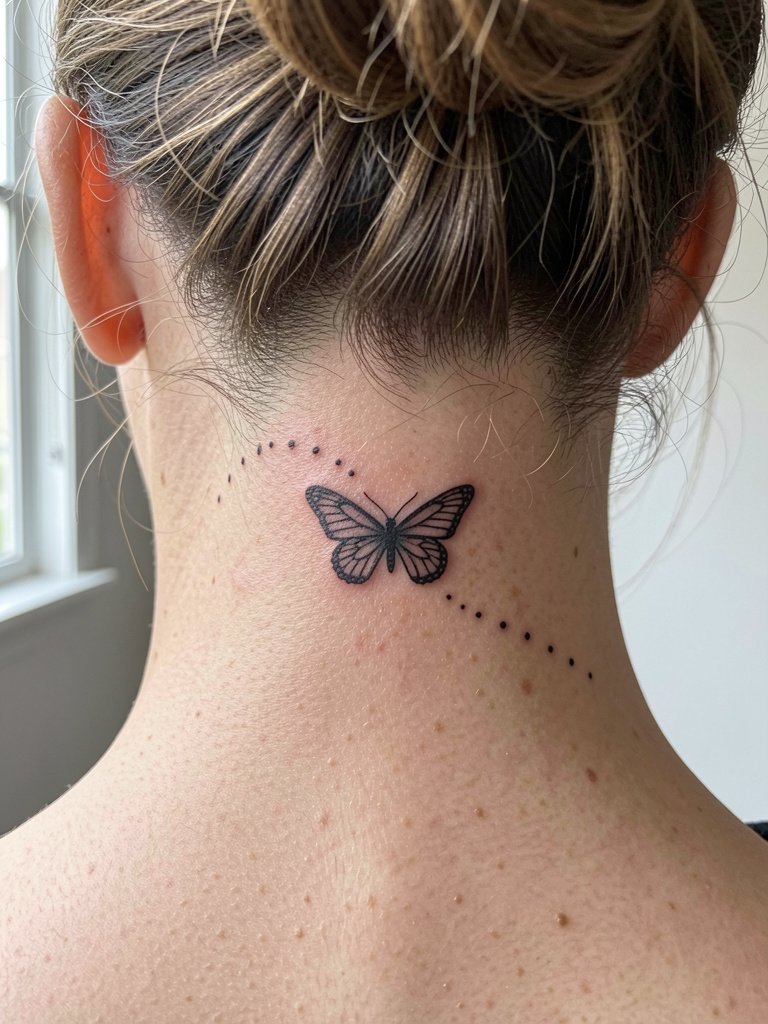
Nape pieces are subtle until you put your hair up. The area tolerates small, confident silhouettes. During the consultation specify how the design sits relative to the hairline so the wings are not partially hidden when hair is down. A typical mistake is centering too high, causing the top of the wings to be obscured by hair. The nape is less prone to friction than wrists and fingers, so fine detail can survive longer. Style with claw clips and updos to reveal the tattoo selectively. For session wear, avoid turtlenecks and bring hair ties.
14. Monarch with Birth Flower Pairing on the Ribcage
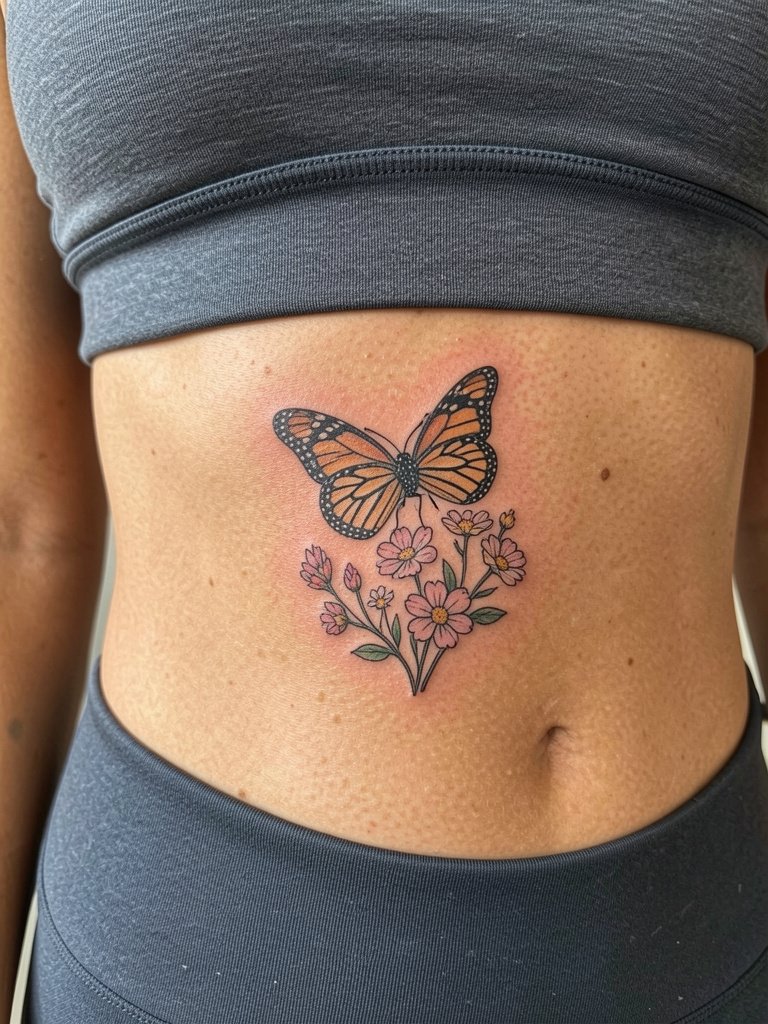
Ribcage monarchs are intimate and often symbolic when paired with a birth flower. This region is a high-pain zone and will require steady breaks for larger pieces. When planning, specify exact curvature of the wing that follows the rib line so the butterfly does not distort with breath. One camp says fine line on ribs blurs quickly because the skin stretches. The other camp says that with correct needle depth and wider spacing fine line settles fine on ribs. Expect at least one touch-up after the first year if shading is light. For the session wear a soft bra or bralette you can adjust freely.
15. Stylized Geometric Monarch on the Calf
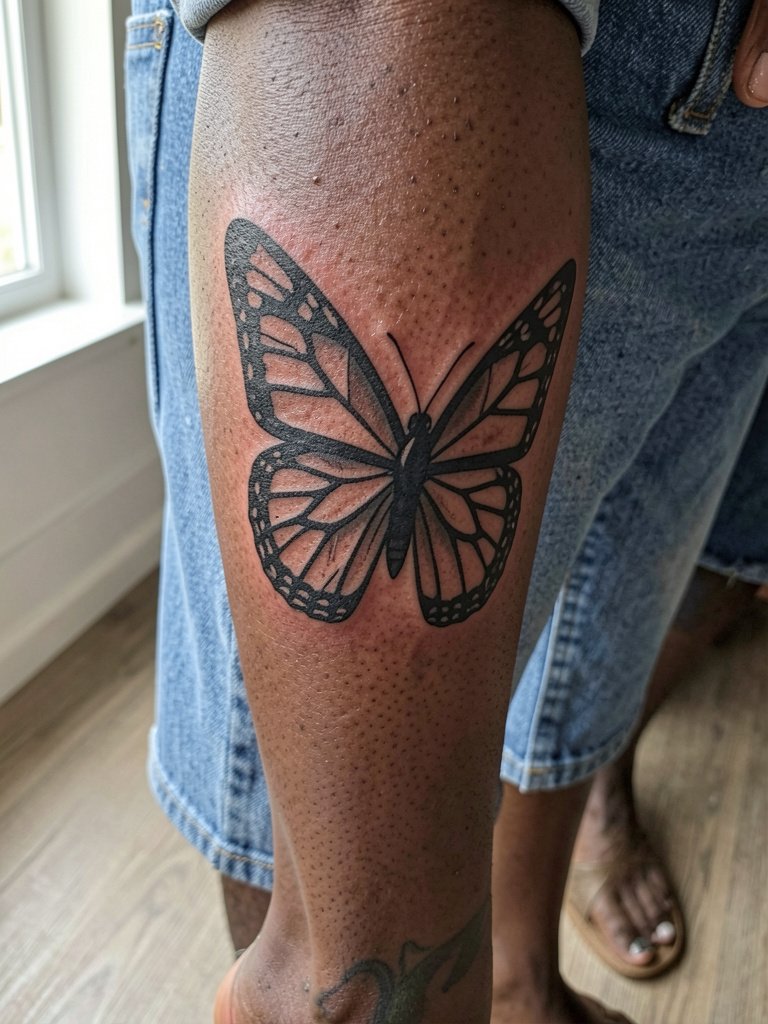
Geometric monarchs favor crisp edges and negative space to read as modern and graphic. Calves provide a forgiving surface with low blowout risk compared with fingers. Ask the artist to mark spacing so the negative shapes remain proportional when the calf muscles flex. A mistake is using too many tiny facets that vanish when the skin moves. Healed, the facets stay bold if the outline is clear. For footwear, cropped jeans or sandals show the calf art cleanly. Consider ankle strap sandals to keep focus on the leg.
16. Monochrome Silhouette on the Sternum Midline
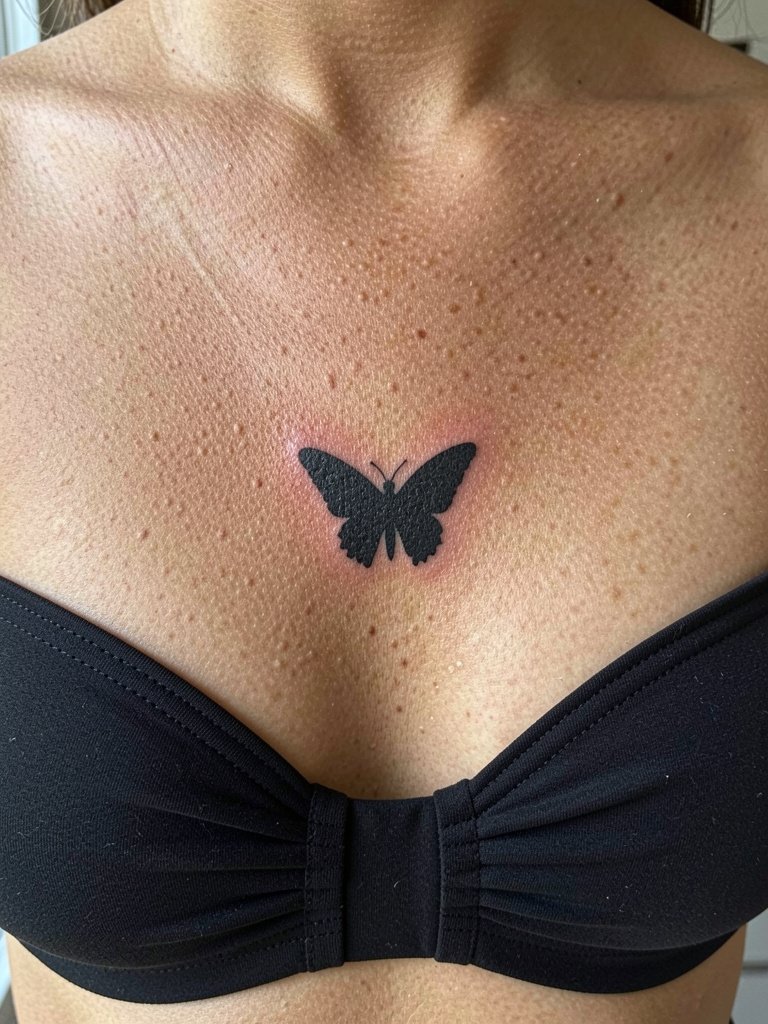
A bold monochrome monarch on the sternum uses simple shapes to resist long-term blurring. The tradeoff is losing fine wing veins, but the silhouette ages reliably. During the consult ask how the white space inside the wings will be allocated so the negative shape does not shrink after healing. The session will be more intense than an arm tattoo. For clothing, deep-Vs and open shirts show the composition while remaining tasteful. Try pairing it with a delicate pendant that sits above the silhouette to create a visual anchor.
17. Botanical Frame Monarch on the Shoulder Cap
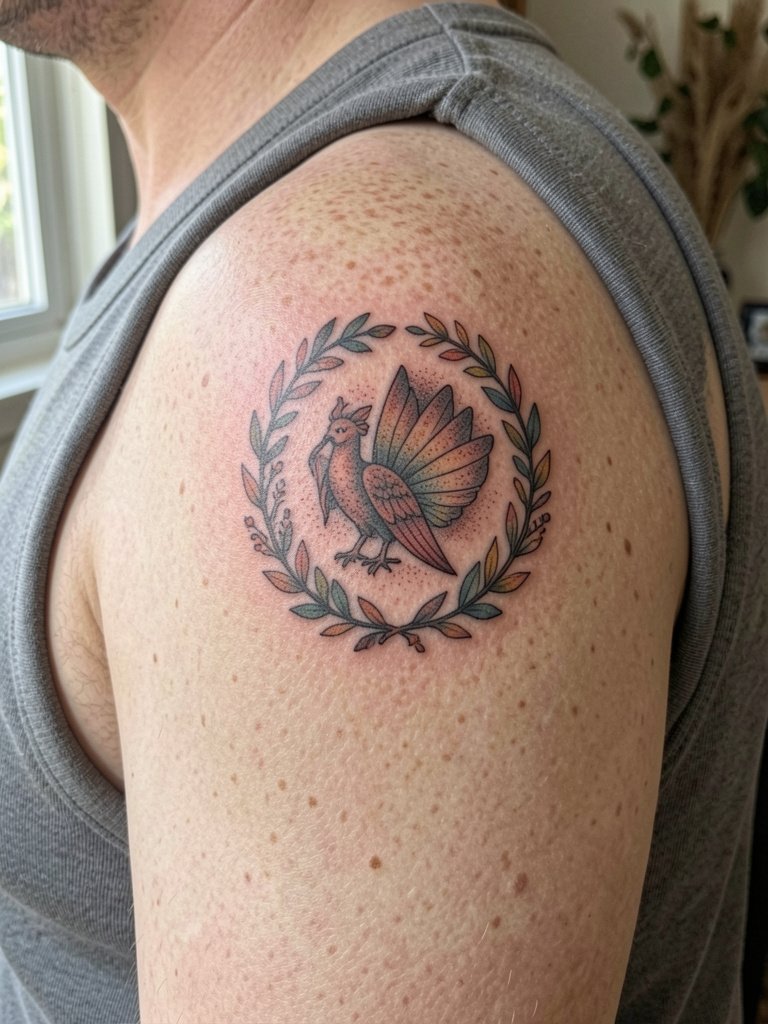
Shoulder cap placements let you add botanical elements that frame the monarch and integrate with future sleeve work. Ask the artist in your consultation to plan the wreath scale relative to shoulder curvature so the wreath reads circular at rest. A common mistake is tight floral detail that flattens when seen from an angle. Healing here is straightforward and touch-ups are easier because the area rarely gets rubbed heavily. For styling, racerback tanks and halter dresses show the shoulder cap elegantly and keep focus on the framed composition.
18. Minimalist Monarch on the Ankle
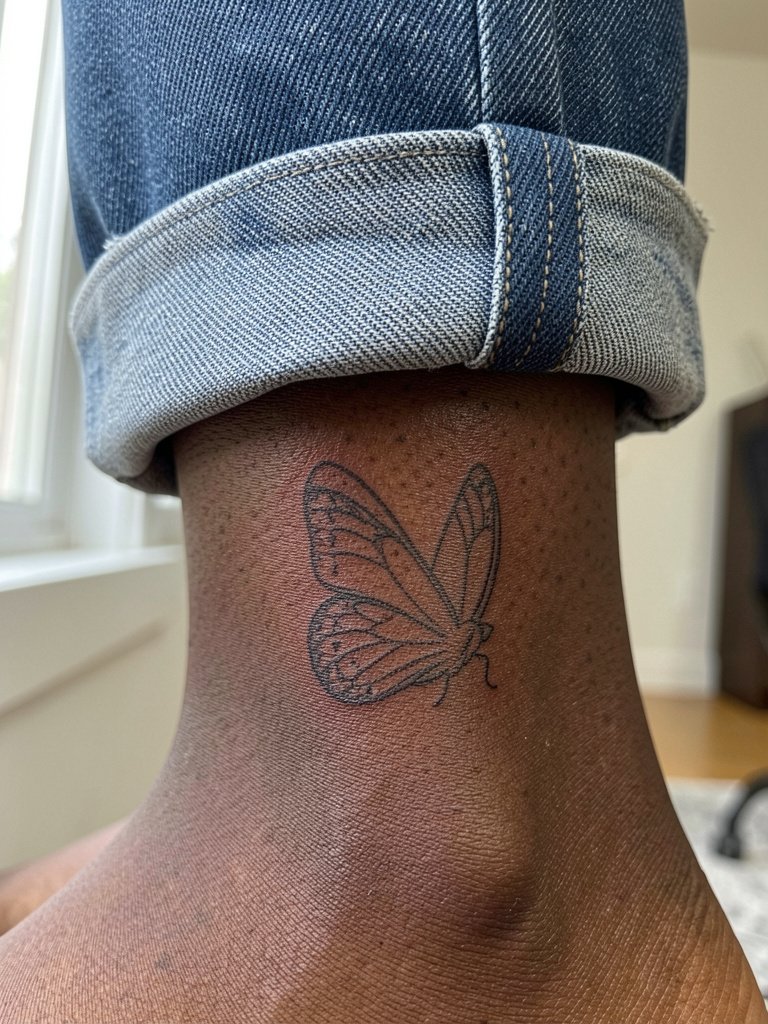
Ankle monarchs are discreet and pair well with summer styling. The downside is constant footwear friction that encourages touch-ups. Make sure the artist spaces the outline so the negative wing dots remain. A frequent error is adding too much tiny filler around the ankle that wears away quickly. The session is short, but expect a touch-up within the first two years. For footwear, choose sandals or loafers that leave the ankle unobstructed. Cropped jeans rolled at the hem work well. Consider cropped straight leg jeans to show the ankle piece.
19. Monarch with Scripted Date on the Rib
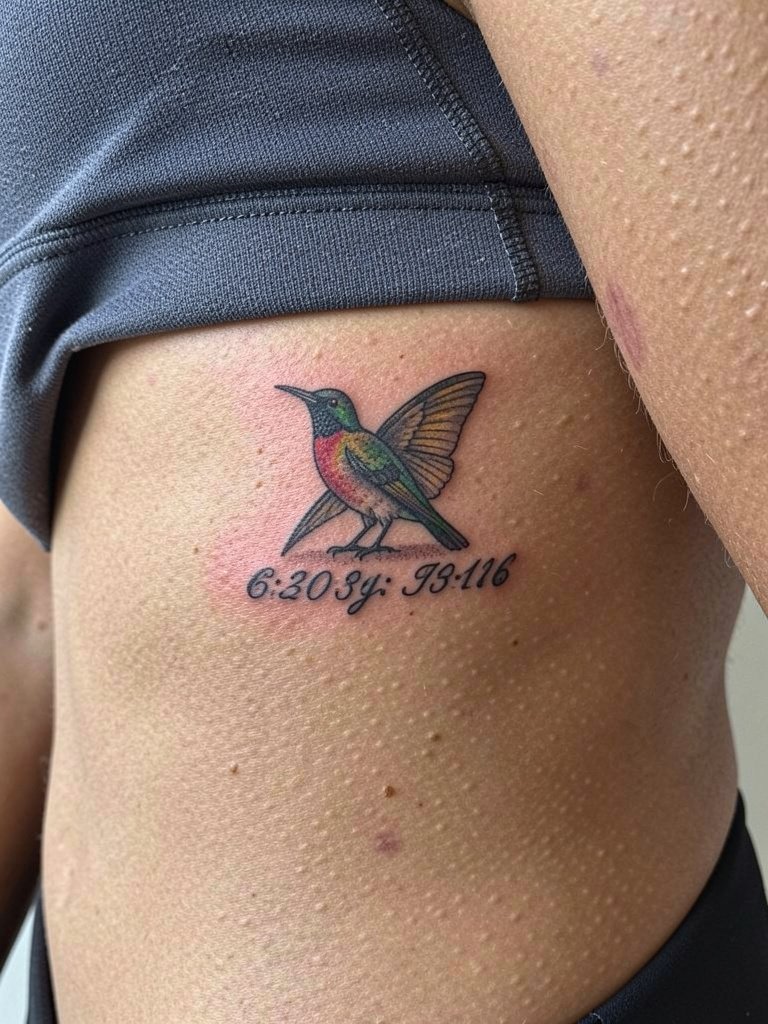
Combining a monarch with a small date creates a memorial or milestone piece. Specify exact text sizing in the consult to ensure the script remains legible as the rib skin stretches. The mistake is using ornate, tiny script that blurs. Expect the monarch to keep its motif while the script may need a touch-up within a few years. For session wear bring a soft bralette you can adjust and request short numbing if the spot is a high-pain area. This placement pairs well with open button-down shirts that reveal the side torso when you want to show the tattoo.
20. Micro-Realism Monarch on the Outer Wrist
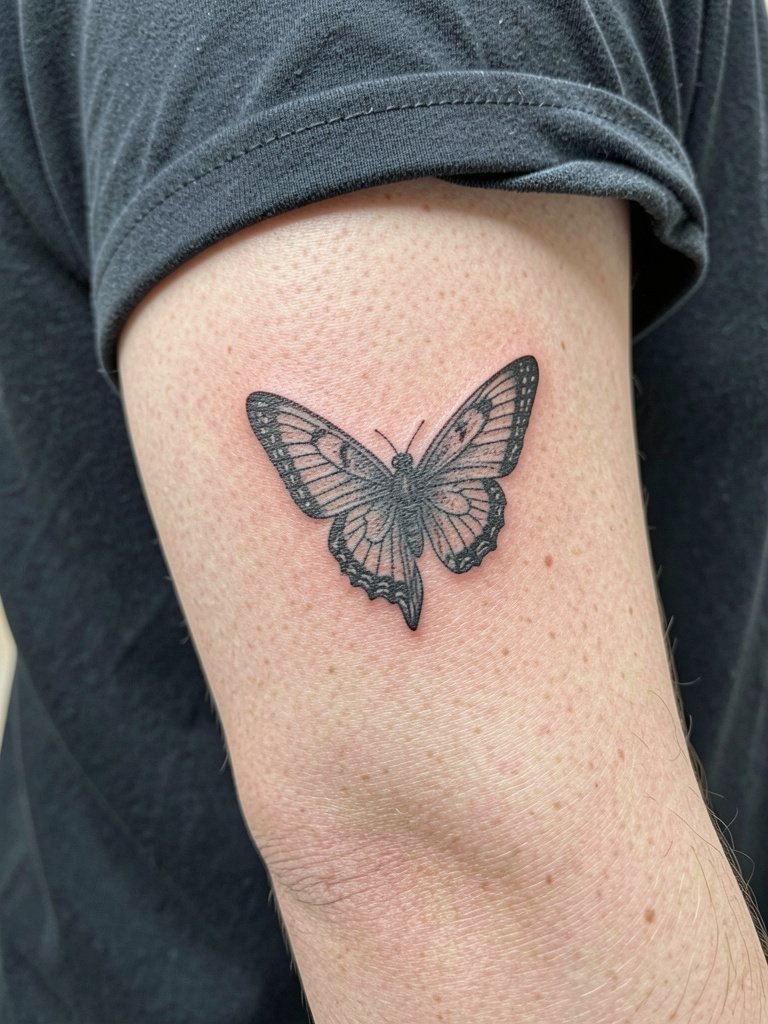
Outer wrist micro-realism balances detail and visibility. Tell the artist you want the border slightly stronger than the interior texture so the wings keep their shape under daily hand movement. A mistake is relying on tiny inner wing veins to define the moth at a scale that does not survive washing and sunlight. At six months the detail holds; by year three expect softer edges and possibly a touch-up. For styling, slim watches and thin bracelets on the opposite wrist keep the focus. Consider a minimalist watch that avoids rubbing the tattoo site.
21. Monarch with Geometric Halo on the Chest
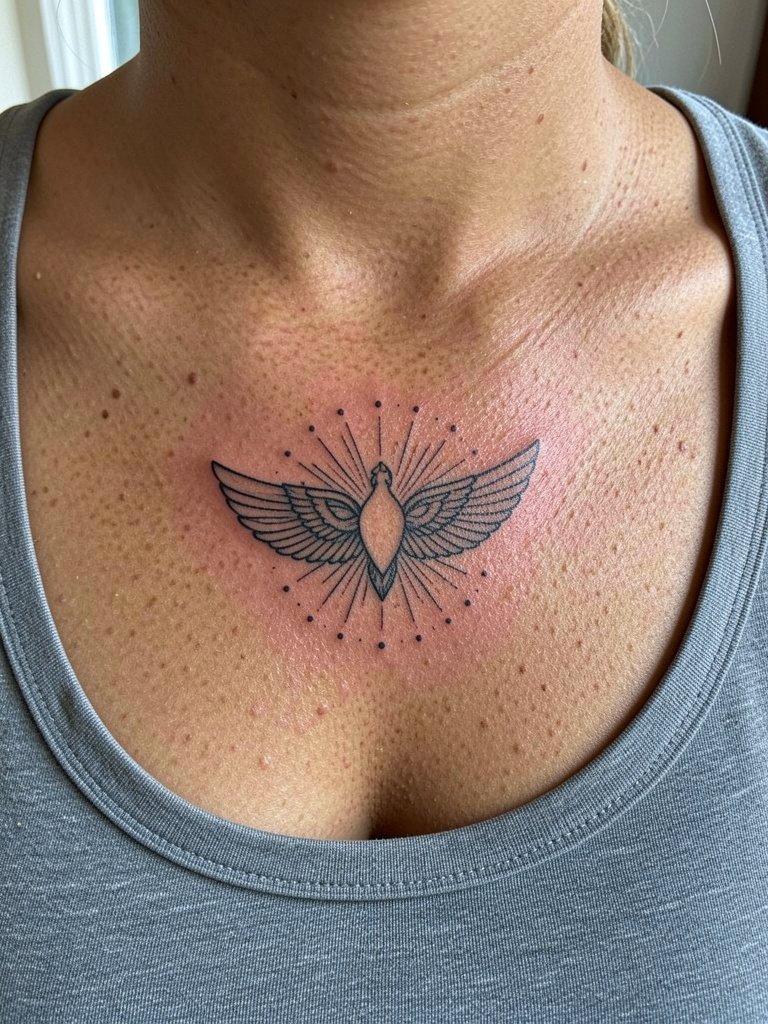
Adding a geometric halo gives a monarch an ornamental frame that reads well at modest scale. Discuss spacing and dot density with the artist to ensure the halo does not crowd the wing edges. A mistake is a halo that is too dense, which makes the whole chest look busy as it heals. Healed, the halo should retain negative space and provide contrast to the wing silhouette. For outfits, scoop neck tees and layered necklaces amplify the centered composition.
22. Oversized Wing Fragment on the Shoulder Blade Edge
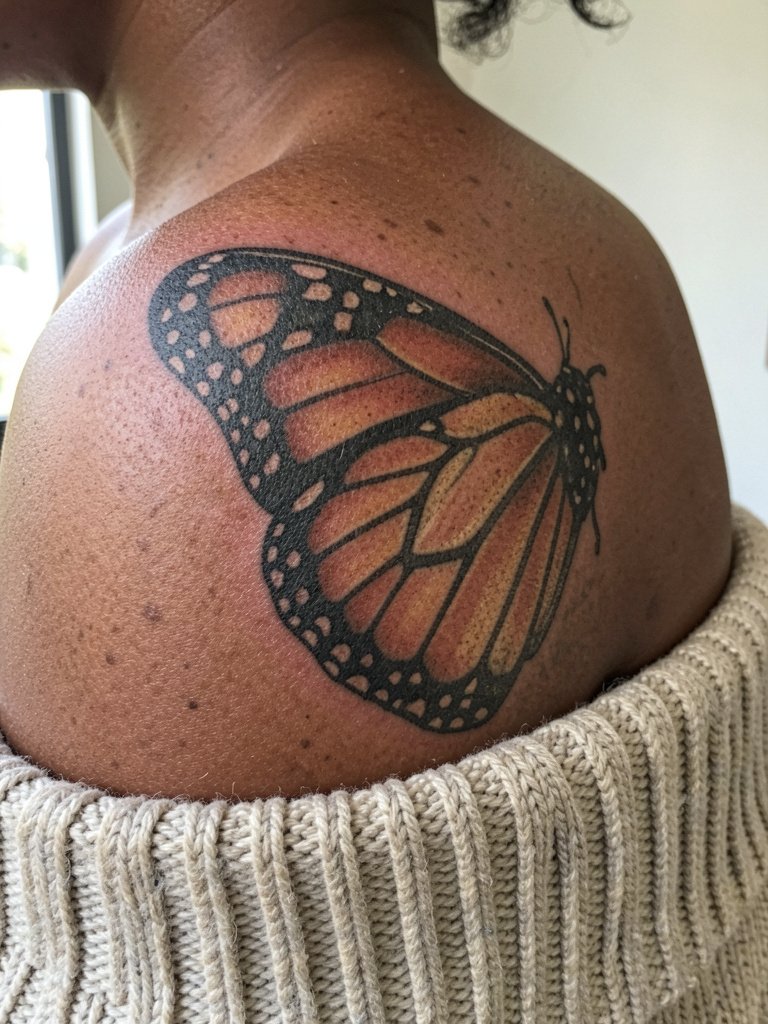
A wing fragment gives the illusion of motion and is less committed than a full back piece. Ask the artist to design the cropped wing so its edge works with shoulder contours and does not appear chopped. The common error is trimming a wing mid-pattern in a way that leaves awkward partial cells. This placement pairs nicely with off-shoulder tops and open-back knits. For show-off outfits, try off shoulder tops that reveal the outer shoulder and wing fragment.
23. Collector’s Micro Monarch Trio on the Inner Arm
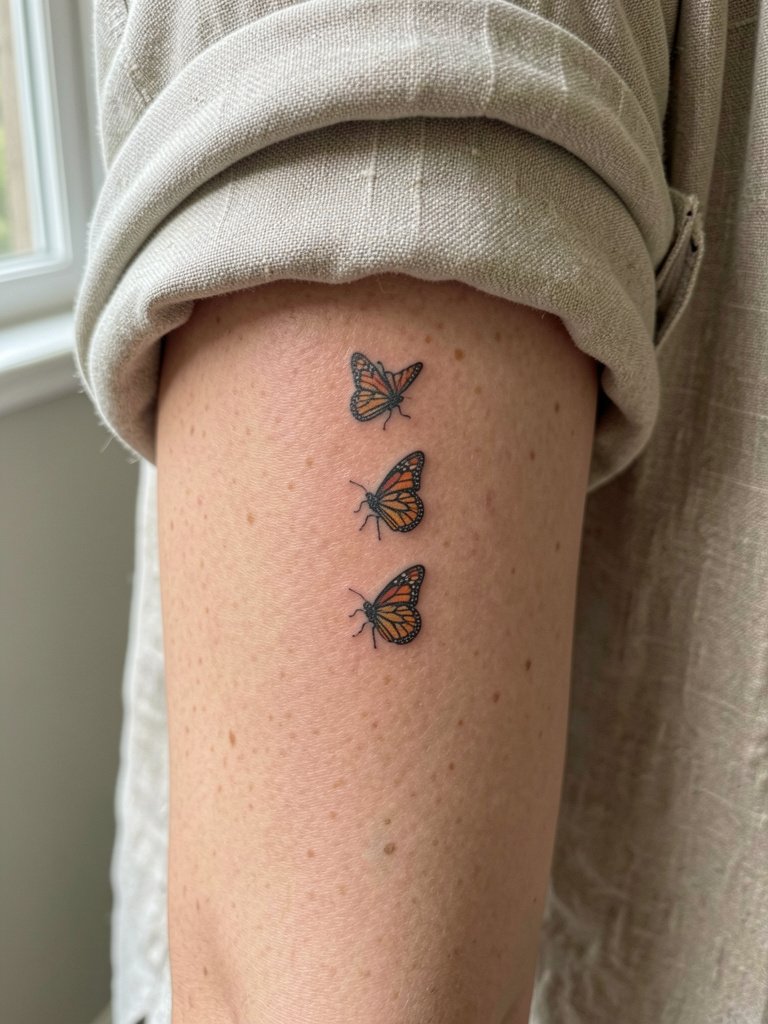
A vertical trio creates rhythm along the inner arm and allows you to vary scale while keeping a theme. Discuss spacing and incremental sizing in the consult so each monarch reads individually and avoids blending after healing. A common error is too-tight stacking, which becomes a single dark mark after a few years. Expect a relaxed one- to two-hour session for three micro pieces and plan for a touch-up window at twelve to eighteen months. Styling looks best with rolled sleeves or short-sleeve linen shirts that let the inner arm show without overaccessorizing.
Frequently Asked Questions
Q: How do I choose color or black-and-gray for a monarch if I care about longevity?
A: Color gives the species accuracy because monarchs are known for orange and black contrast. Black-and-gray supporters argue that strong grayscale contrast ages more reliably and keeps wing pattern legible longer. The choice depends on how much maintenance you want. If you want the orange tone, accept periodic touch-ups. If you prefer minimal upkeep, a high-contrast black-and-gray layout with clear negative space will likely look cleaner at year five.
Q: Are fine line monarchs a bad idea for small placements like fingers and wrists?
A: Artists split into two camps on this. One camp says fine single-needle work at tiny scale softens quickly on high-movement skin and recommends bolder lines. The other camp says fine line can hold if the artist increases spacing slightly, adjusts needle depth, and sizes the piece for the placement. Practically, if you want single-needle aesthetics on a small high-use spot, ask for a plan that errs on slightly stronger line weight so the design keeps its shape.
Q: Where can I find style-specific portfolios and healed photos without naming artists directly?
A: Search subject plus style hashtags on social platforms and filter by location. Try tags like #monarchbutterflytattoo, #monarchbutterfly, #finelinetattoo, and #microrealismtattoo. Use location filters on Instagram and TikTok to see nearby portfolios. Tattoo directories and portfolio platforms are useful when you search combinations such as "monarch butterfly fine line" or "traditional monarch tattoo." Reddit tattoo communities also have healed photo threads that help compare placements and longevity.
Q: What should I wear to a session for a sternum, shoulder blade, or ankle tattoo?
A: For sternum pieces wear a soft bralette or bandeau so the artist can work without fully undressing you. For shoulder blade pick a racerback tank or halter you can move aside easily. For ankle wear loose pants with cuffs you can roll or shorts you can pull to a normal resting position. These clothing choices make access easier and keep the studio visit efficient. If a placement needs privacy, bring a friend for support.
Q: How often will I need touch-ups for different monarch styles?
A: Tiny finger and wrist monarchs often need a touch-up within 12 to 18 months. Fine line collarbone and nape pieces may hold longer if sized correctly, but count on a touch-up by year two or three for most single-needle work. Bold traditional and larger back or shoulder pieces usually need less frequent correction, often every three to five years, depending on sun exposure and skin type. Expect touch-up timing to vary with your skin and daily wear.
Q: Are there special considerations for darker skin tones with orange colorwork?
A: Darker skin tones can show color differently, and orange may not read the same as on lighter skin. Artists will often adjust saturation, contrast, and highlight placement to keep the monarch recognizable. When you book a consult, bring examples of healed work on similar skin tones and ask about color layering strategies so the wing contrast remains visible over time.