
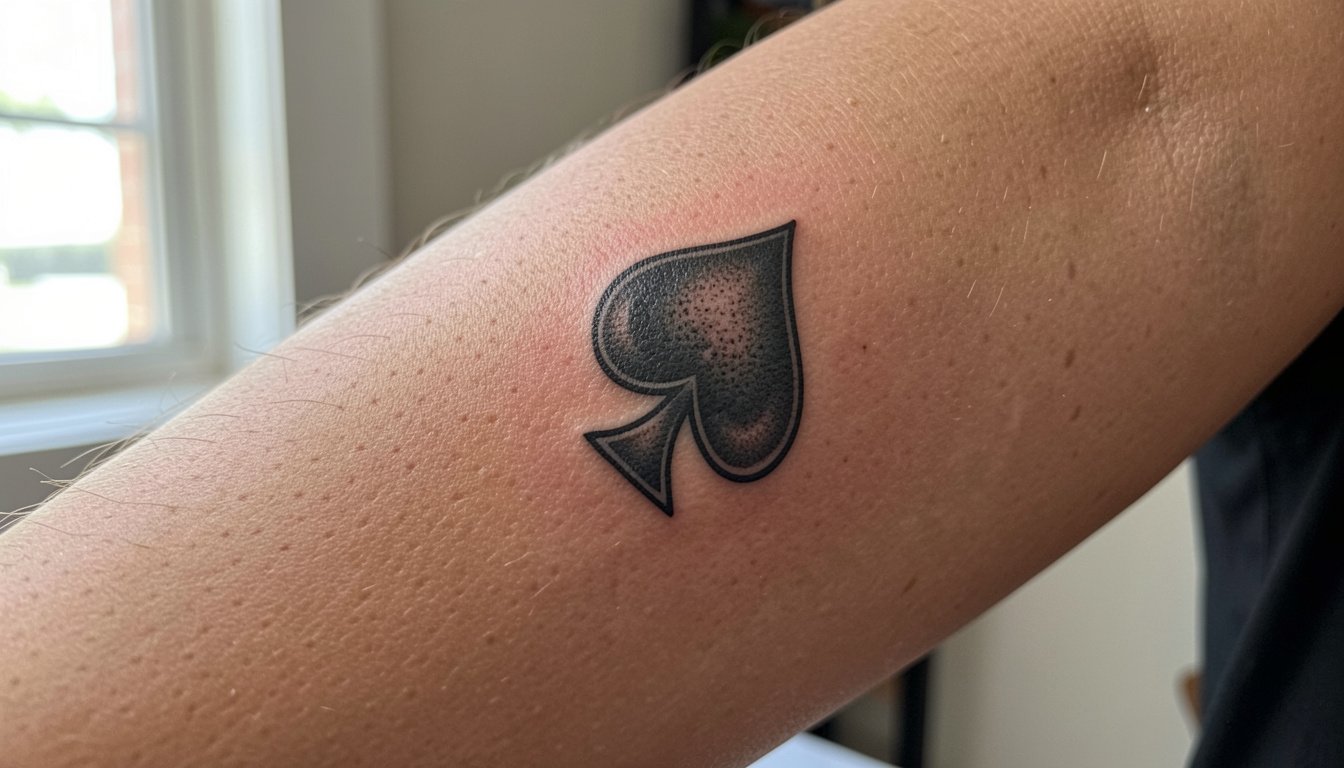
Bold card tattoos often outlast the wispy versions you see on social grids, especially when the linework and spacing are planned to resist blurring. If you worry a tiny ace will look like clip art in a few years, prioritize silhouette, contrast, and placement now. Below are concrete card designs with placement tips, session wear advice, and outfit links that show how each piece reads at one month and at year three.
1. Classic Ace of Spades on Outer Forearm
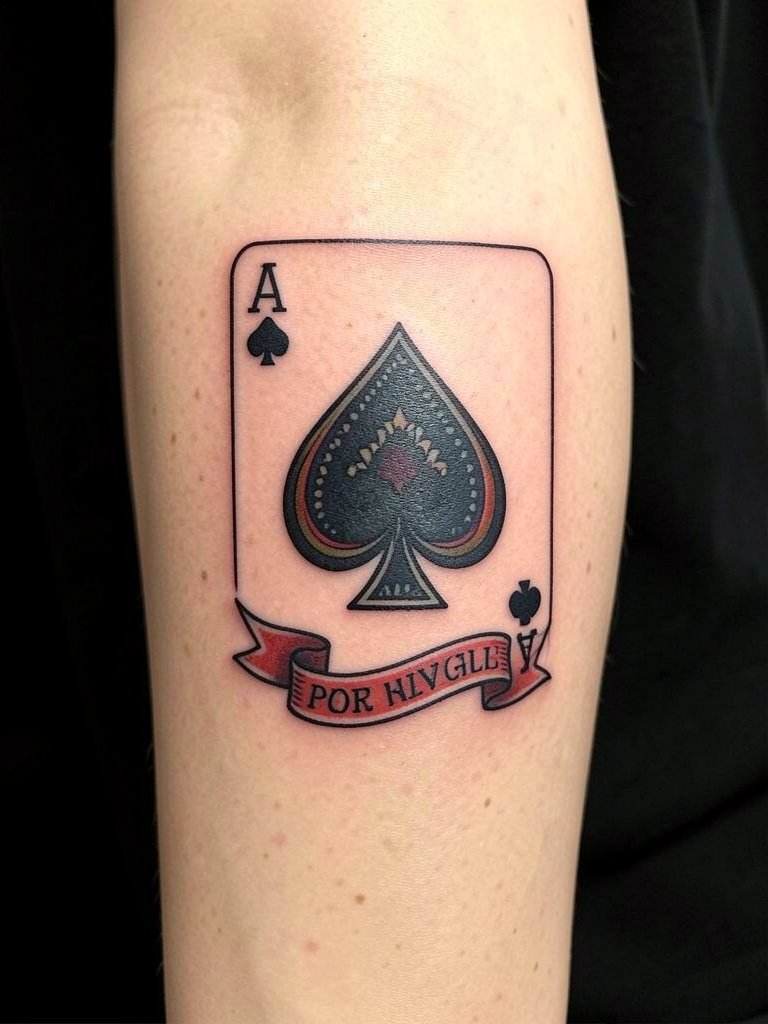
A single ace reads instantly and scales well. For this placement expect a one or two hour session for a medium-sized card and a moderate pain level. Lineweight matters more than tiny detail here because the outer forearm gets sun and abrasion. Common mistake is shrinking the card too small and then wondering why the spade fills into a blob by year three. For the session wear a short-sleeve crewneck tee so the artist has easy access and your stencil sits flat, try crew neck tee men to keep the look simple when you show the healed piece off.
2. Two-Card “Luck and Risk” Pairing on Inner Forearm
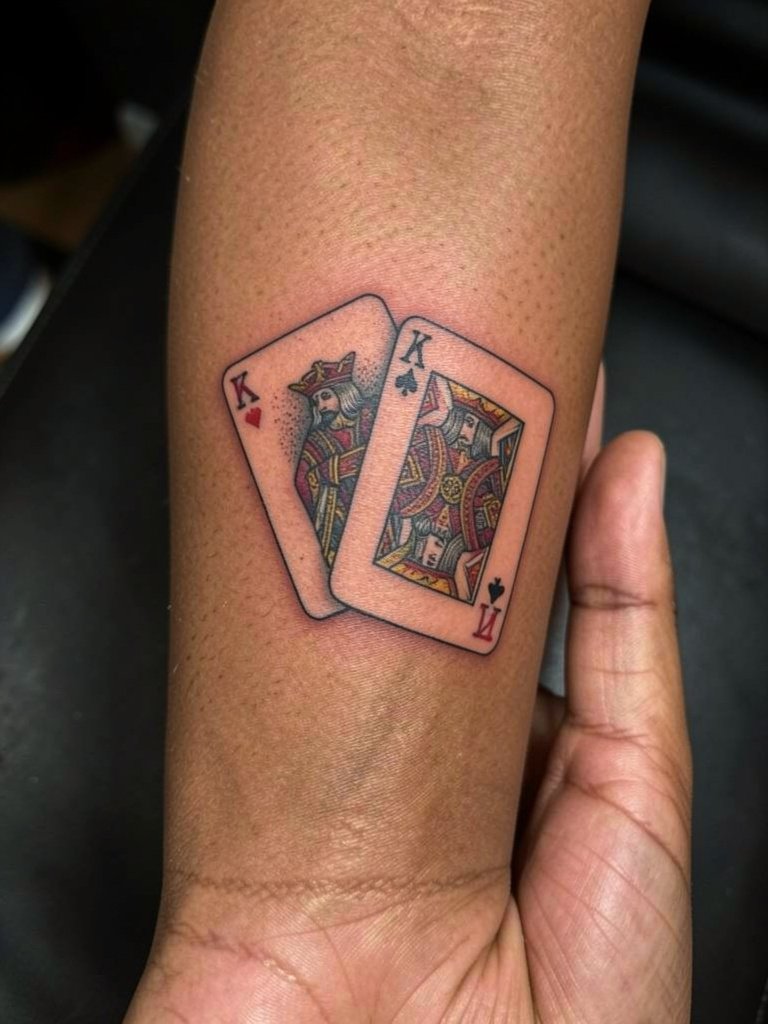
Pairing cards lets the design tell a short story without running into hand or wrist wear. Inner forearm detail holds longer than wrist detail but fine lines still need breathing room. During consultation bring scaled references at three and five inches so you can see how the suits read at each size. A common aging pattern is the two cards losing separation when outlines are too thin. For showing this off choose fitted linen shirts and roll the sleeves so the forearm sits visible, and consider linen shirt men for weekend wear.
3. Joker Portrait with Ornate Frame on Upper Arm
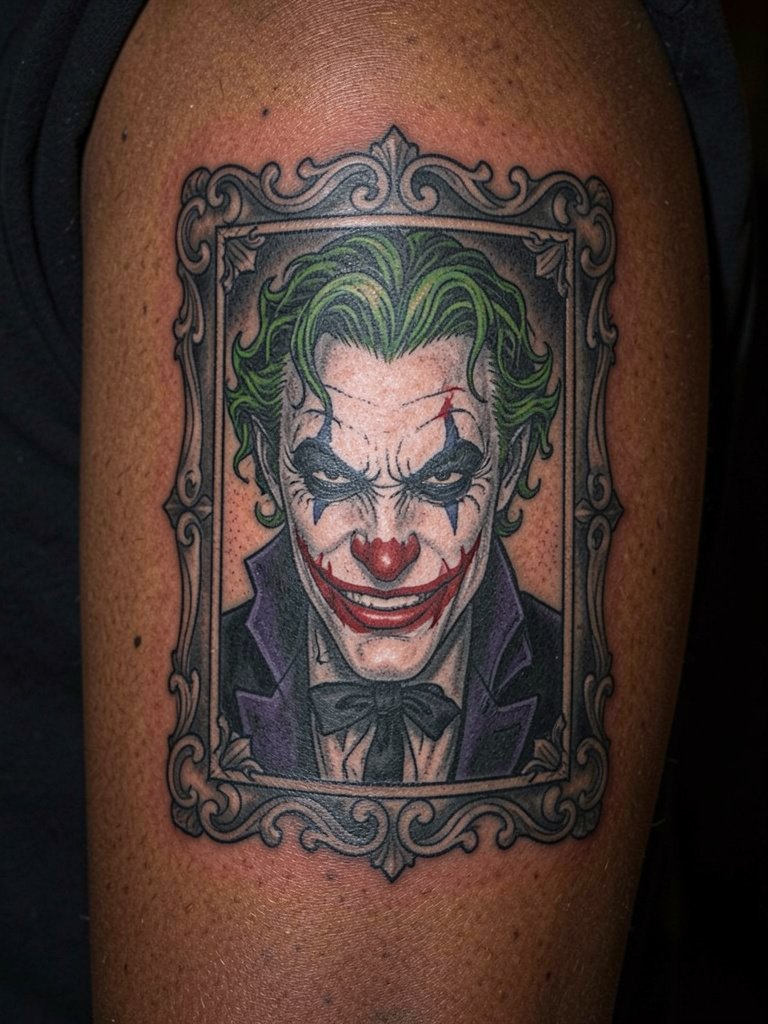
A Joker-style portrait can be the center of a sleeve or a standalone shoulder piece. Portrait-level shading needs room, so size up by an inch or two compared with flat flash. Expect longer session time and a heavier pain rating than the forearm because the meatier upper arm holds saturation well. Artists are split on color here. One camp prefers black-and-grey portraits because the contrast reads longer and hides minor fading. The other camp says selective red accents can stay crisp if the outlines are strong and the client commits to sun protection. If you want this as a visible upper-arm piece try an open overshirt and a muscle tank men for weekend styling.
4. Royal Flush Sleeve Segment on Outer Forearm
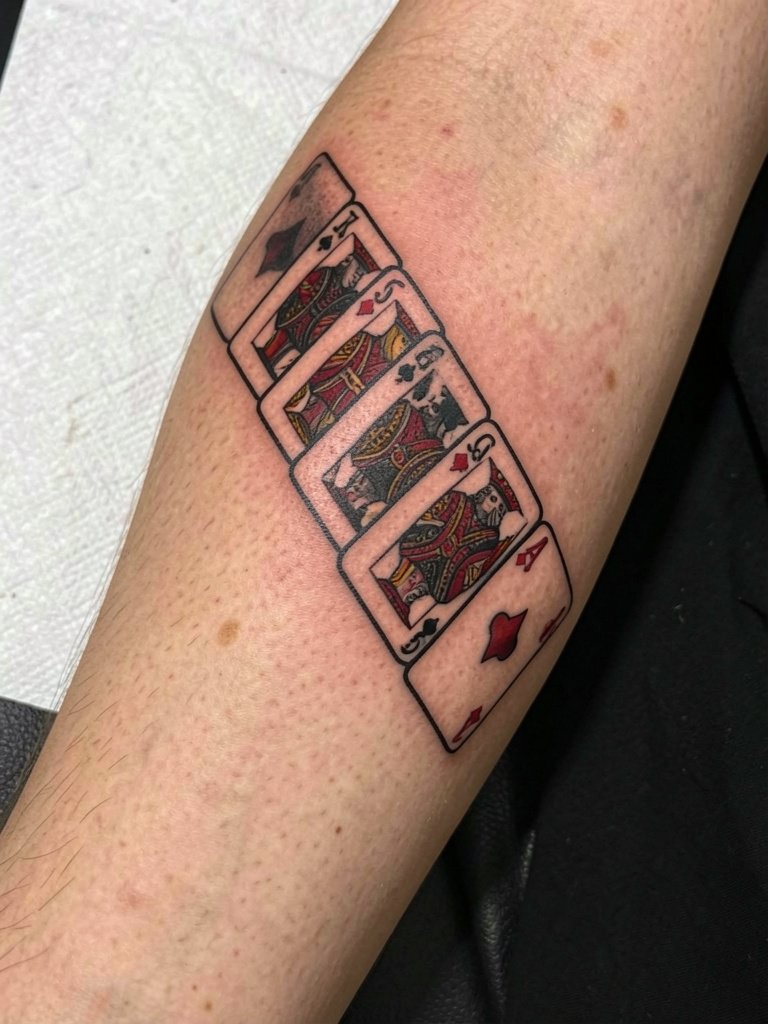
Use this as a patchwork anchor when you plan a sleeve over time. The outer forearm gives you room for bold cards and fillers like banners or small roses. Mistake to avoid is packing five cards into a small space where edges collide after a year. For session wear a loose button-up you can roll above the elbow, try rolled sleeve button up so the artist has movement while you stay comfortable between passes. Touch-ups are common on edges after the first year when new skin settles.
5. Minimal Suit-Symbol Cluster on Wrist
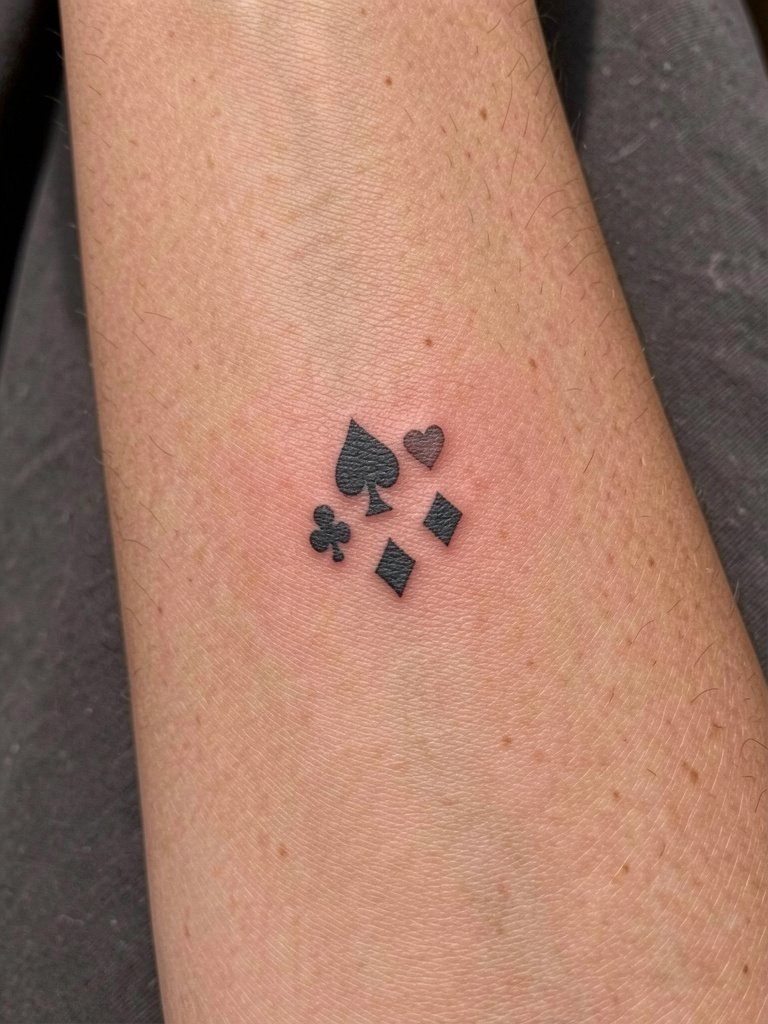
Tiny suit symbols are subtle but they age quickly if placed where friction is constant. The wrist sees constant movement and surface abrasion, so a tiny club executed at single-needle thickness will likely need touch-up sooner than a slightly bolder mark. One side argues fine line suits look modern and stay discrete. The other side holds that slightly heavier outlines preserve readability over five years. For session wear skip tight watches and bring a thin bracelet to swap in later, check slim watch men if you plan accessories that frame the wrist.
6. Playing Card with Roses Framing on Thigh
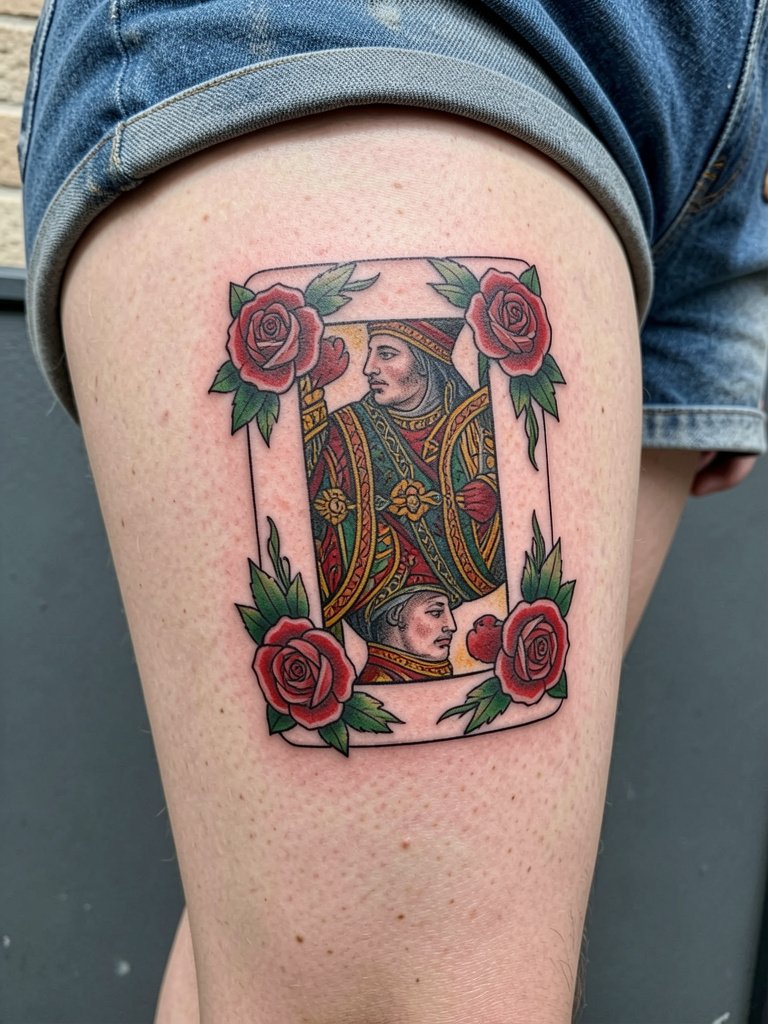
Floral framing softens a gambling motif and gives the card a clearer silhouette that reads at distance. Thigh skin handles larger color fills well and is lower-friction than ankle or wrist. A common mistake is adding too many tiny petals close to the card edge which can blur into the border. For session wear pull on loose shorts that roll easily, like cargo shorts men, so the artist can work without fabric tugging. Color versus black-and-grey splits artists into two camps. One camp says black-and-grey holds better under sun and movement because contrast is what matters. The other camp says red accents can last when placed with strong black outlines and when the client practices sun avoidance.
Session Day Picks
The forearm, wrist, and thigh pieces above each have different session needs, so these small items smooth the experience from stencil to first week.
- Tattoo transfer stencil paper kit. Lets you preview exact placement on skin before the needle hits, useful for inner forearm and wrist stencils in ideas above.
- Breathable tattoo protective film roll. Keeps low-friction areas like the wrist and ankle clean during the first 24 to 48 hours.
- Hybrid healing balm for sensitive skin. Lightweight and non-greasy for small suit symbols and delicate linework.
- Fragrance-free gentle body wash. Mild formula protects fresh ink while you shower after outer-arm and thigh sessions.
- Aquaphor healing ointment. Thin layer for the first few days locks in moisture for bold black fills without clogging the skin.
7. Black-and-Grey Realistic Card Stack on Calf
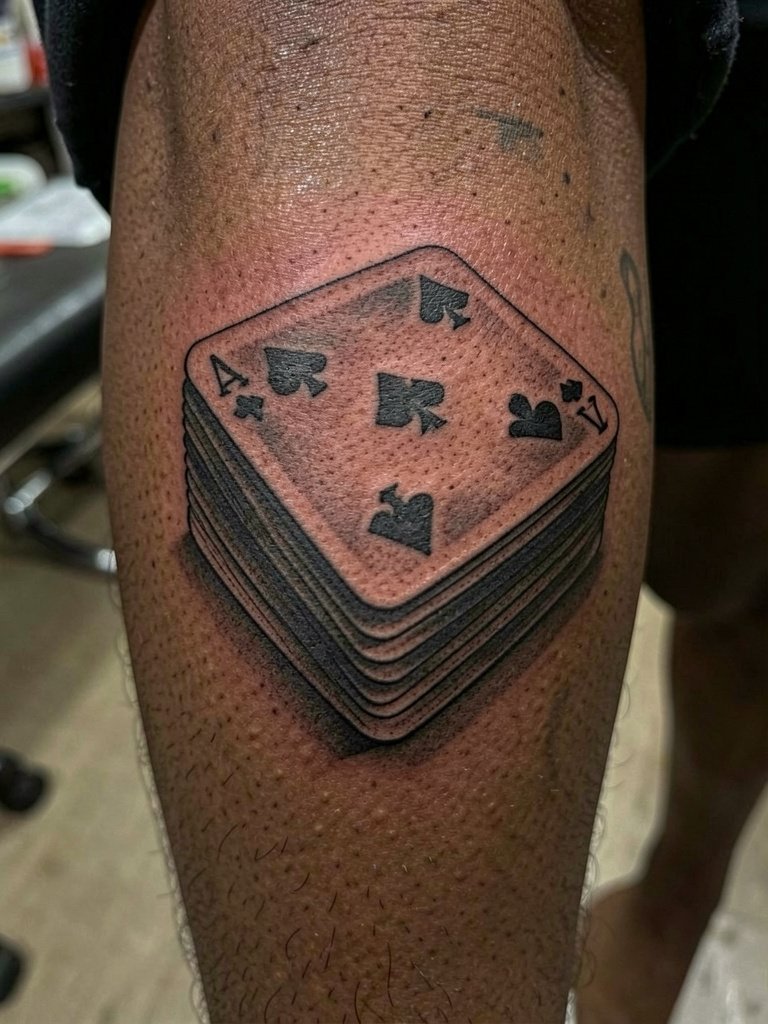
Realistic stacks need negative space to avoid muddiness. The calf provides a generous canvas so you can go large without detail crowding. Mistake is compressing photoreal detail into a small patch where shading runs together at six months. For session wear choose shorts that sit above the knee so the leg is accessible, try athletic shorts men for easy access. Expect one longer session or two medium sessions for saturation and depth.
8. Traditional Ace with Dagger on Outer Forearm
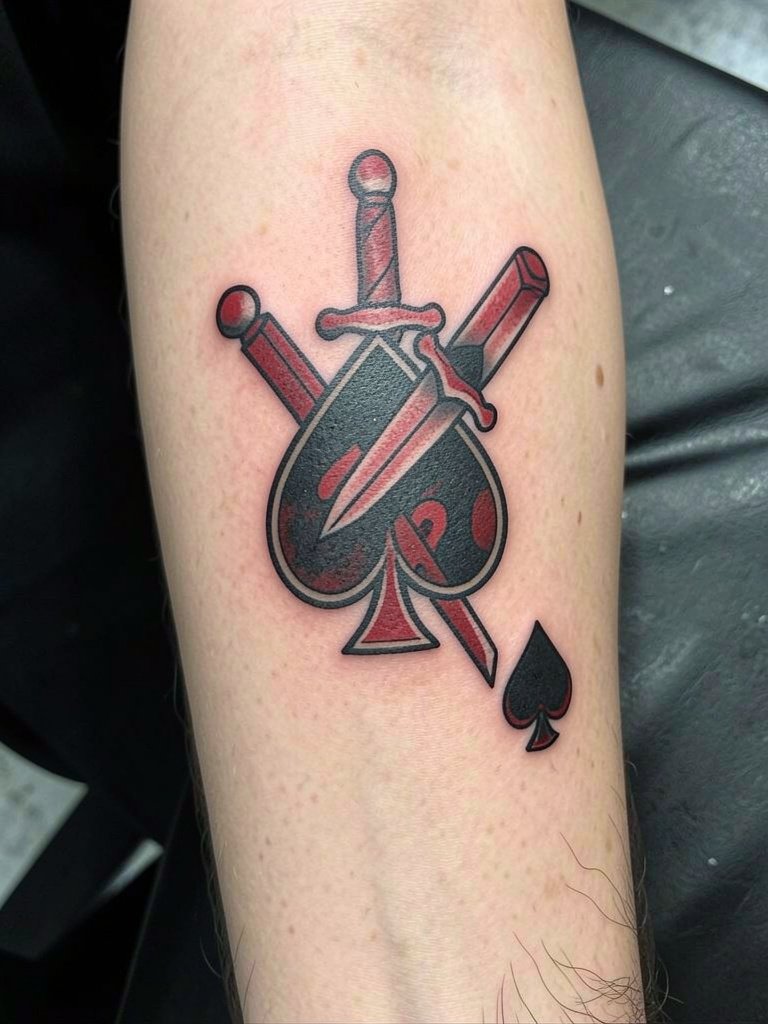
Combining two classic motifs increases visual weight and gives the piece a clear silhouette. Traditional palettes hide small blemishes in healed skin more easily than thin script. The dagger point near the wrist increases blowout risk if the needle angle is inconsistent, so request slightly wider outlines around the blade edge. For showing this off wear short-sleeve crewnecks or rolled-sleeve shirts and pair with a relaxed denim jacket for casual framing.
9. Card Corner Reveal on Wrist
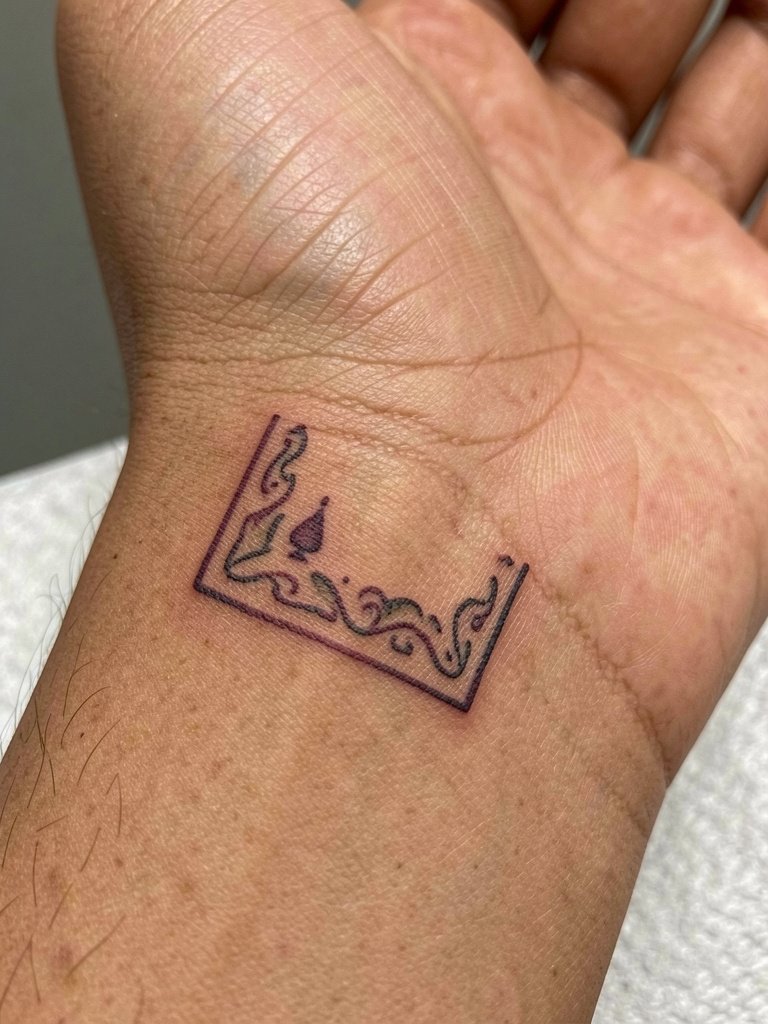
Corner reveals offer the playing-card theme without committing to a full rectangle. They work best slightly larger than you think because the wrist is a high-motion area. A common issue is choosing single-needle width that later softens into a gray smudge. Plan for a touch-up at the one-year mark if you keep the size micro. For the appointment wear a fitted tee or a sleeve you can push up cleanly, try fitted plain tee to keep the area easy to access.
10. Gambling Chips and Card Mashup on Upper Arm
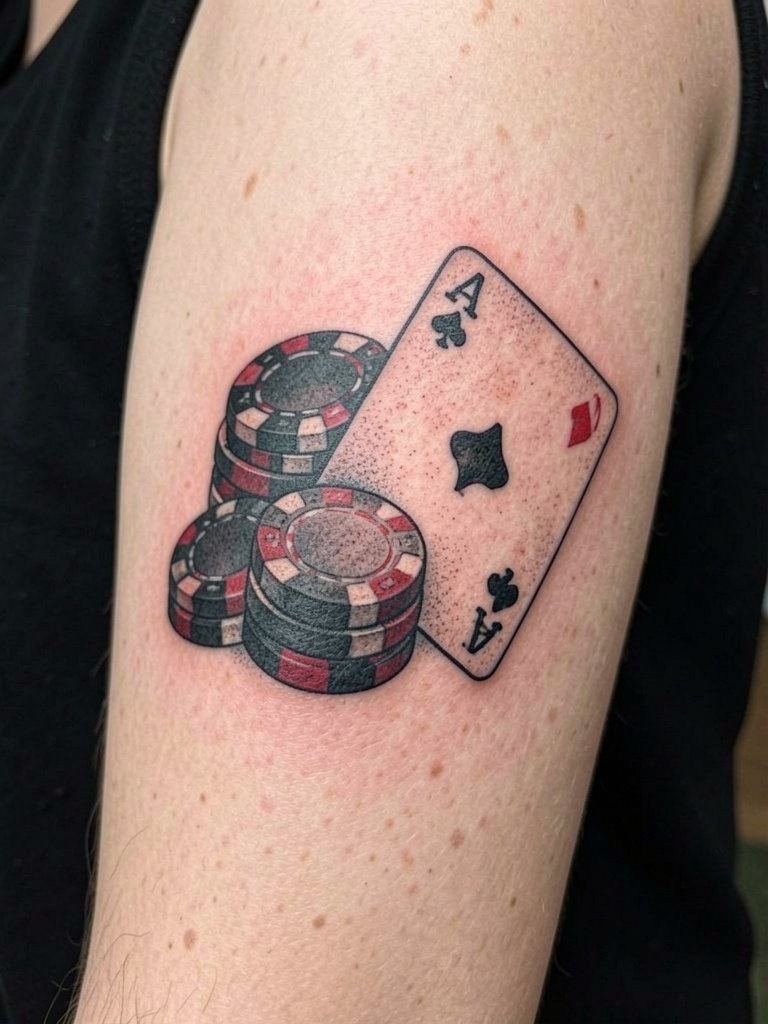
Expanding the theme into chips and paraphernalia makes the piece feel custom. Upper arm spacing reduces blowout risk compared with the hand and gives room for chips to overlap without losing edge contrast. A real mistake is adding tiny text on the chips that reads poorly after healing. Show off this style with a sleeveless tee or an open short-sleeve shirt and consider open overshirt men for layers that keep the art visible.
11. Skull Inside a Card Frame on Calf
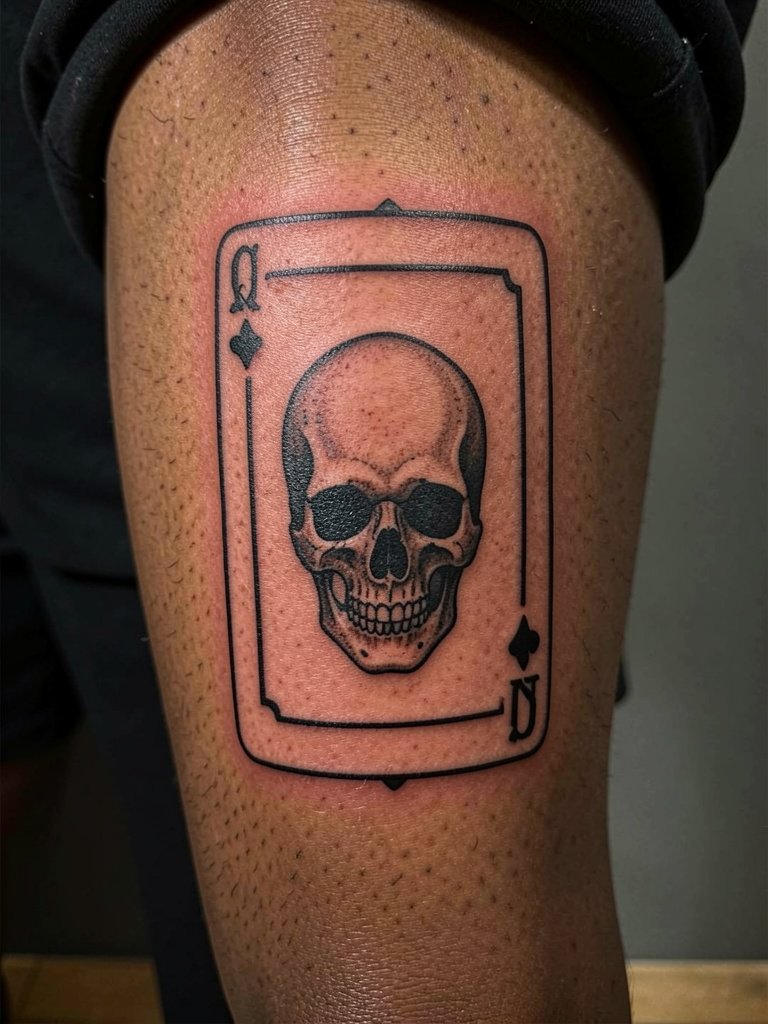
Skull motifs add edge and demand heavier contrast to avoid blending with the card border. Calf skin tolerates heavy blackwork but watch for skin folds near the back of the knee if the card sits lower. For session wear bring shorts that roll at the thigh and a pair of slip-on shoes for comfort during longer sittings. Touch-up on heavy blacks can be minimal if saturation is correct on day one.
12. Patchwork Sleeve with Scattered Cards on Outer Arm
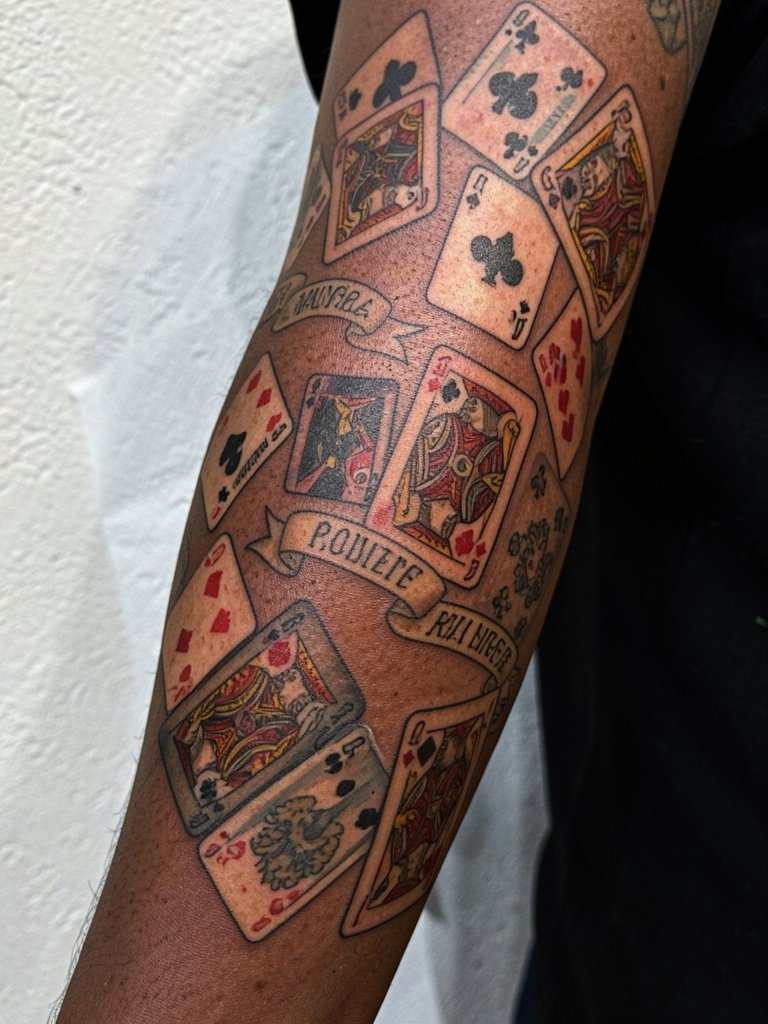
Patchwork sleeves let you add cards incrementally over years while keeping a cohesive language. Plan negative space between cards early so new pieces do not crowd older edges. A common regret is accepting walk-in flash that conflicts with future plans. For sessions wear a long-sleeve you can roll safely and bring a simple boxy tee men to layer during breaks.
13. Queen of Hearts with Filigree on Thigh
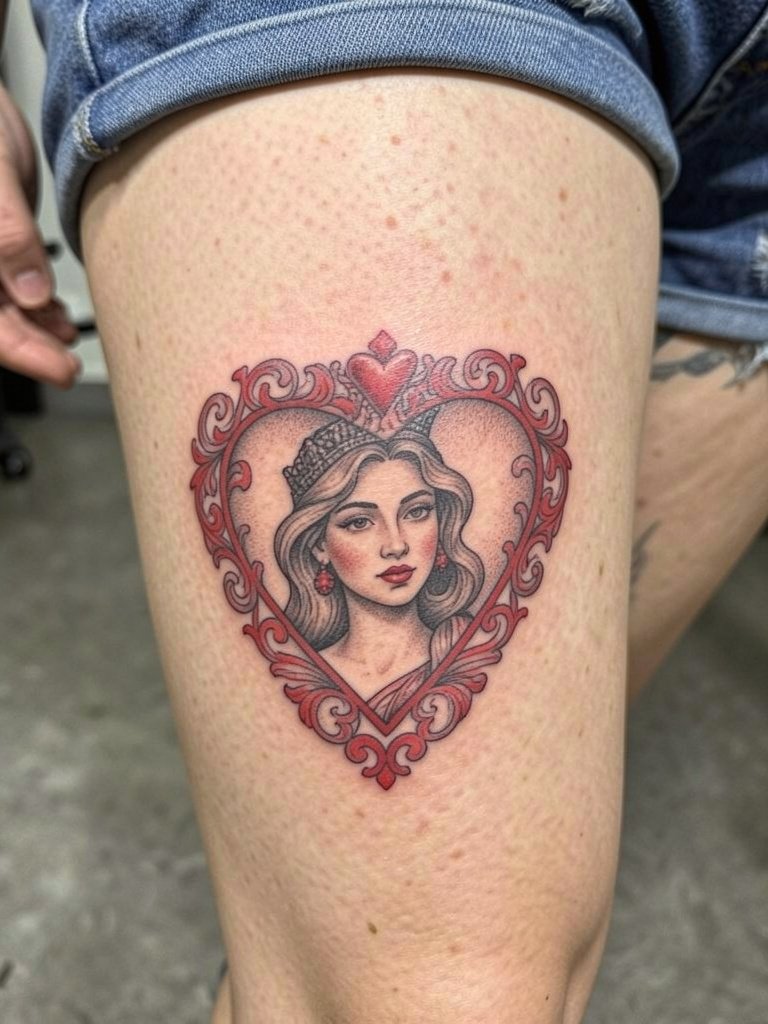
Ornate queen cards benefit from larger scale so facial features and filigree keep their separation. Thigh canvas lets you add background shading or florals later. One mistake is choosing a tiny face that loses expression when healed. For session comfort wear loose shorts with an elastic waist so the artist can access the area and you stay comfortable between passes.
14. Tiny Card Symbol Behind the Ear
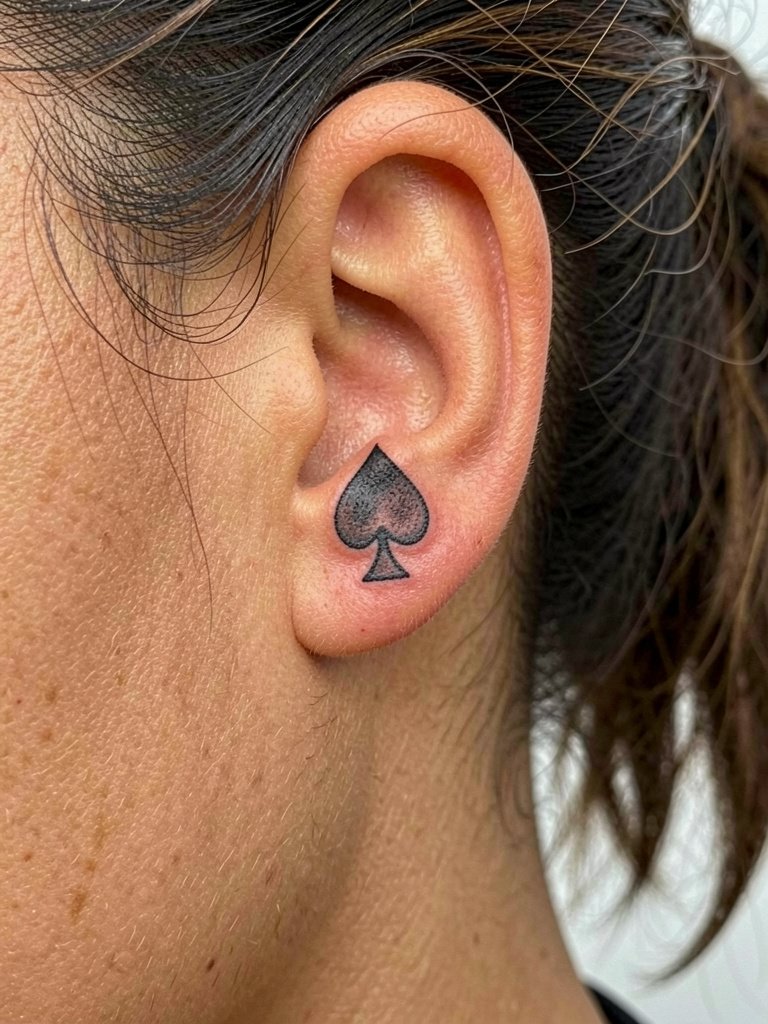
Behind-the-ear tattoos are discreet but require an experienced hand because the skin there is delicate. Expect a short session with sharp pain due to thin skin and bone proximity. One-sentence professional note: For face and neck-adjacent work pick an artist with healed photos of mastoid-area pieces. When styling hair keep it tucked or tied to reveal the small mark, and consider minimal studs rather than heavy earrings.
15. Card Corner on Ankle for a Subtle Nod
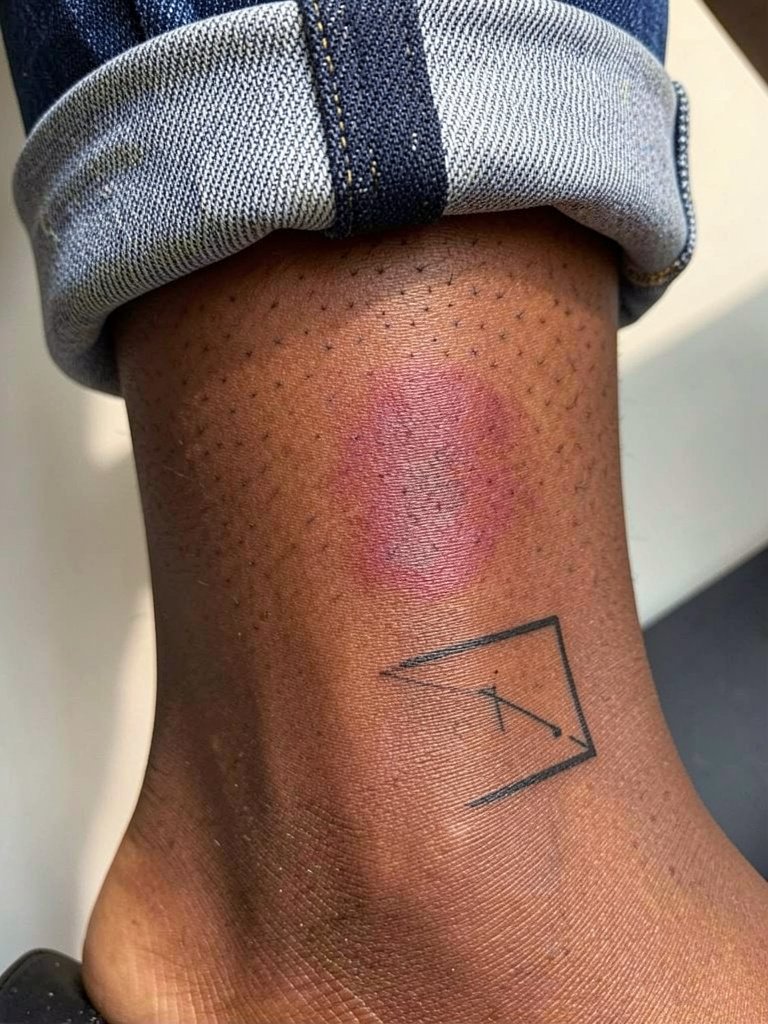
Ankle corners keep the motif subtle but face heavy wear from shoes and socks. The biggest mistake is placing it where shoe friction sits. Plan the exact spot with a taped stencil while standing in shoes you normally wear so you see contact points. For session wear jeans with a cuff you can roll up easily or wear shorts, and try straight leg shorts so the artist can access the area without fabric rubbing.
Frequently Asked Questions
Q: How do I find portfolios and healed examples for playing card tattoos near me?
A: Search hashtags like #playingcardtattoo and #cardtattoo on Instagram and TikTok and filter by location to see local artists. Use portfolio sites that let you search by keywords such as "ace of spades" or "black-and-grey card" and prioritize healed photos over fresh work.
Q: Will a red-accent traditional card age worse than black-and-grey?
A: One camp argues black-and-grey lasts better because contrast, not color, preserves readability under sun exposure. The opposing camp says selective red accents can remain crisp when paired with strong black outlines and disciplined sun protection.
Q: Is fine line or bold outline better for small card designs like wrist corners?
A: Some artists prefer fine line for a modern, delicate aesthetic and will accept earlier softening as a trade-off. Other artists insist on slightly heavier outlines to preserve silhouette and avoid premature blurring, especially on high-motion areas like wrists.
Q: How much does sizing affect touch-up needs for card tattoos?
A: Size is the single biggest factor for touch-ups. Smaller cards usually need a touch-up within one to two years if placed on high-wear spots. If you want fewer touch-ups, increase the scale slightly so lines have room to age without merging.
Q: What should I wear to a session for forearm, thigh, and chest placements?
A: For forearm pieces wear a short-sleeve tee or a button-up you can roll above the elbow. For thigh work choose loose shorts with an elastic waist. For upper chest or collarbone pieces go with a wide V-neck or scoop-neck top that sits naturally and does not need to be moved.