
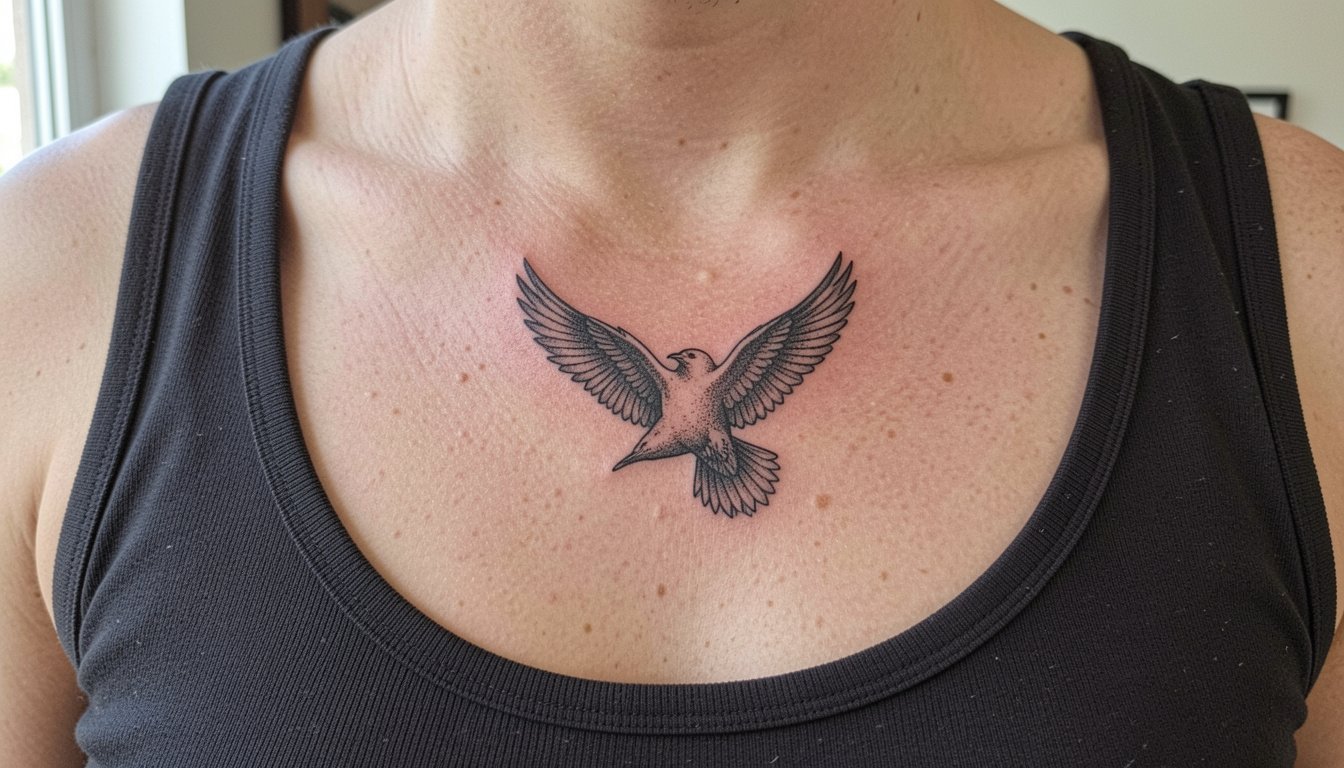
The smallest flying bird tattoos that age the best are often the ones given a little breathing room and a touch more contrast, not the ultra-thin, single-needle doodles everyone pins. If you worry about a tiny flock blurring, hate the default "freedom" look, or do not know where a micro bird will sit so it does not look awkward, this guide gives clear options, placement fixes, and wardrobe tips that help the design last and read well.
1. Tiny Flock of Three on the Wrist
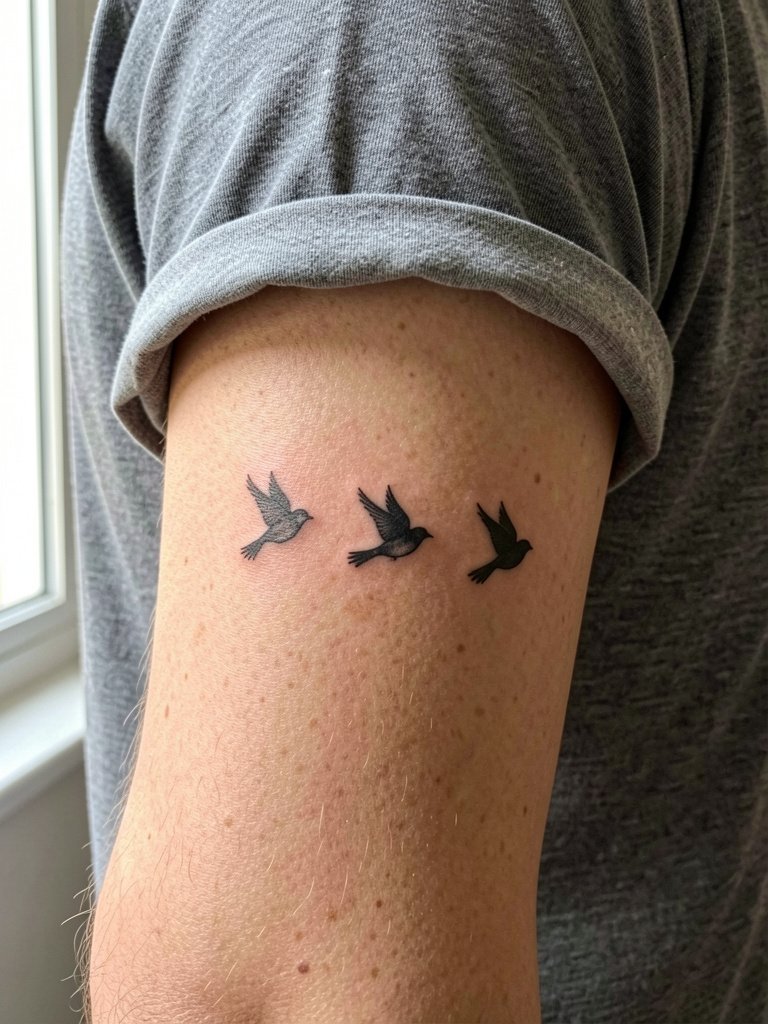
A three-bird cluster reads as motion even at the scale of a quarter or smaller. For this wrist placement the session usually takes 20 to 40 minutes and the pain is low to moderate because the area has thin soft tissue over bone. A common mistake is packing the birds too close together, which causes the edges to soften into one shape by year three. For longevity, ask for slightly bolder silhouettes and clear negative space between each bird. Styling note: pair this with a thin chain bracelet on the opposite wrist so the tattoo becomes a deliberate accent. During the consult bring a photo scaled to the exact wrist width so the artist can show how spacing reads at one inch versus two inches.
2. Single Small Silhouette on the Ankle
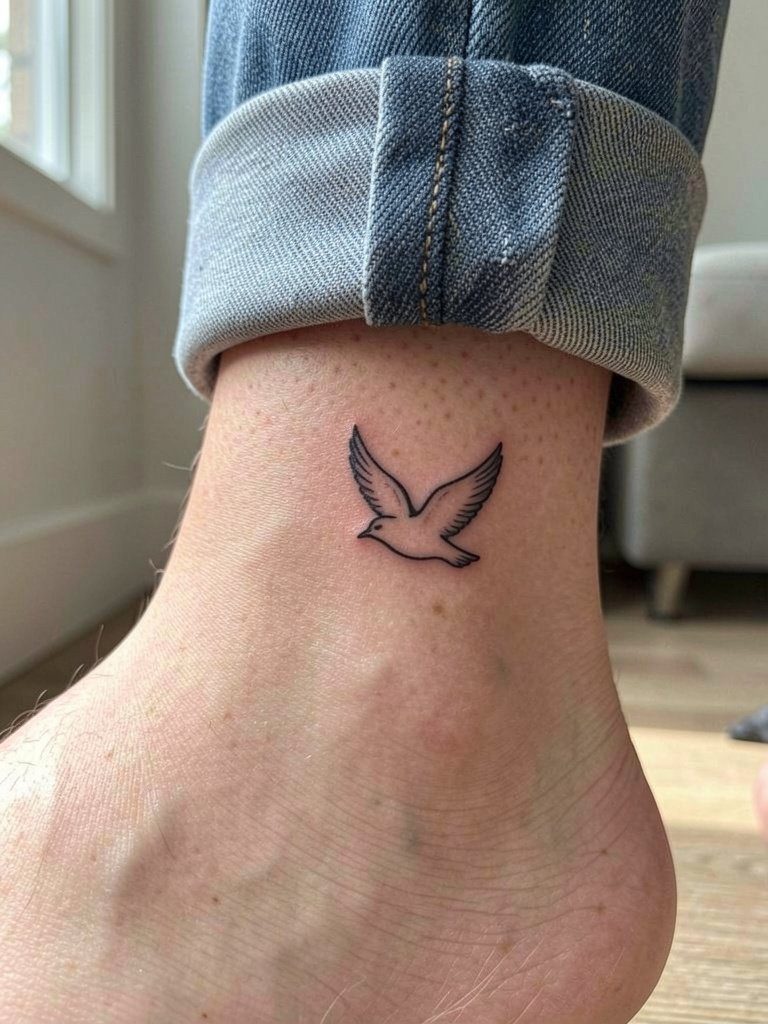
A single silhouette on the ankle is the classic first-tattoo option because it reads at tiny scale and hides easily under socks or shoes. Expect a 15 to 30 minute session and spot sensitivity when the needle passes over the ankle bone. The biggest aging risk is abrasion from shoes and socks rubbing the area during the first two weeks. For a better healed result, plan the placement slightly higher on the lateral hip of the ankle where the skin is smoother. Show-off styling: cropped straight pants and low-top sneakers frame the tattoo, try this look with cropped straight pants so the design can peek out.
3. Fine Line Birds Flying Out of a Cage, Inner Forearm
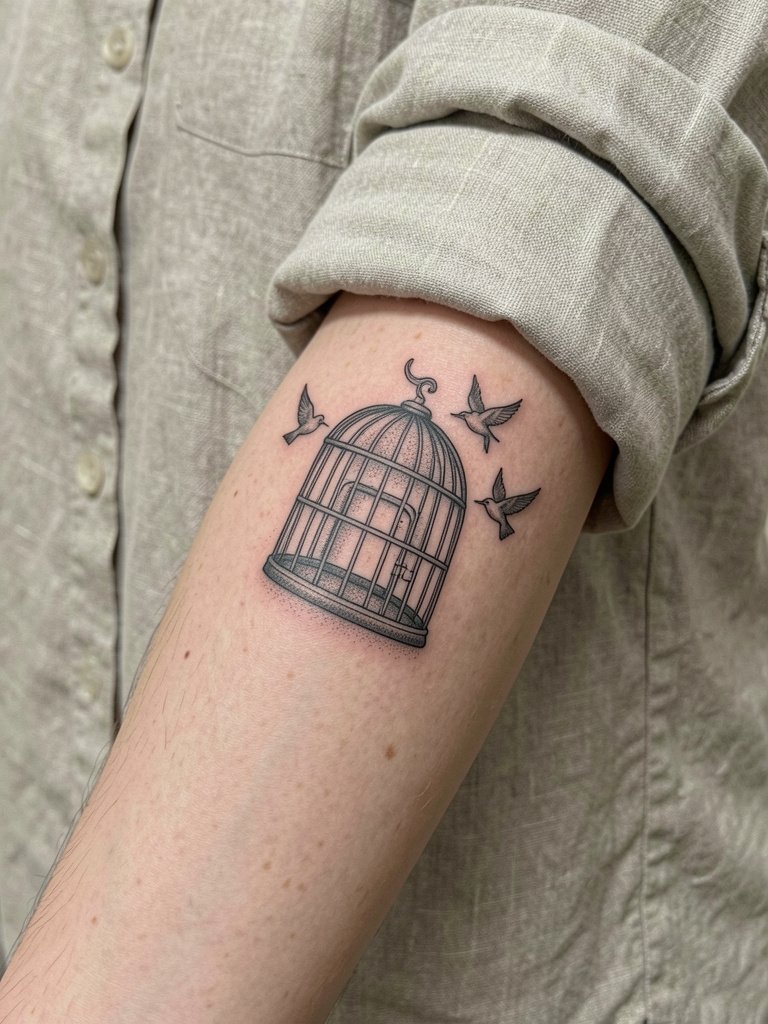
A cage-to-flight composition tells a clear narrative, but artists split on whether you should add a cage at all. One camp says the cage adds narrative value and helps the viewer read the theme immediately. The other camp argues that at tiny scale the cage becomes clutter and draws attention away from the bird forms. Practically, if you want the cage include only its silhouette with wide spacing, and keep the birds slightly bolder than the cage lines. On the inner forearm this piece takes about 45 to 75 minutes depending on cage detail. For the session wear a loose short sleeve or a linen button down so the artist can roll the sleeve cleanly. In the consult be specific about which element is primary, the birds or the cage, because over-emphasis on both creates a design that can age into muddled linework.
4. Delicate Fine Line Seagulls Along the Collarbone
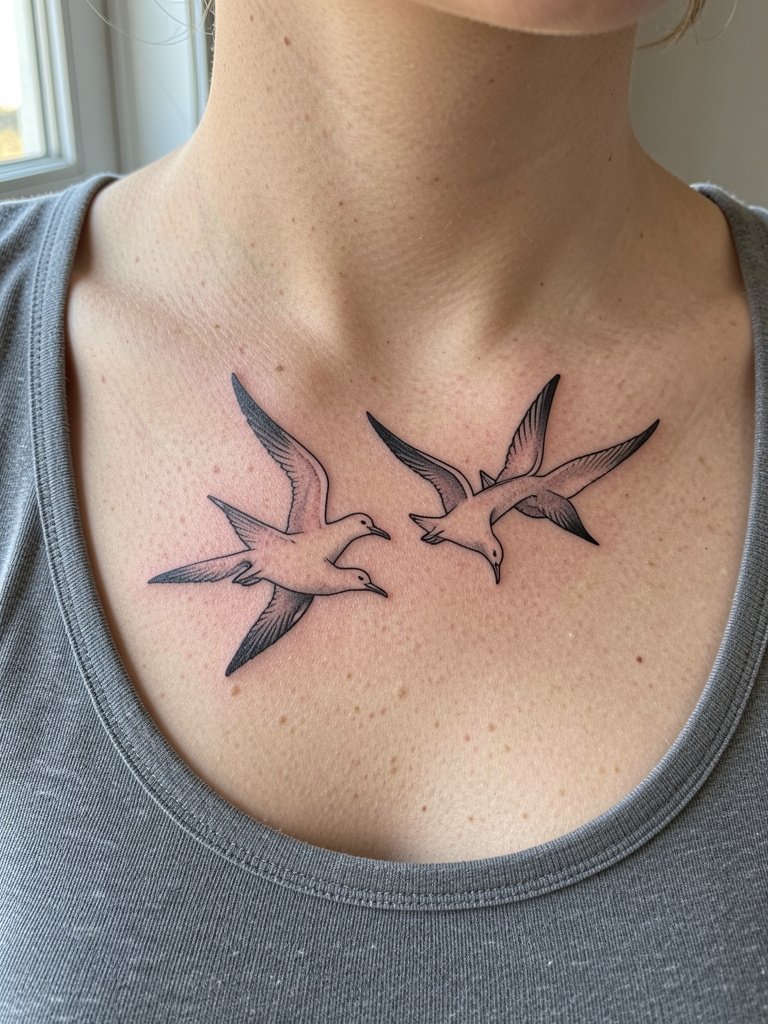
Seagull-style linework has a quieter tone than a bold silhouette and fits the collarbone's natural curve. The placement is visible so consider that photos and jewelry will draw attention. Expect low-to-moderate pain and a 30 to 50 minute session. A common error is trying to compress too much wing detail into a tiny seam; the wings should be suggested by a few confident strokes rather than micro-feathers. Healed at six months the thin single-needle lines look airy. At two to five years the lines soften, so plan for a subtle touch-up if you want the crisp fine edge to stay. If you want a show-off pairing try a delicate layered necklace but avoid heavy pendants that compete with the linework.
5. Birds with Flowers on the Outer Forearm
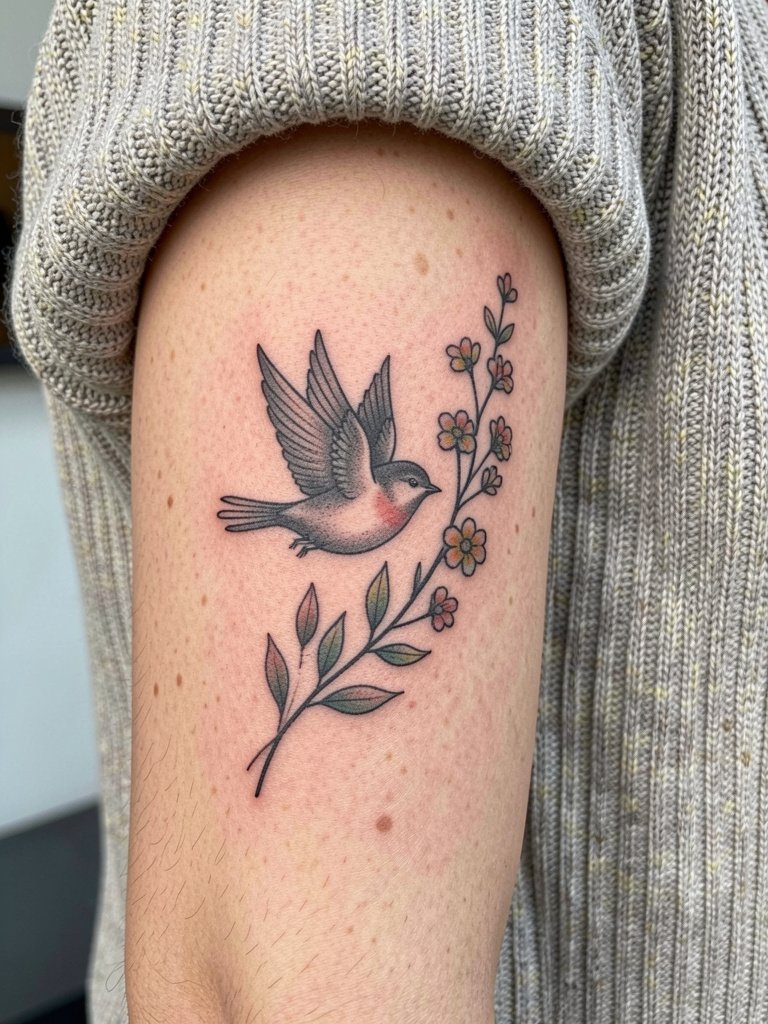
Pairing a bird with floral elements softens the motif and gives you specific symbolism without overwriting the bird's motion. On the forearm this version sits slightly larger than a wrist micro piece and usually takes 45 to 90 minutes if you include modest floral detail. The frequent mistake is squeezing tiny flower petals into the piece. To avoid future blurring keep flower details simple and let the bird silhouette read as the focal point. For showing it off, the tattoo pairs with rolled-sleeve knitwear or half-sleeve tees and stacked rings. Try a textured knit top when you want the forearm to read like a deliberate accessory. Touch-ups at year two are common when color accents are used.
6. Micro Flying Bird with Fine Line Shading, Behind the Ear
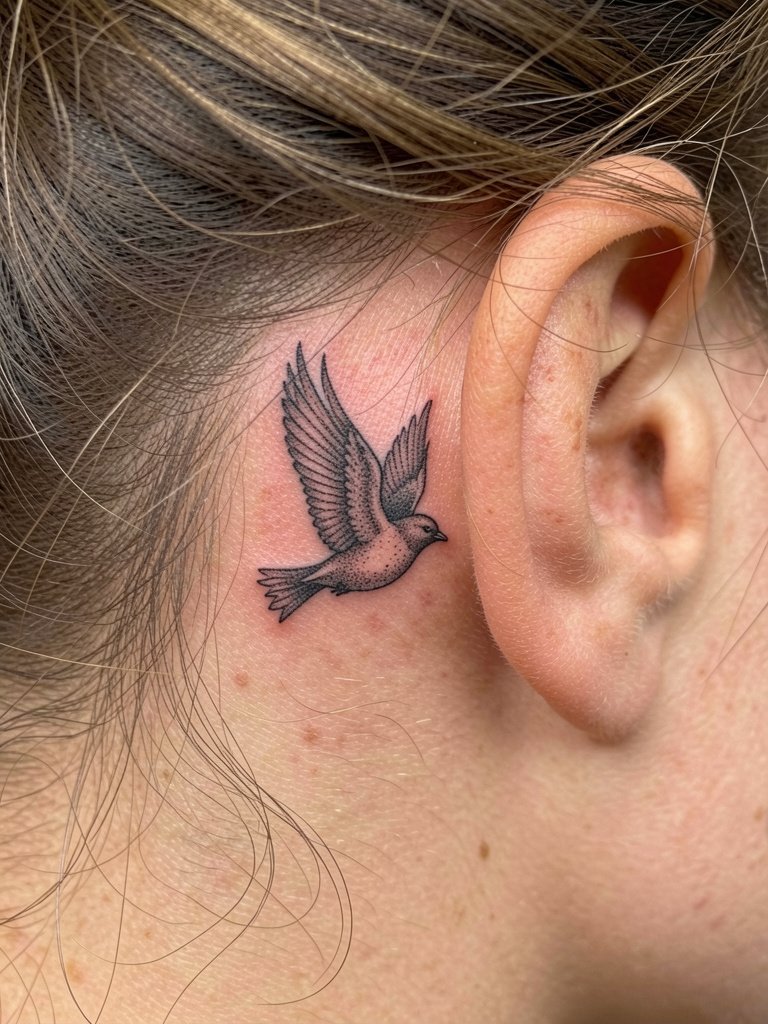
Micro pieces behind the ear are discreet and feel intimate. The area needs an artist experienced in micro linework because the skin there is thin and the mastoid surface requires precise depth control. Session time is short, often under 30 minutes, but expect a higher sensitivity rating because the area is near bone. For the appointment wear hair clips or a set of hair clips so the artist can access the mastoid skin without fuss. Plan for a touch-up window around year one since micro single-needle marks can fade faster in this spot. If your idea includes delicate color avoid it because saturation often drops unevenly on that curve.
Before You Book
These small placements share similar healing quirks and the first week matters for linework retention.
-
Stencil transfer paper kit. Lets you preview the exact line weight on skin before the needle touches it, which is useful for the wrist and forearm silhouettes above.
-
Topical numbing cream. Applied 45 minutes before can make short ankle and behind-the-ear sessions more comfortable without blunting the artist's ability to place crisp lines.
-
Thin protective film roll. Keeps ankle and wrist pieces shielded from friction during the first days while you wash and move.
-
Fragrance-free gentle body wash. Cleanses the area during showers without irritating fresh linework and works well for collarbone and sternum placements.
-
Aquaphor healing ointment. A thin layer for the initial healing window helps micro linework stay hydrated and reduces scab thickness.
7. Flock in Upward Motion on the Forearm
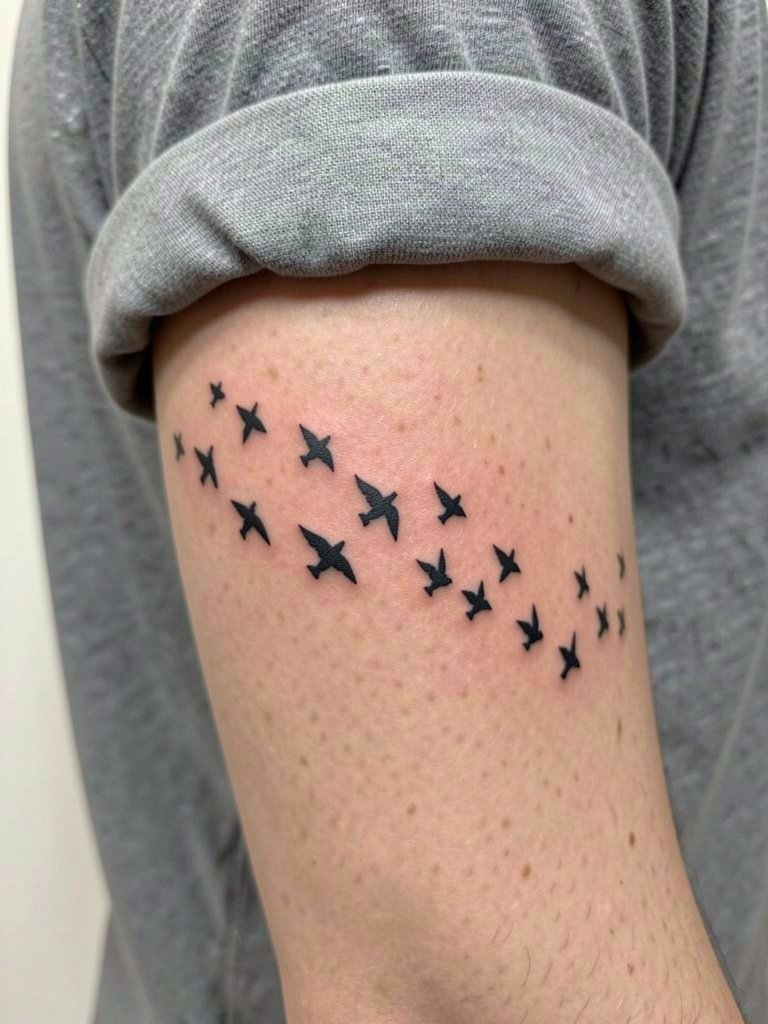
Flocks that arc upward visually read as optimism and leaving things behind. Artists disagree about single versus multiple birds. One camp says a single bird is cleaner and less likely to blur, especially when the client wants a tiny, timeless-looking mark. The other camp argues that multiple birds create clear movement and emotional context, especially when you want family or transition symbolism. If you want a flock, keep individual birds bold enough to hold their shapes, and avoid micro-feather lines. Expect a 30 to 60 minute session depending on spacing and the number of birds. For showing it off try a half-sleeve tee or rolled blazer sleeve, and consider a rolled cuff shirt when you want casual framing.
8. Single Soaring Bird on the Shoulder Blade
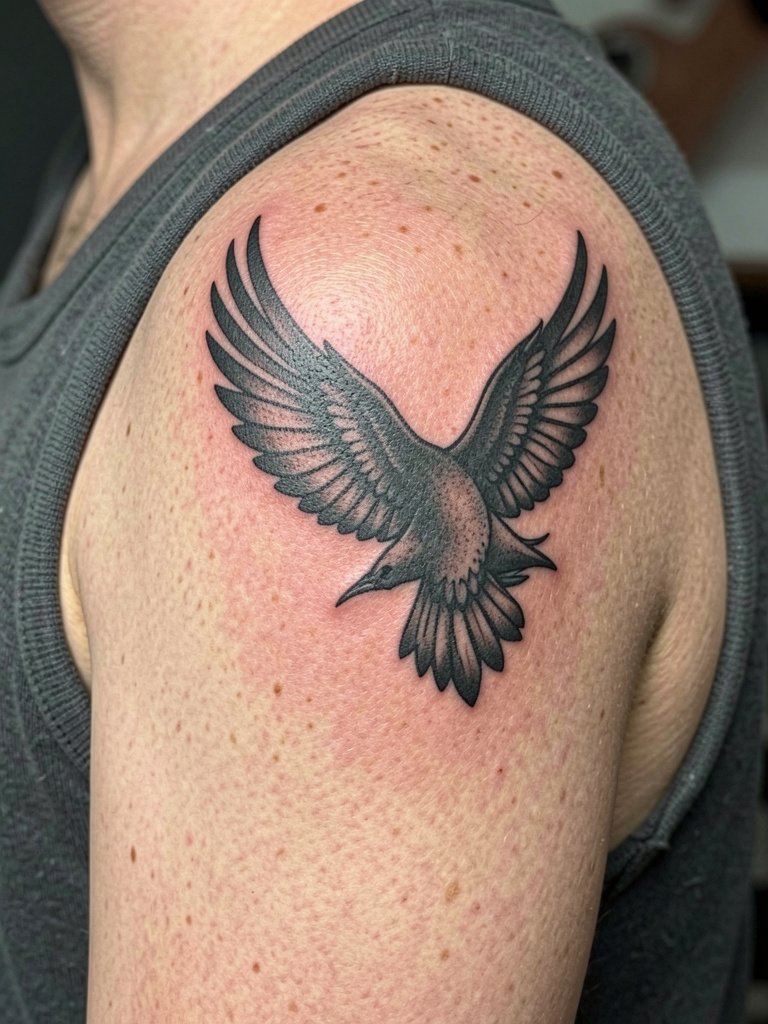
A single soaring bird on the shoulder age-reads consistently because the area has stable skin and less daily abrasion. This piece usually takes 30 to 60 minutes and rates as low-to-moderate pain. A mistake is trying to include tiny feather gradients at micro scale. Keep the wing suggestion bold and keep shading to stipple or soft dot work so saturation stays even. For wardrobe the shoulder blade looks great with open-back tops and off-shoulder sweaters. If you plan to grow this into a larger patch keep edges open for later patchwork.
9. Spiritual Symbol Bird at the Sternum
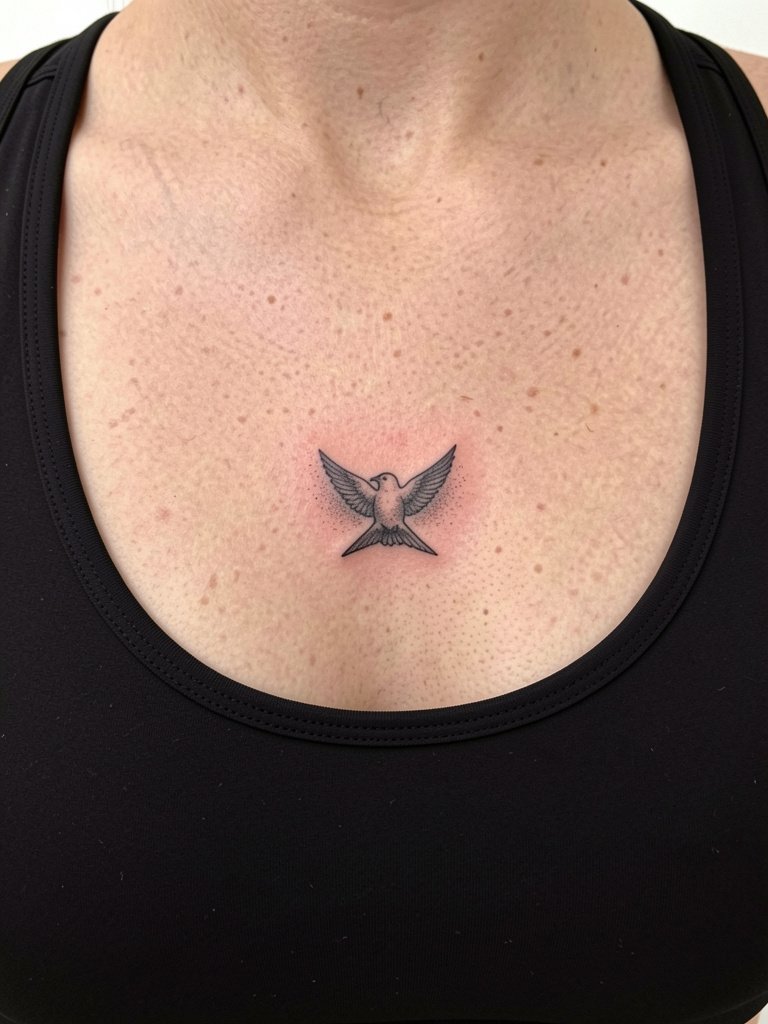
Birds placed on the sternum can read as spiritual or memorial symbols because the centerline gives them symmetry. This placement has higher sensitivity and you should budget 45 to 90 minutes depending on detail. Expect more swelling and tenderness during the first week, so plan comfy clothes and a front-closing bra for easier aftercare. If you want a subtle memorial element consider adding a tiny date or initials in a clean typeface near the bird, but keep the lettering sparse to avoid early blurring. A common error is compressing too much text into the sternum. If you do include script be specific about font size so the artist can show how it reads at one inch.
10. Negative Space Fine Line on the Inner Forearm
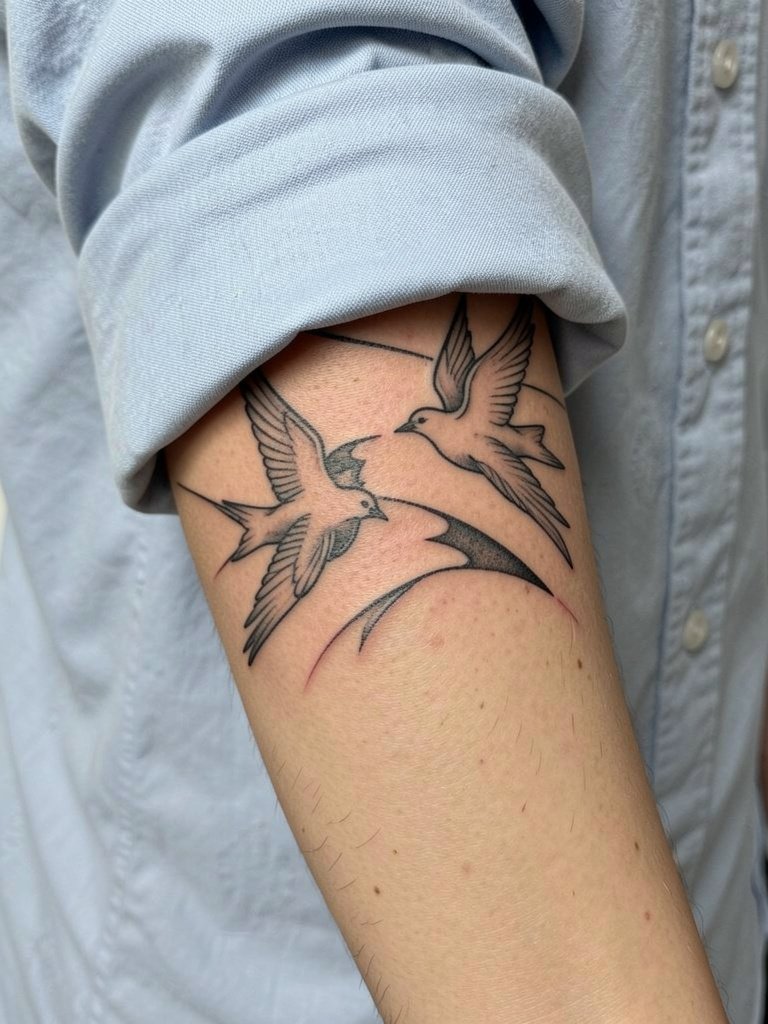
Negative space can make a tiny flying bird appear to move without adding ink density that ages into a blob. On inner forearm placements the skin faces regular stretching, so negative space helps preserve clarity. Sessions run 30 to 60 minutes. A mistake is making the negative gaps too narrow; the skin tone needs enough room to read. For the session wear a loose short sleeve or button-down that you can roll comfortably. To show it off choose a linen button down with sleeves rolled so the palm-up surface is visible.
11. Silhouettes for Cover-Up Layering on the Upper Back
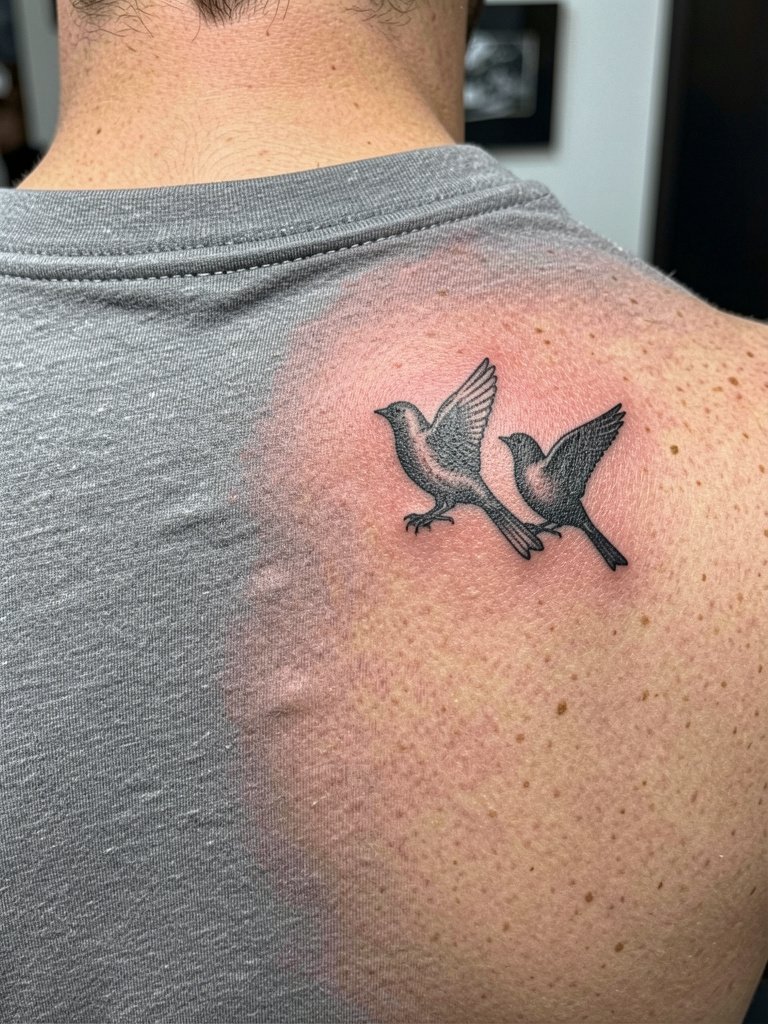
Small silhouette birds make excellent starter pieces if you think you might layer or expand later. The upper back provides a forgiving canvas and the skin there settles predictably. Expect 30 to 45 minutes and low to moderate pain. A common mistake is starting with thin, weak silhouettes that do not provide a dark value for future patchwork. If you may build out later, ask for slightly denser saturation now so the shapes read as anchors for future color or blackwork. For showing it off choose a loose open-back top or scoop neck. During the consult bring images of planned expansion so the artist can set the birds where they leave room.
12. Memorial Flight on the Ribcage
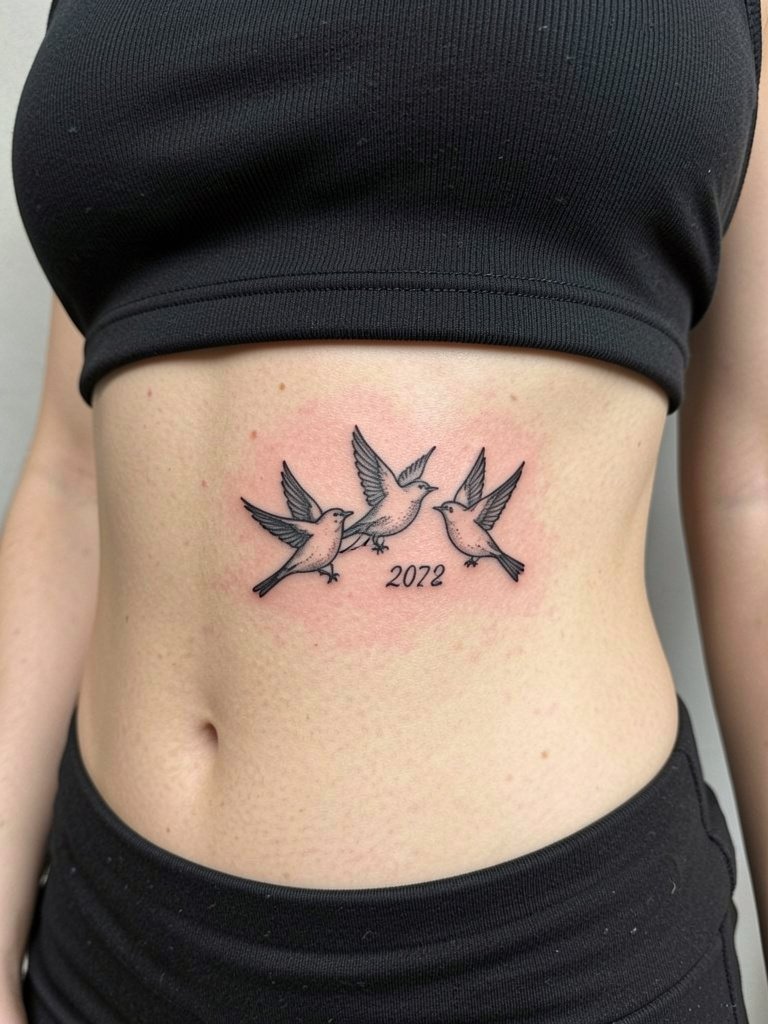
Ribcage pieces can be powerful but painful. Fine line on ribs divides practitioners into camps. One camp warns that the mobility and thin soft tissue there cause lines to blur within two years. The other camp says that with slightly wider line spacing and careful needle depth, fine line can settle well and point to healed photos as proof. If you choose the ribs, accept the reality of higher pain and plan a realistic touch-up window. For the session wear a soft bralette or an open button-down that the artist can remove or adjust easily. Keep any memorial text minimal to prevent the letters from turning into a single dark smudge.
13. Tiny Ankle Birds for Discreet First Tattoos
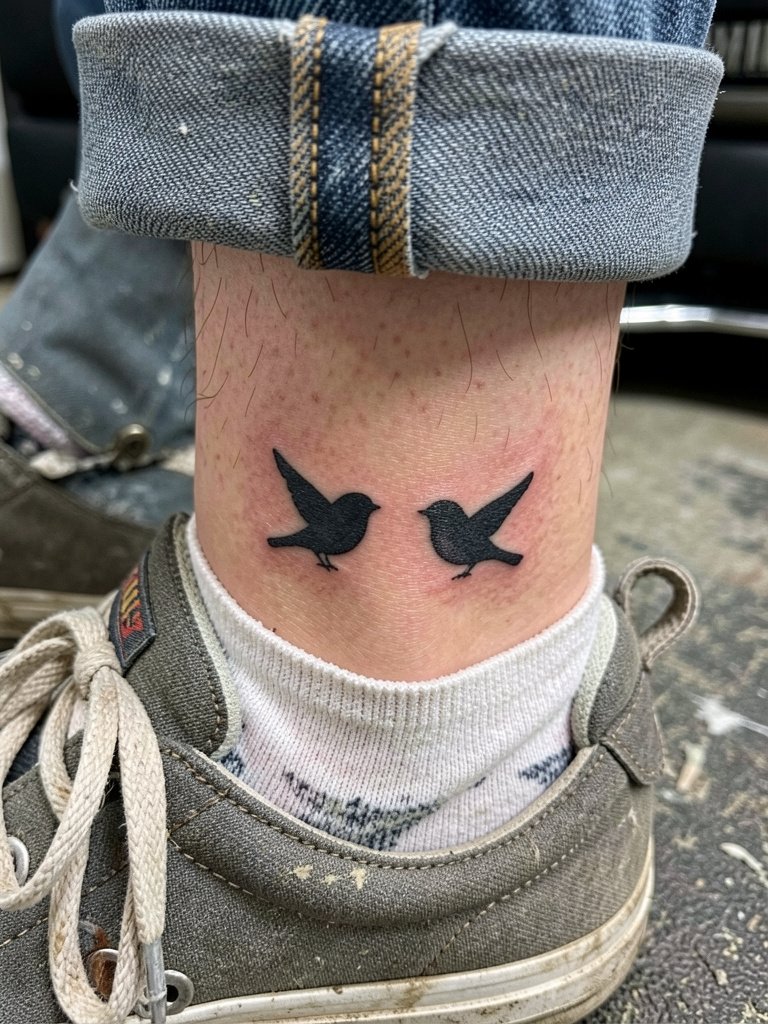
The ankle is a discreet first-tattoo spot and works well for very small silhouettes. The session is brief, often under 30 minutes, but be aware that the skin around the malleolus is thin and more prone to scab height. Avoid tight socks and abrasive shoes for the first two weeks. For a casual reveal pair it with cropped straight-leg jeans and low-profile sneakers. An appointment-day tip is to wear pants you can easily roll or pull up without bunching into the area.
14. Behind-the-Ear Micro Bird for Subtle Placement
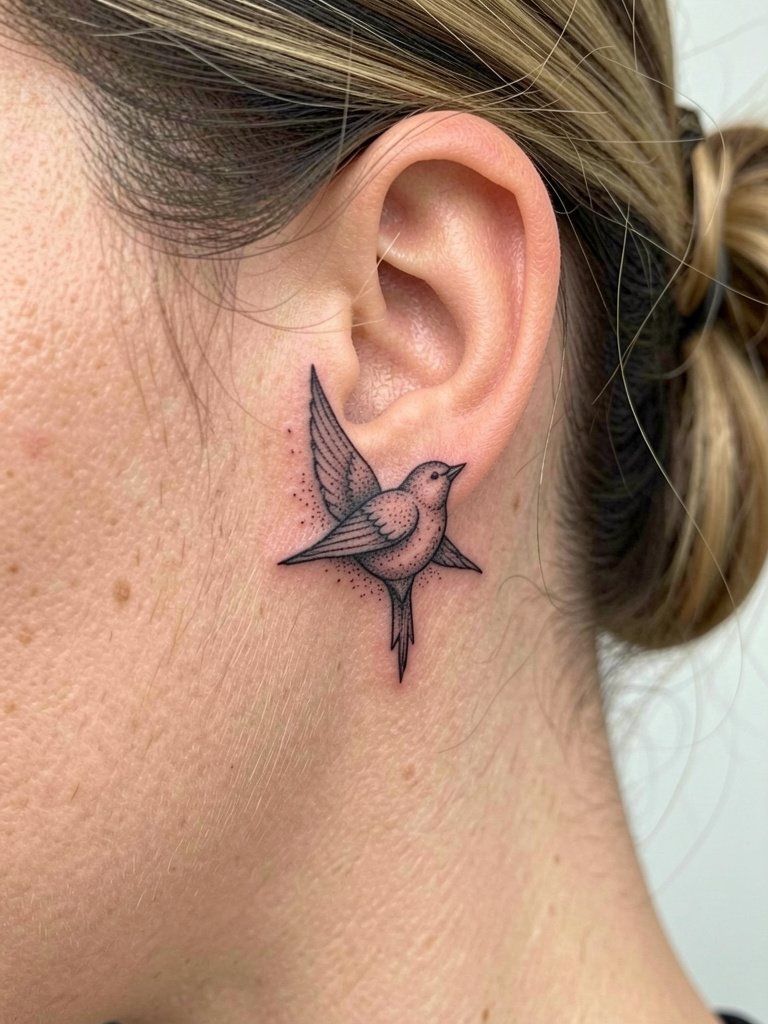
Behind-the-ear tattoos are inherently private and photograph well when the hair is up. Choose an artist with healed micro work in their portfolio because the mastoid area shows any blowout quickly. Session time is short and pain is moderate. For the appointment use a hair clip and bring a small mirror. If you plan to add color keep expectations modest because saturation can be uneven in that curve. For everyday styling small hoop earrings or ear cuffs can frame the area without competing with the micro design. Consider the long-term haircuts you might wear because a dramatic undercut will reveal the tattoo constantly.
15. Sets of Three or More as Filler Pieces Along the Collarbone
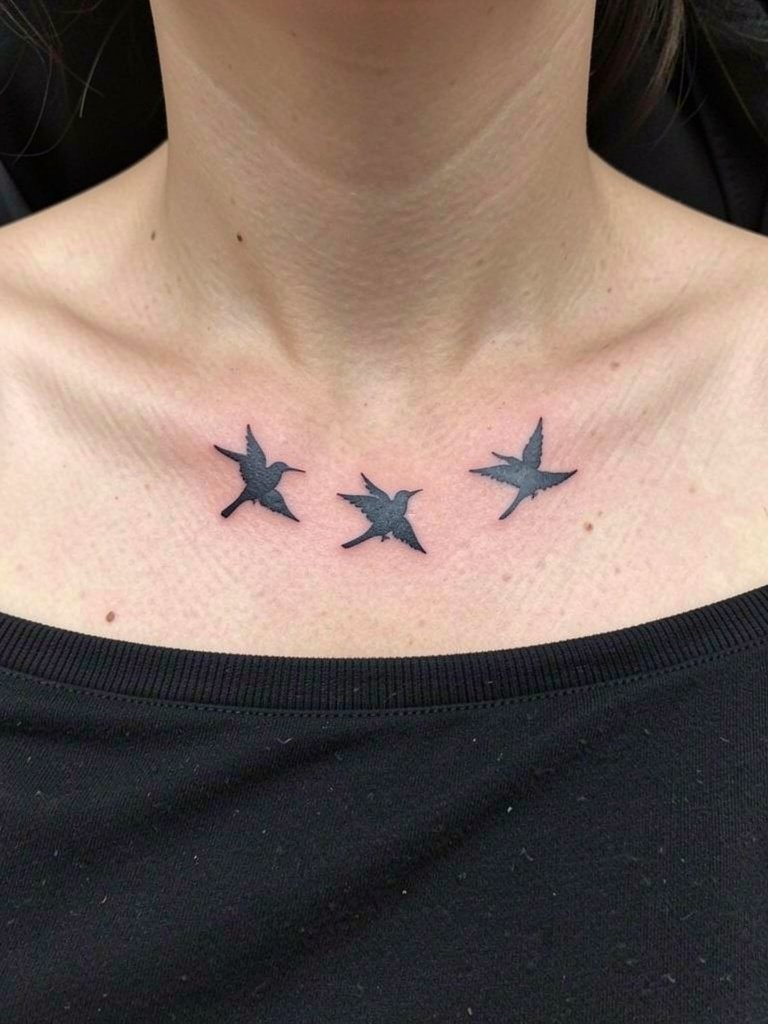
Triplet bird sets are versatile filler pieces that move naturally with clavicle anatomy. They usually take 20 to 40 minutes depending on spacing and the number of birds. A typical mistake is lining them up on a flat plane instead of following the collarbone curve, which makes the composition look pasted on. For session wear a scoop or off-shoulder top so the artist can see the collarbone line. These sets work well as stand-alone tiny accents or as the beginning of a larger shoulder composition later on.
Frequently Asked Questions
Q: How much does a small bird tattoo typically cost?
A: Small bird tattoos often fall into shop minimum ranges. Expect roughly $50 to $200 for a single simple silhouette at a studio that charges a flat minimum. Custom fine line pieces that require layout time or more than one session can fall toward the higher end. Tipping 15 to 25 percent is common and appreciated.
Q: Will a tiny bird blur quickly and how can I avoid that?
A: Tiny tattoos can blur if lines are too thin or details are too dense. Choose stronger silhouettes or slightly bolder linework, avoid micro-feathering, and place the design away from high-friction zones like the top of the foot or the inner elbow crease. Plan a touch-up at one to two years if you want to restore crisp edges.
Q: How should I find an artist who actually does good small birds?
A: Search hashtags that combine subject and style like #finelinetattoo and #microtattoo, then filter by your city on Instagram and TikTok to find local portfolios. Look specifically for healed photos, not only fresh work, and compare idea platforms with real portfolio posts to spot the difference between concept art and healed results. If you use platform searches, focus on artists who post multiple healed micro line jobs.
Q: Are color accents a good idea for tiny bird tattoos?
A: Color can add personal resonance but it often loses saturation faster than black ink at micro scale. If you want color use it as a tiny accent point rather than full fill, and expect a higher chance of a touch-up within two years to keep saturation even.
Q: What should I wear to my appointment for these placements?
A: Think access and comfort. For wrist and forearm pieces wear short sleeves or a button-down you can roll. For collarbone or sternum pieces wear a scoop-neck tank or a front-closing bra for easier dressing after the session. For ankle tattoos choose pants you can cuff or shorts that let the artist expose the area comfortably. If you need specific items try a scoop neck tank for chest access.
Q: Do small bird tattoos photograph well across skin tones?
A: High-contrast black silhouettes and clean negative space photograph best across a range of skin tones. Single-needle light lines can disappear on medium and darker skin tones once healed, so ask the artist how they adapt line weight and spacing for your tone. Healed photos matter here, so request them during discovery.
Q: When should I plan a touch-up for fine line bird work?
A: A realistic touch-up window is between one and three years depending on placement and how much sun and abrasion the area sees. Micro single-needle pieces often benefit from a planned touch-up at year one to keep edges crisp.