
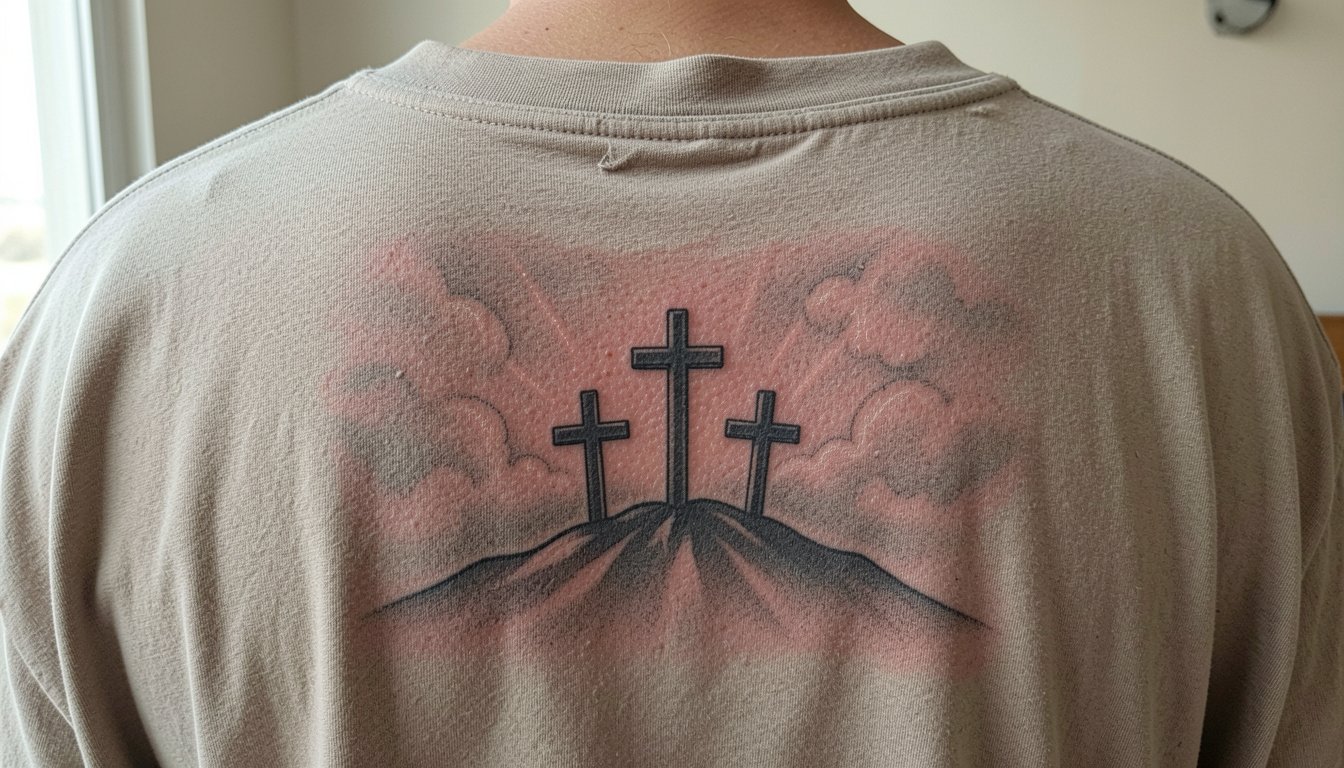
The cleanest three-cross tattoos I see age when the artist designs for skin, not for social feed. Fine single-needle trios on a wrist look crisp at first, and then the lines thicken and blur. Heavy-lined blackwork or a small hill silhouette often keeps the composition readable for years, so plan spacing and lineweight with longevity in mind before the stencil goes on.
1. Minimalist Three-Cross Row on the Wrist
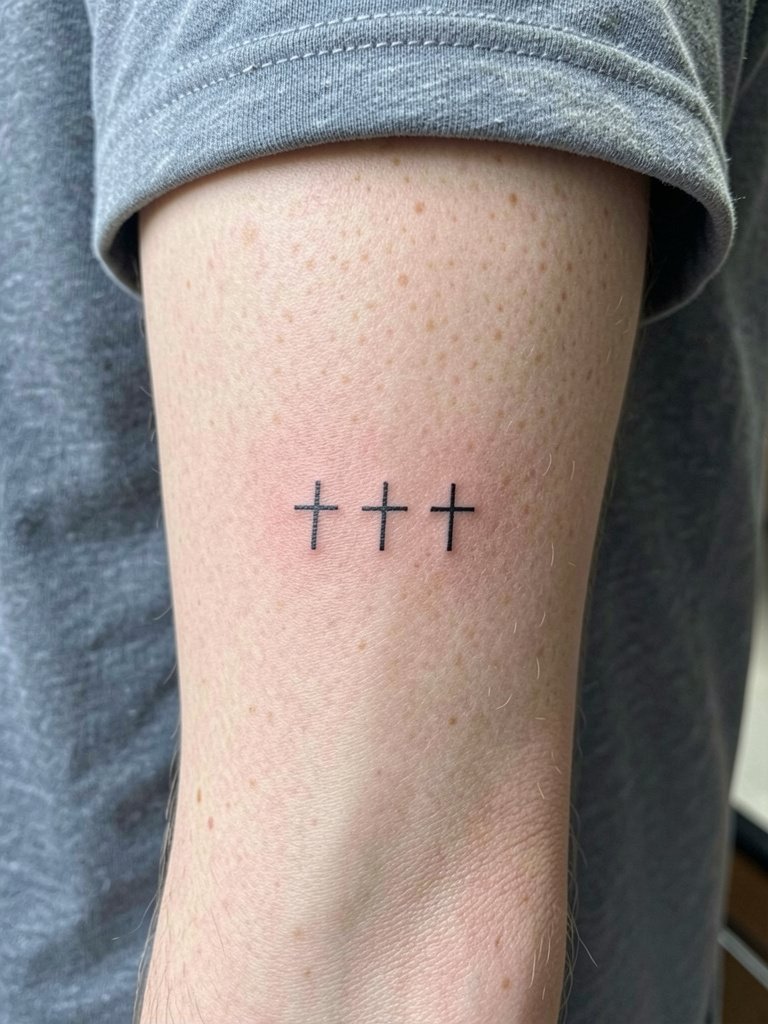
If you want a discreet wrist trio this clean line version works well. I recommend bumping the lineweight slightly above single-needle standards so the crosses remain readable at year three and five. A common mistake is asking for ultra-micro detail without spacing, which turns into a blurred mark on softer skin. For the session wear the short sleeve tee suggested here keeps the wrist exposed without rubbing the fresh ink. Talk through exact millimeter line thickness with the artist so they can translate the size into stable linework. Expect a short session and a probable touch-up at the one-year mark for crisp edges.
2. Three Crosses on a Hill, Upper Arm Realism
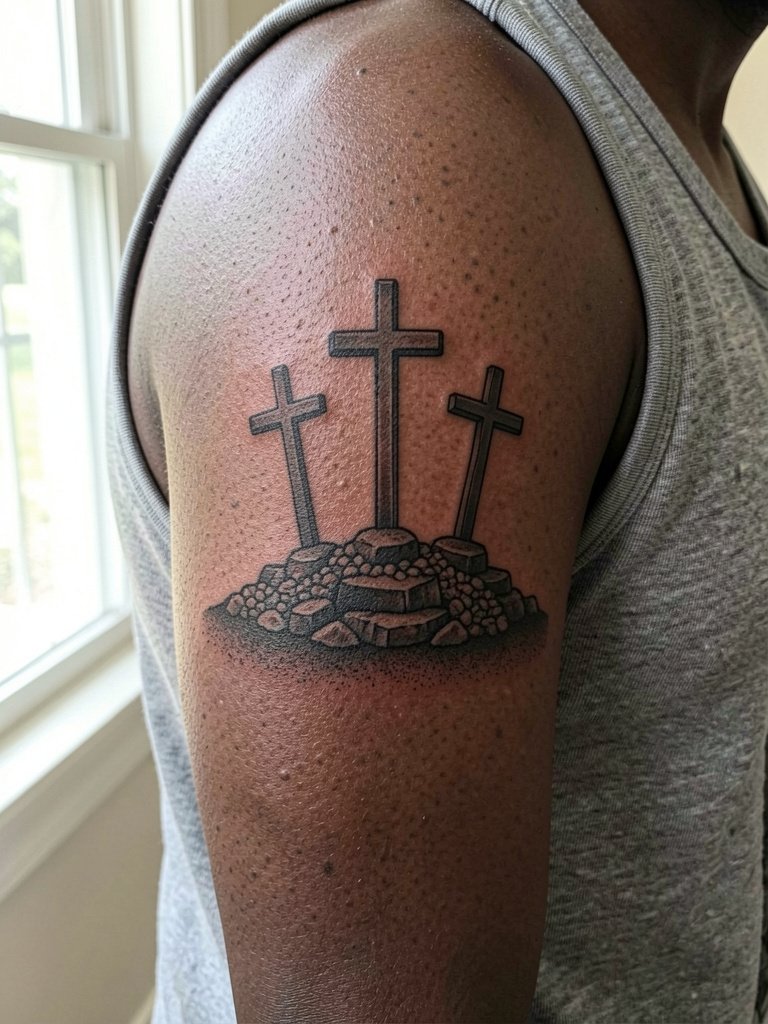
This hill composition reads as a scene so the upper arm gives the shading room without wrapping too far around. I suggest stipple shading in the background to avoid heavy saturation that can look muddy on warm tones. People split on small minimal pieces versus larger readable scenes. One camp favors the subtle wrist trio because it is discreet and quick. The other camp favors larger hill compositions because added spacing and shading preserve detail as skin ages. During consultation bring a healed upper arm photo so the artist can map how the shadows will settle across your muscle shape. The session feels like steady shading with moderate pressure and usually finishes in one to two sittings.
3. Stacked Vertical Three-Cross Forearm
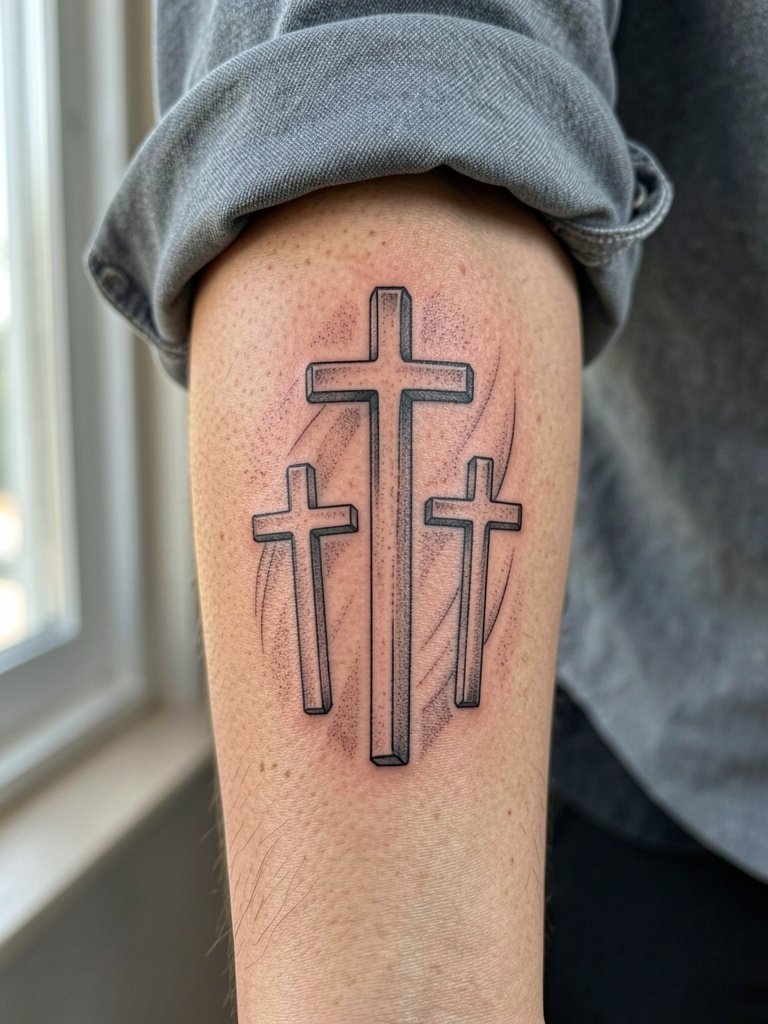
A vertical stack makes the Jesus-centered composition obvious on narrower canvas like the forearm. The design needs clear spacing so the center cross does not visually swallow the smaller ones as the skin settles. A mistake I see is compressing the three too tightly. Discuss exact spacing and the height ratio of the center cross during the consult. For showing this off, roll an oxford sleeve as suggested in the image prompt so the forearm sits cleanly in view. The session usually runs under two hours for a medium-sized stack and the blowout risk on the forearm is low with proper line depth.
4. Hill Scene with Rays of Light, Chest Piece
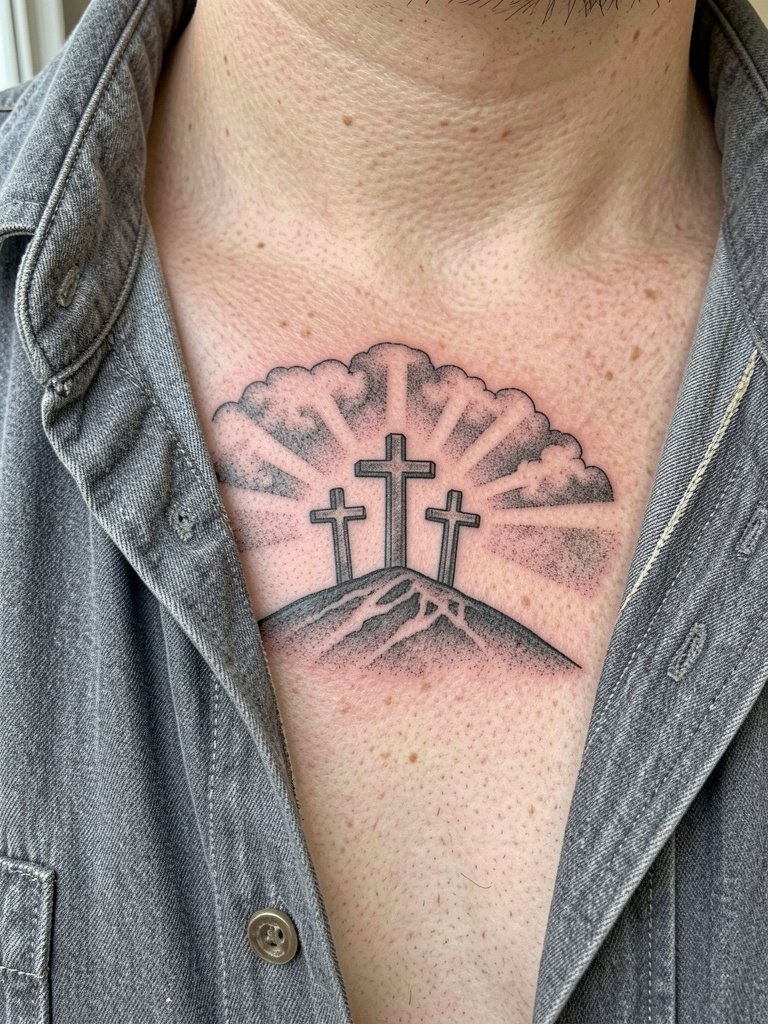
Adding rays creates drama and makes the hill version read clearly. Artists and clients disagree on plain trios versus hill scenes. One camp says the plain trio is cleaner and works for small placements. The other camp says a hill adds context and avoids the piece reading like three marks. If you favor a chest piece keep the rays subtle so the composition does not look like clip art once healed. For the appointment wear an open collar shirt so the artist has full access without fabric rubbing during healing. Expect chest sessions to be more sensitive than arm work, but manageable with breaks and a calm pace.
5. Forearm Three Cross Piece with Precise Linework
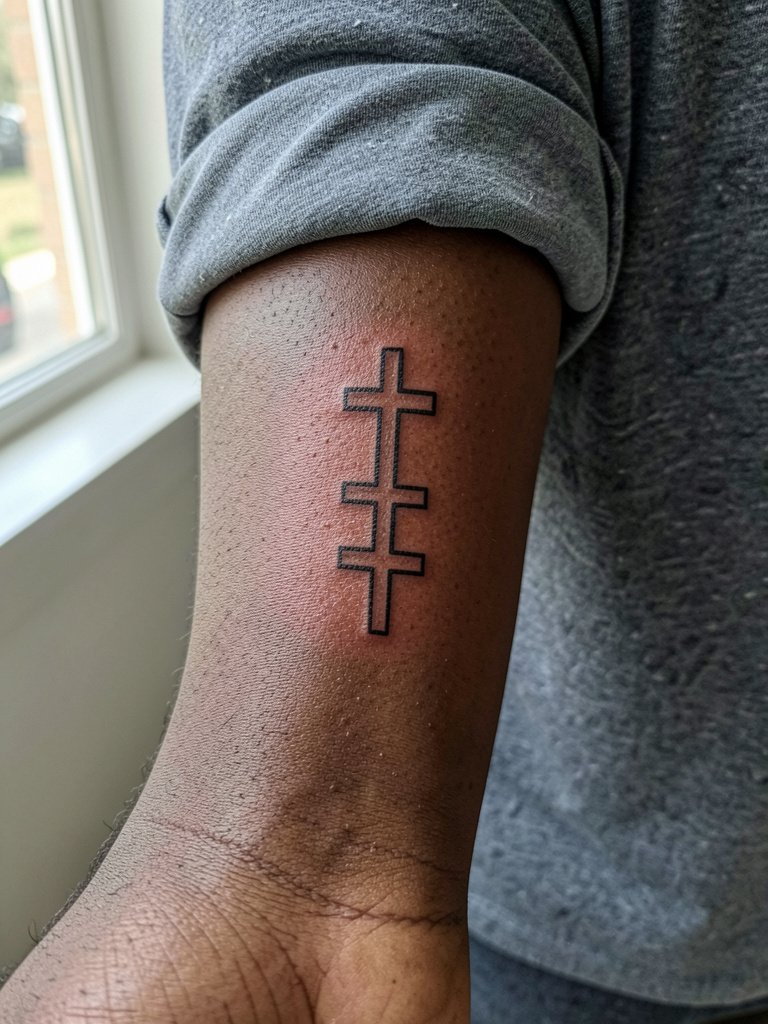
Inner forearm demand for precise linework is high because the surface is flat and visible daily. The biggest mistake is asking for hairline single-needle work without allowance for slight thickening. Ask the artist to choose a hairline that will read at three inches and still have room to breathe in the skin. For session wear the henley noted so the artist can access the palm-up surface easily. Expect a short, sensitive session with low blowout risk if the needles are run cleanly. Plan a touch-up window at the six- to twelve-month mark for any lines that soften.
6. Three Crosses with Crown of Thorns Accent on Upper Chest
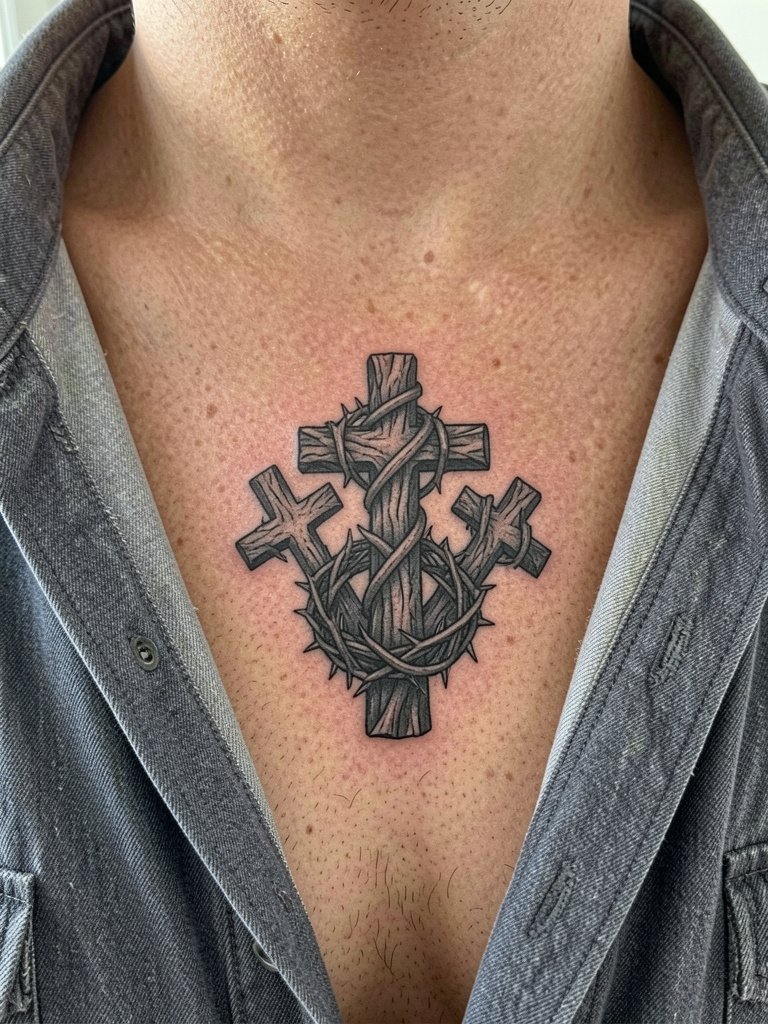
A crown of thorns adds Christ-specific symbolism without a full crucifix scene. Keep the crown sketchy and avoid heavy saturation near tiny twig points so small edges do not blur. If this sits close to the sternum expect higher sensitivity. For the session wear a button-down that opens easily as noted so the artist can access the clavicle and sternum without fabric friction. Ask the artist about light stipple shading behind the crown to preserve texture as the ink settles. This design usually needs one solid session and a minor touch-up later if the twig points soften.
Session Day Picks
These items smooth the first day and first week for the wrist, forearm, and chest pieces above.
-
tattoo stencil transfer paper kit. A stable stencil helps the artist position the trio and the hill exactly as discussed, especially useful for small wrist and stacked forearm layouts.
-
topical tattoo numbing cream. Applied about 30 to 45 minutes before a chest or sternum pass it can cut the edge off sensitivity without changing how the ink sits.
-
thin protective film roll for tattoos. Useful for protecting wrist or forearm pieces from friction during the first day, particularly helpful if the design sits near cuffs.
-
fragrance free gentle body wash. Gentle cleansing avoids irritating fresh ink during showers without stripping natural oils.
-
Aquaphor healing ointment. A thin layer on day one keeps the area moisturized and protected for tight linework while allowing the artist-recommended aftercare routine to do its job.
7. Three Crosses Paired with a Dove Accent, Shoulder Blade
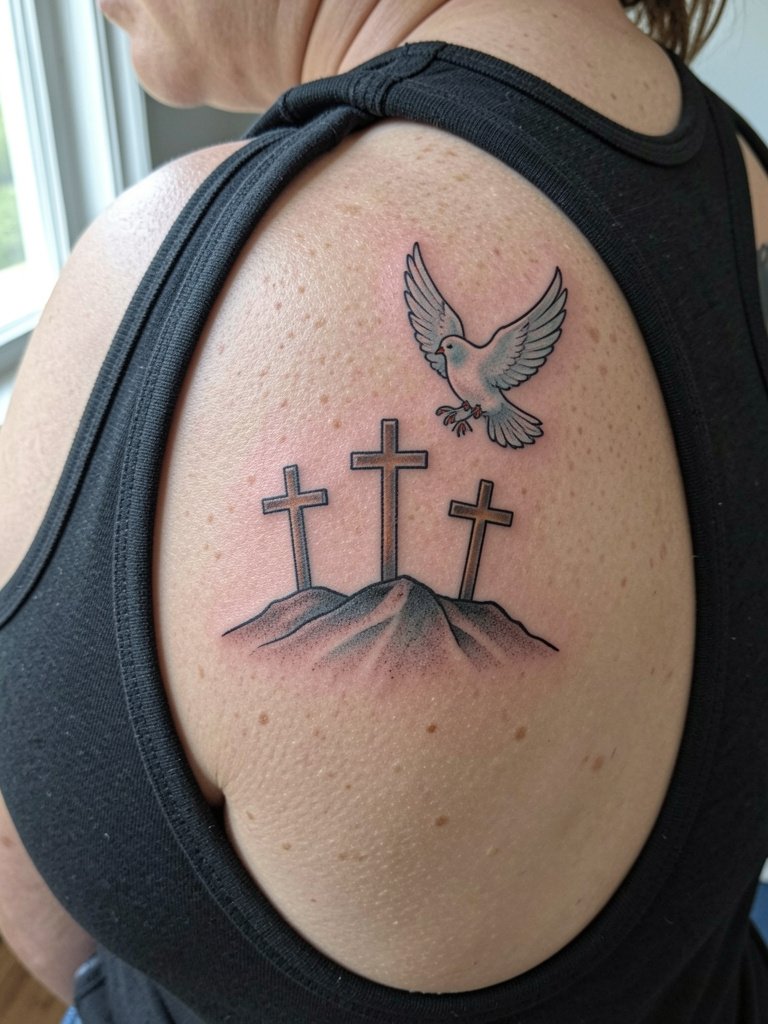
Adding a dove expands the symbolism toward peace without cluttering the crosses. Keep color accents restrained and patchy so the piece does not rely on saturation that could fade unevenly. For session wear the racerback tank in the image prompt so the shoulder blade is fully accessible without tugging at fabric. A common mistake is asking for bright color fills near fine linework which can age differently. Discuss color placement specifically and ask the artist to show healed examples of similar blue accents on darker skin tones.
8. Small Three-Cross Wrist Tattoo for First-Timers
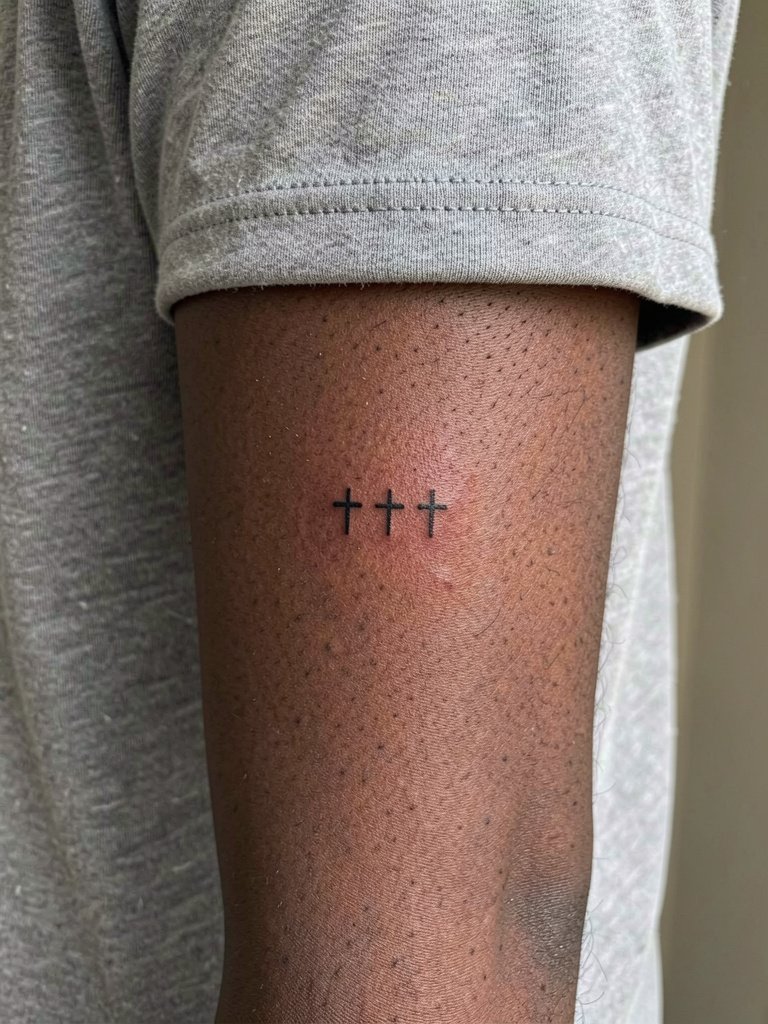
This is the common pick for first tattoos because the session is fast and the pain is low. Avoid asking for hairline single-needle if you plan to keep it small. Tell the artist to thicken each stroke slightly so the crosses stay distinct after healing. For the appointment wear the short sleeve tee in the prompt so the artist has clear access. Expect a ten to twenty minute session and a possible one-year touch-up if the lines soften. I often advise clients to imagine the wrist at three years and tweak the lineweight accordingly.
9. Upper Back Three-Cross Scene with Wide Composition
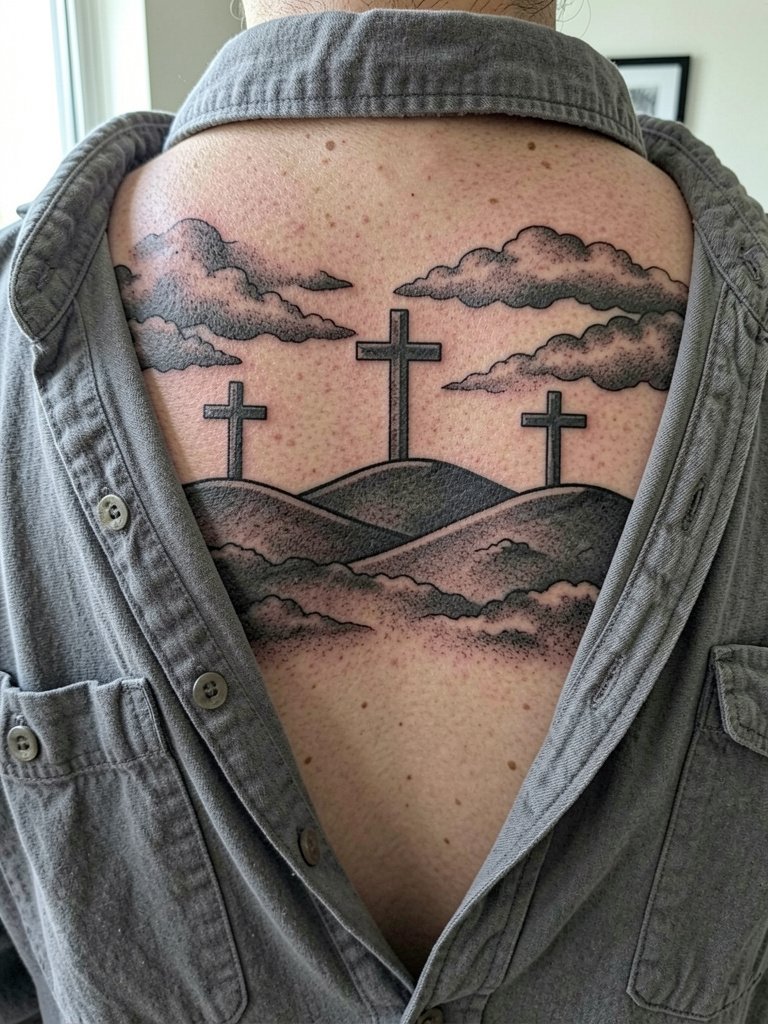
Upper back gives the largest canvas for a hill scene and allows more complex shading without crowding. If you want scope and visible depth pick this placement over a chest piece. For the session wear a button-down as the image prompt suggests so you can remove or drape it without chafing the fresh ink. A common error is over-saturating with heavy black in the first pass, which can flatten on dark skin. Ask for layered shading with stipple texture to keep the mid-tones readable across seasons.
10. Side Chest Three-Cross Near the Heart
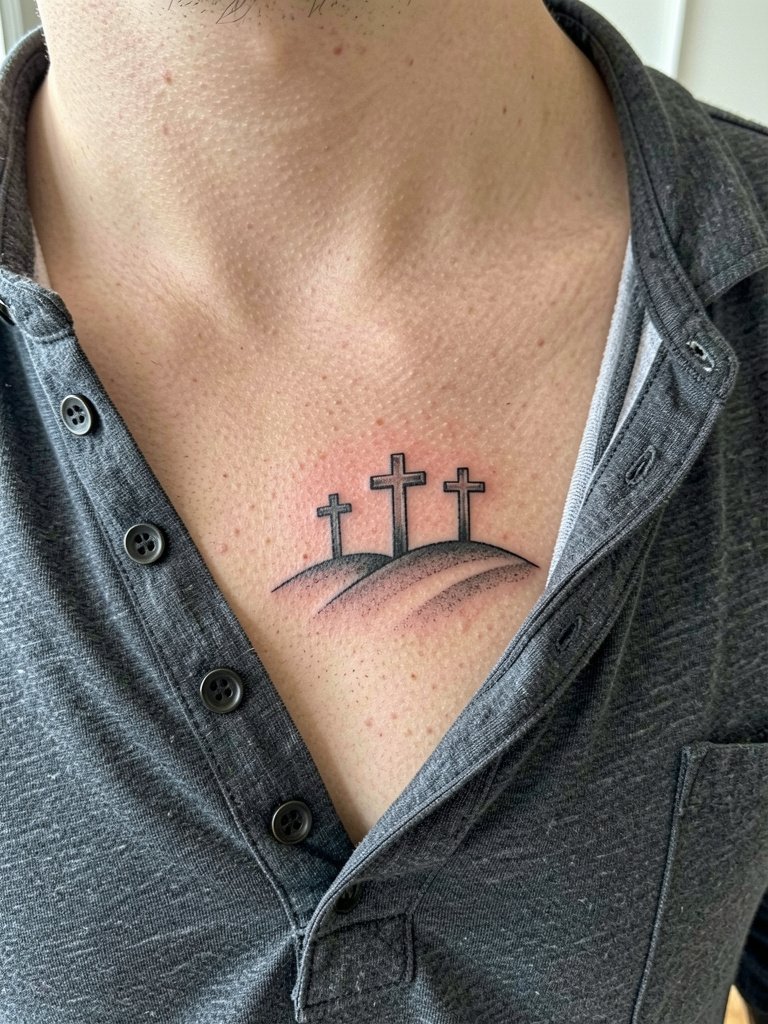
Side chest placements sit close to muscle curves so the design should account for motion during workouts. One mistake is centering the scene on a flat reference without checking how it looks when the chest flexes. Bring a photo of your torso at rest and with flexed pectoral to the consult. For showing this area, an open collar or henley as suggested keeps the piece partially visible without constant exposure. Sternum-adjacent work tends to be more sensitive, so plan for shorter passes and breaks during the session.
11. Blackwork Three-Cross Silhouette, Outer Forearm
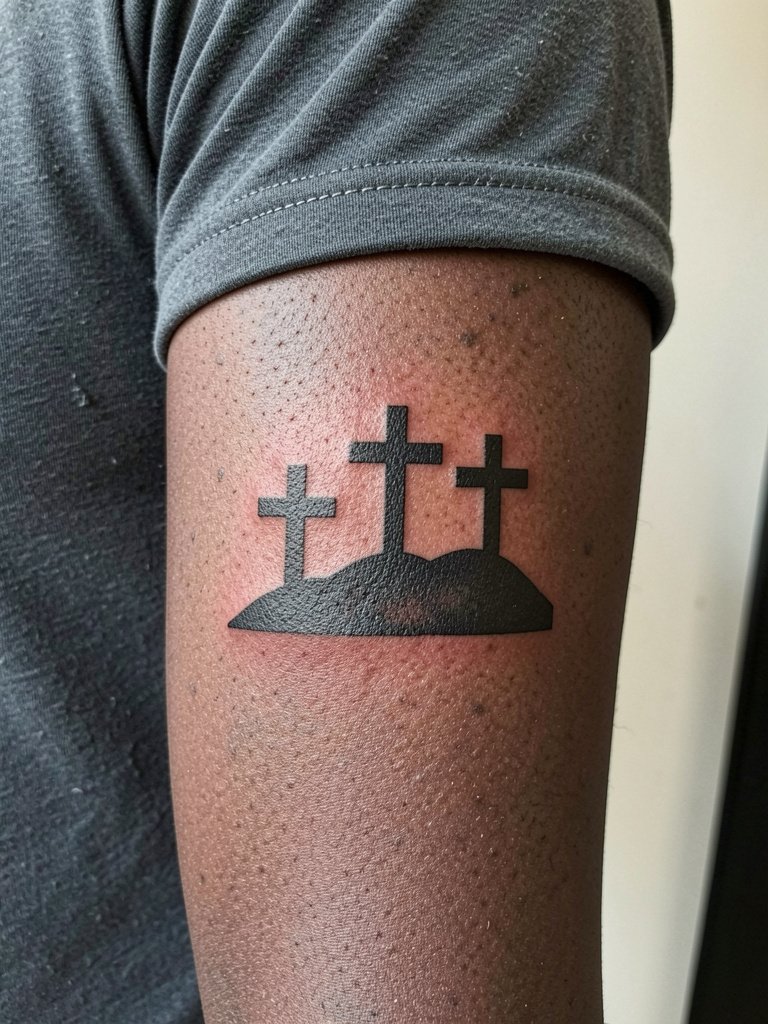
Blackwork silhouettes hold up well because the solid fills age into a readable shape rather than fusing fine lines. The risk is too much saturation on sensitive skin which can cause prolonged scabbing. Ask the artist about staged saturation and a single-pass fill technique to reduce trauma. For styling pair this with a fitted tee or bomber jacket as in the research notes, which frames the outer forearm cleanly. Sessions for solid black areas can run longer but usually finish in one extended sitting for a medium-sized piece.
12. Dotwork Three-Cross Composition, Upper Arm
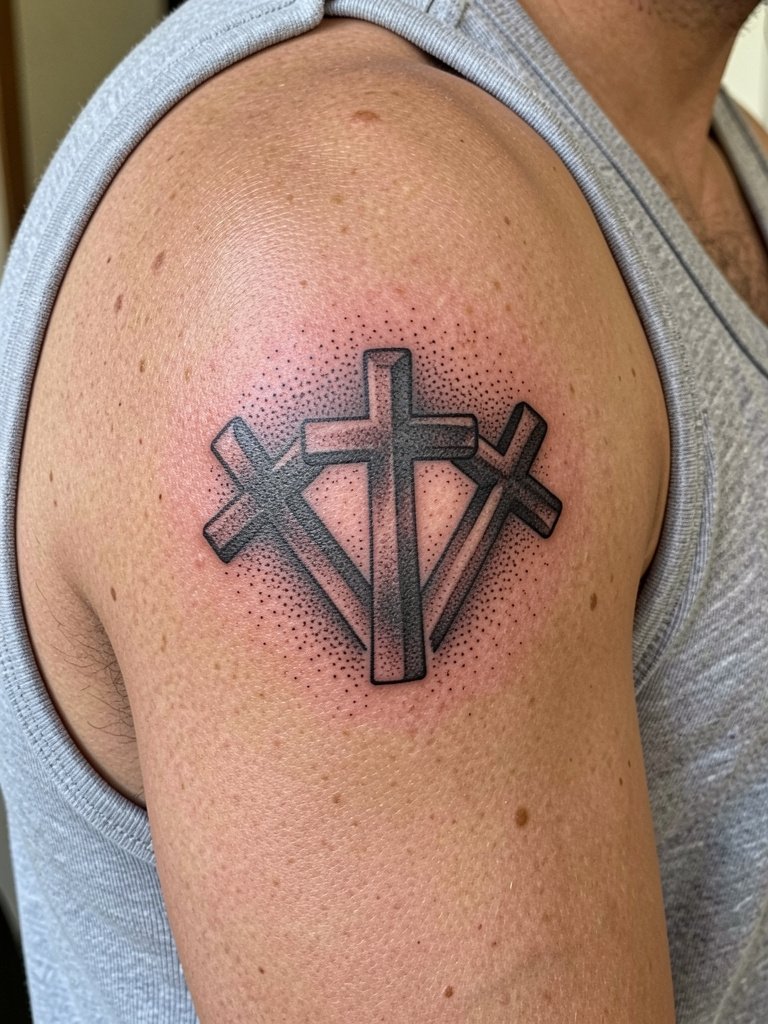
Dotwork adds texture without overloading the piece with solid shading. The common mistake is trying to force dotwork at too large a scale which increases session time and healing complexity. Use dotwork to suggest depth around the crosses while keeping the crosses themselves solid or bold-lined. For the session wear a muscle tank so the artist can work the deltoid curve easily. Dot shading tends to age gracefully if the dots are not packed too tightly.
13. Traditional Bold-Line Three-Cross Tattoo, Upper Arm
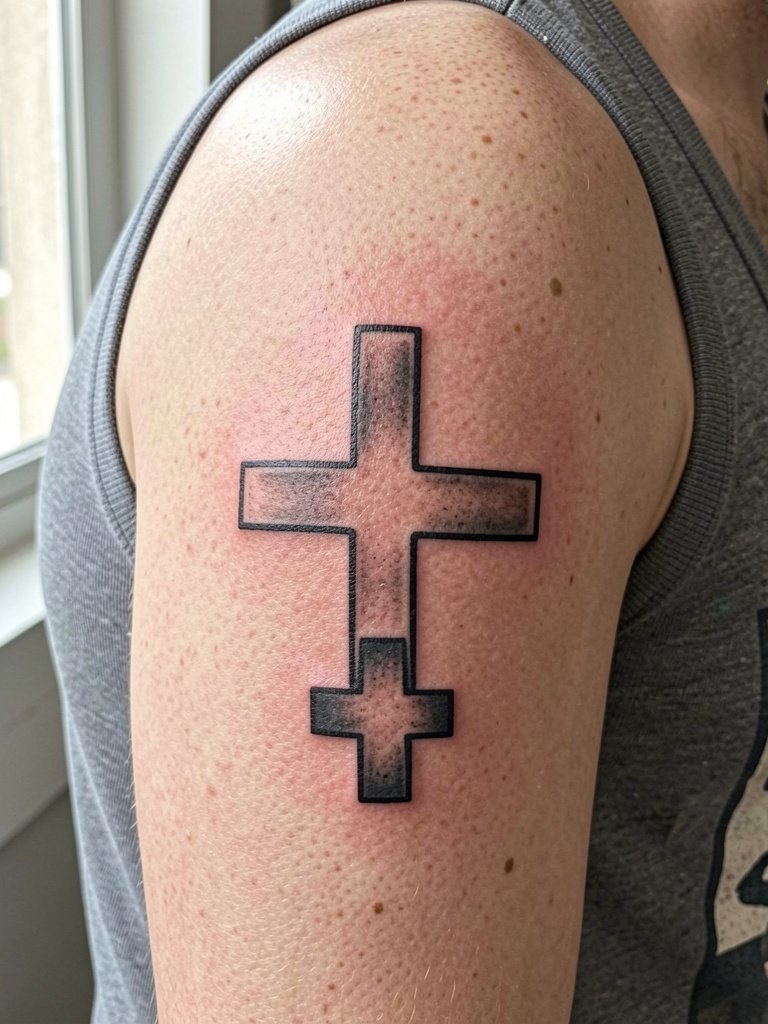
Traditional linework keeps readability and usually ages predictably because of the heavier outline and controlled saturation. This is a good choice if you want a masculine feel without a massive chest or back piece. For showing off wear a sleeveless tank so the upper arm frames the design. A common error is introducing intricate internal detail that contradicts the traditional aesthetic. Ask the artist to show healed traditional pieces for comparable arm shapes so you get an honest view of how the bold lines will settle.
14. Memorial Three-Cross Forearm with Date Accent
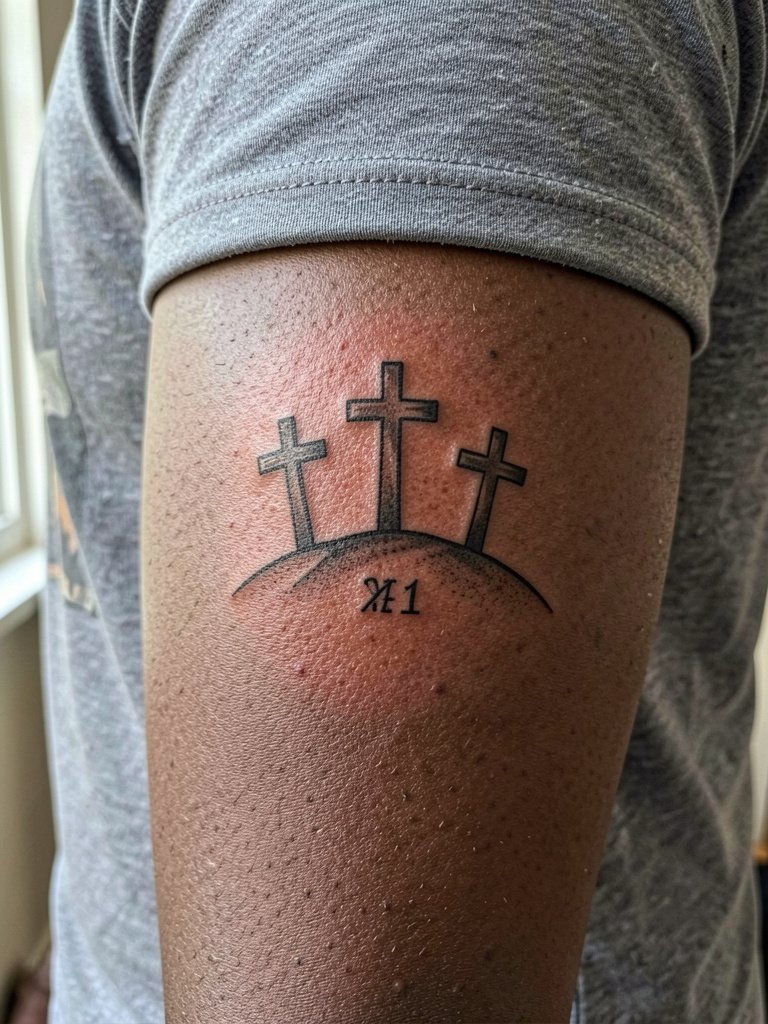
Memorial variations allow names or dates to be included. Keep any text or numerals small but legible by using clear letterforms and spacing. A common mistake is adding names in tiny script that spreads and becomes unreadable. When planning this version bring exact text in the font you want so the artist can size it for the forearm. For the session wear a short sleeve tee as the image shows so the area is easy to access and bandaging is simple. Expect a single session for a medium forearm memorial and a possible touch-up later for text clarity.
15. Vertical Three-Cross Calf Piece
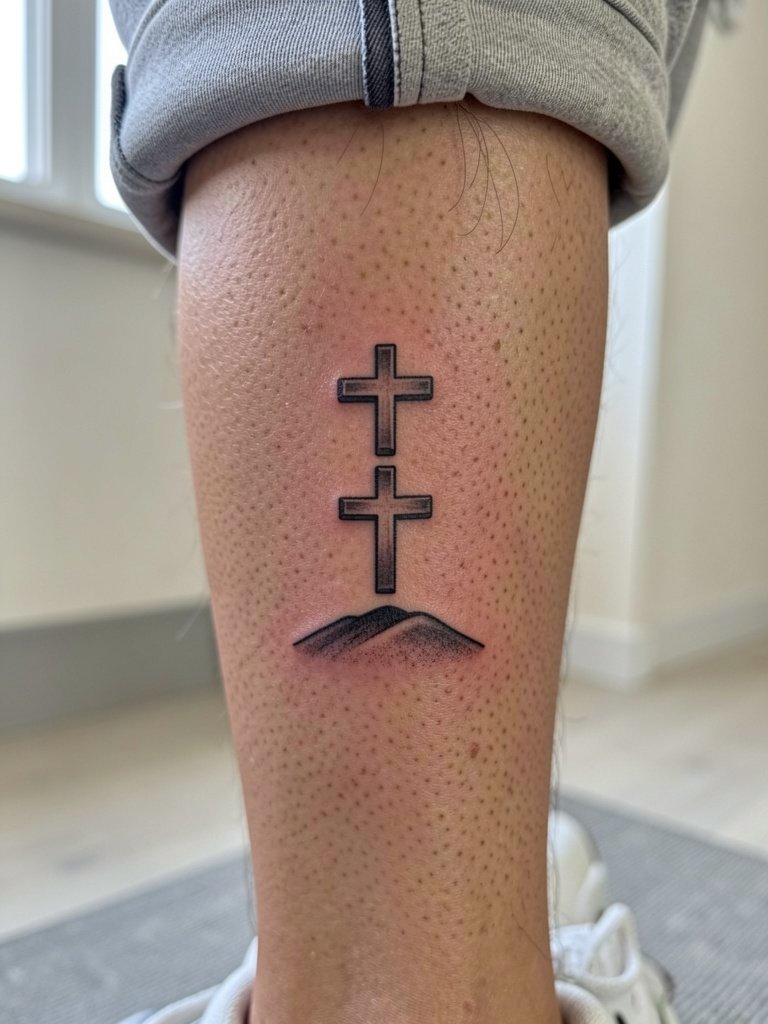
Calf placements suit vertical designs and are easier to hide or reveal depending on footwear and shorts. The biggest practical mistake is planning a design that ends up hitting the ankle joint where blowout risk and motion can distort details. Ask the artist to sit you and view the calf at rest and walking so they can map the composition. For the appointment wear cuffed shorts or joggers that expose the lower leg cleanly. A calf session tends to be mid-range in pain and often finishes in one sitting with a predictable touch-up window.
Frequently Asked Questions
Q: How do I pick between a tiny wrist trio and a larger hill scene?
A: Think about longevity and how often you want the piece on display. Tiny wrist trios are quick and discreet, but they need slightly thicker lineweight to remain legible years from now. Larger hill scenes allow shading and spacing that preserve detail on chest or back. If you prefer a small piece, ask your artist to show healed examples of similar wrist work so you can see how that exact lineweight held up.
Q: Will black and grey age better than small color accents?
A: For three-cross designs black and grey tends to age more predictably because mid-tone shading and black saturation hold clarity. Small color accents can add personality, but they may fade faster and require recoloring. If you want a hint of color, keep it as a tiny accent and get the artist to plan touch-up intervals during the consult.
Q: How much does a three-cross tattoo typically cost and how many sessions?
A: Costs vary by shop and region, but expect a small wrist or forearm piece in the lower price range and a medium hill scene or chest piece to fall into a mid-range tier. Session count depends on scale and shading. Small pieces are often one short visit. Larger black and grey realism usually takes one to two sessions. Ask for an estimate in range form during booking so you can plan.
Q: Where can I find artists who post healed three-cross portfolios and consistent religious work?
A: Search Instagram and TikTok with hashtags like #threecrosstattoo, #crossstattoo, and #blackandgreytattoo. Check Pinterest boards for composition ideas and look for healed-photo posts rather than fresh red-ink photos. If you search your city plus "black and grey tattoo artist" and filter for healed shots, you will spot studios that specialize in this style. Reddit tattoo threads can point to shops with reliable healed examples in different skin tones.
Q: What should I wear to the session for each placement?
A: Match your clothing to the placement so the artist has easy access and healing fabric friction is minimized. For wrist and forearm wear short sleeve tees or rolled sleeves. For chest or sternum wear an open collar shirt or a button-down that you can remove easily. For upper back bring a loose button-down you can drape without rubbing the area. A single accessory link that helps is a simple plain short sleeve tee for session comfort and easy access.
Q: How should I plan touch-ups and follow-ups for three-cross pieces?
A: Expect a touch-up window at six to twelve months for fine detail and a potential second touch-up around year two for small pieces if lines soften. Solid blackwork may need less frequent touch-up but ask the artist for a realistic timeline based on your skin type and the design's saturation. Keep hydrated and follow the artist's aftercare for better pigment retention.