
A friend booked three consults before realizing the real problem was picking a design that would age on his skin, not which photo looked coolest. After chatting with artists at five shops across Brooklyn and reading long threads on r/tattoos, I noticed certain family motifs keep their shape and feel the most honest over years. Below are 15 family tattoos for men, what to ask for at the consult, and where they hold up or fall apart.
1. Family tree with branching roots on outer forearm
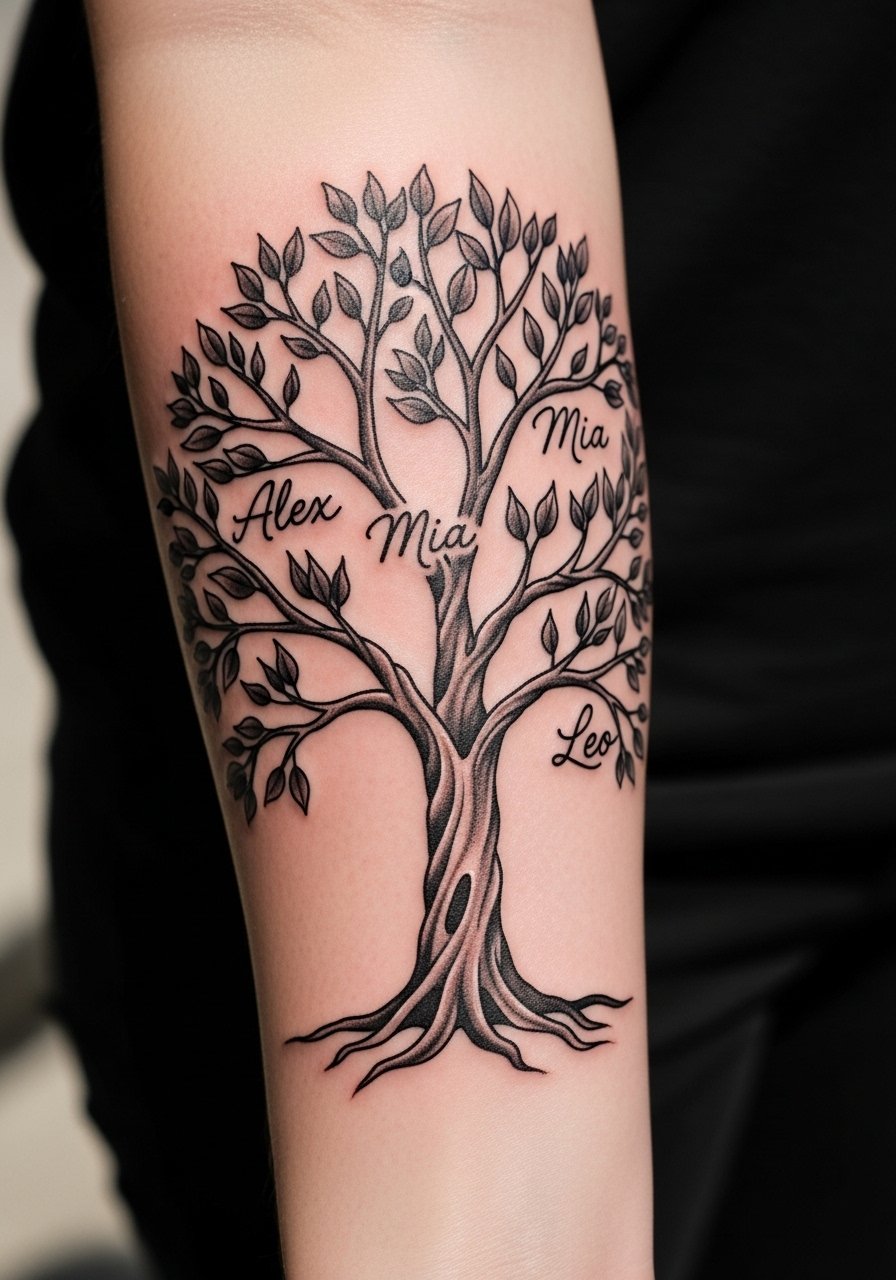
Someone I know got a forearm family tree and later gained weight, which stretched the lower roots. The forearm still works if you scale the trunk and make branch lines thicker. Tell your artist to keep names spaced and use heavier linework where the limb bends. A common mistake is insisting on ultra-fine script for names, which blurs after a year on active forearms. Expect a one-session piece that looks crisp at six months and requires a light touch-up by year two if you sweat a lot. For more stability pick inner forearm or calf to avoid stretch from muscle changes.
2. Elephant herd, trunk-to-tail across the shoulder cap
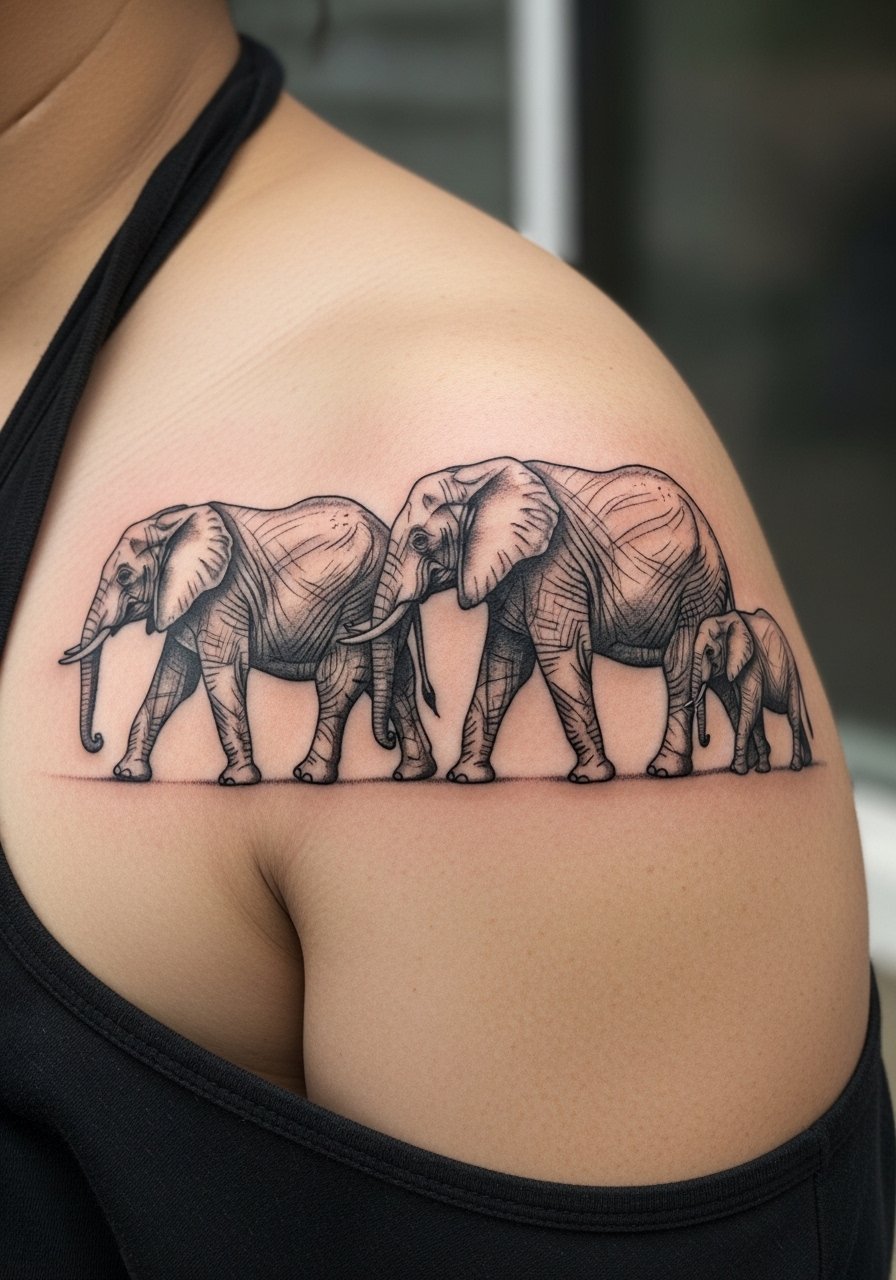
Visual impact is the main point with an elephant herd. I recommend this for men who want animal symbolism without overt portraiture. Ask for solid black silhouettes with subtle texture to read from a distance. The shoulder cap flexes less than the bicep, so saturation holds well there. People often request tiny elephants that lose detail, so scale it to give the trunks room. Expect two sessions if you want depth in the shading. On darker skin tones, dense blackwork with stipple shading will read far better than fine gray washes.
3. Anchor with family initials wrapped in rope on the bicep
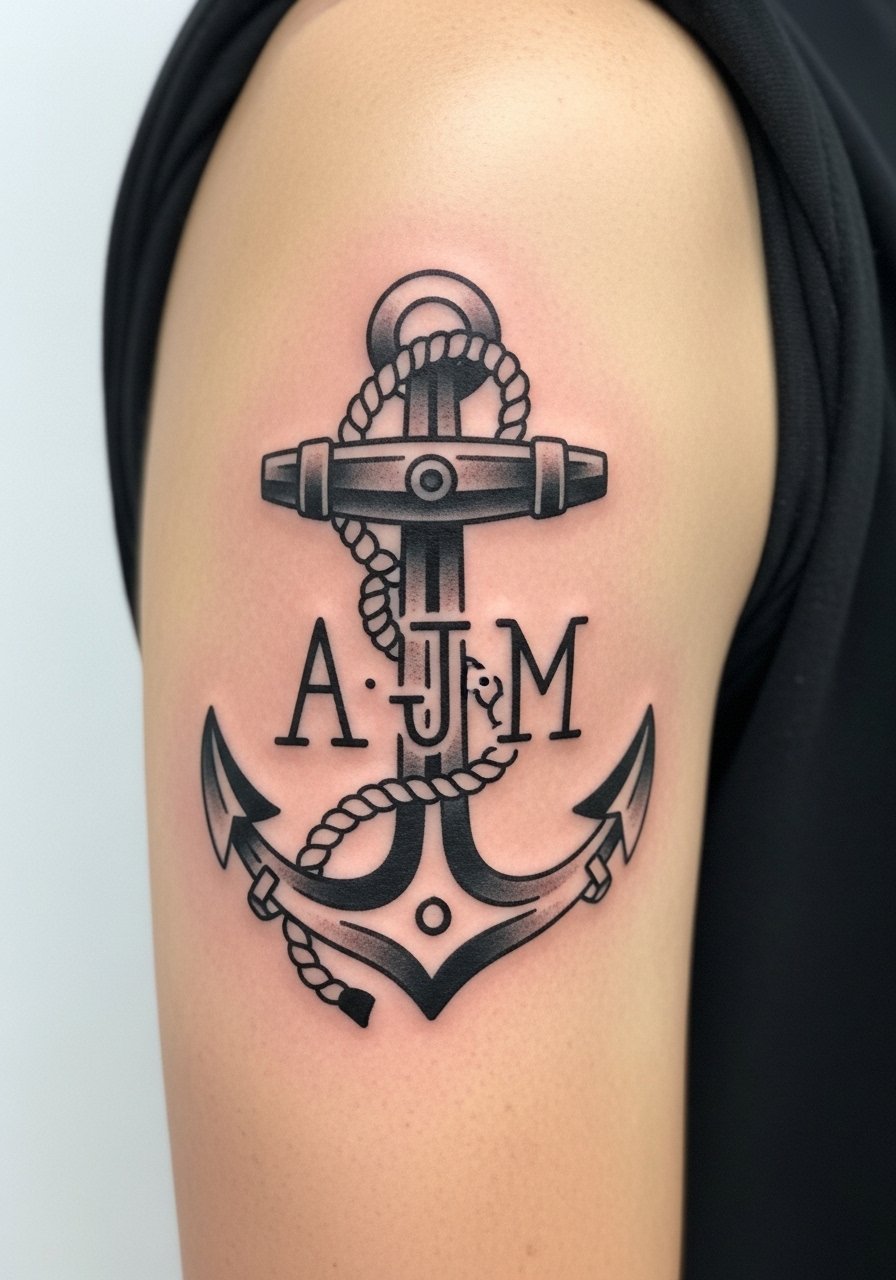
When you want a compact symbol of stability, the anchor is a low-risk pick. My note for consultations is to specify the initials and rope placement, not just "make it look old school." The bicep takes color and holds saturation well, so ask for bold outlines and a simple shading plan. A frequent error is cramming too many initials into a small space. This piece is typically one session and ages predictably, with edge touch-ups rarely needed unless you sit in the sun a lot.
4. Silhouette family walking hand-in-hand at sunset on the ribcage
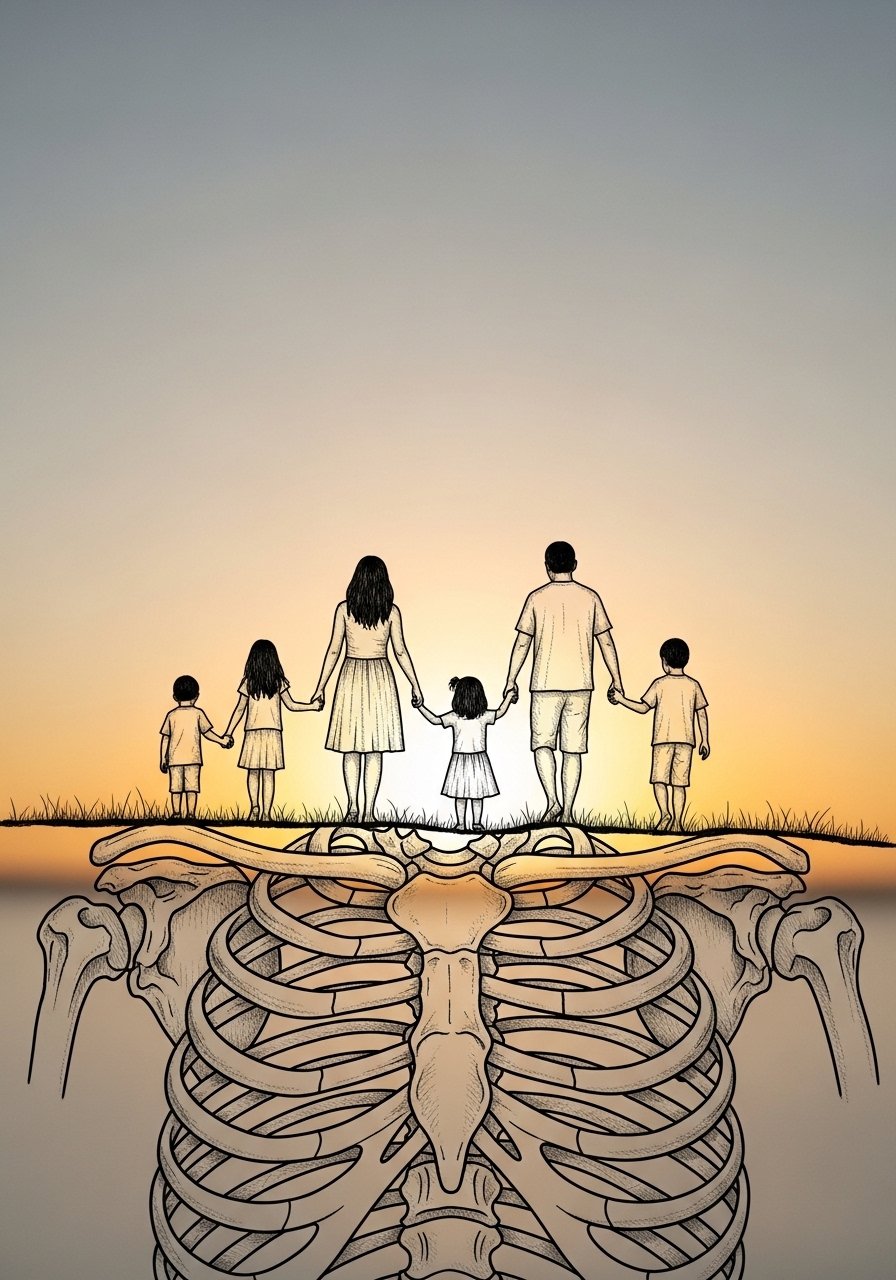
Fair warning: the ribcage rates high on the pain chart for most people. That said, a minimalist silhouette there can be intimate and low-fuss visually. Artists are split on fine line on ribs. One camp says the skin stretch and movement blur single-needle lines within two years. The opposing camp says careful depth and proper spacing prevent that. When booking, ask where the artist stands and request slightly bolder contour lines than a delicate single-needle to hedge against blur. This design reads differently at six months versus five years, so plan a six-week touch-up if you choose fine line.
5. Lion with cubs under paw across the chest
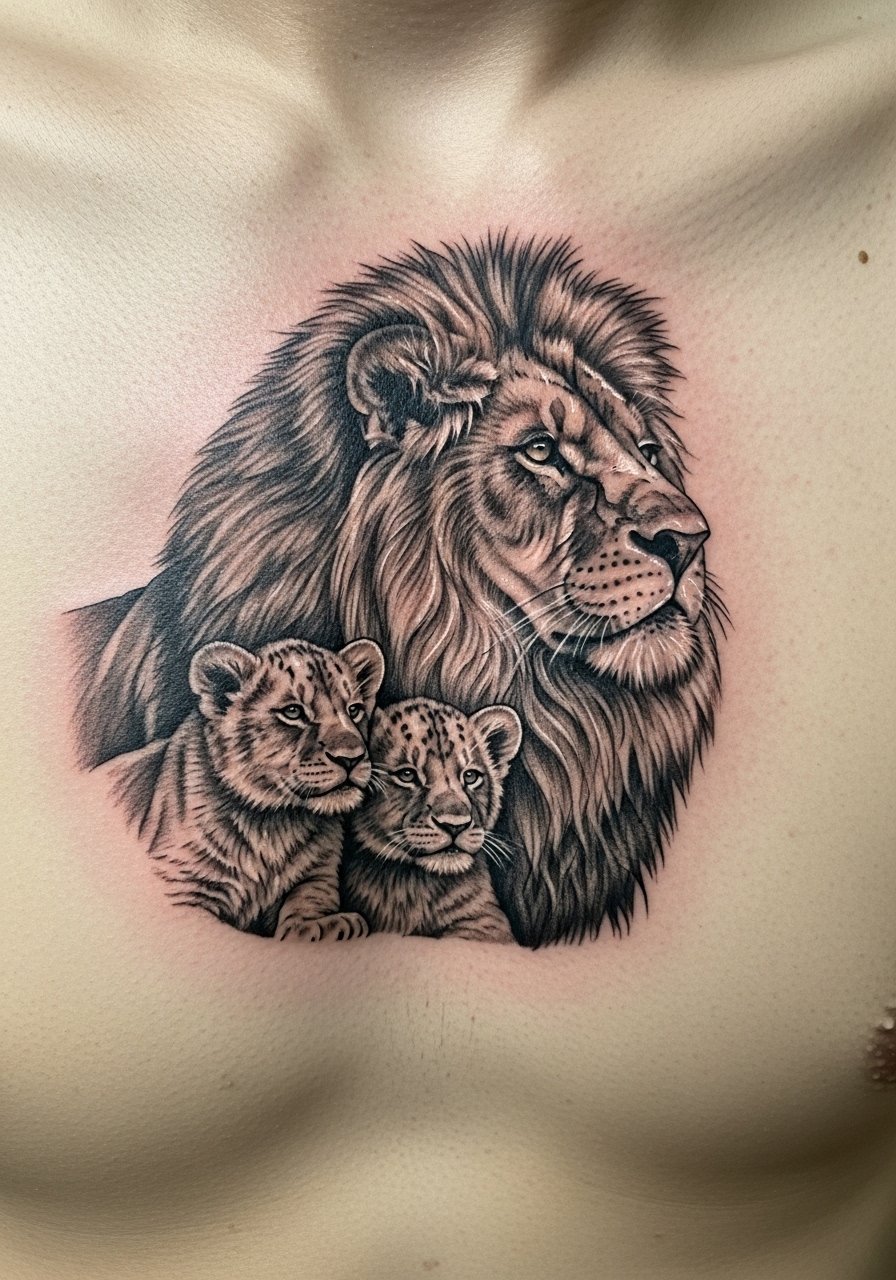
There is a protective feel to a lion with cubs that works well on the chest. When you sit down with an artist, bring references showing the exact paw placement you want to use as negative space. Chest pieces tend to feel less painful than ribs but still require pauses for breathing. A common mistake is compressing portrait detail into a small center-chest piece. Plan for two to three sessions if you want micro-realism and expect richer saturation than a fine-line approach. Over time the center chest keeps detail well if you use heavier shading and avoid thin, tight lines.
6. Roman numerals of children's birthdates on the inner wrist
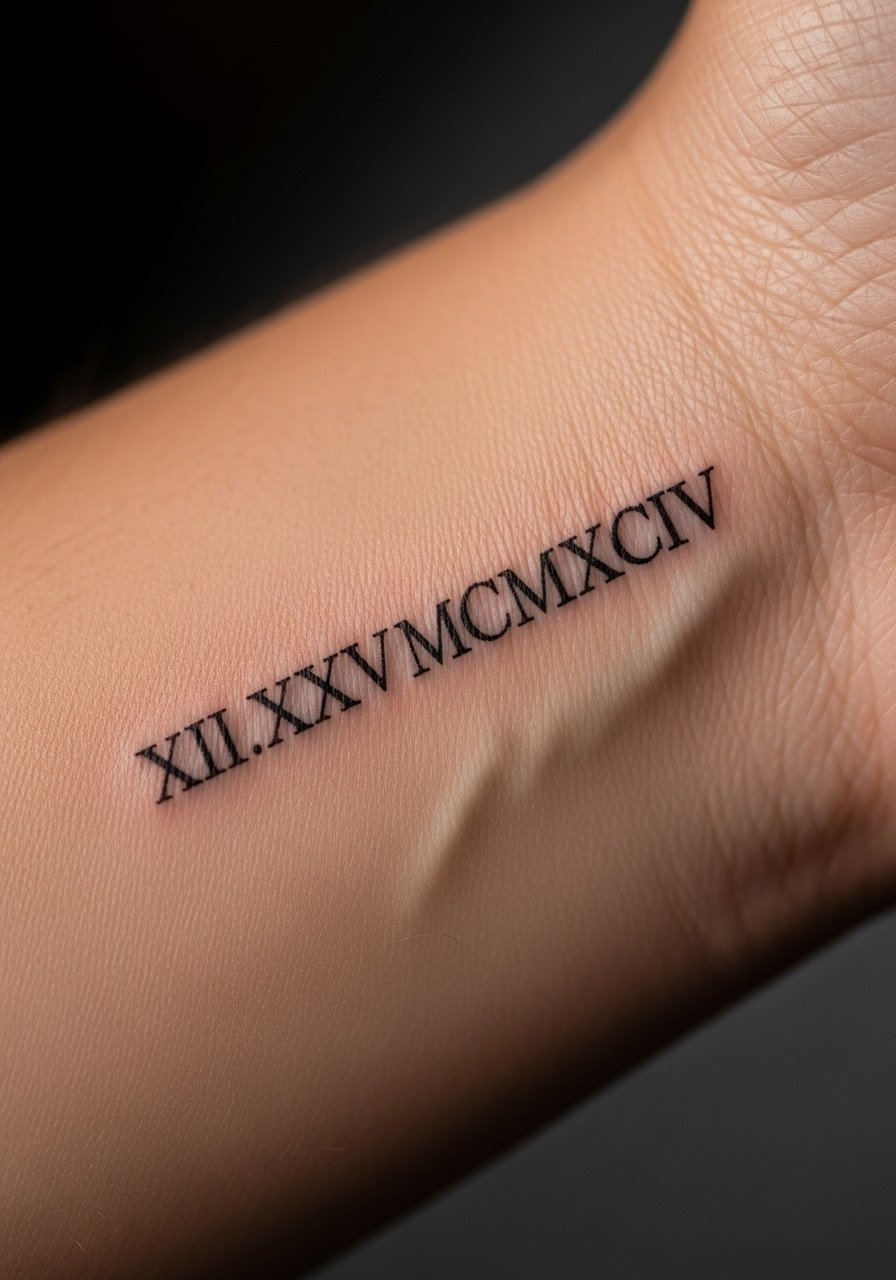
Consultation tip: pick placement based on privacy needs. The inner wrist is visible daily and speaks to you, but it is a high-motion area that can blur. Roman numerals feel discreet and avoid full names. The mistake I see most is choosing single-needle script with tiny spacing. For wrists, ask for slightly bolder numerals and clear gaps between characters. Sessions are short and affordable, but expect touch-ups in the first year if you have thin skin there or if you work with chemicals. For darker skin tones, consider a collarbone placement to preserve contrast.
7. Wolf pack howling together along the forearm sleeve start
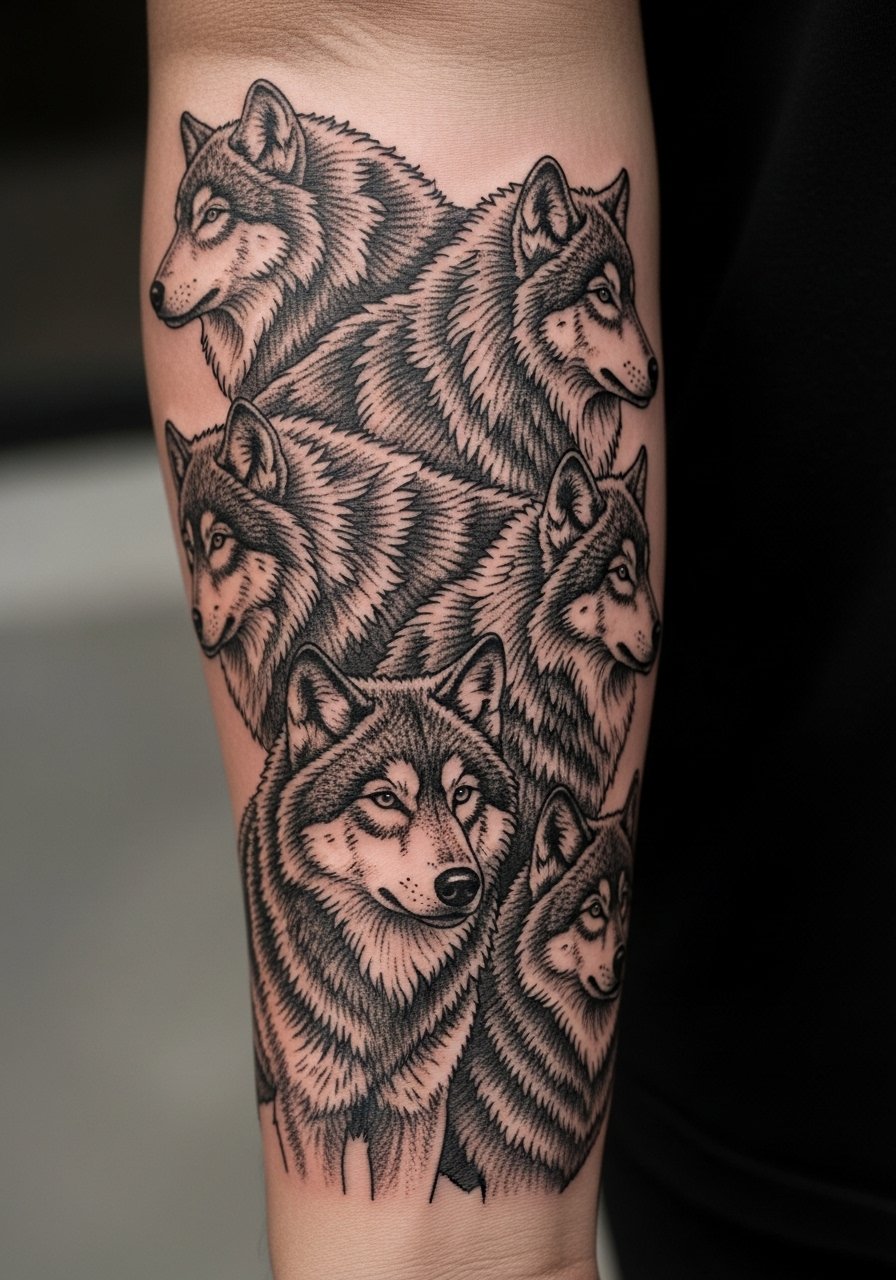
There is raw energy in a wolf pack piece that reads as brotherhood or guardianship. For a sleeve start, tell the artist you want heavy black fills and negative space to avoid early fading. The forearm is a forgiving area, but small fur detail can wash out if you go too tight. People sometimes ask for tiny wolf faces which blur; instead pick larger heads with whip shading for texture. Expect two sessions and good longevity with solid blackwork. On dark skin, this style is a clear winner because saturation stays visible much longer than fine line approaches.
8. Heart split into family member portraits on the upper arm
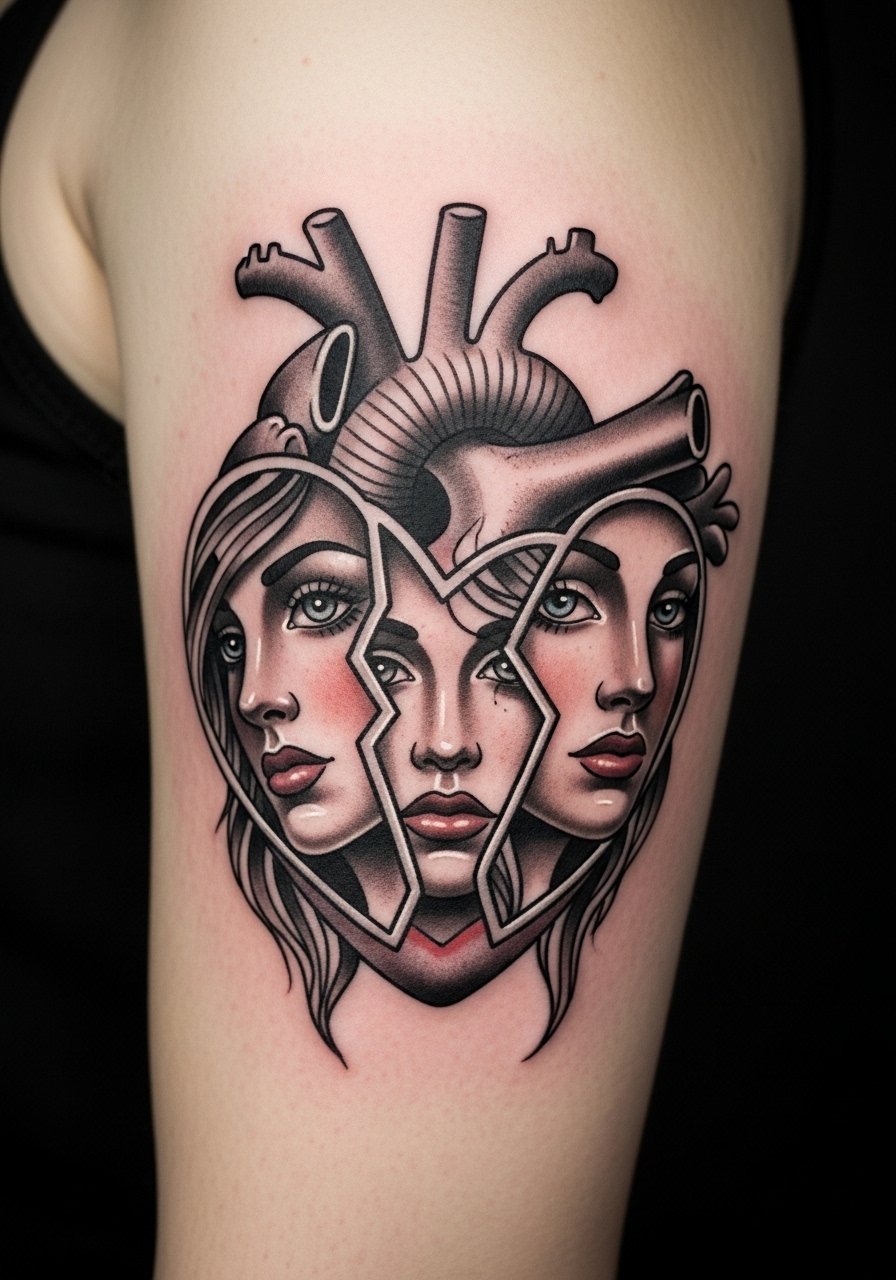
When you want portrait realism without going full sleeve, a split heart can balance edge and sentiment. Tell your artist the exact family photos you want used and request a tonal study before the session. A key mistake is asking for ultra-photoreal detail at a small scale. That guarantees softening into an indistinct patch. Plan for multiple sessions and anticipate careful touch-ups at six weeks to lock in facial detail. This placement reads well under shirts and ages better than tiny wrist portraits.
9. Turtle family swimming in formation on the shoulder blade
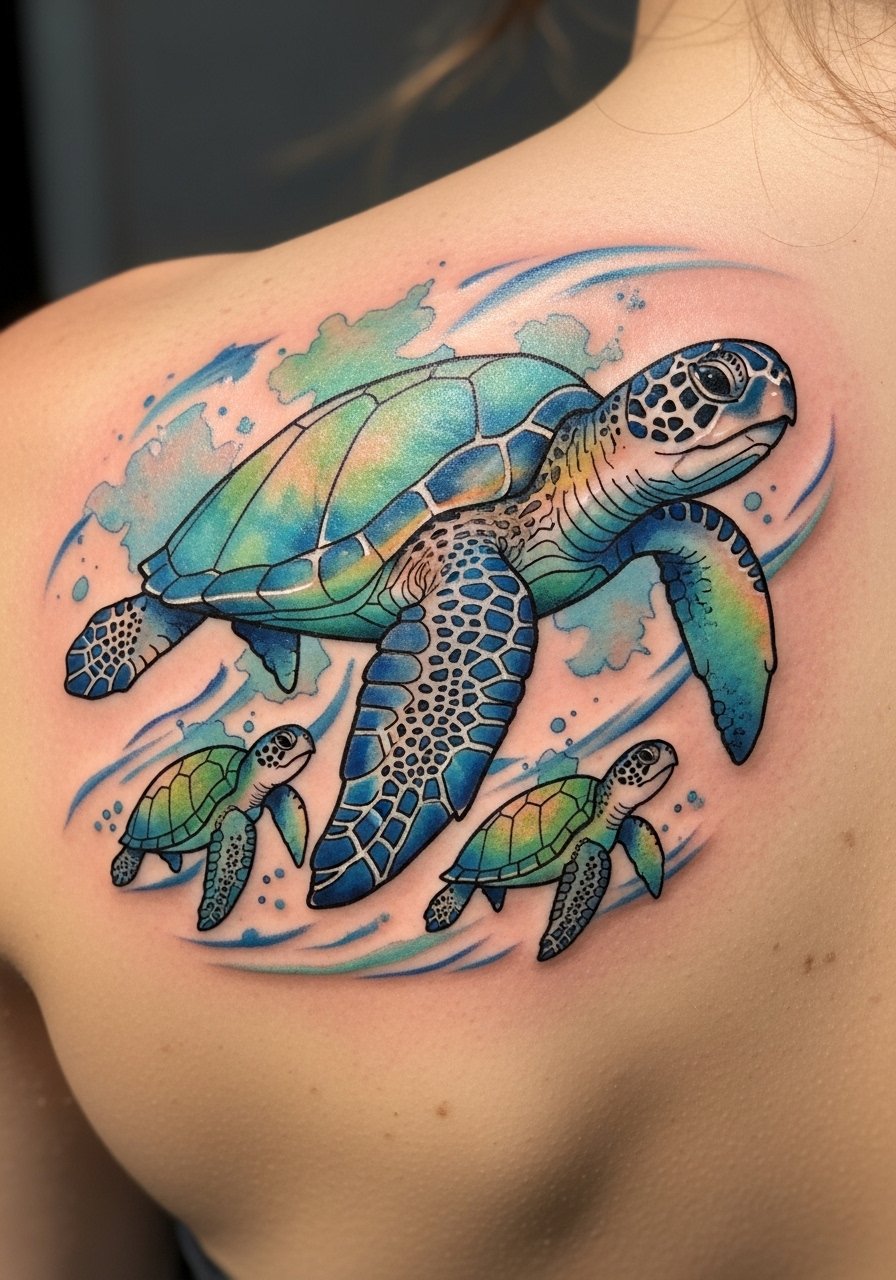
Most watercolor pieces from a few years back lost their pop because the washes were too sparse. For a turtle family I advise stronger black outlines paired with soft color fills to protect longevity. The shoulder blade is a low-friction zone that keeps color longer than shins or calves. A frequent misstep is asking for faint washes only. Ask the artist to add pigment anchors and subtle stipple shading to hold the color. One to two sessions should do it, and it travels well as a seasonal piece if you spend summers outside.
10. Modern family crest with initials on the upper back
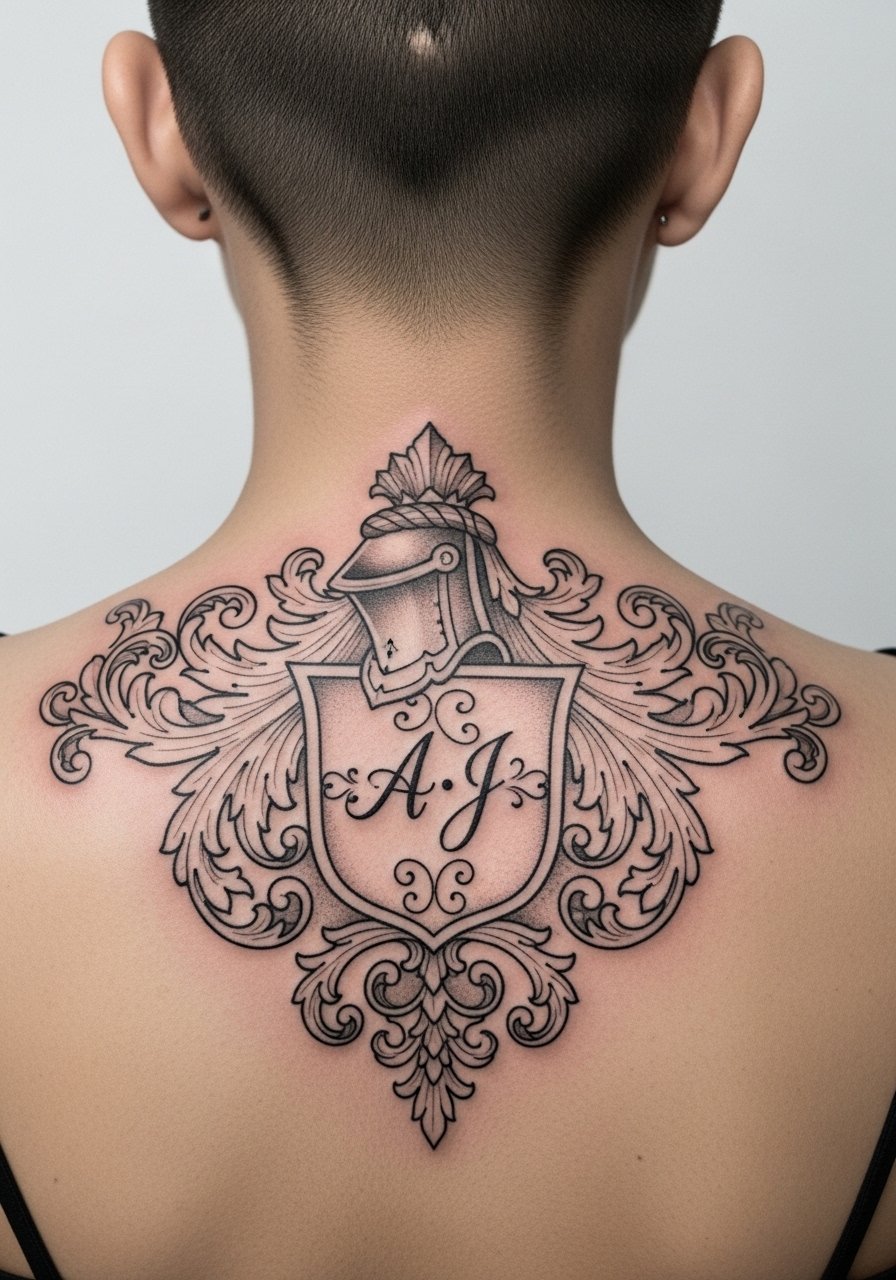
I like the crest for men wanting heritage without literal names. Tell your artist which elements matter, for example a laurel versus a compass, and ask for modularity so you can add to it later. A common problem is trying to cram too many heraldic flourishes into a single sitting. Upper back gives room and ages well, but expect two to three sessions for layered linework. Be mindful that some mandala-style elements trace to spiritual traditions, so mention the origin and choose respectful adaptations rather than direct replicas.
11. Baby footprints leading to adult steps on the ankle
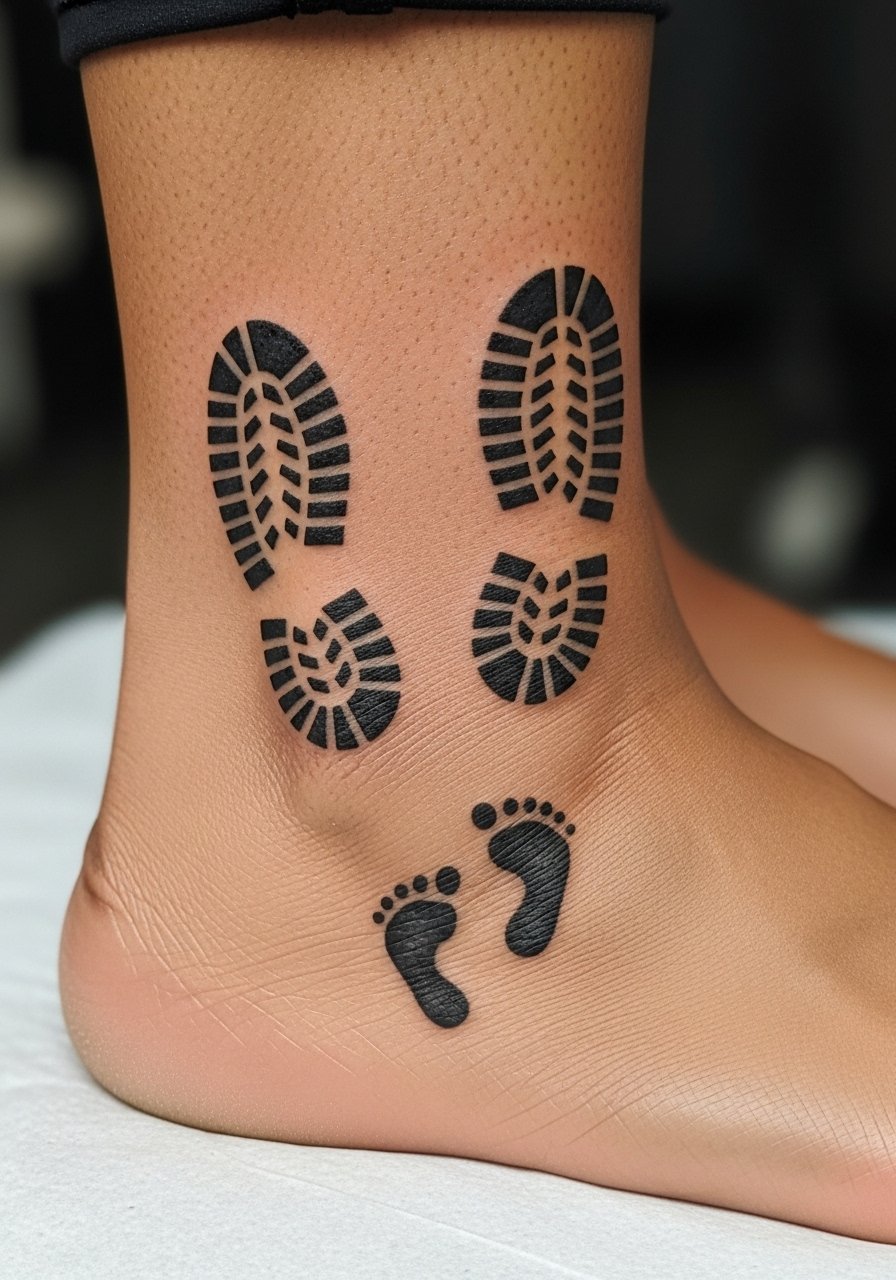
The ankle is a compact canvas that reads like a short story. For a footprint-to-step sequence, ask for dot work spacing that leaves breathing room between prints. One mistake is making the prints too small; the dots merge and look indistinct quickly. This design heals cleanly in one session if you avoid heavy black fills. On darker skin, focus on contrast with bold edges rather than faint shading. Summer healing can be tricky for ankles, so plan around footwear and expect a touch-up if scabbing was disrupted.
12. Bird family flock in V-formation across the collarbone
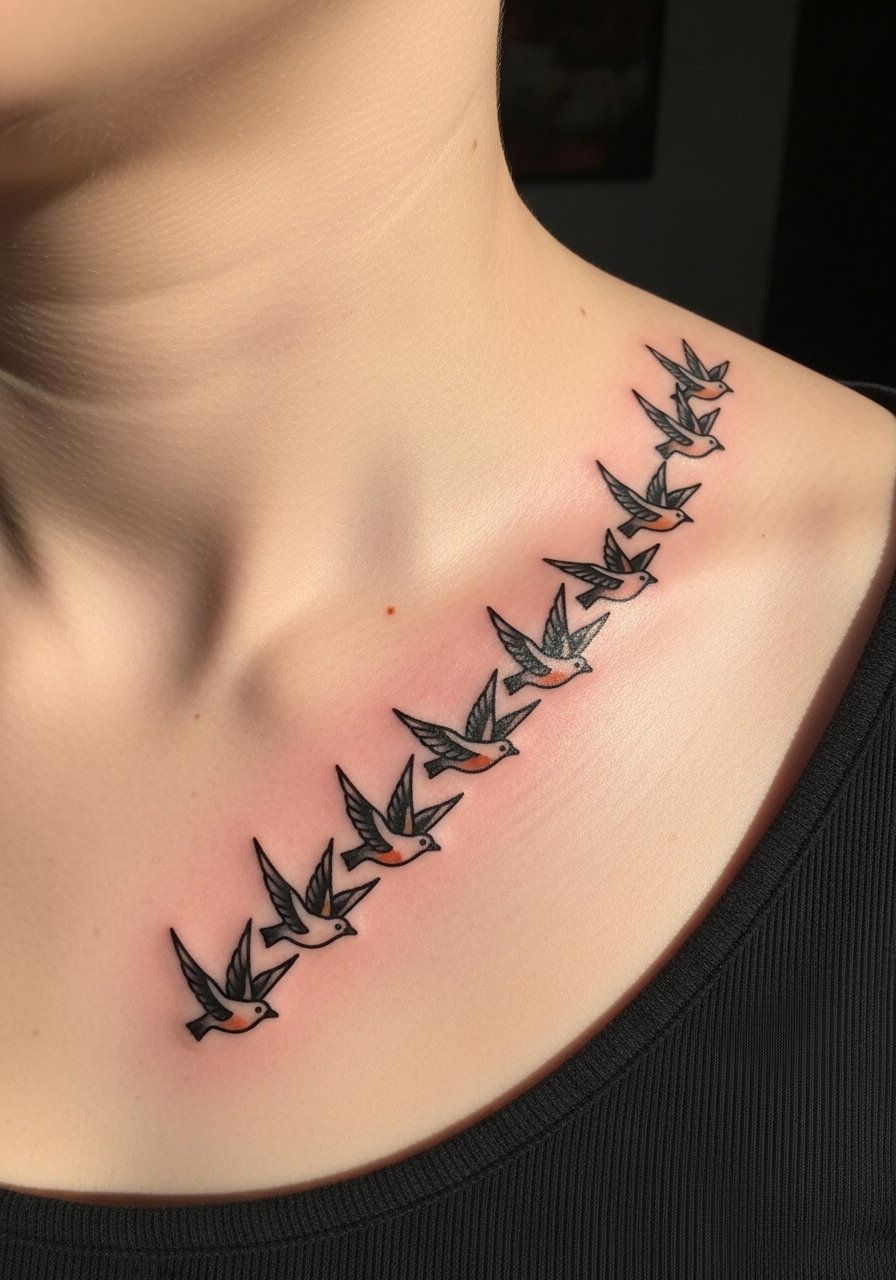
There is a simple rhythm to a flock that suits migration metaphors. For collarbone placement ask for varied silhouette sizes so the flock reads in perspective. A common error is lining up identical birds which turns it into a pattern rather than a scene. Collarbone tattoos can bite on the bone so expect a medium pain level and one to two short sessions. Keep color accents minimal and wear SPF to avoid early fading if you expose the area often.
13. Compass rose with family coordinates on the outer forearm
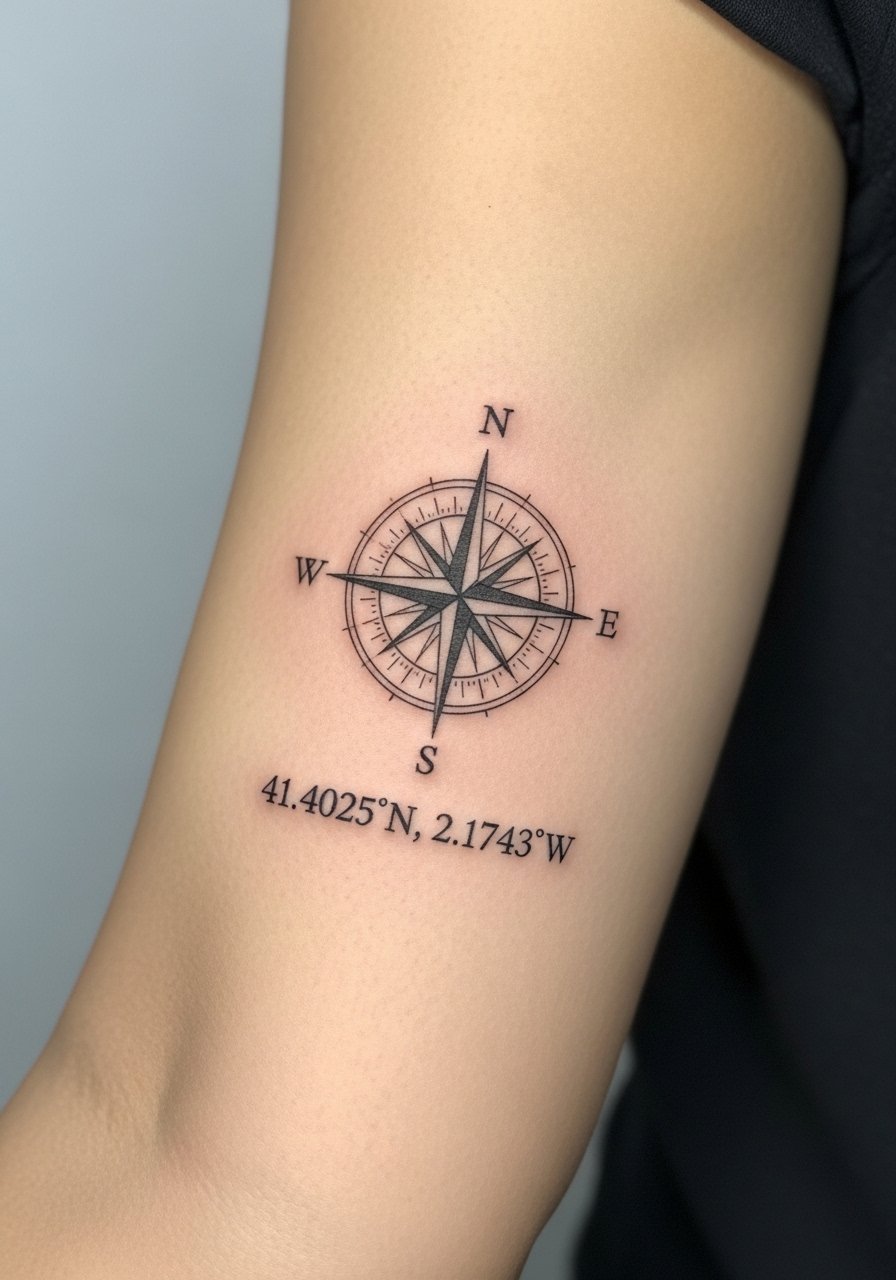
When travel or home points matter, coordinates make the piece private and precise. Be explicit in the consult about the exact numbers so the artist stencils them accurately. Small text on forearms can blur, so ask for clear monospace or serif spacing and slightly heavier numerals. A common mistake is choosing ultra-fine type without testing how it sits on your skin. One session typically suffices but expect a six-week check if you want the numbers razor-sharp. For truckers or frequent travelers this reads as a practical keepsake.
14. Coordinate-based family map patch on the calf
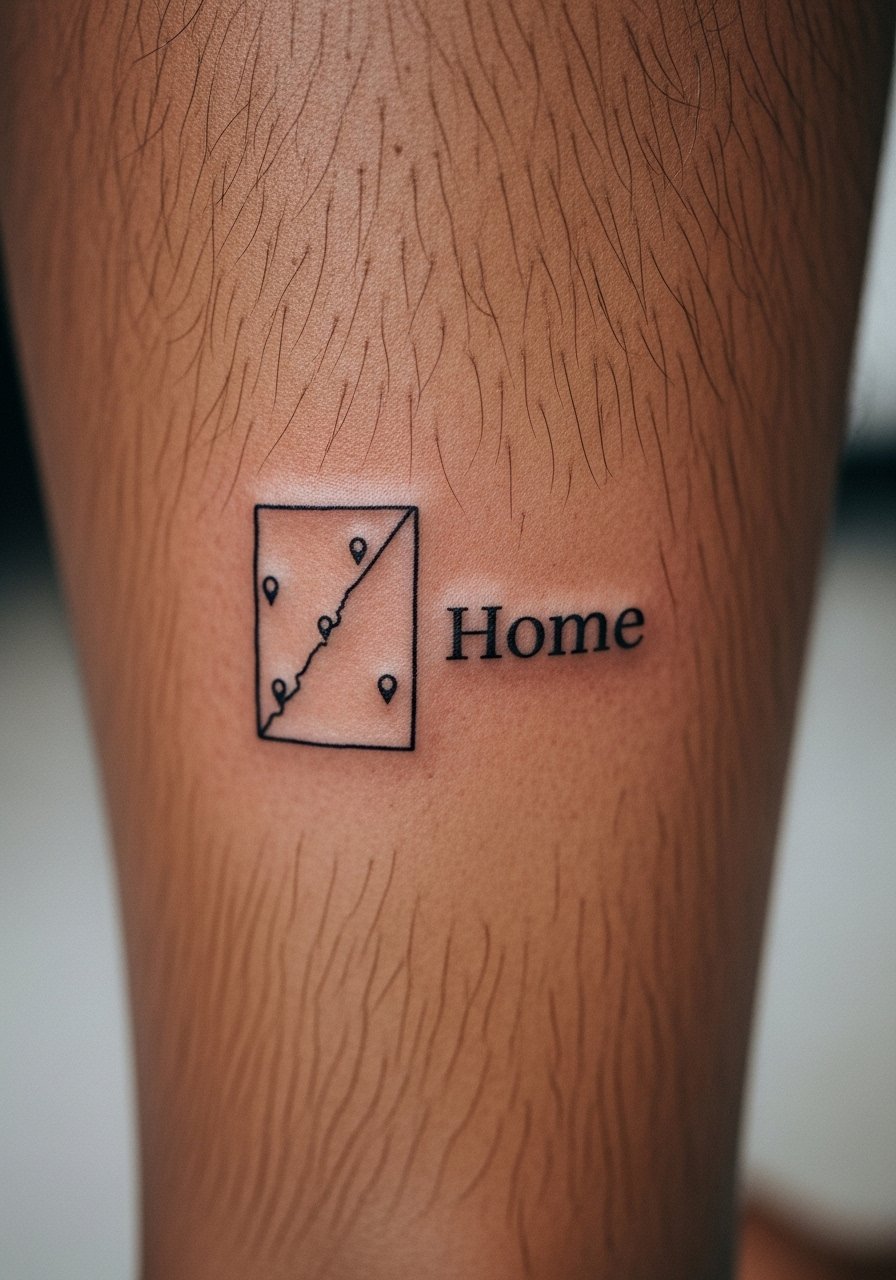
When you want a literal geography of family roots, a small map patch can be clever and private. Tell the artist which cities to pin and whether you want labels or just dots. Calves handle detail better than shins and are less sun-exposed than forearms. People often ask for tiny map lines that blur, so leave space between routes and enlarge coastlines slightly. This is a one-session pick for most designs and is ideal if you plan to add more pins over the years as the family grows.
15. Patchwork family sleeve that adds a piece each year
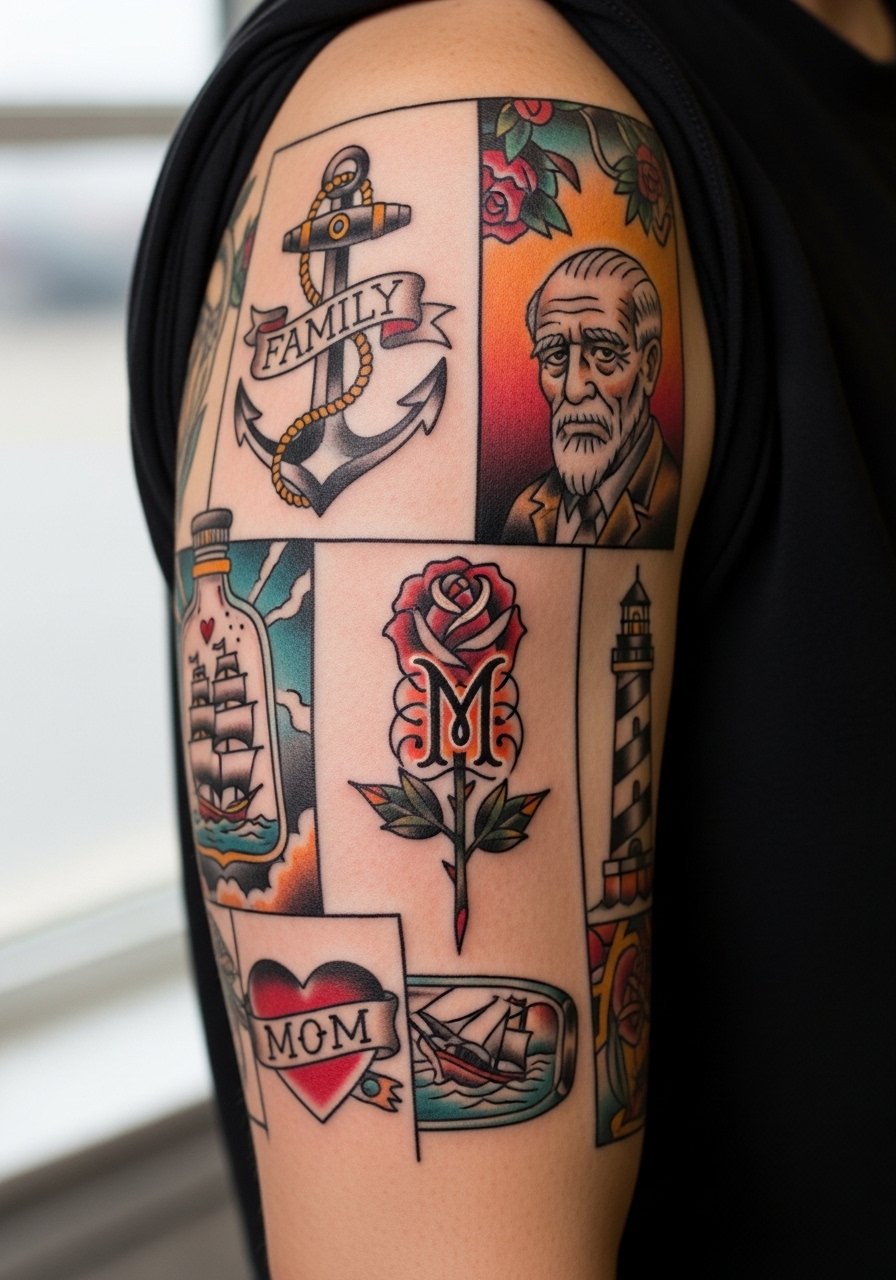
A patchwork sleeve is a living project that lets you add a child's symbol or a new date each year. Consults should cover future placement so new pieces nest rather than collide. The biggest mistake is starting without a plan, which leads to crowded negative space and awkward touch-ups. Expect multiple sessions across years and schedule guest spots or convention bookings to get consistent touch. Discovery pathways like Tattoodo, Instagram hashtags, and local conventions help you find compatible flash styles if you want matching elements from different artists.
Tattoo Prep and Aftercare Essentials
Below is a practical shopping list for fresh family ink. I include a mix of community favorites and lesser-known items people on forums actually use. Links search for the product on Amazon with the affiliate tag. Replace the search terms if you shop locally.
German Bepanthenol Plus ointment for itch control and light healing. Often recommended in forums for being steroid-free and non-greasy during sleeve healing.
Ink-Ich Ban indie balm, tea tree formulation for humid climates. Users report less ashiness on leg tattoos compared with thick petroleum.
Recovery ink patches, reusable for spot protection and touch-up cost savings. Handy for covering a fresh add-on when you travel.
Lumiere de Vie balm for color retention, lightweight and non-greasy. Favored by artists overseas for keeping color vivid without clogging.
Lightweight fragrance-free balm for daily moisturizing after day three. Use this as an alternative when you need a subtle, non-comedogenic product.
Medical-grade second skin bandage, 6-inch roll, breathable occlusive for active jobs. Useful on elbows or jobs where friction is unavoidable.
Broad-spectrum sunscreen SPF 50 for long-term color protection on exposed family pieces. Apply after full healing to prevent UV loss in color and linework.
CeraVe Healing Ointment for the first 48–72 hours if you prefer a well-known ointment. Use only one mainstream product and switch to a lighter balm after the initial phase.
Every tattoo is different. Always follow your artist's specific aftercare instructions. Consult a dermatologist if you have skin concerns or unusual healing issues.
Frequently Asked Questions
Q: Will fine line family portraits blur into each other if I build a sleeve with multiple small faces?
A: It depends on scale and spacing. Fine line portraits need breathing room and slightly bolder contour work if you plan a sleeve. Many people who end up blurring their portraits either packed images too tightly or chose single-needle detail at too-small a scale. Plan for touch-ups at around six weeks and again at year one if you want to keep faces distinct.
Q: Are blackwork elephants better for darker skin tones than watercolor turtles?
A: From what I have seen, dense blackwork with stipple shading reads longer on darker skin while pale watercolor washes can lose contrast. If you love soft color, ask the artist to pair it with stronger outlines or pigment anchors so the hues sit more visibly over time.
Q: Do I need Saniderm or should I dry heal my family chest crest?
A: Artists and hobbyists are split on this. One camp recommends Saniderm for active lifestyles because it keeps the area clean and reduces scabbing. The other camp prefers dry healing to avoid maceration and trapped moisture. Your choice should match your daily routine and the artist's experience. If you pick adhesive dressings, follow product instructions and watch for excessive weeping.
Q: How soon can I add a yearly patch to a patchwork family sleeve without risking blowout?
A: Wait until the previous piece is fully healed, usually three months for small blackwork, and up to six months for portrait realism. Also check with the artist about needle depth and overlap. Adding too soon increases the blowout risk where fresh ink spreads under soft, still-remodeling skin.
Q: Will roman numerals on my wrist stay readable long term or should I put them on my collarbone?
A: Wrists are high-motion and exposed, so small type can soften faster there. Collarbones offer a flatter surface and often preserve thin numerals longer. If you want wrist placement, ask for slightly heavier numerals and plan a touch-up around the one-year mark.
Q: Can I adapt a mandala-style family crest respectfully if my design draws on cultural motifs?
A: Yes, with care. Say which tradition you are drawing from and ask the artist to use elements as inspiration rather than direct replicas. Many clients choose subtle variations to acknowledge origins while keeping the piece personal.
Q: What should I ask an artist during the consult for a baby footprints to adult steps design on my ankle?
A: Ask how they handle dot spacing for dot work and whether they recommend a scale that survives footwear-related friction. Bring photos of the exact footprint shapes you want and ask about planned touch-up timing. If you work footwear-heavy jobs, discuss protective bandaging for the initial week.