Someone I know spent six months staring at portfolios before booking anything. The real problem was not the art. It was not knowing which dark, matching design would still read clearly after a year of sun and life. I have spent time in five shops across Brooklyn and talked with artists who specialize in blackwork. Below are ten matching ideas that handle aging, placement, and touch-ups in practical ways.
1. Paired Fine-Line Arrows on Inner Forearms
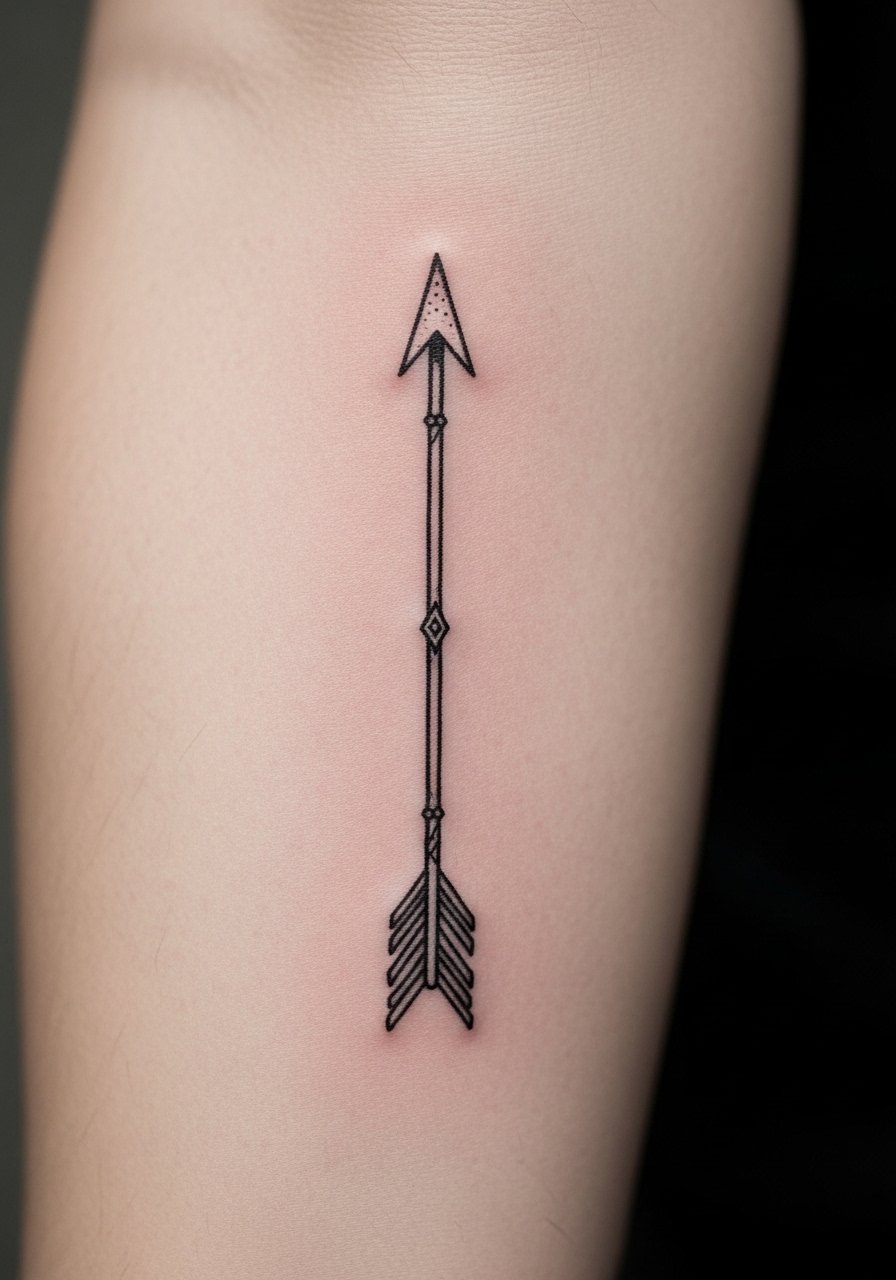
Someone I know first saw this as a flash piece and decided to make it custom. Inner forearms are low on the pain scale and the session usually runs 30 to 60 minutes per person. Ask your artist for slightly heavier linework than a typical micro design so the arrow shafts do not blur with time. A common mistake is requesting hairline arrows that look great day one and soften into indistinct marks by year two. At six months the arrow retains crisp linework. By two years the shaft can need a light touch-up. This pairing works well if you want matching symbolism without full symmetry. Tell your artist you want clear negative space between shafts and that you plan a touch-up around year two.
2. Stipple Anatomical Hearts on the Ribs
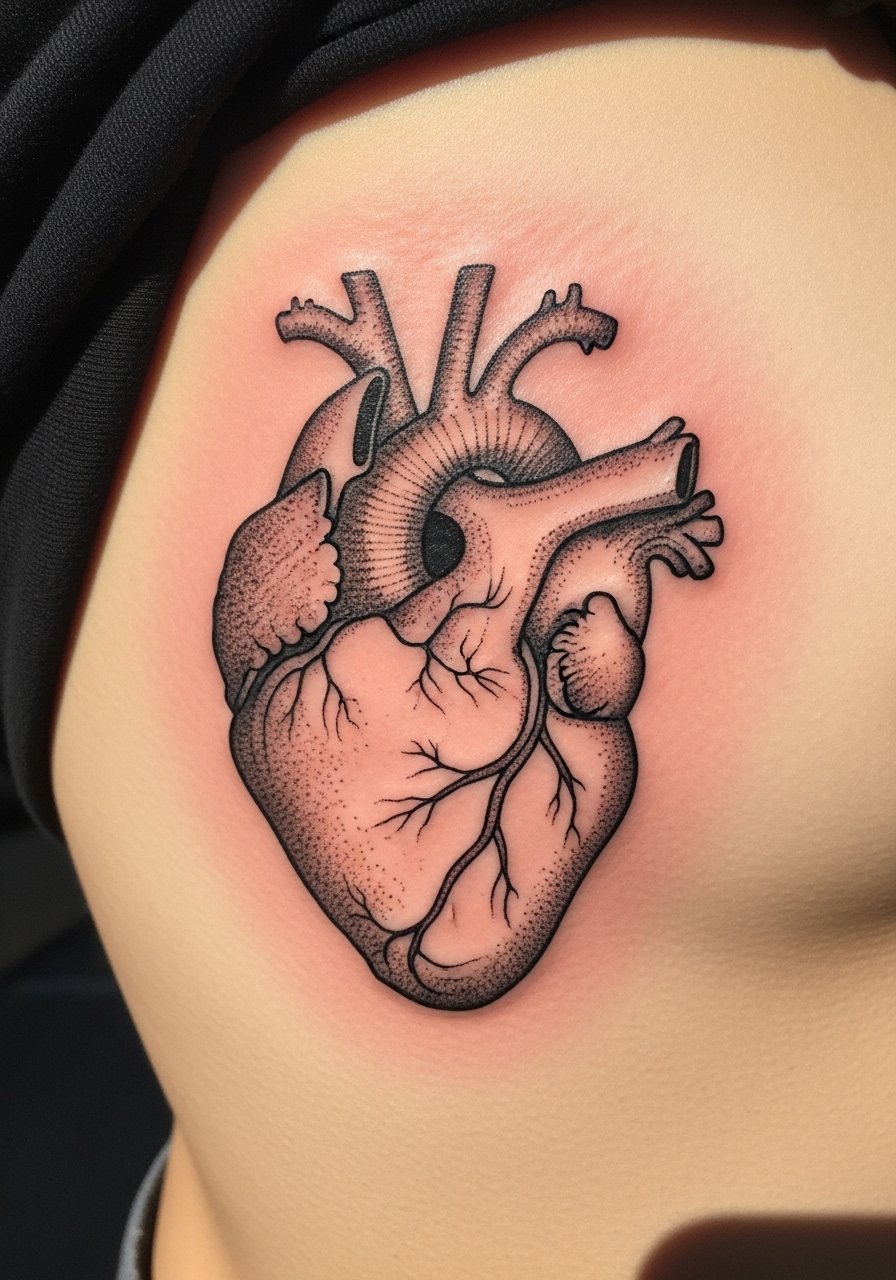
Fair warning, ribs score high on pain for most people. The effect here is worth it if you want intimacy and a hidden reveal. Artists split on fine detail on ribs. One camp argues the skin stretch on the ribs blurs thin detail within two years. The other camp says with correct needle depth and spacing fine detail settles fine. Ask where your artist stands before booking. For this design request stipple shading and larger dot groups near edges to avoid premature smoothing. Six months in the stipple will still read as texture. At two years the dots near the bone may soften and need a touch-up. A common mistake is asking for micro detail without leaving breathing room between dots. If you want a long-term match consider slightly bolder dots and plan a one-off touch-up.
3. Blackwork Twin Raven Silhouettes on Upper Back
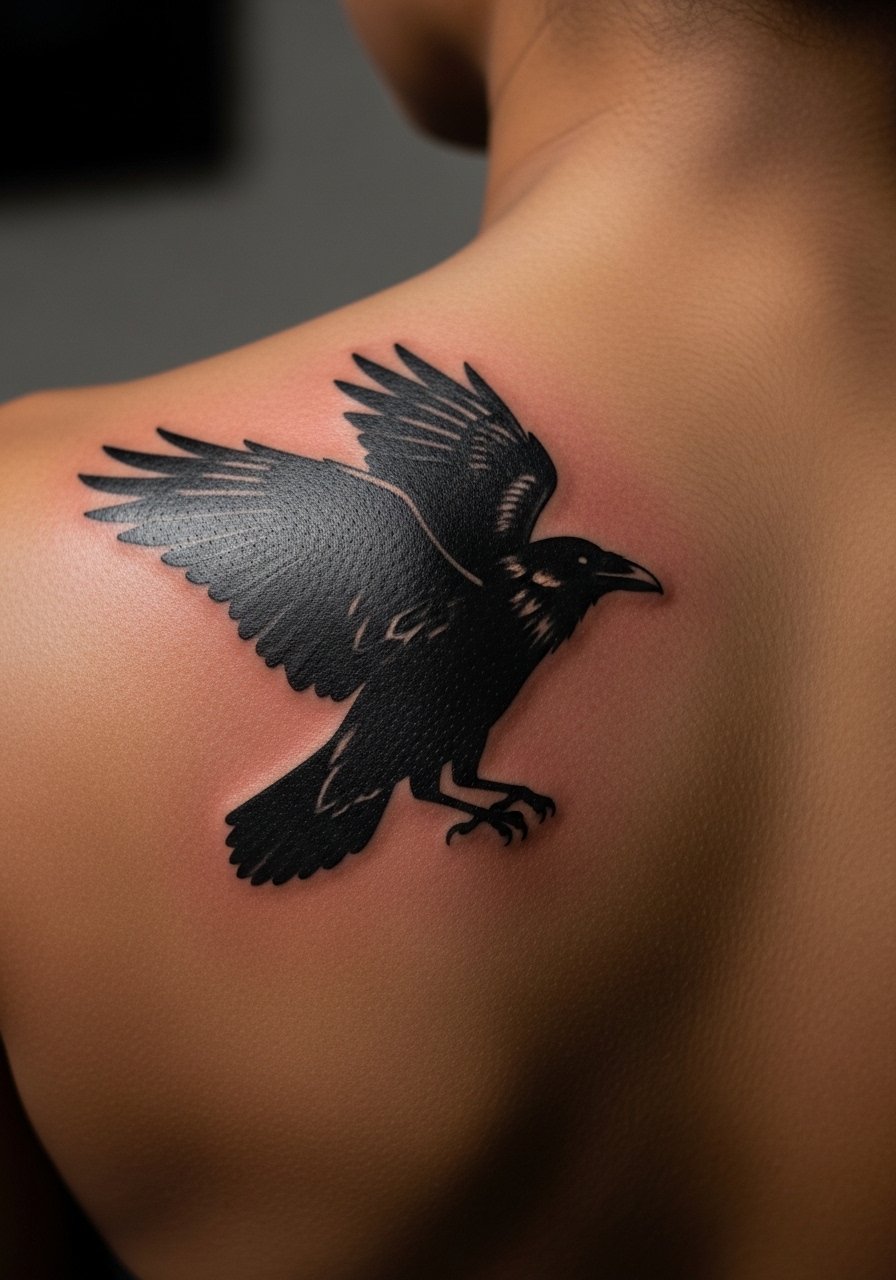
There is something about bold silhouettes that reads from across a room. Upper back placement is forgiving for saturation because the skin is thicker and the blowout risk is lower than on hands. Session time for these is often under 90 minutes. Tell your artist you want dense, even saturation and crisp wing contours. A mistake I see is asking for tiny silhouettes that lose visual impact once healed. At six months the silhouettes keep their blocky look. At two to five years the edges might feather slightly but remain recognizably raven if the saturation was good. This pairing ages well for people who want a strong shared motif without constant retouching.
4. Micro-Realism Matching Skull Halves on Biceps
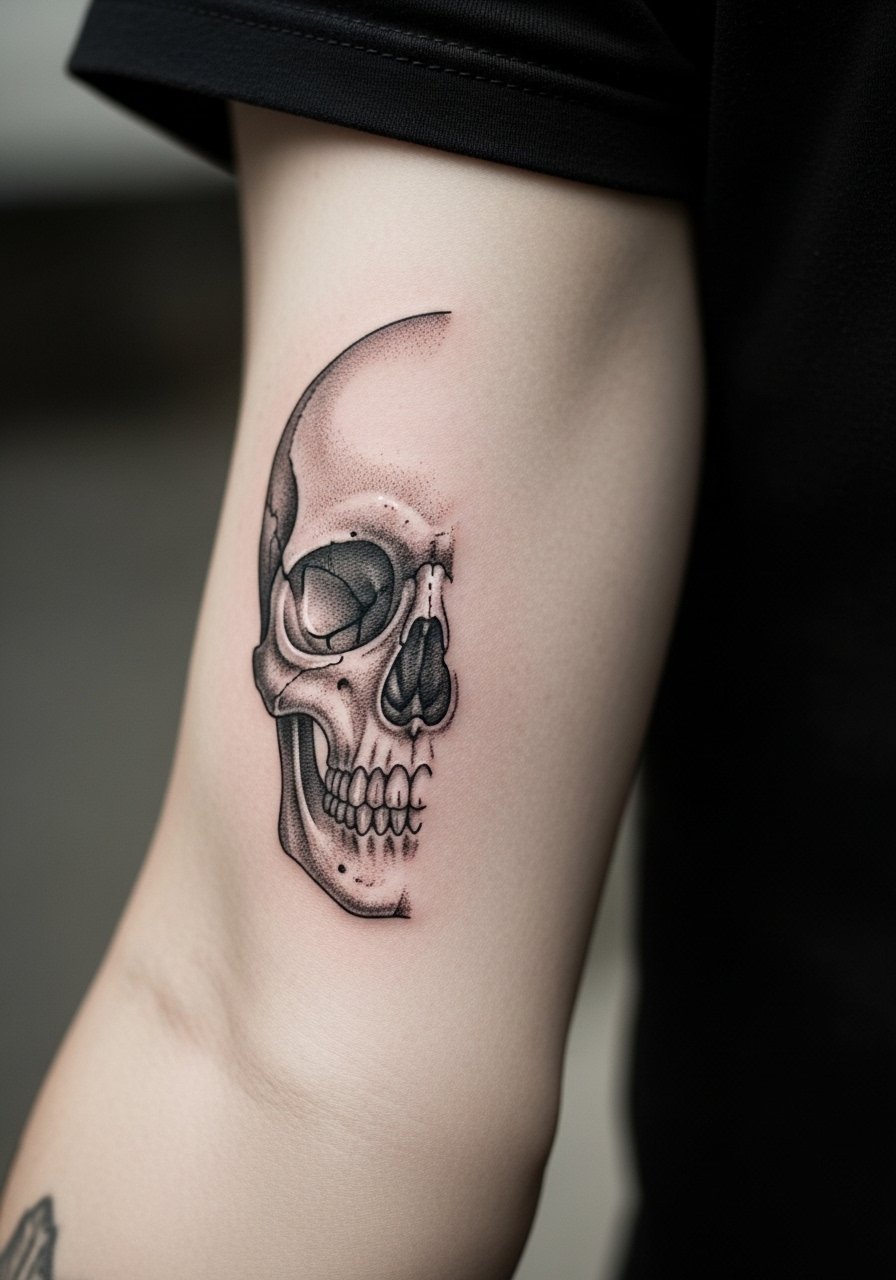
When you sit down with your artist for this one bring photos showing the exact scale you want. Split skull halves work because each person wears a half that completes on contact. Biceps are medium pain and tolerate fine shading better than fingers. A common mistake is placing halves on too curving a section so the image distorts when arms move. At six months the micro shading is soft and legible. By two years tiny details may blot unless the artist left slightly heavier contrast in dark areas. Expect a session of one to two hours per half. If you plan this as a statement piece, mention the completed composition so the halves align when you stand side by side.
5. Geometric Mandala Halves on Calves
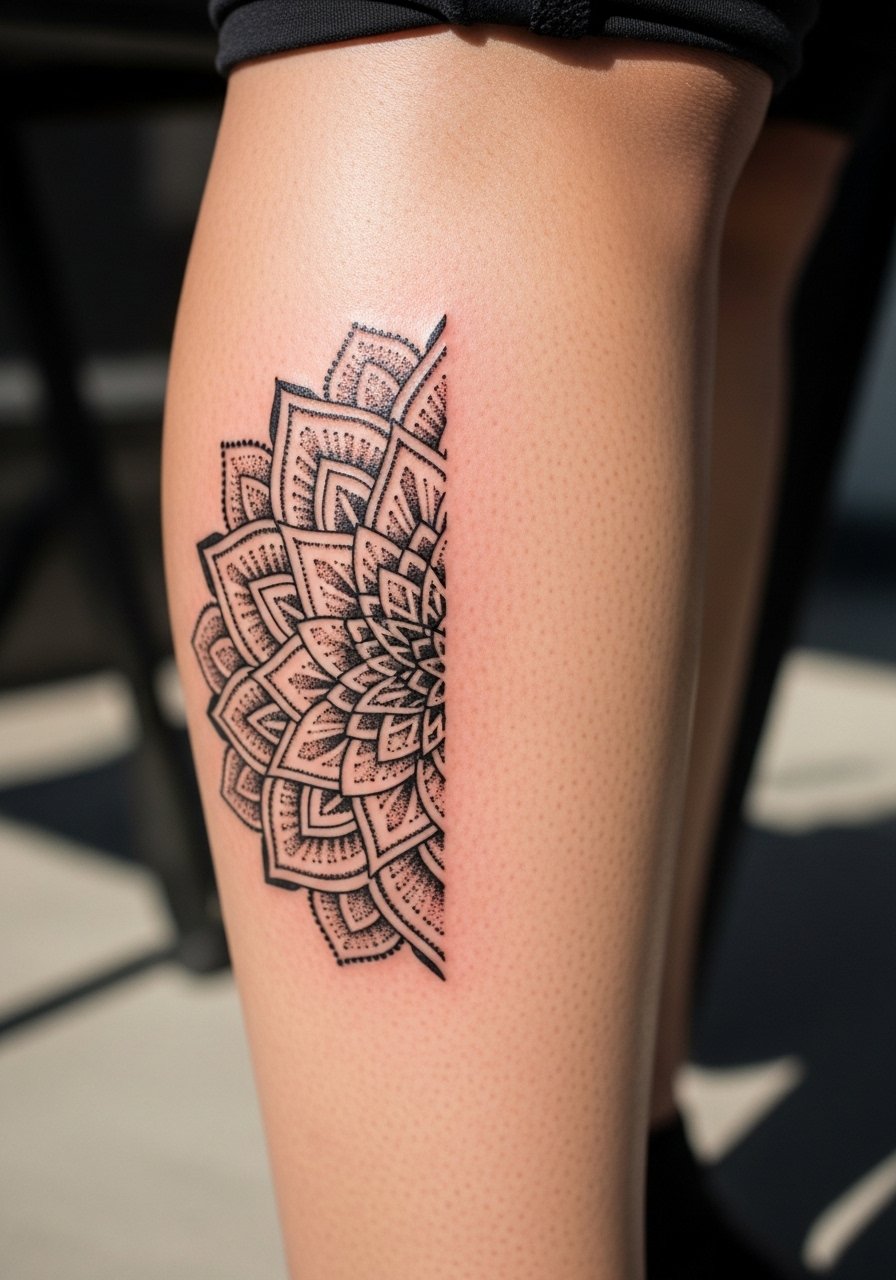
Most people underestimate scale with mandalas. The biggest mistake is asking for intricate geometry in too small a footprint. Calves give room for symmetry and let the pattern breathe. This design traces to mandala traditions, so some clients choose slight variations rather than direct replicas out of respect. In practical terms ask for bold central points and measured spacing between spokes so lines do not blur. At six months the geometry looks crisp. By two to five years the smallest lines may require touch-up if done too thin. Sessions here often take 60 to 120 minutes per leg. Tell your artist to map the pattern on the calf at full size before inking.
6. Blackletter "MEMENTO MORI" on Inner Wrists
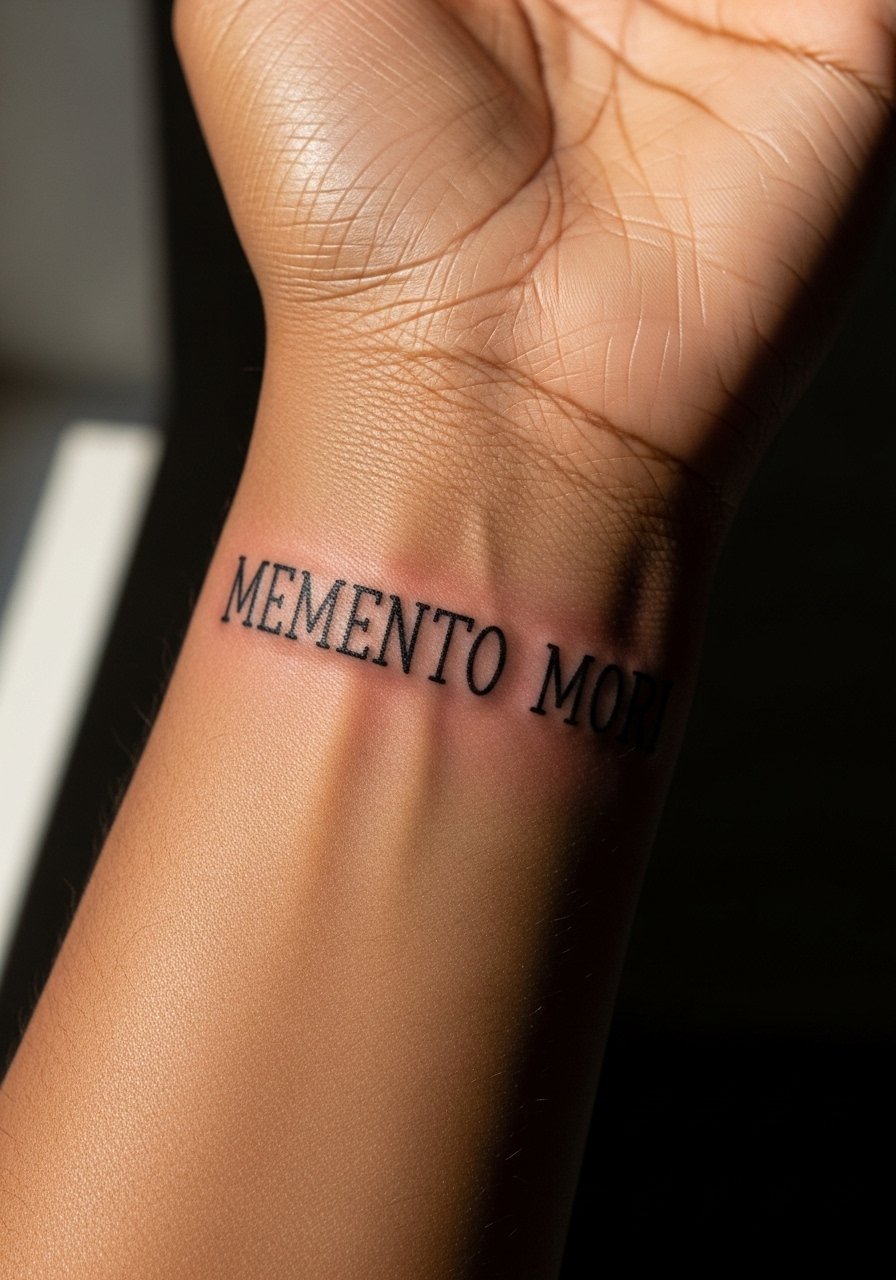
The biggest mistake with script is letting the letters get too tight. Inner wrists are visible every day and are low to medium on the pain scale. Exact text matters. If you pick "MEMENTO MORI" tell your artist the spacing must remain open so the blackletter keeps form as the skin ages. At six months the letters look crisp if ink depth was consistent. At two years the thin strokes can fade inward and make letters read denser. Expect a 30 to 60 minute session each. Hand and wrist ink still affect some hiring decisions so think about placement and career context before committing.
7. Dagger and Rose Blackwork on Ankles
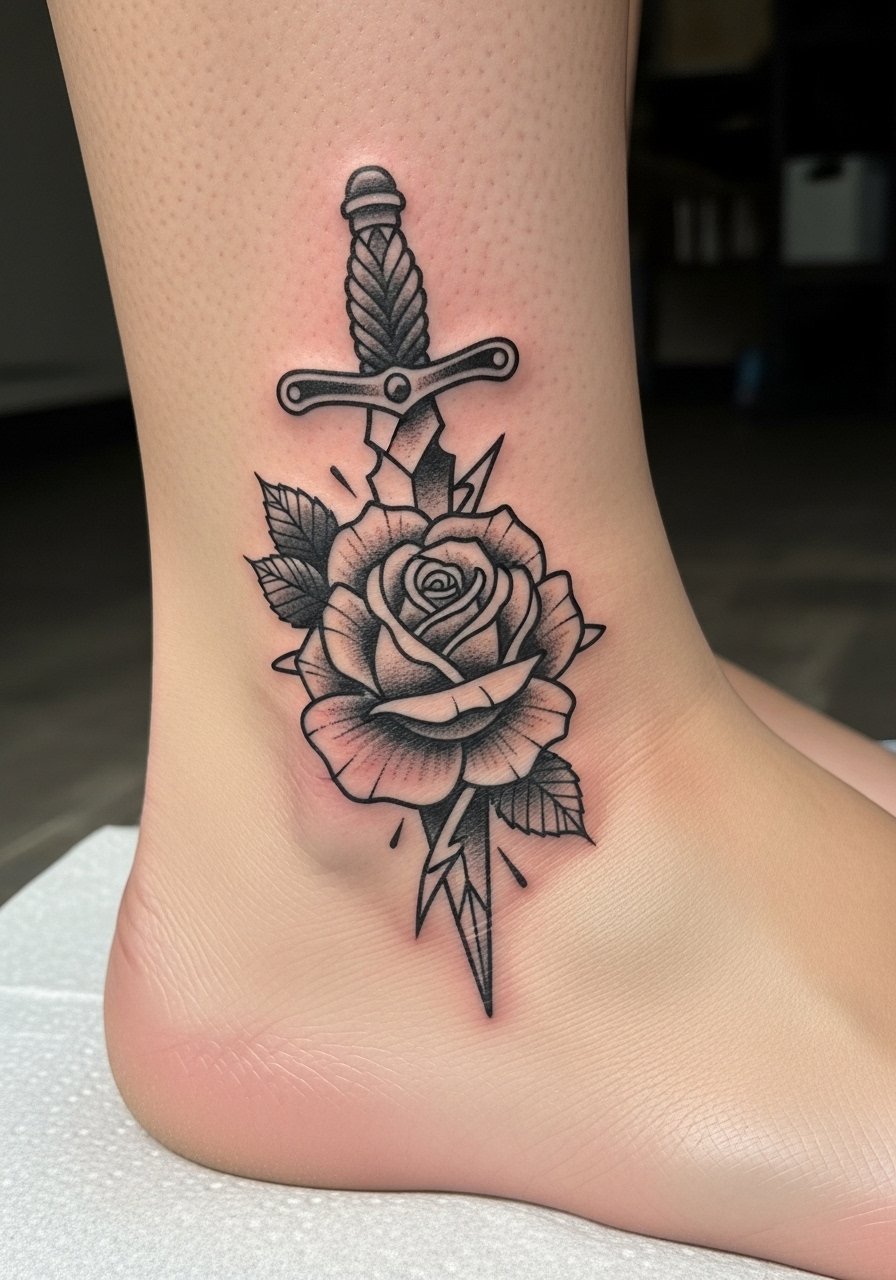
Ankles are sharp on pain for many people, so plan for a short, focused session. I recommend this design when one partner wants a bolder, classic motif while the other mirrors it. Tell your artist you want solid black shadows and a bit of negative space inside petals so the rose keeps form as the ankle moves. At six months the contrast holds. By two years thin petal edges soften if the linework was ultra-fine. A frequent error is asking for tiny petal detail that disappears once healed. This placement needs a careful touch and sometimes a touch-up at year two to maintain crisp contrast.
8. Half-Sun, Half-Moon Sternum Pairing
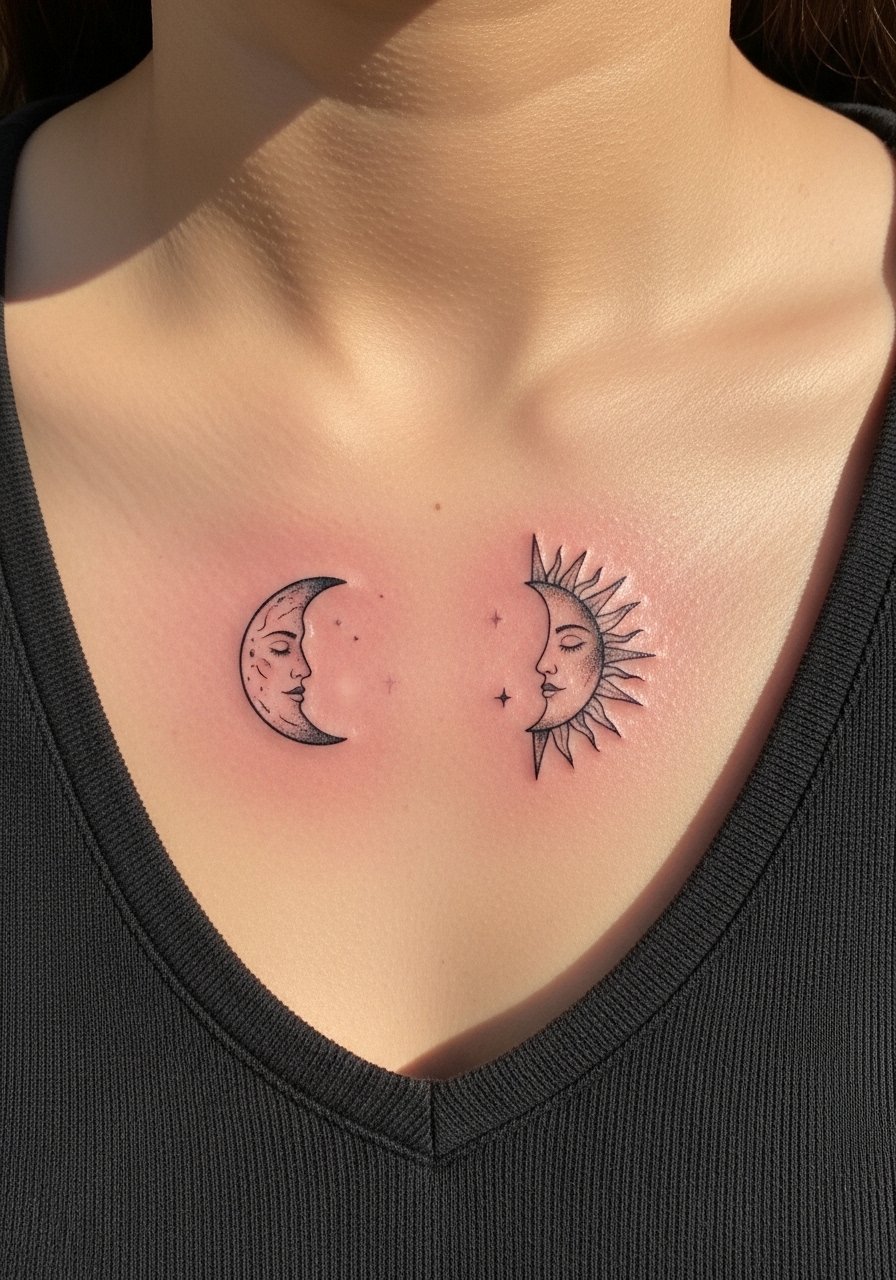
Fair warning, the sternum can be a sensitive area and scores high on pain. It also moves with breathing so the linework needs room to settle. This pairing looks dramatic when each person wears one half. Some artists debate whether fine micro lines on sternum will blur quickly. One camp thinks the thin skin and motion blur detail. The other camp points out that with correct depth and spacing the motif can remain readable. Ask your artist to recommend slightly bolder radiating lines. At six months the halves read as intended. At two years thin rays may require a touch-up. If you pick this placement book someone experienced with chest work.
9. Stipple Wolf Profiles Behind the Ear or Nape
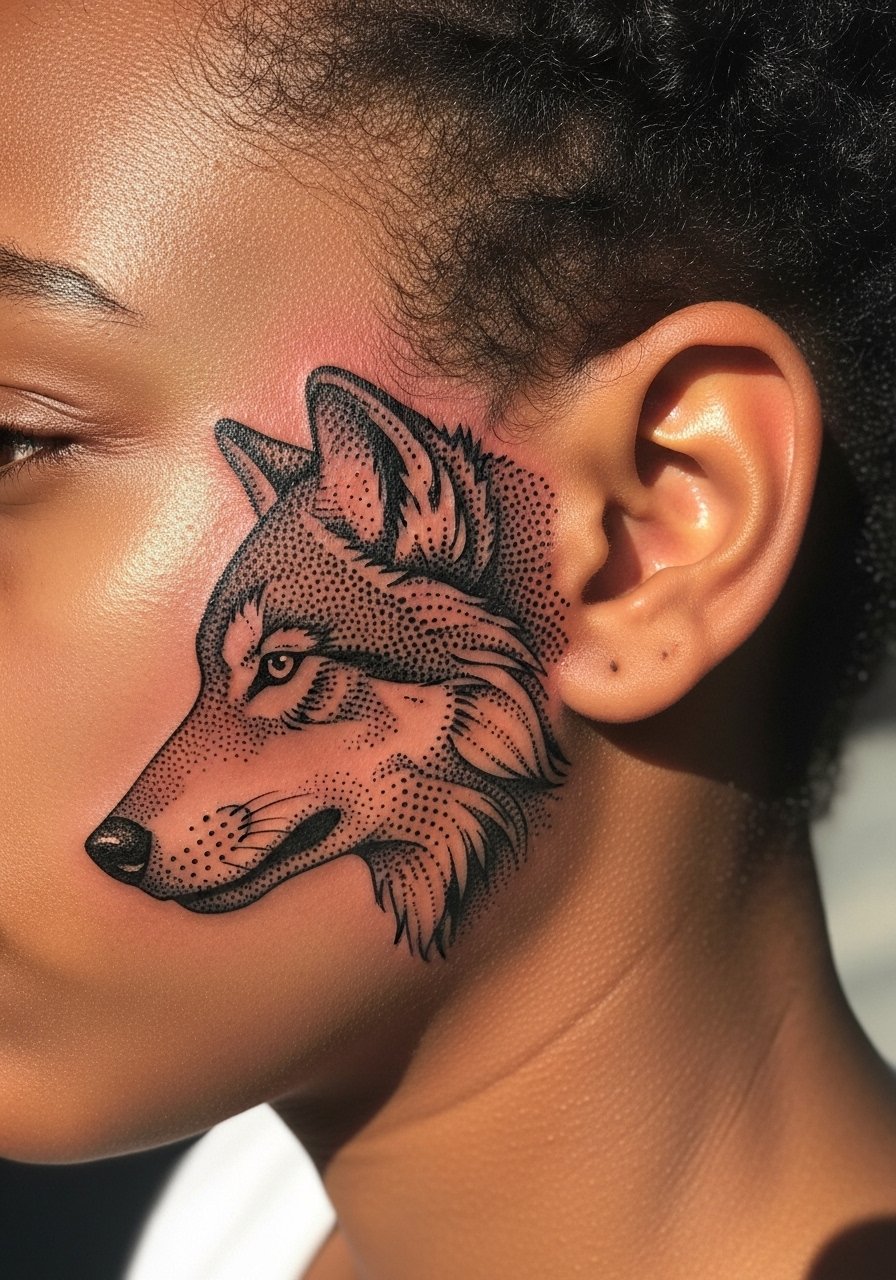
Small pieces behind the ear or on the nape look intimate and are quick sessions. The common mistake is going too small. Dot work needs room to keep texture instead of melting into a smudge. Behind-ear work is higher risk for fading since hair and scalp oils meet the area often. At six months stipple texture remains. At two years the smallest dots near hairline may soften and need a touch-up. Session time is typically under 45 minutes. Tell your artist you want a clear plan for maintenance and to prioritize contrast between dark core and lighter edges.
10. Blackout Negative-Space Puzzle Pieces on Forearms
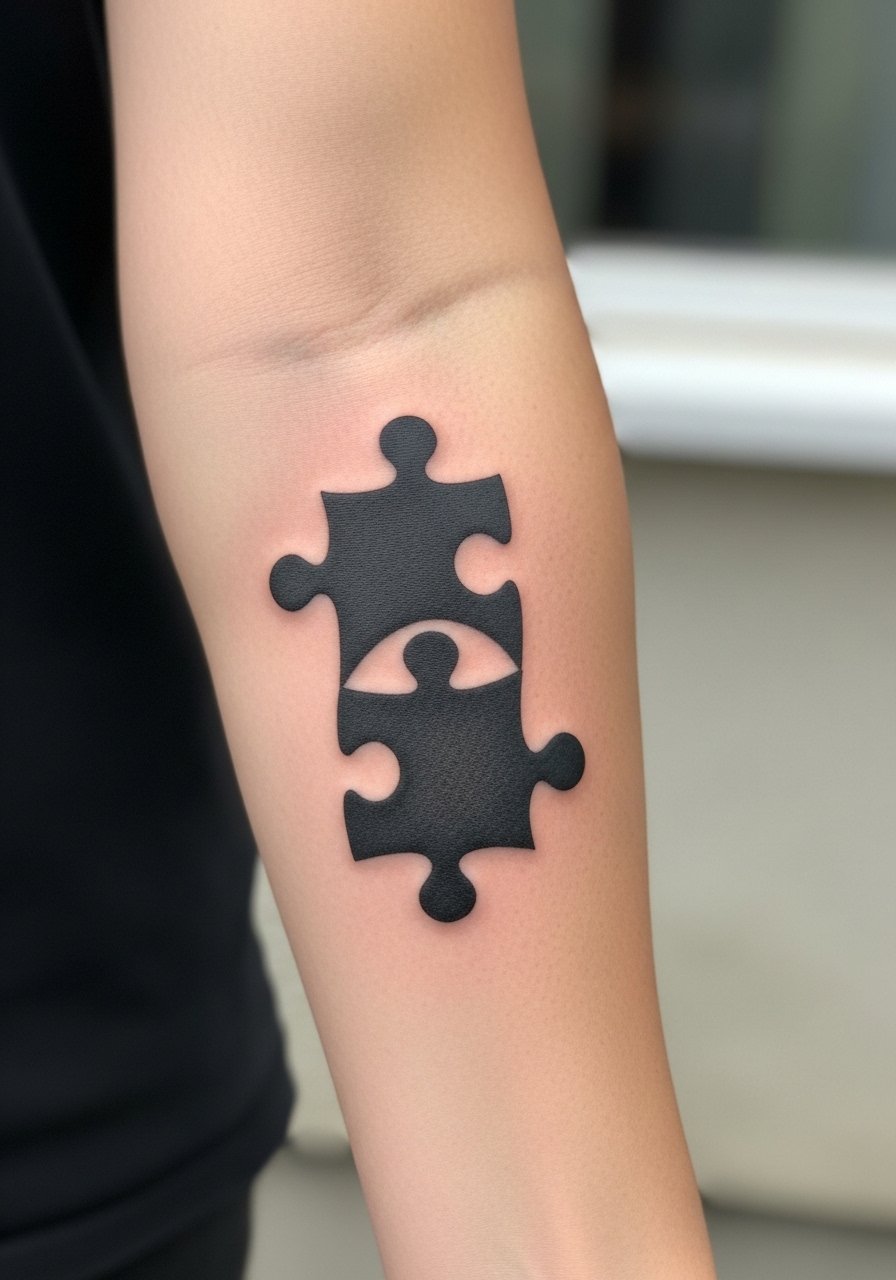
There is a commitment involved with blackout and heavy saturation pieces. The visual impact is immediate and the matching negative-space puzzle idea reads clearly from distance. Forearms take saturation well but repeated exposure to sun can make the filled areas look patchy over time. A common mistake is starting with patchy fills that need multiple sessions to even out. At six months the blocks look dense and flat. By two to five years you may notice unevenness and a need for refresh. Sessions can be longer than other ideas because full saturation requires careful layering. If you plan to wear shirts that expose the forearms a lot, factor in sunscreening into your maintenance plan.
Tattoo Prep and Aftercare Essentials
After Inked Tattoo Moisturizer, 2 oz. Popular in tattoo aftercare circles for its non-greasy finish. Use it during the second week onward to keep skin supple and to reduce flake.
Tattoo Goo Original Aftercare Lotion, 2 oz. Good for smoothing scabs once the initial crust comes off. Apply thinly and let it absorb.
H2Ocean Tattoo Aftercare Cleanser, 4 oz. Gentle salt-based cleanser for the first few days. Use only as your artist advises to avoid overwashing.
Bepanthen Nappy Care Ointment, 150 g. Often used in healing protocols for its occlusive properties. Good for overnight protection in small amounts.
Wicked Wonder Tattoo Balm, travel tin. A balm to use sparingly in the later healing phase when skin is flaky. Helps restore sheen without clogging pores.
Lightweight fragrance-free balm. Generic option when you want a simple, non-irritating moisturizer that is widely available.
Medical-grade second skin bandage, 6 inch roll. Useful for large saturation pieces during the first 24 to 48 hours if recommended by your artist.
CeraVe Moisturizing Cream, 16 oz. A single mainstream option I mention because it is widely available and gentle. Use in long-term maintenance rather than on open wounds.
Every tattoo is different. Always follow your artist's specific aftercare instructions. Consult a dermatologist if you have skin concerns or unusual healing issues.
Frequently Asked Questions
Q: Will fine-line arrow tattoos on inner forearms need touch-ups sooner than blackwork silhouettes?
A: In my experience fine-line work usually needs touch-ups sooner because thin strokes soften as the skin moves and ages. Blackwork silhouettes rely on saturation and hold up longer. Plan for a possible one-off touch-up around year two for fine-line forearm pieces.
Q: Are ribcage stipple hearts a bad idea because of fading and stretch?
A: It depends on your skin and how you live. The ribs do move and can blur ultra-fine detail. One group of artists avoids micro stipple there and another will do it with heavier dot clusters. Ask the artist about their ribcage portfolio and expect to consider a touch-up at year two if you want the stipple to stay crisp.
Q: How should couples approach placement if one partner wants visibility and the other wants something hidden?
A: Choose complementary placements that read as a pair when you stand together but also live independently. For example one partner on forearm and the other on upper back keeps a visible and a private balance. Discuss session times, pain tolerance, and maintenance so both partners commit to similar upkeep.
Q: Does blackout negative-space work on lighter skin tones better than darker tones?
A: Blackout fields read strongly on all skin tones when saturation is even. On darker skin tones the negative-space shapes are what create the image, so crisp edges matter more. Make sure your artist has examples on the skin tone that matches yours. Maintenance usually involves sunscreen and occasional refresh.
Q: Do watercolor or faded-style matching tattoos need different aftercare than blackwork?
A: From what I have gathered, watercolor-like pieces often depend on lighter saturation and therefore require more careful sun protection. Blackwork tolerates sun exposure a bit better but will still fade. Use the gentle cleansers and moisturizers listed above and apply broad-spectrum sunscreen once fully healed to preserve both styles.