
Statement: small adjustments to scale, spacing, and contrast are what make chest tattoos still read strong after years, not the tiniest needlework copied from a phone screen. If you want clarity at the collarbone, presence at the sternum, or a piece that ties into necklaces and necklines, the choices below show designs and the practical tweaks that help them last. Start with a collarbone-first option and read on for session and styling notes.
1. Fine-Line Script Along the Collarbone
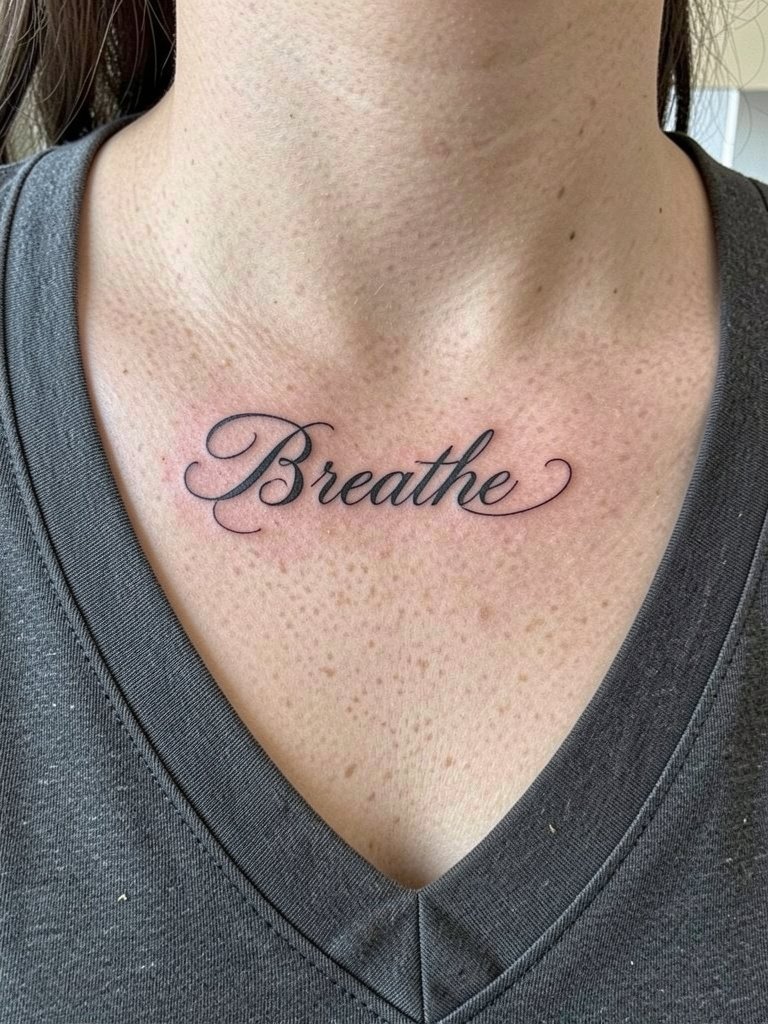
A collarbone script reads like jewelry, so scale it to sit comfortably above the clavicle instead of squeezed into the hollow. Ask for letter spacing that keeps each character separate at three to four inches long, and request the line weight to be a touch heavier than single-needle reference photos so the letters do not blur into one another over time. Session time is usually under an hour, pain is moderate, and touch-ups are common at year two on high-motion skin. For showing it off, pair with scoop-neck tanks that keep the area visible without tugging at the fabric.
2. Mandala Sternum Patch
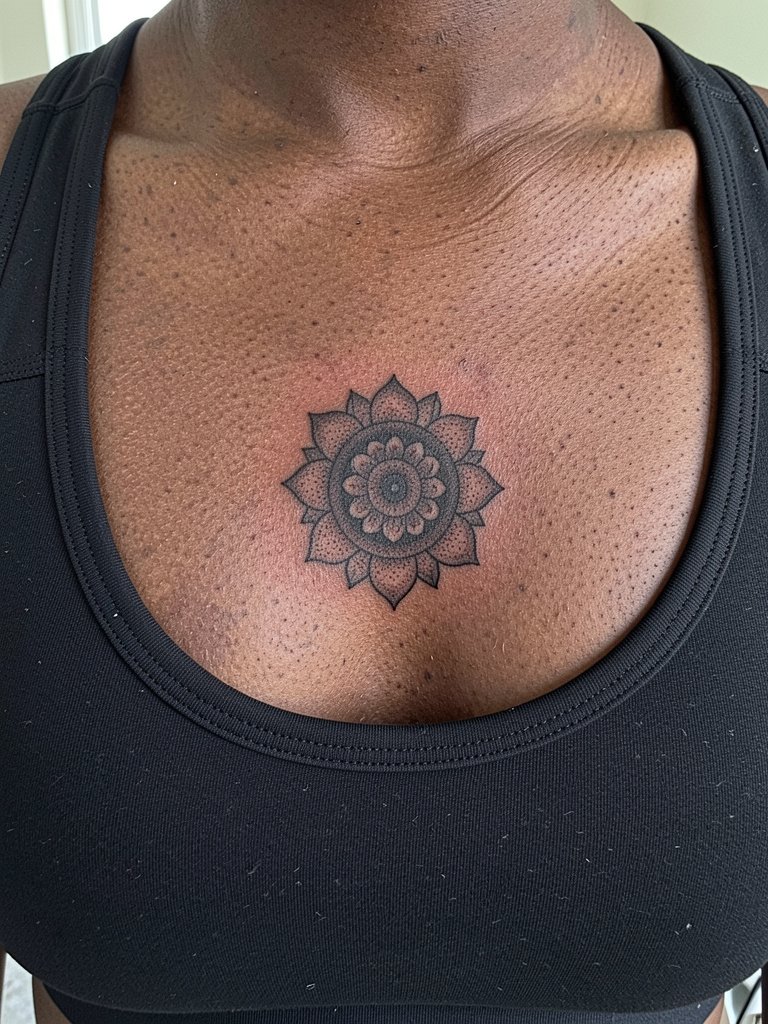
A compact mandala on the sternum reads like a centered charm when sized with breathing and cleavage in mind. This area can be sensitive so plan for two shorter breaks during a ninety-minute session. One group of artists warns that extremely fine elements in sternum work blur as the skin stretches with movement and time. Another group says that with slightly wider spacing and crisp stippling the pattern settles well, and they point to three-year healed examples to back that up. If you want coverage for privacy at first, bring a fitted bandeau top for the appointment so the artist can work without fabric interference.
3. Asymmetric Botanical Cluster Over the Right Upper Chest
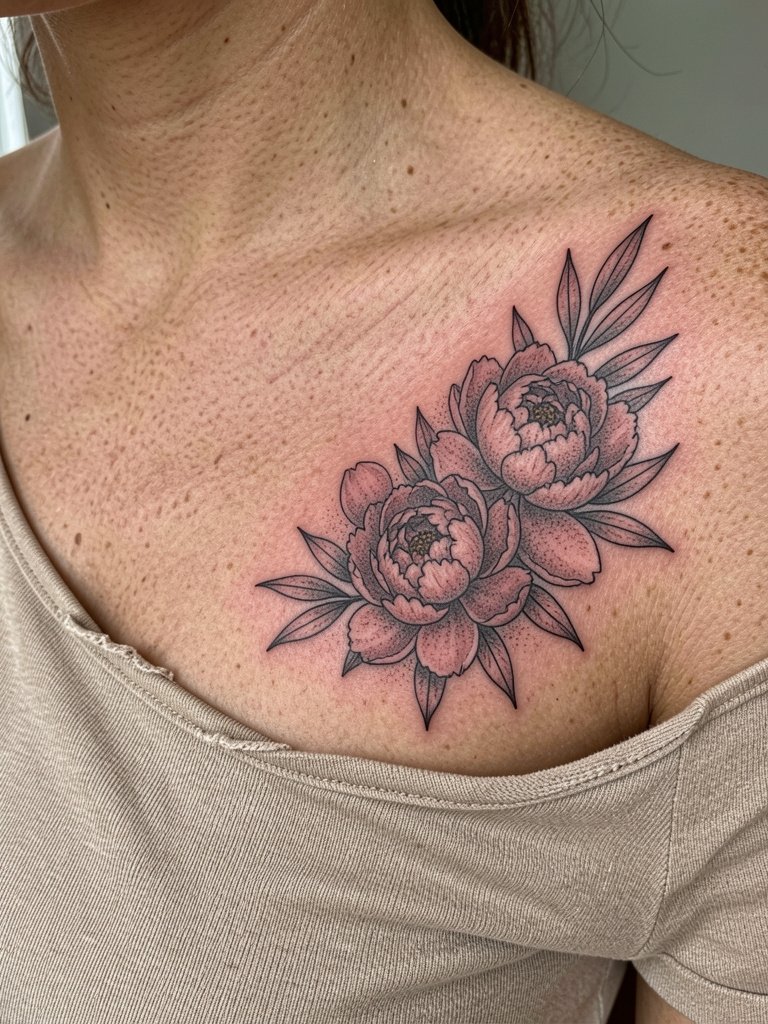
Clusters that sit off to one side let you balance the chest visually with necklaces or boat-neck tops. Ask for leaf stems to be slightly bolder than reference photos so small veins do not disappear by year three. A common mistake is asking for watercolor washes across the whole cluster, which tends to fade into an unintentional smudge on chest skin. Expect a two to three hour session and a touch-up window at eight to twelve months for color refresh. For evenings out, frame the piece with off-shoulder dresses that show just enough skin.
4. Geometric Sunburst Across the Upper Chest
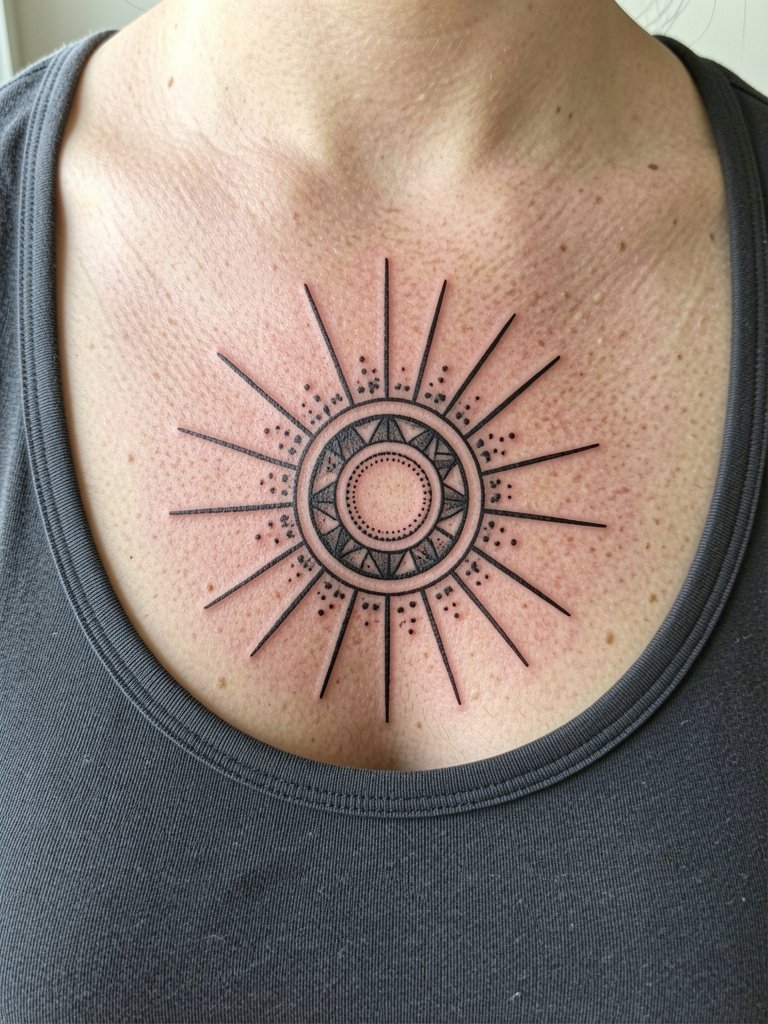
Angular geometric work demands absolute symmetry at stencil stage so bring printed references scaled to your chest width. Symmetry errors are the most visible mistake, and the fix often requires heavy reworking. Expect a medium pain level and a session of one to two hours for a small-to-medium sunburst. In two years the thin rays will soften, so plan the rays at a slightly thicker initial line weight than the thinnest Pinterest example. For a clean reveal after healing, pair the piece with open-back tops that draw attention upward without covering the design.
5. Minimalist Heart Near the Left Clavicle
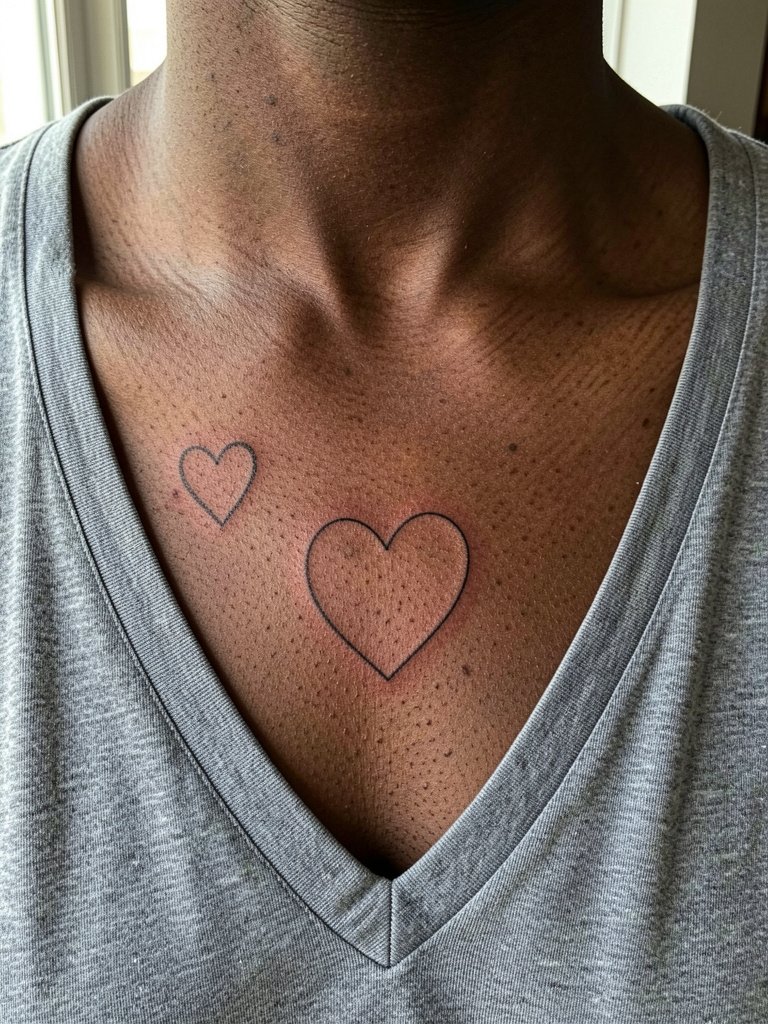
Tiny motifs near the clavicle age based on initial scale and the motion of necklaces. The frequent mistake is asking for a micro outline that becomes a smudge after a year. Make the outline a hair thicker and ask to preview how the heart reads at three inches and five inches before the needle moves. Sessions are short and low to moderate on pain. Show it off with layered pendant necklaces or a delicate chain choker that sits an inch above the ink so both sit comfortably.
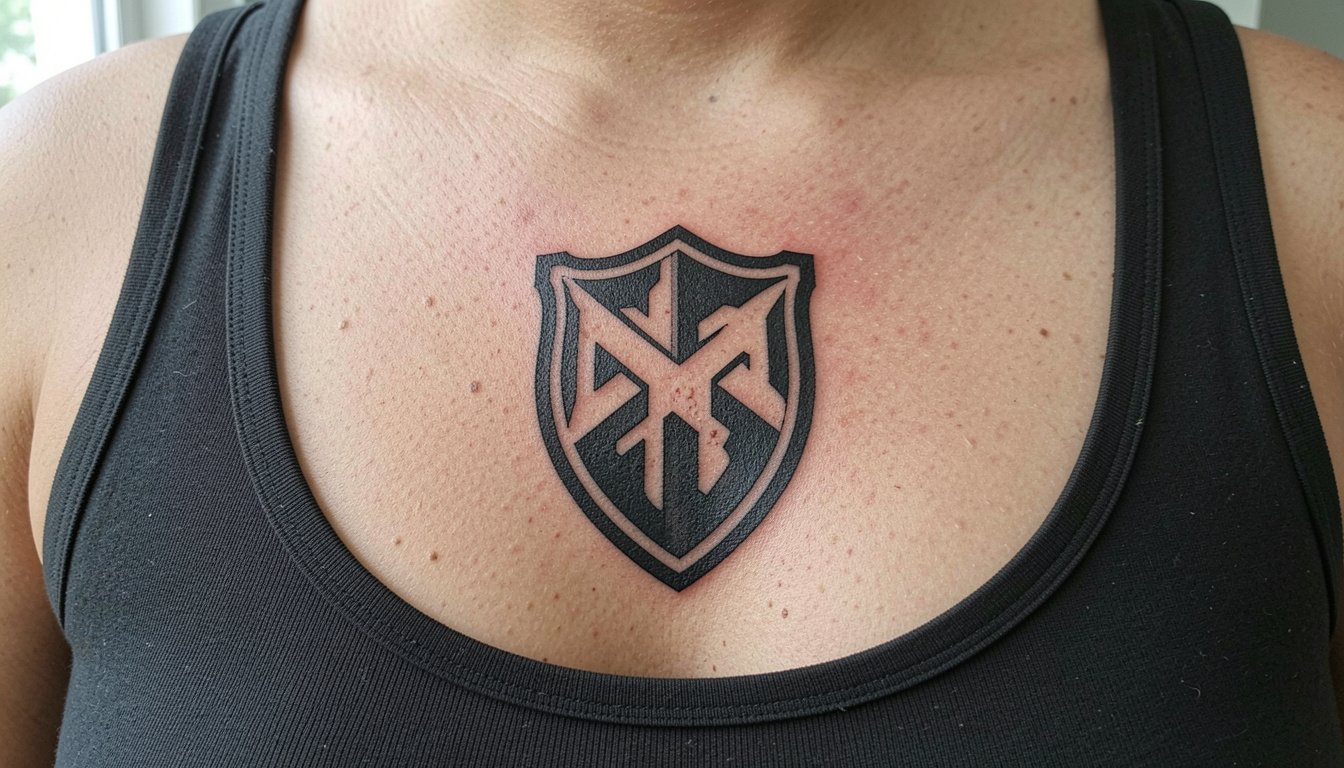
6. Blackwork Shield Emblem Center Chest
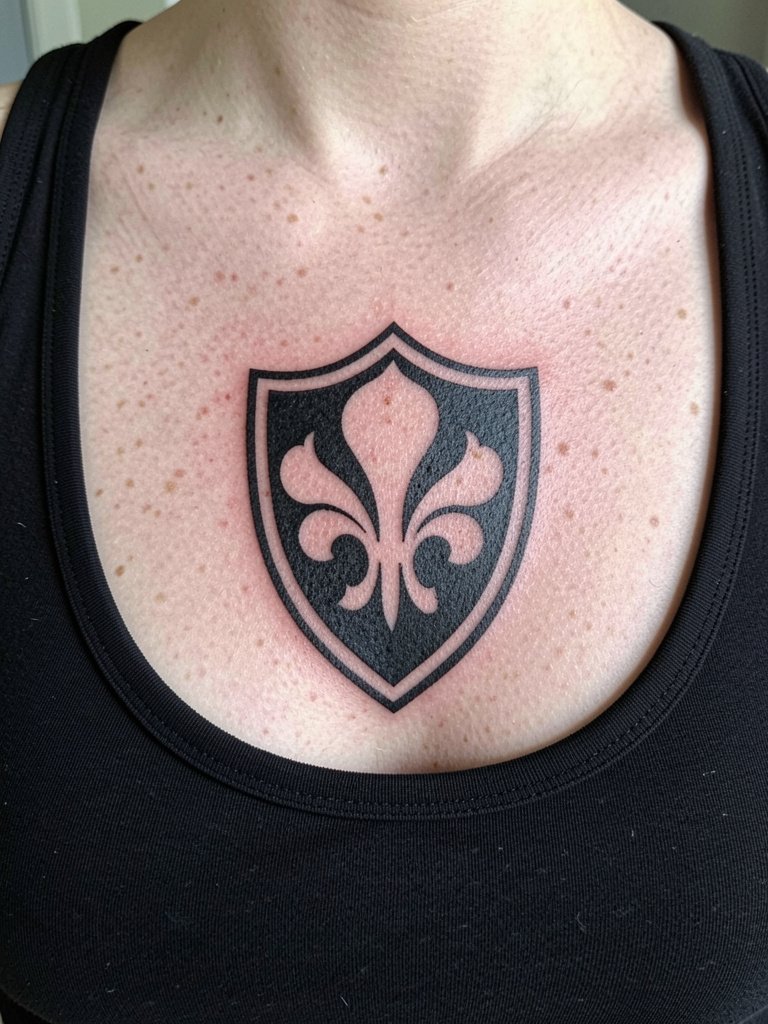
Solid black shields read from a distance and tolerate touch-ups well because large filled areas hold saturation. Plan for a longer single session if your shield has dense fills, and bring hydration for the skin beforehand to help saturation. A common error is trying to put too many fine internal details inside a small shield. If you want ornamental interior work, scale the emblem up so the internal motifs breathe. For styling, a low scoop-neck sweater highlights the negative space while keeping the piece bold.
Pre-Session Essentials
The collarbone and sternum pieces above require different session prep, so these five items smooth the chair time and the first week.
-
Stencil transfer paper kit. Lets you test composition and symmetry on your chest before the needle goes down, useful for the mandala and geometric ideas above.
-
Fast-absorbing topical numbing cream. A thin application forty-five minutes before a sensitive sternum session eases the initial sting without changing how the ink sits.
-
Thin protective film roll for post-session coverage. Keeps the tattoo shielded from friction at the neckline while you sleep the first nights.
-
Fragrance-free gentle body wash. Cleanses chest skin during the first week without stripping delicate ink contrast.
-
Aquaphor healing ointment. Thin layers in the first three days lock in moisture for dense blackwork and fine-line scripts without suffocating the skin.
7. Lace Underbust Band
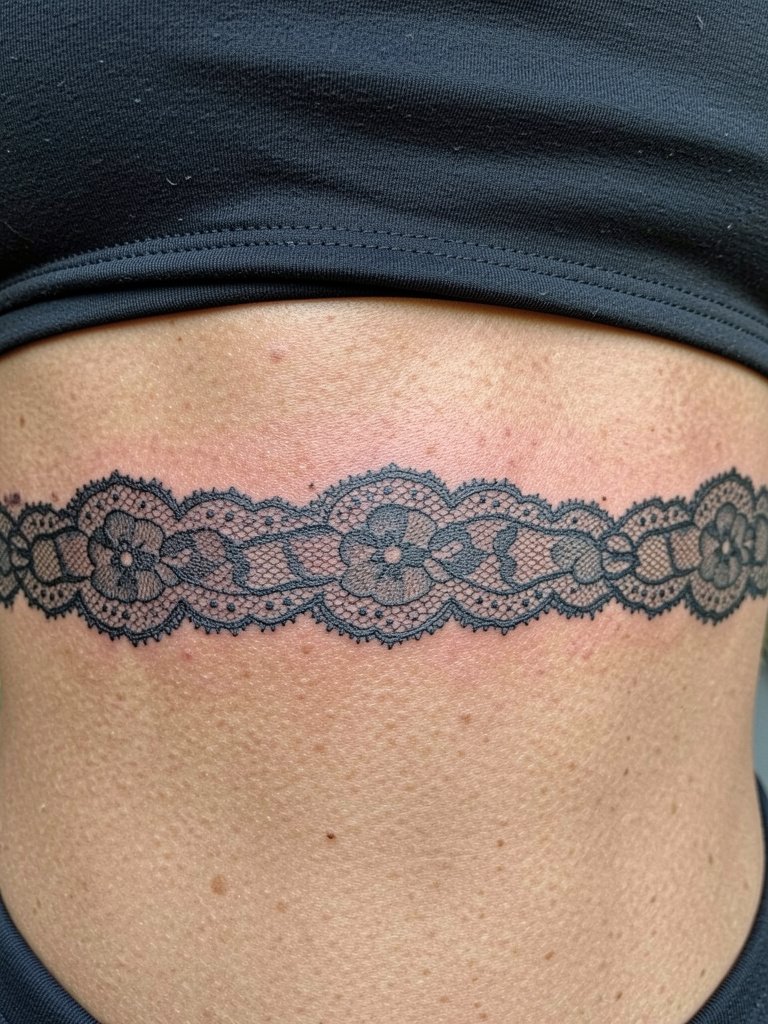
Underbust work sits on skin that moves with breathing and support garments, so choose an artist experienced with banding and stretch. Expect higher sensitivity near the rib cartilage and plan for a session split if the band is wide. This placement requires careful sizing so the scallops do not blur into a continuous dark line over time. Because it is close to undergarments, bring the exact bra style you wear most often so the artist can position the band relative to the fabric edge. Note that some studios prefer to book a specialist for this area because of scarring risk and crease lines.
8. Neo-Traditional Rose Cluster Across Upper Chest
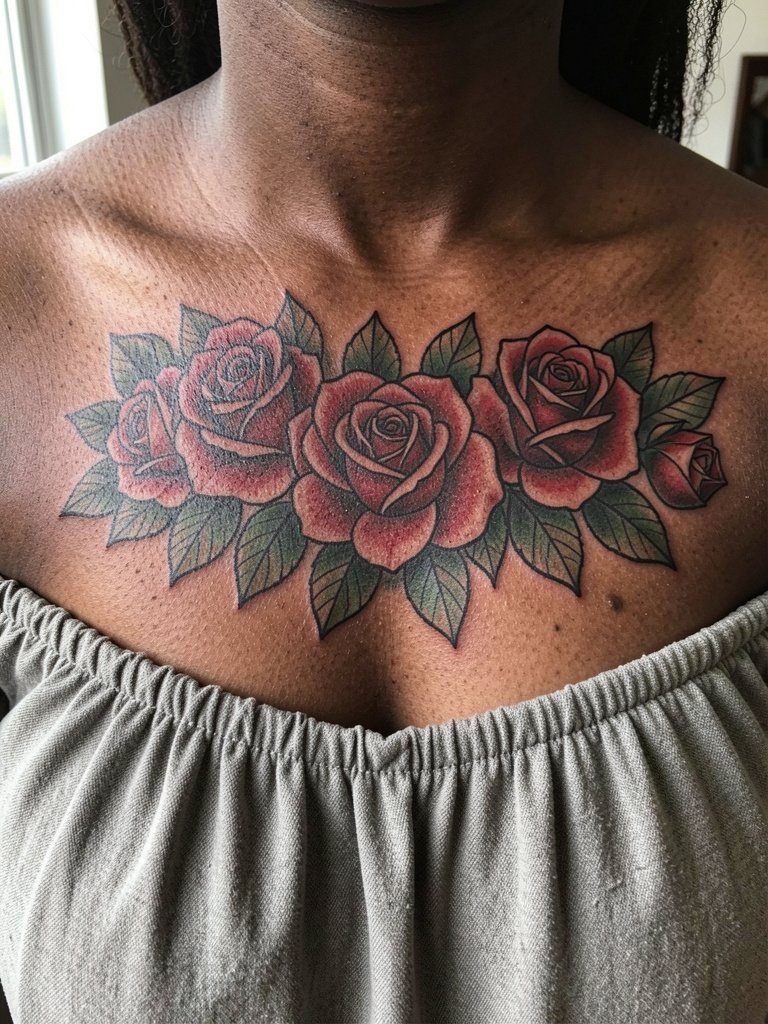
Neo-traditional florals balance color saturation with bold outlines so the design ages visibly but remains readable. If you want color that holds, ask for denser color packing in the first session and expect a follow-up touch-up in six to twelve months. A common error is asking for soft washes that do not get enough saturation to last on chest skin. This piece pairs well with evening wear, so showcase it with open-back midi dresses that keep the floral visible without compressing the ribs.
9. Single-Needle Script Over the Heart
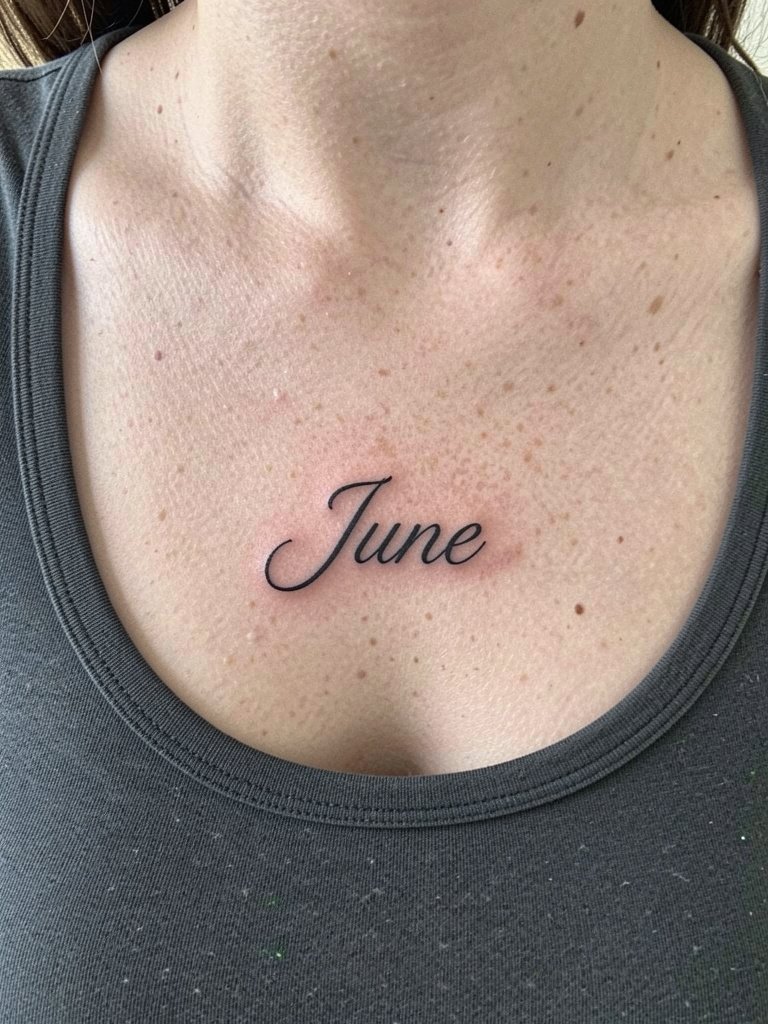
Small single-needle scripts over the heart read intimate, but they are the first to soften if lines are too thin. One camp of artists says single-needle on chest will blur inside two to three years because of motion and thinner skin. The other camp argues that modestly increased spacing and a slightly heavier initial stroke keeps the letters legible long term, and they will ask to see how the script reads at three different scales before inking. Plan for a short session and a likely touch-up window at year one.
10. Dotwork Crescent Arcing Across the Upper Chest
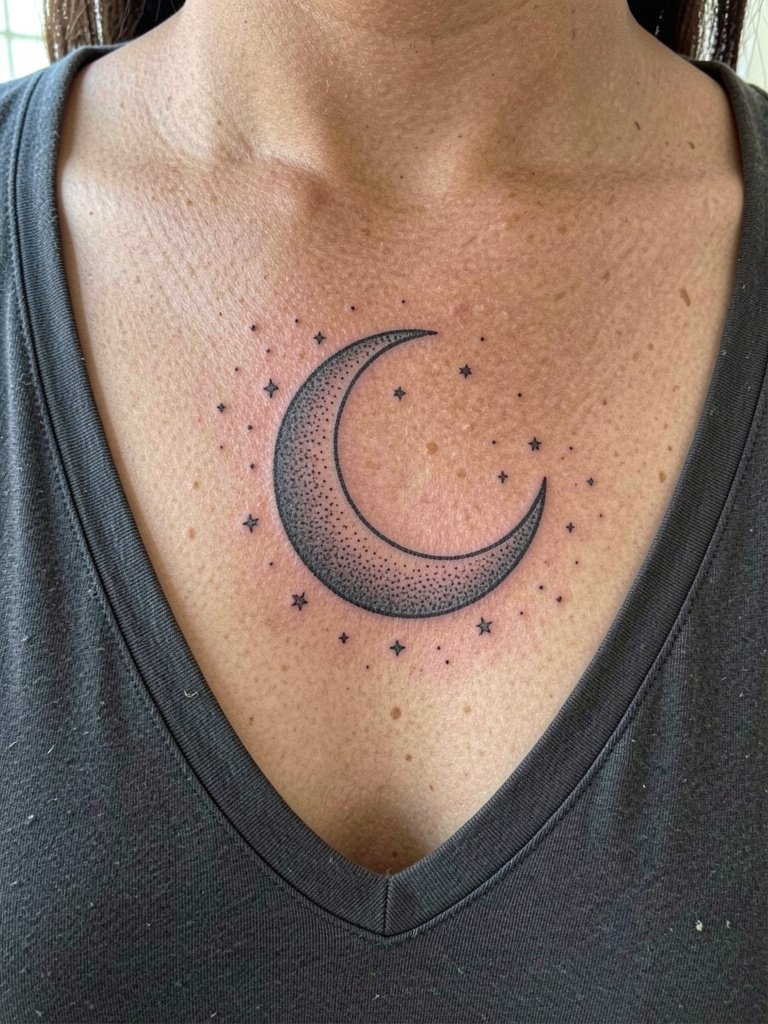
Dotwork relies on consistent needle spacing, so ask to see healed dotwork photos from the artist on chest placements before committing. Mistakes happen when dots are placed too close and merge into a grey patch. Session time scales with size, often between one and three hours for a medium arc. To style the piece, wear wide V-neck blouses that leave the curve visible while matching delicate dot shading.
11. Medallion at the Inframammary Fold
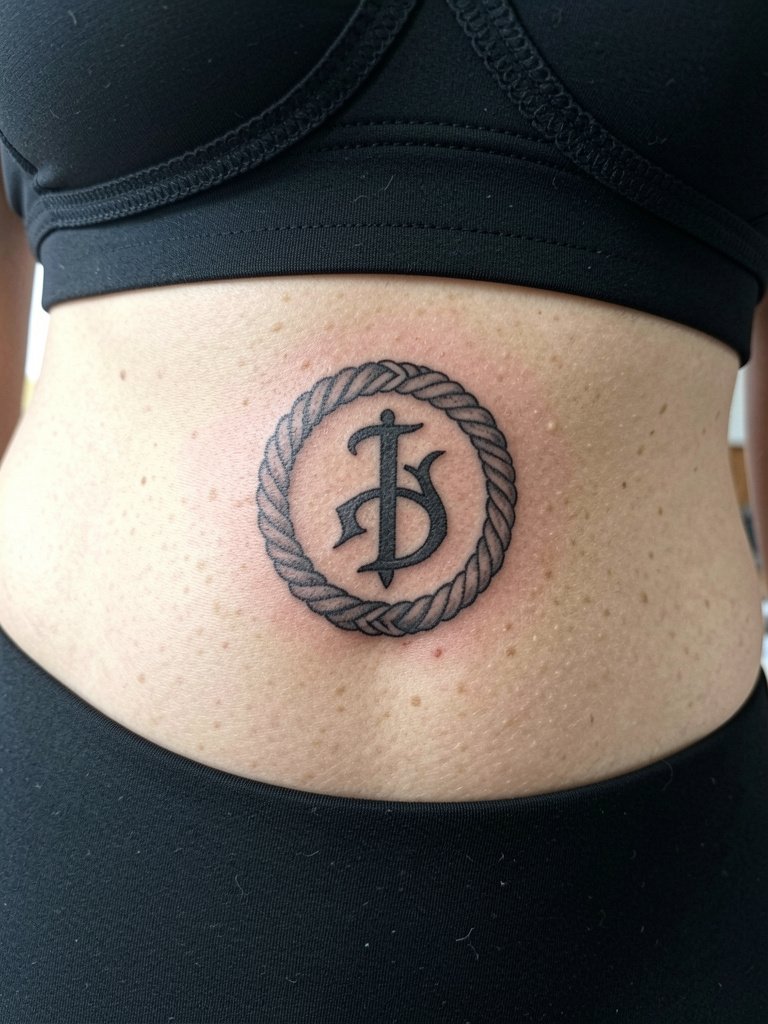
Tattoos at the inframammary fold require an artist who knows how to work on curving surfaces and skin that gets regular friction from bras. This is a more private placement and some studios will only book experienced practitioners for it. The main aging issue is compression from undergarments, so position the medallion where your usual bra band sits to avoid constant rubbing. Expect moderate pain and possible need for a touch-up once the area fully settles.
12. Architectural Linework Across the Clavicle
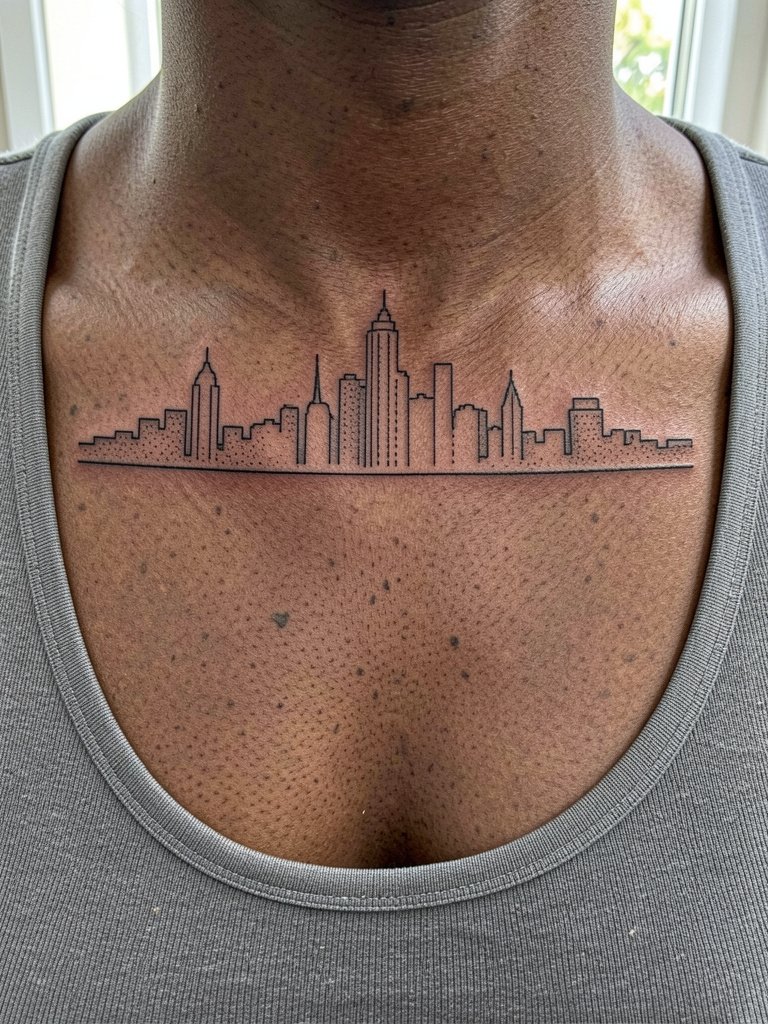
Thin architectural lines need deliberate spacing across the clavicle so the parallel edges do not merge as the skin moves. Ask the artist to show you a stencil on your body and to demonstrate final line weight by drawing a thicker test line next to the thin one. Sessions are usually under two hours and the pain is on the lower end for chest placements. Pair with open-neck blouses that show the linear silhouette.
13. Celestial Constellation From Collarbone to Sternum
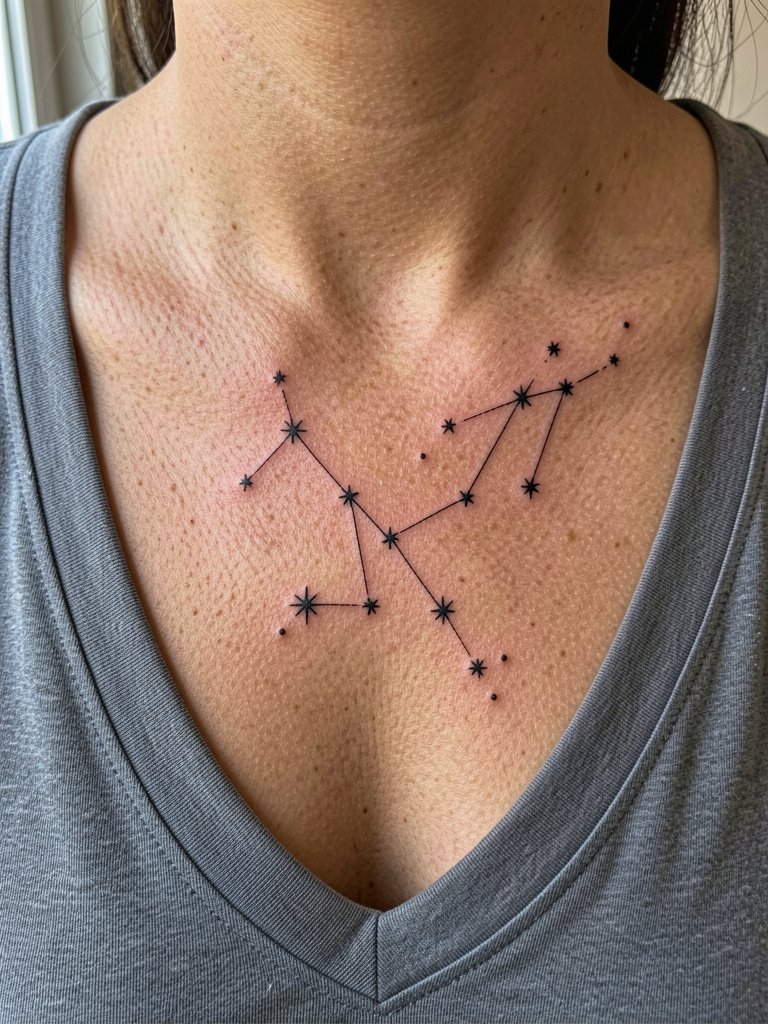
Constellation pieces depend on spacing to remain readably dotted as you age. A common mistake is plotting stars too close together for chest skin where movement will blur the micro-lines. Request a slightly larger negative space around each star and plan for a small touch-up at eight to twelve months. For daytime styling, layer with a fine chain that sits between the collarbone and the top of the design so both elements frame each other.
14. Stipple-Shaded Cameo Portrait on the Upper Chest
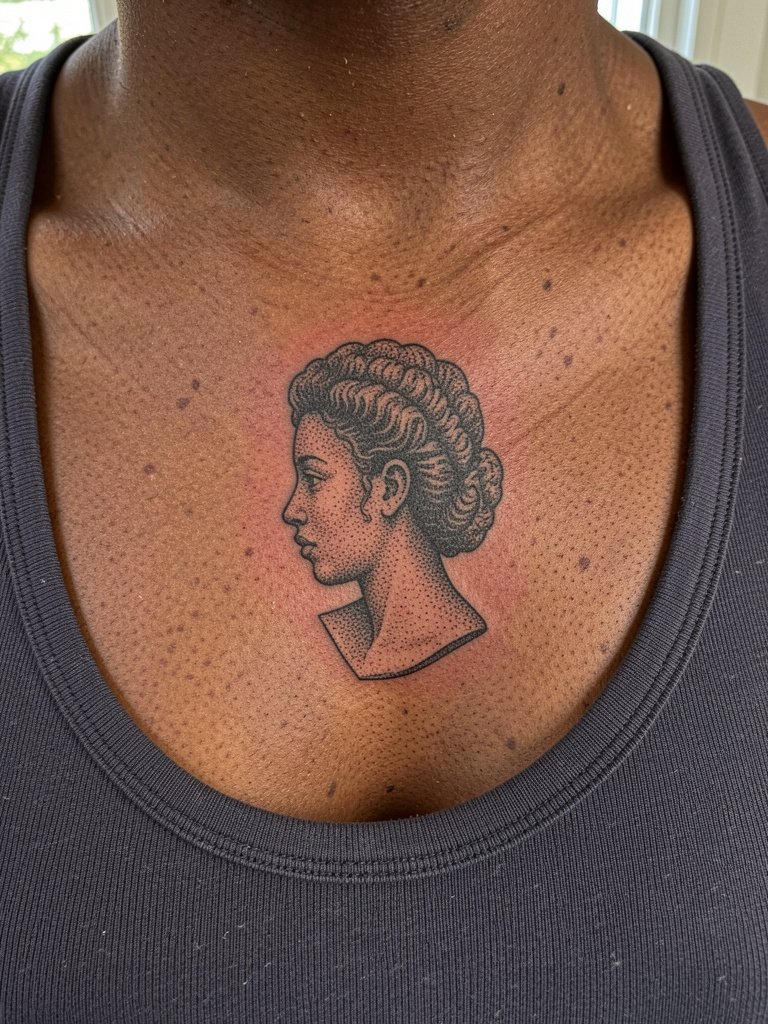
Portrait-style cameos on chest need an artist experienced in stipple and portraiture because tiny shifts in angle or contrast will change the likeness. Bring multiple photos of the same face shot from different lighting so the artist can choose a reference that reads well in dot shading. Expect two to three hour sessions and a high chance of a follow-up touch-up for midtone cohesion. For jewelry, a delicate pendant that sits above the cameo helps guide the eye without crowding the portrait.
15. Curved Quote Along the Ribcage Edge
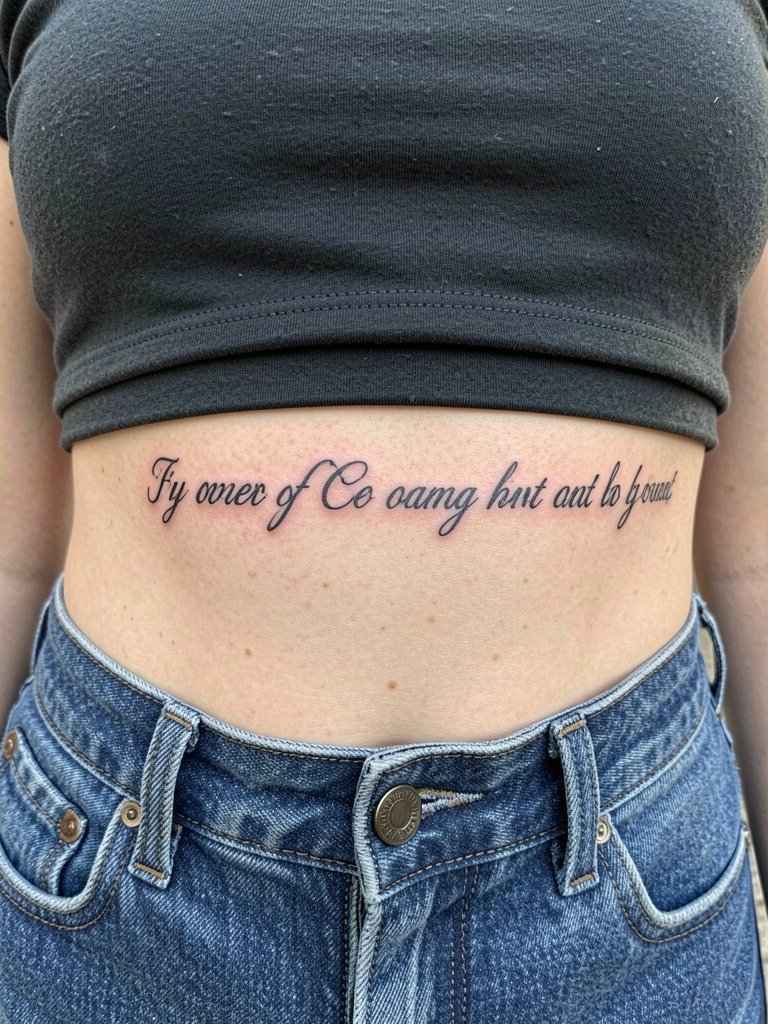
Ribcage quotes are high on the pain scale and will need longer sessions. The long-term issue is stretching and movement that can make tiny script blur. One camp warns that thin single-needle script on ribs will lose definition within a few years because of flex and breathing. The opposing camp will say that deliberately increasing letter spacing and using slightly heavier initial strokes solves that problem while preserving the intended look. For the appointment wear a loose tank so the artist has easy access and you stay comfortable during breaks.
Frequently Asked Questions
Q: Which chest placement hurts the most, and how should I prepare?
A: Ribs and sternum are usually the most painful because of proximity to bone and thin tissue, while the collarbone and upper chest feel more like intense pins and take less time. Hydrate well the day before, sleep enough, and wear easy-to-remove tops like a scoop-neck tank so the artist can access the area without tugging.
Q: How do I find healed portfolio examples and studios without naming artists directly?
A: Search location filters on Instagram and TikTok for keywords like "healed chest tattoo" and "sternum healed," browse portfolio tags on portfolio platforms, and check Reddit threads that collect healed photos by skin tone. Use those platforms to compare how similar placements age across different skin types before booking.
Q: How long before a chest tattoo needs a touch-up?
A: Expect a small follow-up at eight to twelve months for color and linework refresh, and know that fine single-needle work often needs touch-ups sooner than bold blackwork. The best indicator is how crisp the lines look at the six-month healed stage, not the fresh session photos.
Q: Are there cultural or symbolic concerns I should consider for mandalas or crests?
A: Yes. If a design borrows from specific cultural or religious iconography, ask about respectful adaptation and avoid direct appropriation of sacred symbols. Framing the design as an inspired aesthetic and discussing meaning with the artist leads to a more considered result.
Q: Can I wear jewelry or necklaces during the healing window?
A: Avoid heavy necklaces directly on a fresh chest tattoo for the first two weeks because friction and metal can irritate healing skin. Lightweight chains that sit above the ink are fine after the initial scabbing phase, usually around day seven to ten depending on healing.