
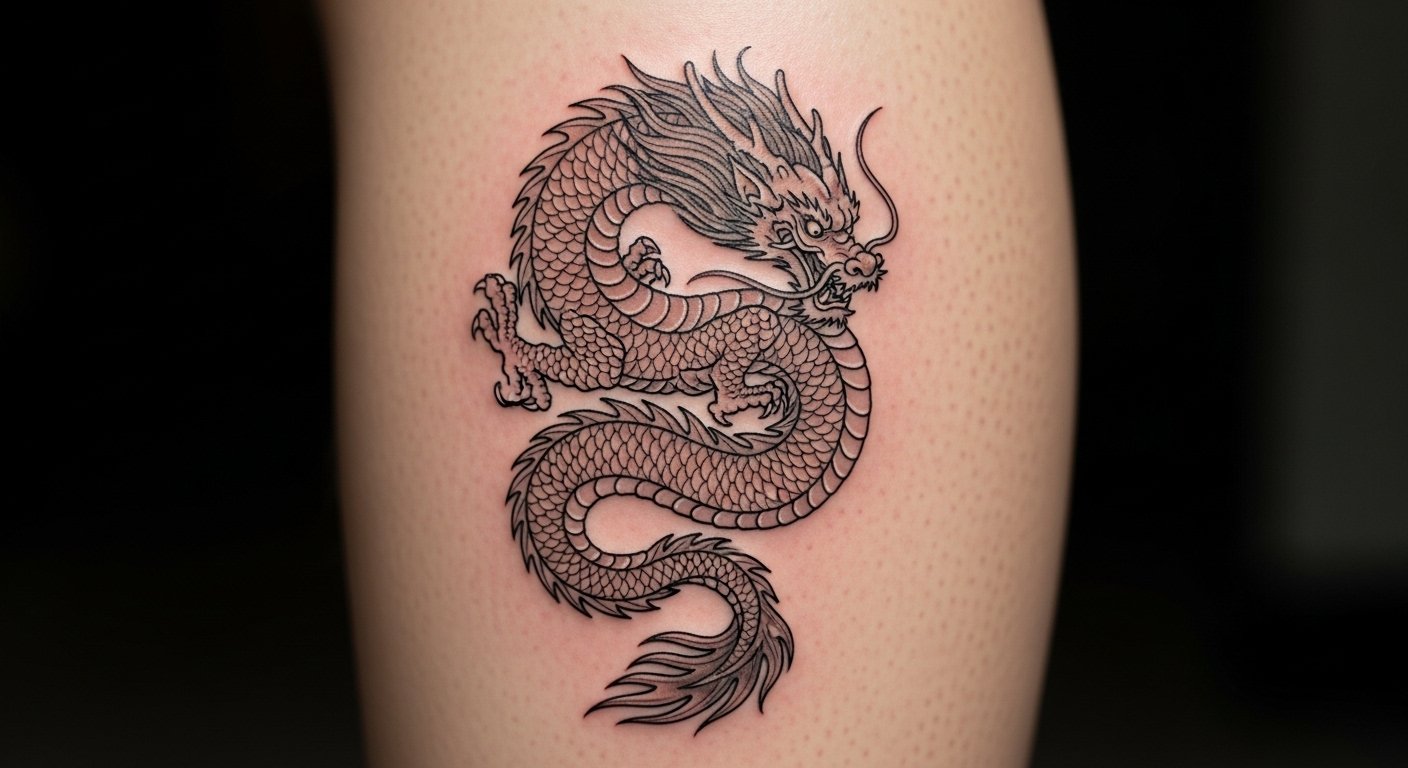
A friend of mine spent months scrolling Chinese dragon tattoos before realizing the real problem was knowing which version fit their life and skin. What looks dramatic in a photo can blur or lose meaning after healing if you pick the wrong style or placement. Below are twenty Chinese dragon tattoo ideas that pair clear symbolism with practical guidance on aging, pain, and consultation notes so you book a session with confidence.
1. Flowing Upper Back Chinese Dragon in Blackwork
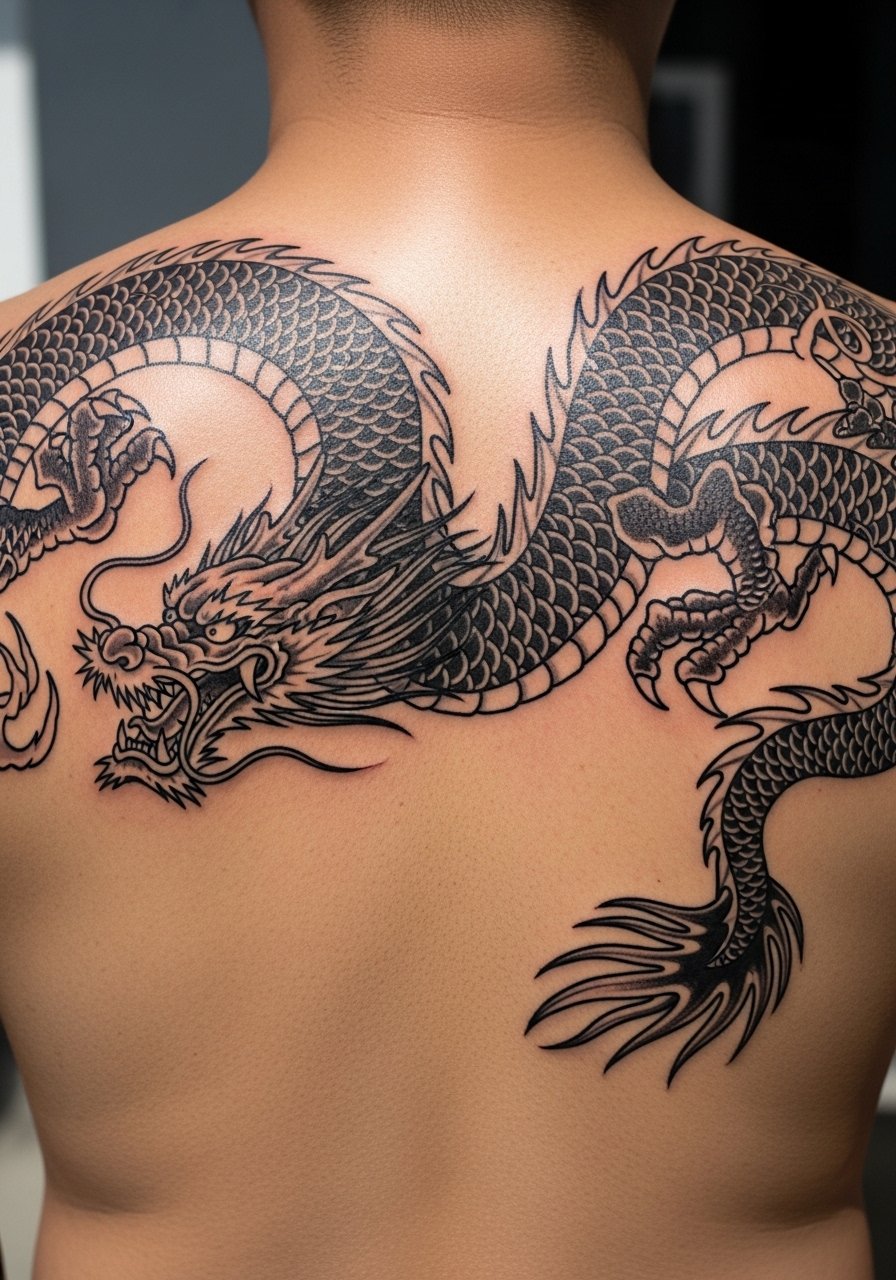
Someone I know chose a back piece because it gives the artist room to follow the body. Expect a medium pain level across the shoulder blades and a multi-session timeline. Tell your artist you want bold linework with heavy black saturation instead of thin filigree so the silhouette reads from a distance. A common mistake is trying to cram too much tiny detail into the spine area, which risks blowout and loss of contrast after two years. At six months the black should be even, at two years expect slight softening, and plan a touch-up around year three if you want the silhouette sharp.
2. Fine Line Chest Dragon with Whip Shading
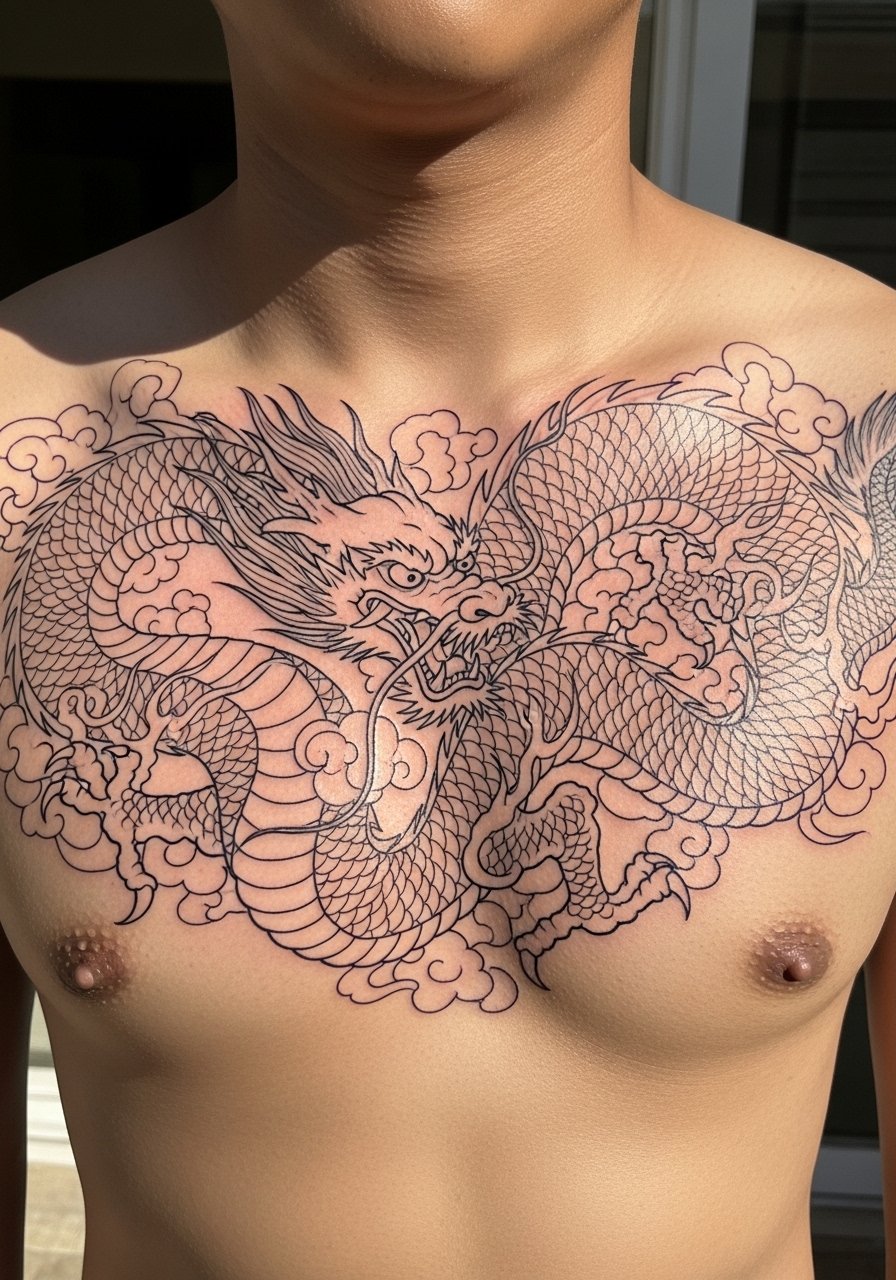
Fair warning, chest pieces sit on stretchy skin and feel like a 7 out of 10 on pain scales. Artists split on fine line here. One camp says fine line blurs quickly because the chest moves and stretches. The other camp says carefully spaced linework with light whip shading can hold up. Ask your artist which camp they follow and look for healed chest samples in their portfolio. Keep the dragon slightly larger than you think it needs to be so the line spacing prevents loss. Expect one or two short sessions and a touch-up at year two.
3. Red Scale Accented Forearm Dragon, Traditional Color
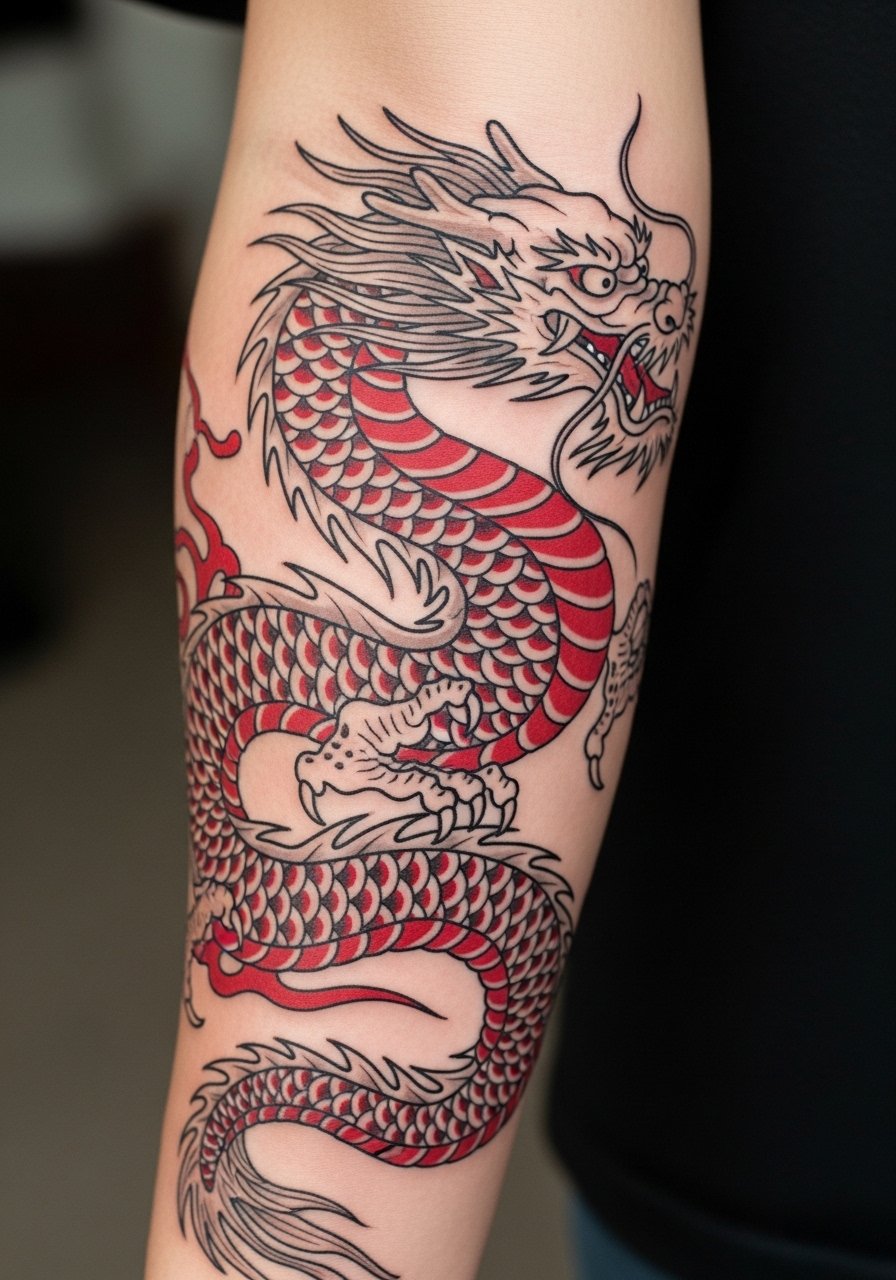
I recommend this when you want color that reads without overwhelming linework. Tell the artist to place the red in focal clusters rather than full saturation across every scale. The forearm tolerates saturation well and hurts less than ribs, so session time is usually one longer sitting. A common aging issue is patchy saturation if the artist packs color too shallow. At six months the reds will have softened, and after two years you may need a small touch-up to restore vibrancy. Avoid tiny micro scales in this placement to reduce blowout risk.
4. Minimalist Wrist Dragon, Micro-Realism Edge
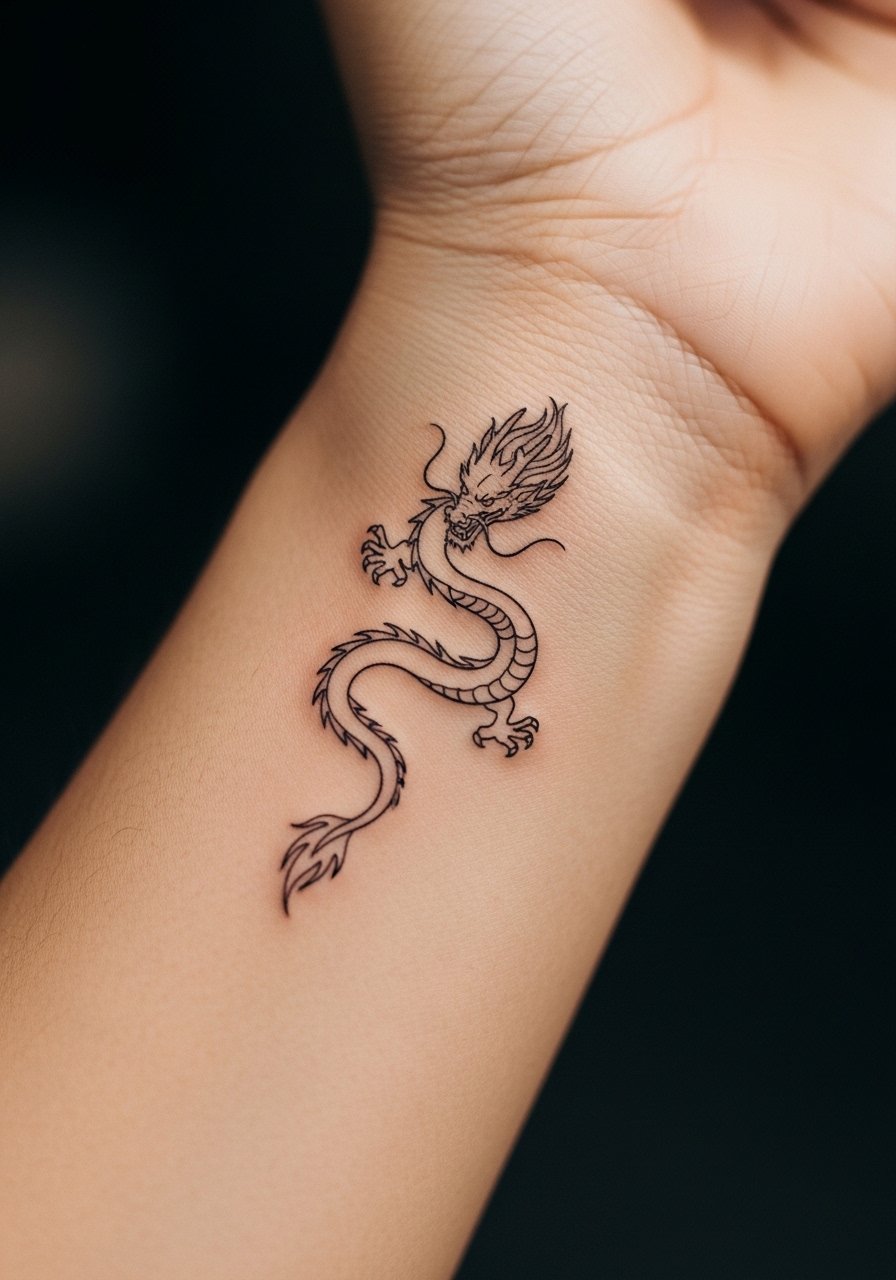
When you want a subtle nod to dragon imagery, wrists work well but they are high-motion and visible. The biggest mistake is making the design too small. Micro-realism and fine line need breathing room on the wrist or the contours blur within a year. Session time is short, pain is lower, but expect faster fade and possible touch-up at 18 months. Think about career visibility with wrist pieces. If you are set on a wrist dragon, ask for slightly thicker primary lines and sparse interior detail so the shape ages cleanly.
5. Sleeve-Length Irezumi-Inspired Dragon with Stipple Shading
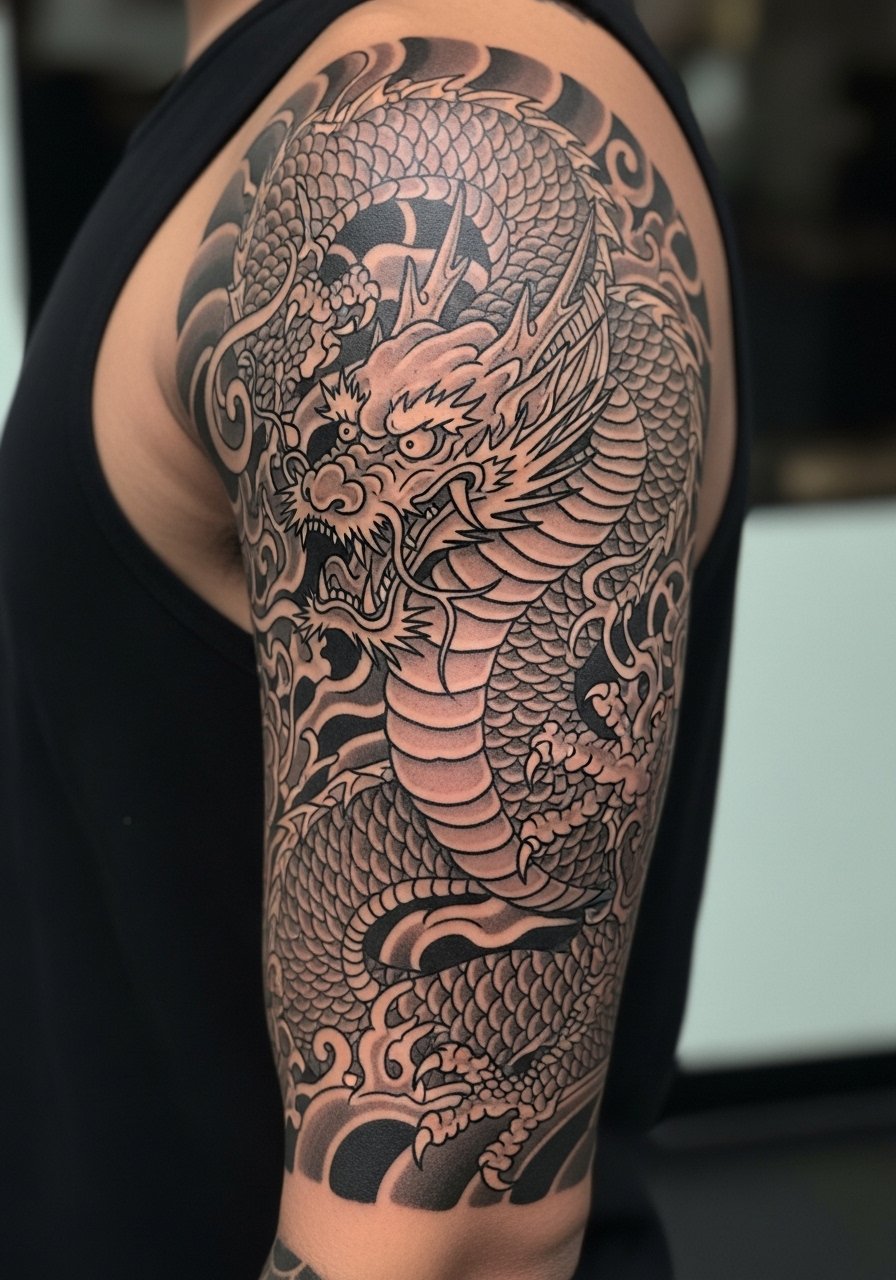
There is cultural weight to this style. One group values close adherence to traditional motifs and symbolic placement, while another prefers modern reinterpretation that borrows the aesthetic without direct replication. Decide where you stand and be explicit about it in consultation. Sleeves take multiple long sessions and feel like a steady ache into the later sittings. Stipple shading and bold outlines hold up well over time, but saturation in midtones will need attention after a few years. Bring photo references that show the exact scale and body flow you want.
6. Minimal Neo-Traditional Shoulder Dragon with Saturated Color
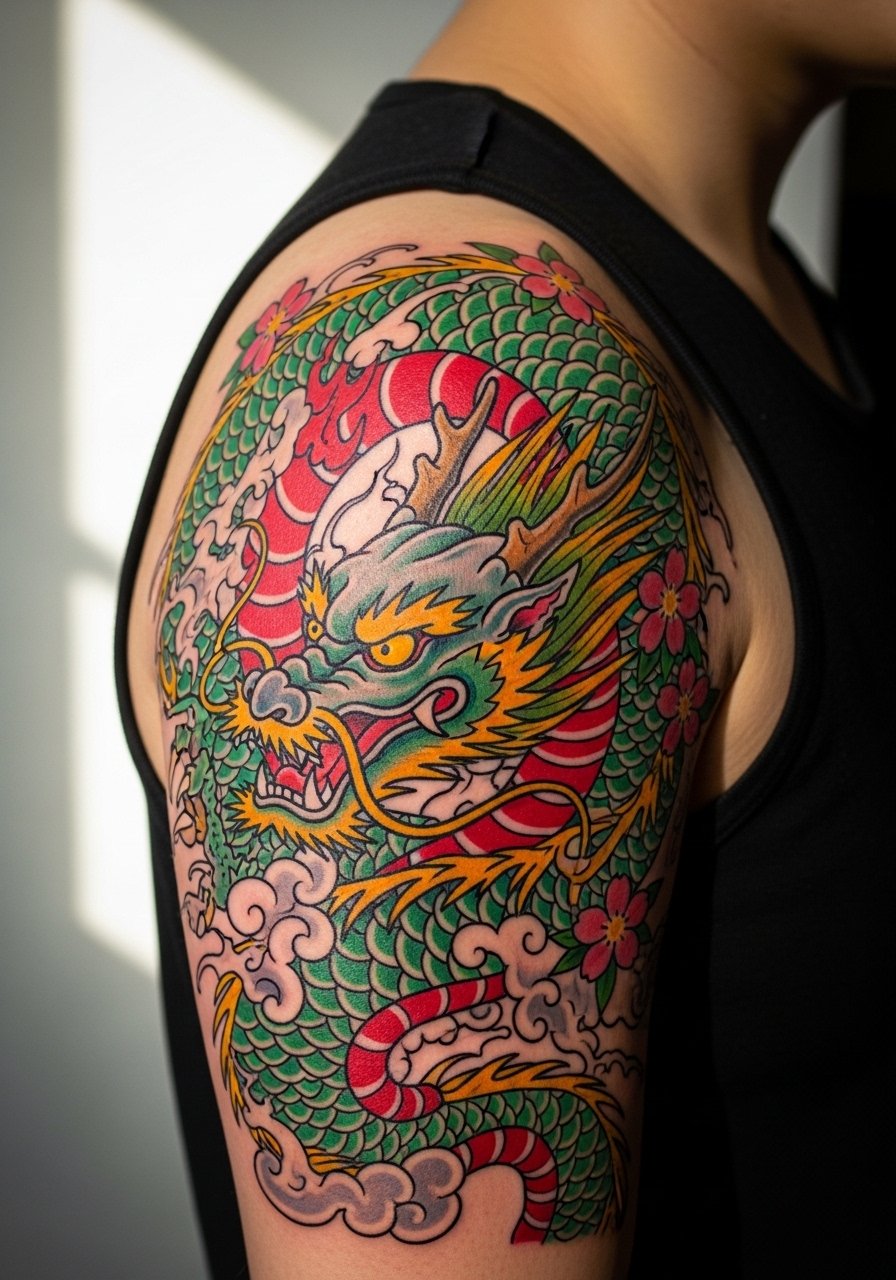
When you want a dragon that reads from across a room the shoulder cap is a great choice. Expect a two-hour session for a medium-sized piece and a moderate pain level. Tell the artist you want clear outline hierarchy and flat color fills versus painterly gradients so the piece keeps good saturation as it heals. A frequent error is overcomplicating the color palette which can muddy once it settles. At two years expect slight softening in midtones and a touch-up to restore flatter color areas.
7. Micro Dragon Behind the Ear, Single-Session Accent
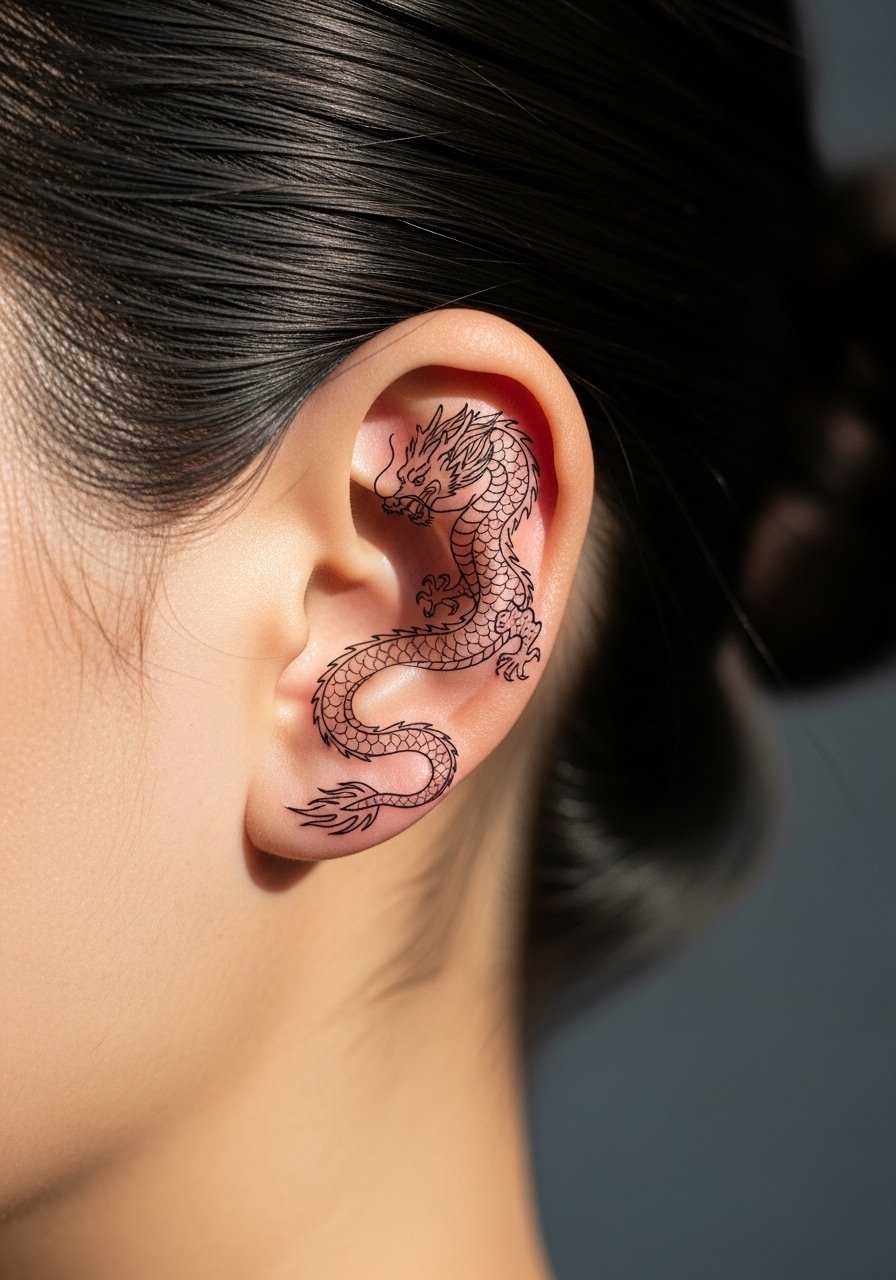
This one hurts more than people expect because of thin skin and proximity to bone. The session is quick but the pain spikes briefly. A common mistake is asking for tiny script-level detail in such a small area. I suggest solid silhouette or single-line work so the image keeps form after healing. Handing your artist clear examples of scale is essential. Note that behind-ear work is highly visible when you wear hair up and demand specialized aftercare for minimal movement during healing.
8. Ribcage Long-Form Dragon with Gradient Shading
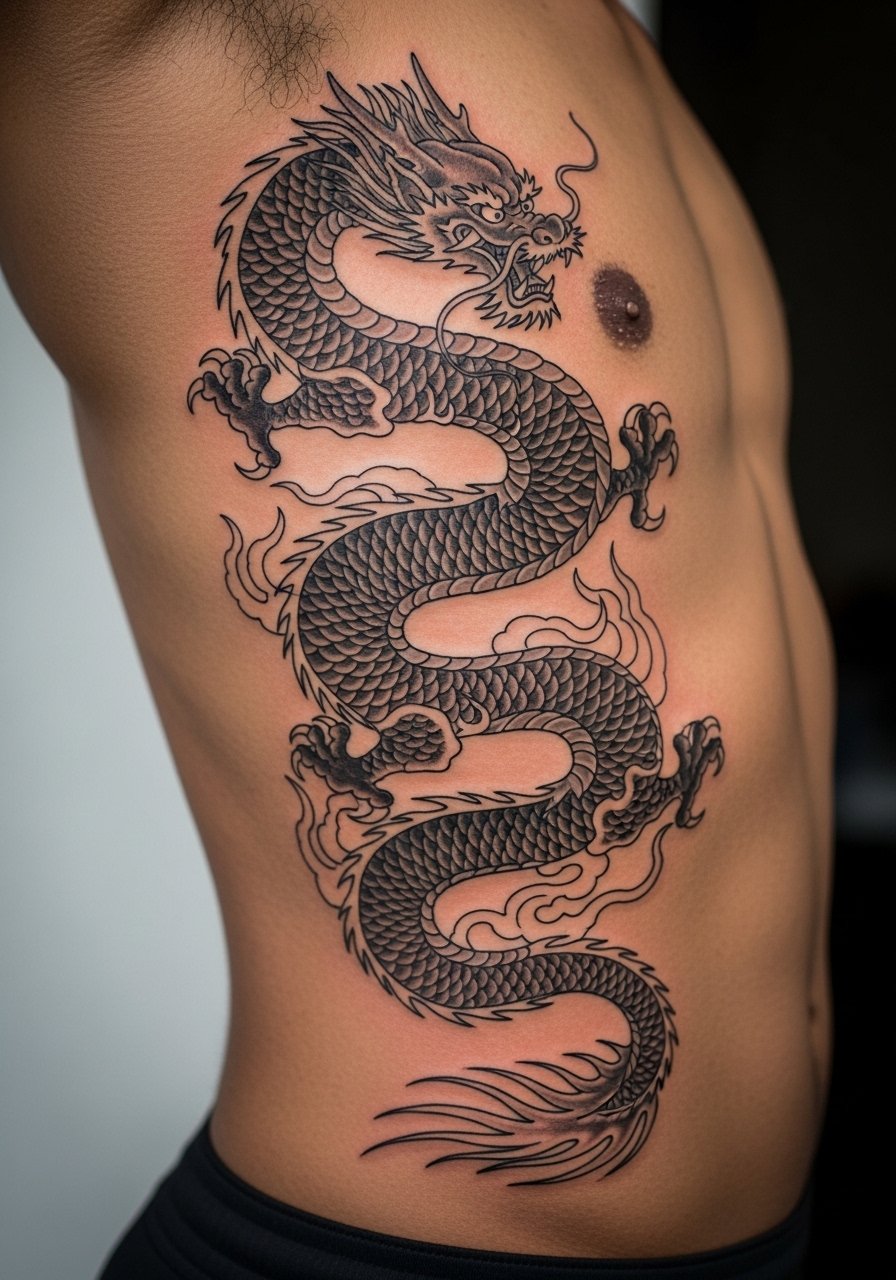
Ribcage tattoos are severe on pain and often split artists into camps about fine line on ribs. One camp warns that fine line blurs as the skin stretches while the other insists good depth and spacing will hold detail. If you lean toward detailed scales, pick an artist experienced on ribs and expect multiple shorter sessions. The ribcage can look stellar at six months when swelling retreats but may show softening at year three. Plan a touch-up window and accept that healing needs strict rest and gentle aftercare.
9. Thigh Dragon with Micro-Realistic Head and Flowing Tail
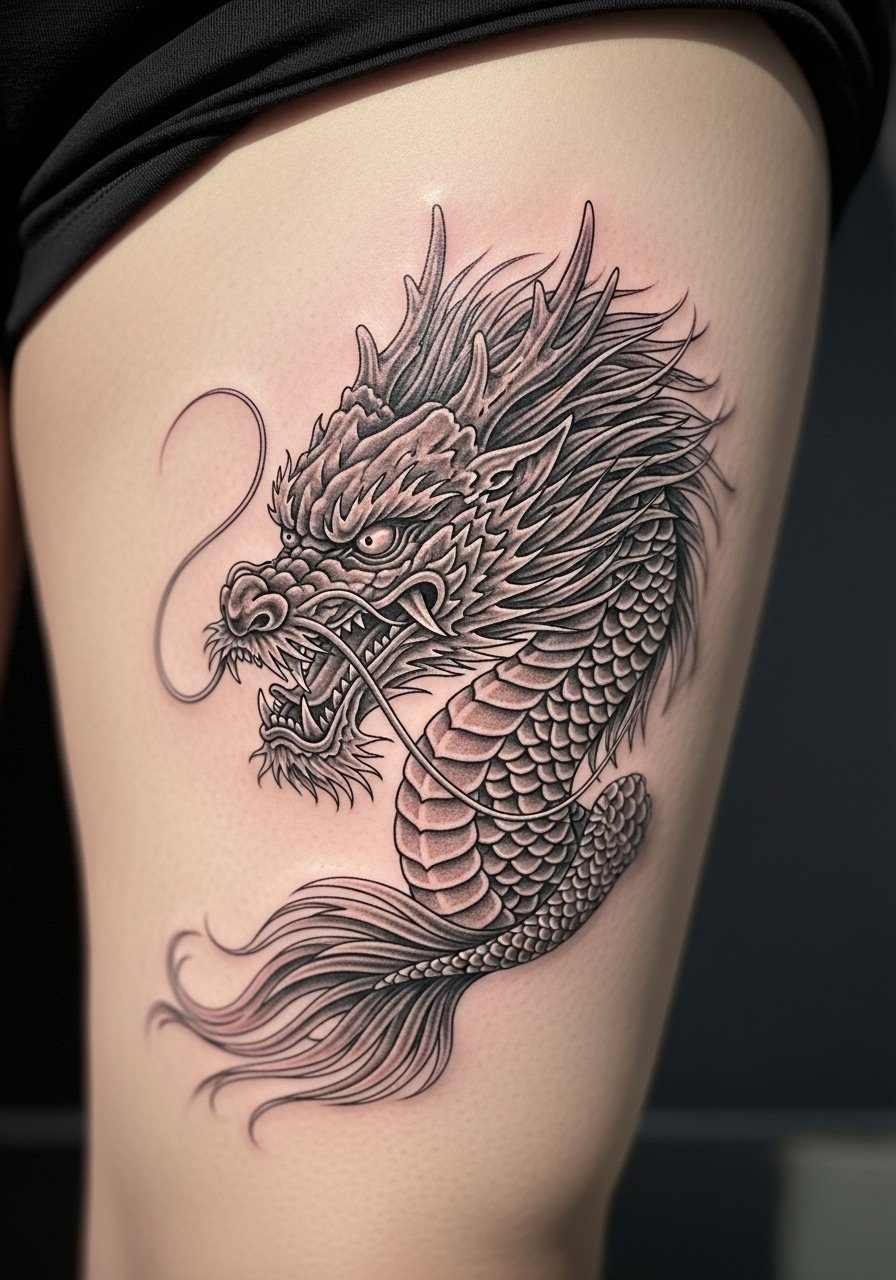
Thigh placements tolerate detail and larger sessions because the skin is forgiving. Pain is lower than ribs and chest, and session time can be long. Tell the artist you want high-detail work concentrated on the head and simpler patterning along the tail to balance healing risks. A common mistake is putting the most contrast where the skin creases, which can create uneven aging. At two years the head detail usually remains clear but expect touch-ups in high-friction areas if you wear tight clothing often.
10. Ankle Dragon in Dot Work and Linework
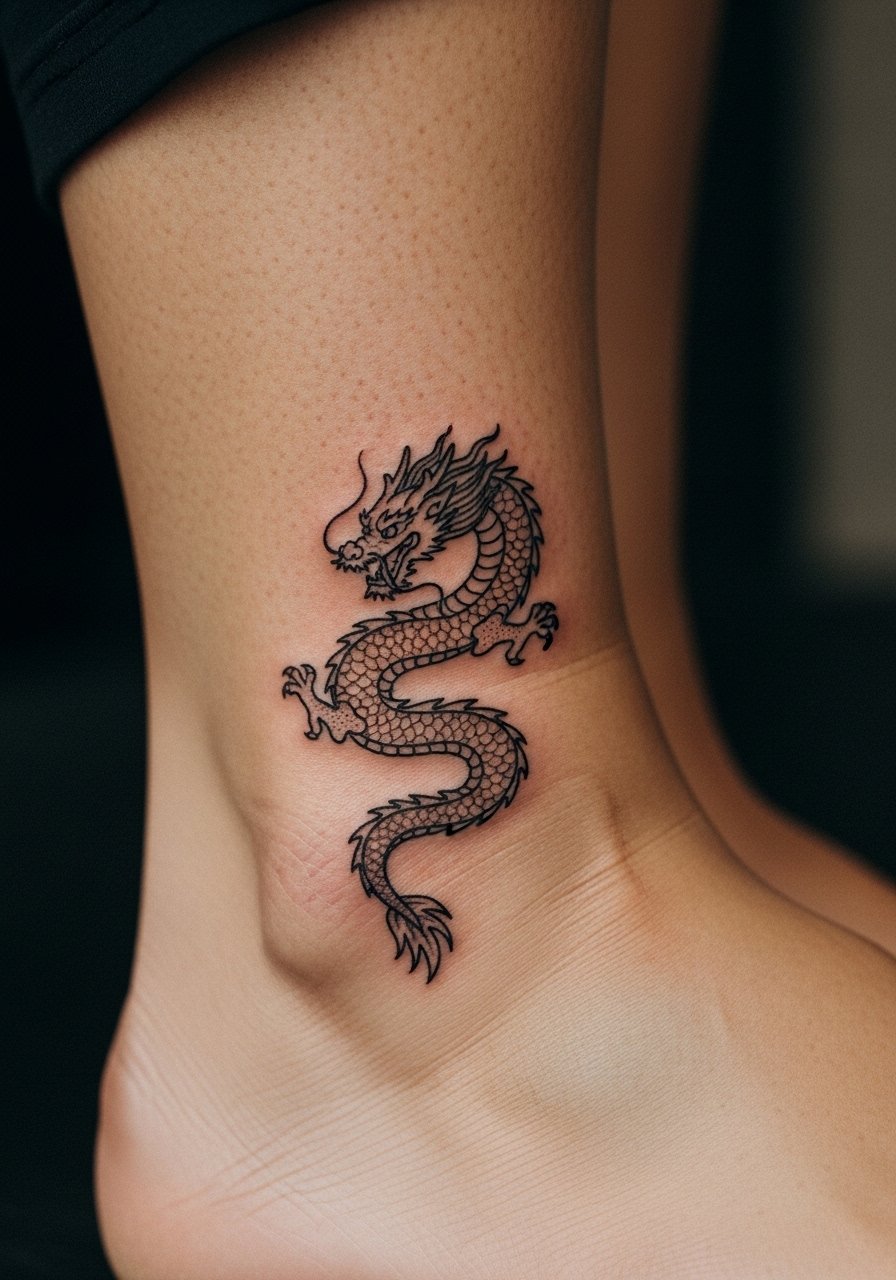
Ankle tattoos bruise easily and the area rubs against footwear, so healing needs extra attention. The mistake I see is choosing dense dot work too small for the ankle where blurring becomes obvious. Aim for spaced stipple shading and clearer contour lines. Session time is brief and pain ranges moderate. Expect the piece to look crisp at six months but to need a touch-up sooner than a forearm piece because of constant abrasion. If you work in an environment that requires formal footwear ask whether the visibility is an issue.
11. Neo-Blackwork Half-Sleeve Dragon with Negative Space
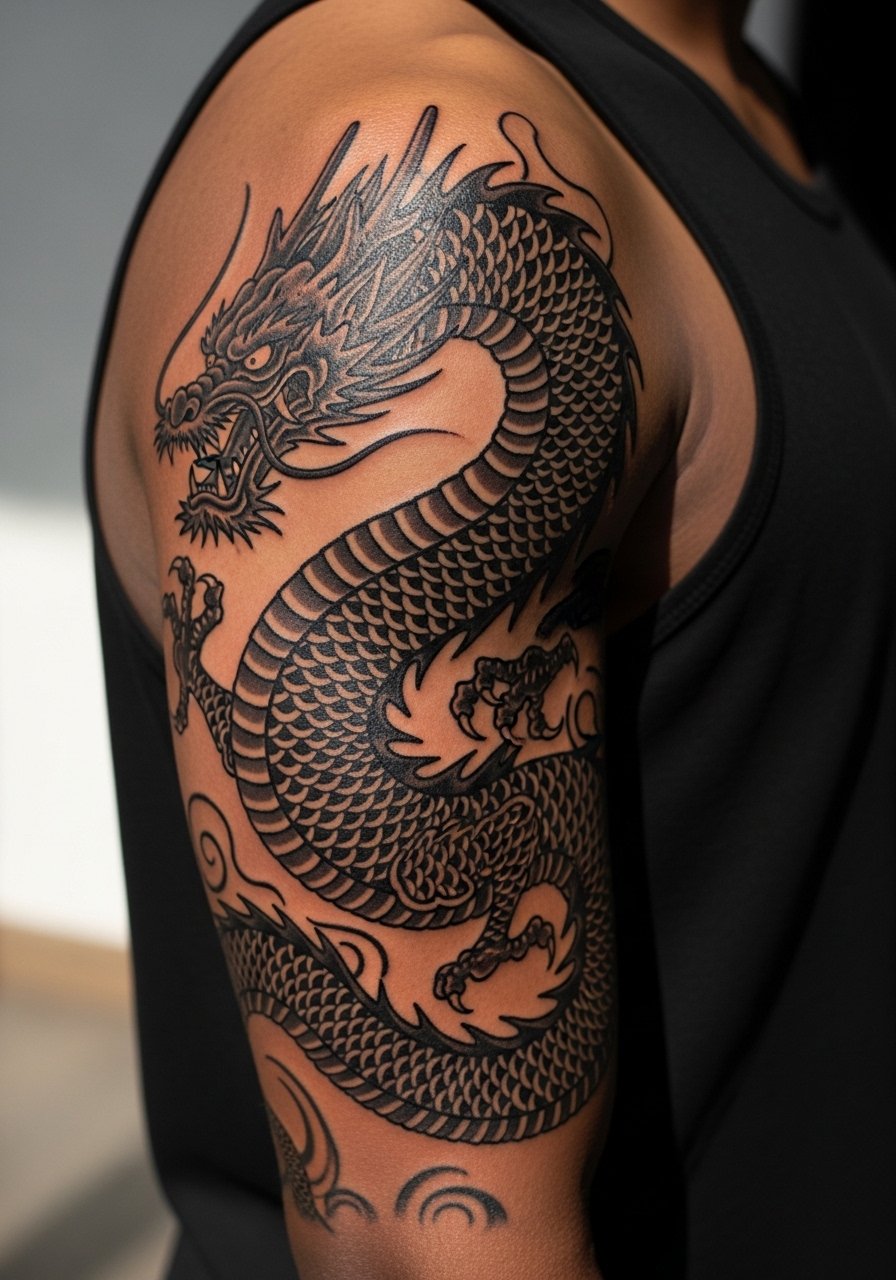
There's something about heavy black fields that ages predictably. Negative space lets the dragon read without relying solely on fine line. Tell your artist you want blocks of solid black balanced with open skin areas so the composition breathes. Sessions are longer and the pain is steady but manageable on the outer arm. The risk is over-saturating thin areas that later show patchiness. A touch-up at two to four years keeps the black uniform, especially if you spend a lot of time outdoors.
12. Collarbone Dragon in Delicate Linework
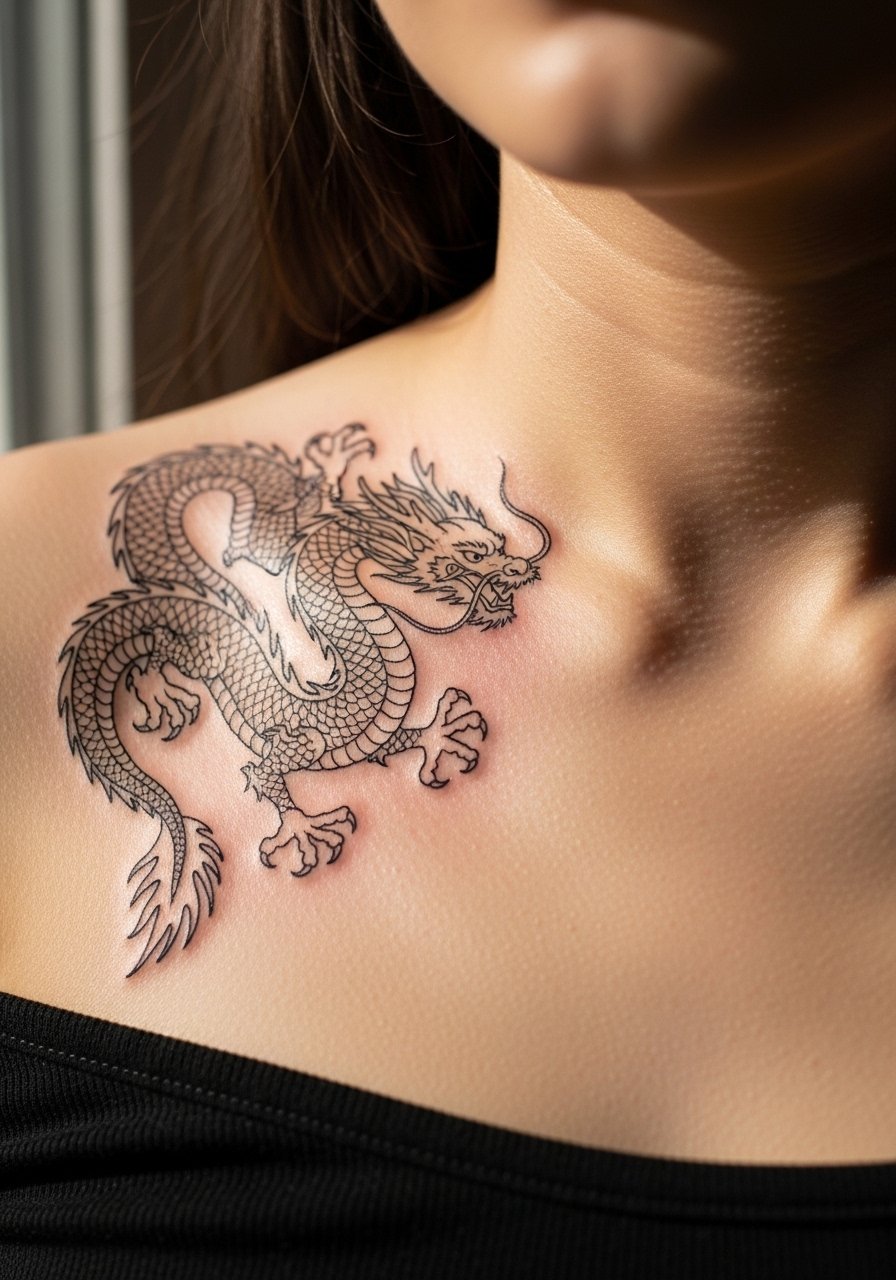
Collarbone pieces look elegant but the skin there moves and is thin. The common error is requesting ultra-fine scales and intricate detail that the area cannot hold. If you want delicacy, ask for slightly bolder primary lines and sparse interior detail. Pain can spike near the bone and session time is short. Expect some softening by year two and plan for a touch-up then. Also consider what you wear because neckline visibility varies with clothing and professional settings.
13. Small Rib Tattoo with Chinese Dragon Glyph, Sensitive Placement Note
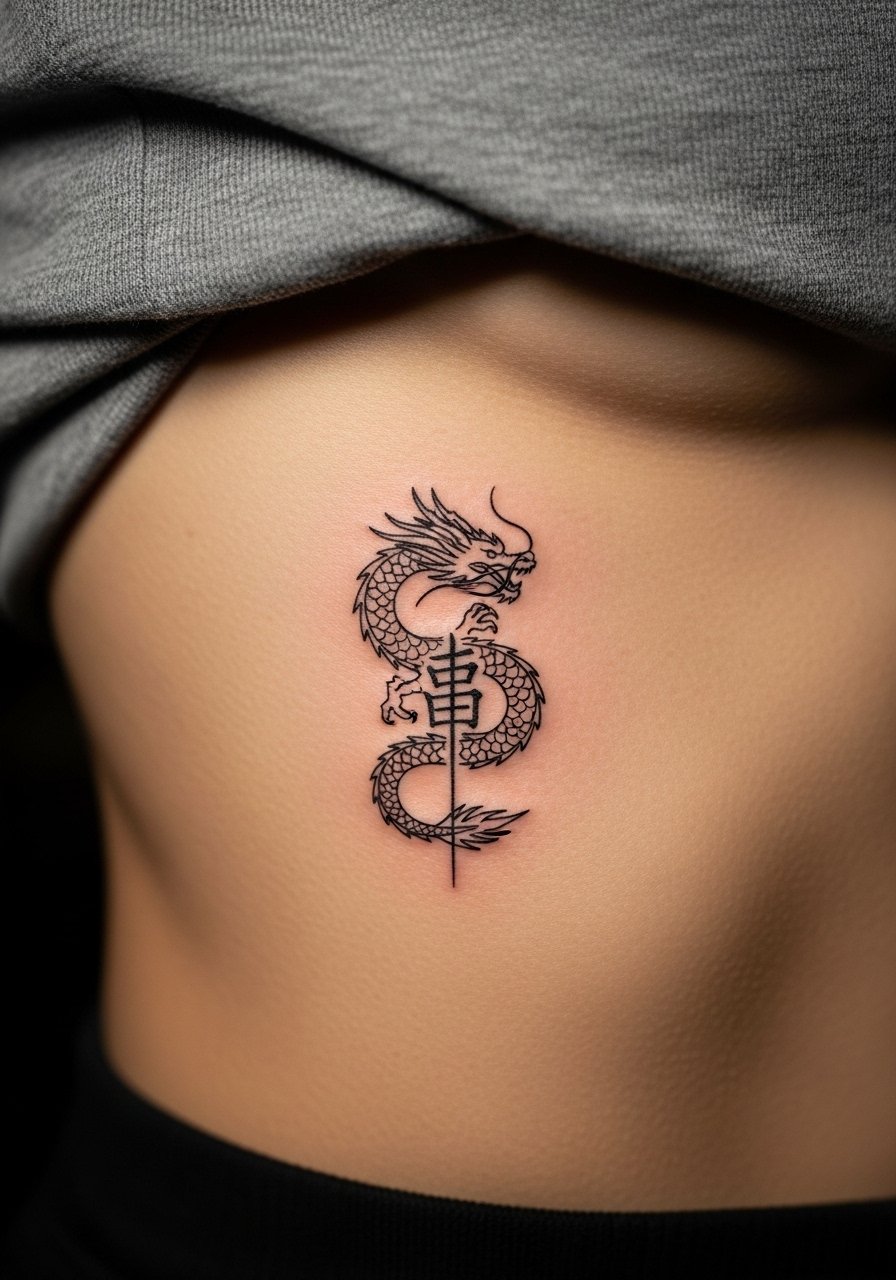
Fair warning, the ribs are sensitive and require an experienced approach. If you want a glyph-style dragon, be clear in consultation that you mean symbolic shape rather than literal scales. The mistake is asking for micro-detail in a tight rib spot, which will lose definition quickly. Session time is brief but uncomfortable. Also be aware some artists will ask for extra deposit for rib work due to the difficulty. From what I have seen, ribs show aging faster when detail is too fine, so allow for a touch-up window.
14. Chinese Dragon Around the Calf with Flow Motion
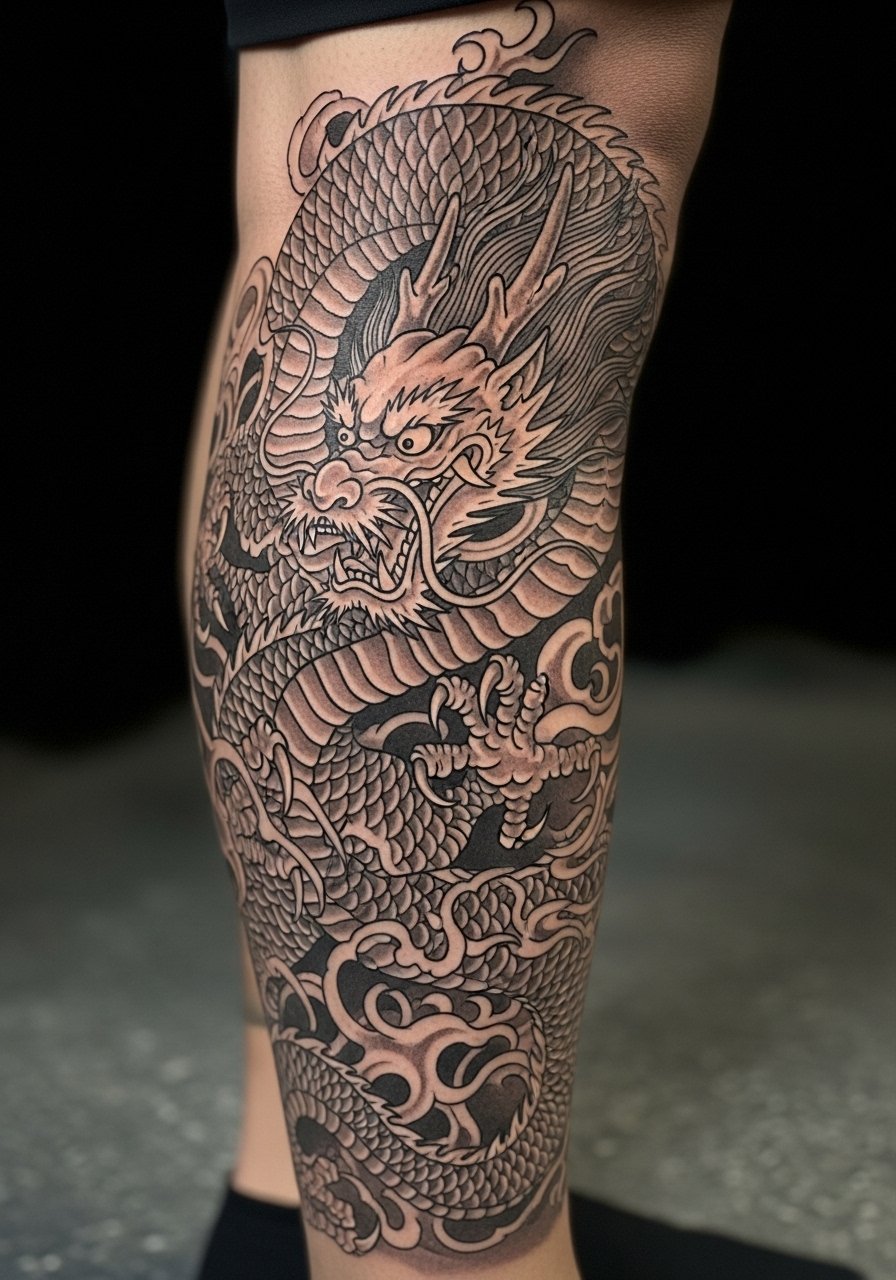
The calf is forgiving for flow-focused designs and offers good visibility without daily abrasion. I suggest telling your artist you want the dragon to follow muscle lines so movement animates the image. A common misstep is matching the design to static photos without considering how walking will alter proportions. Sessions can be medium-length and pain stays moderate. At two years expect the motion to still read well, and plan occasional touch-ups for any high-contrast edges that face constant stretch.
15. Watercolor Accent Dragon on the Hip, Cultural Respect Note
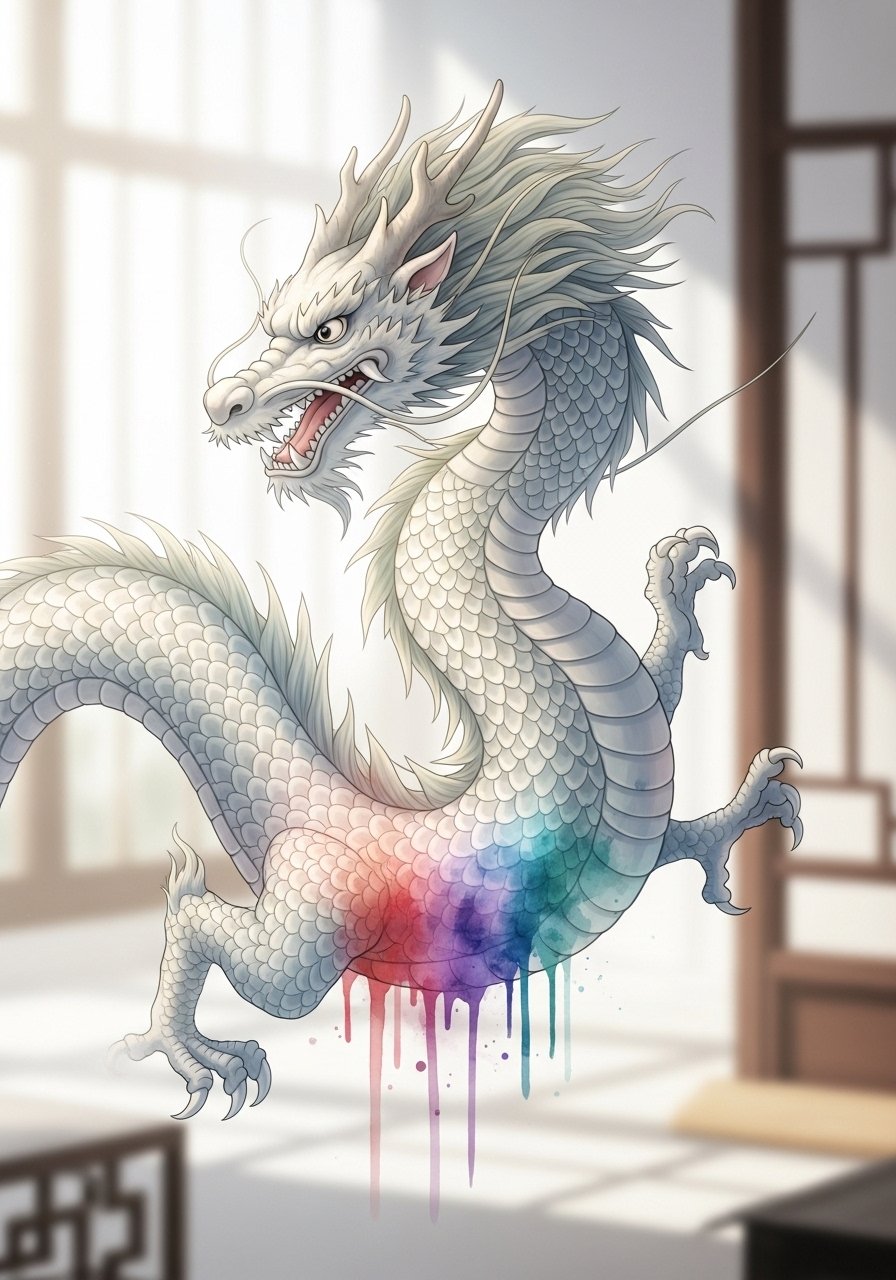
Watercolor approaches can look dreamy but they age differently than solid color. When the design references cultural motifs, consider adjusting details to respect origins rather than copying sacred symbols. One camp supports strict traditional forms, another supports contemporary reinterpretations. State your preference clearly. Hip pieces hurt moderately and require careful aftercare. Watercolor fades irregularly so expect touch-ups sooner than for solid fills. For longevity, ask the artist to anchor watercolor with thin linework so the form remains readable.
16. Tiny Finger Dragon, Practical Visibility Note
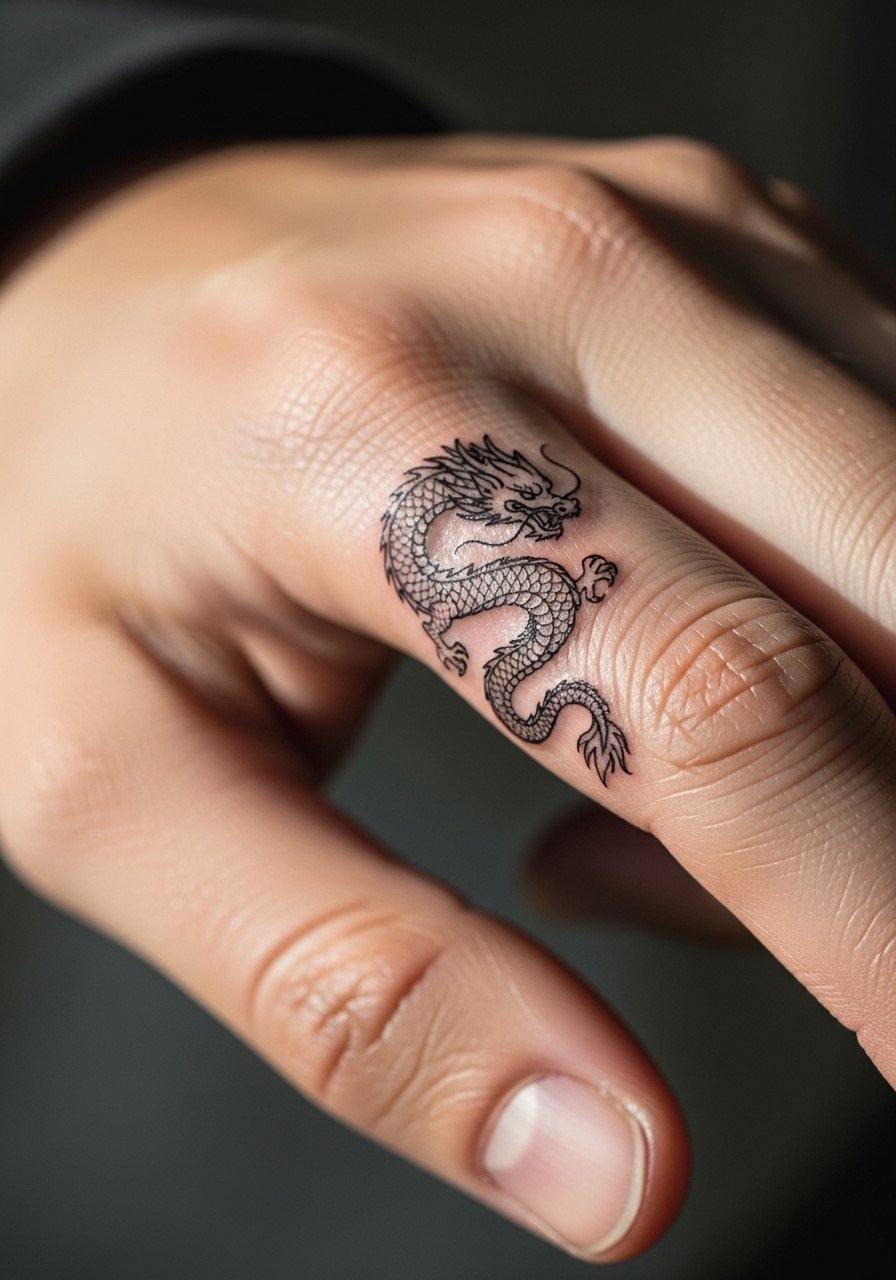
Finger tattoos are high-maintenance and fade quickly because of constant washing and motion. The most common mistake is choosing too much internal detail in a tiny area. If you get a finger dragon, request bold contour lines and accept that touch-ups may be needed every year. Sessions are very short but stinging. Also think about how visible you want it to be in professional settings. Some artists will advise against fingers for complex designs; that is feedback worth hearing.
17. Full Back Dragon Scene with Clouds and Waves
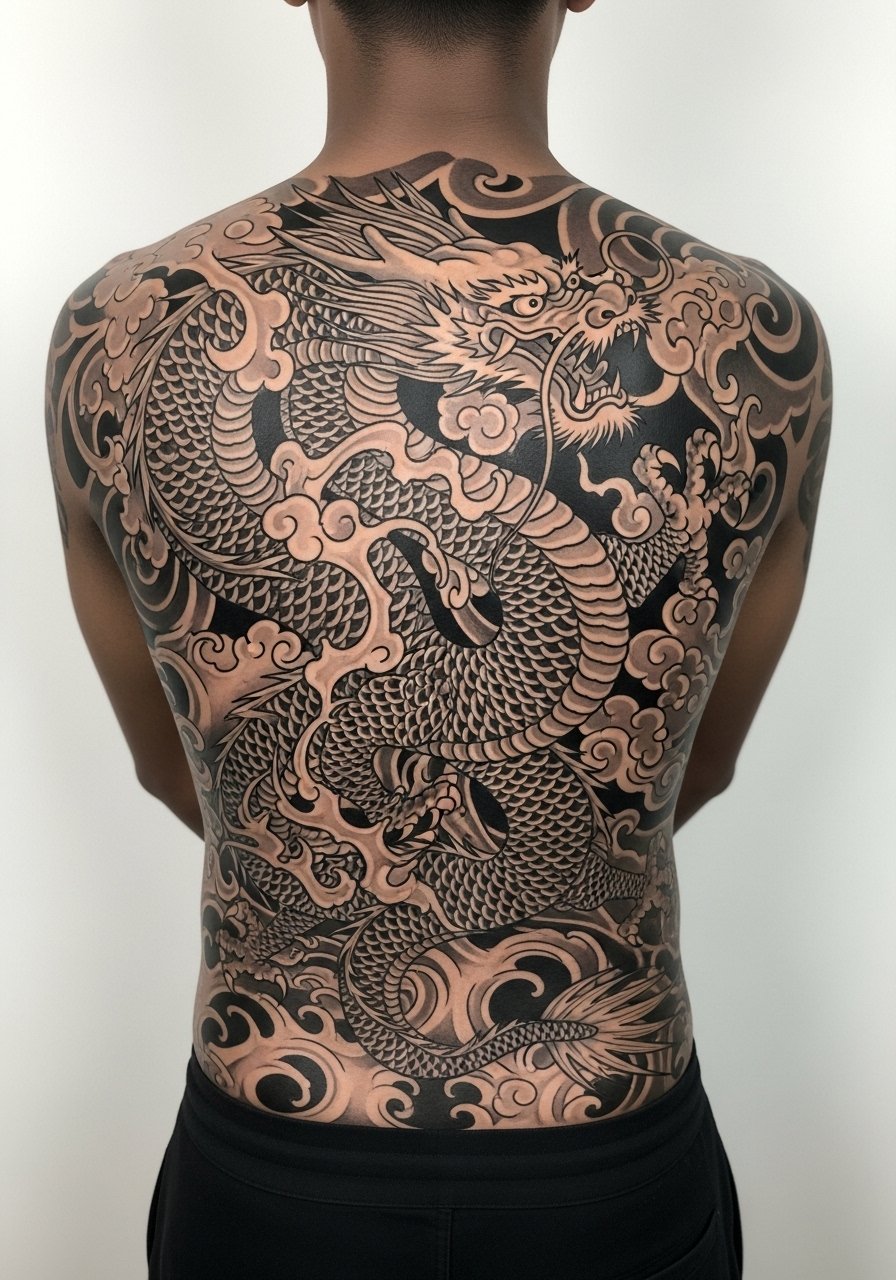
A full back gives a narrative canvas for the dragon and weather motifs. Expect several long sessions and gradual soreness over the course of appointments. Tell the artist you want the composition to breathe and the clouds to frame rather than crowd the dragon. A frequent error is packing too many competing elements, which can date faster. At two years the scene should still read if the contrast is maintained, but plan for a major touch-up cycle after session completion if you want long-term saturation restored.
18. Sternum Dragon with Symmetry and Stipple Shading, Sensitive Placement Note
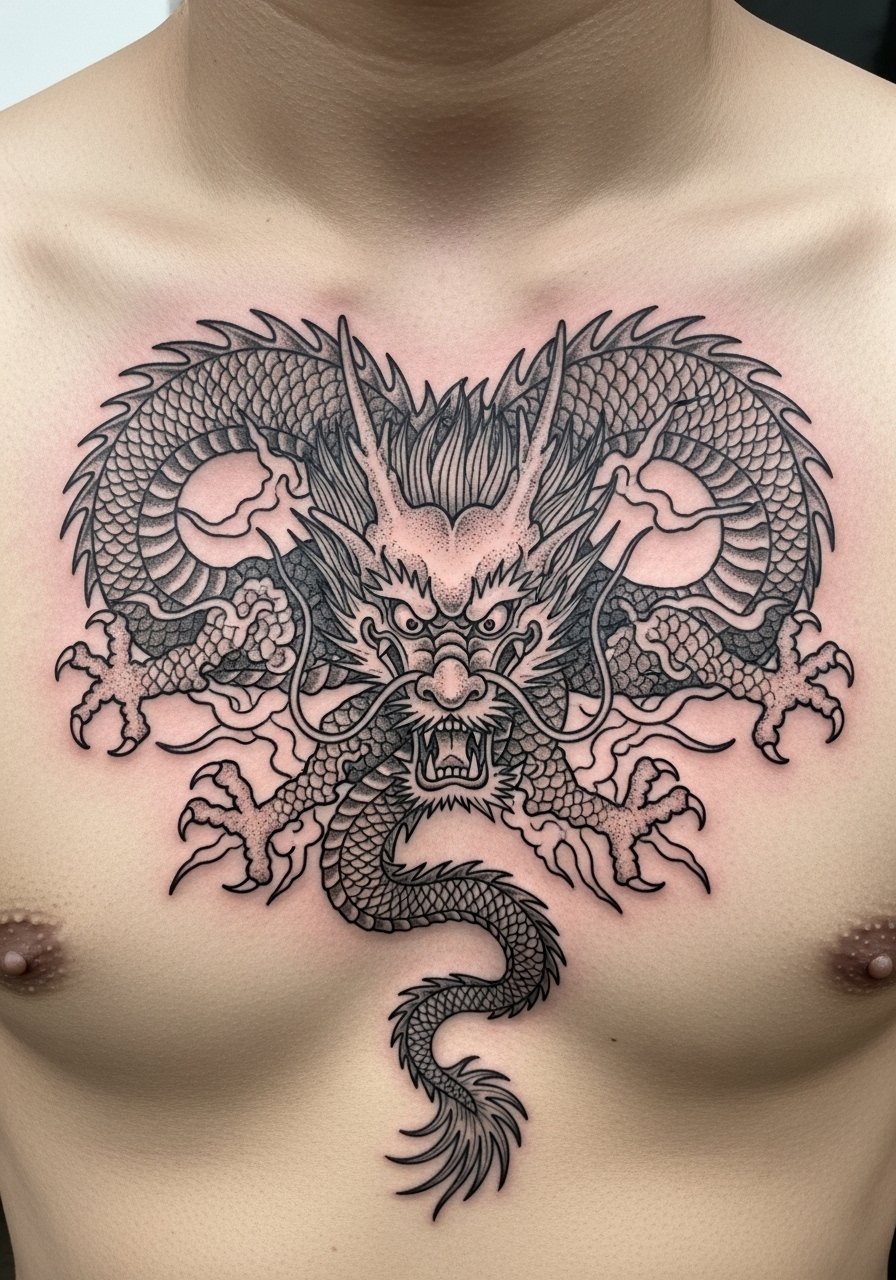
Sternum tattoos feel intense because of the thin skin over bone. You want symmetry and measured shading here because any uneven depth is obvious after healing. The common mistake is relying on ultra-fine crosshatch in the sternum area that fails to hold. Be prepared for a higher pain rating and a careful healing period. Some artists decline sternum work unless they specialize in centralized torso pieces. If you plan on intimate placement, discuss long-term visibility and clothing friction during healing.
19. Scapular Dragon with Negative Space Scales
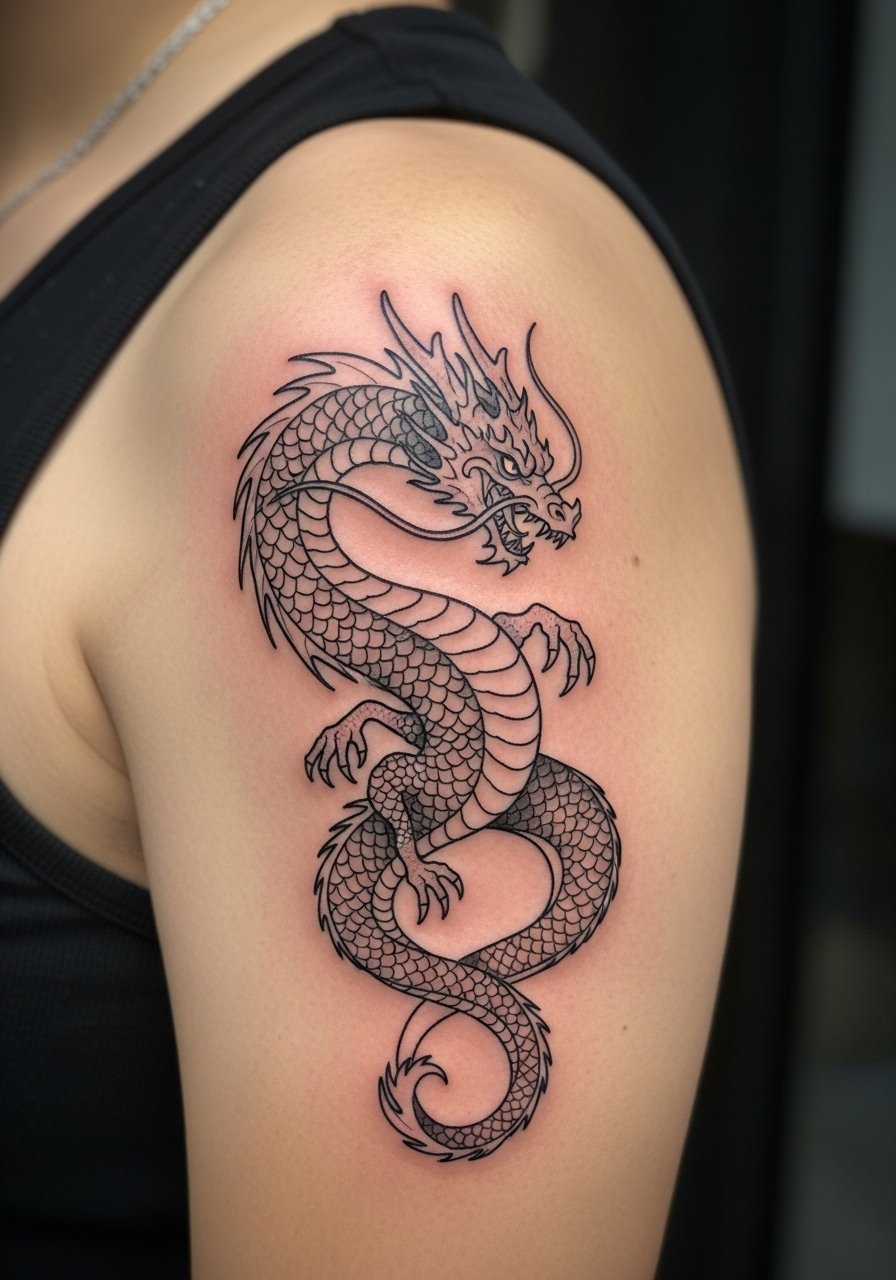
Scapular placements are practical for people who want a piece that can be shown or concealed easily. I advise asking for negative space scale work to prevent over-saturation near the shoulder blade. A common mistake is letting the artist cram detail too close to the spine edge, which can blur sooner. Session time is short to medium and pain is moderate. The scapula holds pigment well, but expect a touch-up around year three to keep edges crisp if you are often outdoors.
20. Sleeve Cuff Dragon with Repeating Motif and Dot Work
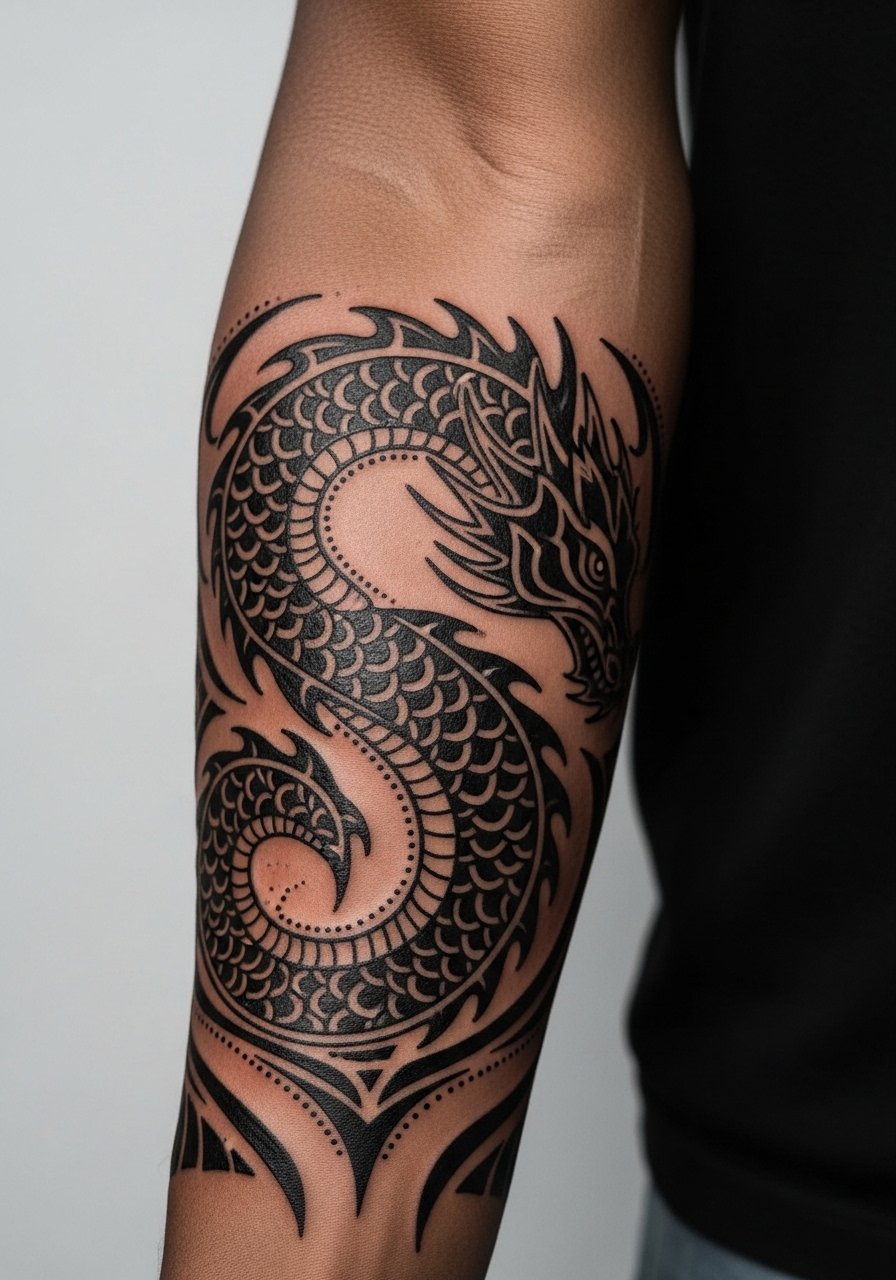
Cuff tattoos read well and can be less committal than full sleeves. When repeating motifs form the cuff, ask for slight variation in each repeat so aging looks natural rather than mechanical. A typical error is exact repetition that creates visible inconsistencies after small heals. Sessions are short and pain is manageable on the lower arm. Dot work highlights help texture but need spacing so stipple does not blur. Plan for a minor touch-up at the two-year mark to refresh contrast.
Tattoo Prep and Aftercare Essentials
After Inked Tattoo Moisturizer, 1 oz. Lightweight lotion made specifically for tattoos. Use after initial scab shedding to restore moisture without heavy greasiness. Good for maintaining saturation during the first six months.
H2Ocean Tattoo Aftercare Ointment, travel size. Saline-infused ointment that soothes new tattoos. Apply sparingly for the first few days to prevent clogged pores and prolonged redness.
Tattoo Goo Healing Salve, small jar. Traditional balm that many people keep for later touch-ups. Use if your skin tends to dry out or flake during autumn months.
Ink-eeze Green Soap, gentle cleanser. Fragrance-free cleanser to use during the first 48 hours for gentle washing. Keeps the area clean without stripping pigment.
Tattoo Med Ointment. Ointment for initial healing that many artists recommend in small amounts. Good when you need a thicker barrier for very dry skin.
Saniderm Tattoo Bandage, sterile occlusive strips. Transparent medical dressing used by many shops for early healing. Use as instructed by your artist. This is the one mainstream product in the list.
Fragrance-free gentle foaming cleanser. Generic but essential. Use twice daily during initial healing to remove serum and prevent buildup.
Broad-spectrum mineral SPF 30 sunscreen. For long-term maintenance once the tattoo is fully healed. Protects saturation from UV fading and keeps colors vibrant longer.
Every tattoo is different. Always follow your artist's specific aftercare instructions. Consult a dermatologist if you have skin concerns or unusual healing issues.
Frequently Asked Questions
Q: Will a fine line Chinese dragon on my ribs blur faster than a bolder dragon in the same spot?
A: It depends on line spacing and the artist's technique. From what I have seen, ultra-fine linework on ribs blurs sooner because the skin stretches. If you want fine line there, pick an artist experienced with rib work and ask for slightly wider primary lines and staged shading to preserve form. Expect a possible touch-up window around year two.
Q: Are five-clawed dragons different from four-clawed ones, and does that matter culturally?
A: Yes, the number of claws carries historical meaning in Chinese art. One camp treats the five-clawed dragon as imperial and prefers it only in certain cultural contexts. Another camp uses claw count more loosely for personal symbolism. If cultural origin matters to you, mention that in your consultation and choose a design that reflects your level of intent or adaptation.
Q: How should I ask an artist for watercolor accents on a dragon so the color ages better?
A: Mention you want watercolor accents anchored by thin linework. From what I have seen, watercolor without line anchors fades into uneven patches. Ask for color placement in clustered accents and request reference photos that show healed watercolor work so you know how it looks over time.
Q: Do hand and finger dragon tattoos require a different long-term plan?
A: Yes, hands and fingers face more abrasion and washing, so they need more frequent touch-ups. If you want longevity, ask for bolder contours and accept annual touch-ups as part of the plan. Also discuss visibility implications for your work life during consultation.
Q: How long should I expect to wait between sessions for a full back dragon?
A: Most artists schedule full back projects over weeks to months. Expect recovery days between sessions and plan sessions spaced four to eight weeks apart for optimal healing. The total timeline varies with detail and your skin response. Bring references that show the finished flow so the artist can plan session breaks logically.
Q: Will blackwork dragons hold up better on darker skin tones than heavily colored designs?
A: In my experience, strong black saturation and clear linework read reliably across skin tones. Highly saturated color can still look great but may need custom palette adjustments to account for contrast. Ask your artist to show healed work on similar skin tones and discuss saturation strategy during consult.