
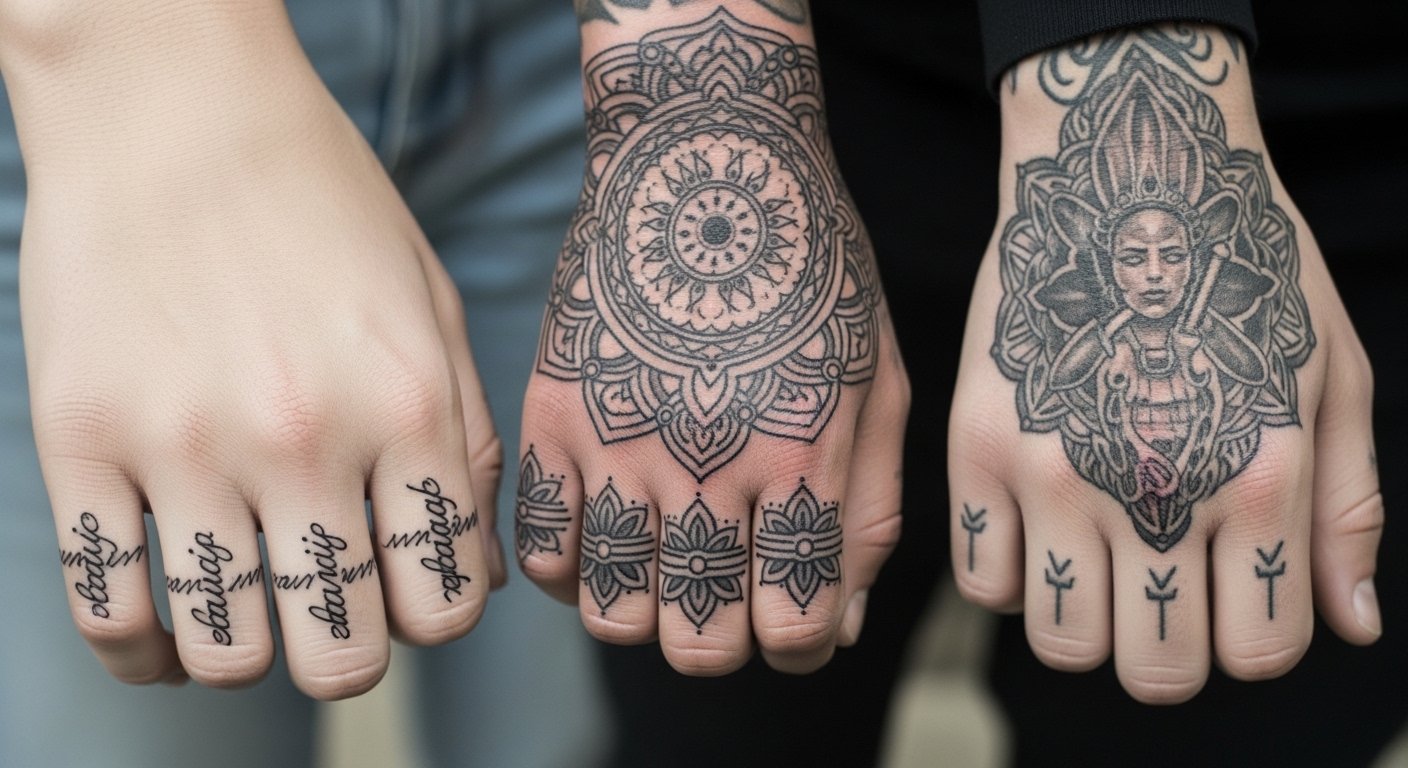
I spent months learning how hand tattoos actually behave, not how they look in the studio photo. I learned that a great hand piece solves placement, aging, and daily wear before it ever gets inked. These 23 hand tattoos cover styles from fine line script to bold blackwork knuckles. I picked ideas I've seen hold up, and a few fresh twists most lists miss.
This list zeros in on styles that work on the palm side, knuckles, and back of hand. I focused on fine line, traditional, blackwork, and micro-realism. These placements get heavy use. From what I've seen, artists are pushing small, clear linework and bold negative space for the next few years. Expect some designs to need touch-ups.
1. Fine Line Script on Side of Hand
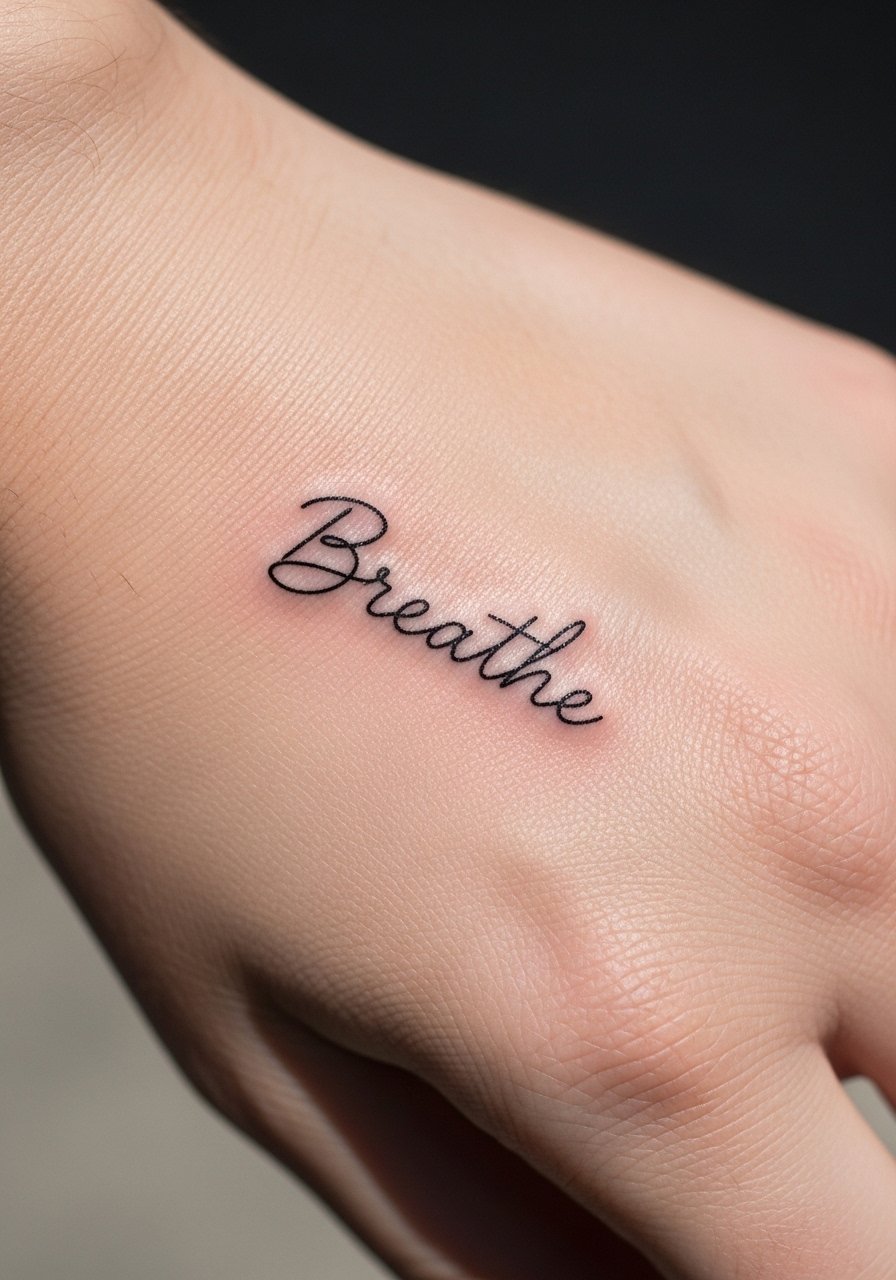
I first noticed this on a barista I know. The side of the hand takes a lot of movement, so thin script must be scaled slightly larger than it looks in photos. Pain feels sharp for a few minutes, then it settles. Expect a single 30 to 60 minute session. Ask your artist for slightly heavier hairlines than a wrist script. From what I've seen, pure micro script fades or blobs after a year if done too fine. A common mistake is requesting hairline strokes that won't hold. Tell your artist you want readable spacing, and plan a touch-up at 6 to 12 months. Keep it simple. Avoid tiny flourishy italics.
2. Micro-Realism Eye on Back of Hand
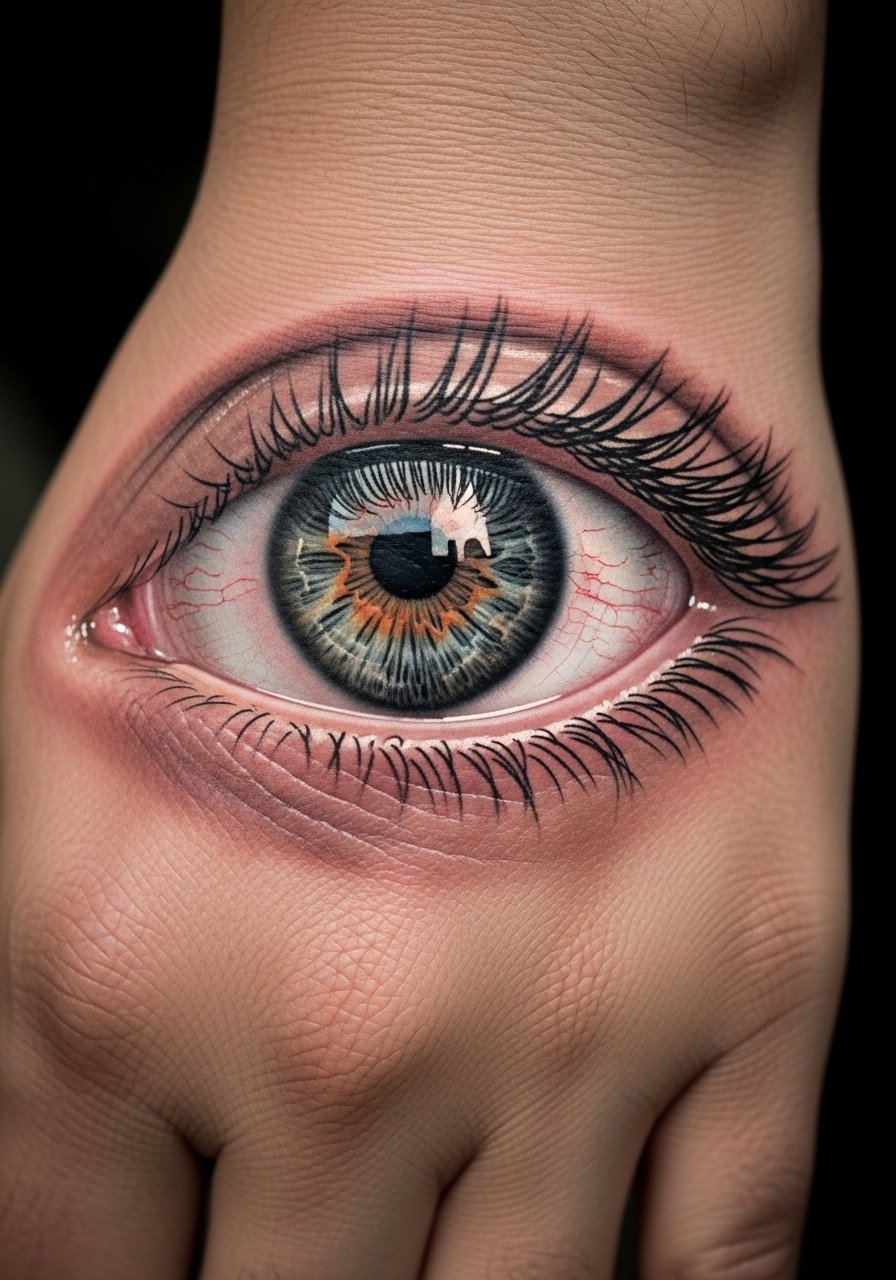
Fair warning, the back of the hand hurts. I had one like this, and the needle over bone gives a sharp sting. Micro-realism reads intensely on the hand because the area is always visible. Session time is usually 1 to 2 hours. Artists who excel at gradients and dotwork are what you want. Tell them you want contrast to survive washing and sun. From what I've seen, tiny highlights can vanish if overused. A mistake I see is pushing too many micro details into a small canvas. At six months the pupil and lashes settle and soften. You will likely need a touch-up after a year to restore contrast.
3. Traditional Rose on Knuckle Pad
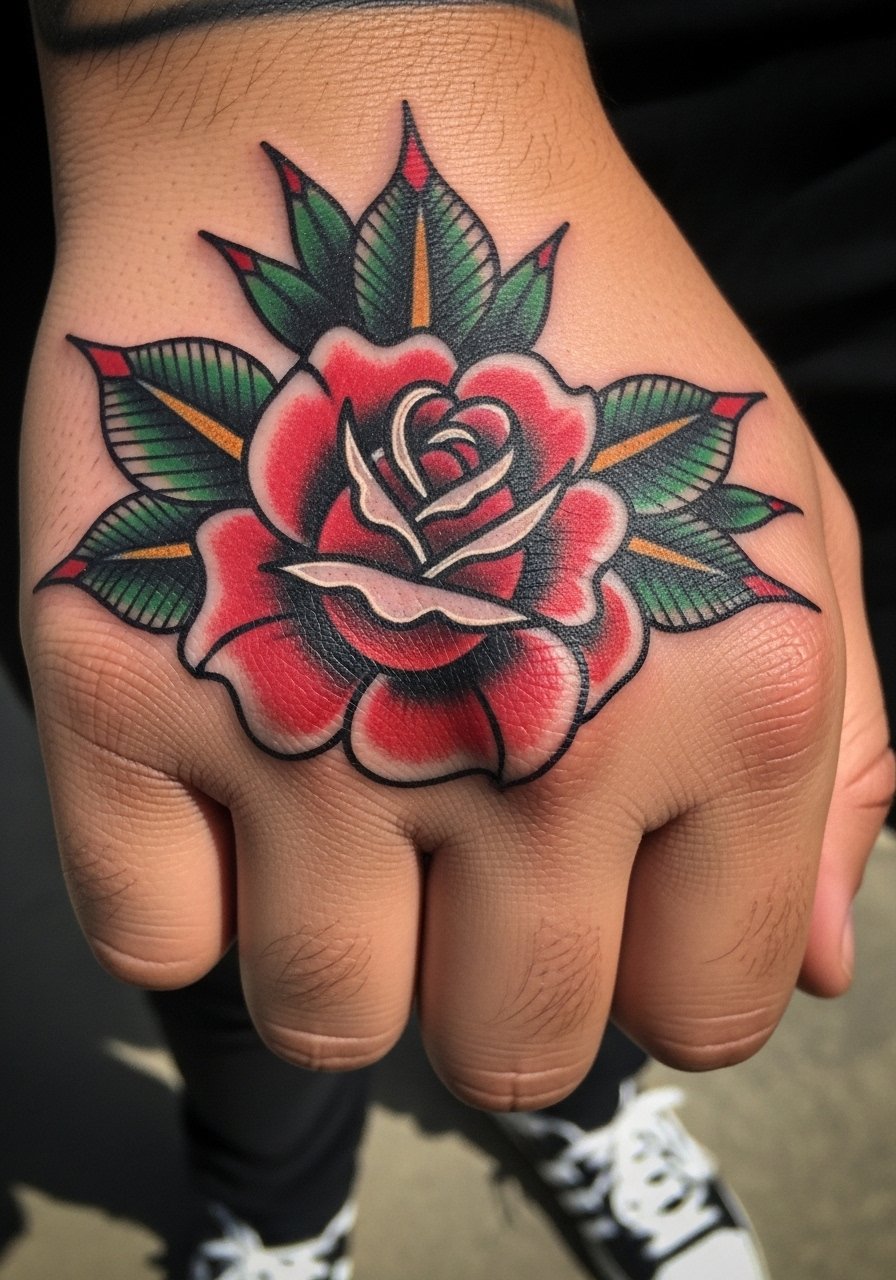
There's something about bold outlines on knuckles that catches attention. I recommend traditional style because its heavy outlines and solid color survive the knuckle area better than thin linework. Pain is intense when the needle hits knuckles. Expect short multiple passes, often in one 45 to 90 minute session. Tell your artist to keep line weight consistent and color blocks slightly larger than the sketch. I've seen thin-outline roses blur into an unrecognizable smudge after heavy use. A common mistake is trying to cram small details onto knuckles. Let the outlines breathe, and plan on a possible fade touch-up in 12 to 18 months.
4. Minimalist Single Needle Dot Cluster on Finger Side
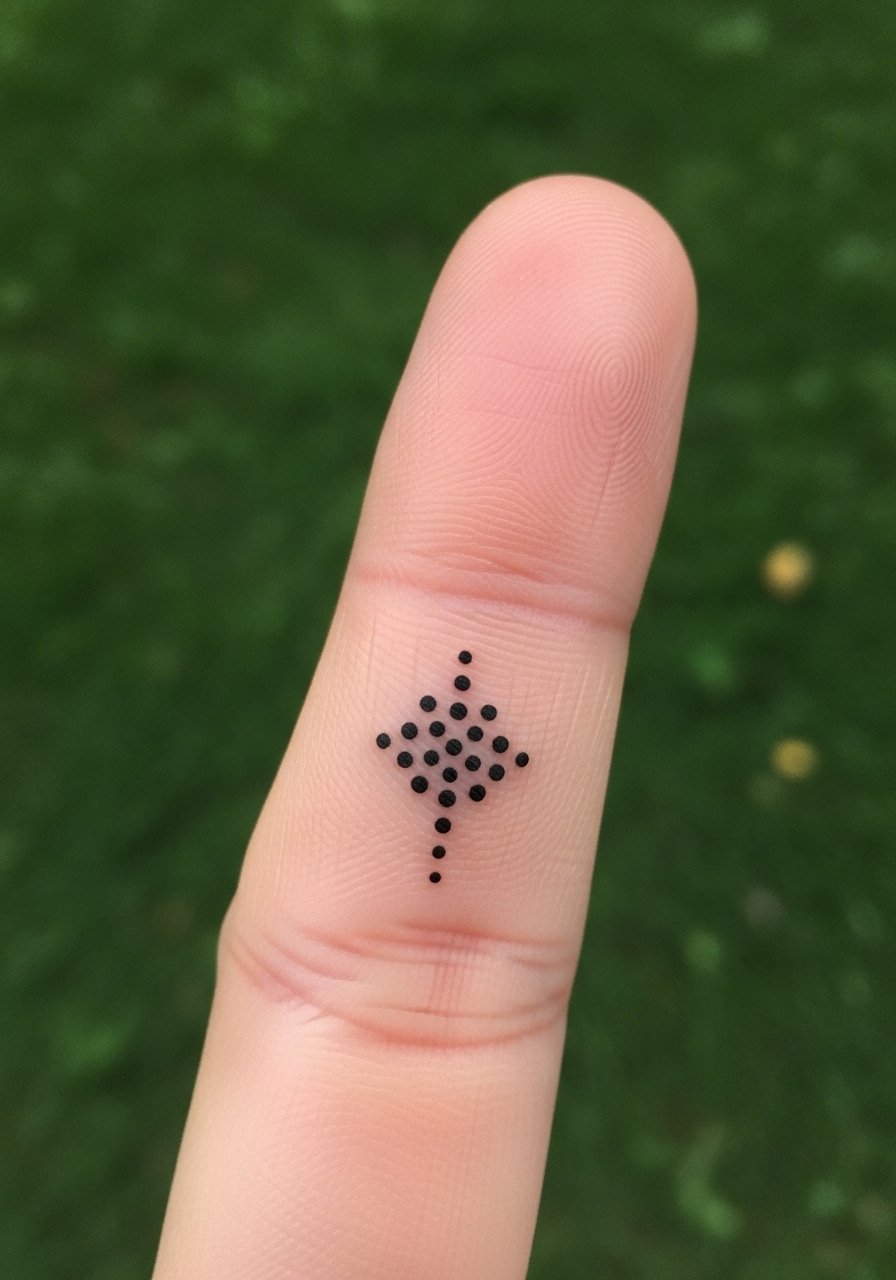
I saw this at a small convention and wanted it the day after. Tiny dot clusters look delicate and modern. But fingers shuffle through water and friction, so single-needle work can lose crispness. Pain is a sharp quick pinch. Session time depends on dot count, often 15 to 30 minutes. Ask your artist to space dots slightly wider than you think. From what I've seen, dots too close merge within months. The version that holds up uses slightly bolder dots with spacing that ages into a soft texture. Avoid asking for a dense micro-shade on a fingertip, it will likely fade unevenly.
5. Blackwork Geometric Palm Accent
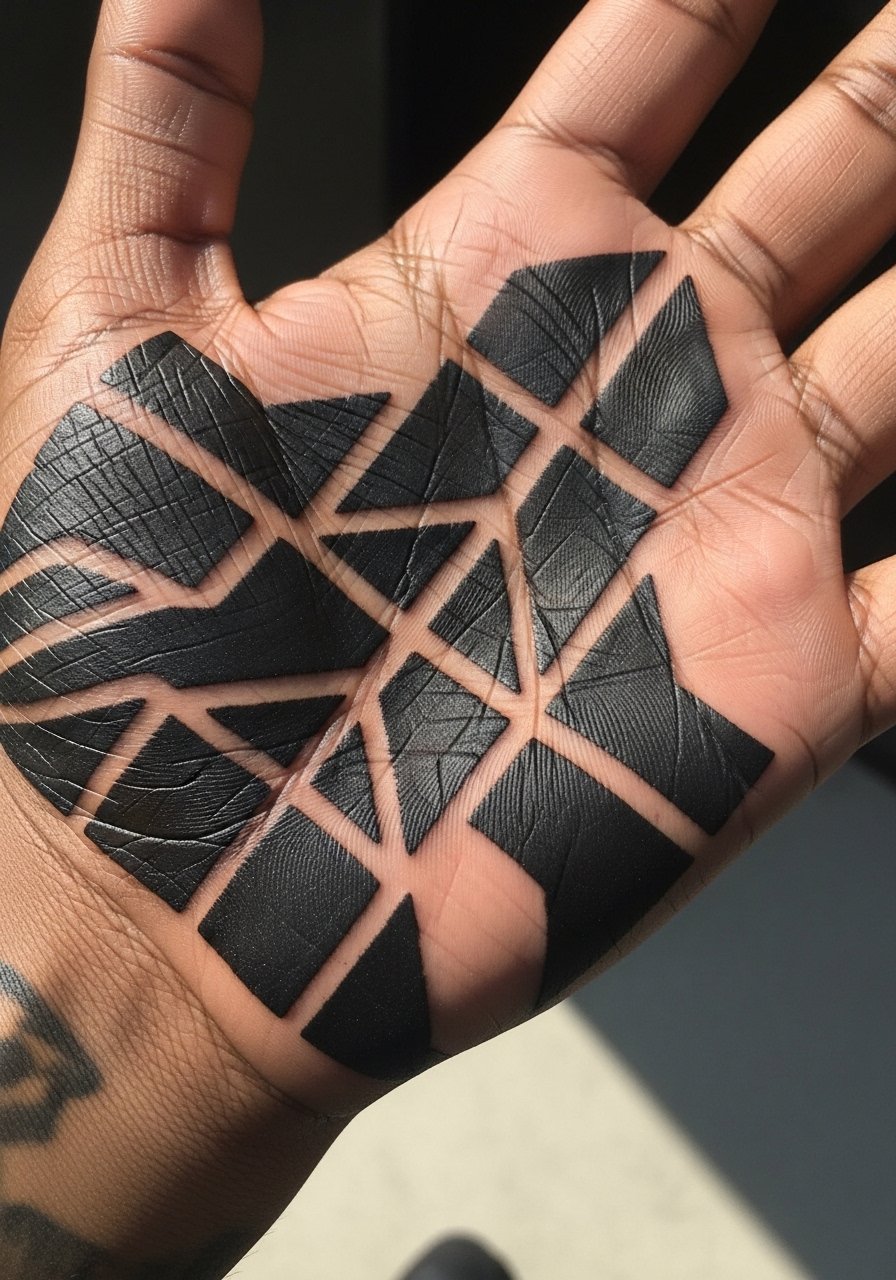
Most artists I know avoid heavy work on the palm, but a bold geometric accent placed on the outer palm can last longer than full palm pieces. Expect intense pain and slower healing because palms move constantly. Sessions run 60 to 120 minutes. Ask the artist to use larger negative spaces and solid shapes. From what I've seen, very tight line geometry on the palm turns patchy quickly. A mistake is trying to force fine geometry where skin flexes a lot. This approach embraces larger black blocks so the pattern remains readable as it heals and slightly blurs.
6. Micro-Lettering Between Knuckles
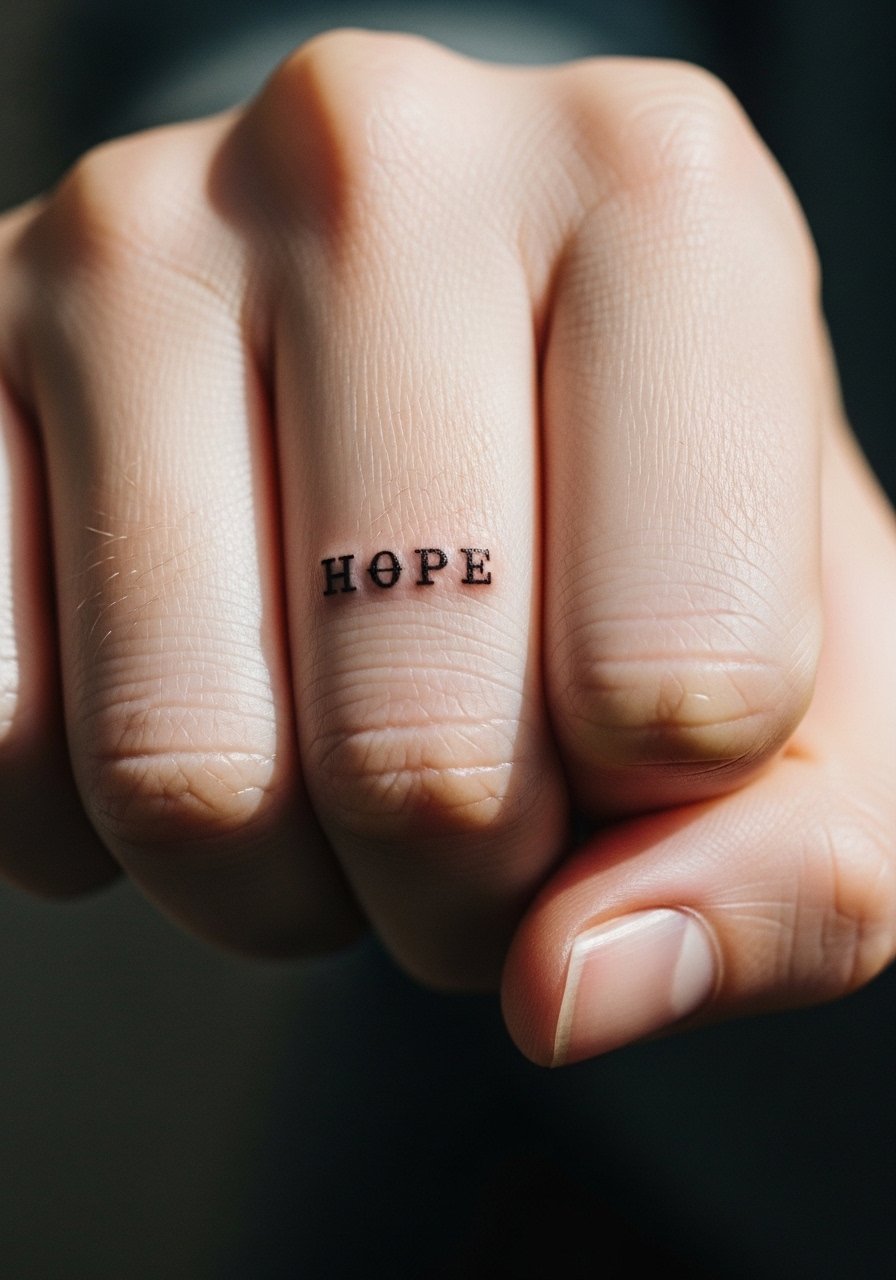
When I sat with an artist for mine, I learned scale is everything. Micro-lettering for knuckles reads best as short words or initials. Pain spikes when the needle passes over bone. Sessions are quick, 20 to 40 minutes. Tell your artist you want letters that remain legible after settling. From what I've seen, script with hair-thin strokes blurs; block letters last longer. A frequent mistake is picking long phrases for knuckle spaces. Keep it to short, meaningful text. Expect the edges to soften by six months and to book a touch-up if letters look faint.
7. Henna-Inspired Negative Space on Back of Hand
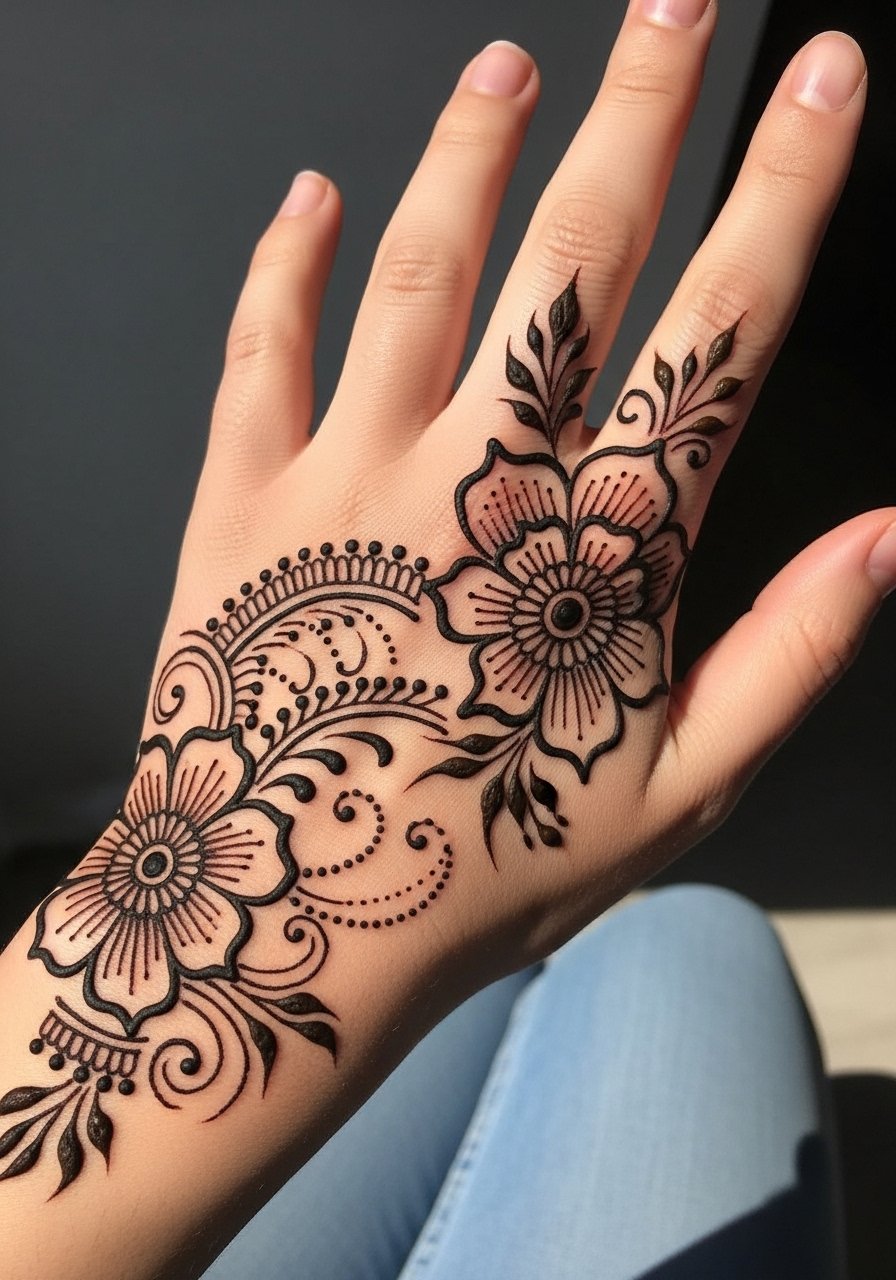
I loved this when I first spotted it on a friend who wanted an understated piece. The style uses negative space and dotwork to mimic henna but with permanence. Pain is moderate on the back of the hand. Sessions take about 45 to 90 minutes depending on detail. Tell your artist to plan for open spaces that let the skin show. From what I've seen, overly dense dotwork turns muddy after a year. A mistake people make is asking for symmetrical perfection on hands where motion causes small distortions. This design holds well if you favor airy patterns and avoid micro-filling.
8. White Ink Highlight Palm Motif
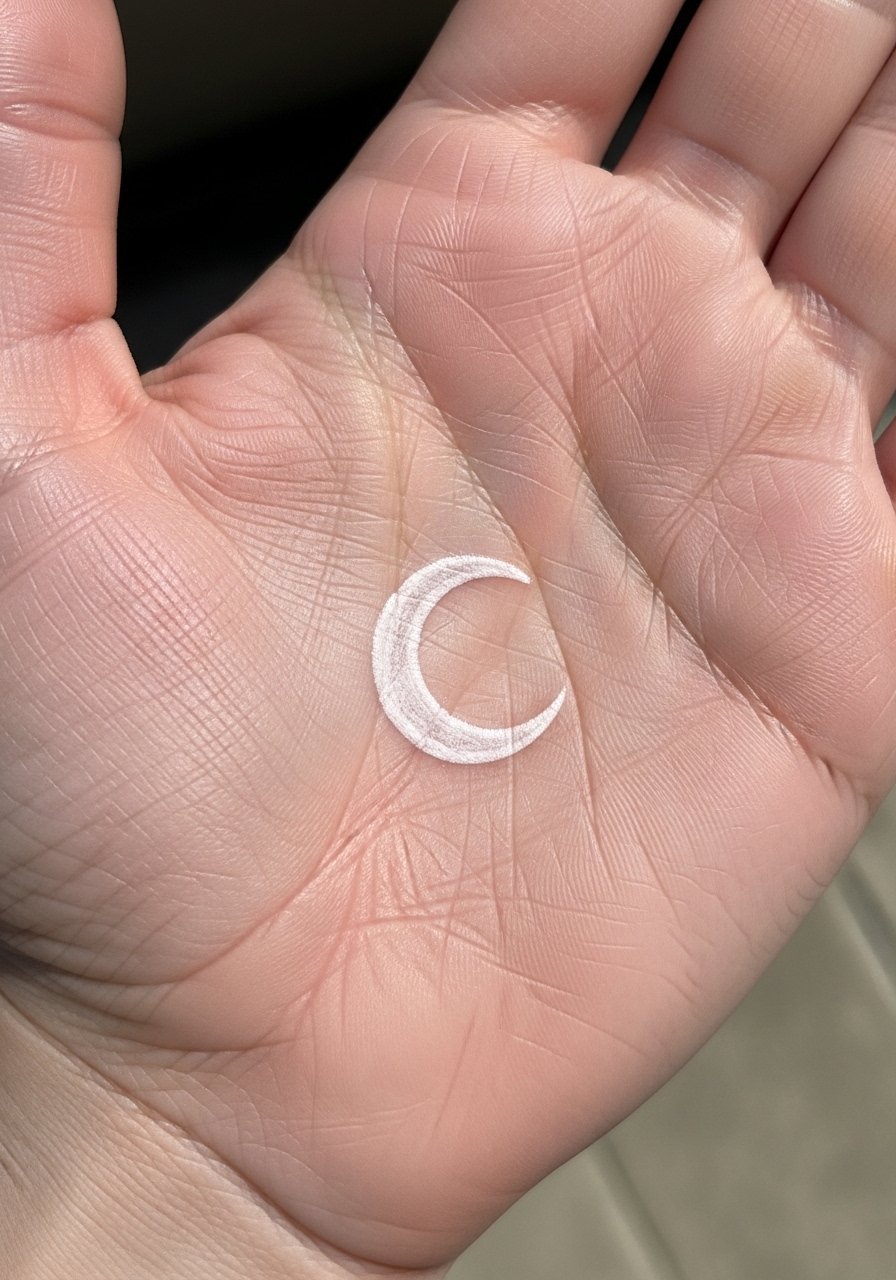
I tried white highlights on a small palm motif once. White ink can be subtle and striking but is unpredictable on different skin tones. Palms wear quickly. Pain is sharp and the area swells easily. Session time is often short, 20 to 45 minutes. Ask your artist to mix white with a faint grey base for better longevity. From what I've seen, pure white on the palm fades fastest unless backed by pigment. A common mistake is expecting white to pop like fresh photos. It often becomes a soft highlight and may need periodic refreshers.
9. Micro-Realism Tiny Animal on Thumb
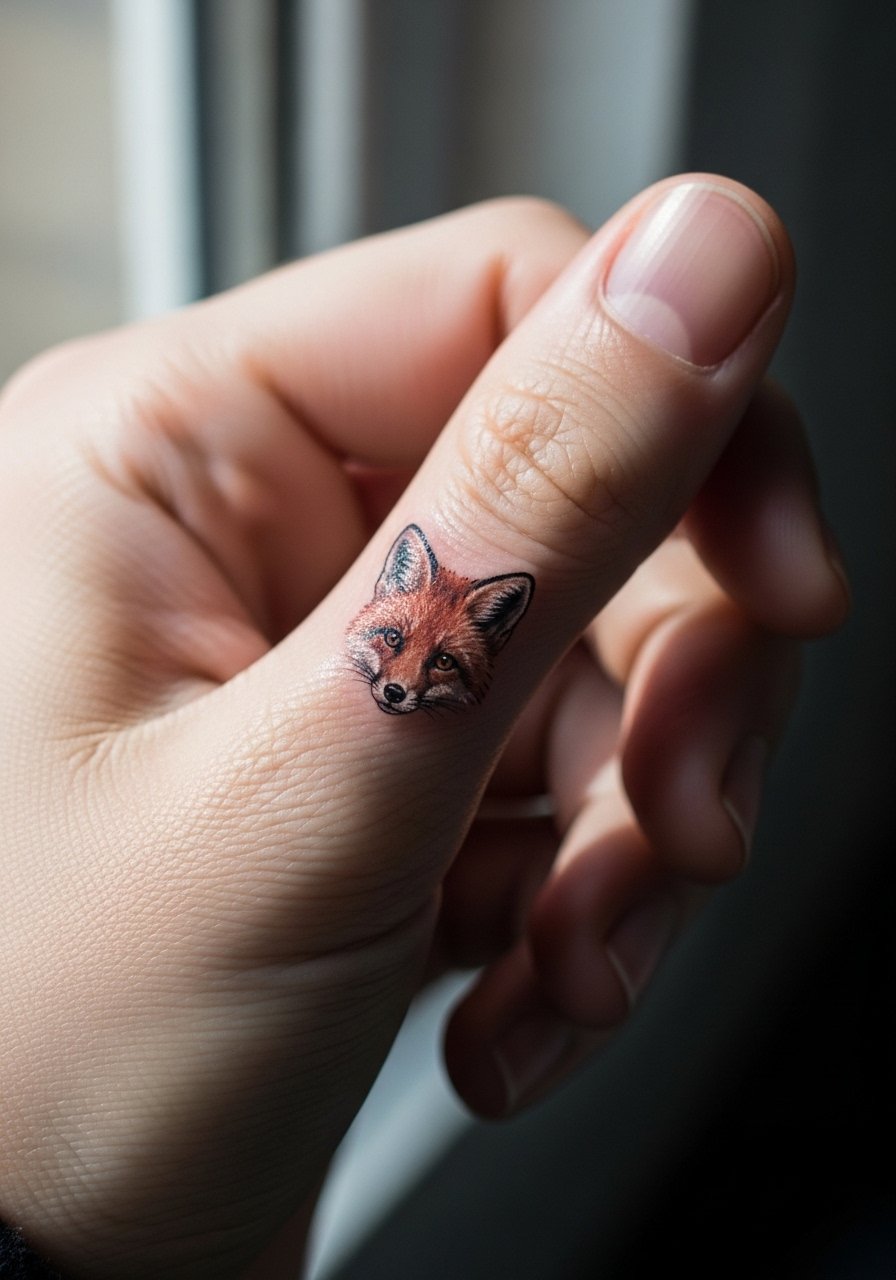
I saw a tiny fox on a photographer's thumb and it read like a secret charm. Thumbs move and take water exposure. Expect a sharp prick and bright swelling. Sessions are 30 to 60 minutes. Tell your artist you want bold contrast and a slightly bolder outline than usual. From what I've seen, micro shading fades faster on thumbs if contrast is too subtle. A mistake is over-detailing eyes and fur in a very small space. Keep the focal feature clear. At six months the edges soften, and realistic tiny animals usually need touch-ups within a year.
10. Bold Blackwork Palm Cross Accent
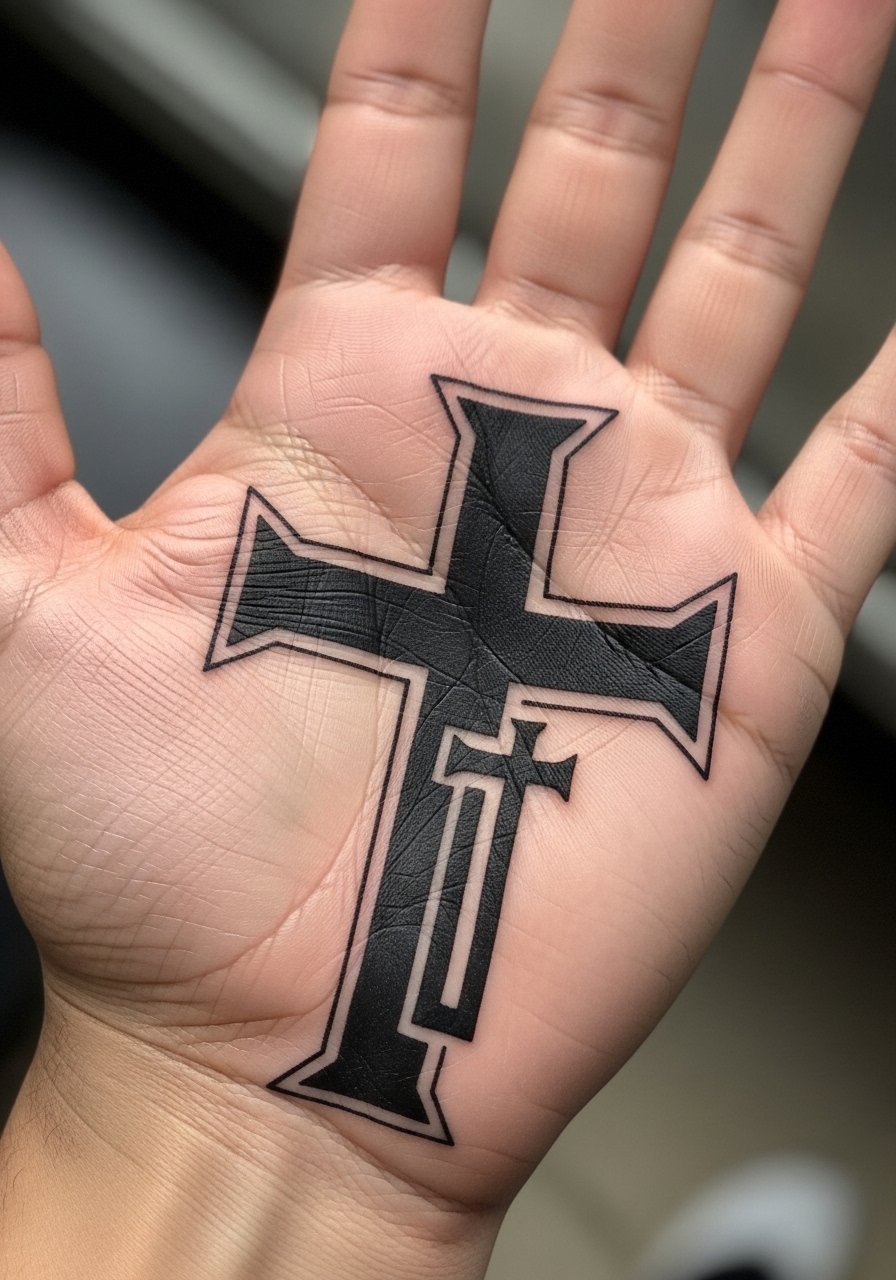
I noticed that solid black shapes endure palm wear better than thin details. The cross aligns with natural hand lines so it reads strongly. Pain is intense near the center of the palm. Session time can be 60 minutes because solid fills take passes. Tell the artist you prefer slight rounding at the edges so the fill doesn’t peel unevenly. From what I've seen, fragmented fills come from trying to pack too much micro detail into the palm. This bold option looks good fresh and ages into a solid silhouette that still reads after repeated washing.
11. Single Line Continuous Wave Across Fingers
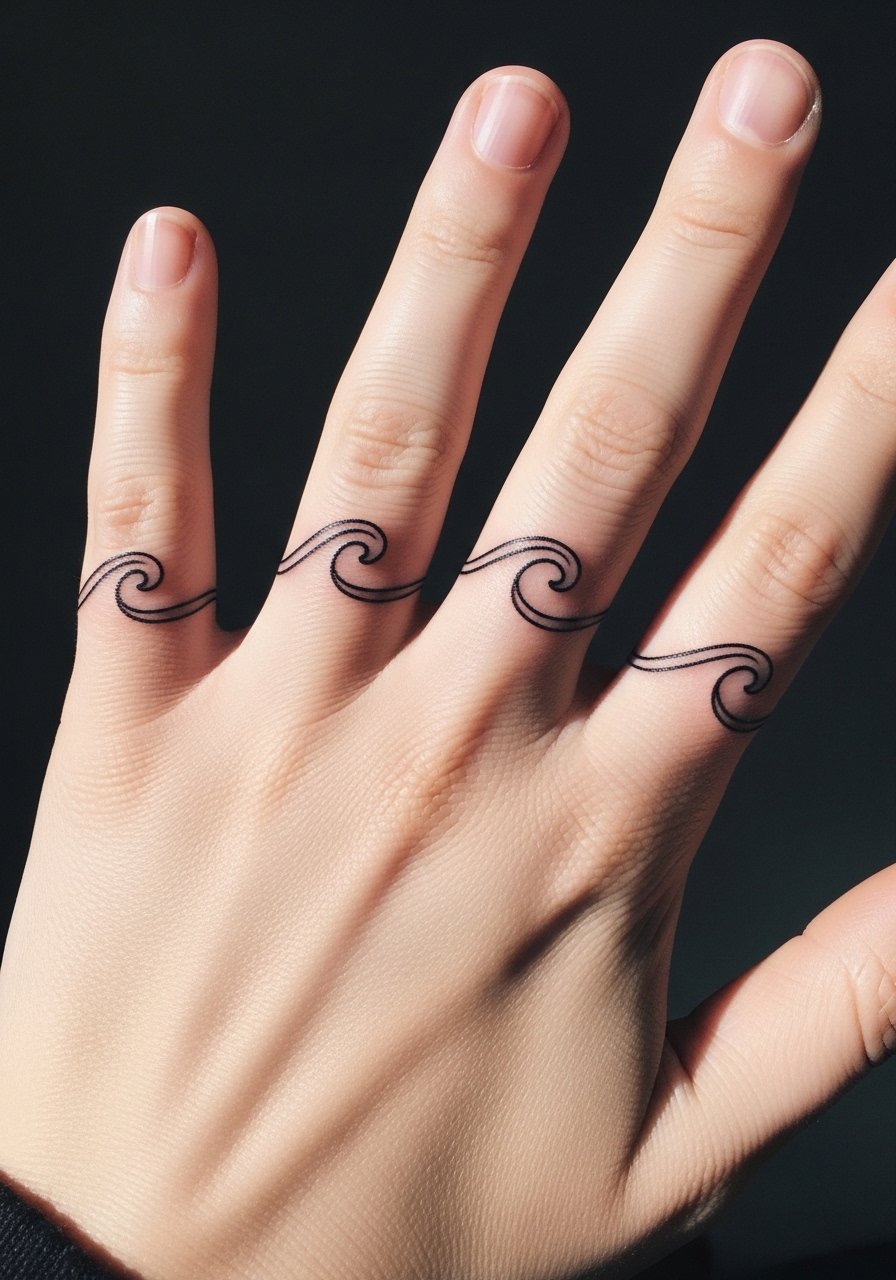
The first time I saw a continuous line across fingers I underestimated how movement would affect it. Fingers flex and blur lines. Pain is stinging around knuckles. Sessions are relatively quick, 20 to 40 minutes. Ask your artist for a slightly thicker single line with intentional spacing between bends. From what I've seen, ultra-thin single-line arcs can break up. A common mistake is placing the line too close to the knuckle fold where skin pulls. When done right the wave simplifies over time and still reads as a connected motif after a year.
12. Micro-Geometric Negative Space on Finger Pads
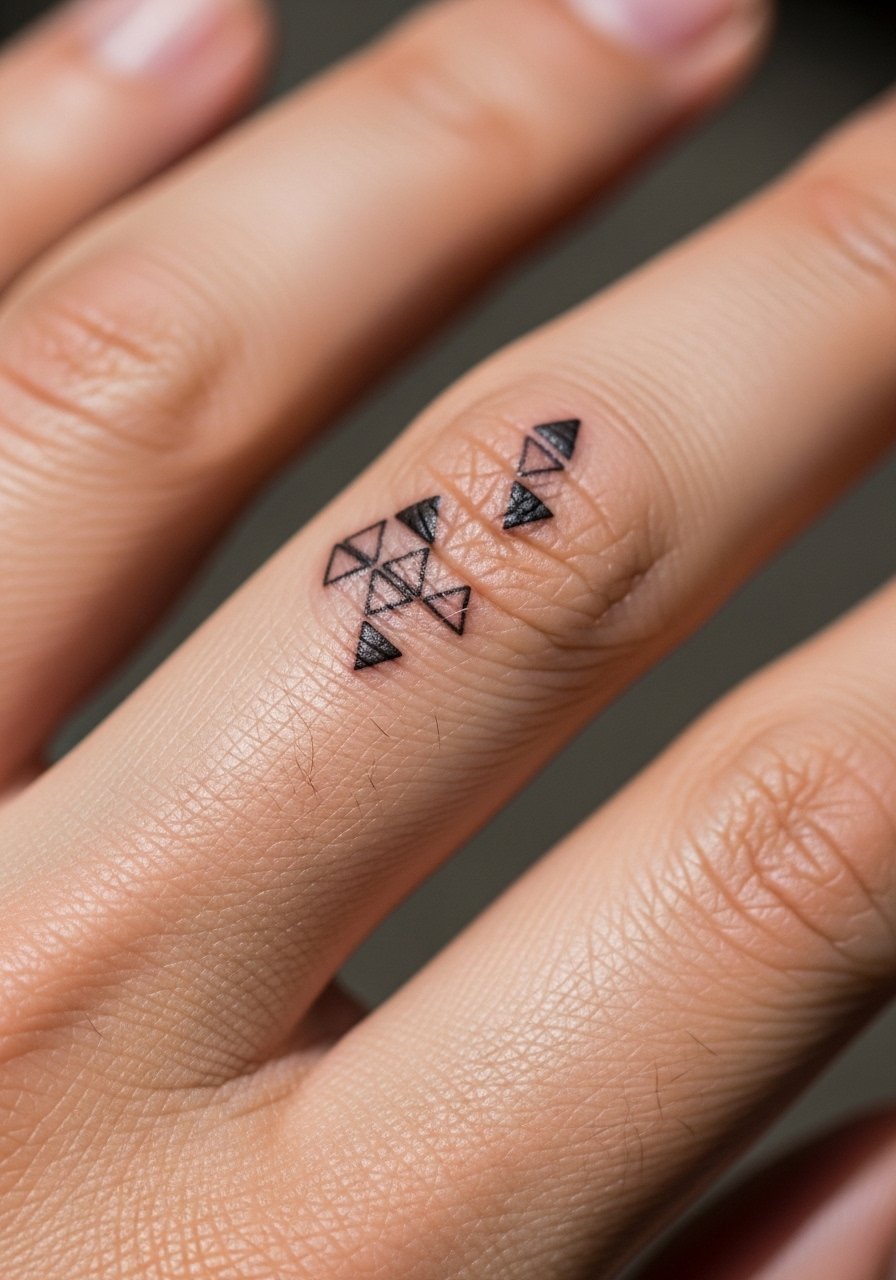
When I photographed a friend's finger pads with geometric negative space, I noticed how crisp shapes age when spaced properly. Finger pads see friction so designs with clean negative space hold better. Pain is moderate to sharp. Sessions take ~30 minutes per finger cluster. Tell your artist you want larger negative triangles rather than tiny filled triangles. From what I've seen, compact filled geometry blurs into gray patches. People often ask for too many tiny shapes. Give the design breathing room and expect some softening at six months.
13. Micro-Realism Floral Sprig Along Thumb Side
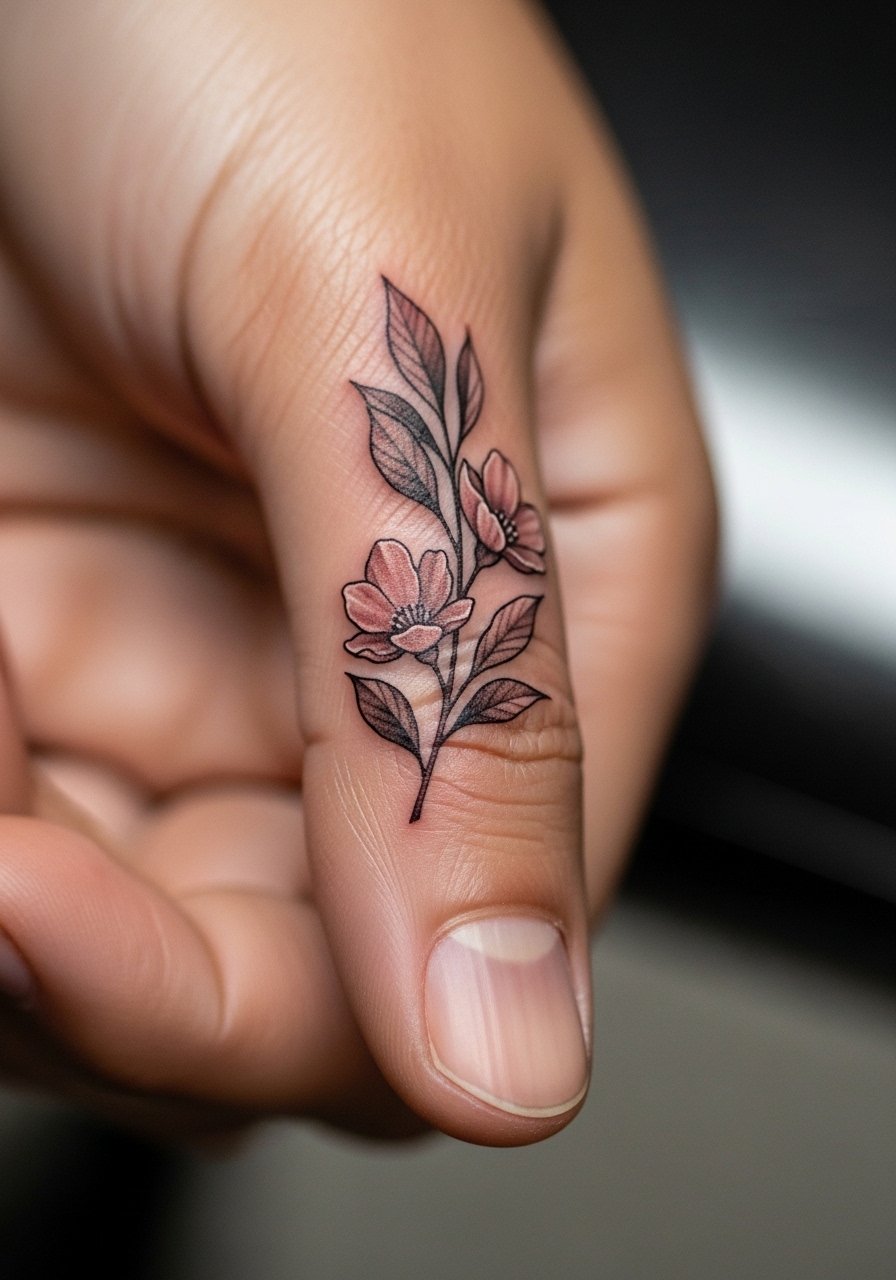
I first bookmarked this after meeting someone at a gallery with an elegant thumb sprig. The thumb side hides well under gloves and jewelry, so it lives longer. Pain is sharp with intermittent dull zones. Session time is 30 to 75 minutes depending on length. Tell the artist you want the stems a touch bolder and flower centers crisp. From what I've seen, overly faint stems disappear fastest. A mistake is expecting ultra-fine botanical details to last on the thumb. Proper spacing keeps the sprig legible as it heals and after two years.
14. Bold Traditional Anchor on Outer Hand
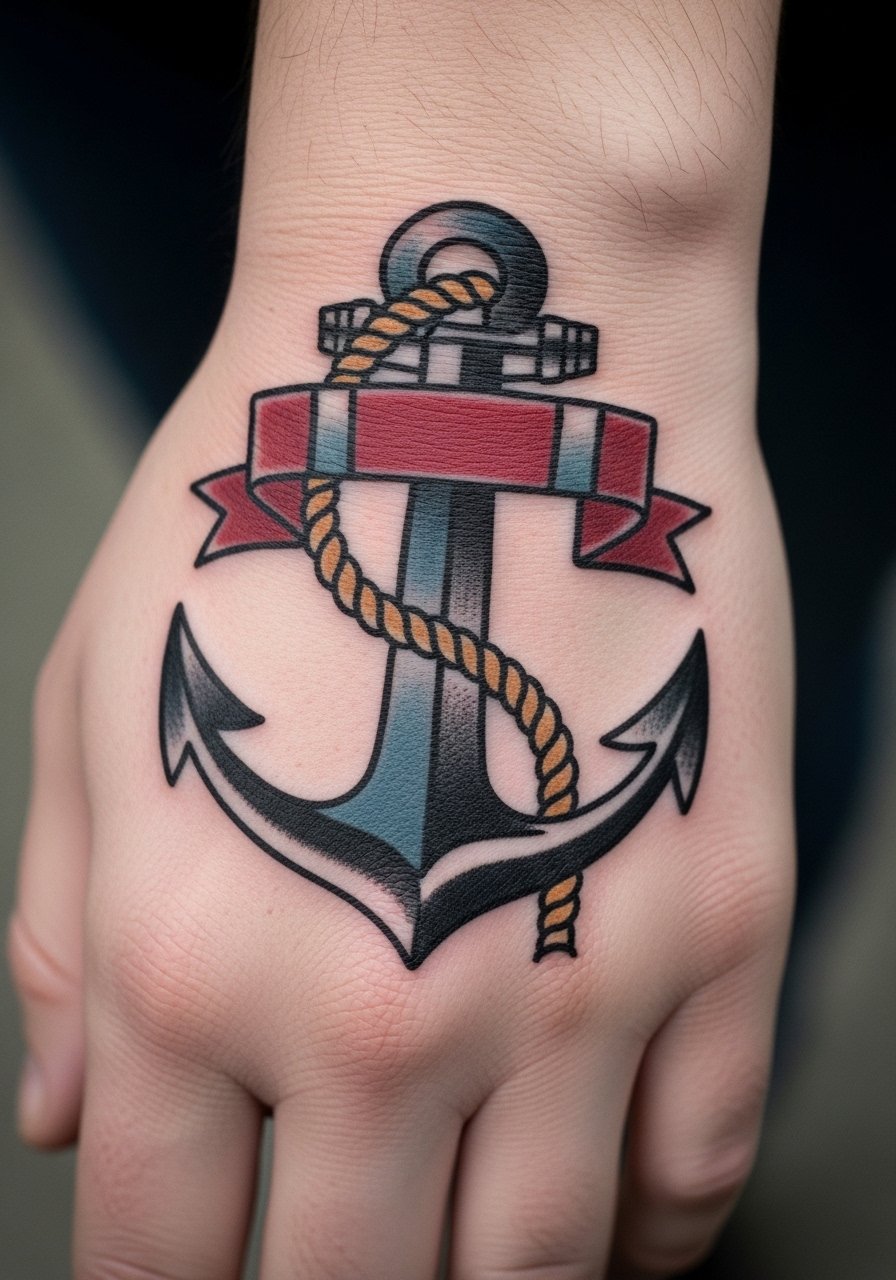
I grew up around sailors so I always loved anchors on hands. Outer hand placement gets less kitchen wear than palms. Pain is moderate. Sessions are 45 to 90 minutes. Ask your artist for strong outlines and saturated color fills. From what I've seen, traditional anchors with solid fills age well because they resist blurring. A common mistake is attempting delicate filigree around the anchor which fades, leaving a confusing silhouette. Keep surrounding elements minimal so the anchor remains readable as it softens.
15. Tiny Portrait Locket on Back of Hand
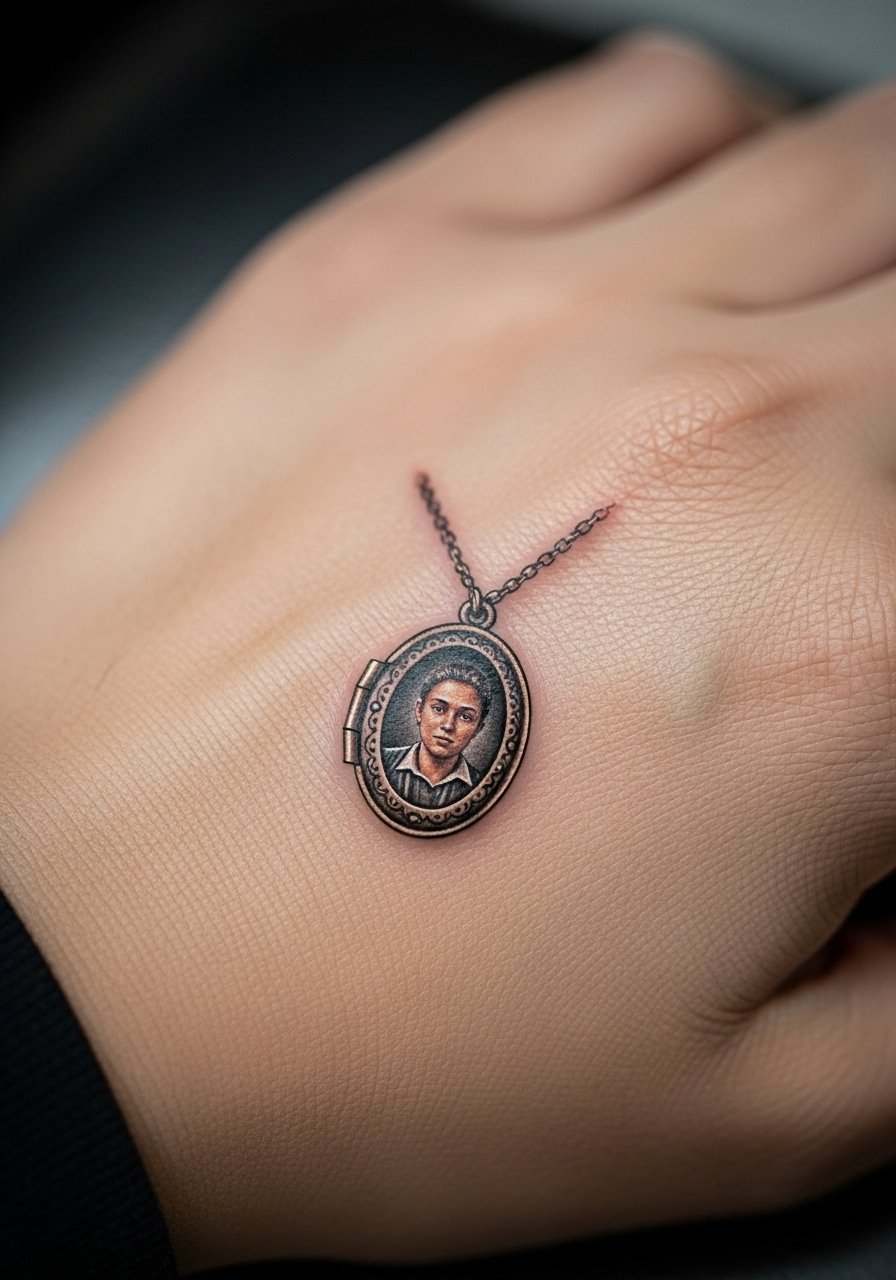
I talked to a client who chose a loved-one’s portrait there as a visible reminder. Back-of-hand portraits need a balanced size to keep facial features recognizable. Pain is sharp near bone. Sessions typically run 1.5 to 3 hours. During consultation say you want slightly exaggerated contrast for longevity. From what I've seen, portraits done too small lose eye and nose definition over time. A common mistake is shrinking the reference photo without compensating for scale. At six months the face softens; plan a refresh if you want crisp features long term.
16. Ornamental Mandala Partial on Wrist-Base of Hand
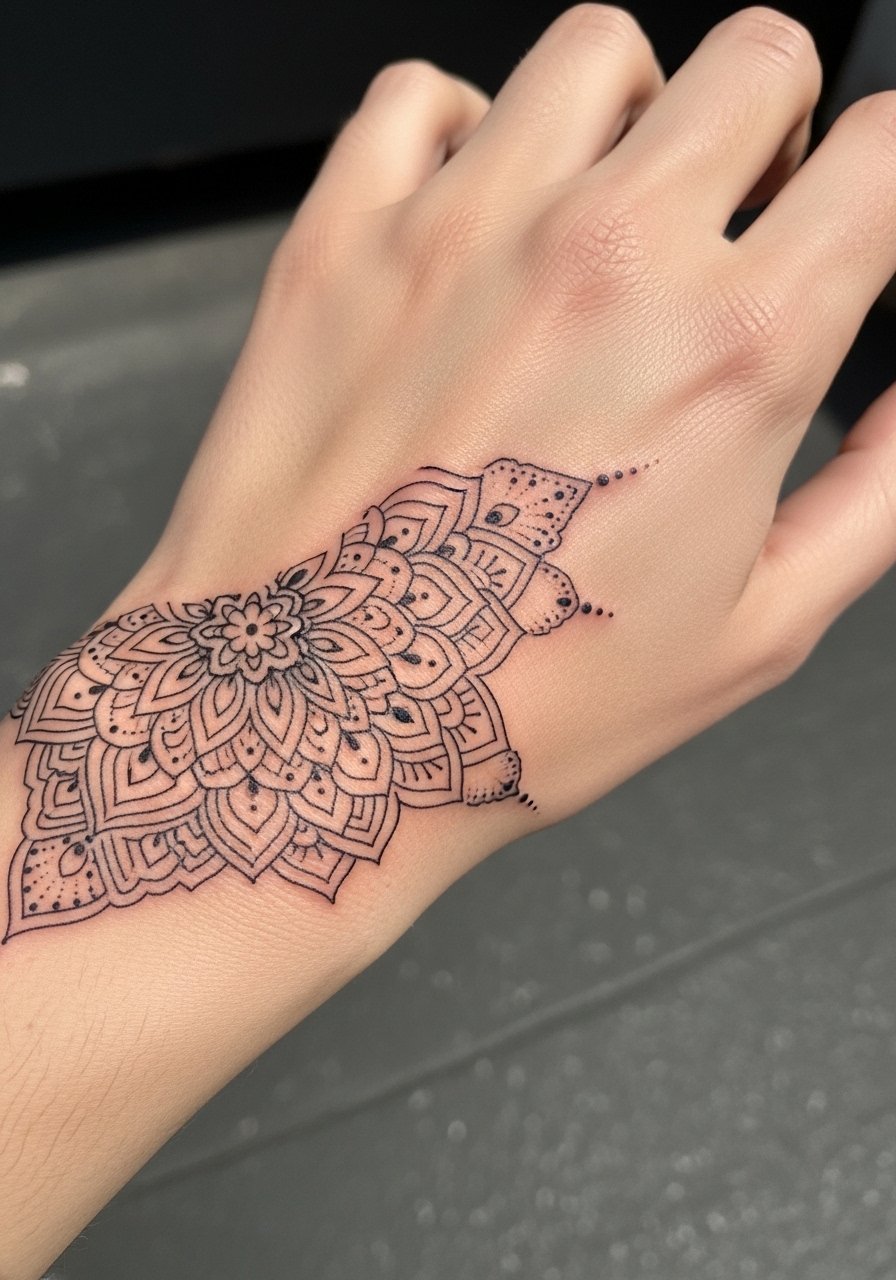
When I sat through a mandala session, the transition from wrist to hand mattered most. The wrist base gives slightly more canvas than fingers. Pain varies, more on the hand than the wrist. Session time is 60 to 150 minutes depending on coverage. Tell your artist you want the center detail larger and the outer work airy. From what I've seen, dense mandala petals too close together end up muddy. Many people ask for full tiny petals that don't survive. A partial mandala with breathing room lasts better and looks intentional as it softens.
17. UV-Ink Accent Lines on Knuckles
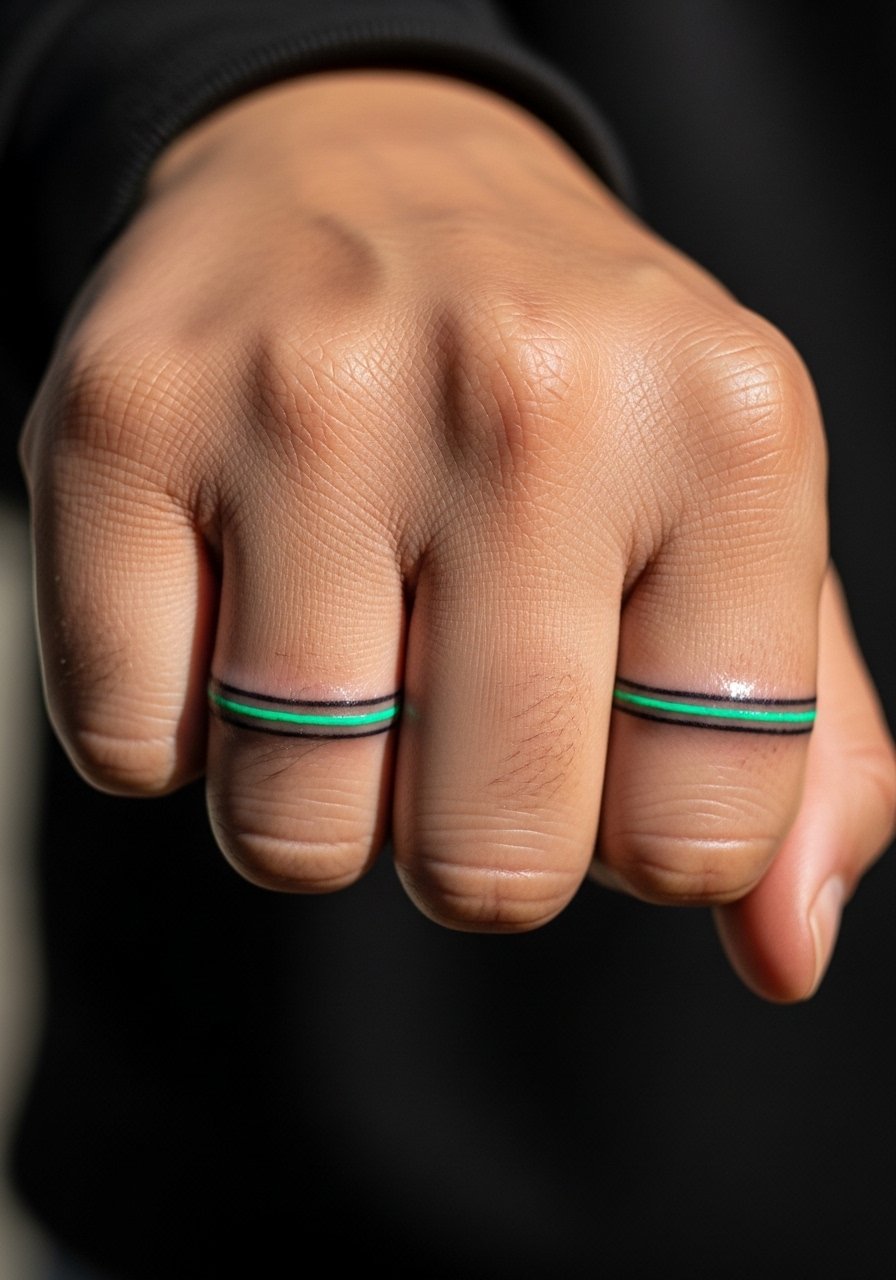
I tried UV accents on a knuckle set for a show. UV ink is subtle in daylight and pops under blacklight. Knuckles are high maintenance and UV pigments can fade faster. Pain is sharp. Sessions are short, often included with a regular knuckle session. Tell your artist you want UV only as accents and not structural lines. From what I've seen, relying solely on UV for legibility is risky. The common mistake is placing important details in UV that disappear outdoors. Use it as a playful secondary feature rather than the main element.
18. Script Band Around Base of Thumb
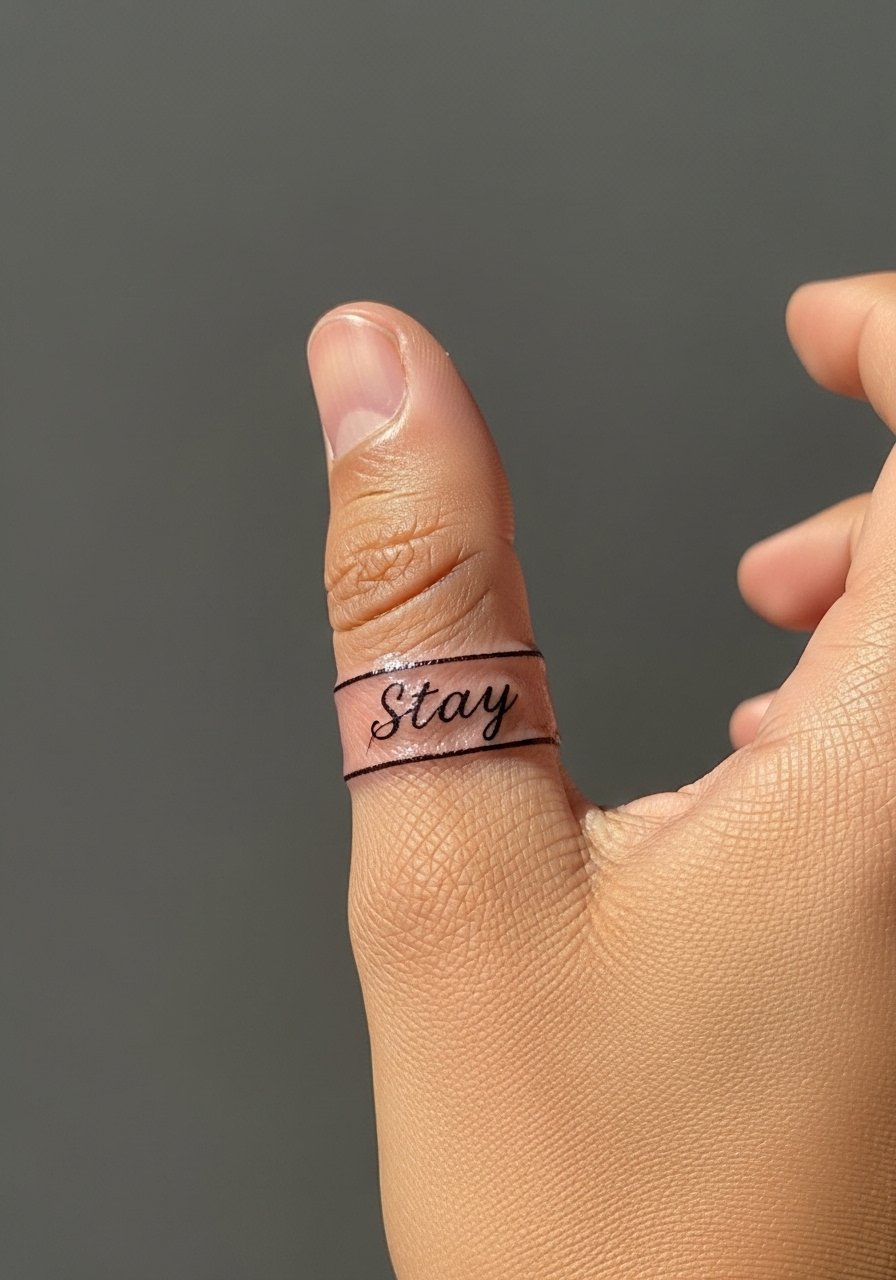
A friend had this and said it felt like a permanent ring. Thumb base sees friction but not like fingertips. Pain is a quick sharp burn. Sessions are brief, 20 to 40 minutes. Ask your artist to space letters slightly and to avoid ultra-thin strokes. From what I've seen, script bands that are too fine break into unreadable lines. A common mistake is choosing a long phrase; the wrap needs a short word or single name. After six months the edges soften and letters may need a small touch-up.
19. Small Blackwork Skull On Pinky Side
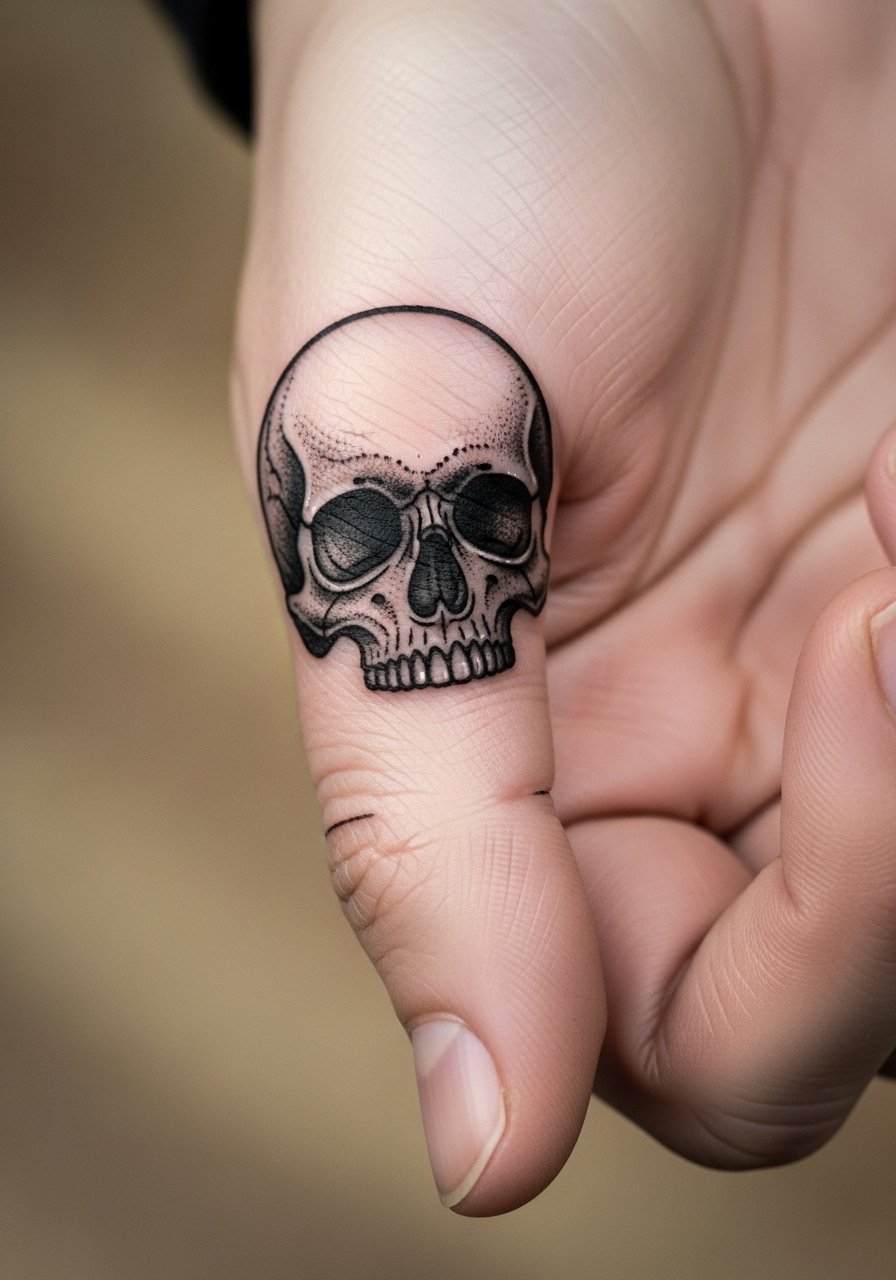
I watched this heal on a friend who works with their hands. The pinky side gets some abrasion but less water than fingertips. Pain is sharp. Sessions are quick, 20 to 45 minutes. Tell your artist to keep the skull silhouette bold and avoid tiny teeth lines. From what I've seen, micro teeth and micro cracks disappear first. People often try to add too much texture. A bold silhouette ages into a recognizable motif that still reads months later.
20. Minimalist Arrow Along Finger Bone
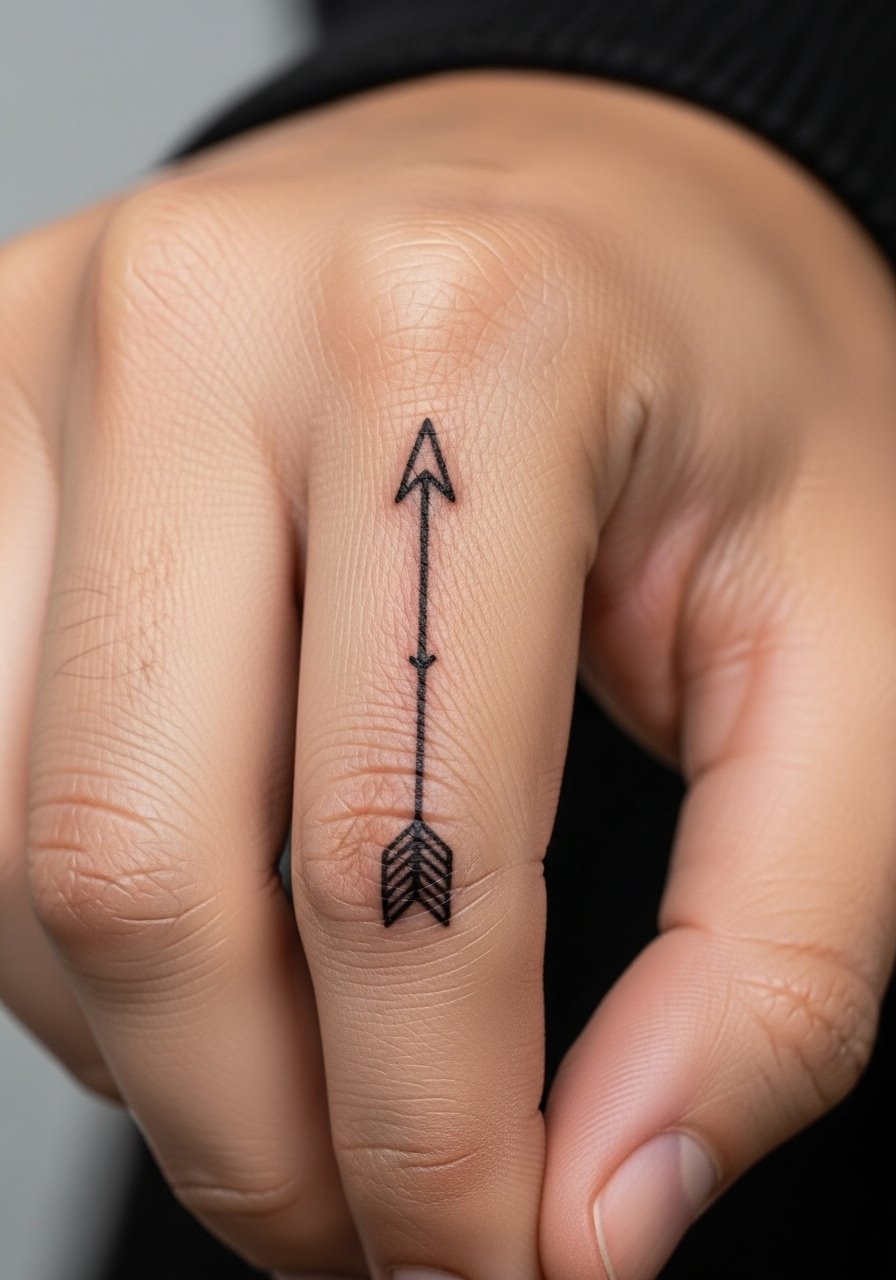
I first loved this after I saw one on a guitarist. An arrow along the finger looks active when you play or sign things. Pain stings with movement. Sessions are short, 15 to 30 minutes. Ask for a slightly bolder shaft and a simple arrowhead. From what I've seen, ultra-thin shafts turn patchy, especially across knuckle folds. People often pick ornate arrowheads that blur. Keep geometry simple. After six months the arrow keeps a delicate presence and usually needs a tiny refresh by year two.
21. Micro-Realism Small Knife on Side of Hand Near Wrist
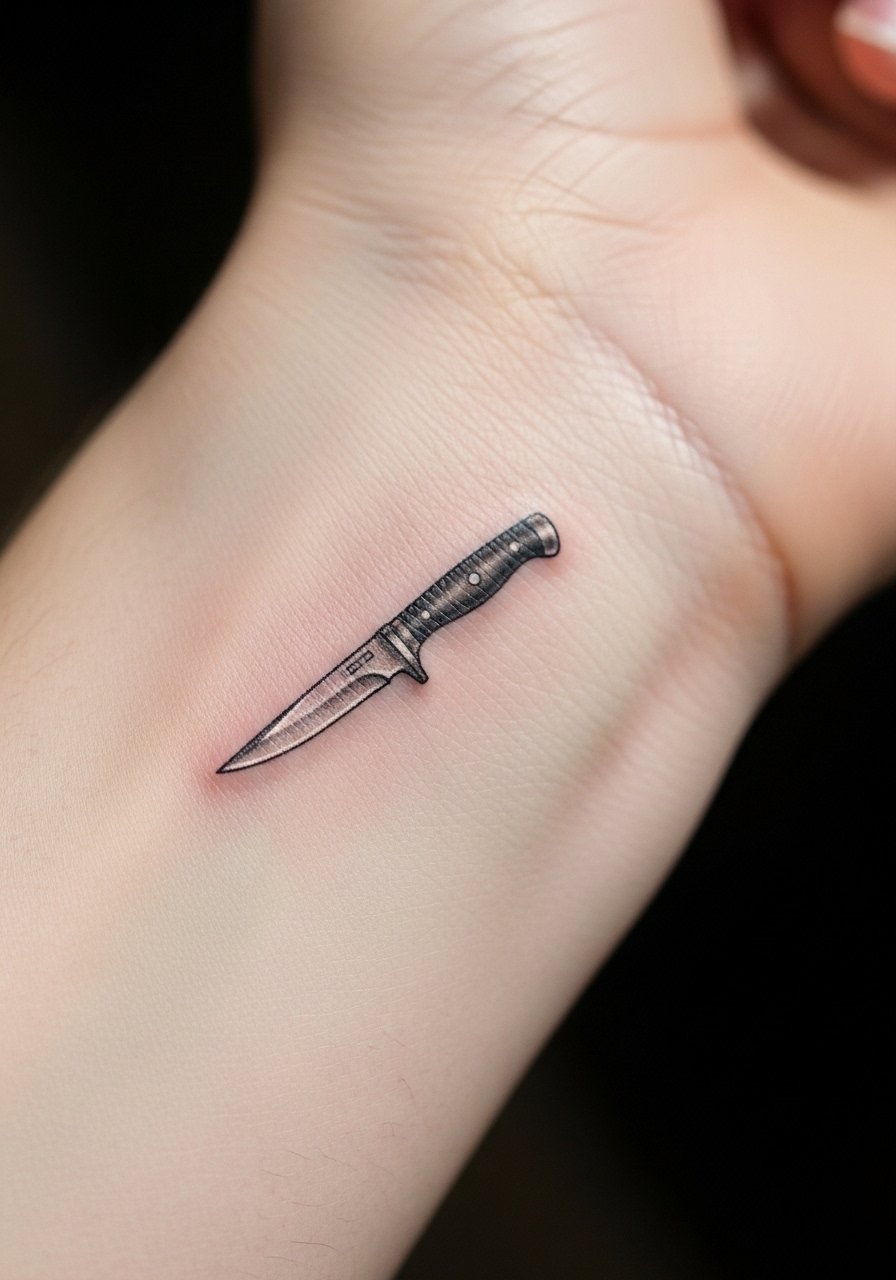
A musician friend got this and said it felt like a talisman. The side near the wrist handles less abrasion than the palm. Pain is moderate. Sessions usually take 45 to 90 minutes. Tell your artist you want a clear edge contrast and minimal texture. From what I've seen, overly textured blades age into gray smudges. A common mistake is squeezing intricate handle detail into a tiny scale. Keep the blade crisp and the handle simplified so the piece ages into a recognizable icon.
22. Negative Space Crescent Along Thumb Web
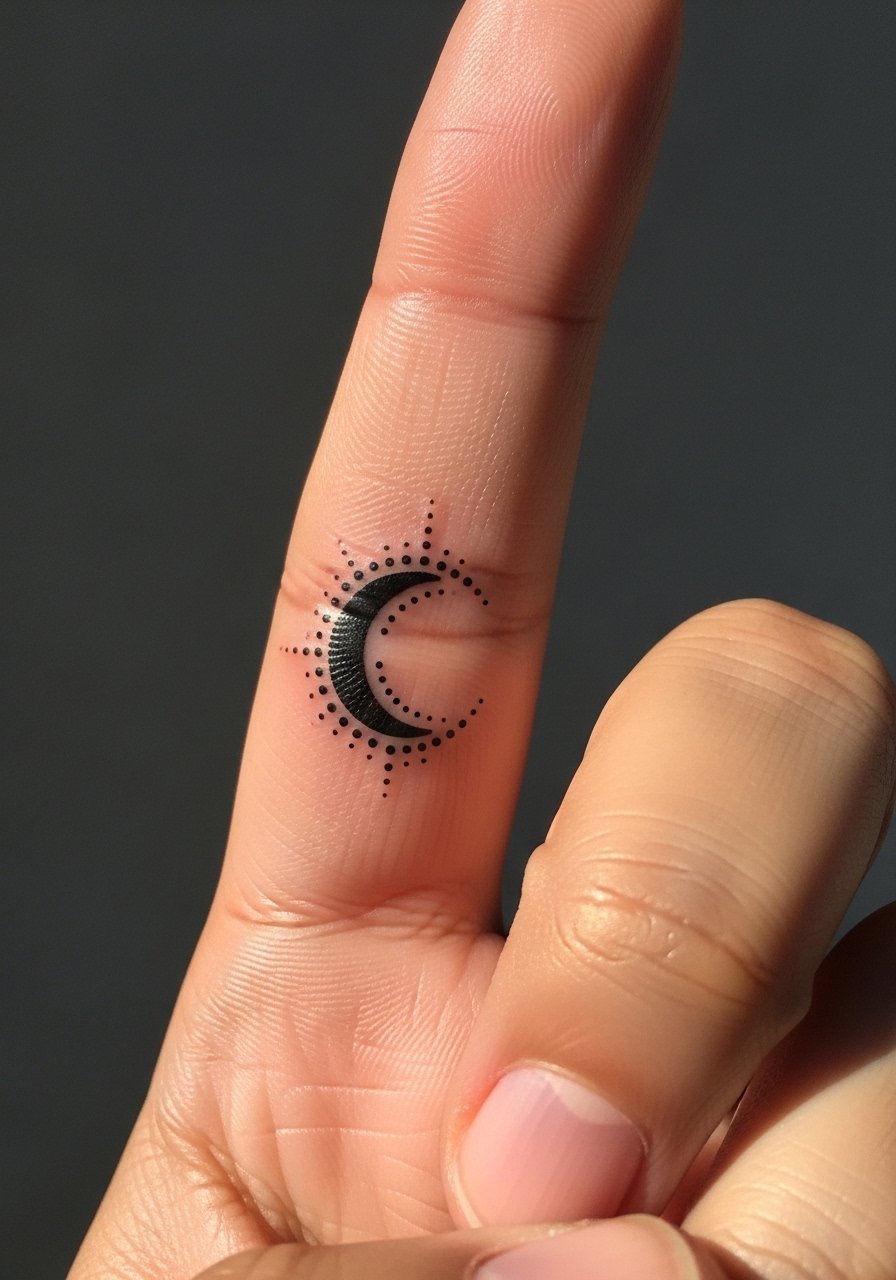
I tried a negative space crescent between thumb and index and noticed how motion brings attention to it. That web area flexes a lot. Pain is sharp and the skin puckers briefly. Session time is 20 to 45 minutes. Tell your artist to design the negative space with surrounding supportive black dots or lines. From what I've seen, standalone negative cuts can fail if the edge is too thin. People often ask for intricate edges that disappear. A bold supporting surround preserves the crescent shape through healing and wear.
23. Coordinated Set: Matching Symbols Across Both Hands
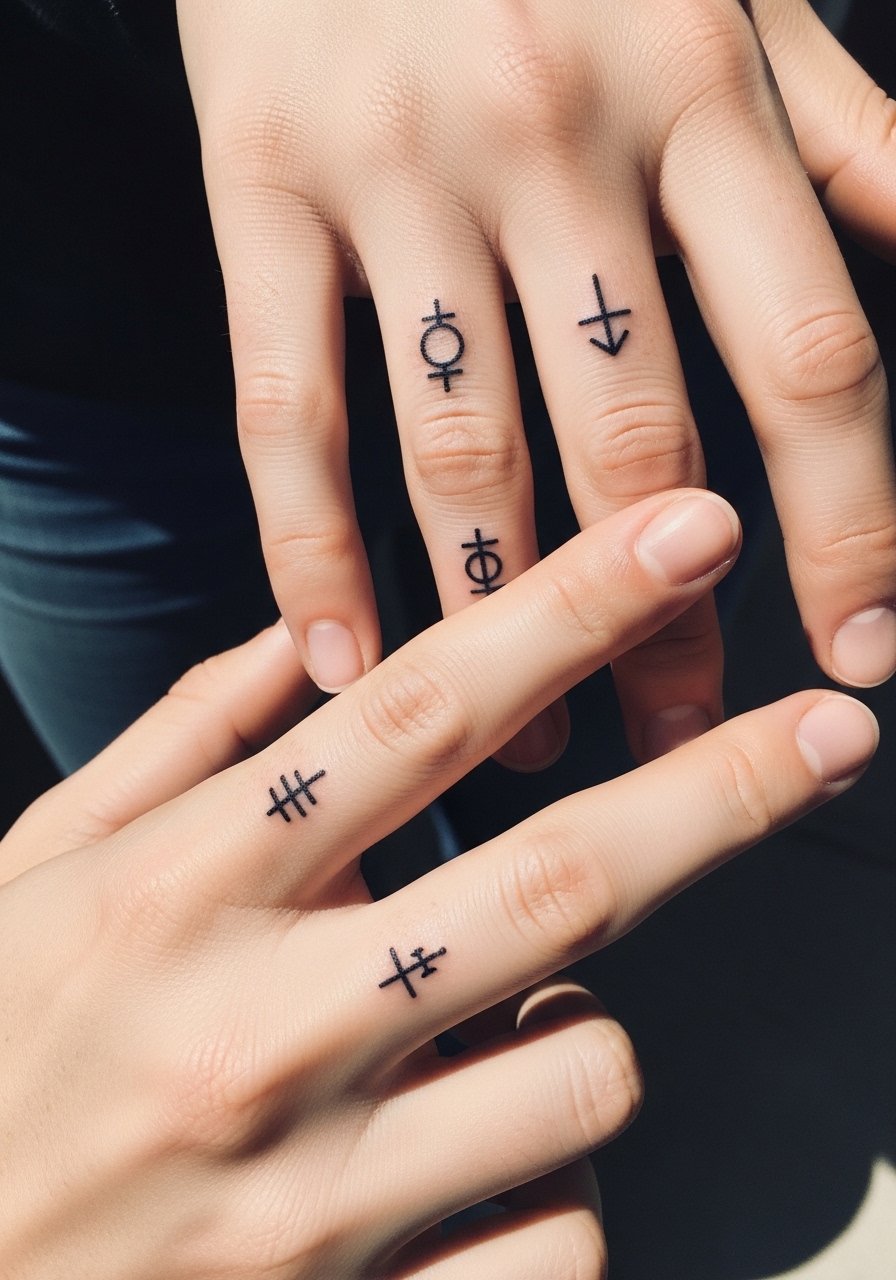
When friends match small symbols across both hands, the trick is symmetry and scale. Matching designs need the same artist for consistent line weight. Pain varies by placement. Multiple short sessions are common, 20 to 60 minutes each. Tell your artist you want mirrored spacing and a clear reproduction of each symbol. From what I've seen, mismatched scale between hands looks amateur as lines blur. A common mistake is having different artists do each hand. If you want coordination book the same artist and expect minor touch-ups as each side heals slightly differently.
Tattoo Prep and Aftercare Essentials
Aftercare matters more for hands than most places. Hands get washed, sun-exposed, and rubbed. I've talked to many artists who agree that sealing the first 24 to 72 hours properly helps. Below are my go-to items grouped by use, with sizes and when to use them.
Healing and First Days
- Aquaphor Healing Ointment, 14oz tube. Industry standard for the first 3 to 5 days. I use a thin layer at night.
- Saniderm Transparent Adhesive Bandage, 6-inch roll. Second skin healing method. Every artist I've talked to recommends it for the first 24 to 72 hours.
- Dr. Bronner's Unscented Castile Soap, 32 oz. Gentle cleanser for rinsing twice a day the first week. Dilute a small drop with water.
- Hustle Butter Deluxe, 5 oz. Vegan option I use during the healing week for moisture without greasiness.
Before Your Appointment
- Numbing Cream with 5% Lidocaine, 30g. Apply 30 to 45 minutes before your session only if your artist approves. Some artists prefer no numbing.
- Tattoo Stencil Transfer Paper, A4 Pack. Useful if you want to test placement at home before the appointment.
Long-Term Maintenance
- CeraVe Fragrance-Free Moisturizing Lotion, 12 oz pump. Daily moisturizer for days 4 to 14. I prefer the pump bottle for hygiene.
- SPF 50 Sunscreen Stick for Tattoos, Travel Size. Use on healed tattoos whenever they see sun. I carry one for travel.
- Mad Rabbit Tattoo Balm, 2 oz. Long-term maintenance for vibrancy. Artists I know recommend it for healed pieces.
Optional Comfort and Alternatives
- Tattoo Numbing Spray, 4 oz. Handy for touch-ups or sensitive areas mid-session.
- Hydrocolloid Bandages, Large Size Pack. Good alternative to Saniderm for small to medium tattoos.
Frequently Asked Questions
Q: Will hand tattoos fade faster than forearm pieces?
A: From what I've seen, yes, hands fade faster. You use your hands constantly. Soap, sun, and friction all break down pigment. I tell people to expect at least one touch-up within 12 to 24 months for most hand placements. Using a solid blackwork approach or slightly bolder line weight helps. I also recommend SPF 50 Sunscreen Stick for Tattoos, Travel Size once healed to protect exposed pieces.
Q: Do fine line scripts on fingers blur into a mess?
A: I've noticed fine line scripts blur faster on fingers than on ribs. Fingers flex and get washed constantly. If you want script there, tell your artist to increase stroke weight slightly and to space letters wider. A good compromise is using a small, bold script rather than ultra-fine hairlines. Aftercare matters. I use Aquaphor Healing Ointment, 14oz tube the first few nights to keep the area from drying into flakes that pull ink.
Q: Is a palm tattoo a bad idea?
A: From what I've gathered, palm tattoos are risky long-term. The skin is thick and regenerates quickly, which pulls pigment out. Bold black silhouettes on the outer palm can last longer than detailed palm murals. If you insist on palm ink, accept multiple short sessions and plan touch-ups. Also ask your artist about using a slightly deeper initial saturation for longevity.
Q: Do UV-ink accents require special care?
A: I found UV accents need no special daily care beyond the usual. They tend to fade faster than standard pigments. Use UV as a supporting element, not the main linework. If you get UV, keep healed skin protected from continuous sun exposure with SPF 50 Sunscreen Stick for Tattoos, Travel Size to slow fading.
Q: Should I use Saniderm on hand tattoos?
A: Every artist I've talked to recommends Saniderm for hands because sealing reduces immediate rubbing and contamination. Use a shorter occlusion window for hands if you sweat a lot. I personally use Saniderm for the first 24 to 72 hours and then switch to gentle cleansing with Dr. Bronner's Unscented Castile Soap, 32 oz and moisturizer.
Q: How painful are knuckle and finger tattoos compared to the back of the hand?
A: From my experience, knuckles and fingers are sharper and more biting pain because you're near bone and thin skin. The back of the hand can be less intense but still not comfortable. Shorter sessions help. If you are nervous ask about numbing options like Numbing Cream with 5% Lidocaine, 30g, but check with your artist first.
Q: Can small portraits or micro-realism survive on the hand?
A: I have seen small portraits hold up if sized correctly. The rule I use is to scale up features that need to remain legible and ask the artist for strong contrast. If a portrait is too tiny the eyes and nose will soften into an indistinct patch. Plan a touch-up at six to twelve months to restore fine contrast if you want it crisp long term.